
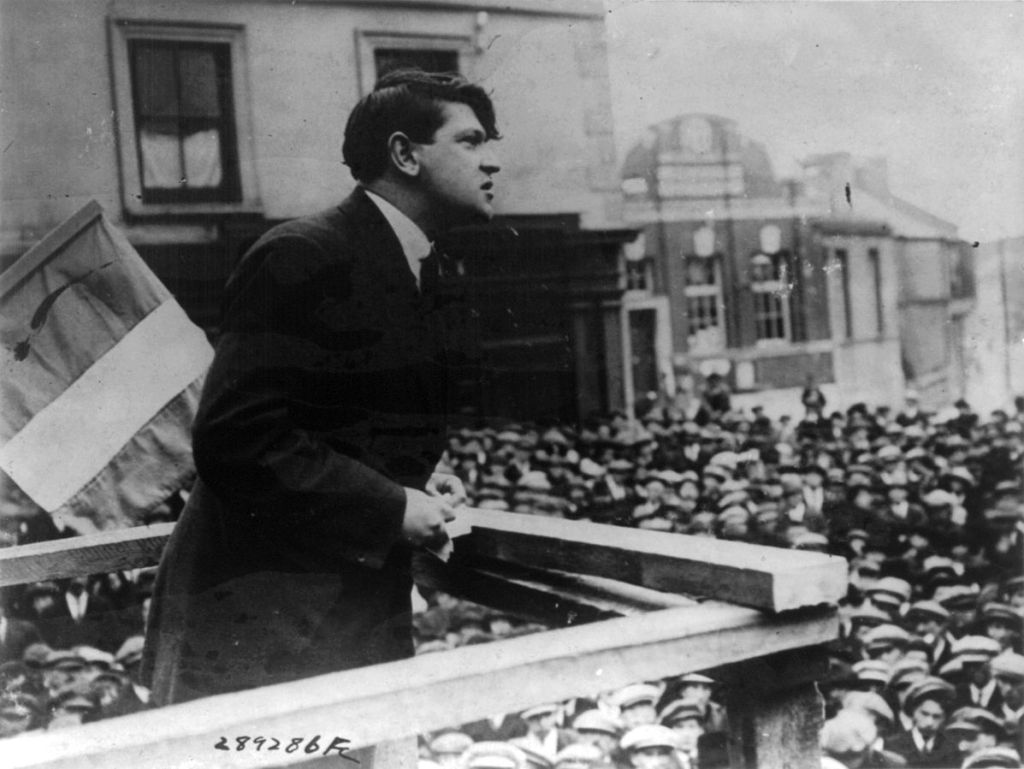
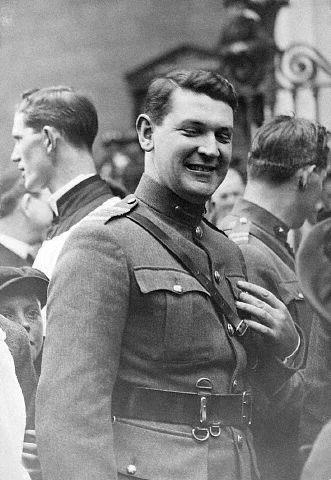
In a quiet little library in a certain small town in Ireland you can find no fewer than four biographies of Michael Collins side-by-side on the shelves, along with further titles in the children’s section. A few years ago, members of the youth wing of Fine Gael used to brandish a life-size cut-out of Michael Collins in military uniform (only half ironically). And just yesterday I saw in a bookshop window a children’s book about him titled ‘The People’s Peacemaker.’ As we approach the centenary of his death, Michael Collins is still a very big deal in Ireland.
A while ago I answered a ‘What If’ question about Collins. Would it have changed the course of Irish history if he had survived the Irish Civil War?
My reply was dismissive. I wrote that if he had lived he would have been associated with all the atrocities committed by the Free Staters. The only difference between our timeline and that alternative timeline where he survived would be that the name ‘Michael Collins’ would not be surrounded with such a halo.
But I’ve done some further reading and it’s clear to me that I was wrong. Let’s address the question again.
How could Collins have survived?
Usually it’s difficult to come up with a good explanation for how things could have turned out differently. But in this case it’s very easy. Collins’ death was the result of a whole series of accidents. Those who killed him didn’t want to kill him specifically and it’s possible they weren’t shooting to kill at all. Peter Hart blames Collins’ bravado, his combat inexperience and his possible hangover. But even with all that, the chance of that bullet killing him was tiny. He was the only fatality in twenty minutes of fighting.
My alternative scenario is simple: the bullet didn’t hit him, or else it hit him in the arm or the leg rather than the head.
Usually this is the part where we say ‘If he hadn’t died that day, there was a good chance he’d have died some other day.’ Really, there wasn’t. 1500 people died in combat in the Irish Civil War. Collins was a commander on the winning side. He was respected by his enemies, who had no motive to target him. He had a very good chance of making it out alive.
Collins the conciliator
Michael Collins and Éamon De Valera are often presented as arch-enemies who were at loggerheads from the moment the Treaty was signed. In fact they were the most conciliatory figures in their respective factions.[i] Before the Treaty was signed, the British in fact saw De Valera as the one who was willing to talk, and Collins as the ‘extremist gunman’ holding him back.[ii] Collins and De Valera worked together to get others to go into negotiations. For example Collins supported a bizarre suggestion by De Valera that the relations between Cuba and the USA under the ‘Monroe Doctrine’ would be a suitable model for Anglo-Irish relations.[iii]
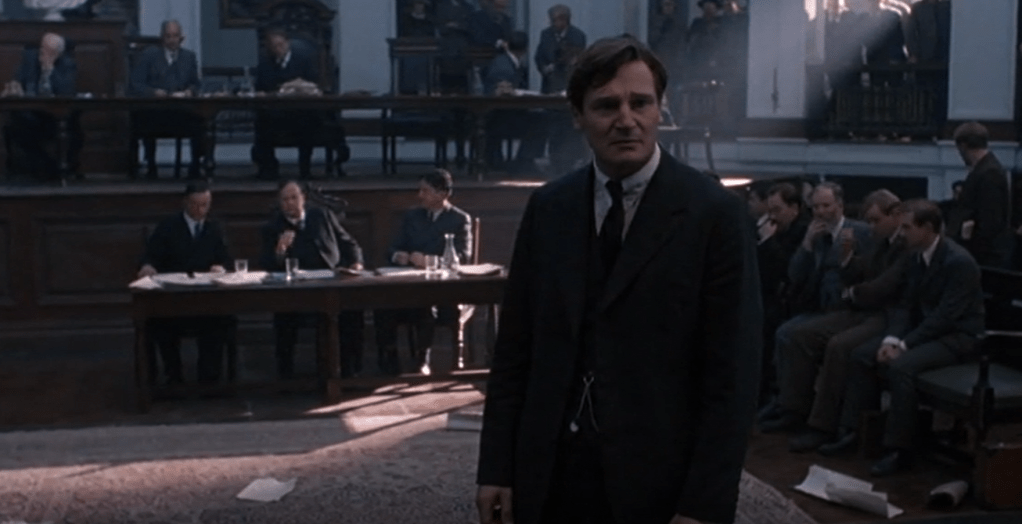
Neil Jordan’s 1996 movie Michael Collins skips over a key episode between the signing of the Treaty and the outbreak of Civil War six months later. Collins spent these six months trying to fudge the Treaty by means of the new Free State constitution. He ‘fumed’ not over the anti-Treaty side but over the British, with their ‘insolence’ and intransigence. He tried to come up with a constitution that would bridge the divide between pro-and anti-treaty factions, but Churchill and Lloyd George again and again renewed their threat of war. I would have scoffed at the title ‘People’s Peacemaker’ before – but he really did make peacemaking his number one task at a time when other Free Staters (Blythe, Griffith and O’Higgins) wanted war as a chance to wipe out the anti-Treaty forces.
Collins in the Civil War
Memos from early July 1922 (the first weeks of the Civil War) indicate that Collins was open to peace proposals: ‘We will meet them every way if only they obey the people’s will.’ He allowed open anti-Treaty political activity and opposed the punishment of civilians near ambush sites or indiscriminate firing in the direction of snipers.[iv]
This marks a contrast with how, in the months after his death, the Free State cabinet signed off on executions without trial. They passed the draconian Public Safety Act, then applied it retroactively to enemies captured before it was in force, just so that they could have an excuse to put their opponents up against a wall.
During the fighting in Dublin in the first week of the war, when Collins was still in charge, the Free State troops kept only a very loose cordon around the city. This made military and political sense. It encouraged the anti-treaty forces to slip away instead of fighting to the end.
Again, there is a profound contrast with how the war was conducted later. WT Cosgrave, the head of the Free State government, in January 1923 dismissed any attempt to make peace with the anti-treaty forces. The executions probably prolonged the war, but he didn’t mind; his goal was to wipe out the anti-treaty forces, not to end the fighting and risk ‘another Four Courts.’[v]
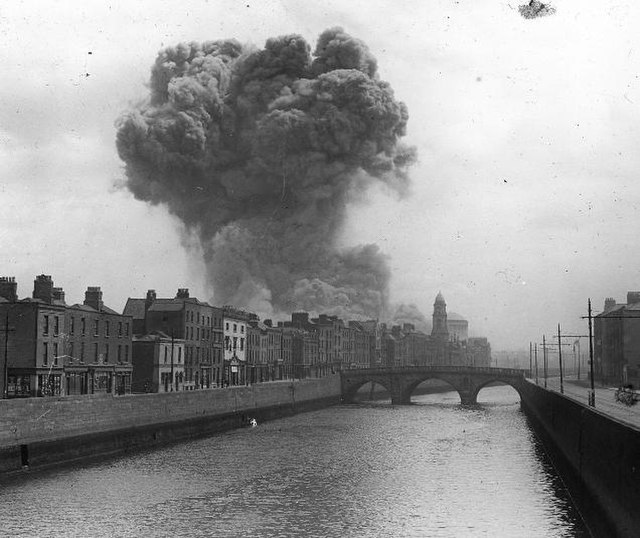
There was a fundamental disagreement on strategy: Collins wanted a victory to bring an end to the fighting. The hardliners (who were mostly civilians!) wanted to exterminate their enemies.
OK, the sceptical reader might say. But that was later. You’re comparing statements from July with statements from the following January. Maybe Collins would have had a different attitude with the war dragging on.
But even in the early weeks of the war other Free State figures were waging a different war from Collins. Eoin O’Duffy (third-in-command after Collins and Mulcahy) was opposed to any peace initiatives. ‘The Labour element and Red Flaggers are at the back of all moves towards “Peace” […] if the Government can break the back of this revolt, any attempts at revolt by labour in the future will be futile.’[vi] Collins was still alive and probably read those words. He was not sympathetic to labour. But he didn’t agree with this approach.
So… What if he had lived?
I still don’t have a positive view of Michael Collins. He supported the disastrous Treaty. He broadly supported the counter-revolution which the pro-Treaty side represented, such as the suppression of the Republican popular courts system in July. His ‘Squad’ of assassins would go on to commit atrocities in Kerry during the Civil War. He was part of the guerrilla movement which wanted an independent capitalist Ireland (and was willing to settle for much less). He was emphatically not part of the mass labour movement of the time which in my view really promised a way forward and held the potential to avert Ireland from the mire of partition, Civil War and Church control.
And as a peacemaker, he failed. He acted under the British government threat of ‘terrible war,’ and allowed them to drive him into a ‘terrible war’ with his former comrades.
But I’m now convinced that he was very different from those who ruled in the new Free State – Cosgrave, O’Higgins, Blythe, O’Duffy, etc. In the Civil War itself, there are plenty of indications that he was pursuing a different strategy. In our own benighted timeline, the war dragged on until the scattered and miserable remnants of the anti-treaty forces dumped their arms and went home. There was no peace treaty. The Civil War remained an open wound. Had Collins lived, he might have used his personal authority to call for a peace process or treaty negotiations. There were plenty of voices calling for peace, and the addition of Collins’ voice would have been significant. The war might have been wound up earlier with a negotiated settlement, with less bitterness and bloodshed – crucially, with less of a total, sweeping victory for the greasy till-fumbling Irish big business class.
There are limits to this. Conor Kostick argues in Revolution in Ireland that Collins was a kind of Bonapartist figure: someone who has personal authority and is able to ‘rise above’ social and class conflict, or at least to appear to do so. In the case of Collins, he had the support of many armed paramilitaries and a huge section of the broader public. He leveraged this to try to bridge the divide between the pro- and anti-treaty forces.
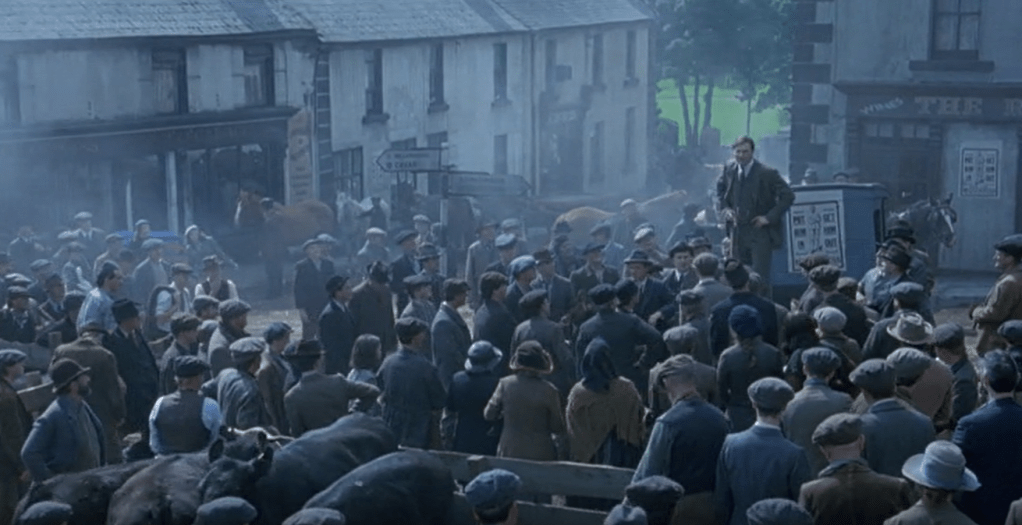
But the thing about Bonapartist figures is that they are given power by conditions of social, economic and political stalemate. This appears as their own personal ‘greatness’ but it is not the case. These conditions of stalemate are temporary, so Bonapartes have a sell-by date. The really striking fact about Collins’ death is that it came at the exact historical moment when the Free State forces had triumphed and the stalemate had come to an end.
What does this mean concretely? Had Collins lived, his authority would have waned. The Free State would have tamed him or discarded him. He had decades more to live, and he could have lent his remaining personal authority to other causes. He becomes a blank slate and we can imagine him as a dissident, as a politician or as a military man, as a Pilsudski-type authoritarian strongman, or as a repentant Republican, or as a statesman who reconciles Fianna Fáil and Fine Gael, or who ends partition. We can imagine whatever we like. This kind of wild speculation can produce a scenario where he changes the course of Irish history. But with his waning authority, the boost he could have given to this or that cause would probably not have been decisive.
But if he had lived, the differences between him and the hard-line Free Staters would have become more obvious. There would have been a breach so clear and vitriolic no 1990s biopic would have been able to skate over it. Those Free Staters with whom Collins would have split, from Cosgrave to O’Duffy, were the same people who went on to lead and to found Fine Gael.
But in this scenario where Collins lives and, in the short term, struggles for a peace treaty, two things are certain.
One: in this alternate timeline, if the title ‘The People’s Peacemaker’ was applied to Collins, it would have a totally different meaning, a meaning which implies criticism of the Free State government rather than support for the Anglo-Irish Treaty.
Two: Young Fine Gaelers, if such a specimen existed in this alternate timeline where Michael Collins lived, would not be seen dead carrying around an effigy of him.
[i] Conor Kostick, Revolution in Ireland: Popular Militancy 1913-1923, Cork University Press, 1996 (2009), p 194
[ii] Peter Hart, Mick: The Real Michael Collins, Macmillan, 2005, p 268-270
[iii] Hart, 293
[iv] Hart, 399-403
[v] Diarmuid Ferriter, Between Two Hells: The Irish Civil War, Profile Books, 2021, p 95
[vi] Charles Townsend, The Republic, Penguin, 2013, p 432. You can see in this quote the embryo of the fascist leader that O’Duffy would become.
 The 1919 Review
Counterfactual history, when disciplined like this, is a very useful tool to evaluate the historical significance of an event or, in this case, a ‘great man’. This was a fascinating exploration of a ‘what if’ scenario. His death was a fluke The SOP response to an ambush is to escape the ‘killing zone’ which should not be possible if the ambush is properly sprung. You do not debus and attack the ambushers
My own bugbear; Collins would never have acquiesced in the Boundary Commission debacle, assuming of course that he hadn’t been elbowed out of the government by then.
LikeLike
Thanks! Interesting point re the boundary commission
LikeLike