
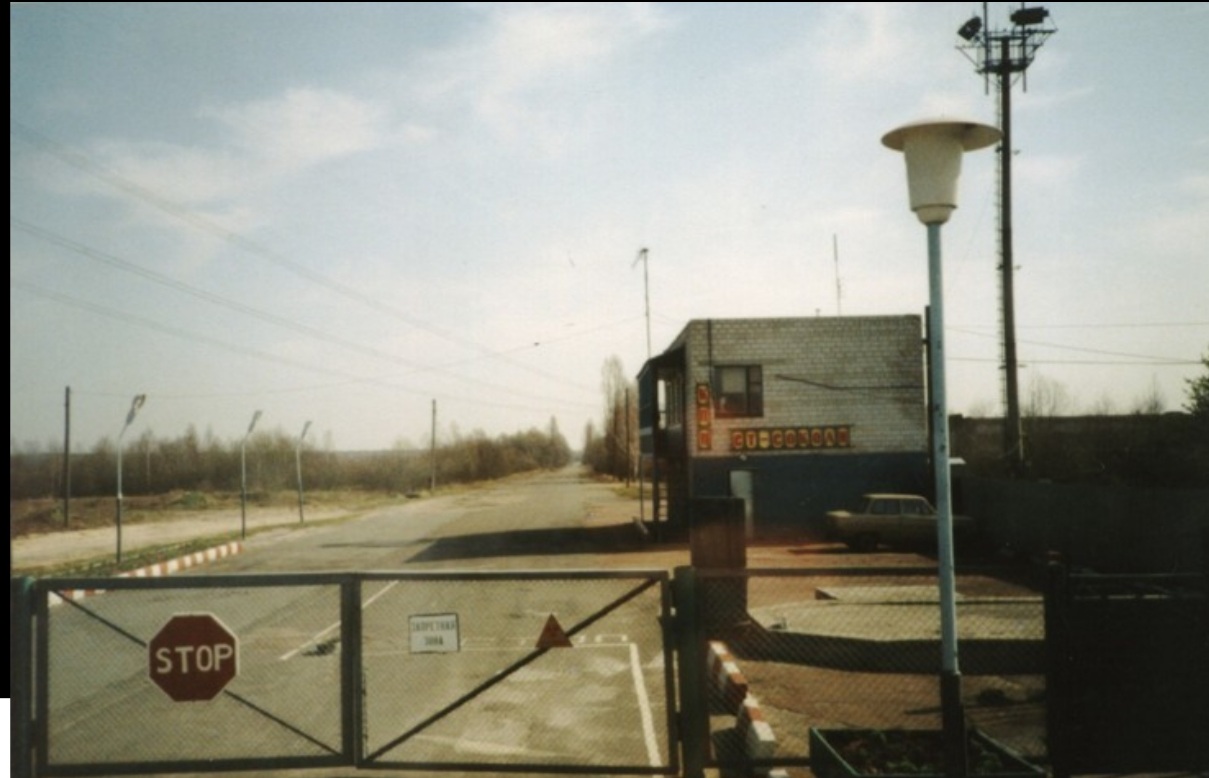
This short book is a memoir of adventures in the Chornobyl Exclusion Zone. There are various categories of people to be found in the poisoned and abandoned area of the 1986 nuclear disaster: legal visitors on guided tours, looters, and elderly people who never left the Zone. The author, Markiyan Kamysh, is part of another category entirely: a community of people who make illegal trips into the heart of the Exclusion Zone, dodging the police and scaling fences. He made over thirty trips in ten years, sometimes as a paid guide but usually with no eye to profit.
Illegal Chornobyl tourists like Kamysh are known as Stalkers, after the 1979 film Stalker which anticipated the Chornobyl disaster. Based on the 1971 novel Roadside Picnic, the film is about a ‘Stalker,’ an underworld figure who guides paying customers into the heart of a forbidden place called The Zone, where the laws of reality do not apply. In the heart of the terrible dangers of The Zone lies a place where wishes can be made to come true.
The novel is more straightforward than the film. I recommend both.
Real life is stranger than fiction. In contemporary Ukraine (before the war, that is), the real Stalkers would enter the Zone even though there was nothing valuable there, except copper wire and stuff like that, which anyway the Stalkers were not interested in.
Rather than explaining his own motivation directly, Kamysh draws us into his memories and experiences and lets them speak for themselves: hiking for days through wilderness, bathing in water that may give him cancer, getting high and drunk in abandoned tower blocks, burning fence-posts by the score to survive a winter night. It is like travelling into an alternate dimension. To go into the Zone is to escape from society and the state – without leaving behind human structures and artefacts. That means discomfort, danger.
The Zone is, in Irish terms, an area roughly the size of County Roscommon. 120,000 people lived in two industrial cities and hundreds of villages, until the area was suddenly evacuated thirty-seven years ago. It would be fascinating to visit such a place in any country in the world; in Ukraine this makes it a massive time capsule of the vanished Soviet Union. The author’s strange affection for the rusting industrial landmarks is partly that (his father was a liquidator) but it is mostly something else.
Kamysh shows an unpleasant contempt toward the legal tourists, and even toward the groups of foreigners for whom he serves as a paid guide from time to time. He does not fear the police, though they have arrested him multiple times and, on occasion, stolen his belongings. He is wary of the looters.
Kamysh barely touches on politics, but he mentions his experiences with street fighting in Kyiv during the upheavals of 2013-14. This book was published in 1019. He joined the Ukrainian military in July 2022 to resist the Russian invasion. That sheds an unexpected light on the question of motivation because obviously it is more dangerous and painful to go to war than to go into the Zone. I wonder how Pripyat and its strange communities are faring these days.
 The 1919 Review