
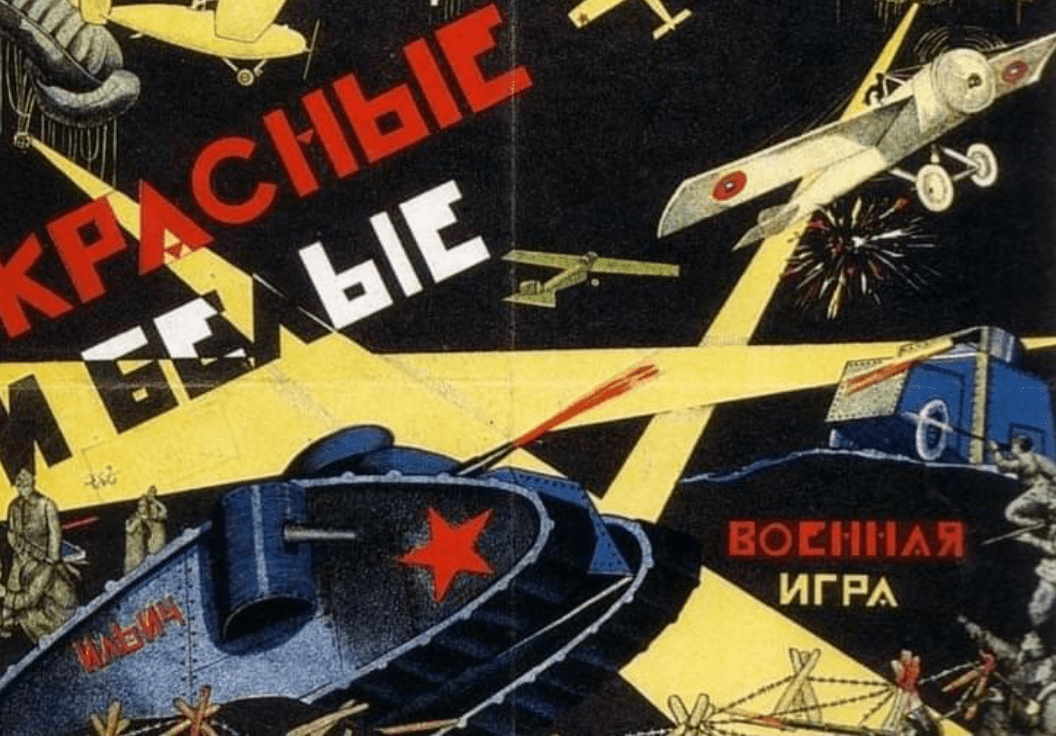
It’s not difficult to come up with a scenario where the Whites win the Russian Civil War.
Don’t get me wrong. The White regimes were all weak internally, riddled with corruption and absurd hierarchies, lacking not only support from the popular classes but much enthusiasm or initiative from the old ruling classes. They were determined to return the land to the landlords, the factories to the bosses, and the colonies and minorities to the yoke of ‘Russia, one and indivisible.’ They crushed their allies in the intelligentsia, and bickered with the Cossacks.
All the same, I can see how they could have won. Not by themselves being stronger, but by their opponents being weaker.
The strengths of the Reds did not emerge automatically. Building a Red Army capable of winning the war was actually not the path of least resistance. A lot of what the Soviet regime achieved in the early years would not have been considered the most likely outcomes at the time.

There are a number of more ‘realistic’ scenarios, each of which on their own would dramatically impair the chances of the Red side in the Civil War.
A) ‘BROAD’ COALITION
The Bolsheviks buckle to pressure immediately after the October Revolution. They kick out Lenin and Trotsky and go into coalition with the Mensheviks and Right SRs. The political compromises this entails (such as returning factories to the control of their old bosses, downgrading the Soviets) leave the working class and the pro-Soviet cohort of peasants confused and demoralised, and embolden the Kornilov movement.
B) WAR WITH GERMANY
Instead of signing the Treaty of Brest-Litovsk, the Soviet regime fights the German military. Its fledgeling forces are decisively crushed and several major Russian cities and provinces are occupied by the Germans.
C) NO RED ARMY
The Soviet regime does not build an army. The real reason is a lack of resolve, but the stated reason is that armies are by their nature authoritarian.
D) NO MILITARY SPECIALISTS
The Red Army does not allow officers from the old Tsarist military to serve. Instead the army is run entirely by NCOs and revolutionaries.
E) ULTRA-LEFT LAND POLICY
The Russian Communists, like their German, Baltic, Hungarian and Polish equivalents, place the nobles’ land under state control instead of allowing the farmers to share it out. The rural population are enraged at the Soviet regime. The army’s rank and file lose all enthusiasm.
F) CHAUVINISTIC NATIONAL POLICY
In this scenario, the Russian communists refuse to accept the right to national self-determination. They are thus unable to win over minority groups from the Whites, and their advance eastward stalls as they step on the feet of one minority grpup after another. In the west, Poland, Estonia and Finland give decisive aid and support to Denikin and Iudenich in summer/autumn 1919, so that Petrograd and Moscow fall to the Whites.
So what would be the consequences of a White victory? That depends on which scenario or combination of scenarios we choose from among the above. (B), war with Germany, would change the very nature of the White movement, creating a whole cohort of German proxies, clients and allies.
Let’s take scenarios D through F and combine them. So the Soviets alienate the farmers and the national minorities, while building an army that lacks technically competent leadership.
Iudenich takes Petrograd, Denikin takes Moscow, and in the east Kolchak recovers and prevents the establishment of a new Soviet base in the Urals.
REPRESSION
In real life (Original Timeline or OTL), when Iudenich was marching on Petrograd, the British minister Churchill felt the need to warn him not to let his troops engage in a massacre after taking the city. The same Churchill, when Denikin’s forces engaged in pogroms to the south, did nothing more than send a letter remonstrating with him. And it was not even a strongly-worded letter.
It’s safe to say that large-scale massacres, especially of Jews and politically active workers, would have accompanied and followed the capture of Moscow or Petrograd. Feeling keenly its own lack of support, the Whites would pander to all ultra-nationalist and ultra-religious tendencies. The bosses and landlords would demand the return of their factories and estates, entailing further violence, a wholesale scourging of the country.
At the same time, the resistance of the poor and of Soviet and Red Army remnants, the establishment or survival of new Red Army base areas on the periphery, the stubborn defence of this or that city, would prolong the war so that it would still be ongoing years later, including in European Russia itself. The Soviets had a far bigger base of support than the Whites, so the mopping-up phase of the war would take correspondingly longer. (Mawdsley even reckons that the Reds could have won the war even if they’d lost Moscow.)
FRAGMENTATION
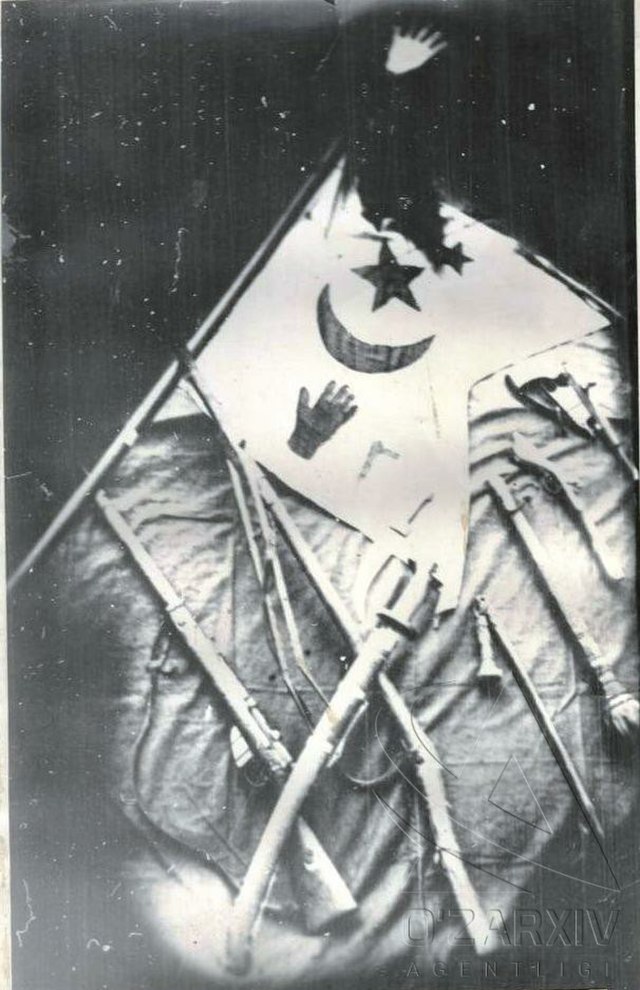
Central Asia is independent. There is no way the Whites can bring it back into the fold the way the Reds managed to, and no way they can take it by force – though if they are foolish they might spend a decade or two trying. The region breaks away in several feudal regimes not at all corresponding to today’s borders.
There is inevitably a Polish- Russian War, even though earlier they cooperated against the Reds. It would be more bitter and prolonged than the Polish- Soviet war in OTL, because the White Russians would consciously inflame chauvinism instead of trying to tamp it down. There might also be Baltic wars, as White armies based in the Baltic states, with aid from German barons, drag the White Moscow regime into efforts to reclaim the old provinces.
Ukraine and Siberia remain hotbeds of partisan warfare for many years, and may even succeed in breaking away, especially if foreign powers (Japan in Siberia, Poland in Ukraine) have their way.
The irony is that in trying to hold onto ‘Russia, one and indivisible’ the Whites end up with a far smaller territory than the OTL Soviet Union. Within the truncated Russian land, mines, factories, forests, oil fields and railways are handed over to the Allies.
Fragmentation might even extend to the White camp itself, as the various White leaders and the disparate factions and contending foreign agents all struggle for power.

THE 20TH CENTURY
What would defeat in Russia mean for the international socialist movement? The prospects for revolution in other countries would be very dim for at least a couple of decades.
What would it mean for Russia in the 20th century? It’s impossible to say, because the White regime would be dynsfunctional and unstable to the point where you can’t predict how it would develop.
In the Indonesia scenario, the defeat of revolution means that Russia remains mired for decades in underdevelopment and crushing poverty under a tyrranical, genocidal regime.
In the China scenario, the defeat in the cities is the prelude to a long struggle in the rural expanse, culminating in the victory of a peasant-based radical movement.
We could consider a Spain, Germany, France or Italy scenario, but Indonesia and China are more to the point as countries suffering from underdevelopment. But a White victory would likely mean that fascism comes early into the world – and is known by a Russian name rather than an Italian, and its definition has secondary differences.
I think we’d be looking at a dysfunctional corrupt dictatorship whose economy is dominated by foreign capital. There would be a conflict between this neocolonial condition and the resentful imperialist designs of the regime and of its support base. Shiny hubs of foreign capital would contrast with brutal squalor all around. Resources are extracted, not developed. Russia would not industrialise as the Soviet Union did in the 1930s; it would be bled just slowly enough to keep it alive, and this process would be hailed as ‘investment.’ Reclaiming former glory would be the leitmotif of establishment politics.
You might wonder where this neocolonial fascist hellhole fits in to 20th Century history. But without the Soviet Union, the 20th Century as we know it doesn’t happen.
In this alternate timeline it’s still conceivable that a re-armed fascist Germany starts a Second World War to turn back the clock on the first. Would White Russia be its ally in grievance (kicking out the foreign capitalists, carving up Ukraine and Poland) or its victim? If the latter, a Russia which has not industrialised would be vulnerable to conquest. That is, unless the Allies consciously beef it up as a foil to Germany, allowing strategic to trump economic interests, like Taiwan or South Korea.
Regardless of how politics and war shake out in some alternate 20th Century, some things are certain, barring thermonuclear extinction. The 20th century was bound to be an era of anti-colonial resistance in Africa, Asia and Latin America, and of revolt by workers, women and minorities in Europe and North America. All these things were bound up in the Russian Revolution, but they were inherent in the global situation no matter how things went in Russia.
 The 1919 Review
I think that counterfactual speculation is not only fun but it is a necessary thought experiment that helps us see the overall significance of what actually happened. Thanks for this
LikeLike