The podcast is back, continuing the audio version of Revolution Under Siege. This time, no automated voice: I’m narrating it myself. Available on Google Podcasts, Spotify, and soon Youtube.

The podcast is back, continuing the audio version of Revolution Under Siege. This time, no automated voice: I’m narrating it myself. Available on Google Podcasts, Spotify, and soon Youtube.
In the cities of Central Russia, hope contends with hunger. On the Eastern Front, the Red Army faces Kolchak.
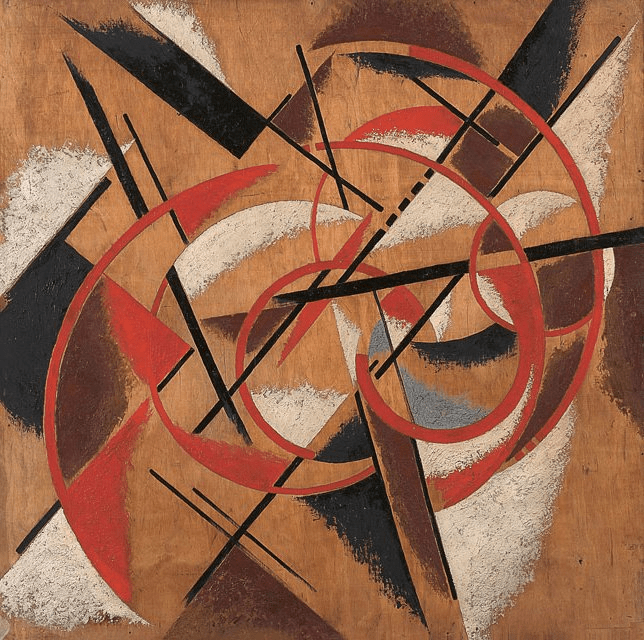
Red wedge and white circle are set on a canvas. The red wedge is slicing into the white circle. Around them smaller shapes are scattered, perhaps fragments shaken loose by violence, or forces of secondary importance in the conflict. It is an abstract image, but it is suffused with energy and struggle. The red object is not larger than the white, but it has shape, momentum, direction.
El Lissitzky painted Beat the Whites with the Red Wedge in 1919, the decisive year of the Russian Civil War. It is one product of the ‘tidal wave of artistic creativity’ which followed the Revolution. This was a golden period for the Constructivist and Suprematist schools, for Malevich, Tatlin, Popova, Rodchenko and many other artists.[i]

The innovation and excitement on the canvas (and of course in the work of poets and writers) was a reflection of the changes the Revolution promised. Serge remembers the officials of the new state apparatus hurrying through the streets: ‘men and women alike, young or ageless, carrying over-stuffed briefcases under their arms’ filled with dossiers, decrees, mandates – ‘the precious first drafts of the future, all this traced in little Remington or Underwood characters.’[ii]
The town houses of individual bourgeois families had been transformed into communal dwellings, housing multiple families. Better than the slums and barracks – or shelled ruins – they had come from. Palaces that had once housed princes and their mistresses now housed public institutions such as the Palace of Motherhood where modern maternity care was driving a wedge into an over-medicalised and patriarchal tradition. Public canteens served up nutritious meals for free. Families availed of public laundries and crèches.
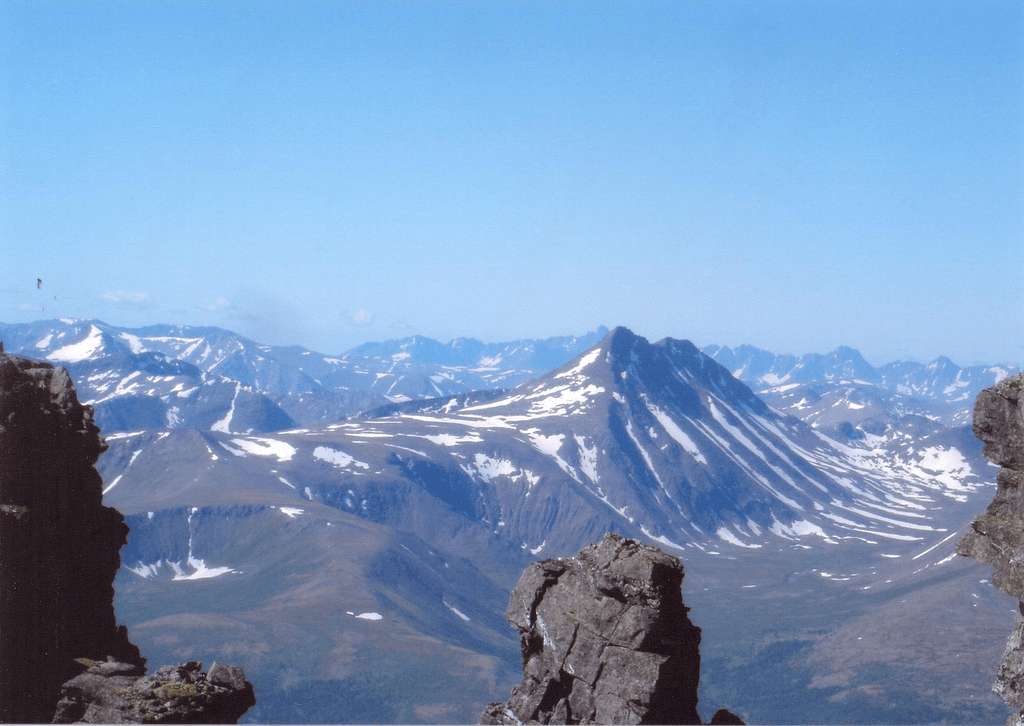
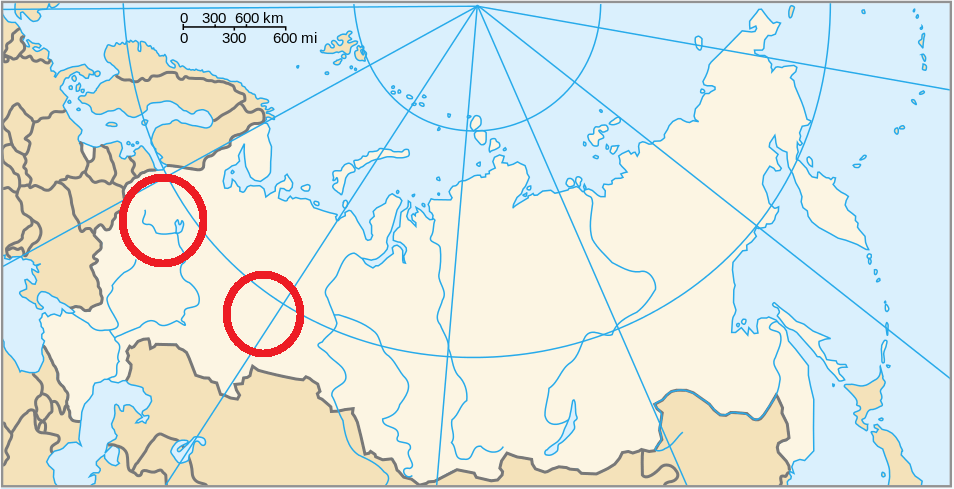
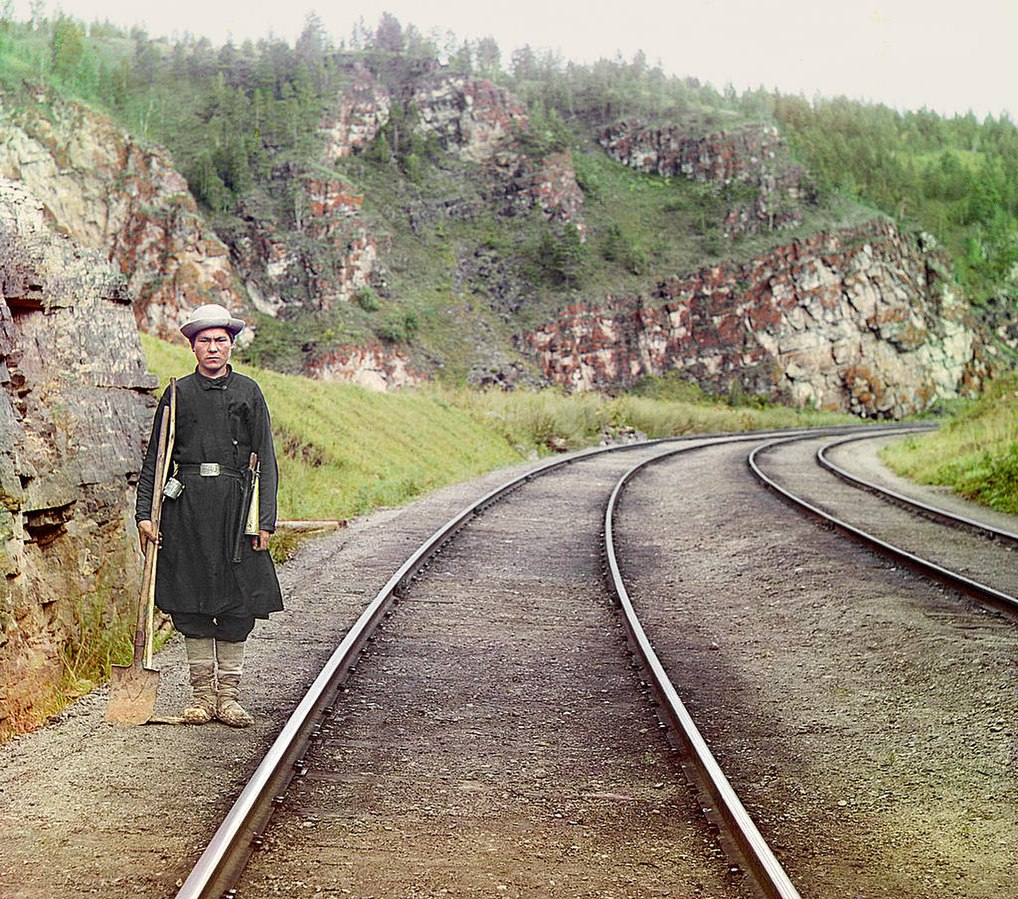
The promise of the revolution delivered on the frontlines too. In February, before the outbreak of Kolchak’s great offensive, the Whites faced a complication in the middle of their frontline when the Bashkirs switched sides to the Reds. The Bashkirs were traditionally a nomadic people. They were one of several ethnic groups like the Tatars and Chuvash who predominated in parts of the Ural and Volga regions (Lenin’s grandfather was a Chuvash tailor from the Volga). It was the Bashkirs who had named the Ural mountains, after their legendary hero who sacrificed himself to enrich the earth.
When the 6,000 Bashkir cavalry went over to the Reds, it was as I said a complication for Kolchak, not a devastating blow. But in hindsight it matters a great deal. The Bashkirs, who lived under a near-medieval social structure, were at first disoriented by a revolution they could not understand, and followed their chiefs and Islamic clerics into the White camp. But the Whites mistreated them and refused to give them autonomy. The Reds made a better offer. It was to be an early example of the decisive importance of the Soviets’ democratic policy on the national question.
Neil Faulkner writes of ‘the explosion of creative activity unleashed by the October Revolution,’ particularly in education. The country went from six universities to sixteen, in just over a year, and courses were open to all and free of charge. ‘The workmen crowd to these courses’, reported journalist Arthur Ransome. ‘One course, for example, is attended by a thousand men, in spite of the appalling cold of the lecture rooms.’ The number of libraries had doubled in Petrograd and tripled in Moscow. ‘In one country district, there were now 73 village libraries, 35 larger libraries, and 500 hut libraries or reading-rooms.’[iii]
These are only a few examples of the sweeping social changes. But the winter of 1918-19 was bleak beyond description. A wreck of an empire emerging from the most terrible war in human history into the disruption attendant upon revolution – these would have been years of hardship even in the best possible scenario. Now, on top of that, civil war had thrown transport and supplies into complete chaos. The food supply system had been broken by the Great War. In 1918 the Soviets had taken grain by force from the villages to avert starvation. Many of the peasants hadn’t bothered planting.
There was no international famine relief effort to speak of. The American Red Cross made a difference – but their activities were confined to Siberia. The Fridtjof-Nansen scheme attempted to feed civilians in both zones. It showed what might have been possible if the rulers of the world had responded with humanity and compassion rather than with an all-out crusade against the revolution. But it was the exception rather than the rule.
The Soviets had nationalised industry and given land to the peasants; for this crime tens of millions of civilians would be collectively punished with the weapon of mass hunger, like the German civilians during World War One, or the Iraqi and North Korean civilians under sanctions in more recent years.
The city and town dwellers of Russia, their immune systems weakened by hunger, became easy prey for typhus and the so-called ‘Spanish Flu’ pandemic. Factories were short of supplies, understaffed by the hungry and the sick. Things were worst of all in Petrograd – a city with no farming hinterland from which to feed itself. Kollontai, the Bolshevik minister who was behind the Palace of Motherhood and other impressive projects, joked bitterly that ‘there is a great deal of moral satisfaction in deciding whether you want thick cabbage soup or thin cabbage soup.’[iv]
The industrial workforce fell from 2.5 million in 1918 to 1.5 million in 1920.[v] Where did all the workers go after the workers’ revolution? Hundreds of thousands into the Red Army; tens of thousands into the state apparatus; millions to the countryside, where food was more plentiful.
In the novel Conquered City, we see a crowd of exhausted and angry factory workers in Petrograd. Timofei sees the sad contrast between this crowd and the same crowd just a few months ago:
This crowd is spineless. The best among them have left. Some are dead. Eight hundred mobilised [for the Red Army] in six months […] they say [Leonti] died in the Urals. Klim is fighting on the Don. Kirk is head of something. Lukin, what happened to Lukin? Timofei could still visualise these veterans standing in this very shop, three or four ranks of men, successive generations who had come up and disappeared within a year. Gone. At the head of the army, at the head of the state, dead: heads riddles with holes, lowered into graves in the Field of Mars to the sound of funeral marches. The Revolution is devouring us. And those who remain are without a voice, for they are the least courageous, the most passive…[vi]
There was cause for hope that things would improve soon. Moscow had launched a ‘peace offensive’ in late 1918. They were offering to let the Whites and their Allied backers hold onto whatever territory they held in exchange for a peace treaty. It was the same basic equation as Brest-Litovsk the year before: space for time. The Soviets had the most to gain from time and the least to gain from war.
The call reached some receptive ears in the west. The Allied leaders were not all on the same page with regard to Russia. The Whites had basically failed in 1918, and many Allied leaders were growing tired of betting on losers. Some, such as Lloyd George in Britain, worried about what might happen even if these losers were to win. The Allies would be responsible for forcing a vicious reactionary regime onto Russia against the will of its people; Lloyd George saw that this would give labour and communist parties ammunition against the establishment.
So in January 1919 a radio broadcast went out from the summit of the Eiffel Tower inviting the Red and White leaders to a peace conference at the Isles of Prinkipo near Istanbul.[vii] In early March the US official William Bullitt was in Moscow offering generous terms for a peace treaty.
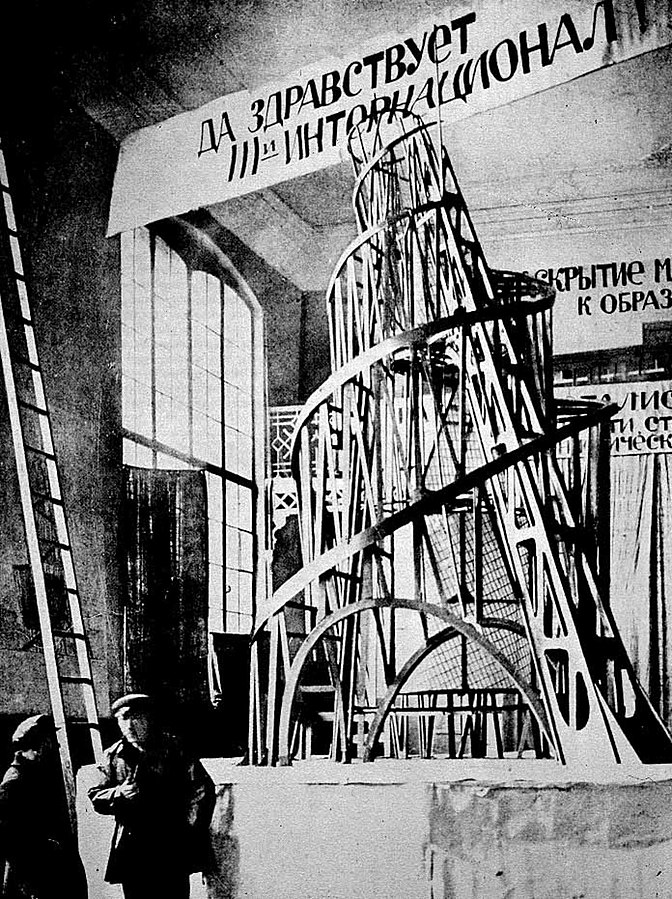
There were other promising developments. The partial bans on the Social-Revolutionaries and Mensheviks were lifted. Strict limits were placed on the power of the Cheka (a quick reminder, the Cheka was the police force which imposed harsh security measures). Central Europe was in the throes of revolution. Southern Europe appeared not to be far behind – see the factory occupations in Italy and the ‘Triennio Bolshevico’ in Spain. In March 1919 the first Comintern Congress met, founding a new communist workers’ international. The artist Tatlin designed an elaborate tower to serve as its headquarters.
But as we saw in Episode 11, in March Kolchak launched an offensive all along the Eastern Front. Kolchak had been enraged by the Eiffel Tower broadcast, and his offensive was in large part intended to cut off the possibility of a peace treaty. In this it was a complete, unqualified success. The advance through the Urals convinced the Allies that the Reds could be crushed, so they made another throw of the dice. The Istanbul conference never happened. Now the Allies were all in.
For civilians in the Red zone, the advance of Kolchak meant new sacrifices – of food and raw materials, of men and women, of energy and time. War production – weapons, boots, uniforms – would remain the priority over civilian production. The slogan was ‘Everything for the Front.’
But hadn’t the people already given everything? Just a few months ago it had sent a levy of thousands of communists and trade unionists into the battle for Kazan. But somehow new reserves were found. A fresh levy of thousands of activists volunteered and went from civilian life into the Red Army. It is a measure of how genuinely popular the Revolution was. It is proof of the fact that great masses of self-sacrificing activists were its lifeblood.
This blood was plentiful but still finite. Sending the best administrators and the most politically active and talented workers into the Red Army meant further impoverishing civilian life. Producing more rifles and uniforms and boots meant not producing consumer goods. Not producing consumer goods meant it was impossible to trade with the countryside. No trade meant that the seizure of foodstuffs from the village had to continue. For every victory at the front, the people were forced to pay a heavy price. For every victory at the front, the Soviet Union was forced to pawn more and more of its assets – Soviet democracy, relations with the peasants, the support of the working class – with the knowledge that they could only be redeemed at great cost, and the fear that they might never be redeemed at all.
Limits on the Cheka and decrees on legality did little or nothing to curb the terror. Contrary to what certain scholars profess,[viii] the Red Terror was not a product of any lack of regard for human rights or the rule of law. It was rather (and the same goes for the White Terror) an expression of the extreme intensity and bitterness of the conflict. The war intensified in early 1919, grew more complex, more threatening. Accordingly, terror on all sides escalated.
Who was the new Soviet state official, carrying some first draft of the future in their briefcase? Perhaps their factory’s Soviet delegate, or that of their regiment or village, or some party activist going back years, recruited to some job in the administration of the new state. They would read appeals in the papers, hear them at meetings and rallies, urging them to go to the front. They would talk the matter over with comrades and loved ones. What entered into the decision? The fear of a bloody White victory. The prospects for revolution in Germany. Maybe lower motives, like a desire to escape the squalor of the city, or to make a name for oneself as a military hero.
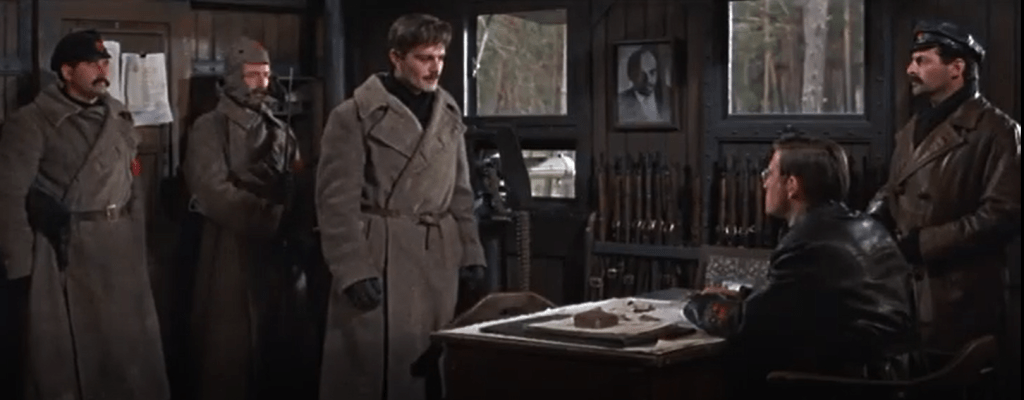
They would decide to take up a rifle and go to the Urals. They might take a day or a week to settle their affairs, then they would go out on the railways across a countryside that was rife with discontent. Entering the Iaroslavl, Ural or Volga military districts, they would take their place in the rear. Here were 147,000 Red Army soldiers, only 18,000 armed – one in seven. The other six would be on transport, supplies, logistics, policing. This was an army without training centres or supply depots. New recruits were simply rushed to their units and there (usually) trained and (sometimes) equipped. This was anything but a streamlined red wedge.
In one of these rear military districts, the Middle Volga, there was a peasant guerrilla campaign against the Red Army. It fought under the confused slogan ‘Long live the Bolsheviks, Down with the Communists!’ How to explain this? The Bolsheviks had given the land to the peasants, and then under the new name of ‘Communist Party’ had come back a few months later to seize their grain. An Extraordinary Tax imposed in November 1918 had proved desperately unpopular, and the civilian Soviet administration was guilty of ‘manifest malpractises.’ Of course it was, if the best people had been poached by the Red Army.
Having passed through the rear areas, the volunteer would arrive at the eastern front.
The front against Kolchak was huge and complex (though in scale it did not even approach the frontlines of the First World War). From Perm in the north to Ufa in the centre and on to Orenburg in the south is a distance of over 700 kilometres. While they stretch a long way north to south, from snow to sand, the Ural Mountains are nowhere near as tall as the Andes or the Himalayas. Nonetheless, they represent a barrier with dense forests and steep, rough ground.
Five Red Armies were distributed across this front, billeted in the villages or in the mining and factory towns. Each Red Army numbered between 10 and 30,000, to a total of 120,000. Here 84,000, two in three, were armed. It was not a case of ‘every second man gets a rifle’ or anything so absurd. The unarmed were driving wagons, carrying stretchers or cooking dinner.
Now let’s look at the other side of the frontline, once again surveying the situation from north to south. There was a White army of 45,000 around Perm and another, 48,000-strong, at Ufa in the middle. In the south were two loose armies of White Guards, Cossacks and others, one numbering 20,000 and another numbering 25,000, who had been fighting against Red Guard militias around Orenburg on-and-off for over a year.
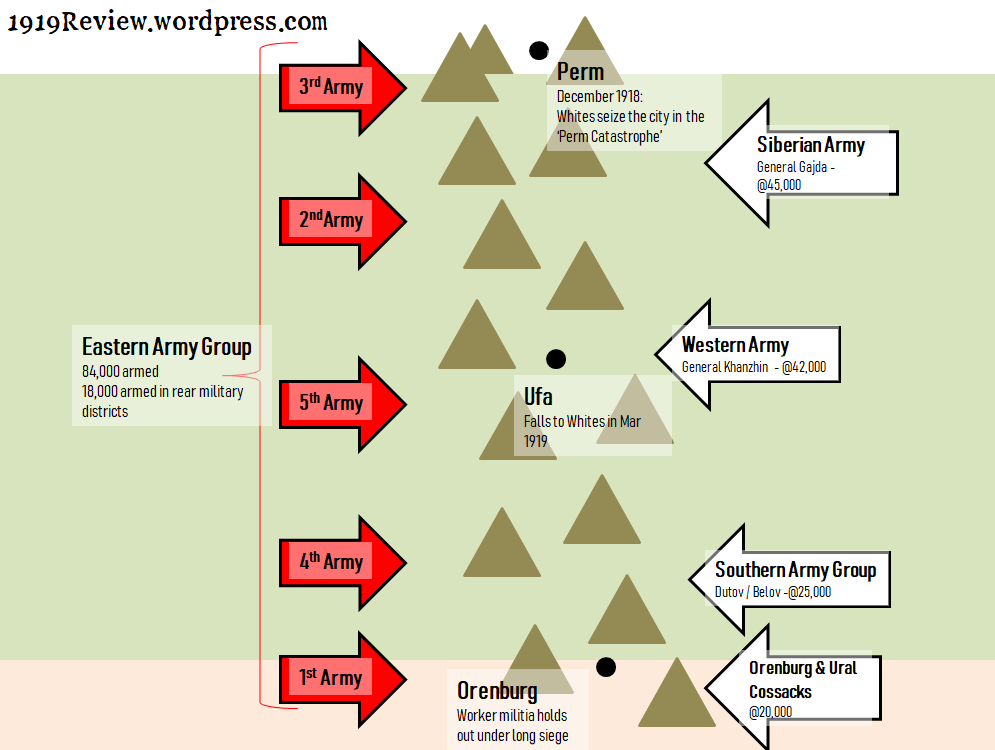
I have remarked that Kolchak was a landlocked admiral, but the irony is spoiled by the fact that Russia is a land of massive waterways and on this eastern front there was a naval struggle between Red and White flotillas on the Volga and Kama rivers. Here the Reds had the advantage thanks to the sailors of the Baltic fleet. This advantage on the water meant they could outflank Gajda on the land. The Czech officer had covered himself with ostentatious honours after his victory at Perm, but now he was on the back foot.
Back on the Red lines, the newcomer would have found the Red Army in a state of internal struggle and rapid change. In early 1919 a new culture of discipline still contended with the Red Guard and guerrilla mentality. In March the 8th PartyCongress thrashed out the arguments even as Kolchak was advancing. In a political victory for Trotsky, the delegates came down on the side of the centralised, disciplined, professional army. A congress decision is instant, but the implementation of the decision in the real live Red Army would be a more difficult matter.
Having conquered an area the size of Britain, the Whites dug in from April into May as the spring floodsmade the roads impassable. But challenges emerged in the new territories. In Siberia, the land question was not the burning issue it was in Central Russia. So the regressive land policy of the Kolchak regime was not a huge liability. But the further west they advanced, the more of a liability it became.
In March the White vanguard had distributed leaflets proclaiming ‘Bread is coming!’ from Siberia. But, like all the contending forces in the Russian Civil War and in every war in Russian history to that point, the soldiers distributing these fliers were taking bread from the people.
In short, the people of the conquered territories had no reason to welcome the Whites.
Even at the high point of their advance, one anonymous White officer was pessimistic: ‘Don’t think that our successful advances are a result of military prowess. For it is much simpler than that – when they run away we advance; when we run away they will advance.’[ix] Here is a cynical but not entirely wrong view of the Civil War: retreat and attack as a function of inertia, not élan on the one hand or disintegration on the other.
In Mid-April Kolchak was at his height. But on the southern end of his front the worker militia at Orenburg still held out, a wedge sticking into his lines and forcing him to widen his front. A fresh attack by two divisions of his Fourth Corps ended in disaster on April 27th, when they were almost annihilated on a river bank near Orenburg.

Desertion was becoming a serious problem. An order to Red Army units from May 1st gives a vivid sense of what this meant:
Deserters from the enemy are to be received in a friendly way, as comrades who have freed themselves from under Kolchak’s lash, or as repentant adversaries. This applies not only to soldiers but also to officers. […] Enemies who have surrendered or who have been taken prisoner are in no case to be shot. Arbitrary shooting of men who come over from the enemy, as also of prisoners of war, will be punished ruthlessly in accordance with military law.[x]
This indicates that trigger-happy Red soldiers were still a problem. It also indicates that by May desertion from the ranks of Kolchak was occurring on a considerable scale. Finally this order shows us how, reinforced by the Congress decision of March, a new level of discipline was emerging in Eastern Army Group.
The Spring floods receded. In a few months, Eastern Army Group had tripled in numbers, from 120,000 to 361,000. The resistance at Orenburg made a concentration of forces possible, and on May 4th a mobile group went on the offensive. Soon the five Red Armies were on the move eastward again. The White Western Army, which had seized the town of Ufa in March, was driven back to the Belaia River. More Whites deserted. Red prisoners-of-war incorporated into the White ranks changed sides again at the first opportunity. The White force around Ufa had numbered 62,000. It soon withered to 15,000.
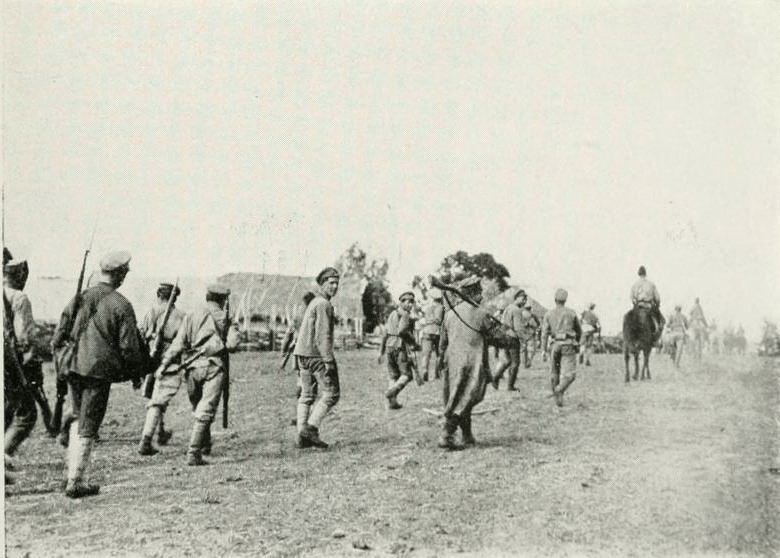
The fresh communist volunteer in the ranks of the Red Eastern Army Group would have encountered people like Vasily Chapaev, an NCO in the Tsarist army turned Red commander. In the 1934 war film Chapaev he is a truly magnetic character, played by Boris Babochkin. He is depicted as being in conflict with himself: he is very much the Red Guard leader, rakish and untidy, thundering around on a cart gesturing furiously. He only learned to read in 1917 and is not what a communist would call politically developed; he is not sure whether it’s the first, second or third international that he is supposed to support. But his bluster shows that these are deficiencies he is deeply ashamed of.
His commissar, a newcomer to the unit, has some of the men arrested for looting. Chapaev’s first instinct is to stick up for his men and to tell his commissar to go to hell, but once his initial rage has passed he submits in a dignified way to his commissar, and has the criminals punished. After this, he and the commissar work as a team; he dresses more sharply; he demands more of the soldiers.
For the purposes of the point I’m making, I don’t care whether these details are accurate in relation to Chapaev himself. Nor am I concerned with the realism of this or that battle scene. My point is that the key conflict in Chapaev captures in an authentic way the development within the Red Army at this moment. It was a decisive advance, not only geographically but in terms of organisation.
Meanwhile the real Chapaev was playing a key role in the advance of Eastern Army Group. On June 9th he led his 25th Division in a sudden strike across the Belaia River and seized Ufa. There they found huge reserves of food and grain.[xi]
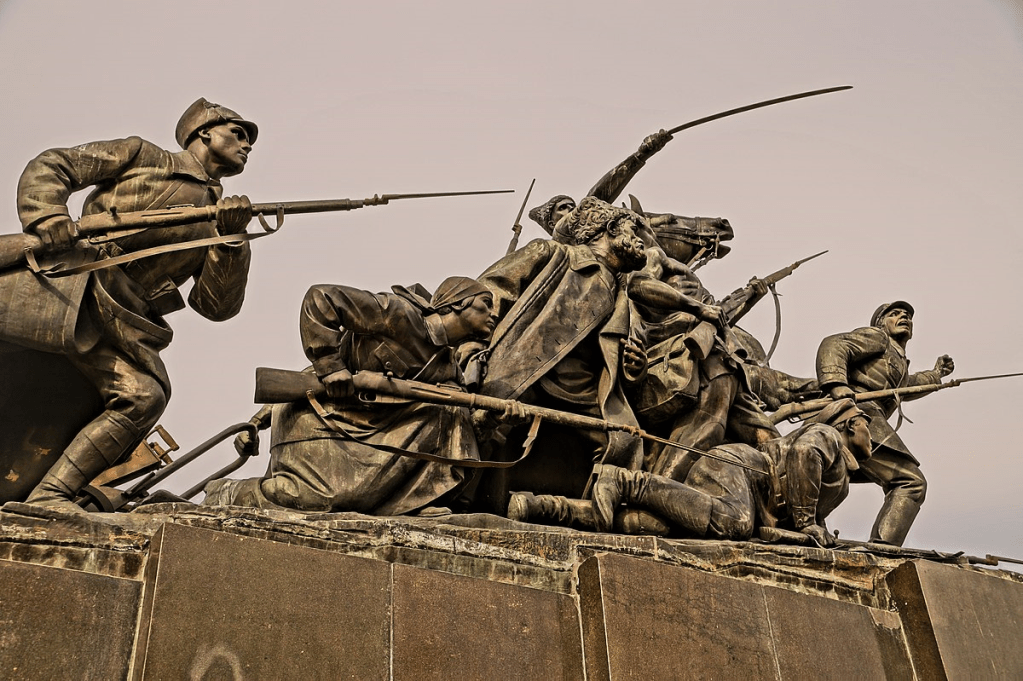
Even the Third Red Army, much maligned after it was devastated in the ‘Perm Catastrophe’ of December 1918, recovered its fighting spirit and, on July 1st, recovered Perm itself.
On May 29th Lenin had said, ‘If before winter we do not take the Urals, I consider that the defeat of the revolution will be inevitable.’[xii] Perhaps he feared Kolchak consolidating his hold over the Urals, developing war industries there, with Allied aid pouring in all the while. He need not have worried. Never mind winter – by August, the White Guards had been cleared out of the Ural Mountains. The red wedge was cutting deep into the sphere of the Whites.
To finish where we began, the Bashkir cavalry had picked the winning side before it was clear who would win. But by late summer they would have been confident that their choice had been the right one, at least as far as the Eastern Front was concerned. They were the first of many minority peoples to come over to the Reds, really their first successful advance beyond ‘Great Russia’ since the outbreak of full-scale war in spring 1918.
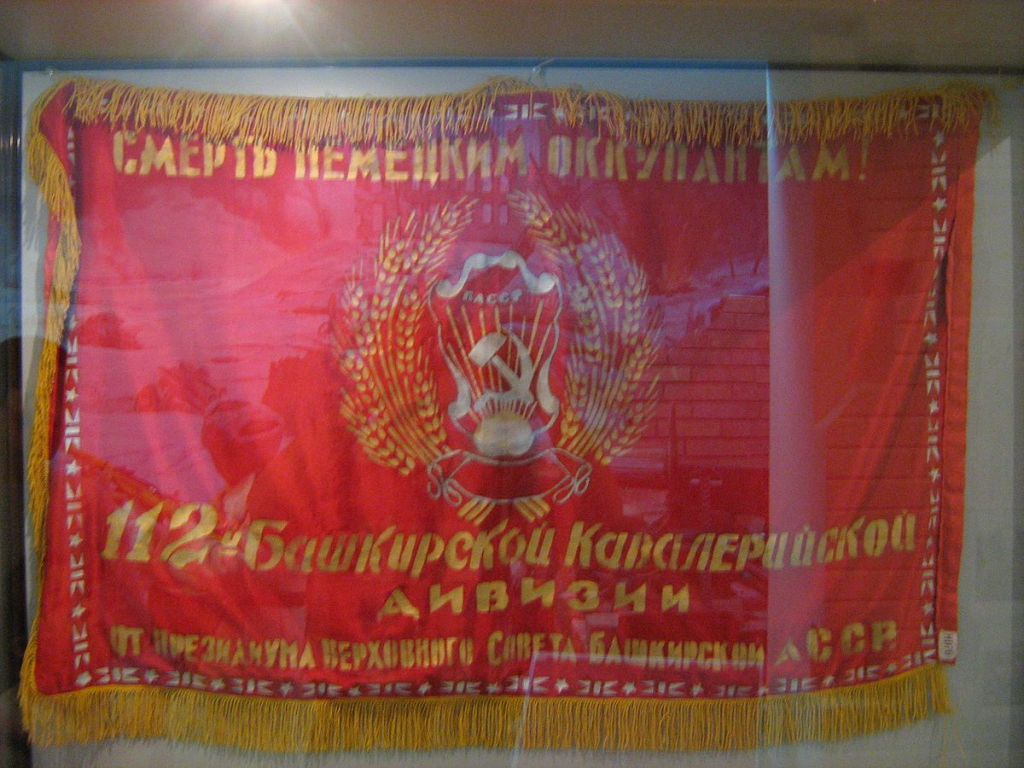
The Revolution had won over the Bashkirs with the promise of autonomy and respect for their culture. Today the Autonomous Republic of Bashkortostan lives on as a direct descendant of the first Autonomous Soviet Socialist Republic. It has four million inhabitants, most of them Bashkirs and Tatars, and its capital is Ufa. This territory was wrested from the hands of ‘Great-Russian’ chauvinists by the advance of the Red Army in spring 1919.
Go to Revolution Under Siege Archive
[i] Conor Burke, ‘How revolution unleashed a tidal wave of creativity,’ Socialist Alternative journal, Winter 2017, pp 11-14
[ii] Serge, Victor, Conquered City, trans Richard Greeman, New York Review of Books, 1932 (2011), p 14
[iii] Neil Faulkner, A People’s History of the Russian Revolution, Chapter 9, World Revolution. Stable URL: https://www.jstor.org/stable/j.ctt1k85dnw.16
[iv] Ibid
[v] Ibid
[vi] Serge, Conquered City, p 65
[vii] Smele, p 110. It was to Prinkipo that tens of thousands of Whites later fled. There, too, Trotsky was exiled from the Soviet Union years later.
[viii] Smith: ‘The Bolsheviks simply did not believe in abstract rights, and one consequence was that it left Soviet citizens bereft of a language in which they could seek redress against the arbitrary actions of the state.’ Russia in Revolution (p. 386). OUP Oxford. Kindle Edition. See also the essay ‘Red Tsaritsyn’ by Robert Argenbright
[ix] Smele, p 114
[x] Trotsky, How the Revolution Armed, Volume 2, Order 92, May 1st 1919
[xi] This episode is absent from the film. Beevor’s account (p 298) is a little unclear but he seems to suggest Chapaev was dead by February 1919 in which case his most significant military feat could not have happened. Either that or Beevor jumped forward a year, or it was a typo. As a brief update on my ongoing assessment of Beevor’s contribution, I am still getting good concrete details out of this book. He knows when to slow the narrative down to real-time and when to focus on an interesting character. His anti-communist bias is still obvious but generally not as intrusive as in the chapter I reviewed in detail. He hasn’t mentioned Lenin much in a while, so I haven’t been forced to visualise the veins standing out purple on his forehead. But there is something about his preoccupation with squalor and gore that nearly repels me. I think it’s a question of theme. What is he trying to say with this book? That Russia is a land of squalor and gore?
On the Chapaev film and on the commmoration of the Civil War more generally, this is fascinating: https://iro.uiowa.edu/esploro/outputs/doctoral/Children-of-Chapaev-the-Russian-Civil/9983777197702771
[xii] Mawdsley, p 203
A British officer named Gough, before being sent out to the Baltic to join the ‘crusade’ against the Russian Revolution, spoke with Winston Churchill in London:
Pacing about his room and constantly referring to a map of Russia on the wall, Churchill optimistically explained to Gough how the various invasions then under way against the Bolsheviks – Kolchak from the east, Denikin from the south and the British from the north, together with the one proposed by General Iudenich from the Baltic – would encircle and crush the Reds. ‘He seemed to overlook the scale of the map,’ Gough noted, ‘and that these four movements, separated by immense distances, were handicapped by very inferior numbers and equipment […]’
Churchill dismissed these arguments: ‘Bolshevik morale was low and the resolute advance of even small armies would cause their organisation to disintegrate.’[i]
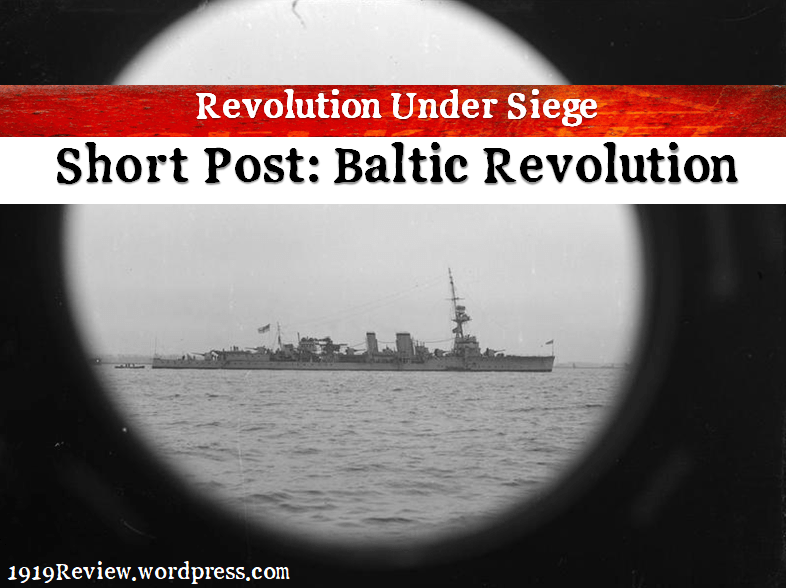
This is a short post in Revolution Under Siege, a series about the Russian Civil War. There are theatres of the war which I have neglected in the main narrative. I have never been quite so crazy as to think I can write this series as a comprehensive history of the war. In this short post we will deal with one of these neglected areas: the Baltic, specifically Estonia and Latvia.
Estonia and Latvia, proudly independent states today, were until 1917 mere provinces of the Russian Empire – though like Poland they were more industrially and commercially developed than Russia itself.
The main landowners were all to be found among the ‘Balts,’ a privileged German minority of 10% or so. These Baltic barons were more German than the Germans (like the Nazi Alfred Rosenberg) and more Russian than the Russians (Like Budberg and Ungern-Sternberg) but dismissive of the language and culture of the majority. Their wealth and titles rested on the labour of Estonian-speaking and Latvian-speaking farmers. In the cities lived the cultural melting pot that was the working class – Estonian, Latvian, Lithuanian, Polish, Jewish, Russian, German and Belorussian. Among the middle classes and professionals, here as in many European countries in the era, national pride was awakening.
In 1917, Estonia and Latvia were Bolshevik. This will not be a surprise to readers who recall the key role of the Latvian Rifles in 1918.
For reasons we have discussed before, the Constituent Assembly elections of December 1917 gave a massive and unfair advantage to the Right SRs. Even so, the Bolsheviks won 40% of the popular vote in Estonia – as against 32% for the Estonian Nationalists. In Latvia, the result was 72% for the Bolsheviks, 23% for the nationalists, the highest Bolshevik vote of any electoral district in the whole of the former Russian Empire.
Tallinn (Capital of Estonia, then called Reval) had its own October Revolution a day before the events in Petrograd, when Jan Aanvelt declared a Soviet Republic. In the first week of November, every major city in Estonia declared for the Soviet power.
But already by mid-1917 the German military had conquered Riga (Capital of Latvia). In February 1918 the Germans renewed the offensive, conquering Estonia. Part of their casus belli was that they wanted to ‘protect’ the Baltic German barons from having their lands taken off them.
On February 22nd the Soviet government debated whether to accept the Brest-Litovsk Treaty, which would effectively hand over Latvia and Estonia to the German Empire.
Stupochenko, who took part in the debate, described its conclusion: ‘The fraction decided by a majority to sign the treaty, making voting compulsory for all Bolshevists [sic] except the Latvian comrades, who were permitted to leave the room before it took place, since they could not be expected to take responsibility for the doom of Soviet Latvia.’[ii]
The offensive and the treaty destroyed the revolution in the Baltic States. These were grim days for the working class. German occupiers put the Baltic German barons back in charge and destroyed the Soviets. My Anglophone sources are silent on how the occupiers treated the Bolsheviks and other socialist parties, but they tell me that the liberal nationalist politicians were scorned by the occupiers, now and then locked up; but that in general the period of German occupation was favourable to them.
Evan Mawdsley phrases this in a curious way. Nine months of ‘relative stability’ gave a chance for ‘national consolidation.’ I would word it differently: nine months of military occupation destroyed the workers’ revolution and gave the wealthier classes a breathing space to rebuild their hegemony. Under the protection of the Germans, Russian White Guards began building armies in Estonia and Latvia. The Baltic States began serving as ‘a kennel for the guard-dogs of the counter-revolution.’[iii]
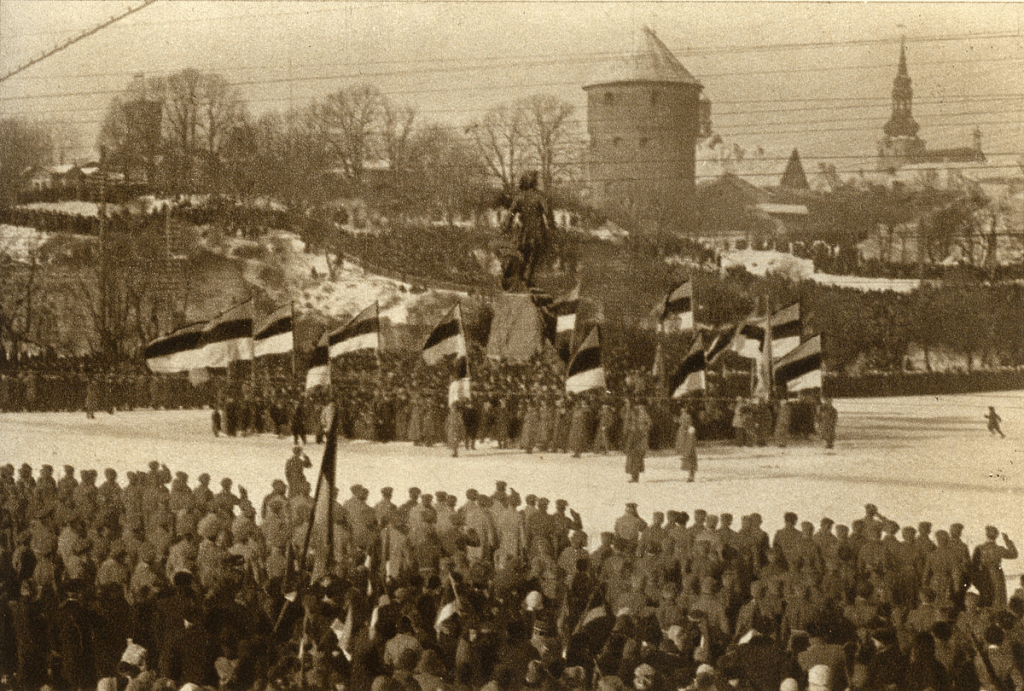
At the start of November 1918, with revolution and surrender in Germany, everything changed. In Estonia and Latvia a new, dynamic, complex situation emerged. New states, foreign intervention, revolutionaries and counter-revolutionaries were all in the mix.
British historians (see Kinvig and Mawdsley) tend to take the British ruling class at its word. It goes without saying, for them, that the Germans and the Soviets were up to no good but that the British armed forces intervened in the Baltic area to defend small nations and democracy.[iv] The Estonian and Latvian nationalists who eventually won are treated, in a teleological scheme, as the only legitimate local forces.
These parties and institutions are referred to by the name of their respective country – so it’s ‘Estonia’ against ‘the Bolsheviks,’ treating the former as the very embodiment of an entire nation and downgrading the latter to a wretched bunch of interlopers.[v] They will acknowledge that Estonia and Latvia had ‘significant groups of Bolshevik sympathisers among their population,’ but also say that they were ‘invaded by the Bolsheviks… under the guise of creating a federation.’ The British, meanwhile, wish to ‘come quickly to the aid of the new states.’ No ‘guises’ here.[vi]
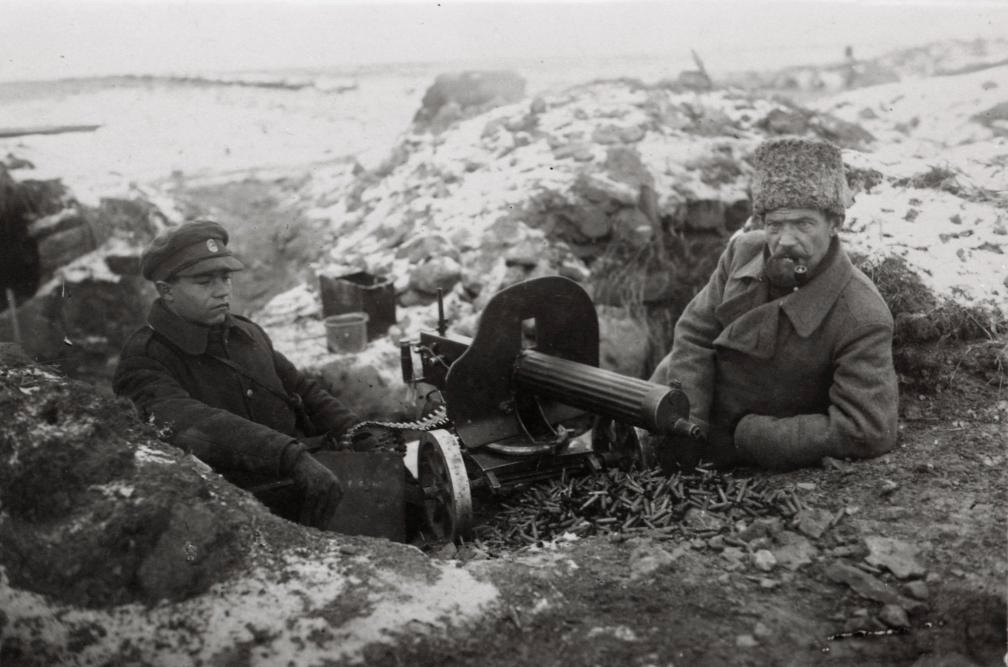
I think we should start from a different perspective.
Civil War took place across the Baltic States, spilling over national boundaries. It was a class war with national cross-currents. As far as I can make out (reading between the lines of sources which are not interested in such questions), the main class forces were as follows:
Let’s flesh out this simple schema by introducing some of the concrete forces and events involved.
First, meet General Ruediger Von Der Goltz.[vii] Right when the Allies were cooking up the Versailles Treaty with the aim of trampling Germany into the ground, they were allowing thousands of German soldiers to represent German imperialism in Latvia. Against the Reds, any ally was a worthy ally.
By 1918 the German occupation force in the Baltic was ‘demoralised, mutinous and frankly Bolshevik’[viii] but help was on the way. Von Der Goltz arrived in February 1919 and took over an area around Libau, Latvia. He had a powerful base of support in the form of the wealthy Baltic Germans, plus German volunteers who had fought under him in the Finnish Civil War. Then came the ‘Freikorps,’ those military veterans turned paramilitaries who had crushed the Spartacus Uprising of January 1919.
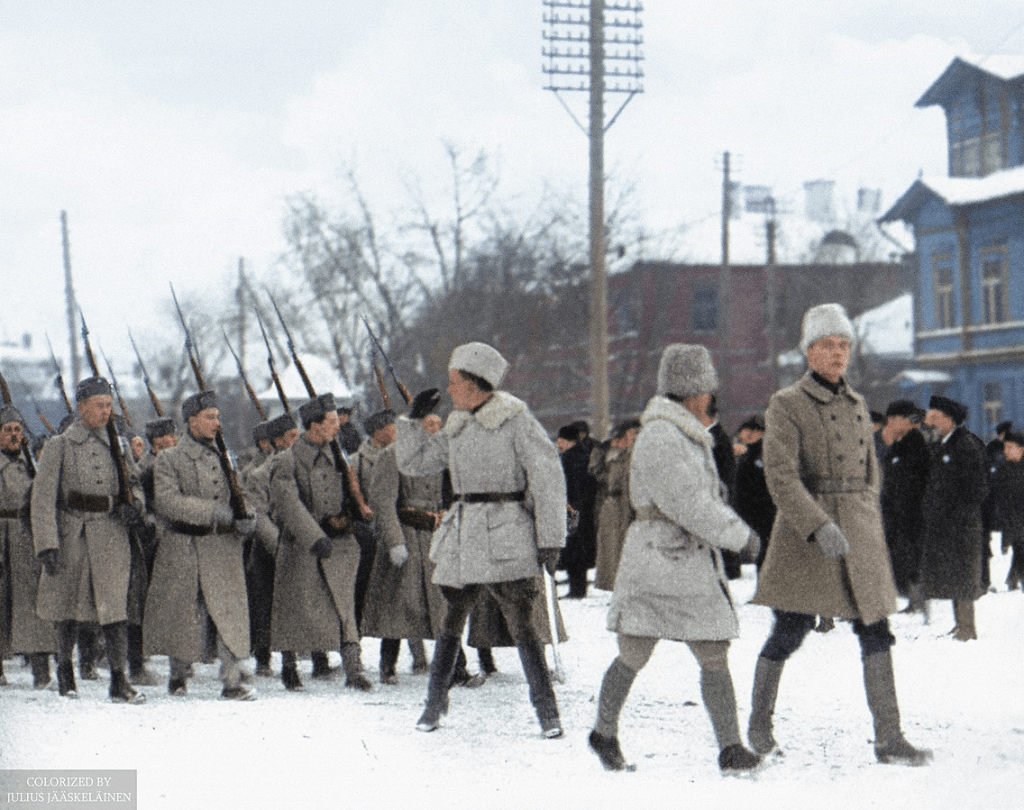
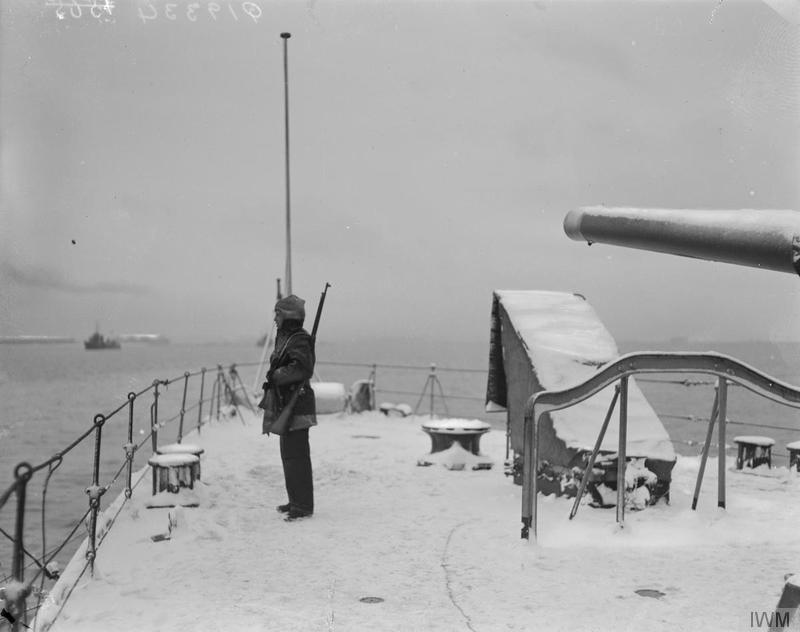
Within days of the Estonian and Latvian nationalists declaring independence in November 1918, the British navy was knocking on their doors and dumping thousands of weapons on their doorsteps. A little way into 1919, the armies of the Latvian and Estonian nationalists were kitted out from head to toe in British uniforms. The British fleet dominated the Baltic Sea and soon the Gulf of Finland, too. They sank Soviet ships in brief and one-sided naval battles, laid siege to the island fortress of Kronstadt, made daring raids into its harbour, ran agents in and out of Petrograd by boat, and lobbed shells at any Red Army unit that strayed into range near the coast. When the Red troops at the coastal fort of Krasnaya Gorka rose in a mutiny against the Soviets, the British supported them with artillery fire.
They also operated a kind of taxi service across the Baltic, ferrying White Russians, nationalists and Germans around to engage in talks; the British sometimes lost their patience in their attempts to get these mutually hostile forces to work together. They were the fixers. Without them the component parts of this anti-Soviet alliance would have been at each other’s throats.
The counter-revolutionary Russians who gathered their forces in Estonia constituted perhaps the most openly reactionary of the White Guard armies. There was none of the ‘keeping up democratic appearances’ that we get with Kolchak and Denikin; their recruits took the oath of loyalty to the Tsar.
But Estonia was exactly where a little bit of moderation would have gone a long way; the Whites and the Estonian nationalists fought side-by-side against the Reds, but their refusal to even consider granting self-determination meant the Estonians were not exactly ready to follow them to the gates of hell (or even, as it happened, Petrograd).
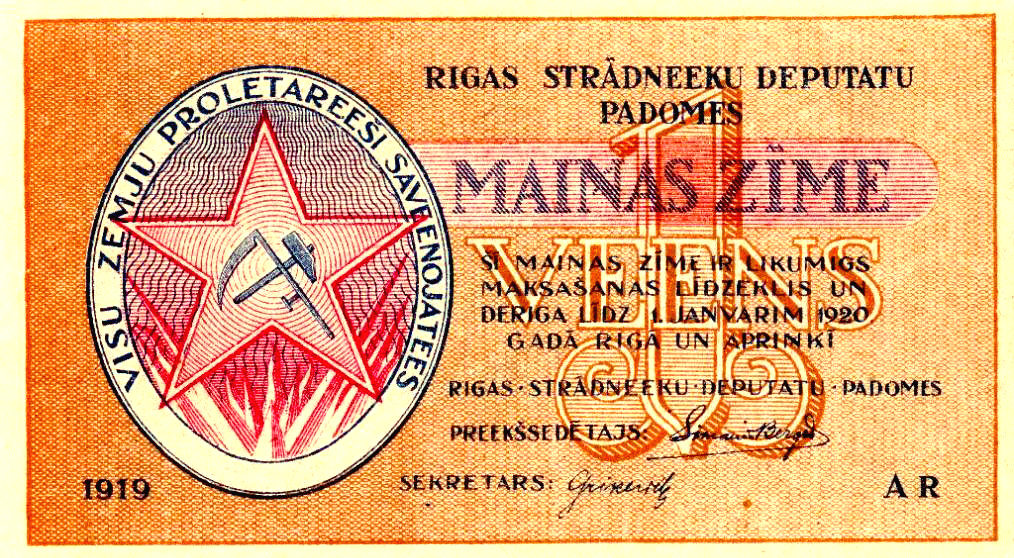
Early in 1919, the Latvian Soviet Republic made great gains, took Riga, and looked fairly secure. Meanwhile the Estonian Workers’ Commune established itself in the east of Estonia and took on the nationalists. The Workers’ Commune was supported by the Seventh Red Army, and soon it was 40 miles from Tallinn.
But by summer this had all melted into air. Finnish, White Russian and British aid for the Estonian nationalists secured a military victory. The Red Estonians (and there were many) were defeated and driven into Russia.
British naval guns were used to ‘help put down a mutiny among the Latvian [nationalist] troops’ and then to support the Germans in an assault on the Red-held town of Windau.

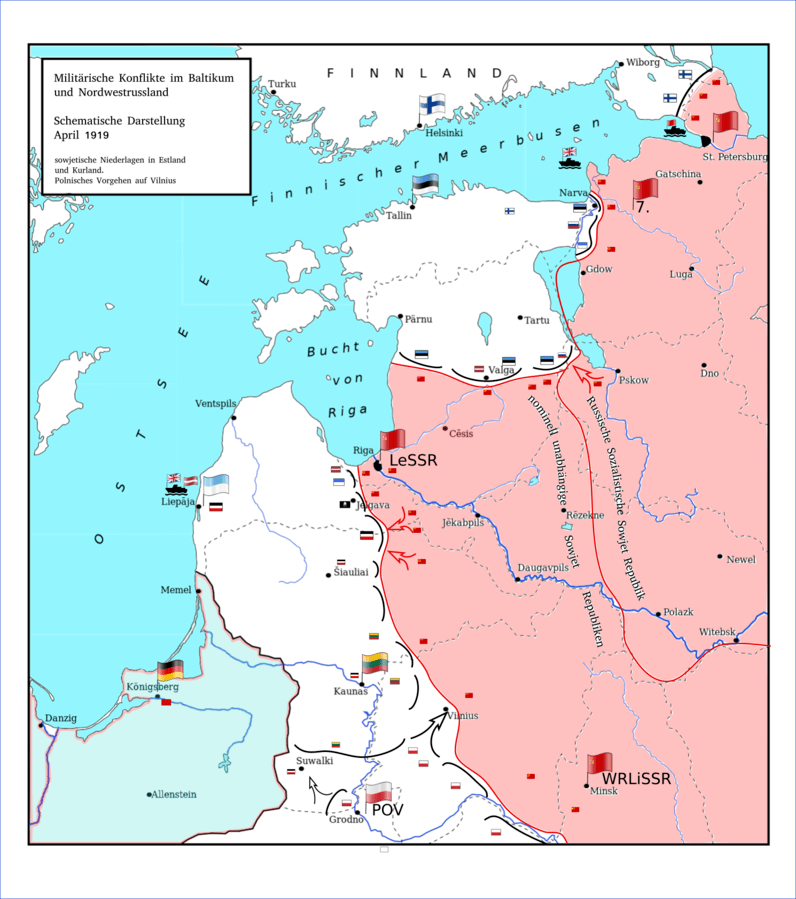

So far, so much foreign intervention. But there was a political side to these defeats. The Latvian Communists were ultra-left, like their Ukrainian comrades. They engaged in ambitious economic experiments and refused to give the nobles’ land to the peasants. This was in stark contrast to the Estonian nationalists, who carried out an ambitious land reform programme and gained popularity. This is barely remarked upon by my sources but it must have been of decisive importance.
Late in spring, things had turned so sour for the Soviets that the White Russians were able to make an attack from Estonia onto Russian soil. This attack was defeated, but it seems it was only a probing attack; the real onslaught came in October.
Meanwhile Von Der Goltz had risen up against the Latvian nationalists. In April forces semi-connected to him took Libau and arrested the Latvian government, denouncing them as Bolshevik sympathisers. A few weeks later, he invaded Estonia.
His ‘Iron Division’ took Riga in May and 3,000 people lost their lives during ‘a veritable reign of terror’ in the occupied city. His ambition appears to have been to carve out a Baltic German state.
In June the Latvian and Estonian armies ganged up and defeated Von Der Goltz and his army. The British, ever with their eyes on the prize (smashing communism), brokered a peace deal which involved clearing the Germans out of Latvia.
With the Germans defeated and the new independent republics consolidated, the situation by the end of the summer was not quite so complex: there were now two small anti-communist states consolidated just to the east of Petrograd, armed to the teeth with British rifles… And playing host to thousands of armed and trained White Russians who would rather see them dead than independent.
And the British had a task for these White Russians.
In late summer, a celebrated Russian general named Iudenich arrived in Helsinki. He had made his name inflicting heavy defeats on the Turkish army during the World War, and now he had been appointed commander of the White Guards in Estonia by Admiral Kolchak. British supplies began flooding in: 40,000 uniforms in August and September 1919 alone.[ix] Iudenich set out to take Petrograd, and by early October he was in the suburbs of the city.
But that’s a story for another post; this short post can at most serve as a prologue to that drama.
Let’s finish with a strange image that Kinvig gives us.[x] After the defeat of Von Der Goltz, the Baltic German force known as the Landwehr were not disarmed. Instead Harold Alexander, a Lieutenant-Colonel of the Irish Guards who was somehow still in his 20s, took command of 2,000 of them and led them to the front against the Reds. He campaigned ‘dressed in his Irish Guards uniform, but wearing Russian highboots and a grey astrakhan Cossack-type hat.’ I think this image sums up the strange features of revolution and counter-revolution on the Baltic.

By way of an appendix, I am getting a lot out of Clifford Kinvig’s book Churchill’s Crusade. It is heavily critical of British intervention – of course it is, since it is based on the testimony of the British officers who saw the fiasco first-hand. It’s a great book.
But one tic of Kinvig’s really annoys me: he relentlessly refers to the Red Army as ‘the Bolsheviks.’ The party was renamed in March 1918 to ‘Communist Party’ – and anyway, we are talking about the army, not the party. There were SRs and non-party individuals in high positions in the Red Army throughout the Civil War period. It’s true that 5-10% of the army were party members by late 1919. But obviously 90%+ were not!
By using the term in the way that he does, Kinvig is telling us how he sees the revolution: as the accidental triumph of a bunch of cranks. I hope this series has demonstrated that nothing could be further from the truth.
The non-party Red Army soldier and Red commander had various and complicated motivations; national defence, a desire to beat the landlords, a genuine ‘non-political’ ethos of service, state compulsion, etc. They would not have been surprised to be sneered at as a ‘Bolshevik’ by their conservative uncle or their kulak neighbour, they might be surprised that a historian is still using the term decades later.
Go to Revolution Under Siege Archive
[i] Clifford Kinvig, Churchill’s Crusade, 142
[ii] Erich Wollenberg, The Red Army, chapter 1. https://www.marxists.org/history/ussr/government/red-army/1937/wollenberg-red-army/ch01.htm
[iii] LD Trotsky, How the Revolution Armed, Volume 2: ‘Petrograd, be on your guard!’ – December 22nd 1919
[iv] It is accepted, after all, by a majority of people the world over that one’s own nation (whichever nation that might happen to be) is the only benevolent force in a dangerous world.
[v] Exercising hindsight in this way is not necessarily outrageous. But the contrast between the treatment of Estonia [applause] and Soviet Russia [Boo! Hiss!] is striking. Even the most enthusiastic Irish Nationalist historians do not refer to the underground Dáil Éireann of 1919 as ‘Ireland.’
[vi] Kinvig, 135
[vii] ‘Ataman Goltsev’ to the People’s Commissar for Nicknames, Trotsky
[viii] Kinvig, 136
[ix] Khvostov and Karachtchouk, White Armies, 12
[x] Kinvig, 143
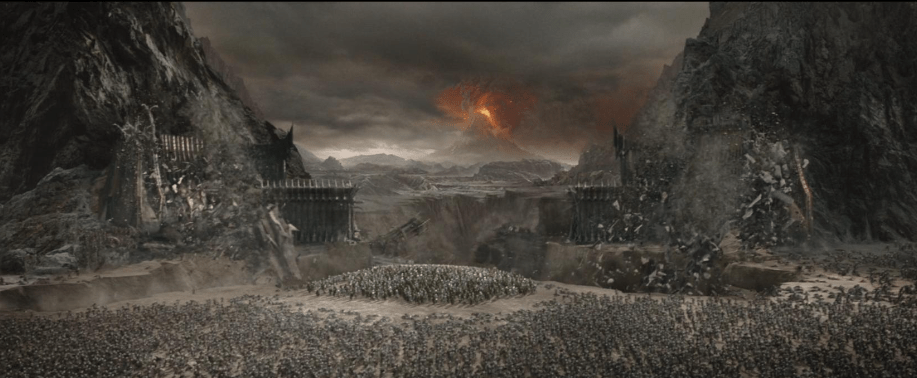
This bit wasn’t in the books.
Neither was this.
Or this, or this, or this.
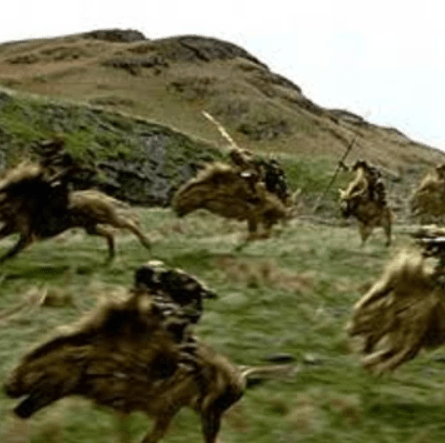
Or Legolas being a ninja, or jokes about ‘dwarf-tossing.’
In the books, there’s an incident where an evil oak tree eats several hobbits. They left that bit out. They cut Tom Bombadil, Goldberry, the Old Forest and the Barrow-Wights. Twenty years pass between the birthday and the big quest. Frodo is 50. They compressed all that just a little.
They cut the hobbits singing in the bath. In fact they cut nearly all the songs, and most of the twee hobbit banter.
They dramatically simplified the big battles, and dramatically expanded the smaller-scale fights. They added little side-adventures and contrived arguments.
They turned ‘the fellowship ran down a flight of stairs’ into this.

And nobody really minded. It was mostly great.
Now,
Take a deep breath.
Because in 2022, in the TV show Rings of Power,
They gave speaking parts to 3 or 4 black actors,
…and suddenly a lot of people on the internet were very worried about ‘staying true to Tolkien’s vision.’
Funny how that was the deal-breaker!
Not this,
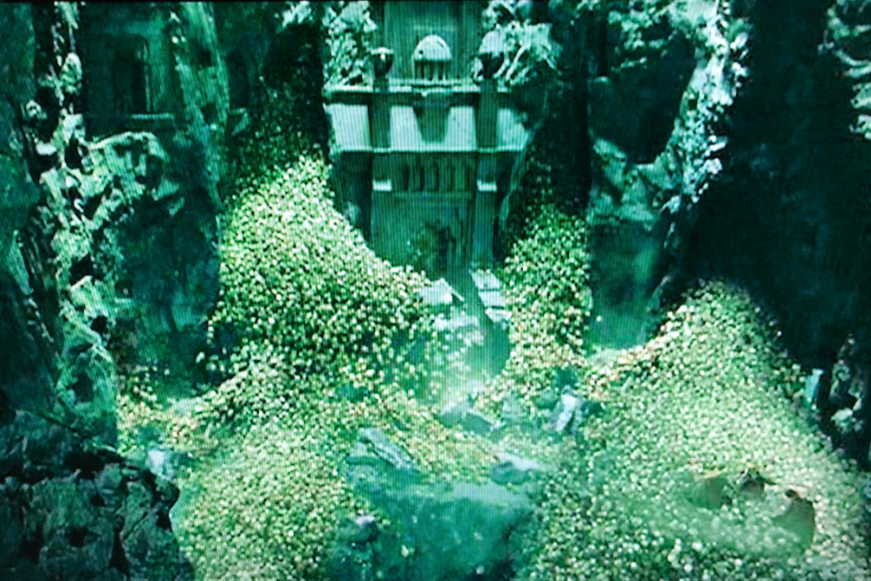
or this,
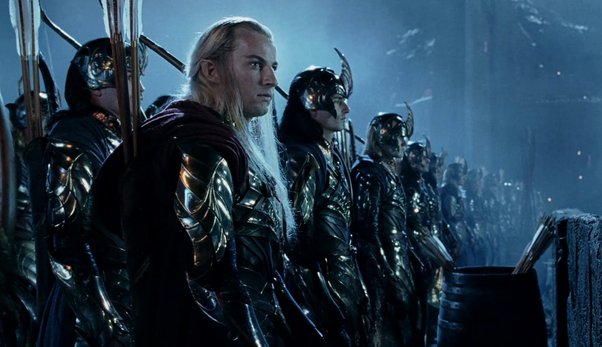
or this,
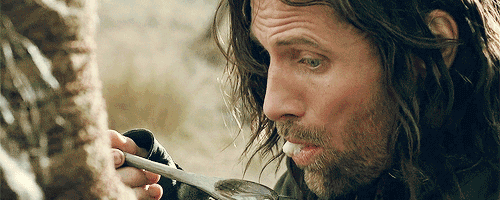
or this.
A screen adaptation that was ‘true to the spirit of Tolkien’ would have a lot more sing-songs in the bath, chipper hiking dialogue and obscure melancholy poems. The camera would linger for hours on trees and shrubs.
There’s every reason to have a diverse cast in Middle Earth. Tolkien described characters as ‘dark’ or ‘ swarthy’ in almost every chapter (good guys are usually dark, bad guys are swarthy. And yes, they’re all guys).
And if, just for the sake of argument, he did write, ‘by the way, categorically, none of these people were black’, why should we care 70 years later? Why would you care about skin pigment, if you don’t care about the scouring of the shire, the Dúnadain, Elladan and Elrohir, Prince Imrahil, Ioreth, Erkenbrand, Ghan-Buri-Ghan, the Dunlendings..?
By the way, Tolkien was sometimes racially insensitive in his writing. There are a few features and examples you can point to. There is a preoccupation with heredity, and there is a vile phrase in Book V Chapter VI. Yes: I’m sure you’re shocked to learn that an aging English Catholic professor who was born in South Africa and wrote in the 1930s to the 1950s was sometimes racially insensitive. Though at times he was surprisingly OK.
(Those Peter Jackson movies are actually dodgier on race for their time than Tolkien was for his time).
But that is not really a ‘gotcha’ for either side in these online debates.
Because when you adapt something, you make a choice about what to focus on. With Tolkien, there are themes like compassion, redemption, comradeship, self-sacrifice in struggle, and humble people rising up to change the world; and features like invented languages and histories, melancholy hints of a deep past, tense chases and battles, fantastical creatures and places.
Then there’s the ring, which poses the question of whether you would really have the integrity to destroy some great source of evil.
The movies nailed a few of those things, and that is why nobody really minded about the skull avalanche.
You could focus on some of those things, or you could make a fetish of skin colour, as if the Lord of the Rings was just a more upmarket version of 300. Then you would be putting a minor and unattractive feature of Tolkien’s writing up on a pedestal. You shouldn’t worship Tolkien, but if you insist on it, don’t be worshipping his backside.
And don’t be a racist, but if you insist on it, you’re not fooling anyone by pretending it’s about pious respect for a mid-century Oxford academic. If he could see us, or any of the screen adaptations, he’d tell us all where to get off.
The first time I met Negritude Philosophy, I was still in high school. Then, I came across
Léopold Sédar Senghor’s “I will pronounce your name”— a part of the WAEC literature syllabus
for 2007. At that point, I was a little unclear about its historical fermentation. I had read it and
rewrote it for a girl I admired— my first unconscious attempt at poetry. Senghor’s poem centred
around a black female character “Naett”— a re-emphasis of the African identity as doting to any
observer. Now, it is 2022— five years after. And, history has grown: there is my strive for
clarity, consciousness, and the human voice in every piece I encounter. And having heard Brainy
(Oluwatunmise Esther), for the first time, read her poem “Negritude”, that night at Sage Hassan’s
reading birthday party, I was critically attached.
Three things had happened: while she read, I was unclear about how she had thematically woven
the god, woman, and identity questions in such a brief performance on such a broad title as
Negritude. I needed a feel, so I asked for a hard copy, and here I am much concerned about how
we push history and ideas through time: how do we reopen, define, or redefine the relevance of
Negritude in the 21st Century of globalization and imperialism? The answer is barely linear— a
cartography of debates. Something I hope to write about someday. However, Brainy’s title becomes the past, present, and future merged into a glance: “Negritude”— a movement towards reawakening black consciousness both in Africa and in the diaspora.
In stanza one, the reader meets an exposition— the link to the philosophical stance of the title
itself: “let’s talk”. This expression, repeated at the beginning of the first three lines, is the
foundation upon which the subject matters are raised: the experiences to be shared by two
gender-unspecified poet personae “you” and “me”, towards the “dazzling skin colour seen as
threat” and “about being black”. It is only from stanza 2 do we see the identities behind those
unspecified pronouns: “black woman”— a resonance of Léopold Sédar Senghor’s “Black
Woman”. Here, Brainy’s feminine metaphor may or may not necessarily be an address to a
woman after all. It could encompass the gendered persona and make the subject African. But,
gradually into line 6 of this stanza, we are left at a crossroad: “I know you’re clueless of what
classic/creation of God you are, moulded from the finest clay”. Now, I was forced to pause and
ponder:
African deities? Why does she have to be created when in the preceding lines, lines 3–5, we are
told she should not see herself as less of a goddess: “black woman…/you’ve [been] told that being
black makes you less of a woman, makes you less of a goddess.”
And 3: if the black woman is a goddess, created by a “God”, does that not make her less? A
contradiction to the thematic relevance raised earlier about not being less of a woman or less of a
goddess. And, if this is the case, the “black woman” is merely subjected to a patriarchal order
where “God” or “Men” reign supreme— a devastating and biased history of things. A case, I am
sure, Merlin Stone’s “When God was a Woman”, Christena Cleveland’s “God is a Black
Woman”, and other radical feminists would not agree with. In fact, in prehistoric times, there
were goddesses before the making of gods. In pre colonialism, in Igbo culture, for example, we
had Ani, Ala— all of which are women and greater in all sense of the Igbo traditions. The
appearance of a Chukwu, with no clearly defined altar, was an attempt at the unification of other
personal or communal gods under a supreme being of the sky— a father figure, not a mother
figure as Ani possesses— modelled after patriarchy, economic factors, and possibly,
Christianisation. In Chinua Achebe’s Things Fall Apart, it is clear that the chief priestess was
never undermined— despite the toxic masculinity of Okonkwo, he submits. Also, after the
tragic death of Okonkwo, we notice how his impurities will not allow him to be buried under the
Earth Goddess, Ani. Not Chukwu. Why? Every deity is placed or created within the cultural,
occupational, and geographical nature of the people, which is mostly femininely defined— a
byproduct of human’s inability to understand natural phenomena. Hence, the Igbos worshipped
Ani or Ala as Earth Goddesses because the society tilts towards agriculture. In other places close
to the river, where fishing is a major occupation, we see the worship of a Sea Goddess, not a God— the representation of fertility, protection, and a means through which its people survive
like Olókun, Yemọja, Mami Wata, and so on. So, where do we or in what context do we place “I
know you’re clueless of what classic creation of God you are/moulded from the finest clay”?
Thus, it will be sad and a slap to African history if the “God”, here, refers subtly, unconsciously,
or generally, to the Abrahamic religions— a defeat to the philosophical and ideological purpose
of the title itself: Negritude.
However, before eurocentrism, the evolution of human societies has been classed between the
oppressors and the oppressed— Africa is not exempted. This means that while Brainy celebrates
womanhood, she fails to identify the class status of these women both in pre-colonial and post-
colonial Africa. That is, the image of a ruling Goddess (or god) is or may be structured after the
image, dominance, and ideology of the existing ruling class— women or men— in each epoch of
time: matriarchal (or patriarchal), matrilineal, feudal or not — black or white. Such is the reason
behind the birth of heaven or afterlife: the ruling class’s idea, both in the formation of customs,
tradition, and rituals, to preserve their reign over the lower classes forever— like the Egyptian
pyramids of preserved bodies of Kings and Queens; then, how Wole Soyinka, too, dramatically
presented this cosmological narrative through his “Death and the King’s Horseman”, where the
Eleshi was meant to die so he could accompany the king through the phases of the afterlife.
Aside from the God question, Brainy presents her women and Negritude from a point of skin— a
product of her reconstruction of beauty and identity: “This is a poem for every black woman still
cringing in her skin”, “Black woman/Tell everyone who cares to hear/ that your skin is a
constellation for starry nights”; her reflections on the Transatlantic Slave Trade: “poem for those shipped across the seas/ whose offsprings still bear the harsh tags placed on them”; and the
pathos of her past— a nostalgia: “They forget we are the wisp of air preceding the rise of a
storm”, “We black women come from a race of fighters”.
Beyond these revolutionary turns and eulogies, Brainy’s poem should be read with a critical eye:
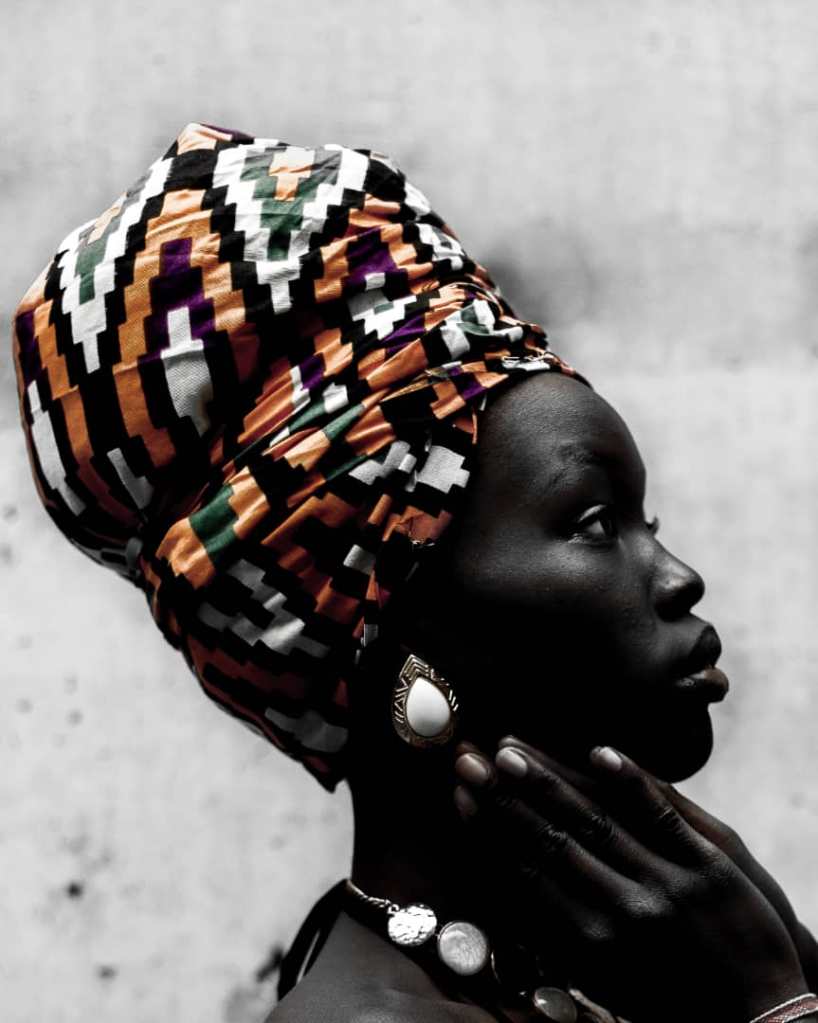
In the end, Brainy’s poem and Negritude suffer from a post-colonial effect of indoctrination and
cultural imperialism while maintaining a strong appraisal of the women’s struggles and
movements in Africa and diaspora: “Black woman, I dare you to raise your heads and shoulders
high like the Queen you are/The Queen of Negritude”.
This post continues our explainer on the main factions contending for power in Ukraine in 1919. Note the factions we already looked at last week: the Ukrainian Rada and the White Guards. The German military and their puppet Hetman are already out of the game, and in the east the new Polish state is muscling in.
The Reds supported self-determination for Ukraine and said so before the world many times. Their preference was for Ukrainian autonomy within a federation, and language and cultural freedoms. This was no less than what the Rada had called for in 1917: ‘Long live autonomous Ukraine in a federated Russia.’[i] The difference between Rada and Soviet was one of class.
The Red Army entered German-occupied Ukraine in September 1918. After the German Revolution, intervention gathered pace. On 30 November a Ukrainian Red Army was officially founded.
In early December a 3-day general strike broke out in Kharkiv, in Eastern Ukraine, and a revolution from below installed Soviet power in the city. Note the contrast between 1919 and 2022: Kharkiv, which has a large Russian-speaking population, has held out against the Russian invasion up to the time of writing. In 1919 it went Red almost without a fight.
According to EH Carr, the fact that the Communists were unable to organise a revolution directly in Kyiv shows how little active support they had in Ukraine.[ii] But after the events in Kharkiv, the Reds took just two months to cover the distance to Kyiv. In February 5th the Ukrainian Red Army captured Kyiv from the Rada. In contrast to the bloody and destructive five-day struggle between Red Guards and Rada in February 1918, and in stark contrast to the fiasco which Putin presided over in 2022, in 1919 the Reds ‘were greeted by the population with every display of enthusiasm.’[iii]
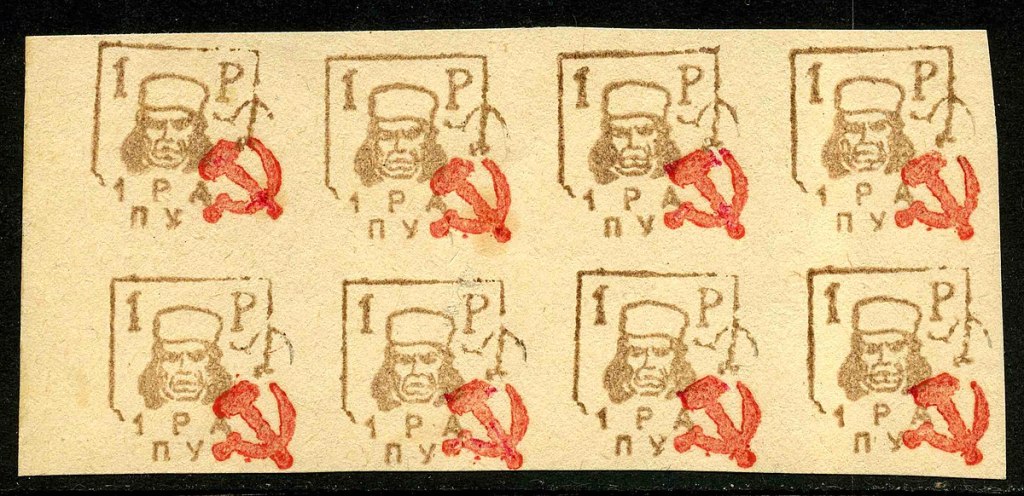
The Ukrainian Red Army was a horde of Red Guards and partisan units, a throwback to the freewheeling revolutionary days of early 1918. As if to underline this, the Red commander was Antonov-Ovseenko and one of his main officers was Dybenko; these two men had led the October 1917 insurrection in St Petersburg.
The war in Ukraine in 1919 was a war of loose ‘detachments’ and charismatic leaders, sudden spins of the wheel of fortune, and unstable alliances. ‘Being in an early phase of revolutionary ferment,’ according to Deutscher, it was ‘congenial ground’ to the left wing of the Communist Party.[iv]
The Red Ukrainian regime made rapid gains but it was soon overstretched. It was too aggressive on the land question, and dismissive on the national question. Instead of taking the land of the nobility and sharing it out, the Reds decided to turn this land over to state farms. The Ukrainian peasants might have just about tolerated the seizing of food, but this added insult to injury. Huge numbers of peasants rose up in rebellion.
‘In Ukraine today historians argue that Great Russian chauvinism coloured the whole of Bolshevik policy toward Ukraine in this period.’[v] Many Bolsheviks – especially, for some reason, Ukrainian Bolsheviks – were dismissive of the country’s national identity. But the general picture is of a movement with a real social base within Ukraine, in the cities especially but also among many peasants. The idea of the Reds as an imposition from outside is only tenable if we decide arbitrarily that Russian-speakers and Jews cannot be regarded as Ukrainian. The early missteps were later rectified thanks to intervention from Moscow – which goes against the impression that it was Russian imperial chauvinism. If we look back through the prism of later events, especially the famine and terror of the 1930s and the ongoing war, we will lose sight of this. Something very different was going on here.
Later in 1919 and into 1920, as noted above, the Ukrainian Reds, urged thereto by Moscow, adopted more sympathetic policies on land, food and the national question.[vi] But early 1919 was characterised by bold advances, impressive in the short term but storing up huge problems in the longer term.
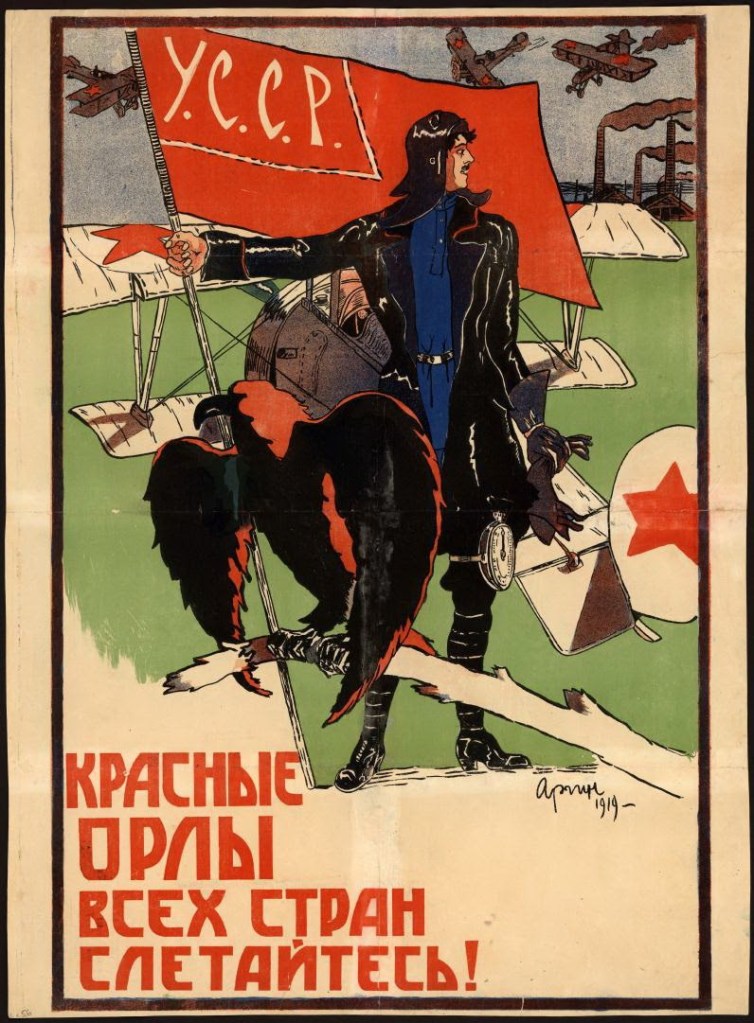
The civilian administration of Red Ukraine was threadbare. The military presence was more fleshed-out, but not by much. The Dniepr River runs roughly north-south through the middle of Ukraine – from Chernobyl by the Belarus border to Kherson on the Black Sea. The commander-in-chief of the Red forces, Vacietis, wanted this to be the line at which the Red forces stopped short and dug in. But Moscow could not control Antonov-Ovseenko, and in any case Antonov-Ovseenko could not control his Red Guards and partisans. As winter turned to spring they swept on into the western half of Ukraine, carried on their own momentum.
At first the Red advance appeared to be successful. But the overreach had terrible consequences. One was that the Reds ended up dependent on deeply unreliable allies.
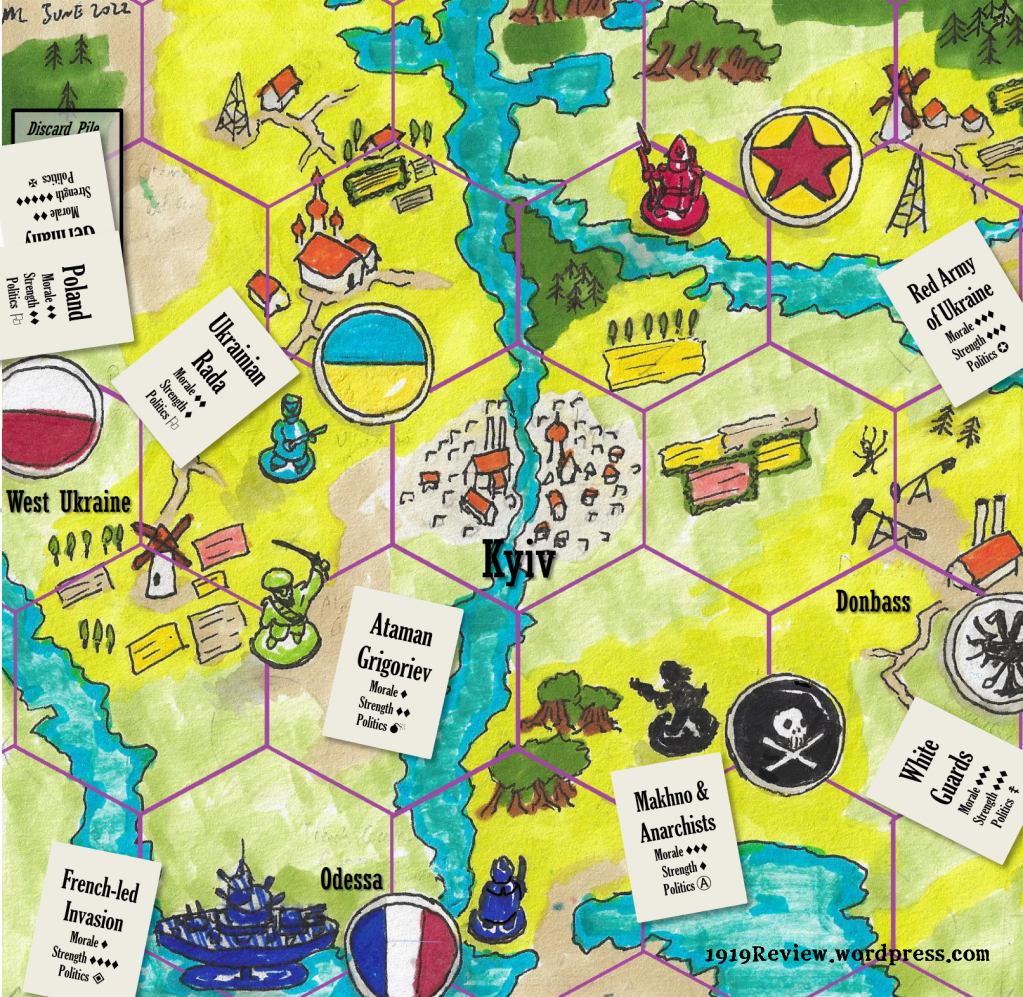
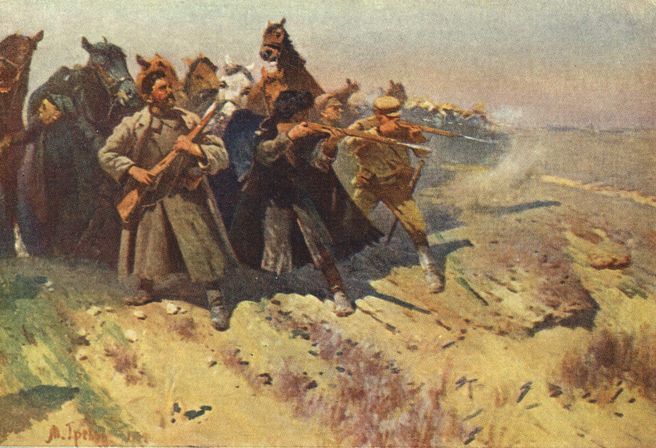
The civil war in Ukraine, like that in Siberia, was a war of atamans. An ataman was a charismatic warlord who raised and led an army in wild pursuit of some quixotic, obscure or horrifying programme.
How would one go about becoming an ataman? What must you have on your CV? Below is a step-by-step guide for this career path, illustrated with reference to Nikifor Grigoriev, the foremost warlord of Ukraine. Grigoriev was a military officer who, by the hour of his death, had joined or tried to join almost every single one of the contending factions mentioned here.
Step One: Have murky origins
Grigoriev ‘constantly emphasized his Ukrainian origin, called for the destruction of Russians, but at the same time for some reason had a Russian surname’[viii] – the solution to the mystery is that he replaced his real name, Servetnik, with the more Russian-sounding ‘Grigoriev.’
And here we encounter another Lviv or Derry, because it is variously spelled Hryhoriiv and Hryhor’yev.
Step Two: Join the Tsar’s army
Apart from two years of elementary education, Grigoriev’s only school was the Tsarist military. Service as a Cossack cavalryman in the Russo-Japanese war taught him to fight and to lead. After the war followed eight years as either a tax official or a cop. Then in the Great War he returned to the cavalry, and won medals for his courage and skill.
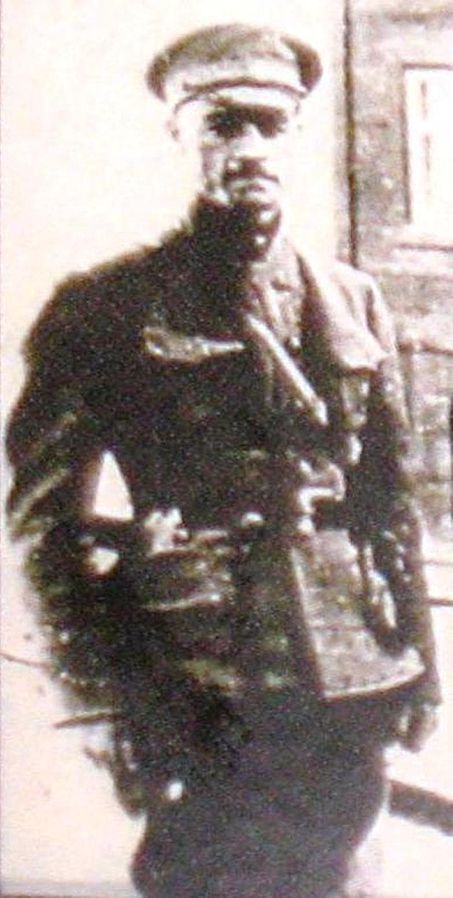
Step Three: Make a lot of friends
He is described by contemporaries as a rude, ugly, heavy-handed man who spoke through his nose. But ‘the soldiers liked him for his recklessness, eternal drunkenness and simplicity in relations with the lower ranks. He was able to convince the rank and file to go into battle, often setting a personal example.’
Step Four: Find a political cause
Grigoriev took part in the soldiers’ committees during 1917. He eventually joined with Semion Petliura and the Rada (Ukrainian Nationalists), and became a Lieutenant-Colonel in its army in 1917-1918.
Step Five: Be fickle
When the Germans booted out the Rada and brought in their puppet Skoropadskii, Grigoriev sided with the Hetman and served in his forces. He may even have participated in the coup. But after a few months he joined the Rada again in their uprising against the Hetmanate.
Step Six: Raise hundreds of fighters, then thousands
He returned to his native Kherson region and convinced 200 middle peasants to fight alongside him. They attacked the Hetman’s police in order to lure out a German punitive detachment, which they defeated. Next they ambushed an Austrian train and made off with enough rifles, machine-guns and grenades to equip a force of 1,500.
This was all in the context of a developing revolution against the Hetman, which culminated in November 1918. In December, Grigoriev led 6,000 rebels into the town of Mikolayiv, seizing it from the Allies, the Germans and the Hetman’s troops.
He threatened the Germans: ‘I’m coming at you […] I will disarm you, and our women will drive you with clubs through the whole of Ukraine to Germany itself.’
Step Seven: Insist on your own independence
Soon, virtual dictator of a large swathe of southern Ukraine, Grigoriev began to turn against Kyiv, insisting on his own independence but also demanding to be made minister for war. He began to flirt with the left even while saying that ‘Communists must be slaughtered’ and threatening to attack striking workers. He joined the Borotbisti, the Left SRs of Ukraine, who were in alliance with the Communists.
Then the French military landed at the Black Sea ports of Ukraine. Petliura was hoping for aid from the French, so he forbade Grigoriev from attacking them. Angered by this, the warlord changed sides once again. He went over to the Reds.
This is not the last we’ll be hearing of ataman Grigoriev.
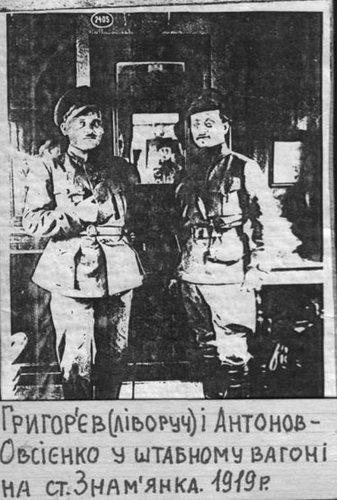
The village of Huliaipole lies in south-east Ukraine, some way inland from Mariupol. There, in 1907, a local school teacher named Nestor Makhno led a peasant protest movement. Makhno was an anarchist-communist. He may have absorbed from his upbringing the Cossack tradition of fierce independence and self-government. The Bolsheviks looked to the working class, but Makhno looked to the peasants.
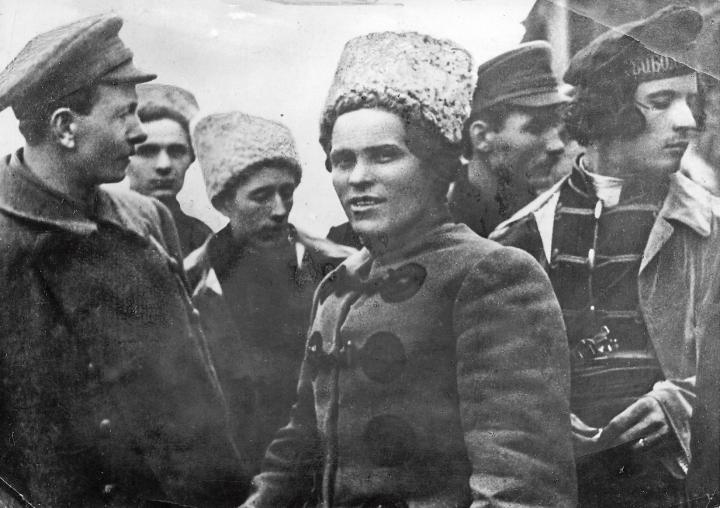
In 1907 he was arrested and exiled. But in the days of the Revolution he surfaced again. Ten years after his failed rising in Huliaipole, he was elected leader of its soviet.
Summer of 1918 found him in Moscow. He had friendly interviews there with Communist leaders such as Lenin and Sverdlov. But Makhno believed that all state authority was oppressive and counter-revolutionary. He was unimpressed by the anarchist groups which operated freely on Soviet territory.
He returned to Huliaipole in autumn 1918, leaving behind the ‘paper revolution’ of the urban anarchists in favour of rifles and guerrilla attacks. He organised a partisan band, displaying exceptional ability in battles with the forces of the German puppet Skoropadsky.
Then the German empire crumbled and Ukraine became a political vacuum overnight. He organised his partisan band into a stateless peasant commune centred around Huliaipole and defended by a force numbering in the thousands, the Revolutionary Insurrectionary Army of Ukraine.

The Anarchists travelled on horses and carts, loaded down with all kinds of weapons: ‘curved swords, naval cutlasses, silver handled daggers, revolvers, rifles and cartridge pouches made of oilskin. Enormous black and red ribbons flew from every kind of hat and sheepskin cap.’[ix]
The Whites were among the first to confront the Black Army. Mai-Maevsky warned his troops about Makhno: ‘I don’t doubt your ability, but it is not likely that you will manage to catch him. I am following his operations closely and I wouldn’t mind having such an experienced troop leader on my side.’[x] Makhno’s mode of warfare was mobile. For example, as early as November 1918 his troops captured Ekaterinoslav (today Dnipro) simply by boarding a train in disguise, pulling up to the main station, then drawing their weapons and charging out. But they abandoned the town just three days later and returned to guerrilla struggle.
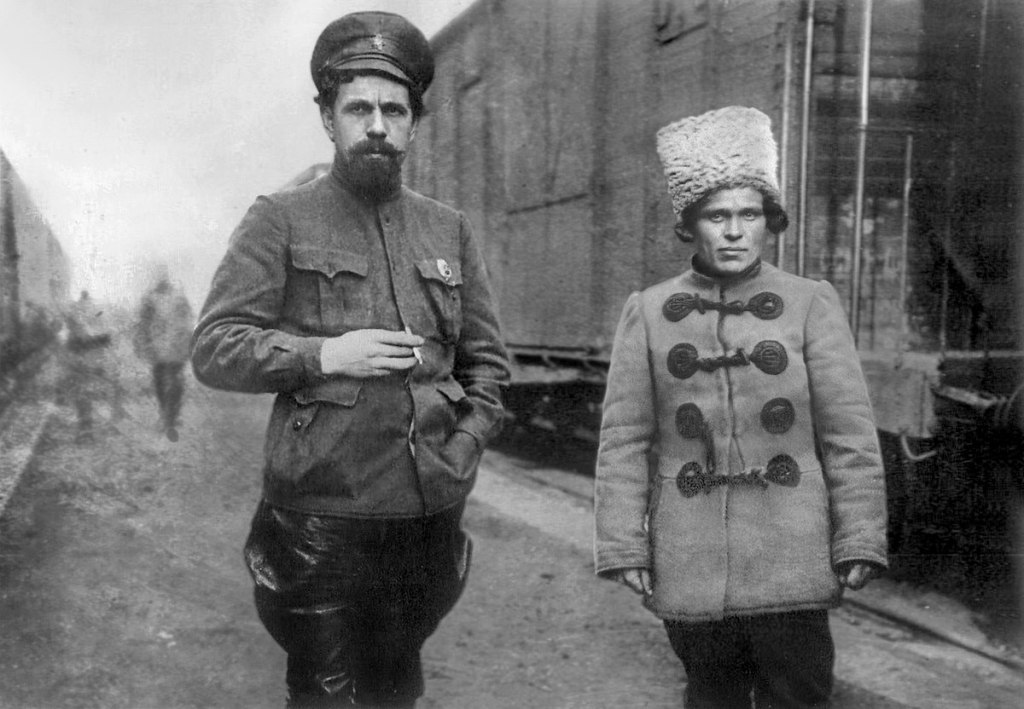
In early 1919 Makhno’s ‘Black Army’ joined the Red voluntarily. One Red Army division was co-led by Dubenko, Grigoriev and Makhno.
We leave it there in early 1919. The Reds are in control of a vast area but stretched thin, and things are about to go sour for them. Soon Ataman Grigoriev will change sides once again. In future posts in this series we will also look more closely at the Anarchists and the Ukrainian nationalists. Future posts will also explore what happened when the French military blundered into this mess with an invasion of Ukraine’s Black Sea coast. And keep an eye on those White Guards in the Donbass.
Go to Revolution Under Siege Archive
[i] Smith, 128
[ii] Carr, 306
[iii] Again, Carr, 306
[iv] Deutscher, The Prophet Armed, 360
[v] Smith, 186
[vi] Smele, 102. Smith, p 186: ‘Thanks to Lenin’s intervention in December 1919, Russian chauvinists had been removed from the leadership of the Ukrainian party, and the absorbtion of the Borot’bisty, a left-wing splinter from the Ukrainian SRs, finally gave the party cadres who could speak Ukrainian and had some understanding of the needs of the peasants.’
[vii] Deutscher, 364
[viii] Most of my information on Grigoriev comes from this very informative essay: http://militera.lib.ru/bio/savchenko/04.html/index.html
[ix] Beevor, 261
[x] Beevor, 260
This is Revolution Under Siege, a series about the Russian Civil War. In this post, we will contrast Ukraine in 1919 with 2022. Then we will begin a round-up of some of the array of factions which contended for power in Ukraine during the Civil War.
From April to November 1918 the Ukrainian revolution was left to simmer under the heavy lid of Austro-German military occupation. With the end of the Great War the German and Austrian empires collapsed. Meanwhile the end of the Turkish Empire opened up Ukraine’s Black Sea coast.
The German soldiers cleared out. From the Taman peninsula at the eastern edge of Ukraine, the Germans vanished. ‘They disappeared in the night, quietly, as if they had never been there at all.’ Likewise one morning in Odessa citizens woke to find them gone.[i] It was not so sudden elsewhere; German soldiers would stay behind for a while, would join one faction or another or just try to keep out of it.
Within a few weeks, an array of diverse factions had appeared all over the country, and for a long time no force was able to hold the capital city, Kyiv, for longer than a few months. Nobody could count on their ‘allies’ and nobody was in full control of their ‘own’ soldiers. Suffice it to say that between 1917 and 1920 Kyiv changed hands sixteen times.
Ukraine in 1919 was as crucial as a theatre of war as the Don Country or Siberia. But civil war in Ukraine was even more complex than in Russia.
So this two-part episode takes the form of an explainer. First, we will go into the main ways in which Ukraine in 1919 was different from Ukraine in 2022. Then we will give a run-down of each of the main contending factions.
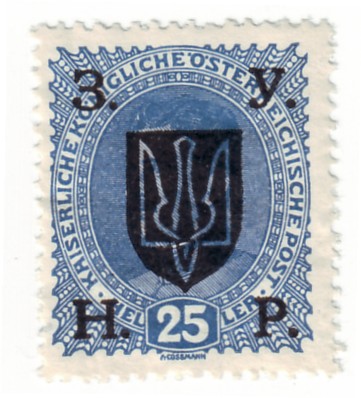
The current war in Ukraine lends immediacy to this topic. Then, like now, people were dying in terrible numbers in combat; masses of unarmed people were forced to leave their homes; civilians were murdered. The same place names feature, or the same cities under new names.
But if we look at 1919 through a prism of 2022, we will miss some essential points.
But even to speak of Russian ‘intervention’ in 1919 on a par with French intervention is not fair, as we will go into below.
2. In 1919 the war was fought primarily on socio-economic questions – workers against bosses, peasants against landlords, peasants against the varicoloured armies which lived by pillaging them. But in 2022, the national question is in first place.
Ukraine, in 1919 as in 2022, is not a small nation. Its language, culture and people suffered vicious oppression under Tsarism. But one-fifth of the Empire’s population resided in Ukraine – 20 million people or even 32 million, depending on how you count them.[ii]
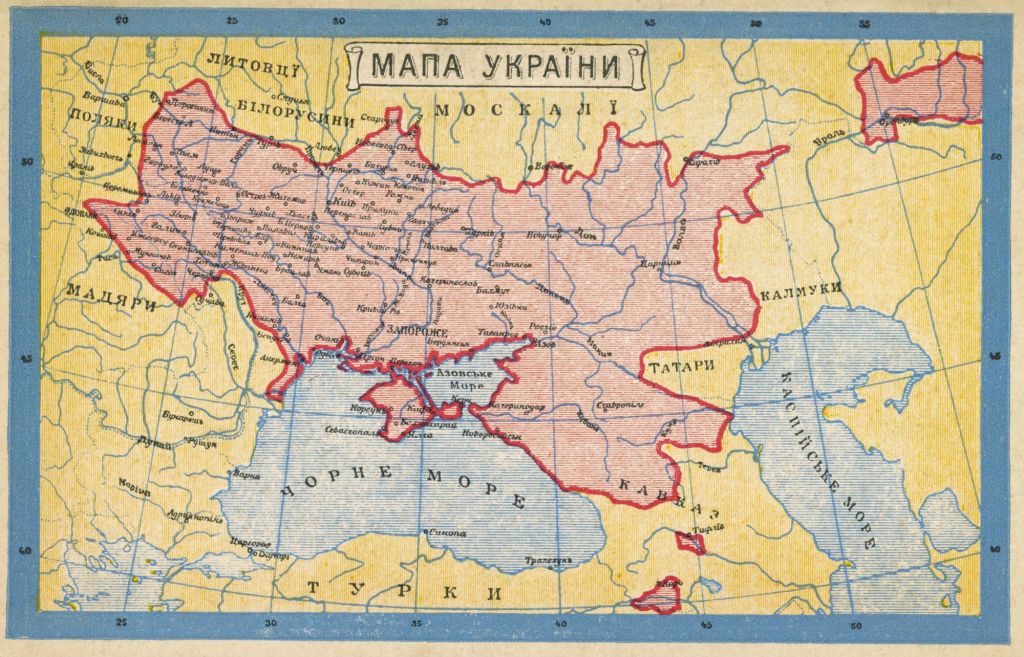
Here we come to another difference between now and then.
3. Ukrainian nationalism in 1919 was simply not the force it is today. In February 2022 when Putin’s regime invaded Ukraine, he probably counted on splits developing within the Ukrainian government, military and society. Over the six months between then amd the time of writing the Ukrainian people have not fragmented under the onslaught, but on the contrary cohered. They got behind the Zelensky government, even though most of them didn’t trust Zelensky before the war.
In 1919 the situation was very different:
[…] enervating to Ukrainian efforts toward statehood was the very weakly developed sense of nationalism in the territories it claimed as “Ukrainian.” Despite the inculcation of Ukrainian nationalism by successive generations of intellectuals during the nineteenth century, few of the region’s numerically predominant peasant population seem yet to have absorbed the notion of a distinct Ukrainian identity by the early twentieth century.
The cities were dominated by Russians and Poles in the civil service and the professions, and by Jewish people in commerce and intellectual life. The urban population was miniscule. Ukraine was a land of farmers and Ukrainian was a language spoken in villages.
In 21st-century Ukraine, 70% of the population lived in cities, and most of those city folk speak Ukrainian. It is a nation of workers and not of peasants. It is ruled not as in the early 20th century by Polish and Russian landlords but by Ukrainian capitalist oligarchs. The classes in Ukraine, the way people live and make a living, the national consciousness, have all changed utterly.
If today Kyiv was only 18% Ukrainian, and many of those 18% spoke Russian and considered themselves Russian, then Putin’s attack on that city would have turned out very differently. But those were the numbers in 1919. In the July 1917 local elections only 12.6% of the vote in small towns went to ‘overtly Ukrainian parties,’ and the corresponding figure for larger towns was 9.5%.[iii]
Unlike today, the idea that Ukraine should be an independent state did not have the support of a critical mass of the people. Among the urban and working-class population, this idea had very little support at all.
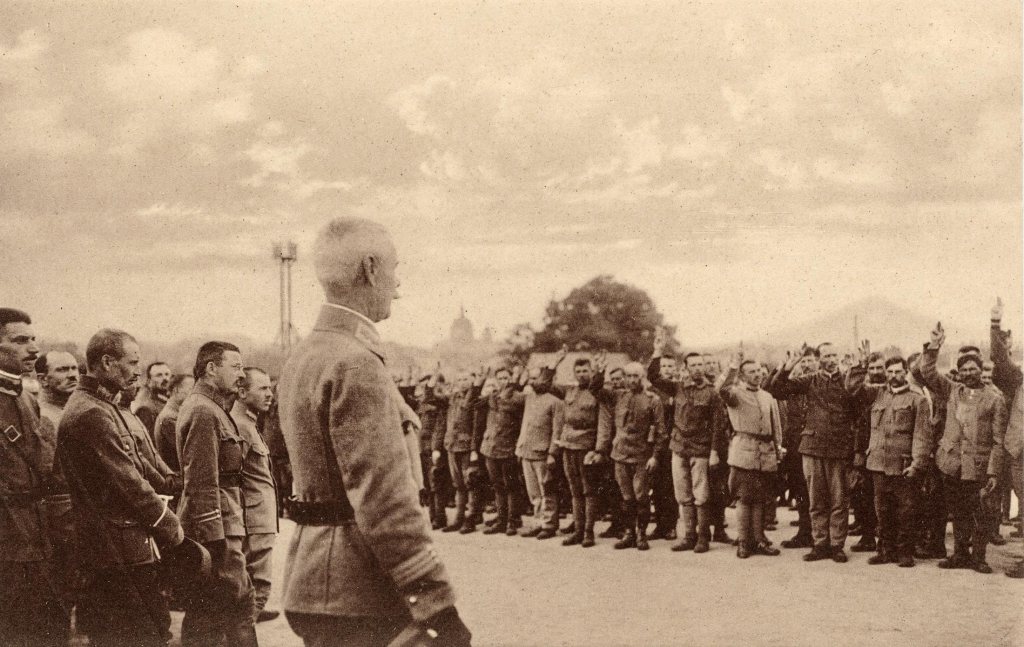
4. In 1919 the Ukrainian nationalists did not have the support of the Allies. Today western leaders are effusive in their support for the Zelensky government, weapons have poured into the country, and blue and yellow flags are to be seen across Europe and North America. But in 1919 the Allies were suspicious of the idea of Ukraine being autonomous or independent of Russia. Remember, they hoped to see the White generals win the Civil War. These Whites spoke of Ukraine as ‘Little Russia’ and one of their key slogans was ‘Russia, one and indivisible.’ Why antagonise the White generals by ‘dismembering Russia’?
What was more, in February 1918 the Ukrainian nationalists signed a peace treaty with Germany. For this, the Allies never forgave the Ukrainian nationalists.
So there are some major differences between Ukraine a hundred years ago and now.
Below, our round-up of the various factions that contended for Ukraine in 1919 will further illustrate these points. It is divided into two parts, the second of which will follow next week.
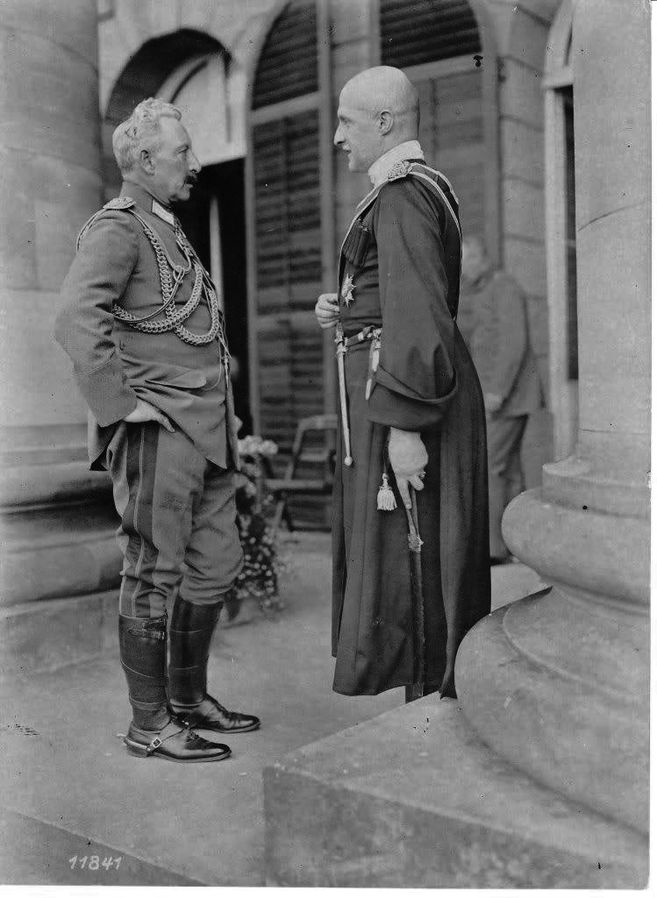
As we have seen, in February and March 1918 the Germans advanced across Ukraine from the West, driving the Red Guards before them. The Ukrainian nationalists, led by Petliura and Vynnychenko, took Kyiv as the Reds cleared out, but soon surrendered to the advancing German military. The Germans tolerated Petliura and Vynnychenko for about five minutes before ousting them in a coup and setting up a puppet government. The leader of this government was Pavlo Skoropadskyi, a Russianised Ukrainian general and a former aide-de-camp to the Tsar, no less. His title was Hetman, which is a Ukrainian term for warlord.
In superficial trappings, the government of Hetman Skoropadskii, known as the Hetmanate, protested its Ukrainian-ness as if to compensate for its subservience to Germany.
The Hetman spoke only a little Ukrainian, and his ministers were from Russian political traditions hostile to Ukrainian liberation: the Costitutional Democrats and the Octobrists. They abolished all of the reforms that had been brought in before the coup, and they banned strikes.
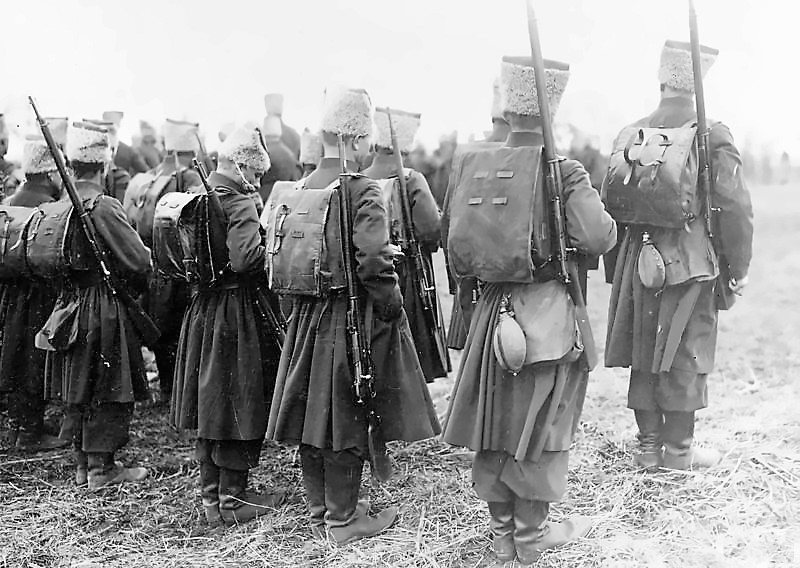
The Hetmanate ‘jarringly bedecked itself with the pseudo-Cossack trappings of a semi-mythologized Ukrainian national reawakening – uniforms, flags, titles and ranks not heard of since the seventeenth century (and some not even then) could be espied on the boulevards.’[iv] The rifleman of the 1st ‘Blue Coat’ Division of the Secheviye Streltsi wore a tall furry hat with a blue flamme, a long blue coat called a zhupan and baggy trousers of seventeenth-century fashion known as sharovari.[v]
But the reality of national oppression is summed up in one statistic: 51,428, the number of railway carriage-loads of grain and other goods which were, with the aid of the Hetman, stolen from the Ukrainian people and taken to Germany and Austria.[vi]
As we have seen, the German empire collapsed in revolution and surrender in November 1918. The pantomime was up, and Hetman Skoropadskii knew it. He cleared out on the next train to Berlin, dressed as a German officer. He made it to safety. Evidently this disguise was more convincing than his attempt to pass as a Ukrainian nationalist.
Most of my sources skim over the fact that there was a serious if brief war between the Hetman and the forces which replaced him, the Rada. In this war, the Allies promised to support the Hetman and even landed 5,000 British troops at Mikolayiv. But they were neutralised by the warlord Grigoriev, who we will look at next week.
We already saw how in 1917 a parliament took power in Kyiv, calling itself the Rada. It was dominated by liberal and social-democratic Ukrainian nationalists.
Though at first it appeared the Rada and the Soviets might tolerate one another (even after the Rada suppressed the Kyiv Soviet) they ended up at war. The Kyiv Arsenal workers were massacred by the Rada. The Left SR Muraviev (who would later mutiny on the Volga) led a horde of Red Guards into Kyiv with much bloodshed and shellfire.
Then, as we have seen, came the Germans, who first allowed the Rada to stay in power, then had them overthrown in a coup.
The Rada forces led a 30,000-strong rebellion against the Hetman during the summer. Revolts simmered. Partisan forces organised.
After the Hetman jumped on the train to Berlin, ‘a largely peasant army swept Petrliura to power.’[vii] The Rada forces seized Kyiv. This regime was known as the Ukrainian National Republic or the Directorate – but for the sake of clarity and continuity it will be referred to here as the Rada. The leading figures were Vynnychenko and Petliura, two former members of the Social-Democratic and Labour Party. They passed laws nationalising industry and seizing the great private estates of the landlords. But the regime did not have the time or the machinery to implement these reforms, and it was in fact dominated by local military officials.[viii]
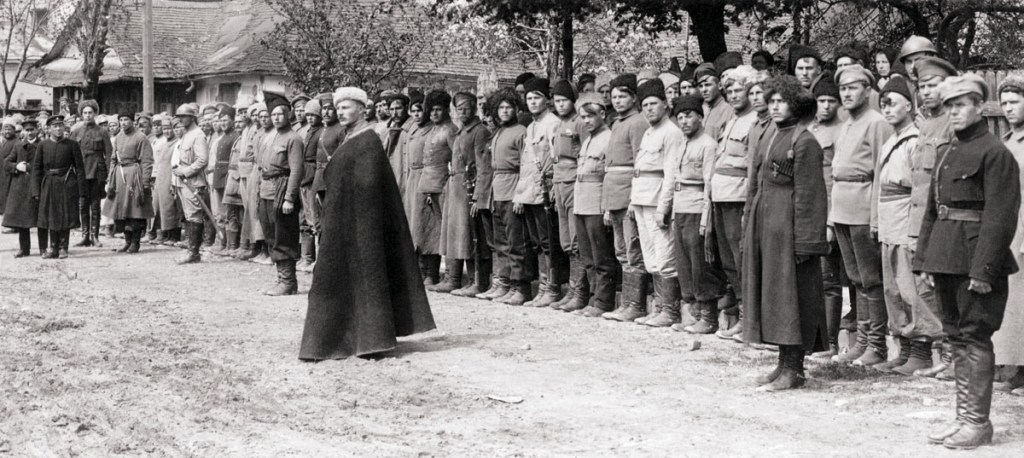
In one source we read that they nationalised industry, at least on paper. But in another we read that the Rada was a regime of the military and the bourgeois and professional classes which did nothing to win over the workers and did not espouse ‘social reform on any significant scale, thus failing to rally the peasants.’ These failures were ‘frankly and repeatedly admitted by Vinnichenko [sic]’ who also admitted that ‘So long as we fought the Russian Bolsheviks, the Muscovites, we were victorious everywhere, but as soon as we came into contact with our own Bolsheviks, we lost all our strength.’ Ukrainianisation aroused hostility. Vynnychenko also confessed that the Rada’s political appeal forced the Ukrainian people to choose between nation and class, and the Ukrainians chose class.[ix]
The Rada only remained in power a short time. Just like in 1918, the Rada barely got time to unpack its bags in Kyiv before it was chased out, this time by the Red Army. Petliura fled west to Vinnytsia, ‘where he formed a more right-wing regime purged of Social Democrats and Social Revolutionaries.’[x]
Ukrainians often have cause to explain to foreigners that there are two, three or more ways of pronouncing their name, or the name of their home town. In Irish terms, it’s like the Derry/Londonderry debate, or when a Seán is pointedly addressed as John, or when a member of the Ward family signs off as Mac an Bhaird. The different versions of names are statements rooted in a history of conflict.
Take one city which is today in Western Ukraine: ‘Lwów (Polish), L’vov (Russian), L’viv (Ukrainian), Lemberg (German) and Liov (Romanian) were all current during the revolutionary period.’[xi] In media reports today it is universally Lviv (no apostrophe).

Let’s go with Lviv. In 1919 it was the chief city in what the Poles called East Galicia and the Ukrainians called West Ukraine. It had been for centuries a part of the Austro-Hungarian Empire. This empire had all-Ukrainian units in its army. In November 1918, at the war’s end, these Ukrainian soldiers rose up in revolt. They seized Lviv and declared a West Ukrainian People’s Republic (WUPR), allied to the Rada in Kyiv.
But the Polish state newly arisen to the west had designs on the same territory. The WUPR fought a bitter and bloody war for its survival against the new Polish army. The region was stricken by famine in these years as a result of the fighting.
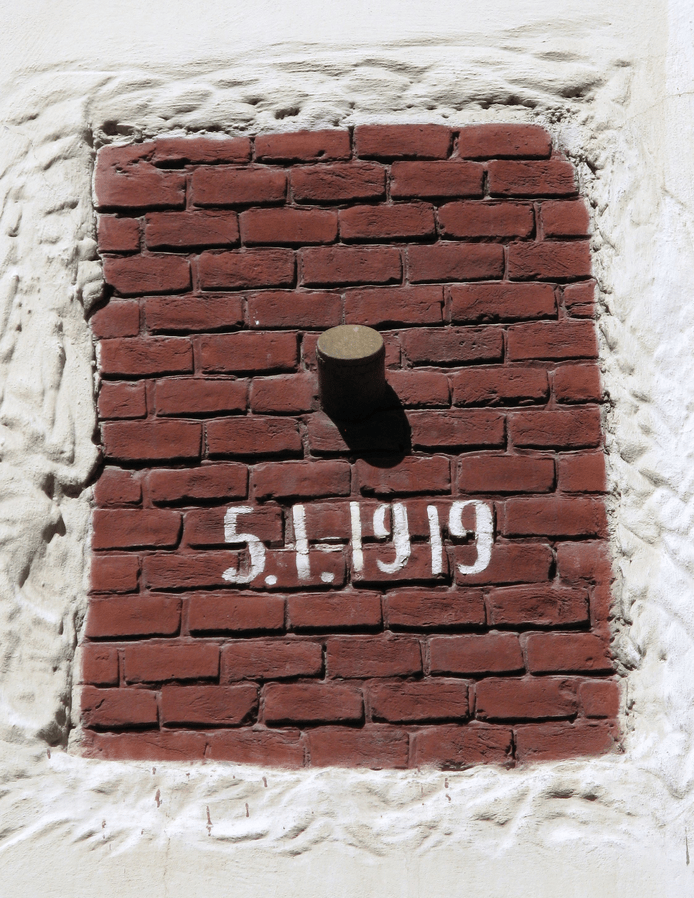
After the Rada was chased out of Kyiv by the Reds in February 1919, they found refuge with the WUPR. But this refuge was worn down by constant attacks from the Reds to the east and the Poles to the west.
In April, Petliura signed away West Ukraine/ East Galicia to Poland in a peace treaty. For this, the WUPR elements never forgave him, and in émigré circles after the war they denounced the Rada as ‘rude, East Ukrainian peasant cousins.’[xii]
Ukraine bled seamlessly into the Southern Front of the Russian Civil War. Rostov-on-Don today is only a three-hour drive from Mariupol. The Volunteer Army was going from strength to strength in early 1919, and several thousand of these former officers and cadets occupied the Donbass region.
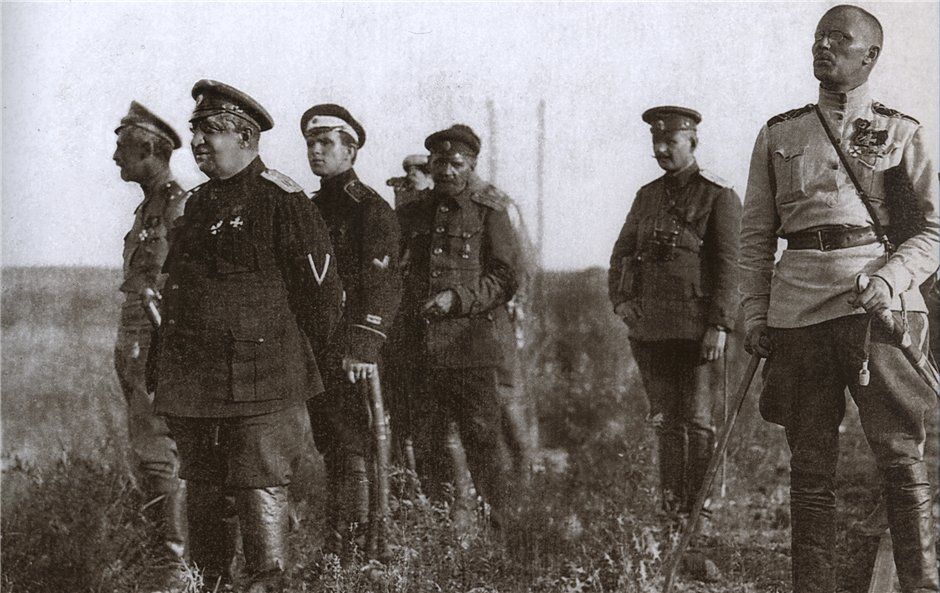
The industrial, working-class Donbass region was not their natural habitat. Their numbers were not impressive. Their commander, General Mai-Maevsky, was a heavy drinker who looked ‘like a dissolute circus manager’ and brought with him a travelling brothel.[xiii]
Yet in the first half of 1919 they held the Donbass against three successive Red offensives. How? Professional soldiers are more mobile than militia, and steadier than partisans. They can wring the maximum out of whatever advantages they possess. In this case British aircraft scouted for the Volunteers, who made good use of the dense railway network of the Donbass. Under the leadership of Mai-Maevsky, who was courageous and brilliant in spite of first impressions, they were able to concentrate their forces at the decisive places whenever the Reds advanced.
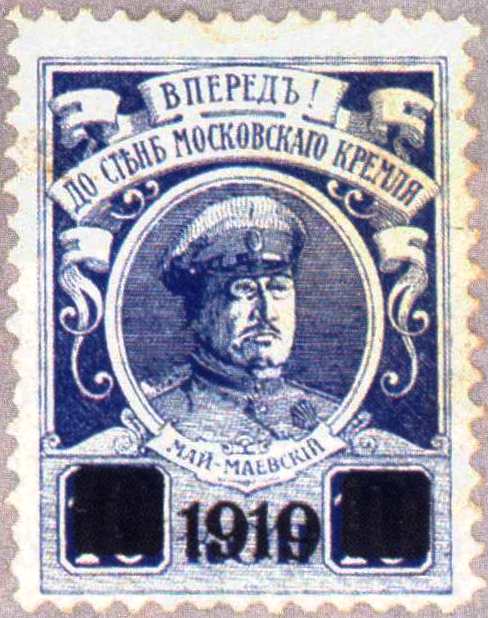
The occupation of the Donbass, and the support of the British navy, meant the Whites were a factor in southern Ukraine.
Here we can compare 1919 and 2022. The White programme for Ukraine was broadly similar to Putin’s today: they did not want to loosen their grip on what they called ‘Little Russia.’ As for Lenin and the Bolsheviks, Putin today condemns them for their acknowledgement of Ukraine’s right to its own culture and to self-determination. For him, the prophecies of medieval saints carry more weight than the aspirations of 40 million people who want to live in peace.
Join us again next week for ‘Warlords of Ukraine, continued,’ in which we will look at three more factions: the Reds, the warlord Grigoriev and the Anarchists.
Go to Revolution Under Siege Archive
[i] Antony Beevor, Russia: Revolution and Civil War, p. 255 .
[ii] Smele, The ‘Russian’ Civil Wars, p 96 (20 million); Mawdsley, p 162 (32 million)
[iii] Smele, 98
[iv] Smele, 61
[v] Khvostov, White Armies, p 43
[vi] Smele, 62. When we factor in smuggling, the real number may be twice as high.
[vii] Smith, Russian in Revolution, 162
[viii] Smele, 62
[ix] Carr, The Bolshevik Revolution, Book One, 310
[x] Smith, 186
[xi] Smele xii
[xii] Smele, 152
[xiii] Beevor, 258

Nkrumah and the Ghana Revolution by CLR James
Motive Books, 1977 (1962)
Kwame Nkrumah was the leader of the liberation movement in Ghana, formerly a British colony known as the Gold Coast. He was also its first leader as an independent state.
The book is made up of pieces: a shorter book, letters, an essay, a lecture. CLR James, a Marxist from the Caribbean who wrote The Black Jacobins in the 1930s, gives first an account of the revolution, then a hint of some of the problems encountered by the newly-independent state, and finally a developed meditation on problems of underdevelopment in former colonial nations.
The second of those three elements is the weakest. The brief parts of the book which hint at problems and criticisms of the independent Ghanaian state seem hand-wringing and uncertain.
The other two elements are strong, though all indications are that James’ politics have changed a great deal between the 1930s and the 1960s. The key criterion, class, is not absent but it is not in the first place. I know that in the 1930s James, Nkrumah, Kenyatta and George Padmore all moved in the same circles in London.
All in all, the book opened my eyes on the specifics of the Ghana Revolution, which I’d known nothing about, and on the problems of underdevelopment.
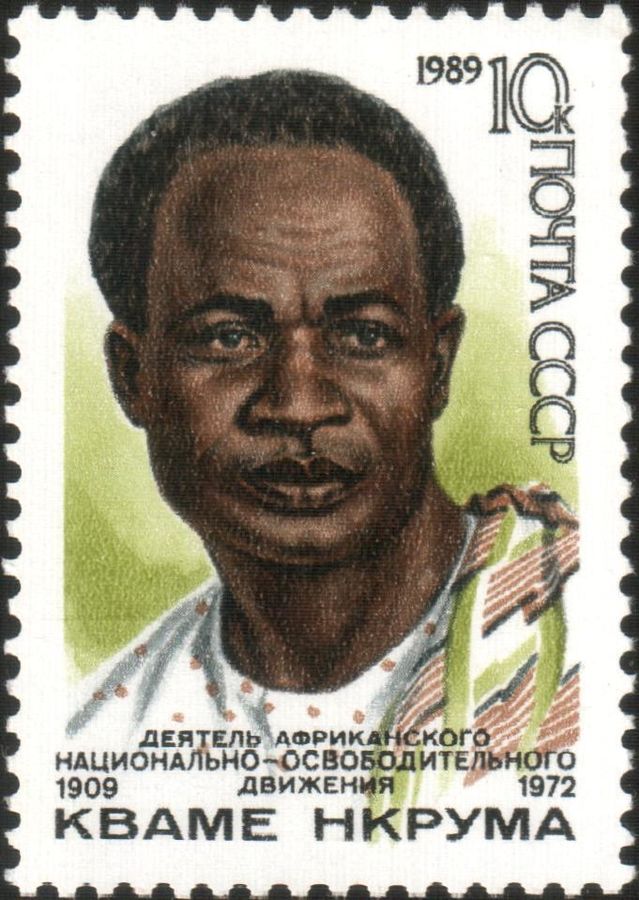
I can’t comment in detail due to my lack of knowledge, but here are a few quotes that jumped off the page at me.
On the poet Césaire:
‘Césaire’s whole emphasis is upon the fact that the African way of life is not an anachronism, a primitive survival of history, even of prehistoric ages, which needs to be nursed by unlimited quantities of aid into the means and ways of the supersonic plane, television, the Beatles and accommodation to the nuclear peril. Césaire means exactly the opposite. It is the way of life which the African has not lost which will restore to a new humanity what has been lost by modern life with ‘its rebellious joints cracking under/ the pitiless stars/ its blue steel rigidities, cutting through the/ mysteries of the flesh.’ (23)
On European commentators:
‘they see themselves always as the givers, and Africans as the takers, themselves as teachers and Africans as the taught. In the thousands of reports, articles, speeches, that I have read about events in Ghana, I have never seen a single word, the slightest hint that anything which took place there could instruct or inspire the peoples of the advanced capitalist countries in their own management of their own affairs, and this is as true of the friends of Ghana as of its enemies.’ (38)
‘The reader will not understand these events or what is taking place all over Africa today unless he makes a complete reversal of traditional conceptions as to where is law and where is lawlessness. The disciplined community obeying its own laws was the masses of the people in Accra. The mob was the heterogeneous collection of chiefs, government officials, merchants and lawyers.’ (46)
On the people of Ghana:
‘[They were] governed by a long tradition of democracy in which the chief was no more than a representative of his people who could be, and often was, ruthlessly removed if his actions did not accord with their wishes. This was the condition of some seventy-five percent of the population.’ (53)
On women in Ghana:
‘The traders for generations have been the women (Nkrumah’s mother was a petty trader)… Thus in Accra there are thousands of women in action in the market, meeting tens of thousands of their fellow citizens every day. European visitors and officials up to 1947 saw in these markets a primitive and quaint survival in the modern towns. In reality here was, ready formed, a social organisation of immense power, radiating from the centre into every corner and room of the town.’ (55)
On protestors:
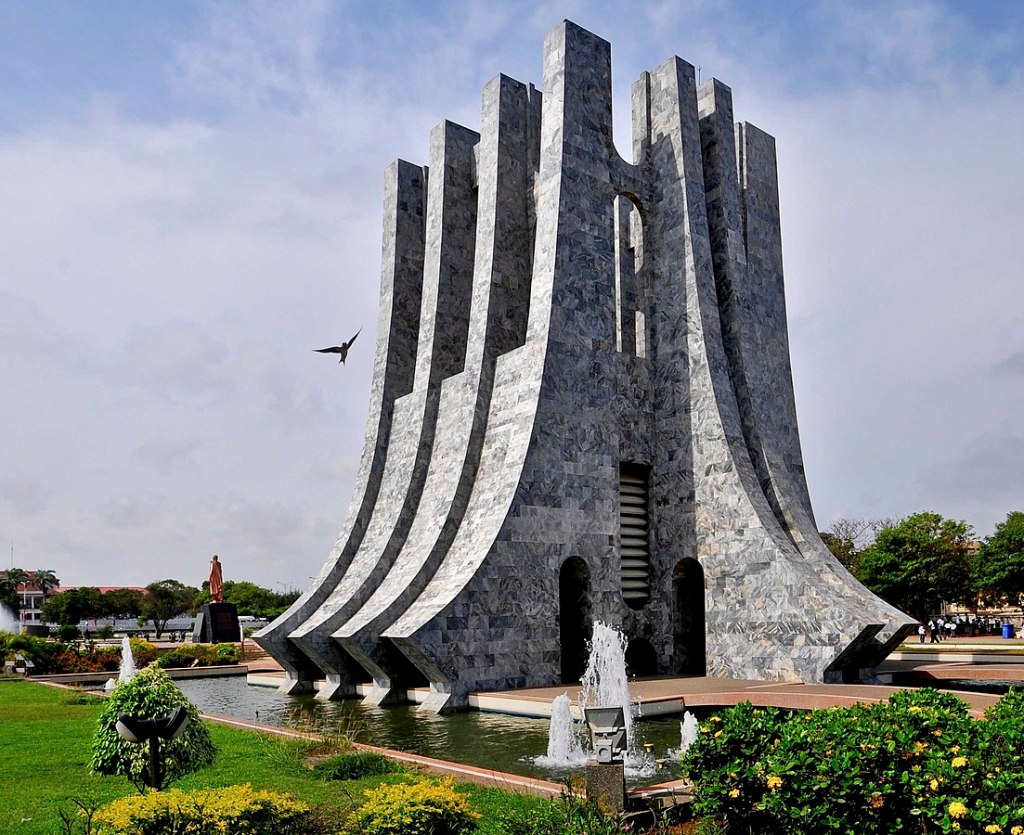
‘They used the Lord’s Prayer:
O imperialism which are in Gold Coast
Disgrace is thy name…
‘The Apostles’ Creed:
I believe in the Convention People’s Party,
The opportune saviour of Ghana,
And in Kwame Nkrumah its founder and leader…
‘The Beatitudes:
Blessed are they who are imprisoned for self-government’s sake, for theirs is the freedom of this land.’ (108)
On Europeans who acknowledged Nkrumah’s power as an orator:
‘[They] added the sneering qualification “among Africans”. What mass oratory could Nkrumah practise among the Europeans? Or was he to go to China?’ (113)
Four quotes from Nkrumah himself:
Misc:
‘That this revolution was blood and bone of the twentieth century is shown not only by its planned character, but also by the role of the Trades Union Congress. Ten thousand workers organised in a union are ten times more effective than a hundred thousand individual citizens.’
Here is a longer quote, photographed rather than transcribed because of its length:
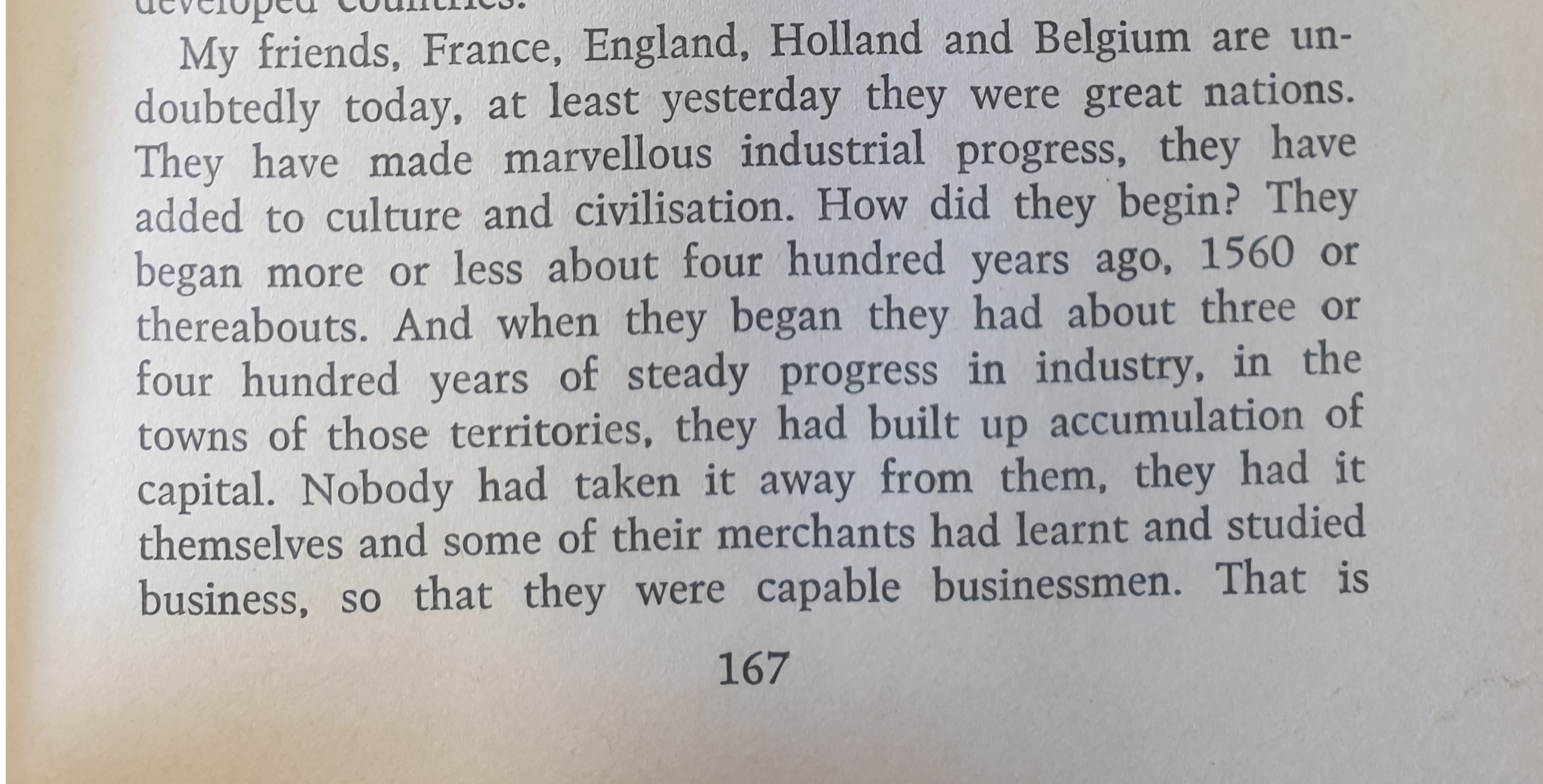
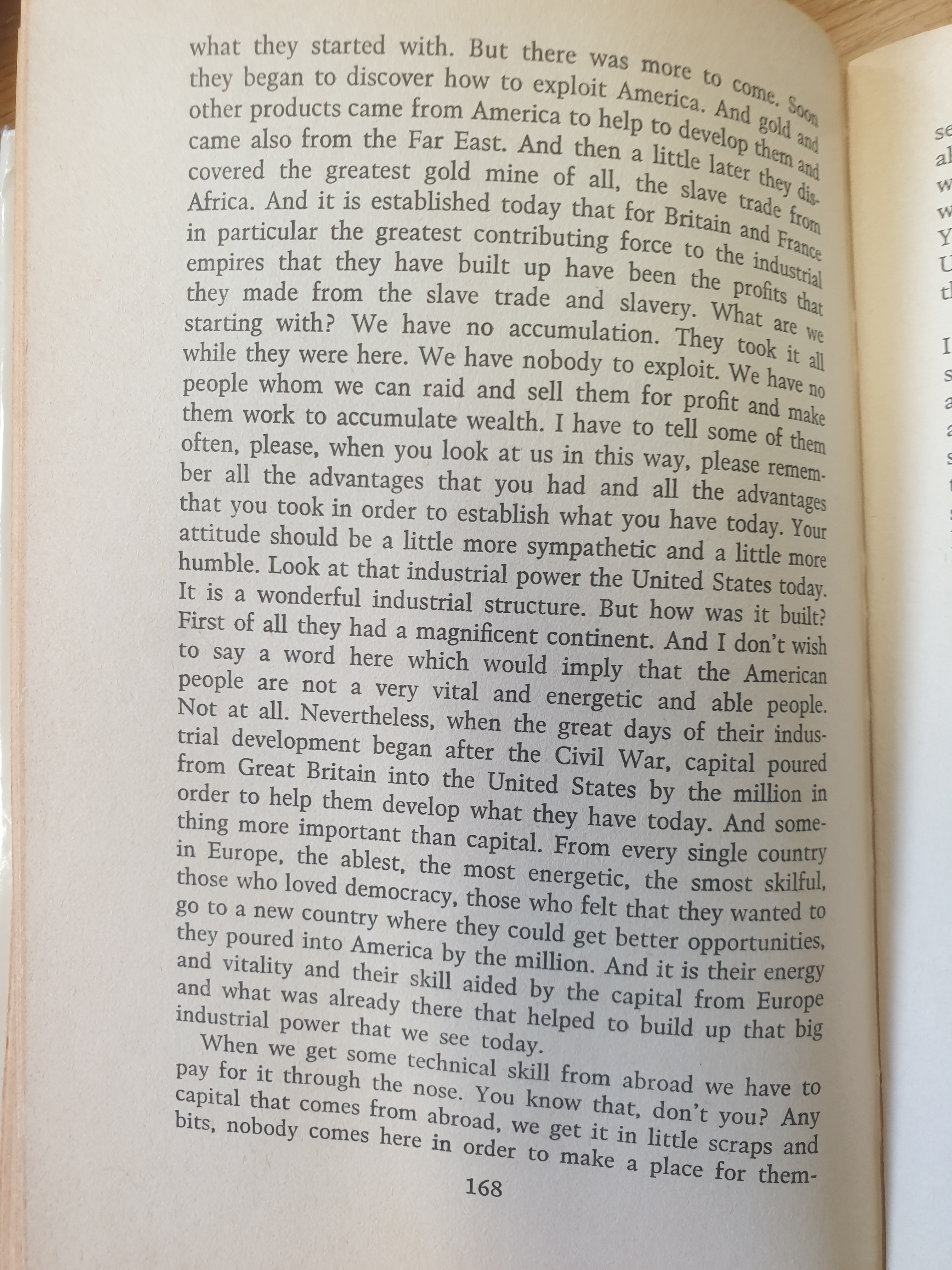
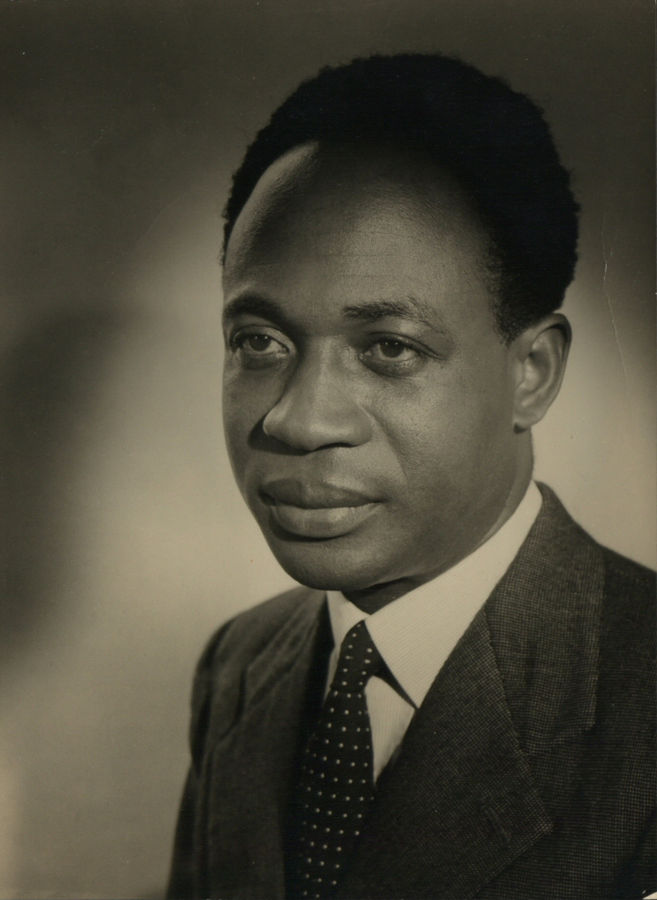

As 1919 began, the vast expanse of Siberia was occupied by an array of factions and warlords. This post introduces the reader to some of the White warlords of Siberia, and follows Admiral Kolchak’s Spring Offensive.
Revolution Under Siege is back for a second series, tracing the epic events of 1919 in the Russian Civil War.
Before the October Revolution, when Russia was still fighting in the Great War and desperate for new recruits to replace the millions dead and wounded, the Provisional Government sent two cavalry officers to the furthest eastern reaches of the empire. Their mission was to recruit a regiment of Mongols and Buriats, horse nomads of the steppe.
Captain Grigori Semyonov was a Cossack of Buriat origins himself. He was ‘a thick-set character with moustaches shaped like a water buffalo’s horns.’[i] Semyonov’s companion was Baron Roman von Ungern-Sternberg. He was a Baltic German aristocrat from Estonia, but he was already an old Asia hand. He had travelled in Mongolia, he idolised the warriors of the steppe, and on this journey he wore a bright red Chinese jacket and blue trousers. The young baron had the thousand-yard stare. He had served in a regiment which had suffered 200% casualties in the early part of the war. But he was happy during the war years – never happier.
At the start of 1918, the mission consisted of Semyonov, Ungern and six other guys with their horses. Meanwhile back west in the capital, the working class, organised in the soviets and led by the Bolshevik Party, had taken power. The government that had sent Semyonov east no longer existed. The war into which the Mongols and Buriats would have been thrown was, for Russia, over.
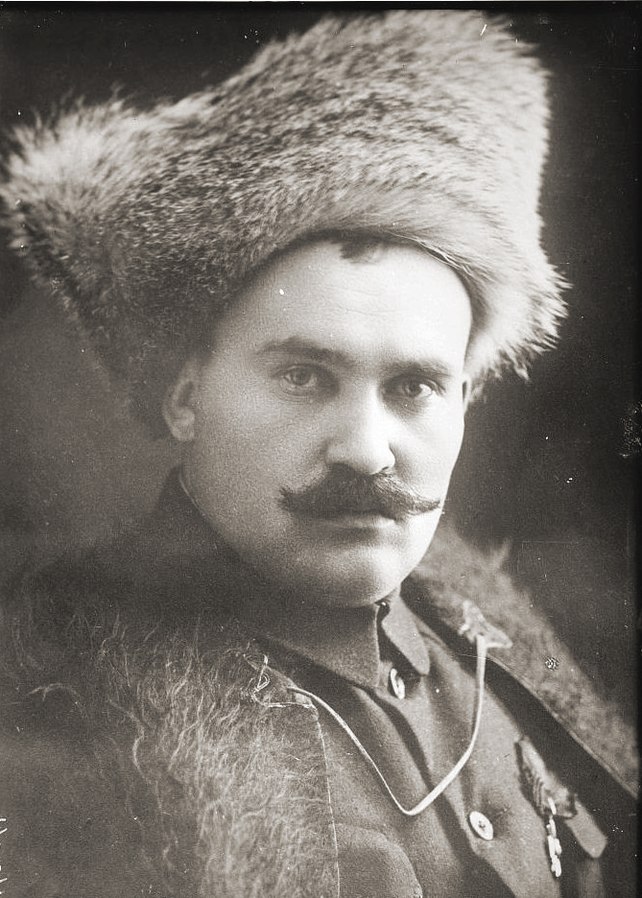
But the sabres of Semyonov and Ungern did not rest. They joined the counter-revolution and became warlords of Siberia. To them, the Provisional Government had been bad enough, but the Revolution was an atrocity. The workers and peasants must be crushed.
Their first uprising was at Verkhneudinsk, just a week or two after the storming of the Winter Palace. They were backed by Transbaikal Cossacks, but they failed, and fled to China.
On New Year’s Day 1918 they crossed back into Russia. Their force of 8 soldiers held a train and lit it up to bluff that they had bigger numbers; in this way they disarmed a Red garrison of 1500.
Meanwhile a Bolshevik sailor and commissar named Kudryashev was on his way to Vladivostok with government money. He and his companions held a New Year’s party on the moving train, and Kudryashev got so drunk he forgot to change trains. The mistake proved fatal.
They were halted near the Chinese border and Ungern led soldiers into the carriage full of celebrating Reds.
Ungern fixed his cold, piercing eyes on Kudryashev and demanded: ‘Deputy Naval Commissar, that’s you?’
‘Baron Ungern looked through his papers, then made a cutting gesture with his hand to his companions. “As for these shits,” he added, pointing to the others from Kudryashev’s party, “whip them and throw them out.”’
Kudryashev was taken out and shot dead in the snow.[ii]
During the six months following the Revolution, Semyonov and Ungern twice rounded up sizeable forces in Manchuria – Mongols, Buriats and anti-communist refugees. They twice invaded Siberia, and were twice driven back across the border into China by the Red Guards.
The fortunes of Semyonov changed thanks to the Allies. First, Semyonov received a load of money from Britain, France and especially Japan, allowing him to hire Chinese mercenaries and to arm and equip his volunteers. Thus he built a force he called the Special Manchurian Division. Second, Semyonov and his Division were on the brink of annihilation when they were saved by the Czechoslovak Revolt of May 1918. Last, when the Special Manchurian Division invaded Russia for the third time in July 1918 it was with massive Czech and Japanese assistance.
A few months earlier, Semyonov had been alone except for a handful of volunteers and an eccentric baron, on a mission from a government he despised. By the end of August, he was dictator of the Transbaikal.
Covering more than 600,000 square kilometres, the Transbaikal region is only a little smaller than Texas. It stretches from Irkutsk in the west, a town on the shores of the vast Lake Baikal, to the Pacific port of Vladivostok in the east.
In late 1918 and through 1919 Semyonov ruled from the town of Chita under the slogan ‘For Law and Order!’ while his officers enjoyed cocaine and the company of sex workers. The night life of the city was made livelier by Red partisan assassins lurking in the alleyways.
Semyonov wished to create an independent state called Daurskii and allegedly awarded himself the title of Grand Duke. But in the words of a Chinese newspaper he was ‘Caliph for an hour and a toy of the Japanese.’[iii] He was more or less subordinate to the Japanese state, which had 70,000 soldiers on his territory along with British, French and US detachments. All the same, he lived like a king. He had thirty mistresses who lived on what was called ‘the summer train’ along with a great store of champagne and an orchestra made up of Austrian prisoners. In June 1918 he was elected ataman (warlord) of the Transbaikal Cossacks.
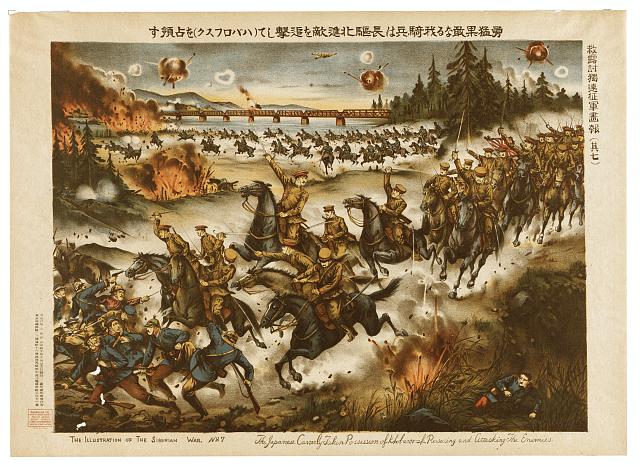
Semyonov used to boast that he could not sleep easily at night unless he had killed someone that day. It was not an idle boast as his victims numbered in the thousands.[iv] By his own account, he personally supervised the torture of 6,500 people.[v] In this last detail Semyonov was not an outlier (though in other respects he certainly was). According to one foreign observer, White Guard officers ‘remarked almost daily that it was necessary for them to whip, punish, or kill someone every day in order that the people know who was protecting them from the Bolsheviks.’[vi]
The Transbaikal was sparsely settled. Trains plied the vast empty lands between the towns and villages. Semyonov and his 14,000 men, by Spring 1919, did not generally stray far outside of Chita, where the warlord lived in a compound guarded by artillery. But armoured trains would supply Semyonov’s armies in the manner of Carribean pirates, pulling up to a station and threatening to open fire with naval guns unless food was handed over.
In Siberia, where the towns were like islands, thousands lived on the rails – Palmer says there were ‘hospital cars, headquarters, brothels, travelling theatres, dining cars appointed like opulent Moscow restaurants, libraries, motor workshops, churches, mobile electric generators, printing shops, offices and torture chambers.’ The old pre-revolutionary cadre of railway workers somehow kept everything moving. Secretly they aided the Red partisans.
Then there were the prison trains, cattle cars filled each with fifty Red prisoners of war, which would travel ‘aimlessly from station to station with neither food nor water.’ Whoever was left alive in the cars after a few weeks would be shot.[vii] For example, a train arrived near Lake Baikal on August 4th, crammed with 2,200 captives from the Red Army (taken during the Spring Offensive – see below). ‘Most of the prisoners appear to be sick with typhus, and starving. Several dead were removed from the cars. It seems that there are dead to be removed at every station.’[viii] The eyewitness quoted just now was a US soldier who was guarding the railway line which the Whites were using in this way.
The railways were the primary target of the Red partisans, though they also infiltrated mines and triggered strikes.[ix] The huge distances and deep forests provided refuge to all those who wanted to fight the Semyonov regime, and they lived in camps as big as small towns.
What was the political character of these guerrilla bands? According to Wollenberg:
Speaking generally, we find that the guerrilla movement assumed two widely contrasted aspects, represented respectively by the Ukrainian guerrillas, among whom the influence of the individualistic wealthier peasants predominated, and the Siberian guerrillas, who manifested the peasant-proletarian disciplined character of the movement. Naturally the line dividing these two opposites was by no means a territorial one; indeed, both these guerrilla manifestations often existed side by side, and were often closely woven with one another in the same band.[x]
On Ukraine, more next episode.
Ungern, the baron from Estonia, was now a Major-General under Semyonov. His Asian Cavalry Division, a force which was growing in size to rival Semyonov’s, would be called upon to lash out in reprisal at the villages in the aftermath of partisan raids.
A fort of red stone dominated the border town and railway station of Dauria, and this was Ungern’s castle.[xi] The railway lines were the source of supply for his army and regime; he robbed those who passed through, especially Chinese merchants (for some reason, he hated the Chinese).[xii] The sandy hills near town were scattered with the skulls and bones of Red prisoners who were sent to Dauria, ‘the gallows of Siberia.’
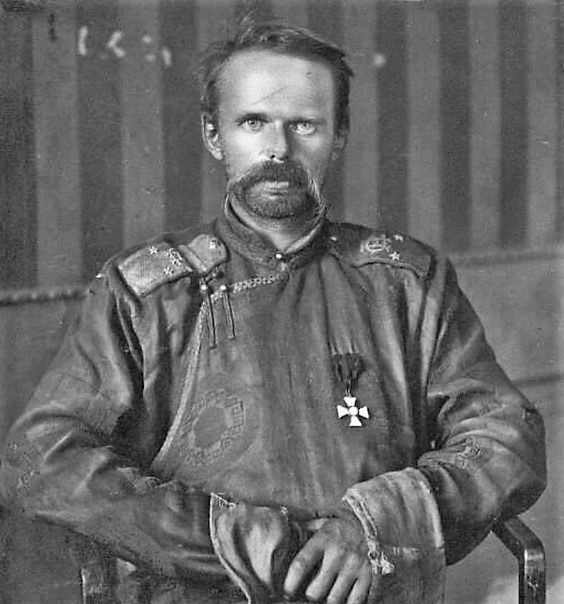
Ungern ran a strange and very personal regime in Dauria. He was cruel to officers, gentle to horses, popular with soldiers. Evening prayer services were probably the most ecumenical to be found in any military base in the world: Orthodox, Lutheran, Buddhist and other holidays were officially celebrated. When typhus came to Dauria, Ungern went into the hospital and killed those infected who were unlikely to recover. He hated paperwork: when Semyonov sent an inspector, Ungern had him whipped and conscripted.
Within the confines of his own blood-drenched and occult moral code, Ungern was apparently austere and incorruptible. He was virtually the only Semyonovite who did not embezzle; on the contrary, he donated his own pay to the men. He did not believe that the Communist International had been founded only in March 1919, but in ancient times in Babylon. He read mystical signs in playing-cards; he admired Mongolians, and believed they practised magic. Semyonov was surrounded by cocaine and champagne; Ungern smoked opium so that he could have mystical visions. These visions anticipated those of Hitler; in Ungern’s words it was necessary to ‘exterminate Jews, so that neither men nor women, nor even the seed of this people remain.’[xiii]
In most respects Ungern was singular. But in his anti-Semitism he was with the mainstream of ideas in the White camp, where the Protocols of the Elders of Zion and the ‘Zunder Document’ circulated widely, where ‘Jew’ and ‘Communist’ were treated almost as synonyms.
With his extreme reactionary views, the mix of weird and contradictory ideas that informed them, his violent nature, his hatred of women (apparently he is what would now be called a ‘voluntary celibate’), Ungern reminds me of one of those mass shooter from today’s United States.
Semyonov and Ungern were not the only warlords of the Far East. Ataman Kalmykov was also an important figure, subordinate to Semyonov. About Kalmykov my sources don’t tell me much except that he was a glorified bandit, and that he tortured and killed his enemies in blood-curdling ways.
The Civil War in the Transbaikal was a diverse affair. We have noted the presence of Czech, British, French and US forces, and of a full-scale Japanese invasion. Most Japanese stayed by Vladivostok; some went as far inland as Lake Baikal. On one occasion, drunk American soldiers beat up a trainload of White Russians. There was much back-and-forth over the borders with Manchuria and Mongolia. Spies reported to Japanese noblemen rather than to a centralised secret service. Alongside Russian settlers were the indigenous peoples of the area such as the Buriats, who fought on both sides. There was also the Transbaikal Cossack Host, the fourth-largest in Russia with 258,000 fighters, along with the 96,000 Amur, Iakutsk and Issuri Cossacks.[xiv]
A Japanese-sponsored conference discussed founding a pan-Mongolian state. It should be obvious that the White Russians were not keen on the idea (‘dismembering sacred Holy Russia…’). Ungern was also against the idea. He only liked Mongolians when they were romantic nomads; he did not like literate Mongolian intellectuals gathering to discuss modern concepts like nation-states.
There were tensions between Mongolian factions. The Karachen Mongols – from Inner Mongolia, today a province of China – grew angry with delays in pay. Two days of fighting raged in Dauria when 1,500 Karachen killed their Russian officers and seized an armoured train.
Moving westward along the Trans-Siberian railway, we leave the atamans behind and approach Kolchak. We saw last series how in November 1918 Admiral Aleksandr Kolchak cast aside the Right SRs and rose to the position of Supreme Ruler of the White cause in Western Siberia. His capital city was Omsk.
Kolchak was not the only Admiral who, in 1919, found himself ruling supreme over a landlocked territory. Miklós Horthy in Hungary found himself in the same position. Landlocked Admirals are, it appears, not just a symbol but a product of collapsing empires.
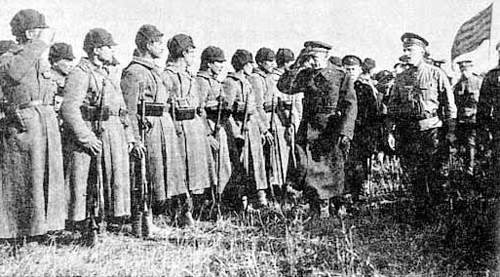
By the time of Kolchak’s coup, Semyonov had been in power for months. Semyonov felt threatened by this development and enforced a ruthless blockade over Kolchak’s territory. This was like putting his boot on the Admiral’s jugular; the Trans-Siberian Railway was the narrow blood vessel connecting Omsk to the Pacific Ocean, and to the Allies.
An eyewitness recalled Kolchak’s fury: ‘If Ataman Semenov had fallen into his hands now, the Admiral would not have hesitated to have him shot on the spot.’[xv]
After negotiations and a standoff, Semyonov not only lifted his boot but agreed to place himself under Kolchak’s leadership. Later Kolchak would formally and openly acknowledge Semyonov as the next-highest leader of the White cause in Siberia.
They were never happy allies. While Semyonov was a proud and open reactionary, Kolchak was in a position where he had to play a more delicate game. While Ungern was dragging Chinese merchants off trains and Semyonov was swigging champagne with his mistresses, Kolchak was trying to conquer Moscow. Kolchak’s officers were the kind of men who would challenge one another to duels and slap their soldiers in the face, but Kolchak himself had to present his regime as more modern and democratic in spirit. He needed Allied support, and he needed to build up a mass regular army recruited from among ordinary peasants. Everything east of Irkutsk was a bloody embarrassment and in many ways a liability to Kolchak.
But in other ways the Supreme Ruler in Omsk relied on the warlords beyond Lake Baikal. According to Palmer, it was to the realm of Ataman Semyonov that many Red prisoners-of-war were sent, never to return. Those of Kolchak’s faction believed, or at least claimed to believe, that there was a system of prison camps east of Lake Baikal, but there was no such thing. There were death trains, death barges, firing squads, sabres, even ice mallets. All this played ‘a critical, gruesome part in the White infrastructure’[xvi] though we should note that a greater number of Red prisoners were simply recruited as (very unreliable) White soldiers.
In addition, Kolchak and co had no idea how far they could push Semyonov, because they did not know how committed the Japanese were to him. So they didn’t really push him at all.
At least one author has claimed that Ungern was not representative of the White cause.[xvii] This is true enough; Ungern was really only representative of Ungern. But pointing to the prison trains and the mass graves, Palmer argues that the two depended on each other.
This contrast between what it was and what it pretended to be defined Kolchak’s regime. Its government departments were well-staffed and built on an all-Russian scale, but underneath there was very little in the way of actual services being delivered or concrete tasks being carried out. It was, to adapt a phrase, too many atamans, not enough Cossacks. Its military had a lot of top brass with impressive titles, but many were young, junior officers who had no idea how to command tens of thousands.
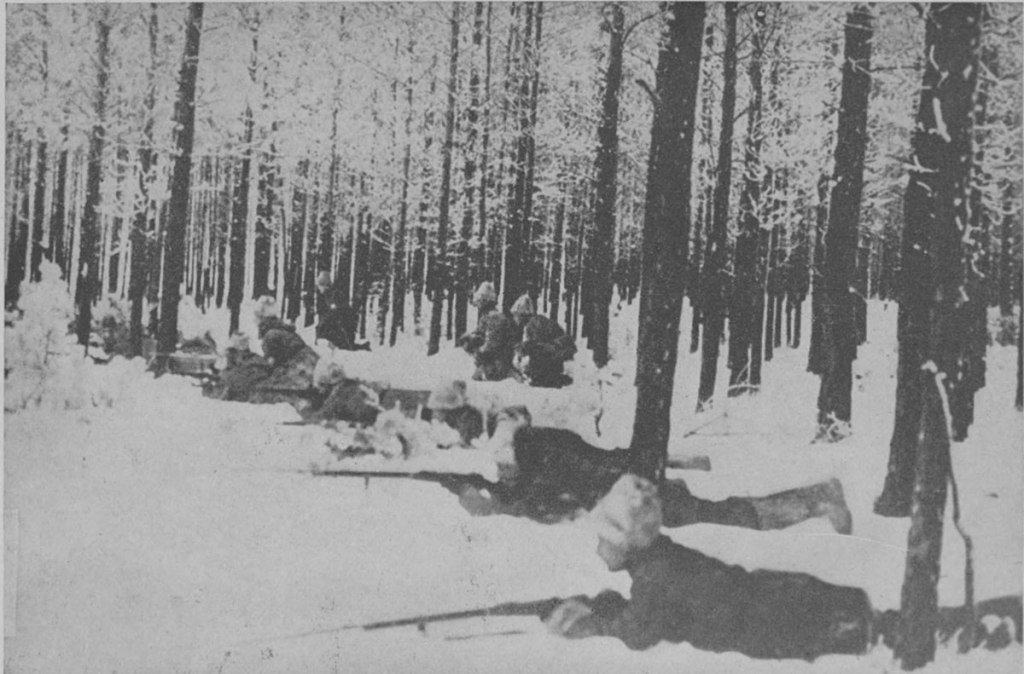
In early 1919 the forces of Admiral Kolchak had plenty of prisoners to dispose of. They went on the offensive and for months enjoyed extraordinary success.
In late 1918 the Komuch regime on the Volga had collapsed under the pressure of the Red Army, the key battle taking place at Kazan. In the winter of 1918-19, Five Red Armies advanced into the Ural Mountains. In January 1919 Lenin envisaged this Eastern Army Group taking Omsk within a month. It was not to be.
Perhaps he should have taken the ‘Perm Catastrophe’ as a warning. I mistakenly wrote in a previous post that after Kolchak’s coup the Czechs played little further role in the war. But it was the Czech officer Gajda who attacked the northern extremity of the Red front at the end of 1918, seizing the town of Perm and throwing the Red Third Army back nearly 300 kilometres.[xviii] Five Red Armies – but were they proper armies in reality, or only on paper? If Gajda could devastate Third Army so easily, Kolchak had reason to believe that the whole Red war effort was ready to crumble under serious pressure.
The Admiral was a sincere and devoted leader who made a point of visiting the frontlines and dispensing gifts to the soldiers. He had that ‘lean and hungry look’ that Shakespeare noticed in certain political figures: ‘he thinks too much… such men as he be never at heart’s ease.’ He was tormented by the dilemmas and pressures of the situation, shouting at his ministers, throwing things around his office, gouging at his desk with a knife. Punishing the furniture was easier than tackling festering problems such as the ‘warlordism’ of Semyonov.
He needed soldiers. Here in Siberia the land question was less pressing, so the peasants were not as hostile to the Whites as elsewhere. But the trained veterans of World War One who had returned to civilian life in Siberia were of no use to him; the war had made them cynical, and in the trenches they had been ‘infected’ with Bolshevik propaganda. From Kolchak’s point of view they were rotten. It was necessary to conscript tens of thousands of younger men, too young to have fought in the ‘German War’ or mutinied during the Revolution. But it would take time to train them up.
Kolchak did not have time. At the start of 1919 it looked like the Allies were ready to sign a peace treaty with the Soviets. To get support and aid, Kolchak needed to show that he stood a chance of crushing the Revolution once and for all. So he needed to launch an offensive, and he needed to do so in the narrow window between bleakest winter and the rasputitsa, the season when every gully would be a roaring torrent and every artillery piece would be axle-deep in mud.
The White forces exploited this narrow window of time with brilliance. On March 4th they advanced through the frozen Ural passes on skis and sledges. On the middle part of their front the Whites set their sights on Ufa. They faced not some rabble of Red Guards, but the Fifth Red Army, tempered at the Battle of Kazan. Nonetheless by March 14th Ufa was in White hands.
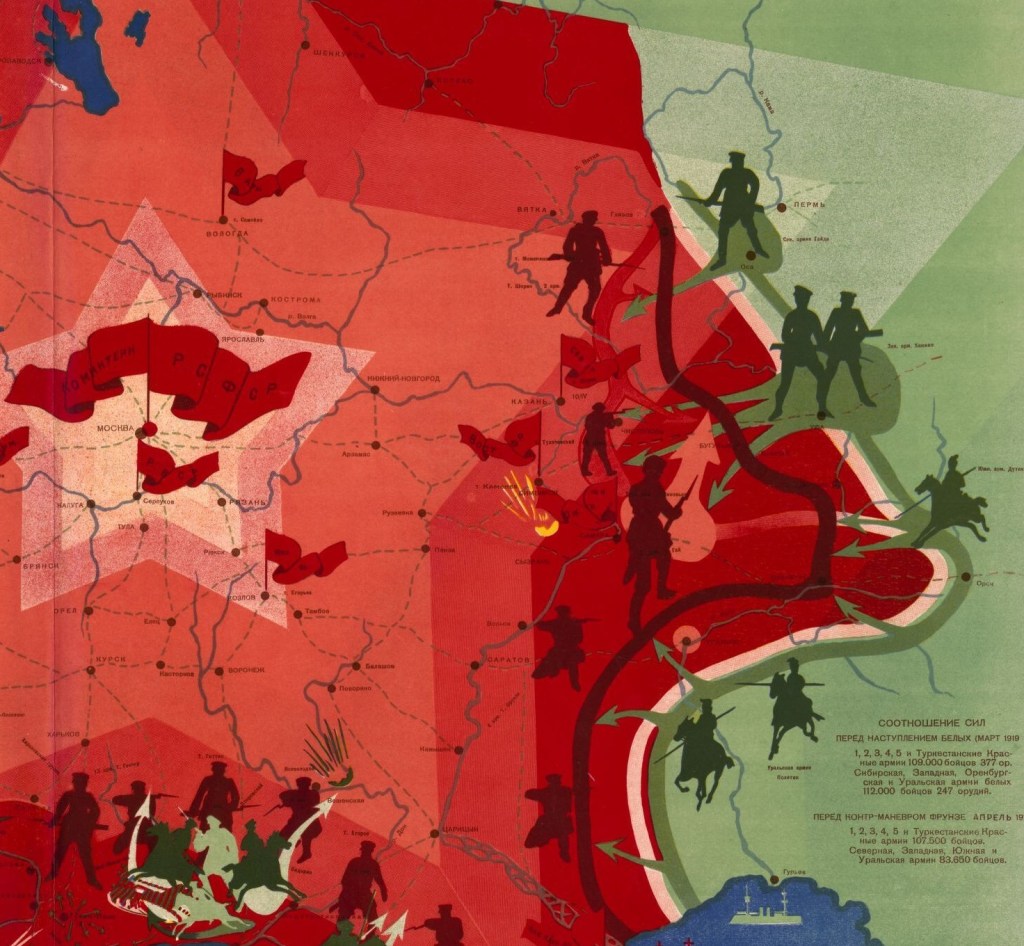
The young conscripts were still back at Omsk being trained up. This offensive was made by Kolchak’s Siberian Army of officers and Volunteers, bolstered by the incorporated remains of the Komuch People’s Army. So this was a victory of modest numbers against greater numbers.
By the end of April Kolchak’s army had taken a territory the size of Britain, populated by 5 million people. In May, a White officer stood on a height in the re-conquered city of Ufa and looked west over the Belaia river.
Beyond the Belaia spread to the horizon the limitless plain, the rich fruitful steppe: the lilac haze in the far distance enticed and excited – there were the home places so close to us, there was the goal, the Volga. And only the wall of the internatsional, which had impudently invaded our motherland, divided us from all that was closest and dearest.[xix]
There is a profound irony in the White Guard complaining about the internatsional. At that moment, behind his back to the east the railway was held by a counter-revolutionary international: Japan, the Czechs, the US, Britain, France. Allied battalions garrisoned key Siberian cities for Kolchak. The British at Omsk were training up some of the conscripts. If the White officer carried a rifle as he looked westward from Ufa, the bullets in that rifle were of British manufacture; General Knox at Omsk, Kolchak’s best friend among the Allies, claimed that every round fired by the Siberian Whites since December 1918 had been made in Britain, delivered by British ships at Vladivostok, and transported into the interior by British troops.
The flow of supplies had increased. The Spring Offensive had succeeded in terms of land conquered and as a signal to the Allies. Now the peace proposals were a thing of the past, and the Allies had committed themselves with renewed energy to the task of strangling the Russian Revolution. Between October 1918 and October 1919, 79 ships arrived at Vladivostok carrying 97,000 tons of military supplies. This meant around 1.27 million rifles, 9631 machine-guns and 622 artillery pieces.[xx] That is to say nothing of rolling stock, uniforms, greatcoats, boots, etc. Even though a portion of this must have been absorbed by looting and black-marketeering as it passed through the hands of Semyonov, these were vast supplies for a White Army numbering only around 100,000.
But next to what the Whites hoped for and the Reds feared, the role of the Allies fell short. When the Soviet war commissar Trotsky heard of Winston Churchill boasting about the ‘crusade of fourteen nations’ against Bolshevism, he responded with mockery. The Whites, he pointed out, had been hoping for something more like fourteen Allied divisions.
But let us not lose sight of the fact that Allied aid to Kolchak was ‘roughly comparable to total Soviet production in 1919.’[xxi]
Semyonov was a pirate king of the railways; Ungern hated the modern world; Kolchak and his officers denounced the international. But none of the warlords of Siberia would have made it very far without the Allies.
Regardless, the Whites had struck a heavy blow on the Eastern Front. The Ural Mountains had been re-conquered for counter-revolution, and the Allies were staking a million rifles on the victory of Admiral Kolchak. By this time, as we will see in the next few posts, the threats to the Soviet Republic on other fronts had multiplied and grown.
***
Go to Revolution Under Siege Archive
[i] Beevor, Antony. Russia: Revolution and Civil War 1917-1921 (p. 111). Orion. Kindle Edition. I made harsh criticisms of this book. But as you can see, I have found a lot of useful material in it.
[ii] Beevor, p. 112
[iii] Beevor, 296
[iv] Smele, The ‘Russian’ Civil Wars, 269 n65, 348 n13
[v] Smith, Russia in Revolution, p 200
[vi] Palmer, The Bloody White Baron,92
[vii] Palmer, p 104-106
[viii] Beevor, p. 331
[ix] Beevor, p 295
[x] Wollenberg, The Red Army, https://www.marxists.org/history/ussr/government/red-army/1937/wollenberg-red-army/ch02.htm
[xi] Dauria is also another name for the Transbaikal region
[xii][xii][xii] In spite of his hatred of Chinese and women, Ungern during this period spent 7 months in China and married the daughter of a Chinese general. Palmer guesses that this was a political marriage setup by Semyonov. Palmer, p 111
[xiii] Palmer, 93
[xiv] Mawdsley, The Russian Civil War, p 200-201
[xv] Beevor, p. 250
[xvi] Palmer, 113
[xvii] Rayfield, in Stalin’s Hangmen
[xviii] Mawdsley, 183
[xix] Mawdsley, p 202
[xx] These numbers are tallied from information provided by Mawdsley, p 198
[xxi] Mawdsley, 198
I have come across a large illustrated book titled History’s Greatest Hits.
I have a big problem with this book.
The simplest way to explain it is, imagine you came across Metallica’s Greatest Hits only to realise that all 36 tracks were songs on which Jason Newsted played bass. If you don’t know Metallica, substitute any other band and any other musician who only appears on three of their albums. There’s nothing wrong with Jason Newsted (Some people think the Black Album is their best). But most of Metallica’s greatest hits would not be on that list.
The blurb to History’s Greatest Hits promises an easy-going tour of ‘history’ via a range of episodes which ‘we should all know more about.’ The introduction says that we will meet a wild variety of historical figures – ‘From Queen Elizabeth I and Christopher Columbus to George Washington and Winston Churchill.’ Three of those people spoke the same language, three were from the same continent, two were from the same small island, and all of them had the same skin colour.
I skim-read a few of the chapters and found them fine. I’ll assume it’s well-written and well-researched. I don’t know anything about the author, and for all I know the publisher called the shots. But the contents page reveals a staggering bias:
Here you may point out my hypocrisy. My own little blog has so far been largely Eurocentric. In my defence, if you look at my ‘About’ page, this blog never made any claim to encompass all of human history, or to present its most interesting and significant episodes. The criterion is my own eccentric preoccupations and I never presented it any other way.
This book suggests that all the most important and interesting things in history happened in limited parts of the world and involved only a small slice of the human race. The suggestion is that everyone else was sitting around not doing much for thousands of years (except, from time to time, producing a Hannibal, a Bin Laden or a Tet Offensive to present a challenge).
Readers assume that the writer and publisher know what they’re talking about, and accept, consciously or unconsciously, that that the baton of ‘civilisation’ has been passed from Rome to England to the US, and that history consists of what they were doing.
And the bias in this one book is reflected in a thousand other places.
History’s Greatest Hits was published in 2003, nearly 20 years ago. Could such a book be published today? Absolutely. The book’s bias is very easy to demonstrate, which makes it easy enough to prove a point, which is why I’ve decided to write about it. But it’s not an extreme example. Keep an eye out and you will notice a ton of similar stuff.
But, you might argue, the book is written for English-speaking audiences and needs to pander to them. ‘Play the hits’ – tell us the stuff we already know!
In response to that I’d say: let’s look at another book, by coincidence also published in 2003. This is The Horrible History of the World, by Terry Deary and Martin Brown. Opening pages: Australia (30,000 BC), Egypt, Nubia. Skip on a bit. Babylon, Greece, India, China. A large picture of Shaka Zulu looking grumpy. A closer look would probably reveal a Euro and Anglo bias. But at least some effort has been made.
This kids’ book gives a better overview of ‘history’s greatest hits’ than the adults’ book, for the simple reason that it’s actually global in scope.
To end on a positive note, what would a balanced playlist of ‘History’s Greatest Hits’ look like?
Here is a list of 36 alternative topics, in no particular order of relevance or chronology. Its purpose is to illustrate that even a blogger like me can come up with more than enough interesting and important topics from the history of Africa, Asia and South America.
Ancient World:
1 The Reign of Hammurabi (Babylon)
2 Cyrus the Great liberates the Hebrews (Persia)
3 Polynesian migrations (Pacific Ocean)
4 The Terracotta Army (China)
The Middle Ages and Renaissance
5 The birth of Islam
6 The ‘Divine Wind’ prevents a Mongolian invasion of Japan
7 The glory of Benin City (Nigeria)
8 Georgia’s Golden Age
9 The Chola conquest of Sri Lanka
10 Buddhism comes to Tibet
11 The Iroquis ‘Great Peace’ (North America)
12 The Ming dynasty treasure voyages (China)
The Early Modern Era
13 Russian settlement of Siberia
14 The Sengoku Jidai (Japan)
15 Native Americans adopt the horse and firearms
16 Revolution in Haiti
17 Reunification of Ethiopia, 1855
18 Shaka Zulu (South Africa)
19 Dungan Revolt
20 The Opium Wars
21 The Trail of Tears
A World at War:
22 The Colombian Civil War
23 The Armenian Genocide
24 The Women’s War in Nigeria
25 The Arab Revolt
26 China: the Long March
27 Unit 731 in Manchuria
28 Indian famine of 1943
The Cold War and Beyond:
29 Nasser seizes the Suez Canal
30 Ghana achieves independence
31 The overthrow of Salvador Allende (Chile)
32 Suharto’s Coup in Indonesia
33 The Killing Fields (Cambodia)
34 The Angolan Civil War
35 Overthrow of Apartheid in South Africa
36 Bolivia’s Water War
 The 1919 Review