10 underrated SF novels with great concepts

A few weeks ago I wrote about Dune. As I mentioned, its underlying concept isn’t actually that great. I wrote, ‘It’s about a teenager who […] becomes emperor of the galaxy by convincing native people that he’s their god,’ and then I added something about phallic monsters.

Stated so baldly, the concept would actually put a lot of people off. The real brilliance of Dune, I argued, is in the delivery.

Here are ten Science Fiction novels which are not as well-known as Dune but which have it all: great concept and great execution.

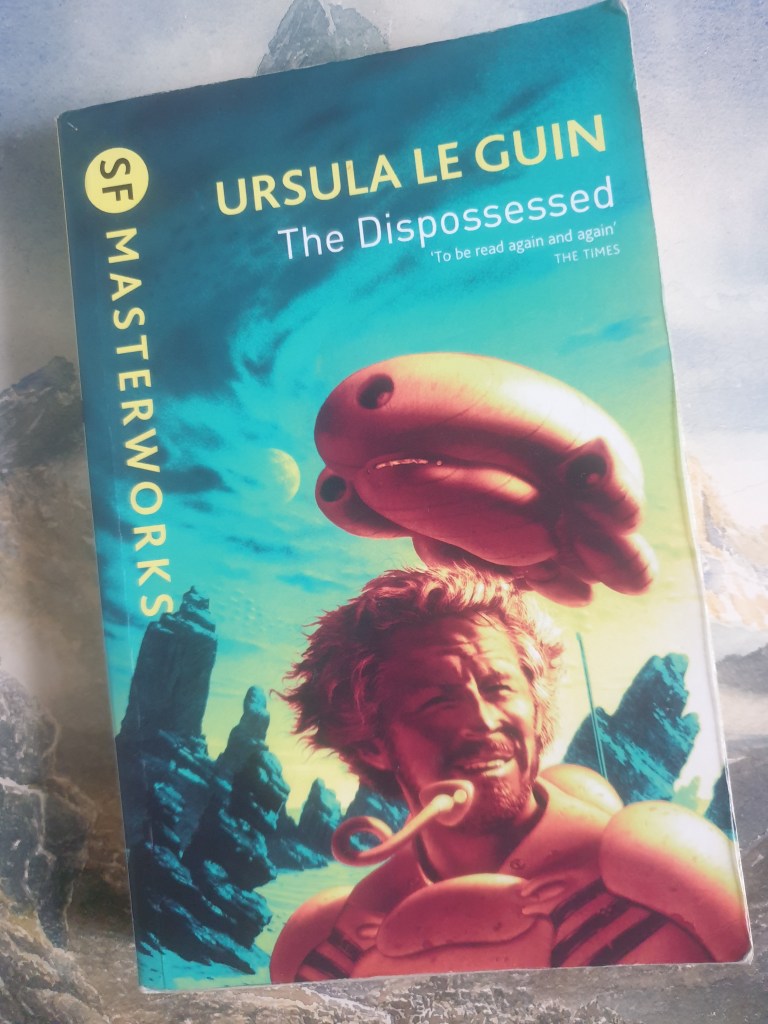
1. The Dispossessed by Ursula K Le Guin (1974)
In The Dispossessed, the great Ursula K Le Guin sets herself the task of describing an anarcho-communist society. An inventor named Shevek has lived all his life on the arid moon of Anarres. On Anarres, all property is public and the state has ‘withered away’ – there are no police, courts or prisons, there is no money and no large-scale private property. On the basis of voluntary cooperation, this society is highly-organised and industrialised. It provides housing, food, healthcare and education to all.
But this is not one of those novels where the story is just window-dressing for a political lecture (a valid genre – The Iron Heel is very good on its own terms – but unpopular today). Anarres is not a utopia. This moon is poor in resources, so the common standard of living is not luxury. The dissolution of the family means that child-rearing can be left to institutions. Now, these institutions do a perfectly good job, but it’s obvious that Shevek has unresolved pain caused by his mother’s abdication of responsibility for him. Academic rivalry can get vicious. Political controversies still lead to violence, as we see in the first pages.

The story is about Shevek growing fed up with Anarres – though as he explores other worlds and societies, capitalist and sort-of Stalinist, he sees that they are far worse.

2. Rosewater by Tade Thompson (2016)

An alien lands in rural Nigeria. But this is not a slightly funny-looking humanoid in a flying saucer or tripod. It’s a vast biological presence, a kind of dome. Once a year it heals those afflicted by mutilation and disease, attracting a pilgrimage. But the real agenda of this alien presence is unclear.

Thompson shows how, decades later, a whole society has been reshaped by the alien presence, and we witness a shadow struggle of psychics and intelligence agencies.

3. Iron Council by China Miéville (2004)

In a time when steampunk and fantasy Victoriana were cutting-edge, Miéville posed a very relevant question: in all these gears and goggles, where’s the steampunk Karl Marx? Where’s the steampunk Paris Commune?

That suggests the premise of Iron Council, the last part of the Bas-Lag trilogy (each can be read as a standalone). Civil war engulfs the city of New Crobuzon as the old regime clings to power in the face of a workers’ uprising. All this in a dark and floridly bizarre steampunk fantasy world where convicts are punished by being turned into semi-machines, and spirals can be magical weapons of mass destruction.

In Iron Council, Miéville also asked a question that nobody else would have thought of: what if a frontier railway-builders’ strike led to the creation of a nomadic railway-borne communist republic? What if this train had to rush half-way across the world to aid the New Crobuzon Revolution?
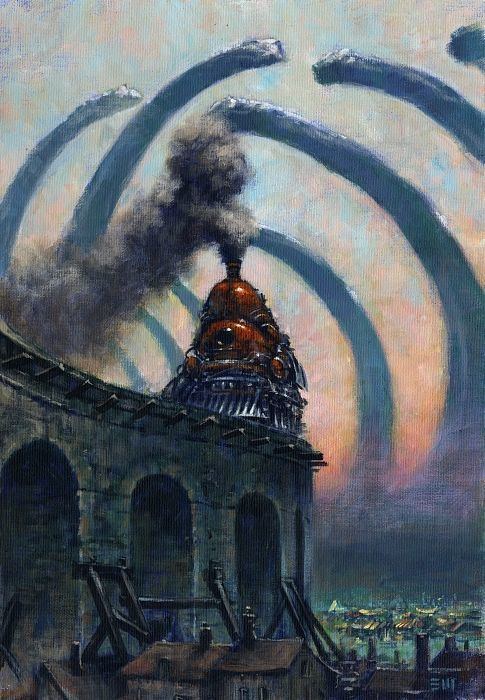
Today’s cover image, a painting of Miéville’s New Crobuzon from Alchetron.com. Original artist unknown

4. American War by Omar El-Akkad (2017)

In the near future, the southern states of the US start a civil war over a fossil fuel ban. In this novel’s bleak vision, war is a matter of misguided desperate people being crushed physically by high-tech weaponry, and crushed mentally and spiritually by prisons.

As the war settles down to a guerrilla struggle, a federation of Arab states sends agents into the sprawling refugee camps. They groom a generation of suicide terrorists to carry on what everyone knows is a doomed struggle. And that’s not even the worst part.

This bleak story draws you in with a well-drawn world and characters. It all feels painfully real. The foreign agents are prolonging this war for their own selfish geopolitical purposes – but that’s exactly what US agencies have been doing for decades, all over the world and especially in Arab countries. This parallel seems to emerge naturally from the story and world. It is not one-to-one and it is not immediately obvious. The world and story work on its own terms – though for me the ending was bit too extravagant to be credible.

5. The Three-Body Problem by Cixin Liu (2008, trans 2014)

How would aliens communicate with humanity? Imagine intelligent life that has evolved on a world whose rules and dangers we can barely comprehend. In Liu’s novel, these aliens explain their history to us through an incredibly trippy cult videogame that they infiltrate into our cyberspace. Our characters discover and play this game. At first it seems totally bizarre, but meaning gradually emerges from it. This is how the aliens communicate with the humans, and how the novel communicates with us. We come to grasp the mind-bending cosmic reality of an alien world.

What’s with the searing flashbacks to Mao’s Cultural Revolution? This ties in thematically with the alien story. There emerges a political movement of humans, fanatics who support the aliens and hate their own species. The moral of the story, implicitly, is as follows: all hail bloody state repression, the only force that can save us from dangerous fanatics, be they Maoists or alien proxies. It’s a horrible message but implicit, not explicit, and one that is unfortunately pretty common in cutural texts from all parts of the world, the US or Britain every bit as much as China.

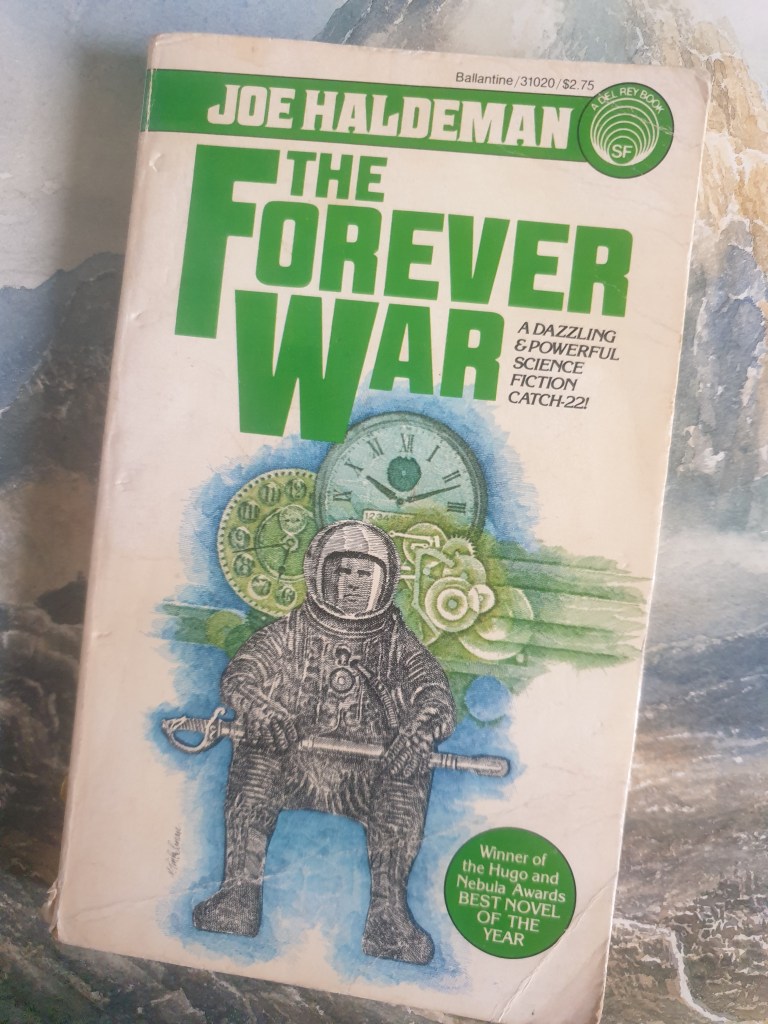
6. The Forever War by Joe Haldeman (1974)

A young soldier is sent to war on a distant planet. Our main character jets back and forth across the galaxy at light speed, from earth to the battlefields and back again; he ages a few months, but meanwhile on earth centuries pass.

The military sci-fi aspects are really well-realised, but the heart and soul of the book is the very literal ‘future shock’ experienced by Private William Mandella as he fights for a society he no longer understands.
7. Parable of the Sower by Octavia E Butler (1993)

In Parable of the Sower we watch a near-apocalyptic California descend into a post-apocalyptic California. But this is not Mad Max or Fallout. Violence is all around, but it is not the answer. The answer is to band together and help one another selflessly, and that is what we see happening, in spite of suspicion and scarcity.

The main character is a visionary young woman who is making up her own religion. Certain other Science Fiction prophets have used religion to wage intergalactic jihad. But in Parable of the Sower, it is a creed of compassion and mutual aid, with obvious relevance for the tasks which face our band of survivors.

Meanwhile, the causes of the collapse of society are not singular or simple. There is no alien invasion, zombie virus or nuclear strike. It’s simply that corporate power has grown to a terrible scale and has destroyed society, the economy and the environment. The start of the novel is not too distant from the reality today.

8. The Stone Sky by NK Jemisin (2017)

On the Broken Earth, devastating earthquakes are a regular occurrence. Enter the orogones, humans who can control geology with their minds. This makes them saviours but also potential destroyers; an orogene in a fit of rage can cause a whole town to collapse into an abyss.

The Stone Sky (2017) is the third part of the Broken Earth trilogy. (Yes, you have to read them in order). The Fifth Season (2015)and The Obelisk Gate (2016) are great in their own ways, but in The Stone Sky the brilliant concepts are fully-developed and the mysteries are revealed. Most importantly our characters, who have often seemed like shadowy sketches, emerge fully into the light. The relationship between the main character and her daughter define the novel, and at the climax of the story everything comes together in a single moment, a single decision. Yes, after all the horror we get a happy ending.

9. Judge Dredd: Complete Case Files 2 (1977-1979)

credits from 2000AD.com:

WRITERS CHRIS LOWDERJOHN WAGNER & PAT MILLS

ARTISTS BRENDAN MCCARTHYBRETT EWINSBRIAN BOLLANDDAVE GIBBONSGARRY LEACHMIKE MCMAHON & RON SMITH

LETTERERS TOM FRAMETOM KNIGHT & JACK POTTER

Judge Dredd and a punk biker have to cross a nuclear-wasteland USA on motorbikes. Crazy adventures ensue. This is the Cursed Earth Saga. Dredd and co are attacked by a tiny but fierce robot general, free a captive alien king, and come face to face with the cryogenically frozen president who caused the nuclear war. It’s wacky, fast-paced, gruesome and sometimes disarmingly tender.
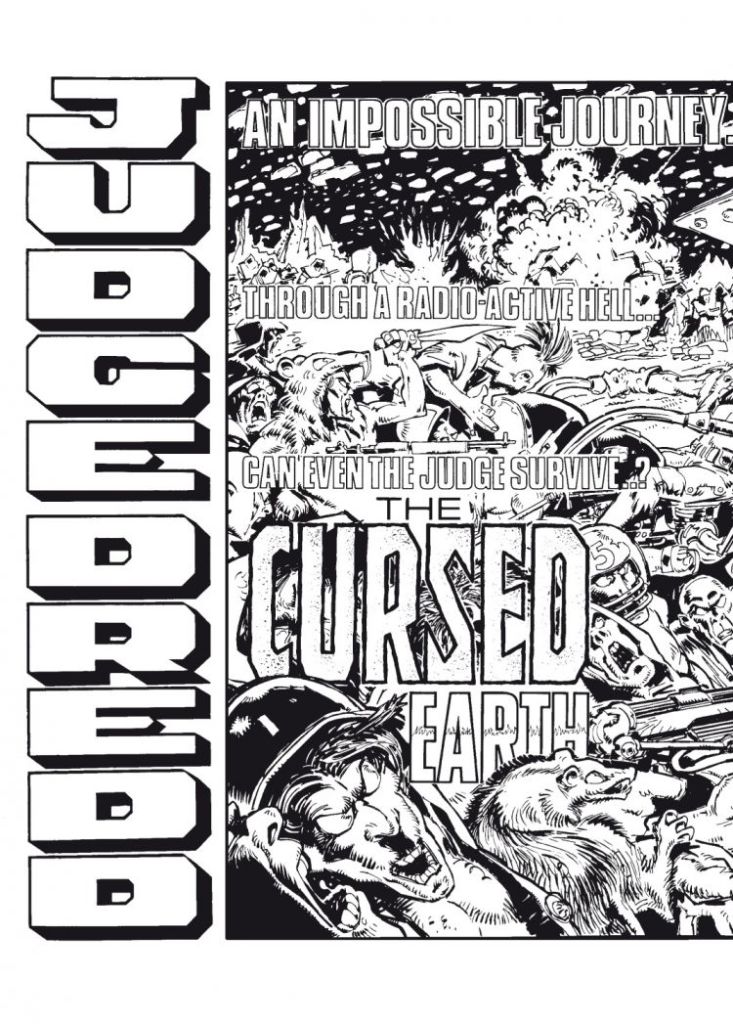
From 2000ad.com

Dredd returns to his futuristic mega-city. He’s not there five minutes before the insane Judge Cal seizes control of the city. Inspired by the reign of Caligula, the story traces a very satisfying back-and-forth struggle between Dredd and Cal. Cal descends into ever-more ridiculous and evil excesses until finally he sentences the entire population to death and lines them up to be eaten by alien mercenaries; Dredd raises a revolution, arms the people, and links up with unlikely allies such as the sewer-dwelling mutant Fergie.

In the decades since these stories came out, Dredd has had many satirical and epic and memorable adventures. But to my mind they has never quite equalled the Cursed Earth and Judge Cal.

10. The Water Knife by Paolo Bacigalupi (2015)

Rounding off the list, an all-too-topical premise. In The Water Knife, the whole south-eastern United States have dried up. The cities are dying. Bloody struggles and intrigues unfold as leaders try everything short of all-out war to seize control of the water supplies. The ‘Water Knife’ of the title is Angel, a tough guy who secures water supplies for Las Vegas.

Something like this is going to happen. I happened to see online just the other day that the water levels in Lake Mead, Nevada, are frighteningly low. Bacigalupi brings to life what it could to mean for politics, culture and the dark underworld of organised crime and the secret state. 
Go to Home Page/ Archive

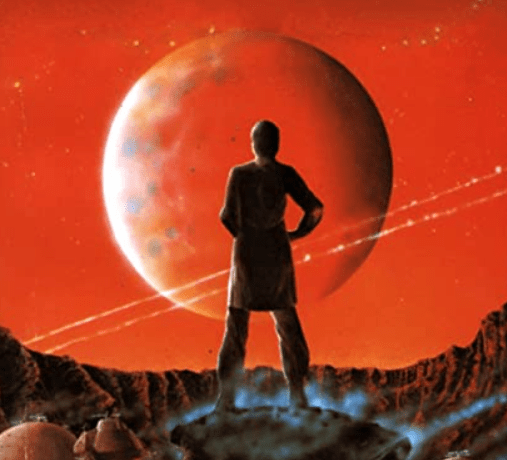
Detail from the cover of a vintage edition of The Disposessed

The Real Macbeth

Based on Macbeth: High King of Scotland 1040-57 AD by Peter Berresford Ellis, Frederick Muller Limited, 1980

Peter Berresford Ellis’ Macbeth is a short biography that debunks the version of the medieval Scottish king that we see in the famous Shakespeare play.

But Ellis defends Shakespeare himself, making it clear that the great playwright based his work on the only sources which were available to him in 17th-century London. It is mainly these sources which are to blame, not Shakespeare himself.

Ellis’ book goes right back to the earliest primary sources, the sagas and chronicles of the Gaels of Ireland and Scotland, of the Anglo-Saxons and Vikings. Macbeth’s age, the mid-11th Century, was a fascinating time, obscured by a scarcity of sources, and it’s worth reading this book just to get a sense of the period.

Shakespeare does make an effort to populate his play with kerns and gallowglasses and other medieval Celtic trappings. But ‘cannons overcharged with double cracks’ intrude into an otherwise brilliant depiction of an early medieval battle (Act 1, Scene 2). Again and again (as we will see below) 17th-Century pathologies rear their heads.

This is one of the great things about Shakespeare. His flagrant anachronisms place his stories in, as Ellis says, a ‘never-never-world’ which makes it easy to apply them, to adapt them, to reset them in new contexts.

School textbooks today will all point out that the play is historically inaccurate. But they don’t go into much detail. Let’s go through it, act by act. By the way, this book was written over 40 years ago and I haven’t read much on Scottish history aside from this. This is all based on what I’ve read in this book and my previous readings on Celtic society. Many of the points below will tie in with Celtic Communism? a series I wrote last year.

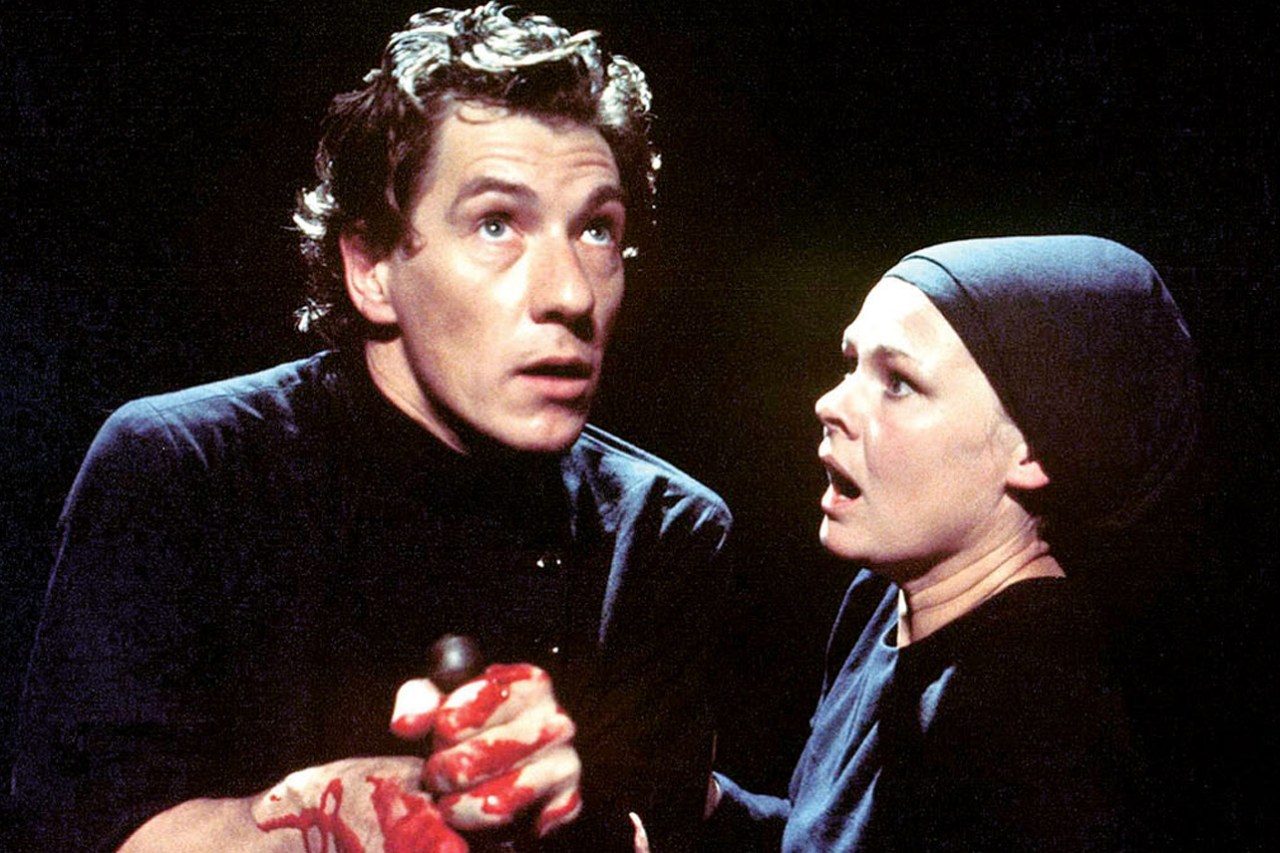
From IMDB. Ian McKellen and Judi Dench star in Trevor Nunn’s 1978 minimalist film version of Macbeth, the best film version I have seen. Mandatory Credit: Photo by REX USA (95938a) IAN MCKELLEN AND JUDI DENCH Judi Dench actress Ian McKellen in play Macbeth

Act 1

Scene 1: The play opens with three witches. They are not in the contemporary and near-contemporary sources at all. The witch-burning craze was a 16th and 17th century phenomenon. These three characters appear as nymphs or goddesses in Shakespeare’s immediate sources. But Shakespeare knew his audience (his company’s patron King James, author of a book on witches titled Demonology).

Scene 2: We get a vivid description of bloody battles. Two rebel Scots, Macdonwald of the Western Isles and the Thane of Cawdor, assisted by the Norwegians, are making war on the good king Duncan. Duncan prevails thanks to the assistance of Macbeth.

In reality, this was a war between Duncan and his cousin Thorfinn, jarl of Orkney. Duncan was defeated, and Ellis believes that Macbeth probably fought against him, and caught him and killed him in the aftermath of the battle.

Scene 3: These titles – thane of Glamis, thane of Cawdor, etc – are all wrong. Macbeth was Mormaer of Moray – which was one of the highest positions in Scotland. Banquo, meanwhile, was invented later as a mythical ancestor for the family of King James. He’s another figure who does not appear in the early sources.

The king throws around titles as rewards: Thane of Cawdor, Prince of Cumberland. In the Gaelic political system, these positions were elective. Duncan, by the way, was High King and not King.

Lady Macbeth had a name – Gruoch – and a son by her previous marriage, Lulach, whom Macbeth treated as his own heir. The evil Lady Macbeth is really Shakespeare’s own invention. So none of the evil female characters were in the original sources.

In all of Duncan’s scenes, we see him using the royal ‘we’ and being showered with all kinds of toadying and extravagant flattery. I’m sure this was how kings behaved and were treated in Shakespeare’s day. But I would guess it was not the case in Celtic Scotland.

By the way, although they were cousins, Duncan’s family and Macbeth’s were mortal enemies going back generations. Someone, probably Duncan or his allies, slaughtered Macbeth’s father when Macbeth was a child. This elaborate flattery is therefore doubly inappropriate. The relations between these men should be tense.

Duncan and Macbeth were not just individuals but representatives of rival factions, rival kingdoms even: Moray and Atholl. Or Moireabh and Fótla, Donnchadha and Mac Beathadh– as Ellis reminds us, the people of Scotland spoke Gaelic at this time and for hundreds of years after.

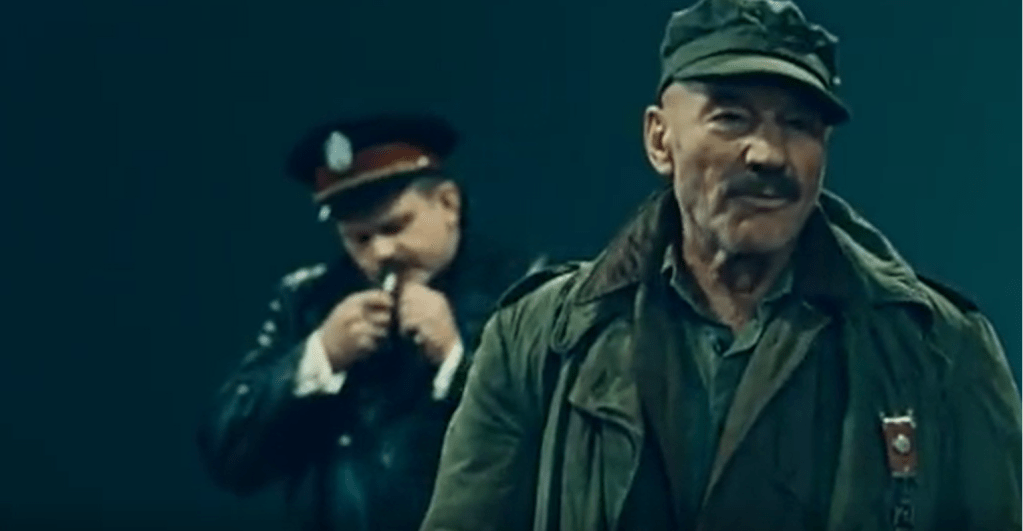
Screenshot from Macbeth (dir Rupert Goold, 2010), another film version. This one imagines Macbeth as a Stalinist dictator.

Act 2

Throughout this Act, killing Duncan is treated as a sacrilege. It is ‘A breach in nature for ruin’s wasteful entrance.’ His blood is golden. His virtues will ‘cry out like angels, trumpet-tongued, against the deep damnation’ that is his murder. He is ‘the lord’s anointed temple.’

Gaelic Scotland, according to Ellis, would not have seen in that way. They had a duty to depose and kill defective kings. And the historical Duncan was an unsuccessful warmonger.

What would have been seen as sacrilege would be the murder of a guest. Ellis says it would have been impossible. This is because the rules around hospitality were so strong in Gaelic culture.

In Shakespeare’s text, Macbeth’s real crime is not that he killed a nice man – it’s that he killed a king. The Early Modern mind reels at the unthinkable sacrilege. Yet within a few decades of the first performance of this play, the English cut their king’s head off; I think Shakespeare protests too much, and his play manages to channel some of that cultural substance which would go on to flow powerfully into the English Revolution.

At the end, there is a little hint of elective kingship. The characters remark that ‘’tis most like the Sovereignty will fall upon Macbeth.’ But this is only the tiniest hint.

Act 3

Feudal imagery continues – barren crowns, fruitless sceptres. This imagery also suggests primogeniture, which was alien to Scotland at the time.

The play implies that a short time has passed since Macbeth was crowned. The significance of the banquet scene is that Macbeth’s authority and sanity are already starting to unravel. He has had no chance to enjoy being king.

But the historical Macbeth ruled in relative peace and stability for seventeen years. His reign was far longer than those of his immediate successor and predecessor.

The banquet scene is an absolutely brilliant moment in the play. But as we have noted, Banquo was not real.

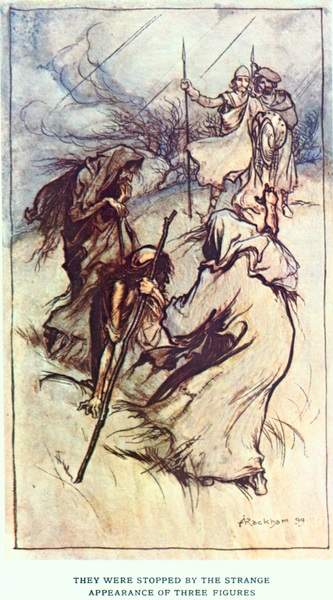
Three strange figuresː Macbeth by Arthur Rackham, 1909 (Tales from Shakespeare by Charles and Mary Lamb). Another memorable, iconic scene from the play which does not appear in the earliest sources.

Act 4

Macduff is another character who was probably invented hundreds of years later. As for the slaughter of his family, another invention.

Act 4 Scene 3 shows England as a wonderful utopia ruled by a saintly king, in contrast to Scotland where ‘new widows howl’ every morning.

In reality England at this time was torn by upheaval and conflict between Norman, Danish and Anglo-Saxon lords. Scotland only saw one internal revolt during the long years of Macbeth’s reign, and that was isolated and put down quickly. Funny, that! I thought primogeniture was supposed to bring stability.

There is a long conversation between Malcolm and Macduff, a tedious part in what is otherwise such a well-written play, where they catalogue exhaustively all the characteristics of a good monarch. As well as being slow, this is in fact a catalogue of anachronisms.

Act 5

In the final act an English army invades Scotland, supported by a universal revolt of the Scottish people ‘both high and low.’ The people have risen against Macbeth: ‘minutely revolts upbraid his faith-breach.’ Macbeth is holed up in a fort, losing his mind, lashing out in madness or in ‘valiant fury.’ The enemy army marches on his fort disguised behind the boughs of trees. He fights to the last almost alone, his own side deserting him and refusing to strike the enemy. Then he is killed and his severed head is displayed.

How accurate is all this? Let’s start with the good (I’ll have to reach a little).

The depiction of the English-Danish Earl Siward is accurate, including the detail of him losing his son in the battle and his stoic reaction. Ellis goes further into this.

It’s also interesting that Malcolm makes his thanes into ‘earls, the first that ever Scotland in such an honour named’ and also promises to ‘reckon with your several loves and make us even with you.’ The first quote reflects how Malcolm, and more so his descendants, brought many English feudal customs to Scotland. The second quote is true in that he rewarded those who had helped him, including by giving large estates in Scotland to English invaders.

But the rest is fiction. Macbeth met Malcolm and Siward in the field (yes, probably near Birnam), and while he lost he survived, and inflicted heavy casualties. His enemies were so battered they could not follow up on their victory; Macbeth ruled for another three years! That deflates the ‘Tomorrow and tomorrow and tomorrow’ speech, doesn’t it? Ellis reckons Malcolm annexed Cumberland and Macbeth remained High King of Scotland. Three years later, Malcolm resumed the struggle and this time killed Macbeth and took the title of High King. Macbeth was buried with the full honours due to a High King on the holy island of Iona. This distinction was denied to Malcolm when he died.

But Malcolm’s descendants went on to rule Scotland for centuries. The myth of the evil Macbeth had to be invented in order to improve the image of Malcolm, a beggar prince and a foreign-backed usurper.

Go to Home Page/ Archive

Half a Review of Half a King

Half a King, by Joe Abercrombie (Harper Voyager, 2014, 2015)

From the first chapter of Half a King by Joe Abercrombie I was struck by how gripping it was. I started taking notes as I read, most of which addressed the question, ‘How does he do it?’ My notes are reproduced below, edited for readability. They point to the features of a certain style of writing that is currently fashionable. This novel is a showcase of the great strengths of this style.

As the title of this post implies, I’m only going to the half-way point of the novel, which is all I’ve read. Spoilers ahoy.

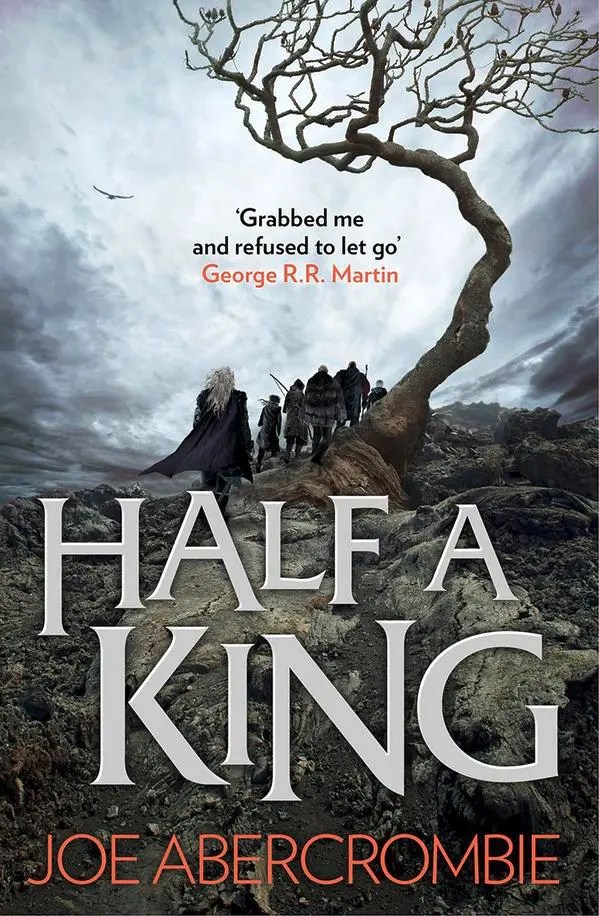
The British and Irish cover. This and all other images from https://joeabercrombie.com/books/half-a-king/

Part 1

  • Each chapter is limited to 1500-2500 words (6-9 pages). Each chapter shifts the scenery and cast. There is only one point of view, that of the main character, Yarvi.
  • The main conflict is apparent in the first line, and made more explicit by the end of the first chapter: this totally unsuitable person is going to have to try and be king.
  • It’s not that fast-paced. What it is is, each chapter has a bearing on the character conflict introduced in chapter 1. In the next chapter Yarvi meets his mother; she is pretty horrible, so this is discouraging for Yarvi’s prospects, but his uncle’s presence is consoling. Next Yarvi meets his betrothed; at first this is intimidating for him but then it turns out she is sound. Next he goes to do a bit of sparring; he gets beaten, but gets his revenge in an unscrupulous way. And so on.
  • The author gets away with having very little exposition because the setting is typical and even clichéd. So far, not one surprising element.
  • I’m enjoying it, I’m reading on. A number of promises, hints and mysteries have been dropped, and I want to see how things turn out. Eg. There’s a mean high king we will (no doubt) meet; an uncle who seems helpful but who (I predict) will betray Yarvi; a raid coming up; a mystery as to how the father was killed.
  • It’s Designated Survivor with Vikings.
  • Yarvi is treated badly by his parents but he has more than one ‘good adult’ in his life, who seem to see him and appreciate him: the minister, and his uncle. Those who despise him and those who value him each in their own way make us care about him.
  • Neat trick where nervous volubility of a character (the betrothed) gives opportunity for a bit of exposition.
  • We have the Maesters (or ‘ministers’) – from George RR Martin; we have a hint of the custom of women being literate instead of men – from Brandon Sanderson.
  • We are surprised to find the battle already over when Yarvi shows up. We were expecting battle scene, but what happens instead is more interesting.
  • The gruesomeness of the raid aftermath, and Yarvi’s disgust with it, is a hint that he as king is going to make a more just social order.
  • A solid twist on page 58. Good stuff. I was not expecting the uncle to betray him so soon.
  • Keimdal defends him, unexpected, and Hurik does not. Also unexpected.
  • The belt buckle and watery inlet were both very seamlessly but strongly set up.
  • ‘He would have liked to weigh his choices, but for that you need more than one.’
  • I can’t believe I said this was a Viking Designated Survivor. It’s a different kind of story entirely. Yarvi will have to resolve his conflict (ie to be a king), but in a very different way from what he expected. He will have to fight his way to the kingship, and presumably he will grow into the role as he claws his way up again from rock bottom. There is nothing original about this basic story, but the delivery so far has been very good, so I’m down.
  • P 65 great character description of Gorm-Il-Gorm, full half page paragraph, justifies its presence.
The French-language cover

Part 2

  • I approach Part 2 with trepidation. Yarvi is going to be enslaved, with all the grimdark misery and monotony that such a plot turn entails.
  • A cliché of fantasy novels: we only ever see a highly commercialised, Antebellum South model of slavery. It is capitalistic and not, for example, clan based. It is ‘simple’ chattel slavery and not a complex gradation of free and unfree. We fetishise the money economy so much that even our barbarian slave traders use hard currency and treat the enslaved people as commodities. In this novel, the slaves are even sold in a ‘shop’. The word is a bad anachronism. In a medievalesque setting a ‘shop’ is a workshop. At least we were spared a slave auction scene (Though I’m sure if Abercrombie had attempted it he would have made it compelling).
  • But the misery and squalor of the ‘shop’ is described economically and in a way that is linked to character. It is not allowed to bog down narrative.
  • P 118: Aha. It’s a post apocalyptic Baltic sea. Leningrad, Rostock, Stockholm, Geatland. Copenhagen. All the islands. I’d better go back and change ‘medieval’ to ‘medievalesque.’
  • My misgivings were unfounded. The author conveys the misery in skin-callousing terms, but in each chapter the focus is on the character and his goals. It’s setting up how things work on this ship, who’s who, and allowing us to guess ahead about how Yarvi will work these conflicts to his advantage. The author is stacking up Jenga blocks and we know the tower is going to fall. We don’t know how, and for now we are invited to guess.
  • In the meantime there are periodic reminders of what Yarvi wants and why – not intrusive or annoying, but natural.
  • In spite of the horror, optimism about human nature is evident on the slave ship. This optimism marks the book out from, say, GRR Martin. Yarvi’s companions, for example. Even Trigg is recognisably human – he cries at an emotional song.
  • P 125 – a printed circuit board assembly used as jewellery
  • Yarvi manages to avert a battle with the ‘savages’, and it’s much more exciting than a battle scene.
  • The escape, when it comes, is very satisfying because it has defied us for so long.
  • Only 2-3 fatal action scenes so far, but it has kept our attention.
  • We are starting to learn more about this world. But only after we have been introduced to Yarvik, to what he wants, his strengths and weaknesses. The rule here is character first, world second. This is what Matt Bird is talking about with his ‘Believe, Care, Invest’ model.
  • Looking back, Part 2 has introduced an entirely new cast of characters. Complete reshuffle. Everyone we know from Part 1 is gone. This is risky but Abercrombie pulls it off.
  • What about the morality of Yarvi’s escape? First, he squealed on another slave to suck up to the captain. Then he let the sea in through the hull of the boat, drowning seventy or eighty slaves who were chained to their oars.
  • On the first point, there are various mitigating factors which are obvious and need not detain us. But the most important point is that he intends to betray the evil captain as soon as possible, and their alliance is very brief.
  • On the second point, how he let the water in to a docked ship: (on top of the obvious points like how he tried to save them only to be thwarted by Nothing) the guards had the keys and the opportunity to let the slaves loose. Yarvi did not. And the most important point is this: he’s not the one who put them in those chains. The evil captain bears all the responsibility and Yarvi bears none.
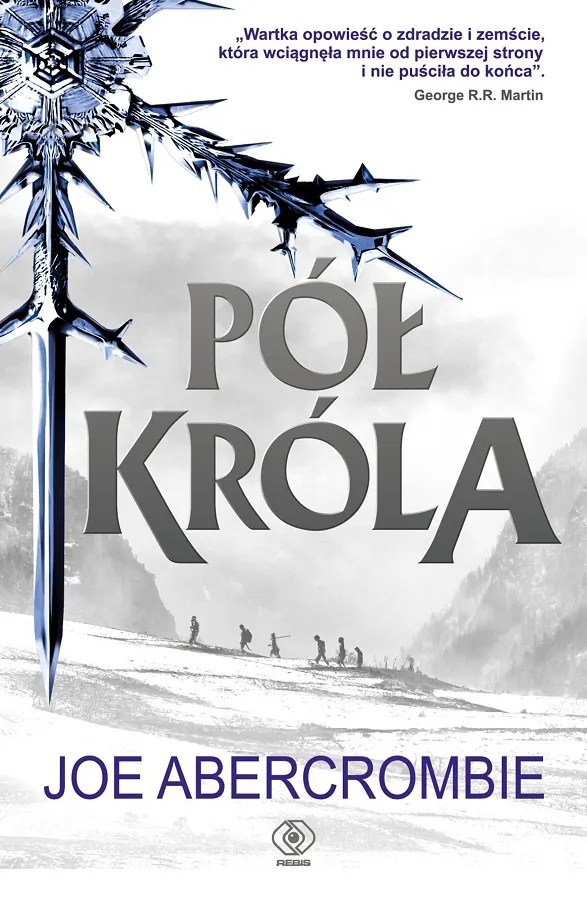
A gruelling trek – from the Polish cover

Part 3

  • We get a gruelling sequence of events as Yarvi and his band of friends set out across an inhospitable wilderness with no supplies. But now that we are off the slave ship, our cast of characters get a chance to expand, to show what they are made of, to make an impression on the reader.
  • Amid all the hardship, we can see a bond being forged between these diverse people. When Jaud carries Sumael. When Yarvi and Ankran make up. When Nothing turns, in the space of just 10 or 15 pages, from a saviour to a would-be murderer of a child, then to pathetic gratefulness when the child’s people help him, and then to swearing a solemn and dramatic oath to Yarvi. All this, without ever appearing to change his mind; his madness has an internal consistency.  
  • When they reach the house, what a relief – and what a line: ‘I told you steel would be the answer.’
  • Repeated physical descriptions reinforce the scarred, outcast status of these characters while also familiarising us with them – Sumael’s notched lip, Ankran’s gap tooth. Also repeated and brief statements reminding us of their backgrounds – the well in the village, the wife, etc.
  • How did we come to know these characters? Why did we give the writer our attention long enough for him to show us various facets of these people?
  • Frequent changes of mood and pace. From a gruelling chapter, to a chapter of relief and recuperation, and on to a chapter of main characters sitting around, letting their hair down, planning, and sharing a dramatic revelation.
  • Change of pace again – the bad guys are catching up. There are always new challenges before the characters can get too comfortable. But at the same time the challenges are not relentless or monotonous. Change and progress are evident. When they endure hardship, they earn something that helps them – for example, they endured the wilderness, and got the supplies that are now proving so useful. We don’t know much about the history, ecology or politics of this setting – but we know that it is a world that is both challenging and rewarding.
The US cover

Page 228 – That’s all for now. The characters are building a raft on the banks of a river while their enemies close in. I wish them luck, and if I have things to say about the second half of this book (I probably will) I will be sure to post them here.

Go to Home Page/ Archive

What if Michael Collins had survived the Irish Civil War?

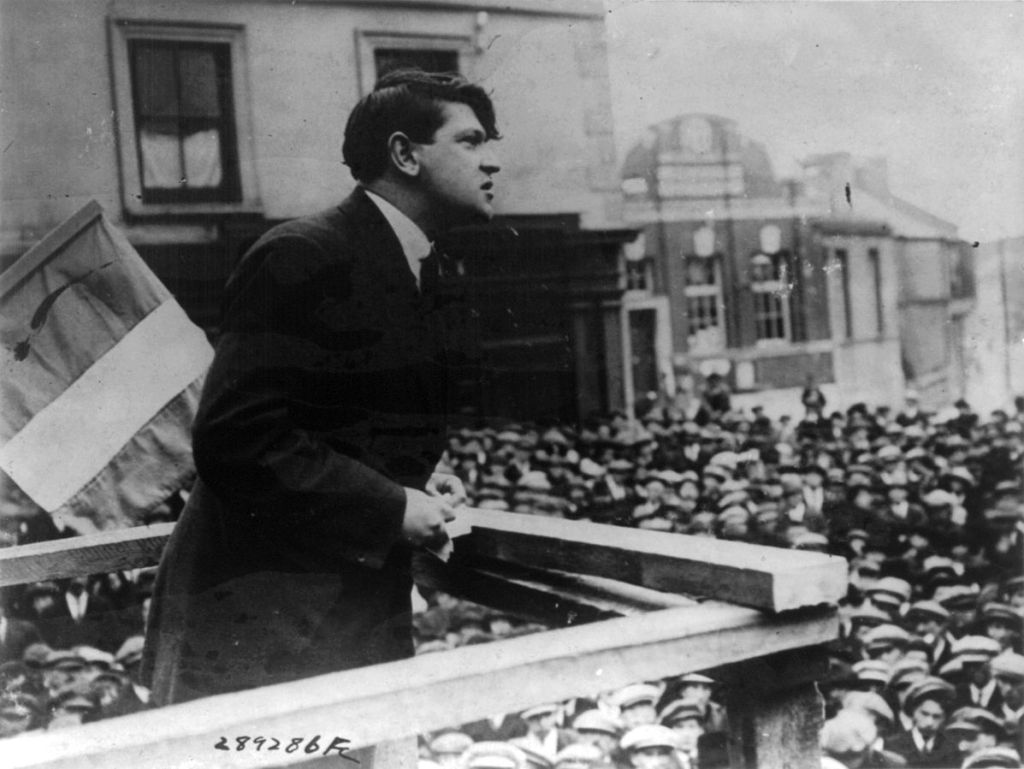
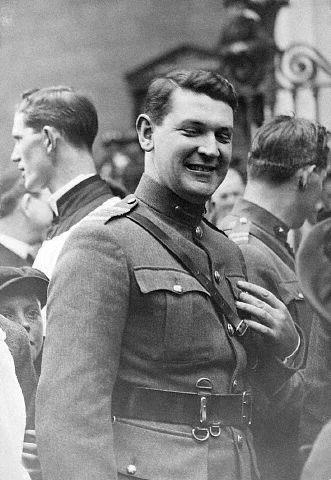
In a quiet little library in a certain small town in Ireland you can find no fewer than four biographies of Michael Collins side-by-side on the shelves, along with further titles in the children’s section. A few years ago, members of the youth wing of Fine Gael used to brandish a life-size cut-out of Michael Collins in military uniform (only half ironically). And just yesterday I saw in a bookshop window a children’s book about him titled ‘The People’s Peacemaker.’ As we approach the centenary of his death, Michael Collins is still a very big deal in Ireland.

A while ago I answered a ‘What If’ question about Collins. Would it have changed the course of Irish history if he had survived the Irish Civil War?

My reply was dismissive. I wrote that if he had lived he would have been associated with all the atrocities committed by the Free Staters. The only difference between our timeline and that alternative timeline where he survived would be that the name ‘Michael Collins’ would not be surrounded with such a halo.

But I’ve done some further reading and it’s clear to me that I was wrong. Let’s address the question again.

How could Collins have survived?

Usually it’s difficult to come up with a good explanation for how things could have turned out differently. But in this case it’s very easy. Collins’ death was the result of a whole series of accidents. Those who killed him didn’t want to kill him specifically and it’s possible they weren’t shooting to kill at all. Peter Hart blames Collins’ bravado, his combat inexperience and his possible hangover. But even with all that, the chance of that bullet killing him was tiny. He was the only fatality in twenty minutes of fighting.

My alternative scenario is simple: the bullet didn’t hit him, or else it hit him in the arm or the leg rather than the head.

Usually this is the part where we say ‘If he hadn’t died that day, there was a good chance he’d have died some other day.’ Really, there wasn’t. 1500 people died in combat in the Irish Civil War. Collins was a commander on the winning side. He was respected by his enemies, who had no motive to target him. He had a very good chance of making it out alive.

Collins the conciliator

Michael Collins and Éamon De Valera are often presented as arch-enemies who were at loggerheads from the moment the Treaty was signed. In fact they were the most conciliatory figures in their respective factions.[i] Before the Treaty was signed, the British in fact saw De Valera as the one who was willing to talk, and Collins as the ‘extremist gunman’ holding him back.[ii] Collins and De Valera worked together to get others to go into negotiations. For example Collins supported a bizarre suggestion by De Valera that the relations between Cuba and the USA under the ‘Monroe Doctrine’ would be a suitable model for Anglo-Irish relations.[iii]

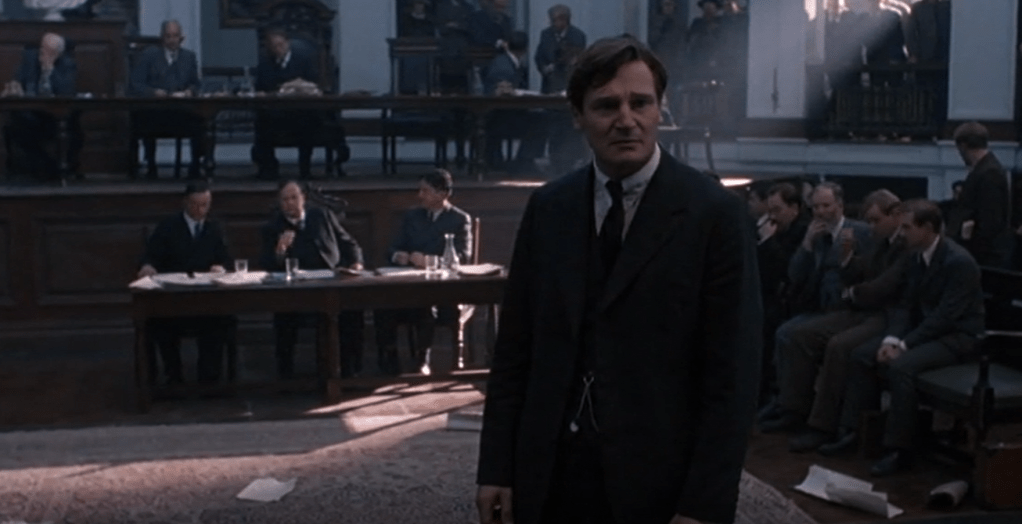
Neil Jordan’s 1996 movie Michael Collins skips over a key episode between the signing of the Treaty and the outbreak of Civil War six months later. Collins spent these six months trying to fudge the Treaty by means of the new Free State constitution. He ‘fumed’ not over the anti-Treaty side but over the British, with their ‘insolence’ and intransigence. He tried to come up with a constitution that would bridge the divide between pro-and anti-treaty factions, but Churchill and Lloyd George again and again renewed their threat of war. I would have scoffed at the title ‘People’s Peacemaker’ before – but he really did make peacemaking his number one task at a time when other Free Staters (Blythe, Griffith and O’Higgins) wanted war as a chance to wipe out the anti-Treaty forces.

Michael Collins (Neil Jordan, 1996)

Collins in the Civil War

Memos from early July 1922 (the first weeks of the Civil War) indicate that Collins was open to peace proposals: ‘We will meet them every way if only they obey the people’s will.’ He allowed open anti-Treaty political activity and opposed the punishment of civilians near ambush sites or indiscriminate firing in the direction of snipers.[iv]

This marks a contrast with how, in the months after his death, the Free State cabinet signed off on executions without trial. They passed the draconian Public Safety Act, then applied it retroactively to enemies captured before it was in force, just so that they could have an excuse to put their opponents up against a wall.

During the fighting in Dublin in the first week of the war, when Collins was still in charge, the Free State troops kept only a very loose cordon around the city. This made military and political sense. It encouraged the anti-treaty forces to slip away instead of fighting to the end.

Again, there is a profound contrast with how the war was conducted later. WT Cosgrave, the head of the Free State government, in January 1923 dismissed any attempt to make peace with the anti-treaty forces. The executions probably prolonged the war, but he didn’t mind; his goal was to wipe out the anti-treaty forces, not to end the fighting and risk ‘another Four Courts.’[v]

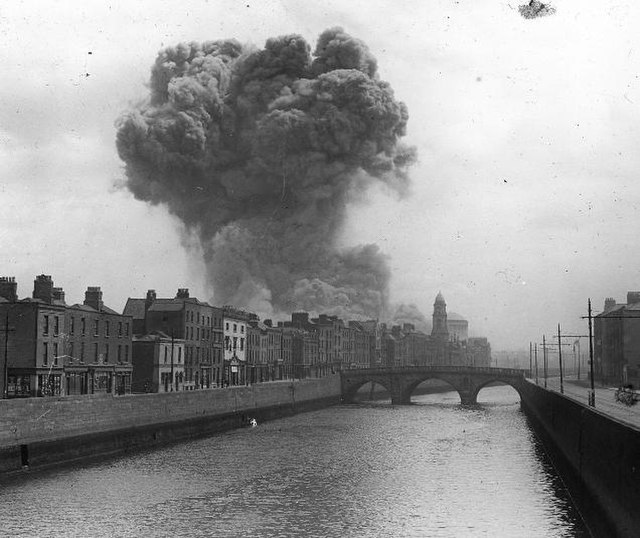
Free State forces ignite the ammunition dump of the Four Courts garrison, June 1922. This marked the end of the Four Courts occupation by anti-Treaty forces and the start of the Civil War.

There was a fundamental disagreement on strategy: Collins wanted a victory to bring an end to the fighting. The hardliners (who were mostly civilians!) wanted to exterminate their enemies.

OK, the sceptical reader might say. But that was later. You’re comparing statements from July with statements from the following January. Maybe Collins would have had a different attitude with the war dragging on.

But even in the early weeks of the war other Free State figures were waging a different war from Collins. Eoin O’Duffy (third-in-command after Collins and Mulcahy) was opposed to any peace initiatives. ‘The Labour element and Red Flaggers are at the back of all moves towards “Peace” […] if the Government can break the back of this revolt, any attempts at revolt by labour in the future will be futile.’[vi] Collins was still alive and probably read those words. He was not sympathetic to labour. But he didn’t agree with this approach.

So… What if he had lived?

I still don’t have a positive view of Michael Collins. He supported the disastrous Treaty. He broadly supported the counter-revolution which the pro-Treaty side represented, such as the suppression of the Republican popular courts system in July. His ‘Squad’ of assassins would go on to commit atrocities in Kerry during the Civil War. He was part of the guerrilla movement which wanted an independent capitalist Ireland (and was willing to settle for much less). He was emphatically not part of the mass labour movement of the time which in my view really promised a way forward and held the potential to avert Ireland from the mire of partition, Civil War and Church control.

And as a peacemaker, he failed. He acted under the British government threat of ‘terrible war,’ and allowed them to drive him into a ‘terrible war’ with his former comrades.

But I’m now convinced that he was very different from those who ruled in the new Free State – Cosgrave, O’Higgins, Blythe, O’Duffy, etc. In the Civil War itself, there are plenty of indications that he was pursuing a different strategy. In our own benighted timeline, the war dragged on until the scattered and miserable remnants of the anti-treaty forces dumped their arms and went home. There was no peace treaty. The Civil War remained an open wound. Had Collins lived, he might have used his personal authority to call for a peace process or treaty negotiations. There were plenty of voices calling for peace, and the addition of Collins’ voice would have been significant. The war might have been wound up earlier with a negotiated settlement, with less bitterness and bloodshed – crucially, with less of a total, sweeping victory for the greasy till-fumbling Irish big business class.

There are limits to this. Conor Kostick argues in Revolution in Ireland that Collins was a kind of Bonapartist figure: someone who has personal authority and is able to ‘rise above’ social and class conflict, or at least to appear to do so. In the case of Collins, he had the support of many armed paramilitaries and a huge section of the broader public. He leveraged this to try to bridge the divide between the pro- and anti-treaty forces.

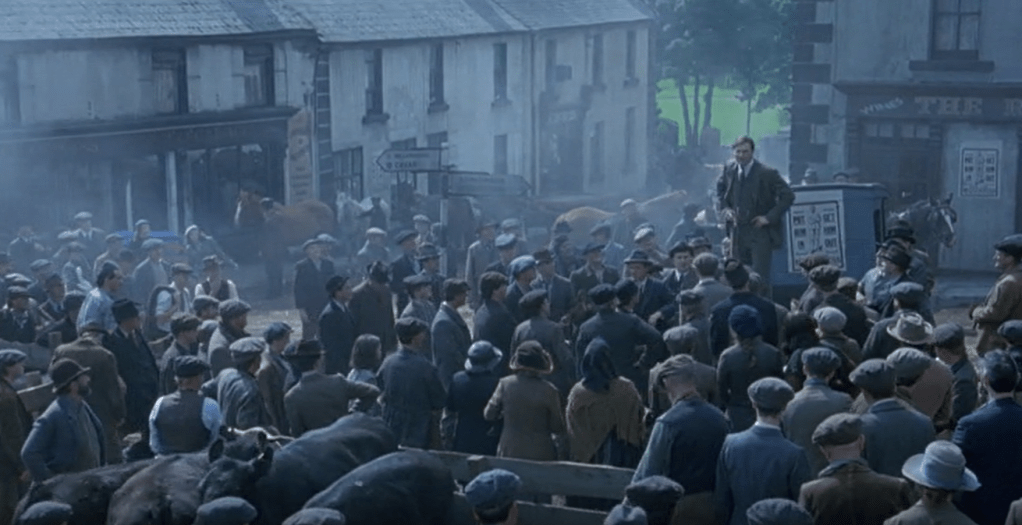
Collins addresses a street meeting. Michael Collins (Neil Jordan, 1996)

But the thing about Bonapartist figures is that they are given power by conditions of social, economic and political stalemate. This appears as their own personal ‘greatness’ but it is not the case. These conditions of stalemate are temporary, so Bonapartes have a sell-by date. The really striking fact about Collins’ death is that it came at the exact historical moment when the Free State forces had triumphed and the stalemate had come to an end.

What does this mean concretely? Had Collins lived, his authority would have waned. The Free State would have tamed him or discarded him. He had decades more to live, and he could have lent his remaining personal authority to other causes. He becomes a blank slate and we can imagine him as a dissident, as a politician or as a military man, as a Pilsudski-type authoritarian strongman, or as a repentant Republican, or as a statesman who reconciles Fianna Fáil and Fine Gael, or who ends partition. We can imagine whatever we like. This kind of wild speculation can produce a scenario where he changes the course of Irish history. But with his waning authority, the boost he could have given to this or that cause would probably not have been decisive.  

But if he had lived, the differences between him and the hard-line Free Staters would have become more obvious. There would have been a breach so clear and vitriolic no 1990s biopic would have been able to skate over it. Those Free Staters with whom Collins would have split, from Cosgrave to O’Duffy, were the same people who went on to lead and to found Fine Gael.

But in this scenario where Collins lives and, in the short term, struggles for a peace treaty, two things are certain.

One: in this alternate timeline, if the title ‘The People’s Peacemaker’ was applied to Collins, it would have a totally different meaning, a meaning which implies criticism of the Free State government rather than support for the Anglo-Irish Treaty.

Two: Young Fine Gaelers, if such a specimen existed in this alternate timeline where Michael Collins lived, would not be seen dead carrying around an effigy of him.

Go to Home Page/ Archive


[i] Conor Kostick, Revolution in Ireland: Popular Militancy 1913-1923, Cork University Press, 1996 (2009), p 194

[ii] Peter Hart, Mick: The Real Michael Collins, Macmillan, 2005, p 268-270

[iii] Hart, 293

[iv] Hart, 399-403

[v] Diarmuid Ferriter, Between Two Hells: The Irish Civil War, Profile Books, 2021, p 95

[vi] Charles Townsend, The Republic, Penguin, 2013, p 432. You can see in this quote the embryo of the fascist leader that O’Duffy would become.

So far, Beevor’s new book is terrible

I learned a lot from Stalingrad and The Battle for Spain, so I was interested to learn that Antony Beevor was tackling the Russian Civil War in his latest book.

But judging from what I’ve read so far, Russia: Revolution and Civil War 1917-1921 is a crude offering. I’ll show what I mean by reference to a single chapter (which is more or less all I’ve read).

When I looked at the contents page, my eye was drawn to a chapter titled ‘The Infanticide of Democracy, November-December 1917.’

If you’re going to put an image of infanticide into my head, you’d better have a good reason. In this case, there is no good reason: during those two months, November and December, the Bolsheviks secured a majority in the Soviets, then received the blessing of a peasant soviet congress. They passed decrees on peace and land. They went into coalition with the Left SRs. They held the Constituent Assembly elections. The street fighting lasted only a few days, and the Whites involved were in general treated with magnanimity. Throughout, the Bolsheviks resisted the pressure to enter coalition with parties whose programme was diametrically opposed to theirs, and relied instead on the active support of millions of people.

All in all, I see this period as one during which, against challenging odds, the new soviet government lived up to its promise. But Beevor doesn’t see it that way.

Peace

He starts out talking about the war. Even though he dubs World War One ‘The Suicide of Europe’, he condemns the Soviets for trying to end the war. For him, the peace efforts were a bad thing because they encouraged rowdy and violent deserters (as if the rotten Tsarist army was not already collapsing due to mass desertion). If the Bolsheviks had broken their peace promise and forced everyone to fight on at gunpoint, no doubt Beevor would condemn that too. And he would be right!

Next in line for condemnation are the deserters themselves – because they ripped the upholstery out of first-class train carriages to wrap around their bare feet. Unmoved by the bare feet of the soldiers, Beevor is moved by the plight of the upholstery.

It must be fun for Beevor to come up with these taboo-busting chapter titles. ‘The Suicide of Europe,’ ‘The Infanticide of Democracy’… What’s next? ‘The Incest of Asia’? ‘The Opioid Addiction of Oligarchy’?

Plotting Civil War

Lenin, Beevor tells us, ‘welcomed destruction for its own sake.’ From there, he argues that Lenin wanted to start a civil war – ‘to achieve tabula rasa through violence,’ that he wanted all the horrendous destruction and inhumanity of 1918-1921 to happen so that he could ‘retain power’ and build communism on a clean slate.

So according to Beevor, Lenin’s plan was to hold power and to build communism in a context where the industries were devastated, where the areas which produced food and raw materials were occupied by enemy armies, where the urban working class – his support base! – were dying in huge numbers, where military spending made it impossible to pursue ambitious social programmes. Needless to say, this was not his plan.

By April, Lenin was happy (an unfortunately very wrong) to declare that the war was over. The idea that he wanted the Civil War at all is just as absurd as his alleged motivation.

But Beevor ‘proves’ his contention by cooking up the most negative and hostile interpretations of carefully-selected utterances by Lenin, then presenting these interpretations as fact.

You can feel Beevor’s fury and disgust every time he mentions Lenin. Whenever we see that name, it is accompanied by a bitterly hostile remark. He must have damaged his keyboard, angrily banging out L – E – N – I – N again and again. And yet to Lenin he keeps returning, as though the revolution revolved around one man.

Food

He ridicules Lenin’s claim that wealthy people were sabotaging food supplies. But this sabotage was taking place. First, there was speculation, or in other words the hoarding of food to drive up prices. Second, there was the strike of government employees, which was creating a humanitarian crisis, the sharpest edge of which was a food shortage. This strike was financed by rich people and big companies, and collapsed when they withdrew their support.

In a context of looming famine, when Lenin calls wealthy people ‘parasites’ and calls for a ‘war to the death’ against them, Beevor says this is ‘tantamount to a call to class genocide.’

The blind spots Beevor reveals are interesting. In this passage he talks about two things: 1) rich people starving poor people to death, and 2) Lenin making an inflammatory speech. If you asked me which of those two things could best be described as ‘class genocide,’ I know which one I’d pick. But for Beevor, it’s the first-class upholstery all over again. He gets upset about dangerous words and not about empty stomachs.

The food supply crisis, naturally, he blames on the Bolsheviks – even though the food crisis had been getting worse since 1915 and the Bolsheviks had been in power for all of five minutes.

Kornilov

The author turns his attention to the right-wing General Kornilov, who broke out of prison and rode across Russia to the Don Country where he met up with thousands of other officers and set up a rebel army to fight the Soviet government. His descriptions of Kornilov in this chapter make him sound like a fearless adventurer whose only fault is that maybe he’s too brave. There were ‘innumerable skirmishes.’ No doubt if it had been Lenin fighting his way across the country Beevor would pause to describe the blood and guts of his ruthlessly slaughtered victims. Instead of this, he compares the whole thing to Xenophon’s Anabasis (That’s The Warriors to you and me).

Lenin is portrayed as plotting to start a civil war. But Beevor never ventures to speculate that maybe Kornilov is plotting to start a civil war. Apparently Kornilov is fighting his way across the country and raising a rebel army for some other purpose.

Beevor’s version of Lenin can only retain power by achieving ‘tabula rasa through violence’ – as opposed to retaining power by democratic means. Meanwhile what was Kornilov doing, and why does it not come in for any scrutiny?

Lenin’s power rested on the active support of many millions of people through the Soviets, which were at this stage still a robust participatory-democratic system. Meanwhile Kornilov’s power rested on the support of several thousand men who gathered by the Don river at the end of 1917. They were united in the conviction that no elections were possible in Russia until the country was ‘purged’ and ‘cleansed’ of the soviets, along with nationalist movements and minorities.

In other words, they wanted to achieve tabula rasa through violence. But, at least in this chapter, it does not occur to Beevor to present them in this way.

Anti-Semitism

The most dishonest part of the chapter comes with Beevor’s remarks on anti-Semitism. He relates two local episodes in which soldiers and sailors attacked Jewish people. These incidents are supposed to prove that the Soviets tolerated or even encouraged anti-Semitism. We read: ‘Soviet authorities tacitly condoned violence against Jews’!

But just a few pages earlier, Beevor writes at length about the foundation of the Cheka. Somehow he fails to mention that one of the main purposes for which the Cheka was founded was to combat anti-Semitic pogroms. The very incidents he describes may have been those which the soviets responded to by setting up the Cheka.

Nor does he mention the outlawing of all racist discrimination, including anti-Semitism, by the new government.

The Cheka

The Cheka during November-December 1917 was a security organisation with only a few dozen full-time staff. But Beevor writes of it as if it were already the feared and controversial instrument of terror that it became over the year 1918. No, scratch that, he writes about it as if it were already the NKVD under Lavrentiy Beria.

For example, he quotes a poem which he says was ‘later’ published in a Cheka anthology. This is a disgusting, psychopathic little poem which celebrates killing. What Beevor doesn’t mention is that this poem was published a lot later, 1921 at the earliest. The entire Civil War took place between the point we’re at in the narrative and the date when the Cheka published this unhinged poem. Four years is an age in times of revolution and civil war. This poem was not written or published in December 1917 and could not possibly have been. The brutality it reflects was a product of the Civil War. Beevor presents it as if it were a cause of that war, part of the ‘infanticide’ of democracy, as if that mindset was there from the start, was in the DNA of the Cheka.

After the Civil War, by the way, the Cheka was radically downsized. Its role, under different names and big organisational changes, as Stalin’s executioner was yet another even later development.

By jumping around in time like this Beevor doesn’t just present a misleading account. He tells a dull story, a smooth and frictionless history of the Russian Revolution. Stalin’s totalitarian state is already there, fully-formed, in November 1917.

The Bolsheviks were initially humane and even magnanimous. Utterances from revolutionary leaders in which they speak in military metaphors can be easily found. But it is just as easy to find them expressing the hope that the Russian Revolution would be a lot less bloody than the French (so far, it had been). Krasnov was paroled after attacking Petrograd. Many Whites who fought in Moscow were let go and allowed to keep their weapons. Lunacharsky was so horrified by the fighting in Moscow he resigned as a minister. Lenin was the victim of an assassination attempt in January 1918, but it was hushed up at the time so as not to provoke reprisals. But 1918 saw Kornilov and his successors, along with foreign powers and the Right SRs, create a terrible military, political and humanitarian crisis in a bid to crush the soviets. This was the context for the development of the Cheka into what it became.

But in the monotonous world in which this chapter takes place, there is no change, no development of characters or institutions. A is always equal to A. The Cheka is always the Cheka. This way of looking at the world may pass muster in a book where, for example, Guderian’s Panzer Corps remains for a long period a dependable, solid and unchanging entity. But it is ill-suited to talking about revolutions and civil wars, in which institutions can pass through a lifetime of changes in a few months.

It’s not just that he gives a misleading, flattened account. It’s that he misses an opportunity to tell a far more interesting story.

The Left SRs

To minimise the significance of the coalition, Beevor treats the Left SRs as a bunch of ineffectual idiots and claims that the Bolsheviks always got their way. In fact, many of the key early leaders of the Red Army and Cheka were Left SRs; all Soviet institutions were shared between the two parties, for long after the coalition broke up in March 1918, and even after the Left SR Uprising of July 1918. But here Beevor treats the Left SRs just as he treats the Cheka: by jumping around in time as if context does not matter.

It’s real Doctor Manhattan territory. It is December 1917, and the Bolsheviks and Left SRs are making a coalition; it is March 1918, and they are breaking up over the Brest Treaty; it is July 1918, and they are shooting at each other in the streets of Moscow.

It gets worse. We are informed that ‘Leading Left SRs also fought for the distribution of land to the peasants, against what they now suspected was the Bolshevik plan of outright nationalisation.’

They ‘fought’, did they? Against whom?

Collectivisation, let alone ‘outright nationalisation,’ of land was not attempted, and it certainly was not an issue in the Bolshevik-Left SR split. Local experiments in state farms, and certain ultra-left policies in Ukraine and the Baltic States, are the only thing that comes close to what Beevor is suggesting. Stalin’s policy of forced complete collectivisation, meanwhile, was ten years away, and was never even contemplated by Lenin.

When Beevor writes that Lenin ‘had shamelessly copied’ Left SR policy on land, he is committing a double absurdity. First, because Lenin’s own position on the land question, consistent over twenty years or so, was broadly the same. Second, because the rules of plagiarism and copyright do not apply to policies. Adopting the policy of another party is a concession to that party.

But that wouldn’t do for Beevor. He cannot show Lenin being agreeable in any way. He insists that Lenin was like an icebreaking ship, that he was a worse autocrat than Nicholas II. Whenever Lenin’s actions contradict the extreme characterisations, Beevor cooks up a sinister motivation, rather than just reassessing his views, or admitting that politics and history are complex. The coalition with the Left SRs? A nasty trick. The Constituent Assembly elections? ‘Lip service.’ Soviet democracy? He claims it was ‘sidelined’ even though Soviet Congresses continued to meet and to decide key questions of policy well into the crisis of summer 1918.

Every narrative trick in the book is on display in this chapter. For example, Beevor describes the Left SRs getting in on the ground floor of the Cheka in a way that would leave an unattentive reader with the impression that they had been excluded. He describes up as down and black as white.

Persia

I’m disappointed. I was actually interested in reading Beevor’s account of the Civil War. I did not expect to agree with all or even most of what he said. But I thought he’d have something to say, and that it would enrich my own ongoing series on the Russian Civil War. Instead we get this monotonous, unbalanced condemnation that we’ve heard so many times before from so many sources: school, TV, and books with gushing quotes in their blurbs. The same old story is invariably described in these gushing blurbs as fresh and challenging.

Two-thirds of the way through, the chapter changes tack. It follows the critic Viktor Shklovsky as he runs off to Persia at around this time. This was horrifying reading, but at least I learned something I hadn’t already known. The Tsarist army was in occupation of a part of Persia, which was a major contributor to the fact that a third of Persia’s population died of famine and disease during the First World War. The Russian soldiers shot civilians for fun, abducted women and sold them in Crimea. Beevor notes that there was a different going rate for women who had already been raped and for those who had not.

Horrified, I read an article going deeper into this. Here – it seems by accident – the title ‘The Infanticide of Democracy’ earns its place. The Persians had a democratic revolution in 1909. Russia and Britain could not tolerate the possibility of an independent Persian Republic. They invaded, supported the reactionaries, and slaughtered thousands.

The horrors of the Tsarist occupation of Persia should give Beevor pause for thought. Was Lenin really ‘a worse autocrat than Nicholas,’ if this is what Nicholas did to Persia? These killers and slave-traffickers were many of the same officers and Cossacks who staffed the White Armies. If the Reds were fighting against such a heavy legacy of oppression, shouldn’t even a consistent liberal historian cut them some slack?

Beevor does not mention (at least in this chapter) that the Soviets renounced any Russian claim on Persian territory, and withdrew what was left of the Russian army. I had to learn that from the article linked above. But if he did mention it, no doubt he would find a way to twist it into something sinister and evil.

Conclusion

A lot of this chapter is taken up with abstract little sermons like the following: ‘This summed up the Bolsheviks’ idealised ruthlessness, elevating their cause above any humane concern such as natural justice or respect for life’ – or upholstery.

I don’t want the reader to think I have it in for Beevor just because I disagree with him. My shelf and my devices are full of titles whose authors I disagree with. Take the following remark by Laura Engelstein from her introduction to Russia in Flames: ‘there were no halcyon days of the Bolshevik Revolution. There was no primal moment of democratic purity that was later betrayed.’ I disagree with this statement, but at least there’s something there with which to disagree. It’s not a strident condemnation, let alone the third or fourth strident condemnation on a single page.

Evan Mawdsley’s book answers all kinds of fascinating questions about the Russian Civil War. It does so in a way that’s biased toward the Allies, but which leaves space for the reader to disagree, which often gives the other side the best lines, etc.

I have no problem, obviously, with polemical or agitational or partisan writing. But Beevor batters us over the head with his opinion and leaves us no space to interpret what he tells us. He writes in a ‘take it or leave it’ manner that does not invite debate. If he’s writing about 1917 and can’t find the evidence he needs to shock you into submitting to his point of view, he’ll go as far as 1921 to get it, then neglect to tell you where it came from.

I don’t know whether it’s complacency – he believes that he has a water-tight case, so he makes it with maximum force – or anxiety – he has serious doubts about what he’s writing, so he leaves no room for the reader to make up their own mind.

To sum up, the first part of the chapter was about a government that was trying to end World War One, share land with the peasants, and give power to workers’ councils. The author could hardly contain his rage and disgust. The end of the chapter was about a Tsarist army mass-murdering Persian people for eight long years. Here the author suddenly dropped the sermonising, the angry tone, the condemnations. Without his stranglehold on the narrative it was easier to read, in spite of the horrors he was describing. But the sudden shift in tone – oh man, it spoke volumes.

I have a sinking feeling that the whole book is going to be like this.

Go to Revolution Under Siege Archive

Go to Home Page/ Archive

How Dune gets away with it

When it was briefly mentioned on The Mindy Project, it was described as (something like) ‘That book that every guy loves for some reason.’ I read Dune at age 15. The years passed and I forgot some of the details of the story, but it held on in some remote sietch in the back of my mind, from which echoed phrases like Gom Jabbar, Muad’Dib, Kwisatz Haderach; mantras like ‘Fear is the mind-killer’ and ‘Who controls the spice controls the universe.’ The recent film captured some of that hypnotic power, and gave me an urge to visit that strange place again.

Re-reading it was a trip. Here are some things that struck me. In each case I was left wondering, ‘How does the novel get away with that?’

There is no scene of space travel in Dune. A chapter on planet Caladan ends; the next chapter begins with the characters literally unpacking their bags on planet Arrakis. The author Frank Herbert tells us that the Guild of Navigators have a monopoly on space travel, but he is not interested in exploring the technical details. He is more interested in the Guild as a political force. Therefore, unlike both of the movie versions, the space travel happens off-screen. It’s a bold move but it works. It brings focus to the story.

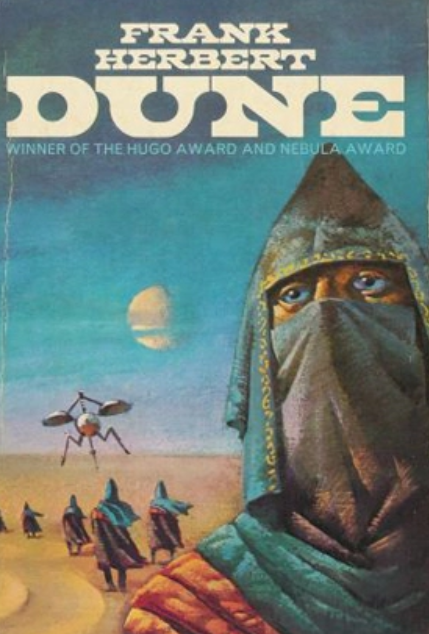
Below, a spice harvester. Above, one of many attempts to portray an ornithopter. From fontsinuse.com, as is the cover image.

Dune’s rich and strange world

In the early pages we are immersed in a kind of Renaissance space feudalism. It’s all nobles having conversations in palaces; it really shouldn’t be so interesting. I don’t think space capitalism, let alone space feudalism, is plausible. There are books I’ve abandoned because there were too many nobles, too many palaces. But somehow Dune gets away with it. It confronts us with a world that runs on its own rules, and doesn’t care what we think of it. Its people are medieval in outlook, and they don’t make any effort to relate to us on our terms. Not only do these people all do drugs, drugs are at the very the centre of their society. They have slaves, they hold entire planets as fiefs and some of them have psychic powers.

In short, Herbert doesn’t try to meet us half-way. We must either dismount from the great sandworm that is this book, and watch it slither away into the distance wondering to what fascinating places it might be going, or else cling to it stubbornly in spite of its efforts to shake us off.

By the way, I was converted to the idea of space feudalism being plausible. Humanity expanded across the stars, but suffered some kind of social and cultural catastrophe as a result. Their machines advanced to the point of being dangerous, so they waged war on the machines in the Butlerian Jihad. Feudalism didn’t bring humanity to the stars; humanity, having reached the stars through some advanced social system, reverted to feudalism, a feudalism modified with the remnants of the technology built up in ancient times.

Foreshadowing

But I wouldn’t have read on for long enough to care about the Butlerian Jihad unless the foreshadowing was laid on thick. The switches between different characters and their points of view, the dense undergrowth of exposition – these are not fashionable in sci-fi/ fantasy writing today. But  anyone who notices these unfashionable features and concludes that they are dealing with a clumsily-written book is mistaken.

When we ‘observe the plans within plans within plans’ we begin to wonder how these plans (within plans within plans) will work out. The story does not go from A to Z, from safety to danger. It goes from Y to Z, from less extreme danger to more extreme danger. We know the Harkonnens are going to attack. The Atreides know it. If they didn’t, the book and its sympathetic characters would be very irritating. We know Yueh is a traitor; if we didn’t, the revelation would be a pretty limp and predictable twist. We are not waiting to see if this Jenga tower will come down. We are waiting to see how.

While we are waiting for the Harkonnens to strike, we get sucked into the Duke’s administrative and political problems in a way that lulls and distracts us.

The writing and worldbuilding are open to criticism in places. I didn’t like how squeaky-clean and wholesome the Atreides were. ‘Good nobles’ vs ‘ bad nobles’ – come on. They’re an unelected ruling class who think they’re better than us. They’re all degrees of bad.

There’s a whole double-bluff intrigue where the Duke is pretending to be suspicious of Jessica. This is a tedious sub-plot, totally far-fetched. It’s just conflict for the sake of conflict. The book would be better without it. The mentat Thufeir Hawat is closely connected with this plot, but all in all I don’t see what he brings to the table. I think the book would pack a heavier punch if this sub-plot was gone and this character stripped back 90% or so.

Phallic sandworms

Paul is 15 but completely devoid of horniness or sexual neuroses; in the banquet scene, an attempt to seduce him falls flat. This is no doubt because of his Bene Gesserit training. But the repressed sexuality is central to the story. It’s more obvious to my grown-up mind that the sandworms are basically big dicks. And to paraphrase the book, who controls the big dicks controls the big dick energy. After Paul learns to harness and steer the big dicks, the climax of the story soon follows. Sorry for saying climax.

How does Frank Herbert get away with this insane sexual imagery? It’s even more obvious than King Solomon’s Mines. But it works because the sandworms work on their own terms. Arrakis without them wouldn’t be the same. Herbert doesn’t give a damn about space travel, but he cares about ecology. He reveals how this ecosystem works, and it is not a lecture we endure but a story mystery that is very satisfying to engage with and to solve.

Dune’s rich and strange hero

Speaking of Paul, even as a young reader I never quite liked him, and I never thought he was a good person. I rooted for him, and was invested in him. But I didn’t like him. He wrestles with his ‘terrible purpose’ and his visions of jihad for most of the story. As we read on, it becomes clear that is the story about the rise of a vast and terrible historical figure. It’s visible from the start, but the shock of the Harkonnen coup shakes something loose in him. As readers we come to respect the Fremen, but Paul is deceiving and manipulating them. Near the end (page 504) Gurney reproaches him when he reveals that he doesn’t really care about those killed in the final battle. He doesn’t care much about his murdered son either. And around the same time he finally embraces his ‘terrible purpose’ of galaxy-wide jihad; in his view there is no other way to cleanse the stagnant social order. The upheaval of the jihad will put a mixing spoon into the galactic gene pool and give it an almighty stir. This is the way he sees the world.

The unsettling presence of Paul’s little sister Alia is significant; he is only a little bit less weird than she is.

I haven’t read the sequels; I have been discouraged by some who have. What’s more, I consider the story complete and self-contained. It’s obvious to me that Paul is on track to become a genocidal god-emperor. There are no narrative questions left to answer.

The book suggests that Herbert does hold some beliefs that are repugnant to me: in the efficacy of eugenics, and in deep, inherent differences between men and women (‘takers’ and ‘givers’). He is cynical about humanity and believes that we will always be in thrall to religions and monarchs. But it seems clear enough that Frank Herbert doesn’t approve of Paul’s ‘terrible purpose’ or of the Bene Gesserit and their biological intrigues.

Atreides of Arabia

The ‘white saviour’ stuff is pretty blatant; Paul joins the Fremen and two years later has risen to be their messiah. This clearly takes inspiration from Lawrence of Arabia, and went on to inform Jon and the Wildlings, Dany and the Dothraki, etc.

With the Fremen, the Muslim coding is not just heavy but overwhelming. I didn’t see any problem with this when I was 15. But there was something more positive that I didn’t see either: that this is a text about the anti-colonial revolutions of the 1950s and 1960s. The Muslim stuff could be read as a tribute (perhaps a clumsy one) to the anti-colonial struggles of the Arabs, the Algerians, the Libyans. In fact the wikipedia page tells me it was also inspired by struggles of Caucasian Muslims against Tsarist Russia (hence, no doubt, the presence of a baddie named Baron Vladimir). The new film version appears to be leaning into this reading.

Conclusion

As an experiment, try to describe Dune in bald terms. It’s about a teenager who vanquishes his enemies and becomes emperor of the galaxy by convincing native people that he’s their god and by harnessing the power of huge phallic monsters.

When you put it like that, it actually sounds embarrassing.

What rescues Dune from being ‘That book that every guy loves for some reason?’ What raises Dune above the level of a basic power fantasy?

First, the world and the hero are so strange. Neither invites you in. You are forced to approach as a stranger. Paul is not the avatar for your fantasies; you end up walking many miles in his stillsuit, but you are never at all comfortable in it.  

Second, it’s primarily a story about ecology and religion, not violence. It’s a story that forces us to pay attention to things we take for granted in life, such as water and faith. The indigenous people, taken for granted above all others, turn out to be the key not just to Arrakis but to the universe. It’s a book that humbles the reader, that confronts the reader with vast superhuman forces.

Last, it forces to reader to consider the cost of power. The more Paul masters these forces, the more alienated we are from him as a character. The Fremen are liberated, so it’s a satisfying ending. The ‘plans within plans within plans’ produce the most terrible blowback – for the Emperor, for the Harkonnens, for the Bene Gesserit. But Paul has reached a place where he is both all-powerful and inhuman. The worst blowback might be for the billions of innocents who will die in his jihad.

Everything feels earned. It feels earned because the desert exacts a terrible price for every blessing it gives, and there are no happy endings in this social order.

Go to Home Page/ Archive

Appendix:

A note on Dune and videogames.

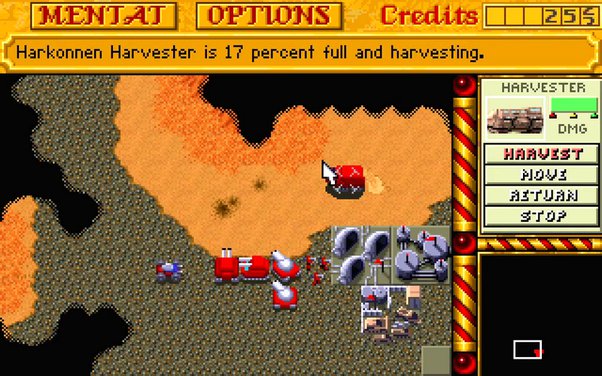
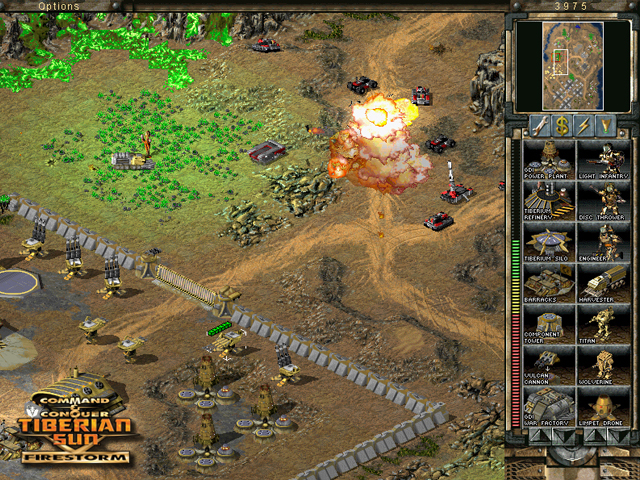
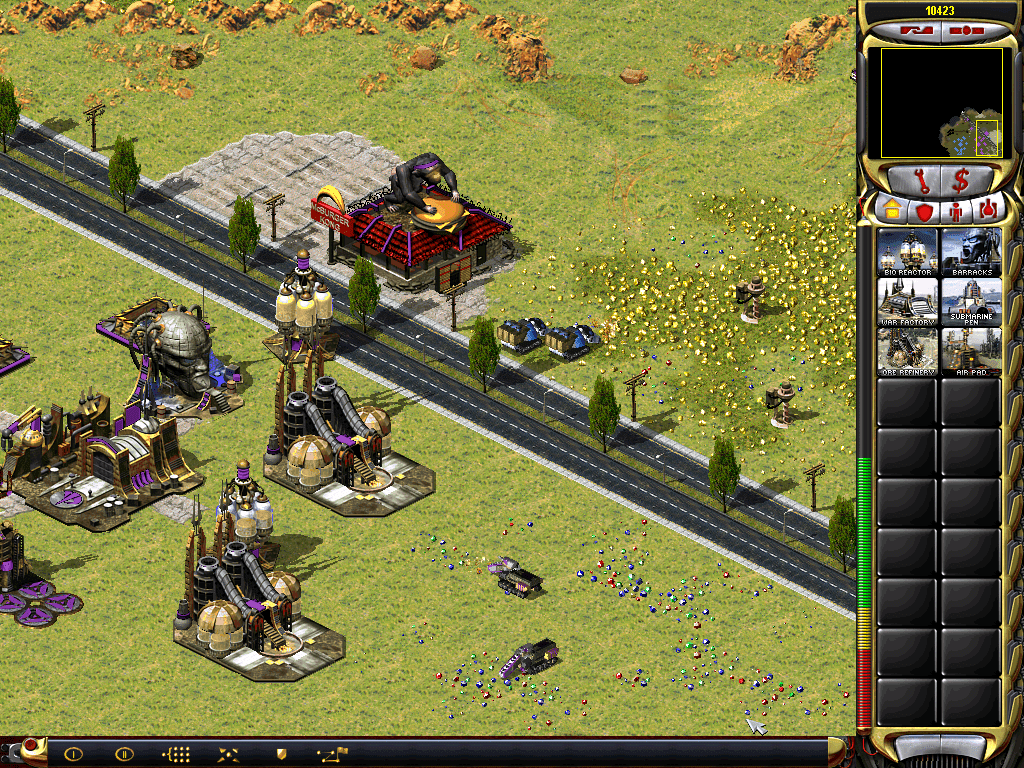
Dune 2 was the first strategy game, and it adapted straight from the novel a model of resource-collection that went on to exert a huge influence. There is a single resource, the spice, which lies on the surface of the ground. It is collected by huge harvesting vehicles. In Command and Conquer, the spice became tiberium, which has its own interesting back-story but is functionally identical, with the big harvesting vehicles and all. In the Red Alert spin-off, the spice appears in an alternate-history Cold War setting as Ore, a single one-stop-shop resource. Armies supply themselves by mining this resource on the battlefield. Helpfully, it is spread in pockets evenly across the surface of the earth from Manhattan to the Siberian taiga. 

So when Frank Herbert wrote about spice-harvesting in the early 1960s, he was creating a model which videogame developers would still be using in the 21st century. It was such a useful model for gaming that the plausibility of the game world of Red Alert was stretched to the limit just to accommodate it.

Review: The Don Flows Home to the Sea by Mikhail Sholokhov (Premium)

‘Cossack versus Red Army . . a war of unparalleled savagery […] A story of incredible brutality, well-larded with sexual adventures […] This book makes compulsive if horrifying reading; it is on a plane of human conduct as bestial as if it had occurred in the Dark Ages.’

From the blurb to The Don Flows Home to the Sea: Part One, 1960 Four Square Books edition

Become a paying supporter to get access

Access to this article is limited to paying supporters. If you already subscribe by email, thank you. But if you want to become a paying supporter, please hit ‘Subscribe’ below.

Donate less than the price of a coffee, and you can access everything on this blog for one year.

If you don’t feel like donating, most of my posts are still 100% free, so browse away, and thanks for visiting.

Go to Revolution Under Siege Archive

Go to Home Page/ Archive

Review: Cuba Libre by Tony Perrotet

Cuba Libre! Fidel, Che and the improbable revolution that changed world history

By Tony Perrotet

This account of the Cuban Revolution is rich in character and narrative, short on analysis. I was gripped all the way through, though near the end I grunted with surprised laughter at the boldness of one particular thing Perrotet left out.

This book sketches the background of Cuban history, introduces us to the dictator Batista and the revolutionary Fidel, then takes us through the Cuban Revolution from the failed attack on the Moncada Barracks to the extraordinary triumph of the rebels.

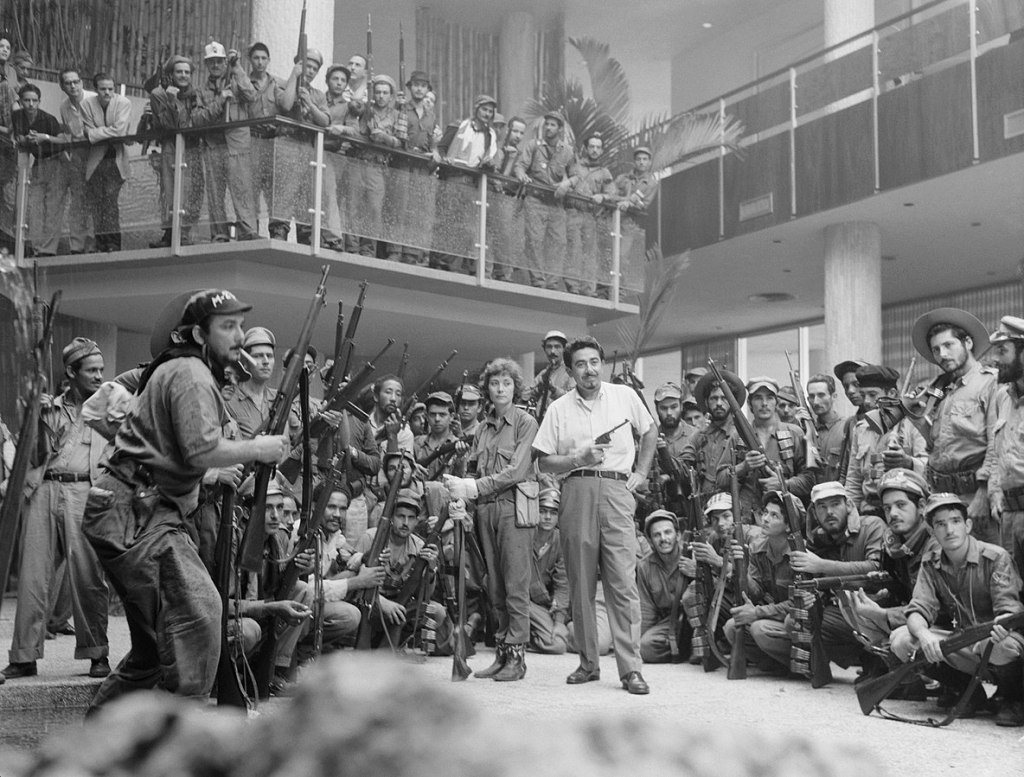
Guerrillas in the lobby of the Havana Hilton, 1959

I have read – and watched, and listened to – a fair amount on the Cuban Revolution, Che and Fidel. But I learned something new on practically every page of Cuba Libre. For example, all I had in my head about Celia Sanchez was her name and the vague understanding that she played some role in the Revolution; Perrotet takes the time to give her a full introduction, then he shows her in action – organising the Granma landing, escaping from cops, supplying the guerrillas, organising the underground.

The Batista regime, in its few years in power on the small island of Cuba, may have killed as many as 20,000 people. This is remarkable and horrifying (though somehow Batista comes across in the book almost as a vulnerable figure). The depravity of the Batista regime really comes across in Cuba Libre in harrowing stories from the prisons and barracks. But so does the courage and cunning of the guerrillas and of the urban underground. In addition, they must have been the most magnanimous revolutionaries in all of history – treating enemy wounded, freeing prisoners, treating their hostages like honoured guests.

Fulgencio Batista in 1957

In spite of the violence and the brutality of the Batista regime, and the harrowing conditions the guerrillas had to endure in the wilderness, Cuba Libre is not a heavy or dense read. It tells its story through anecdotes and characters. The events, locations and people are easy to follow because care is taken to make them vivid and memorable. When the writer mentions a name, the reader never has to scratch their head and ask, ‘Who’s that again?’

Another thing I like about the Cuban Revolution – and it may sound stupid – is this: the guerrilla movement in its early stages was operating with tens and twenties of fighters, at times even twos and threes. I like being able to grasp and visualise the numbers involved in a narrative. Once we are into the thousands, as we usually are with military history, it all becomes very abstract. This favours the intimate way Cuba Libre is written.

But as I said, it’s short on analysis. Towards the end, explaining why the Americans turned against Castro so suddenly, Perrotet writes that land reform angered US companies. I had to laugh, because this was the first mention of land reform in the entire book. It is also the last; he quickly moves on. You would not think it was a central question.

Lively and all as the narrative is, it does not explain why the rural population supported the guerrillas – which, of course, has to do with economics, class and land reform. The central condition of the guerillas’ success – the support of the rural population – simply falls from the sky. There’s nothing wrong with a narrative-driven, character-focused account – but there are ways of talking about economics and class within that kind of writing. The characters on whom Cuba Libre focuses tend to be middle-class professionals. There is no character giving us an insight into the land question.

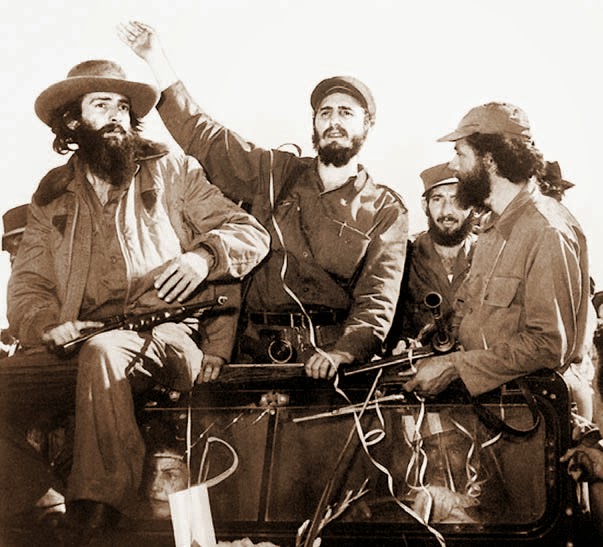
Camilo Cienfuegos and Fidel Castro enter Havana

Overall, Perrotet gives a very sympathetic account of the revolution. While he says Fidel had a tendency toward megalomania, his tone when writing about the guerrilla leader is usually one of mixed exasperation and awe. American public opinion, he says, liked Fidel playing the part of a glamorous revolutionary but didn’t want him to actually carry out any revolutionary measures. Perrotet lays the blame for the falling-out squarely at the feet of the US, while pointing out that thanks to the revolution Cubans have healthcare and education systems to rival anything in the advanced capitalist countries.

School Resources: The Spanish Civil War

This is not on the history course in Ireland but it’s a brilliant topic for Transition Year or for Leaving Cert projects.

I uploaded this in Irish over the last week or two. Here is the whole lot in English.

First off, a presentation going over the main events and issues of the war.

An exercise involving an element of role play. Instructions are on one of the slides in the presentation.

An extract with questions from https://www.marxists.org/archive/morrow-felix/1938/revolution-spain/

A questionnaire to give some structure to online or library research

Finally, an extract from Homage to Catalonia by George Orwell