Facebook and Instagram have put forward a rationale for the plagiarism they are doing in order to develop AI tools.
From theGuardian.co.uk: ‘According to Meta’s defence, there is “no economically feasible mechanism” for AI developers to obtain licensed copies of the “astonishingly large volume” of books needed to train AI.’
Well, if there’s no feasible way to do it, then just don’t steal the books. You can just not do it.
‘Meta “would have to initiate individualised negotiations with millions of authors”…’
That sounds very difficult. It also sounds like Meta’s problem, not ours. So again, how about, don’t do it?
It continues:
‘…a process which “would be onerous for even a few authors; it is practically impossible for hundreds of thousands or millions.”’
They are complaining that unless governments just give them permission to steal it all, it’s ‘practically impossible.’ Word of advice: if the thing you want to do is incompatible with paying authors for using their work for your profits, then it’s a bad thing and it should be practically impossible.
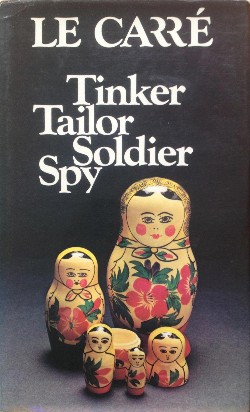
When you get familiar with 1970s John le Carré, you start to realise (and you don’t mind) that many of his novels fall into a comfortable pattern. It goes like this: Smiley (usually it’s Smiley) goes to a place and talks to a person, and the person is compelled to reveal some of the mystery; Smiley goes to another place and talks to another person, and some more of the mystery is revealed, from another angle so that these revelations only barely overlap with those of the last interview; Smiley goes to another place… and so on. Generally the person reveals to Smiley more than they wished, without Smiley resorting to torture or even threats. You begin to realise that the spy story is only a narrative vehicle to bring us to these places and to meet these people. The real story is the unique personality of Connie Sachs and the eccentric shabbiness of her home, or the paranoia of a mercenary pilot hiding in the Southeast Asian jungle, or the domestic life and peculiar speech patterns of an Estonian émigré activist, or the physical and mental scars which a teacher living in his caravan is barely able to hide.
Ostensibly Tinker, Tailor, Soldier, Spy, The Honourable Schoolboy and Smiley’s People are a trilogy about an epic duel between two spymasters: the ‘flabby liberal’ Smiley, redeeming a western world that surely doesn’t deserve him, and the ‘fanatic’ Karla, Smiley’s perfect foil, the dark lord of Moscow Centre. Actually le Carré does not milk this set-up. Like the xenomorph in Alien, Karla looms large but we barely see him and we do not hear him speak. If le Carré had tried to deliver on this set-up, the battle of the great arch-spooks, he would have faltered. Moral certainty is not what fuels his stories. This loose trilogy ends up being something quite different from what we might expect.
In Tinker, Tailor, Soldier, Spy, Smiley and his allies are outside the Circus, waging a secret war against its leadership. The story opens with Smiley in the wilderness and his ally Control fallen from power and deceased. The old guard have been ousted by a clique of four senior spies. Smiley is summoned back from retirement and told that one of the four is a Soviet undercover agent, and he is tasked with discovering which one.
Compared to those tight thrillers of the 1960s, this one is deeper and wider. The places to which we follow Smiley and the people he meets tell a story of their own, not a spy story, but one of cowardly and foolish apparatchiks pursuing their own prestige at the expense of the organisation. The traitor in the leadership is only a part of a broader context where those around him are willing to buy what he’s selling and not look too closely. This corrupt operation is called Witchcraft, and that’s fitting because like the witches in Shakespeare’s Macbeth, the enemy agent works to ‘win us with honest trifles and betray us in deepest consequence.’ Our apparatchiks hope that the honest trifles will impress the Americans. Meanwhile their real operations are being foiled, their real networks broken up, their real agents and officers eliminated.
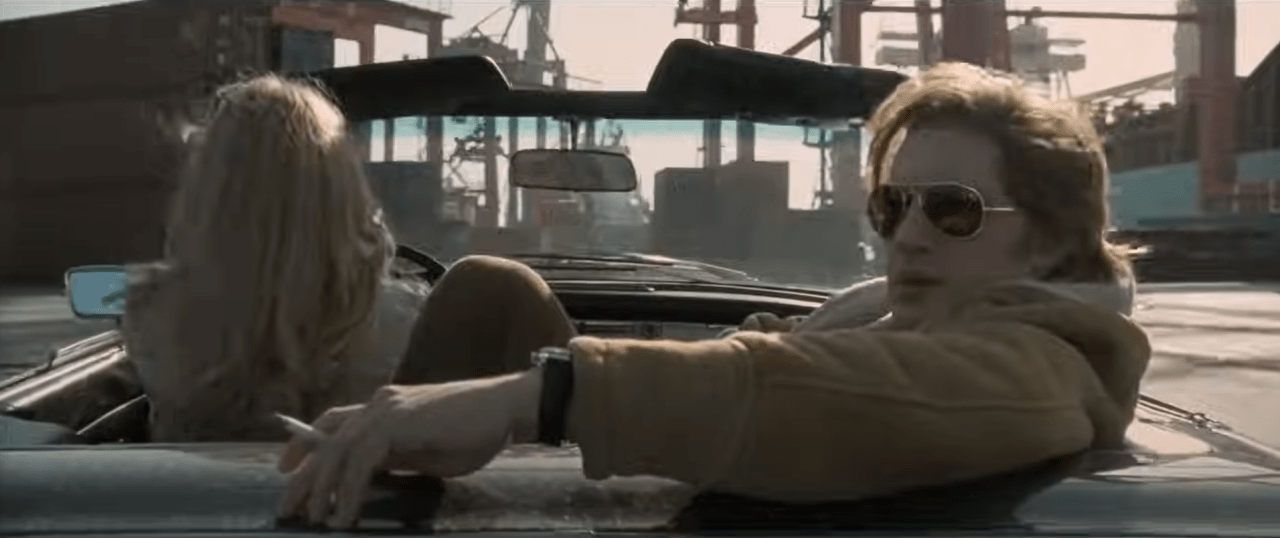
Still from the movie Tinker, Tailor, Soldier, Spy (2011, dir Tomas Alfredson). I love this adaptation of the novel. They found ways to tell a very talky, indoorsy story in a powerful visual way. I especially love the focus on analogue and janky 1970s technology. My only nit-pick is that it’s bad that, like the BBC in the previous TV adaptation, they cast as George Smiley a guy who isn’t stout at all.
So why should I personally care if there’s a Soviet mole in British intelligence? That sounds like their problem. Smiley bypasses my cynicism. I care about this bad institution because he cares about it. He is faithful to an unfaithful wife and to a ruling class whose bankruptcy is known to few better than him. He is broad-minded, melancholy and conscientious. His lack of cynicism must not be mistaken for innocence. No criticism I could make of the institution and the cause that he serves (MI6 and liberal-democratic capitalism) would really shake him, or cause him to hate me.
When I read this: c 2013
Locations: England, Hong Kong, Czechoslovakia
Why read it? George Smiley takes down a traitor in the very highest ranks of the Circus, in the process waging a secret struggle against its leadership.
Memorable moments: There are parts with action and danger, but the most memorable are the most understated: the encounters between a young schoolboy and the wounded Jim Prideaux, a victim of the traitor.
The Honourable Schoolboy (1977)
The Honourable Schoolboy is a radical departure for a le Carré book. Most of his novels are heavy on office politics and upper-class angst and light on exciting adventures in the field. If an agent leaves Britain at all, he will go to nowhere that wasn’t once ruled by a Habsburg or a Hohenzollern. Smiley is either retired or in a humble position.
But in The Honourable Schoolboy, Smiley is now unchallenged in the top job in the Circus, with his allies in the top positions around him. He sends an agent abroad – for once, not to Mitteleuropa but to Southeast Asia. What follows, over a long page-count, is a panorama of violent conflict and imperial collapse in Vietnam, Cambodia, Laos and Thailand, plus intelligence skullduggery in and around Hong Kong.
Don’t worry: as well as dull fare such as car bombs and peasant revolutions, we have plenty of exciting office politics. The Honourable Schoolboy has the distinction of being the only novel where Smiley occupies the top job in the Circus, and we get to see how him and his allies run things.
It’s a gripping and exciting read that I flew through in spite of its length. Unfortunately I remember it far less well than others I read around that time.
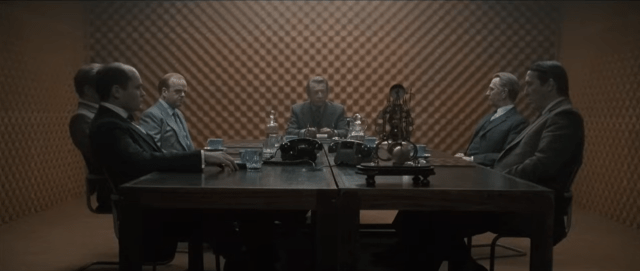
Again from the 2011 Alfredson movie. Esterhase, Haydon, Alleline, Control, Smiley and Bland in their soundproof room on the Fifth Floor. In The Honourable Schoolboy, most of this lot are in the doghouse. The main character is Jerry Westerby, played by Stephen Graham in the 2011 movie.
When I read this: c 2014
Locations: England, Hong Kong, Vietnam, Cambodia, Laos, China
Why read it? A more action-oriented and exotic take on le Carré’s formula. The only novel where Smiley controls the Circus.
Memorable moments: Connie Sachs at the top table formerly occupied by Alleline, Haydon and co. being her eccentric self, complete with a dog which, because she is a communist train-spotter, she has named Trot.
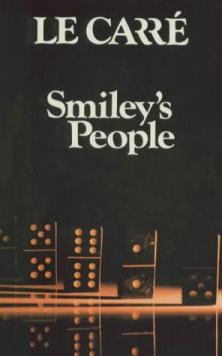
Smiley’s People (1979)
This novel opens with Smiley once more on the outside, once more abandoned by his wife, and this time drunk and more depressed than usual. He is called back in to investigate the murder of an Estonian émigré general, and he discovers that the murder is linked to an intrigue which might be exploited to bring about the downfall and defection of his arch-enemy Karla.
The is classic le Carré and classic Smiley: we follow his waddling progress through interview after interview, distinct character after distinct character, the parts building up to our understanding of the whole. The promise of a final reckoning with Karla keeps us turning the pages, and the texture and humanity of le Carré’s world rewards us for doing so. If you’re here for the rankings, take note: this is my favourite of these three novels.
The basic moral conflict doesn’t quite stand up to scrutiny, though. Smiley has to defeat Karla by using his own methods against him – how tragic. Only he doesn’t, does he? We don’t see Smiley pulling out anyone’s fingernails. Karla’s agents do terrible things in this novel but the worst thing Smiley does is a little blackmail. Using Karla’s love for his daughter against him doesn’t seem that bad, actually, because the daughter is not harmed in any way.
This ties into what I had to say about the 1960s le Carré books: the moral equivalence between East and West, sometimes hinted at, is never confirmed and often denied.
From the opening credits of the BBC adaptation of Tinker, Tailor, Soldier, Spy (John Irvin, 1979)
When I read this: c 2022
Locations: England, Germany, Switzerland
Why read it? The final reckoning between Smiley and Karla. Smiley himself goes overseas on a dangerous mission to trap the Soviet spymaster.
Memorable moments: The climax of the operation revolves around a scene in which Smiley and co corner a Soviet diplomat, Grigoriev, and convince him to hand over the information crucial to trapping Karla.
In the previous post I talked about James Bond. Comparisons between Smiley and Bond decline in relevance past a certain point because Ian Fleming abandoned the Cold War pretty early in the series, and the movies abandoned it even earlier. Before the 1960s are out, Bond is doing collabs with his Soviet counterparts to take down the international crime agency Spectre.
Le Carré and his Circus stuck grimly with the Cold War right to the end. But they moved with the times. Le Carré’s novels from the 1980s are, I’ve come to think, his best. The Gorbachev period brings out more moral uncertainty and soul-searching than ever before. Next post I’ll talk about three of these brilliant Glasnost-era books.
Then again, season 2 of Andor is coming. If I have things to say about that, I’ll have to clear the decks here and return to le Carré in a few weeks.
David Cornwell began writing fiction (under the pen name John le Carré) while working as a British intelligence officer in Central Europe in the middle of the century. Talking to Channel 4 in later life, he said that during this espionage work he was never himself in any danger. The interviewer asked a good follow-up question: whether he had ever placed anyone else in danger. Le Carré replied, with a stony expression, that he would rather not say. The camera lingered on his face and we could read there what we read in his books: the troubled conscience of a spook. I have surprised myself by reading an unlucky number of the novels in which this man wrestled with his conscience. That is, half of the 26 novels he published in about 60 years. Some of these I’ve read, others I’ve had read to me by the excellent Michael Jayston thanks to Borrowbox and public libraries. If those thirteen novels skew toward his best works, and I think they do, then I’m in a pretty good position to give some recommendations. Over this and the next few posts I’m going to give my short review of each one. I’ve tagged this post ‘What are the best John le Carré books.’ But my regular readers may have noticed that I don’t go in for scoring books out of 100, or even ten or five, and I’m not keen on rating them like athletes. It would take me twenty seconds to tell you the five le Carré novels that, right this minute, I imperfectly remember liking best, according to my tastes and opinions at the time I read them, for what that’s worth. But these are all very good books. It would be more purposeful to write a little about each one and what I thought about it. At the end of each post I’ll offer some gestures toward rankings and recommendations. If you want to know which le Carré book to read, and if you’re going to take my word for it, take a few thousand words while you’re at it.
Call for the Dead (1961)
Original cover. Note that Mr le Carré is still a ‘crime novelist.’
Le Carré’s first novel was a murder mystery and not really an espionage novel. But Call for the Dead introduces his most well-known character, George Smiley, a quiet and retiring senior spook (literally – like Iron Man, he retires at the end of every novel only to show up again in the next). We begin by learning that his beautiful wife has run off with a race-car driver, and by seeing his stoicism in the face of this betrayal. Smiley’s humility conceals his sharp mind and dogged will. As the novel opens, he has been running security checks on a civil servant named Fennon, only for that Fennon to turn up dead, apparently by suicide. Smiley is not fooled – Smiley alone is not fooled – and he starts unravelling a case that involves East German spies. It is a short, sharp story that’s well-paced and populated by compelling characters.
Many features that will become familiar in le Carré’s world here resolve themselves out of the mid-century murk for the first time. Communism appears as an illiberal, violent and underhanded force. But it’s not some cosmic evil from outside space and time. Of our three characters who are (or used to be) communist, all have good motives. The civil servant Fennon took part in hunger marches with Welsh miners; his wife Elsa is a holocaust survivor who is enraged to see former Nazis creep back into power in West Germany; Frey is a dedicated anti-fascist who used to be an agent of Smiley’s during the war. Smiley doesn’t hate his adversaries. Rather, he feels a pained and partial self-recognition when they reveal themselves. Smiley sees more of himself in them than he sees in his own pompous and parochial superiors. How is it different from later le Carré? There is no real critique of Britain’s intelligence services, no forays beyond the Iron Curtain. All in all, we are in cosier territory here.
When I read this: c 2023 Locations: London Why read it? John le Carré’s first novel; George Smiley’s first appearance; an accomplished thriller. Memorable moments: When Smiley arrives home to find an East German spy opening the door for him, only quick thinking and a cool head save his life.
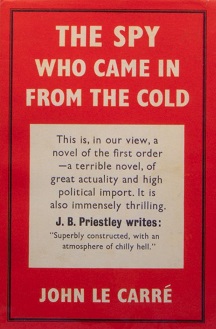
The Spy Who Came in from the Cold (1963)
The Spy Who Came in from the Cold was written when the Berlin Wall had just been built, and it captured the zeitgeist powerfully, going on to wild commercial success. Alec Leamas is a burned-out, hard-drinking spy whose agents have all been exterminated by East German intelligence. He returns to London where Control (leader of the intelligence agency known as ‘The Circus’) enlists Leamas for one last solo mission. While Call for the Dead was a traditional murder mystery, The Spy Who Came in from the Cold has a brow-furrowing plot revolving around spy agencies bluffing, double-bluffing and triple-bluffing each other. As the novel goes on it gets more claustrophobic and paranoid. It’s not a spoiler to say that Leamas has been lied to by Control (and by Smiley, who puts in a few appearances). The villain Mundt returns from Call for the Dead, and Fiedler, a principled and well-intentioned Jewish communist working for the Stasi, channels familiar energies (perhaps an echo of Frey, though to a more tragic end here). Towards the end Control’s real agenda is revealed as devastating and ruthless. If you ever catch yourself feeling too warm and fuzzy about George Smiley, remember what he did to Alec Leamas and Liz Gold. Gold is a young woman Alec Leamas meets when he’s busy building his legend prior to his final mission (A ‘legend’ in this context is a kind of espionage method acting – the cover story which a spy not only concocts but lives and documents in order to fool the other side.) Soon Leamas learns something surprising about his girlfriend. She tentatively begins to explain ‘I believe in history…’ and he bursts out laughing. ‘You’re not a bloody communist, are you?’ She has no idea her boyfriend is a wounded cold warrior, so she’s a bit confused at his amusement, but she’s relieved that her political affiliation doesn’t scare him off. That’s a good moment, with irony flying in all directions, but I think le Carré’s depiction of Liz is patronising overall, and it’s a weakness of the novel. I get that she’s supposed to be the innocent in all this, but she’s way too innocent. She actually dislikes everything about being in the Communist Party apart from the peace marches. Her party comrade is simultaneously a gay man (portrayed without sympathy), and a lech toward her. She tolerates all this and more for reasons that are not clear. A more streetwise Liz would have been just as sympathetic but more believable – someone who, like Leamas, has made ethical trade-offs to pursue what she believes is right.
When I read this: c 2011 Locations: East Germany, London Why read it? The novel that made John Le Carré’s name and launched his career; his first spy novel proper, introducing his dark and morally dubious portrayal of the world of espionage Memorable moments: The story begins and ends with desperate people making a break for it at the Berlin Wall – whose construction was recent news at the time this book was published
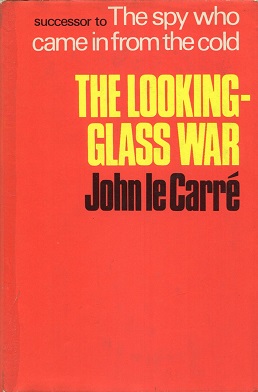
The Looking Glass War (1965)
The Looking Glass War is a brutally unglamorous story. It revolves around The Department, a distinct intelligence organisation overshadowed by George Smiley’s ‘Circus.’ The Department has been reduced to a small staff without much funding, with its Director Leclerc wallowing in a perverse nostalgia for the days of World War Two, when he used to regularly send young men to their deaths. When an East German defector brings hints of a missile build-up, Leclerc embarks on an escalating series of risky operations to verify the data. Our main characters fear an imminent re-run of the Cuban Missile Crisis, but beneath their fear they really want to believe it’s true. Because, what a coup for The Department! They feel they deserve this. For most of the book we don’t know if we’re in the midst of a cock-up or a conspiracy. At the climax, we follow an agent on a quixotic mission beyond the Iron Curtain. But mostly the conflict is office politics, the cause is nostalgia and bureaucratic prestige, and the subterfuge is inter-agency rather than international. For example, the Department has to borrow radios from the Circus, without letting them know anything about the intel they have or the operation they are planning. If the Circus get wind of it, they will take over. Le Carré is good at making office politics compelling, at describing one self-important bureaucrat witheringly through the eyes of another equally self-important bureaucrat. He appears to loathe the upper tiers of British society, but he speaks effortlessly in their voice.
The most memorable character besides Lelclerc does not fit into the familiar British-officer-class mould at all. This is Fred Leiser, a Polish immigrant who played a heroic role behind enemy lines for The Department during World War Two. Leiser has no stake in the intelligence world anymore; he has settled into civilian life. But the Department convince him to come back and risk his life on a mission into East Germany. I was pretty horrified at how this poor guy is groomed and flattered and tricked. At the same time Leiser is a strong-willed, rather arrogant character who actively chooses to do this, and for all the wrong reasons. Le Carré had evidently learned how to portray a guileless innocent.
And if we’re going to talk about themes that will be big later making their first appearance here, consider The Department as a metaphor for post-imperial Britain. In later novels we see The Circus itself in the same position as The Department, with the CIA as the bigger counterpart from whom it is trying to secure resources, but also to keep its petty secrets and barren intrigues.
When I read this: c 2023 Locations: Finland, West Germany, East Germany, London Why read it? A more tragicomic take on the dark underworld of intelligence; all the troubling morality of The Spy Who Came in from the Cold but with murkier stakes. Memorable moments: We are subjected to a scene of haunting dismalness when Avery visits the flat of his colleague who has died mysteriously while on a mission; later, we have the humorous tension between Fred Leiser and the sergeant who is training him.
Honourable mention here for A Small Town in Germany (1968), which I tackled in 2011 or so but didn’t get far into. It concerns a fictional and (then) near-future student movement in Germany which espouses an inchoate mishmash of left and right politics. I think I was put off by the author’s dismissal of the student radicals. I remain curious and might tackle it again.
Summing up… (and my favourite of these three novels)
The basic pitch of early le Carré was that he was selling a more unvarnished truth about intelligence – Forget James Bond, he seemed to say, this is the real deal; none of that moral complacency, none of those innocent assumptions about right and wrong. In its place the vision offered by early le Carré is that the West is benevolent and the East is malevolent, but that in the struggle the West has regrettably lost sight of its principles, and in terms of methods the two sides are equally devious and cruel.
Except not really, because in le Carré novels we see the Stalinists doing much worse things than we see the imperialists doing. Even leaving that aside, though, isn’t that vision complacent in its own way? The idea of Britain and the United States as basically benevolent and good forces in the world, in contrast to the wicked Soviets, is not really compatible with my own understanding of the broader history. I know what the Soviets did in Hungary. But men of Leamas, Smiley and Guillam’s vintage ran gulag archipelagos in Malaysia and Kenya. The Soviets imposed dictatorships in Eastern Europe, and the capitalist countries imposed their own on their side of the Iron Curtain, for example in Greece. The Stalinist states were certainly cruder in their repressive methods than, say, the British state when operating on British soil upon white British subjects. But the Soviet bloc was basically conservative and defensive, not expansionist or aggressive. So the reality is murkier still than we see in early le Carré.
The paranoid multi-layered duel of deception in The Spy Who Came in from the Cold is very powerful. But of these three novels, I most admire The Looking Glass War. Its tragicomedy and its basic theme of utter delusion ring truer to me given the above points.
Le Carré’s novels of the 1960s were tight and focused. They were thrillers in cheap covers that I imagine you could carry in your jacket and read on the London Underground. In the 1970s, which I’ll look at next week, Smiley’s chilly and foggy world expands to an epic scale. These early novels have plenty of tension, humanity and power, but they are apprentice pieces by comparison with what is to come.
Last month OpenAI boss Sam Altman announced that his company had created an AI tool that could write a short story. You know the most depressing thing about this news? Sam Altman did not wake up one morning and, just on a whim, ask his software to write a story. His company worked really hard to get it to write a short story. No doubt some tech worker missed a kid’s birthday, maybe even birth, in order to work long hours on it. They plagiarized and polluted for it. Getting an AI that could write a short story was something they had to pursue.
Here’s the thing: even if it was easy and cheap and green, why would anyone want a machine that can write a short story? Is there a shortage of people who can write stories? Is writing stories a chore, like washing clothes or cutting grass? Are people crying out for relief from the burden of being creative?
I made it clear enough last week that I think this Gen AI thing does have limited uses (“a moderate productivity booster in certain situations”, as my commenter, The Director from MilitaryRealism.blog summed it up). I’m not qualified in any very technical fields like engineering, logistics or programming, but I’ll add that I can see potential uses that could be important.
Writing is more my area; I have an English degree and I’ve worked in teaching and libraries. So I don’t hesitate to say that short fiction is a glaring example of something that’s not a useful application of Gen AI by any measure.
Full disclosure, I haven’t read the AI-written short story. I read a lot, but I don’t happen to have a Gen-AI-short-story-shaped gap in my reading.
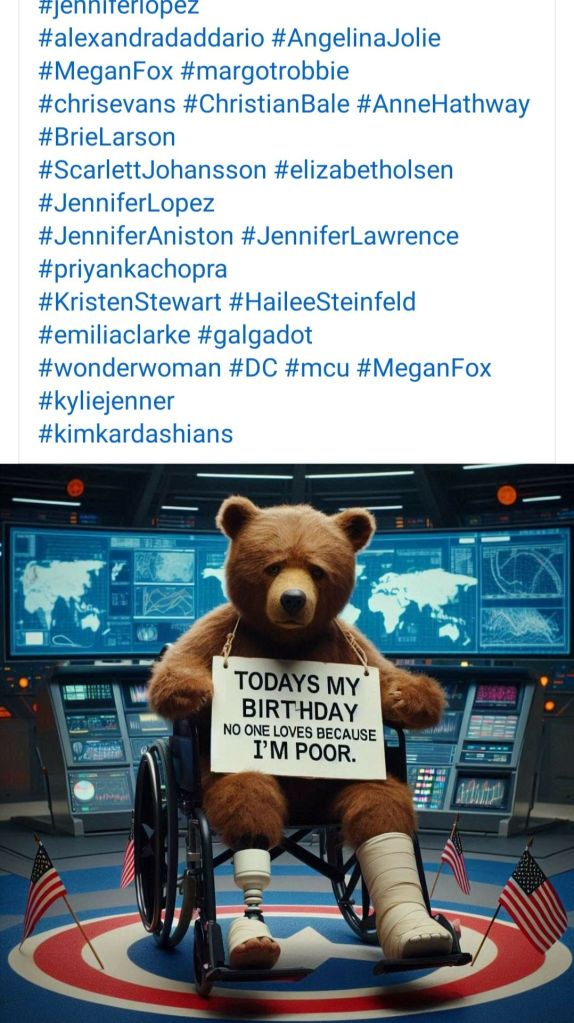
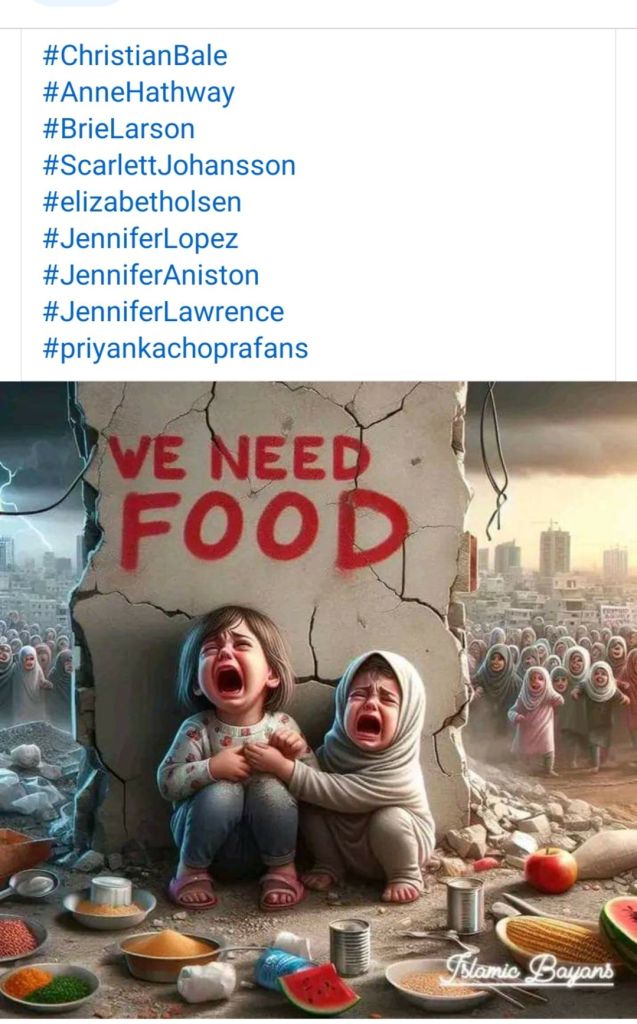
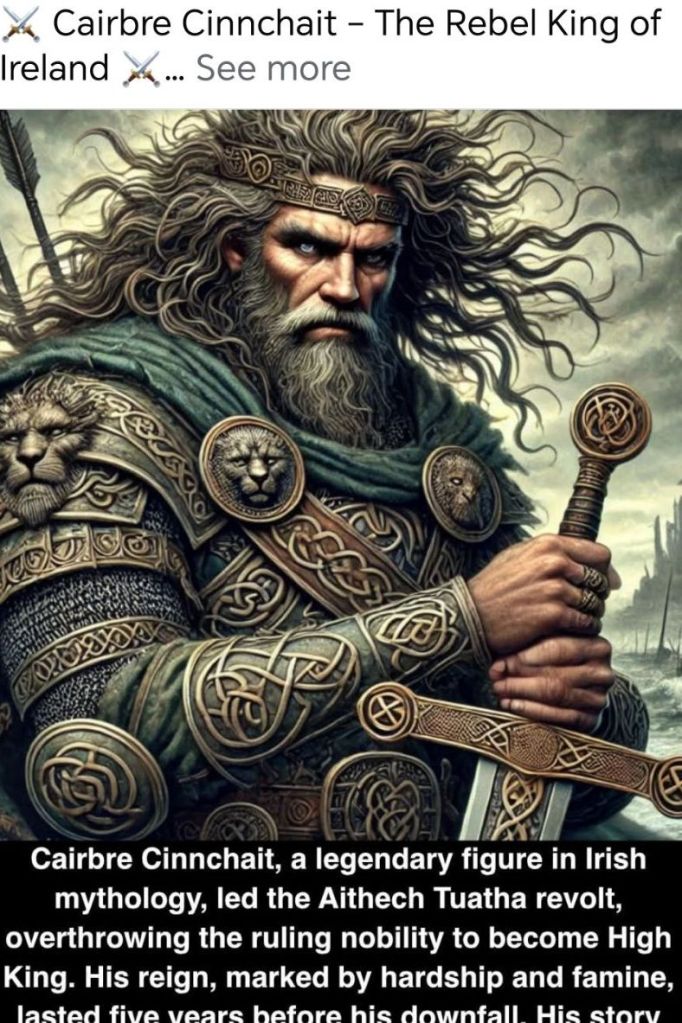
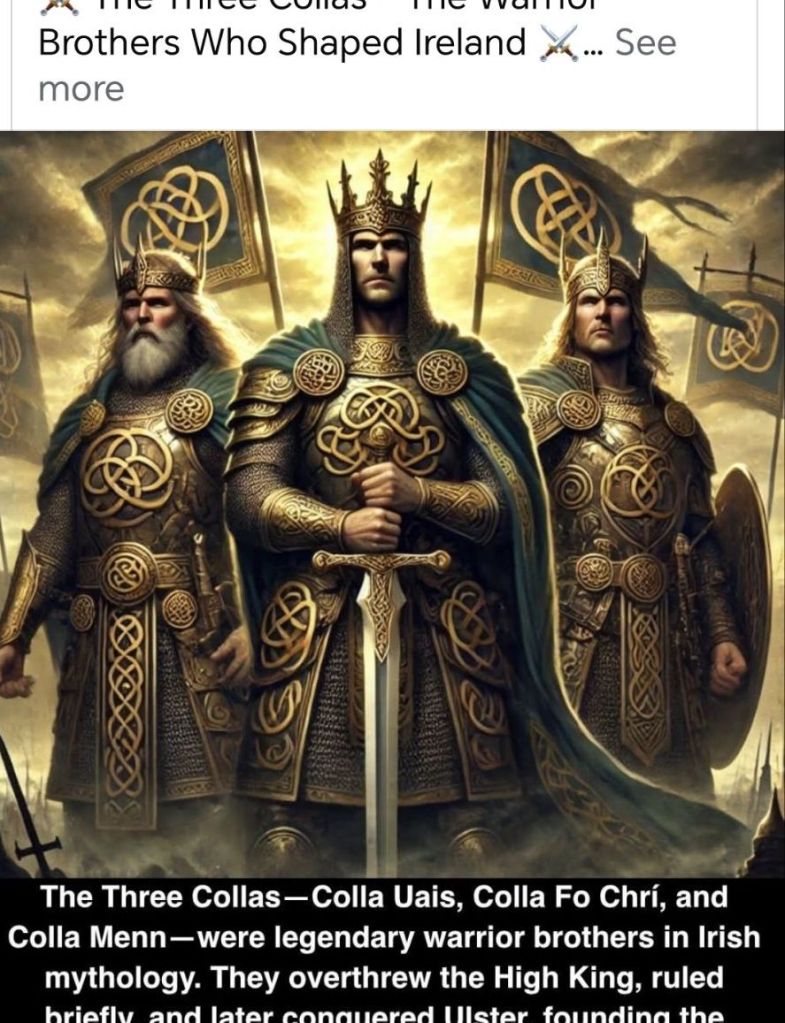
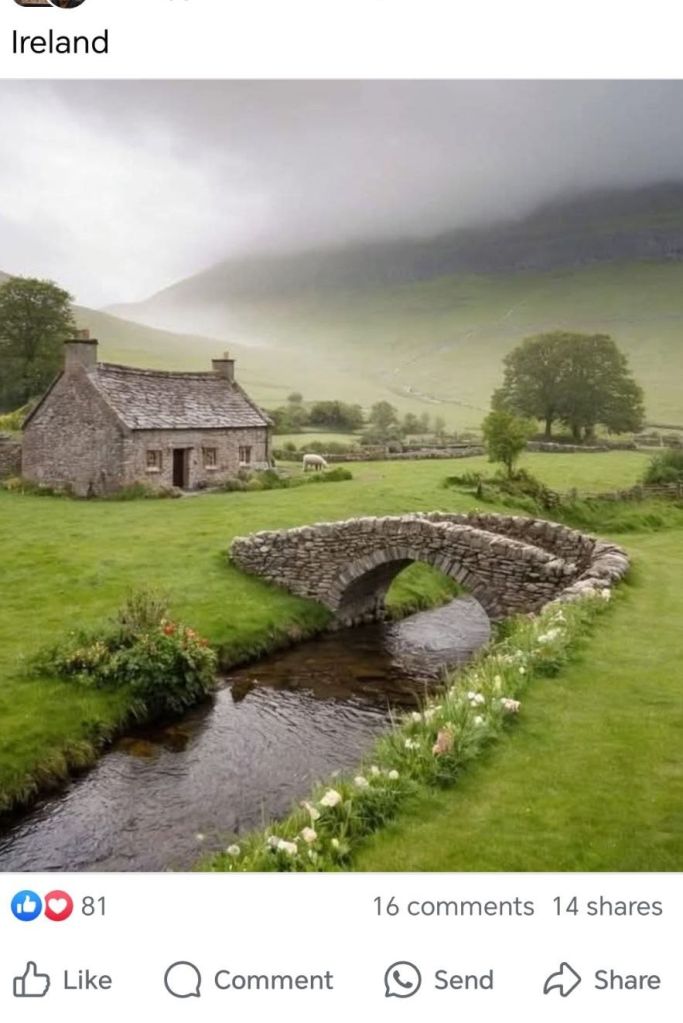
To illustrate this post, more cringe-inducing AI imagery from social media pages purporting to be about history and mythology
It’s not inevitable
The Guardian got some writers to react to the short story written by the machine. Most of the reactions ranged between ‘Wow, this is actually pretty good’ and ‘I fear for my livelihood.’ Kamila Shamsie pointed out that GenAI will reproduce and reinforce all the biases, all the racism and sexism etc, in its ‘training materials.’ For Nick Harkaway, the story is an ‘elegant emptiness’ and being moved by it is like a bird falling in love with its reflection in a window. He emphasises that ‘none of this will just happen. These are policy choices, and the end result will be the result of a conscious decision.’
That’s what the hype-mongers want us to forget, isn’t it?
The future promised by Gen AI is one where nobody is paid to do anything creative or educational; instead, computer programmes owned and controlled by a few billionaires create flat, uncanny versions of what humans used to create. For some reason we are all supposed to be excited about this. But whether you feel excitement or dread, either way you are making the mistake of treating the whole thing as inevitable and natural.
Actually, there are humans making decisions and investments at every link in the chain here. And some, like CD Projekt Red, are making decisions unfavourable to the spread of AI in creative industries.
I don’t think AI is going to put writers out of a job. The vast majority of us are already out of a job. Tech bros claiming to have made a programme that can do what we do, and expecting us to be pleased about it, is just the latest in a long line of insults, and far from the worst.
I say ‘far from the worst’ because I don’t think these AI tools are about to revolutionise the publishing industry, any more than they have revolutionised any of the other things they were supposed to revolutionise. It will mess with a lot of people’s livelihoods and it will muddy things up for a while. But it will not be a game-changer. The wave may leave behind puddles but it will recede. So I don’t believe the tech bros’ dystopia will happen.
GenAI will probably carve out and retain certain niches, for better or for worse, in the publishing industry. But a machine can’t actually write a story. There’s a few basic category errors at work here.
Another one found in the wild. See if you can spot the warrior who has jumped 200 metres into the air.
Why can’t a machine write a story?
First, the ‘AI’ that exists today is not some sentient machine-mind (‘alternative intelligence,’ in the disappointing words of Jeanette Winterson). Maybe some day we will have that, and our android cousins will write their cyber-Iliads, which will be very cool. I’ll be the first in line. But that’s a whole different thing. I saw someone in a comment section gushing that ‘we have taught sand to dream.’ But what we have now is just glorified predictive text. Whether in written or visual or musical form, it just shows you the lowest common denominator of what’s already out there in the culture.
Second, writing is about expressing your feelings and communicating your thoughts and experiences. A computer doesn’t have these things. It can imitate the way humans express them, provided a bunch of rich people decide to devote stupendous sums of wealth to making it do so. But again it’s not the same thing.
What if the computer’s imitation gets so good we can’t tell the difference? And aren’t some human writers also basically hacks, unoriginal, etc?
First, every writer does not have to be Arundhati Roy for the point to stand that a computer can’t be Arundhati Roy. Stories are rooted in material reality and our experiences of it. No training materials or prompts can produce something like The God of Small Things, which is viscerally a story of its time and place.
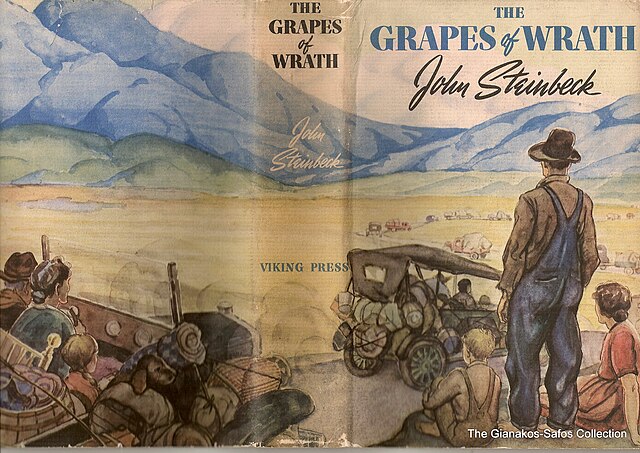
Or imagine if The Grapes of Wrath had been written using pre-existing ‘training materials.’ It would have portrayed the Dust Bowl refugees as incendiary vagrant criminals and the cops as brave defenders of civilisation.
Even if the imitation seems to be perfect and seamless, the above points will tell. Stories are not pure exercises in form. They are aboutthings. The most important ones are about things nobody has written about before. Even science fiction and fantasy stories are about themes and feelings that really exist.
Instead of Steinbeck’s wonderful and evocative descriptions of the human impact of the Dust Bowl, we would get ‘Chapter 2. The Dust Bowl took place in the 1930s and was caused by a number of factors. First…’ Front cover image from 1939. Uploaded to Wikimedia Commons by Folktroubadour
AI in Gaming
I first became familiar with the phrase ‘Artificial Intelligence’ in relation to games. AI is what tells the mercenaries in Far Cry to search the jungle for you systematically when you hide. It’s what tells the hostile army in a Total War game to oppose your cavalry with spears. AI is what’s breaking down when your little villager takes a shortcut past ten enemy catapults, or when a Nazi stands out in the middle of a Norman field waiting for you to shoot him.
You’d think GenAI would have massive applications in gaming. But so far it’s been a real damp squib in that sector.
Recently PCGamer reported on a wild example. Basically, Microsoft made a demo based on a game called Quake 2 using Gen AI. The project used three megawatts of energy – the output of tens of thousands of solar panels. All that, for what? An incoherent, uncanny experience that looked vaguely like Quake 2 and that gave players motion sickness. For context, Quake 2 (that is, a version of Quake 2 that is the full game and that actually works and doesn’t make you nauseous) was made over 25 years ago by a team of just 13 people.
Something to think about: if they had managed to remake a part of the game exactly as it was with AI, that would have been hailed as a triumph. But… Then we’d just have a game level that already exists.
How do I explain this for people unfamiliar with games?
Imagine if I rewrote one chapter of Killing Floor by Lee Child, and presented it here on The 1919 Review expecting your adulation. But in my rewrite, the names of the characters change every other paragraph, and the font somehow gives the reader a headache. I rewrote it by listing every time a particular word is used then arranging the words according to arcane predictive rules. And, somehow, it took the entire output of a nuclear plant just to power the special laptop I used to do this.
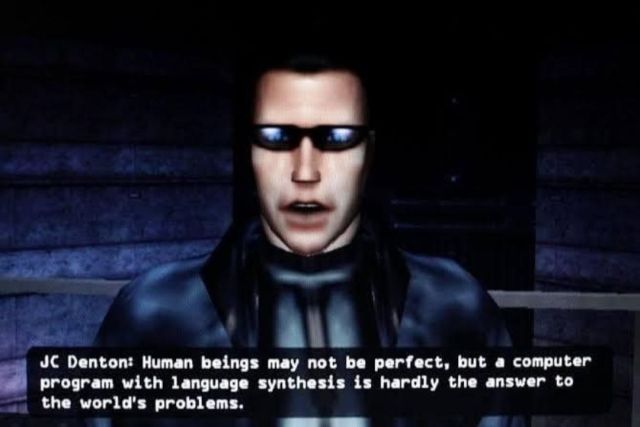
Screenshot from Deus Ex (2000), which predicted this like it predicted everything else. Ion Storm & Eidos Interactive
That’s the essence of the Quake 2 situation, as best I can explain it using books as a comparison, but to be fair (and as I’ve made clear above), GenAI has actually produced more polished results when it’s confined to text.
In both cases the same questions arise: what is the purpose of this? How can the results (good or bad or just trifling) possibly justify the expense and the effort and the pollution? Why are we all expected to indulge Big Tech even when the project into which they are pouring so much wealth is largely unnecessary where it is not actually harmful?
GenAI is in many ways like crypto: the tech bros have invented a new toy and they demand that everyone takes their toy seriously. They demand that we sacrifice the future of the planet in order to sustain their toy. This toy is at the heart of an investor frenzy. They promise that when their toy has taken over the world, it will right all the wrongs it has done along the way (crypto, we were told, will actually save energy by putting all the banks out of business, thus reducing their emissions to zero; in the same way, we are told that AI will actually come up with clever ways to save energy.)
In other ways GenAI is not like crypto. It actually has utility, even if you agree with me that this utility cannot on balance be justified. It can be a lot of fun. It can make it easier to write emails. Its potential in technical fields is an open question.
But it has no utility in writing stories or developing videogames. It’s actually difficult to wrap your head around how stupidly wasteful and contrived such projects are. Even if that wasn’t the case, and even if the results were decent, it’s not worth one single artist losing their livelihood.
‘It’s going to change everything,’ people said, and even though they said it more often with dread than with excitement, it appeared they accepted it as inevitable.
When Generative AI became headline news a little over two years ago with the launch in late 2022 of ChatGPT, it was not simply oversold. It was hyped to within an inch of its life. Two years on, it has not revolutionized the way I work or live – thankfully. I’ve read about some ways that it’s useful and a lot of ways that it’s making the world a worse place. But in this post I want to pause and give you a full catalogue of how Generative AI has actually affected my life, as a snapshot of where the AI Revolution stands from the point of view of one individual in April 2025.
Of Bots and Men
At work I use a program called Canva and in early 2023 it drew my attention to its AI image generator, which I had a great time playing around with for a while. ‘Of Mice and Men but Lenny and George are Robots’, ‘World War Two in space’ and ‘alien spaceship in County Westmeath’ were all fun. People look doughy and uncanny, and machines look like they were drawn by someone even less mechanically literate than me, and the whole thing looks like the first three results in a Google Image search have been mashed together indiscriminately. It looks as uncreative and unimaginative as it is. But it’s fun, and I could plausibly claim that it was work; I wasn’t messing around on the job, I was upskilling to rise to the occasion of the AI Revolution. It is fortunate that I had that excuse in my back pocket, because all my colleagues could see ‘battle of Stalingrad with lasers’, ‘atom bomb on Dublin’ and other brainsick adolescent creations whenever they looked at the drafts folder. All in all, I can vouch for Generative AI as a fun toy.
As an aside, in the two years since, it’s possible this tool has gotten worse. In 2023 it gave me photorealistic rusty hobo robots in a Steinbeckian dust bowl scene; today it gave me cute robot mice.
Gen AI is all about writing prompts. But two years on it feels like we humans are the ones being prompted. Tech companies are nagging us to use the AI tools they’ve spent so much money on, usually in contexts where I don’t want or need to. If I tap my phone screen the wrong way, it invites me to use AI tools to help me do internet searches. No thanks, I’m fine. Right now as I write this, over on the margin of this computer screen, WordPress is inviting me to use AI to generate a title, featured image and feedback for this post. The good people at WordPress don’t appear to understand that I’m writing because I enjoy writing.
Ned Beauman, in his 2022 novel Venemous Lumpsucker, was referring to this kind of thing when he wrote about an ‘almost libidinal desire to relinquish autonomy.’
My wife uses AI at work, for actual work. She uses it to write formal emails, and I’ve seen the results, and I think that’s a great use for these AI tools. I understand that there are other things like this, where AI can do boring jobs quickly. So as well as being a fun toy, it help you write the kind of letters there are already templates for online.
Tsunami of Slop
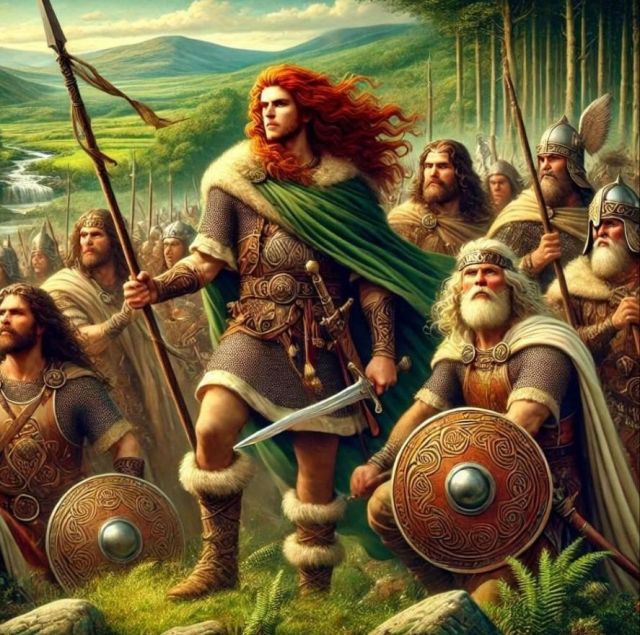
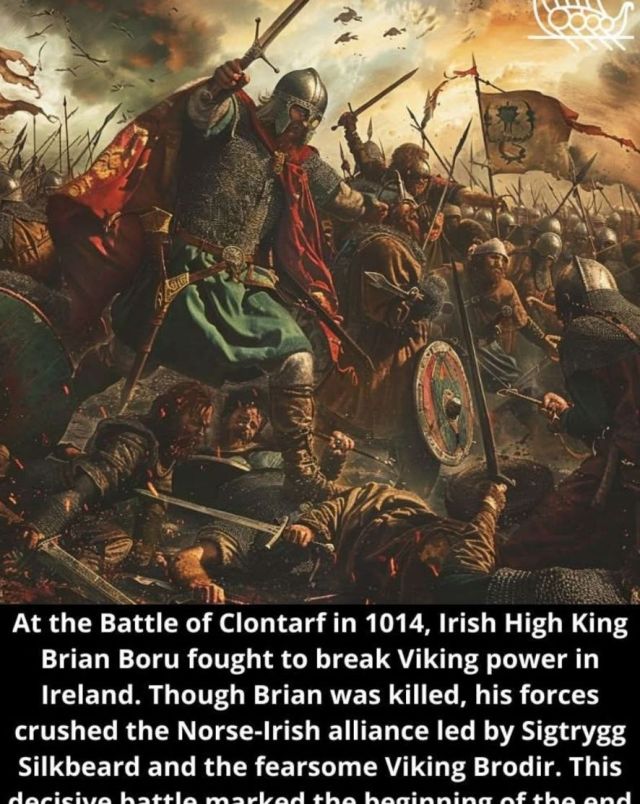
In fairness to Generative AI, it has significantly changed social media, in that it’s polluted my feeds with stupid, tasteless, uncanny or offensive imagery, sometimes accompanied by text riddled with inaccuracies and written in AI’s characteristic style of pseudo-intelligent noncommittal blandness. As far as I can see, two particular online constituencies have seized on Generative AI. The first group is anti-refugee protesters, who make hideous posters for their events and fake photographs to rile people up. The second group is Facebook pages about history and archaeology. They illustrate their chatbot-written posts with, say, a picture purporting to show Brian Boru at the Battle of Clontarf – but Clontarf has been transformed from flat coastal fields to high foggy crags, and Brian Boru looks exactly like the Witcher. Or a Viking ship landing on the Irish coast – in the shadow of a ruined Norman castle that couldn’t have been built, let alone fallen into ruin, for another 400 years. One image I saw in my news feed claimed to be of Dublin. The buildings and quays looked Dublinesque, but they were all in the wrong place. Now what I think is that the image was designed to provoke me into pointing out in the comments that, say, Grattan Bridge was missing, or that Bono’s hotel is upside-down. I resisted the urge but I could see that thousands of people had already commented. There is probably a whole category of AI post now that’s just correction bait. Again, AI is prompting us now, not the other way around.
It doesn’t make any sense, but it’s a good way to maximise engagement – far more effective than, for example, posting something funny or good or clever.
While all this social media stuff is ugly and tacky, it’s at least interesting, in a Black Mirror kind of way. And image generators can be fun, and it’s nice to have software that can write the less enjoyable type of email. That’s it, really.
Maybe my experience is typical of a sizeable layer of people, maybe not. But if we make a rough balance sheet of the AI Revolution based on my experience, then it definitely wasn’t worth burning all those fossil fuels for.
Tune in next week for my thoughts on the question, ‘Can a machine write a story?’ And to finish off this post, here’s a small sample of the tsunami of slop that’s come down my news feed these last two years.
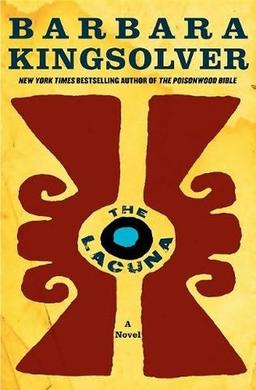
The Lacuna is a 2009 novel by Barbara Kingsolver about a young Mexican-American man, Harrison Shepherd, growing up in the early 20th Century. During his fictional life, spent back and forth between Mexico and the USA, he encounters real events and people, such as when he sees the Bonus Marchers beaten and gassed off the streets of Washington DC in 1932, makes friends with Diego Rivera and Frieda Kahlo in Mexico City, and back in the US finds himself in the firing line of the McCarthy Red Scare.
It’s a great novel that deserves all the praise and prizes that it got. In this brief post I want to zoom in on one interesting feature: its depiction of the Russian revolutionary Leon Trotsky. Trotsky, who lived in exile in Mexico city from 1937 until his murder in 1940, occupies a prominent place in the story. His depiction is something I’m going to praise but also criticize.
Kingsolver, who cut her teeth writing about miners’ strikes, treats the workers’ leader Trotsky with great sympathy. He appears to Harrison as a short, strong man with the dignified appearance of an older peasant, who is passionate about animals, nature and literature as well as politics. He employs Harrison as a secretary and, when he stumbles upon the young man moonlighting as a writer, gives him precious encouragement. An exile from Stalin’s Soviet Union, Trotsky is more melancholy than angry. Harrison is a witness to Trotsky’s murder and is haunted by the experience.
As an example of how she depicts Trotsky, in his affair with Frieda Kahlo (they did the dirt on their respective partners, Natalia Sedova and Diego Rivera), Kahlo comes out looking a lot worse than him. Harrison is Kahlo’s friend and confidante, and he judges her more harshly, probably because he knows her better; Trotsky is up on a pedestal and largely escapes judgement.
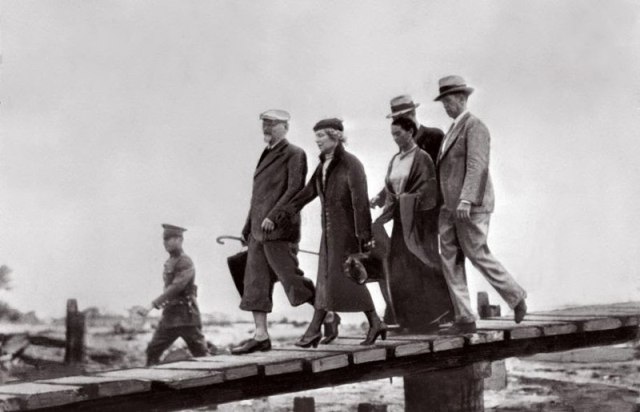
Trotsky, Natalia Sedova arriving in Mexico, escorted by Kahlo
Kingsolver is interested in Trotsky but far more interested in Kahlo. We see Kahlo’s sharp edges, we are invited to judge her at times. But I guess this is because the author decided to make her a central character, to spend more time and energy on her. Trotsky gets comparatively less attention from the author, so we get a simpler picture of him. This is all fair enough. But this leads the novel into some avoidable missteps.
Self-portrait by Frida Kahlo
Funerals
It’s not impossible that Trotsky would have employed Harrison as a secretary. Harrison is a veteran of the Bonus March, a supporter of ‘the dictatorship of the proletariat,’ (understood by him to mean democratic workers’ power) and a member of the leftist artsy milieu in Mexico City. Harrison is also young, and Trotsky was more politically tolerant toward younger comrades. But Harrison is, for all this, not very knowledgeable about or active in politics. I think Trotsky would have sooner entrusted such a key role to members of his own organisation, the Fourth International.
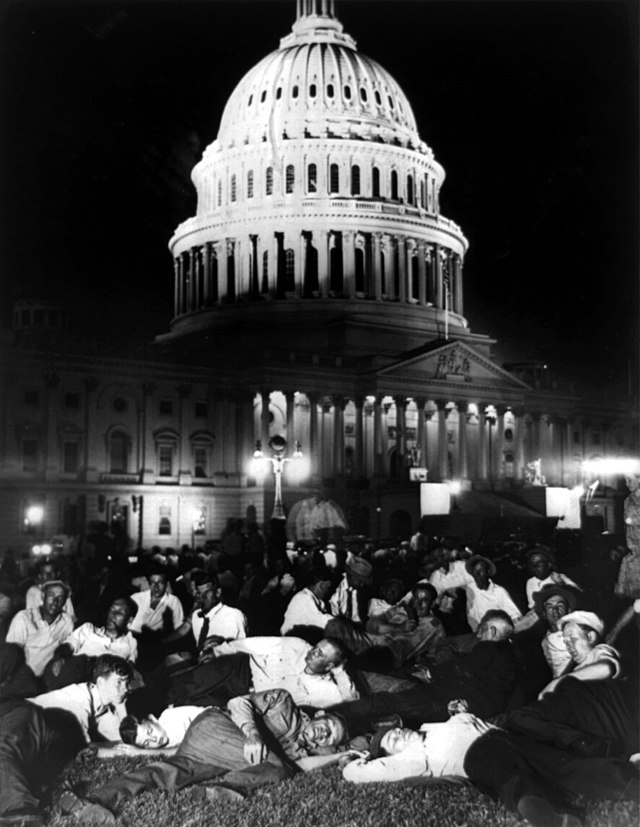
The 1932 ‘Bonus March.’ Jobless veterans camped out in Washington DC were subjected to a violent military crackdown.
So it’s a very strange moment when Harrison asks how Stalin and not Trotsky ended up in charge of the Soviet Union. This should be something which Harrison already knows about and has developed opinions about, if he’s living and working in a trusted position in Trotsky’s household.
It’s a problematic moment in a bigger way, too. The real Trotsky wrote entire books about Stalin’s rise to power, so we know what he would have said. The explanation he gives in The Lacuna is wide of the mark. Trotsky, earnest and visibly pained by the memory, tells Harrison that he missed Lenin’s funeral because of a devious prank by Stalin. And so Stalin took centre stage at the funeral, and so, in this version of events, he became the sole possible successor to Lenin. I remember being told this by my school history teacher as an aside, as a touch of pop-history anecdote material, but I haven’t come across it anywhere since. Maybe it’s true as far as it goes, but it doesn’t answer the question.
And it’s definitely not the first answer Trotsky would give. In real life, Harrison would want to put the kettle on and pull up a comfortable chair before he asks Trotsky how Stalin ended up in power. Trotsky would not have spoken of personal intrigues; he was far more partial to grand socio-economic analysis and theoretical debates. If you open up his key book on the subject, The Revolution Betrayed, you can see this in the title of the first chapter; it’s not ‘Stalin: Devious Bastard’ but ‘The Principle Indices of Industrial Growth’.
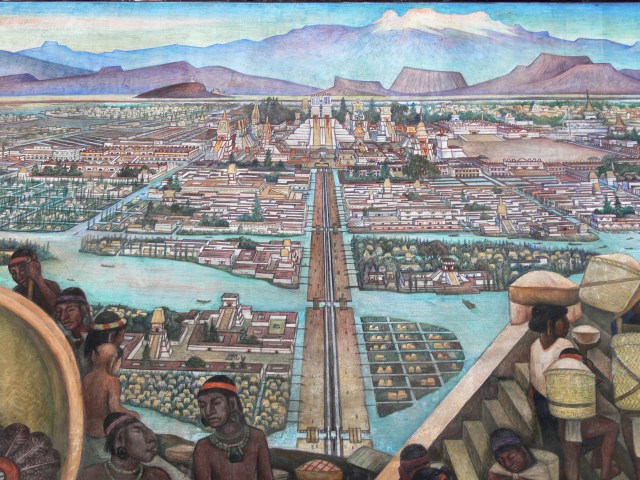
A mural by Diego Rivera depicting Tenochtitlan. Harrison’s stories are set in the same era as this painting
Yeoman farmers
In another strange scene, Trotsky laments the latest news from Russia: now Stalin is going after the ‘Yeoman farmers.’ But Stalin had started in on the ‘Yeoman farmers’ (kulaks) in earnest from 1929, and this conversation is happening around ten years later! In the early 1930s forced collectivisation and the ‘liquidation of the kulaks’ led to famine and terror on a huge scale. It was one of the most traumatic episodes in Soviet history and Trotsky wrote about it at the time. It wouldn’t have been news to him by the time he was in Mexico. In any case by then there were no kulaks left.
Trotsky in The Lacuna seems to regard these ‘Yeoman farmers’ as a key constituency whom nobody should mess with. This wasn’t the case. While Trotsky condemned Stalin’s onslaught on the peasantry and national minorities, he would still have used the derogatory term ‘kulaks’ rather than ‘Yeoman farmers.’ He saw the kulaks as a problem (though he advocated gradual and peaceful solutions) and earlier (in the mid-1920s) he condemned his opponents, including Stalin, for enacting policies that enriched and empowered this social layer.
‘pedantic and exacting’
In 1938 Trotsky’s son and close comrade Leon Sedov died in Paris, likely poisoned by Soviet agents during a routine surgery. In a powerful obituary, Trotsky expressed regret over his own often difficult personality:
I also displayed toward him the pedantic and exacting attitude which I had acquired in practical questions. Because of these traits, which are perhaps useful and even indispensable for work on a large scale but quite insufferable in personal relationships people closest to me often had a very hard time.
A more rounded novelistic portrayal of Trotsky would show us this ‘pedantic and exacting’ side, which was not a figment of Trotsky’s imagination – and perhaps his own occasional pang of regret over it. As his secretary, transcribing his extensive writings, Harrison would not only experience on occasion this ‘very hard time’ but would read practically every word Trotsky wrote. Someone as raw and open as Harrison would (rightly or wrongly is of no concern here) see some of Trotsky’s writings as ultra-principled or hair-splitting. This would especially be the case in the late 1930s; the extermination of all his allies and supporters back in the Soviet Union left Trotsky isolated, debating with the few survivors over questions which had no easy answers.
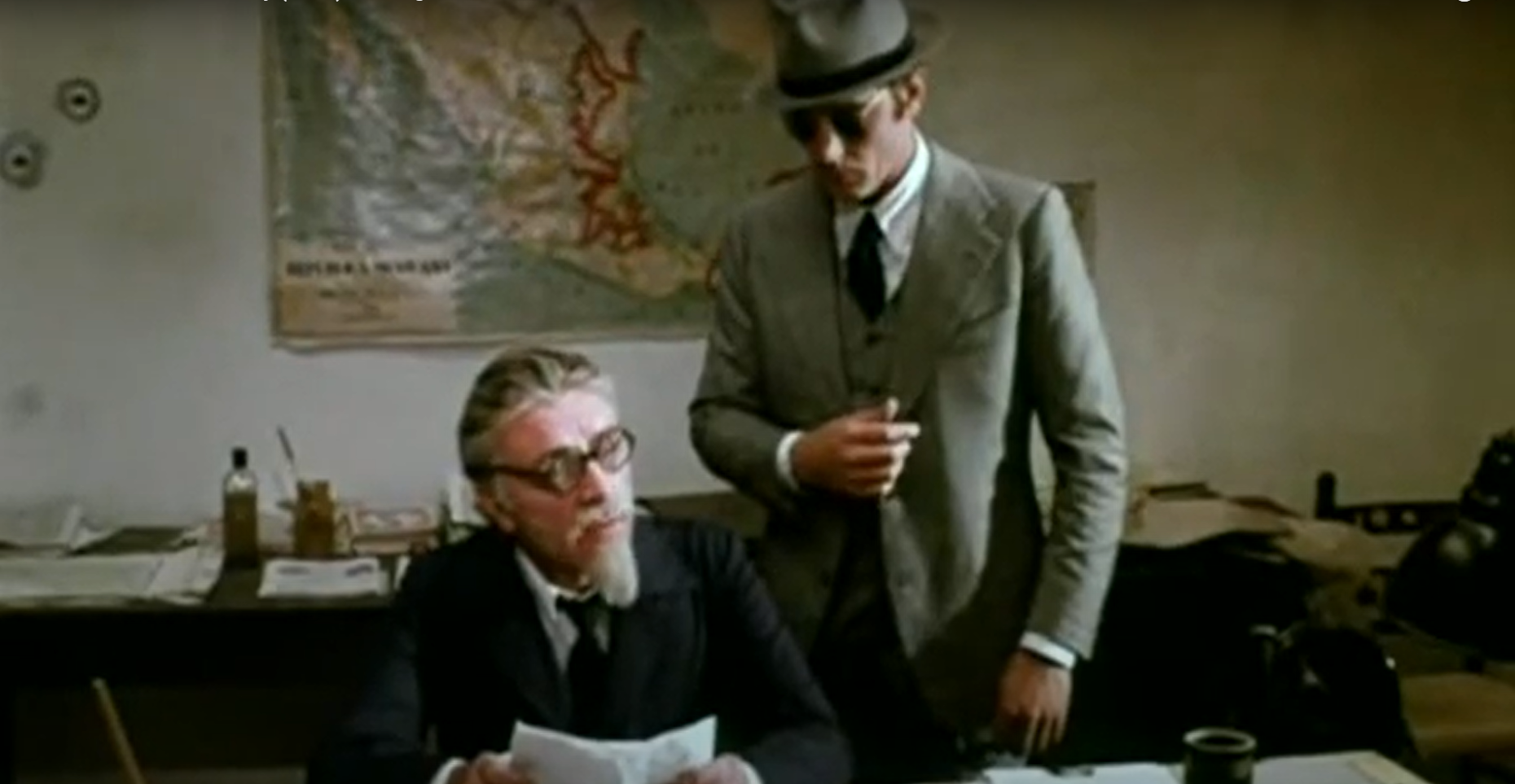
Trotsky with Ramón Mercader moments before the assassination. From The Assassination of Trotsky (1972, dir. Joseph Losey)
It’s believable and accurate that Harrison would encounter Trotsky and see a kind, curious, haunted man. But since he lived with him for a few years, he would see that like many great leaders and writers, Trotsky had his more negative personal traits. A more nuanced Trotsky, like the multi-faceted Kahlo we come to know in The Lacuna, would be all the more sympathetic for our having seen various sides of him.
Years ago I started but did not finish a Lee Child book, Killing Floor. The things I remembered most vividly from that book, more than a decade later, were the eggs and coffee. Why did I return, all these years later? A few reasons, but most of all because I wanted to see if the eggs and coffee still tasted the same.
You see, people compare Lee Child to Ian Fleming. Both phenomenally successful and violent page-turners, obviously. But the similarities run deeper. James Bond and Jack Reacher are not really about violence, or even sex. A large part of the appeal is travel, food and drink. James Bond flew to glamorous places and pickled his insides with fancy wining and dining. (I had to put down You Only Live Twice half-way through because the entire novel to that point was travelogue). Jack Reacher buses and trudges through un-glamorous places – close-to-home, bleak, dirty places – now and then dropping into a diner to order some eggs and a litre of coffee.
Now I’ve read three Jack Reacher novels in three months (that’s fast for me). Here they are, in the order that I read them:
The Midnight Line (2017), Lee Child, read by Jeff Harding (Jack Reacher finds a class ring from his officer training school in a pawn shop, and sets out on a quest to find its owner)
Killing Floor (1997), Lee Child, read by Jeff Harding (twenty years and twenty books before The Midnight Line, Jack wanders into a small town only to be arrested and accused of a murder)
One Shot (2005), Lee Child (Five people are gunned down by a sniper in a city. The man arrested for the crime asks for one Jack Reacher – who’s already on his way)
What first piqued my interest was learning that the author is actually English. So it’s an English guy writing these familiar and jaded descriptions of the underbelly of the US heartland. That adds a layer of interest to every sentence. Why is he doing this, how is he getting away with it, and how is it so good?
Child doesn’t describe the taste or texture of the eggs or coffee in pornographic detail (It’s usually something like, “He had some eggs. They were good. The coffee was good too.”) But the food descriptions still get readers in the door. Can’t explain why, but I always feel rewarded when Reacher consumes his mundane fare.
Here follow more generalisations about Lee Child based on the three books I’ve read.
There are always cars. I’m car-blind – when an author tells me what kind of car it is (“a big coup deville” or a “large domestic model” or a “tan Buick”) it means nothing to me, and I don’t know what a given make or model is supposed to signify. But I know that James Bond cars are always that decade’s version of “fancy and expensive” while Reacher’s are more down-market. Reacher always borrows a few cars in his adventures and the reader gets to drive that particular car vicariously. The car stuff mostly goes over my head but I like how he drives across the States describing the natural and social scenery as he goes; transport is a medium through which to read the landscape. The circles described by irrigation booms are like marksmanship targets. A Georgia prison is described almost like the fortress of some evil sorcerer. In Midnight Line a truck driver briefly becomes a laconic therapist to Reacher.
Reacher always finds a way to have sex without it seeming shoehorned in. It might be central, it might be a sub-plot or it might be a coda, but it’s got to be in there. Reacher manages this while clearing a low bar that James Bond doesn’t: he’s not awful to women. He actually likes them, without a hint of contempt, and they like him.
This is good going for Reacher, when you consider that he regularly goes three or four days without changing his underpants (but we are assured that he uses “a whole bar of soap in the shower,” a defense which I find endearingly juvenile). If he carries a toothbrush, can he not carry some folded briefs and socks, maybe in his inside jacket pocket? But I guess Child is wiser not to get into all this.
I’m not a total novice to this kind of book. I’ve read Point of Impact (1993) by Stephen Hunter – the novel on which the movie Shooter is based. It’s a near-contemporary of early Lee Child and a cracking read. But the main character is an asshole. Not just to women, but also to men who talk too much (‘like a woman’).
Swagger and Reacher are both alienated from society (a character as lethal as them, while also being a boy scout, would be just unsettling). But Swagger is bitter, the distillation of a kind of post-Vietnam War resentment. Reacher starts off by telling us he’s angry that a president he didn’t vote for is cutting funding to the coast guard, an echo of his own redundancy – but he’s not bitter and he doesn’t retreat to his cabin in the mountains. He is alienated from the state and thinks the cherished myths of his society are bullshit. But he loves his country, and not in an abstract sense. He likes plenty of its people, its nature, the towns and cities and the vitality that flows on its highways. It’s a machine and he takes quiet delight in how well he understands its workings. Like what city a fugitive will be in after X number of days, what type of hotel he will stay in, and what false name he will adopt.
The stories always end with Reacher and his hastily-assembled team of allies assaulting the warehouse (or mansion or snowplough depot) where the bad guys are holed up. There will be not more than half-a-dozen action scenes before that, punctuating the story with thuds and cracks. My gruesome favourite was when he stalked five guys through a house in Killing Floor. But it has to be established that a guy is very bad before Reacher kills or maims him in a crunchy way; if the guy is only sort-of bad he only hurts him in a crunchy way.
One of the conventions of this genre relates to texture. Supposedly we are here for the murder mystery. But that’s not enough. In between the murdery and mysterious bits there are the moments where we are given access to insider information about interesting things like forgery, prescription drug abuse or guns. But even that’s not enough. In between all that, we want to follow the protagonist through a whole lot of relatable everyday life stuff like car rentals and jean sizes. The battles, puzzles and lore, in order to seem real to the reader, must be connected by a tissue made of the same stuff as our real and tangible world. The headbutts have to go crunch, and the narrator has to seem like an insider, but most importantly the eggs and coffee have to taste right.
“…throughout all the difficult days of the dissolution of Antiquity, we can trace the hard, selfish interest of a comparatively small group of families, their wealth and interest founded on land.”
-JM Wallace-Hadrill, The Barbarian West: The Early Middle Ages AD 400-1000. Harper Torchbooks, 1962
The book quoted above fell into my possession a little while ago. Knowing full-well that it was short, very broad, and decades out of date, I still read it with interest.
Men supposedly think about Rome every day. As for me, I’ve read some Robert Graves and played a lot of Total War (never as the Romans), but I’m not especially interested in togas and scutums and senators. But the stuff a little later, the great churn where the senators and castrums are turning into dukes and castles (but aren’t in any particular hurry) are more interesting to me. I like the times when years have three digits and there are a lot of things they haven’t invented yet, like chivalry, or Switzerland, or monks who had to keep it in their pants.
Today people put Rome and the Middle Ages up on a pedestal. But focus your eyes on where one is dissolving into the other, and it all looks more accidental and contingent, and you start learning things, often things you don’t know what to do with, facts you don’t know where in your brain to file.
I read indiscriminately about late antiquity and the early Middle Ages, and every so often I’m going to be posting about what I’ve learned. I might criticise what I wrote here in a future post when I read something else; or someone in the comments may have something to say. No worries. So here are some interesting things I found out from Mr Wallace-Hadrill and his book The Barbarian West.
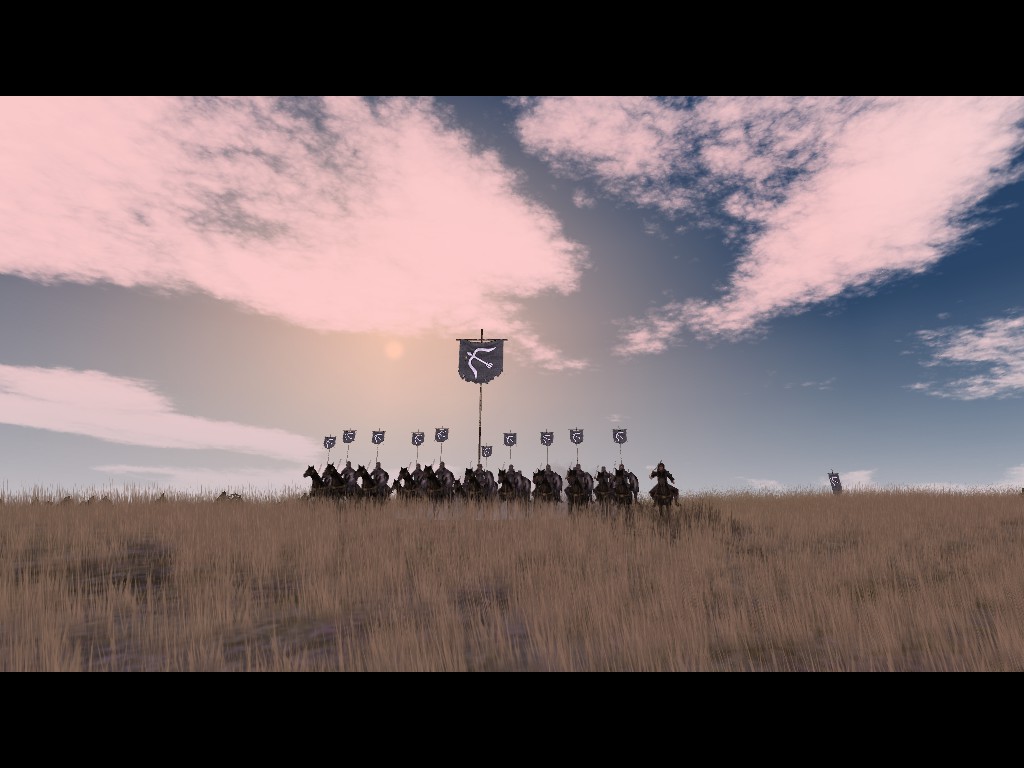
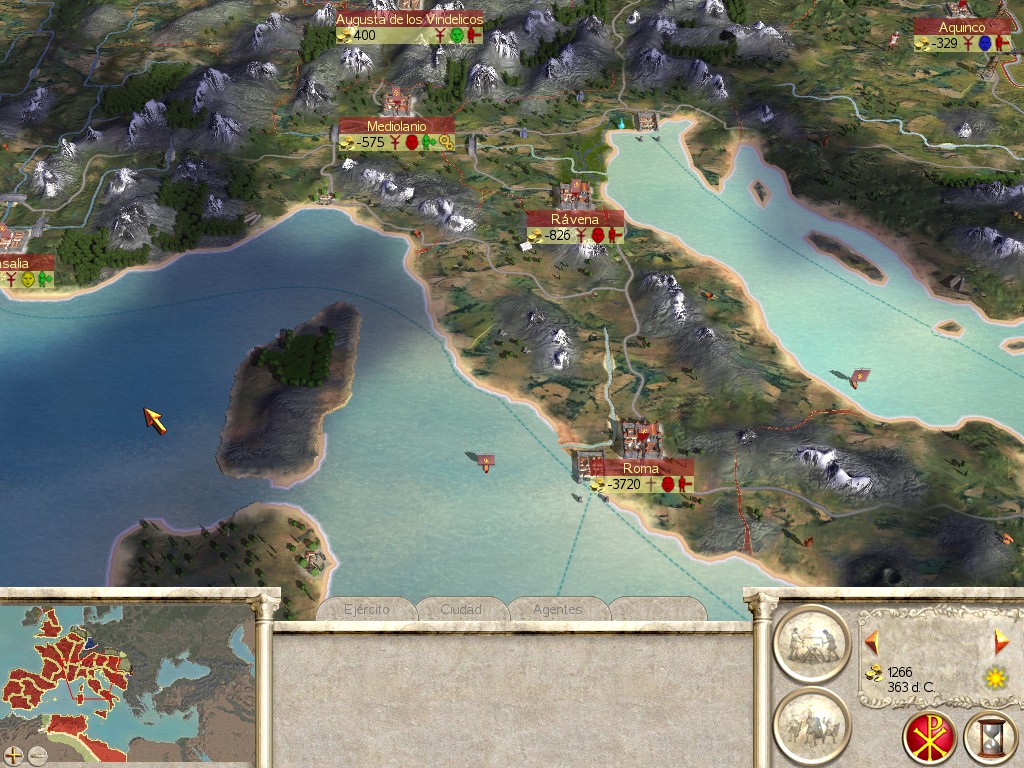
Huns riding over the horizon. The featured image is a screenshot I took on Rome: Total War – Barbarian Invasion (2005), probably the first cultural text about this period that I stumbled upon.
Did ‘barbarians’ actually sack Rome? (p 25-27)
I’ve seen the paintings. I’ve played the videogames. I grew up with a vague sense that there was a day when a horde of savages broke into Rome and burned a lot of nice buildings and murdered a lot of cultivated people, after which there was no more Western Roman Empire and Rome itself was finished as an imperial city.
Wallace-Hadrill says that the Goths took Rome in 410 CE, but did not actually sack it. They wanted food and land, and had no incentive to sack the city. It was back in Roman hands soon after. In 456 there was a serious sack of Rome – not by a nomadic horde, but by the powerful kingdom the Vandal invaders had established in North Africa. It was a sack, but it wasn’t the end of the Western Empire. That didn’t come until 476 and the overthrow of the last Western Emperor by one of his own Hunnic generals, Odoacer.
So the image of ‘barbarians’ sacking Rome doesn’t really convey how it all went down. Both Roman and invader by and large preserved Roman laws and institutions and even language – Latin itself had split into the dialects that would become French, Spanish and Italian before the fall of the Western Empire.
The later Magyar invaders, it is argued, did more damage in Western Europe than the Huns, while the twenty-year attempt by the Eastern Roman Empire to reconquer Italy brought about more destruction than the Huns, the Goths and the Lombards.
The Roman Empire did not fall because of ‘decadence’ (p 10-13)
Why did Rome fall in the first place? On the internet and occasionally in print, I’ve seen people blame it on too much partying, too much sex, too many feasts, orgies, etc. Too much dole. Too much immigration. ‘Weak men create bad times’ etc, etc. If the commentator even notices the gap of centuries between supposed cause (vague ‘decadence’) and effect (fall of Rome), he is not remotely embarrassed by it.
Ugh. Look at it. So decadent. Again from Rome: Total War
Wallace-Hadrill sums up the 4th-century crisis of the Roman Empire in a few paragraphs. In that century, land was falling out of cultivation in all provinces, a sure warning of the collapse to come. Why?
The most striking point is that the people themselves were driven to revolt by intolerable conditions. We have slave revolts and disaffected farmers turning to “mass brigandage.” Later in the 5th century we have a Roman leader, Aetius, actually allying with the Huns to crush a massive popular uprising in Gaul (Aetius at other times allied with Goths against Huns and with Huns against Goths).
Farms had fallen behind because the whole system rested on enslavement, which held back new inventions and kept agriculture primitive. So from its backward agricultural economic base, the Empire couldn’t pay for its legions or for the palaces and luxuries of its ruling class. The vast external border was too expensive to defend properly. The expense was not just in money, because war casualties and conscription drained the labour force.
All in all, we get a picture of a system that has been pushed far past the limits of its own rules. Its drive to conquer others has led to overstretch and its reliance on enslaved people has led to stagnation. It’s not that the Roman ruling class ‘abandoned their virtues’ or that ‘good times created soft men.’ The problem was that the Roman landlords stayed true to their supposed ‘virtues,’ ie, to a system built on enslavement and conquest, even when it had ceased to deliver the goods on its own terms.
Western Christianity started out as African Christianity (p 14-15)
At first, Christianity didn’t take off in the Western Roman Empire. The aristocrats remained pagan; it was artisans and bourgeois in cities like Milan and Carthage who turned to Christianity. In the East, it was closely associated with the Emperor and with the state. What eventually spread in the West was a version of Christianity that took shape in the Roman provinces of North Africa, a more strict interpretation that defended spiritual power against secular power, ie church from state.
The early Catholic church is full of surprises (p 48-52)
Early Christianity is a bit surprising. The first monastic community at Monte Cassino in the 6th Century was disciplined, but not ascetic. They all had wives and children. Rather than a place of quiet contemplation, it was a kind of bunker in a country torn by wars and plagues. As I said, this period is interesting to me because there are little surprises that I’m not sure what to do with.
Here he appears in a different light. Presiding over a period of chaos, war and plagues, Gregory brings in a system of expensive and effective poor relief. “The soil is common to all men,” declared Pope Gregory. “When we give the necessities of life to the poor, we restore to them what was already theirs – we should think of it more as an act of justice than compassion.”
Couldn’t have put it better myself. I’m nearly tempted to let him off the hook for the ‘Not Angles, but Angels’ thing.
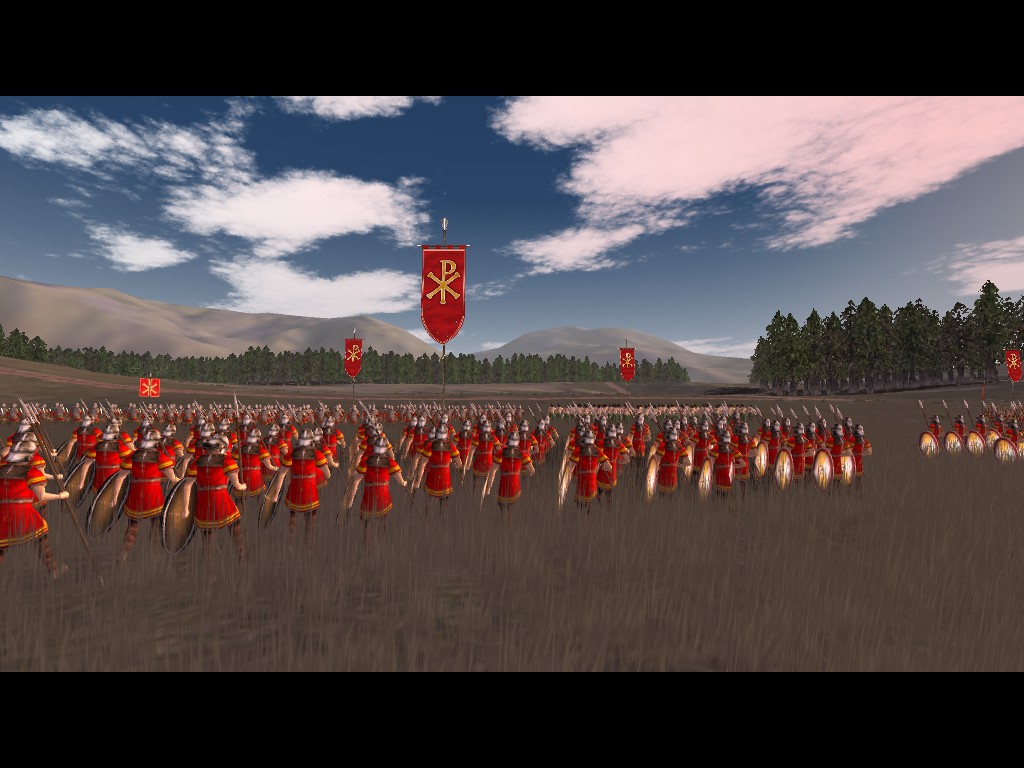
Romans, again from Rome: Total War
Illiterate Kings
Charlemagne unified France and you could argue he founded Germany. He was a lawmaker and a patron of arts and religion. He converted the Saxons to Christianity at the point of a sword. A formidable character. But here’s a humanising and poignant detail about him from page 109. Wallace-Hadrill quotes a chronicler named Einhard as he goes on about how great Charlemagne was, how generous he was to the priests and to the arts, the churches he built, the treasures he bestowed. Einhard also says that Charlemagne kept tablets and parchment under his pillows so that when he got a free couple of minutes “he could practise tracing his letters. But he took up writing too late and the results were not very good.” He was a king from a line of kings – but in this age, he never got an opportunity to learn to write. He wanted to – but he was too old when he finally got the chance, and he only got to practise in odd spare moments. Even his flattering chronicler Einhard, looking at the messy lines and errors in Charlemagne’s uncertain script, has to purse his lips and shake his head sadly.
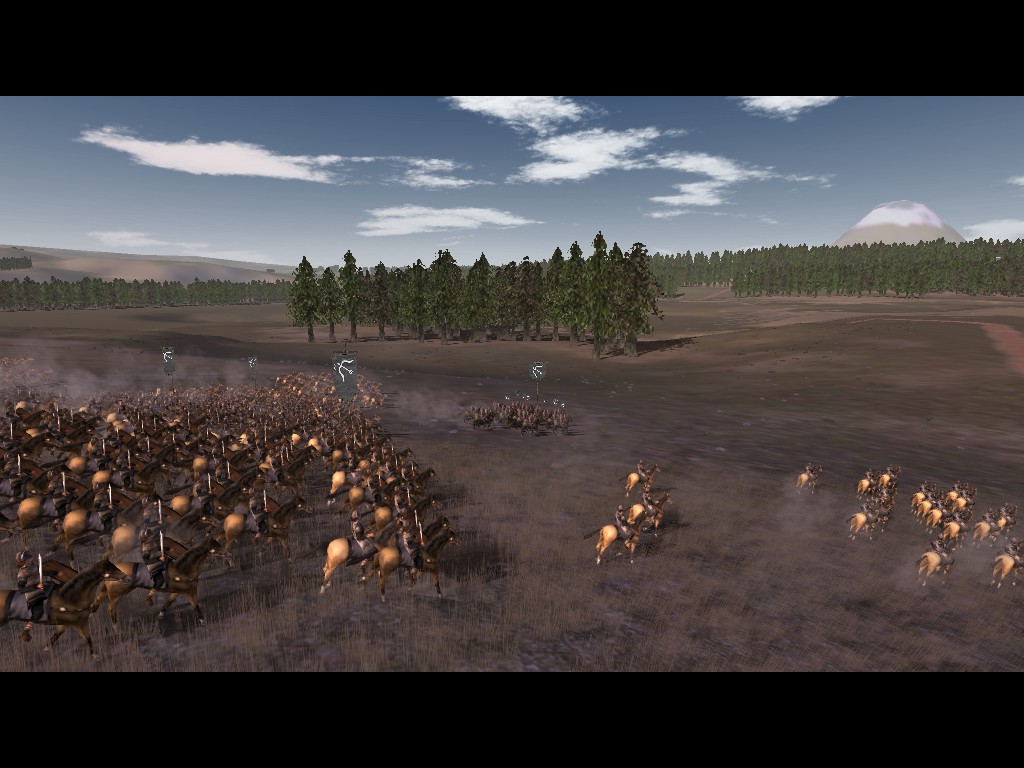
More Huns on the move. From Rome: TW
To finish, I want to note that books like this don’t come out anymore. And that’s for better and for worse. For better, because the author can be a callous prick sometimes. The later Merovingians died young of illnesses, so they were, he says, ‘physical degenerates.’ Sorry, what? But also for worse. This book is pocket-sized, accessible, unpretentious, erudite, focused. No hype, no bloat. An expert is informing the scholar or the layperson, and Harper are taking in $1.25 into the bargain.
So, Notes on the Medieval World isn’t really a series, more a theme I’ll be coming back to between long gaps, whenever I happen to finish a relevant book. Most likely the next one will be Passages from Antiquity to Feudalism by Perry Anderson. Stay tuned to see what videogame screenshots I manage to shoehorn in.
That word gets thrown around a lot. But I’m not racist – I’m just concerned. Specifically, about other races.
Why did you delete my comments from your page? All I did was try to dox the admins. All I did was send eight links, in a row, about people of colour doing crimes. All I did was drop fifteen ‘up yours’ emojis. All I did was blame asylum seekers for local unsolved or fictional crimes.
Well, well. It seems your page is not so open or welcoming after all.
Why did you turn off comments on that post? I only left eight comments. I had at least thirty more in me.
I had grand plans.
You don’t understand the beauty of a comment thread. It’s like a game of chess where you get to ignore your opponent’s moves and just keep on making your own. The winner is whoever sticks it out longer. I had gamed out every gambit and counter-thrust in our bout. Now it will never happen.
Why do you fold so easy? Why won’t you play with me?
…What?!
Now you’ve really crossed a line. You shared a news article about someone on my side doing something bad. How do you sleep at night, making baseless accusations? You want to get your facts straight. The nerve. I want video evidence. I’ll see you in court.
I got blocked from that page! So unfair!
All I did was send a message saying the admins were freaks and degenerate scum.
All I did was call refugees an invasion,
say that someone should burn down their homes,
and predict that they would be hunted down and beaten.
My expressions of glee were only implicit.
Please unblock me. Let me comment on your posts. All I did was ask if the admins were Jews.
And you couldn’t even answer that simple question!
Guess I struck a nerve.
Sad!
They’re afraid of the truth. They hate free speech. They refuse to let the people have their say. The facts don’t suit their agenda.
I’d even go so far as to say that they don’t appear to want to spend














 The 1919 Review