We live in an age of excess – excess of consumer products, of information, of outrageous and unbearable things happening in the world. Maybe that’s why Denis Villeneuve and co, in Dune: Part Two, endeavour to overload the brains of the audience with images grotesque and surreal but also solid and tangible, and on occasion, too, to contrast this excess with stark desert simplicity.
Most of the major landmarks in the story are there, such as Jessica, then later Paul, taking the water of life; Paul riding a sandworm; Feyd-Rautha in the arena; and the final climactic battle (the family atomics, ‘a great-grandmother of a storm’…) The film interprets these landmark moments with extraordinary technique and inspiration. When Paul mounts a worm for the first time it’s truly scary and intense. I’ve seen this moment on film twice before, but I never got anything close to a sense of how viscerally terrifying it would be to really do this. The Harkonnen planet Giedi Prime is not just ugly, but an unsettling, distressing place to spend 20-30 minutes. The filmmakers have taken the time to show us how the spice drug is taken from a drowned worm, how moisture is sucked out of the dead (and sometimes the still-living!), and what a palanquin mounted on a worm looks like.
The landmarks are there, and rendered with power and intensity. But the routes between them are changed. It’s that type of adaptation.
For example, the first action scene is completely new; mst of Paul and Chani’s dialogue is not from the book (though it fits right in); Paul learns to ride a sandworm a lot earlier; Paul receiving the name ‘Mu’ad Dib’ comes a lot later.
(By the way, a line uttered by Paul when he comes face to face with Baron Vladimir Harkonnen suggests that this adaptation is set in one of the alternate timelines foreseen by Paul in the novel.)
But it goes beyond that. Things are not changed only for the sake of economy or clarity. The biggest changes are in the service of tackling the defects of the book – the stress placed on bloodlines and eugenics; the white saviour enlisting the credulous natives; Chani, the most obliging of this very obliging bunch of natives, consenting to being Don Paul’s goomah while he marries someone else. In the novel the Fremen, for all their pride and ferocity, never call bullshit on the ridiculous aristocratic institutions to which Paul expects them to bow down, or on the Bene Gesserit’s shameless manipulation of faith in the service of their insane agenda.
In the movie, each major character (Stilgar, Jessica, Chani, Gurney) is aligned to an agenda, and exerts an influence on Paul; it’s a laser focus as regards character that pares things right down, renders conflicts more extreme and dramatic.
This film rejects space feudalism and eugenics; look at Chani’s reaction when Gurney Halleck speaks of Paul’s ‘bloodline,’ in the context of her earlier statement about how all Fremen are equal.
If you’ve seen the film, you know what I’m talking about, and if you haven’t I won’t spoil it. But in this movie the Fremen are not extras who wandered off the set of The Life of Brian ready to fall for the first messiah who climbs up on a soap box. In this movie Chani’s pride and self-respect do not allow her to be such a pushover as she is in the novel (‘History will call us wives’). Paul’s political choices have consequences for him and others. He really hurts Chani.
1984’s Dune ended on a note of triumph; 2000’s TV version is true to the novel in that it mostly leaves you with good feelings. This movie takes the book’s undercurrent of tragedy and drags it to centre stage. The jihad is not a foggy prediction; it’s kicking off right before our eyes. Paul’s victory has come at a terrible cost, personified in a specific character who, in this adaptation, serves as his conscience.
This ending meant that I left the cinema not with a sense of ‘all’s well that ends well’ but with a strange feeling, something rich and contradictory between triumph, relief and sadness.
High praise so far. What do I not like about the adaptation?
I felt that the script relied too heavily on named Harkonnen characters brutally assaulting and killing their underlings; it’s repetitive, ugly and unsubtle.
There was one thing I couldn’t get out of my mind. Every time I saw Jessica after the first hour or so my reaction was, ‘Jesus, is she still pregnant?’ Speaking of Jesus, it’s written that he was three years preaching before his crucifixion. Now imagine a movie where Jesus dethrones Tiberius Caesar just three months after he begins his ministry. Just ask anyone who has ever been involved in a pregnancy or, I assume, in a jihad: a guerrilla war takes longer than a trimester. In the book we cut away for two years, then return to find Paul at last ready to ride a sandworm. Even two years was cutting it fine. How do Paul and Jessica get millions of Fremen eating out of their hands in just six months? The movie works hard to get us away from the white saviour narrative stuff, but this telescoping of the timeline sends us back a large part of the way.
Linked to this, I missed a certain omniscient syringe-wielding toddler who didn’t make the cut.
[Edit, 8 mar 2024.] Here’s another problem. Would it kill Hollywood directors to give speaking roles to actors from the Middle East? What’s the terrible thing that would happen if you gave roles to people from the country you filmed in (or countries where they speak the same language, or practise the same religion)? I didn’t want to raise it at first, because with Dune it’s always going to be a fine line between accusing authors of erasure and accusing them of appropriation. But it occurs to me that just hiring some Arab or Muslim talent is neither erasure nor appropriation. Ridley Scott hired Ghassan Massoud to play Salah ad-Din (Saladin) in Kingdom of Heaven – and the sky did not fall on our heads. Dune borrows so heavily from the Muslim world. It should start paying back.
To see this movie on the big screen was to be put through a succession of intense and unexpected experiences. Sometimes you’ll see a movie that has some great moments, images or scenes, but just isn’t great overall. But in Dune: Part Two, it all adds up to something powerful and brilliant. And as an adaptation, it favours the things I like in Frank Herbert’s novel, and militates against the things I find embarrassing. In particular it leans hard into the tragedy and dread that make the ending of the novel Dune so different.
The new Dune is phenomenal. Two-plus years ago Dune: Part One got me out to the cinema for the first time since Covid and it was exhilerating. Part Two is reported to be even better. But Frank Herbert’s 1965 novel Dune has been adapted for the screen before, more than once. I have seen all these adaptations, because I have a strange fascination with Dune which is part nostalgia because I first read it aged 14, part a mature realisation that the things we enjoy don’t have to coincide with the things we believe in, and part, no doubt, reasons that could be best explained by Freud (sandworms), Marx (family retainers) and Edward Said (white saviour complex).
Freudian beasts, their hour come round at last, slouching toward Arrakeen. From the 2000 TV version, dir. John Harrison.
Enough deprecation. I also like this story because it’s exciting, intelligent and haunting. The author takes politics, economics and ecology seriously while telling a great story. How well has that translated to the screen?
This review will take a look at David Lynch’s 1984 movie, the Sci Fi Channel’s 2000 miniseries, and Denis Villeneuve’s 2021 adaptation of the first half of the novel.
Villeneuve is talking about adapting the Dune sequels. In a bit of a sequel to this post, we will look at the 2003 adaptation of Dune Messiah and Children of Dune.
Three different versions of the ornithopter from, top to bottom, 1984, 2000 and 2021.
Harkonnen Horror Picture Show
God created 1984’s Dune to train the faithful. For every good thing I can say about it, there’s a bad thing too, and vice versa.
To begin with, something bothers me about the interiors. The Atreides live in surroundings of Victorian frumpiness, gaudy but flat, like the decor in Boris Johnson’s house; the Harkonnens in a green-lit space slaughterhouse. For all the implicit homophobia in the way the Baron is portrayed, something about the campiness of the whole set-up makes me think the whole evil cabal might jump out of their chairs and start singing ‘Time Warp’ at any moment. But other elements of the visual design are brilliant – the guild spice navigator and his cohorts, who prefigure the fascinating visual excess of Warhammer 40,000; the tonsured Bene Gesserit; the faceless rubber menace of the Harkonnen troops.
The spaceships look cool; but the visual sequence in which the guild navigator bends time is slow, unclear and not necessary.
I like the weirding modules. These are invented out of whole cloth for the movie: in short the Atreides have a special weapon that can kill with the utterance of a sharp syllable. This idea fits pretty well in the world of Dune and helps the story along. For example, it explains what’s so special about Paul from the point of view of the Fremen: he brings a powerful new weapon to the table. But the shields, personal force-fields used by combatants in the universe of Dune, look silly.
Top to bottom: Kenneth McMillan, Ian McNiece, and Stellan Skarsgard as Baron Vladimir Harkonnen. Top to bottom, the colour pallettes of a 1980s movie, a TV show from 2000 and a 2020s movie
The movie is rushed and incoherent. It might have gotten away with telling such a huge story in just over two hours, but it goes out of its way to be confusing and to trip us up on irrelevant things. It’s difficult to imagine anyone who hasn’t read the books being able to follow what’s going on. But the final half-hour strides along with a formidable momentum and plenty of cool imagery.
At the very end of the movie it suddenly rains on Arrakis – a development that makes no sense in the logic of the world, but which is absolute magic on a simple storytelling and thematic level. I can see why they couldn’t resist.
It’s a movie I could talk about, back and forth, is it good or is it bad, for a long time.
The guild spice navigator, from the 1984 Dune, dir David Lynch
A very delicate time
The opening of 1984 Dune is problematic in ways that are thrown into sharp relief by the quality of the 2021 Dune’s opening. In 1984 Dune, we begin with Princess Irulan, a very formal narrator who stares straight into the camera and explains things, followed by a scene in the imperial throne room. In 2021 Dune we begin with Chani narrating over a striking visual sequence.
The 2021 approach is more democratic and materialist, centring the indigenous Fremen and the key resource they control rather than the galactic aristocracy. But it is also much better from a storytelling point of view: it is rooted in real and tangible things, while narrators and the high politics of throne rooms are distant and abstract. Chani is narrating but also participating in a sequence that conveys visually the importance of the spice, the oppression of the Fremen by the Harkonnen, and the transfer of power from the Harkonnens to another noble house.
The guild spice navigator in the 1984 Dune is a top-tier movie monster. In the books we don’t see him until Dune Messiah, but here he makes his grand entrance in the opening sequence. Unfortunately that is a big problem. Although he is cool, he is one of several big things that we don’t need to know about this universe right away, or at all. But the movie goes out of its way to foreground him.
From the 2021 Dune, dir Denis Villeneuve. Murky.
Comedians of Dune
The Harkonnen scenes in the 1984 Dune leave me with a vague impression of grotesque-looking people bellowing and jabbering monstrous things at one another, punctuated with maniacal cackling. The 2021 Dune is a bit humourless by comparison. There is an early moment in which Paul and Duncan Idaho share a chuckle. But that is an oasis in a desert of dourness.
There is, to be fair, one other joke in the movie:
‘Smile, Gurney,’ says Duke Leto.
Scowling, Gurney replies: ‘I am smiling.’
Someone has decided to make Gurney ‘the grumpy one.’ It’s a good joke, delivered well by the actors. Is the movie taking a dig at its own serious tone? Or is it opening itself up to the retort: ‘Which grumpy one?’
Still, the 2021 Dune is better in almost every way. The storytelling and worldbuilding are far more skilful, conscious, economical; the screenwriters treat words as the Fremen treat water. The visuals play with light and shade, convey weight, grit, thirst, scale. It does not lack that essential quality: weirdness, accident, quirkiness (Who thought of giving the Atreides bagpipes? Give them a medal) but it doesn’t allow that element, either, to get in the way of the story.
In any adaptation, fidelity to the original is not crucial for me. Things have to change in the move from one medium to another. A change for the better, or a change necessary for the medium, justifies itself. But for what it’s worth, the 2021 Dune is much more faithful to the original. Both other adaptations resort to arming their extras with projectile firearms. But in the book and the 2021 version, shields have rendered firearms obsolete, and combat is primarily a hand-to-hand affair.
Budgets of Dune
An even smaller point against the 2021 Dune is its portrayal of the city of Arrakeen. In a movie that cost $165 million to make, this key location appears to be nothing more than a scale model, entirely devoid of human life. The 2000 TV adaptation, working with a budget of $20 million, manages to convey a lively and bustling place. (In case you’re wondering, the 1984 Dune cost about $40 million.)
The same moment in three different versions: fleeing by ornithopter as a sandworm eats a spice factory. Top to bottom, 1984, 2000 and 2021.
Now we come to the most obscure adaptation, Frank Herbert’s Dune, a three-part miniseries for the Sci Fi Channel written and directed by John Harrison.
(It was one of three very fine miniseries released by the Sci Fi Channel around that time, along with Steven Spielberg’s UFO epic Taken and Battlestar Galactica. The latter ended up running to the proverbial six seasons. It was an underappreciated moment in the history of ‘prestige TV’.)
I’ll level with you up front: Frank Herbert’s Dune is not visually spectacular – the CGI is dated and some of the costumes look tacky.
But the actors are impressive. It is long not because it is bloated, but because it has made a conscious decision to tell the story more fully and faithfully, without unseemly haste. Everything about this adaptation is confident and assured, as if having a smaller budget gave it much more freedom.
And about that CGI: on a technical level, it would not pass muster today. (Though nostalgia or irony might induce people to deliberately copy this style in the future – stranger things have happened). The images are well-composed and are shot and edited in such a way that, interspersed with live-action footage, they tell a compelling and comprehensible story. A lot of today’s filmmakers could learn a lot from how the CGI is used here, how John Harrison does so much with relatively little. The result is that a CGI-heavy action scene, such as when the spice factory is eaten by a worm, is a genuinely tense experience.
In a fantastic scene, the ‘Beast Rabban’ gets a personal comeuppance he never gets in the novel when he is killed by a mob in the streets of Arrakeen. I guess budget dictates that some additional scenes must happen in this set, to justify the expense of building it; but budgetary needs can coincide with storytelling needs. It is satisfying to see this showdown happen in this familiar place. In the novel, by contrast, we are told in the most perfunctory Shakespearian way that ‘Rabban, too, is dead’ – offscreen somewhere.
I don’t want to over-praise something that, after all, will have dated poorly, especially measured against the new big-budget spectacle. But here’s one last piece of praise: Frank Herbert’s Dune is the only adaptation to leave in the crucial banquet scene (into which it inserts the Princess Irulan and a bodyguard of Sardaukar. It’s important later that we know who these people are, so it makes sense to feature them here).
It was shot in Czechia, and you can decide for yourself whether that (a) results in lamentable whitewashing of the Middle Eastern elements or (b) to your great relief, distances the adaptation from the wild orientalism of the novel.
Paul in stillsuit watches a sandworm’s back cresting the sand. From the 2000 version.
Recommendations of Dune
If you want a spectacular modern science fiction epic, well-conceived and well-executed, with current stars and big budget, you should watch the Denis Villeneuve Dune.
If, like me, you are really into Dune and also interested in the process of storytelling and adaptation, these versions are all deeply intriguing.
If, like me, you are interested in things that are good but also kind of bad, you should watch David Lynch’s Dune. The highs and lows are equally bold and striking.
If you liked the 2021 Dune and want to know more, but aren’t much of a reader or can’t get into the books, the 2000 miniseries is a good place to go to delve deeper into the story. It would be a good option for someone who prefers the pacing and serial form of TV shows. It also has the great advantage that it has a direct sequel to introduce you to the later books in the series.
Next week I’ll talk about that sequel: the novels Dune Messiah and Children of Dune, along with the TV miniseries Frank Herbert’s Children of Dune (2003). Stay tuned for that if you want to hear about how a low-budget TV adaptation can be better than the source material. Until then, enjoy Dune: Part Two.
This is a post about how the internet is getting worse. It’s about so-called ‘AI’, chatbots and plagiarism, and how they are churning out utterly useless rubbish for the sole purpose of getting your eyes onto their ads and their cookies onto your device.
Today it emerged that a local authority in the middle of Ireland was cheated out of half a million euros. Here is a report from the Irish Independent, published earlier today, reporting on the revelations of fraud.
I saw the Irish Independent article less than an hour after it was published. Less than an hour later, a website called ‘BNN, The People’s Network’ had an article up on the same topic. I will not link to this article, because if you go there you will have to spend 3-5 minutes manually opting out of various ‘legitimate interest’ cookie options.
The sub-heading invites us to ‘Explore the high-stakes drama at Westmeath County Council.’ The article begins: ‘In the heart of Ireland, a story unfolds that reads more like a thriller novel than a report from the municipal offices.’
But what follows is neither thrilling nor dramatic. We don’t explore or discover anything. There is no story. It is the exact same items of information that are in the Irish Independent article, but strewn around and hidden in ridiculous overwritten paragraphs:
‘The digital age brings with it incredible opportunities, but also unfathomable risks. The road to recovery for Westmeath County Council will be paved with lessons learned the hard way. It’s a testament to the resilience of the community and the individuals determined to restore what was lost […] While the investigation continues, and the council rebuilds, the story […] underscores the importance of vigilance, transparency, and the unbreakable spirit of community in the face of adversity.’
You’d think Westmeath had been struck by a terrorist or a decent-sized meteor.
There is nothing in the ‘People’s Network’ article that is not in the Independent article – except for one thing (or, the same thing repeated again and again, because everything is said at least three times): references to cybersecurity. No public statement has made any reference to cyber crime, or indicated that this was digital fraud.
At first I thought this was written by a human, content-mill crap, a step above plagiarism. But pretty soon I figured it was a chatbot.
How could I tell it was a bot?
1: Plagiarism. It was obvious to me because I’d just read the Indo article: there was nothing new here. Someone took the Indo article and fed it into a programme, which spat out this.
2: No sense of proportion. This thing was composed by an entity that has no inkling of what Westmeath is or what fraud is or what a euro is. It’s a trained predictive typing trick that arranges words in a plausible order. ‘The Chief Executive of Westmeath County Council is poised to make an official statement, a move that many await with bated breath.’ I live in Westmeath, and no, my breath is not bated.
3: Good grammar, terrible prose. I like to believe that a human, even the worst hack, would get nauseous writing such a cascade of clichés (‘reads more like a thriller’…’at the center of a high-stakes drama’…’a cornerstone of its relationship’…’this incident is a wake-up call’…’it serves as a poignant reminder’… ‘it’s a stark reminder of’…’underscores the importance of’…’underscores the critical need for’… A writer who takes some else’s writing and, within two hours, has it cannibalised and regurgitated, might be expected to make some mistakes on the spelling and grammar. If this writer, in addition, writes not in words but in stock phrases, they are likely to have problems with word order and sentence construction. But even that bad human writer would be more interesting. They would not be determined to say that everything is a reminder, a wake-up call or an underscore. They would get bored with the constant resort to bland linking phrases.
4: Repetition and needless elaboration. Most of the word count of the article is totally unnecessary. For example, the chatbot tells us the same thing four times: ‘[1] The details of this fraud have been kept under wraps, not out of secrecy, but to protect the integrity of the ongoing investigation. [2] Elected members of the council, though informed, have remained tight-lipped, respecting the delicate nature of the situation. [3] The Mayor of Athlone-Moate Municipal District, when approached for comment, respectfully declined, citing the active probe into the matter. […] [4] As the Gardaí delve deeper into the investigation, there’s a palpable tension between wanting to know more and the need to maintain a veil of confidentiality for the sake of justice.’
5: Obvious mistakes. The bot somehow got the wrong end of the stick. For some reason it thought this was a story about cyber crime.
6: Blandness. The story is scattered with phrases like ‘a breach of trust’ and words like ‘shockwaves’ that suggest the author is pretty excited, and that you should be too. But there is no criticism of anyone. ‘The council’s response, swift and thorough, reflects a commitment to accountability and a resolve to strengthen its defenses against future threats.’ A human would either stick to the facts (the Indo reporter presents all the information concisely) or present an opinion. This chatbot gives the impression that it has an opinion, but it’s the most boring opinion you could possibly imagine: the moral of the story is ‘fraud is bad.’ There is no meaning behind this. No feelings or ideas animate these words.
This story of content mills and chatbots is as a stark reminder of, serves as a poignant reminder of, underscores the importance of, and is a wake-up call about the attention economy and how the profit motive is spreading rot throughout the internet. I wouldn’t be writing this if it wasn’t actually kind of fun to play spot the bot. But the article you have just read (which, I hope you agree, reads more like a thriller than a blog post) will age poorly, because I predict that soon most of us will be dismally accustomed to chatbot-generated meaningless content, to having to navigate this crap in order to use the internet.
The social media algorithms, in their infinite wisdom, have been pushing posts from ‘trad’ groups at me lately. Where I come from, a trad group means fiddles and bodhráns in the corner of a firelit pub. But on the internet, various pages with names like Trad West have hijacked the word as short for something vague called ‘traditionalism.’
One of their slogans is ‘Reject Modernity – Embrace Tradition.’ But these page’s authors don’t seem to have any clear idea of what they mean by ‘modernity’ and ‘tradition.’
Tradition is a moving target. Sometimes it’s ancient Rome, sometimes the Renaissance, sometimes the 18th Century, sometimes the Victorian period, sometimes the mid-20th century. Now and then it is even the 2000s. If you think you are beginning to grasp what they mean by ‘tradition,’ suddenly they drop a phrase like ‘Men used to hunt mammoths,’ and you realise that ‘tradition’ is also supposed to include the Stone Age.
Might it be that ‘tradition’ is the sum of all the positive contributions of previous generations? But that’s without substance. That’s just ‘tradition is stuff I like from the past, but also from now, and not the stuff I don’t like from the past. Or from now.’ It can’t be that shallow and stupid, can it? They must have thought it through a bit better than that.
Modernity is just as hard to pin down. I have gathered that it is a phenomenon which includes, but is not limited to, vaping, pornography and photos of ugly mid-century buildings.
Modernity is Enlightenment ideas. But Tradition is Enlightenment architecture.
Modernity is buildings from the middle of the 20th century. But Tradition is men wearing suits in the middle of the 20th century.
Modernity and tradition, for these people, are not actual definable historical phenomena. They are like the Byzantium imagined by WB Yeats. They are a vibe. They are playdough objects that live entirely in the imagination
Buildings
A lot of the posts are about buildings. My favourite one was a post which compared a Victorian painting of Ancient Rome with a photograph of a run-down tower block in a modern city. Buildings used to look like this, and now they look like this! Do they really believe that every person in the whole Roman Empire lived in a palace or a temple? Ancient Rome had squalid tower blocks – they were called insulae (I learned that when I was 12, ffs).
There’s a lack of self-awareness in the choice of images. The admins assume we agree that certain types of buildings were just objectively beautiful. They assume we, like them, get all sweaty and excited at the sight of a couple of doric columns and a cupola. Because liking a particular type of building means you are a more virtuous and more cultured person.
Anatomy of a post
The same basic post, found by a quick Google Search
Let’s take a moment to look at one particular building-related post. It’s a colour photograph of a large thatched building. The caption claims that this is a ‘literal peasant’s house’ from 1890s Germany. It is contrasted with an image of miserable commuters on a subway. The implication is that German peasants back in traditional times (whenever they were) had it better than modern people.
There are so many things wrong with this, it’s easiest to respond in bullet points.
The 1890s were known as the fin-de-siécle, famously a time when a lot of people were anxious about modernity, worried that civilisation and technological advance were leading to ‘decadence.’ The 1890s were modern.
The Industrial Revolution had long since taken place by the 1890s. In fact, the Second Industrial Revolution had taken place. There were trains, telegraphs, trams, motor cars, power plants… and, obviously, photography.
And Germany was one of the foremost industrial powers in the world. It had a parliament, a colonial empire and cutting-edge technology and industry.
So, taking the caption at face value, this is not a ‘traditional’ house. It is a house from an advanced capitalist country in modern times.
Peasant classes are extremely heterogeneous. It is to be expected, even if this were the Middle Ages or the classical period (not the heart of modern Europe), that a minority of peasants would have large houses.
That house – how do I put this politely? – it doesn’t exactly correspond to the trad taste in architecture.
I guess they see this photograph and think that most peasants for most of medieval history lived in massive houses. Thanks to traditionalism (which is to say, thanks to god, but also the Romans, and also the men who hunted mammoths).
I hate to break it to you, but that house doesn’t have Wifi. It might not even have an indoor toilet. And you don’t know how to do farming. You have lived in a suburb your entire life and work in an office. You would absolutely hate it if you got dropped into the 1890s, or a neolithic mammoth hunt (apparently those two things belong in the same category).
An intelligent trad might make a legitimate reply along the following lines: ‘I would be ill-equipped to live in, say, Ancient Rome. But that is because modernity has ruined me. That’s why I hate modernity and am trying to get away from it.’
I too am alienated from and critical of today’s capitalist civilisation. But any kernel of sympathy I might have for these guys evaporates whenever they utter anything. They want to move backwards, to a miserable and oppressive past where they imagine they would be top dogs.
To finish up, I want to give the reader a flavour of what it’s like to scroll through these pages, as best I can sum it up with the written word.
That Nordic Chad meme guy puts in an appearance in about 90% of all posts. These trad memesmiths don’t realise there are diminishing returns on this. Nordic Chad has become a sock puppet for whatever the trads want to say.
There’s posts about how women should stay at home and not get jobs, and how your wife should come to live on your farm in financial dependence and isolation. If the Nordic Chad meme guy mistreats his isolated and dependent wife, don’t worry – he will pray to God for forgiveness and improve himself by pretending to read Meditations by Marcus Aurelius (You know Marcus Aurelius is traditional and based because his name has a lot of ‘us’es in it).
Next, a picture of Nordic Chad explaining traditionalism over the histrionic objections of a crying soy-face pink-haired opponent (A lot of the memes are just drawings of people flying into a rage at the trads, unable to handle how based they are).
Next, a picture with the caption, ‘Why do buildings look like this now? [picture of some tasteless modern building] when they used to look like this?’ [picture of an equally tasteless Victorian building]
Or worse, that meme above, only instead of a tasteless Victorian building, it’s a not-real painting of a fictional building.
Next, an ad for merch. Naturally there’s a store. Because nothing says traditionalism and stoicism like the words ‘Half price while stocks last! Link in bio.’ Glad they have the merch, just in case the isolated family homestead thing falls through. Which, as a historical phenomenon, it did.
I just ran ‘link in bio’ through Google Translate into Latin to see how it would have sounded if Marcus Aurelius had written it at the end of every chapter of Meditations. If you change ‘bio’ to ‘biography’, it actually sounds good: Vinculum in Vita. The trads can have that one for free, as a motto that accurately sums up their whole deal.
Stalin served as chief political commissar for the Soviets’ South-West Front, commanded by Egorov. During the decisive weeks of the war, the Red Army’s commander-in-chief Kamenev ordered Egorov and Stalin to move their forces north; instead of concentrating on Lviv, they were to help Tukhachevskii take Warsaw. Stalin and Egorov ignored these orders and carried on with the failed attack on Lviv. For this, Stalin was removed from his post and he was never again let anywhere near frontline command. There were commanders during the Civil War who were shot for less.
The appearance of the Red Cavalry somewhere to the south of Warsaw would have prevented the Polish striking force from driving into Tukhachevskii’s left flank. Davies elaborates: ‘The real puzzle is why Stalin ordered the [Red Cavalry] to besiege [Lviv] on 12th August, knowing full well that it was due to be transferred to [Tukhachevskii’s front].’ Perhaps Stalin wanted to foil these plans for regroupment by presenting them with a fait accompli.’ ‘Look- we’re already attacking Lviv. Can’t pull back now! What a shame!’ Trotsky would later allege that Stalin wanted to take Lviv to enhance his own prestige. If Tukhachevskii would soon conquer Warsaw, Stalin thought hedeserved to conquer Lviv. Davies asks, ‘Was it to spite Tukhachevsky, as Trotksy said?’
So far, so damning.
Stalin’s ally, Budennyi
But Lviv and Warsaw are over 300 kilometres apart. It is not certain that anything Stalin or Egorov could have done would have made a difference at Warsaw; on top of the irresponsibility of abandoning the Galician campaign, it is doubtful Budennyi, for all his ability, could have even covered the ground with sufficient speed. It was too late in the game. The key strategic mistakes – crossing the Curzon Line, advancing full-speed on Warsaw – had been made long before, and they had been made by people other than Stalin.
[Davies, 216-218]
But if you read Wollenberg (and you should), you will find an argument, backed up by copious reference to Pilsudski’s and Tukhachevksii’s memoirs, that had Stalin and co acted differently it would have made a huge difference. The Red Cavalry didn’t have to gallop all the way to Warsaw, only advance far enough into Poland so as to threaten Pilsudski’s right flank. Then the hammer-blow of the counter-offensive might have had to stall before breaking the Red Army, or might have not fallen at all.
I think Stalin’s actions did contribute to the defeat. But that is not to say they prevented a certain victory. Had the Red Cavalry gone to the aid of Tukhachevskii, they would have prevented Pilsudski’s counter-offensive but they would not have fixed the extremely challenging strategic situation in which the Red Army found itself in August 1920.
This is Episode 27 of Revolution Under Siege, an account of the Russian Civil War, and the third and final episode dealing with the Polish-Soviet War. Here are the first and second parts.
Become a paying supporter to get access
Access to this article is limited to paying supporters. If you already subscribe by email, thank you. But if you want to become a paying supporter, please hit ‘Subscribe’ below.
Give me less than the price of a coffee, and you can access everything on this blog for one year.
Access to this article is limited to paying supporters. If you already subscribe by email, thank you. But if you want to become a paying supporter, please hit ‘Subscribe’ below.
Give me less than the price of a coffee, and you can access everything on this blog for one year.
The Red Army drives back the Polish invasion. The Soviet leadership faces a choice: whether to make peace or to carry the war into Poland. This is part 26 of Revolution Under Siege, an account of the Russian Civil War.
‘We are a force in the world, and you are destined for the mortuary. I despise you and hold you in contempt.’ Piłsudski, in a fit of anger, was fantasising out loud about what he would like to say to the Soviets. This was during the months before the Polish invasion of Ukraine. ‘No, no, I have not been negotiating. I have just been telling them unpleasant facts… I have ordered them to understand that with us they ought to be humble beggars.’ [1]
It was indeed in a beggarly and humbled condition that the Soviet Union found itself in a full-scale war with Poland a short while after this outburst. Still, somehow, the Soviets found ways to dig deeper. 280,000 communists joined the Red Army – that was 65% of the party’s membership. A measure of the chaos of the times, of the threadbare state of the new institutions, is the fact that 2.5 million people had deserted from the Red Army over the winter of 1919-1920 – to put that into perspective, the Soviets had over three times more deserters than the Poles had soldiers. But an indication that perhaps the Soviets were not bound for the mortuary after all is found in another statistic: 1 million – the number of deserters who returned voluntarily to the Red Army after the Poles invaded. [2] The war commissar Trotsky toured Ukraine speaking to crowds of deserters, urging them to re-enlist.
As you are probably re-enlisting as a reader of this blog after a gap of a week or two, here is a reminder that the Polish-Soviet front was divided by the Pripet Marshes into a Northern and a Southern Sector. In the Southern Sector, Budennyi and First Cavalry broke through enemy lines and the Red Army’s South-West Front forced the Polish forces to withdraw across western Ukraine.
Red Cavalry. A stunning work by Kazimir Malevich, dated to some time betwen 1928 and 1932
Kaleidoscope of Chaos
In the Northern Sector, the Red Army’s Western Front went on the offensive – with disappointing initial results in late May, followed by stunning successes in June and July. Here Third Cavalry Corps, known as Kavkor, played a key role. Kavkor was commanded by a Persian-Armenian socialist named Hayk Bzhishkian.
(This name entered the mangling process of Slavicisation then Latinisation and came out the other end, somehow, as ‘Gay,’ ‘Gaia Gai’, or worst of all ‘Guy D. Guy.’ I will call him Bzhishkian. And if I alienate any readers, I hope it’s because of my long-windedness, my blatant partisanship or my preoccupation with violence, and not because I made you pronounce an Armenian name in your head.)
Kavkor and Bzhishkian advanced on the right flank of the Western Front, where they found weak spots in the overstretched trench lines of the Poles, and broke through before reinforcements could arrive.
Barysaw, where the Polish side had insisted talks must take place, was soon in Soviet hands – what was left of it. The Polish army reduced it to ruins with chemical and incendiary shell-fire. [3]
Bzhishkian’s cavalry seized Vilnius. A 14-year-old scout went ahead and reported back key information. Then Kavkor attacked, aided by local communists, and the city soon fell. The Soviets handed Vilnius over to the Lithuanian government, a magnanimous gesture that ensured the Baltic States didn’t join in on Poland’s side. And at Brest-Litovsk, local Polish communists played a key role in aiding the Red Army.
Piłsudski called the Polish retreat ‘a kaleidoscope of chaos.’ If you look at the Battle of Grodno, you can see what he meant. Here 500 Polish uhlans, an entire regiment, were swept away and drowned while trying to cross the Niemen River.
As at Petrograd and in the South, the Red Army at the Battle of Grodno had to face tanks kindly supplied by the Allies: some were mobile, some were able to fire but were stuck on their transport train.
A frightened soldier shouted to Bzhishkian: ‘Tanks, comrade corps commander! How can one sabre them when they’re made of steel?’
Another cavalryman added: ‘Bayonets are no use; in any case you can never get near them.’
But the cavalry surrounded the French Renault tanks and forced them to retreat, playing for time as the steel monsters were disabled one by one: by artillery, by collisions, by breakdowns and by lack of fuel. Only two escaped across the burning bridge over the Niemen.
‘An armoured tank is nothing to frighten a skilled cavalryman,’ wrote Bzhishkian of the experience in his 1930 memoirs. [4] He would not live to see World War Two and history’s final judgement on that question.
The Polish retreat was chaotic but, Davies points out, tenacious. The most spectacular battles were on horseback; Russian sabres were sometimes defeated by Polish lances. On one occasion a Polish cavalry division commander personally defeated and killed his Soviet counterpart during a battle which delayed the Red advance by two or three days.
Nonetheless the movement was all in one direction, and to the Polish soldier, in Piłsudski’s words, the Soviet advance was ‘like a heavy, monstrous, uncontainable cloud.’ [5]
Today’s cover image. A Red Cavalry fighter, photographed in 1922
The Curzon Line
On July 11th the Allies tried to step in with a peace proposal. [6] Imagine a posh English politician gesturing at a map and saying, ‘Pans, comrades, why not draw the Soviet-Polish boundary just here.’ This here was known as the Curzon Line. It gave the Soviets a lot more territory than they had when the Poles first attacked, and also gave the Poles a lot more than what they stood to lose if Bzhishkian and Tukhachevskii kept advancing.
The Allies proposed this border because they still believed the Soviet Union would collapse and be replaced by a conservative Russian Empire, and they were keen to establish relatively generous borders for their hypothetical future ally.
The Curzon Line, with information allowing you to compare its borders to modern-day Poland. In today’s terms, Wilno is Vilnius and Lwów is Lviv.
Whatever the motivations of the Allies, it suited the Polish government to quit before they got any further behind, and they agreed. [7]The offer was Moscow’s to take or leave – not humble beggars anymore.
The Soviet leaders entered into a debate, dynamic as was the Bolshevik tradition but short and to the point. The question at issue was whether to launch a counter-invasion of Poland or, having repulsed the Polish invasion, to make peace. Unhelpfully, the British tacked on a provision that the Soviet Union should recognise Baron Wrangel and let him hold onto Crimea, which Moscow would never do.
On either July 16th or 17th, Trotsky on behalf of the Red Army command made the case for accepting the peace proposal – though he never accepted the point about Wrangel. Rykov, Radek, Stalin and others also opposed crossing the Curzon Line. Of Radek, Lenin later said, ‘I was very angry with him, and accused him of “defeatism”.’ [8] Lenin was in favour of advancing on Warsaw, and so were most of the Polish communists resident in Russia.
The Debate
The broad arguments of the two sides – let’s call them the peace party and the war party – are laid out below in the form of a dialogue, in my words. Where I am directly quoting, I have indicated it using inverted commas.
War:
We have been subjected to a full-scale invasion. We have driven back our enemy, but if we do not pursue him to his lair and finish him off, he will strike again. Just look at what happened in South Russia – how many times did we have to fight our way across the Don and the Kuban? And now Wrangel is trying to raise the Kuban in revolt yet again. Woe to he who does not carry matters to a finish! We have every right to invade and to destroy this regime of criminal military adventurers, who have brought so much suffering and destruction on the working people of Soviet Ukraine and Soviet Belarus.
The Russian peasant uses his scythe to behead, Itchy-and-Scratchy-style, the Polish Pan (landlord) and Wrangel.
Peace:
From a military perspective, to invade Poland is insane. It is not like Denikin or Kolchak; it is not a question of fighting officers, undisciplined Cossacks and raw conscripts. We face 750,000 Polish troops. It is ‘a regular army, led by good technicians.’ Even if the Red Army takes Warsaw, its supply lines would be stretched too thin to occupy Poland for long. [9] The Soviet Union is crying out for peace. We won’t survive another winter of war. Hunger and disease will be rampant. The regime may even fall apart.
War:
We do not assess these problems purely from a military perspective. It is not a question of conventional war or occupation. The mass of the Polish people, the working class and poor peasantry, will join us in our war against the Polish landlords and bourgeoisie.
And we must also consider the perspective of world revolution. In Britain the ‘Hands off Russia!’ campaign is making headway; on 9th and 10th May, British dockers refused to load munitions onto a ship bound for White Poland. There is a developing revolutionary situation in Italy, with soviets in Turin and factory occupations; and in Germany we’ve seen the defeat of the Kapp Putsh by a workers’ general strike and even the organisation of a workers’ Red Army in the Ruhr. If we defeat Poland, we open the way to Germany, and may trigger revolutionary events there and elsewhere. Imagine if Budennyi or Bzhishkian arrived in Berlin just on time to prevent another massacre of communists like that of January 1919.
We also want peace. But this latest onslaught by the Allies shows that they are hell-bent on our destruction. We cannot hope for peace except by breaking out of our isolation.
Peace:
The Polish workers and poor peasants are unlikely to join us. By pursuing the Polish army into Poland, we will drive them into the arms of Piłsudski and his military-Bonapartist clique. It is still the honeymoon period of Polish independence. Resentment of all things Russian is still understandably strong. ‘This is the historical capital from which ‘Chief of State’ Piłsudski hopes to draw interest.’ [10]
We too see the perspective of world revolution. But if we are defeated, it will be a setback for the revolution everywhere.
War:
The key question, then, is the attitude of the Polish masses. The Polish revolution has always marched in step with the Russian; our anthem ‘Varshavianka’ refers to the Polish revolutionary tradition. In 1905 the Poles held out for longer against the Tsar than the workers of Moscow. In 1919 there were reports of Soviets in Cracow. [11] There were ‘village republics’ where the farmers took collective control of the land. On May Day this year, the demonstrations in Warsaw, Łódź and Czechostochowa were anti-war and anti-government – remarkably, a mere week after the beginning of the Polish invasion. A railway strike in Poznań, beginning the day after the invasion, turned into a week-long pitched battle between strikers and the authorities. [12]
The reports from the Belarussian Front have been most encouraging. Arrogant Polish landlords return on the coat-tails of their army and try to grab the land, and this angers the people and the rank-and-file soldiers. The Poles barely hold the frontline zone, which is traversed freely by refugees, deserters, bandits, petty traders, cocaine dealers and Polish Communist partisans. We have reports of mutinies and of harsh reprisals by Polish officers against the men – including executions. More recently, Polish soldiers returning from leave are condemning Piłsudski as the puppet of the landlords and questioning the aimlessness of the war. On July 26th an infantry unit rose from their trenches singing The Internationale and preparing to cross over to us; they were only prevented by their own side opening fire on them from behind. [13]
And we have many talented Polish communists here in Russia, who are enthusiastic to carry the revolution to their homeland; on May 3rd 90 Polish delegates met in Moscow. In Kharkov and Smolensk we have printed masses of material in the Polish language – 280,000 copies in Smolensk alone. We will guarantee the Polish worker, soldier and farmer an independent Soviet Poland. We even have a Polish brigade, 8,000-strong, on our Western Front, to form the nucleus of a Polish Red Army.
A Polish poster from the 1920 war. The struggle for national independence – ‘the historical capital from which […] Piłsudski hopes to draw interest.’
Peace:
Taken as a whole, the indications are not nearly so favourable. The Polish Socialist Party received only 9% of the vote in January 1919. The Polish Communist Workers’ Party is illegal and has very little support in Poland.The Cracow Soviet was put down. The ‘village republics’ were suppressed with draconian severity. The Piłsudski government is Bonapartist in character; it does not simply represent the landlords or the bourgeoisie, but tries to play a balancing act. It has embarked on land reform of its own accord, which saps the agitational strength of our land programme. The Polish landlords who are trying to claw back parts of Belarus and Ukraine are supported by the Polish officers, but opposed by government agencies [14].
The Polish soldier on the Belarussian Front is demoralised, it is true. But the Polish soldier defending the approaches to Warsaw may prove to be a more formidable opponent.
To invade would not hasten revolution – it would delay it. We cannot tolerate Wrangel in Crimea for a moment longer than is necessary – on that we agree. Let us then focus as much of our strength as possible on Wrangel. But let’s talk to the Allies, and agree on the Curzon Line as our border with Poland.
The Advance to Warsaw
Intra-Bolshevik debates were often conflicts between audacity and caution. Today audacity won out. All agreed that the Soviet Union could not build socialism in isolation from the rest of the world. The key strategic imperative was to break out. Up to this point it was assumed this would happen through an indigenous revolution in another country, but this war represented another kind of opportunity. The war party won the vote, and the Red Army was ordered to sweep on into Poland.
Kalinin and Trotsky review the troops. Trotsky argued against carrying the war into Poland, but according to Davies, once the vote had been taken, few took the war more seriously than Trotsky.
From July 19th to August 7th the Communist International held its Second Congress, a bigger and more impressive affair than the First Congress back in March 1919. Among the 220 delegates was Alfred Rosmer who has given us an often-quoted description of a large map of Eastern Europe that was on display outside Lenin’s office. Visitors watched as little flags were moved across it to mark the positions of the armies; in July, all the red flags were moving west. ‘The advance of the Red Army was stunning; it was developing at a pace which nonplussed professional soldiers ,as only anarmy born of revolutionary enthusiasm is able to do.’ Tukhachevksii’s Western Front took Minsk on July 11th, Vilnius on July 14th, Grodno on July 19th, crossed the Bug River on August 1st and by August 10th was closing in on Warsaw. [15] Some of Hyak Bzhishkian’s Kavkor had in fact run on ahead, west of Warsaw.
Semyon Budennyi, undated. While Tukhachevksii advanced on Warsaw, Budennyi spearheaded the advance on Lviv in the southern sector.
In the Southern Sector, the Red Army captured Rivne and Kamianets-Podilsky on July 4th. Budonnyi is reported to have said that if he had as many riders as the old Tsarist army – that is, 300,000 – ‘I would plough up the whole of Poland, and we would be clattering through the squares of Paris before the summer is out.’ For better or for worse, he had only 16,000, which along with the Red Army’s South-Western Front, aimed to capture the city of Lviv.
What struck Rosmer in a conversation with Lenin, however, was how the Soviet leader was just as interested in what he had to say about developments in the French Socialist Party as he was in Poland. For Lenin, then and always, it was all one struggle. [16]
In August 1920, the crux of that struggle lay not in the Ruhr Valley or the factories of Turin but on the Vistula River. The humble beggars had come to Piłsudski’s doorstep.
References
[1]Davies, p 74
[2] Davies, 142
[3] Trotsky, How the Revolution Armed, Volume 3,‘Postal Telegram No 1886-B’
Full-scale war breaks out between the young Polish Republic and the young Soviet Union. This is Episode 25 of Revolution Under Siege, an account of the Russian Civil War. We are approaching the half-way point in the fourth and final series.
The Bloodless Front
Readers will remember the young Red Cossack Vasily Timofeich Kurdyukov, whose father was a White Guard but who himself joined the Reds along with his brothers. Vasily – I hope Isaac Babel, who recorded this story, changed the names, but let’s call him Vasily – was a witness to the murder of one brother by the father. Is this ringing a bell yet? He was there too when, after the defeat of Denikin, he and his brothers tracked down their father in Maikop and killed him in retaliation despite the protests of the ‘Yids’, by which Kurdyukov meant the Soviet officials.[1]
April 1920 found VasilyKurdyukov on the move. Denikin was, along with Timofei Kurdyukov, vanquished. So Vasily, his older brother Semyon, and 16,000 other members of Budennyi’s First Red Cavalry Army had left South Russia, going from Maikop through Hulyaipole. They were making their way across Ukraine to take part in another campaign, covering 1200 kilometres in 30 days. Compared to the epic struggle against counter-revolution that was behind them, nothing too serious or historic appeared to lie ahead. The war was over, bar the fighting in parts of Siberia, the Caucasus and Central Asia. The political regime seemed to be opening up, loosening up. The Allies lifted the blockade in January. The death penalty had been abolished. The leaders in the Kremlin were discussing post-war reconstruction, not the starting of new wars. Back east in the Urals, Third Army had laid down their rifles and turned to chopping down wood as the first Labour Army. 7th Army, after routing Iudenich near Petrograd, began digging peat. ‘Communiques from the bloodless front’ announced the rebuilding of this bridge or that railway line, the numbers of locomotives repaired, etc. And throughout the Red Army, literacy classes were a day-to-day reality, with thousands of mobile libraries in operation. As Kurdyukov rode, he would have been able to read educational letter-boards on the backs of the riders in front of him. [2]
For most Red Cossacks and for the large minority of worker-volunteers in the Red Cavalry, we can assume that peace couldn’t come soon enough. The fields of the Don and Kuban had been tended largely by the women and the old men since 1914. But we can easily imagine that for some Cossacks who had been at war for six years, life in the saddle with a sabre was the only life they had known as adults.
The First Red Cavalry Army was going west to join up with the Red South-Western Front under Egorov. They would then grab a few Ukrainian towns from the Polish Army, so that when the Soviets and Poland finally got around to signing their peace treaty, the line on the map would be a little further west and the Ukrainian Soviet Republic that bit bigger.
So far, the Poles had been having their own way – defeating the Ukrainian Nationalists in Galicia and seizing from them the city of L’viv (which they called Lwów and the Russians called L’vov, and which is today part of Ukraine); and to the north, beyond the Pripet marshes, the Polish forces had been chipping away at the Soviet border for a year, seizing one Belarussian town after another. But now that Denikin and Kolchak were finished, it was time to hit back. In a few weeks or a month – if peace with Poland hadn’t been signed by then – the Red Army would be ready to launch an offensive, to hammer that border into a more agreeable shape.
But on April 24th 75,000 Polish soldiers invaded Soviet Ukraine. 11,000 fighters lately incorporated into the Red Army mutinied, led by their commanders, and went over to the Poles. The Polish government had signed a treaty with Petliura, the leader of the late Rada, and he and two divisions of Ukrainian soldiers were aiding the invasion. To make matters worse, Makhno chose this moment to strike the Reds: on 25 April his guerrillas massacred a regiment of the Ukrainian Labour Army at Marinka on the Donets. They also blew up bridges around the Kyiv area, crippling transport.
The Polish invasion made swift progress. This was no border skirmish. They were well-armed. Motor trucks infiltrated Red lines on small country roads. 150 planes supported them from the air with devastating attacks on armoured trains and on flotillas on the Dnipro river. There were 82,847 Red Army personnel on the whole South-West Front – but only 28,568 of them had weapons, and they were in disarray. Egorov pulled back his troops rapidly. The Poles gained 240 kilometres in two weeks. On May 7th they took Kyiv, and soon they had bridgeheads east of the Dnipro River. Since April 24th they had suffered only 150 fatalities.
Less than one month later, the White Guards who had found refuge in Crimea began an assault on Ukraine’s mainland. Wrangel’s 35,000-strong ‘Russian Army,’ which contained many of the same officers and Cossacks who had been fighting Soviet power since 1917, had rejoined the fray. Two new fronts had opened up, and the prospect of peace had receded to the very distant horizon.
Petliura (left) and Pilsudski on April 9th, not long before the invasion
At War Again
We can imagine the dismay and fear now felt by people in the Soviet Union, from the Kurdyukov brothers in Budennyi’s ranks to their mother back in South Russia. Just when the country was escaping, at long last, from the realm of war, here was another massive foreign intervention. It would set off the dreadfully familiar cycles of confusion, fear, revolt, hunger, disease, red and white terror. The death penalty was soon restored. The railways were militarised.
In the words of John Reed:
The cities would have been provisioned and provided with wood for the winter, the transport situation would have been better than ever before, the harvest would have filled the granaries of Russia to bursting – if only the Poles and Wrangel, backed by the Allies, had not suddenly hurled their armies once more against Russia, necessitating the cessation of all rebuilding of economic life – […] the concentration once again of all the forces of the exhausted country upon the front.
In the words of Trotsky: ‘Ahead of us lie months of hard struggle… before we can cease to weigh the bread-ration on a pharmacist’s scales.'[3]
This time there was also a strong element of patriotic indignation. A repeat of the Polish invasion of 1612 was widely feared. The famous tsarist General Brusilov came out of hiding and volunteered his services as an advisor to the Red Army.
Communists, from the Politburo in the Kremlin down to the volunteer in the trenches, found themselves trying to rein in patriotism whenever it threatened to spill over into the familiar Tsarist channels of imperialistic contempt for the Polish people. Trotsky and Lenin were scrupulous about never speaking of ‘The Poles’ or ‘Poland’ but only ‘The White Poles’ or the ‘Polish landlords.’ ‘Do not fall into chauvinism,’ urged Lenin. One Red Army paper, Voyennoye Dyelo, got into big trouble. Officers were sacked from the editorial board and the paper was suspended over the use of the phrase ‘the innate jesuitry of the Polacks.’
Trotsky affirmed that ‘defeat of the Polish White Guards, who have attacked us will not change in the slightest our attitude concerning the independence of Poland.’
Ukrainian communists, too, made appeals for the defense of Ukraine as a nation. A common charge was that Petliura was the chosen caretaker of the Polish landlords, to mind the Ukrainian estate which they had their eyes on. [4]
The rest of this post will explore the background to the invasion from the perspective of the Polish Republic, then describe the initial Soviet response.
A Soviet poster from this time. The caption says, ‘This is how the Polish lords’ invasion will end up.’
Intermarium
With the defeat of Germany in November 1918, a strong Polish military force emerged. Four of the combatant empires had large Polish units in their armies – not least a 35,000-strong Polish unit that had been raised in France and was now sent back into Poland. Also important was the Polish unit in the Austrian military, which was led by a man named Józef Piłsudski. The strength of the Polish military is probably what led to the emergence of a bourgeois capitalist Poland instead of a proletarian socialist Poland (though we will look next week at how close Poland came to a socialist revolution).
Let’s dwell for a minute on Józef Piłsudski. A Pole from Eastern Lithuania, he grew up under the heavy hand of Tsarist oppression, became a socialist but in his own words he dismounted from ‘the socialist tramcar at the stop called independence.’ He was not a leader of masses but a back-room conspirator and bank robber. [5] Service as an officer in the Polish unit in the Austrian military during World War One promoted him to the front rank of national leaders. In 1920 he was head of state and commander-in-chief of the armed forces. His huge moustache belonged to the flamboyant 19th Century, but his glowering eyebrows and cropped hair gave an impression of urgency and severity.
Józef Piłsudski
Piłsudski had a vision of what he called Międzymorze, ‘Between the Seas,’ also known as the Intermarium. Without understanding Międzymorze we can’t understand the Polish-Soviet War. The idea was that Poland should lead a federation of countries stretching from the Black Sea to the Baltic – which meant taking over, or at least installing pliable governments in, Ukraine and Lithuania. This idea harked back to the Polish-Lithuanian Commonwealth of centuries past.
But in Poland as in Russia and Ukraine, grand plans had to be put on hold, as famine gripped the countryside and there were years of misery and want. Poland was not torn apart by war as Russia and Ukraine were, but the new Polish state battled with Germans, Czechs and, as we have seen, Ukrainians. Unlike in the Soviet Union, vast amounts of American aid alleviated the situation – in 1919-1920 the American Relief Administration fed and cared for 4 million Poles. By the end of 1919 a strong Polish state was in existence with a population of around 20 million and armed forces numbering 750,000. [6]
The time was ripe for Międzymorze. And the territories of the new Polish empire would be wrestled from the small Lithuanian republic and from the war-weary and ragged Soviet regime.
The communists, as imagined in a Polish wartime poster
Toward War
The revolutionary tradition, and most especially those trends around Lenin, had long supported Polish independence, and the Soviet government never made any territorial claim over Poland. An independent capitalist Poland, like Finland, Estonia, Latvia and Lithuania, would be accepted by Moscow.
Of course, the Soviet Union was in favour of world revolution. But this amounted to supporting communist revolutions and parties in other countries. Military intervention, even in the form of support for indigenous movements, was controversial. As the Brest-Litovsk episode showed, the Bolsheviks’ confidence in world revolution could in the right circumstances make them more amenable to signing a peace treaty, not less, because future revolutionary events would render an unfavourable treaty void.
The issue was where to draw the Soviet-Polish border – where, in the ‘300-mile band of polyglot territory between indisputably ethnic Poland and indisputably ethnic Russia,’ [7] would one state end and the other begin? This question had not been on the agenda since the 18th Century, and there was no recognised border. While Soviet Russia was busy fighting against the White Armies in 1919, Poland was settling this question at the point of a bayonet, making steady gains in a small-scale but one-sided war. Galicia was theirs by July 1919.
So the Polish and Soviet armies had been skirmishing for a year before the Polish invasion in 1920. Since the first clashes between Polish and Red troops took place as early as February 1919, the historian Norman Davies accuses other historians of ‘ignoring’ the ‘first year’ of the Polish-Soviet War. [8] It is Davies who here ignores the qualitative difference between the low-level conflict of that ‘first year,’ and the all-out war which began in April 1920 (This is a flaw in his generally great book).
The borderlands between Poland and the Soviet Union can be divided roughly into a northern area around Belarus and Lithuania, and a southern area, Galicia and Ukraine. The Pripet marshes lay in between the northern and southern areas. Polish, Russian and Jewish people lived in both, Belarussian and Lithuanian farmers in the north, Ukrainian farmers in the south.
The possibility of a peace settlement was there. The Soviets had no shortage of competent Polish supporters, some of whom they sent to Poland to try to negotiate peace from late 1918 right up to the eve of the invasion. One typical offer was of territory and plebiscites in exchange for peace. These got off to a bad start when a joint delegation of Soviet diplomats and Red Cross officials visited the Polish Republic soon after its foundation. They were immediately arrested and deported. During their deportation, Polish police dragged them out into the woods and shot them, killing three and leaving one who survived by playing dead. Nonetheless the Soviets kept up their peace efforts through 1919 and into 1920.
Frustration and alarm gripped Soviet diplomats and politicians in early 1920. They were still at the ‘talks about talks’ stage, and the Polish negotiators were stubborn and demanding. They would only agree to meet for peace talks in Barysaw (Borisov), a town recently captured by the Poles. It was not acceptable to the Reds as it was in a zone of active military operations. The Soviets proposed Warsaw, Estonia, Moscow, or Petrograd, all of which the Polish side rejected. Meanwhile Soviet leaders had accepted six out of seven conditions presented by the Poles as a basis for talks, but balked at the seventh – it demanded that they never attack the Ukrainian Nationalist leader Petliura. [9] When Moscow pushed back, Piłsudski broke off talks.
Beevor characterises all this as Piłsudski ‘playing for time.’ The time, from the first Soviet peace mission, was nearly 18 months. Piłsudski ‘s stubbornness is explained by the fact that he did not seek to make peace, but sought a pretext to invade.
‘When diplomatic moves failed,’ writes Robert Jackson, ‘the Reds launched a series of small attacks along their western front; the Poles beat them off and held their positions.’ [10]
The Soviet leaders were not naive, so they understood that a Polish attack was likely. They developed their own plans for a strategic offensive as far as Brest – hence Kurdyukov and 16,000 other riders hurrying over from South Russia. The limit of the Red Army’s ambition was to seize a few more towns before the signing of a peace treaty, and to foil any plans the Poles might have of doing the same.
Unfortunately, some writers highlight a few facts out of context – a troop build-up here, a local offensive there – and paint a picture of a savage communist horde massing to trample and enslave Poland. Piłsudski’s grandiose imperial ambitions, his deliberate wrecking of peace talks, and his very ambitious and large-scale invasion of Ukraine feature only as minor details, if at all. [11]
The Allies
The Soviet leaders were convinced that the Polish invasion was the work of the Allies. It was characterised as ‘The Third Campaign of the Entente’ in an article written by Stalin in Pravda on May 25, 1920. We can say with hindsight that this impression was wrong.
The Allies did not egg on the Poles to attack the Soviet Union. In fact they were shocked and dismayed by the attack. The Allied leaders had learned that the Soviets were not to be trifled with, and they were getting cold feet on the question of intervention. On the more liberal end, Lloyd George thought the Poles had ‘gone rather mad’ and were behaving as ‘a menace to the peace of Europe.’ [12]
The Allies had rejected schemes proposed by Polish leaders which involved the Allies bankrolling a Polish march on Moscow. In addition to their growing wariness toward the Red Army, the Allies still held out hope that the Soviet regime would collapse, and they didn’t want to big up the Poles too much in case it offended a future conservative regime in Russia. Ideally, they wanted Poland to act as a ‘cordon sanitaire’ protecting Germany from the influence of revolutionary Russia – much as Stalin would use it later as a defensive glacis against the west. To that end the Allies began arming Poland in earnest from January 1920: rifles captured from the Austrians, planes and pilots, 5,000 French officers to train them. It was not much compared to the total resources of the Allies. But for a Polish army severely overstretched by its recent conquests, it was a game-changer [13].
In that very important sense, the Soviets were right. The Allies had backed (and still backed) the Reds’ opponents up to this point, and although they did not push Poland into war, in the months and years leading up to the war they backed Poland, armed its soldiers, gave equipment, lent advisors – in short, made the war possible. People on the Soviet side could not have known the ins and outs of Allied policy, and would have been innocent to believe any verbal reassurances along the lines of, Yes, we are bankrolling the army that’s invading you, and we got some other people to invade you a few months ago, but we didn’t actually want this army to invade you right now.
So the Soviets treated it as a seamless continuation of the Civil War. But the fact remains that their strategic understanding of the situation was wrong on a fundamental point. The initiative had come from Piłsudski, not from the Allies.
Moscow: volunteers for the Red Army during the Polish-Soviet War
The Soviets Rally
This was one of several mistaken ideas with which the Soviets were burdened as this war began. But it would take time for these mistakes to have their fatal effects.
The Poles had made their own strategic mistakes in counting on Petliura and the Rada. After a month in Kyiv, things were not going well. Their ally (or ‘caretaker’) Petliura could not rally the Ukrainian people to his cause. It did not help that the price of the alliance was for the Rada to sign away Lviv and West Ukraine to Poland, which demoralised many Ukrainian Nationalists. This was on top of the basic point that Petliura was acting as an ally to the Polish landlords and business owners who had oppressed and exploited Ukrainians.
On May 25th the Reds began their general counter-offensive. At first, the Red Cavalry tried advancing directly on Polish trenches. They rapidly discovered that wild Cossack charges would not work as well as they had against Denikin, and the first few days of the offensive saw little progress. The Poles were experienced at trench warfare, and it was futile to attack them head-on. The Red Cavalry commanders refined their tactics. They would dismount close to the enemy, use artillery, use small striking forces to take strong points; or find gaps in the enemy line, turn enemy flanks, wreak havoc in the rear.
This Budennyi did personally on June 5th. He spent a sleepless night worrying about the following day’s attack, and rose to bad news about one of his divisions being forced to retreat during the night. He personally joined 1st Brigade of 14th Division and led the unit into marshy ground shrouded in early morning mist. They ran into some Polish cavalry, known as uhlans, and gave chase. One uhlan fired at Budennyi and missed. Budennyi caught up to him, knocked him from his horse. The dismounted uhlan fired again, and the bullet whined past Budennyi. The Red Cavalry commander used the flat of his sabre to disarm the uhlan, and brought him in for questioning. This encounter bore fruit: Budennyi learned of an ideal place to cross the Polish trench lines, and even found good places to fire directly down the trenches. The brigade passed through into the Polish rear.
This cavalry infiltration tactic saw widespread success. The area was too large for Great War-style trenches to cover it fully. Zhitomir, far behind Polish lines, was recaptured by the Reds on June 8th. On June 10th the Poles, threatened with being surrounded, evacuated Kyiv. Two or three days later the Reds marched in – this was, Mawdsley points out (p 348) the sixteenth time that the city had changed hands during the Civil War. Fortunately for the residents of the city it was also the last time.
Egorov’s South-West Front had been evacuated quickly enough that they did not suffer major losses during the Polish advance. It showed lessons learned from 1919: let the enemy advance run out of steam, then hit back hard. A Polish veteran summed it up bluntly: ‘We ran all the way to Kiev, and we ran all the way back.’ [14]
As the South-West Front covered the distance between Kyiv and Lviv, the Reds felt the wind at their backs. The insolent invaders were on the run. They might run all the way back to Warsaw. The Polish army appeared to be weak.
Mikhail Kalinin, president of the Soviets, predicted that the defeat of the Polish Army by the Red would deal the first blow to the Polish bourgeoisie, but that the Polish people themselves would deal the second and fatal blow. Likewise Trotsky ‘assumed that Poland would be liberated by her own people… His only recognisable war aim was to survive.'[15]
The Polish defeat, like the Tsar’s, might lead to revolution at home. A fraternal Soviet Poland might help alleviate the horrible suffering in the Soviet Union, might push Germany into revolution, might ignite Europe. The Reds had entered into the conflict with a notion of a struggle over the borderlands. Now they were being tempted by the idea, to use a modern phrase, of regime change.
[3] On the numbers on South-West Front, Makhno, and mutiny of East Galicians, see Davies, p 108. Quote from Reed, ‘Soviet Russia Now.’ Quote from Trotsky, ‘Speech at a meeting in the Murom railway workshops,’ June 21st 1920. In How the Revolution Armed, Volume 3
[4] Davies, p 115, Smele, p 357, Trotsky quote from ‘The Polish Front and Our Tasks’ in How the Revolution Armed, Volume 3
[5] Davies, p 63
[6] Davies, p 93; Smele, p 153-154
[7] Smele, p 153
[8] Davies, p 22
[9] Davies, p 71-73
[10] Jackson, Robert. At War with the Bolsheviks, Tom Stacey, 1972, p 229.p 230
[11] See Beevor, The Russian Civil War, Chapter 36; and Read, The World on Fire, p 110-111. Trotsky in May 1920 said: ‘[T]the most double-dyed demagogues and charlatans of the international yellow press will be quite unable to present to the working masses the irruption of the Polish White Guards into the Ukraine as an attack by the Bolshevik ‘oppressors’ on peaceful Poland’ How wrong he turned out to be. ‘The Polish Front: Talk with a representative of the Soviet press.’ How the Revolution Armed, Volume 3
That was Mark Kermode’s verdict on Jimmy the robot from Rebel Moon. This sums up what Kermode and many others have said about director Zack Snyder’s new space adventure movie: that it’s a rip-off of Star Wars, that it’s staggeringly derivative.
I usually like Kermode but actually Jimmy isn’t much like 3-CP0. He’s a humanoid robot with an English accent – OK. But there have been a lot of human-shaped robots since Fritz Lang’s Metropolis. It’s pretty much the default shape for robots. And English accents are not rare; Mark Kermode has one.
Jimmy is a military robot, designed to kill, not a protocol droid who can speak 6 million languages. C-3P0 is pedantic and cowardly and pessimistic. Jimmy, on the other hand, has an interesting and messy internal life. Unlike C-3P0 he is dignified, and he is played for sympathy, not for laughs. He was programmed to defend a certain princess, and now that she’s dead he can’t fight – until something unexpected suddenly restores his capacity for violence.
This incident has placed him on an interesting trajectory. When we see him in one of the final shots of the movie, having not seen him at all for over an hour, he has undergone a strange transformation – a kind of robotic midlife crisis, resulting in new feral headgear. It’s a striking image.
I didn’t particularly want to like Rebel Moon and I didn’t see myself writing about it here, slightly pedantically defending it from a critical pile-on. Of Snyder’s precious films, 300 impressed me at 16 but in retrospect it was a crazy and fascist movie, drawn from an equally crazy and fascist comic. I haven’t seen a Snyder film since Watchmen. I know that Rebel Moon started out as a rejected pitch for a Star Wars movie. In the trailer, the action looked weightless, the characters dour. I thought it would be Star Wars without any humour or character, and with a reactionary political edge.
But honestly, contrary to what most of the critics are saying, Rebel Moon carves out its own space and is its own thing. I watch everything in 20 or 30 minute stretches these days, between changing nappies, sleeping and going to work, so the length of the movie didn’t bother me as I didn’t watch it in one sitting. But if I didn’t really like it, I wouldn’t have kept coming back.
From the start, Rebel Moon struck me as more like Warhammer 40K or Dune than Star Wars: there’s the solemn choral music and the baroque Gothic style of the bad guys. This tone promise was borne out: the whole movie is edgier than anything Lucas made. It’s not exactly Come and See but it’s more for teenage boys (of all ages and genders) than for the whole family.
The early scenes with the good guys are also very un-Star Wars. They talk about sex, joke about it, and have it barely off-screen, which is something most action-adventure films of our era are terrified to do because they want to pack all age groups into the cinema. That’s refreshing. Also, these pagan farmers appear to be having a really good time even when they aren’t riding each other. For me, all this was unexpected and endearing.
The arrival of the bad guys is really tense. This sequence follows Hitchcock’s ‘bomb under the table’ principle. Yes, thanks critics, it’s obvious they’re bad space fascists and they’re going to do bad things. But we don’t know exactly what they are going to do, or when. Hence the tension.
The imperial soldiers are not faceless stormtroopers. They’re macho bullies and rapists, apart from one decent guy; they have horrible personalities, but the point is that they have personalities. In another 40k nod, their armour spans the gap gracefully between futuristic and baroque.
Contrary to what I expected, the fight scenes actually kick arse. They have real weight and are gritty. The energy weapons have a kick to them.
There are plenty of genre tropes in the first 40 minutes. But there are few specifically Star Wars tropes until Kora and Gunnar (look! I remembered their names 3 weeks later) take in a vista of a town from a clifftop before proceeding into a cantina full of exotic and dangerous-looking figures. From there it turns away from Star Wars again and becomes a ’round up a posse’ story, drawing from Kurosawa himself, not Kurosawa filtered through George Lucas.
There are plenty of moments where the movie is a visual feast. But sometimes the environments look like stage backdrops, and even when they don’t look like it they behave like it. When our heroes meet the Bloodaxes, it might as well be happening on a theatre stage because there is no interaction with the floaty columns that loom in the background. Towards the end, which is not really an end but a lull before the next movie, the characters keep saying wooden portentous things clearly designed to get the ending to feel more ending-y. That’s clumsy. I found most of the slow motion stuff unnecessary and distracting. A slo-mo shot of seeds being sown – what is that for?
The Bloodaxes keep saying the word ‘Revolution,’ without every giving us the slightest notion of what their revolution is about. In this sense too the movie is distinct from Star Wars: it finds a way to be evenmore apolitical. Unfortunately Rebel Moon also goes so far as to hint that the evil empire might be redeemed by a slightly more compassionate absolute monarch, one who can heal little birdies with her bare hands.
Once again, like in Dune and Star Wars, we have space feudalism. The assumption that a lot of dukes and emperors would be able to manage interstellar travel, when our modern capitalists have such trouble even getting off the ground, is a strange one, but again it’s a genre trope and hardly unique to this movie.
The whole thing is basically limited and on the shallow end, but it’s gripping, pacy and well-executed. Take the masked priest characters who lurk in the background ominously for the whole movie, until the final scenes when we at last learn what their function is and see them at work. That’s cool. The script is pretty likeable. When a bunch of nameless good characters are killed in battle toward the end of the movie, we afterwards get a moment of tribute and mourning – something we rarely get in Star Wars, where there’s an unwritten rule that nameless characters are disposable.
It’s a shame this kind of budget isn’t going to a movie adaptation of some piece of space sci-fi by, say, Ian M Banks or Ann Leckie, or some original adventure drawing on their ideas. That’s my main problem here: there are lots of little sci-fi tropes and elements in Rebel Moon, but no big Science Fiction ideas animating the story, no consistent through-line in the worldbuilding.
I thought the Avatar sequel, Dune: Part One and Andor were all brilliant in very diferent ways. Rebel Moon is not on that level – it’s not so original or intelligent. But the critics are wrong. It hits the targets it sets out to hit. And it’s only ‘like Star Wars‘ in the sense that they both belong to the same genre. In the same way Notting Hill is like Meet the Parents in that they are both rom coms. In the way that 300 is like Gladiator. In the way that Watchmen is like an Avengers movie.
Saying that Jimmy is C-3P0 is just pointing out that they both have human shapes and English accents. It’s not demonstrating anything, except ignorance or maybe disregard for the genre. Likewise, pointing out that Rebel Moon is like Star Wars is actually saying nothing more than ‘These two films are action-adventure movies set in space.’

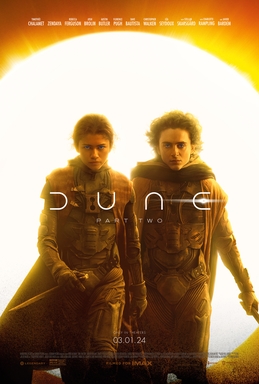

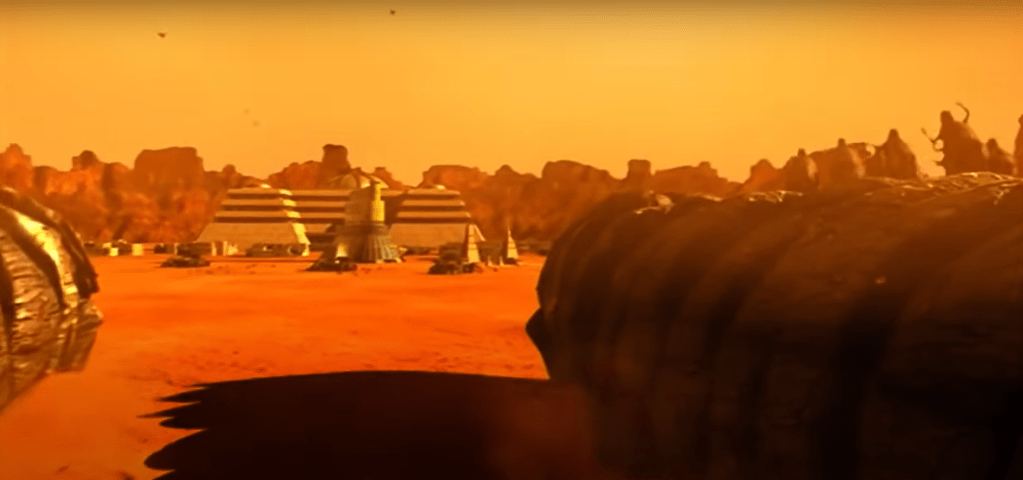
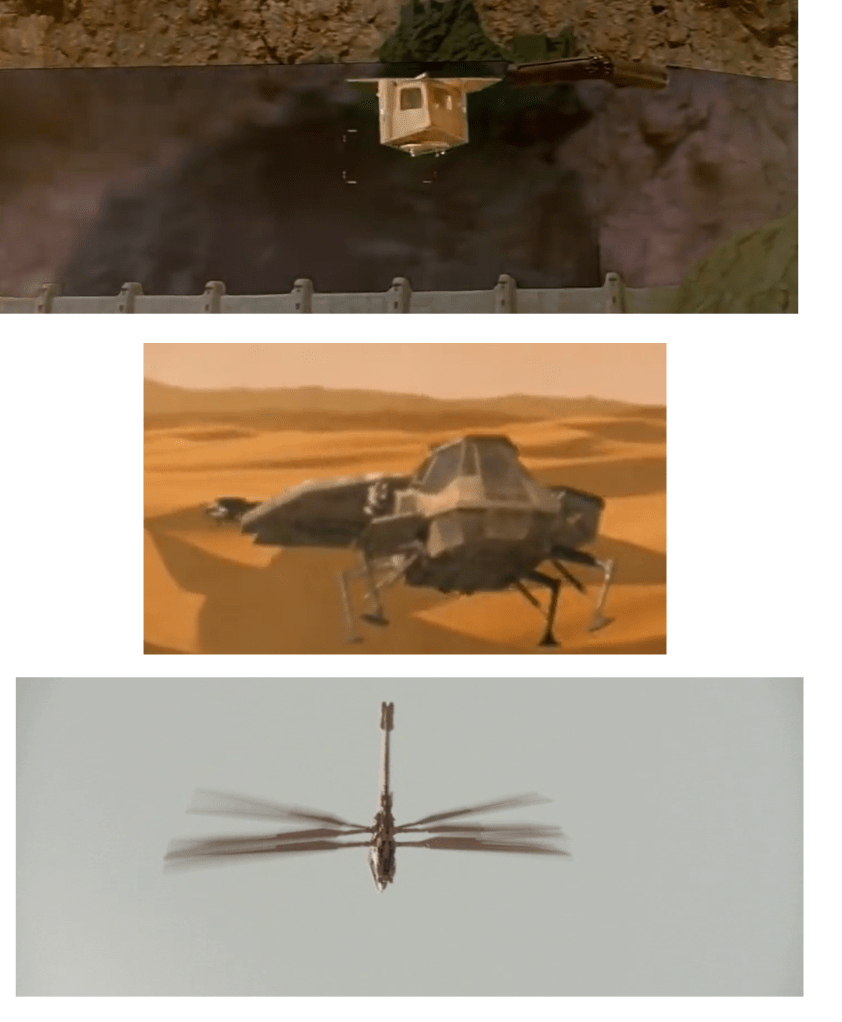
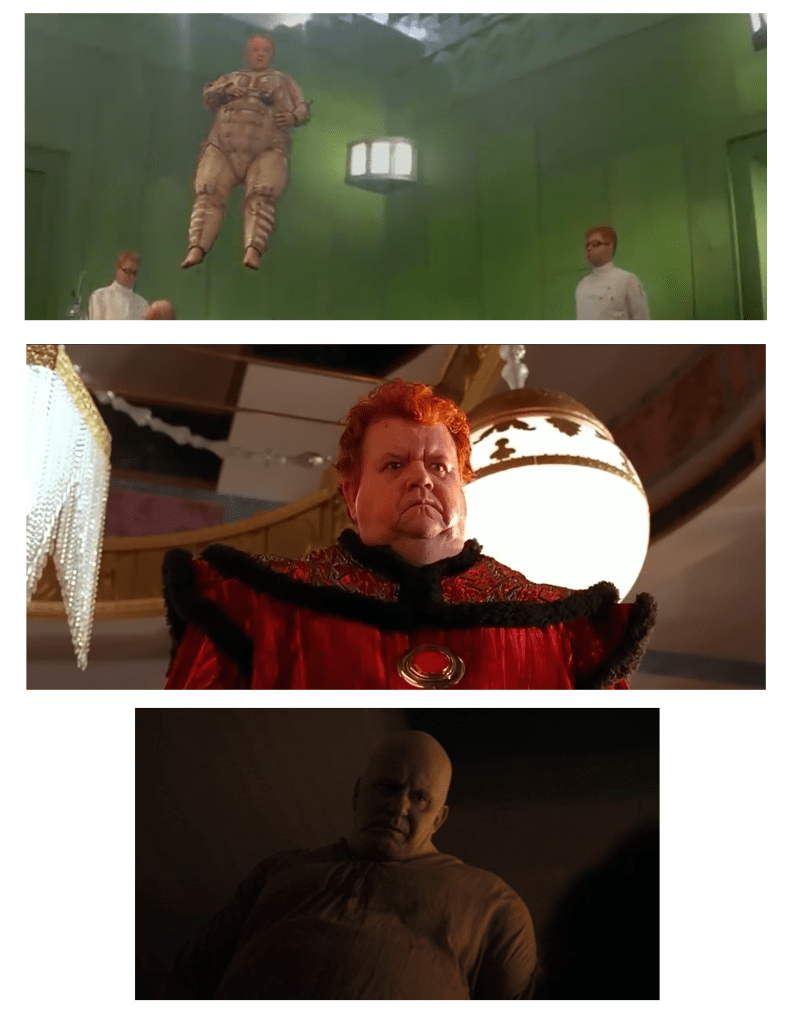


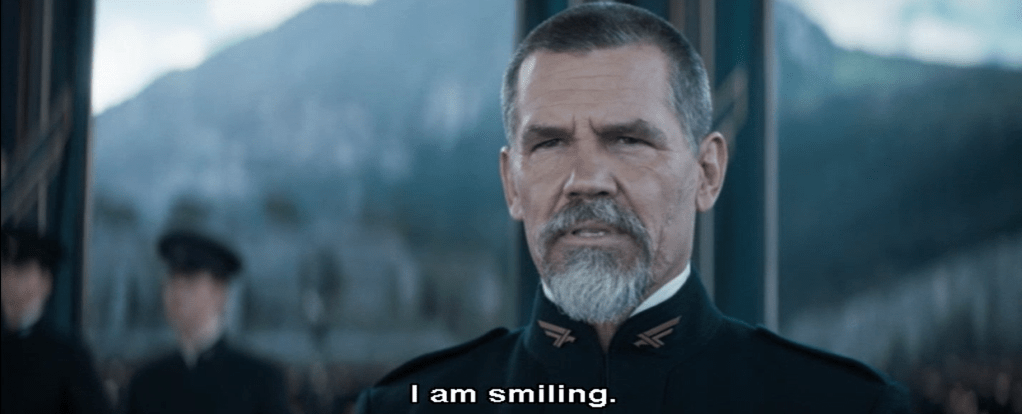
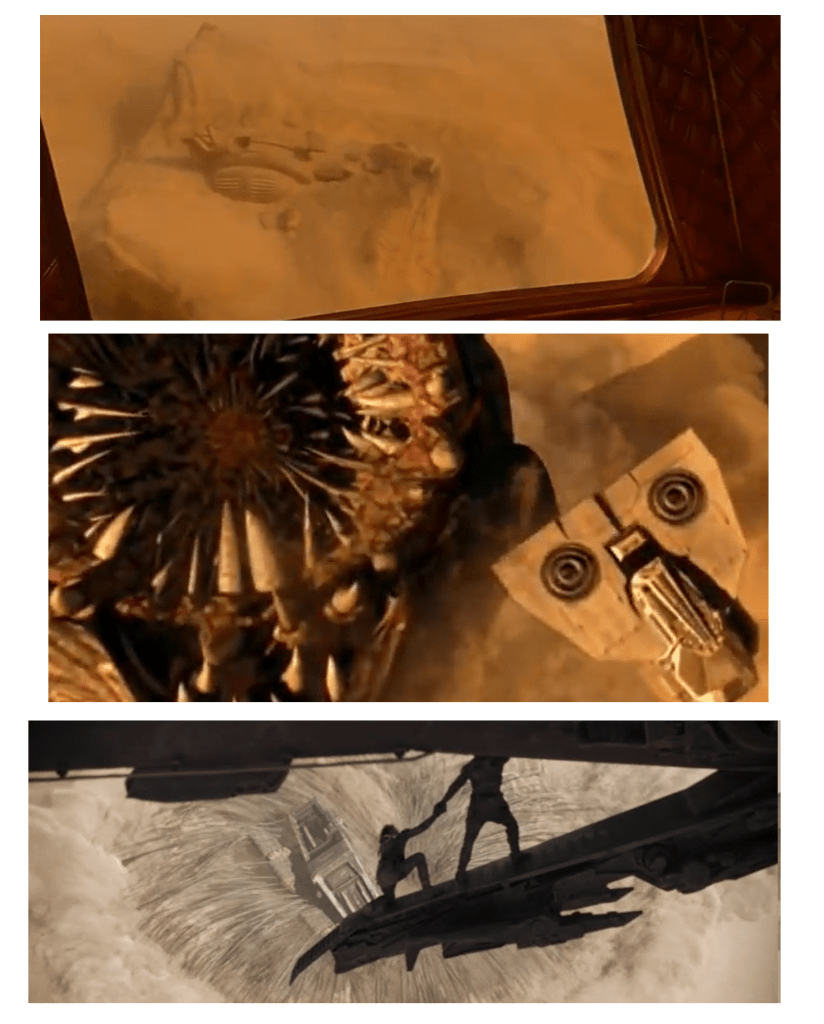
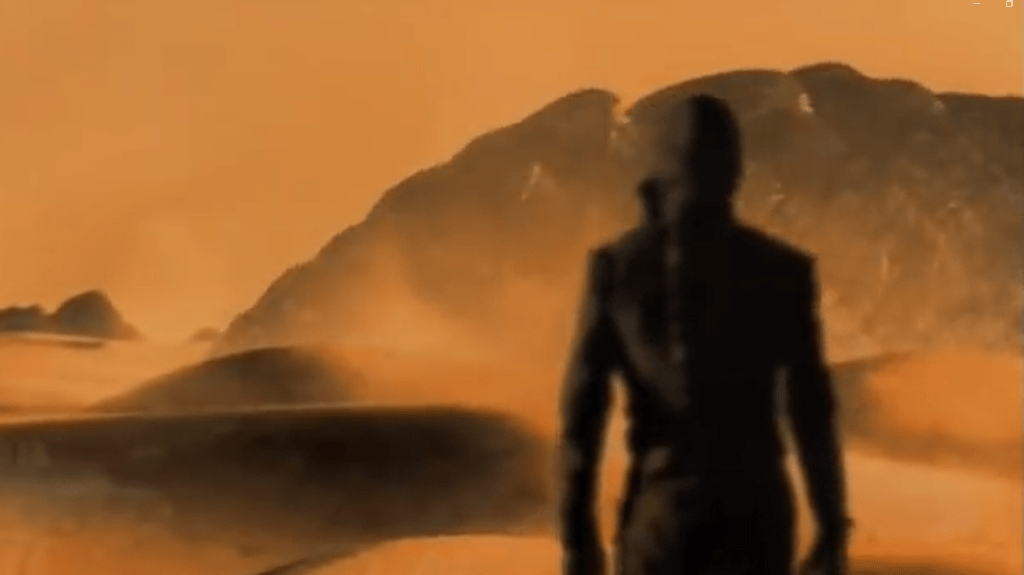

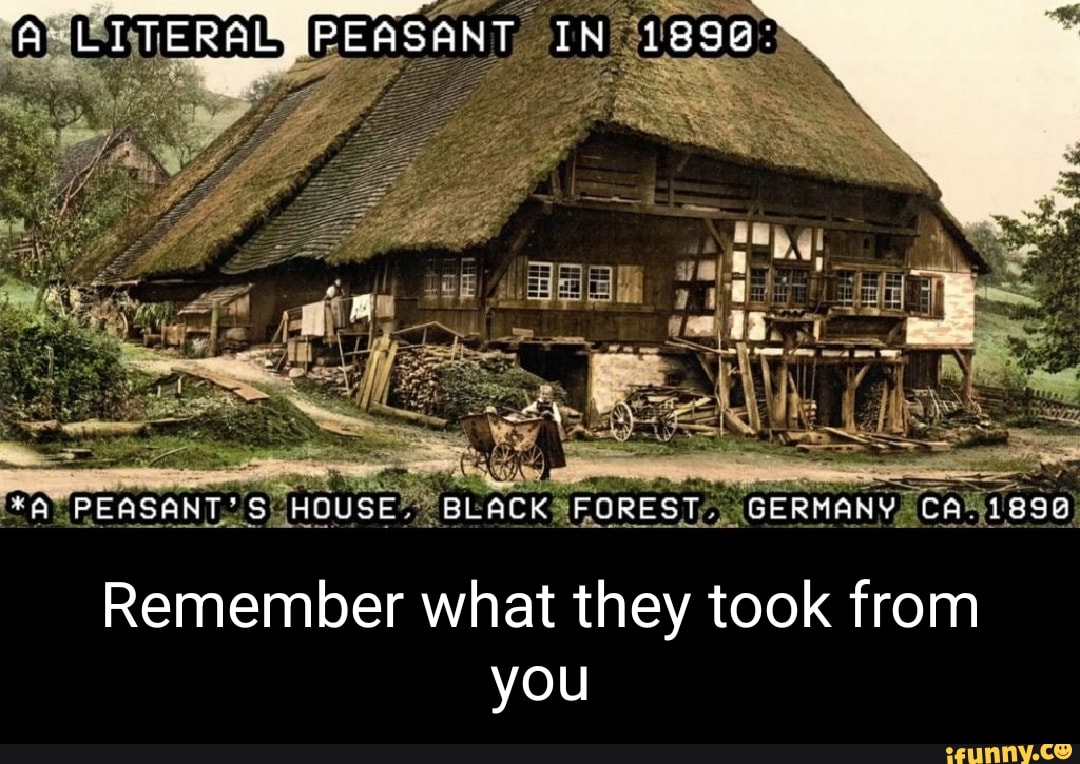

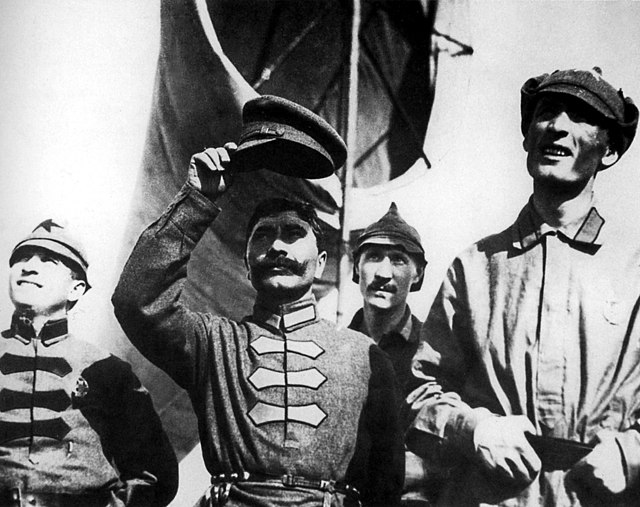
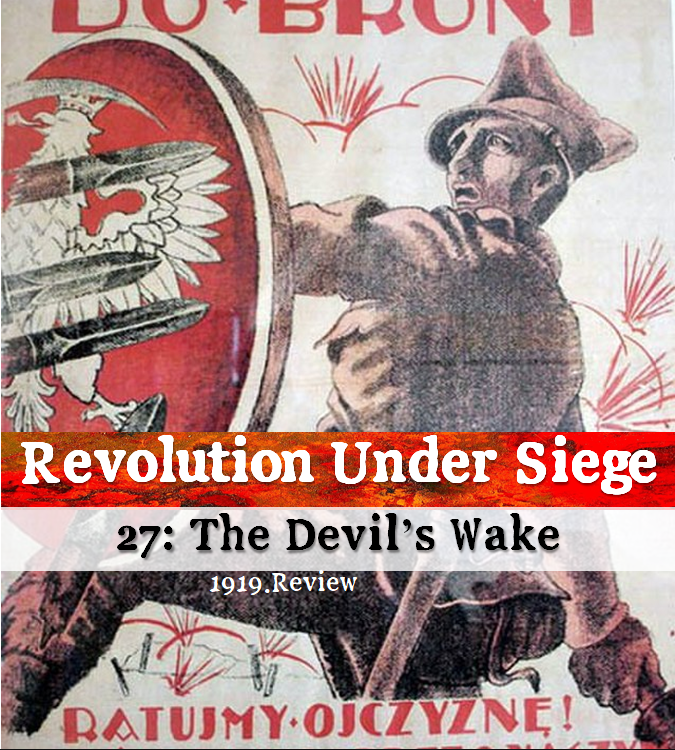

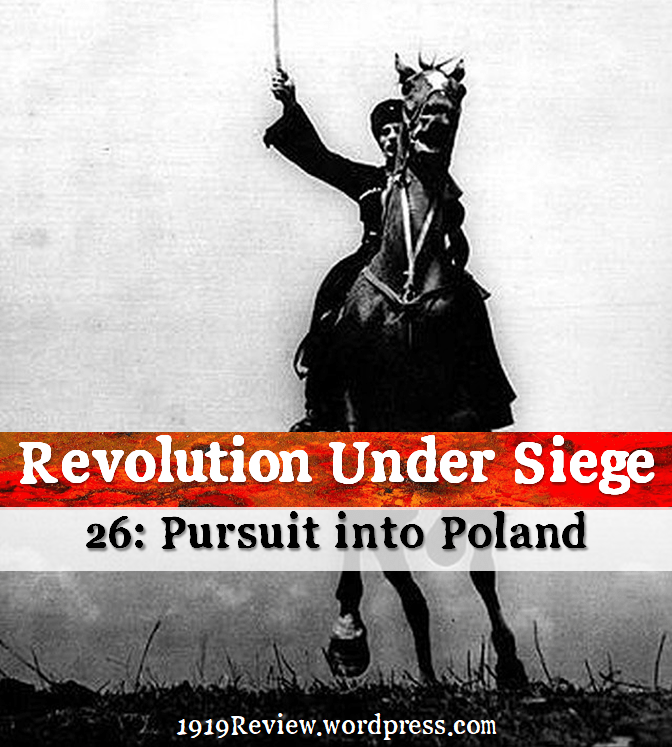
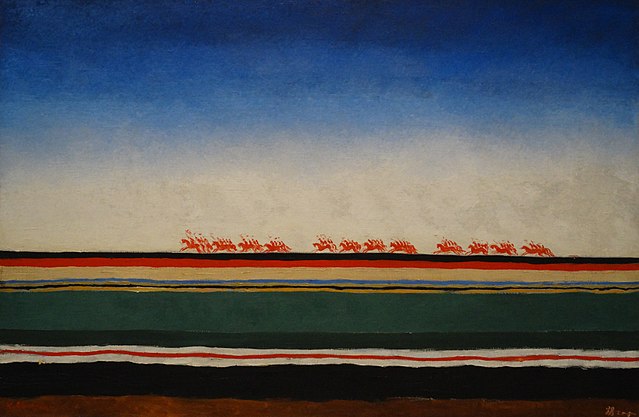
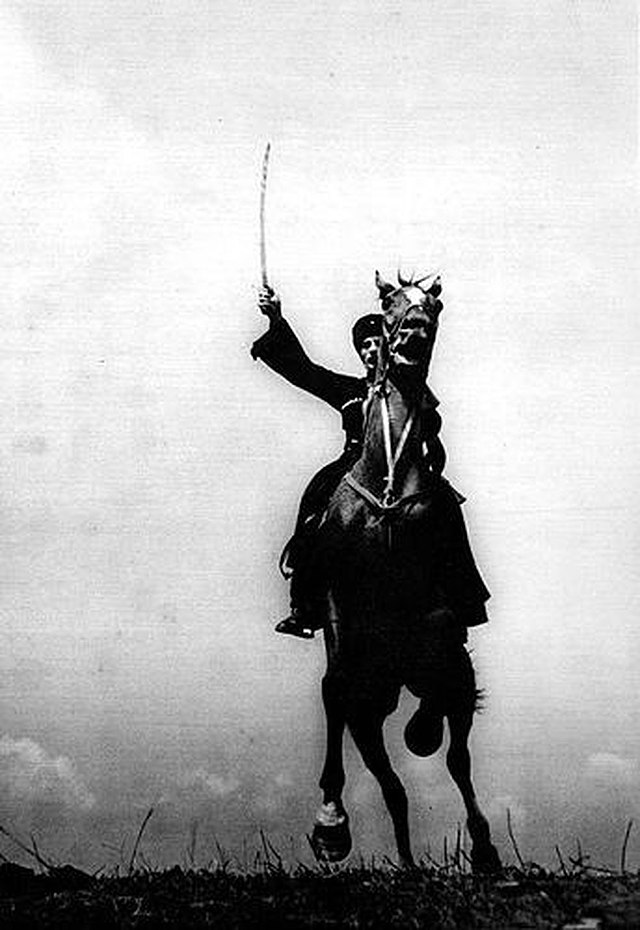
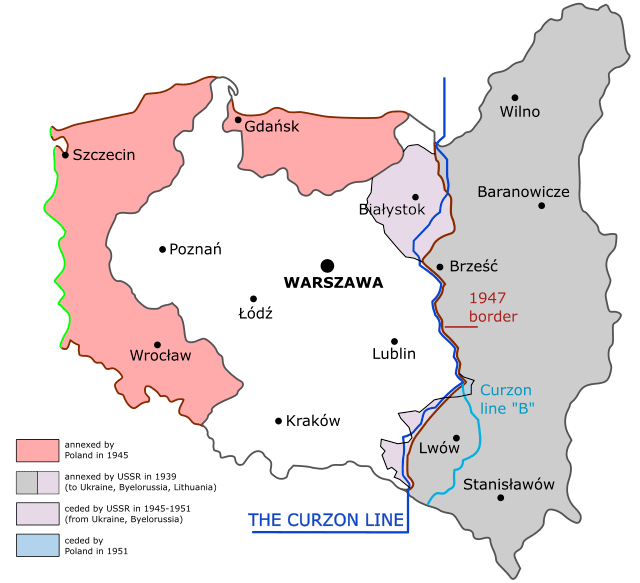
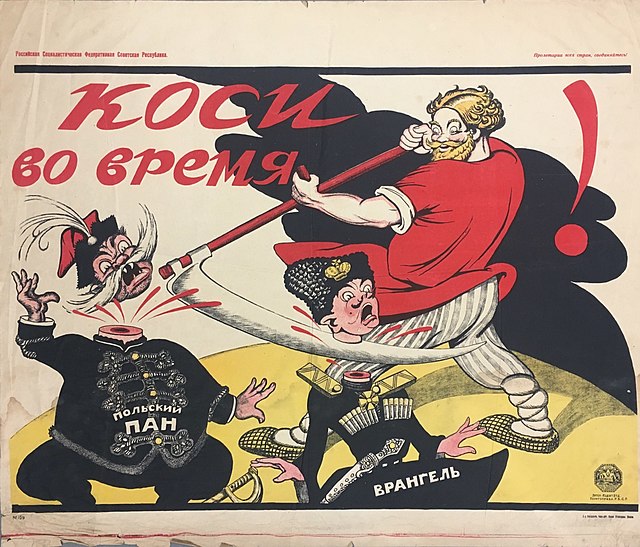
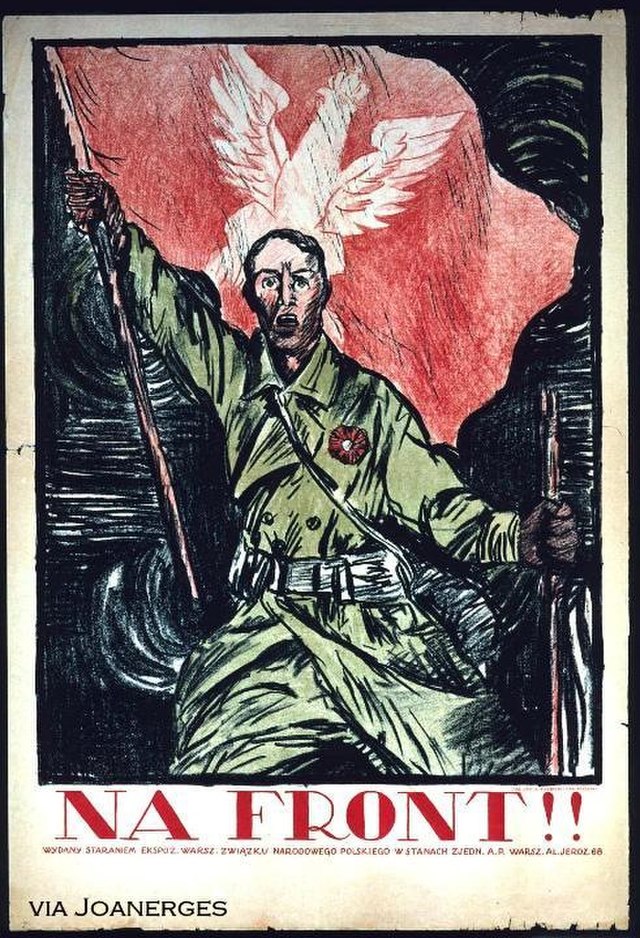
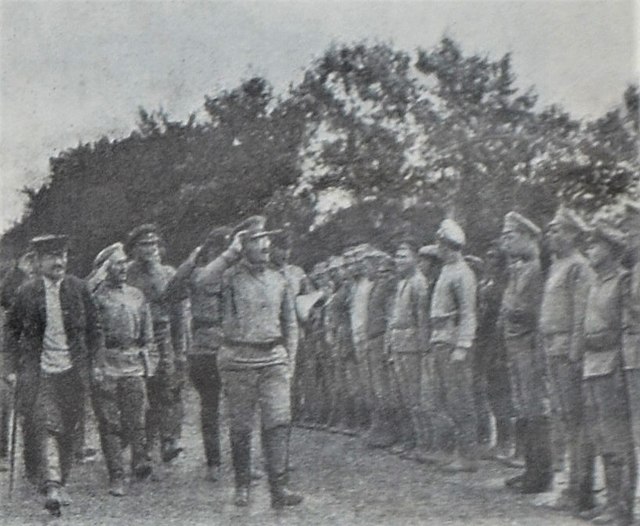
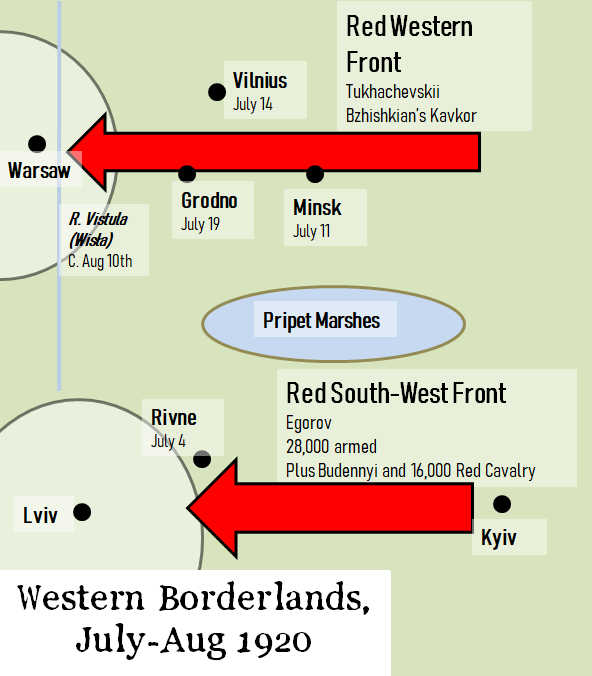

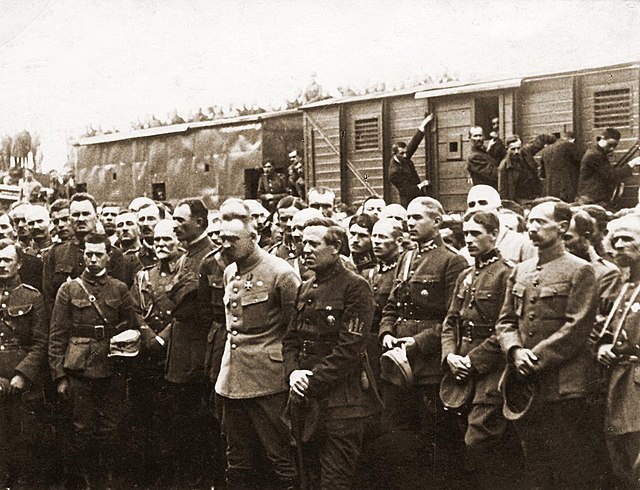
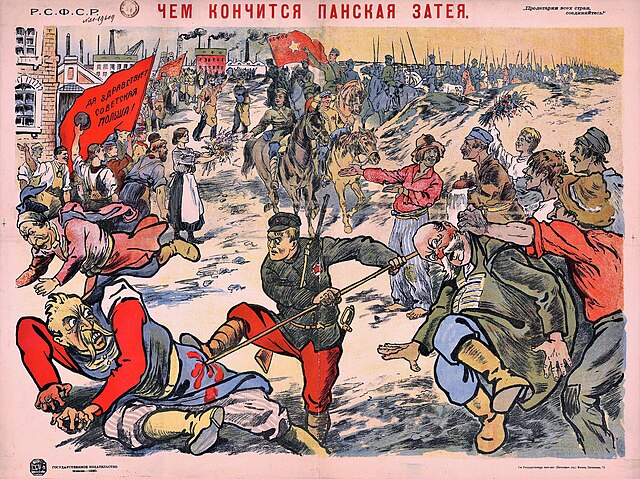
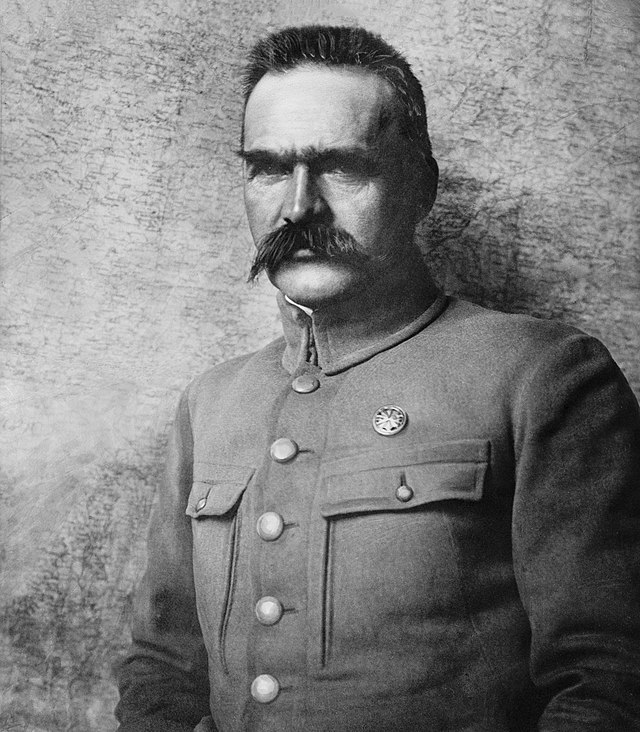

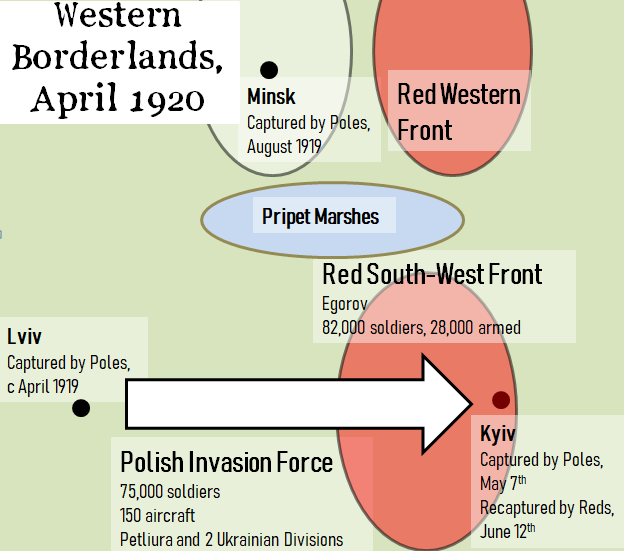
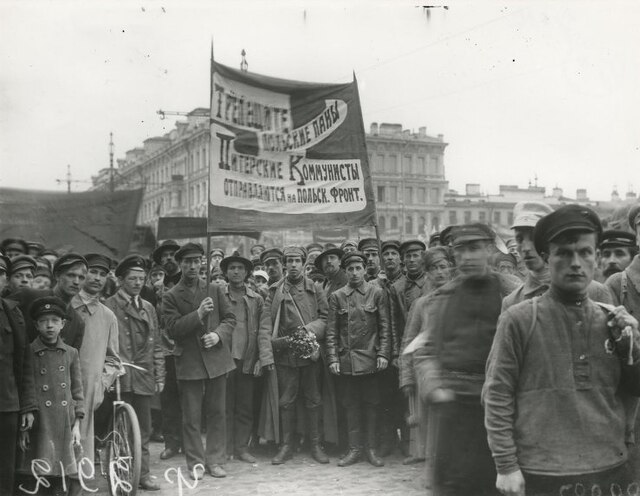
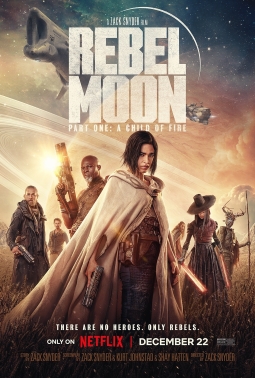
 The 1919 Review