The first time I met Negritude Philosophy, I was still in high school. Then, I came across Léopold Sédar Senghor’s “I will pronounce your name”— a part of the WAEC literature syllabus for 2007. At that point, I was a little unclear about its historical fermentation. I had read it and rewrote it for a girl I admired— my first unconscious attempt at poetry. Senghor’s poem centred around a black female character “Naett”— a re-emphasis of the African identity as doting to any observer. Now, it is 2022— five years after. And, history has grown: there is my strive for clarity, consciousness, and the human voice in every piece I encounter. And having heard Brainy (Oluwatunmise Esther), for the first time, read her poem “Negritude”, that night at Sage Hassan’s reading birthday party, I was critically attached.
The cover image is from Wonderlane on Unsplash
Three things had happened: while she read, I was unclear about how she had thematically woven the god, woman, and identity questions in such a brief performance on such a broad title as Negritude. I needed a feel, so I asked for a hard copy, and here I am much concerned about how we push history and ideas through time: how do we reopen, define, or redefine the relevance of Negritude in the 21st Century of globalization and imperialism? The answer is barely linear— a cartography of debates. Something I hope to write about someday. However, Brainy’s title becomes the past, present, and future merged into a glance: “Negritude”— a movement towards reawakening black consciousness both in Africa and in the diaspora.
In stanza one, the reader meets an exposition— the link to the philosophical stance of the title itself: “let’s talk”. This expression, repeated at the beginning of the first three lines, is the foundation upon which the subject matters are raised: the experiences to be shared by two gender-unspecified poet personae “you” and “me”, towards the “dazzling skin colour seen as threat” and “about being black”. It is only from stanza 2 do we see the identities behind those unspecified pronouns: “black woman”— a resonance of Léopold Sédar Senghor’s “Black Woman”. Here, Brainy’s feminine metaphor may or may not necessarily be an address to a woman after all. It could encompass the gendered persona and make the subject African. But, gradually into line 6 of this stanza, we are left at a crossroad: “I know you’re clueless of what classic/creation of God you are, moulded from the finest clay”. Now, I was forced to pause and ponder:
If “God” there refers to the image of the woman, like the black woman not knowing she’s a classic creation, there won’t be a need for her to be moulded from clay as both God and Woman are one and creators. Thus, no one is clay— as a creator cannot be the clay: he/she/it is outside the subject of creation.
If “God” should be separate from the black woman, that is, the woman as a creature and the “God” as a creator, it becomes a little ambiguous. What God is creating what woman? Is it the Yoruba, Hausa, Igbo, Christian, or Islam God? That is, does it subtly deny the multiplicity of the
By Swarnavo Chakrabarti, Unsplash
African deities? Why does she have to be created when in the preceding lines, lines 3–5, we are told she should not see herself as less of a goddess: “black woman…/you’ve [been] told that being black makes you less of a woman, makes you less of a goddess.”
And 3: if the black woman is a goddess, created by a “God”, does that not make her less? A contradiction to the thematic relevance raised earlier about not being less of a woman or less of a goddess. And, if this is the case, the “black woman” is merely subjected to a patriarchal order where “God” or “Men” reign supreme— a devastating and biased history of things. A case, I am sure, Merlin Stone’s “When God was a Woman”, Christena Cleveland’s “God is a Black Woman”, and other radical feminists would not agree with. In fact, in prehistoric times, there were goddesses before the making of gods. In pre colonialism, in Igbo culture, for example, we had Ani, Ala— all of which are women and greater in all sense of the Igbo traditions. The appearance of a Chukwu, with no clearly defined altar, was an attempt at the unification of other personal or communal gods under a supreme being of the sky— a father figure, not a mother figure as Ani possesses— modelled after patriarchy, economic factors, and possibly, Christianisation. In Chinua Achebe’s Things Fall Apart, it is clear that the chief priestess was never undermined— despite the toxic masculinity of Okonkwo, he submits. Also, after the tragic death of Okonkwo, we notice how his impurities will not allow him to be buried under the Earth Goddess, Ani. Not Chukwu. Why? Every deity is placed or created within the cultural, occupational, and geographical nature of the people, which is mostly femininely defined— a byproduct of human’s inability to understand natural phenomena. Hence, the Igbos worshipped Ani or Ala as Earth Goddesses because the society tilts towards agriculture. In other places close to the river, where fishing is a major occupation, we see the worship of a Sea Goddess, not a God— the representation of fertility, protection, and a means through which its people survive like Olókun, Yemọja, Mami Wata, and so on. So, where do we or in what context do we place “I know you’re clueless of what classic creation of God you are/moulded from the finest clay”? Thus, it will be sad and a slap to African history if the “God”, here, refers subtly, unconsciously, or generally, to the Abrahamic religions— a defeat to the philosophical and ideological purpose of the title itself: Negritude.
However, before eurocentrism, the evolution of human societies has been classed between the oppressors and the oppressed— Africa is not exempted. This means that while Brainy celebrates womanhood, she fails to identify the class status of these women both in pre-colonial and post- colonial Africa. That is, the image of a ruling Goddess (or god) is or may be structured after the image, dominance, and ideology of the existing ruling class— women or men— in each epoch of time: matriarchal (or patriarchal), matrilineal, feudal or not — black or white. Such is the reason behind the birth of heaven or afterlife: the ruling class’s idea, both in the formation of customs, tradition, and rituals, to preserve their reign over the lower classes forever— like the Egyptian pyramids of preserved bodies of Kings and Queens; then, how Wole Soyinka, too, dramatically presented this cosmological narrative through his “Death and the King’s Horseman”, where the Eleshi was meant to die so he could accompany the king through the phases of the afterlife.
Aside from the God question, Brainy presents her women and Negritude from a point of skin— a product of her reconstruction of beauty and identity: “This is a poem for every black woman still cringing in her skin”, “Black woman/Tell everyone who cares to hear/ that your skin is a constellation for starry nights”; her reflections on the Transatlantic Slave Trade: “poem for those shipped across the seas/ whose offsprings still bear the harsh tags placed on them”; and the pathos of her past— a nostalgia: “They forget we are the wisp of air preceding the rise of a storm”, “We black women come from a race of fighters”.
John McArthur (Unsplash)
Beyond these revolutionary turns and eulogies, Brainy’s poem should be read with a critical eye:
“making love to a black woman is riding on some good life”— Here, we are forced to ask: does Brainy imply that good life is making love to a black woman? Is this relevant in the 21st- century global worldview of humanism— maybe in the science of love-making? In fact, who becomes the subject of that “making” in terms of her poem’s contextualisation? Does it not defile the literal or metaphoric essence of her “black woman”? Or, does it not indirectly support the exploitation of the black woman if making love with her is “riding on some good life”— that is, if black woman, throughout, had metaphorically meant Africa?
“We are not some gruesome paintings of God”— earlier, Brainy had told us that her “black woman” is a “classic creation of God, moulded from the finest clay”— this line, if we pay attention to her earlier premises, does not achieve any effect at all as the women cannot and will not be in, anyway, the “gruesome paintings” of God. Except, by “gruesome”, she challenges the racial stereotypes and gender discrimination of the black woman just as how Buchi Emecheta presented Adah in Second Class Citizen— women are humans, too. But, to accept this supposed interpretation is to defeat the essence and perfection of Brainy’s “God” as these “gruesome” paintings, wherever it comes or appears, are his— if the black women are not gruesome, who, then, is or are the “gruesome paintings of God”?
“Tell them if God had a begotten daughter, she would be black”. While these lines achieved a powerful plot effect, the “God” in Brainy’s “Negritude” is unveiled, defeated, and short-changed after a model of masculine, maybe patriarchal, Christian doctrine, not the African religions.
Oladimeji Odunsi (Unsplash)
In the end, Brainy’s poem and Negritude suffer from a post-colonial effect of indoctrination and cultural imperialism while maintaining a strong appraisal of the women’s struggles and movements in Africa and diaspora: “Black woman, I dare you to raise your heads and shoulders high like the Queen you are/The Queen of Negritude”.
This post continues our explainer on the main factions contending for power in Ukraine in 1919. Note the factions we already looked at last week: the Ukrainian Rada and the White Guards. The German military and their puppet Hetman are already out of the game, and in the east the new Polish state is muscling in.
1. The Reds
The Reds supported self-determination for Ukraine and said so before the world many times. Their preference was for Ukrainian autonomy within a federation, and language and cultural freedoms. This was no less than what the Rada had called for in 1917: ‘Long live autonomous Ukraine in a federated Russia.’[i] The difference between Rada and Soviet was one of class.
The Red Army entered German-occupied Ukraine in September 1918. After the German Revolution, intervention gathered pace. On 30 November a Ukrainian Red Army was officially founded.
In early December a 3-day general strike broke out in Kharkiv, in Eastern Ukraine, and a revolution from below installed Soviet power in the city. Note the contrast between 1919 and 2022: Kharkiv, which has a large Russian-speaking population, has held out against the Russian invasion up to the time of writing. In 1919 it went Red almost without a fight.
According to EH Carr, the fact that the Communists were unable to organise a revolution directly in Kyiv shows how little active support they had in Ukraine.[ii] But after the events in Kharkiv, the Reds took just two months to cover the distance to Kyiv. In February 5th the Ukrainian Red Army captured Kyiv from the Rada. In contrast to the bloody and destructive five-day struggle between Red Guards and Rada in February 1918, and in stark contrast to the fiasco which Putin presided over in 2022, in 1919 the Reds ‘were greeted by the population with every display of enthusiasm.’[iii]
Ukrainian postage stamps from 1919. It is variously attributed to Soviet Ukraine or to the Anarchists. In spite of how much the guy there looks like Makhno, I’m more inclined to think this is a Communist than an Anarchist artefact
The Ukrainian Red Army was a horde of Red Guards and partisan units, a throwback to the freewheeling revolutionary days of early 1918. As if to underline this, the Red commander was Antonov-Ovseenko and one of his main officers was Dybenko; these two men had led the October 1917 insurrection in St Petersburg.
The war in Ukraine in 1919 was a war of loose ‘detachments’ and charismatic leaders, sudden spins of the wheel of fortune, and unstable alliances. ‘Being in an early phase of revolutionary ferment,’ according to Deutscher, it was ‘congenial ground’ to the left wing of the Communist Party.[iv]
The Red Ukrainian regime made rapid gains but it was soon overstretched. It was too aggressive on the land question, and dismissive on the national question. Instead of taking the land of the nobility and sharing it out, the Reds decided to turn this land over to state farms. The Ukrainian peasants might have just about tolerated the seizing of food, but this added insult to injury. Huge numbers of peasants rose up in rebellion.
‘In Ukraine today historians argue that Great Russian chauvinism coloured the whole of Bolshevik policy toward Ukraine in this period.’[v] Many Bolsheviks – especially, for some reason, Ukrainian Bolsheviks – were dismissive of the country’s national identity. But the general picture is of a movement with a real social base within Ukraine, in the cities especially but also among many peasants. The idea of the Reds as an imposition from outside is only tenable if we decide arbitrarily that Russian-speakers and Jews cannot be regarded as Ukrainian. The early missteps were later rectified thanks to intervention from Moscow – which goes against the impression that it was Russian imperial chauvinism. If we look back through the prism of later events, especially the famine and terror of the 1930s and the ongoing war, we will lose sight of this. Something very different was going on here.
Later in 1919 and into 1920, as noted above, the Ukrainian Reds, urged thereto by Moscow, adopted more sympathetic policies on land, food and the national question.[vi] But early 1919 was characterised by bold advances, impressive in the short term but storing up huge problems in the longer term.
A Red poster from Ukraine, 1919
The civilian administration of Red Ukraine was threadbare. The military presence was more fleshed-out, but not by much. The Dniepr River runs roughly north-south through the middle of Ukraine – from Chernobyl by the Belarus border to Kherson on the Black Sea. The commander-in-chief of the Red forces, Vacietis, wanted this to be the line at which the Red forces stopped short and dug in. But Moscow could not control Antonov-Ovseenko, and in any case Antonov-Ovseenko could not control his Red Guards and partisans. As winter turned to spring they swept on into the western half of Ukraine, carried on their own momentum.
At first the Red advance appeared to be successful. But the overreach had terrible consequences. One was that the Reds ended up dependent on deeply unreliable allies.
2. The Warlord
Painting by Mitrophan Grekov (probably showing South Russia rather than Ukraine)
The civil war in Ukraine, like that in Siberia, was a war of atamans. An ataman was a charismatic warlord who raised and led an army in wild pursuit of some quixotic, obscure or horrifying programme.
How would one go about becoming an ataman? What must you have on your CV? Below is a step-by-step guide for this career path, illustrated with reference to Nikifor Grigoriev, the foremost warlord of Ukraine. Grigoriev was a military officer who, by the hour of his death, had joined or tried to join almost every single one of the contending factions mentioned here.
Step One: Have murky origins
Grigoriev ‘constantly emphasized his Ukrainian origin, called for the destruction of Russians, but at the same time for some reason had a Russian surname’[viii] – the solution to the mystery is that he replaced his real name, Servetnik, with the more Russian-sounding ‘Grigoriev.’
And here we encounter another Lviv or Derry, because it is variously spelled Hryhoriiv and Hryhor’yev.
Step Two: Join the Tsar’s army
Apart from two years of elementary education, Grigoriev’s only school was the Tsarist military. Service as a Cossack cavalryman in the Russo-Japanese war taught him to fight and to lead. After the war followed eight years as either a tax official or a cop. Then in the Great War he returned to the cavalry, and won medals for his courage and skill.
Ataman Grigoriev in 1919
Step Three: Make a lot of friends
He is described by contemporaries as a rude, ugly, heavy-handed man who spoke through his nose. But ‘the soldiers liked him for his recklessness, eternal drunkenness and simplicity in relations with the lower ranks. He was able to convince the rank and file to go into battle, often setting a personal example.’
Step Four: Find a political cause
Grigoriev took part in the soldiers’ committees during 1917. He eventually joined with Semion Petliura and the Rada (Ukrainian Nationalists), and became a Lieutenant-Colonel in its army in 1917-1918.
Step Five: Be fickle
When the Germans booted out the Rada and brought in their puppet Skoropadskii, Grigoriev sided with the Hetman and served in his forces. He may even have participated in the coup. But after a few months he joined the Rada again in their uprising against the Hetmanate.
Step Six: Raise hundreds of fighters, then thousands
He returned to his native Kherson region and convinced 200 middle peasants to fight alongside him. They attacked the Hetman’s police in order to lure out a German punitive detachment, which they defeated. Next they ambushed an Austrian train and made off with enough rifles, machine-guns and grenades to equip a force of 1,500.
This was all in the context of a developing revolution against the Hetman, which culminated in November 1918. In December, Grigoriev led 6,000 rebels into the town of Mikolayiv, seizing it from the Allies, the Germans and the Hetman’s troops.
He threatened the Germans: ‘I’m coming at you […] I will disarm you, and our women will drive you with clubs through the whole of Ukraine to Germany itself.’
Step Seven: Insist on your own independence
Soon, virtual dictator of a large swathe of southern Ukraine, Grigoriev began to turn against Kyiv, insisting on his own independence but also demanding to be made minister for war. He began to flirt with the left even while saying that ‘Communists must be slaughtered’ and threatening to attack striking workers. He joined the Borotbisti, the Left SRs of Ukraine, who were in alliance with the Communists.
Then the French military landed at the Black Sea ports of Ukraine. Petliura was hoping for aid from the French, so he forbade Grigoriev from attacking them. Angered by this, the warlord changed sides once again. He went over to the Reds.
This is not the last we’ll be hearing of ataman Grigoriev.
Grigoriev standing next to Antonov-Ovseenko, who co-led the October 1917 insurrection in Petrograd.
3. The Black Army
The village of Huliaipole lies in south-east Ukraine, some way inland from Mariupol. There, in 1907, a local school teacher named Nestor Makhno led a peasant protest movement. Makhno was an anarchist-communist. He may have absorbed from his upbringing the Cossack tradition of fierce independence and self-government. The Bolsheviks looked to the working class, but Makhno looked to the peasants.
Nestor Makhno, known as ‘Batko’ or ‘father’ to his supporters. Note the sailor’s cap on the bloke beside him.
In 1907 he was arrested and exiled. But in the days of the Revolution he surfaced again. Ten years after his failed rising in Huliaipole, he was elected leader of its soviet.
Summer of 1918 found him in Moscow. He had friendly interviews there with Communist leaders such as Lenin and Sverdlov. But Makhno believed that all state authority was oppressive and counter-revolutionary. He was unimpressed by the anarchist groups which operated freely on Soviet territory.
He returned to Huliaipole in autumn 1918, leaving behind the ‘paper revolution’ of the urban anarchists in favour of rifles and guerrilla attacks. He organised a partisan band, displaying exceptional ability in battles with the forces of the German puppet Skoropadsky.
Then the German empire crumbled and Ukraine became a political vacuum overnight. He organised his partisan band into a stateless peasant commune centred around Huliaipole and defended by a force numbering in the thousands, the Revolutionary Insurrectionary Army of Ukraine.
Makhno and his lieutenants pose before a studio backdrop in 1919
The Anarchists travelled on horses and carts, loaded down with all kinds of weapons: ‘curved swords, naval cutlasses, silver handled daggers, revolvers, rifles and cartridge pouches made of oilskin. Enormous black and red ribbons flew from every kind of hat and sheepskin cap.’[ix]
The Whites were among the first to confront the Black Army. Mai-Maevsky warned his troops about Makhno: ‘I don’t doubt your ability, but it is not likely that you will manage to catch him. I am following his operations closely and I wouldn’t mind having such an experienced troop leader on my side.’[x] Makhno’s mode of warfare was mobile. For example, as early as November 1918 his troops captured Ekaterinoslav (today Dnipro) simply by boarding a train in disguise, pulling up to the main station, then drawing their weapons and charging out. But they abandoned the town just three days later and returned to guerrilla struggle.
Makhno next to Pavel Dybenko, a Red commander and key leader of the October Revolution
In early 1919 Makhno’s ‘Black Army’ joined the Red voluntarily. One Red Army division was co-led by Dubenko, Grigoriev and Makhno.
Conclusion
We leave it there in early 1919. The Reds are in control of a vast area but stretched thin, and things are about to go sour for them. Soon Ataman Grigoriev will change sides once again. In future posts in this series we will also look more closely at the Anarchists and the Ukrainian nationalists. Future posts will also explore what happened when the French military blundered into this mess with an invasion of Ukraine’s Black Sea coast. And keep an eye on those White Guards in the Donbass.
[vi] Smele, 102. Smith, p 186: ‘Thanks to Lenin’s intervention in December 1919, Russian chauvinists had been removed from the leadership of the Ukrainian party, and the absorbtion of the Borot’bisty, a left-wing splinter from the Ukrainian SRs, finally gave the party cadres who could speak Ukrainian and had some understanding of the needs of the peasants.’
This is Revolution Under Siege, a series about the Russian Civil War. In this post, we will contrast Ukraine in 1919 with 2022. Then we will begin a round-up of some of the array of factions which contended for power in Ukraine during the Civil War.
From April to November 1918 the Ukrainian revolution was left to simmer under the heavy lid of Austro-German military occupation. With the end of the Great War the German and Austrian empires collapsed. Meanwhile the end of the Turkish Empire opened up Ukraine’s Black Sea coast.
The German soldiers cleared out. From the Taman peninsula at the eastern edge of Ukraine, the Germans vanished. ‘They disappeared in the night, quietly, as if they had never been there at all.’ Likewise one morning in Odessa citizens woke to find them gone.[i] It was not so sudden elsewhere; German soldiers would stay behind for a while, would join one faction or another or just try to keep out of it.
Within a few weeks, an array of diverse factions had appeared all over the country, and for a long time no force was able to hold the capital city, Kyiv, for longer than a few months. Nobody could count on their ‘allies’ and nobody was in full control of their ‘own’ soldiers. Suffice it to say that between 1917 and 1920 Kyiv changed hands sixteen times.
Ukraine in 1919 was as crucial as a theatre of war as the Don Country or Siberia. But civil war in Ukraine was even more complex than in Russia.
So this two-part episode takes the form of an explainer. First, we will go into the main ways in which Ukraine in 1919 was different from Ukraine in 2022. Then we will give a run-down of each of the main contending factions.
An Austrian postage stamp, with the arms of the Ukrainian nationalists superimposed
The current war in Ukraine lends immediacy to this topic. Then, like now, people were dying in terrible numbers in combat; masses of unarmed people were forced to leave their homes; civilians were murdered. The same place names feature, or the same cities under new names.
But if we look at 1919 through a prism of 2022, we will miss some essential points.
This was a civil war between Ukrainians, with direct armed intervention from a range of other countries including Poland, France, Romania and Russia (both White and Red). It was not an invasion of Ukraine by the Russian state, as we see today.
But even to speak of Russian ‘intervention’ in 1919 on a par with French intervention is not fair, as we will go into below.
2. In 1919 the war was fought primarily on socio-economic questions – workers against bosses, peasants against landlords, peasants against the varicoloured armies which lived by pillaging them. But in 2022, the national question is in first place.
Ukraine, in 1919 as in 2022, is not a small nation. Its language, culture and people suffered vicious oppression under Tsarism. But one-fifth of the Empire’s population resided in Ukraine – 20 million people or even 32 million, depending on how you count them.[ii]
Some Ukrainian nationalists in 1919 had a very ambitious idea of what the borders of Ukraine should be
Here we come to another difference between now and then.
3. Ukrainian nationalism in 1919 was simply not the force it is today. In February 2022 when Putin’s regime invaded Ukraine, he probably counted on splits developing within the Ukrainian government, military and society. Over the six months between then amd the time of writing the Ukrainian people have not fragmented under the onslaught, but on the contrary cohered. They got behind the Zelensky government, even though most of them didn’t trust Zelensky before the war.
In 1919 the situation was very different:
[…] enervating to Ukrainian efforts toward statehood was the very weakly developed sense of nationalism in the territories it claimed as “Ukrainian.” Despite the inculcation of Ukrainian nationalism by successive generations of intellectuals during the nineteenth century, few of the region’s numerically predominant peasant population seem yet to have absorbed the notion of a distinct Ukrainian identity by the early twentieth century.
The cities were dominated by Russians and Poles in the civil service and the professions, and by Jewish people in commerce and intellectual life. The urban population was miniscule. Ukraine was a land of farmers and Ukrainian was a language spoken in villages.
In 21st-century Ukraine, 70% of the population lived in cities, and most of those city folk speak Ukrainian. It is a nation of workers and not of peasants. It is ruled not as in the early 20th century by Polish and Russian landlords but by Ukrainian capitalist oligarchs. The classes in Ukraine, the way people live and make a living, the national consciousness, have all changed utterly.
If today Kyiv was only 18% Ukrainian, and many of those 18% spoke Russian and considered themselves Russian, then Putin’s attack on that city would have turned out very differently. But those were the numbers in 1919. In the July 1917 local elections only 12.6% of the vote in small towns went to ‘overtly Ukrainian parties,’ and the corresponding figure for larger towns was 9.5%.[iii]
Unlike today, the idea that Ukraine should be an independent state did not have the support of a critical mass of the people. Among the urban and working-class population, this idea had very little support at all.
Released POWs from the Great War swear allegiance to the Ukrainian Rada, August 1919
4. In 1919 the Ukrainian nationalists did not have the support of the Allies. Today western leaders are effusive in their support for the Zelensky government, weapons have poured into the country, and blue and yellow flags are to be seen across Europe and North America. But in 1919 the Allies were suspicious of the idea of Ukraine being autonomous or independent of Russia. Remember, they hoped to see the White generals win the Civil War. These Whites spoke of Ukraine as ‘Little Russia’ and one of their key slogans was ‘Russia, one and indivisible.’ Why antagonise the White generals by ‘dismembering Russia’?
What was more, in February 1918 the Ukrainian nationalists signed a peace treaty with Germany. For this, the Allies never forgave the Ukrainian nationalists.
So there are some major differences between Ukraine a hundred years ago and now.
Below, our round-up of the various factions that contended for Ukraine in 1919 will further illustrate these points. It is divided into two parts, the second of which will follow next week.
1. The Hetmanate
Skoropadskyi, Hetman of Ukraine, with his boss, Kaiser Wilhelm of Germany
As we have seen, in February and March 1918 the Germans advanced across Ukraine from the West, driving the Red Guards before them. The Ukrainian nationalists, led by Petliura and Vynnychenko, took Kyiv as the Reds cleared out, but soon surrendered to the advancing German military. The Germans tolerated Petliura and Vynnychenko for about five minutes before ousting them in a coup and setting up a puppet government. The leader of this government was Pavlo Skoropadskyi, a Russianised Ukrainian general and a former aide-de-camp to the Tsar, no less. His title was Hetman, which is a Ukrainian term for warlord.
In superficial trappings, the government of Hetman Skoropadskii, known as the Hetmanate, protested its Ukrainian-ness as if to compensate for its subservience to Germany.
The Hetman spoke only a little Ukrainian, and his ministers were from Russian political traditions hostile to Ukrainian liberation: the Costitutional Democrats and the Octobrists. They abolished all of the reforms that had been brought in before the coup, and they banned strikes.
The Hetmanate ‘jarringly bedecked itself with the pseudo-Cossack trappings of a semi-mythologized Ukrainian national reawakening – uniforms, flags, titles and ranks not heard of since the seventeenth century (and some not even then) could be espied on the boulevards.’[iv] The rifleman of the 1st ‘Blue Coat’ Division of the Secheviye Streltsi wore a tall furry hat with a blue flamme, a long blue coat called a zhupan and baggy trousers of seventeenth-century fashion known as sharovari.[v]
But the reality of national oppression is summed up in one statistic: 51,428, the number of railway carriage-loads of grain and other goods which were, with the aid of the Hetman, stolen from the Ukrainian people and taken to Germany and Austria.[vi]
The Hetman’s soldiers, in traditional Ukrainian garb, October 1918
As we have seen, the German empire collapsed in revolution and surrender in November 1918. The pantomime was up, and Hetman Skoropadskii knew it. He cleared out on the next train to Berlin, dressed as a German officer. He made it to safety. Evidently this disguise was more convincing than his attempt to pass as a Ukrainian nationalist.
Most of my sources skim over the fact that there was a serious if brief war between the Hetman and the forces which replaced him, the Rada. In this war, the Allies promised to support the Hetman and even landed 5,000 British troops at Mikolayiv. But they were neutralised by the warlord Grigoriev, who we will look at next week.
2. The Rada
We already saw how in 1917 a parliament took power in Kyiv, calling itself the Rada. It was dominated by liberal and social-democratic Ukrainian nationalists.
Though at first it appeared the Rada and the Soviets might tolerate one another (even after the Rada suppressed the Kyiv Soviet) they ended up at war. The Kyiv Arsenal workers were massacred by the Rada. The Left SR Muraviev (who would later mutiny on the Volga) led a horde of Red Guards into Kyiv with much bloodshed and shellfire.
Then, as we have seen, came the Germans, who first allowed the Rada to stay in power, then had them overthrown in a coup.
The Rada forces led a 30,000-strong rebellion against the Hetman during the summer. Revolts simmered. Partisan forces organised.
After the Hetman jumped on the train to Berlin, ‘a largely peasant army swept Petrliura to power.’[vii] The Rada forces seized Kyiv. This regime was known as the Ukrainian National Republic or the Directorate – but for the sake of clarity and continuity it will be referred to here as the Rada. The leading figures were Vynnychenko and Petliura, two former members of the Social-Democratic and Labour Party. They passed laws nationalising industry and seizing the great private estates of the landlords. But the regime did not have the time or the machinery to implement these reforms, and it was in fact dominated by local military officials.[viii]
Peliura and Ukrainian soldiers (Picture taken later, in 1920)
In one source we read that they nationalised industry, at least on paper. But in another we read that the Rada was a regime of the military and the bourgeois and professional classes which did nothing to win over the workers and did not espouse ‘social reform on any significant scale, thus failing to rally the peasants.’ These failures were ‘frankly and repeatedly admitted by Vinnichenko [sic]’ who also admitted that ‘So long as we fought the Russian Bolsheviks, the Muscovites, we were victorious everywhere, but as soon as we came into contact with our own Bolsheviks, we lost all our strength.’ Ukrainianisation aroused hostility. Vynnychenko also confessed that the Rada’s political appeal forced the Ukrainian people to choose between nation and class, and the Ukrainians chose class.[ix]
The Rada only remained in power a short time. Just like in 1918, the Rada barely got time to unpack its bags in Kyiv before it was chased out, this time by the Red Army. Petliura fled west to Vinnytsia, ‘where he formed a more right-wing regime purged of Social Democrats and Social Revolutionaries.’[x]
3. The Poles
Ukrainians often have cause to explain to foreigners that there are two, three or more ways of pronouncing their name, or the name of their home town. In Irish terms, it’s like the Derry/Londonderry debate, or when a Seán is pointedly addressed as John, or when a member of the Ward family signs off as Mac an Bhaird. The different versions of names are statements rooted in a history of conflict.
Take one city which is today in Western Ukraine: ‘Lwów (Polish), L’vov (Russian), L’viv (Ukrainian), Lemberg (German) and Liov (Romanian) were all current during the revolutionary period.’[xi] In media reports today it is universally Lviv (no apostrophe).
Scenes of misery in Lviv in 1919
Let’s go with Lviv. In 1919 it was the chief city in what the Poles called East Galicia and the Ukrainians called West Ukraine. It had been for centuries a part of the Austro-Hungarian Empire. This empire had all-Ukrainian units in its army. In November 1918, at the war’s end, these Ukrainian soldiers rose up in revolt. They seized Lviv and declared a West Ukrainian People’s Republic (WUPR), allied to the Rada in Kyiv.
But the Polish state newly arisen to the west had designs on the same territory. The WUPR fought a bitter and bloody war for its survival against the new Polish army. The region was stricken by famine in these years as a result of the fighting.
Apparently, this is a shell still lodged in a wall in Lviv, left over from the 1918-9 Polish-Ukrainian war
After the Rada was chased out of Kyiv by the Reds in February 1919, they found refuge with the WUPR. But this refuge was worn down by constant attacks from the Reds to the east and the Poles to the west.
In April, Petliura signed away West Ukraine/ East Galicia to Poland in a peace treaty. For this, the WUPR elements never forgave him, and in émigré circles after the war they denounced the Rada as ‘rude, East Ukrainian peasant cousins.’[xii]
4. The Whites
Ukraine bled seamlessly into the Southern Front of the Russian Civil War. Rostov-on-Don today is only a three-hour drive from Mariupol. The Volunteer Army was going from strength to strength in early 1919, and several thousand of these former officers and cadets occupied the Donbass region.
White officers, General Mai-Maevsky second from left.
The industrial, working-class Donbass region was not their natural habitat. Their numbers were not impressive. Their commander, General Mai-Maevsky, was a heavy drinker who looked ‘like a dissolute circus manager’ and brought with him a travelling brothel.[xiii]
Yet in the first half of 1919 they held the Donbass against three successive Red offensives. How? Professional soldiers are more mobile than militia, and steadier than partisans. They can wring the maximum out of whatever advantages they possess. In this case British aircraft scouted for the Volunteers, who made good use of the dense railway network of the Donbass. Under the leadership of Mai-Maevsky, who was courageous and brilliant in spite of first impressions, they were able to concentrate their forces at the decisive places whenever the Reds advanced.
General Vladimir Mai-Maevsky
The occupation of the Donbass, and the support of the British navy, meant the Whites were a factor in southern Ukraine.
Here we can compare 1919 and 2022. The White programme for Ukraine was broadly similar to Putin’s today: they did not want to loosen their grip on what they called ‘Little Russia.’ As for Lenin and the Bolsheviks, Putin today condemns them for their acknowledgement of Ukraine’s right to its own culture and to self-determination. For him, the prophecies of medieval saints carry more weight than the aspirations of 40 million people who want to live in peace.
Join us again next week for ‘Warlords of Ukraine, continued,’ in which we will look at three more factions: the Reds, the warlord Grigoriev and the Anarchists.
Kwame Nkrumah was the leader of the liberation movement in Ghana, formerly a British colony known as the Gold Coast. He was also its first leader as an independent state.
The book is made up of pieces: a shorter book, letters, an essay, a lecture. CLR James, a Marxist from the Caribbean who wrote The Black Jacobins in the 1930s, gives first an account of the revolution, then a hint of some of the problems encountered by the newly-independent state, and finally a developed meditation on problems of underdevelopment in former colonial nations.
The second of those three elements is the weakest. The brief parts of the book which hint at problems and criticisms of the independent Ghanaian state seem hand-wringing and uncertain.
The other two elements are strong, though all indications are that James’ politics have changed a great deal between the 1930s and the 1960s. The key criterion, class, is not absent but it is not in the first place. I know that in the 1930s James, Nkrumah, Kenyatta and George Padmore all moved in the same circles in London.
All in all, the book opened my eyes on the specifics of the Ghana Revolution, which I’d known nothing about, and on the problems of underdevelopment.
Nkrumah featured on a USSR postage stamp
I can’t comment in detail due to my lack of knowledge, but here are a few quotes that jumped off the page at me.
On the poet Césaire:
‘Césaire’s whole emphasis is upon the fact that the African way of life is not an anachronism, a primitive survival of history, even of prehistoric ages, which needs to be nursed by unlimited quantities of aid into the means and ways of the supersonic plane, television, the Beatles and accommodation to the nuclear peril. Césaire means exactly the opposite. It is the way of life which the African has not lost which will restore to a new humanity what has been lost by modern life with ‘its rebellious joints cracking under/ the pitiless stars/ its blue steel rigidities, cutting through the/ mysteries of the flesh.’ (23)
On European commentators:
‘they see themselves always as the givers, and Africans as the takers, themselves as teachers and Africans as the taught. In the thousands of reports, articles, speeches, that I have read about events in Ghana, I have never seen a single word, the slightest hint that anything which took place there could instruct or inspire the peoples of the advanced capitalist countries in their own management of their own affairs, and this is as true of the friends of Ghana as of its enemies.’ (38)
‘The reader will not understand these events or what is taking place all over Africa today unless he makes a complete reversal of traditional conceptions as to where is law and where is lawlessness. The disciplined community obeying its own laws was the masses of the people in Accra. The mob was the heterogeneous collection of chiefs, government officials, merchants and lawyers.’ (46)
On the people of Ghana:
‘[They were] governed by a long tradition of democracy in which the chief was no more than a representative of his people who could be, and often was, ruthlessly removed if his actions did not accord with their wishes. This was the condition of some seventy-five percent of the population.’ (53)
On women in Ghana:
‘The traders for generations have been the women (Nkrumah’s mother was a petty trader)… Thus in Accra there are thousands of women in action in the market, meeting tens of thousands of their fellow citizens every day. European visitors and officials up to 1947 saw in these markets a primitive and quaint survival in the modern towns. In reality here was, ready formed, a social organisation of immense power, radiating from the centre into every corner and room of the town.’ (55)
On protestors:
Memorial to Nkrumah in Accra, Ghana
‘They used the Lord’s Prayer:
O imperialism which are in Gold Coast
Disgrace is thy name…
‘The Apostles’ Creed:
I believe in the Convention People’s Party,
The opportune saviour of Ghana,
And in Kwame Nkrumah its founder and leader…
‘The Beatitudes:
Blessed are they who are imprisoned for self-government’s sake, for theirs is the freedom of this land.’ (108)
On Europeans who acknowledged Nkrumah’s power as an orator:
‘[They] added the sneering qualification “among Africans”. What mass oratory could Nkrumah practise among the Europeans? Or was he to go to China?’ (113)
Four quotes from Nkrumah himself:
‘We prefer self-government with danger to servitude in tranquillity.’
‘There come in all political struggles rare moments hard to distinguish but fatal to let slip, when even caution is dangerous. Then all must be on a hazard, and out of the simple man is ordained strength.’
‘We have the right to govern and even to misgovern ourselves.’ (117)
‘What other countries have taken three hundred years or more to achieve, a once dependent territory must try to accomplish in a generation if it is to survive. Unless it is, as it were, ‘jet-propelled’, it will lag behind and thus risk everything for which it has fought.’ ( 157)
Misc:
‘That this revolution was blood and bone of the twentieth century is shown not only by its planned character, but also by the role of the Trades Union Congress. Ten thousand workers organised in a union are ten times more effective than a hundred thousand individual citizens.’
Here is a longer quote, photographed rather than transcribed because of its length:
As 1919 began, the vast expanse of Siberia was occupied by an array of factions and warlords. This post introduces the reader to some of the White warlords of Siberia, and follows Admiral Kolchak’s Spring Offensive.
Revolution Under Siege is back for a second series, tracing the epic events of 1919 in the Russian Civil War.
Before the October Revolution, when Russia was still fighting in the Great War and desperate for new recruits to replace the millions dead and wounded, the Provisional Government sent two cavalry officers to the furthest eastern reaches of the empire. Their mission was to recruit a regiment of Mongols and Buriats, horse nomads of the steppe.
Captain Grigori Semyonov was a Cossack of Buriat origins himself. He was ‘a thick-set character with moustaches shaped like a water buffalo’s horns.’[i] Semyonov’s companion was Baron Roman von Ungern-Sternberg. He was a Baltic German aristocrat from Estonia, but he was already an old Asia hand. He had travelled in Mongolia, he idolised the warriors of the steppe, and on this journey he wore a bright red Chinese jacket and blue trousers. The young baron had the thousand-yard stare. He had served in a regiment which had suffered 200% casualties in the early part of the war. But he was happy during the war years – never happier.
At the start of 1918, the mission consisted of Semyonov, Ungern and six other guys with their horses. Meanwhile back west in the capital, the working class, organised in the soviets and led by the Bolshevik Party, had taken power. The government that had sent Semyonov east no longer existed. The war into which the Mongols and Buriats would have been thrown was, for Russia, over.
Grigorii Semyonov, ataman of the Trans-Baikal Cossacks
But the sabres of Semyonov and Ungern did not rest. They joined the counter-revolution and became warlords of Siberia. To them, the Provisional Government had been bad enough, but the Revolution was an atrocity. The workers and peasants must be crushed.
Their first uprising was at Verkhneudinsk, just a week or two after the storming of the Winter Palace. They were backed by Transbaikal Cossacks, but they failed, and fled to China.
On New Year’s Day 1918 they crossed back into Russia. Their force of 8 soldiers held a train and lit it up to bluff that they had bigger numbers; in this way they disarmed a Red garrison of 1500.
Meanwhile a Bolshevik sailor and commissar named Kudryashev was on his way to Vladivostok with government money. He and his companions held a New Year’s party on the moving train, and Kudryashev got so drunk he forgot to change trains. The mistake proved fatal.
They were halted near the Chinese border and Ungern led soldiers into the carriage full of celebrating Reds.
Ungern fixed his cold, piercing eyes on Kudryashev and demanded: ‘Deputy Naval Commissar, that’s you?’
‘Baron Ungern looked through his papers, then made a cutting gesture with his hand to his companions. “As for these shits,” he added, pointing to the others from Kudryashev’s party, “whip them and throw them out.”’
Kudryashev was taken out and shot dead in the snow.[ii]
During the six months following the Revolution, Semyonov and Ungern twice rounded up sizeable forces in Manchuria – Mongols, Buriats and anti-communist refugees. They twice invaded Siberia, and were twice driven back across the border into China by the Red Guards.
The fortunes of Semyonov changed thanks to the Allies. First, Semyonov received a load of money from Britain, France and especially Japan, allowing him to hire Chinese mercenaries and to arm and equip his volunteers. Thus he built a force he called the Special Manchurian Division. Second, Semyonov and his Division were on the brink of annihilation when they were saved by the Czechoslovak Revolt of May 1918. Last, when the Special Manchurian Division invaded Russia for the third time in July 1918 it was with massive Czech and Japanese assistance.
A few months earlier, Semyonov had been alone except for a handful of volunteers and an eccentric baron, on a mission from a government he despised. By the end of August, he was dictator of the Transbaikal.
Covering more than 600,000 square kilometres, the Transbaikal region is only a little smaller than Texas. It stretches from Irkutsk in the west, a town on the shores of the vast Lake Baikal, to the Pacific port of Vladivostok in the east.
Semyonov
In late 1918 and through 1919 Semyonov ruled from the town of Chita under the slogan ‘For Law and Order!’ while his officers enjoyed cocaine and the company of sex workers. The night life of the city was made livelier by Red partisan assassins lurking in the alleyways.
Semyonov wished to create an independent state called Daurskii and allegedly awarded himself the title of Grand Duke. But in the words of a Chinese newspaper he was ‘Caliph for an hour and a toy of the Japanese.’[iii] He was more or less subordinate to the Japanese state, which had 70,000 soldiers on his territory along with British, French and US detachments. All the same, he lived like a king. He had thirty mistresses who lived on what was called ‘the summer train’ along with a great store of champagne and an orchestra made up of Austrian prisoners. In June 1918 he was elected ataman (warlord) of the Transbaikal Cossacks.
Today’s cover image, from a series of paintings created in Japan titled ‘Illustrations of the Siberian War’
Semyonov used to boast that he could not sleep easily at night unless he had killed someone that day. It was not an idle boast as his victims numbered in the thousands.[iv] By his own account, he personally supervised the torture of 6,500 people.[v] In this last detail Semyonov was not an outlier (though in other respects he certainly was). According to one foreign observer, White Guard officers ‘remarked almost daily that it was necessary for them to whip, punish, or kill someone every day in order that the people know who was protecting them from the Bolsheviks.’[vi]
The Transbaikal was sparsely settled. Trains plied the vast empty lands between the towns and villages. Semyonov and his 14,000 men, by Spring 1919, did not generally stray far outside of Chita, where the warlord lived in a compound guarded by artillery. But armoured trains would supply Semyonov’s armies in the manner of Carribean pirates, pulling up to a station and threatening to open fire with naval guns unless food was handed over.
In Siberia, where the towns were like islands, thousands lived on the rails – Palmer says there were ‘hospital cars, headquarters, brothels, travelling theatres, dining cars appointed like opulent Moscow restaurants, libraries, motor workshops, churches, mobile electric generators, printing shops, offices and torture chambers.’ The old pre-revolutionary cadre of railway workers somehow kept everything moving. Secretly they aided the Red partisans.
Then there were the prison trains, cattle cars filled each with fifty Red prisoners of war, which would travel ‘aimlessly from station to station with neither food nor water.’ Whoever was left alive in the cars after a few weeks would be shot.[vii] For example, a train arrived near Lake Baikal on August 4th, crammed with 2,200 captives from the Red Army (taken during the Spring Offensive – see below). ‘Most of the prisoners appear to be sick with typhus, and starving. Several dead were removed from the cars. It seems that there are dead to be removed at every station.’[viii] The eyewitness quoted just now was a US soldier who was guarding the railway line which the Whites were using in this way.
The railways were the primary target of the Red partisans, though they also infiltrated mines and triggered strikes.[ix] The huge distances and deep forests provided refuge to all those who wanted to fight the Semyonov regime, and they lived in camps as big as small towns.
What was the political character of these guerrilla bands? According to Wollenberg:
Speaking generally, we find that the guerrilla movement assumed two widely contrasted aspects, represented respectively by the Ukrainian guerrillas, among whom the influence of the individualistic wealthier peasants predominated, and the Siberian guerrillas, who manifested the peasant-proletarian disciplined character of the movement. Naturally the line dividing these two opposites was by no means a territorial one; indeed, both these guerrilla manifestations often existed side by side, and were often closely woven with one another in the same band.[x]
On Ukraine, more next episode.
Ungern
Ungern, the baron from Estonia, was now a Major-General under Semyonov. His Asian Cavalry Division, a force which was growing in size to rival Semyonov’s, would be called upon to lash out in reprisal at the villages in the aftermath of partisan raids.
A fort of red stone dominated the border town and railway station of Dauria, and this was Ungern’s castle.[xi] The railway lines were the source of supply for his army and regime; he robbed those who passed through, especially Chinese merchants (for some reason, he hated the Chinese).[xii] The sandy hills near town were scattered with the skulls and bones of Red prisoners who were sent to Dauria, ‘the gallows of Siberia.’
Ungern-Sternberg in Chita in 1920
Ungern ran a strange and very personal regime in Dauria. He was cruel to officers, gentle to horses, popular with soldiers. Evening prayer services were probably the most ecumenical to be found in any military base in the world: Orthodox, Lutheran, Buddhist and other holidays were officially celebrated. When typhus came to Dauria, Ungern went into the hospital and killed those infected who were unlikely to recover. He hated paperwork: when Semyonov sent an inspector, Ungern had him whipped and conscripted.
Within the confines of his own blood-drenched and occult moral code, Ungern was apparently austere and incorruptible. He was virtually the only Semyonovite who did not embezzle; on the contrary, he donated his own pay to the men. He did not believe that the Communist International had been founded only in March 1919, but in ancient times in Babylon. He read mystical signs in playing-cards; he admired Mongolians, and believed they practised magic. Semyonov was surrounded by cocaine and champagne; Ungern smoked opium so that he could have mystical visions. These visions anticipated those of Hitler; in Ungern’s words it was necessary to ‘exterminate Jews, so that neither men nor women, nor even the seed of this people remain.’[xiii]
In most respects Ungern was singular. But in his anti-Semitism he was with the mainstream of ideas in the White camp, where the Protocols of the Elders of Zion and the ‘Zunder Document’ circulated widely, where ‘Jew’ and ‘Communist’ were treated almost as synonyms.
With his extreme reactionary views, the mix of weird and contradictory ideas that informed them, his violent nature, his hatred of women (apparently he is what would now be called a ‘voluntary celibate’), Ungern reminds me of one of those mass shooter from today’s United States.
Semyonov and Ungern were not the only warlords of the Far East. Ataman Kalmykov was also an important figure, subordinate to Semyonov. About Kalmykov my sources don’t tell me much except that he was a glorified bandit, and that he tortured and killed his enemies in blood-curdling ways.
The Civil War in the Transbaikal was a diverse affair. We have noted the presence of Czech, British, French and US forces, and of a full-scale Japanese invasion. Most Japanese stayed by Vladivostok; some went as far inland as Lake Baikal. On one occasion, drunk American soldiers beat up a trainload of White Russians. There was much back-and-forth over the borders with Manchuria and Mongolia. Spies reported to Japanese noblemen rather than to a centralised secret service. Alongside Russian settlers were the indigenous peoples of the area such as the Buriats, who fought on both sides. There was also the Transbaikal Cossack Host, the fourth-largest in Russia with 258,000 fighters, along with the 96,000 Amur, Iakutsk and Issuri Cossacks.[xiv]
A Japanese-sponsored conference discussed founding a pan-Mongolian state. It should be obvious that the White Russians were not keen on the idea (‘dismembering sacred Holy Russia…’). Ungern was also against the idea. He only liked Mongolians when they were romantic nomads; he did not like literate Mongolian intellectuals gathering to discuss modern concepts like nation-states.
There were tensions between Mongolian factions. The Karachen Mongols – from Inner Mongolia, today a province of China – grew angry with delays in pay. Two days of fighting raged in Dauria when 1,500 Karachen killed their Russian officers and seized an armoured train.
Kolchak
Moving westward along the Trans-Siberian railway, we leave the atamans behind and approach Kolchak. We saw last series how in November 1918 Admiral Aleksandr Kolchak cast aside the Right SRs and rose to the position of Supreme Ruler of the White cause in Western Siberia. His capital city was Omsk.
Kolchak was not the only Admiral who, in 1919, found himself ruling supreme over a landlocked territory. Miklós Horthy in Hungary found himself in the same position. Landlocked Admirals are, it appears, not just a symbol but a product of collapsing empires.
Kolchak inspecting the troops
By the time of Kolchak’s coup, Semyonov had been in power for months. Semyonov felt threatened by this development and enforced a ruthless blockade over Kolchak’s territory. This was like putting his boot on the Admiral’s jugular; the Trans-Siberian Railway was the narrow blood vessel connecting Omsk to the Pacific Ocean, and to the Allies.
An eyewitness recalled Kolchak’s fury: ‘If Ataman Semenov had fallen into his hands now, the Admiral would not have hesitated to have him shot on the spot.’[xv]
After negotiations and a standoff, Semyonov not only lifted his boot but agreed to place himself under Kolchak’s leadership. Later Kolchak would formally and openly acknowledge Semyonov as the next-highest leader of the White cause in Siberia.
They were never happy allies. While Semyonov was a proud and open reactionary, Kolchak was in a position where he had to play a more delicate game. While Ungern was dragging Chinese merchants off trains and Semyonov was swigging champagne with his mistresses, Kolchak was trying to conquer Moscow. Kolchak’s officers were the kind of men who would challenge one another to duels and slap their soldiers in the face, but Kolchak himself had to present his regime as more modern and democratic in spirit. He needed Allied support, and he needed to build up a mass regular army recruited from among ordinary peasants. Everything east of Irkutsk was a bloody embarrassment and in many ways a liability to Kolchak.
But in other ways the Supreme Ruler in Omsk relied on the warlords beyond Lake Baikal. According to Palmer, it was to the realm of Ataman Semyonov that many Red prisoners-of-war were sent, never to return. Those of Kolchak’s faction believed, or at least claimed to believe, that there was a system of prison camps east of Lake Baikal, but there was no such thing. There were death trains, death barges, firing squads, sabres, even ice mallets. All this played ‘a critical, gruesome part in the White infrastructure’[xvi] though we should note that a greater number of Red prisoners were simply recruited as (very unreliable) White soldiers.
In addition, Kolchak and co had no idea how far they could push Semyonov, because they did not know how committed the Japanese were to him. So they didn’t really push him at all.
At least one author has claimed that Ungern was not representative of the White cause.[xvii] This is true enough; Ungern was really only representative of Ungern. But pointing to the prison trains and the mass graves, Palmer argues that the two depended on each other.
This contrast between what it was and what it pretended to be defined Kolchak’s regime. Its government departments were well-staffed and built on an all-Russian scale, but underneath there was very little in the way of actual services being delivered or concrete tasks being carried out. It was, to adapt a phrase, too many atamans, not enough Cossacks. Its military had a lot of top brass with impressive titles, but many were young, junior officers who had no idea how to command tens of thousands.
The Spring offensive
In early 1919 the forces of Admiral Kolchak had plenty of prisoners to dispose of. They went on the offensive and for months enjoyed extraordinary success.
In late 1918 the Komuch regime on the Volga had collapsed under the pressure of the Red Army, the key battle taking place at Kazan. In the winter of 1918-19, Five Red Armies advanced into the Ural Mountains. In January 1919 Lenin envisaged this Eastern Army Group taking Omsk within a month. It was not to be.
Perhaps he should have taken the ‘Perm Catastrophe’ as a warning. I mistakenly wrote in a previous post that after Kolchak’s coup the Czechs played little further role in the war. But it was the Czech officer Gajda who attacked the northern extremity of the Red front at the end of 1918, seizing the town of Perm and throwing the Red Third Army back nearly 300 kilometres.[xviii] Five Red Armies – but were they proper armies in reality, or only on paper? If Gajda could devastate Third Army so easily, Kolchak had reason to believe that the whole Red war effort was ready to crumble under serious pressure.
The Admiral was a sincere and devoted leader who made a point of visiting the frontlines and dispensing gifts to the soldiers. He had that ‘lean and hungry look’ that Shakespeare noticed in certain political figures: ‘he thinks too much… such men as he be never at heart’s ease.’ He was tormented by the dilemmas and pressures of the situation, shouting at his ministers, throwing things around his office, gouging at his desk with a knife. Punishing the furniture was easier than tackling festering problems such as the ‘warlordism’ of Semyonov.
He needed soldiers. Here in Siberia the land question was less pressing, so the peasants were not as hostile to the Whites as elsewhere. But the trained veterans of World War One who had returned to civilian life in Siberia were of no use to him; the war had made them cynical, and in the trenches they had been ‘infected’ with Bolshevik propaganda. From Kolchak’s point of view they were rotten. It was necessary to conscript tens of thousands of younger men, too young to have fought in the ‘German War’ or mutinied during the Revolution. But it would take time to train them up.
Kolchak did not have time. At the start of 1919 it looked like the Allies were ready to sign a peace treaty with the Soviets. To get support and aid, Kolchak needed to show that he stood a chance of crushing the Revolution once and for all. So he needed to launch an offensive, and he needed to do so in the narrow window between bleakest winter and the rasputitsa, the season when every gully would be a roaring torrent and every artillery piece would be axle-deep in mud.
The White forces exploited this narrow window of time with brilliance. On March 4th they advanced through the frozen Ural passes on skis and sledges. On the middle part of their front the Whites set their sights on Ufa. They faced not some rabble of Red Guards, but the Fifth Red Army, tempered at the Battle of Kazan. Nonetheless by March 14th Ufa was in White hands.
Kolchak’s Spring Offensive, surging east to west, detail from number 5 of a series of pictorial wall maps
The young conscripts were still back at Omsk being trained up. This offensive was made by Kolchak’s Siberian Army of officers and Volunteers, bolstered by the incorporated remains of the Komuch People’s Army. So this was a victory of modest numbers against greater numbers.
By the end of April Kolchak’s army had taken a territory the size of Britain, populated by 5 million people. In May, a White officer stood on a height in the re-conquered city of Ufa and looked west over the Belaia river.
Beyond the Belaia spread to the horizon the limitless plain, the rich fruitful steppe: the lilac haze in the far distance enticed and excited – there were the home places so close to us, there was the goal, the Volga. And only the wall of the internatsional, which had impudently invaded our motherland, divided us from all that was closest and dearest.[xix]
There is a profound irony in the White Guard complaining about the internatsional. At that moment, behind his back to the east the railway was held by a counter-revolutionary international: Japan, the Czechs, the US, Britain, France. Allied battalions garrisoned key Siberian cities for Kolchak. The British at Omsk were training up some of the conscripts. If the White officer carried a rifle as he looked westward from Ufa, the bullets in that rifle were of British manufacture; General Knox at Omsk, Kolchak’s best friend among the Allies, claimed that every round fired by the Siberian Whites since December 1918 had been made in Britain, delivered by British ships at Vladivostok, and transported into the interior by British troops.
The flow of supplies had increased. The Spring Offensive had succeeded in terms of land conquered and as a signal to the Allies. Now the peace proposals were a thing of the past, and the Allies had committed themselves with renewed energy to the task of strangling the Russian Revolution. Between October 1918 and October 1919, 79 ships arrived at Vladivostok carrying 97,000 tons of military supplies. This meant around 1.27 million rifles, 9631 machine-guns and 622 artillery pieces.[xx] That is to say nothing of rolling stock, uniforms, greatcoats, boots, etc. Even though a portion of this must have been absorbed by looting and black-marketeering as it passed through the hands of Semyonov, these were vast supplies for a White Army numbering only around 100,000.
But next to what the Whites hoped for and the Reds feared, the role of the Allies fell short. When the Soviet war commissar Trotsky heard of Winston Churchill boasting about the ‘crusade of fourteen nations’ against Bolshevism, he responded with mockery. The Whites, he pointed out, had been hoping for something more like fourteen Allied divisions.
But let us not lose sight of the fact that Allied aid to Kolchak was ‘roughly comparable to total Soviet production in 1919.’[xxi]
Semyonov was a pirate king of the railways; Ungern hated the modern world; Kolchak and his officers denounced the international. But none of the warlords of Siberia would have made it very far without the Allies.
Regardless, the Whites had struck a heavy blow on the Eastern Front. The Ural Mountains had been re-conquered for counter-revolution, and the Allies were staking a million rifles on the victory of Admiral Kolchak. By this time, as we will see in the next few posts, the threats to the Soviet Republic on other fronts had multiplied and grown.
[i] Beevor, Antony. Russia: Revolution and Civil War 1917-1921 (p. 111). Orion. Kindle Edition. I made harsh criticisms of this book. But as you can see, I have found a lot of useful material in it.
[xi] Dauria is also another name for the Transbaikal region
[xii][xii][xii] In spite of his hatred of Chinese and women, Ungern during this period spent 7 months in China and married the daughter of a Chinese general. Palmer guesses that this was a political marriage setup by Semyonov. Palmer, p 111
I have come across a large illustrated book titled History’s Greatest Hits.
I have a big problem with this book.
The simplest way to explain it is, imagine you came across Metallica’s Greatest Hits only to realise that all 36 tracks were songs on which Jason Newsted played bass. If you don’t know Metallica, substitute any other band and any other musician who only appears on three of their albums. There’s nothing wrong with Jason Newsted (Some people think the Black Album is their best). But most of Metallica’s greatest hits would not be on that list.
The blurb to History’s Greatest Hits promises an easy-going tour of ‘history’ via a range of episodes which ‘we should all know more about.’ The introduction says that we will meet a wild variety of historical figures – ‘From Queen Elizabeth I and Christopher Columbus to George Washington and Winston Churchill.’ Three of those people spoke the same language, three were from the same continent, two were from the same small island, and all of them had the same skin colour.
I skim-read a few of the chapters and found them fine. I’ll assume it’s well-written and well-researched. I don’t know anything about the author, and for all I know the publisher called the shots. But the contents page reveals a staggering bias:
Of the 36 chapters, 30 are set in Europe or in post-1492 North America (including the one about Americans on the moon).
Of the remaining 5, 4 are not set in Europe or North America, but are focused on people from those places: the Crusades, the bombing of Hiroshima, the Cuban Missile Crisis and the Tet Offensive. The other is the 6-Day War of 1967. This is an episode in which the protagonist, the state of Israel, is today closely aligned with the US politically.
2 involve protagonists from other parts of the world – Hannibal crosses the Alps, 9/11 – but the focus is on the menace they posed to Ancient Rome and modern New York, respectively.
16 specifically and directly involve England, and 13 the United States (We’re up to 29 out of 36).
The section on ‘The Ancient World’ consists of three chapters, all of them about Rome.
So that’s 32 out of 36 chapters focused on Rome, England and the US!
For World War One there are two chapters (Both about Britain), and for World War Two, four (all about the US). None on the Eastern Front or China! So we get D-Day and the Battle of the Bulge, which happened six months and a few hours’ drive from each other, but not Shanghai or Stalingrad, Egypt or Burma.
Here you may point out my hypocrisy. My own little blog has so far been largely Eurocentric. In my defence, if you look at my ‘About’ page, this blog never made any claim to encompass all of human history, or to present its most interesting and significant episodes. The criterion is my own eccentric preoccupations and I never presented it any other way.
This book suggests that all the most important and interesting things in history happened in limited parts of the world and involved only a small slice of the human race. The suggestion is that everyone else was sitting around not doing much for thousands of years (except, from time to time, producing a Hannibal, a Bin Laden or a Tet Offensive to present a challenge).
Readers assume that the writer and publisher know what they’re talking about, and accept, consciously or unconsciously, that that the baton of ‘civilisation’ has been passed from Rome to England to the US, and that history consists of what they were doing.
And the bias in this one book is reflected in a thousand other places.
History’s Greatest Hits was published in 2003, nearly 20 years ago. Could such a book be published today? Absolutely. The book’s bias is very easy to demonstrate, which makes it easy enough to prove a point, which is why I’ve decided to write about it. But it’s not an extreme example. Keep an eye out and you will notice a ton of similar stuff.
But, you might argue, the book is written for English-speaking audiences and needs to pander to them. ‘Play the hits’ – tell us the stuff we already know!
In response to that I’d say: let’s look at another book, by coincidence also published in 2003. This is The Horrible History of the World, by Terry Deary and Martin Brown. Opening pages: Australia (30,000 BC), Egypt, Nubia. Skip on a bit. Babylon, Greece, India, China. A large picture of Shaka Zulu looking grumpy. A closer look would probably reveal a Euro and Anglo bias. But at least some effort has been made.
This kids’ book gives a better overview of ‘history’s greatest hits’ than the adults’ book, for the simple reason that it’s actually global in scope.
To end on a positive note, what would a balanced playlist of ‘History’s Greatest Hits’ look like?
Here is a list of 36 alternative topics, in no particular order of relevance or chronology. Its purpose is to illustrate that even a blogger like me can come up with more than enough interesting and important topics from the history of Africa, Asia and South America.
Ancient World:
1 The Reign of Hammurabi (Babylon)
2 Cyrus the Great liberates the Hebrews (Persia)
3 Polynesian migrations (Pacific Ocean)
4 The Terracotta Army (China)
The Middle Ages and Renaissance
5 The birth of Islam
6 The ‘Divine Wind’ prevents a Mongolian invasion of Japan
A few weeks ago I wrote about Dune. As I mentioned, its underlying concept isn’t actually that great. I wrote, ‘It’s about a teenager who […] becomes emperor of the galaxy by convincing native people that he’s their god,’ and then I added something about phallic monsters.
Stated so baldly, the concept would actually put a lot of people off. The real brilliance of Dune, I argued, is in the delivery.
Here are ten Science Fiction novels which are not as well-known as Dune but which have it all: great concept and great execution.
1. The Dispossessed by Ursula K Le Guin (1974) In The Dispossessed, the great Ursula K Le Guin sets herself the task of describing an anarcho-communist society. An inventor named Shevek has lived all his life on the arid moon of Anarres. On Anarres, all property is public and the state has ‘withered away’ – there are no police, courts or prisons, there is no money and no large-scale private property. On the basis of voluntary cooperation, this society is highly-organised and industrialised. It provides housing, food, healthcare and education to all.
But this is not one of those novels where the story is just window-dressing for a political lecture (a valid genre – The Iron Heelis very good on its own terms – but unpopular today). Anarres is not a utopia. This moon is poor in resources, so the common standard of living is not luxury. The dissolution of the family means that child-rearing can be left to institutions. Now, these institutions do a perfectly good job, but it’s obvious that Shevek has unresolved pain caused by his mother’s abdication of responsibility for him. Academic rivalry can get vicious. Political controversies still lead to violence, as we see in the first pages.
The story is about Shevek growing fed up with Anarres – though as he explores other worlds and societies, capitalist and sort-of Stalinist, he sees that they are far worse.
2. Rosewater by Tade Thompson (2016)
An alien lands in rural Nigeria. But this is not a slightly funny-looking humanoid in a flying saucer or tripod. It’s a vast biological presence, a kind of dome. Once a year it heals those afflicted by mutilation and disease, attracting a pilgrimage. But the real agenda of this alien presence is unclear.
Thompson shows how, decades later, a whole society has been reshaped by the alien presence, and we witness a shadow struggle of psychics and intelligence agencies.
3. Iron Council by China Miéville (2004)
In a time when steampunk and fantasy Victoriana were cutting-edge, Miéville posed a very relevant question: in all these gears and goggles, where’s the steampunk Karl Marx? Where’s the steampunk Paris Commune?
That suggests the premise of Iron Council, the last part of the Bas-Lag trilogy (each can be read as a standalone). Civil war engulfs the city of New Crobuzon as the old regime clings to power in the face of a workers’ uprising. All this in a dark and floridly bizarre steampunk fantasy world where convicts are punished by being turned into semi-machines, and spirals can be magical weapons of mass destruction.
In Iron Council, Miéville also asked a question that nobody else would have thought of: what if a frontier railway-builders’ strike led to the creation of a nomadic railway-borne communist republic? What if this train had to rush half-way across the world to aid the New Crobuzon Revolution?
Today’s cover image, a painting of Miéville’s New Crobuzon from Alchetron.com. Original artist unknown
4. American War by Omar El-Akkad (2017)
In the near future, the southern states of the US start a civil war over a fossil fuel ban. In this novel’s bleak vision, war is a matter of misguided desperate people being crushed physically by high-tech weaponry, and crushed mentally and spiritually by prisons.
As the war settles down to a guerrilla struggle, a federation of Arab states sends agents into the sprawling refugee camps. They groom a generation of suicide terrorists to carry on what everyone knows is a doomed struggle. And that’s not even the worst part.
This bleak story draws you in with a well-drawn world and characters. It all feels painfully real. The foreign agents are prolonging this war for their own selfish geopolitical purposes – but that’s exactly what US agencies have been doing for decades, all over the world and especially in Arab countries. This parallel seems to emerge naturally from the story and world. It is not one-to-one and it is not immediately obvious. The world and story work on its own terms – though for me the ending was bit too extravagant to be credible.
5. The Three-Body Problem by Cixin Liu (2008, trans 2014)
How would aliens communicate with humanity? Imagine intelligent life that has evolved on a world whose rules and dangers we can barely comprehend. In Liu’s novel, these aliens explain their history to us through an incredibly trippy cult videogame that they infiltrate into our cyberspace. Our characters discover and play this game. At first it seems totally bizarre, but meaning gradually emerges from it. This is how the aliens communicate with the humans, and how the novel communicates with us. We come to grasp the mind-bending cosmic reality of an alien world.
What’s with the searing flashbacks to Mao’s Cultural Revolution? This ties in thematically with the alien story. There emerges a political movement of humans, fanatics who support the aliens and hate their own species. The moral of the story, implicitly, is as follows: all hail bloody state repression, the only force that can save us from dangerous fanatics, be they Maoists or alien proxies. It’s a horrible message but implicit, not explicit, and one that is unfortunately pretty common in cutural texts from all parts of the world, the US or Britain every bit as much as China.
6. The Forever War by Joe Haldeman (1974)
A young soldier is sent to war on a distant planet. Our main character jets back and forth across the galaxy at light speed, from earth to the battlefields and back again; he ages a few months, but meanwhile on earth centuries pass.
The military sci-fi aspects are really well-realised, but the heart and soul of the book is the very literal ‘future shock’ experienced by Private William Mandella as he fights for a society he no longer understands.
7. Parable of the Sower by Octavia E Butler (1993)
In Parable of the Sower we watch a near-apocalyptic California descend into a post-apocalyptic California. But this is not Mad Max or Fallout. Violence is all around, but it is not the answer. The answer is to band together and help one another selflessly, and that is what we see happening, in spite of suspicion and scarcity.
The main character is a visionary young woman who is making up her own religion. Certain other Science Fiction prophets have used religion to wage intergalactic jihad. But in Parable of the Sower, it is a creed of compassion and mutual aid, with obvious relevance for the tasks which face our band of survivors.
Meanwhile, the causes of the collapse of society are not singular or simple. There is no alien invasion, zombie virus or nuclear strike. It’s simply that corporate power has grown to a terrible scale and has destroyed society, the economy and the environment. The start of the novel is not too distant from the reality today.
8. The Stone Sky by NK Jemisin (2017)
On the Broken Earth, devastating earthquakes are a regular occurrence. Enter the orogones, humans who can control geology with their minds. This makes them saviours but also potential destroyers; an orogene in a fit of rage can cause a whole town to collapse into an abyss.
The Stone Sky (2017) is the third part of the Broken Earth trilogy. (Yes, you have to read them in order). The Fifth Season (2015)and The Obelisk Gate (2016) are great in their own ways, but in The Stone Sky the brilliant concepts are fully-developed and the mysteries are revealed. Most importantly our characters, who have often seemed like shadowy sketches, emerge fully into the light. The relationship between the main character and her daughter define the novel, and at the climax of the story everything comes together in a single moment, a single decision. Yes, after all the horror we get a happy ending.
Judge Dredd and a punk biker have to cross a nuclear-wasteland USA on motorbikes. Crazy adventures ensue. This is the Cursed Earth Saga. Dredd and co are attacked by a tiny but fierce robot general, free a captive alien king, and come face to face with the cryogenically frozen president who caused the nuclear war. It’s wacky, fast-paced, gruesome and sometimes disarmingly tender.
From 2000ad.com
Dredd returns to his futuristic mega-city. He’s not there five minutes before the insane Judge Cal seizes control of the city. Inspired by the reign of Caligula, the story traces a very satisfying back-and-forth struggle between Dredd and Cal. Cal descends into ever-more ridiculous and evil excesses until finally he sentences the entire population to death and lines them up to be eaten by alien mercenaries; Dredd raises a revolution, arms the people, and links up with unlikely allies such as the sewer-dwelling mutant Fergie.
In the decades since these stories came out, Dredd has had many satirical and epic and memorable adventures. But to my mind they has never quite equalled the Cursed Earth and Judge Cal.
10. The Water Knife by Paolo Bacigalupi (2015)
Rounding off the list, an all-too-topical premise. In The Water Knife, the whole south-eastern United States have dried up. The cities are dying. Bloody struggles and intrigues unfold as leaders try everything short of all-out war to seize control of the water supplies. The ‘Water Knife’ of the title is Angel, a tough guy who secures water supplies for Las Vegas.
Something like this is going to happen. I happened to see online just the other day that the water levels in Lake Mead, Nevada, are frighteningly low. Bacigalupi brings to life what it could to mean for politics, culture and the dark underworld of organised crime and the secret state.
Based on Macbeth: High King of Scotland 1040-57 AD by Peter Berresford Ellis, Frederick Muller Limited, 1980
Peter Berresford Ellis’ Macbeth is a short biography that debunks the version of the medieval Scottish king that we see in the famous Shakespeare play.
But Ellis defends Shakespeare himself, making it clear that the great playwright based his work on the only sources which were available to him in 17th-century London. It is mainly these sources which are to blame, not Shakespeare himself.
Ellis’ book goes right back to the earliest primary sources, the sagas and chronicles of the Gaels of Ireland and Scotland, of the Anglo-Saxons and Vikings. Macbeth’s age, the mid-11th Century, was a fascinating time, obscured by a scarcity of sources, and it’s worth reading this book just to get a sense of the period.
Shakespeare does make an effort to populate his play with kerns and gallowglasses and other medieval Celtic trappings. But ‘cannons overcharged with double cracks’ intrude into an otherwise brilliant depiction of an early medieval battle (Act 1, Scene 2). Again and again (as we will see below) 17th-Century pathologies rear their heads.
This is one of the great things about Shakespeare. His flagrant anachronisms place his stories in, as Ellis says, a ‘never-never-world’ which makes it easy to apply them, to adapt them, to reset them in new contexts.
School textbooks today will all point out that the play is historically inaccurate. But they don’t go into much detail. Let’s go through it, act by act. By the way, this book was written over 40 years ago and I haven’t read much on Scottish history aside from this. This is all based on what I’ve read in this book and my previous readings on Celtic society. Many of the points below will tie in with Celtic Communism? a series I wrote last year.
From IMDB. Ian McKellen and Judi Dench star in Trevor Nunn’s 1978 minimalist film version of Macbeth, the best film version I have seen. Mandatory Credit: Photo by REX USA (95938a) IAN MCKELLEN AND JUDI DENCH Judi Dench actress Ian McKellen in play Macbeth
Act 1
Scene 1: The play opens with three witches. They are not in the contemporary and near-contemporary sources at all. The witch-burning craze was a 16th and 17th century phenomenon. These three characters appear as nymphs or goddesses in Shakespeare’s immediate sources. But Shakespeare knew his audience (his company’s patron King James, author of a book on witches titled Demonology).
Scene 2: We get a vivid description of bloody battles. Two rebel Scots, Macdonwald of the Western Isles and the Thane of Cawdor, assisted by the Norwegians, are making war on the good king Duncan. Duncan prevails thanks to the assistance of Macbeth.
In reality, this was a war between Duncan and his cousin Thorfinn, jarl of Orkney. Duncan was defeated, and Ellis believes that Macbeth probably fought against him, and caught him and killed him in the aftermath of the battle.
Scene 3: These titles – thane of Glamis, thane of Cawdor, etc – are all wrong. Macbeth was Mormaer of Moray – which was one of the highest positions in Scotland. Banquo, meanwhile, was invented later as a mythical ancestor for the family of King James. He’s another figure who does not appear in the early sources.
The king throws around titles as rewards: Thane of Cawdor, Prince of Cumberland. In the Gaelic political system, these positions were elective. Duncan, by the way, was High King and not King.
Lady Macbeth had a name – Gruoch – and a son by her previous marriage, Lulach, whom Macbeth treated as his own heir. The evil Lady Macbeth is really Shakespeare’s own invention. So none of the evil female characters were in the original sources.
In all of Duncan’s scenes, we see him using the royal ‘we’ and being showered with all kinds of toadying and extravagant flattery. I’m sure this was how kings behaved and were treated in Shakespeare’s day. But I would guess it was not the case in Celtic Scotland.
By the way, although they were cousins, Duncan’s family and Macbeth’s were mortal enemies going back generations. Someone, probably Duncan or his allies, slaughtered Macbeth’s father when Macbeth was a child. This elaborate flattery is therefore doubly inappropriate. The relations between these men should be tense.
Duncan and Macbeth were not just individuals but representatives of rival factions, rival kingdoms even: Moray and Atholl. Or Moireabh and Fótla, Donnchadha and Mac Beathadh– as Ellis reminds us, the people of Scotland spoke Gaelic at this time and for hundreds of years after.
Screenshot from Macbeth (dir Rupert Goold, 2010), another film version. This one imagines Macbeth as a Stalinist dictator.
Act 2
Throughout this Act, killing Duncan is treated as a sacrilege. It is ‘A breach in nature for ruin’s wasteful entrance.’ His blood is golden. His virtues will ‘cry out like angels, trumpet-tongued, against the deep damnation’ that is his murder. He is ‘the lord’s anointed temple.’
Gaelic Scotland, according to Ellis, would not have seen in that way. They had a duty to depose and kill defective kings. And the historical Duncan was an unsuccessful warmonger.
What would have been seen as sacrilege would be the murder of a guest. Ellis says it would have been impossible. This is because the rules around hospitality were so strong in Gaelic culture.
In Shakespeare’s text, Macbeth’s real crime is not that he killed a nice man – it’s that he killed a king. The Early Modern mind reels at the unthinkable sacrilege. Yet within a few decades of the first performance of this play, the English cut their king’s head off; I think Shakespeare protests too much, and his play manages to channel some of that cultural substance which would go on to flow powerfully into the English Revolution.
At the end, there is a little hint of elective kingship. The characters remark that ‘’tis most like the Sovereignty will fall upon Macbeth.’ But this is only the tiniest hint.
Act 3
Feudal imagery continues – barren crowns, fruitless sceptres. This imagery also suggests primogeniture, which was alien to Scotland at the time.
The play implies that a short time has passed since Macbeth was crowned. The significance of the banquet scene is that Macbeth’s authority and sanity are already starting to unravel. He has had no chance to enjoy being king.
But the historical Macbeth ruled in relative peace and stability for seventeen years. His reign was far longer than those of his immediate successor and predecessor.
The banquet scene is an absolutely brilliant moment in the play. But as we have noted, Banquo was not real.
Three strange figuresː Macbeth by Arthur Rackham, 1909 (Tales from Shakespeare by Charles and Mary Lamb). Another memorable, iconic scene from the play which does not appear in the earliest sources.
Act 4
Macduff is another character who was probably invented hundreds of years later. As for the slaughter of his family, another invention.
Act 4 Scene 3 shows England as a wonderful utopia ruled by a saintly king, in contrast to Scotland where ‘new widows howl’ every morning.
In reality England at this time was torn by upheaval and conflict between Norman, Danish and Anglo-Saxon lords. Scotland only saw one internal revolt during the long years of Macbeth’s reign, and that was isolated and put down quickly. Funny, that! I thought primogeniture was supposed to bring stability.
There is a long conversation between Malcolm and Macduff, a tedious part in what is otherwise such a well-written play, where they catalogue exhaustively all the characteristics of a good monarch. As well as being slow, this is in fact a catalogue of anachronisms.
Act 5
In the final act an English army invades Scotland, supported by a universal revolt of the Scottish people ‘both high and low.’ The people have risen against Macbeth: ‘minutely revolts upbraid his faith-breach.’ Macbeth is holed up in a fort, losing his mind, lashing out in madness or in ‘valiant fury.’ The enemy army marches on his fort disguised behind the boughs of trees. He fights to the last almost alone, his own side deserting him and refusing to strike the enemy. Then he is killed and his severed head is displayed.
How accurate is all this? Let’s start with the good (I’ll have to reach a little).
The depiction of the English-Danish Earl Siward is accurate, including the detail of him losing his son in the battle and his stoic reaction. Ellis goes further into this.
It’s also interesting that Malcolm makes his thanes into ‘earls, the first that ever Scotland in such an honour named’ and also promises to ‘reckon with your several loves and make us even with you.’ The first quote reflects how Malcolm, and more so his descendants, brought many English feudal customs to Scotland. The second quote is true in that he rewarded those who had helped him, including by giving large estates in Scotland to English invaders.
But the rest is fiction. Macbeth met Malcolm and Siward in the field (yes, probably near Birnam), and while he lost he survived, and inflicted heavy casualties. His enemies were so battered they could not follow up on their victory; Macbeth ruled for another three years! That deflates the ‘Tomorrow and tomorrow and tomorrow’ speech, doesn’t it? Ellis reckons Malcolm annexed Cumberland and Macbeth remained High King of Scotland. Three years later, Malcolm resumed the struggle and this time killed Macbeth and took the title of High King. Macbeth was buried with the full honours due to a High King on the holy island of Iona. This distinction was denied to Malcolm when he died.
But Malcolm’s descendants went on to rule Scotland for centuries. The myth of the evil Macbeth had to be invented in order to improve the image of Malcolm, a beggar prince and a foreign-backed usurper.
Half a King, by Joe Abercrombie (Harper Voyager, 2014, 2015)
From the first chapter of Half a King by Joe Abercrombie I was struck by how gripping it was. I started taking notes as I read, most of which addressed the question, ‘How does he do it?’ My notes are reproduced below, edited for readability. They point to the features of a certain style of writing that is currently fashionable. This novel is a showcase of the great strengths of this style.
As the title of this post implies, I’m only going to the half-way point of the novel, which is all I’ve read. Spoilers ahoy.
Each chapter is limited to 1500-2500 words (6-9 pages). Each chapter shifts the scenery and cast. There is only one point of view, that of the main character, Yarvi.
The main conflict is apparent in the first line, and made more explicit by the end of the first chapter: this totally unsuitable person is going to have to try and be king.
It’s not that fast-paced. What it is is, each chapter has a bearing on the character conflict introduced in chapter 1. In the next chapter Yarvi meets his mother; she is pretty horrible, so this is discouraging for Yarvi’s prospects, but his uncle’s presence is consoling. Next Yarvi meets his betrothed; at first this is intimidating for him but then it turns out she is sound. Next he goes to do a bit of sparring; he gets beaten, but gets his revenge in an unscrupulous way. And so on.
The author gets away with having very little exposition because the setting is typical and even clichéd. So far, not one surprising element.
I’m enjoying it, I’m reading on. A number of promises, hints and mysteries have been dropped, and I want to see how things turn out. Eg. There’s a mean high king we will (no doubt) meet; an uncle who seems helpful but who (I predict) will betray Yarvi; a raid coming up; a mystery as to how the father was killed.
It’s Designated Survivor with Vikings.
Yarvi is treated badly by his parents but he has more than one ‘good adult’ in his life, who seem to see him and appreciate him: the minister, and his uncle. Those who despise him and those who value him each in their own way make us care about him.
Neat trick where nervous volubility of a character (the betrothed) gives opportunity for a bit of exposition.
We have the Maesters (or ‘ministers’) – from George RR Martin; we have a hint of the custom of women being literate instead of men – from Brandon Sanderson.
We are surprised to find the battle already over when Yarvi shows up. We were expecting battle scene, but what happens instead is more interesting.
The gruesomeness of the raid aftermath, and Yarvi’s disgust with it, is a hint that he as king is going to make a more just social order.
A solid twist on page 58. Good stuff. I was not expecting the uncle to betray him so soon.
Keimdal defends him, unexpected, and Hurik does not. Also unexpected.
The belt buckle and watery inlet were both very seamlessly but strongly set up.
‘He would have liked to weigh his choices, but for that you need more than one.’
I can’t believe I said this was a Viking Designated Survivor. It’s a different kind of story entirely. Yarvi will have to resolve his conflict (ie to be a king), but in a very different way from what he expected. He will have to fight his way to the kingship, and presumably he will grow into the role as he claws his way up again from rock bottom. There is nothing original about this basic story, but the delivery so far has been very good, so I’m down.
P 65 great character description of Gorm-Il-Gorm, full half page paragraph, justifies its presence.
The French-language cover
Part 2
I approach Part 2 with trepidation. Yarvi is going to be enslaved, with all the grimdark misery and monotony that such a plot turn entails.
A cliché of fantasy novels: we only ever see a highly commercialised, Antebellum South model of slavery. It is capitalistic and not, for example, clan based. It is ‘simple’ chattel slavery and not a complex gradation of free and unfree. We fetishise the money economy so much that even our barbarian slave traders use hard currency and treat the enslaved people as commodities. In this novel, the slaves are even sold in a ‘shop’. The word is a bad anachronism. In a medievalesque setting a ‘shop’ is a workshop. At least we were spared a slave auction scene (Though I’m sure if Abercrombie had attempted it he would have made it compelling).
But the misery and squalor of the ‘shop’ is described economically and in a way that is linked to character. It is not allowed to bog down narrative.
P 118: Aha. It’s a post apocalyptic Baltic sea. Leningrad, Rostock, Stockholm, Geatland. Copenhagen. All the islands. I’d better go back and change ‘medieval’ to ‘medievalesque.’
My misgivings were unfounded. The author conveys the misery in skin-callousing terms, but in each chapter the focus is on the character and his goals. It’s setting up how things work on this ship, who’s who, and allowing us to guess ahead about how Yarvi will work these conflicts to his advantage. The author is stacking up Jenga blocks and we know the tower is going to fall. We don’t know how, and for now we are invited to guess.
In the meantime there are periodic reminders of what Yarvi wants and why – not intrusive or annoying, but natural.
In spite of the horror, optimism about human nature is evident on the slave ship. This optimism marks the book out from, say, GRR Martin. Yarvi’s companions, for example. Even Trigg is recognisably human – he cries at an emotional song.
P 125 – a printed circuit board assembly used as jewellery
Yarvi manages to avert a battle with the ‘savages’, and it’s much more exciting than a battle scene.
The escape, when it comes, is very satisfying because it has defied us for so long.
Only 2-3 fatal action scenes so far, but it has kept our attention.
We are starting to learn more about this world. But only after we have been introduced to Yarvik, to what he wants, his strengths and weaknesses. The rule here is character first, world second. This is what Matt Bird is talking about with his ‘Believe, Care, Invest’ model.
Looking back, Part 2 has introduced an entirely new cast of characters. Complete reshuffle. Everyone we know from Part 1 is gone. This is risky but Abercrombie pulls it off.
What about the morality of Yarvi’s escape? First, he squealed on another slave to suck up to the captain. Then he let the sea in through the hull of the boat, drowning seventy or eighty slaves who were chained to their oars.
On the first point, there are various mitigating factors which are obvious and need not detain us. But the most important point is that he intends to betray the evil captain as soon as possible, and their alliance is very brief.
On the second point, how he let the water in to a docked ship: (on top of the obvious points like how he tried to save them only to be thwarted by Nothing) the guards had the keys and the opportunity to let the slaves loose. Yarvi did not. And the most important point is this: he’s not the one who put them in those chains. The evil captain bears all the responsibility and Yarvi bears none.
A gruelling trek – from the Polish cover
Part 3
We get a gruelling sequence of events as Yarvi and his band of friends set out across an inhospitable wilderness with no supplies. But now that we are off the slave ship, our cast of characters get a chance to expand, to show what they are made of, to make an impression on the reader.
Amid all the hardship, we can see a bond being forged between these diverse people. When Jaud carries Sumael. When Yarvi and Ankran make up. When Nothing turns, in the space of just 10 or 15 pages, from a saviour to a would-be murderer of a child, then to pathetic gratefulness when the child’s people help him, and then to swearing a solemn and dramatic oath to Yarvi. All this, without ever appearing to change his mind; his madness has an internal consistency.
When they reach the house, what a relief – and what a line: ‘I told you steel would be the answer.’
Repeated physical descriptions reinforce the scarred, outcast status of these characters while also familiarising us with them – Sumael’s notched lip, Ankran’s gap tooth. Also repeated and brief statements reminding us of their backgrounds – the well in the village, the wife, etc.
How did we come to know these characters? Why did we give the writer our attention long enough for him to show us various facets of these people?
Frequent changes of mood and pace. From a gruelling chapter, to a chapter of relief and recuperation, and on to a chapter of main characters sitting around, letting their hair down, planning, and sharing a dramatic revelation.
Change of pace again – the bad guys are catching up. There are always new challenges before the characters can get too comfortable. But at the same time the challenges are not relentless or monotonous. Change and progress are evident. When they endure hardship, they earn something that helps them – for example, they endured the wilderness, and got the supplies that are now proving so useful. We don’t know much about the history, ecology or politics of this setting – but we know that it is a world that is both challenging and rewarding.
The US cover
Page 228 – That’s all for now. The characters are building a raft on the banks of a river while their enemies close in. I wish them luck, and if I have things to say about the second half of this book (I probably will) I will be sure to post them here.
In a quiet little library in a certain small town in Ireland you can find no fewer than four biographies of Michael Collins side-by-side on the shelves, along with further titles in the children’s section. A few years ago, members of the youth wing of Fine Gael used to brandish a life-size cut-out of Michael Collins in military uniform (only half ironically). And just yesterday I saw in a bookshop window a children’s book about him titled ‘The People’s Peacemaker.’ As we approach the centenary of his death, Michael Collins is still a very big deal in Ireland.
A while ago I answered a ‘What If’ question about Collins. Would it have changed the course of Irish history if he had survived the Irish Civil War?
My reply was dismissive. I wrote that if he had lived he would have been associated with all the atrocities committed by the Free Staters. The only difference between our timeline and that alternative timeline where he survived would be that the name ‘Michael Collins’ would not be surrounded with such a halo.
But I’ve done some further reading and it’s clear to me that I was wrong. Let’s address the question again.
How could Collins have survived?
Usually it’s difficult to come up with a good explanation for how things could have turned out differently. But in this case it’s very easy. Collins’ death was the result of a whole series of accidents. Those who killed him didn’t want to kill him specifically and it’s possible they weren’t shooting to kill at all. Peter Hart blames Collins’ bravado, his combat inexperience and his possible hangover. But even with all that, the chance of that bullet killing him was tiny. He was the only fatality in twenty minutes of fighting.
My alternative scenario is simple: the bullet didn’t hit him, or else it hit him in the arm or the leg rather than the head.
Usually this is the part where we say ‘If he hadn’t died that day, there was a good chance he’d have died some other day.’ Really, there wasn’t. 1500 people died in combat in the Irish Civil War. Collins was a commander on the winning side. He was respected by his enemies, who had no motive to target him. He had a very good chance of making it out alive.
Collins the conciliator
Michael Collins and Éamon De Valera are often presented as arch-enemies who were at loggerheads from the moment the Treaty was signed. In fact they were the most conciliatory figures in their respective factions.[i] Before the Treaty was signed, the British in fact saw De Valera as the one who was willing to talk, and Collins as the ‘extremist gunman’ holding him back.[ii] Collins and De Valera worked together to get others to go into negotiations. For example Collins supported a bizarre suggestion by De Valera that the relations between Cuba and the USA under the ‘Monroe Doctrine’ would be a suitable model for Anglo-Irish relations.[iii]
Neil Jordan’s 1996 movie Michael Collins skips over a key episode between the signing of the Treaty and the outbreak of Civil War six months later. Collins spent these six months trying to fudge the Treaty by means of the new Free State constitution. He ‘fumed’ not over the anti-Treaty side but over the British, with their ‘insolence’ and intransigence. He tried to come up with a constitution that would bridge the divide between pro-and anti-treaty factions, but Churchill and Lloyd George again and again renewed their threat of war. I would have scoffed at the title ‘People’s Peacemaker’ before – but he really did make peacemaking his number one task at a time when other Free Staters (Blythe, Griffith and O’Higgins) wanted war as a chance to wipe out the anti-Treaty forces.
Michael Collins (Neil Jordan, 1996)
Collins in the Civil War
Memos from early July 1922 (the first weeks of the Civil War) indicate that Collins was open to peace proposals: ‘We will meet them every way if only they obey the people’s will.’ He allowed open anti-Treaty political activity and opposed the punishment of civilians near ambush sites or indiscriminate firing in the direction of snipers.[iv]
This marks a contrast with how, in the months after his death, the Free State cabinet signed off on executions without trial. They passed the draconian Public Safety Act, then applied it retroactively to enemies captured before it was in force, just so that they could have an excuse to put their opponents up against a wall.
During the fighting in Dublin in the first week of the war, when Collins was still in charge, the Free State troops kept only a very loose cordon around the city. This made military and political sense. It encouraged the anti-treaty forces to slip away instead of fighting to the end.
Again, there is a profound contrast with how the war was conducted later. WT Cosgrave, the head of the Free State government, in January 1923 dismissed any attempt to make peace with the anti-treaty forces. The executions probably prolonged the war, but he didn’t mind; his goal was to wipe out the anti-treaty forces, not to end the fighting and risk ‘another Four Courts.’[v]
Free State forces ignite the ammunition dump of the Four Courts garrison, June 1922. This marked the end of the Four Courts occupation by anti-Treaty forces and the start of the Civil War.
There was a fundamental disagreement on strategy: Collins wanted a victory to bring an end to the fighting. The hardliners (who were mostly civilians!) wanted to exterminate their enemies.
OK, the sceptical reader might say. But that was later. You’re comparing statements from July with statements from the following January. Maybe Collins would have had a different attitude with the war dragging on.
But even in the early weeks of the war other Free State figures were waging a different war from Collins. Eoin O’Duffy (third-in-command after Collins and Mulcahy) was opposed to any peace initiatives. ‘The Labour element and Red Flaggers are at the back of all moves towards “Peace” […] if the Government can break the back of this revolt, any attempts at revolt by labour in the future will be futile.’[vi] Collins was still alive and probably read those words. He was not sympathetic to labour. But he didn’t agree with this approach.
So… What if he had lived?
I still don’t have a positive view of Michael Collins. He supported the disastrous Treaty. He broadly supported the counter-revolution which the pro-Treaty side represented, such as the suppression of the Republican popular courts system in July. His ‘Squad’ of assassins would go on to commit atrocities in Kerry during the Civil War. He was part of the guerrilla movement which wanted an independent capitalist Ireland (and was willing to settle for much less). He was emphatically not part of the mass labour movement of the time which in my view really promised a way forward and held the potential to avert Ireland from the mire of partition, Civil War and Church control.
And as a peacemaker, he failed. He acted under the British government threat of ‘terrible war,’ and allowed them to drive him into a ‘terrible war’ with his former comrades.
But I’m now convinced that he was very different from those who ruled in the new Free State – Cosgrave, O’Higgins, Blythe, O’Duffy, etc. In the Civil War itself, there are plenty of indications that he was pursuing a different strategy. In our own benighted timeline, the war dragged on until the scattered and miserable remnants of the anti-treaty forces dumped their arms and went home. There was no peace treaty. The Civil War remained an open wound. Had Collins lived, he might have used his personal authority to call for a peace process or treaty negotiations. There were plenty of voices calling for peace, and the addition of Collins’ voice would have been significant. The war might have been wound up earlier with a negotiated settlement, with less bitterness and bloodshed – crucially, with less of a total, sweeping victory for the greasy till-fumbling Irish big business class.
There are limits to this. Conor Kostick argues in Revolution in Ireland that Collins was a kind of Bonapartist figure: someone who has personal authority and is able to ‘rise above’ social and class conflict, or at least to appear to do so. In the case of Collins, he had the support of many armed paramilitaries and a huge section of the broader public. He leveraged this to try to bridge the divide between the pro- and anti-treaty forces.
Collins addresses a street meeting. Michael Collins (Neil Jordan, 1996)
But the thing about Bonapartist figures is that they are given power by conditions of social, economic and political stalemate. This appears as their own personal ‘greatness’ but it is not the case. These conditions of stalemate are temporary, so Bonapartes have a sell-by date. The really striking fact about Collins’ death is that it came at the exact historical moment when the Free State forces had triumphed and the stalemate had come to an end.
What does this mean concretely? Had Collins lived, his authority would have waned. The Free State would have tamed him or discarded him. He had decades more to live, and he could have lent his remaining personal authority to other causes. He becomes a blank slate and we can imagine him as a dissident, as a politician or as a military man, as a Pilsudski-type authoritarian strongman, or as a repentant Republican, or as a statesman who reconciles Fianna Fáil and Fine Gael, or who ends partition. We can imagine whatever we like. This kind of wild speculation can produce a scenario where he changes the course of Irish history. But with his waning authority, the boost he could have given to this or that cause would probably not have been decisive.
But if he had lived, the differences between him and the hard-line Free Staters would have become more obvious. There would have been a breach so clear and vitriolic no 1990s biopic would have been able to skate over it. Those Free Staters with whom Collins would have split, from Cosgrave to O’Duffy, were the same people who went on to lead and to found Fine Gael.
But in this scenario where Collins lives and, in the short term, struggles for a peace treaty, two things are certain.
One: in this alternate timeline, if the title ‘The People’s Peacemaker’ was applied to Collins, it would have a totally different meaning, a meaning which implies criticism of the Free State government rather than support for the Anglo-Irish Treaty.
Two: Young Fine Gaelers, if such a specimen existed in this alternate timeline where Michael Collins lived, would not be seen dead carrying around an effigy of him.
A picture of Collins which I find disarming and humanising. He has been caught with an awkward, perhaps pained expression on his face. Collins the politician, in a caricature by David Low.
[i] Conor Kostick, Revolution in Ireland: Popular Militancy 1913-1923, Cork University Press, 1996 (2009), p 194
[ii] Peter Hart, Mick: The Real Michael Collins, Macmillan, 2005, p 268-270

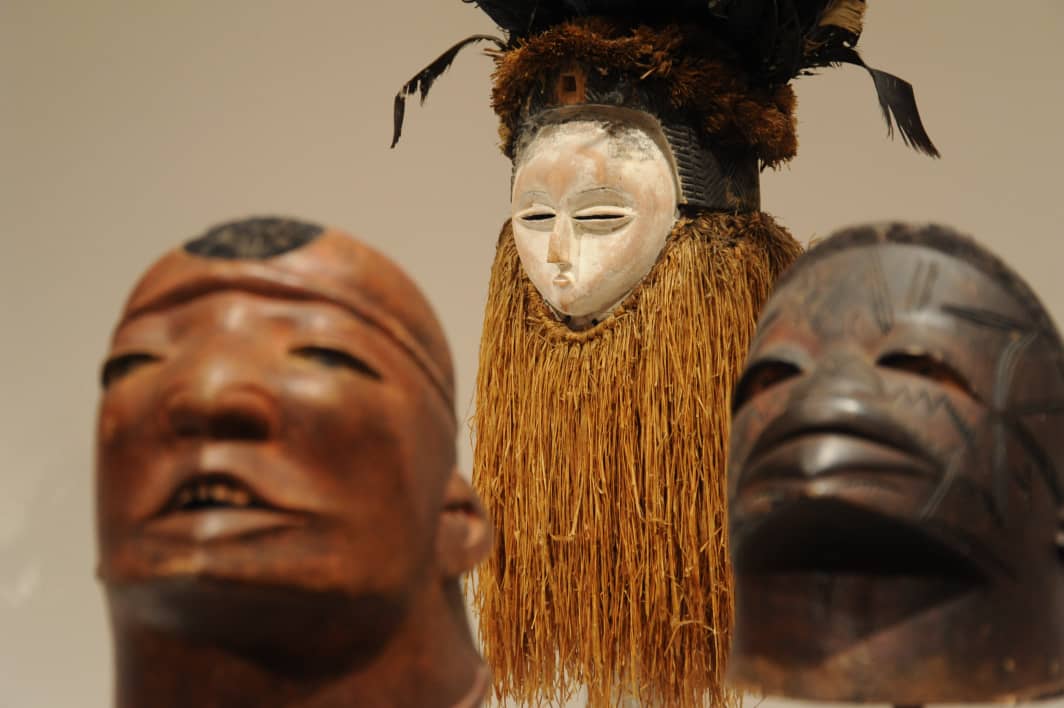
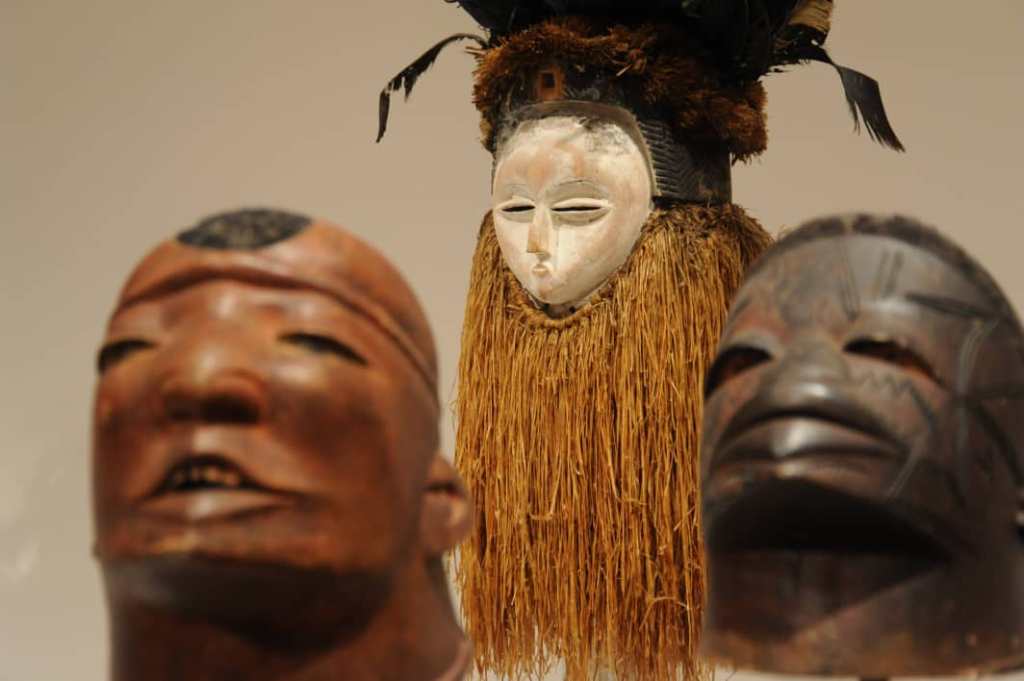
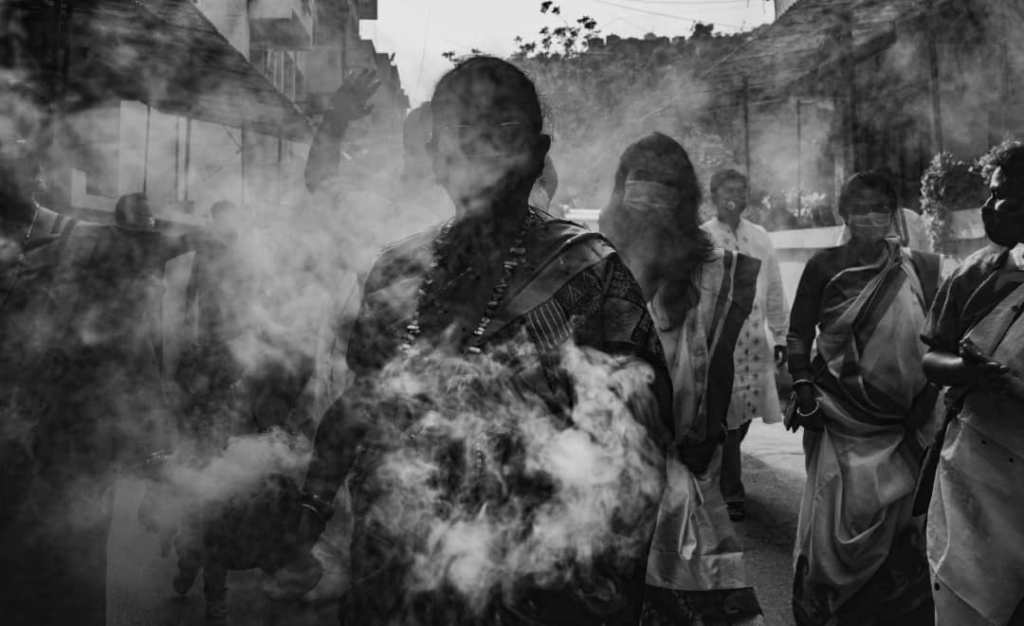
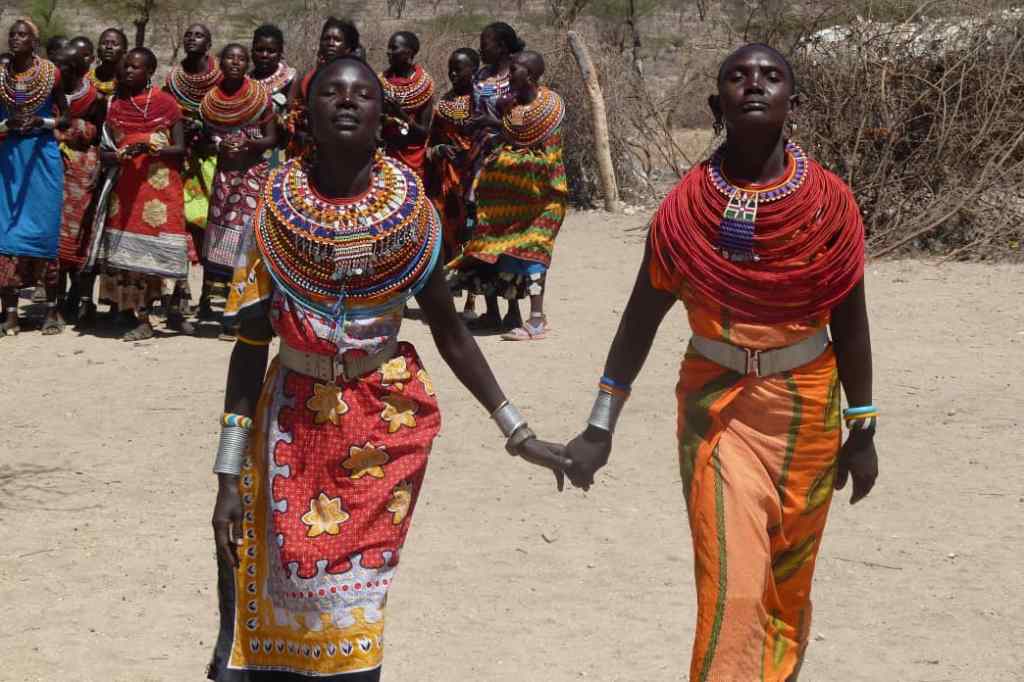
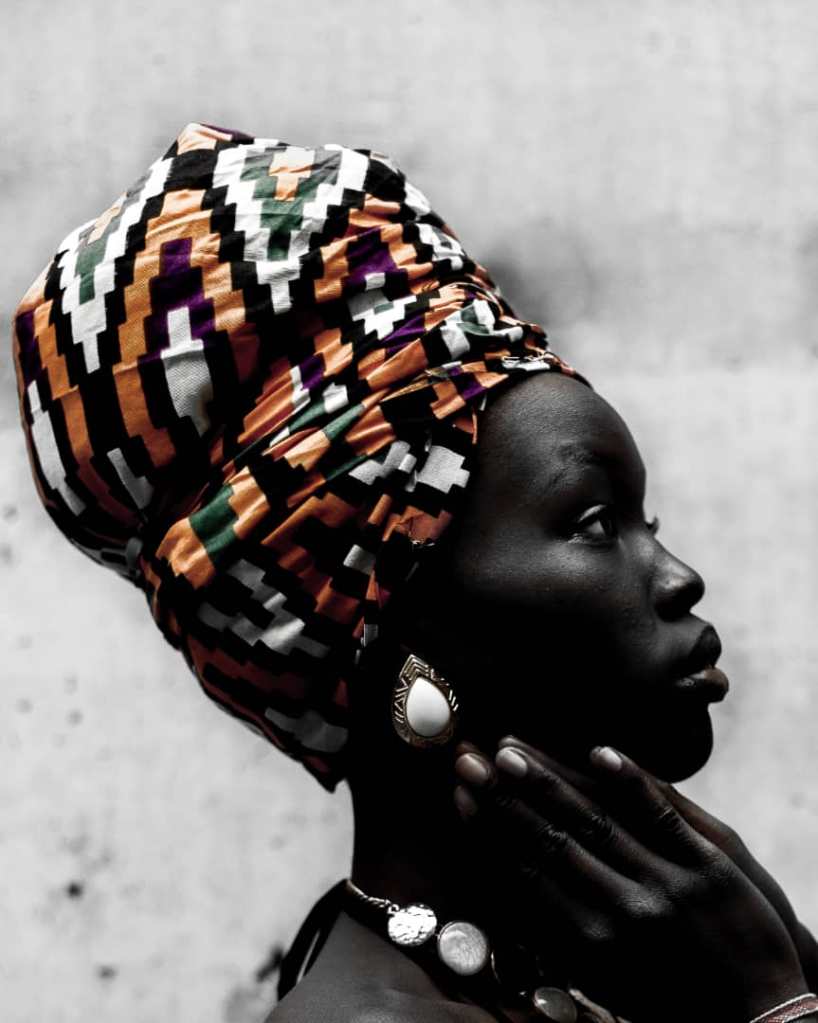
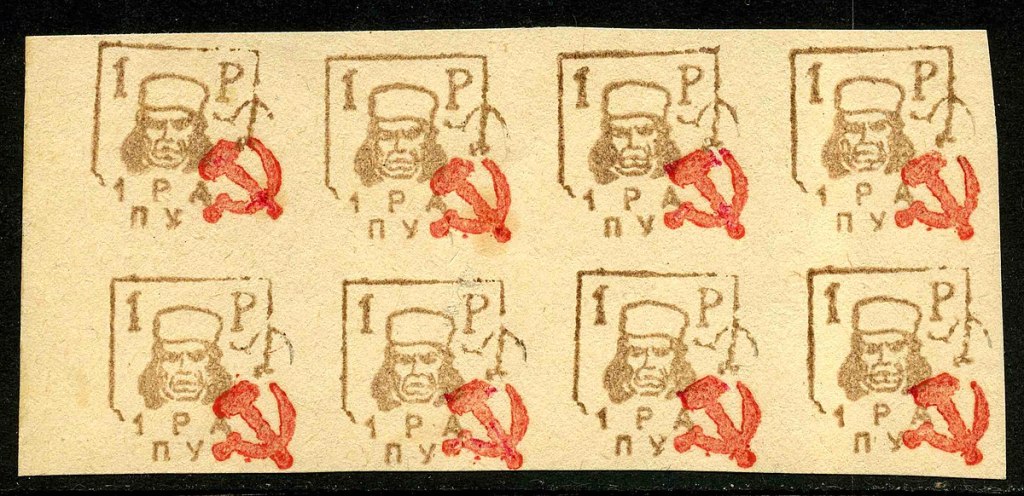
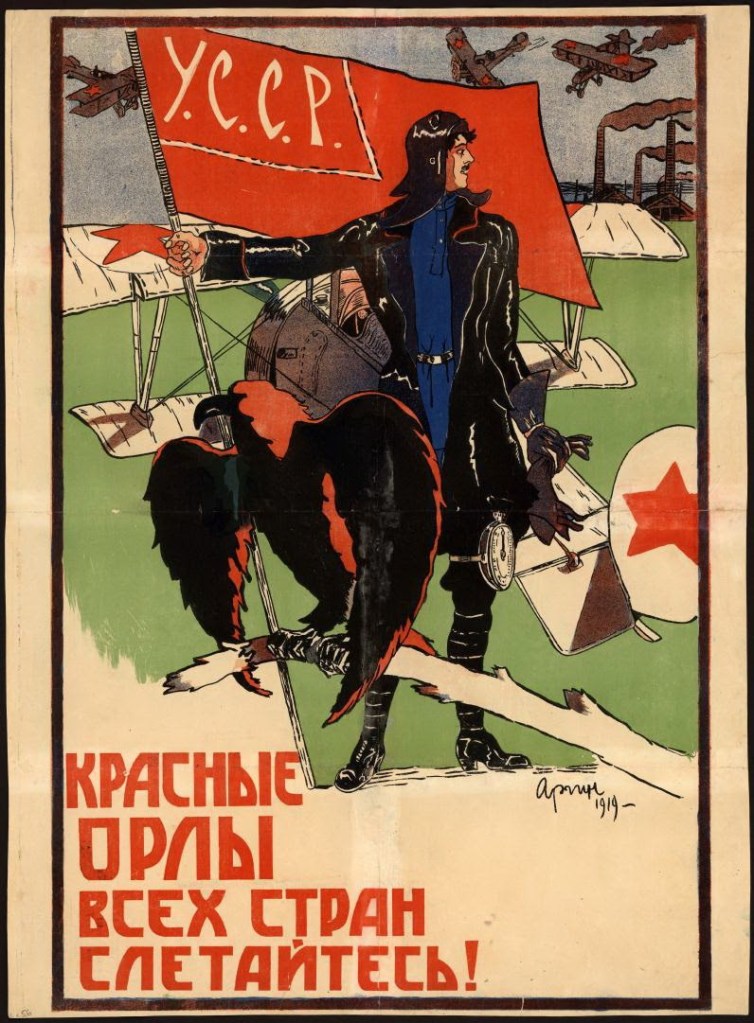
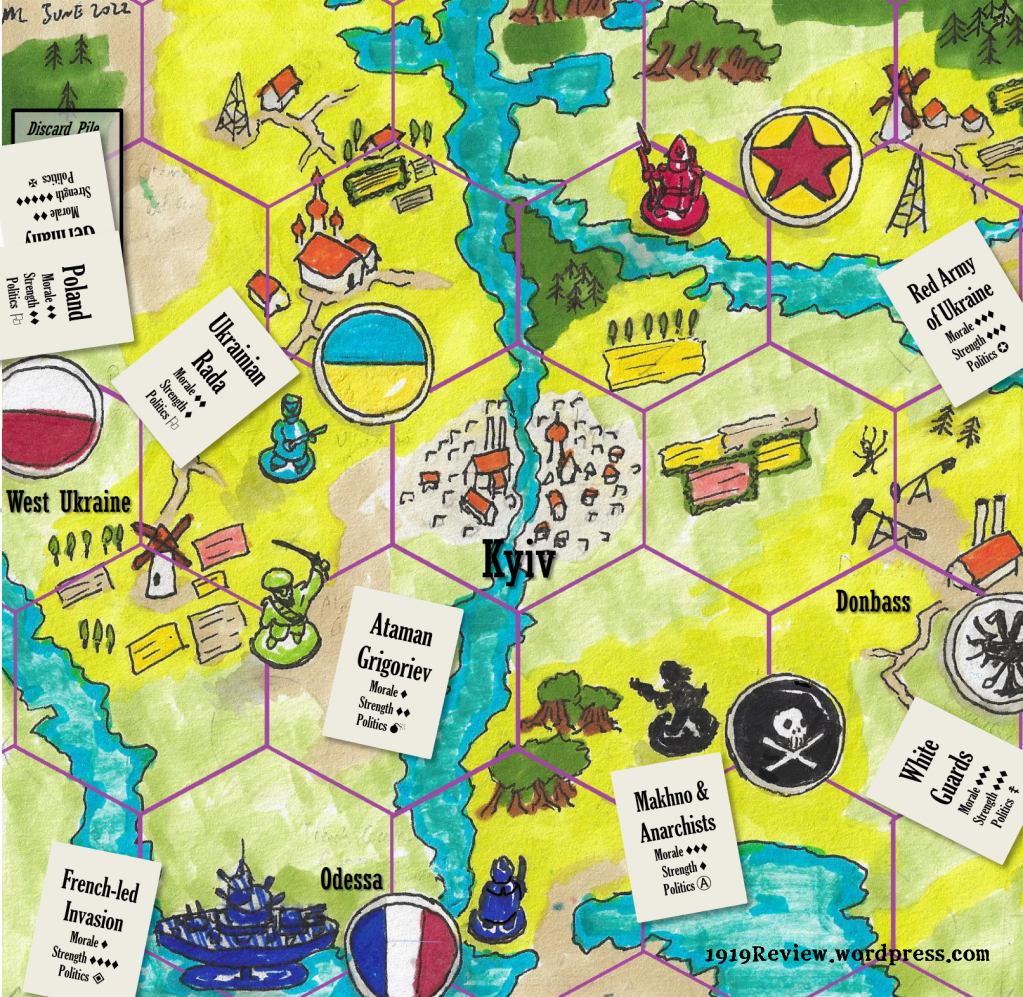
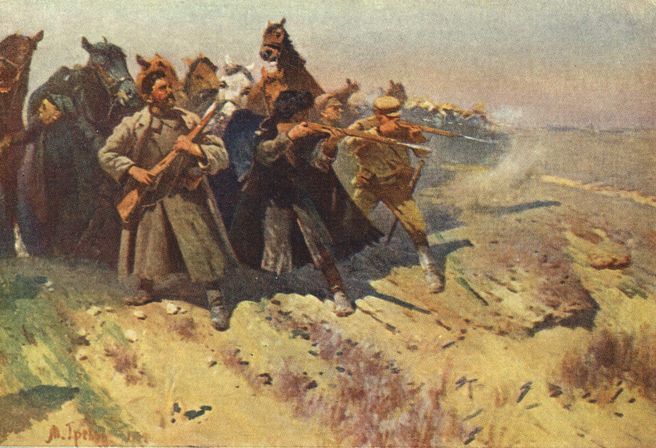
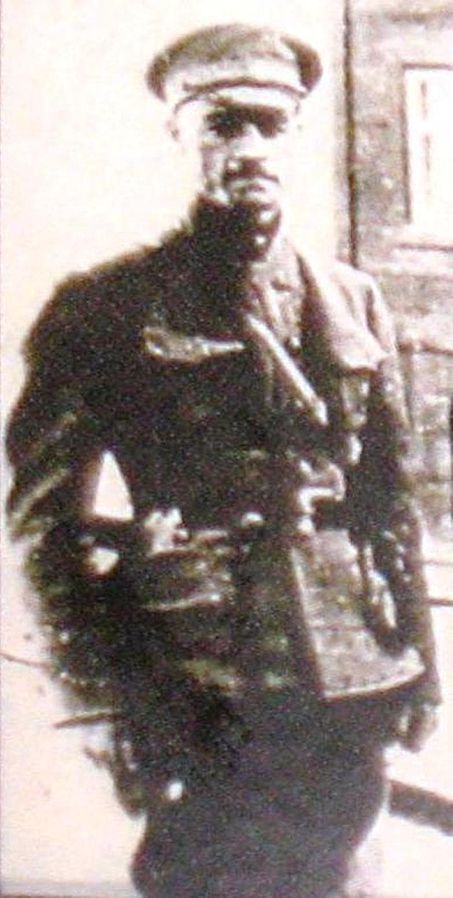
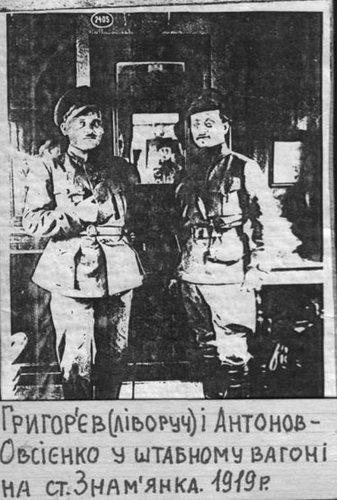
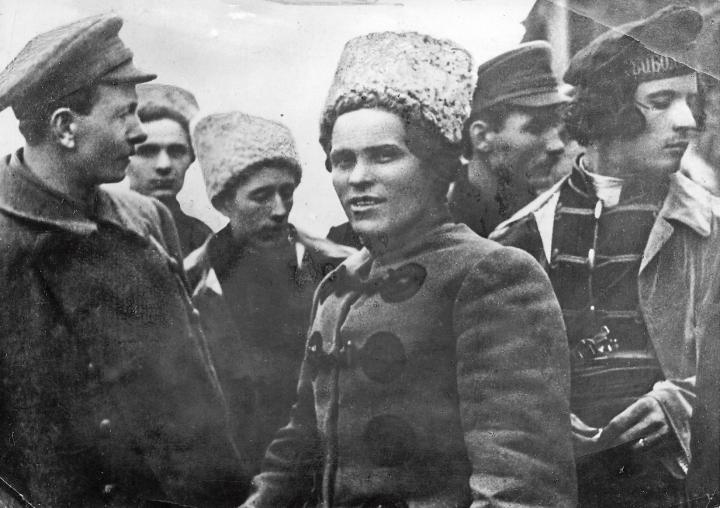

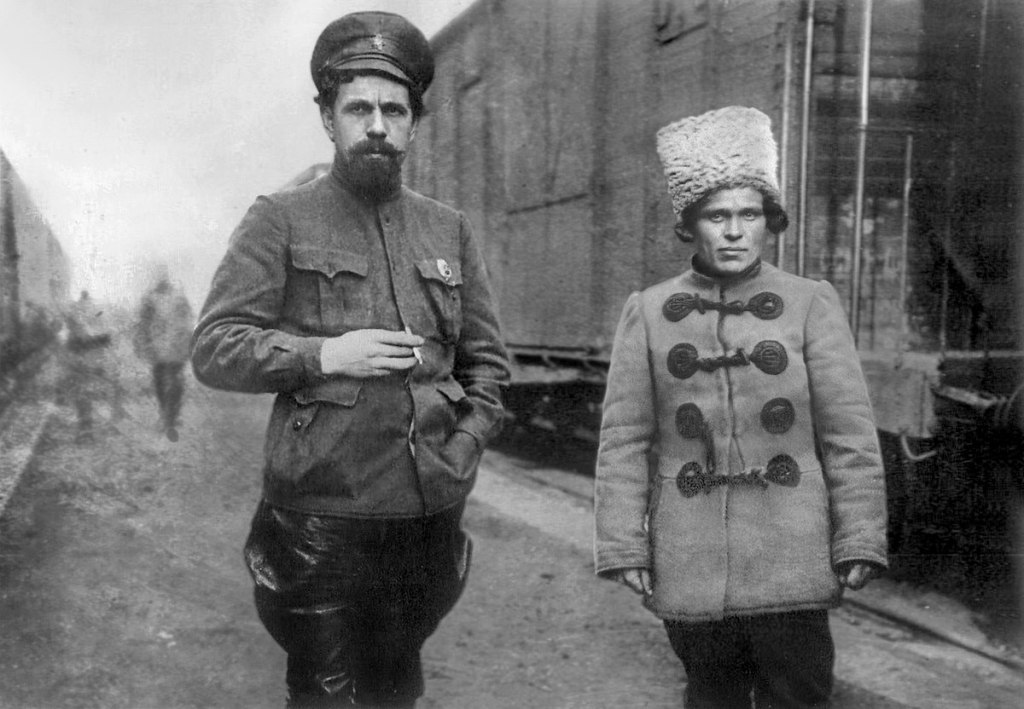
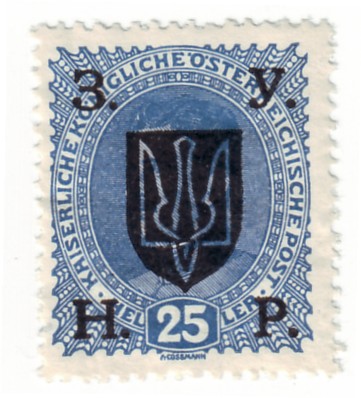
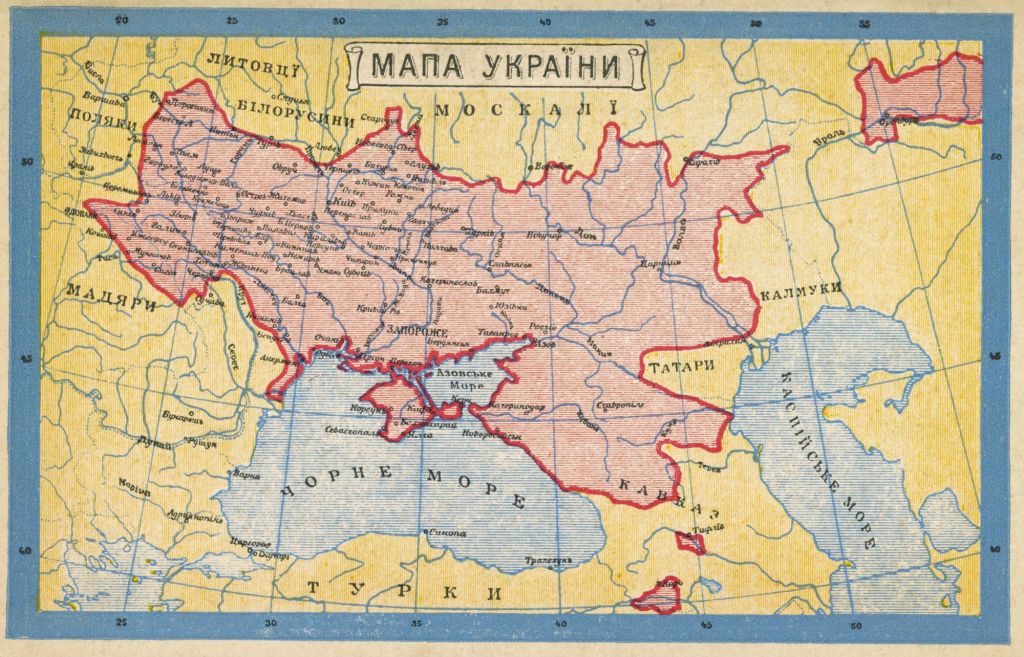
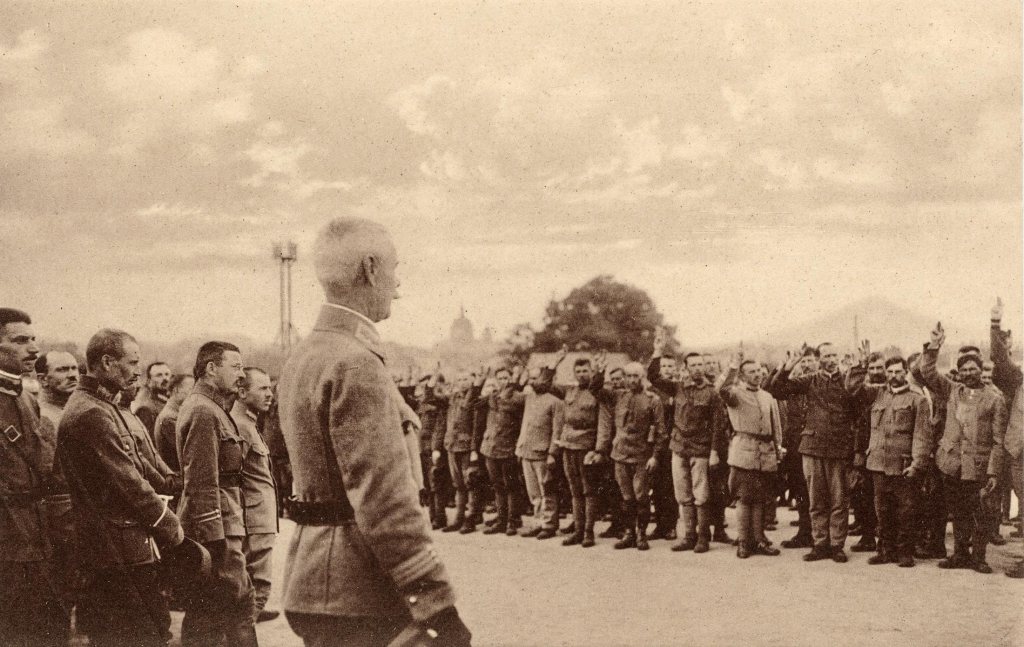
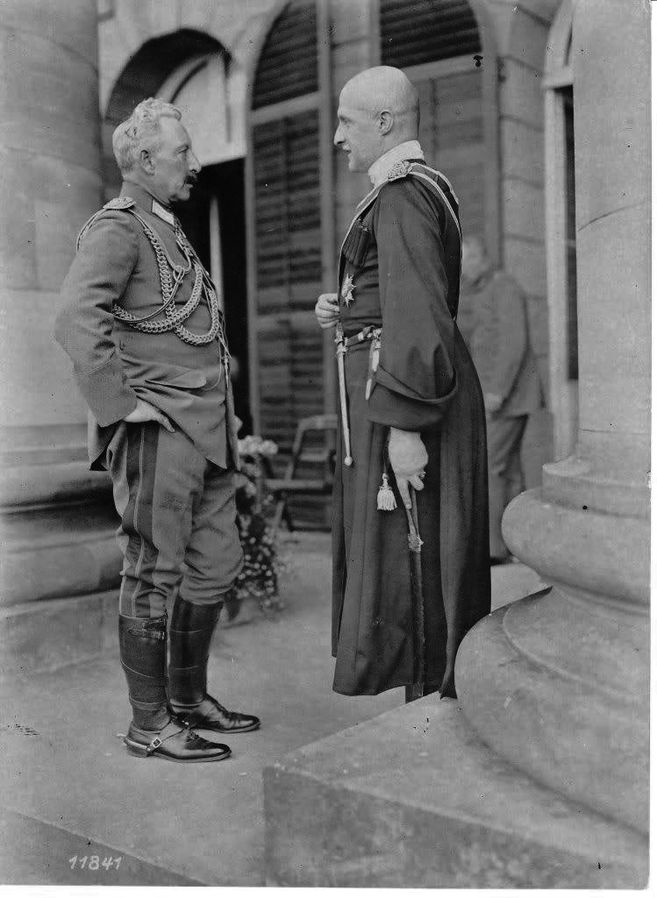
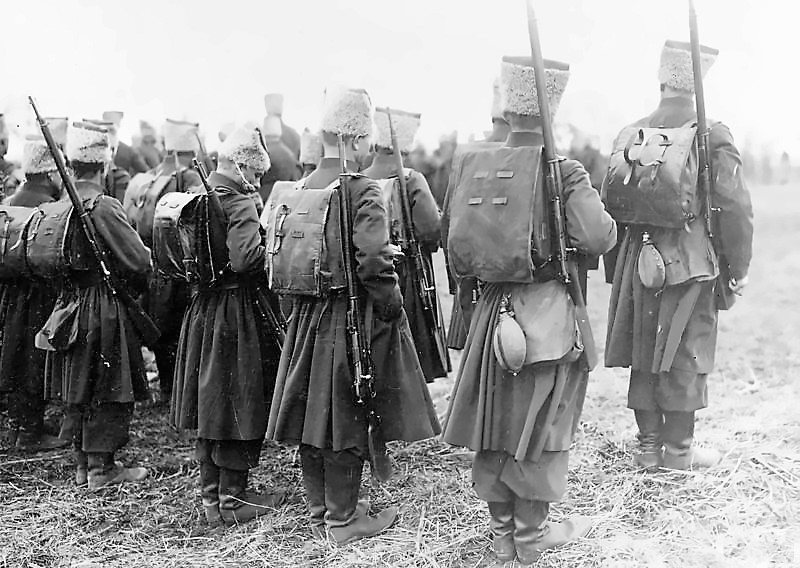
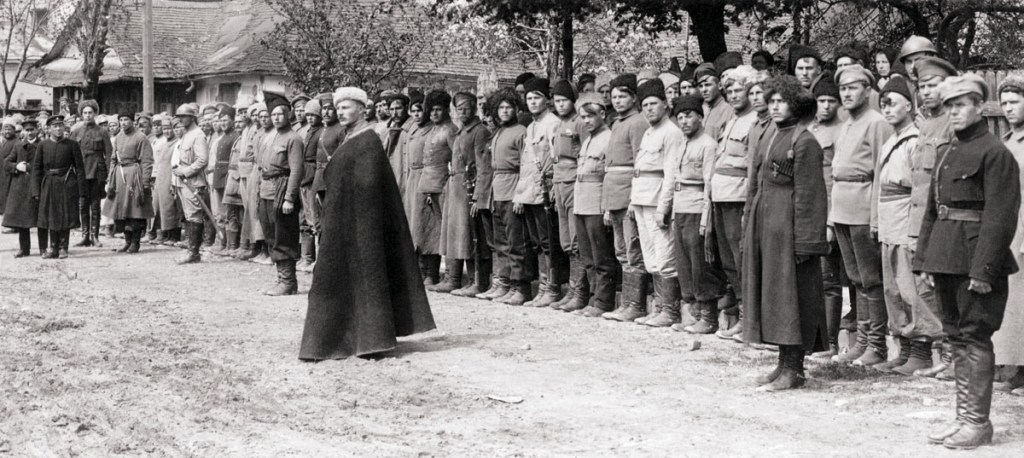

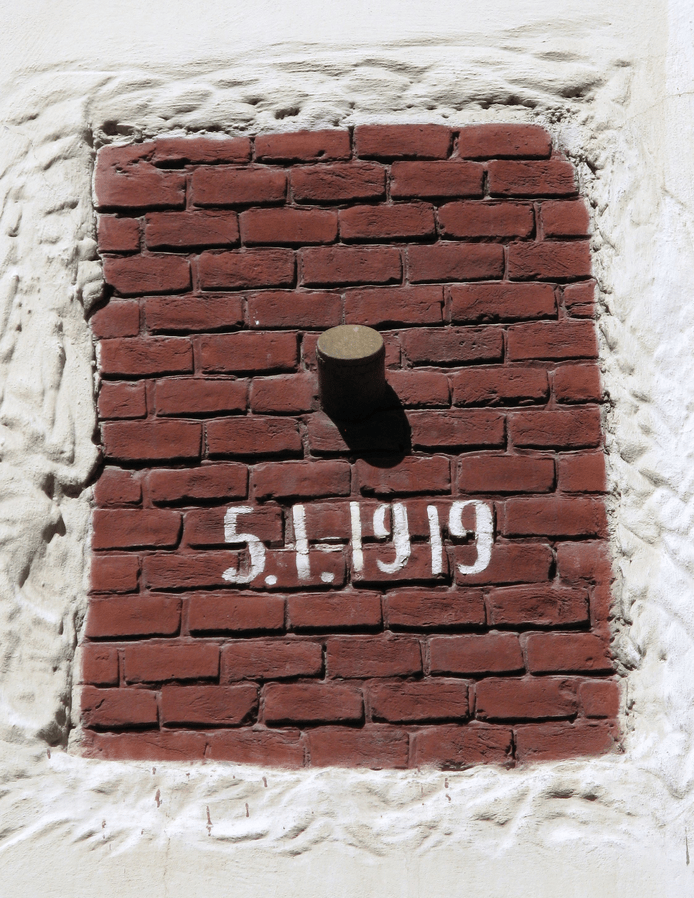
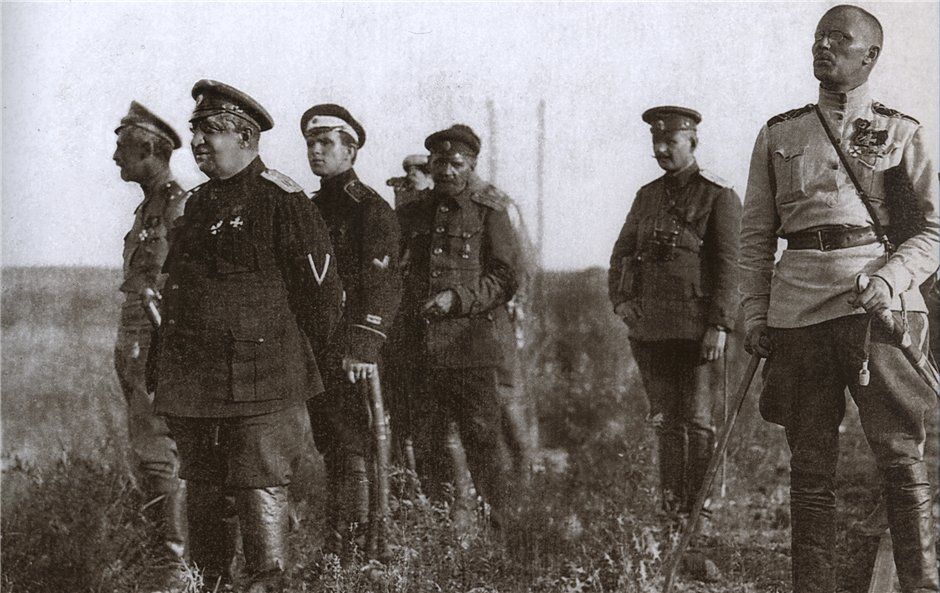
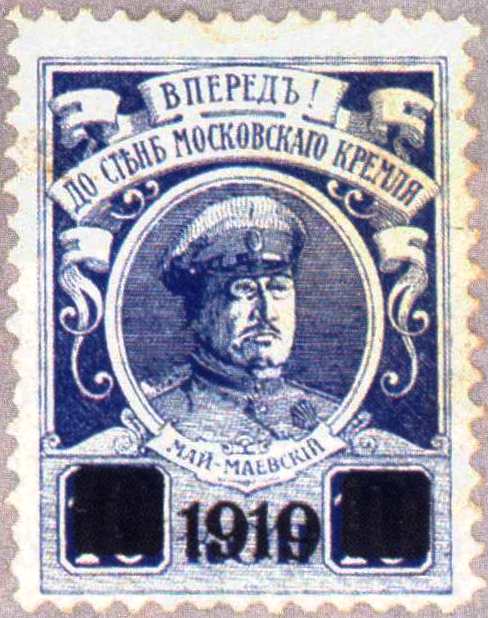

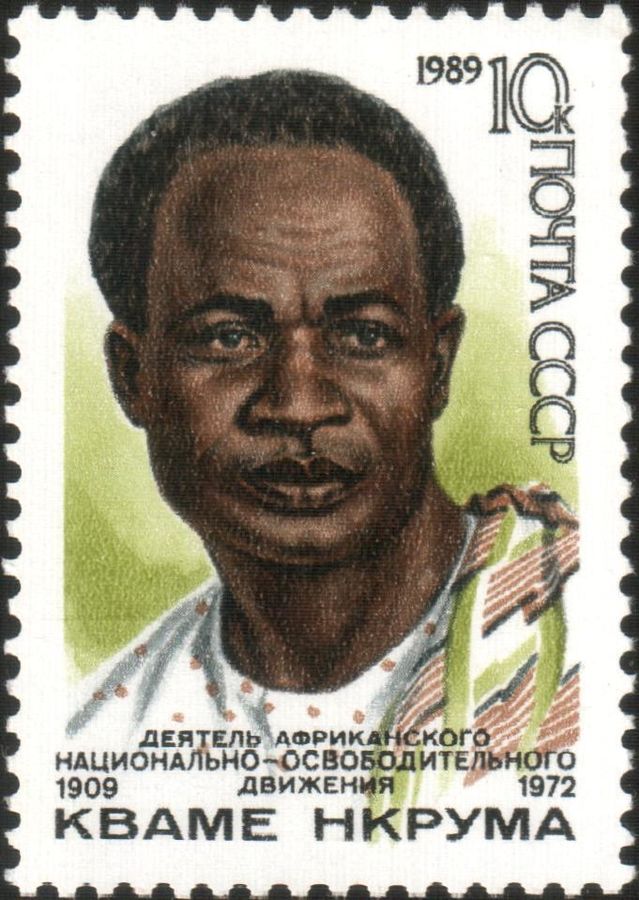
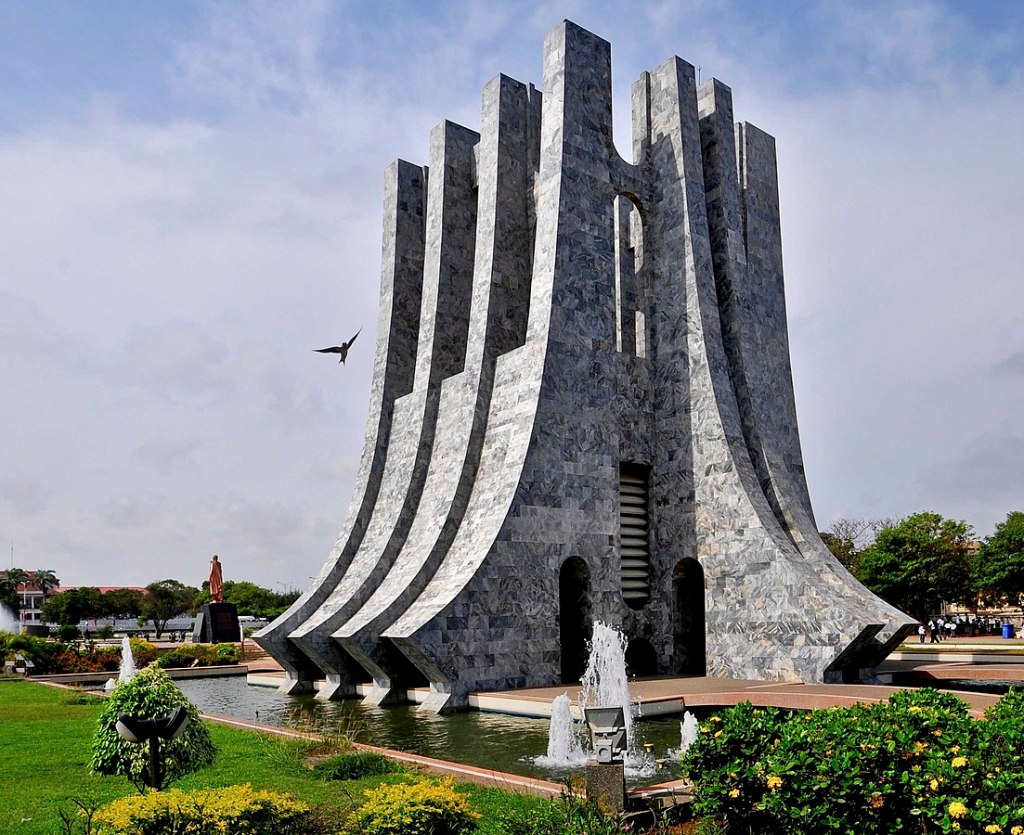
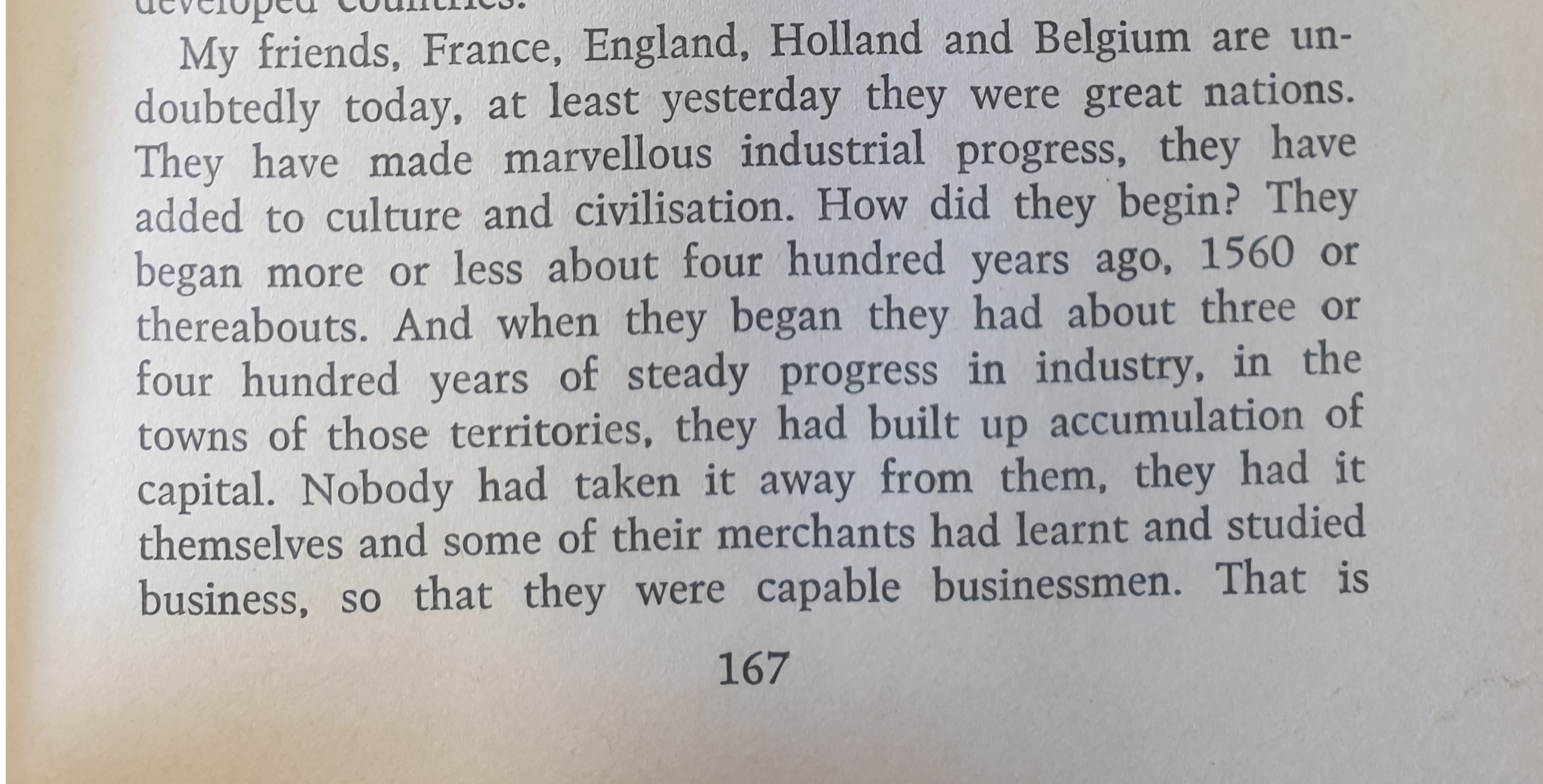
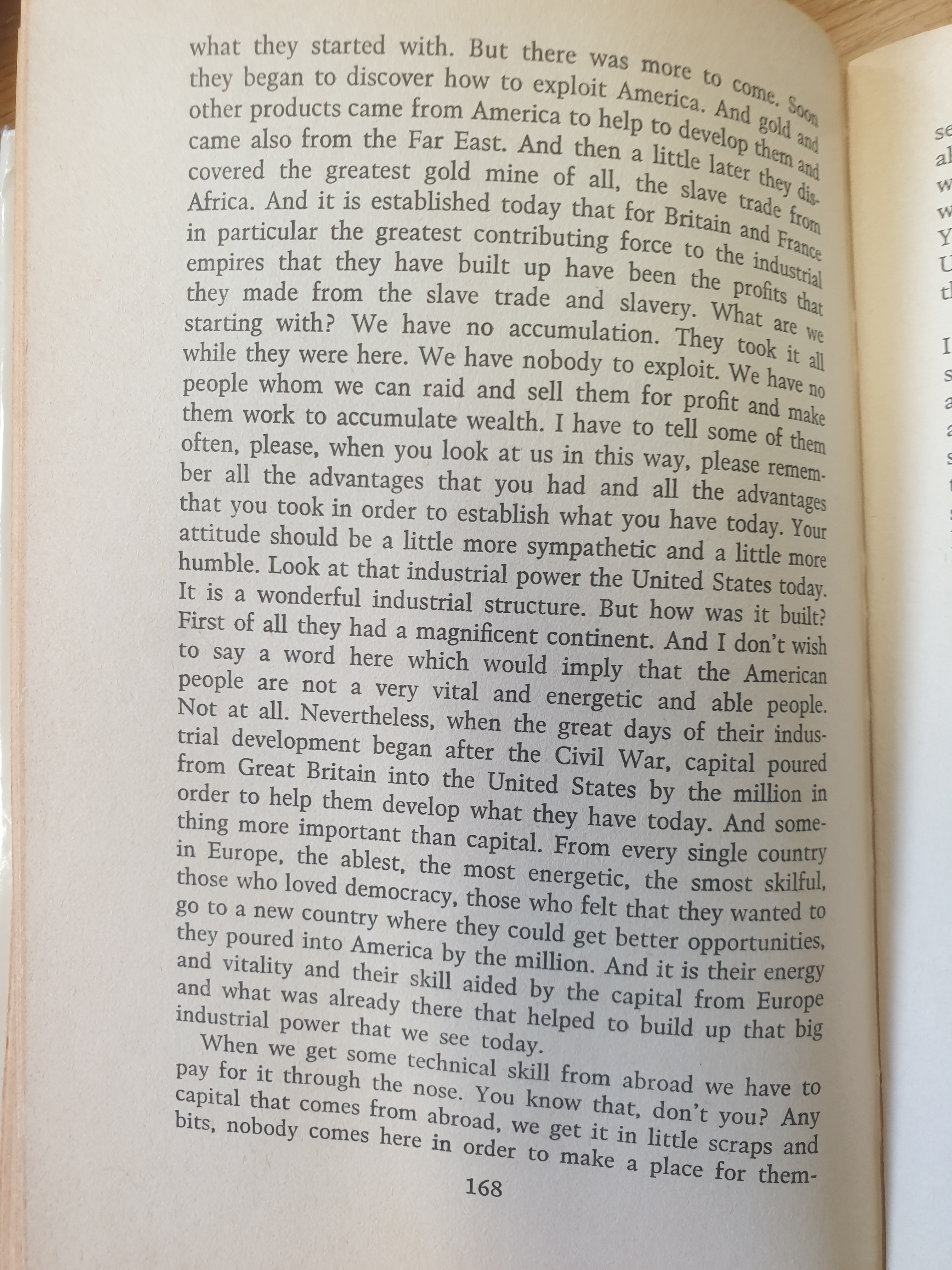
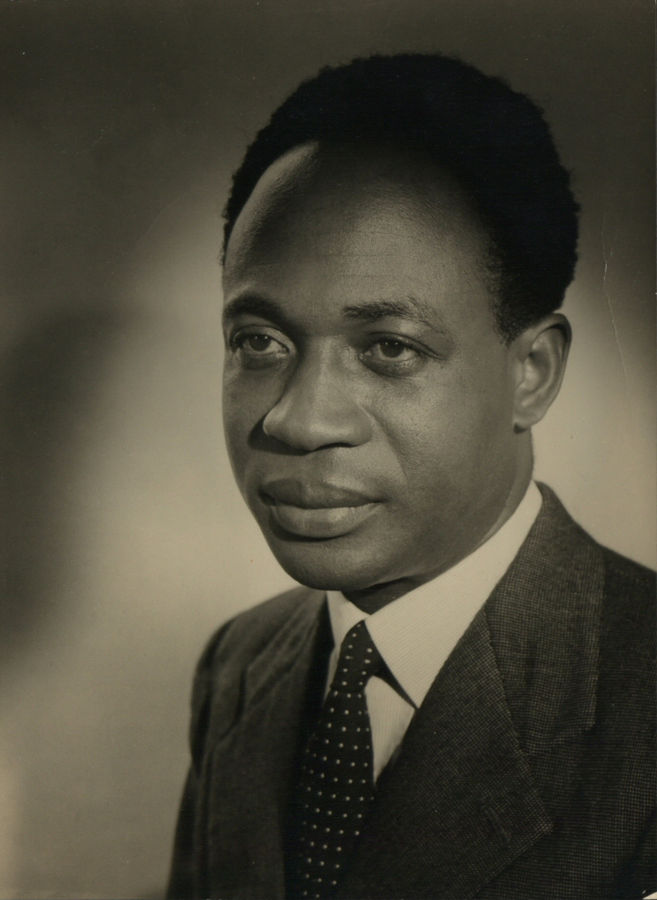

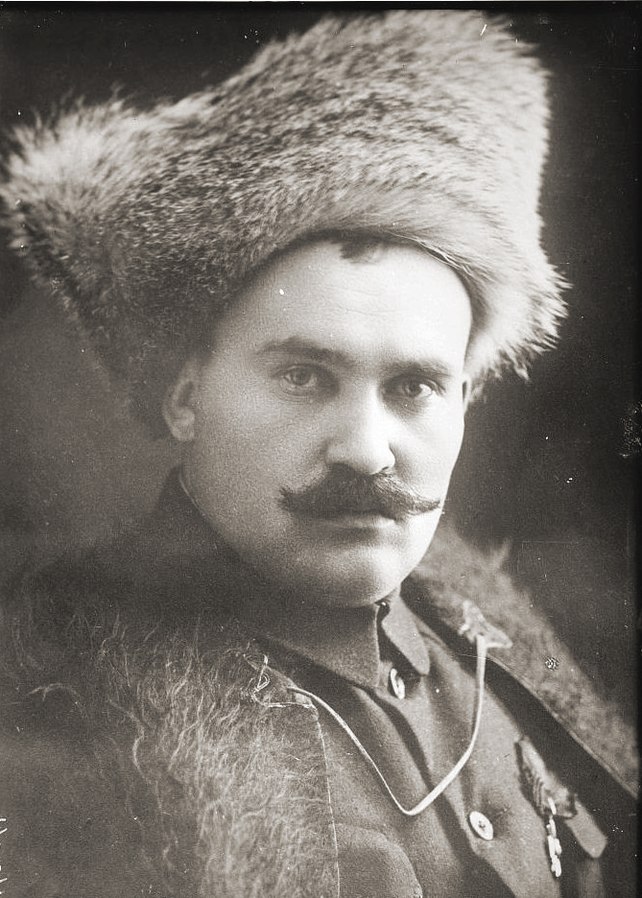
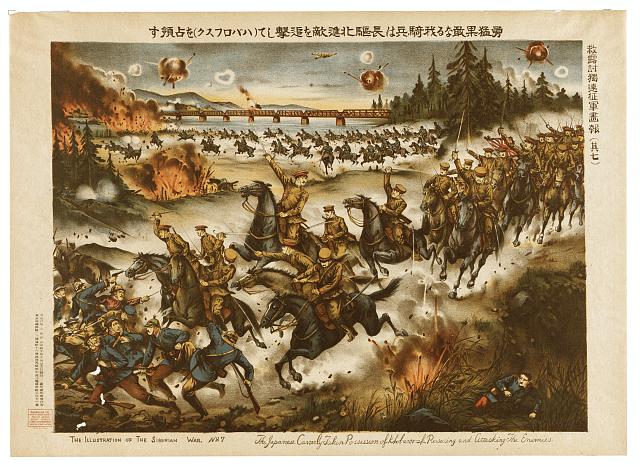
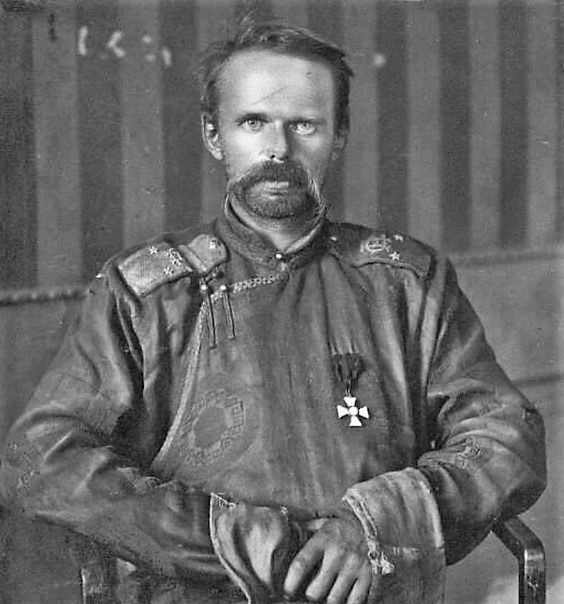
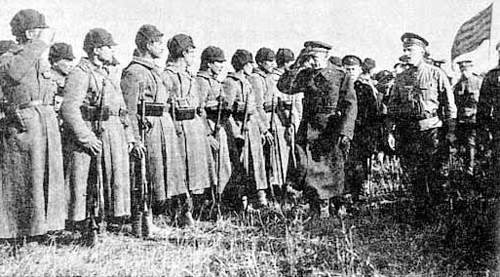
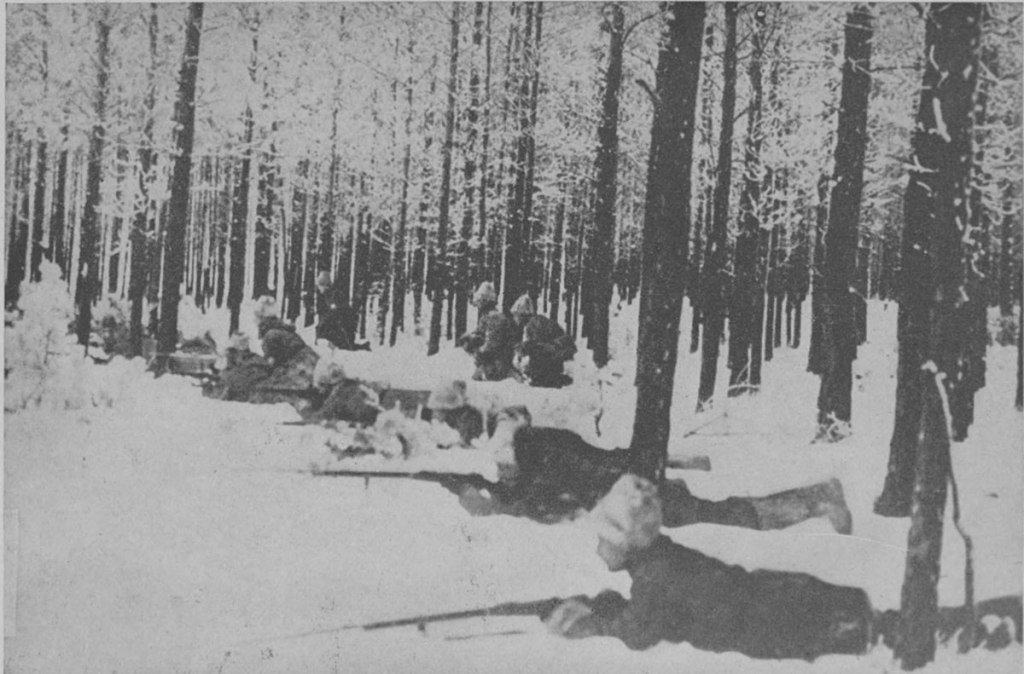
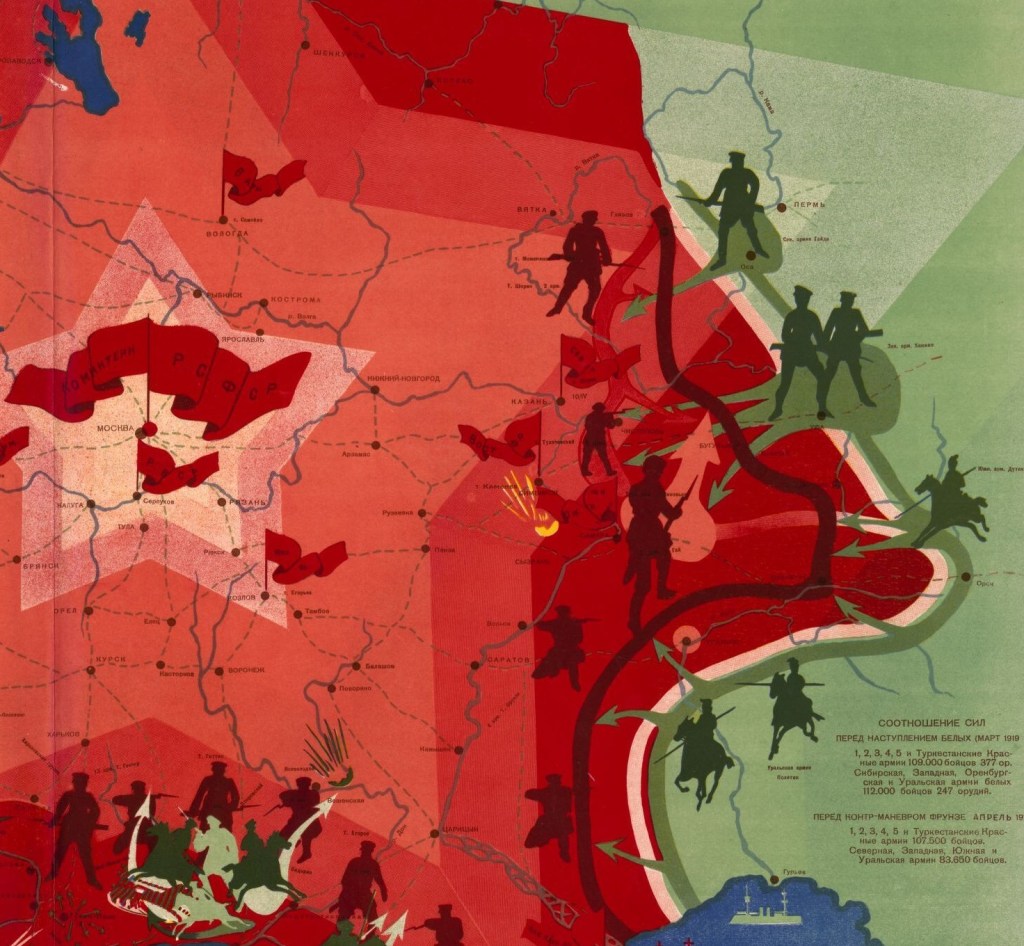
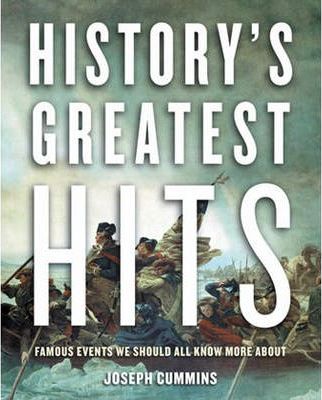
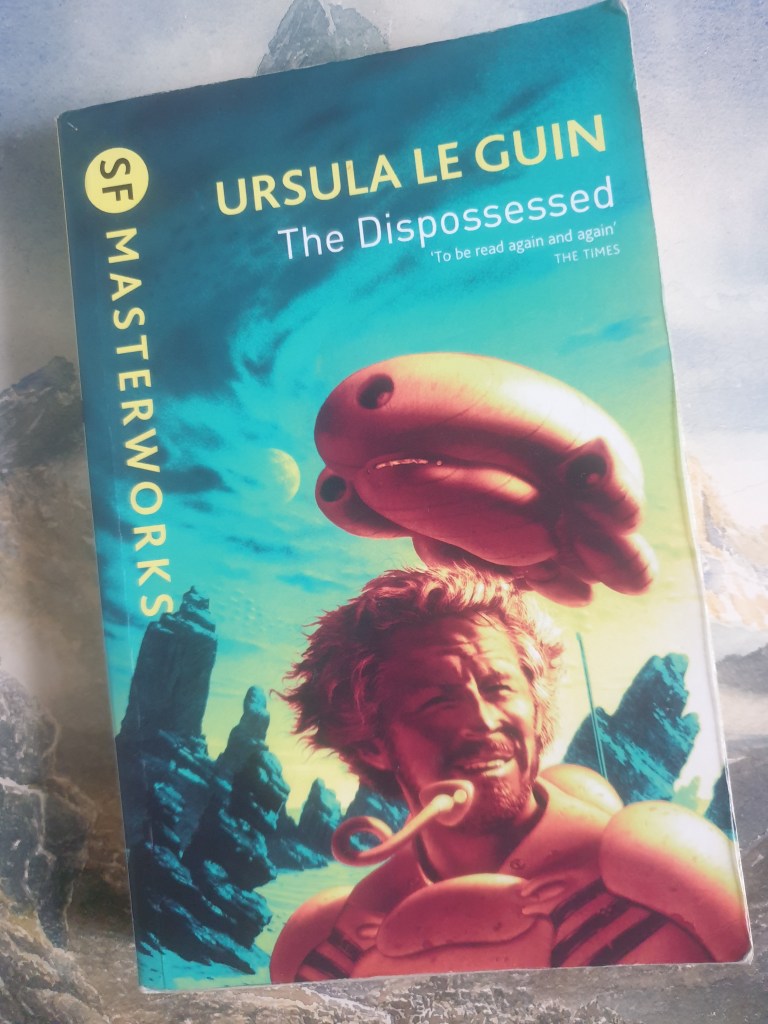
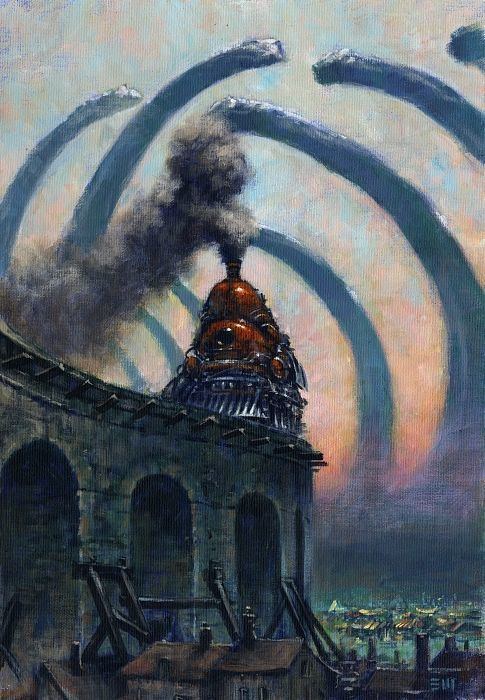
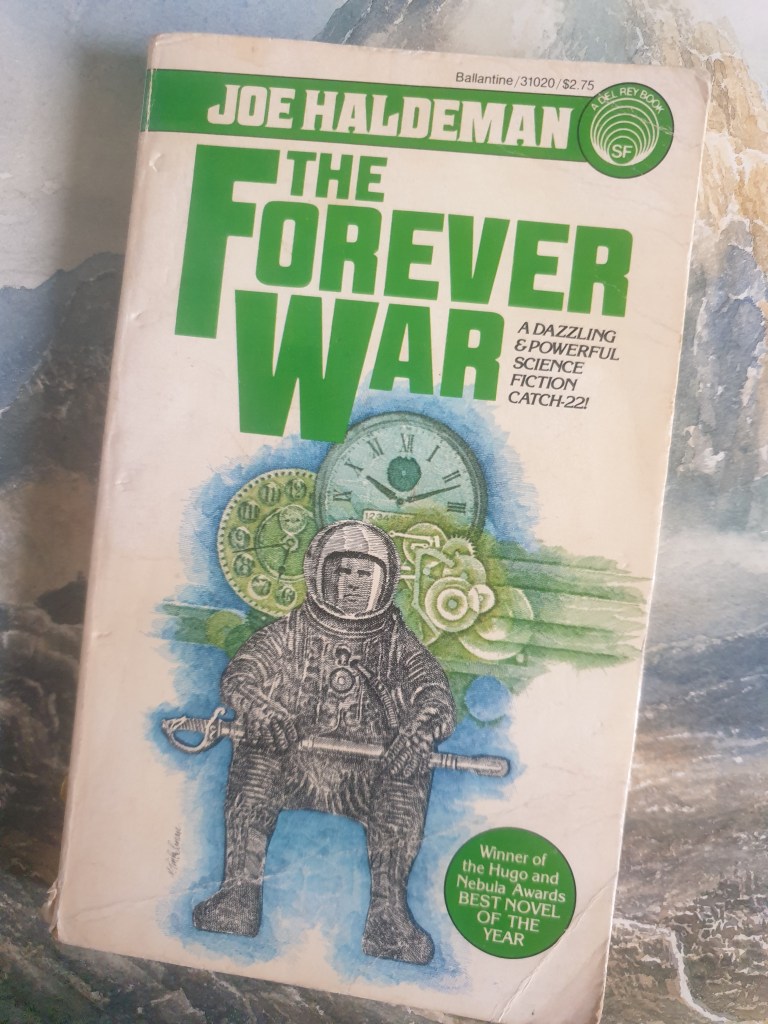
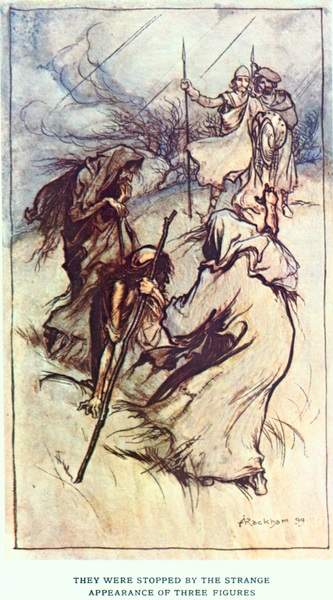

 The 1919 Review