
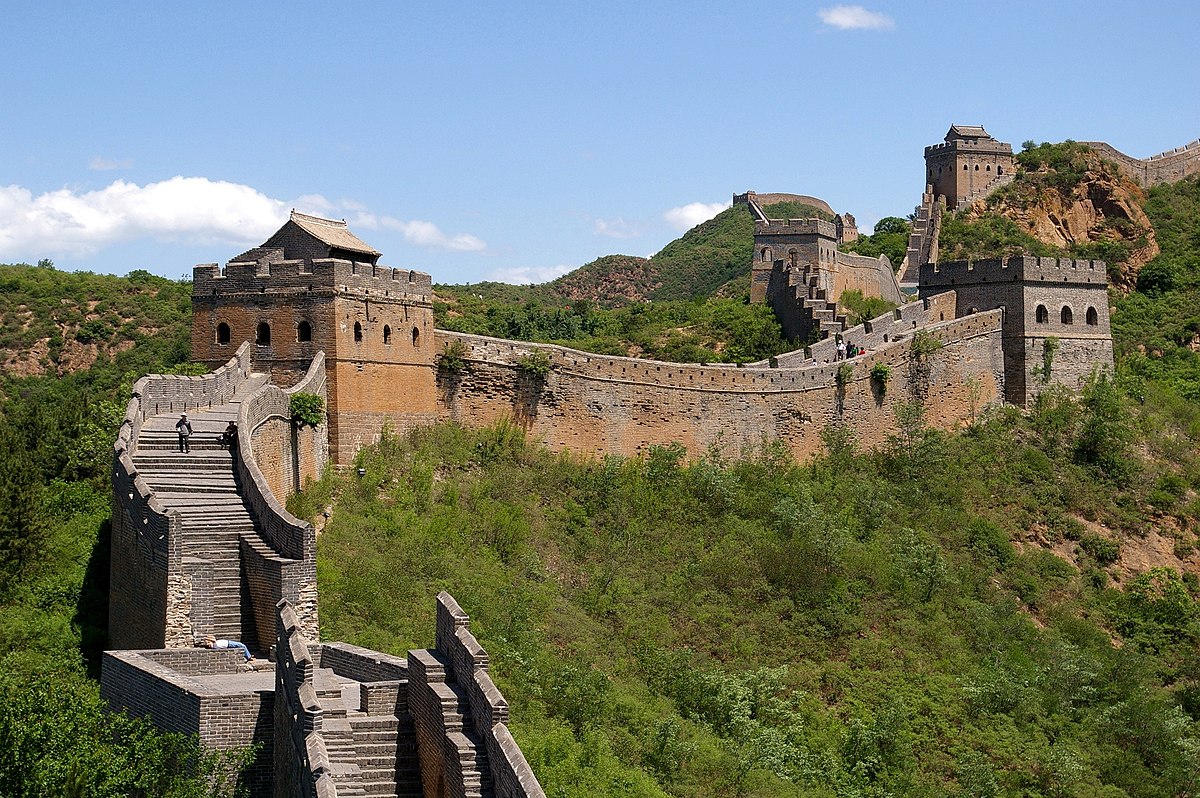
Bertold Brecht, ‘Questions from a worker who reads’
More school resources here for you today: material on the poem ‘Questions from a worker who reads’ by the great Bertold Brecht.
This is a poem I’ve never seen in a school textbook but which I’ve found brilliant and thought-provoking for a group of 14-15-year-olds. But really this would work with any age group.
Below is the text of the poem itself plus a presentation that should occupy the class for an hour or so.
Nothing to see here in… Hollywood
Review: Once Upon a Time in… Hollywood – dir Quentin Tarantino, 2019
Some movies have lines which are repeated and stressed so that they stick in your head for years after. Spiderman has ‘With great power comes great responsibility.’ Once Upon a Time in Hollywood has ‘Fuckin’ hippies.’ The phrase comes up again and again, right up to the moment when the last fuckin’ hippy is burned alive with a flamethrower. If you close your eyes, it’s like you’re watching South Park.
Another tic in this movie is the way the camera and script keep lingering on the titles and tropes of old racist westerns. In a lot of these movies the American Indians were an evil force, menacing the good (white) people of the frontier. Of course, director Quentin Tarantino is against racism and is highlighting this stuff in a mocking way. But he must be smart enough to realise that Once Upon a Time in Hollywood is a movie in exactly the same mould, where good people are threatened by an outside evil. The frontier is Hollywood in the 1960s, and the evil natives are the Manson family.
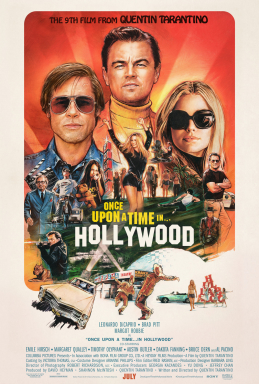
The film is compelling. We follow the travails of a washed-up actor and his stuntman buddy. At first we tag along with impatience as we want to get to the Manson bits, then we get drawn into the story of these two characters. But it remains in our minds that these guys are on a collision course with the Manson family, and we want to find out what Tarantino has to say about the Tate-LaBianca murders. Here’s a Hollywood movie made by big Hollywood names, directed by a Hollywood iconoclast. Surely these people have access to some folk memory, rumour or inside information. What will be revealed?
Meanwhile we get a warm nostalgic portrait of Hollywood in the 1960s: costumes, music, parties, and neon signs. This is just a wonderful place. Within this world, the worst thing that can happen is not so bad: an actor and a stuntman who kind-of deserve to be washed up are in danger of being washed up.
But lurking on the boundary of this world is a malicious presence which we know of as the Manson family but which the main characters simply see as (say it in your Eric Cartman voice) a bunch of fuckin’ hippies.
That’s it. That’s what Once Upon a Time in Hollywood has to say about the Tate-LaBianca murders: that Hollywood in the 1960s was great, until the Manson family came along; and wouldn’t it have been great if someone had been in the right place at the right time to stop the murders? So precisely nothing is revealed.
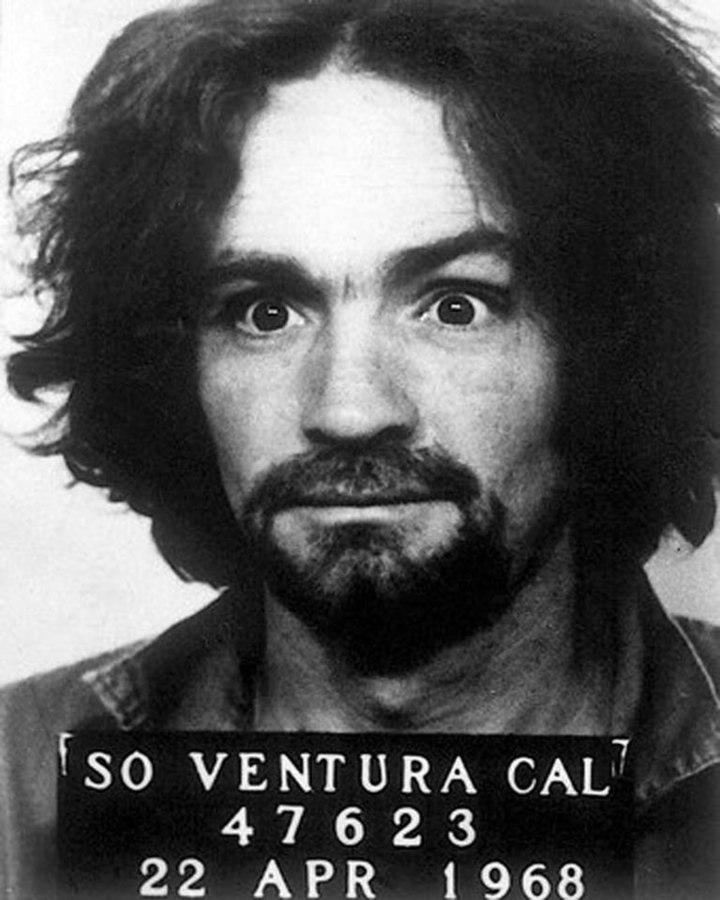
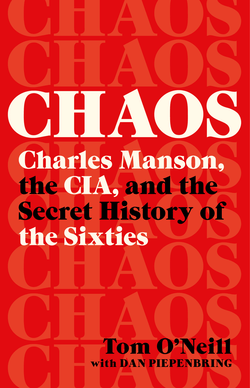
I watched this movie shortly after reading Chaos by Tom O’Brien. This extraordinary book charts a journalist’s attempt to follow up some of the many loose threads of the Tate-LaBianca murders. Bad shit was going on at the Polanski house. Manson knew big Hollywood names (which he gained by pimping teenage girls). The book explores a labyrinth of other strange connections and mysteries, driving at a point which contradicts Tarantino’s movie: that the Manson family were very much a part of the Hollywood ecosystem, and not an outside evil at all.
There is a gesture in this direction in the film. Near the end, one of the Manson family speculates that maybe the experience of growing up watching the violence of Hollywood is what made them violent. But we are expected to see this as pretentious studenty rambling. It is set up for us to dismiss it with self-righteous contempt.
Now, Chaos and Once Upon a Time in Hollywood came out in the same year and Tarantino could not possibly have read the book before making the film. But if you think about the Manson murders for ten minutes it should be clear that all is not as it seems. It’s probably not a coincidence that Manson, the guy who drugged and pimped out minors, showed up at the doorstep of Roman Polanski, the guy who later fled the United States after he drugged and raped a minor. Not only does the film fail to delve into any of the mysteries surrounding the case, it makes no reference to this elephant in the room.
If you’re looking for Hollyweird revelations about the dark underbelly of the movie industry, all Tarantino’s got to say to you is ‘Nothing to see here.’ This is not a film about the Manson murders. It is a western movie about an aging gunslinger and an outlaw who find redemption by defending a settler from the natives; only it happens to be set in1960s Hollywood. If you go in expecting an interesting pastiche along these lines, you will not be disappointed. Pitt and DiCaprio play an amusing pair of fuckups and antiheroes. It’s not necessarily a bad thing that the film mocks the Manson family instead of mythologizing them, for example when Brad Pitt mangles Tex Watson’s one-liner – ‘some devil shit.’ The ultra-violence of the ending could easily be interpreted as righteous fury.
I’ve usually enjoyed Tarantino’s movies but this was more of a mixed bag than usual. The journey was unexpectedly compelling; somehow the film got me to feel sorry for this blustering actor who’s had a successful career and has plenty of money. This journey has texture and verisimilitude. This movie knows Hollywood and cares about it and gets us to care. But the destination, when we finally get there, is disappointing. The ending just left me with screams of agony and the words ‘Fuckin’ hippies’ echoing in my head.
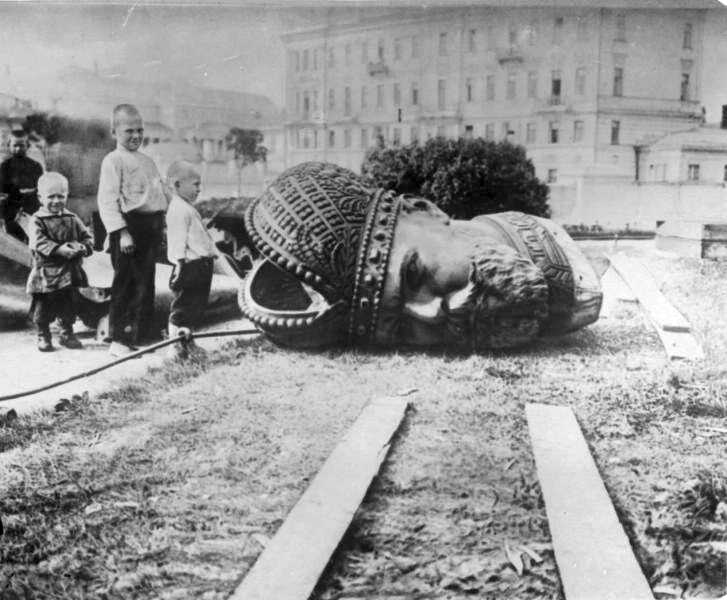
FAQ: Was Tsar Nicholas II a good person?
As a general rule, if you are reading about Russian history and you come across the words ‘rare blood condition’ and ‘Rasputin,’ more times than ‘Putilov’ or ‘Smolny,’ you are reading bad, derivative pop history. At the risk of sounding like a dick, I’d say if you don’t even know why the words ‘Putilov’ and ‘Smolny’ are relevant to the Russian Revolution, then you have never read anything half-decent on the subject.
Speaking of which, here are some sources:
https://1919review.wordpress.com/2021/12/30/my-sources-battle-for-red-october/
‘History’ of this kind always portrays Tsar Nicholas II as a nice bloke who was dealt a bad hand by history.
The other day a great example of this popped up, as these things often do, on Facebook. A page with 1.7 million views titled Being Liberal shared a post from Rebel History. It was one of those ‘on this day x years ago’ posts, and it was on Tsar Nicholas.
https://m.facebook.com/story.php?story_fbid=339908414838003&id=100064565418966
It struck all the usual notes. The Tsar, it informed us, was beleagured on all sides by military disasters, angry ‘lower classes’ and terrorism.
Here are some relevant facts which the post did not mention and which these kinds of things never mention.
First, Nicholas was a massive anti-Semite. He sponsored the infamous pogroms which killed thousands of Jews and drove millions more into emigration. You know all those impoverished Jewish people on the Lower East Side of New York in the early 20th Century? They had fled there from the Russian Empire because Nicholas and his family had Nazi-style laws against the Jews, and every so often egged on mobs to burn their houses, rape, torture and kill them.
I was about to write that ‘other groups were persecuted too.’ But that doesn’t cover it even half way. A majority of the population of the Russian Empire was non-Russian, and were legally disciminated against as a result.
A page called Being Liberal shared the post in question. This page has almost hourly posts about the war in Ukraine. Did the admins of Being Liberal think that sharing a post lamenting the fall of the Tsar would be some kind of gesture of support to Ukrainians? It was the Tsars who suppressed the Ukrainian language and enforced ‘Russification’ policies.
Tsarism witnessed the genocide against the Circassians among numerous other sanguinary massacres. In 1916 Tsar Nicholas responded to a rebellion in Central Asia with a campaign of repression that killed 88,000 people.
Every Russian, meanwhile, was assigned a ‘social estate’ which circumscribed their rights and duties. The position of women was dire beyond description, especially in the rural areas.
That page, again, is titled ‘Being Liberal.’
The post did acknowledge that ‘the Czar’s government’ suppressed the 1905 revolution with violence.
That needs some elaboration, though. Workers living in severe overcrowding and hunger organised a union (which was against the law). They marched peacefully with a humble petition to the Tsar. The Tsar’s soldiers gunned them down, killing around a thousand on that day. The Tsar went on to kill around 15,000 over the course of crushing the 1905 revolution.
It took that near-miss revolution to convince Nicholas to allow the Russian people to have a parliament. By the way, the new parliament was rigged in the Tsar’s favour and had a restricted franchise.
To clarify, before 1905, no parliament, and Nice Bloke Nick killed all those workers on Bloody Sunday 1905 because he preferred it that way.
One mistake pop history makes is to focus on individual personalities and to engage in fruitless debate over the moral responsibility of individual famous people. But around Tsar Nicholas this goes even deeper, because he had a terrible personality and he definitely had personal moral responsibility for the evils of his regime. He was stubborn and narrow-minded even for an absolute monarch.
‘By all accounts’ the post tells us, ‘Nicholas was happy to give up power and live a peaceful life in exile with his family.’
‘By all accounts’! Not by mine.
To get the Tsar to abdicate, it took five days of street fighting. It took thousands of deaths on the part of unarmed workers battling police and soldiers. It took a military mutiny and the burning of Petersburg’s police stations.
At the time, Nicholas II was dreaded and loathed across the world as a bloody dictator. Liberals celebrated his downfall, not just socialists. But liberals today, at least some of them, have had their knowledge of that history dulled. A part of it is that anti-communism makes for odd political bedfellows. This has taken the form of bad pop history. That is, decades of people hearing and repeating clichés about Rasputin and rare blood conditions.
Advice for Bloggers
March 26th will mark one year since i launched The 1919 Review. I want to mark the occasion by offering some advice for beginner bloggers.
1. Blogs Snowball
I had an old blog which I approached with zero plan or consistency, but on which I threw a lot of varied stuff over 5+ years. I have not posted on it since 2015. Somehow in spite of this complete neglect its View Count and Visotor Count coasted along with a combined 6,000 visitors in 2016, 2017 and 2018. It took years for engagement to fall away. Even now it’s a rare week the old blog doesn’t get 20+ views. For a lot of last year, the old blog was doing better than The 1919 Review!
There’s some good stuff on that blog and I’m happy people are still reading it. But my point is this: blogs snowball. Through some mysterious process, they develop a momentum of their own.
So…
2. Keep at it and be consistent
I launched The 1919 Review with a budget of zero but with a bit more planning and determination than I had put into previous projects.
For months, it got practically no views or visitors unless I shared something on social media. The base line default was zero.
One year on, the blog has organic reach. Social media shares generate a spike of views and visitors, of course, but now I have a steady base line of engagement between shares.
It might be the subscribers I’ve built up. It might be that, having built up a certain volume of posts, I’m casting the net wider on search engines. Unless it’s just some inscrutable trick of the algorithm that governs the WordPress Reader feed, it must come down to this: the blog has organic reach because I posted religiously once per week for a year.
3. Use social media
For me, this means Facebook; I don’t really use the others. I’m not a big fan of Facebook, for all the usual reasons, but I still use it every day, again, for all the usual reasons.
One good development over the last few years has been the culture of well-moderated and pleasant public and private groups. It is through sharing posts in such groups that I got some of my biggest spikes in engagement.
Be a member of the group for a while before posting your own stuff, and meanwhile contribute in other ways. Give more than you take. Before you self-promote, read the room and take a look at the rules.
4. Make a podcast
I linked in with Anchor and Youtube to make a very basic, rough-and-ready audio version of my series Revolution Under Siege. It’s not somewhere I expected to go, and it hasn’t brought massive traffic, but it was a lot of fun and it has potential.
5. Savour the little victories
Cut your cloth to measure. With no promotion budget and with many other commitments in my life, it was out of the question that I would be marking big victories and breakthroughs in the first year of The 1919 Review. But I hit every target I set myself, and that feels good. Celtic Communism and Sláine were the biggest hits of year one.
Rather than my usual rule of once per week, I’ve posted three times in the last few days. This is because I’ll be away from tomorrow until April.
Until then, thanks to all my readers, subscribers and sharers.
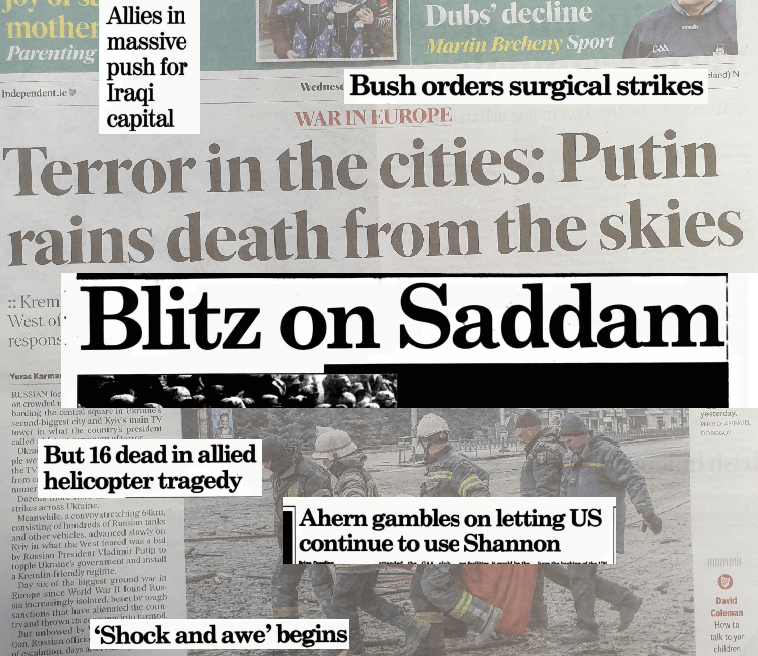
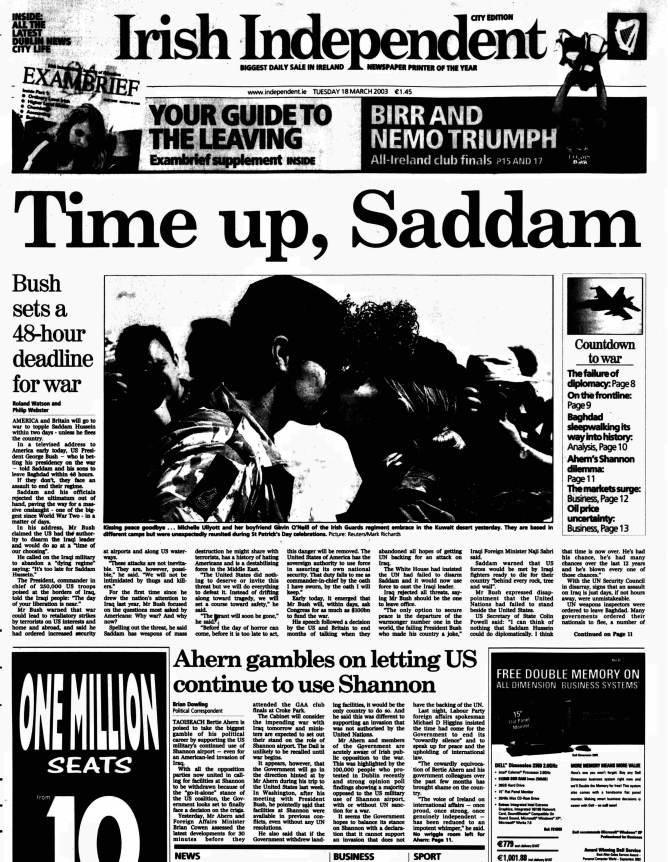
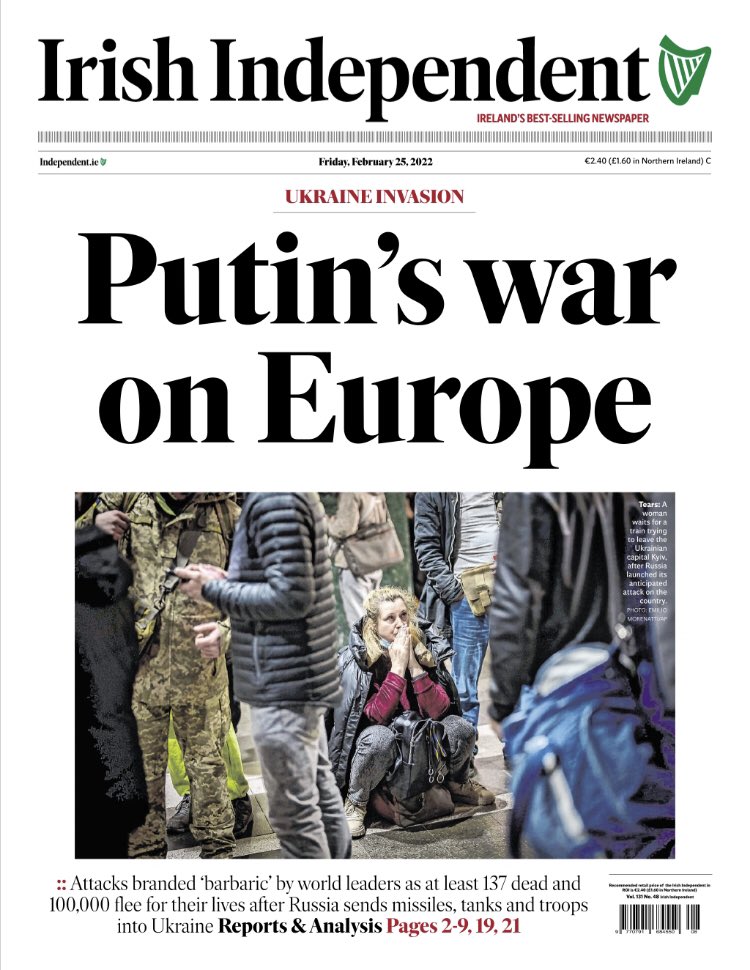
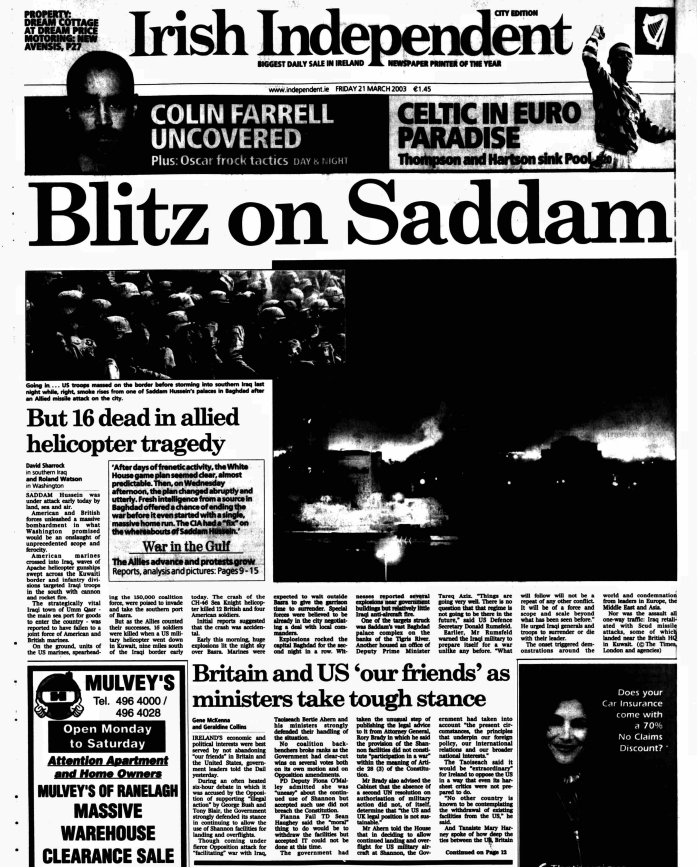
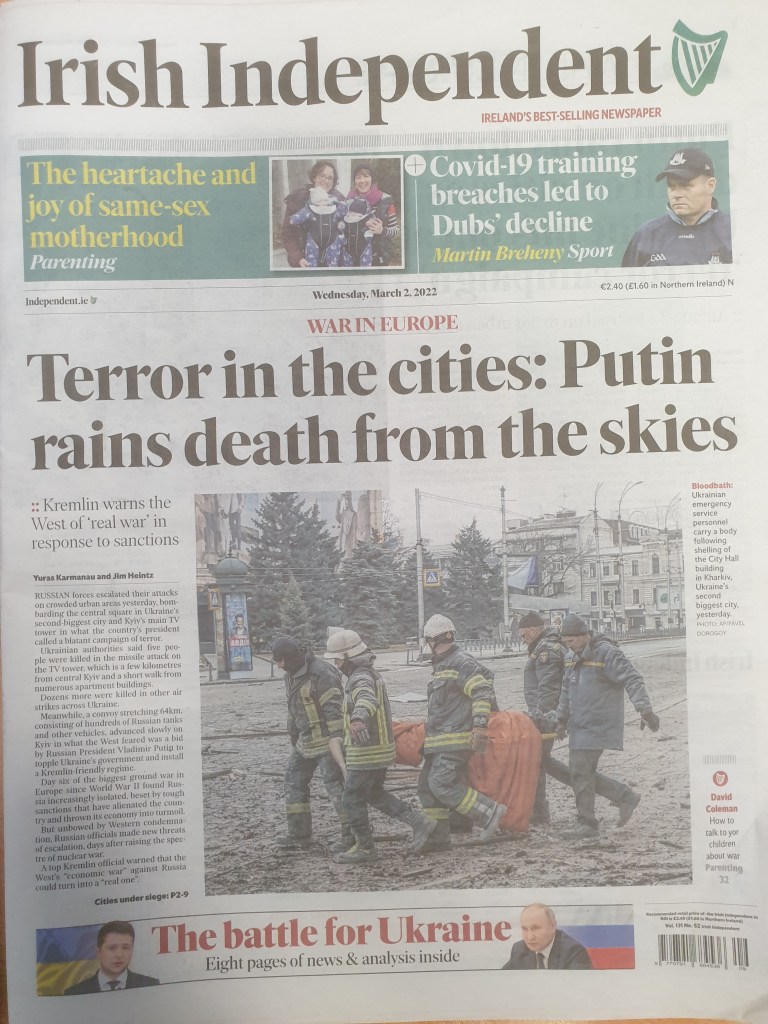
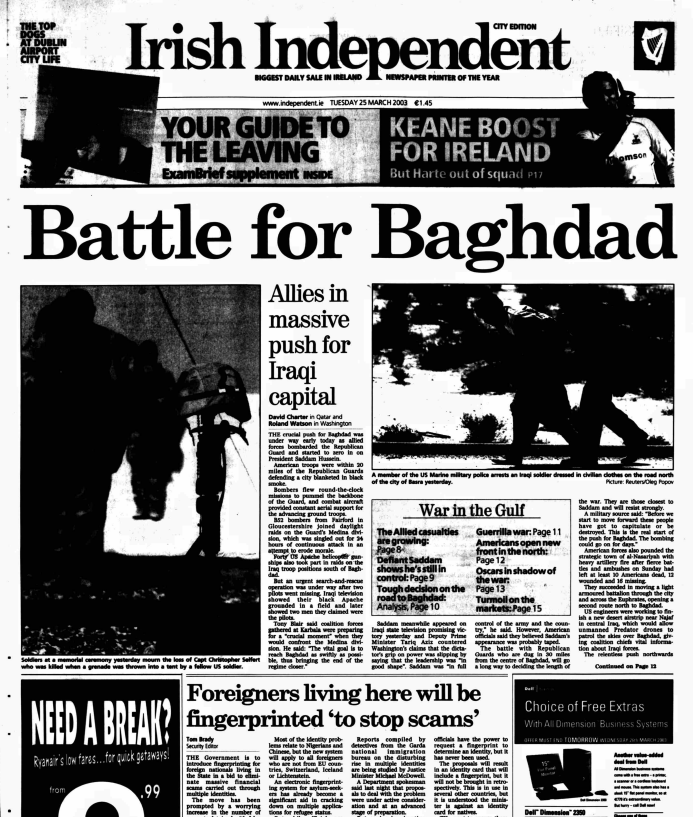
Iraq 2003 v Ukraine 2022: The Headlines, Side by Side
In 2003 the United States government and its allies invaded Iraq in a war of aggression. Within 3 weeks, over 3,000 civilians had died under the bombs, and twenty years later Iraq has not recovered and no US official has been held accountable.
In 2022 the Russian government invaded Ukraine in a war of aggression. Currently the war is assuming the form of terrible sieges of Ukraine’s major cities. The death toll so far is unknown but around 1 million have already fled the country.
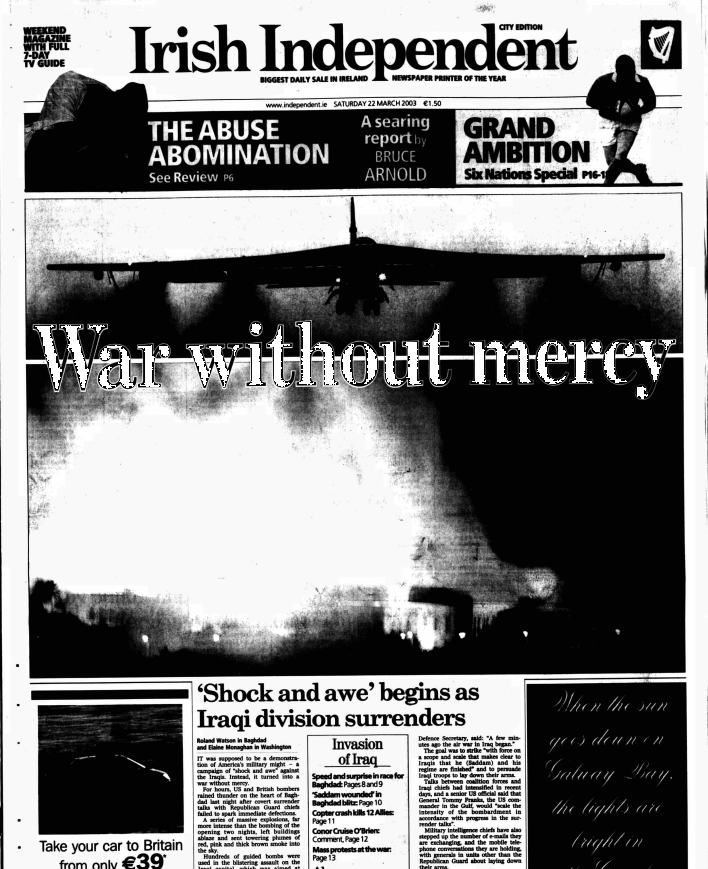
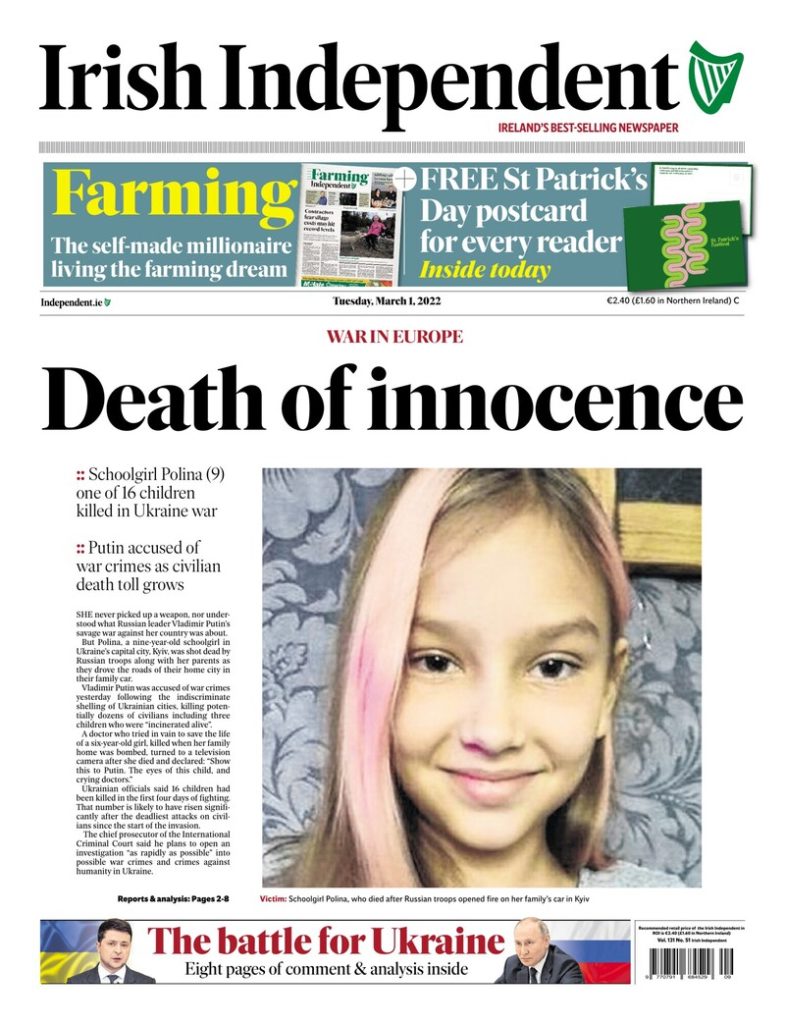
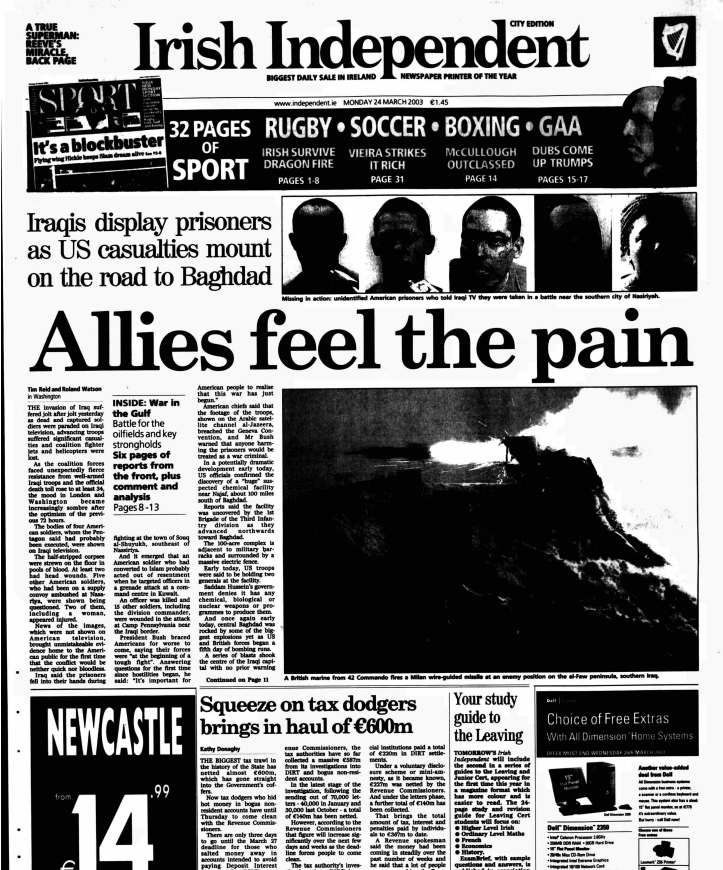
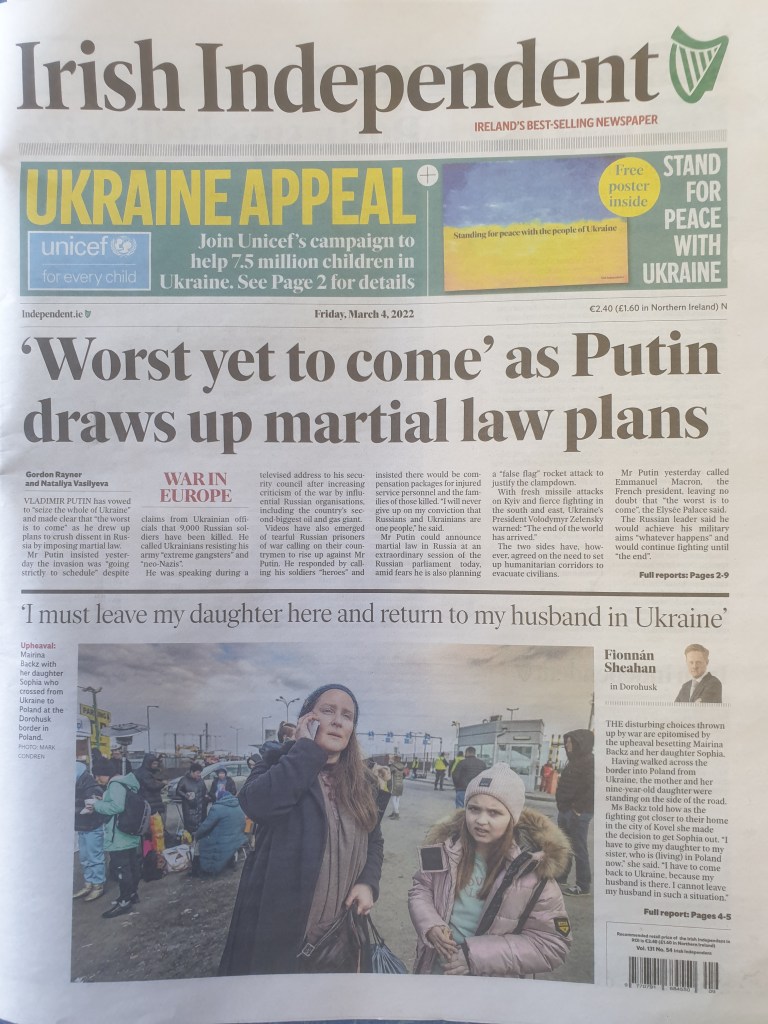
But newspapers did not cover the two events in quite the same way. That’s putting it mildly. I live in Ireland, so here are the headlines I’m seeing from our biggest newspaper. Here are five front pages each from the first week or so of the Iraq War (March 2003) and of the Ukraine War (Feb-March 2022). No further comment from me. The bias speaks for itself.


School Resources: ‘The Sun’ by Benjamin Zephaniah
This fantastic poem was a lot of fun to teach as it provoked debate and discussion in the classroom. There are plenty of clips online to help fill in some of the background on the issues that come up in the poem – from Northern Ireland to nuclear war.
Here is another blog post I found useful.
And here are my resources: two presentations and a sheet of questions.
War in Ukraine
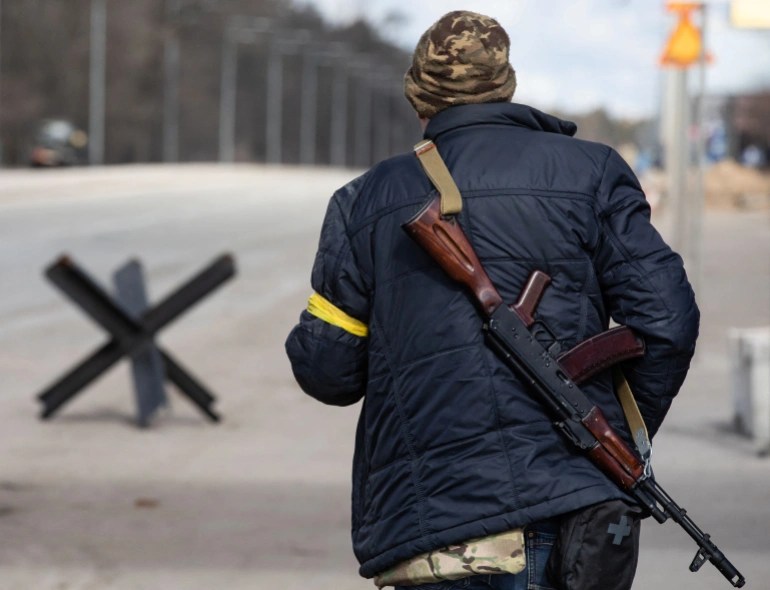
People are keen for ways to understand and explain the situation in Ukraine. You could do a lot worse than read the speech Putin made when he launched the war on February 24th.
Putin is at his most convincing when he is condemning the western leaders. He mentions Libya, Syria, Iraq:
We have to remind of these facts, as some Western colleagues do not like to remember those events, and when we talk about it, they prefer to point not to the norms of international law, but to the circumstances that they interpret as they see fit.
He is at his least convincing when justifying his own actions:
And for our country, this is ultimately a matter of life and death, a matter of our historical future as a people.
The destiny of the Russian people depended on a full-scale invasion and regime change of Ukraine? Yeah right.
Denazification?
At one moment he defends the operation as a means to defend the separatist ‘People’s Republics’ in the east. The next moment he speaks of demilitarising and ‘denazification’ of Ukraine.
Putin, if he is a sincere anti-fascist, might have started with ‘denazification’ of Russia’s war effort in Syria, where members of neo-Nazi organisation Rusich operate in the mercenary Wagner Group.
But the irony runs deeper. By reducing Ukraine to a warzone, Putin creates the possibility of Ukraine becoming a greenhouse for paramilitary, insurgent, mercenary and terrorist groups of all kinds. If the war is a long one, like in Syria, this is almost a certainty. This would offer new avenues of advance for Ukrainian fascism (which is a real and dangerous force).
In Iraq the chaos of invasion, war and insurgency led to the rise of Isis/Da’esh. We should consider what monsters could emerge from the ruins of Ukraine.
But the ‘denazification’ argument is window dressing in the speech. There is greater stress on the question of Russian security. This is a stronger argument, because NATO, with its bases in Eastern Europe, poses a potential threat to civilians in Russia. In this way the position is different from Iraq, where the ‘threat’ was completely fabricated.
Security
Though I was very young, I was in the anti-war movement at the time of the Iraq War. At the time we did not know for certain that the threat was fabricated. Speaking for myself, I opposed the invasion because – regardless of whether the intel was real or not – I rejected the idea behind it, that the US somehow had the right to bomb and invade Iraq just because there was some potential future threat to US security. The same toxic idea is at the heart of Putin’s speech on Ukraine. The ‘security’ of the stronger party is so important that it has the right to reduce its weaker neighbour to rubble just to head off potential threats.
On paper, a ‘neutral’ Ukrainian regime would be a guarantee of security for people in Russia.
In reality, by launching an obscene war of aggression the Russian state has made the situation far more dangerous, first and foremost for the people of Ukraine but in the long run for the people of Russia too.
There is a deep-seated anti-war sentiment in the US and Western Europe.[i] Since the disaster of the Iraq war, the US government has held back on launching anything on a similar scale. To attempt another war of that kind would create too much instability at home and in the ranks.
The best guarantee of security for people in Russia is not a ‘neutral’ regime planted at gunpoint in Kiev. It is the fact that working, poor and middle-income people in the west have absolutely no interest in going to war against working, poor and middle-income people in Russia.
But this invasion has done much to cut across that sentiment. Leo Varadkar, Tánaiste (deputy Prime Minister) of Ireland, has called Putin ‘the Hitler of the 21st Century.’ That is just as historically illiterate as Putin’s claim that he is ‘denazifying’ Ukraine.[ii] Of course, English-speaking politicians and columnists will bleat about appeasement and Neville Chamberlain literally every time there’s an international stand-off of any kind. Usually the vast majority of people will pay little attention to their grandstanding. But now people see on their screens and newspapers what’s happening in Ukraine. People will be more inclined to listen to the politicians and their pathetic Winston Churchill impressions.
In short, this invasion has made it more challenging to make the case against NATO aggression. People in Western Europe and the US will still, I predict, refuse to be dragged into war. But the mood is very different from a week ago. We cannot predict how the mood will be after months and possibly years of ruined cities, refugees and atrocities.
Strategy of Russian ruling class
But what is the rationale of the Russian ruling class? How does this wild, reckless move make any sense from a strategic point of view?
First off, Putin and his (apparently very small) circle of confidantes don’t care about the prospect for an anti-war movement in Western Europe or North America. They are cynical. This attack has got little to do with security and nothing to do with denazification. My understanding of it at this point is as follows.
Over the last year or so the Russian state has helped to defeat protest movements in Belarus and in Kazakhstan. It bailed out the tyrants in charge of those countries, and in return gained influence. The case of Belarus was significant because the Belarus front appears to have proved crucial for the advance on Kyiv. Victory in Syria is also a factor; the Russian military is much weaker than that of the US, but the Russian military has actually been winning wars. The Russian ruling class is at a relative peak in terms of power and influence.
While the actions of the NATO leaders are those of people who have time on their side, the actions of Putin suggest a desperate sense that whatever advantage he enjoys can only be temporary, and must be exploited to the full.[iii] Exploiting it at the negotiating table did not work, so he is exploiting it on the battlefield – with horrific consequences for the people of Ukraine.
To refer to Iraq again, when the US invaded that country I marched against the war. But it never entered my head to call for Russia, China or Iran to intervene – to send troops to Baghdad, to bomb New York, or anything of the kind. Obviously that would have made the situation far worse. Likewise any call for NATO ‘boots on the ground’ is dangerous.
On both sides, these are sick and cynical power games. The anti-war protestors in Russia have faced arrest in their thousands, just to show the world that their reactionary politicians do not represent them. A principled anti-war movement in Western Europe and North America, opposing the warmongers of all sides, must take inspiration from them.
[i] It may not always seem that way because western governments are always finding ways around the will of their own people to bomb and to engineer coups. They have used their vast resources and unaccountability to continue interfering in other countries in spite of the anti-war sentiment. But another war on the scale of Iraq or Afghanistan has been off the table for a long time.
[ii] In 1938 Britain and France gave Hitler everything he wanted, while in 2021 Putin’s enemies gave him absolutely nothing. Hitler was a fascist, a relative political outsider with dreams of world domination. Putin has been an apparatchik and politician within the Soviet then Russian state for many decades.
[iii] What about China? It is my assessment that, for the moment, the Chinese ruling class have more to gain from peace than from war, and will support the Russian regime economically while acting as a restraining influence. For example, they are helping the Russian leaders to weather the storm of sanctions. Note that I said ‘for the moment.’ If this war escalates and proves to be prolonged, the Chinese leaders might decide that war is upon them whether they like it or not, and that it is time to intervene.
Conversely, if it turns out to be a short war, the Chinese government have no reason to commit. It could be a short war if a) the Ukrainian ‘conventional’ resistance is crushed in a matter of weeks or b) if the Russian military suffers heavy casualties, makes slow progress, suffers from low morale. Recent indications favour B. It is almost certain that the Russian state has arrested more anti-war protestors at home (4,300 at the time of writing) than they have captured Ukrainian soldiers.
Appendix: “…who was later killed by Stalin…”
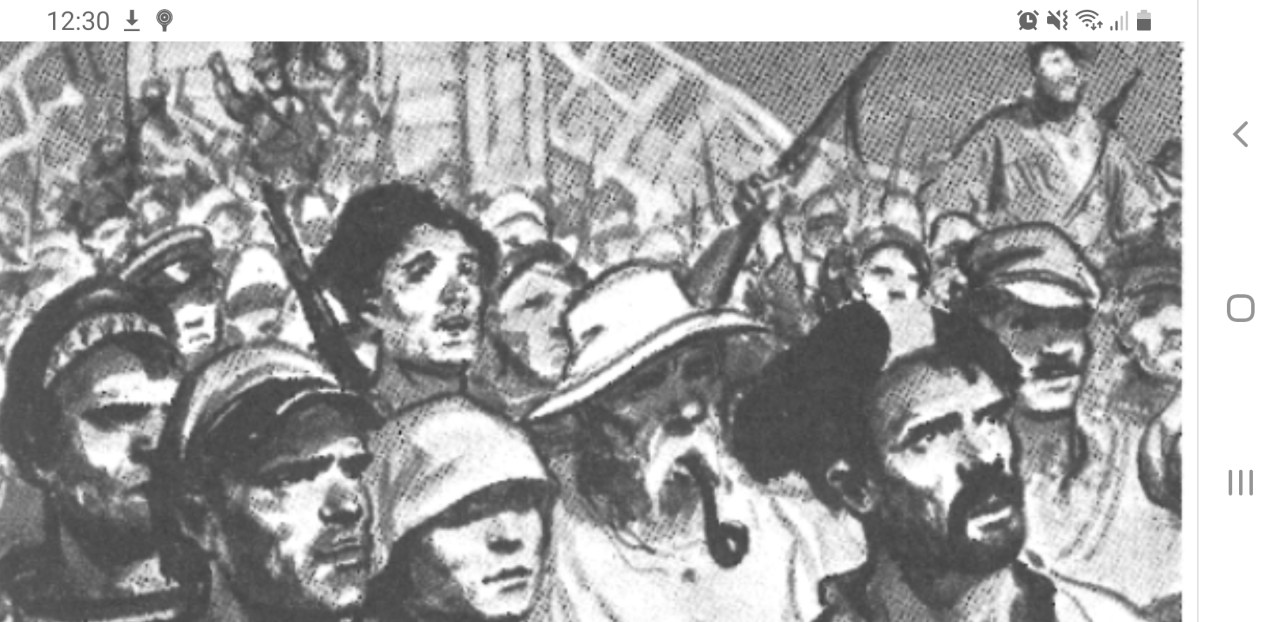
This is an Appendix post to Revolution Under Siege, my series on the Russian Civil War.
This post started life as a (terrible) idea for a drinking game. Read or listen to my blog and drink any time you come across
a) A White leader whose name starts with K
b) A Red leader who was later killed by Stalin
When you’re reading any account of the Civil War, the phrase “…who was later killed by Stalin…” is a repeating motif. On rare occasions, like the case of Semyonov, this refers to a White leader. But nearly all the time it refers to a Red.
Hence the title.
But instead of inventing the least funny drinking game ever, I went back through all the posts from Series 1 (covering 1918) and made a list of every named individual who supported the Red side. Some are people I spent a whole chapter talking about, others accidental mentions in the captions of photos, others still the authors of sources.
For each one I asked, ‘What happened to them? How did they die?’
This graph was the result.
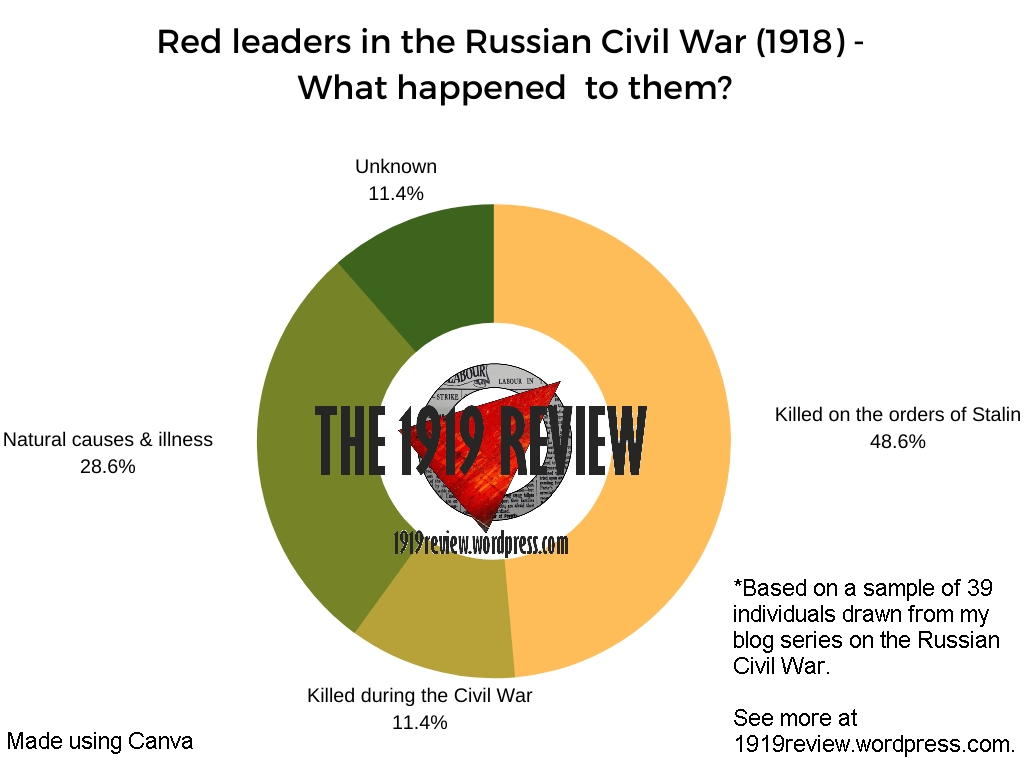
The graph is based on 39 people. It counts all Red supporters mentioned during Season 1 – so, Reds who were prominent during the year 1918, plus a scattering of accidental figures. There will be omissions, but it is broadly representative. I have in no sense deliberately weighted this sample so as to make Stalinism look bad. I could have weighted it far further in that direction without stretching credibility. For example, I have included Adolf Joffe under ‘Natural Causes or Illness’ even though his suicide was triggered by the persecution of the Left Opposition by the Stalin group.
So that you can see for yourself, here is the full list.
Natural Causes or Illness
1. Alexander Serafimovich (Author, The Iron Flood) – Natural causes, 1949
2. Kliment Voroshilov (Red commander in Southern Army Group in 1918) – Natural Causes, 1969
3. Klavdia Nikoaevna (Editor of Kommunistka) – Killed in a German bombing raid, 1944
4. Vasily Chuikov (Red Guard, later commander at Stalingrad in 1942-43) – Natural causes, 1982
5. Vladimir Lenin (Leading figure in Bolshevik Party) – Illness, 1924
6. Nikolai Andreyev (Assassin of Count Mirbach) – Illness (Typhus), 1919
7. Felix Dzerzhinsky (Founder and leader of the Cheka) – Illness (Heart attack), 1926
8. Yakov Sverdlov (Leading figure in Bolshevik Party) – Illness (Spanish Flu?), 1919
9. Larissa Reissner (Red Army soldier and writer) – Illness (Typhus), 1926
10. Josef Stalin (Leading figure in Bolshevik Party) – Illness, 1953
11. Adolf Joffe, (Leading figure in Bolshevik Party) – Suicide, 1927
Killed in Civil War
12. Mikhail Muraviev (Former Tsarist officer and Left SR) – killed by Reds, 1918
13. Dmitry Popov (Chekist, Left SR, Anarchist) – killed by Reds, 1921
14. Commissar Panteleev (Involved in mutiny at Sviyazhsk) – killed by Reds, 1918
15. Fyodor Podtelkov (Leader of Red Cossacks, SR) – killed by White Cossacks, 1918
16. V. Volodarsky (Bolshevik) – killed by SR assassin, 1918
17. Moisei Uritsky (Bolshevik) – killed by SR assassin, 1918
18. Nikolai Markin (Bolshevik sailor) – killed in battle, 1918
Unknown
(‘Unknown’ means ‘I was unable to find out.’ I’d appreciate further info anyone has).
19. Vakhrameyev
20. Makhrovskii (Communist imprisoned at Tsaritsin)
21. Slavin (Unable to identify with certainty the identity of this individual)
22. Mitorfan Grekov (Civil War painter) – died in 1934
Killed on the orders of Stalin
23. Maria Spiridonova (SR leader) – executed, 1941
24. Alexander Shlyapnikov (Bolshevik leader) – executed, 1937
25. Lev Trotsky (Bolshevik leader) – assassinated, 1940
26. Feodor Raskolnikov (Bolshevik sailor) – probably assassinated, 1938
27. Lev Kamenev (Bolshevik leader) – executed, 1937
28. Vasily Blyukher (Red officer) – executed, 1938
29. Yakov Blumkin (assassin of Count Mirbach, Chekist) – executed, 1929
30. Jukums Vacietis (commander of Latvian Rifles) – executed, 1938
31. Bela Kun (leader of Hungarian Communists) – executed, 1938
32. Yuri Sablin (left SR and Red officer) – executed, 1937
33. IM Vareikis (Bolshevik, assassin of Muraviev) – executed, 1938
34. Andrei Snesarev (Former Tsarist officer) – died in prison, 1934
35. Pavel Sytin (Former Tsarist Officer) – executed, 1938
36. Nikolai Bukharin (Bolshevik leader) – executed, 1938
37. Martin Latsis (Either a Left SR or a Bolshevik; accounts vary) – executed, 1938
38. Mikhail Tukhachevsky (Red Army commander) – executed, 1937
39. Konstantin Akashev (Red aviator, anarchist) – executed, 1931
And Quiet Flows the Don by Mikhail Sholokhov (Premium)
English translation (1934) by Stephen Garry. Penguin Classics, 2016
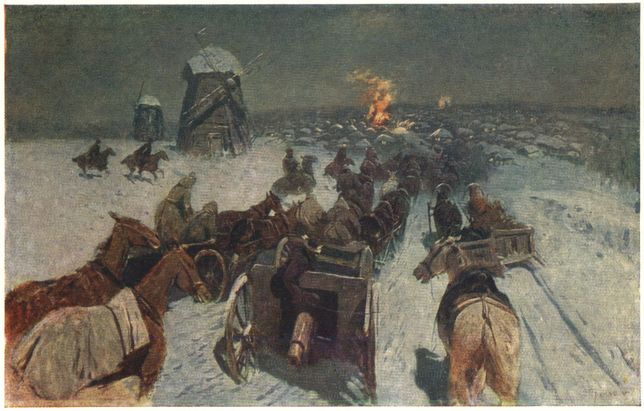
The other day, after several textual misadventures which I will mention in a footnote below, I finished Mikhail Sholokhov’s masterpiece And Quiet Flows the Don. This review will tie in with my series on the Russian Civil War, Revolution Under Siege, as the novel throws some sidelights on the things I wrote about there.
You can read this post – and many others on this website – for just €5.
Get access to this post – and the entire archive of The 1919 Review – for €5 per year.
 The 1919 Review