Nick Bano on Landlord Abolition

Against Landlords: How to Solve the Housing Crisis by Nick Bano

Verso, 2024

So that headline about ‘landlord abolition’ caught your attention. Maybe you’re wondering, is it just a sensational name for a moderate reform policy, like when people talk about ‘prison abolition’? No, landlord Abolition, as laid out by Nick Bano in this eye-opening and well-written book, is the real deal.

Consider the following:

  • Renters in Britain in 1957 spent 6.5% of their income on rent (now think, how much do you spend on housing?).
  • Before 1951, any increase in land value created by planning decisions was taxed at 100%.
  • In the late ’70s, private rental was a dwindling sector and ‘the death of the landlord’ was widely predicted.
  • Landlords were eager to sell, councils willing to buy. Social housing stock grew massively without anyone having to lay one brick on top of another.

The private rental sector was saved by concerted government intervention during the Thatcher years. Housing stock was in poor repair. How to fix it? Give grants to local authorities to renovate their stock? No! Get private capital to pump money into housing! What could possibly go wrong?

Fast-forward thirty years: terraced houses built by local authorities a century ago are being sold for half a million.

We could fix our housing crisis today by increasing social housing stock. Rent controls are not only fair; they would drive landlords to sell to councils. The more social housing stock there is, the less desperate people will be for housing, the less landlords will be able to get away with charging. It would be a virtuous cycle culminating in the private rental sector shrinking away to occupy an insignificant margin of society.

House prices are tied to rental yields; when you buy a house, you are actually paying for the right to receive rents from it for the rest of your life, even if you never have any intention of renting it out. Reducing the private rental sector to insignificance would benefit home buyers and make mortgage lenders cry bitter, salty tears at all the money we get to keep in our pockets instead of giving them.

Bano is under no illusions that the collapse of the housing market, while it seems necessary and desirable, would be an economic catastrophe for Britain whose governments have bet the country’s shirt on the impossible dream of eternally rising housing costs. And under capitalism, the poor would pay first and steepest for any economic disaster.

The housing market is not a bubble – people are actually realizing profits. But it has to hit the limit of a crisis of affordability, unless British renters can be convinced to live in tiny cubicles or ever-worsening Dickensian squalor – which Bano, to be clear, does not rule out.

The main clarifying point for me was that this is not a crisis of housing supply, but a crisis of housing costs. The imperative to “build more houses”, unless they are all public, social housing, will actually continue to drive up costs (and also destroy the environment).

There is a lot in this short book. There is historical material, for example, about an amazing rent strike in 1915 and the role of housing in the lead-up to the Battle of Cable Street. There is incisive commentary on Grenfell. There is a chapter on race. There are plenty of concrete examples of the squalor, injustice and absurdity of housing in Britain today. There is an overview of how landlords changed from social pariahs to celebrated entrepreneurs in one generation.

My only reservation was wondering how much this analysis applies to Ireland, which is my neck of the woods. Here investment funds seem to be playing more of a role than in Britain, but the mom and pop landlord seems to be very much a social phenomenon here as well.

In 2022 £63 billion was paid in rent in the UK – of which £23.4 billion was Housing Benefit. All that public money – gone, just to reward landlords for charging unaffordable rents. Meanwhile they are incentivised to keep on hiking the rents. Ireland’s Housing Assistance Payment (HAP) is the same, and I bet similar numbers apply.

Nine things that inspired Star Wars

This week I’m taking a break from Miseducation Misadventures to let you in on what runs through my head when I watch Star Wars. Re-watching it as an adult, I notice little things that I can trace back to their source – like the scattered mentions of spice mines and spice freighters in the first movie. Any guesses which SF novel that’s a nod to?

Here are nine sources from which Star Wars drew key ideas. If I’ve missed any interesting ones, chime in down in the comments.

1: Reproductive Biology (2,000 million BCE)

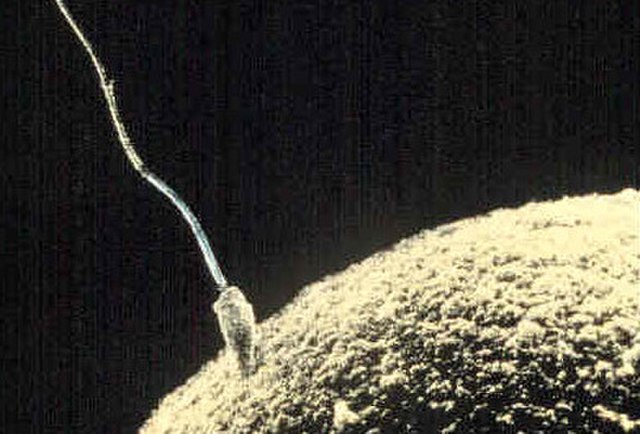
The final battle in 1977’s Star Wars involves a swarm of small starfighters approaching and seeking to penetrate the much larger orb of the Death Star. This looks a hell of a lot like a load of sperm trying to fertilise an egg, with zero-gravity space standing in for the liquid medium through which the little swimmers propel themselves. This was probably not deliberate – the imagery probably bubbled up from the filmmakers’ subconscious. It stands out all the more starkly against this pre-adolescent and mostly sexless galaxy.

2: Metropolis (1927)

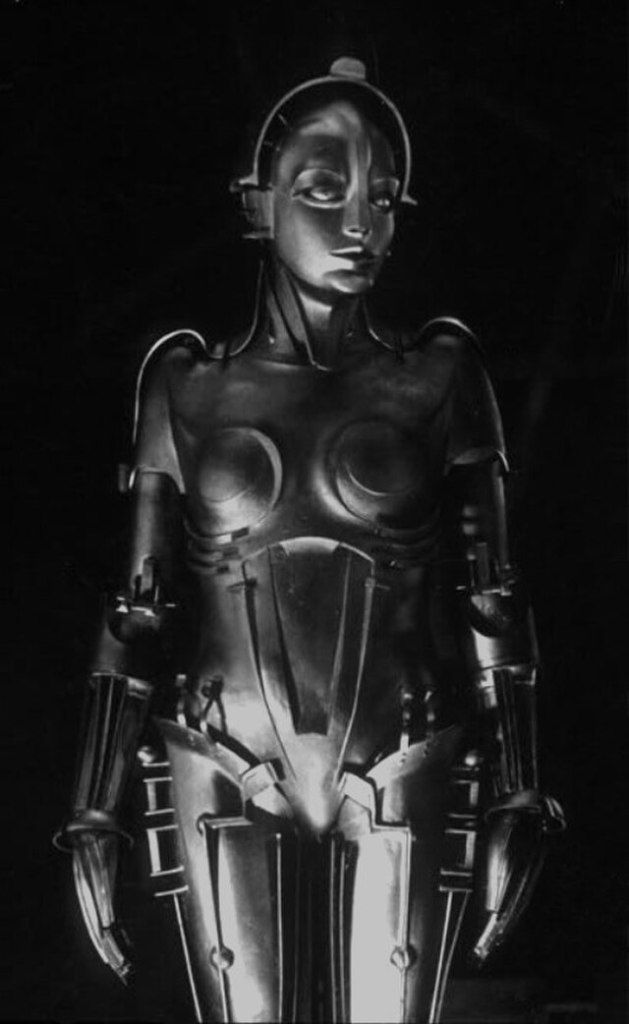
And here we have a female version of C-3PO, in an experimental silent film from Weimar Germany.

3: Flash Gordon (Comic and movies, 1930s)

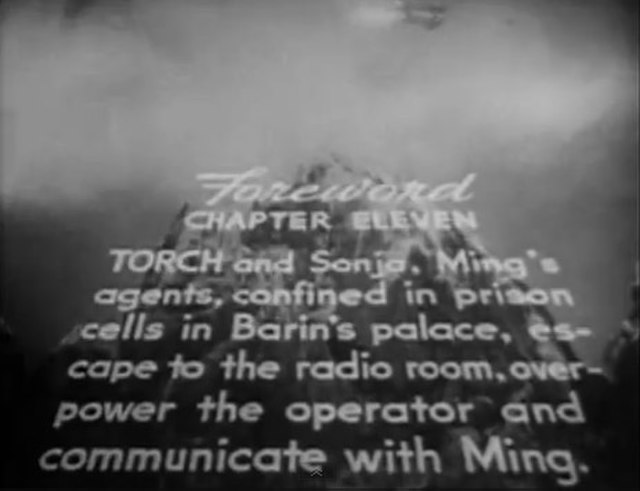
Star Wars took a few cues from Flash Gordon – most obviously the opening text crawl but also the general idea of a series about fun adventures in space.

4: World War Two (1939-1945)

In 1977 when Star Wars came out, World War Two was as recent as the collapse of the Soviet Union, or the first episode of The Simpsons, is to us.

And the movie helps the audience to grasp what is happening in space by using a visual language familiar to them: it has World War Two-era fighter planes in space. The Empire’s star destroyers resemble the warships of the mid-century. The Imperial officers dress like Nazis.

On the other hand, weirdly enough, Star Wars references the Nazi propaganda film Triumph of the Will. The final scene where the rebels have a rally and the human characters all get medals (a weird enough scene in itself) follows part of this notorious film very closely. An odd choice, having the good guys mimic the visuals of a genocidal regime, especially when the bad guys are clearly based on them.

5: Casablanca (1942)

In a colourful jazz bar full of diverse people, in a town full of thieves and refugees, in a desert land where an evil empire is tightening its grip, we meet a cynical smuggler who is secretly an idealist. Will he find it in himself to help the two desperate fugitives who are seeking passage to safety? Of all the cantinas in all the systems in all the galaxy…

6: Foundation by Isaac Asimov (1940s-1950s)

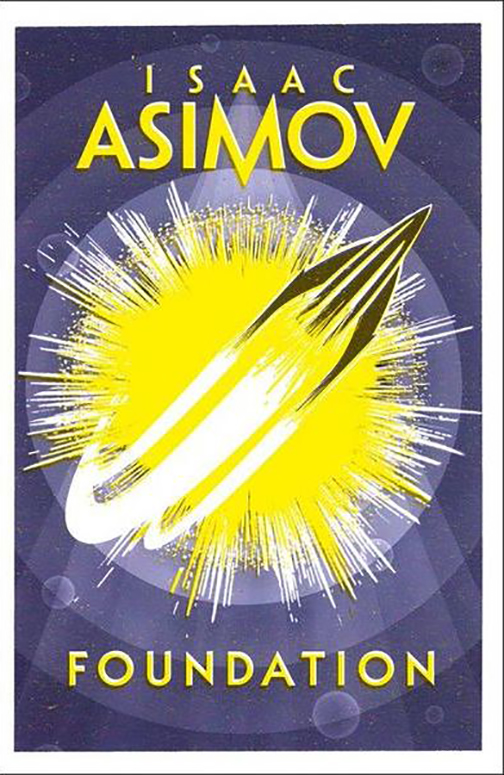
The story and themes of Star Wars and Foundation don’t resemble each other at all. But there are many little things which Asimov seeded in the science fiction genre which pop up in Star Wars:

  • Hyperspace travel
  • Weapons called blasters (much more lethal in Asimov)
  • A galactic empire
  • Space feudalism
  • A city which covers an entire planet (Trantor/Coruscant)
  • The wild outer rim of the galaxy
  • It goes right down to random names: Asimov’s Korellian Republic is echoed in the Corellian shipyards
  • Roguish traders who do the right thing in the end (Foundation has several Han Solos in it, who say things like ‘Never let your sense of morals prevent you from doing what is right.’)

But for Asimov, empires are fundamentally good, the roguish trader is an advertisement for a doctrine of enlightened self-interest, and mysticism is nothing but a charade. All this is at odds with the anti-authoritarianism and sincerity of Star Wars.

7: Akira Kurosawa (1930s-1980s, especially 1950s)

Japan’s most well-known film director had a huge influence on George Lucas and Star Wars. I haven’t seen The Hidden Fortress (1958) but apparently it involves two peasants who escape from a battle (like C-3P0 and R2D2) and meet a princess; there are sword fights, and in the end a bad warlord changes sides. But I’ve seen a few others, like Throne of Blood, Ran and Seven Samurai. Any of these great samurai films show themselves to be ancestors of Star Wars. There are the sword fights and the robes and Darth Vader’s helmet. In a western ear, names like Obi-Wan Kenobi have a Japanese ring to them, and the Jedi resemble an idealised version of the Samurai.

8: Dune (1965)

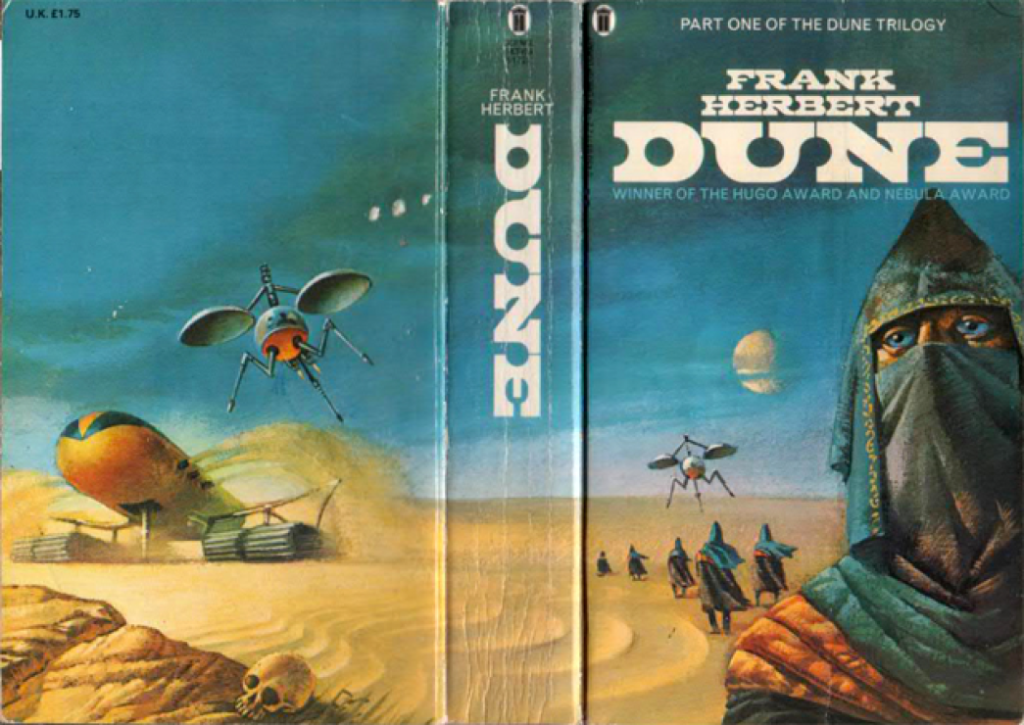
Frank Herbert’s Dune is riding high after Denis Villeneuve’s great film adaptation and I’ve written about it a few times before. Like Foundation, it provided a lot of ideas for Star Wars to pick up.

  • Dune is closer than Foundation to the themes of Star Wars. It is a text that was obviously written at the height of the anti-colonial struggles of the 1960s; it is pretty negative about empire; it is deeply sincere about religion and mysticism (even in charade form!).
  • The Jedi look like samurai, but they owe much to Dune‘s Bene Gesserit, an order of women who cultivate superhuman powers.
  • Both texts feature a harsh desert planet (Arrakis/Tatooine)
  • And giant worms,
  • robed nomad raiders,
  • smugglers,
  • and moisture-harvesting technology.
  • As noted above, scattered references to spice in the first Star Wars movie are another nod to Dune.
  • And once again we have space feudalism.

Foundation and Dune are the best examples I can think of, but they are stand-ins for a whole rich genre of mid-century science fiction without which Star Wars would not have existed.

9: The US War in Vietnam (1965-1973)

A few years ago Star Wars creator George Lucas confirmed in this interview that his story was fundamentally anti-colonial, that his heroic rebels were based in part on the Vietcong and that the evil empire was based on the United States – along with other past empires and freedom fighters throughout history.

Vietnam has featured just as heavily in other radically different readings of Star Wars, which is unsurprising as the war ended just a couple of years before the movie came out. I can’t remember who exactly wrote this, but the idea is that Star Wars was an infantilising nostalgic escape for a US public keen to avoid thinking about their country’s military and moral defeat in Vietnam. White people with American accents got to be the guerrilla heroes – though from the costumes to the names and decor, it is one of the strengths of Star Wars that it has never looked or felt ‘western’ (unless you mean spaghetti western, as there’s more than a hint of ersatz Mexico and Sergio Leone in there).

A last word…

The point of this is not to be like ‘Star Wars is a rip-off’ but to remind everyone that it’s just a movie, a cultural text rooted in its time. Today we have the corporate cynics for whom nostalgia is a currency and the toxic fandom for whom nostalgia and innovation are just different kinds of betrayal. The worst excesses of the fandom, I suspect, are boosted and incentivised by social media, and the back-and-forth whining and apologetics are increasingly astroturfed online by accounts which have harvested awesome volumes of engagement in the past from people bickering about fun movies, and who see the next big controversy as a payday. In all of it, Star Wars is reified, taken out of culture and history, put on a pedestal. One would think it feel from the sky. Actually the movie is a brilliant synthesis, and if Lucas had the precious and pious attitude on display in so much of the online commentary, it never would have been made at all.

Home Page/ Archives

Want to read more like this? Become a subscriber here:

What I’m Reading: Foundation by Isaac Asimov

‘Seldon crises are not solved by individuals but by historic forces. Hari Seldon, when he planned our course of future history, did not count on brilliant heroics but on the broad sweep of economics and sociology. So the solutions to the various crises must be achieved by the forces that become available to us at the time.’ 

– Hober Mallow, ‘The Merchant Princes,’ Foundation by Isaac Asimov

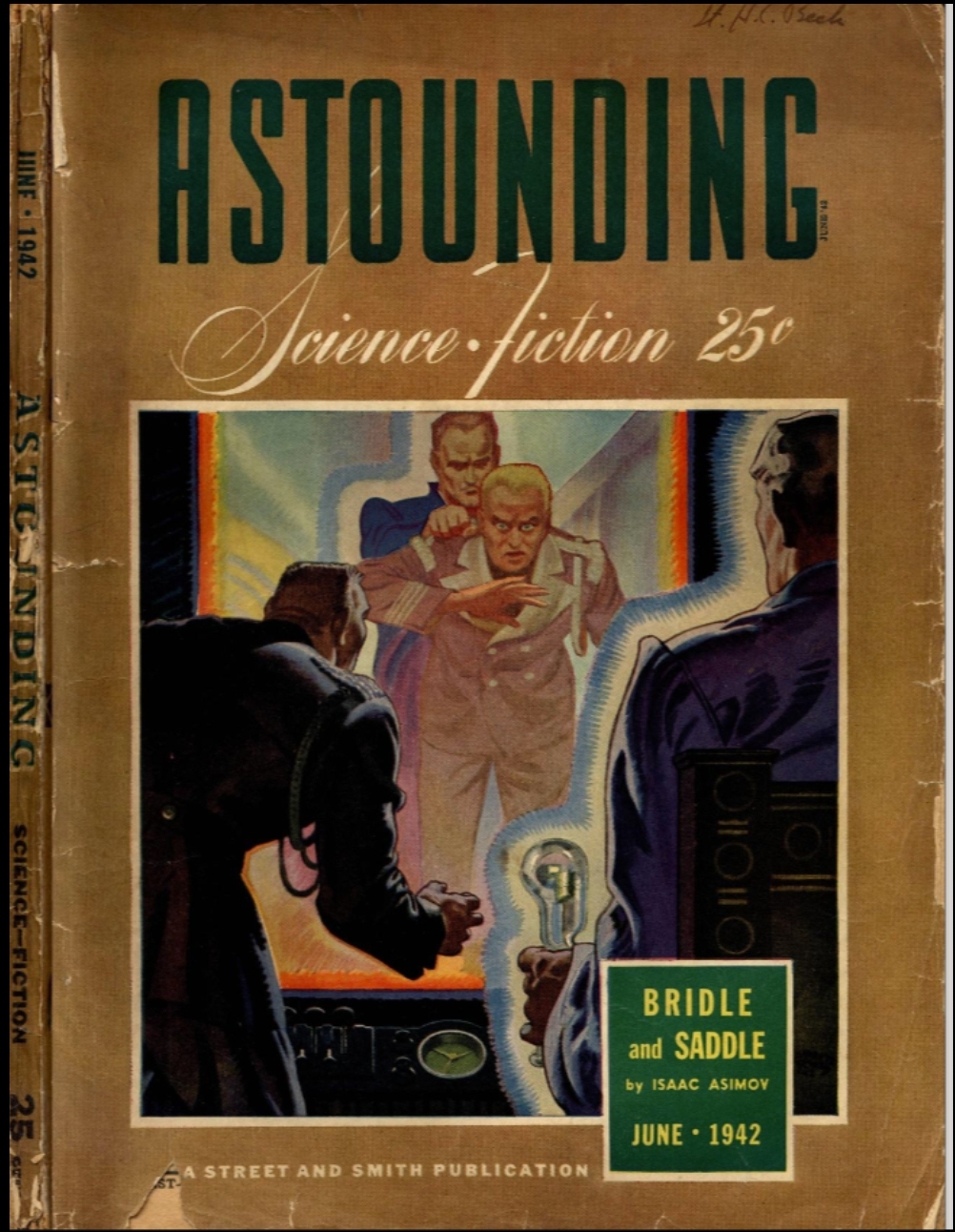
A lot of what’s fresh and brilliant in Isaac Asimov’s Foundation, written as long ago as World War Two, have since become so common in the genre that they almost escape notice when you encounter them in these pages. 

We have travel by hyperspace (‘hyper-space, that unimaginable region that was neither space nor time, matter nor energy, something nor nothing’); weapons called blasters; roguish but ultimately moral traders; cities which cover entire planets; galactic empires with a civilised core and a wild outer rim. We even have a planet called ‘Korellia’ which reappears as the shipbuilding world of Corellia in Star Wars. 

A galaxy without women

The first thing that strikes the reader is that the characters are all male. From a Galactic population numbering – what did he say, a quadrillion? A quintillion? – there are almost no women the author believes are interesting enough for us to meet.  

Here follows a list of female characters in Foundation

  • A telephone operator (!) 
  • A servant who tries on a gizmo
  • The Commdora of Corellia

And, if we really want to be generous:

  • Hober Mallow’s hypothetical mistress (Maybe I’m pushing it now)
  • Housewives are key to Mallow’s scheme to bring down the Korellian Republic (…That’s pushing it.)

The next thing that strikes you is that this book was apparently written as if Isaac Asimov had a very limited special effects budget. The first part contains compelling descriptions of space travel and the city-planet Trantor, but the rest is almost like a stage play: largely a series of conversations in rooms, mostly between seated men. 

Discussing this with friends, I thought of radio dramas, a popular medium in the 1940s when Asimov was writing. He wasn’t writing with an eye to radio adaptation, as far as I know, but maybe he listened to a lot of them and they influenced his style. The 1970s BBC radio play of the Foundation series proves how well it translates to the medium. 

A galaxy without ‘great men’

The lack of a balanced representation of humanity in the cast of characters is pretty awful. But I like the morality and the philosophy of history this story expresses – that it is not ‘great men’ but great impersonal forces that shape history. True greatness lies in predicting and adapting to the currents of history – not holding back the tide, but riding the wave. Real material relations are more important than ideas and words. Don’t be fooled by pomp and regalia; the empire is losing crucial technical skills. Don’t be intimidated by military thugs and their death machines; those machines must be operated by human beings, who can be influenced in clever ways. 

The ‘greatest’ figures in Foundation history are not strutting macho types. Hardin and Mallow alike embrace a kind of humility and acceptance, as well as cunning and unscrupulousness.

Both Hardin and Mallow embark on too-clever-by-half plans that would, in reality, totally demoralise their own people long before they bear fruit. This is a common failing in fiction: the illusion that conflicts have to be solved by clever tricks in order to be narratively satisfying.

In fairness, the climaxes to ‘The Mayors’ and ‘The Merchant Princes’ are very satisfying. Defeat turns to victory in a matter of moments. These eukatastrophes are seamless and well-plotted. 

Cynicism

They use religion to harness the Four Kingdoms to the chariot of the Foundation. But religion is superseded – by the time of Mallow, it is necessary to realise that trade is the new superweapon of Terminus. And trade itself will one day be superseded, become an obstacle: 

‘So, then,’ said Jael. ‘You’re establishing a plutocracy. You’re making us a land of traders and merchant princes. Then what of the future?’

Mallow lifted his gloomy face, and exclaimed fiercely, ‘What business of mine is the future? No doubt Seldon has foreseen it and prepared against it. There will be other crises in the time to come when money power has become as dead a force as religion is now. Let my successors solve those new problems, as I have solved the one of today.’

The flip side of the novel’s cleverness is the smug attitude that comes through. You read this book and feel like you, Isaac Asimov and Salvor Hardin are the three smartest people in the universe, and all these trillions of people are stupid. It celebrates cynicism and manipulation. Hardin controls the press behind the scenes and takes power in a coup. This is to say nothing of the invented religion and how it brainwashes people. This is not moral, of course, but we are supposed to accept that it’s an example of ‘doing what’s right’ in spite of any silly ‘morality.’

A galaxy without violence?

We are told that ‘violence is the last refuge of the incompetent.’ The author’s distaste for violence is rare and refreshing. He’s just not interested in it. The novel is better because of this. But the novel’s philosophy does not renounce violence; it just puts violence in its place, as the enforcer and copper-fastener of things already established by culture, economics and politics. It is not the last refuge of the incompetent; it is a necessary, though subordinate, stage of conquest. 

Consider the following exchange of dialogue: 

Jorane Sutt: You’re a Smyrnian, born in Smyrno, one of the former Four Kingdoms. You’re a Foundation man by education only. By birth, you’re an Outlander and a foreigner. No doubt your grandfather was a baron at the time of the wars with Anacreon and Loris, and no doubt your family estates were taken away when Sef Sermak redistributed the land.

Hober Mallow: No, by Black Space, no! My grandfather was a blood-poor son-of-a-spacer who died heaving coal at starving wages before the Foundation.

This passage tells us a lot: 

  • That the Foundation made war on Anacreon and Loris (two of the Four Kingdoms) some time in between the events of ‘The Mayors’ and ‘The Merchant Princes.’ 
  • That the Foundation has brought about a land revolution in the Four Kingdoms through the dispossession of the nobility. In other words, not just a war but a revolutionary war has taken place between two episodes. To cement in place and enforce the outcome of ‘The Mayors,’ war and revolution were still necessary. 
  • That the resolution of the second Seldon Crisis was not the end of Sermak’s political career (Sermak was the leader of the pro-war party in ‘The Mayors’). In fact, Sermak was heavily involved in the subjugation of the Four Kingdoms, to the extent that the land revolution is attributed to him. The pro-war Actionist Party have their day after all. 
  • People like Hober Mallow come from a background where before the Foundation they were denied any opportunities in life. The coming of the Foundation has been revolutionary, opening new opportunities for them. 

All of this is between the lines. Foundation is short and well-paced, but in places there’s a depth and density to it. These lines remind us that even though the novel leaves violence to one side, the universe in which the novel is set is just as violent as ours. The worst ‘barbarism’ in the novel is that which the Empire carries out on Siwenna – atom-blasting the population in revenge for a rebellion which that population didn’t even support.

This brings us back to the points about how it’s written like a radio play. Of course, it was written for magazines and presumably each instalment had to be kept fairly short. Most of what happens in the novel happens through dialogue, but Asimov puts that dialogue to work. The dialogue is good as drama, but it really shines as worldbuilding. It’s nutritious stuff around which your imagination can sketch in the galaxy outside the four walls of the room where, inevitably, men are talking.

What I’m Reading: Judge Dredd Case Files Volume 03

Judge Dredd: The Complete Case Files Volume 03, progs 116-154 (Rebellion/ 2000AD, 1979-1980, 2008). Written by John Wagner and Pat Mills. Art by Brian Bolland, Dave Gibbons, Mike McMahon, Brendan McCarthy, Ian Gibson, Garry Leach, Ron Smith, John Cooper, Barry Mitchell

My Sláine series remains relatively popular, so clearly a lot of people share my fascination with 2000AD comics. Years ago the whole Judge Dredd back catalogue was re-released in these huge ‘Case File’ tomes. The best I’ve seen to date has been Volume 02 (which I’ve praised here before). That included two great epic storylines, the Cursed Earth saga and Judge Cal. There’s nothing as brilliant or as large-scale here; Volume 03 collects a few one-off stories and short series. Some of these I’d come across before in other volumes years ago, such as the first appearance of Judge Death. Others were new. 

Of the series, my favourite was one where a plague of poisonous spiders threatens a small town in the Cursed Earth, and Dredd has to help a community of mutants to resist. Then the spiders infest part of Mega-City One, so without a moment’s hesitation Dredd has the whole neighbourhood bombed flat. The spiders didn’t get under my skin, but a mutant talking horse named Henry Ford did. When the mutinous, grumbling mount got bitten and I thought he was going to die, I felt pretty sad. He survived, only to witness in horror Dredd’s incineration of a whole sector of the city. 

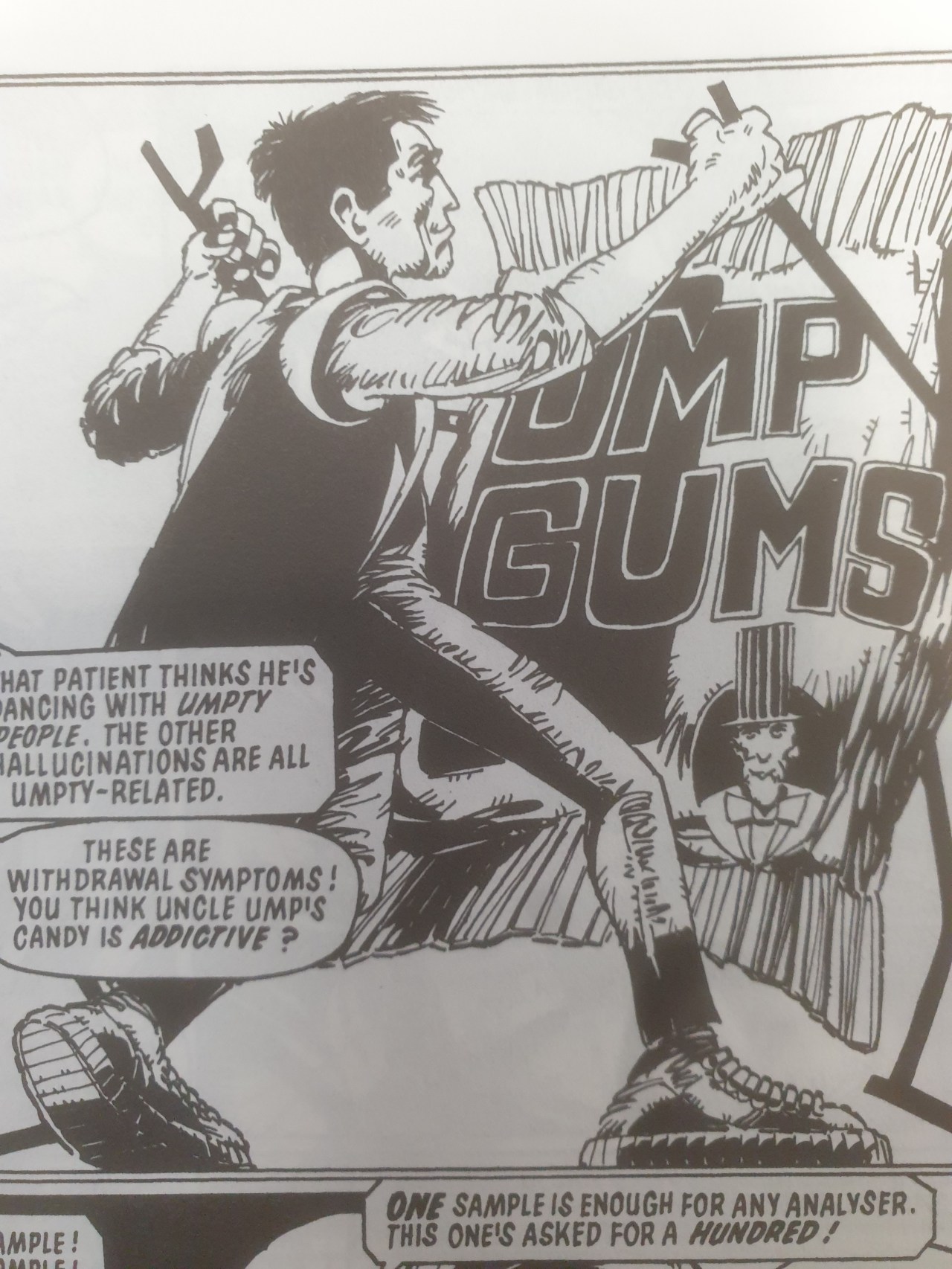
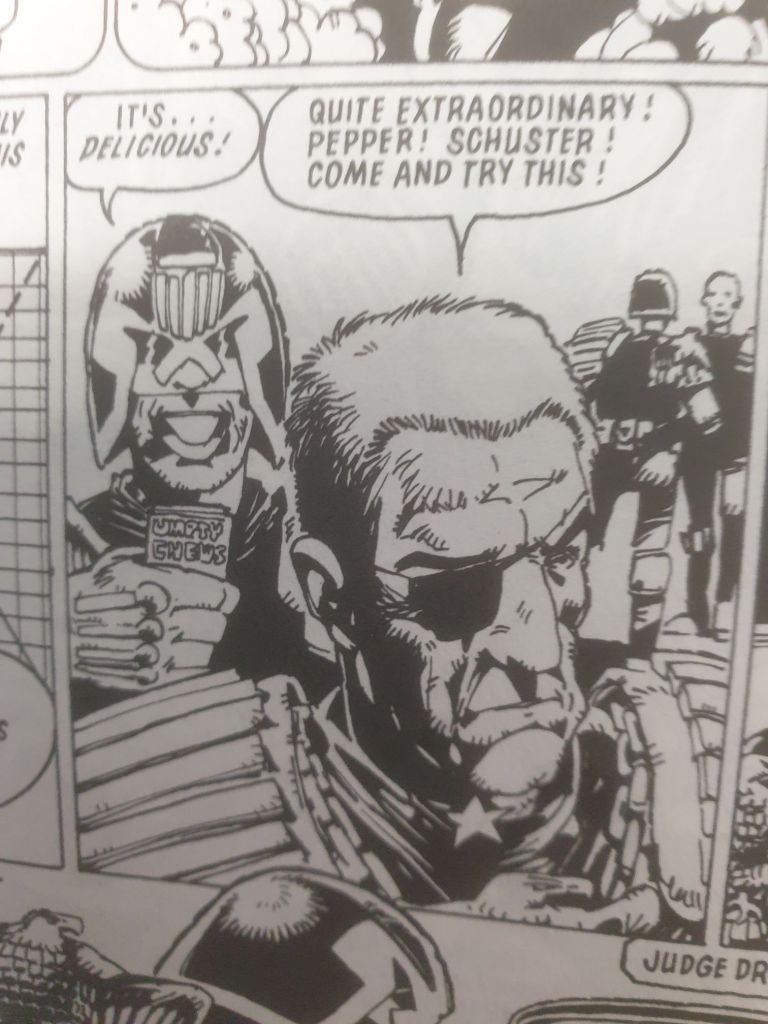
Of the one-offs, far and away the best was the one about Uncle Umpty’s candy. This is so funny and so sad at the same time. It’s very short but it feels like there’s a lot in it. A kind, whimsical and talented old man invents a range of sweets that taste unspeakably wonderful and aren’t addictive or harmful in any way. On principle Dredd does not approve. But on tasting it, Dredd declares ‘It’s delicious!’ and actually smiles. But this little story sums up how absolutely pathological the society and culture of Mega-City One are: people go mad for Uncle Ump’s candy, leading to a breakdown in law and order. The judges take extreme measures against this wonderful old man just to ensure that his candy is gone forever. 

The people of Mega-City One are very, very stupid. They are an unkind caricature of the people of capitalist societies: prone to fads and mindlessly acquisitive. But the ultimate consequence of their frenzied consumption is that they can’t be allowed to have nice things at all. They almost (almost, but not quite) deserve this ultra-punitive law enforcement system. Outside of contrived ticking time-bomb situations, the more conventional (but not necessarily bad) storylines where it’s a choice between the status quo and the annihilation of billions of people, the Judges plainly do more harm than good. Judge Death (‘The crime is life! The sentence is death!’) is only Judge Dredd taken to the logical conclusion of his misanthropy. Sometimes he plays it atraight as a Dirty Harry type. Sometimes he gives a hint of remorse or compassion; sometimes it’s not that, but only his sheer integrity leading to the same outcome. And sometimes, as with Umpty Candy, he is a brilliant and merciless caricature of himself.

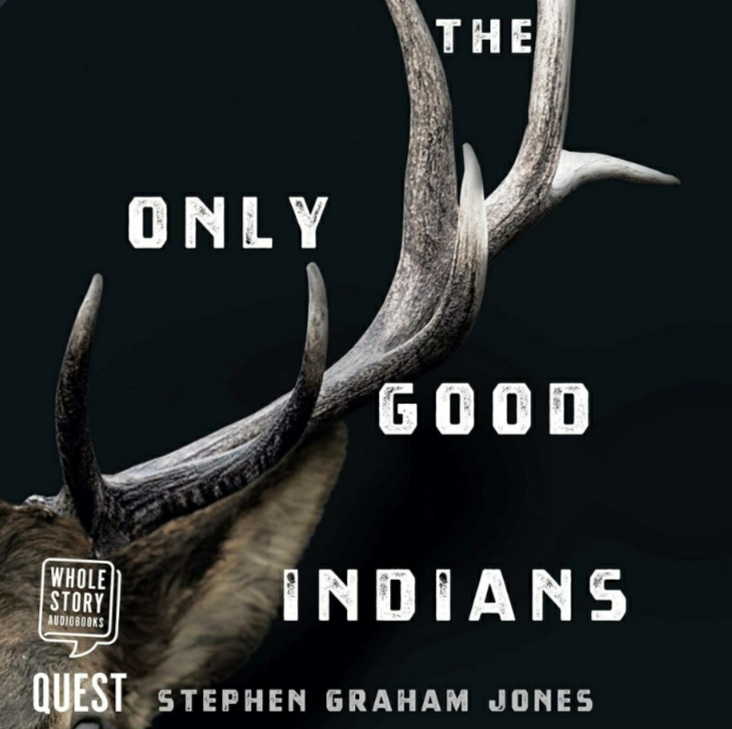
What I’m Reading: The Only Good Indians

The Only Good Indians by Stephen Graham Jones (Saga Press, 2020). Audiobook narrated by Shaun Taylor-Corbett. 

Here are two images of this novel that sum it up best: a sweat lodge made from random old blankets, sleeping bags and jackets so that it looks like, the narrator says, a pile of hobos; and a woman with the head of an elk. 

This is US horror writing in the mould of Stephen King: garage-door social realism; characters whose internal monologues bring them to life as much as their words and actions; incomprehensible passages about sports; monsters and apparitions that feel like an extension of the mundane world and are all the more horrible for that.

But as it goes on The Only Good Indians reveals a folk-tale quality that you don’t find in King. 

It’s set around a Blackfoot reservation in the present day, and the story is steeped in the grim conditions in which the Indians live (that’s the term the author and characters use). Lewis has made it to his mid-30s without dying of diabetes or an overdose or suicide or a car crash, or freezing to death after passing out, and he considers that a small miracle. Don’t tempt fate: the first quarter of the book depicts his complete unravelling, his descent into blood-soaked psychosis. The apparition of the elk-head woman drives him to it. 

Lewis is one of four friends in the crosshairs of this monster. When they were in their early twenties, they committed a transgression which involved blowing a pregnant elk to pieces with rifle fire. Ten years later a dangerous elk spirit has come for revenge – not only to kill them but to destroy everything they love. 

Each one of these Indian characters feels like a traumatised survivor of some terrible war. Each one of them has managed to get through some bad shit and to put their lives together. As death comes to claim them one by one, it feels wasteful and hopeless. The worst part is, it feels true: people who fight their way up out of a bad situation and build new lives for themselves are always prey to some demon from the past catching up with them. 

Twice while reading this novel, once at the one-quarter mark and once at the three-quarter mark, I stopped reading and put it aside, disgusted with it. ‘So it’s like that,’ I thought. ‘Every woman in the story has to die a horrible – and improbable – death.’ The brutality felt capricious and meaningless. We’re supposed to think the elk-head woman was pushing an open door when she turned Lewis into a murderous ghoul, but to me when the killing started it felt too abrupt. It’s difficult to get invested in one character only to switch to some others two-three hours in.

But both times I gave it a week and came back to it, and found myself drawn in again. It’s not really like that. It really is going somewhere, building up to something. Not every woman and man dies. There is a way out.

Denorah, the teenage daughter of one of the four men, is the only ‘calf’ any of them produced. She is a brilliant basketball player, someone who will really make her tribe proud one day. After a long sequence involving the makeshift sweat lodge which builds slowly from tense humour to pure horror, Denorah finds herself in the crosshairs of the elk-head woman. The final struggle falls to her.  

That’s where I am now: in the last half-hour of the audiobook with no idea if the ending is going to come down on the side of the things I liked or the things I didn’t like. While he nearly lost me once or twice, now I’m convinced Jones knows what he’s doing, and I’m keen to see how it all ends. 

[Edit 26 May 2024: the ending brought it all together. Even better than I hoped.]

The Three-Body Problem on page and screen (2) The Flickering Universe (Premium)

Become a paying supporter to get access

Access to this article is limited to paying supporters. If you already subscribe by email, thank you. But if you want to become a paying supporter, please hit ‘Subscribe’ below.

Donate less than the price of a coffee, and you can access everything on this blog for one year.

If you don’t feel like donating, most of my posts are still 100% free, so browse away, and thanks for visiting.

Here you can browse the blog’s full archive.

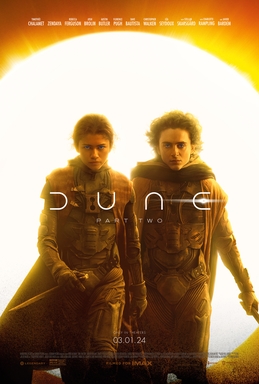
Dune: Part Two – a bold, brilliant adaptation

(Don’t worry, no spoilers)

We live in an age of excess – excess of consumer products, of information, of outrageous and unbearable things happening in the world. Maybe that’s why Denis Villeneuve and co, in Dune: Part Two, endeavour to overload the brains of the audience with images grotesque and surreal but also solid and tangible, and on occasion, too, to contrast this excess with stark desert simplicity.

I’ve been blogging about adaptations of Dune. What is this movie like as an adaptation of the latter part of Frank Herbert’s Dune?

Most of the major landmarks in the story are there, such as Jessica, then later Paul, taking the water of life; Paul riding a sandworm; Feyd-Rautha in the arena; and the final climactic battle (the family atomics, ‘a great-grandmother of a storm’…) The film interprets these landmark moments with extraordinary technique and inspiration. When Paul mounts a worm for the first time it’s truly scary and intense. I’ve seen this moment on film twice before, but I never got anything close to a sense of how viscerally terrifying it would be to really do this. The Harkonnen planet Giedi Prime is not just ugly, but an unsettling, distressing place to spend 20-30 minutes. The filmmakers have taken the time to show us how the spice drug is taken from a drowned worm, how moisture is sucked out of the dead (and sometimes the still-living!), and what a palanquin mounted on a worm looks like.

The landmarks are there, and rendered with power and intensity. But the routes between them are changed. It’s that type of adaptation.

For example, the first action scene is completely new; mst of Paul and Chani’s dialogue is not from the book (though it fits right in); Paul learns to ride a sandworm a lot earlier; Paul receiving the name ‘Mu’ad Dib’ comes a lot later.

(By the way, a line uttered by Paul when he comes face to face with Baron Vladimir Harkonnen suggests that this adaptation is set in one of the alternate timelines foreseen by Paul in the novel.)

But it goes beyond that. Things are not changed only for the sake of economy or clarity. The biggest changes are in the service of tackling the defects of the book – the stress placed on bloodlines and eugenics; the white saviour enlisting the credulous natives; Chani, the most obliging of this very obliging bunch of natives, consenting to being Don Paul’s goomah while he marries someone else. In the novel the Fremen, for all their pride and ferocity, never call bullshit on the ridiculous aristocratic institutions to which Paul expects them to bow down, or on the Bene Gesserit’s shameless manipulation of faith in the service of their insane agenda.

In the movie, each major character (Stilgar, Jessica, Chani, Gurney) is aligned to an agenda, and exerts an influence on Paul; it’s a laser focus as regards character that pares things right down, renders conflicts more extreme and dramatic.

This film rejects space feudalism and eugenics; look at Chani’s reaction when Gurney Halleck speaks of Paul’s ‘bloodline,’ in the context of her earlier statement about how all Fremen are equal.

If you’ve seen the film, you know what I’m talking about, and if you haven’t I won’t spoil it. But in this movie the Fremen are not extras who wandered off the set of The Life of Brian ready to fall for the first messiah who climbs up on a soap box. In this movie Chani’s pride and self-respect do not allow her to be such a pushover as she is in the novel (‘History will call us wives’). Paul’s political choices have consequences for him and others. He really hurts Chani.

1984’s Dune ended on a note of triumph; 2000’s TV version is true to the novel in that it mostly leaves you with good feelings. This movie takes the book’s undercurrent of tragedy and drags it to centre stage. The jihad is not a foggy prediction; it’s kicking off right before our eyes. Paul’s victory has come at a terrible cost, personified in a specific character who, in this adaptation, serves as his conscience.

This ending meant that I left the cinema not with a sense of ‘all’s well that ends well’ but with a strange feeling, something rich and contradictory between triumph, relief and sadness.

High praise so far. What do I not like about the adaptation?

I felt that the script relied too heavily on named Harkonnen characters brutally assaulting and killing their underlings; it’s repetitive, ugly and unsubtle.

There was one thing I couldn’t get out of my mind. Every time I saw Jessica after the first hour or so my reaction was, ‘Jesus, is she still pregnant?’ Speaking of Jesus, it’s written that he was three years preaching before his crucifixion. Now imagine a movie where Jesus dethrones Tiberius Caesar just three months after he begins his ministry. Just ask anyone who has ever been involved in a pregnancy or, I assume, in a jihad: a guerrilla war takes longer than a trimester. In the book we cut away for two years, then return to find Paul at last ready to ride a sandworm. Even two years was cutting it fine. How do Paul and Jessica get millions of Fremen eating out of their hands in just six months? The movie works hard to get us away from the white saviour narrative stuff, but this telescoping of the timeline sends us back a large part of the way.

Linked to this, I missed a certain omniscient syringe-wielding toddler who didn’t make the cut.

[Edit, 8 mar 2024.] Here’s another problem. Would it kill Hollywood directors to give speaking roles to actors from the Middle East? What’s the terrible thing that would happen if you gave roles to people from the country you filmed in (or countries where they speak the same language, or practise the same religion)? I didn’t want to raise it at first, because with Dune it’s always going to be a fine line between accusing authors of erasure and accusing them of appropriation. But it occurs to me that just hiring some Arab or Muslim talent is neither erasure nor appropriation. Ridley Scott hired Ghassan Massoud to play Salah ad-Din (Saladin) in Kingdom of Heaven – and the sky did not fall on our heads. Dune borrows so heavily from the Muslim world. It should start paying back.

To see this movie on the big screen was to be put through a succession of intense and unexpected experiences. Sometimes you’ll see a movie that has some great moments, images or scenes, but just isn’t great overall. But in Dune: Part Two, it all adds up to something powerful and brilliant. And as an adaptation, it favours the things I like in Frank Herbert’s novel, and militates against the things I find embarrassing. In particular it leans hard into the tragedy and dread that make the ending of the novel Dune so different.

Screen Adaptations of Dune

The new Dune is phenomenal. Two-plus years ago Dune: Part One got me out to the cinema for the first time since Covid and it was exhilerating. Part Two is reported to be even better. But Frank Herbert’s 1965 novel Dune has been adapted for the screen before, more than once. I have seen all these adaptations, because I have a strange fascination with Dune which is part nostalgia because I first read it aged 14, part a mature realisation that the things we enjoy don’t have to coincide with the things we believe in, and part, no doubt, reasons that could be best explained by Freud (sandworms), Marx (family retainers) and Edward Said (white saviour complex).

Freudian beasts, their hour come round at last, slouching toward Arrakeen. From the 2000 TV version, dir. John Harrison.

Enough deprecation. I also like this story because it’s exciting, intelligent and haunting. The author takes politics, economics and ecology seriously while telling a great story. How well has that translated to the screen?

This review will take a look at David Lynch’s 1984 movie, the Sci Fi Channel’s 2000 miniseries, and Denis Villeneuve’s 2021 adaptation of the first half of the novel.

Villeneuve is talking about adapting the Dune sequels. In a bit of a sequel to this post, we will look at the 2003 adaptation of Dune Messiah and Children of Dune.

Three different versions of the ornithopter from, top to bottom, 1984, 2000 and 2021.

Harkonnen Horror Picture Show

God created 1984’s Dune to train the faithful. For every good thing I can say about it, there’s a bad thing too, and vice versa.

To begin with, something bothers me about the interiors. The Atreides live in surroundings of Victorian frumpiness, gaudy but flat, like the decor in Boris Johnson’s house; the Harkonnens in a green-lit space slaughterhouse. For all the implicit homophobia in the way the Baron is portrayed, something about the campiness of the whole set-up makes me think the whole evil cabal might jump out of their chairs and start singing ‘Time Warp’ at any moment. But other elements of the visual design are brilliant – the guild spice navigator and his cohorts, who prefigure the fascinating visual excess of Warhammer 40,000; the tonsured Bene Gesserit; the faceless rubber menace of the Harkonnen troops.

The spaceships look cool; but the visual sequence in which the guild navigator bends time is slow, unclear and not necessary.

I like the weirding modules. These are invented out of whole cloth for the movie: in short the Atreides have a special weapon that can kill with the utterance of a sharp syllable. This idea fits pretty well in the world of Dune and helps the story along. For example, it explains what’s so special about Paul from the point of view of the Fremen: he brings a powerful new weapon to the table. But the shields, personal force-fields used by combatants in the universe of Dune, look silly.

Top to bottom: Kenneth McMillan, Ian McNiece, and Stellan Skarsgard as Baron Vladimir Harkonnen. Top to bottom, the colour pallettes of a 1980s movie, a TV show from 2000 and a 2020s movie

The movie is rushed and incoherent. It might have gotten away with telling such a huge story in just over two hours, but it goes out of its way to be confusing and to trip us up on irrelevant things. It’s difficult to imagine anyone who hasn’t read the books being able to follow what’s going on. But the final half-hour strides along with a formidable momentum and plenty of cool imagery.  

At the very end of the movie it suddenly rains on Arrakis – a development that makes no sense in the logic of the world, but which is absolute magic on a simple storytelling and thematic level. I can see why they couldn’t resist.

It’s a movie I could talk about, back and forth, is it good or is it bad, for a long time.

The guild spice navigator, from the 1984 Dune, dir David Lynch

A very delicate time

The opening of 1984 Dune is problematic in ways that are thrown into sharp relief by the quality of the 2021 Dune’s opening. In 1984 Dune, we begin with Princess Irulan, a very formal narrator who stares straight into the camera and explains things, followed by a scene in the imperial throne room. In 2021 Dune we begin with Chani narrating over a striking visual sequence. 

The 2021 approach is more democratic and materialist, centring the indigenous Fremen and the key resource they control rather than the galactic aristocracy. But it is also much better from a storytelling point of view: it is rooted in real and tangible things, while narrators and the high politics of throne rooms are distant and abstract. Chani is narrating but also participating in a sequence that conveys visually the importance of the spice, the oppression of the Fremen by the Harkonnen, and the transfer of power from the Harkonnens to another noble house.

The guild spice navigator in the 1984 Dune is a top-tier movie monster. In the books we don’t see him until Dune Messiah, but here he makes his grand entrance in the opening sequence. Unfortunately that is a big problem. Although he is cool, he is one of several big things that we don’t need to know about this universe right away, or at all. But the movie goes out of its way to foreground him.

From the 2021 Dune, dir Denis Villeneuve. Murky.

Comedians of Dune

The Harkonnen scenes in the 1984 Dune leave me with a vague impression of grotesque-looking people bellowing and jabbering monstrous things at one another, punctuated with maniacal cackling. The 2021 Dune is a bit humourless by comparison. There is an early moment in which Paul and Duncan Idaho share a chuckle. But that is an oasis in a desert of dourness.

There is, to be fair, one other joke in the movie:

‘Smile, Gurney,’ says Duke Leto.

Scowling, Gurney replies: ‘I am smiling.’

Someone has decided to make Gurney ‘the grumpy one.’ It’s a good joke, delivered well by the actors. Is the movie taking a dig at its own serious tone? Or is it opening itself up to the retort: ‘Which grumpy one?’

Still, the 2021 Dune is better in almost every way. The storytelling and worldbuilding are far more skilful, conscious, economical; the screenwriters treat words as the Fremen treat water. The visuals play with light and shade, convey weight, grit, thirst, scale. It does not lack that essential quality: weirdness, accident, quirkiness (Who thought of giving the Atreides bagpipes? Give them a medal) but it doesn’t allow that element, either, to get in the way of the story.

In any adaptation, fidelity to the original is not crucial for me. Things have to change in the move from one medium to another. A change for the better, or a change necessary for the medium, justifies itself. But for what it’s worth, the 2021 Dune is much more faithful to the original. Both other adaptations resort to arming their extras with projectile firearms. But in the book and the 2021 version, shields have rendered firearms obsolete, and combat is primarily a hand-to-hand affair.

Budgets of Dune

An even smaller point against the 2021 Dune is its portrayal of the city of Arrakeen. In a movie that cost $165 million to make, this key location appears to be nothing more than a scale model, entirely devoid of human life. The 2000 TV adaptation, working with a budget of $20 million, manages to convey a lively and bustling place. (In case you’re wondering, the 1984 Dune cost about $40 million.)

The same moment in three different versions: fleeing by ornithopter as a sandworm eats a spice factory. Top to bottom, 1984, 2000 and 2021.

Now we come to the most obscure adaptation, Frank Herbert’s Dune, a three-part miniseries for the Sci Fi Channel written and directed by John Harrison.

(It was one of three very fine miniseries released by the Sci Fi Channel around that time, along with Steven Spielberg’s UFO epic Taken and Battlestar Galactica. The latter ended up running to the proverbial six seasons. It was an underappreciated moment in the history of ‘prestige TV’.)

I’ll level with you up front: Frank Herbert’s Dune is not visually spectacular – the CGI is dated and some of the costumes look tacky.

But the actors are impressive. It is long not because it is bloated, but because it has made a conscious decision to tell the story more fully and faithfully, without unseemly haste. Everything about this adaptation is confident and assured, as if having a smaller budget gave it much more freedom.

And about that CGI: on a technical level, it would not pass muster today. (Though nostalgia or irony might induce people to deliberately copy this style in the future – stranger things have happened). The images are well-composed and are shot and edited in such a way that, interspersed with live-action footage, they tell a compelling and comprehensible story. A lot of today’s filmmakers could learn a lot from how the CGI is used here, how John Harrison does so much with relatively little. The result is that a CGI-heavy action scene, such as when the spice factory is eaten by a worm, is a genuinely tense experience.

In a fantastic scene, the ‘Beast Rabban’ gets a personal comeuppance he never gets in the novel when he is killed by a mob in the streets of Arrakeen. I guess budget dictates that some additional scenes must happen in this set, to justify the expense of building it; but budgetary needs can coincide with storytelling needs. It is satisfying to see this showdown happen in this familiar place. In the novel, by contrast, we are told in the most perfunctory Shakespearian way that ‘Rabban, too, is dead’ – offscreen somewhere.

I don’t want to over-praise something that, after all, will have dated poorly, especially measured against the new big-budget spectacle. But here’s one last piece of praise: Frank Herbert’s Dune is the only adaptation to leave in the crucial banquet scene (into which it inserts the Princess Irulan and a bodyguard of Sardaukar. It’s important later that we know who these people are, so it makes sense to feature them here).

It was shot in Czechia, and you can decide for yourself whether that (a) results in lamentable whitewashing of the Middle Eastern elements or (b) to your great relief, distances the adaptation from the wild orientalism of the novel.

Paul in stillsuit watches a sandworm’s back cresting the sand. From the 2000 version.

Recommendations of Dune

If you want a spectacular modern science fiction epic, well-conceived and well-executed, with current stars and big budget, you should watch the Denis Villeneuve Dune.

If, like me, you are really into Dune and also interested in the process of storytelling and adaptation, these versions are all deeply intriguing.

If, like me, you are interested in things that are good but also kind of bad, you should watch David Lynch’s Dune. The highs and lows are equally bold and striking.

If you liked the 2021 Dune and want to know more, but aren’t much of a reader or can’t get into the books, the 2000 miniseries is a good place to go to delve deeper into the story. It would be a good option for someone who prefers the pacing and serial form of TV shows. It also has the great advantage that it has a direct sequel to introduce you to the later books in the series.

Next week I’ll talk about that sequel: the novels Dune Messiah and Children of Dune, along with the TV miniseries Frank Herbert’s Children of Dune (2003). Stay tuned for that if you want to hear about how a low-budget TV adaptation can be better than the source material. Until then, enjoy Dune: Part Two.

Home Page/ Archives

How Dune gets away with it

‘AI’ clogs the internet with meaningless crap

This is a post about how the internet is getting worse. It’s about so-called ‘AI’, chatbots and plagiarism, and how they are churning out utterly useless rubbish for the sole purpose of getting your eyes onto their ads and their cookies onto your device.

Today it emerged that a local authority in the middle of Ireland was cheated out of half a million euros. Here is a report from the Irish Independent, published earlier today, reporting on the revelations of fraud.

I saw the Irish Independent article less than an hour after it was published. Less than an hour later, a website called ‘BNN, The People’s Network’ had an article up on the same topic. I will not link to this article, because if you go there you will have to spend 3-5 minutes manually opting out of various ‘legitimate interest’ cookie options.

The sub-heading invites us to ‘Explore the high-stakes drama at Westmeath County Council.’ The article begins: ‘In the heart of Ireland, a story unfolds that reads more like a thriller novel than a report from the municipal offices.’

But what follows is neither thrilling nor dramatic. We don’t explore or discover anything. There is no story. It is the exact same items of information that are in the Irish Independent article, but strewn around and hidden in ridiculous overwritten paragraphs:

‘The digital age brings with it incredible opportunities, but also unfathomable risks. The road to recovery for Westmeath County Council will be paved with lessons learned the hard way. It’s a testament to the resilience of the community and the individuals determined to restore what was lost […] While the investigation continues, and the council rebuilds, the story […] underscores the importance of vigilance, transparency, and the unbreakable spirit of community in the face of adversity.’

You’d think Westmeath had been struck by a terrorist or a decent-sized meteor.

There is nothing in the ‘People’s Network’ article that is not in the Independent article – except for one thing (or, the same thing repeated again and again, because everything is said at least three times): references to cybersecurity. No public statement has made any reference to cyber crime, or indicated that this was digital fraud.

At first I thought this was written by a human, content-mill crap, a step above plagiarism. But pretty soon I figured it was a chatbot.

How could I tell it was a bot?

1: Plagiarism. It was obvious to me because I’d just read the Indo article: there was nothing new here. Someone took the Indo article and fed it into a programme, which spat out this.

2: No sense of proportion. This thing was composed by an entity that has no inkling of what Westmeath is or what fraud is or what a euro is. It’s a trained predictive typing trick that arranges words in a plausible order. ‘The Chief Executive of Westmeath County Council is poised to make an official statement, a move that many await with bated breath.’ I live in Westmeath, and no, my breath is not bated.

3: Good grammar, terrible prose. I like to believe that a human, even the worst hack, would get nauseous writing such a cascade of clichés (‘reads more like a thriller’…’at the center of a high-stakes drama’…’a cornerstone of its relationship’…’this incident is a wake-up call’…’it serves as a poignant reminder’… ‘it’s a stark reminder of’…’underscores the importance of’…’underscores the critical need for’… A writer who takes some else’s writing and, within two hours, has it cannibalised and regurgitated, might be expected to make some mistakes on the spelling and grammar. If this writer, in addition, writes not in words but in stock phrases, they are likely to have problems with word order and sentence construction. But even that bad human writer would be more interesting. They would not be determined to say that everything is a reminder, a wake-up call or an underscore. They would get bored with the constant resort to bland linking phrases.

4: Repetition and needless elaboration. Most of the word count of the article is totally unnecessary. For example, the chatbot tells us the same thing four times: ‘[1] The details of this fraud have been kept under wraps, not out of secrecy, but to protect the integrity of the ongoing investigation. [2] Elected members of the council, though informed, have remained tight-lipped, respecting the delicate nature of the situation. [3] The Mayor of Athlone-Moate Municipal District, when approached for comment, respectfully declined, citing the active probe into the matter. […] [4] As the Gardaí delve deeper into the investigation, there’s a palpable tension between wanting to know more and the need to maintain a veil of confidentiality for the sake of justice.’

5: Obvious mistakes. The bot somehow got the wrong end of the stick. For some reason it thought this was a story about cyber crime.

6: Blandness. The story is scattered with phrases like ‘a breach of trust’ and words like ‘shockwaves’ that suggest the author is pretty excited, and that you should be too. But there is no criticism of anyone. ‘The council’s response, swift and thorough, reflects a commitment to accountability and a resolve to strengthen its defenses against future threats.’ A human would either stick to the facts (the Indo reporter presents all the information concisely) or present an opinion. This chatbot gives the impression that it has an opinion, but it’s the most boring opinion you could possibly imagine: the moral of the story is ‘fraud is bad.’ There is no meaning behind this. No feelings or ideas animate these words.

This story of content mills and chatbots is as a stark reminder of, serves as a poignant reminder of, underscores the importance of, and is a wake-up call about the attention economy and how the profit motive is spreading rot throughout the internet. I wouldn’t be writing this if it wasn’t actually kind of fun to play spot the bot. But the article you have just read (which, I hope you agree, reads more like a thriller than a blog post) will age poorly, because I predict that soon most of us will be dismally accustomed to chatbot-generated meaningless content, to having to navigate this crap in order to use the internet.

Home Page/ Archives

No, Rebel Moon is not really like Star Wars

‘A pound shop C-3P0!’

That was Mark Kermode’s verdict on Jimmy the robot from Rebel Moon. This sums up what Kermode and many others have said about director Zack Snyder’s new space adventure movie: that it’s a rip-off of Star Wars, that it’s staggeringly derivative.

I usually like Kermode but actually Jimmy isn’t much like 3-CP0. He’s a humanoid robot with an English accent – OK. But there have been a lot of human-shaped robots since Fritz Lang’s Metropolis. It’s pretty much the default shape for robots. And English accents are not rare; Mark Kermode has one.

Jimmy is a military robot, designed to kill, not a protocol droid who can speak 6 million languages. C-3P0 is pedantic and cowardly and pessimistic. Jimmy, on the other hand, has an interesting and messy internal life. Unlike C-3P0 he is dignified, and he is played for sympathy, not for laughs. He was programmed to defend a certain princess, and now that she’s dead he can’t fight – until something unexpected suddenly restores his capacity for violence.

This incident has placed him on an interesting trajectory. When we see him in one of the final shots of the movie, having not seen him at all for over an hour, he has undergone a strange transformation – a kind of robotic midlife crisis, resulting in new feral headgear. It’s a striking image.

I didn’t particularly want to like Rebel Moon and I didn’t see myself writing about it here, slightly pedantically defending it from a critical pile-on. Of Snyder’s precious films, 300 impressed me at 16 but in retrospect it was a crazy and fascist movie, drawn from an equally crazy and fascist comic. I haven’t seen a Snyder film since Watchmen. I know that Rebel Moon started out as a rejected pitch for a Star Wars movie. In the trailer, the action looked weightless, the characters dour. I thought it would be Star Wars without any humour or character, and with a reactionary political edge.

But honestly, contrary to what most of the critics are saying, Rebel Moon carves out its own space and is its own thing. I watch everything in 20 or 30 minute stretches these days, between changing nappies, sleeping and going to work, so the length of the movie didn’t bother me as I didn’t watch it in one sitting. But if I didn’t really like it, I wouldn’t have kept coming back.

From the start, Rebel Moon struck me as more like Warhammer 40K or Dune than Star Wars: there’s the solemn choral music and the baroque Gothic style of the bad guys. This tone promise was borne out: the whole movie is edgier than anything Lucas made. It’s not exactly Come and See but it’s more for teenage boys (of all ages and genders) than for the whole family.

The early scenes with the good guys are also very un-Star Wars. They talk about sex, joke about it, and have it barely off-screen, which is something most action-adventure films of our era are terrified to do because they want to pack all age groups into the cinema. That’s refreshing. Also, these pagan farmers appear to be having a really good time even when they aren’t riding each other. For me, all this was unexpected and endearing.

The arrival of the bad guys is really tense. This sequence follows Hitchcock’s ‘bomb under the table’ principle. Yes, thanks critics, it’s obvious they’re bad space fascists and they’re going to do bad things. But we don’t know exactly what they are going to do, or when. Hence the tension.

The imperial soldiers are not faceless stormtroopers. They’re macho bullies and rapists, apart from one decent guy; they have horrible personalities, but the point is that they have personalities. In another 40k nod, their armour spans the gap gracefully between futuristic and baroque.

Contrary to what I expected, the fight scenes actually kick arse. They have real weight and are gritty. The energy weapons have a kick to them.

There are plenty of genre tropes in the first 40 minutes. But there are few specifically Star Wars tropes until Kora and Gunnar (look! I remembered their names 3 weeks later) take in a vista of a town from a clifftop before proceeding into a cantina full of exotic and dangerous-looking figures. From there it turns away from Star Wars again and becomes a ’round up a posse’ story, drawing from Kurosawa himself, not Kurosawa filtered through George Lucas.

There are plenty of moments where the movie is a visual feast. But sometimes the environments look like stage backdrops, and even when they don’t look like it they behave like it. When our heroes meet the Bloodaxes, it might as well be happening on a theatre stage because there is no interaction with the floaty columns that loom in the background. Towards the end, which is not really an end but a lull before the next movie, the characters keep saying wooden portentous things clearly designed to get the ending to feel more ending-y. That’s clumsy. I found most of the slow motion stuff unnecessary and distracting. A slo-mo shot of seeds being sown – what is that for?

The Bloodaxes keep saying the word ‘Revolution,’ without every giving us the slightest notion of what their revolution is about. In this sense too the movie is distinct from Star Wars: it finds a way to be even more apolitical. Unfortunately Rebel Moon also goes so far as to hint that the evil empire might be redeemed by a slightly more compassionate absolute monarch, one who can heal little birdies with her bare hands.

Once again, like in Dune and Star Wars, we have space feudalism. The assumption that a lot of dukes and emperors would be able to manage interstellar travel, when our modern capitalists have such trouble even getting off the ground, is a strange one, but again it’s a genre trope and hardly unique to this movie.

The whole thing is basically limited and on the shallow end, but it’s gripping, pacy and well-executed. Take the masked priest characters who lurk in the background ominously for the whole movie, until the final scenes when we at last learn what their function is and see them at work. That’s cool. The script is pretty likeable. When a bunch of nameless good characters are killed in battle toward the end of the movie, we afterwards get a moment of tribute and mourning – something we rarely get in Star Wars, where there’s an unwritten rule that nameless characters are disposable.

It’s a shame this kind of budget isn’t going to a movie adaptation of some piece of space sci-fi by, say, Ian M Banks or Ann Leckie, or some original adventure drawing on their ideas. That’s my main problem here: there are lots of little sci-fi tropes and elements in Rebel Moon, but no big Science Fiction ideas animating the story, no consistent through-line in the worldbuilding.

I thought the Avatar sequel, Dune: Part One and Andor were all brilliant in very diferent ways. Rebel Moon is not on that level – it’s not so original or intelligent. But the critics are wrong. It hits the targets it sets out to hit. And it’s only ‘like Star Wars‘ in the sense that they both belong to the same genre. In the same way Notting Hill is like Meet the Parents in that they are both rom coms. In the way that 300 is like Gladiator. In the way that Watchmen is like an Avengers movie.

Saying that Jimmy is C-3P0 is just pointing out that they both have human shapes and English accents. It’s not demonstrating anything, except ignorance or maybe disregard for the genre. Likewise, pointing out that Rebel Moon is like Star Wars is actually saying nothing more than ‘These two films are action-adventure movies set in space.’

Home Page/Archives