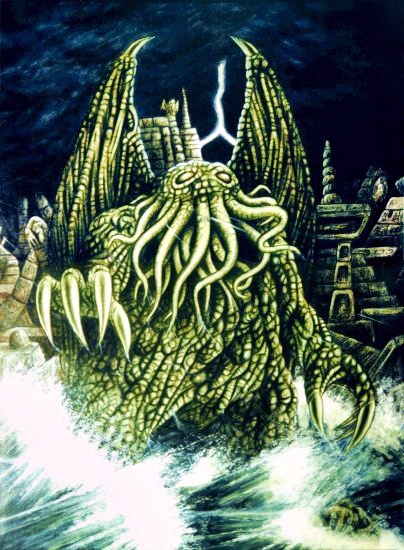
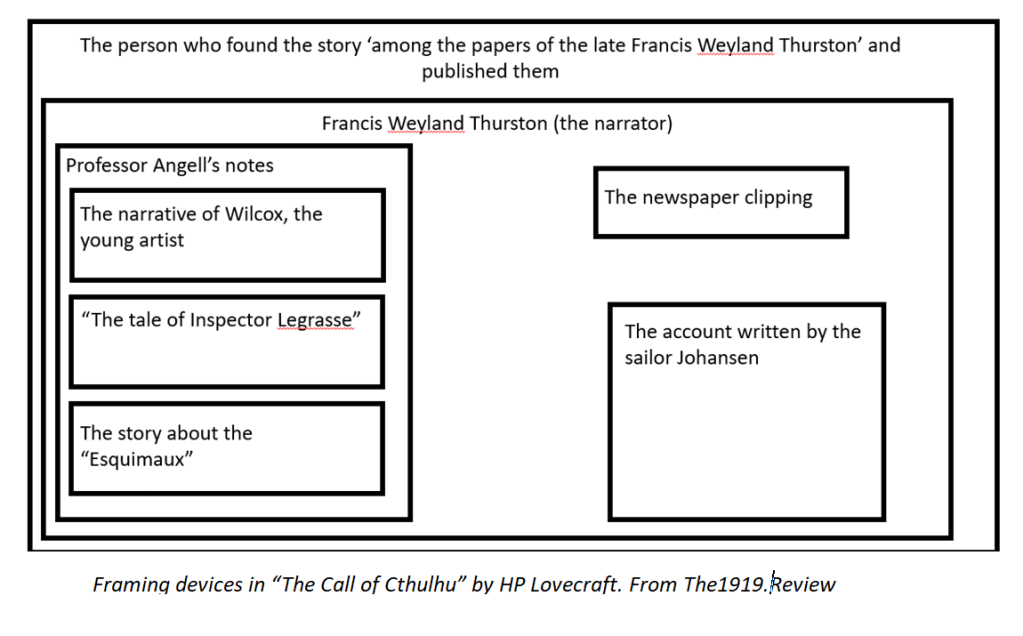
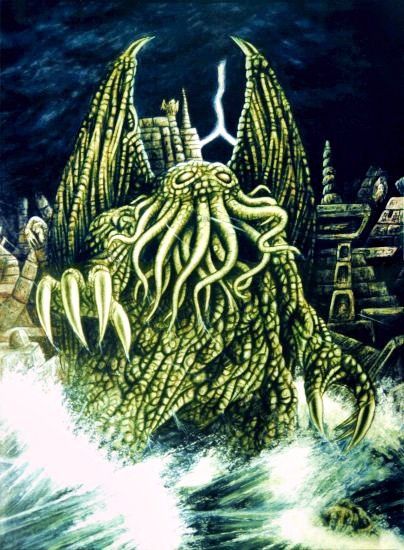
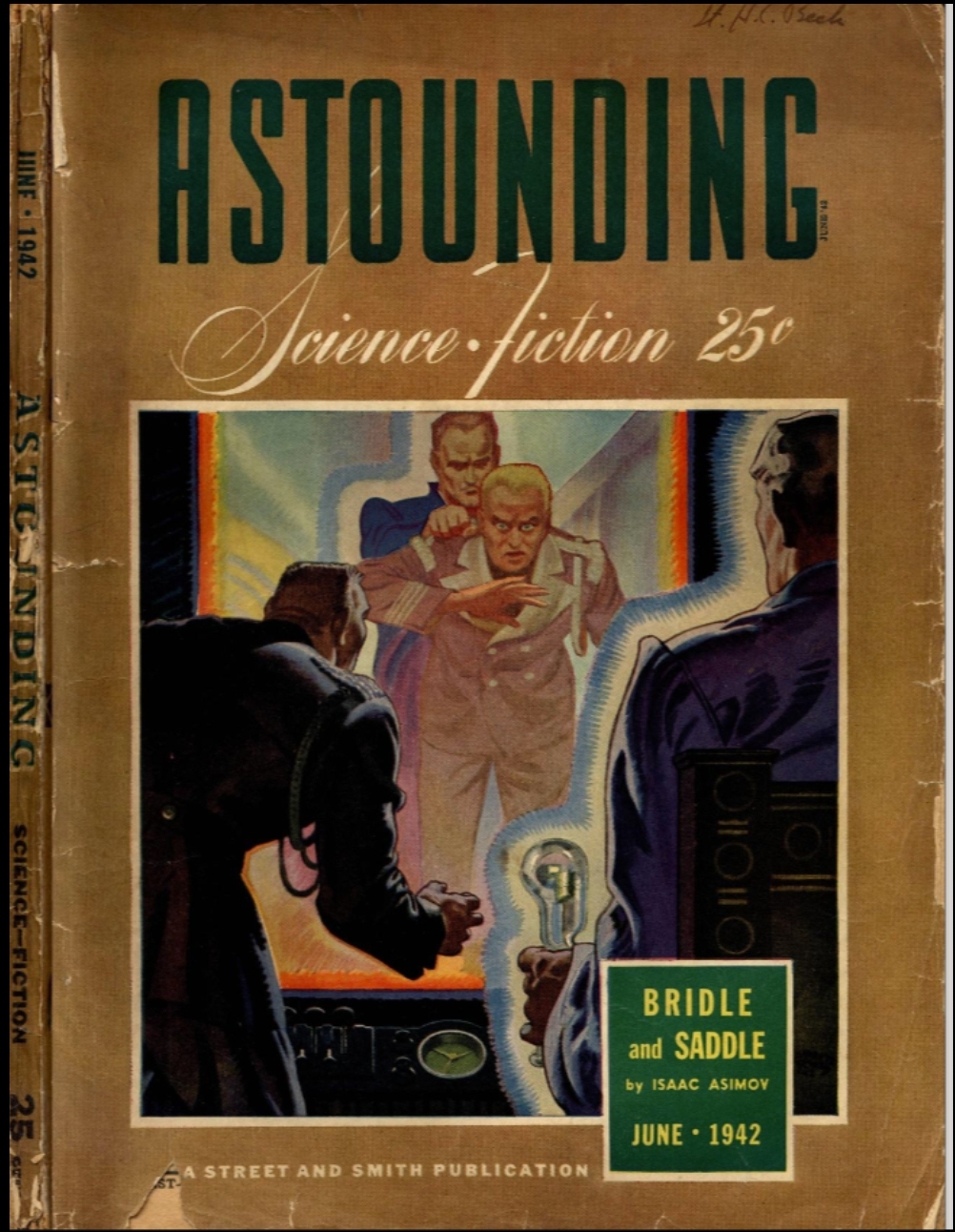
Re-reading HP Lovecaft’s work over the last year, I was struck by how he uses a complicated apparatus of nested narratives in his landmark short story “The Call of Cthulhu.”
Here they are:
This elaborate framing has several effects:
It adds to the verisimilitude of the story; the various pieces of the puzzle pseudo-corroborate each other. As with all the best Lovecraft stories, the movement from the sober and uptight New England puritan to the flailing and slobbering tentacle monster is stately enough that we accept the transition.
It makes for a good mystery story, with the central horror only gradually revealed and the reader’s imagination given plenty of room to play in the meantime.
It reinforces the theme, stated in the opening paragraph, about how the ‘piecing together of dissociated knowledge’ will reveal terrifying truths about reality and ‘our frightful position therein.’ Each of the stories is a rip in the fabric of reality as we know it through which we glimpse a sliver of what lies beyond.
Lovecraft’s cosmic horror was rooted in North American racism but it resonates with people who don’t share these ideas because it transcends this base and reaches toward a more universal and – to me, at least – cathartic doomerism.
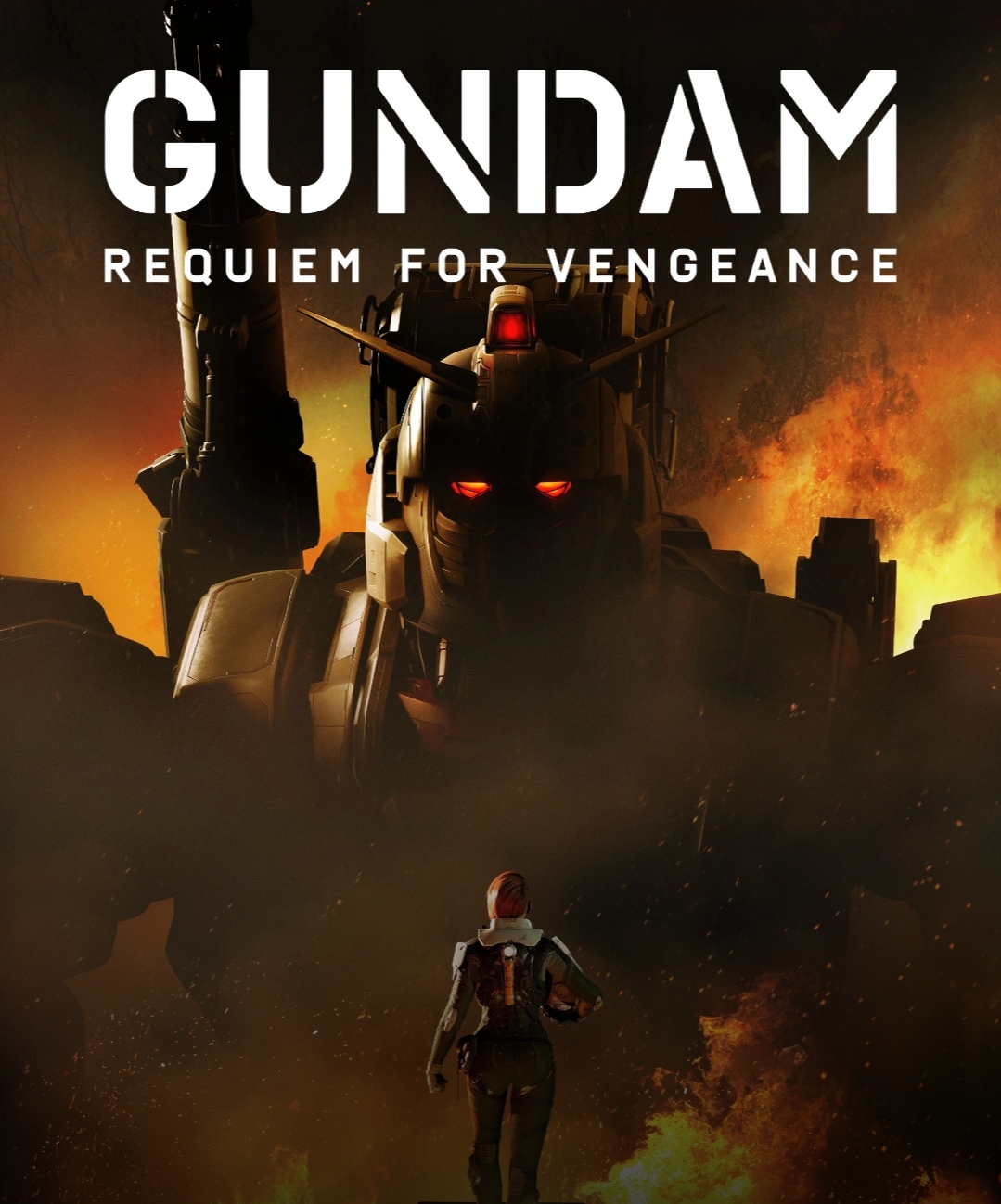
We’ve got a guest post for you today, a review of Netflix’s Gundam: Requiem for Vengeance by freelance writer Charlie Jean McKeown.
Stories and machines are ultimately driven by people, yet Gundam: Requiem for Vengeance lacks the personality needed for the gritty mecha war drama it tries to be. Since its 40th anniversary, the Gundam franchise has been boasting ambitious projects like SEED Freedom (2024) in theatres, Witch from Mercury (2023) on TV, and in gaming Gundam Evolution (2022). (i )
This new Netflix series follows Zeon soldiers- the usual antagonists- in the closing months of the ‘One Year War.’ It’s an attempted love letter for Gundam fans, with a touching homage to the original 1979 show in its opening titles and what must have been a laborious effort to give the classic mecha designs such glorious detail. However, Requiem has little identity of its own; it has little to offer old fans and nothing accessible for new ones. More disappointingly, it does open up genuinely interesting themes which could have given the show some life if they were navigated by decent characters.
Requiem actually inverts some of Gundam’s most central themes; empathy becomes vengeance, and our protagonist is an enlisted mother rather than the usual child soldier. ‘Time’ is not a new theme for the franchise but had never received the same attention it enjoys here albeit with some overly-obvious motifs. The survival element of other Gundam series is heightened in Requiem too, as we watch the losing side struggle against a war-winning weapon. These themes, though, are only minimally engaged with. While one could blame this on the many action scenes, Gundam has always used battles to deepen its narratives rather than merely embellish them. Furthermore, Requiem still has plenty of peaceful moments in its three-hour runtime. The fault is really found in the show’s repetitive exposition soaking up what should be time spent on challenging characters so that they may develop and investigate these concepts.
All of this culminates into the most disturbingly mishandled theme of Requiem: nationalism. Mirroring the Cold War narrative of Nazi Germany (ii), Zeon had always been presented as an evil fascist regime with ordinary soldiers fighting for their homes. Interestingly, the One Year War – the definitive conflict of the franchise – is renamed here as ‘the Revolutionary War.’ Is this how the fascist Principality of Zeon sees itself? Do they view the One Year War the way Confederates saw the American Civil War? It’s a fascinating angle to investigate. However, it feels like Requiem takes up a ‘both sides matter,’ approach, with no real discussion of Zeon’s war crimes (wiping out half the Earth’s population, for instance). Instead, our apolitical protagonist is “just following orders.” While her final monologue is clearly intended to convey a lesson she learnt, it gives us a rather warped justification for continuing to fight under a swastika-esque banner.
Banner of the Principality of Zeon
While the writing is poor, Requiem’s establishing shots want you to know money and effort went into making them. Requiem is Gundam’s first CG animated production since MS IGLOO (2004), and the improvement in quality is staggering. By tightening their dimensions, the old mecha designs remain credible in today’s science fiction scene while the body language of these giants conveys a surprising degree of emotion. The facial animations are unfortunately less expressive, and to come across they often rely on the wonderful new soundtrack provided by award-winning composer, Wilbert Roget II. Netflix’s first Gundam production does look lovely as a whole, but its writing encourages little confidence in the live action film they announced in 2018. I doubt Requiem will see a second season, which is a terrible shame given its potential; if the writers could make some course-corrections in a new season and rummage through those ideas they raised, then Gundam: Requiem for Vengeance could be forgiven for these first six dismal episodes and actualise its own distinct identity.
(i) While Evolution was closed down in a year, it gave Overwatch 2 a little competition in the hero-shooter market before collapsing under its embarrassing micro-transactions. (ii) A narrative, it should be noted, now being revised by historians who are acknowledging the Wehrmacht’s complicity in war crimes.
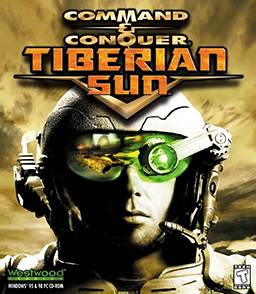
When I was 11 or 12 – or maybe it was some older and more embarrassing age – there was a field near my house that me and my friend called the Tiberium Field. You had to dash across it in twenty seconds flat, otherwise Tiberium poisoning would kill you and turn your body into a visceroid, an aggressive and indestructible blob of human tissues. In our heads, we were in Command and Conquer: Tiberian Sun.
So far, so nostalgic. This is a post where I talk about a 1999 strategy game, maybe to recapture the remembered leisure and innocence of the childhood that surrounded it.
But I never got past a few missions of Tiberian Sun, never owned my own copy, and I like it a lot more now than I did back then. If we’re talking nostalgia, I was always more of a Red Alert guy (who could have guessed?). At the time I thought Tiberian Sun was, in comparison to Red Alert 2, drab and self-serious, with a clumsy interface and confusing missions. Earlier this year when I bought the whole Command and Conquer back catalogue for a tenner, I didn’t expect that this would be the game I spent the most time on, the one where I actually finished both campaigns, the one that would haunt my imagination.
So this is not all nostalgia. Something else is going on here, and I’m going to try and find out what. And even within the nostaglia, there’s the question of how this game worked its way into my imagination in such a way as to turn the grass of that neighbourhood field into an expanse of deadly and valuable green crystals.
So how did this game warp my young (and not-so-young) mind?
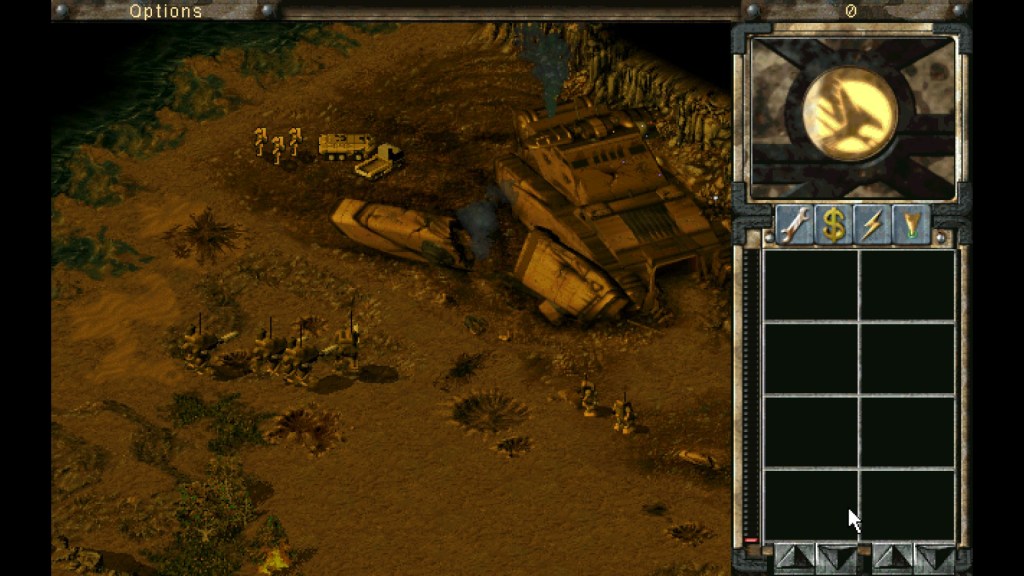
This screenshot is from the expansion pack, Firestorm
The Tiberium-haunted world
The first point in favour of Tiberian Sun (henceforth TS) is its setting. The world of the original Command and Conquer was sort of improvised. The developers said, let’s have something like the spice from Dune2 – it works so well as a resource-gathering feature – but transplanted to another setting. The result is Tiberium, a strange green crystal native to some alien world which has begun to spread over Earth’s surface. There are two factions: the Global Defence Initiative (GDI), a one-world military defending the status quo, and the Brotherhood of Nod, which is part-Tesla, part-ISIS, part Comintern, and obsessed with using the Tiberium for obscure ends. My impression, having played only a little of the original C&C, is that whatever worldbuilding there is starts to peter out around there. The setting is just an excuse to have a war game on the Dune 2 formula. (I’ve talked about the Red Alert spin-off elsewhere.)
Tiberian Sun takes the worldbuilding more seriously. A couple of decades after the first game, the Tiberium infestation has advanced, and Planet Earth is now terminally sick. GDI and Nod are still fighting over ruined cities and land choked with alien crystals and alien weeds, skies torn by ion storms, poisoned air, mutated genetics. For more on the setting and its applicability as a prophecy for our times, I recommend this article from Eurogamer by Robert Whitaker.
Tiberian Sun captured that late-1990s sense of some vague impending doom. But in 2024 it offers a strange kind of relief. You can retreat into the barren comfort of a world that is already destroyed, where there is little to save. There are unexpected inheritances from Dune: like in Herbert’s book, the ground beneath your feet is more than a setting, it’s an actor with powers of life and death over the fragile humans and machines crawling on its surface.
The applicability to climate change and global warming (which we all absolutely knew about in the 1990s even though those in power did nothing) are obvious. It’s a metaphor for our times in another way too. GDI are coded as “good” but we never see them actually doing, or even promising, anything good. They never help anybody or change anything, until the Forgotten twist their arms. We side with GDI only because Nod are obviously and extravagantly worse. Yes, GDI is Harris and Nod is Trump. Neither side offers a way out of war and ecological destruction. But Nod at least offers its supporters the shallow pantomime of its rituals and chanting and bloody spectacles.
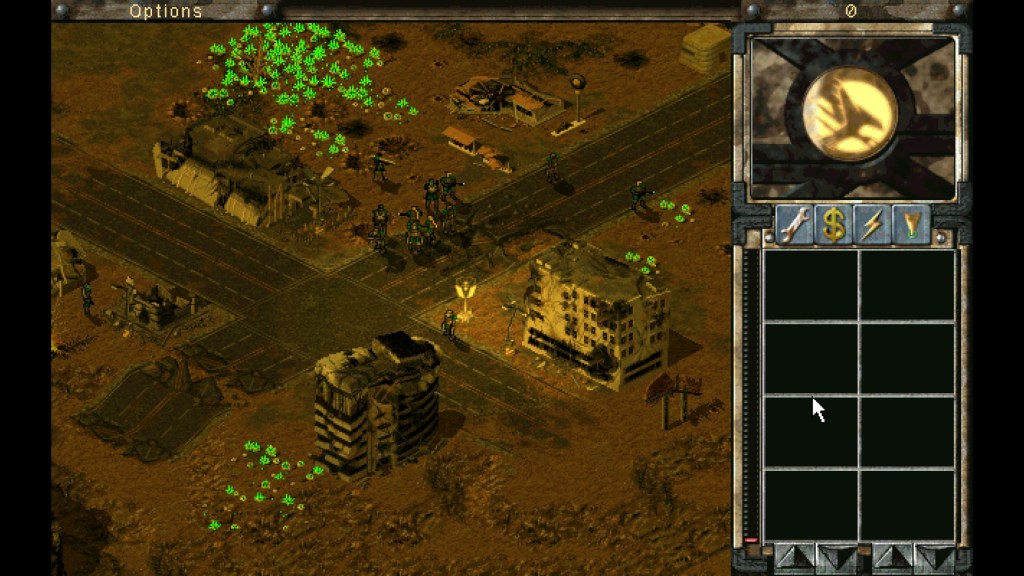
Mutants, ruins and the glow of Tiberium. It’s a vibe
The setting itself tells a story: when we move our little men across the map, we see ruined high-rise buildings, contrasted with space-age-looking new settlements with solar panels and bunkers and greenhouses: the civilian world has retrenched into smaller and more resilient communities. Meanwhile war has advanced as a science. It’s all laser guns and visored helmets, giant walking battle mechs, cyborgs, explosive throwing discs, orbiting battle stations. Humanity is spending and innovating to fight more effectively, even as we have less and less to fight for. While the Red Alert setting just pits an evil faction against a good faction, Tiberian Sun (TS) takes place in a world that is messier and more ambiguous. In Red Alert, we don’t know why the Soviets are attacking the status quo. In TS, we don’t know why GDI are defending it.
Videogames then were violent, militaristic, imperialist – not in a the conscious and blatant way that Call of Duty is now, but as it were by default, by reflex. C&C is no exception. The GDI versus Nod struggle is at base the same old Imperialism versus Third World struggle, with the legitimate struggles of the global majority (“disenfranchised nations” seduced by Nod) packaged as evil fanaticism. In TS it is less explicit, filtered through layers of deniability in the worldbuilding, but we get signals, such as that the villains in Tiberian Sun have names that are Arabic, Latin and Slavic (he’s literally called ‘Slavik’). The Latino baddie is a drug smuggler who menaces the southwestern United States, playing into racist tropes. We see one South Asian guy in the ‘Global’ Defence Initiative, but the rest of the goodies are Americans.
The Forgotten
The music is not as conspicuously brilliant as that of Red Alert 2 but it has a greater range. There are moments of foreboding (‘Valves’) and loss (‘Approach’). If Red Alert 2 is a violent cartoon, Tib is a 1980s-90s action sci-fi movie – the vibe, to me, is sort of like Terminator 2, Aliens and Paul Verhoeven.
The melancholy themes probably belong to the third faction in Tib – unplayable and lightly sketched, but essential to the story (I suppose if GDI is Harris and Nod is Trump, they are Jill Stein or Cornel West). This is a loose confederation of clans who call themselves The Forgotten. They are people mutated by Tiberium exposure – insulted and belittled as ‘shiners’ by GDI and Nod alike, distrustful of GDI due to past atrocities, persecuted and imprisoned by Nod. They are few but they are pretty lethal in a fight.
The Forgotten are the conscience of this story. In the GDI campaign, it is only by overcoming prejudices and working with the mutants that GDI can defeat Nod. In the Nod campaign, you prevent any possibility of an alliance between GDI and mutants through a nasty trick. There’s more going on here than is usually the case in this series.
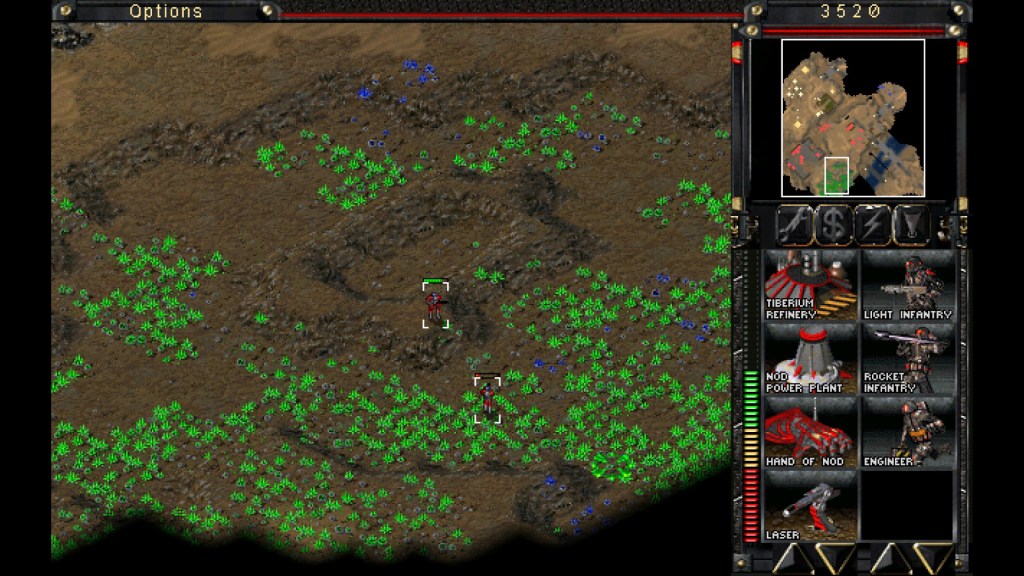
An actual Tiberium field
Tiberium Wars
In Part Two of this review I’m going to be looking at two other strengths of Tiberian Sun – the cutscenes (you heard me) and the gameplay. But before I move on I want to comment on the 2007 sequel, Tiberium Wars and its expansion Kane’s Wrath (I haven’t played Tiberium Twilight). What I have to say about Tiberium Wars (TW) underlines what I’ve just said about TS.
I’ve played a lot of TW and enjoyed it, but it doesn’t have the same grip on me as its 1999 predecessor. And I don’t think it’s just nostalgia.
The graphics and the smoother interface are a huge upgrade on TS, marking a rapid development in just 8 years. The story is solid, far less silly, and it’s all in all a lot of fun to play. But the setting doesn’t feel as real to me, and I think I know why.
Tiberium Wars leans with dispiriting heaviness into a ‘Global War on Terror’ framing. Magazine ads for the game talked about fighting terrorism. Technologically, GDI has been downgraded – no more stomping robots. This is explained in-game as being due to budget cutbacks, but the effect of it (and probably the intention) is to make everything look a few-score degrees more like Iraq or Afghanistan, or some near-future 9/11. The expansion Kane’s Wrath thankfully leans back the other way, and was clearly crafted by people who loved TS.
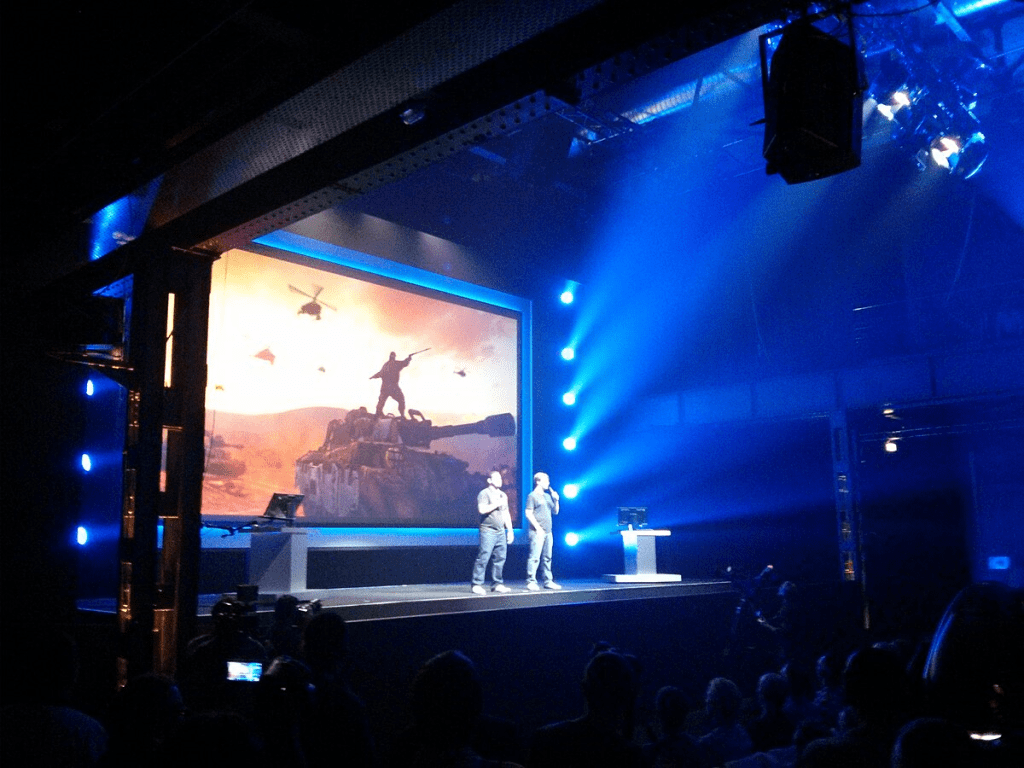
From a 2013 EA press conference about a new C&C title. If you have eyes, you can see the vibe they’re going for. And it’s not ‘morally dubious 1990s action sci-fi movie’
TW’s setting is retconned so that the Tiberium-infested world is divided up into uninhabitable Red Zones, Yellow Zones which are in a state of social collapse, and Blue Zones which are stable and prosperous. This is a marked contrast to Tiberian Sun, in which everywhere – Egypt, the USA, Norway, Germany, Britain, Mexico – was one of two things: a Yellow Zone or a snowy Yellow Zone. In TW, the Blue Zones we see are all either in the USA or in Germany. We always see them menaced and under assault. The first few missions are a bizarrely close remake of Red Alert 2, with the baddies invading hallowed American landmarks like the White House and the Pentagon (No! Please don’t destroy the White House or the Pentagon! Anything but them!). The Imperialism vs Third World framing is much more obvious and open. It’s no accident that the Forgotten are left out of the story of TW – they appear only as an Easter egg and they talk like super mutants from Fallout.
At base the reasons I don’t like it as much are political; I think it’s a shitty way to portray the majority of the human race, as if they have nothing better to be doing than besieging and menacing whatever dull place you live. But you don’t have to agree with that to see that these are two very different types of story and setting. Tiberium Wars is the same old C&C story about protecting the status quo. Tiberian Sun has more depth and ambition.
A Demon in my View (1976), The Face of Trespass (1974), Dark Corners (2015)
My first knowledge of Ruth Rendell was probably of seeing her name on library paperbacks around the house when I was a kid. I didn’t read her stuff until many years later after reading some glowing endorsements of her by authors I like. The only title of Rendell’s available that day on my library audiobook app was one called A Demon in My View. So I went ahead and downloaded it. That was back in March; by August I had read three out of her many dozens of novels published across nearly fifty years. I’ll give a run-down of each of the three, in the order in which I read them.
I should add that I listened to these novels as audiobooks, performed by Julian Glover (A Demon in my View) and Rick Jerrom (The Face of Trespass and Dark Corners), who both do a great job.
By the way, the reviews below contain some spoilers.
A Demon in My View
I was hooked on this story, right from the fucked-up start to the ironic and satisfying finish. A Demon in My View is about a man who once terrorised his fictional London suburb as a serial killer, but who has settled into a safer middle age by getting his kicks repeatedly ‘murdering’ a mannequin who lives in the neglected cellar of his shared, rented house.
The killer is a despicable sadist but Rendell manages to get us into his head, convinces us to feel an iota of sympathy for the wretch. He was raised by an aunt who judged him because he was born outside wedlock. There is something pitiable in his uptight, timid, neurotic narrative voice. But this timidity is the flip side of his murderous compulsions; he has a drive to feel power over others by causing fear and pain. The most horrifying example is the flashback scene involving the baby, which nobody who reads this book will ever forget until the day they die.
The whole story revolves around the tension between his hidden world and the intrusive realities of a shared housing arrangement. What we’ve got here is a story that’s fundamentally about housing, a theme that is important in all three books of Rendell’s that I have read.
The story is firmly rooted in its time and place, not in a way that dates it but in a way that enriches it. A new flatmate moves in; he has a very similar name to the secret serial killer, which provides all kinds of opportunities for confusion and subterfuge. In the 1970s, when this story is set, the post was crucial to people’s social lives and communications, and the only phone in a shared house word likewise be a shared one. The new arrival is really our main narrator and protagonist, but the long agony and final comeuppance he inflicts on our serial killer is unintentional and indirect.
Here is a writer, I thought, who can keep me in suspense, craft a believable social and cultural world, invest me in the practical limitations of comms in the 1970s, and horrify me with a rounded portrait of a human monster.
The Face of Trespass
The Face of Trespass is about a young writer living semi-feral in his friend’s cottage on the wooded margin of London while his girlfriend, a married woman, tries to convince him to murder someone. The story is bookended by a brilliant introduction and conclusion which involve a completely different cast of characters but which provide a resolution to the story. The day is not saved, but at least we get a significant consolation at the very end and from an unexpected source.
Murder is of course not relatable. But Rendell surrounds it, links it intimately, with things that are closer to our everyday lives. There’s lust, greed, envy. Again, housing. Scarcity of funds. An elderly mother living in another country and slowly dying; linked to this, a stepfather with emotional baggage and a language barrier. Aunts and old school friends. Pets. Obligations.
Apart from the aforementioned bookends, we stay in the point of view of the main character, the struggling young writer. Everyone reading The Face of Trespass will be able to see clear as day how our main character is being set up. I found this a little frustrating; we hate protagonists who are fools, who walk blithely into trouble. But in the end all was forgiven. Rendell’s playing a deeper game. The girlfriend is out to set him up – that’s obvious. What’s not so obvious (though all the clues are there) is (spoiler alert) how he will get out of it in the end.
Even more so than in A Demon in my View, seventies comms are central to the novel; much of it revolves around people waiting by phones.
One surprising highlight of this novel is the stepfather. I don’t know if I would pick up a book based on some blurb about a stepfather-stepson relationship. But the murder/mystery/thriller genre here serves as a vehicle for an amusing and, in the end, quietly moving sub-plot.
Dark Corners
Dark Corners was Rendell’s last novel, written decades after the other two above. It is still very good and gripping, but rougher around the edges.
At one point in the novel the main character, again a writer, laments that the characters in his work-in-progress all speak like they come from the middle of the century. This must be Rendell’s little dig at herself; the characters speak and often act like they just walked out of the much more affordable London of A Demon in my View. Modern things like the internet are mentioned a lot, but usually bracketed with some comment like, ‘Johnny supposed that this was the way things were these days’ – as opposed to thirty years ago, before Johnny was born.
Like The Face of Trespass, pets and vets come into it. But it’s housing that’s at the heart of the novel, in ways that highlight how the issue has changed radically since the 1970s. The landlord in A Demon in my View is a rather greasy and selfish character; the landlord here is a struggling writer renting out the upstairs of his late Dad’s house so that he can work full-time on his novel. But his tenant proves to be far more trouble than he’s worth. He refuses to pay the rent and refuses to move out.
Meanwhile a rudderless young woman finds her rich friend dead, and proceeds to occupy her apartment and wear her clothes. But impersonating a rich person, like taking in a tenant, proves to be more trouble than it’s worth. In this case, that’s putting it mildly: she is brutally abducted and held for ransom.
These two characters are a few degrees of separation from one another and only meet toward the end, in a very fateful encounter.
Again, the literal setting is London – and there’s a powerful sense of place – but on a deeper level the setting is the human mind struggling with fear and longing. Rendell’s home turf is psychology. As in A Demon in My View, we see the murderer from the inside out, and he is wretched and pitiful. Unfortunately, like The Face of Trespass but more so, we have a struggling writer who spends a chunk of the novel just frustrating us with his passivity and short-sightedness.
There is a third, and subordinate, storyline about a retired man who rides buses for fun (Yes, a third storyline. All three of these books are very slight, but it’s amazing how much is crammed into Dark Corners). This storyline is fun, but its culmination is the retiree very suddenly foiling a terrorist bomb plot. Rendell has this humane side that allows her to write stories where a modest older man becomes a hero thanks to his eccentric hobby, and that is satisfying. The problem is that the bombing has nothing to do with anything else in the novel, and has no impact on subsequent events.
This is one of many strange improbabilities and coincidences that, to my mind, constitute gaps in the fabric of the novel. It’s all the more obvious when compared to how tight-knit the other two books are. It appears the novel is kind of about coincidences – stories criss-crossing in a Pulp Fiction kind of a way. Coincidence played a role in the others, but to a lesser degree, and with more subtlety, and to better effect.
Dark Corners is readable and satisfying, but rough and flawed. In addition to its other virtues, it is rough and flawed in interesting ways.
First and foremost, these were gripping thrillers that passed the time for me while I did chores or drove. But the contrasts between the younger writer and the older, between the younger London and the older, added a great deal to the experience for me.
How was life in the Stone Age? Was it all people shooting arrows at one another and falling into glaciers, or was it one big hippy commune? In this chapter Graeber and Wengrow leave behind the Enlightenment and start a chronological study of the earliest human societies, focusing on society in the Upper Paleolithic period. That’s the final part of the early Stone Age.
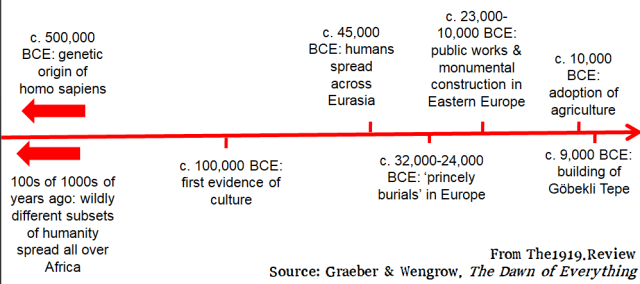
The first thing I learned here was pretty surprising: that humans lived spread out all over Africa for hundreds of thousands of years, with strong regional variations that meant they would have resembled giants, elves or hobbits to one another.
Then homo sapiens formed from a composite of all these very different sub-species, moved north into Eurasia, met the Denisovans and Neanderthals, and in time absorbed them.
The authors then perform the by-now familiar shuffle: thesis, antithesis, forget-about-either-thesis. Hobbes was wrong, Rousseau was wrong, here’s a better explanation.
A monument atGobekli Tepe, Turkiye. On which, more below…
Princely Burials
What about the Upper Paleolithic ‘princely burials’ in Europe? Are these richly-endowed graves (countless person-hours of labour would have gone into them) not evidence of a rigid social hierarchy like what Hobbes said?
Reading about ‘princely burials’ myself in other contexts, I’ve always been annoyed at the assumption that they necessarily indicate social hierarchy, aristocracy, etc. An individual might be honored in death for all kinds of reasons – for heroism in battle or skill in crafts, for being an inventor, for saving lives, for poetry, for metallurgy, for mystical visions. They might be honored for being great leaders, but this doesn’t mean they were aristocratic ones.
Graeber and Wengrow make an argument along similar lines to my guesses – that these were eccentric and visionary outsiders-turned-leaders, who were buried in riches (at a time when no-one was buried in death, with or without riches) as much to contain their potentially dangerous magic as to honour them. They construct a whole argument which takes in anthropology and archaeology, and which I found convincing.
So far they are at least living up to one promise: their version of history is interesting and rich. Our heads are full of capitalist and feudal assumptions, so we have to remember that just as objects which travel a long distance do not always indicate mere ‘trade’, elaborate burials do not always indicate ‘ruling class.’ The past is so much broader than the scopes of capitalism and feudalism through which we view it.
Monuments
We see the same pattern with the other type of artefact from the Stone Age which, like ‘princely burials’, are often taken up as proof of hierarchies and kings: grand, monumental buildings.
I’ve come across the fantasies of Graham Hancock and Ancient Apocalypse, in which Göbekli Tepe is evidence not just of kings but of an entire ancient empire which was more advanced than us and which left cryptic celestial warnings, and which colonized the world ‘teaching’ people how to do agriculture and masonry. A lot of the narrative hinges on the idea that Stone Age hunter-gatherers could not have built great stone monuments.
Even though they are so florid and fantastical, such arguments have always struck me as paradoxically boring. There is a more-than-open attitude to the possibility of Atlantis, aliens and giants, but dull pedantry when it comes to ancient societies. In unimaginably long stretches of time, tens of millennia, Graham Hancock cannot see any possibility that hunter-gatherers could have established a society which was, even temporarily, capable of building something like Göbekli Tepe.
Like with the burials, here Graeber and Wengrow give us a bit of archaeology (Stonehenge, Göbekli Tepe, Russian mammoth houses) and a bit of anthropology (such as the Inuits, the Nambikwara in Brazil and the Plains Indians in the United States) and paint a picture that is colourful and informative. I mean colourful not like atlanteans came along one day to teach us about seeds and the principle of the lever, but more like nomads and hunter-gatherers vary their social systems from season to season, sometimes gathering for great coordinated collective labour, sometimes dispersing to hunt and gather.
A small part of theGobekli Tepe site from around 9000 BCE
It’s satisfying to get a clearer idea of how these monuments were built. But the best part is the idea that these societies changed their whole social system regularly to meet their needs. In one part of the year, the modern Nambikwara roamed in small bands, all these bands being under the strict control of one chief. For the other part, they gathered in hilltop villages, became democratic and communist, and had chiefs who functioned more like a social welfare department than a monarchy. But across all the other examples, no single pattern prevails: among one people, there is a settled season of strict hierarchy and a roaming season of relative informality. Among another, police functions are strictly seasonal and rotate between clans on an annual basis.
The anthropological stuff gives an insight into how Stone Age peoples might have lived: gathering after a great hunt with a superabundance of food and other goods, feasting, processing materials, building great structures, then dispersing again when the seasons turn.
A reconstruction of a house built from mammoth bones, Japan, 2013
What’s the upshot of all this?
Prehistoric society was not a realm of innocence or animal instinct – our ancestors were politically sophisticated.
Prehistoric society was not all one thing. A grading of one political system alongside each economic mode (for example, claiming that hunter-gatherers live in ‘bands’, horticulturalists under ‘chiefdoms’) is too pedantic even as a general guideline.
And here I kind of get the ‘plague on both your houses’ approach to Rousseau and Hobbes, because it’s ultimately from Rousseau that we get the idea that people pre-state and pre-class were simple and innocent.
However, this wouldn’t have been my understanding, and I’m broadly in the Rousseau ideological legacy. So they’re only throwing out bathwater here. Fine by me.
They haven’t succeeded in turning me off the idea of an economic basis corresponding to a political regime. Hunter-gatherers never seem to get around to parliamentary democracy, fascism, Stalinism, the Paris Commune or the Petrograd Soviet – not because they were/are too innocent to think of them, but because these systems do not correspond to their needs or means. The above are political systems proper to our age. There is a wide range of them, and which one you end up with depends on the last analysis on the outcome of a political struggle. But a certain type of economy, one where things like factories and railways are central, is a necessary prerequisite.
Though it seems political systems are more broad and fluid the further back you go. Even what we file under ‘feudalism’ is by definition immensely varied and full of local peculiarities. And when I looked at Gaelic Ireland, I realised that under its legal constitution many different de facto regimes could exist, depending on hard factors like population and resources and soft factors like politics and culture.
But even that phrase ‘the further back you go’ is weighted with an assumption, isn’t it? An assumption about progress, development, advance. That economies actually do develop through stages, and do not slip backwards as easily as political systems do; it’s never actually happened that a country has been ‘bombed back to the Stone Age.’ I admit thermonuclear weapons do raise the possibility.
I guess Graeber and Wengrow wouldn’t agree, but it is possible to speak of progress and development and economic stages without being racist or reductive.
Our industrialized world has global warming, endemic and stark inequality, addiction, shanty towns, systematic cruelty to migrants, homelessness for the sole purpose of enriching landlords, debt bondage as a precondition for housing, widespread precarity,long hours and low pay, universal exploitation, and hysterical bigotry against anyone who’s different. It also has vaccines, washing machines, incubators, clean running water, and a super-abundant supply of manufactured goods. I think that second collection of things are more than mere creature comforts or mod cons – yes, even the manufactured goods that clutter my house and ‘do not spark joy’ – and what’s more I don’t see that they are predicated on the first set of things, the bad things, or dependent on them in any way.
The Marxist criterion at work here, as I’ve mentioned before, is the productivity of labour. In relation to that, we can speak of our society as being advanced or developed in relation to a society that lacks these things.
But the bad things listed above, and their absence in prehistoric societies, are a reminder that our society is still at an absolutely pitiful and contemptible level of development. The idle person who thinks it’s OK for him to be thousands of times wealthier than a nurse or cleaner, just because a piece of paper says that he owns this or that, is a victim of the greatest superstition that has ever held sway over the human mind. The 16th-century German had more reason when he bought indulgences off Johann Tetzel, and the Aztec priest had more practical common sense when he ripped the hearts out of war-captives to keep the sun in the sky.
The most valuable insight from this chapter – and it is a refutation of Rousseau whatever way you slice it – is that hierarchy is not a necessary overhead of (a) social complexity or (b) large population or (c) collective projects or (d) coordination over long distances. Sure, hierarchy is one way to do it, and indeed one way that it appears to have been done even in some pre-class societies. But this chapter tells a story of political sophistication and huge monuments, apparently without hereditary rulers or coercion.
I grew up with Gary Larson images of people living in caves and even coexisting with dinosaurs (Yabba dabba doo!). But even as a more well-read adult I still would have thought that before agriculture, people lived in small roaming groups of a few dozen people. This chapter has challenged this idea, but in a way that is actually very encouraging. These pre-agriculture, pre-state, pre-class societies could be large, complex and at least seasonally settled. Probably they had a wide variety of social structures, including hierarchies and castes, but these were not the rule.
Have human societies always been divided into classes? Do we naturally tend toward hierarchies? If not, when and how did we stumble into this vale of tears, and which way is the exit?
This blog meditated on these questions before in my series Celtic Communism?in which I asked whether James Connolly and others were right to assert that Gaelic Ireland was socialist.
At the moment I’m reading the very successful 2021 book The Dawn of Everything: A New History of Humanity by David Wengrow and the late David Graeber. So far, it’s fascinating – which is not to say that I agree with all of it. Reading it, I sometimes tut and shake my head, sometimes suppress an urge to cheer out loud.
To continue my ruminations on history, hierarchy and communism, I’m going to be blogging my reactions to The Dawn of Everything chapter by chapter, as I read it.
This post looks at…
Chapter 1: Farewell to Humanity’s Childhood
From The Dawn of Everything: A New History of Humanity by David Graeber and David Wengrow, 2021 (Penguin, 2022)
The authors set up two philosophers, Rousseau and Hobbes, as reference points. I haven’t read either myself, but here is a brief summary of what I learned from this chapter:
Hobbes argued that in early human societies life was ‘nasty, brutish and short,’ ‘a war of all against all,’ and that inequality, hierarchy and harsh penal systems rescued us from this chaotic state.
Rousseau argued that humans once lived in a state of wholesome communist innocence, but ‘ran headlong into their chains’ because inequality was a necessary overhead of prosperity and progress.
Graeber and Wengrow, on the other hand, argue that humans are neither innately good (as implied by Rousseau) nor evil (as implied by Hobbes), but creative and brilliant, and that actual early societies do not conform to either the Hobbes or the Rousseau model.
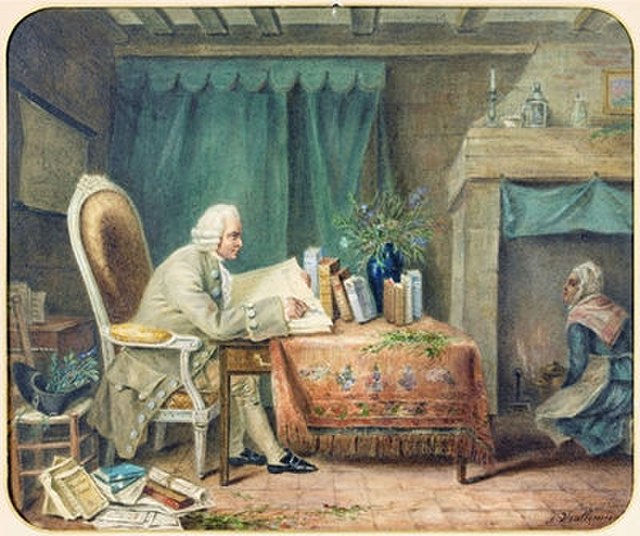
Rousseau, discoursing on inequality while a servant lights the fire
These two models, they argue, have three basic faults in common:
They ‘simply aren’t true.’
They have ‘dire political implications.’
They make the past ‘needlessly dull.’
The chapter is engaging and witty, and plenty of the evidence presented here is really interesting. But my nagging feeling throughout was that ‘a plague on both your houses’ doesn’t really cut it.
For example on page 4 we read that many of the ‘first farming communities’ and the ‘earliest cities’ (my emphasis) remained democratic and egalitarian. This statement is meant as a refutation of Rousseau’s claim that once we invented agriculture we all started bowing down to priests and kings. But the authors are saying, in essence, ‘it took a while and didn’t happen everywhere all at once’ – not ‘it didn’t happen.’ It’s zooming in closer to the transition from primitive communism to class society and pointing at the messy interface. I am fascinated by that messy interface and I want to zoom in. But this chapter has failed to convince me that Rousseau’s version of events is broadly untrue.
Moving on to the ‘Dire political implications.’ Regarding Hobbes, the dire implications are obvious to me: his model is an argument against freedom and for authoritarianism, against equality and for hierarchy. No thanks.
Thomas Hobbes, in a painting by John Michael Wright
But what are the dire implications of Rousseau? The authors say that talk of ‘inequality’ tends to reinforce inequality, to make it seem permanent, and that fifty or a hundred years ago there was a more powerful critique of ‘concentration of capital’ rather than inequality. But those who critiqued ‘concentration of capital’ 50-100 years ago, the communists, socialists and anarchists, would have had a much firmer theoretical grounding in Rousseau, via Engels, than the critics of inequality today. I feel Graeber & Wengrow do not shoulder the burden they have taken on themselves to prove that Rousseau has ‘dire political implications.’
The Marxist development of the ideas of Rousseau added a vital component: that modern industrial society has created such an abundance of goods that it is possible to return to a classless and stateless society while preserving material prosperity. This view is not pessimistic, does not accept inequality as inevitable. I assume it is dealt with later, but it is an omission here.
There is a powerful and memorable assertion on page 8: ‘The ultimate question of human history […] is not our equal access to material resources […] but our equal capacity to contribute to decisions about how to live together.’ Now, I don’t actually agree with that. I think the part about contributing to decisions (politics) is actually subordinate to the part about material resources. First, because most of the decisions will tend to be about how to allocate resources; second, because if there are some people who control most of the wealth, they will in the final analysis call the shots even in the most democratic system. But I appreciate the authors laying their cards on the table. The word that springs to mind for me is ‘voluntarism’ – an approach that downgrades considerations of how material conditions might limit the possibilities of human agency.
A museum reconstruction of Ötzi
This first chapter contains a satisfying rebuke to some modern-day iterations of the Hobbes model – the writings of Francis Fukuyama, Jared Diamond and Stephen Pinker. The latter presents Ötzi, a 5,000-year-old body found in the Alps with an arrow wound, as a ‘poster child for humanity in its original condition’ – the whole nasty, brutish and short thing. Graeber and Wengrow introduce Ötzi to Romito 2 – the 10,000-year-old remains of a man who suffered from a severe disability. Romito 2, in life, was taken care of by his community, given an equal share of meat, and when he died he was buried with care and respect.
The book also promises to be a stinging rebuke to eurocentrist and basically racist assumptions about history. ‘Western civilisation’ is just today’s ‘accepted synonym’ for what used to be called ‘the white race.’ As for the supposedly ‘western’ tradition of freedom, democracy and equality, ‘it is almost impossible to find a single author in the Western tradition, from Plato to Marcus Aurelius to Erasmus, who did not make it clear that they would have been opposed to such ideas […] it’s almost impossible to find a single European author before the nineteenth century who suggested [democracy] would be anything other than a terrible form of government.’ (Page 16) I agree wholeheartedly and I look forward to the further development of these ideas.
A Massim man in the Trobriand Islands, 1900s.
The last part of the chapter argues that the Hobbes and Rousseau models make history ‘needlessly dull.’ For example, material artefacts travelled great distances through such diverse means as vision quests, travelling healers and entertainers, women’s gambling, and the death-defying adventures of the Massim Islanders. To assume that objects can only travel through ‘trade,’ or to sum up such fascinating cultural activities as mere ‘trade,’ is to sell history and archaeology short. I’m not sure how much Rousseau or Hobbes can be blamed for the poverty of imagination which is under fire in these passages, but I’m looking forward to learning more about such cool and interesting stuff in the pages that follow.
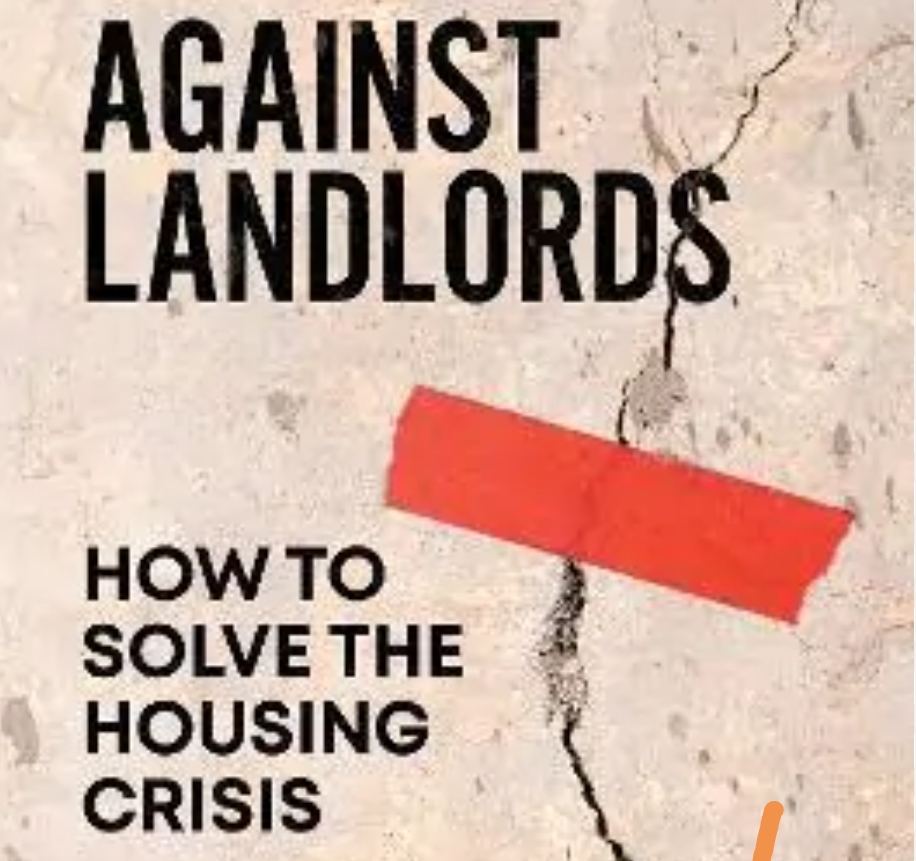
Against Landlords: How to Solve the Housing Crisis by Nick Bano
Verso, 2024
So that headline about ‘landlord abolition’ caught your attention. Maybe you’re wondering, is it just a sensational name for a moderate reform policy, like when people talk about ‘prison abolition’? No, landlord Abolition, as laid out by Nick Bano in this eye-opening and well-written book, is the real deal.
Consider the following:
Renters in Britain in 1957 spent 6.5% of their income on rent (now think, how much do you spend on housing?).
Before 1951, any increase in land value created by planning decisions was taxed at 100%.
In the late ’70s, private rental was a dwindling sector and ‘the death of the landlord’ was widely predicted.
Landlords were eager to sell, councils willing to buy. Social housing stock grew massively without anyone having to lay one brick on top of another.
The private rental sector was saved by concerted government intervention during the Thatcher years. Housing stock was in poor repair. How to fix it? Give grants to local authorities to renovate their stock? No! Get private capital to pump money into housing! What could possibly go wrong?
Fast-forward thirty years: terraced houses built by local authorities a century ago are being sold for half a million.
We could fix our housing crisis today by increasing social housing stock. Rent controls are not only fair; they would drive landlords to sell to councils. The more social housing stock there is, the less desperate people will be for housing, the less landlords will be able to get away with charging. It would be a virtuous cycle culminating in the private rental sector shrinking away to occupy an insignificant margin of society.
House prices are tied to rental yields; when you buy a house, you are actually paying for the right to receive rents from it for the rest of your life, even if you never have any intention of renting it out. Reducing the private rental sector to insignificance would benefit home buyers and make mortgage lenders cry bitter, salty tears at all the money we get to keep in our pockets instead of giving them.
Bano is under no illusions that the collapse of the housing market, while it seems necessary and desirable, would be an economic catastrophe for Britain whose governments have bet the country’s shirt on the impossible dream of eternally rising housing costs. And under capitalism, the poor would pay first and steepest for any economic disaster.
The housing market is not a bubble – people are actually realizing profits. But it has to hit the limit of a crisis of affordability, unless British renters can be convinced to live in tiny cubicles or ever-worsening Dickensian squalor – which Bano, to be clear, does not rule out.
The main clarifying point for me was that this is not a crisis of housing supply, but a crisis of housing costs. The imperative to “build more houses”, unless they are all public, social housing, will actually continue to drive up costs (and also destroy the environment).
There is a lot in this short book. There is historical material, for example, about an amazing rent strike in 1915 and the role of housing in the lead-up to the Battle of Cable Street. There is incisive commentary on Grenfell. There is a chapter on race. There are plenty of concrete examples of the squalor, injustice and absurdity of housing in Britain today. There is an overview of how landlords changed from social pariahs to celebrated entrepreneurs in one generation.
My only reservation was wondering how much this analysis applies to Ireland, which is my neck of the woods. Here investment funds seem to be playing more of a role than in Britain, but the mom and pop landlord seems to be very much a social phenomenon here as well.
In 2022 £63 billion was paid in rent in the UK – of which £23.4 billion was Housing Benefit. All that public money – gone, just to reward landlords for charging unaffordable rents. Meanwhile they are incentivised to keep on hiking the rents. Ireland’s Housing Assistance Payment (HAP) is the same, and I bet similar numbers apply.
This week I’m taking a break from Miseducation Misadventures to let you in on what runs through my head when I watch Star Wars. Re-watching it as an adult, I notice little things that I can trace back to their source – like the scattered mentions of spice mines and spice freighters in the first movie. Any guesses which SF novel that’s a nod to?
Here are nine sources from which Star Wars drew key ideas. If I’ve missed any interesting ones, chime in down in the comments.
1: Reproductive Biology (2,000 million BCE)
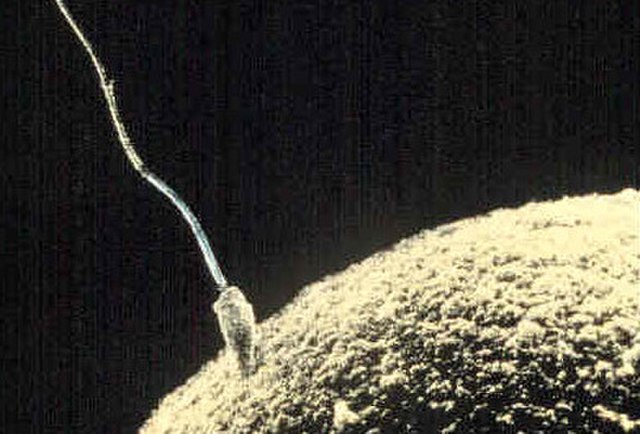
The final battle in1977’s Star Wars involves a swarm of small starfighters approaching and seeking to penetrate the much larger orb of the Death Star. This looks a hell of a lot like a load of sperm trying to fertilise an egg, with zero-gravity space standing in for the liquid medium through which the little swimmers propel themselves. This was probably not deliberate – the imagery probably bubbled up from the filmmakers’ subconscious. It stands out all the more starkly against this pre-adolescent and mostly sexless galaxy.
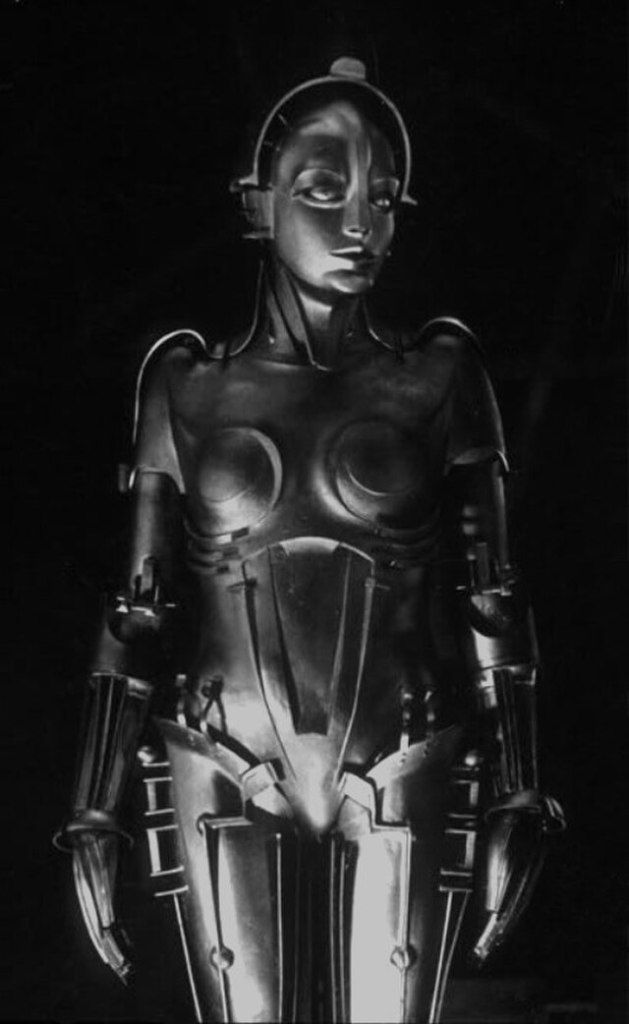
2: Metropolis (1927)
And here we have a female version of C-3PO, in an experimental silent film from Weimar Germany.
3: Flash Gordon (Comic and movies, 1930s)
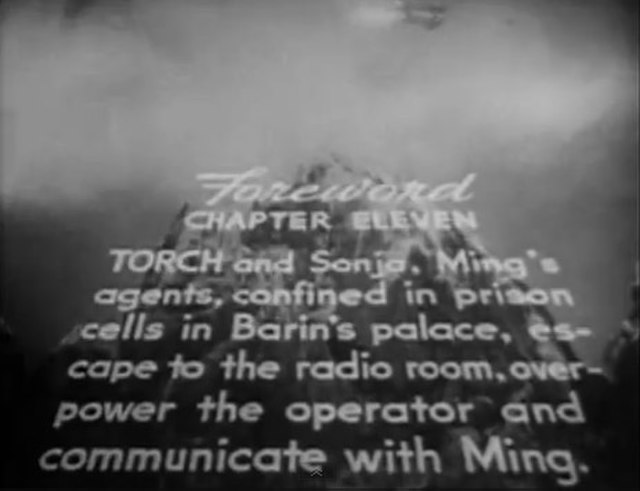
Star Wars took a few cues from Flash Gordon – most obviously the opening text crawl but also the general idea of a series about fun adventures in space.
4: World War Two (1939-1945)
In 1977 when Star Wars came out, World War Two was as recent as the collapse of the Soviet Union, or the first episode of The Simpsons, is to us.
And the movie helps the audience to grasp what is happening in space by using a visual language familiar to them: it has World War Two-era fighter planes in space. The Empire’s star destroyers resemble the warships of the mid-century. The Imperial officers dress like Nazis.
On the other hand, weirdly enough, Star Wars references the Nazi propaganda film Triumph of the Will. The final scene where the rebels have a rally and the human characters all get medals (a weird enough scene in itself) follows part of this notorious film very closely. An odd choice, having the good guys mimic the visuals of a genocidal regime, especially when the bad guys are clearly based on them.
5: Casablanca (1942)
In a colourful jazz bar full of diverse people, in a town full of thieves and refugees, in a desert land where an evil empire is tightening its grip, we meet a cynical smuggler who is secretly an idealist. Will he find it in himself to help the two desperate fugitives who are seeking passage to safety? Of all the cantinas in all the systems in all the galaxy…
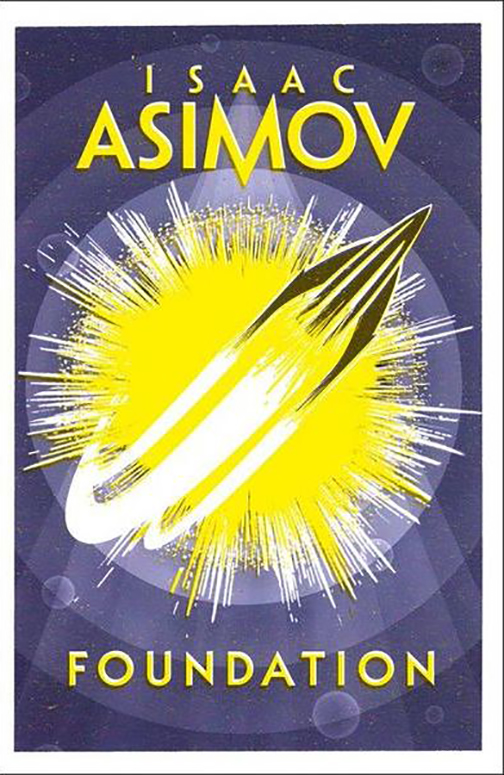
6: Foundation by Isaac Asimov (1940s-1950s)
The story and themes of Star Wars and Foundation don’t resemble each other at all. But there are many little things which Asimov seeded in the science fiction genre which pop up in Star Wars:
Hyperspace travel
Weapons called blasters (much more lethal in Asimov)
A galactic empire
Space feudalism
A city which covers an entire planet (Trantor/Coruscant)
The wild outer rim of the galaxy
It goes right down to random names: Asimov’s Korellian Republic is echoed in the Corellian shipyards
Roguish traders who do the right thing in the end (Foundation has several Han Solos in it, who say things like ‘Never let your sense of morals prevent you from doing what is right.’)
But for Asimov, empires are fundamentally good, the roguish trader is an advertisement for a doctrine of enlightened self-interest, and mysticism is nothing but a charade. All this is at odds with the anti-authoritarianism and sincerity of Star Wars.
7: Akira Kurosawa (1930s-1980s, especially 1950s)
Japan’s most well-known film director had a huge influence on George Lucas and Star Wars. I haven’t seen The Hidden Fortress (1958) but apparently it involves two peasants who escape from a battle (like C-3P0 and R2D2) and meet a princess; there are sword fights, and in the end a bad warlord changes sides. But I’ve seen a few others, like Throne of Blood, Ran and Seven Samurai. Any of these great samurai films show themselves to be ancestors of Star Wars. There are the sword fights and the robes and Darth Vader’s helmet. In a western ear, names like Obi-Wan Kenobi have a Japanese ring to them, and the Jedi resemble an idealised version of the Samurai.
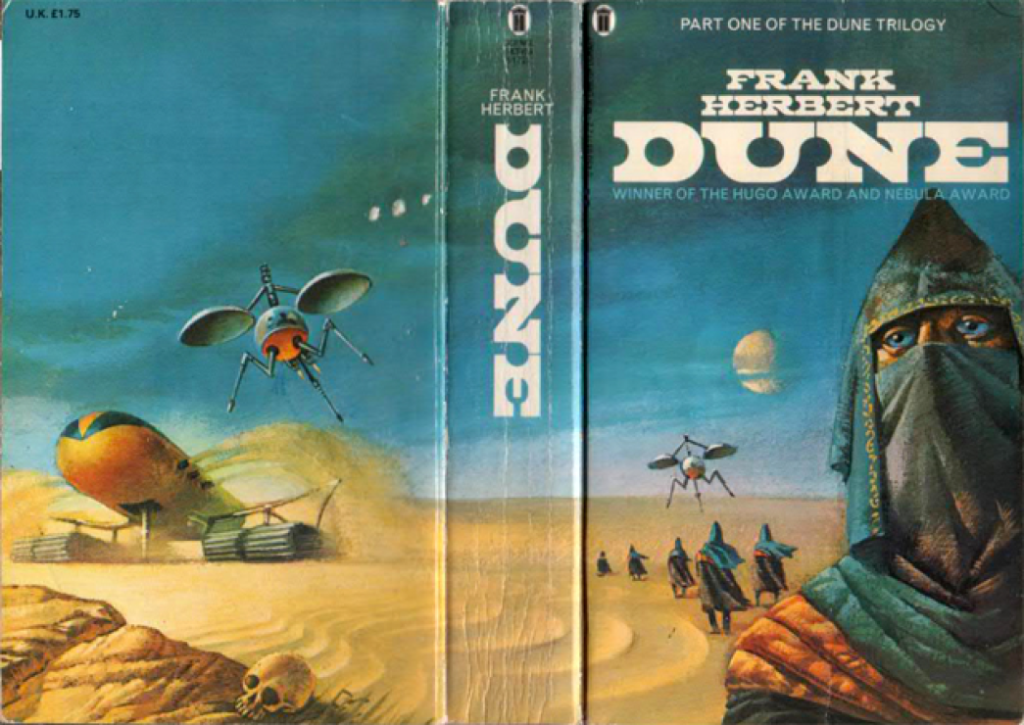
8: Dune (1965)
Frank Herbert’s Dune is riding high after Denis Villeneuve’s great film adaptation and I’ve written about it a few times before. Like Foundation, it provided a lot of ideas for Star Wars to pick up.
Dune is closer than Foundation to the themes of Star Wars. It is a text that was obviously written at the height of the anti-colonial struggles of the 1960s; it is pretty negative about empire; it is deeply sincere about religion and mysticism (even in charade form!).
The Jedi look like samurai, but they owe much to Dune‘s Bene Gesserit, an order of women who cultivate superhuman powers.
Both texts feature a harsh desert planet (Arrakis/Tatooine)
And giant worms,
robed nomad raiders,
smugglers,
and moisture-harvesting technology.
As noted above, scattered references to spice in the first Star Wars movie are another nod to Dune.
And once again we have space feudalism.
Foundation and Dune are the best examples I can think of, but they are stand-ins for a whole rich genre of mid-century science fiction without which Star Wars would not have existed.
9: The US War in Vietnam (1965-1973)
A few years ago Star Wars creator George Lucas confirmed in this interview that his story was fundamentally anti-colonial, that his heroic rebels were based in part on the Vietcong and that the evil empire was based on the United States – along with other past empires and freedom fighters throughout history.
Vietnam has featured just as heavily in other radically different readings of Star Wars, which is unsurprising as the war ended just a couple of years before the movie came out. I can’t remember who exactly wrote this, but the idea is that Star Wars was an infantilising nostalgic escape for a US public keen to avoid thinking about their country’s military and moral defeat in Vietnam. White people with American accents got to be the guerrilla heroes – though from the costumes to the names and decor, it is one of the strengths of Star Wars that it has never looked or felt ‘western’ (unless you mean spaghetti western, as there’s more than a hint of ersatz Mexico and Sergio Leone in there).
A last word…
The point of this is not to be like ‘Star Wars is a rip-off’ but to remind everyone that it’s just a movie, a cultural text rooted in its time. Today we have the corporate cynics for whom nostalgia is a currency and the toxic fandom for whom nostalgia and innovation are just different kinds of betrayal. The worst excesses of the fandom, I suspect, are boosted and incentivised by social media, and the back-and-forth whining and apologetics are increasingly astroturfed online by accounts which have harvested awesome volumes of engagement in the past from people bickering about fun movies, and who see the next big controversy as a payday. In all of it, Star Wars is reified, taken out of culture and history, put on a pedestal. One would think it feel from the sky. Actually the movie is a brilliant synthesis, and if Lucas had the precious and pious attitude on display in so much of the online commentary, it never would have been made at all.
‘Seldon crises are not solved by individuals but by historic forces. Hari Seldon, when he planned our course of future history, did not count on brilliant heroics but on the broad sweep of economics and sociology. So the solutions to the various crises must be achieved by the forces that become available to us at the time.’
– Hober Mallow, ‘The Merchant Princes,’ Foundation by Isaac Asimov
A lot of what’s fresh and brilliant in Isaac Asimov’s Foundation, written as long ago as World War Two, have since become so common in the genre that they almost escape notice when you encounter them in these pages.
We have travel by hyperspace (‘hyper-space, that unimaginable region that was neither space nor time, matter nor energy, something nor nothing’); weapons called blasters; roguish but ultimately moral traders; cities which cover entire planets; galactic empires with a civilised core and a wild outer rim. We even have a planet called ‘Korellia’ which reappears as the shipbuilding world of Corellia in Star Wars.
A galaxy without women
The first thing that strikes the reader is that the characters are all male. From a Galactic population numbering – what did he say, a quadrillion? A quintillion? – there are almost no women the author believes are interesting enough for us to meet.
Here follows a list of female characters in Foundation:
A telephone operator (!)
A servant who tries on a gizmo
The Commdora of Corellia
And, if we really want to be generous:
Hober Mallow’s hypothetical mistress (Maybe I’m pushing it now)
Housewives are key to Mallow’s scheme to bring down the Korellian Republic (…That’s pushing it.)
The next thing that strikes you is that this book was apparently written as if Isaac Asimov had a very limited special effects budget. The first part contains compelling descriptions of space travel and the city-planet Trantor, but the rest is almost like a stage play: largely a series of conversations in rooms, mostly between seated men.
Discussing this with friends, I thought of radio dramas, a popular medium in the 1940s when Asimov was writing. He wasn’t writing with an eye to radio adaptation, as far as I know, but maybe he listened to a lot of them and they influenced his style. The 1970s BBC radio play of the Foundation series proves how well it translates to the medium.
A galaxy without ‘great men’
The lack of a balanced representation of humanity in the cast of characters is pretty awful. But I like the morality and the philosophy of history this story expresses – that it is not ‘great men’ but great impersonal forces that shape history. True greatness lies in predicting and adapting to the currents of history – not holding back the tide, but riding the wave. Real material relations are more important than ideas and words. Don’t be fooled by pomp and regalia; the empire is losing crucial technical skills. Don’t be intimidated by military thugs and their death machines; those machines must be operated by human beings, who can be influenced in clever ways.
The ‘greatest’ figures in Foundation history are not strutting macho types. Hardin and Mallow alike embrace a kind of humility and acceptance, as well as cunning and unscrupulousness.
Both Hardin and Mallow embark on too-clever-by-half plans that would, in reality, totally demoralise their own people long before they bear fruit. This is a common failing in fiction: the illusion that conflicts have to be solved by clever tricks in order to be narratively satisfying.
In fairness, the climaxes to ‘The Mayors’ and ‘The Merchant Princes’ are very satisfying. Defeat turns to victory in a matter of moments. These eukatastrophes are seamless and well-plotted.
Cynicism
They use religion to harness the Four Kingdoms to the chariot of the Foundation. But religion is superseded – by the time of Mallow, it is necessary to realise that trade is the new superweapon of Terminus. And trade itself will one day be superseded, become an obstacle:
‘So, then,’ said Jael. ‘You’re establishing a plutocracy. You’re making us a land of traders and merchant princes. Then what of the future?’
Mallow lifted his gloomy face, and exclaimed fiercely, ‘What business of mine is the future? No doubt Seldon has foreseen it and prepared against it. There will be other crises in the time to come when money power has become as dead a force as religion is now. Let my successors solve those new problems, as I have solved the one of today.’
The flip side of the novel’s cleverness is the smug attitude that comes through. You read this book and feel like you, Isaac Asimov and Salvor Hardin are the three smartest people in the universe, and all these trillions of people are stupid. It celebrates cynicism and manipulation. Hardin controls the press behind the scenes and takes power in a coup. This is to say nothing of the invented religion and how it brainwashes people. This is not moral, of course, but we are supposed to accept that it’s an example of ‘doing what’s right’ in spite of any silly ‘morality.’
A galaxy without violence?
We are told that ‘violence is the last refuge of the incompetent.’ The author’s distaste for violence is rare and refreshing. He’s just not interested in it. The novel is better because of this. But the novel’s philosophy does not renounce violence; it just puts violence in its place, as the enforcer and copper-fastener of things already established by culture, economics and politics. It is not the last refuge of the incompetent; it is a necessary, though subordinate, stage of conquest.
Consider the following exchange of dialogue:
Jorane Sutt: You’re a Smyrnian, born in Smyrno, one of the former Four Kingdoms. You’re a Foundation man by education only. By birth, you’re an Outlander and a foreigner. No doubt your grandfather was a baron at the time of the wars with Anacreon and Loris, and no doubt your family estates were taken away when Sef Sermak redistributed the land.
Hober Mallow: No, by Black Space, no! My grandfather was a blood-poor son-of-a-spacer who died heaving coal at starving wages before the Foundation.
This passage tells us a lot:
That the Foundation made war on Anacreon and Loris (two of the Four Kingdoms) some time in between the events of ‘The Mayors’ and ‘The Merchant Princes.’
That the Foundation has brought about a land revolution in the Four Kingdoms through the dispossession of the nobility. In other words, not just a war but a revolutionary war has taken place between two episodes. To cement in place and enforce the outcome of ‘The Mayors,’ war and revolution were still necessary.
That the resolution of the second Seldon Crisis was not the end of Sermak’s political career (Sermak was the leader of the pro-war party in ‘The Mayors’). In fact, Sermak was heavily involved in the subjugation of the Four Kingdoms, to the extent that the land revolution is attributed to him. The pro-war Actionist Party have their day after all.
People like Hober Mallow come from a background where before the Foundation they were denied any opportunities in life. The coming of the Foundation has been revolutionary, opening new opportunities for them.
All of this is between the lines. Foundation is short and well-paced, but in places there’s a depth and density to it. These lines remind us that even though the novel leaves violence to one side, the universe in which the novel is set is just as violent as ours. The worst ‘barbarism’ in the novel is that which the Empire carries out on Siwenna – atom-blasting the population in revenge for a rebellion which that population didn’t even support.
This brings us back to the points about how it’s written like a radio play. Of course, it was written for magazines and presumably each instalment had to be kept fairly short. Most of what happens in the novel happens through dialogue, but Asimov puts that dialogue to work. The dialogue is good as drama, but it really shines as worldbuilding. It’s nutritious stuff around which your imagination can sketch in the galaxy outside the four walls of the room where, inevitably, men are talking.
Judge Dredd: The Complete Case Files Volume 03, progs 116-154 (Rebellion/ 2000AD, 1979-1980, 2008). Written by John Wagner and Pat Mills. Art by Brian Bolland, Dave Gibbons, Mike McMahon, Brendan McCarthy, Ian Gibson, Garry Leach, Ron Smith, John Cooper, Barry Mitchell
My Sláine series remains relatively popular, so clearly a lot of people share my fascination with 2000AD comics. Years ago the whole Judge Dredd back catalogue was re-released in these huge ‘Case File’ tomes. The best I’ve seen to date has been Volume 02 (which I’ve praised here before). That included two great epic storylines, the Cursed Earth saga and Judge Cal. There’s nothing as brilliant or as large-scale here; Volume 03 collects a few one-off stories and short series. Some of these I’d come across before in other volumes years ago, such as the first appearance of Judge Death. Others were new.
Of the series, my favourite was one where a plague of poisonous spiders threatens a small town in the Cursed Earth, and Dredd has to help a community of mutants to resist. Then the spiders infest part of Mega-City One, so without a moment’s hesitation Dredd has the whole neighbourhood bombed flat. The spiders didn’t get under my skin, but a mutant talking horse named Henry Ford did. When the mutinous, grumbling mount got bitten and I thought he was going to die, I felt pretty sad. He survived, only to witness in horror Dredd’s incineration of a whole sector of the city.
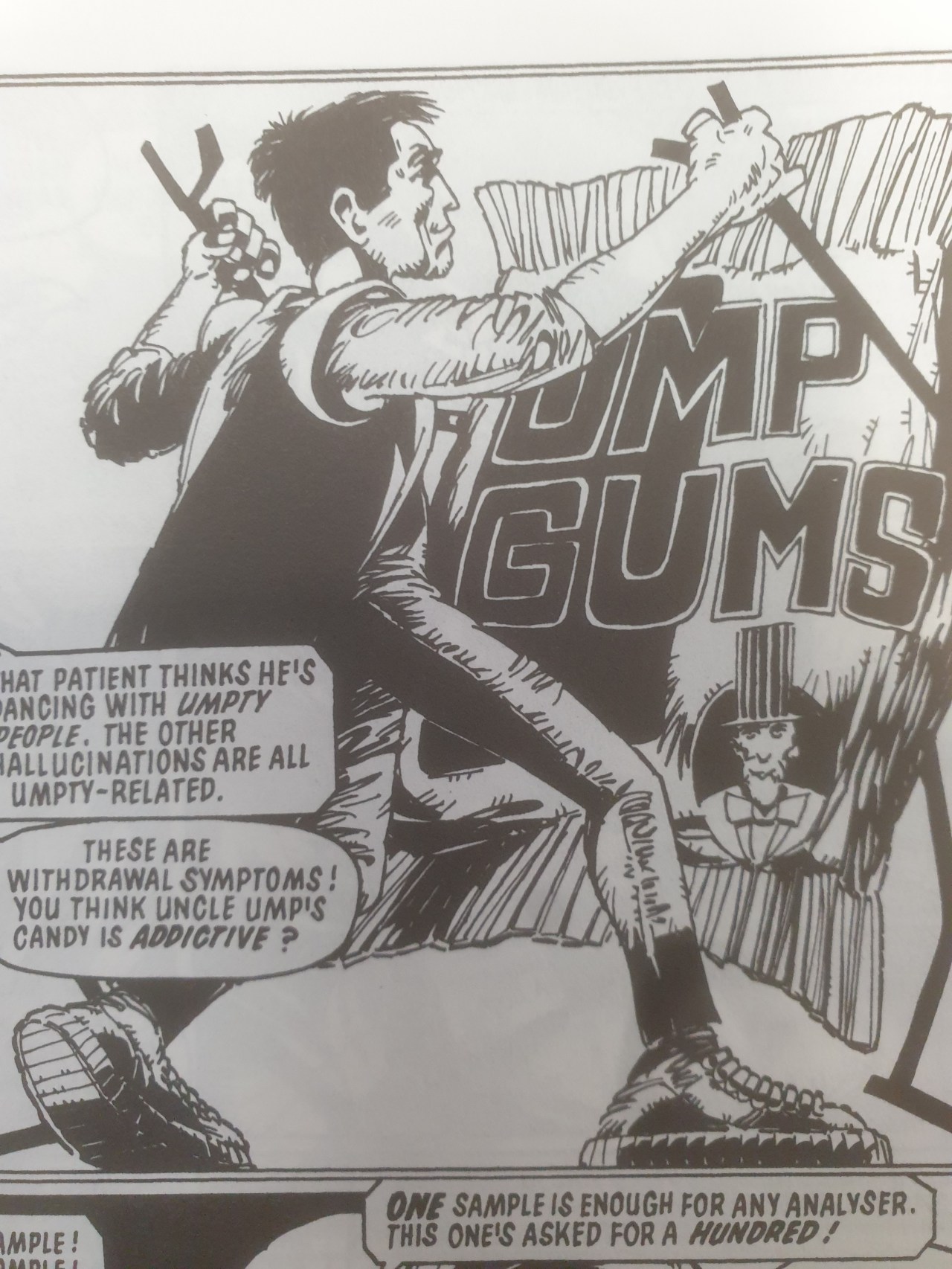
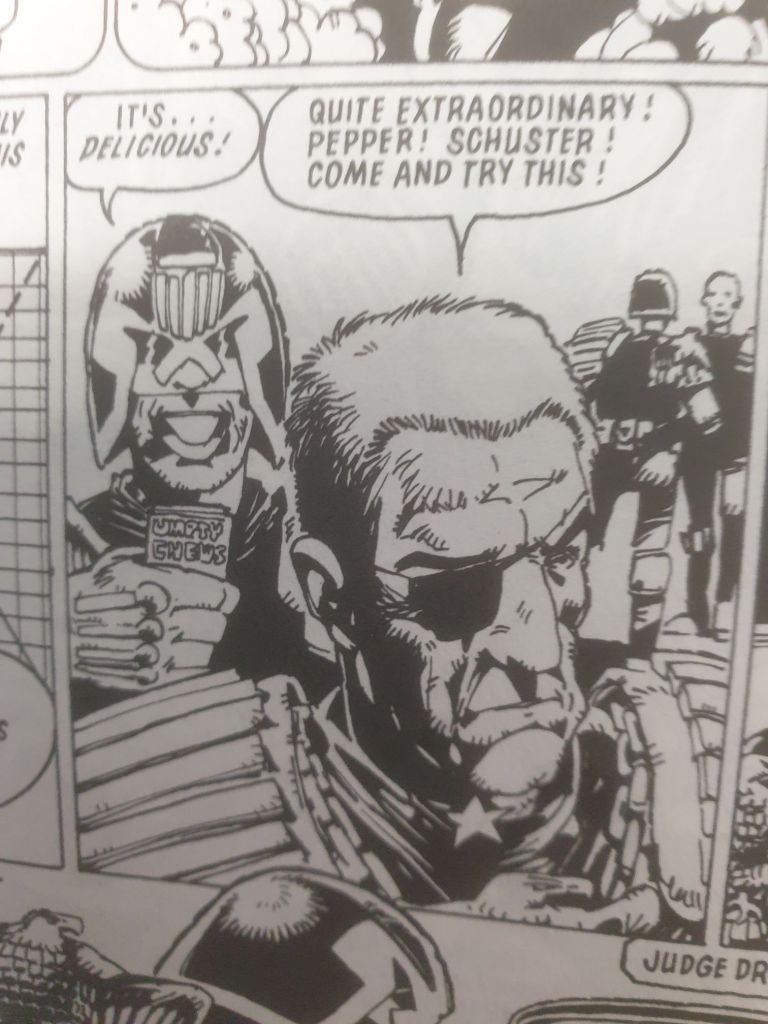
Of the one-offs, far and away the best was the one about Uncle Umpty’s candy. This is so funny and so sad at the same time. It’s very short but it feels like there’s a lot in it. A kind, whimsical and talented old man invents a range of sweets that taste unspeakably wonderful and aren’t addictive or harmful in any way. On principle Dredd does not approve. But on tasting it, Dredd declares ‘It’s delicious!’ and actually smiles. But this little story sums up how absolutely pathological the society and culture of Mega-City One are: people go mad for Uncle Ump’s candy, leading to a breakdown in law and order. The judges take extreme measures against this wonderful old man just to ensure that his candy is gone forever.
The people of Mega-City One are very, very stupid. They are an unkind caricature of the people of capitalist societies: prone to fads and mindlessly acquisitive. But the ultimate consequence of their frenzied consumption is that they can’t be allowed to have nice things at all. They almost (almost, but not quite) deserve this ultra-punitive law enforcement system. Outside of contrived ticking time-bomb situations, the more conventional (but not necessarily bad) storylines where it’s a choice between the status quo and the annihilation of billions of people, the Judges plainly do more harm than good. Judge Death (‘The crime is life! The sentence is death!’) is only Judge Dredd taken to the logical conclusion of his misanthropy. Sometimes he plays it atraight as a Dirty Harry type. Sometimes he gives a hint of remorse or compassion; sometimes it’s not that, but only his sheer integrity leading to the same outcome. And sometimes, as with Umpty Candy, he is a brilliant and merciless caricature of himself.