Can a machine write a story?

Last month OpenAI boss Sam Altman announced that his company had created an AI tool that could write a short story. You know the most depressing thing about this news? Sam Altman did not wake up one morning and, just on a whim, ask his software to write a story. His company worked really hard to get it to write a short story. No doubt some tech worker missed a kid’s birthday, maybe even birth, in order to work long hours on it. They plagiarized and polluted for it. Getting an AI that could write a short story was something they had to pursue.

Here’s the thing: even if it was easy and cheap and green, why would anyone want a machine that can write a short story? Is there a shortage of people who can write stories? Is writing stories a chore, like washing clothes or cutting grass? Are people crying out for relief from the burden of being creative?

I made it clear enough last week that I think this Gen AI thing does have limited uses (“a moderate productivity booster in certain situations”, as my commenter, The Director from MilitaryRealism.blog summed it up). I’m not qualified in any very technical fields like engineering, logistics or programming, but I’ll add that I can see potential uses that could be important.

Writing is more my area; I have an English degree and I’ve worked in teaching and libraries. So I don’t hesitate to say that short fiction is a glaring example of something that’s not a useful application of Gen AI by any measure.

Full disclosure, I haven’t read the AI-written short story. I read a lot, but I don’t happen to have a Gen-AI-short-story-shaped gap in my reading.
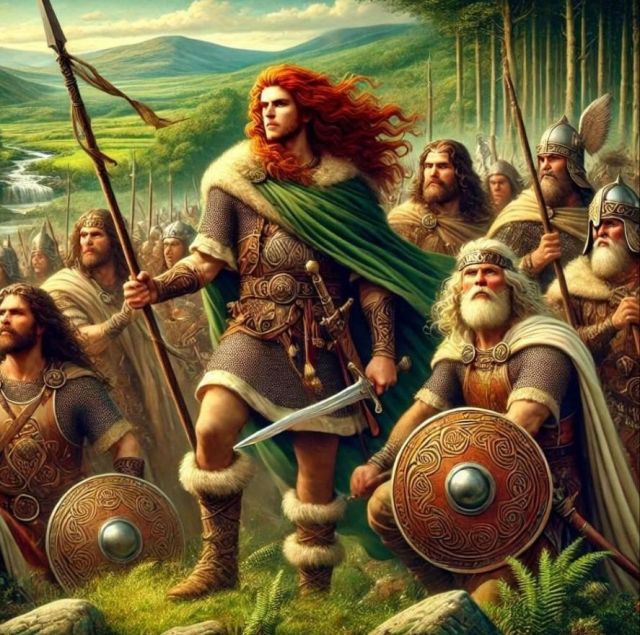
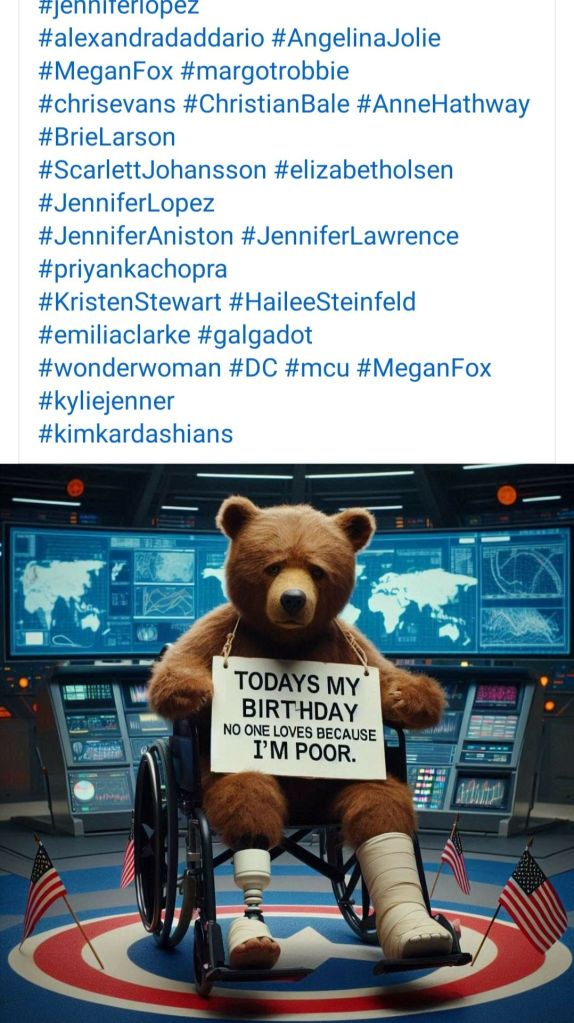
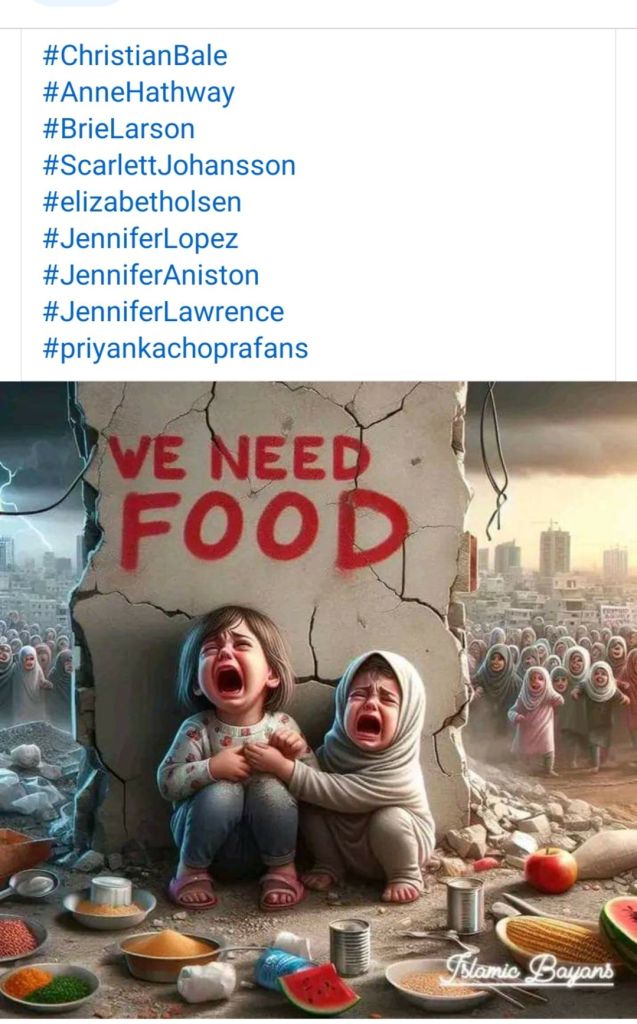
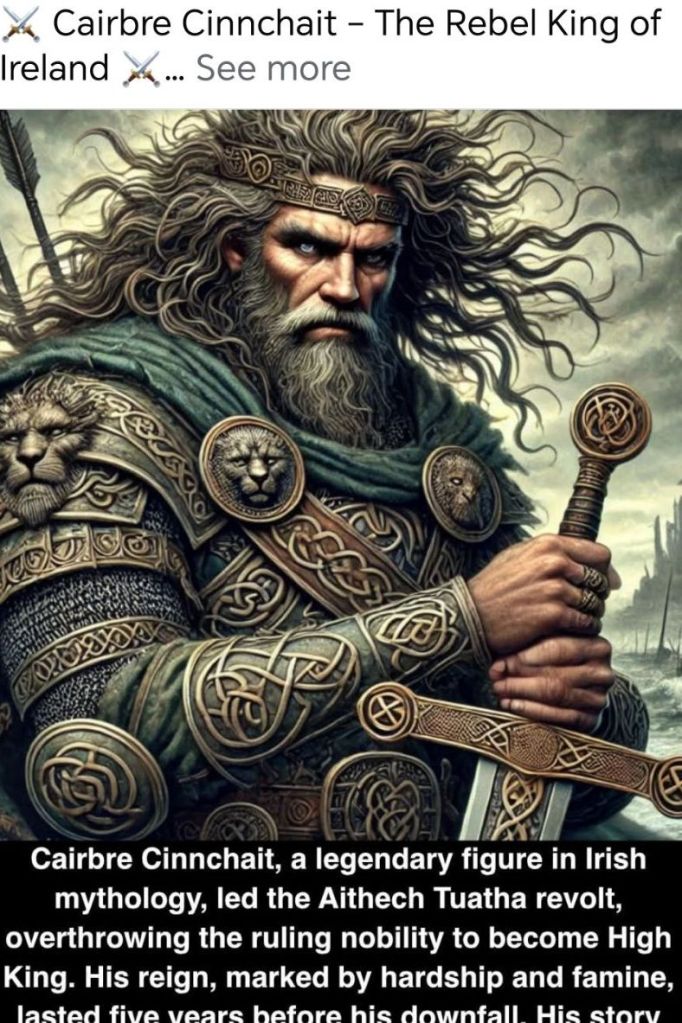
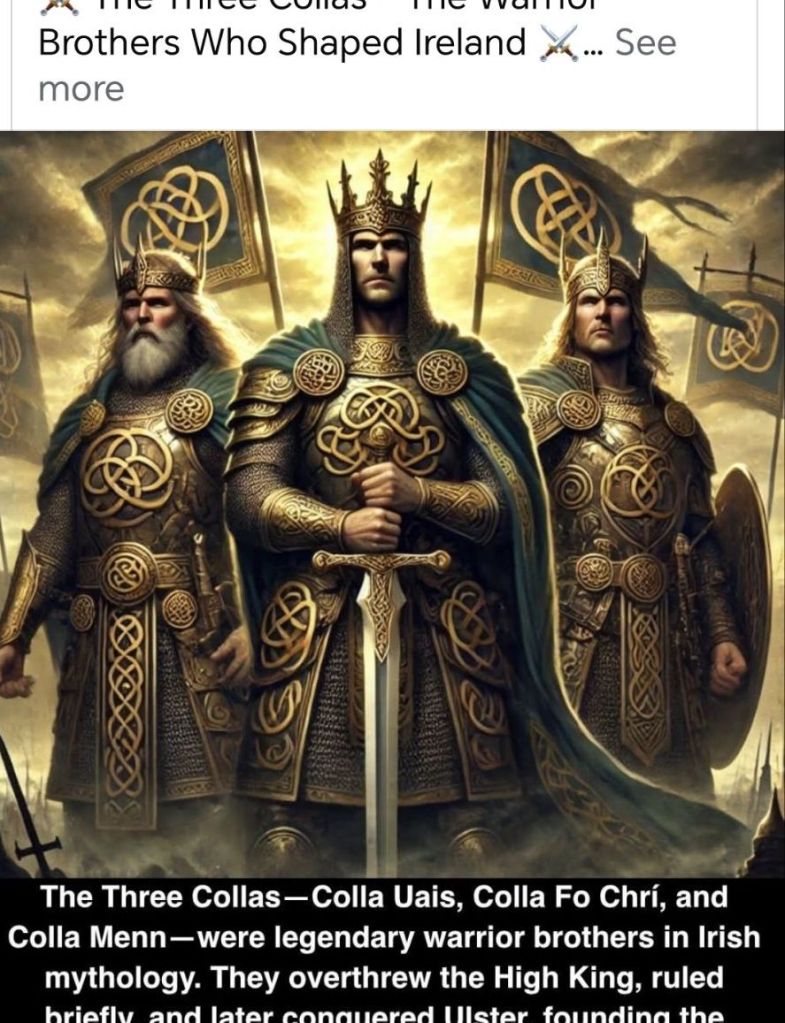
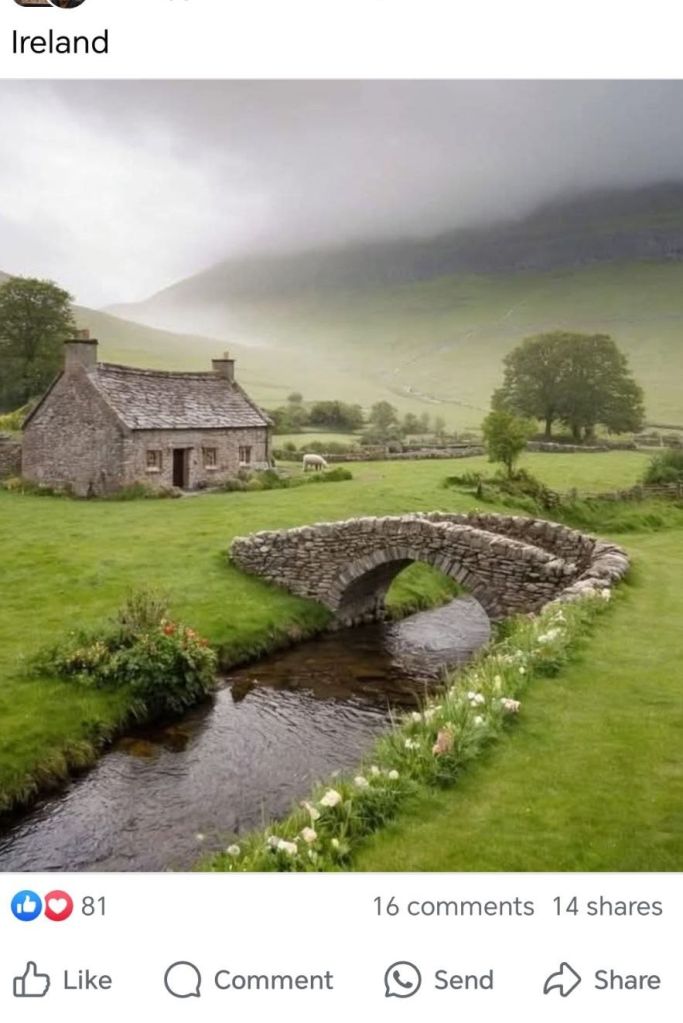
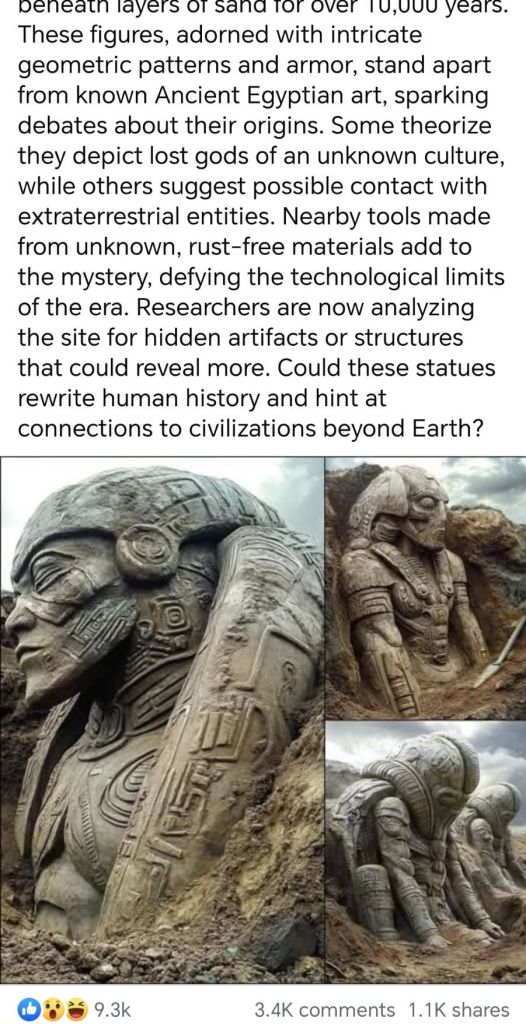
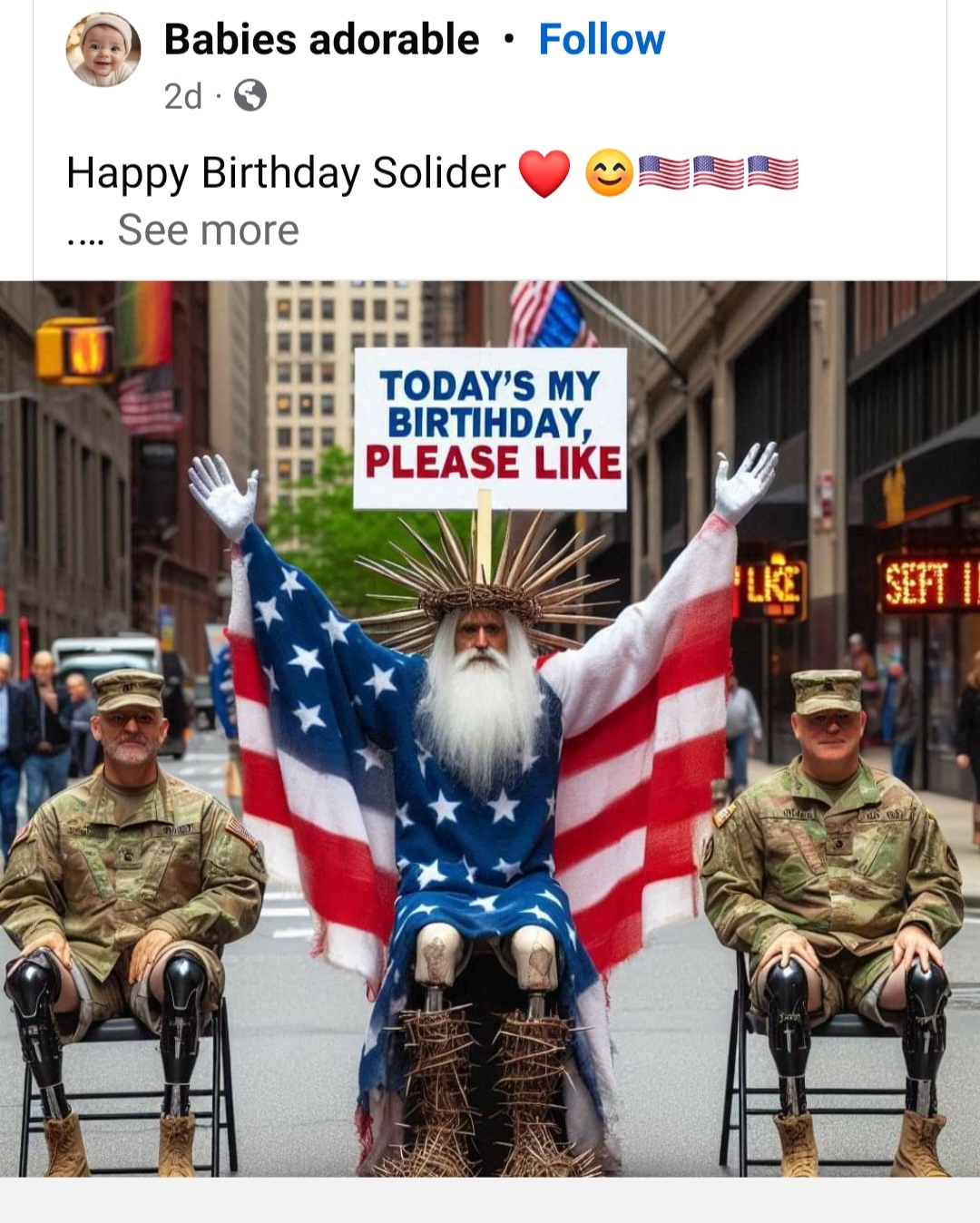
To illustrate this post, more cringe-inducing AI imagery from social media pages purporting to be about history and mythology

It’s not inevitable

The Guardian got some writers to react to the short story written by the machine. Most of the reactions ranged between ‘Wow, this is actually pretty good’ and ‘I fear for my livelihood.’ Kamila Shamsie pointed out that GenAI will reproduce and reinforce all the biases, all the racism and sexism etc, in its ‘training materials.’ For Nick Harkaway, the story is an ‘elegant emptiness’ and being moved by it is like a bird falling in love with its reflection in a window. He emphasises that ‘none of this will just happen. These are policy choices, and the end result will be the result of a conscious decision.’

That’s what the hype-mongers want us to forget, isn’t it?

The future promised by Gen AI is one where nobody is paid to do anything creative or educational; instead, computer programmes owned and controlled by a few billionaires create flat, uncanny versions of what humans used to create. For some reason we are all supposed to be excited about this. But whether you feel excitement or dread, either way you are making the mistake of treating the whole thing as inevitable and natural.

Actually, there are humans making decisions and investments at every link in the chain here. And some, like CD Projekt Red, are making decisions unfavourable to the spread of AI in creative industries.

I don’t think AI is going to put writers out of a job. The vast majority of us are already out of a job. Tech bros claiming to have made a programme that can do what we do, and expecting us to be pleased about it, is just the latest in a long line of insults, and far from the worst.

I say ‘far from the worst’ because I don’t think these AI tools are about to revolutionise the publishing industry, any more than they have revolutionised any of the other things they were supposed to revolutionise. It will mess with a lot of people’s livelihoods and it will muddy things up for a while. But it will not be a game-changer. The wave may leave behind puddles but it will recede. So I don’t believe the tech bros’ dystopia will happen.

GenAI will probably carve out and retain certain niches, for better or for worse, in the publishing industry. But a machine can’t actually write a story. There’s a few basic category errors at work here.
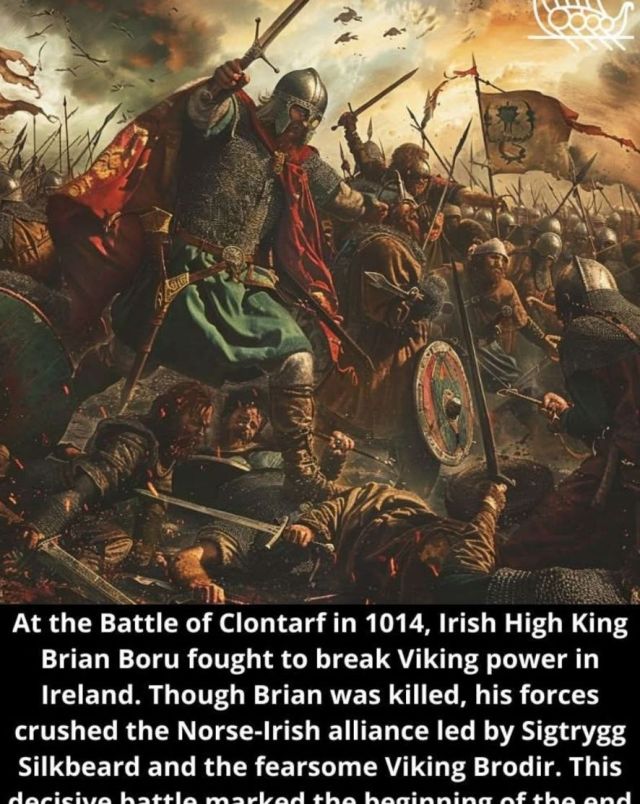
Another one found in the wild. See if you can spot the warrior who has jumped 200 metres into the air.

Why can’t a machine write a story?

First, the ‘AI’ that exists today is not some sentient machine-mind (‘alternative intelligence,’ in the disappointing words of Jeanette Winterson). Maybe some day we will have that, and our android cousins will write their cyber-Iliads, which will be very cool. I’ll be the first in line. But that’s a whole different thing. I saw someone in a comment section gushing that ‘we have taught sand to dream.’ But what we have now is just glorified predictive text. Whether in written or visual or musical form, it just shows you the lowest common denominator of what’s already out there in the culture.

Second, writing is about expressing your feelings and communicating your thoughts and experiences. A computer doesn’t have these things. It can imitate the way humans express them, provided a bunch of rich people decide to devote stupendous sums of wealth to making it do so. But again it’s not the same thing.

What if the computer’s imitation gets so good we can’t tell the difference? And aren’t some human writers also basically hacks, unoriginal, etc?

First, every writer does not have to be Arundhati Roy for the point to stand that a computer can’t be Arundhati Roy. Stories are rooted in material reality and our experiences of it. No training materials or prompts can produce something like The God of Small Things, which is viscerally a story of its time and place.

Or imagine if The Grapes of Wrath had been written using pre-existing ‘training materials.’ It would have portrayed the Dust Bowl refugees as incendiary vagrant criminals and the cops as brave defenders of civilisation.

Even if the imitation seems to be perfect and seamless, the above points will tell. Stories are not pure exercises in form. They are about things. The most important ones are about things nobody has written about before. Even science fiction and fantasy stories are about themes and feelings that really exist.
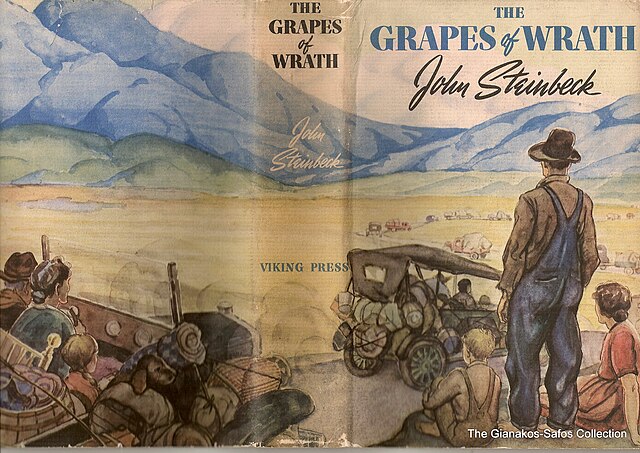
Instead of Steinbeck’s wonderful and evocative descriptions of the human impact of the Dust Bowl, we would get ‘Chapter 2. The Dust Bowl took place in the 1930s and was caused by a number of factors. First…’ Front cover image from 1939. Uploaded to Wikimedia Commons by Folktroubadour

AI in Gaming

I first became familiar with the phrase ‘Artificial Intelligence’ in relation to games. AI is what tells the mercenaries in Far Cry to search the jungle for you systematically when you hide. It’s what tells the hostile army in a Total War game to oppose your cavalry with spears. AI is what’s breaking down when your little villager takes a shortcut past ten enemy catapults, or when a Nazi stands out in the middle of a Norman field waiting for you to shoot him.

You’d think GenAI would have massive applications in gaming. But so far it’s been a real damp squib in that sector.

Recently PCGamer reported on a wild example. Basically, Microsoft made a demo based on a game called Quake 2 using Gen AI. The project used three megawatts of energy – the output of tens of thousands of solar panels. All that, for what? An incoherent, uncanny experience that looked vaguely like Quake 2 and that gave players motion sickness. For context, Quake 2 (that is, a version of Quake 2 that is the full game and that actually works and doesn’t make you nauseous) was made over 25 years ago by a team of just 13 people.

Something to think about: if they had managed to remake a part of the game exactly as it was with AI, that would have been hailed as a triumph. But… Then we’d just have a game level that already exists.

How do I explain this for people unfamiliar with games?

Imagine if I rewrote one chapter of Killing Floor by Lee Child, and presented it here on The 1919 Review expecting your adulation. But in my rewrite, the names of the characters change every other paragraph, and the font somehow gives the reader a headache. I rewrote it by listing every time a particular word is used then arranging the words according to arcane predictive rules. And, somehow, it took the entire output of a nuclear plant just to power the special laptop I used to do this.
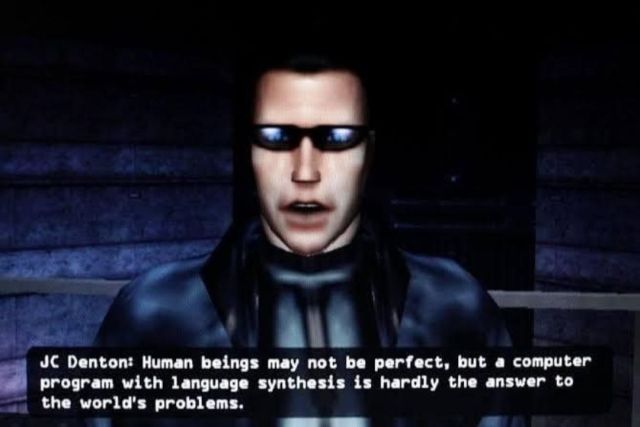
Screenshot from Deus Ex (2000), which predicted this like it predicted everything else. Ion Storm & Eidos Interactive

That’s the essence of the Quake 2 situation, as best I can explain it using books as a comparison, but to be fair (and as I’ve made clear above), GenAI has actually produced more polished results when it’s confined to text.

In both cases the same questions arise: what is the purpose of this? How can the results (good or bad or just trifling) possibly justify the expense and the effort and the pollution? Why are we all expected to indulge Big Tech even when the project into which they are pouring so much wealth is largely unnecessary where it is not actually harmful?

GenAI is in many ways like crypto: the tech bros have invented a new toy and they demand that everyone takes their toy seriously. They demand that we sacrifice the future of the planet in order to sustain their toy. This toy is at the heart of an investor frenzy. They promise that when their toy has taken over the world, it will right all the wrongs it has done along the way (crypto, we were told, will actually save energy by putting all the banks out of business, thus reducing their emissions to zero; in the same way, we are told that AI will actually come up with clever ways to save energy.)

In other ways GenAI is not like crypto. It actually has utility, even if you agree with me that this utility cannot on balance be justified. It can be a lot of fun. It can make it easier to write emails. Its potential in technical fields is an open question.

But it has no utility in writing stories or developing videogames. It’s actually difficult to wrap your head around how stupidly wasteful and contrived such projects are. Even if that wasn’t the case, and even if the results were decent, it’s not worth one single artist losing their livelihood.
Home Page/Archives

2 years on, has the “AI Revolution” changed your life?

‘It’s going to change everything,’ people said, and even though they said it more often with dread than with excitement, it appeared they accepted it as inevitable.

When Generative AI became headline news a little over two years ago with the launch in late 2022 of ChatGPT, it was not simply oversold. It was hyped to within an inch of its life. Two years on, it has not revolutionized the way I work or live – thankfully. I’ve read about some ways that it’s useful and a lot of ways that it’s making the world a worse place. But in this post I want to pause and give you a full catalogue of how Generative AI has actually affected my life, as a snapshot of where the AI Revolution stands from the point of view of one individual in April 2025.

Of Bots and Men

At work I use a program called Canva and in early 2023 it drew my attention to its AI image generator, which I had a great time playing around with for a while. ‘Of Mice and Men but Lenny and George are Robots’, ‘World War Two in space’ and ‘alien spaceship in County Westmeath’ were all fun. People look doughy and uncanny, and machines look like they were drawn by someone even less mechanically literate than me, and the whole thing looks like the first three results in a Google Image search have been mashed together indiscriminately. It looks as uncreative and unimaginative as it is. But it’s fun, and I could plausibly claim that it was work; I wasn’t messing around on the job, I was upskilling to rise to the occasion of the AI Revolution. It is fortunate that I had that excuse in my back pocket, because all my colleagues could see ‘battle of Stalingrad with lasers’, ‘atom bomb on Dublin’ and other brainsick adolescent creations whenever they looked at the drafts folder. All in all, I can vouch for Generative AI as a fun toy.


As an aside, in the two years since, it’s possible this tool has gotten worse. In 2023 it gave me photorealistic rusty hobo robots in a Steinbeckian dust bowl scene; today it gave me cute robot mice.

And here’s another time AI impacted my life: I wrote about it here.

Who prompts the prompters?

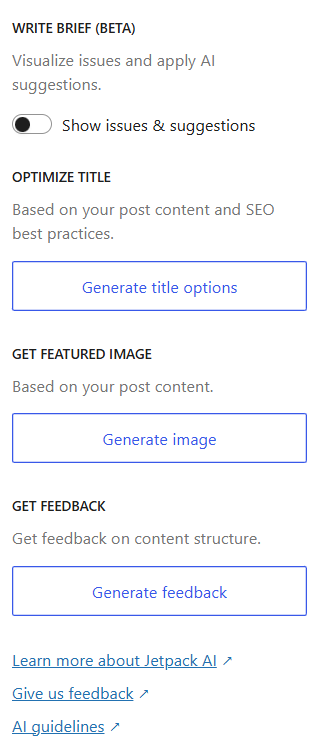
Gen AI is all about writing prompts. But two years on it feels like we humans are the ones being prompted. Tech companies are nagging us to use the AI tools they’ve spent so much money on, usually in contexts where I don’t want or need to. If I tap my phone screen the wrong way, it invites me to use AI tools to help me do internet searches. No thanks, I’m fine. Right now as I write this, over on the margin of this computer screen, WordPress is inviting me to use AI to generate a title, featured image and feedback for this post. The good people at WordPress don’t appear to understand that I’m writing because I enjoy writing.

Ned Beauman, in his 2022 novel Venemous Lumpsucker, was referring to this kind of thing when he wrote about an ‘almost libidinal desire to relinquish autonomy.’

My wife uses AI at work, for actual work. She uses it to write formal emails, and I’ve seen the results, and I think that’s a great use for these AI tools. I understand that there are other things like this, where AI can do boring jobs quickly. So as well as being a fun toy, it help you write the kind of letters there are already templates for online.

Tsunami of Slop

In fairness to Generative AI, it has significantly changed social media, in that it’s polluted my feeds with stupid, tasteless, uncanny or offensive imagery, sometimes accompanied by text riddled with inaccuracies and written in AI’s characteristic style of pseudo-intelligent noncommittal blandness. As far as I can see, two particular online constituencies have seized on Generative AI. The first group is anti-refugee protesters, who make hideous posters for their events and fake photographs to rile people up. The second group is Facebook pages about history and archaeology. They illustrate their chatbot-written posts with, say, a picture purporting to show Brian Boru at the Battle of Clontarf – but Clontarf has been transformed from flat coastal fields to high foggy crags, and Brian Boru looks exactly like the Witcher. Or a Viking ship landing on the Irish coast – in the shadow of a ruined Norman castle that couldn’t have been built, let alone fallen into ruin, for another 400 years.
One image I saw in my news feed claimed to be of Dublin. The buildings and quays looked Dublinesque, but they were all in the wrong place. Now what I think is that the image was designed to provoke me into pointing out in the comments that, say, Grattan Bridge was missing, or that Bono’s hotel is upside-down. I resisted the urge but I could see that thousands of people had already commented. There is probably a whole category of AI post now that’s just correction bait. Again, AI is prompting us now, not the other way around.

It doesn’t make any sense, but it’s a good way to maximise engagement – far more effective than, for example, posting something funny or good or clever. 

While all this social media stuff is ugly and tacky, it’s at least interesting, in a Black Mirror kind of way. And image generators can be fun, and it’s nice to have software that can write the less enjoyable type of email. That’s it, really.

Maybe my experience is typical of a sizeable layer of people, maybe not. But if we make a rough balance sheet of the AI Revolution based on my experience, then it definitely wasn’t worth burning all those fossil fuels for.

Tune in next week for my thoughts on the question, ‘Can a machine write a story?’ And to finish off this post, here’s a small sample of the tsunami of slop that’s come down my news feed these last two years. 

’til next week, Happy Birthday Solider.

Home Page/ Archive

Israel invades Lebanon. But the headlines tell a different story…

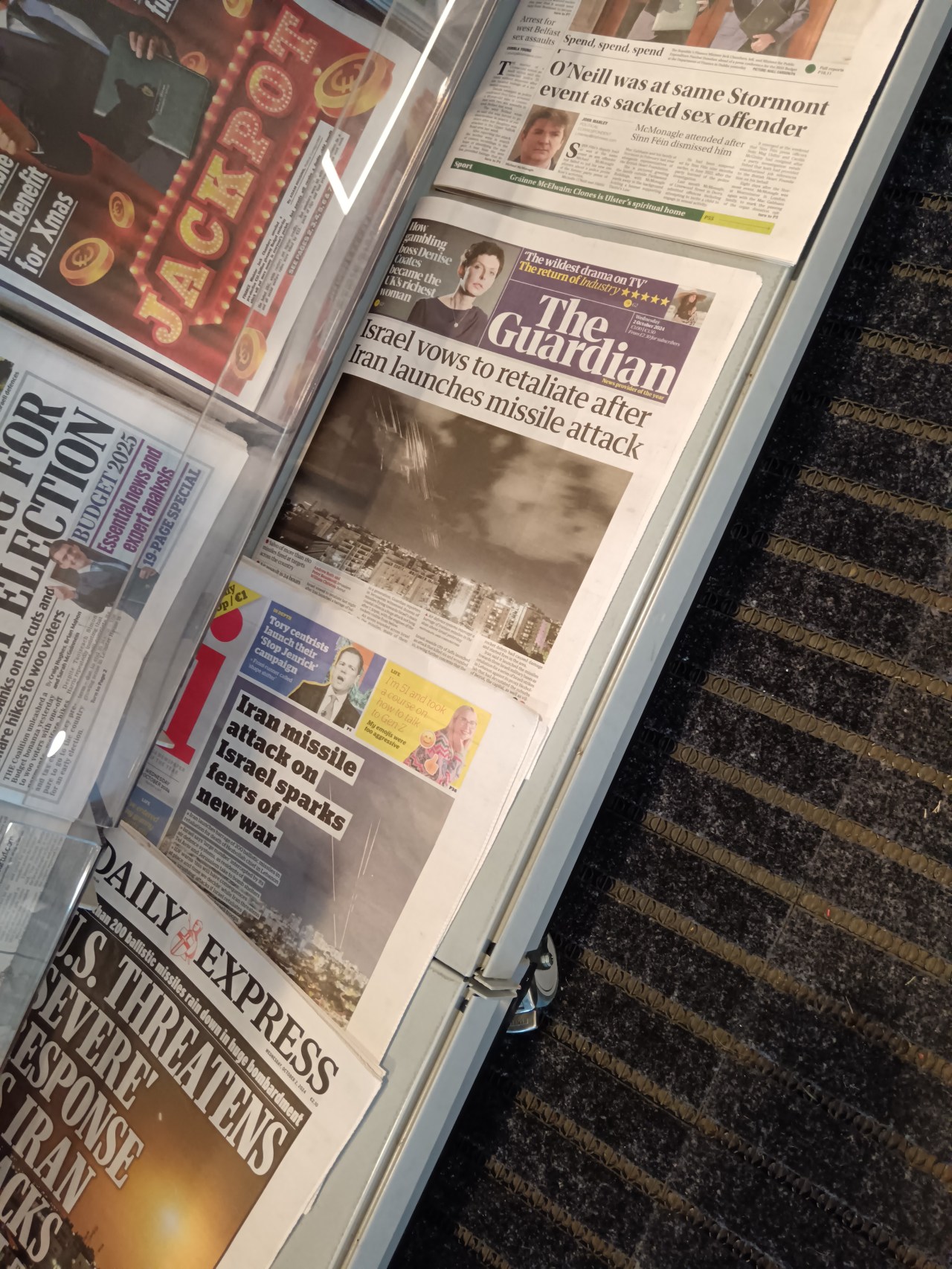
I love it when a news site makes their headline ten words longer than it needs to be, just to shoehorn in some way to frame the story in a politically agreeable way. Take this headline from the front page of the Guardian’s website:

Israel ‘will do whatever it takes to avoid 7 October-style attack’ as it launches Lebanon ground raids

Sunday September 30th

The Israeli leaders are stating their intention of invading Lebanon with sweeping war aims. But we are supposed to go along with the fiction that it’s just ‘ground raids,’ like it would be totally irresponsible to say any more than that for now. That armoured brigade and airborne division massing on the border might turn around and go home any minute now.

To really plumb the depths of that headline, imagine if the Guardian had framed the October 7th 2023 attacks as

Gaza ‘will do whatever it takes to avoid Cast Lead-style attack‘ as it launches Israel ground raids

Israel must be portrayed as the victim. That’s why even in a headline, which is supposed to be brief and to the point, the purely hypothetical attack is mentioned before the actual real attack.

So moving on two days and reading the headlines from October 2nd 2024, we can easily imagine western politicians and journalists sighing with relief and leaning back in their chairs.

US THREATENS ‘SEVERE’ RESPONSE AS IRAN ATTACKS ISRAEL

Daily Express, front page, 2 October 2024

We are back on safe territory. The Iranian government is doing a mostly symbolic and nearly ineffectual thing that it did before a few months ago. Now Israel can once again be portrayed as the victim without any need for suspicious convoluted headlines.

But what is ‘severe’ in this context? What could be more severe than what the US has been helping the Israeli state to do for the last year? 40,000 dead, at least. Millions forcibly displaced and the ‘safe zones’ bombed. Millions starved. Journalists and doctors and aid workers killed in their hundreds. Ambulances bombed and shelled. Every hospital and university in the Gaza strip, destroyed. Tens of thousands imprisoned without trial, many beaten, tortured and sexually assaulted. And this hellfire has been raging for a year now with no end in sight.

IRAN MISSILE ATTACK ON ISRAEL SPARKS FEARS OF NEW WAR

Independent (UK), front page, 2 October 2024

‘Fears of new war’ are prominent in my mind too right now. But you know, the pager attacks, the assassination of Nasrallah, the bombing and the invasion were the main cues there, just for me personally. Didn’t Israel bomb Yemen just the other day? How many people did they kill – was it more or less than the one poor soul who was killed by the Iranian missiles?

ISRAEL VOWS TO RETALIATE AFTER IRAN LAUNCHES MISSILE ATTACK

The Guardian, front page, 2 October 2024

It’s jarring to see these papers rewriting history in front of our eyes. Maybe they want Wikipedia in ten years time to say that Iran started the war by launching that missile attack.

Even after the slaughter in Gaza and onslaught on the West Bank over the last year, it is still somehow possible for me to be surprised and horrified at the actions of the Israeli government. After all it has done and is still doing in Gaza and the West Bank, the Israeli state is taking the show on the road. They want an all-out regional war. Until the pager attacks, I didn’t see it. Now I see it more clearly every day. They are hell-bent on raising the stakes.

Maybe they want to grab whatever land they can and kill whoever they want to kill while the going is good. Maybe they want to drag the US in even more than they already are. I don’t know. Usually I can assess the motivations behind why states do what they do. But this is just wild. The stated war aim (ending all capacity for Hezbollah to launch rockets into northern Israel) is not achievable. But it is a blank cheque for the IDF to go in and cause as much havoc as Netanyahu wants, for as long as Netanyahu wants.

By the way, I’m not going to take up 100 of these 1000 words issuing the mandatory disclaimers. You can assume I don’t support the state which killed Jina Amini and which executed hundreds for protesting her death. Let’s move on, without wasting any more of your time and mine, and look at another headline.

US would not support Israeli attack on Iran’s nuclear sites, says Biden

https://www.theguardian.com/europe, headline, 02 Oct 2024, 22:55

Well, that’s a relief. Because Iran doesn’t even have nuclear weapons. You know which country does? Israel. 88 of them. Even in the headlines about who they are not bombing yet, the unspoken assumption is that the country without nukes represents a greater nuclear threat than the one with them.

Evacuation

In these headlines there is not a hint of the horror of the war that is now starting in Lebanon, not a suggestion of the responsibility of the Israeli government. We hear of Israel evacuating villages. Phrases like ‘evacuation orders’ and ‘evacuation notices’ make it all seem formal and inevitable, as if they are helping people escape from a chemical spill or a flood. Telling people that if they don’t abandon their homes you will probably kill them is not an ‘evacuation.’ What these journalists are doing is like giving credit to a hurricane for the efforts of disaster relief workers.

Rockets

Ten times per article we are told that 60,000 civilians had to flee from northern Israel due to Hezbollah rockets. We are not told that 100,000 Lebanese civilians had to evacuate from southern Lebanon due to Israeli bombardment. That was, as of last month. Now there are one million displaced. It is presented to the world as an urgent question – what should be done about Hezbollah rockets (not Israeli bombs)? How are those Israeli civilians (not those Lebanese civilians) going to return home?

And of course, Israel could have stopped waging a one-sided war on civilians in Gaza, and thereby stopped the Hezbollah rockets, any day out of the last 360+. That offer has been on the table the whole time.

Proxies

These articles go out of their way to remind us that Iran-backed Hezbollah, which is backed by Iran, is an Iran-controlled Iranian proxy in the region. They would do better to manage expectations about the coming war. Hezbollah is indeed backed by Iran, but it is also a massive political and military force with a lot of popular support in Lebanon. It’s difficult to see Israel winning. But just as the invasion is a ‘ground raid,’ Hezbollah is spoken of as if it’s just some guerrilla camp or terror network.

The right to defend itself

All my life we’ve been hearing that Israel has a right to defend itself, or even ‘herself.’ This was an infuriating and stupid line even before 2023, when somehow the balance of fatalities in the Israel-Palestine ‘conflict’ was always at least 10:1; when any visitor to the West Bank could see that an apartheid system is in force there; when, every four or five years, the IDF would ‘mow the lawn’ by killing a few thousand Gazans.

But the last year has been a horrible revelation. Somehow, things have gotten so much worse. And now Netanyahu wants to bring all this to Lebanon.

And Keir Starmer and Kemala Harris are standing up in front of the world and saying with straight faces that Israel has a right to defend itself. They’re still saying it, like nothing has happened, like that phrase has any meaning at all in this context.

Sometimes I wonder what atrocity Israel has to commit before the Americans feel obliged to stop giving them bombs. What would it take? But at moments like these I only wonder, what would it take before people like Starmer and Harris retire that self-defence line and think of some new hypocritical and stupid formula.

Home Page/ Archives

Subscribe to get email updates –

Or…

Nick Bano on Landlord Abolition

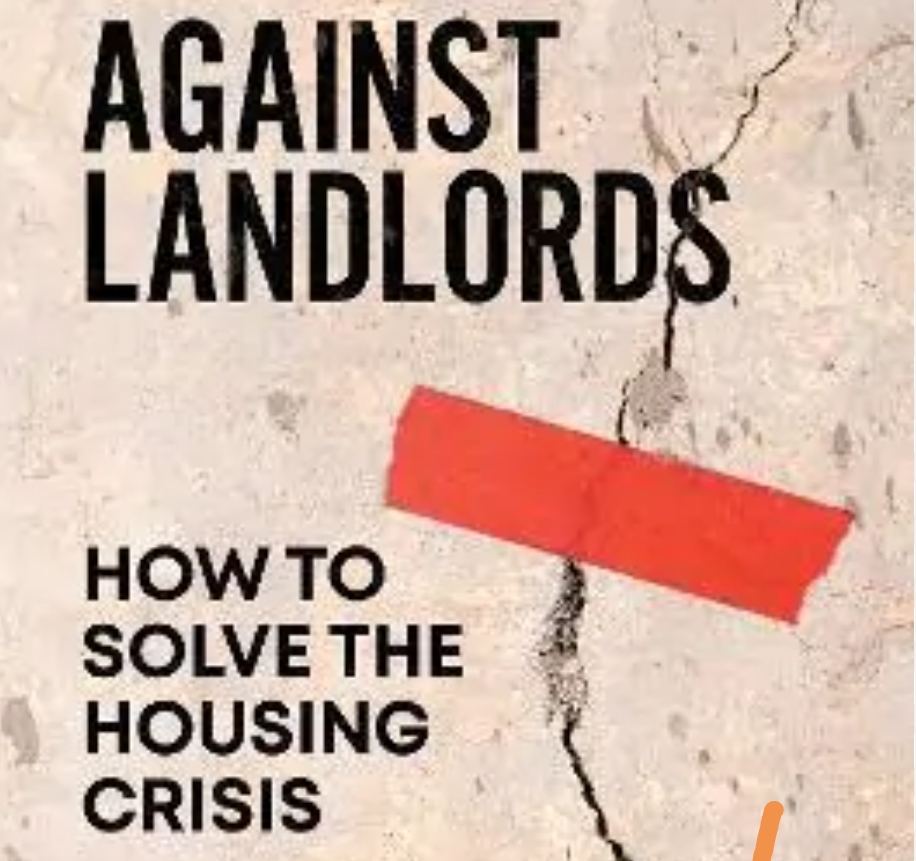
Against Landlords: How to Solve the Housing Crisis by Nick Bano

Verso, 2024

So that headline about ‘landlord abolition’ caught your attention. Maybe you’re wondering, is it just a sensational name for a moderate reform policy, like when people talk about ‘prison abolition’? No, landlord Abolition, as laid out by Nick Bano in this eye-opening and well-written book, is the real deal.

Consider the following:

  • Renters in Britain in 1957 spent 6.5% of their income on rent (now think, how much do you spend on housing?).
  • Before 1951, any increase in land value created by planning decisions was taxed at 100%.
  • In the late ’70s, private rental was a dwindling sector and ‘the death of the landlord’ was widely predicted.
  • Landlords were eager to sell, councils willing to buy. Social housing stock grew massively without anyone having to lay one brick on top of another.

The private rental sector was saved by concerted government intervention during the Thatcher years. Housing stock was in poor repair. How to fix it? Give grants to local authorities to renovate their stock? No! Get private capital to pump money into housing! What could possibly go wrong?

Fast-forward thirty years: terraced houses built by local authorities a century ago are being sold for half a million.

We could fix our housing crisis today by increasing social housing stock. Rent controls are not only fair; they would drive landlords to sell to councils. The more social housing stock there is, the less desperate people will be for housing, the less landlords will be able to get away with charging. It would be a virtuous cycle culminating in the private rental sector shrinking away to occupy an insignificant margin of society.

House prices are tied to rental yields; when you buy a house, you are actually paying for the right to receive rents from it for the rest of your life, even if you never have any intention of renting it out. Reducing the private rental sector to insignificance would benefit home buyers and make mortgage lenders cry bitter, salty tears at all the money we get to keep in our pockets instead of giving them.

Bano is under no illusions that the collapse of the housing market, while it seems necessary and desirable, would be an economic catastrophe for Britain whose governments have bet the country’s shirt on the impossible dream of eternally rising housing costs. And under capitalism, the poor would pay first and steepest for any economic disaster.

The housing market is not a bubble – people are actually realizing profits. But it has to hit the limit of a crisis of affordability, unless British renters can be convinced to live in tiny cubicles or ever-worsening Dickensian squalor – which Bano, to be clear, does not rule out.

The main clarifying point for me was that this is not a crisis of housing supply, but a crisis of housing costs. The imperative to “build more houses”, unless they are all public, social housing, will actually continue to drive up costs (and also destroy the environment).

There is a lot in this short book. There is historical material, for example, about an amazing rent strike in 1915 and the role of housing in the lead-up to the Battle of Cable Street. There is incisive commentary on Grenfell. There is a chapter on race. There are plenty of concrete examples of the squalor, injustice and absurdity of housing in Britain today. There is an overview of how landlords changed from social pariahs to celebrated entrepreneurs in one generation.

My only reservation was wondering how much this analysis applies to Ireland, which is my neck of the woods. Here investment funds seem to be playing more of a role than in Britain, but the mom and pop landlord seems to be very much a social phenomenon here as well.

In 2022 £63 billion was paid in rent in the UK – of which £23.4 billion was Housing Benefit. All that public money – gone, just to reward landlords for charging unaffordable rents. Meanwhile they are incentivised to keep on hiking the rents. Ireland’s Housing Assistance Payment (HAP) is the same, and I bet similar numbers apply.

Bono’s Terrible Poem: An Autopsy

On March 17th Bono wrote a poem about the Ukraine war. Without even proofreading it, he sent it to a top US politician, and she read it out at a public gathering. Then he decided to post it on Twitter,

‘It wasn’t written to be published, but since it’s out, here it is,’ he tweeted. No, he didn’t want it to be out. He just sent it to a luncheon involving top political elites in the most powerful country in the world.

The poem was so bad it was a shock to the senses. But now that a few weeks have passed we should take a closer look. What are the specific features that make it so bad?

It’s on the nose

Usually poems weave in symbols and imagery and metaphors. For example, a poem about a vicious invasion might use snake imagery to signify evil. It might weave the metaphor into various vivid images.

Instead of doing that, Bono simply tells us what his poem’s symbol is: ‘For the snake symbolises/ An evil that rises…’

From this we can surmise that if Bono had written ‘The Road Not Taken’ he would have begun, ‘A fork in the road symbolises a major life choice…’

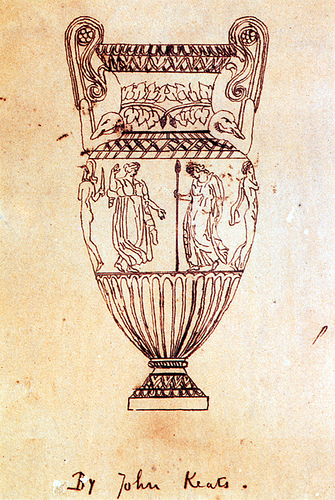
But that’s not quite it. We need more comparisons to really do it justice. If Bono had written ‘Ode on a Grecian Urn’ he would have begun, ‘This Greek vase is a symbol of stuff not getting old.’

Or ‘This Greek vase is like a wife who you’ve married but haven’t had sex with yet.’

It’s a textbook case of Irish narcissism

How are we to read the line ‘Ireland’s sorrow and pain/ Is now the Ukraine’? It seems that he’s saying Ireland had sorrow and pain in the past, and now Ukraine is getting a taste. As if Ukraine was some kind of bucolic hobbit village during the twentieth century – as opposed to a land ravaged by two world wars, famine, terror, the Nazi Holocaust, nuclear disaster and looting by oligarchs.

In this poem, Bono responds to the horror in Ukraine by talking about Ireland. There are grounds for empathy in our shared history of national oppression. But can’t Irish people engage with global events with a bit of taste, without making it all about us?

It’s largely babble

Let’s repeat that phrase; ‘Ireland’s sorrow and pain/ Is now the Ukraine.’ Sometimes in long complex sentences, we mistakenly switch between the singular and the plural. But what excuse does Bono have here, in a phrase eight words long?

Even if he had written ‘Ireland’s sorrow and pain/ ARE now the Ukraine,’ what would that phrase even mean? I struggle to put it into words. Our emotions have been transferred to another country? …have been transformed into another country?

An updated version of the poem reads ‘Ireland’s sorrow and pain/ Is now in Ukraine.’ Did we put our sorrow and pain on a container ship and send it over to the port of Odesa?

‘And they [saints] struggle for us to be free/ From the psycho in this human family.’ Us? But Bono is already free from Putin! Putin doesn’t control any territory in which Bono or his offshore money reside.

‘For the snake symbolises/ an evil that rises/ and hides in your heart/ as it breaks.’ What does this line mean? You, Nancy Pelosi and a bunch of US politicians, have got evil hiding in your heart. I’m not entirely sure that’s what Bono meant to say. And what’s this about hearts breaking?

All these musings are a waste of time, because later we are told that ‘the evil has risen my friends [sic, no comma] / From the darkness that lives in some men.’ All of a sudden, the evil is not something that rises in the hearts of Bono’s heartbroken friends in the US political elite. It is an outside force that threatens us. From context we can guess that it is Putin.

More examples of this incoherence are nailed down here.

It’s banal

When the poem is coherent, it is usually not saying anything worth saying.

What does itactually say about the war in Ukraine? Only that from time to time ‘sorrow and fear’ come along, because of evil. In this poem, evil is a category which includes (presumably amongst other things), paganism in Fifth Century Ireland and the Russian invasion of Ukraine. But evil no longer hides in Nancy Pelosi’s broken heart. The source of the evil is now ‘the darkness that lives in some men.’

How unfortunate that darkness lives in the hearts of some men. If only it had taken up lodgings in some more convenient place. Then this war wouldn’t have happened.

It’s absurd

When the poem is coherent and not banal, it’s absurd.

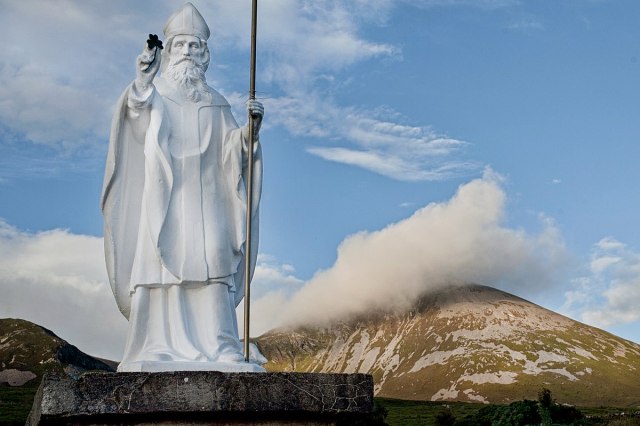
It is entirely possible to write a poem paying tribute to the armed resistance of the Ukrainian people and to the resilience of civilians and aid workers under the bombs. But Bono does not go down that route; instead he singles out the politician who happens to be in charge of Ukraine at this time, Volodymyr Zelenskyy. And not only does Bono praise this politician, and not only does Bono compare him to St Patrick. No, at the end of his poem Bono says that Zelenskyy is Saint Patrick.

Because this is the image that comes to mind whenever I hear the name ‘Volodymyr Zelenskyy.’

So St Patrick was personally brave. And yes, it appears Zelenskyy is also personally brave. But there the similarity ends, because (A) St Patrick was never an actor. And (B) he didn’t have a Neo-Nazi paramilitary group on his payroll.

But even if the comparison fit… So Putin is a snake and Zelenskyy is Saint Patrick. Zelenskyy is banishing Putin. But… why? Why say this?

It’s tasteless

In his tweet Bono explains that every year he sends a funny limerick to US politicians for their St Patrick’s Day luncheon. As you do.

This year, he explains, instead of sending a cheeky little rhyme, he felt compelled to send a serious and heavy limerick. Yes, a heavy limerick. Because this year things are different. There’s a war on. People are dying.

Not like all those other years, when there was no war on and nobody was dying. And if there were any wars happening, the US politicians who chuckled at Bono’s funny Irish limericks certainly had nothing to do with any of those wars.

But even leaving all that aside, maybe you shouldn’t write a limerick about a war. Maybe you shouldn’t try to discuss the nature of evil in a limerick. You see, the limerick genre has certain limits.

But as Bono admits, it’s an ‘irregular’ limerick. You can say that again. Limericks are disciplined, with a tight rhyming scheme and rhythm.

For example, ‘There once was a singer from Dublin/ Whose tax situation was troubling…’ etc.

Limericks have to scan well, or else they sound contrived. And they are short, like five lines.

It’s not a limerick

When I first read Bono’s poem, it scanned so poorly I didn’t even realise it was a limerick. There were words that I didn’t realise were supposed to rhyme with other words. I only learned that it was a limerick because Bono said so. Then I went back and read it in the sing-song jokey rhythm of a limerick. It sounded so much more tasteless and bizarre. In other words, it’s not an irregular limerick, it’s an atrocious limerick.

If Bono had written something like the following, it wouldn’t have been quite as bad:

A snakey old psycho named Putin

Escalated the bombing and shooting

But Zelensky had tactics

Because he is St Patrick

And so for Ukraine I am rooting.

It’s absurd, offensive, tasteless, baffling. But it’s brief, and it’s actually a limerick.

And it says everything Bono takes fifteen lines to say. That’s it. All the essential points are there. But to create the impression that he’s saying something deep and heartfelt, he ties the poem up in knots with vague phrases that mean nothing. He does not succeed in covering up his poem’s essential banality and absurdity, only in adding a layer of incoherence.

War in Ukraine

People are keen for ways to understand and explain the situation in Ukraine. You could do a lot worse than read the speech Putin made when he launched the war on February 24th.

Putin is at his most convincing when he is condemning the western leaders. He mentions Libya, Syria, Iraq:

We have to remind of these facts, as some Western colleagues do not like to remember those events, and when we talk about it, they prefer to point not to the norms of international law, but to the circumstances that they interpret as they see fit.

He is at his least convincing when justifying his own actions:

And for our country, this is ultimately a matter of life and death, a matter of our historical future as a people.

The destiny of the Russian people depended on a full-scale invasion and regime change of Ukraine? Yeah right.

Denazification?

At one moment he defends the operation as a means to defend the separatist ‘People’s Republics’ in the east. The next moment he speaks of demilitarising and ‘denazification’ of Ukraine.

Putin, if he is a sincere anti-fascist, might have started with ‘denazification’ of Russia’s war effort in Syria, where members of neo-Nazi organisation Rusich operate in the mercenary Wagner Group.

But the irony runs deeper. By reducing Ukraine to a warzone, Putin creates the possibility of Ukraine becoming a greenhouse for paramilitary, insurgent, mercenary and terrorist groups of all kinds. If the war is a long one, like in Syria, this is almost a certainty. This would offer new avenues of advance for Ukrainian fascism (which is a real and dangerous force).

In Iraq the chaos of invasion, war and insurgency led to the rise of Isis/Da’esh. We should consider what monsters could emerge from the ruins of Ukraine.

But the ‘denazification’ argument is window dressing in the speech. There is greater stress on the question of Russian security. This is a stronger argument, because NATO, with its bases in Eastern Europe, poses a potential threat to civilians in Russia. In this way the position is different from Iraq, where the ‘threat’ was completely fabricated.

Security

Though I was very young, I was in the anti-war movement at the time of the Iraq War. At the time we did not know for certain that the threat was fabricated. Speaking for myself, I opposed the invasion because – regardless of whether the intel was real or not – I rejected the idea behind it, that the US somehow had the right to bomb and invade Iraq just because there was some potential future threat to US security. The same toxic idea is at the heart of Putin’s speech on Ukraine. The ‘security’ of the stronger party is so important that it has the right to reduce its weaker neighbour to rubble just to head off potential threats.

On paper, a ‘neutral’ Ukrainian regime would be a guarantee of security for people in Russia.

In reality, by launching an obscene war of aggression the Russian state has made the situation far more dangerous, first and foremost for the people of Ukraine but in the long run for the people of Russia too.

There is a deep-seated anti-war sentiment in the US and Western Europe.[i] Since the disaster of the Iraq war, the US government has held back on launching anything on a similar scale. To attempt another war of that kind would create too much instability at home and in the ranks.

The best guarantee of security for people in Russia is not a ‘neutral’ regime planted at gunpoint in Kiev. It is the fact that working, poor and middle-income people in the west have absolutely no interest in going to war against working, poor and middle-income people in Russia.  

But this invasion has done much to cut across that sentiment. Leo Varadkar, Tánaiste (deputy Prime Minister) of Ireland, has called Putin ‘the Hitler of the 21st Century.’ That is just as historically illiterate as Putin’s claim that he is ‘denazifying’ Ukraine.[ii] Of course, English-speaking politicians and columnists will bleat about appeasement and Neville Chamberlain literally every time there’s an international stand-off of any kind. Usually the vast majority of people will pay little attention to their grandstanding. But now people see on their screens and newspapers what’s happening in Ukraine. People will be more inclined to listen to the politicians and their pathetic Winston Churchill impressions.

In short, this invasion has made it more challenging to make the case against NATO aggression. People in Western Europe and the US will still, I predict, refuse to be dragged into war. But the mood is very different from a week ago. We cannot predict how the mood will be after months and possibly years of ruined cities, refugees and atrocities.

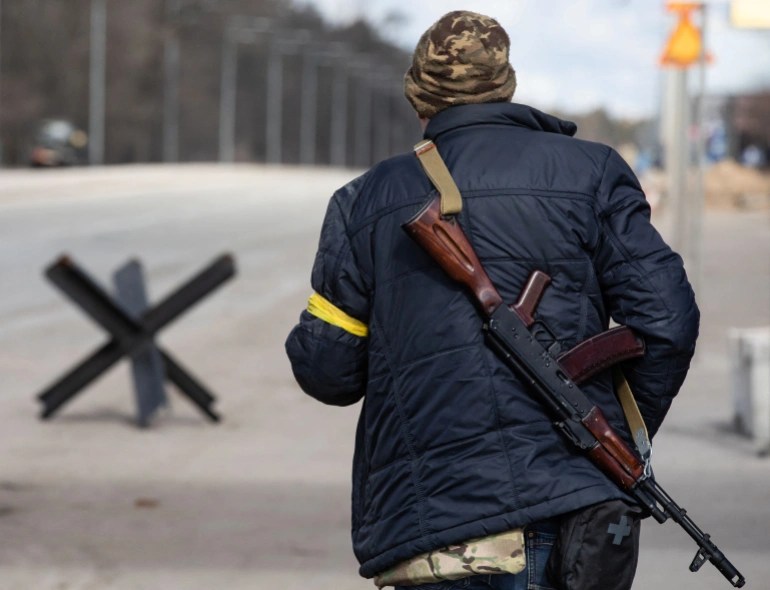
A member of the Ukrainian Territorial Defense. Photo from Al Jazeera

Strategy of Russian ruling class

But what is the rationale of the Russian ruling class? How does this wild, reckless move make any sense from a strategic point of view?

First off, Putin and his (apparently very small) circle of confidantes don’t care about the prospect for an anti-war movement in Western Europe or North America. They are cynical. This attack has got little to do with security and nothing to do with denazification. My understanding of it at this point is as follows.

Over the last year or so the Russian state has helped to defeat protest movements in Belarus and in Kazakhstan. It bailed out the tyrants in charge of those countries, and in return gained influence. The case of Belarus was significant because the Belarus front appears to have proved crucial for the advance on Kyiv. Victory in Syria is also a factor; the Russian military is much weaker than that of the US, but the Russian military has actually been winning wars. The Russian ruling class is at a relative peak in terms of power and influence.

While the actions of the NATO leaders are those of people who have time on their side, the actions of Putin suggest a desperate sense that whatever advantage he enjoys can only be temporary, and must be exploited to the full.[iii] Exploiting it at the negotiating table did not work, so he is exploiting it on the battlefield – with horrific consequences for the people of Ukraine.

To refer to Iraq again, when the US invaded that country I marched against the war. But it never entered my head to call for Russia, China or Iran to intervene – to send troops to Baghdad, to bomb New York, or anything of the kind. Obviously that would have made the situation far worse. Likewise any call for NATO ‘boots on the ground’ is dangerous.

On both sides, these are sick and cynical power games. The anti-war protestors in Russia have faced arrest in their thousands, just to show the world that their reactionary politicians do not represent them. A principled anti-war movement in Western Europe and North America, opposing the warmongers of all sides, must take inspiration from them.


[i] It may not always seem that way because western governments are always finding ways around the will of their own people to bomb and to engineer coups. They have used their vast resources and unaccountability to continue interfering in other countries in spite of the anti-war sentiment. But another war on the scale of Iraq or Afghanistan has been off the table for a long time.

[ii] In 1938 Britain and France gave Hitler everything he wanted, while in 2021 Putin’s enemies gave him absolutely nothing. Hitler was a fascist, a relative political outsider with dreams of world domination. Putin has been an apparatchik and politician within the Soviet then Russian state for many decades.

[iii] What about China? It is my assessment that, for the moment, the Chinese ruling class have more to gain from peace than from war, and will support the Russian regime economically while acting as a restraining influence. For example, they are helping the Russian leaders to weather the storm of sanctions. Note that I said ‘for the moment.’ If this war escalates and proves to be prolonged, the Chinese leaders might decide that war is upon them whether they like it or not, and that it is time to intervene.

Conversely, if it turns out to be a short war, the Chinese government have no reason to commit. It could be a short war if a) the Ukrainian ‘conventional’ resistance is crushed in a matter of weeks or b) if the Russian military suffers heavy casualties, makes slow progress, suffers from low morale. Recent indications favour B. It is almost certain that the Russian state has arrested more anti-war protestors at home (4,300 at the time of writing) than they have captured Ukrainian soldiers.