Hitler spent his whole life ranting and raving about ‘Marxism,’ for him a catch-all term for social democrats, socialists, communists, trade unions and the entire left.
Before coming to power, the Nazi Party spent its entire existence engaged in bitter street fights, with the left and the workers’ movement. Not only were the Nazis not part of the socialist movement. They were killing socialists in the streets, and that was their main function.
After coming to power, the Nazis immediately banned the social democratic and communist parties, dissolved the trade unions, and filled the concentration camps with left-wingers.
During World War Two and the Holocaust, socialists were one of the groups they targeted for mass murder, for example through the infamous ‘Commissar Order’ of 1941.
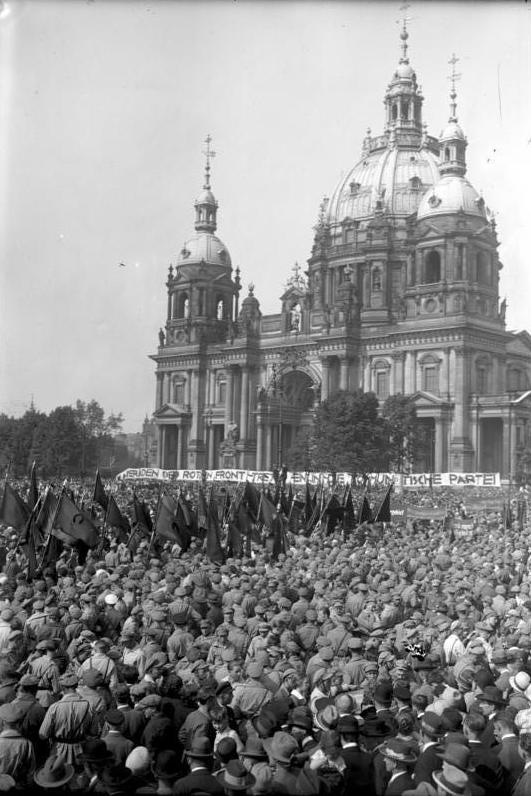
The Red Front-Fighters’ League, a communist organisation, rallying in Berlin. The main role of the Red Front was to fight the Nazis physically. Image from Wikipedia.
But why did the Nazis (National Socialist German Workers’ Party) have ‘socialist’ in their name?
They didn’t. They had National Socialist in their name. National Socialism was a distinct ideology, deliberately counter-posed to socialism. One of the things Hitler hated about socialism was the fact that it was internationalist.
Why did they have ‘Workers’ in their name? Was their party made up of workers?
They were definitely not a workers’ party. Their members and voters were small business owners, students and farmers. Even in the early 1930s when their movement was on the cusp of power, they controlled every students’ union in Germany but by contrast, their membership and activity in the factories were extremely feeble.
When the Nazis were in power, did they bring in socialist policies?
If socialism is workers’ control over industry, they didn’t bring that in. In fact they destroyed workers’ power by dissolving trade unions and political parties.
If socialism means seizing the wealth of the rich, then no, they didn’t do that either. Jewish people were brutally dispossessed but Jewish people made up the tiniest part of the rich in Germany.
If socialism means regulation of business, public works programmes (the Autobahn) and state borrowing and spending, then sure, the Nazis did that. But we see similar policies in pretty much all capitalist countries during the 1930s to combat the Great Depression.
These days we have a lot of extreme free-market libertarians who believe that any state regulation or public spending is ‘socialism.’ It is only possible to argue that Nazi policies were socialist if you’re using that definition – a definition so broad it’s meaningless.
Did the Nazis call for socialist policies before they came to power?
Yes. But they promised everything to everyone. To the rich, they promised to end strikes and prevent a revolution. To the poor, they promised to ‘take on the capitalists and the Jews.’
Like some political forces today, they had this whole ‘Neither left nor right’ shtick – ‘neither capitalism nor socialism but a third way.’ But what it actually boiled down to was capitalism with more parades and more genocide. They did not make deep changes in the socio-economic sphere of society.
The Jews suffered 12 years of persecution and mass murder. But the capitalists got lucrative state contracts and a cowed workforce.
Many of the Stormtroopers (the Nazi street-fighting paramilitary movement ) believed they were fighting for some kind of wealth redistribution. In other words these particular Nazis were high off their own supply.
After 1933 the Stormtroopers got impatient. When were they going to ‘take on the capitalists?’ The answer was: never. In the ‘Night of the Long Knives’ Hitler put the Stormtrooper leaders up against a wall and shot them.
So in conclusion..?
The Nazis were liars. They believed that, since their enemies were all-powerful and evil, they were justified in lying. They called it ‘Nordic Cunning’ and they delighted in it. They thrived by muddying the waters with blatant lies (the bigger, the better) and a constant barrage of bad-faith arguments. What they said today contradicted what they said yesterday, and it didn’t matter. When they promised wealth redistribution and ‘taking on the capitalists,’ they were lying. When they used words like ‘socialist’ and ‘workers’ that was more good old ‘Nordic Cunning.’
A lot of the confusion they so carefully sowed is still with us. Don’t fall for it.
The above is mostly drawn from three books I highly recommend:
The Coming of the Third Reich by Richard J Evans, Penguin Books
The Oppermans, by Lion Feuchtwanger, Persephone Books
Appeasing Hitler (Tim Bouverie, Bodley Head, 2019)
“How bad do you think it’s gonna be?” “Pretty goddamn bad. Probably all the other Families will line up against us… You know, you gotta stop them at the beginning. Like they should have stopped Hitler at Munich. They should never let him get away with that. They was just asking for big trouble.“
If there’s one thing everyone knows from history, it’s that in the 1930s when Nazi Germany was on the rise, British politicians tried to give Hitler what he wanted instead of fighting him. It’s become a cliché.
Clemenza can be forgiven since the events of The Godfather happen only a short time after the war, and what he says is not wrong, as far as it goes. But over the last 80 years, this infamous policy of appeasement has been trotted out as a morality tale again and again. The funny thing is, it is usually invoked to justify aggression (Iraq, Vietnam), not to resist it. Anyone who opposes bombing a third-world former colonial country, anyone who has a problem with killing children and blowing up hospitals, is accused of being an appeaser. And any little warmongering psycho can strut around fantasising that he’s Churchill, the only one (so the fable goes) with the moral courage to stick it to the Nazis. If Hitler was around today, he’d be accusing his opponents of wanting to appease Poland.
I reccomend this article from Spartacus Educational and Claud Cockburn’s brilliant memoir I, Claud, both of which challenge the standard narrative around appeasement. I wanted to know more so I attempted to read Appeasing Hitler by Tim Bouverie. The covers of this 2019 book are weighed down with all kinds of glowing quotations and accolades (‘fresh, challenging’) so I expected to learn something.
But I gave up after 79 pages. Here’s why.
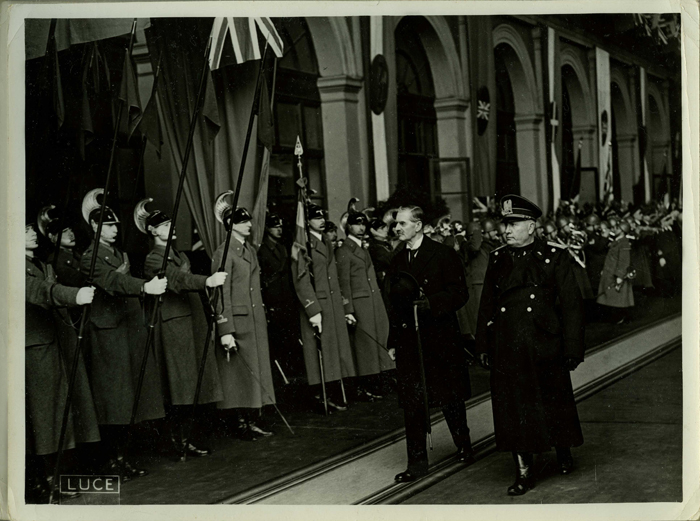
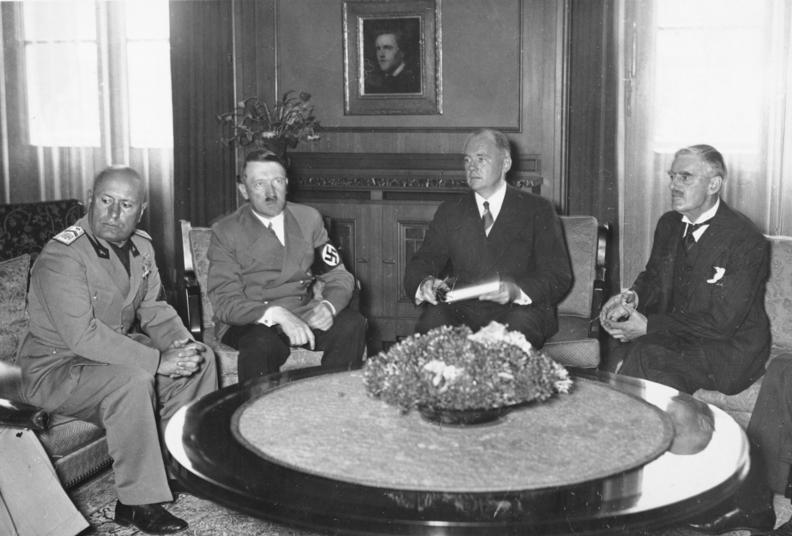
Neville Chamberlain given the red carpet treatment by Mussolini
The author Tim Bouverie gets a real kick out of writing long, loving sketches of British Tory politicians. We get one deft little character introduction after another. We are told about their histories, their personalities, their quirks. Sketches of Tories just keep piling up, going nowhere. They are not badly written, but it’s unclear why we’re supposed to care.
For some, naturally, this is a selling point. One reviewer says that the author Bouverie ‘excels at capturing the atmosphere and conveying the debates in the dining clubs, drawing rooms and society playgrounds of interwar Britain.’ Well, good for him. But I don’t really care about the atmosphere in the society playgrounds, or whatever.
‘Abyssinian Imbroglio’
I stopped reading at a chapter which described the diplomatic storm caused by Italy’s invasion of Ethiopia in 1935. The chapter was titled ‘Abyssinian Imbroglio.’
What a bizarre title.
Google tells me that an ‘imbroglio’ is ‘an utterly confused, complicated or embarrassing situation.’ So it was confusing and embarrassing when 380,000 Ethiopian civilians died under the bombs and bullets and poison gas of the fascists. It was so complicated when 20% of the population of Addis Ababa was wiped out in a terror campaign.
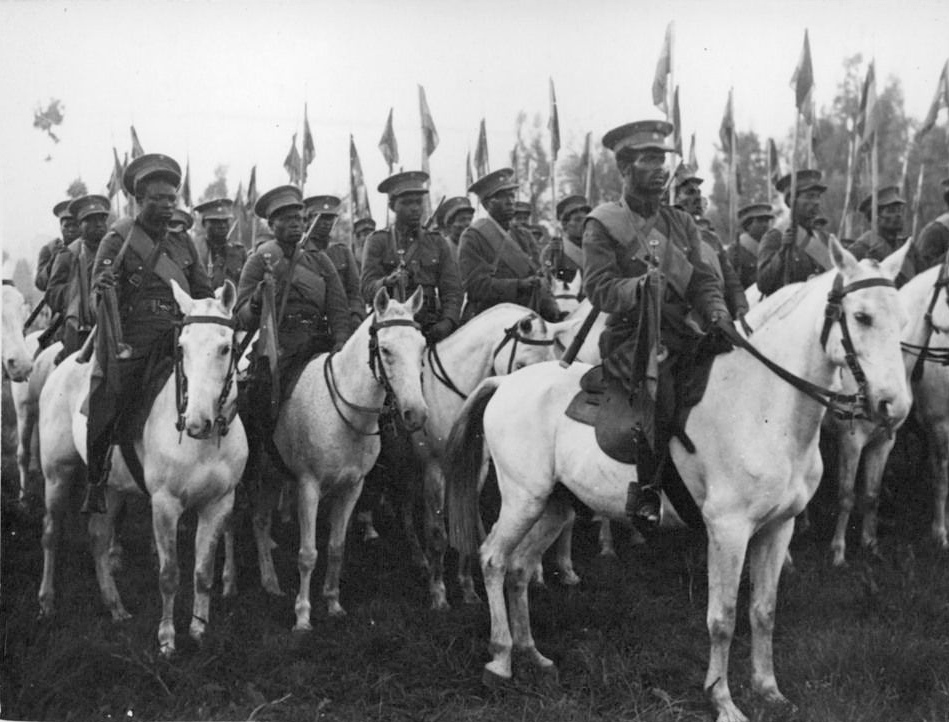
Ethiopian cavalry facing into a desperate battle for the survival of the last independent nation in Africa. I say, what a, wretched little imbroglio!
I suppose my problem is that I’m looking at things from the perspective of humanity in general. If, like Bouverie appears to do, I looked at the world solely from the point of view of male British Tories from the 1930s (and their dining clubs and society playgrounds), I would see the Italian invasion of Ethiopia simply as a complicated, embarrassing situation.
Racial Hatred
Bouverie says some… well… interesting things about anti-Semitism.
They don’t really mention this in the school history books, and it’s not talked about in polite society, but one reason why appeasement happened was that most British conservatives hated Jews.
…or so I thought, until Bouverie reassured me that it wasn’t an issue. This hatred, he tells us, was ‘broadly social and snobbish, rather than racial and extremist.’
Phew. Thank goodness for that.
Let me remind you that this book was published in 2019, year number four of Jeremy Corbyn being publicly scourged over alleged anti-Semitism. At various stages Corbyn was keel-hauled by the press for liking Charles Dickens, for praising J.A. Hobson and for mispronouncing Epstein. But two reviews of Appeasing Hitler in the Guardian make no mention of the author’s bizarre comments (The Guardian, which eviscerated Corbyn for much, much less). One review in the New York Times paraphrases the offending comments with approval. Bouverie’s obvious sympathy for the Conservative Party makes this all the more galling.
From The London Economic – Viscount Rothermere, owner of the Daily Mail, supported Hitler, as well as (less consistently) Mosley’s Blackshirts
The nuances and cross-currents of Viscount Rothermere’s Nazi sympathies are explained at great length and put into context – because of course one mustn’t be unfair to Viscount Rothermere. In this ‘fresh, challenging’ account of appeasement, Churchill is once again lionised, clever little things he said are quoted ad nauseam, every twist and turn of his policy is explained and justified. But the positions of the Labour Party are caricatured in passing, in contemptuous fragments of sentences.
Even though I was interested in the topic, there was nothing in this book for me. The camera lens was fixed exclusively on the least interesting part of the scene. So I gave up.
Conclusion
It seems to me that the British Empire is the elephant in the room in discussions of appeasement. These politicians held hundreds of millions of people in thrall in Africa and Asia and the Caribbean. It was certainly not any lack of aggression or militarism that stayed their hand when they were confronted with Hitler. They were not meek in India – contemporary training booklets advised soldiers on the best methods of burning villages. The attitude of Churchill toward non-white people was certainly ‘racial and extremist.’
From a selfish British imperialist point of view, the logic of appeasement held water. In exchange for an alliance with Britain, Hitler probably would have reserved his aggression for Eastern Europe. It seems to me that the appeasers calculated on letting Hitler loose like a wild dog on the east. They were willing to let him kill tens of millions without impediment as long as he destroyed communism in the process. Looked at this way, appeasement becomes even more disgusting. It also explains why supposed anti-appeasement politicians like Churchill in fact flip-flopped on the issue. But he eventually settled on a harder anti-Hitler position; more far-seeing British imperialist policy realised that facing a vast German empire five or ten years down the line was too big a price to pay.
Well, that’s my understanding of it based on admittedly limited reading. Maybe if I’d read past page 79 of Appeasing Hitler, I would be better-informed on the topic. Then again, maybe I’d have just learned about society playgrounds and drawing rooms. Either way, I couldn’t bear to read another deft portrait of another rich Tory whose racial hatred was only social and snobbish.
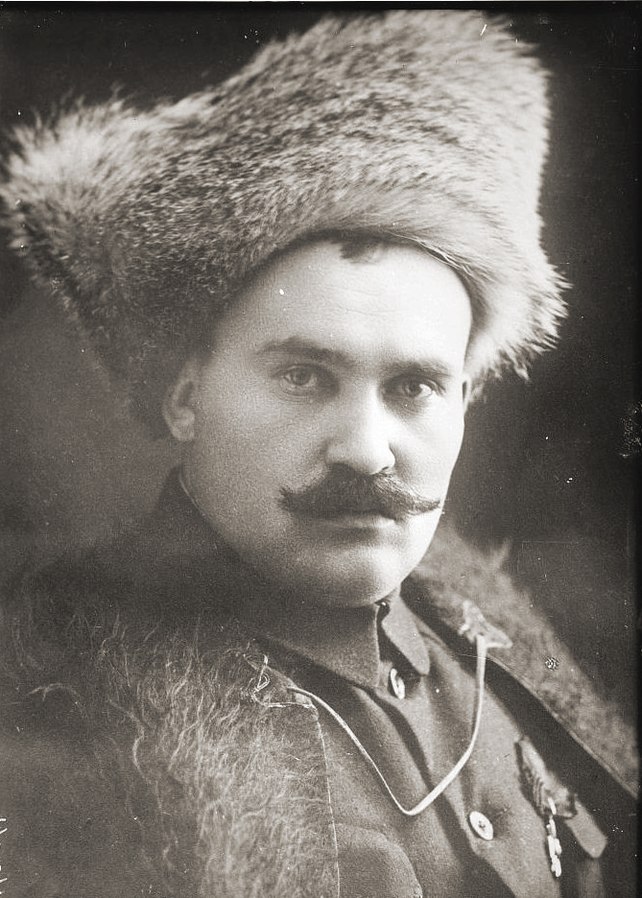
Baron Roman Ungern von Sternberg was a cavalry officer who hacked a bloody path through revolutionary Russia, drove a Chinese occupation out of Mongolia, and aimed to become a new Genghis Khan.
This biography by James Palmer gives an engaging and hair-raising account of Ungern’s life. A child of the Baltic German nobility, raised in an atmosphere of contempt for the Estonian peasantry whose labour sustained his family, he was expelled from every educational institution he set foot in, generally for violence. He only settled down to a steady life when the battlefield gave his brutality an outlet during the 1905-6 Russo-Japanese War. He joined the ranks and received rapid promotion to the officer corps in a Cossack unit. Later during World War One he displayed near-suicidal bravery, and off the battlefields he was prone to duelling and to administering drunken beatings to servants.
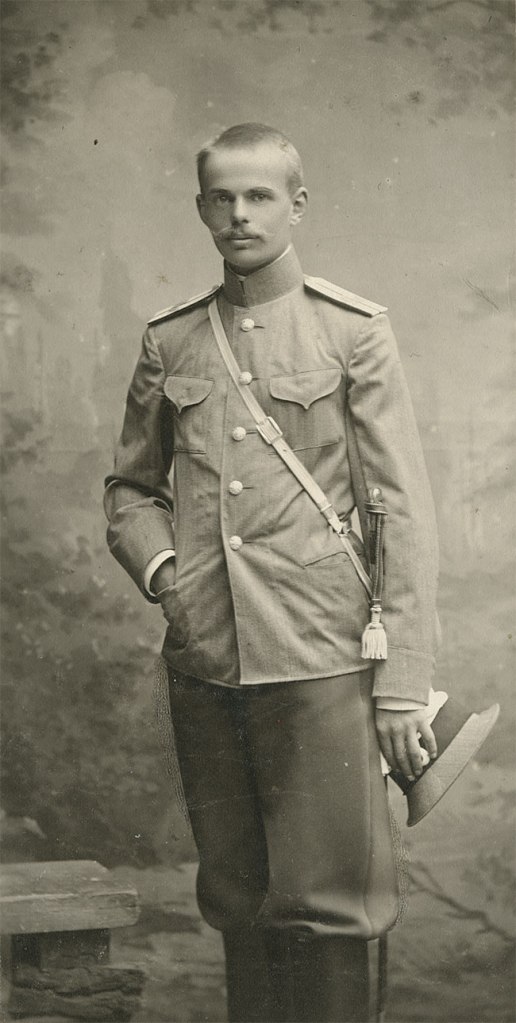
The young Ungern-Sternberg
Revolution & Civil War
As the war ground on, claiming millions of Russian lives, Ungern became part of a military scheme to recruit a unit of Buriats, a Mongolian people living within Russia. So when the Revolution and Civil War came they found Ungern on the Mongolian border commanding a large force of Buriats.
Ungern was a close collaborator of a Cossack officer named Semyonov. With the outbreak of Civil War, Semyonov became a key figure in the White Armies. He was a bandit on a large scale, a warlord whose cavalry forces dominated an area larger than many European nations, both an asset and an embarrassment to the Whites. Ungern was his right-hand man.
In 1920 when Admiral Kolchak’s White armies collapsed and the Red Army advanced across Siberia, Ungern and his thousands of fighters crossed the border into Mongolia.
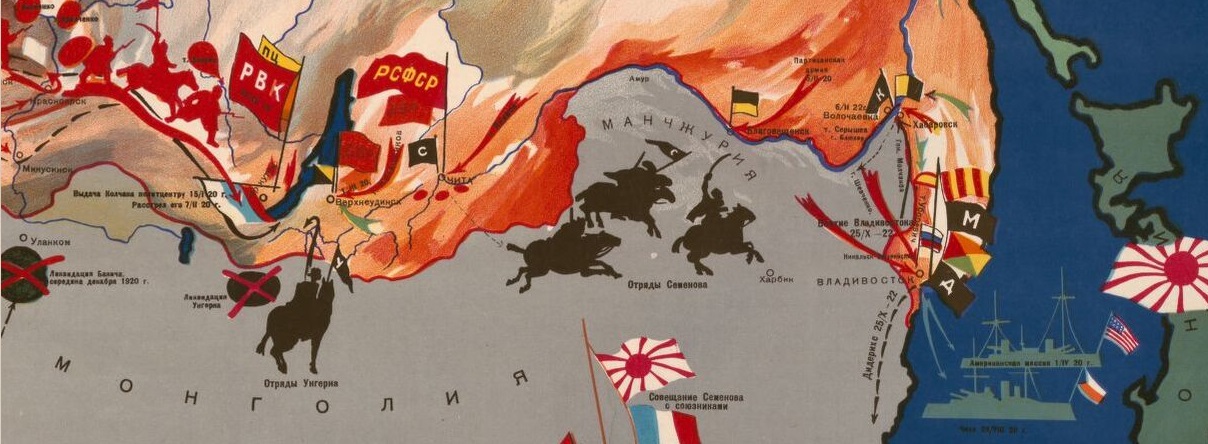
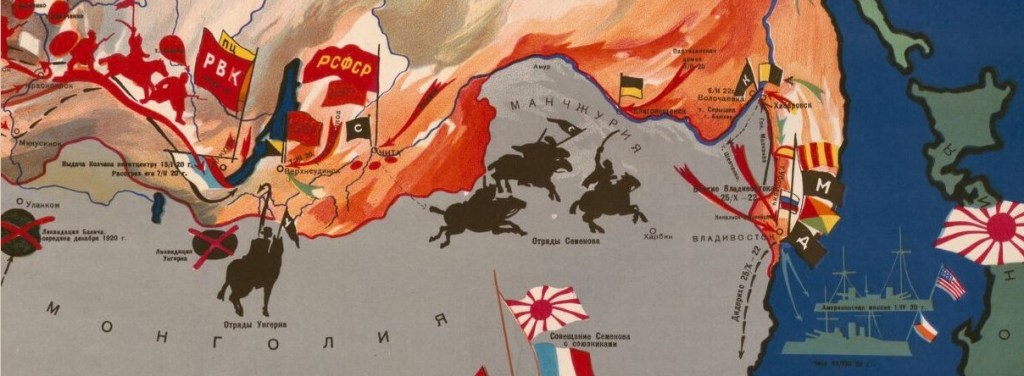
From a pictorial map of the Russian Civil War, available at Wikimedia Commons and Library of Cognress. The three dark figures on horseback represent Semyonov’s forces. The single rider to the left is captioned ‘Ungern’s Detachments.’ He has fled across the border into Mongolia.
After a harsh winter in the wilderness Ungern marched on the then-capital, Urga/ Ikh Khuree, and drove out the Chinese occupiers in early 1921. The height of his power followed: the Mongolian Buddhist church officially recognised him as the god of war and as the reincarnation of an eminent religious leader from the early 19th century. However, inside of a few months Ungern was being challenged by socialist Mongolians led by Sukhbaatar and Chaibalsan, who, with major Soviet supplies and aid, seized the border town of Kiatkha. Ungern marched north to fight them, and met with a terrible defeat. Then, as Soviet forces advanced into Mongolia, Ungern led a straggling army through desolate swamps and hills until his own soldiers, horrified by his wild plan to invade Tibet, mutinied and turned him over to the Reds.
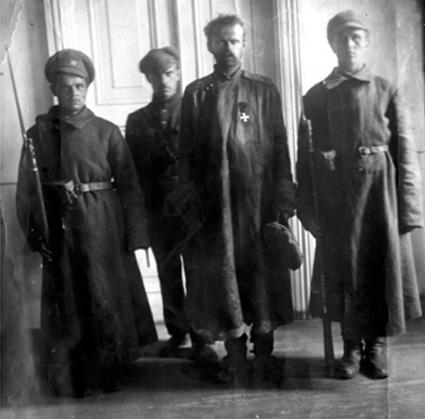
Ungern after his capture by Red forces
If you want to read more about the Russian Civil War, keep an eye out for my upcoming series, Battle for Red October. Subscribe for free to receive an update by email for my weekly post.
Violence
Throughout his career as a White leader, Ungern killed every communist he encountered, and their children too, so that nobody would be left to seek revenge. He also believed that he could sense, by staring intensely at a prisoner, whether they were secretly ‘a Jew or a commissar’, and if he divined that they were he would kill them too. Palmer details Ungern’s sadistic and disgusting methods of execution and torture, and the horrific scale on which he employed them.
During the heyday of the White Armies Ugern ruled the border town of Dauria, which became ‘The gallows of Siberia’, where the hills outside town became stained red with the blood of prisoners. These victims were sent to Ungern by other White leaders such as Kolchak who liked to pretend they didn’t know what he was doing.
Ungern had strange views about military discipline. Almost everyone close to him seems to have been on the receiving end of horrific beatings. A hundred blows to each part of the body was a standard punishment. Forcing a victim to shiver naked on a frozen lake was another. Execution and torture were normal.
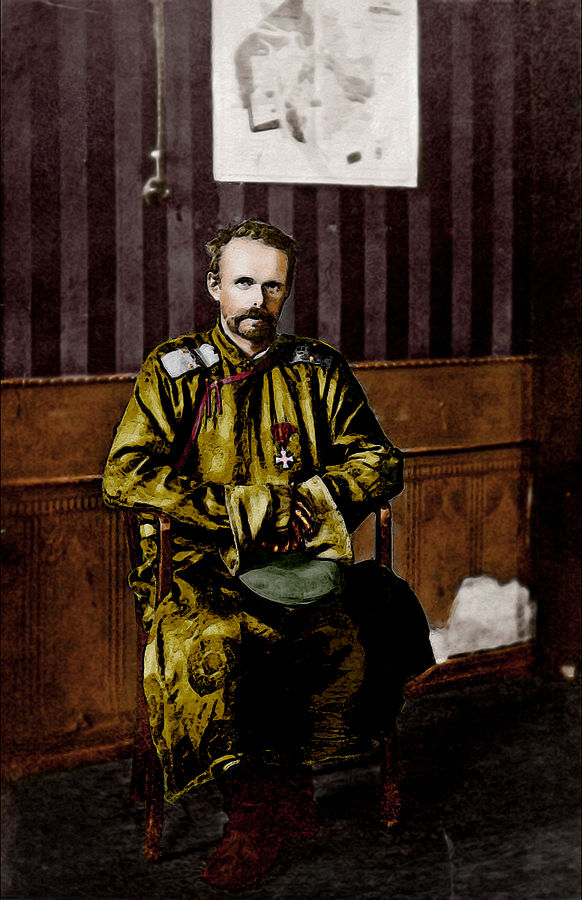
Ungern, colourised. In battle in the later part of his career he preferred to wear a bright yellow Mongolian robe.
Palmer has travelled extensively in the lands which Ungern trod, and he conveys a real sense of the setting. He is an engaging narrator, capable of capturing the imagination, very self-assured, with footnotes that delve into his own interesting anecdotes and meditations. His description of Ungern’s seizing of Ikh Khuree is very vivid and will stick in my mind for a long time. He does a great job of conveying Ungern’s character, and of explaining the complex political-religious influences that operated on him. The book is very clearly aimed at British readers; while I’m not sure he always shows sufficient respect to the Mongolian people in his remarks about them, I’ll extend him the benefit of the doubt.
In general, Palmer doesn’t pull his punches on Ungern, but towards the end of the book he seems to go a little soft on him, claiming that ‘the Soviets… made him look like an amateur’ when it came to killing. Of course, he’s talking about events over a decade later after Stalin had seized power; there was no figure remotely comparable to Ungern on the Red side during the Civil War, and on his own smaller scale he gave Yezhov and Beria a run for their money. Palmer himself notes that the early Soviet regime in Mongolia was not marked by terror or coercion. They even kept in power the corrupt, murderous and utterly selfish priest-king of Mongolia, the Bogd Khan. It’s frustrating how an author can fail to notice the profound contrast between the early years of the Soviet Union and the later Stalinist regime of terror. Instead, as is the common practise of British writers, he telescopes it all together – the idea being that Stalin and the political tradition he exterminated were fundamentally the same. Far from looking like an amateur, Ungern’s violence gives us an insight into the form of proto-fascism that would have enjoyed a bloody reign over a disintegrating Russia if the Whites had been victorious.
The final paragraphs of the book left me with a bad taste in my mouth, as Palmer decided it would be a good idea to end this long horror story by telling us about a Mongolian woman he met who praised Ungern. ‘It would have pleased him,’ Palmer concludes with complacent magnanimity.
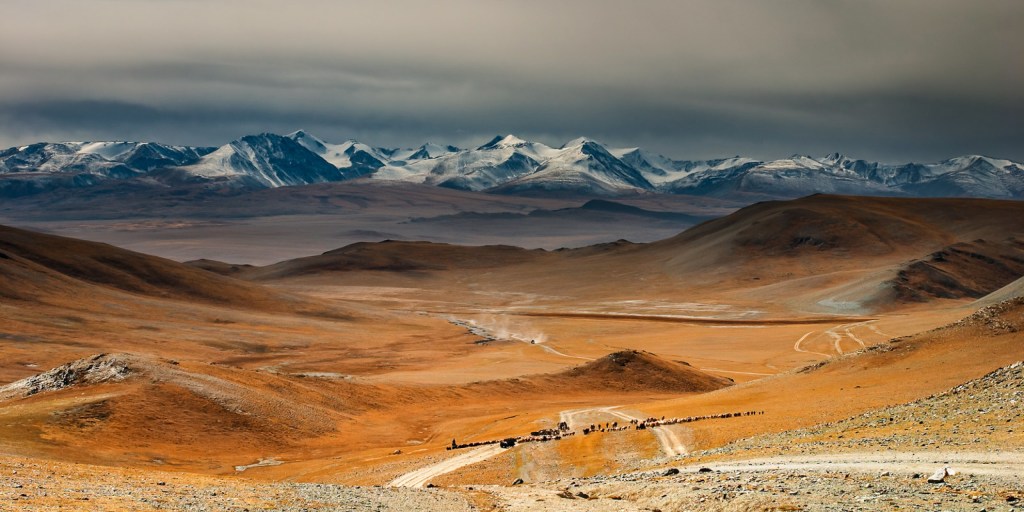
The Mongolian Steppe near Ulan Baatar.
Beliefs
While Ungern seems at first like a disturbing freak of nature, the truth emerges that he was in every respect part of broader trends, and that every facet of his weird amalgam of beliefs was connected to his lived experience and the institutions that shaped him.
To begin with, Ungern was a Baltic German aristocrat, conditioned from his earliest days toviolent, elitist and racist. To him it was obvious that ‘Slavs’ couldn’t rule themselves, and must be ruled by the firm hand of the Romanovs, or as a second preference by German nobles, if they didn’t want to be ‘led astray’ by ‘the Jews.’ But Ungern’s racism was awkward and unusual: he inverted the ‘Yellow Peril’, believing that Europeans were degenerate while ‘the peoples of the East’ were strong and warlike. His violence fell foremost on Jewish people, next on Europeans and Chinese, and least of all on Mongolians.
This bleeds over into his anti-revolutionary paranoia. He believed that the Communist Party was founded 3,000 years ago in Babylon and that it was a cosmic, satanic evil. The standard form of anti-communist bile in the 1920s was to explain that communism and revolution sprang from the ‘barbarity’ of ‘Asiatic’ Russia, but for Ungern Marxism was a product of modernity, of the degenerate ‘West’ engulfed in a ‘revolutionary storm.’ Other White leaders, who touted a constitutional monarchy or even a republic, disgusted him. For Ungern, only a new Genghis Khan could save the world. It appears that he couldn’t really tell the fundamental difference between, say, Lenin and Sun Yat-Sen: they were all evil ‘revolutionaries’ in his eyes.
Both Ungern and his collaborator Semyonov were mass-murdering sadists. But Semyonov was extraordinarily corrupt and luxurious, with a weakness for orgies and drink, while Ungern was intense and ascetic.
Ataman Semyonov
Ungern was a bore on the subject of how Mongolian medicine could supposedly cure diseases which ‘western’ science could not, and his religious beliefs mixed Buddhism with Lutheranism and Orthodox Christianity. The esoteric mysticism associated with Madame Blavatsky and the Theosophists also informed his religious convictions. It appears that he absorbed a whole lot of ‘occult’ and ‘magical’ readings before the war. The same basically confused, shallow ‘spiritual’ eclecticism was of course a feature of Nazi ideology, particularly in the case of Himmler.
Lastly, Ungern’s sadism and obsession with war were part of the wider tradition at the time of seeing war as something noble and ‘virile’, the antidote to a vaguely-defined ‘degeneracy’; and these attitudes were obviously further fed and fattened every day of his life by the brutality of Tsarist military discipline and by the trauma of the battlefield.
As opposed to a historical curiosity or mystery, the more I read about Ungern, the more I saw him fitting right into his historical context. His racialism and mysticism, far from being just eccentricities, were 100% of his time. His violence was the violence of counter-revolution. His orientalism was not ‘ancient wisdom’ – it was a very modern delusion, and he was an essentially modern figure, in so many ways emblematic of 20th century fascist and reactionary thought. He was on the edge of the White cause both politically and geographically – but the old regime and the White cause created him, and behind the ‘democratic’ facade carefully projected for the benefit of the Allies, beasts like Ungern lurked.
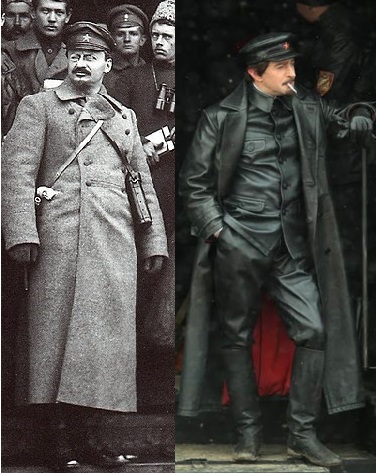
I hit ‘Play.’ Within three minutes, Trotsky and Larissa Reissner are having sex on a train. She’s naked and he’s clothed head to toe in leather. She’s in the throes of passion and he wears a blank, pitiless expression; he doesn’t appear to be enjoying himself. The train plunges phallically through the Russian countryside. Reissner’s voiceover chants a poem about death.
Read this article – and many more – for just €5
Some of my posts are set aside as a special thanks to paying supporters. This is one of them. You can get access to this article – and the full archive of The 1919 Review for an entire year – for just €5.
In the Name of the Working Class is an account of the Hungarian Revolution by a leading participant. The author Sándor Kopácsi was the police chief of Budapest in 1956 during the workers’ and students’ revolution. In what must have been a first for world history, Kopácsi, a high-ranking cop, came over to the side of the insurrection.
The early chapters describe Kopácsi’s own experiences as a worker and socialist fighting the Arrow Cross fascists in the 1930s and the Nazi military in the 1940s.
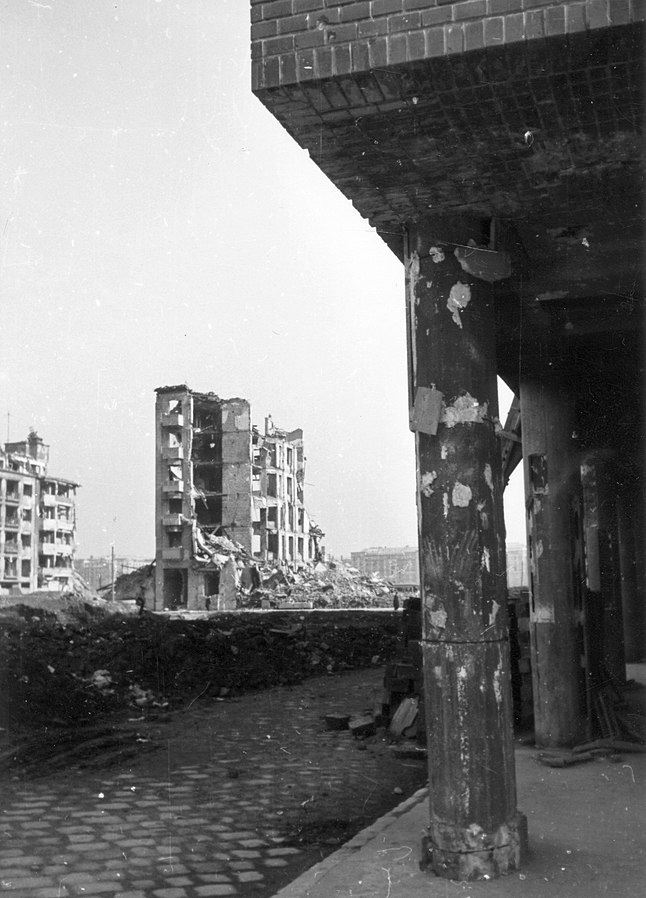
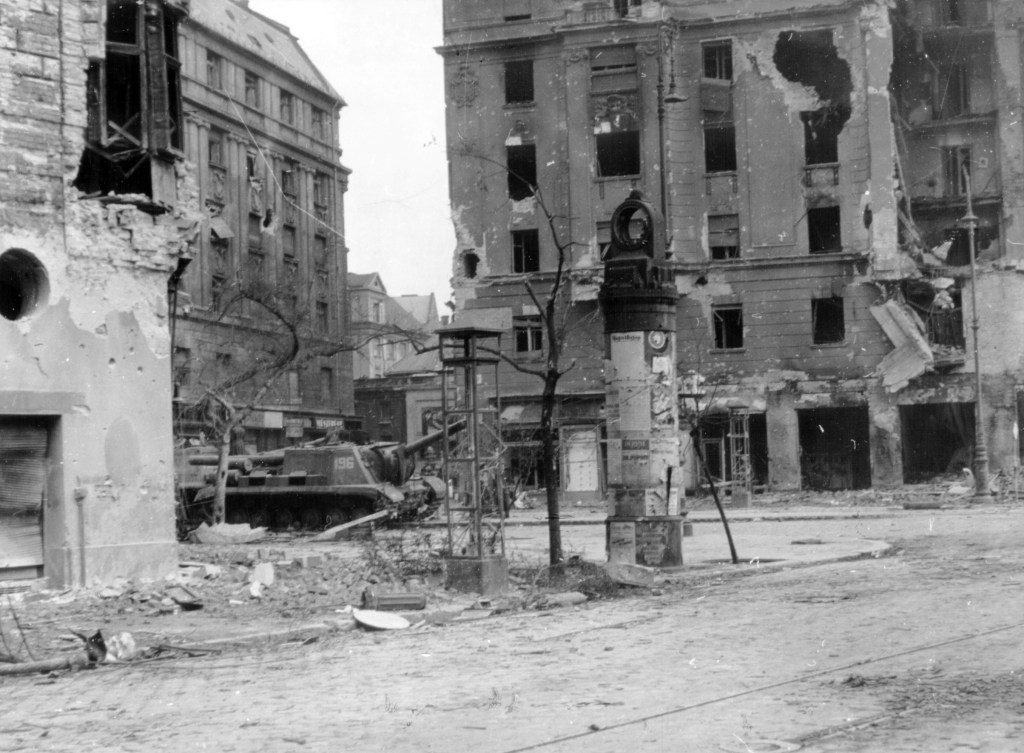
Picture 1: Budapest in ruins after the Nazi occupation
Next the book gives a vivid account of terror and mismanagement under Rakosi. The middle chapters describe the 1956 revolution, brutally cut short by the Russian invasion. The final chapters of the book are appalling. The revolution crushed under the treads of Soviet tanks, what follows is a story of imprisonment, executions and farcical trials. The reader knows that the author will survive. But for many other revolutionaries the end was a shooting in a prison yard, the sound of gunshots and screams suffocated by the roar of idling truck engines.
Portrayal of Revolution
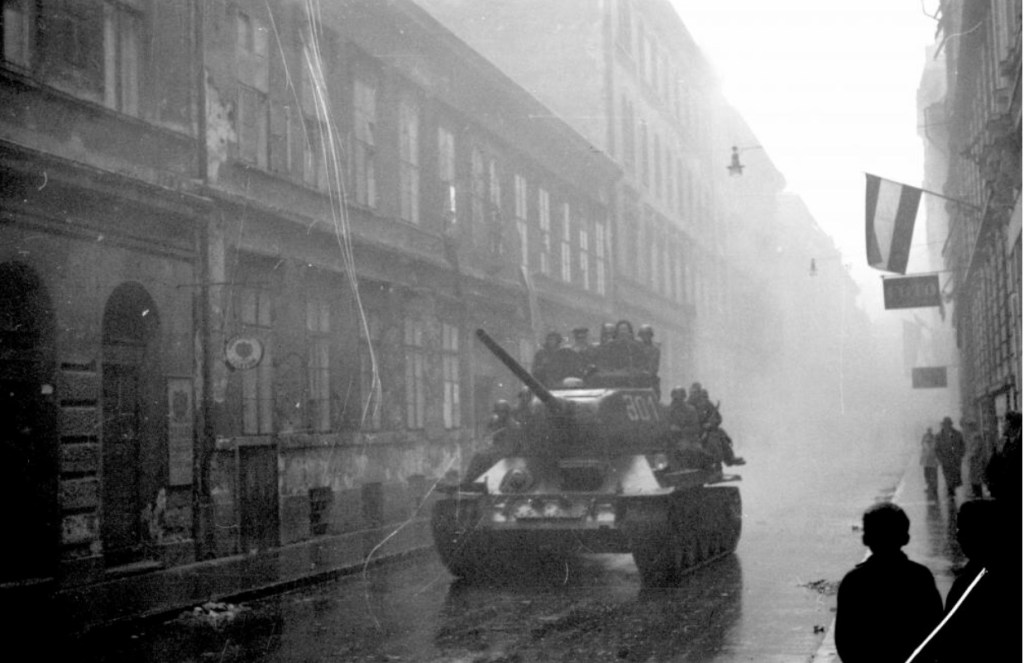
The book contains vivid portraits of key Soviet and Hungarian figures and first-hand accounts of revolutionary events. Kopácsi witnessed the moment when crowds shoved handwritten notes through the loopholes of tanks, winning over the Russian crews inside who mutinied and joined the revolution.
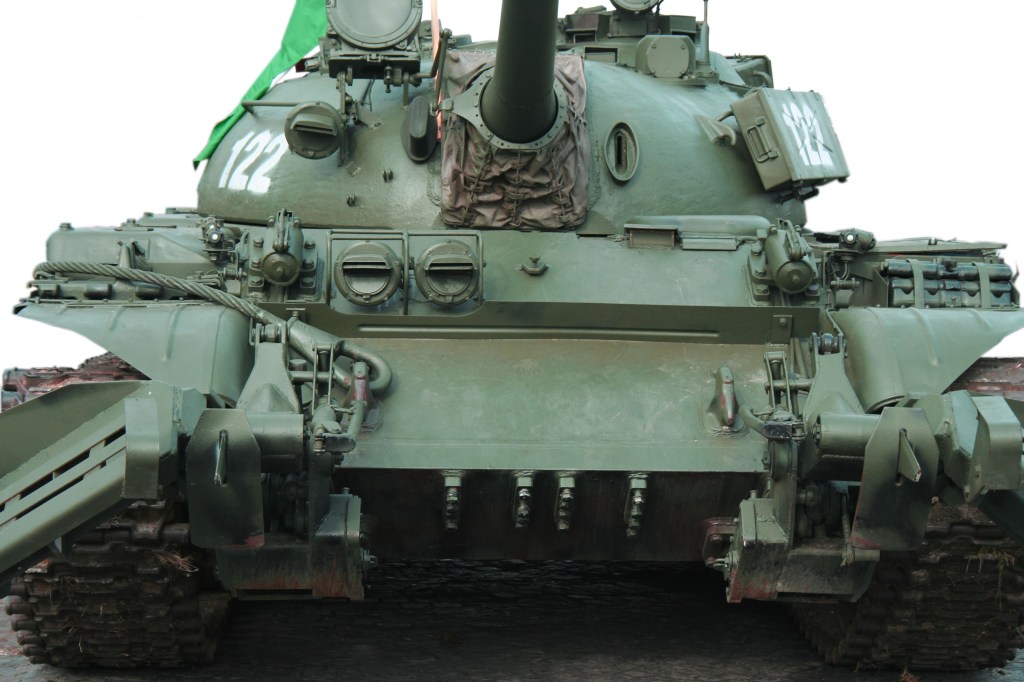
Picture 2: A Soviet tank in Budapest, 1956
It is an invaluable portrait of a revolution. He describes the government headquarters in Budapest at the height of the events. It
resembled Smolny Palace in Petrogad, the Bolsheviks’ centre in 1917, more than it did the Houses of Parliament in London… In Nagy’s anteroom, I met an old Hungarian Communist who had been one of Lenin’s personal guards soon after the Bolshevik Revolution. He said to me: ‘Kopácsi, I’ve read ten different histories of the party, each one as packed with lies as the last, and this is the first time I’ve experienced the true atmosphere of the ‘ten days that shook the world.’
-Sándor Kopácsi
I haven’t read much about the events of 1956, but the inescapable impression I got from schools and the media was that this was a liberal, pro-capitalist and nationalist uprising. That impression is thoroughly refuted by In the Name of the Working Class. This event has been misrepresented, first by the Stalinists, who said the whole thing was a fascist coup, second by the conservatives and liberals of the west.
I was somewhat aware that there was an untold story of workers’ revolution here. I read this book to look for confirmation or denial. The book confirmed it, and then turned the dial a few more notches. I found much more evidence of a working-class, democratic socialist revolution than I had expected to find.
Tragic Indecision
One major part of the story that I had never appreciated before was the indecision and resignation of Nagy and his government, including Kopácsi. It comes across powerfully in this account. During the insurrection, the cops fought the insurgents for some time before finally joining them, and Nagy did not agree to “lead” the revolution until the last minute. The revolution was really led by the workers of the heavy industries, by workers’ councils and militias. A sincere and genuine section of the ruling stratum – the likes of Nagy and Kopácsi – came over to the revolution after it was an accomplished fact.
They were sincere socialists and critics of Stalinism, brave and humanitarian individuals. But they never proved capable of anticipating or preparing for events. Theywere not as defiant or audacious as the masses or as the situation demanded. This is apparent on some level throughout Kopácsi’s memoir, but it becomes very clear in the chapters that describe the Russian invasion.
Khrushchev sends in the tanks
The USSR arranged a meeting with Hungarian delegates, ostensibly to discuss formalities associated with the withdrawal of Soviet troops from Hungary – such matters as ‘whether the departing troops should be presented with bouquets by schoolchildren’! While dragging out these petty talks, the USSR launched a full-scale invasion. Hours passed. Tanks entered Budapest and started flattening city blocks with shells. Still the talks wore on! Finally the hapless delegates were, at a certain point in the proceedings, simply arrested.
The leaders of the revolution were not idiots. On that evening, Sándor Kopácsi was fully aware of what was happening soon after the fake talks began:
’Sándor, there are troop movements. Everywhere. And these reports aren’t just coming from our observation posts, they’re from individuals, from hundreds of phone calls coming from every part of the country. Here’s a map of the invasion, drawn up from the reports.’
He spread out a map of Hungary, with multicoloured arrows, on my desk. From the reports, we knew that ten divisions were on the move in key areas of the country. At least five armoured columns were converging on Budapest…
’Has the old man [Nagy] seen the map of the invasion?’
’He has it.’
-Sándor Kopácsi
They were not idiots. But they lacked will. Nagy continued to insist on the negotiations, though it was obvious, even to him, that they were a ploy. Faced with this life-or-death crisis, key figures in the armed forces were simply advised to go to sleep for a few hours.
In a dramatic and tense section of the book, Kopácsi describes the invaders closing in. He also portrays (and defends) his own government’s failure to react. Resistance would have been futile, he tells us; he has never admired Masada. But regardless, fierce fighting raged in Budapest for days. The armed workers and youth held out heroically against the tanks. The police chief went to the government HQ, where an enormous phalanx of Hungarian tanks awaited the approaching Soviet forces. But there was to be no battle: Kopácsi convinced the tank crews to lay down their arms and surrender without a fight.
Picture 4: ruin and destruction in Budapest testify to the fierce resistance of the Hungarian revolutionaries
Kopácsi, in my view, fails to justify this fatalistic and irresolute attitude. When we look at how fierce the fighting was in the end, and we tally up the missed opportunities, the toll of lost initiative, the military assets surrendered without a fight, we get the impression that a far more organised and resolute defence of Budapest could have been mounted and could have been successful. The Soviet Union was powerful, but not omnipotent. They had to take into account the willingness of their own soldiers and population to fight, and the global context of the Cold War. Every day and every hour counted. I have not read widely on the subject. But based on the information in this book, it seems to me that a few more days’ stiff resistance might have forced the Stalinists to back off and come to terms.
After this disaster, there followed for Kopácsi years in prison, listening to the gunshots outside the walls as his comrades were mowed down. It was worse than any Masada. His desire to avoid needless bloodshed is sympathetic on a human level (though it was a disaster politically, historically), and he did not know that such a massacre would follow surrender.
The title of this memoir is entirely sincere. Kopácsi wrote it as a refugee in Canada, still a true believer in socialism. It is absolutely compelling, and for the experiences and lessons recorded in it, worth its weight in gold.




 The 1919 Review