Appendix: The Diary of a White General

While working on my ongoing series Revolution Under Siege, I was happy to come across a great primary source: the 1919 diary of the White Russian General Alexei Pavlovich Budberg.[i] I found it not only informative, but compelling and even moving. It should be released as a Penguin Modern Classic, or Vintage, or Oxford, or one of those. It’s literature.

Budberg was a middle-aged officer of the old army who served the Siberian White regime of Admiral Kolchak as War Minister during 1919.

The diaries he kept during that time are full of sharp ironies and deep conflicts. Budberg is fighting for a bourgeois Russia but he loathes the bourgeoisie and thinks little of his fellow Russians. He hates the Reds viscerally, but he continually voices his grudging professional respect (‘How I envy the Reds now! No matter how vile they are, decisive people are at the head of their army’). He is annoyed at Allied demands and importunacy – but without them, he would have no rifles or boots for his men. He is in favour of a more centralised and out-and-out dictatorship – but it is clear to the reader that the White regime is organically composed of vested interests which will not tolerate such discipline, and indeed our narrator is outraged when his friend is arrested for corruption.

The reader respects Budberg, because he is so frequently correct in his dire predictions. At one stage Budberg hears his colleagues boast of how they rejected Finnish offers of an alliance against the Reds. They are proud that they refused to consider any territorial concessions, even in exchange for an alliance which might well deliver St Petersburg into White hands. Budberg says loudly: ‘What horror and what idiocy,’ which occasions looks of astonishment from those around him. But history has vindicated what he said.

At the same time I found him far from sympathetic. His contempt for Russians comes across in an anecdote he relates:

all the efforts of the railway militiamen to remove from the rails the crowd of peasants and passengers sitting on them were unsuccessful; but when three Czechs appeared and, shouting “let’s go,” began to beat the Russian citizens with butts, the platform and the rails were empty, and the “masters of the Russian land” decorously lined up behind the line assigned to them by the Czechs.

He comments that ‘the Russian crowd needs a stick… of foreign origin.’ This comes from ‘the habit of being under a Tatar[…] a German, and more recently a Jew.’

Like most Whites, Budberg believes that the Revolution and Bolshevism are part of a Jewish conspiracy. This belief resulted in the deaths of thousands of Jewish people during the civil war.

His only problem with the coup d’etat by which Kolchak came to power in November 1918 was that it promoted some unqualified people. He has no regrets about suppressing the SRs.

Prophet of Doom

Meanwhile his diary provides valuable evidence as to the weaknesses and crimes of White Siberia. This is all the more impressive because he is not writing in hindsight but in real time.

Budberg is frustrated with critics and talkers – for example, the ladies who draw his attention to problems in the hospitals, but will not volunteer as nurses, or even donate linen. Some concerned citizens demand that schools be built for the children. Budberg puts them on the spot by guaranteeing them money, transport and all the materials they need. But no work is done. His comment is scathing: ‘They are intellectuals, and teachers, and democrats, and accusers, and intercessors, but they are not so stupid as to try to build those buildings that will deprive them of continuing to do nothing.’

Something as simple as providing care to the wounded is hampered by corruption and profiteering and bureaucratic haughtiness. Wounded soldiers arriving late were left all night without blankets, because certain underlings did not want to disturb the sleep of the person responsible for issuing said blankets.

The entry of the Siberian Cossacks into the war is greeted with enthusiasm by all and sundry in Omsk, with Budberg appearing to be the sole exception. Sure enough, he is soon proved right: the Cossacks empty the state warehouses, issue five uniforms to each man; the atamans deliver funds and loot to the villages that voted for them; and when the time comes to fight they are brave but undisciplined. Their attack fails. All they have achieved is to drag the Whites into yet another failed and costly offensive.

A lot of the texture of daily life in White Siberia seems to have revolved around disputes over trains. Usually these were disputes between groups of different nationalities. A whole catalogue of such could be gleaned from Budberg’s bitter writings, but the Czechs are the ones he resents the most. This is another bitter irony, as he is forced into an attitude of grudging respect for the Czech commander Gajda who levels valid criticisms at Kolchak.

There are constant ambitious reforms and overhauls of systems – which will be familiar to workers today in the corporate world or in government departments. The result is a landfill of broken systems, with the real problem never addressed: the lack of qualified people.

He identifies the Reds with senseless and brutal violence. However he is well aware of White Terror and provides insights into its nature: punitive detachments are sent out without training or resources, and quickly resort to indiscriminate violence. Here as in government departments, the key problem in his eyes is lack of qualified people. Everywhere, he comes to realise, military warlords have become used to operating with impunity, and this has gone too far to be contained. These ‘hyenas’ cannot now be tamed. Warlordism, he predicts, ‘will probably eat us, but it itself must perish among the stench it produces.’

Budberg hates General Ivanov-Rinov, who is in his eyes not a military specialist but a mere ‘police bloodhound.’ He relates that Ivanov-Rinov’s wish-list includes kill quotas and the power to shoot all deserters and speculators. We wonder at what point Budberg will realise that the Whites are guilty of everything he accuses the Reds of.

Too far gone

All in all, it is a vivid portrait of a wretched government, of a train-wreck happening in slow motion from the point of view of one qualified to foresee the disaster but powerless to stop it. What he can’t see is that the reforms which he sees as necessary would tear the White movement apart. Challenging speculators, scammers and corrupt people is urgently ‘necessary’ – but he can’t see that the radical measures necessary to fight corruption would send shockwaves through the businesspeople and bureaucrats of Omsk. He is outraged by the warlordism and banditry he sees on his own side – but any real measures to tackle this would alienate necessary allies and even the rank-and-file.

He is more far-seeing than those around him, in a technical sense. He knows not only that a disaster is coming, but how and why it will unfold. We admire him as a protagonist because he knows his stuff and proactively identifies problems and tries his best to solve them. Most of those around him, meanwhile, seem complacent and cynical. In particular those around him greet each new offensive with enthusiasm. He sees that a defensive strategy would be far more effective, and in each case the specifics of his critique are proved right.

But is he really more far-seeing than those around him? The others, whose apparent complacency and amateurism enrage him so much, perhaps see further than him in a political and moral sense. They know their regime is riddled with rot, so badly riddled that it cannot be purged without destroying the whole organism. A defensive strategy makes more sense militarily. But what is there to defend? You are merely buying time for the rot to do its work. It’s too far gone already.

Their panacea: to take Moscow. If they can pull off this goal, they will have problems and resources on a different order of magnitude entirely, and the infantile disorders of the early Siberian days will be a thing of the past. All this explains why those around Budberg are on the one hand so cynical and selfish and on the other hand so eager to get excited about apparent miracles.

I think these considerations go a long way toward explaining the strange character of Admiral Kolchak. As I see it, he was just holding the line, waiting for a miracle: the collapse of the Reds; the victory of Denikin; a greater commitment from the Allies. Without such a miracle, victory for White Siberia was not possible, even if Budberg got his way.

Partisans, Frogs and Switchmen

In passing, Budberg tells extraordinary stories, like the tale of a Red partisan group which posed as a White detachment and endeavoured to capture Omsk. Their plan was rumbled by White counter-intelligence but before the Reds could be arrested off their trains, they took off into the wilderness with all the weaponry that had been issued to them. They formed a partisan force threateningly close to Omsk.

Images and turns of phrase which may well be commonplace in Russian strike my mind as powerful and fresh. For some reason, frogs are a recurring image. ‘The Omsk frogs continue to croak,’ he notes, and elsewhere he denounces the Semyonov regime as ‘the Chita swamp and its absurd frogs.’ The Omsk government departments, local in reality but with all the pomp of old Tsarist state organs, are ‘frogs swollen into an All-Russian Ox.’

(Update: a reader has helpfully pointed out that this is a reference to a classical fable – https://en.m.wikipedia.org/wiki/The_Frog_and_the_Ox)

China Miéville in his book October speculates on a strange phrase which occurs in the sources: leftist workers being denounced as ‘switchmen.’ He makes a good case for investing this with significance. The phrase occurs here, in the entry for July 30th. I can’t make out what it means in context but perhaps others can figure it out.

White and Red

It’s interesting to compare Budberg’s diary with Trotsky’s military writings. They faced the same problems: commanders sending in inflated reports, turning skirmishes and panics into great victories or crushing defeats, or soldiers carting along their entire households in long wagon-trains that straggle behind the army. They engaged in the same conflicts with their own respective colleagues: professionalism against guerilla-ism, military science against romantic notions glorifying the offensive.

But Budberg and Trotsky were at odds over the question of whether commanders should go into battle personally. For Budberg, it was stupid demagogy. For Trotsky, it could be necessary in order for the commander to earn his authority.

Capitalist White territory faces the same social and economic problems as Communist Red territory. There is a lack of machinery, of trained professionals and of capital for investment. This leads to bureaucracy, waste and a scarcity of consumer goods (mitigated by the flow of material from the Allies). We are taught in school that these were features of communism, ie, that they somehow resulted from too much sharing. In reality, they are problems of underdevelopment which we see in all countries of whatever social system which find themselves in that historical cul-de-sac.

In other senses White Siberia is distinctly feudal-capitalist. While the quality of the Red forces is pretty uniform (generally mediocre-to-poor), there is a sharp hierarchy of quality between White units. The best are excellent while the worst are of little use, or simply useless, or worse than useless.

The fundamental weakness of the White side is diagnosed:

The filling of the ranks with an unusable mobilization element [ie with conscripts] proved fatal: the heroic remnants of [politically-motivated White Guards] dissolved in the stream of skins.

The phrasing is obscure due to language barrier and the limits of Google Translate, but the meaning is clear: it is impossible for the Whites to build a mass army without fatally diluting their best units. In the Red armies, small numbers of communists proved to be like leavening in the bread, causing the whole mass to rise. But in the White armies, the small politically-motivated element was drowned in a sea of indifference and hostility. This is because the Reds pursued better methods, but more fundamentally because the Reds had a programme that appealed to the masses.

Too clever by half

Another key weakness is explained: that the top brass of the White Army are incompetent whiz-kids, all hype and no substance, who pursue ‘too-clever-by-half’ plans and throw lives and units away. They owe their prominence to the role they played in the semi-guerrilla struggle of summer 1918; they can lead small groups, but have no idea how to assess the fighting strength of this or that unit.

Budberg writes: ‘Siberia fielded not a few thousand young and old knights of duty, pure enthusiasts who raised the sword of the struggle for their homeland.’

But there were no leaders, men of experience and talent, to use these mighty forces; thousands of these fighters are already sleeping in the Siberian land, and all their efforts, their heroic deeds have been brought to naught […]

I envy these fallen ones […]; I ache with my soul for the survivors, for they have had a share of seeing all this and drinking to the bottom of the last bitter cup, not a personal cup, but a Russian cup of grief, shame and death.

The cup of grief overflows

That quote also provides an example of Budberg’s often-excessive prose. Those ellipses in square brackets stand in for text as long again as what is there! He is inclined not only to overwrite, but to repeat the same lamentation again and again at wide intervals, each time with more passion, like a theme in some classical piece. I can see some readers getting annoyed by this. I found it crossed the line into black humour: he keeps lamenting the problems in ever-keener tones of anguish, and things keep finding ways to get worse.

If some publisher decides to put this out in English, they may wish to cut out a few thousand words. Another consideration: I approached this with prior knowledge of the topic, so I was able to follow it easily; to reach a wider audience this source would need to go out armed with a good introduction and copious footnotes.

Go to Revolution Under Siege Archive

Go to Home Page/ Archive

Sources


[i] I admit, without embarrassment, that I read this text through Google Translate. This programme has come on in leaps and bounds, and I was very impressed with the quality of the translation.
18: The Chelyabinsk Trap

On the Eastern Front in July 1919, the White regime of Admiral Kolchak was reeling after its armies were driven out of the Ural Mountains. But the Siberian Whites made an audacious throw of the dice, triggering one of the largest battles of the Civil War.

To set the scene for us, here is the diary of General Alexei Pavlovich Budberg, a minister in Kolchak’s government. He recorded his horror and frustration as things fell apart:

July 19th 1919:

Head is spinning from work […] To our disadvantage, the Red Army soldiers at the front were given the strictest order not to touch the population and to pay for everything taken […] The admiral gave the same orders […] but with us all this remains a written paper, and with the Reds it is reinforced by the immediate execution of the guilty.

July 20th 1919:

[…] self-seekers and speculators are white with fear and flee to the east; tickets for express trains are sold with a premium of 15-18 thousand rubles per ticket.

July 22nd 1919:

The Ministry of Railways receives from the front very sad information about the outrages and arbitrariness committed during the evacuation by various commanding atamans and privileged rear units and organizations; all this greatly complicates the hard work of evacuation […]

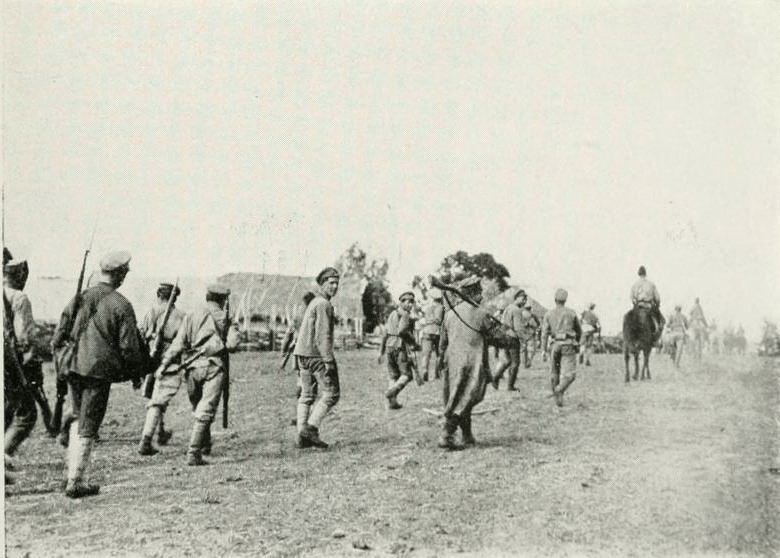
Kolchak’s soldiers in retreat

Hints of a planned White counter-attack do not give Budberg any relief. On the contrary, he was filled with foreboding:

July 23rd 1919:

Something mysterious is happening at headquarters: operational reports have been temporarily suspended…

In the rear, uprisings are growing; since their areas are marked on a 40-verst map with red dots, their gradual spread begins to look like a rapidly progressing rash.

July 24th 1919:

The mystery […] has been aggravated: to all my questions I receive a mysterious answer that soon everything will be resolved and that very big events will take place that will drastically change the whole situation.

July 25th 1919:

Only today did I learn at headquarters that [General] Lebedev, with the cooperation of [General] Sakharov, wrested from the admiral consent to some complex offensive operation in the Chelyabinsk region, promising to completely eliminate the Reds […]

Undoubtedly, this is Lebedev’s crazy bet to save his faltering career and to prove his military genius; it is obvious that everything is thought out and arranged together with another strategic baby Sakharov, who also yearns for the glory of the great commander.

Both ambitious people obviously do not understand what they are doing; after all, the whole fate of the Siberian white movement is put on their crazy card, because if we fail, there is no longer salvation for us and we will hardly be able to restore our military strength…

Chelyabinsk

The city of Chelyabinsk lies amid a cluster of lakes, a few hours by rail east of where the Ural Mountains fall away to the plains. It can be regarded as ground zero of the Russian Civil War: it was there that a brawl between Czechs and Hungarians led to the revolt of the Czechoslovak Legion.

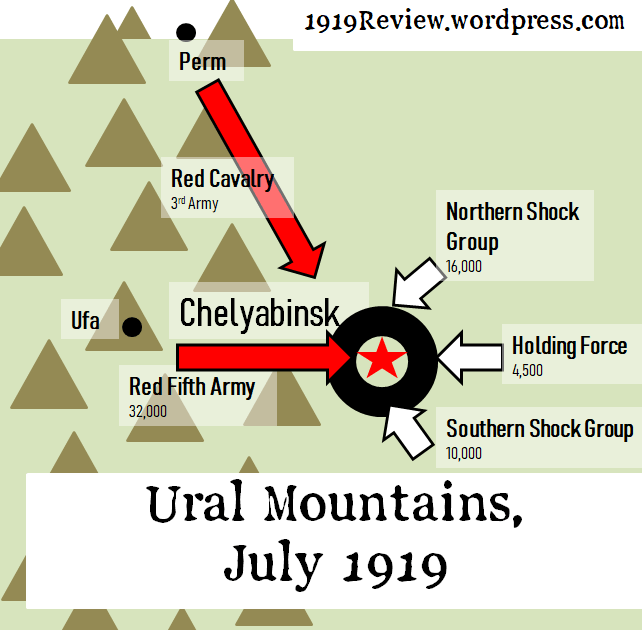
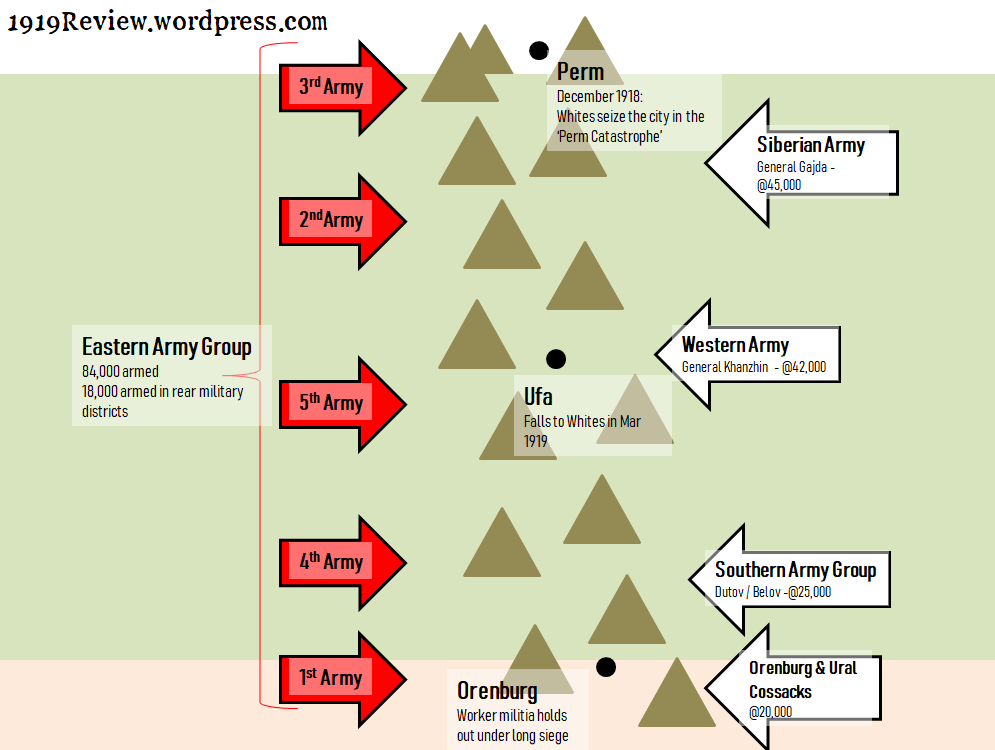
At the end of July the Red Fifth Army came down from the Mountains into the lake country. This was the same Fifth Army that had held the line at Sviyazhsk and then crossed the Volga to seize Kazan. Trotsky and Vacietis counselled caution and rest for Eastern Army Group after it drove back the White Spring Offensive. But the new commander-in-chief, the military specialist Kamenev, argued for a hot pursuit of the Whites right into the heart of Siberia. So far Kamenev had been vindicated. The same Chinese Reds, led by Fu I-Cheng, who had lost Perm the year before had recaptured it. The Red commander Frunze had taken Ufa after a terrible and bloody fight with Kappel.[i]

Now the Fifth Army was advancing on Chelyabinsk. But Kolchak, on the advice of his young generals Lebedev and Sakharov, had decided to turn the city into an elaborate trap. The Reds would be allowed to seize the city – then encircled in it, and destroyed.

On July 24th a workers’ uprising began in the city. It was led by an underground Bolshevik organisation that had suffered under the counterintelligence operations of the ‘very cruel’ Colonel Sorochinsky. The Red Fifth Army hurried to the aid of the rebels, and linked up with them. Railway employees sabotaged the White defence: they derailed one armoured train and diverted another into a dead end. The city fell, and the Reds captured many rifles and machine-guns. Morale was good, energy high: Red detachments at once began scouting and advancing out from the city through the suburbs and villages.

But to the north, south and east, White shock groups and formations were closing in on the city to encircle and destroy the Fifth Army.

Let’s pause and get a proper sense of scale. The last time this series zoomed in on a particular battle, that of Kazan, it was easy enough to visualise. In an arena measuring forty kilometres by twenty, there were between ten and twenty thousand soldiers per side.

The Battle of Chelyabinsk compels us to think bigger, on a scale of at least 80 square kilometres.

There were 32,000 rifles and swords in the Red Fifth Army. On the side of the Whites, there were around 30,000 as well: the Northern shock group numbered 16,000, the southern shock group 10,000, and there were 4,500 to the east holding the line between the two.

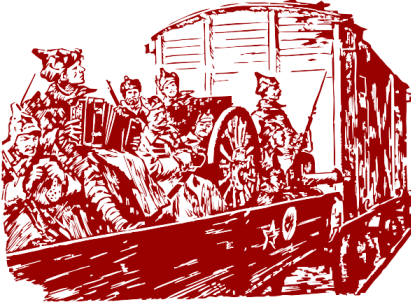
Red soldiers on a train carriage

The Trap

Let’s zoom in on one of those fighters, a White cavalry officer named Egorov.

At four in the morning of June 25th Egorov was waiting with his regiment at a crossroads near one of the several lakes north of Chelyabinsk. Egorov’s Mikhailovsky Regiment consisted of 150 mounted soldiers – ‘rather motley,’ by his own admission, old and young, mostly infantrymen mounted rather than ‘real’ cavalry – along with soldiers on foot.

They were ordered to gather here before seizing the village of Dolgoderevenskaya, north of Chelyabinsk.

Egorov and his men were still stinging from the postscript added to their orders: ‘I advise the regiment commander, Colonel Egorov, to abandon this time the usual delay…’

Adding insult to injury, the Mikhailov Regiment was on time. They were waiting in the early hours of the morning for the Kama Division to show up.

‘To the right and left I hear voices: “Why wait for the Kamtsy?.. Move!.. Enough of the Reds!”’

Egorov decided it was time. The regiment sneaked up close to the village. A local Cossack boy told them there were many Reds in the village, but a lot of them were asleep.

The attack began. White cavalry broke through the outskirts of the village without a shot being fired, and before most of the Reds were awake the White cavalry had dispersed all over the streets while infantry attacked from the west.

‘And only after that,’ writes Egorov, ‘the first rifle shots were heard.’

He was watching from a nearby hillside. The rifle fire intensified, and the sound of the Russian war-cry, ‘Urrah!’ came to him. After an hour of fighting, the Reds fled to the next village. 

As Egorov entered the village he heard someone shout: ‘Mister Colonel! Trophies!’

His men were looting what the enemy had left behind: gramophones and field-kitchens. Egorov reckoned the Reds had, in their turn, taken the gramophones from the houses of priests and merchants.

But the Whites got carried away in the celebrations. The Reds counter-attacked and caught them unawares. Fortunately for Egorov, the Kamtsy arrived – the stragglers Egorov had not bothered to wait for – and they had artillery. By three in the afternoon the Reds had been driven back again. Egorov and his cavalry mounted up, and this time pursued them, and drove them out of the next village as well. The Reds began to retreat all along the front.

Egorov’s assistant, a Tatar, had taken a bullet in the arm during the day’s fighting. He was unperturbed. That night at dinner he drank heartily. Then he excused himself, went out into the hall, and removed the bullet with a penknife.

These battles were part of the advance of the northern shock group. It was very successful; it reached the Yekaterinburg-Chelyabinsk railway line, cutting off the Fifth Army and threatening it from the rear.

On 27 July the southern shock group advanced. Its purpose was to link up with the northern group, completing the encirclement. The southern group was commanded by Colonel Kappel, who had led the Whites at Kazan. Kappel was a relic of the late Komuch government and its ‘People’s Army,’ now serving Kolchak and the Whites. There were others present at Chelyabinsk for whom Komuch had served as a Red-to-White pipeline or gateway drug. The workers’ militia of Izhevsk were there, going into battle to the sound of accordions.

Meanwhile the 4,500 White Guards in the middle advanced west into the outskirts of Chelyabinsk.

Another White veteran recalled: ‘On one of the days, apparently on the 27th or 28th […] we found ourselves 3-4 versts from Chelyabinsk and were about to have dinner there.’

He and Egorov and Kappel had good reasons to feel confident. Many would have believed that just as Denikin was advancing in South Russia, they were about to turn the tide in the east.

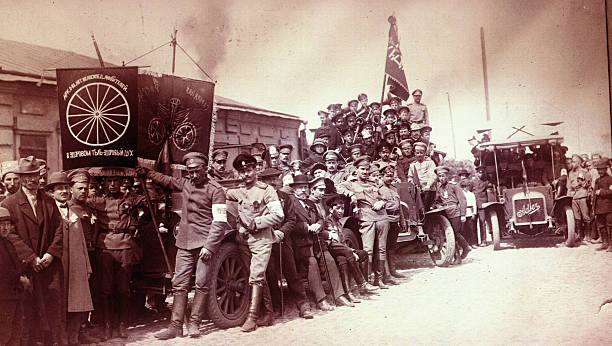
‘Siberian bicycle and autocycle fighting squad,’ June 1919

Resistance

According to the plan, the Reds should have been panicking and falling to pieces by now. Generals Sakharov and Lebedev were young officers who had learned most of what they knew during the period of the Czechoslovak Revolt of 1918. They had led irregular detachments against untrained Red Guards.

But these Reds in Chelyabinsk were made of something else. They held firm. Kappel engaged in heavy battles to the south of the city, but his forces could not break through.

The Chelyabinsk revolutionary committee put out a call, and 8,000 miners and other workers joined the defence, arms in hand. 4,500 others joined work detachments, building defences and supporting the troops. The centre group of Whites could not advance further, and got bogged down in the outskirts.

Why couldn’t the Whites make any headway? We noted in a previous episode that they had raised two divisions of young conscripts. These forces had not even been trained when they were flung into the battle at Chelyabinsk. To encircle an enemy army would have been a challenge at the best of times. The White officers were ordered to spring the trap with personnel who did not know what they were doing.

In Russia, soldiers with rifles are called streltsi, literally ‘shooters.’ One veteran wrote to the Chelyabinsk local newspaper in the 1970s, recalling his days as an officer leading White streltsi:

 I was a participant in the battles near Chelyabinsk on July 25-31, 1919, not in the Red Army, but in the White Army, in […] the 22nd Zlatoust regiment of Ural mountain shooters, which they practically were not [sic], since […] they were not even trained at all how to shoot.

During the battle, up to 80% of the 13th Siberian rifle division went over to the Reds. They surrendered in their thousands, bearing US Remington rifles and wearing British uniforms.

It wasn’t just the new conscripts. In the headlong retreat since May, divisions had winnowed to regiments, regiments to, in one case, a ragged group numbering only seventy. Typhus had raged through the White units. Many of the replacements were young Tatars, like Egorov’s friend. Many of these couldn’t speak Russian.

Kappel’s Volga Corps had taken a battering in recent months. Instead of getting time to recover, they, like the new recruits, were thrown into battle.

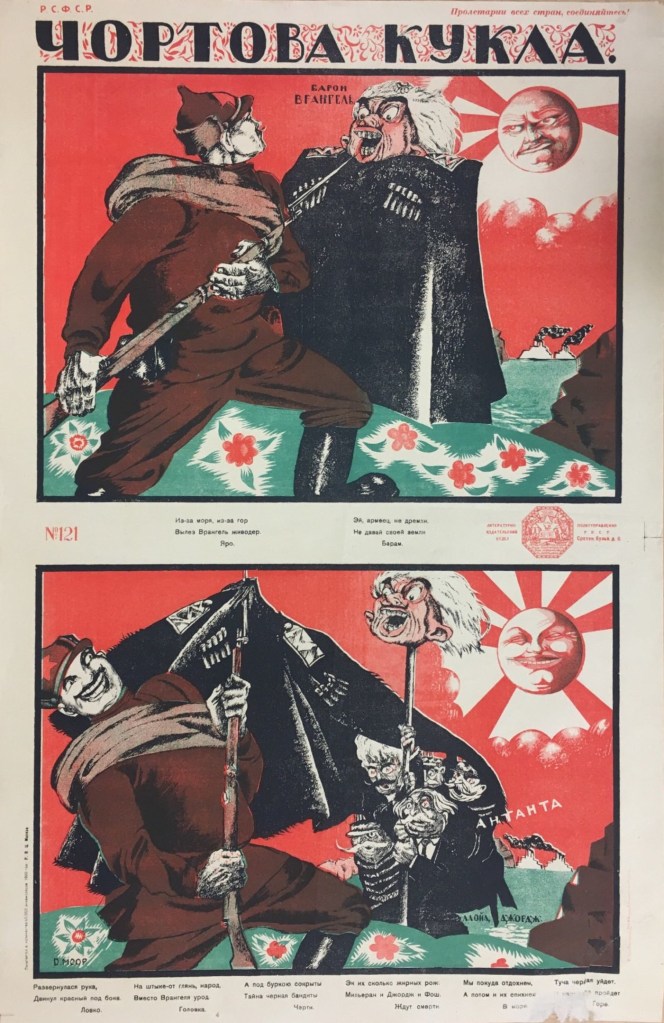
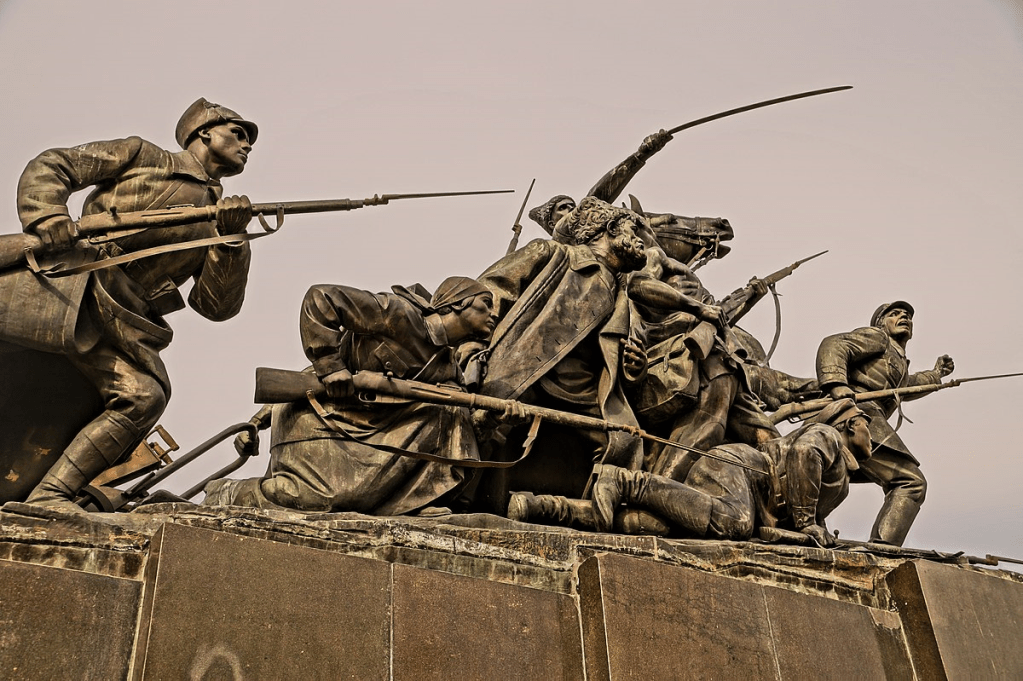
Today’s cover image is a detail from this poster. It’s actually from a later date in the Civil War, from 1920 and the campaign of Baron Wrangel.

On the other side, the Red Fifth Army was experienced and energetic. And they had a political backbone: in the 27th Division alone there were 600 Communist Party members.

But the fighting was fierce. According to one source there were 15,000 Red and 5,000 White casualties.[iii] According to other sources, the Whites lost 4,500 killed and wounded, while 8,000 or even 15,000 were captured, and the Red casualties numbered 2,900.

The Reds held on in the centre and south, then reinforced the vulnerable north. They built up a shock group of their own and between July 29th and August 1st defeated five enemy regiments north of the city. I assume this involved sweeping through the villages Egorov and co had taken nearly a week earlier. Perhaps the gramophones changed hands again.

Cavalry units from the Third Red Army at Perm were hurrying to the aid of Chelyabinsk and threatened the Whites’ northern shock group. The Izhevsk militia was sent to meet them, but the Izhevtsi suffered heavy losses at the village of Muslyumovo. The northern shock group had itself suffered a series of shocks. Its position was untenable.

Back in Omsk, General Budberg was asked by Kolchak what he thought of the Chelyabinsk Operation.

July 31st

I reported to him that I think that now it is necessary to immediately stop it and order to do everything possible to withdraw the troops involved in it with the least damage to them.

The admiral was silent, but asked to speed up the dinner, then went into the office to Zhanen, where he signed a telegram to Lebedev about the retreat; he is very gloomy and anxious.

August 1st

Everything connected with the Chelyabinsk adventure, and most importantly, my powerlessness to stop it and prevent all its consequences, led me to the decision to ask the admiral to dismiss me from my post, and if it is impossible to give [me] a place to the front, then to [accept my resignation].

Budberg’s request was refused, and so he was forced to around Omsk as an agonised and impotent witness to further disaster.

Red advance

From August 1st the Reds were on the offensive. The White retreat eastward grew more chaotic.

Many in the White camp had warned against the Chelyabinsk operation. They favoured instead a defensive strategy: digging in behind the Ishim and Tobol rivers and buying time to train up the new units. After ‘the trap failed to close’[iv] at Chelyabinsk, the White armies were demoralised and sorely depleted. Digging in was less feasible than before, but even more urgent.

The Siberian Whites were not finished all at once. In late July the Siberian Cossack host joined Kolchak’s cause – too late to help at Chelyabinsk, but just in time to give Kolchak and others a false hope in a renewed offensive strategy. Nonetheless the Red advance across Siberia was indeed delayed by serious battles with the Cossacks and on the defence lines of the rivers.

Crisis in White Siberia

But the Battle of Chelyabinsk is not so much a story of Red victory as one of White defeat. That defeat is interesting because in every way it was symptomatic of the crisis that was developing in Kolchak’s Siberia.

Behind White lines there reigned a regime of corruption and terror that exceeds the most lurid caricatures of the Red side. Untrained and demoralised men sent to fight the partisans would torment the farmers, burn villages, loot, torture and kill. Bodies hung from the telegraph-poles along the Trans-Siberian railway.[v] Further east under Semyonov and Ungern, as we have seen, things were even worse.

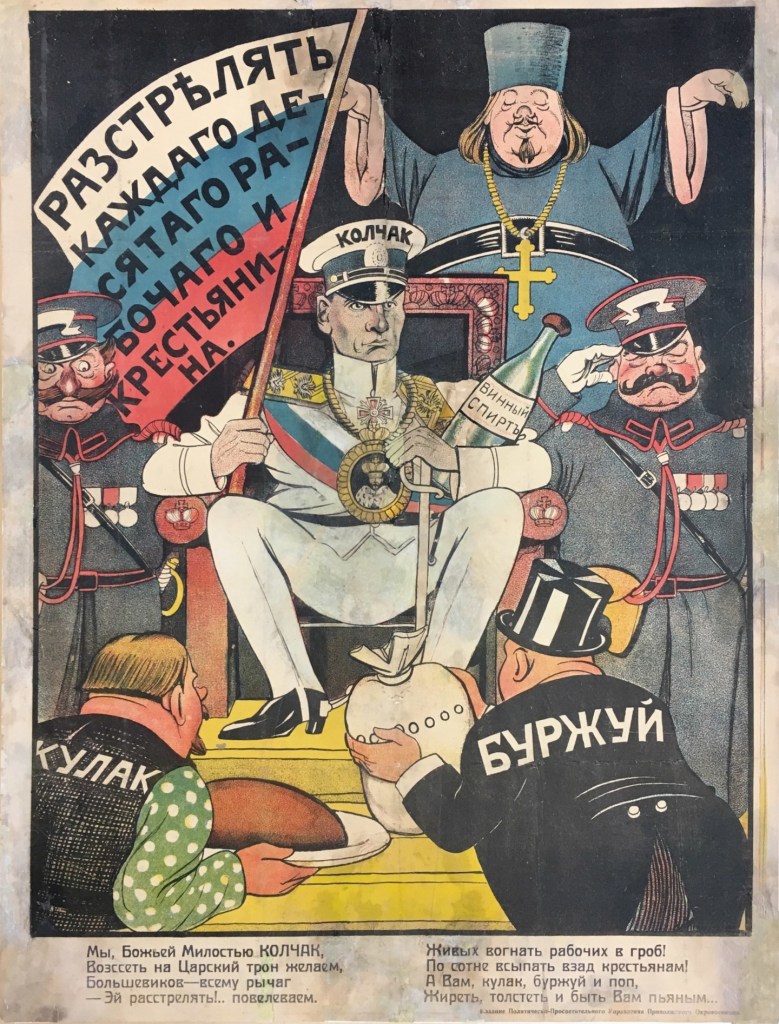
Kolchak in a Red propaganda poster, served by ‘Kulak’ and ‘Burzhui.’ The flag reads ‘Shoot every tenth worker and peasant.’ Most of the symbolism here is accurate enough as war propaganda posters go. But the generals flanking Kolchak should be young phony whizz-kids rather than old duffers. The open monarchist trappings are improbable. The sword is appropriate, as in 1917 Kolchak refused to hand his sword over to a sailors’ committee. Finally, though the Reds would not have realised this at the time, the ‘Burzhui,’ far from handing over bags of money, actually proved self-centred and stingy toward the White Siberian regime. Unless this top-hatted figure represents the international ‘Burzhui,’ who were very generous indeed.

Budberg lamented how among the middle and wealthy classes of the towns everyone felt free to criticise, but never lifted a finger to help in any practical way. It seemed everyone was out for themselves, embezzling without the slightest shame. In the White capital city, Omsk, many wealthy and well-educated people were concentrated. But the poor could not afford to eat and attempts by the state to provide the most basic relief or public services always somehow ended in a dead-end of bungling and embezzling.

The Czechs, whose revolt had given birth to the Eastern Front at Chelyabinsk the year before, were growing disgusted with the White cause, and becoming almost as much of a pain to the Whites in 1919 as they had been to the Reds in 1918. The first stirrings of mutiny were already evident. And in the woods the partisan forces were growing and developing. Meanwhile the Socialist Revolutionary Party were raising their heads again, active both among the partisans and the Czechs. They were the ghost at Kolchak’s feast: he had jailed them after his coup in November 1918, and shot many after the Omsk revolt of December.

Kolchak’s army had come to resemble, in miniature, the Tsarist army of 1917 – in June there had been cases of the men shooting their officers and changing sides. No wonder – the officers had brought back Tsarist practises such as flogging men and striking them in the face. In October, a mass of newly-raised conscripts was sent to the front, and melted away without a trace. Of 800,000 ‘eaters’, only one in ten were fighters; many soldiers travelled with their families in tow. They looted the locals to feed themselves. Some of their supply trains stretched out to 1,000 carts.

‘These were not military units,’ said one disgusted officer, ‘but some kind of Tatar horde.’[vi] Many of those fighting and dying were actually Tatars, so this is a fine example of all the cultural sensitivity we would expect from a White officer.

The battle at Chelyabinsk showed that a spectacular role reversal had taken place. In 1918, the Whites were the professionals, the elite soldiers, and the Reds were the undisciplined rabble. But the rabble had developed into an army. And on the other hand, when the Whites tried to move from elite detachments and all-officer companies to a mass army, they degenerated into a rabble. Their best units were better than the Reds, but their worst units were far worse. The Whites of 1919 were incomparably stronger on paper. But – and this was especially true in Siberia – they had the worst of both worlds. Compared to the early Red Guard formations, they had all the raggedness and all the indiscipline, but none of the political motivation.

Many on the White side noticed the change in the aspect of the Reds. ‘A White leader who visited Tobolsk after it was briefly recaptured was impressed at reports of how well the Reds had behaved.’ And General Budberg wrote that ‘we are not up against the sovdepy and Red Guard rabble of last year but a regular Red Army.’[vii] ‘Sovdep’ was a White nickname for the Reds, based on the words ‘Soviet’ and ‘Deputy.’ Budberg considered the Reds’ battle plans to be plodding and basic. But even basic plans were, in his view, better than none, or than the ‘too clever by half’ manoeuvres of Lebedev and Sakharov.

The Chelyabinsk battle also revealed another key weakness of the White Guards. On November 4th Kolchak complained that his army recruited from among ‘Bolshevik-minded elements’ who at the first opportunity ‘crossed over to the Red side.’ As a result, officers ‘refused to dilute their units’ with new recruits! ‘We had to recruit with great selectiveness, while the enemy freely used local manpower which was favourable to him.’[viii] In other words, the Whites were hindered by the small fact that most people didn’t want to fight for them, and favoured the Reds (even in relatively conservative Siberia).

It is true, as Beevor says (p 344), that ‘A civil war was not an election […] because the vast majority of people wanted to stay out of trouble.’ It is not possible to ascertain the will of the people by ballot in the middle of a civil war. We have to go with cruder measures, such as asking which side could reliably recruit thousands and which side could reliably recruit millions. Judging by this crude but immensely significant measure, the people preferred the Reds to the Whites.

Often the story of the Civil War is one of cruelty and dashed hopes. But the victory at Chelyabinsk was one worthy of a popular revolution. The workers’ rebellion at Chelyabinsk and the participation of thousands of volunteers in the battle underlines this democratic aspect.

The Battle of Chelyabinsk showed how Fifth Army had developed from the semi-irregular force that fought at Kazan into a professional army. But most of Siberia still lay before it, and far behind to the west, Tsaritsyn and Kharkiv had already fallen. Denikin’s advance on Moscow was already well under way.

Go to Revolution Under Siege Archive

Go to Home Page/ Archive

Sources


[i] Beevor, 323

[ii] Smele, 113

[iii] Mawdsley, 210

[iv] Mawdsley, 210

[v] Beevor, 238

[vi] Mawdsley, p 211

[vii] Mawdsley, 208

[viii] Mawdsley, 214

The diaries of General Budberg came from militera.lib.ru_

In addition, this episode could not have been written without a collection of sources compiled by an internet user named igor_verh on https://forum.axishistory.com/viewtopic.php?t=192991. (The name at first raised alarm bells for me but the site’s description says it is apolitical. Its focus seems to be wargaming).

The sources are as follows, copied and pasted from the post: 

http://war1960.narod.ru/civilwar/chelybinsk1919-1.html
http://www.book-chel.ru/ind.php?what=card&id=4415
http://www.hrono.ru/sobyt/1900sob/1919chelyab.php
http://kadry.viperson.ru/data/pressa/3/ … 983007.txt
http://chelyabinsk.rfn.ru/rnews.html?id=97133
http://city.is74.ru/forum/showthread.php?t=43062&page=2
Memories of M.V. Belyushin – the former ensign of 22th Zlatoust mountain riflemen regiment about battle near Chelyabinsk in the summer of 1919:
http://east-front.narod.ru/memo/belyushin.htm
The downfall of the 13th Siberian Rifle Division in the battles near Chelyabinsk in 1919:
http://east-front.narod.ru/memo/meybom1.htm
Sanchuk P. “Chelyabinsk operation in summer 1919”, publication in magazine “War and Revolution”, № 11, 1930:
http://elan-kazak.ru/sites/default/file … chuk/1.pdf

17: Anarchy in the Ukraine

This episode tells how the warlord Grigoriev in Ukraine led a bloody revolt against the Soviet power. The episode will then describe his fatal showdown with the anarchist Nestor Makhno.

‘Anarchy’ means ‘without rulers,’ not ‘without order’ or ‘without laws.’ Still the word is often used to signify chaos. Here we can sidestep the controversy, because the word applies in both senses to Ukraine in 1919. The title of this post refers to the Anarchist army which operated in Ukraine at this time, ‘a singing army which moved in carts – a machine-gun and an accordion in each cart – under black banners.’[i] But it also refers to the state of chaos and violence which prevailed in many parts of the country and under flags of all colours – not just black. By May, ‘villages turned in on themselves’ for protection, ‘while armed bands roamed the countryside, led by warlords.’[ii]

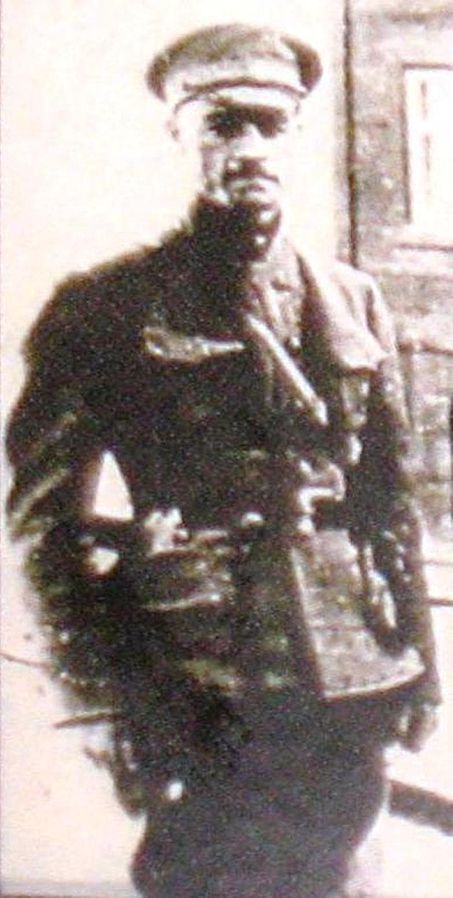
Nikolai Grigoriev, aka Nikifor Hrihoriiv, aka Nychypir Servetnyk. His identities were as unstable as his loyalties.

Grigoriev in Odesa

When last this series covered events in the great port city of Odesa, it was in a state of utter chaos with the evacuation of Allied interventionists. Reds were already marching in.

A Red commander reported to Moscow that the city had been taken ‘exclusively’ by the forces of the charismatic partisan leader Nikifor Grigoriev. These fighters had shown ‘revolutionary stamina’ and Grigoriev had led from the front: he had two horses shot from under him, and bullet holes in his uniform. But on the day before the fall of Odesa he was taking a well-earned break: he spent the day drinking from a bucket of wine and listening to the regimental band.[iii]

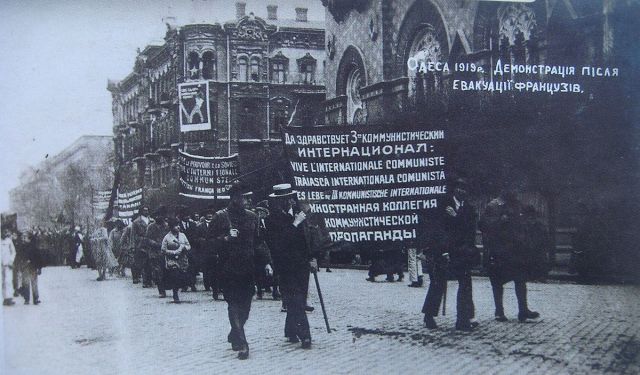
A Red demonstration in Odesa, April 1919

Odesa was a wealthy city, and in 1919 its warehouses were bursting with the goods and equipment which the Allies had left behind in the chaos of their evacuation. Grigoriev made himself a kingly giver of gifts in relation to all this loot – for example, 30,000 rifles were apparently sent to the villages of the Kherson region. There is also a story that he looted hundreds of kilograms of gold from the Odesa State Bank.[iv]

The local Communists – those who had fraternised with the French in the cafés – celebrated the liberation. But very soon the city’s revolutionary committee was addressing complaints to the warlord about his claiming of the loot.

‘… I occupied Odessa,’ he later told Makhno, ‘from where the Jewish Revolutionary Committee appeared. They came to my headquarters … They began to demand that [I obey them], that the lads stop beating the Jews. And you know, people on the campaign were torn, worn out, and there are a lot of Jewish speculators in the city […] I took the city, therefore, it is mine, and then the Revolutionary Committee crawled out of the underground and stood in my way, talking about submission. When I attacked, there wasn’t a single member of the Revolutionary Committee with me, but now, you see, they decided to be the boss.’

He was just boasting. But the eyes of the Soviet government were not blind to the problems Grigoriev might present. He had switched sides three times already. He gave lip-service to communism but anti-Semitic slogans were current among his supporters. Yet he had driven the Allied interventionists right out of Ukraine. The Soviet government awarded him the Order of the Red Banner for this triumph. 

After ten days in Odesa, local communists were already demanding that Grigoriev be arrested. A bloody clash appeared inevitable. But Grigoriev and his forces withdrew to the villages near Kropvynitsi (then known as Elizavetgrad). To give you a sense of the distance, today that’s a five-hour drive inland.

Grigoriev in Budapest? 

As summer approached, the Soviet laid plans to have Grigoriev carry the banner of the October Revolution to the very heart of Europe. The Hungarian Soviet Republic was isolated and under attack. Grigoriev’s force was, on paper, a short distance from Hungary: just charge right through Transnistria and Romania (Or through Poland and Slovakia), and boom, there you are. But the problems are so obvious that one is forced to wonder what the hell the Soviet leaders were thinking. Grigoriev was not exactly the ideal ambassador for communism, and once he’d seized Budapest he might well change sides again. He was a partisan leader, not a rounded-out military genius, and such an ambitious attack was likely beyond his capabilities. Maybe the Soviet government was desperate (We have to help the Hungarian comrades, no matter the cost or the risks!) or maybe they were cynical (this might keep Grigoriev out of trouble – and with any luck he won’t come back alive) or maybe some mixture of the two was at work. At the very least Grigoriev might divert Romanian forces and take the pressure off Soviet Hungary. 

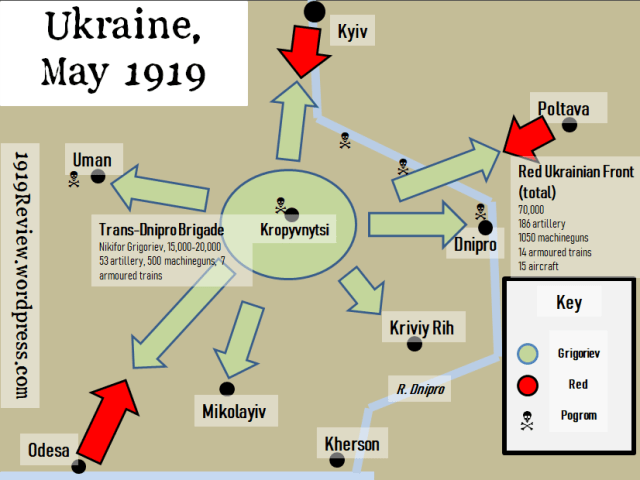
Note Soviet Hungary, and the dark arrow linking west Ukraine to it.

For better or for worse, probably for better, it never happened. Grigoriev switched sides again. He had turned from Rada to Hetman and back again, before turning to the Reds. Now he struck out on his own, backed by tens of thousands of armed soldiers and by a large part of the Ukrainian farming classes. 

Grigoriev in Revolt

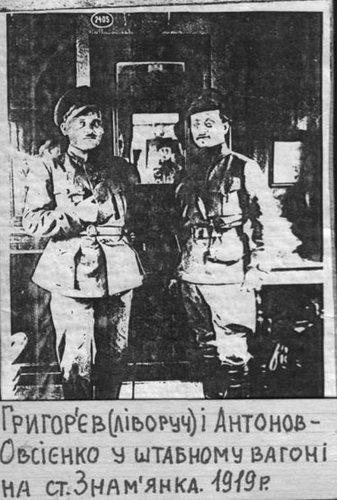
When is an ataman officially in revolt? When does he cross the line? He always has plausible deniability, because he is not fully in control of his forces. Many Communists, such as Antonov-Ovseenko, were in denial about his revolt at first.

By his own account, his revolt developed organically as a response to overbearing communists: ‘My troops could not stand it and began to beat the [Cheka] themselves and chase the commissars. All my statements to Rakovsky and Antonov ended only with the dispatch of commissars. [Eventually] I just kicked them out the door.’ 

From the communists’ perspective, Grigoriev had been operating as a law unto himself for too long. Soviet government officials were allowed no authority on his territory, and many communists were quietly murdered. One commissar ordered to go to strike a deal with Grigoriev refused, citing poor health. But it is obvious the commissar was in fear for his life, with good reason.

On May 1st a Grigoriev armoured train celebrated International Workers’ Day by firing explosive shells into Kropvynitsi. Over the next week, anti-Jewish and anti-communist pogroms swept through the local area. On May 7th a Red commander threatened to attack Grigoriev if the pogroms did not stop. On the same day several Chekists boarded Grigoriev’s armoured train and tried to arrest him. They were themselves captured and later shot.

On May 8th (one month after literally riding into Odesa on a white horse), Grigoriev published a manifesto titled the ‘First Universal.’ It was no longer possible to doubt his intentions. 

It was a forceful appeal to the Ukrainian farmer. It began by recounting the horrors of the Great War and German occupation before moving on to those of the Civil War. It blames the ‘Muscovites’ and those ‘from the land where Christ was crucified.’

‘Those who promise you a bright future exploit you! They fight you with weapons in their hands, take your bread, requisition your cattle and assure you that all this is for the benefit of the people. Hard-working, holy man of God! Look at your calloused hands, look: all around – untruth, lies and insults […] You are the Feeder of the World, but you are a slave.’

He called for soviets but without communists, along with representative bodies where the majority of seats would be reserved for Ukrainians. He demanded that the Ukrainian Soviet government ‘leave us’ and summoned each village to send fighters to Kyiv and to Kharkiv – with weapons, and if there were no weapons to hand, with pitchforks.

By May 10th there was no longer any pretense or hesitation. Grigoriev’s army, which was between 16,000 and 20,000-strong, had risen up against Soviet Ukraine, with armed columns speeding out in all directions from Kropyvnitsi.

What did this revolt look like? A Grigorievite column would ride into town by horse or by train, or a Red garrison would declare for Grigoriev; usually a combination of the two – for example at Kremenchug, Chigirin, Zolotonosha and Cherkasy. In Pavlograd the Red Army soldiers revolted of their own accord. In Dnipro anarchists and sailors went over to Grigoriev and handed him the city. In all, about 8,000 Red Army soldiers went over to Grigoriev.

Soviet officials would be shot. Jews would be robbed, violated, killed. Prisons would be opened. In Kropyvnitsi, epicentre of the revolt, we see all of the above on May 15th: a pogrom which killed 3-4,000 Jews and several hundred Russians. Some of the murderers were those who had deserted from the Red Army. In other towns and villages, we see hundreds killed here, thousands killed there. According to Savchenko: ‘The commanders of the Grigorievites in Cherkassy urged each insurgent to kill at least 15 Jews. An eyewitness writes: “There is no street in Cherkassy where families have not been killed. Russians and Jews were dying… indiscriminately.”’

Dnipro was briefly recaptured by the Reds, and they executed one out of every ten ten of the captured Grigorievites. But in short order the other nine out of ten revolted in prison, and again took over the city.

What was the scope of the revolt? The Dnipro River runs through the heart of Ukraine, and within two weeks the Grigorievites had taken over the middle third of that river. Roughly speaking, their power stretched 100-200km wide to the west side of the river and 50-100km to the east, in places much further. At their furthest advance, they came within 80km of Kyiv and 20 of Poltava.

There was a considerable crossover between Grigoriev’s base and Makhno’s, and as we have seen some anarchists joined the revolt. But Makhno resisted any pressure to join Grigoriev, and stayed with the Red Army, though he denounced the latter as ‘political charlatans’ and condemned the ‘feud for power’ between the two.

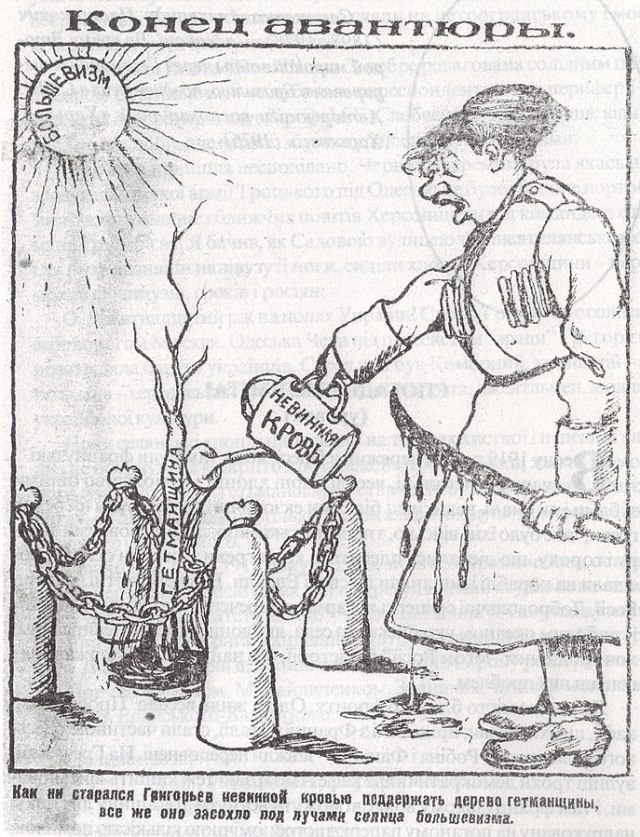
Titled ‘The End of the Adventure,’ this cartoon shows Grigoriev watering ‘Hetmanism’ (Warlordism) with ‘Innocent Blood’

The Ukrainian Soviet Government

The Ukrainian Soviet government under Yuri Pyatakov, and even its more moderate successor under Christian Rakovsky, had in many ways sown the seeds of the Grigoriev revolt. There were trigger-happy Chekists gunning down innocent people, Red Army units looting villages, and there was the same grain requisitioning that had angered the Russian peasants. Pushing Ukraine over the edge were the same ultra-left policies on the land and the national question which had done so much damage in Latvia. The ‘First Universal’ complained about land nationalisation directly, with a complaint about the farmers being forced into a ‘commune.’

In an aside, it is customary at this point to lob a casual accusation that the Communists refused to cooperate with other parties, specifically the Borotbisti, who were the Ukrainian Left SRs. But Grigoriev himself was a Borotbist. His membership in the party was symptomatic of the unstable streak that was part of the Left SR DNA. It’s hardly fair to criticise the Communists for cooperating with a Borotbist and in the same breath to criticise them for not cooperating with the Borotbisti.[v]

It is tempting to present Grigoriev as a monster and to invite ridicule of his changing loyalties. Yes, as Golynkov says, he was politically illiterate and unprincipled.[vi] But a more nuanced interpretation comes from Timkov: that Grigoriev was a ‘hostage’ to his large and varied support base. ‘[I]n order to preserve his power, the chieftain had to wade into the chaos of the opinions and wishes of the peasant masses. You can say that he became their hostage.’[vii] He was, says Smele, ‘a complex and possibly unbalanced character’ and an ‘outrageous freebooter,’ but on the other hand he was ‘genuinely popular.’[viii]

His vacillations are more understandable as the vacillations of a large mass of people, not of one individual. And the wild character of these twists and turns – the turn from Rada to Hetman and back again, from Rada to Reds, from Reds to vicious pogroms – can be better understood as the throes of a mass of people in severe pain.

And we can’t blame all this pain on the mistakes of Soviet Ukraine. The Allies, the Whites, the Germans, the Rada and the Poles had all played their part as well. Further, regardless of specific mistakes or crimes by this or that force, the Grigoriev revolt was an outbreak of rage against the intolerable burdens which the Civil War had placed on rural communities in Ukraine. Partisan armies would have revolted against whoever was in charge, and later did revolt en masse against the Whites.

The Grigoriev revolt was a severe trial for the Ukrainian Red Army. As we have seen, this army was in a shambolic state. But a force of about 20,000 Ukrainians and 10,000 Russians was quickly assembled. Officials, communist youth members and members of the Jewish Socialist Bund all volunteered.

The revolt had spread like flames on petrol, but within a few weeks it had burned itself out. On May 14th large Red forces set out from Odesa, Kyiv and Poltava. Grigoriev’s all-out advance in all directions, meanwhile, was faltering. It seemed early on that his columns were advancing and conquering at lightning speed. In fact they were dispersing in all directions and disintegrating in the vast spaces of Ukraine. One by one the Red Army re-conquered the cities Grigoriev had taken, and in a series of battles in late May he lost 8,000 killed and wounded.

Grigoriev’s army disintegrated. The 3,000 who remained loyal switched to guerrilla warfare west of the Dnipro. While the Reds could declare complete victory, other local warlords had risen up in other parts of Ukraine, and Grigoriev could still raid towns, hold up trains, destroy railways.

A poster warning peasants not to shelter partisans in their villages

The Whites Attack

Meanwhile the Whites had been well-positioned in the Donbass region, and in late May they had seized their moment. The White general Mai-Maevsky himself had warned his men not to underestimate Makhno’s Revolutionary Insurgent Army of Ukraine, the army on carts under the black flag of anarchism. Their partisan tactics had run rings around the Germans and the Whites. But in late May Mai-Maevsky’s forces struck deep into Ukraine. The Whites simply cut through the Anarchists. The Black Army fled, like Grigoriev, to the western fringes of Ukraine. They had been reduced to 4,000 fighters.

Arshinov, an anarchist writing in 1923, presents this move as a stubborn fighting retreat.[ix] He claims that the Reds, by contrast, gave up Ukraine to the Whites without any fight-back at all. The first claim is probably an exaggeration, and the second is completely untrue. Trotsky’s armoured train rolled into the Mikolayiv-Kherson region (Trotsky’s own home turf where his dad still had a farm) and there tried to make a stand; Kharkiv was turned into a fortress; Iona Yakir led several divisions on one of those ‘Long Marches’ which so characterized the Civil War – a 300-mile fighting retreat which succeeded in preserving large forces from destruction.

The failure of Makhno’s Revolutionary Insurgent Army of Ukraine requires explanation. The Black Army was a partisan army, its military doctrine an extension of its political philosophy. There was no contradiction between Mai-Maevsky’s appreciation of its strengths and the ease with which the same general scattered it. Its strength lay in raids and mobility; it was utterly incapable of holding a line against a determined advance. At the very least this defeat represented a political and military failure for the Anarchists. For Moscow, it was nothing less than treachery, and Makhno was outlawed.

Warlords in Exile

West Ukraine was getting crowded with the remnants of defeated armies. The Anarchists were pursued there by the General Shkuro, a cunning and merciless Kuban Cossack whose personal bodyguard were known as the ‘Wolf Hundred.’

To survive the onslaught of the White Wolves, the Anarchists made a tactical alliance with the Rada forces of Semyon Petlyura who, like themselves and Grigoriev, had ended up west of the Dnipro. The alliance was short-lived. Arshinov says the Ukrainian Nationalists soon betrayed them, a development which all parties had anticipated.

Next Grigoriev came knocking on Makhno’s door. Though Makhno had previously condemned Grigoriev and his pogroms, he agreed to cooperate pending an investigation. They fought side-by-side for three weeks against the Reds.

Grigoriev, Makhno and other Ukrainian partisans – reportedly 20,000 in all[x] – gathered for a great congress on July 27th in a village near Oleksandriya. The supposed aim of this peasant congress was to unite an anti-Bolshevik army.

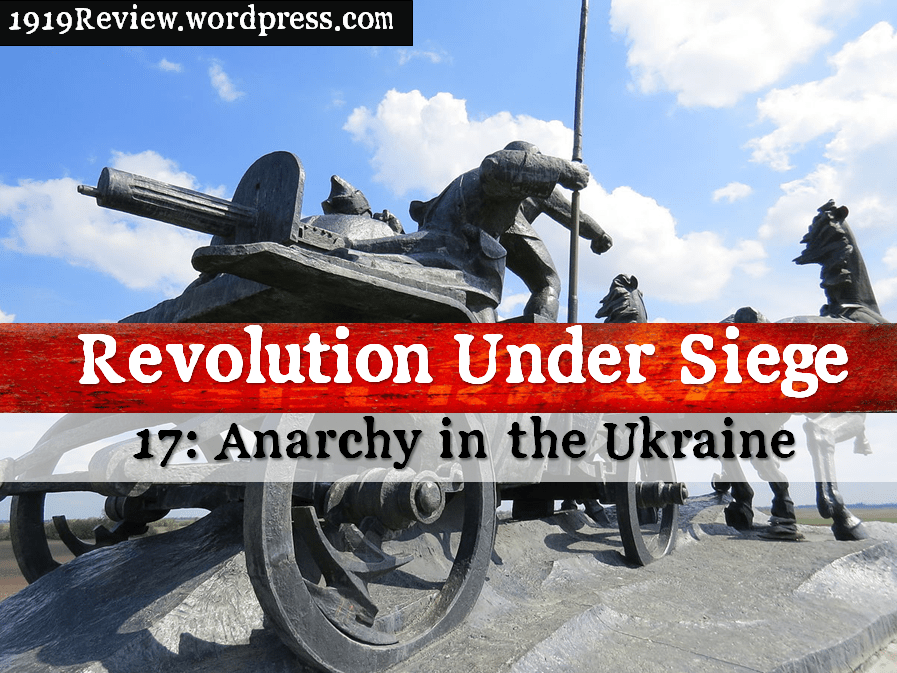
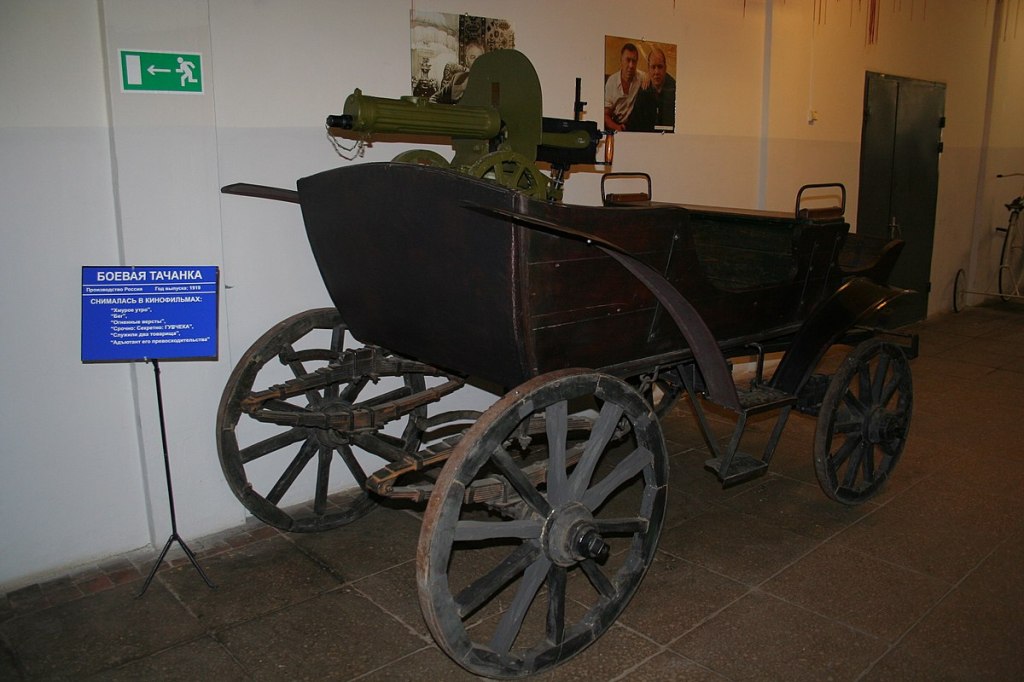
A tachanka (machinegun cart) in a Moscow museum. Today’s cover image shows a Soviet-era monument in the shape of a tachanka

There are different versions of what happened next, which you can follow up and tease out in the sources. Here is my composite sketch:

The Grigoriev forces were camped outside the village, but the village itself was occupied by Makhno’s forces, the lanes dominated by his tachankas, machine-gun carts.

At the congress, the Makhnovist Chubenko stood up at the podium and denounced Grigoriev as a murderer of Jews and a hireling of the Whites. Grigoriev denied the charges and reached for one of his Mauser semi-automatic pistols. But he realized he was surrounded by armed anarchists. He placed the Mauser in the back of his boot and fled from the scene, intending to make an appeal to the village council. But he found Makhno and his lieutenants waiting for him at the house ofthe village council. Chubenko arrived and a heated argument began.  

Some days before, the anarchists had captured some White officers who had letters addressed to Grigoriev. It was obvious from the letters that the ataman was planning to join with Denikin. Remember I mentioned Iona Yakir and his fighting retreat across Ukraine? It appears Shkuro and Grigoriev were planning together to catch and destroy the retreating Reds. The anarchists shot the captured White officers and kept this intel to themselves, for the time being. Now, at the congress of July 27th, they revealed it before 20,000 partisans.

Chubenko told the Soviet security forces later:

‘Grigoryev began to deny it, and I answered him: “And who and to whom did the officers whom Makhno shot come?”

‘As soon as I said this, Grigoriev grabbed the revolver, but I, being ready, shot point-blank at him.’

Grigoriev called to Makhno by his nickname: “Oh, father, father!”

‘Makhno shouted: “Beat the ataman!”

‘Grigoriev ran out of the room, and I followed him and shot him in the back all the time. He jumped out into the yard and fell. That’s when I finished him off.’

By other accounts, such chaos ensued when Grigoriev fled, with people running in all directions, that it was impossible to see who fired the fatal shot.

Makhno and his men shot down Grigoriev’s bodyguard, then went around the village to kill the ataman’s head honchos.

‘That was the sort of treatment I always reserved,’ Makhno later wrote, ‘for those who had carried out pogroms or were in the throes of preparing them.’

But why did the Anarchists ever collaborate with these pogromists in the first place? Arshinov explains that many of the mass following Grigoriev were genuine revolutionaries, who must be won over. The July 27th congress was in fact an elaborate trap for Grigoriev. It is even rumoured that someone had secretly emptied the bullets out of the ataman’s Mauser.

The Anarchists got what they wanted: the leadership of Grigoriev’s band was wiped out, but the rank-and-file joined the Black Army.

Another rumour has it that the gold reserves of the Odesa State Bank had been in Grigoriev’s train, and that Makhno’s men immediately rode out to seize it, then buried the gold a month later. The place where they are supposed to have buried the gold is near Kherson, not far from the frontline in the current war at the time of writing. If there is any gold around there, it’s under water as well as earth. Since the 1950s the area has been flooded by the Khakovsky reservoir. Maybe someone reading this will go on a mission to the heart of a warzone to look for Makhno’s Gold.

The Fall of Soviet Ukraine

That summer, Soviet Ukraine collapsed. In August, two weeks after Trotsky recorded that half of Red Army soldiers in Ukraine had no boots or underwear, Kyiv fell to the Whites.[xi] A number of factors which we have dealt with in the last few episodescame together to produce this collapse. The Don Cossack revolt in neighbouring South Russia, the pressure from Kolchak’s Spring Offensive, the Grigoriev revolt and the flight of the Anarchists all weakened the Red southern and Ukraine fronts. This set the stage for the defining campaign of the whole Civil War: Denikin’s march on Moscow.

Go to Revolution Under Siege Archive

Go to Home Page/ Archive

Sources


[i] Serge, Conquered City, p 99

[ii] SA Smith, Russia in Revolution, p 186

[iii] Savchenko, ‘Ataman of Pogroms Grigoriev’, http://militera.lib.ru/bio/savchenko/04.html/index.html. Most of my information comes from this long and remarkable essay. That, unless otherwise stated, is generally the source for whatever detail or quote you may want to follow up.

[iv] From a source quoted on the blog of Alexandria Cossacks: https://kozactvo-jimdofree-com.translate.goog/%D1%83%D0%B2%D1%96%D1%87%D0%BD%D0%B8%D0%BC%D0%BE-%D0%BF%D0%B0%D0%BC-%D1%8F%D1%82%D1%8C-%D0%BE%D1%82%D0%B0%D0%BC%D0%B0%D0%BD%D0%B0/?_x_tr_sl=auto&_x_tr_tl=en&_x_tr_hl=en&_x_tr_pto=wapp

[v] On the Borotbisti more generally, my sources offer a sliding scale of sweeping statements. Supposedly the Communists merged with the Borotbisti, but also they banned them; they also, it seems, cooperated with them, all the while completely refusing to cooperate with them. I can only throw my hands up. Of course historians are supposed to summarise, employing their own interpretations. But in this case the same set of data produces completely contradictory interpretations. See EH Carr and SA Smith.

[vi] David Golynkov, quoted in https://kozactvo-jimdofree-com.translate.goog/%D1%83%D0%B2%D1%96%D1%87%D0%BD%D0%B8%D0%BC%D0%BE-%D0%BF%D0%B0%D0%BC-%D1%8F%D1%82%D1%8C-%D0%BE%D1%82%D0%B0%D0%BC%D0%B0%D0%BD%D0%B0/?_x_tr_sl=auto&_x_tr_tl=en&_x_tr_hl=en&_x_tr_pto=wapp

[vii] Oleg Timkov, ‘Ataman Grigoriev: Truth and Fiction.’ https://kozactvo-jimdofree-com.translate.goog/%D1%83%D0%B2%D1%96%D1%87%D0%BD%D0%B8%D0%BC%D0%BE-%D0%BF%D0%B0%D0%BC-%D1%8F%D1%82%D1%8C-%D0%BE%D1%82%D0%B0%D0%BC%D0%B0%D0%BD%D0%B0/?_x_tr_sl=auto&_x_tr_tl=en&_x_tr_hl=en&_x_tr_pto=wapp

[viii] Smele, 98, 102

[ix] Arshinov, https://libcom.org/library/chapter-07-long-retreat-makhnovists-their-victory-execution-grigorev-battle-peregonovka-

[x] Arshinov

[xi] Deutscher, p 364

Appendix: War in the Arctic Circle

This builds on last week’s post about the Black Sea Mutiny. I finished by saying that the kind of class appeal we saw at Sevastopol – fraternisation and mutiny – was a general feature of the Civil War. As regards international class solidarity among the intervention forces, we have other examples to add to that of the Black Sea Mutiny.

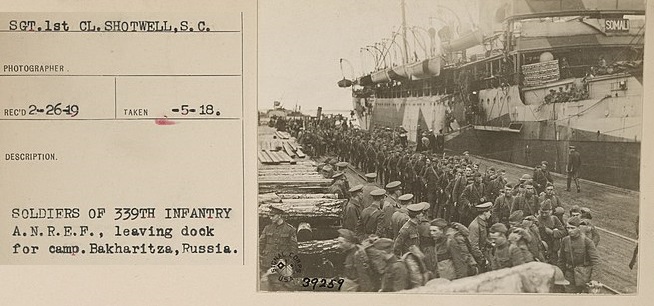
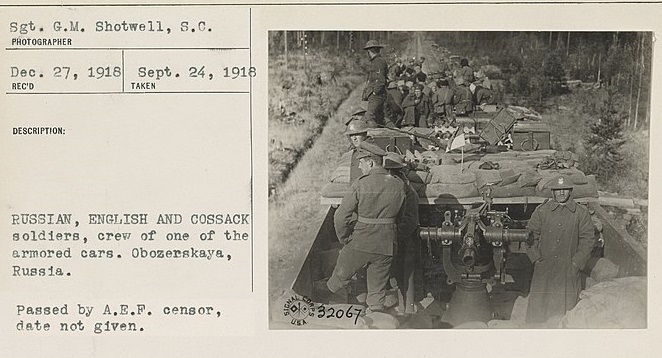
The main one I’m going to focus on is North Russia. The Northern Front represented a unique moment in history: the Russian Civil War was the only occasion on which the Red Army was directly in combat with British and US forces, and the Northern Front was where most of that happened. There were also soldiers from France, Italy, Serbia and a range of other countries. The small White Russian units could hold their own to an even smaller extent here than elsewhere.

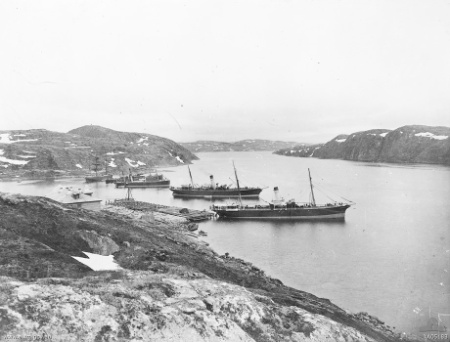
Early in the Civil War, the British seized the northern ports of Murmansk and Archangel’sk

The Youtube channel The Great War has a good video about the ‘Polar Bear Expedition,’ a 5,000-strong US force which fought in North Russia. There were mutinies, though nothing on the scale of Tiraspol, Odesa or Sevastopol. As the expedition dragged on morale declined. US troops wondered what the hell they were doing there. I was struck by this quote from a US soldier which is featured in the video:

The way these kids and women dress would make you laugh if you saw it on the stage. But to see it here only prompts sympathy (in the heart of a real man) and loathing for a clique of blood-sucking, power-loving, capitalistic, lying, thieving, murdering, tsarist army officials who keep their people in this ignorance and poverty. The majority of the people here are in sympathy with the Bolo [Bolsheviks] and I don’t blame them, in fact I am 9/10 Bolo myself.

Quoted in Damien Wright, Churchill’s Secret War with Lenin, p 128

Individuals with democratic values were not thrilled to have the White Guards as their allies. If pushed too far, many would have sympathised more with the other side. That was why their own governments did not dare to push them.

Meanwhile captured Allied and Central Powers soldiers were not mistreated but rather given teachers who spoke their own language and endeavoured to convert them to communism. In Beevor, naturally, such efforts (in relation to POWs from the Central Powers) are shown as Manchurian Candidate ‘brainwashing’.

I will give a brief description of one incident from the struggle on the Northern Front, during the Battle of Shenkursk in January 1919. Some thousands of Red Army soldiers advanced on a few hundred US troops, forcing them into a retreat. The retreating Americans were forced to wade through a valley filled waist-deep with snow, where dozens were shot down. Soon after, the important town of Shenkursk fell to the Reds. There ended the vague hopes of the Allies to link up with the northern end of Kolchak’s front. My impression is that there was no dazzling strategic or technological reason for this victory; the Red Army simply got a solid unit of a few thousand together, and got them to advance competently through difficult terrain. Their numbers and morale exceeded anything the other side had to hit back with.

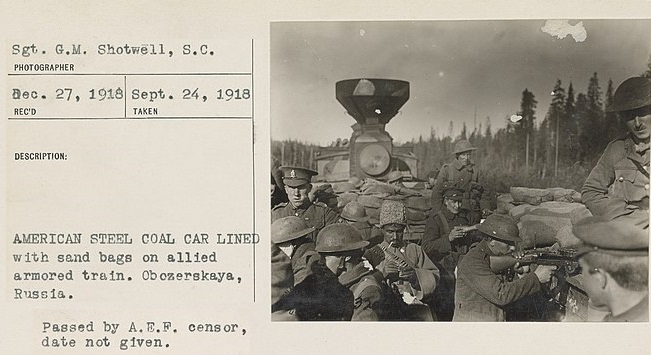
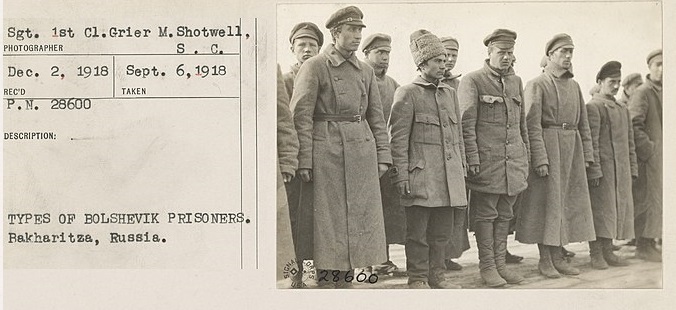
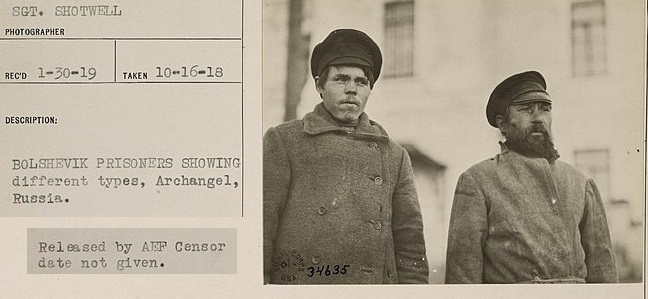
Notice how the captions treat the ‘Bolshevik’ prisoners as interesting specimens

Protests

Disease claimed many of the interventionists, and along with bloody defeats like the one at Shenkursk it’s no wonder the will to fight began to ebb. An anti-war movement developed in the US, and this movement was not one of Debs socialists and Wobblies as you might expect, but of the relatives of serving soldiers.

The ‘Hands off Russia’ movement in Britain developed later, in 1920, so I won’t mention it now. But its prelude was taking place: the growing clamour against intervention from the left and even some liberal MPs.

When Churchill wanted to send more troops to North Russia, he had two main stipulations: that they be volunteers, and that they not be told where they were going! Conscripts would mutiny, like the French; but there would be no volunteers at all if Churchill simply said, ‘Your mission is to freeze in the Arctic Circle just to help some Russian landlords.’

As we have seen, Allied troops did play an important role on the ground in Russia – British battalions garrisoned cities in Kolchak’s rear. Both Kolchak and Denikin were armed to the teeth by the Allies. But in early 1919 there was talk of whole British and French divisions being sent to help the Whites. On paper, this would have certainly defeated the Reds.

But there was a good reason why this didn’t happen. British, American or French troops would mutiny if there was a full-scale invasion. There would be anti-war movements at home. It might even prove to be the trigger for a British or French soviet revolution. Odesa, Sevastopol and Toulon served as a warning.

Japan

A side-note: the largest Allied intervention was that of Japan. 70,000 Japanese soldiers occupied eastern Siberia. Why didn’t they mutiny? I confess I know too little about Japanese history to answer, but I can venture a few guesses. Japan had won a war against Russia in 1904-5, meaning morale would be high for intervention in Siberia, which a patriotic Japanese person might see as Round Two. Nor had Japan suffered as badly in World War One; only 300 of its soldiers had lost their lives in that conflict – as against, for example 1.3 million French and colonial soldiers.

International Volunteers

A final note on international solidarity. The Red Army included thousands of German, Austrian and Hungarian ex-POWs, and Yugoslavs like Yosip Broz (AKA Tito); and it included thousands of Chinese labourers. International volunteers took part on the Red side in the Russian Civil War on the same scale as on the Republican side during the Spanish Civil War. They are less celebrated, probably for reasons that are unfair: because there were fewer English-speakers among them, and because there were fewer writers among them, and because their side won.

These international volunteers were, on the contrary, used in White and Allied propaganda; there was a myth that the Soviet regime was imposed on the Russians by Latvian and Chinese rifles. Why the Latvians and Chinese performed this service is not explained; and the same commentators treat the 50,000 Czechoslovak rifles as a sympathetic and benevolent presence on Russian soil. There is a related myth that the Red Army was officered by Germans, a continuation of the myth that the whole October Revolution had been a product not of Russia’s own social development but of ‘German gold.’

In reality the Red cause was an indigenous development. This can be demonstrated with reference to a series of revolts against the Soviet power which took place in the first three months after the October Revolution: the Polish Corps’ revolt in Belarus, the raids of the Orenburg and Transbaikal Cossacks, the uprisings in Irkutsk and Moscow, the battle outside Petrograd, the Kaledinschina. In each case a revolt by a well-armed minority was crushed by the mass mobilisation of local workers in their thousands or even their tens of thousands. It is true that the Latvians were among the very few cohesive military units the Soviet regime could call upon in the early months. But this only signifies that the elemental upsurge of local workers and poor peasants had not yet been channelled into a formal military organisation.

Go to Revolution Under Siege Archive

Go to Home Page/ Archive

Sources

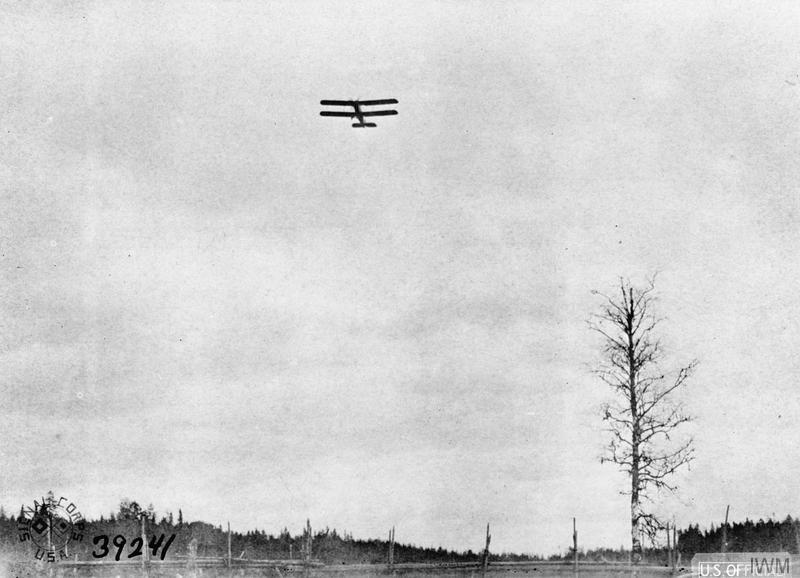
A reconnaissance plane flies over North Russia

16: The Black Sea Revolt

This post tells the story of how the French military invaded Ukraine and was defeated – by its own personnel. The French soldiers and sailors fraternised and mutinied under the Red Flag, singing the ‘Internationale’ – symbols of the regime they had been sent to fight.

Tiraspol

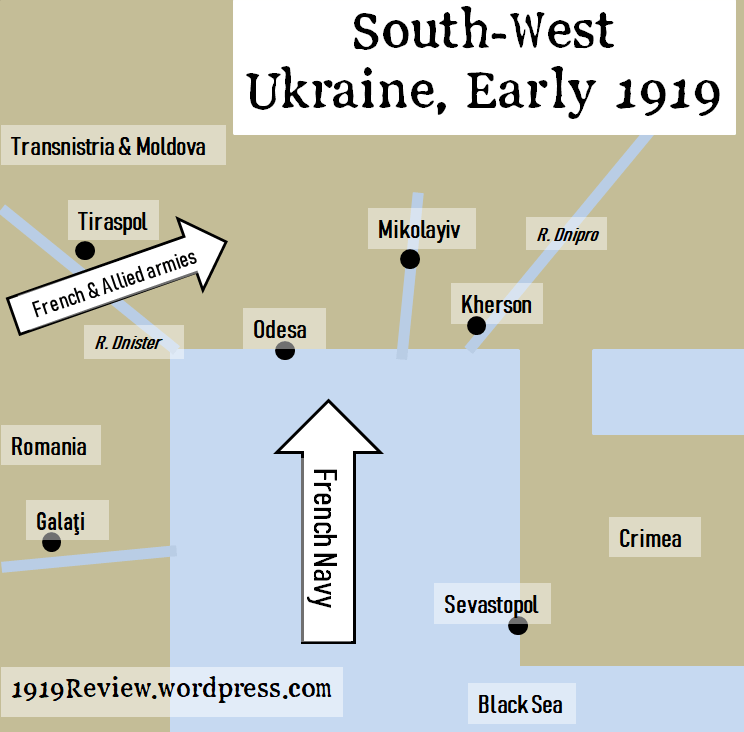
Orientatsiia: South-West Ukraine and Transnistria/ Moldova

Let’s imagine a member of the 58th Infantry Regiment, from Avignon in the South of France. This soldier would have spent a large part of the First World War fighting in Bessarabia (today called Moldova). But when the war ended in November 1918, instead of being sent home or given quiet garrison duties, the French soldier of the 58th received orders to cross the Dnister River and to enter the former Tsarist Empire – in other words, to stick his hand into the furnace of the Russian Civil War.

Some soldiers in the 58th had been involved in the vast mutinies which swept the trenches of the Western Front in 1917; they had been deported to this part of the world as a punishment. The average soldier in the Regiment might also have known that there was a revolutionary committee active in the ranks – there was Corporal Thomas, and the soldier Tondut who had been in the Socialist Youth.

The 58th were ordered to capture Tiraspol from the Reds (Tiraspol is today the capital of the breakaway republic of Transnistria). A French scouting party was captured by the local Tiraspol Red Guards, but treated well. The Red Guards had lengthy political discussions with them, then released them with their weapons. So when these scouts came back to the French ranks, they were practically enemy agents.

When the whole regiment was ordered to advance on Tiraspol, there were protests: ‘So, that’s what it is! We’ve come to invade Russia! It’s the war again! We’ve had enough! Enough!’

To most people at the time, Transnistria and Ukraine were simply parts of ‘Russia.’

An officer replied to the complaints of the soldiers: ‘The Russians borrowed money from us, which they refuse to pay us. We shall encounter revolutionary patrols, but since they are badly commanded and lack arms, the Bolsheviks will flee.’

But when the regiment advanced, it came under machine-gun fire. By prior agreement, the French rank-and-file refused to fire back or to advance.

Refugees streamed out of the town, and French artillery fire swept the fleeing carts with shrapnel. The artillerymen could not see the civilians being killed, but the infantry, already mutinous, saw the death and destruction, and grew even angrier. They cut the telephone wires so that no orders could reach the artillery. Then they deserted. They packed up and returned across the river to the town of Bender.

The 58th Regiment only entered Tiraspol after the Polish army had captured the town from the Reds. The mutinous French soldiers were soon disarmed, shipped to Morocco, and drafted into disciplinary companies.

But the Tiraspol Mutiny was just the beginning.

Kherson and Mikolayiv

Between late 1918 and early 1919, in a complicated series of acts, south-west Ukraine passed from German to Allied occupation. There were 10,000 French, 30,000 Greeks, 3,000 Poles, 32,000 Romanians and apparently 15,000 of Denikin’s White Guards in the vicinity of Odesa.

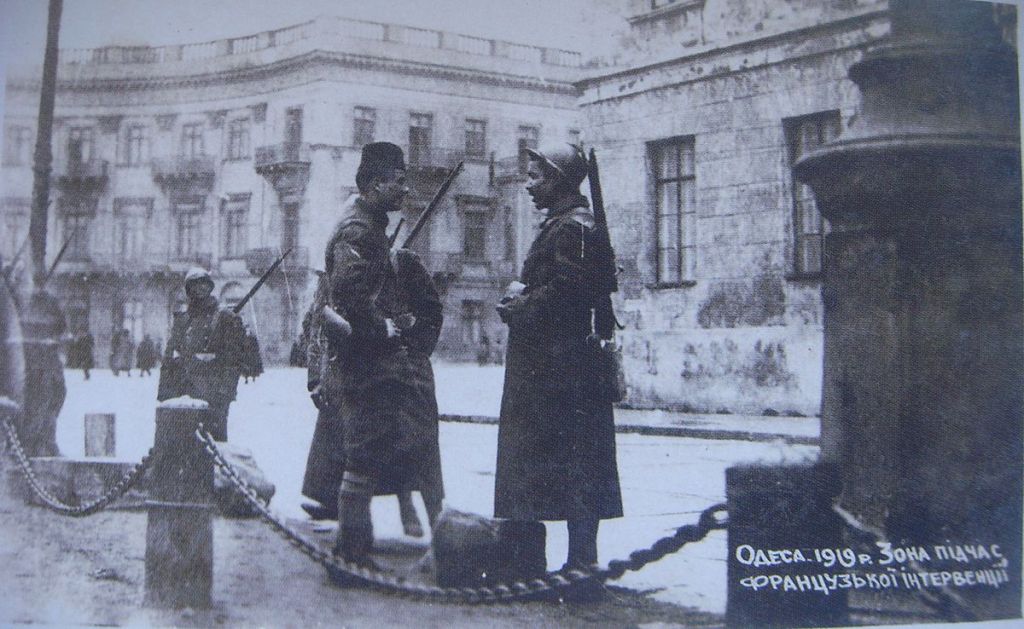
French and North African soldiers in Odessa, 1919

In November 1918 General Franchet D’Esprey anticipated the mutinies: ‘The moment military operations are shifted to Russian territory, there will be a danger that active revolutionary propaganda may be attempted among the troops.’

He supported a ‘carrot and stick’ approach. He urged officers to see that troops were provided with good food and billets. Meanwhile they must ‘ruthlessly’ deal with every violation of discipline.

After the hell of the First World War, the French soldier now feared that his government had dreamt up a whole new war for him to die in. And the political justification for this war was even more flimsy than for the last one.

The underground Communist movement gave expression to this mood – local Ukrainian communists published leaflets and even a newspaper in French, and distributed them among the occupying forces. Here is a part of an article from that paper:

Today we have a right to ask why it was that when Russia was headed by a tsar, by an autocratic despot, our government was on friendly terms with her. Now everything has changed. Russia is now undeniably a Republic, a Soviet republic. Are not our two sister republics akin in their ideas and tendencies? Could they not unite and work for a common cause? Is it perhaps because the Soviet republic is too socialistic?

The French at the time ruled a vast colonial empire, and it appears a majority of their 10,000 soldiers were in fact from Algeria and Senegal. Later, war veterans would play an important role in the liberation struggles on the African continent. But in 1919 the high command considered them reliable, even as their trusted enforcers.  

All the same, in November French ‘colonial’ troops at Archangel in the Arctic Circle had staged a mutiny. And at a key moment in early April the 1st Zouave Route Regiment (an Algerian unit) refused to harness horses to artillery, in effect aiding the Red advance.

Among English-speaking historians there is a tendency to downplay Allied intervention in the Russian Civil War. The attitude is: ‘Quit complaining: we barely invaded you at all.’ We are told that there was very little direct fighting between Allied and Red forces… apart from the fierce battles in North Russia; and with the Japanese in the Far East; and the unauthorised frontline role of British personnel in the South. Likewise at Mikolayiv and Kherson there was heavy fighting. But we should grant the Anglophone historians this much: the Allied rank-and-file were not keen to fight. In early March when the fighting was heaviest, some refused to go to Kherson, and others, when they arrived, refused to fight. In the end Ataman Grigoriev (whom you will recall from ‘Warlords of Ukraine: Continued’) drove 1,000 French and Greek soldiers out of Kherson.

On March 20th the London Globe reported:

The Bolshevik occupation of Kherson and Nikolaieff [today Mikolayiv] was only effected after heavy fighting on the part of the French troops, who had, however, eventually to evacuate the towns and were transported by sea to Odesa. The German garrisons left behind apparently made no opposition, and even handed over their arms and fraternised with the Bolsheviks.

From the cover of André Marty’s book on the Black Sea revolt (See below)

Odesa

French intervention in Ukraine, meanwhile, followed no clear policy.

They arrived in Odesa, fought and killed the local Ukrainian Rada troops who had just prevailed over the Hetman, and took over the city in collaboration with Whites who had landed by sea. As we have seen, at first they fought alongside the Hetman, the German puppet, until his regime died a death. For a long time after that the French ignored the Rada, because they were German collaborators (yeah, I know!). At the last possible moment, right before the Reds took Kyiv, the French recognised the Rada. It was too late to be of any use to either the French or the Rada, but it was in plenty of time to anger the White Volunteer Army under Denikin.

The French soldier met the Reds not just on the battlefield, but in the cafés and bars and on the streets. We have seen how the Red advance across Ukraine was sweeping but precarious. But in the cities the Communists were in their element. Odesa especially was a hotbed of fraternisation between Reds and Allied soldiers.

Written appeals once again give us a sense of what was said in their discussions:

Demand your immediate return home! And if your leaders don’t agree to send you back home, then organise your own return! Go back home and work with all your strength at the great task begun by the Russian Revolution, which will guarantee to the proletarians of the whole world, together with freedom and dignity, a greater well-being and happiness. Long live the soldiers’ and sailors’ soviets!

French officers grew scared at the influence of Red agents. They warned that ‘robbers, murderers, and Bolshevik agitators will be shot on the spot.’[i]

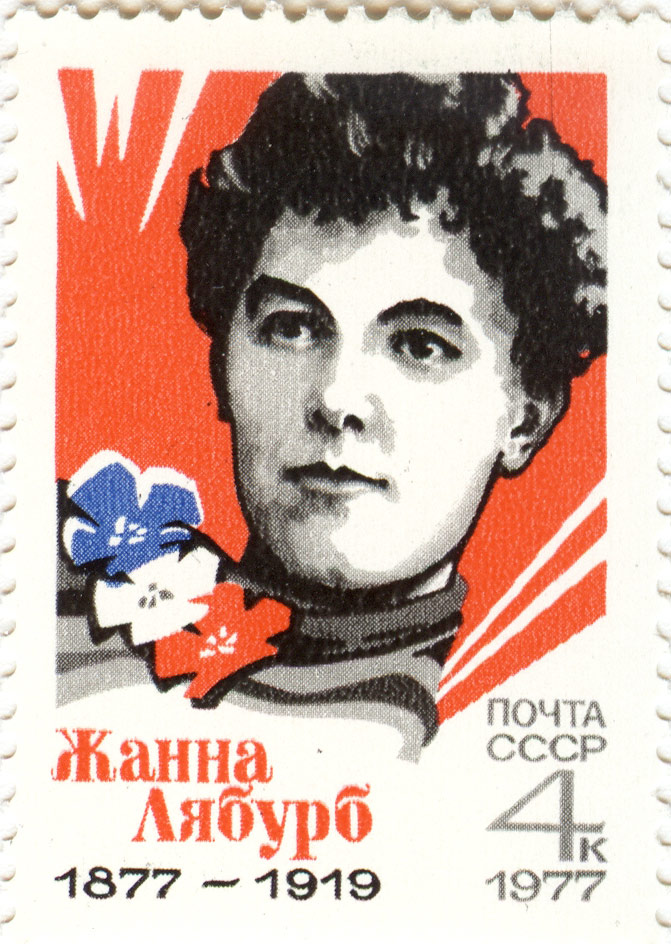
A commemorative stamp featuring Jeanne Labourbe

They were as good as their word. Ivan Smirnov, the leader of the Odesa communists, was tortured and shot by the French military. A French teacher named Jeanne Labourbe, who had been won over to communism and helped the Reds in their fraternisation efforts, was arrested. French officers and White Russians tortured and then shot her, along with ten of her comrades – five men, five women.[ii]

By the end of March Odesa was ‘without food and in a state of virtual anarchy.’ The Red Guards were outside the city. No doubt the presence of Red sabres and rifles helped to focus minds. But the French were troubled by their friends as well as their adversaries. The large Jewish population in Odesa brought into stark relief the anti-Semitism among the Whites and the Ukrainian nationalists. Anti-Semitism was no stranger to the France of the Dreyfus affair, but the massacres which had begun would have shocked the French soldiers, and posed once again the question of what they were doing there.

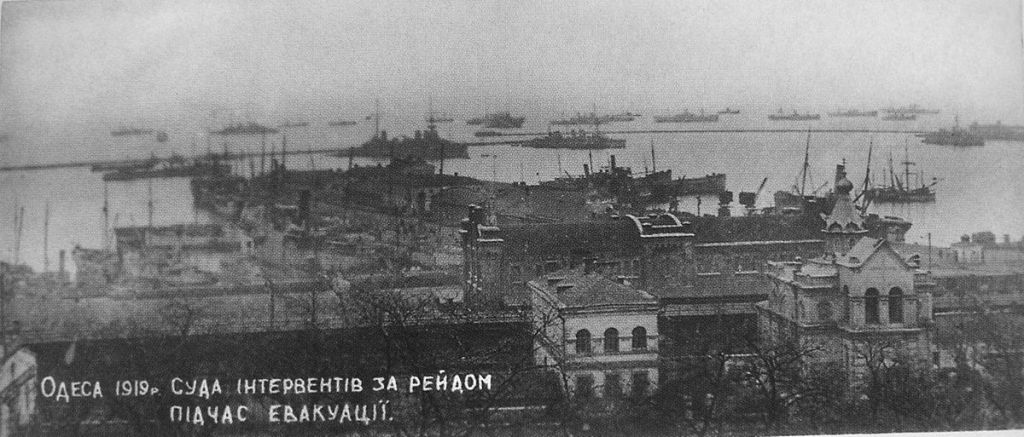
The French top brass made the decision to quit Odesa without consulting Denikin. The evacuation was a complete disaster, characterised by mass panic. The Reds were entering the city and the French troops were, in places, refusing to fight or even sabotaging the defence. 10,000 Russian Whites and 30,000 civilians crowded onto the Allied ships, including 8,000 of the Greek community in Odesa.[iii]

French military personnel embarked on April 5th. Entire units marched to the ships singing the ‘Internationale.’

Odesa during the evacuation

But the real mutiny, that is, the one that our historians deign to mention, had not even begun.

Historian Evan Mawdsley makes a strange remark about the evacuation of Odesa: ‘The French did not leave – as is sometimes suggested – because of a naval mutiny; this came three weeks afterward.’[iv]

It was two weeks. More importantly, Mawdsley’s remark neglects to take into account the whole cycle of fraternisation and mutiny which we have just described. And after evacuating Odesa the French just sailed a little ways down the coast and invaded Sevastopol. Intervention was not finished after the Odesa evacuation.

Red soldiers enter ODesa, April 1919
A rally in Odesa in 1918-1919

Anger in the fleet

On April 16th, in the Romanian port of Galaţi, a plot was unfolding on board the French vessel Protet. This vessel had quit Odesa just a few days before.

André Marty, who was on board the Protet, believed that mutiny was ‘the most sacred of duties.’ By attacking Russia without a declaration of war the French fleet was violating the constitution. Marty, an engineer, planned to seize the Protet and take it to Odesa under the red flag. His conspiracy was betrayed by informers, and he was arrested.

André Marty in 1921

But discontent in the French fleet was not confined to the Protet or to Marty’s circle of conspirators. Throughout the fleet, the sailors were ready to revolt. They had been deeply effected by the experience in Odesa, and unknown sailors had even composed the Odesa Song which had caught on throughout the fleet.

After eight days on the high seas

We’ve arrived at last in Odessa town.

The Russians celebrated the went

With cannon and vintovka shots.

We were made to join the Volunteers,

 A corps made up of officers,

So that we would our brothers fight

For the Bolsheviks are workers all.

You who run the show

Because you’ve got the dough

And piles of stocks and bonds,

If you want the cash,

Make haste to embark,

Ye capitalists

For the true poilus,

Those who fought in the war,

Are determined today

Not to fight any more,

Nor their brothers to kill

Or by them be killed.

The song goes on to promise to bring the Russian Revolution home to Clemenceau and to the French ruling class.

The sailors also knew and sang the ‘Hymn to the 17th’ – a song about a French military unit sent to crush a strike in 1907, who mutinied in protest.

The grievances of the sailors of 1919 are best summed up in the demands they would soon raise during the mutiny:

1. An end to the war against Russia.

2. Immediate return to France.

3. Less rigorous discipline.

4. Improved food.

5. Leave for the crew.

A list of demands raised by a different group of sailors raised similar points:

Immediate return to France.

Better food.

Display in all artillery emplacements of all news picked up by radio.

Demobilisation of reservists.

Immediate putting ashore of the master-at-arms.

Leave to be granted in a regular order.

As these grievances simmered, action committees were organised on most of the French warships. Petty officers and engineers were the leaders in this underground work. There was an anti-war socialist newspaper called ‘The Wave’ which reportedly had a circulation of 300,000 within the fleet. Every issue had a page of correspondence from ordinary sailors airing their grievances. It was banned, and officers would confiscate it on sight. But often the orderlies would steal it back for the sailors. Cuttings from the paper were hidden inside the right-wing newspapers. There were besides The Wave at least five other underground papers in regular circulation in the fleet.

Sevastopol: mutiny on the ships

The battleship France

Scene: the battleship France, a vessel 166 metres long and 27 wide, with over 1100 men on board. It is April 16th, and eleven days after evacuating Odesa the France sails in the outer harbour of Sevastopol, a port on the west coast of the Crimean peninsula.

A mechanical engineer named Vinciguerra maintains an underground library of socialist books, papers and pamphlets. He is at the centre of a group of twenty or thirty members of leftist organisations, most of an anarchist persuasion. This group exerts an influence over a great part of the crew.

In 1918 the ministers of the Crimean Soviet Republic were massacred in a Tatar uprising.[v] But by April 1919 the Reds have returned to Crimea, and they are advancing on Sevastopol.

The France, lying in the outer harbour, opens fire with its artillery and sends ashore landing parties to block the Red advance.

On April 17th the crew are called to man the guns. Many hide out in the latrines and refuse to leave; the officers are forced to man the guns on their own. Three French ships fire explosive shells at the Reds all night – so much for the end of the French intervention.[vi] The Reds are forced to retreat. In the morning, the ringleaders of the protest are locked up.

The sailors are informed that they will have to load coal on Easter Sunday, April 20th. This is a laborious task for a holiday, and it is greeted with anger. This is the trigger for the rebellion.

The word goes around the vessel: ‘Those who don’t want to carry coal, assemble on the forecastle, after the piping to quarters in the evening.’

Virgil Vuillemin, a spokesperson for the mutineers on the France

On April 19th, almost all the crew gather on the forecastle for a protest. Things start out with an innocent appearance, but then the Odesa Song is sung. When the strains of the Internationale carry across the water, the crew of the neighbouring vessel, the Jean-Bart, joins in. The 600 on the deck of the France and many of the crew of the Jean-Bart join together in the chorus:

C’est la lutte finale

Groupons-nous et demain

L’Internationale

Sera le genre humain…

The officers, terrified, gather and arm themselves. They are right to be afraid. The sailors storm the prison cells and release their comrades. They take the steam-launch to the Jean-Bart and raise the crew in revolt.

‘To Toulon! No more war against the Russians!’ ‘Rise up! Rise up! Revolution!’

An unsigned article in the journal Revolutionary History takes up the story:

Vice-Admiral Amet, the commander of the fleet, arrived on board the France. Sailors and the Admiral stood face to face. The Admiral’s sermon was interrupted by shouts of ‘Take him away! Kill him!’ When he claimed that the Bolsheviks were bandits, a mutineer shouted at him: ‘You’re the biggest bandit.’ […]

On the Jean-Bart, Amet and the officers bring up great containers of wine in the hopes that the sailors will drink themselves into a stupor. But the sailors place a guard around the wine, and nobody touches a drop.

André Marty writes:

‘Practially every sailor on the France and the Jean-Bart was standing on the vast forecastle heads of the battleships, and, instead of saluting the tricolour being raised on the stern, they faced forward and sang the Internationale while the red flag was being hoisted on the bowsprit.’

An officer shouts, ‘You don’t know what that rag stands for, it means civil war!’

But to the sailors, it is obvious that the Russian Civil War has come on board their ship, not through any desire on their own part, but because their government and their officers are helping the Whites.

There is a moving scene when a Russian ship enters the harbour. It is called the Kherson, and its crew and passengers sympathise with the revolution. While the Kherson is in earshot of the French vessels, they join in a rendition of the Internationale.

At this point mutiny spreads to a fourth vessel, the Justice; the red flag is raised.

The commander is angry.

‘Who hoisted this rag?’

Silence.

‘It wasn’t hoisted by itself, was it?’

‘The entire crew is in on it,’ some of the sailors reply.

‘So I have a crew of Bolsheviks?’

‘We want to go back to France!’

Sevastopol: Mutiny in the streets

French personnel in Sebastopol

Instead of spending Easter Sunday loading coal, large numbers of mutineers go ashore. The city is occupied by Greek and French soldiers and sailors. The Greeks are tense, rifles ready; the French rank-and-file leave their weapons behind and mix with the civilian population. The French mutineers begin a march up Ekaterinskaya Street to the city centre. A group of local trade unionists meet them and present them with the banner of the metal workers’ union; behind that banner the crowd proceeds slowly through the streets, growing to two or three thousand, roughly one in ten of whom are French mutineers.

Outside the city hall they are greeted by the chair of the local Revolutionary Committee, who speaks fluent French; years ago he lived as an immigrant in Paris, working in a department store. He demands the evacuation of the military forces from the city and the transfer of power to the Soviet. The applause is enthusiastic. A French sailor from the crowd speaks in reply, assuring the chairman of the sympathy and support of the French sailors.

The march continues, growing further in size as sailors from all the ships join in. A French officer approaches the crowd and tries to seize the red banner of the metal workers. After a bit of shouting, he is sent packing with a slap to the face.

Retribution is sudden. A French Lieutenant gathers a group of Greek soldiers and a small number of French sailors from the Jean-Bart. Theytake cover on Morskaya Street. As the crowd crests arise, machine-guns and rifles open fire. The demonstration scatters into the side-streets, leaving many dead and wounded lying on the street.

The banner-bearer, a helmsman from the Vergniaud, mortally wounded by a bullet, lay on the ground covered by the red banner he had been carrying. A petty officer, a brave man, who had continued shouting “Forwardl Death to the dogs!” also fell mortally wounded and lay beside a young girl of sixteen who had been killed outright.[vii]

Victory

The Black Sea mutiny could have gone further, and very nearly did.

So enraged were the sailors by the massacre that French and Greek personnel were inches away from a pitched battle. The French did not, as one of my sources claims, open fire on the Greek flagship.[viii] But this was only because the officers and mates rushed to sabotage the guns before the sailors could lay a hand on them. On land, one party of French sailors had to be held back at gunpoint by their own officers, otherwise they would have gone to fight the Greek soldiers.

 But the furious reaction to the massacre appears to have shaken the officers. The French Lieutenant who gave the order to shoot on Morskaya Street killed himself that very night. This saved the top brass some embarrassment. It is easier to make a scapegoat out of a dead man.

The sailors were in control of the ships, and in close contact with the soldiers. They held the power. But the officers were smart enough to bend rather than break. They promised that the ships would go home. They promised that there would be no reprisals.

Several days later, the ships quit Sevastopol and sailed home. In spite of the solemn promises of the officers, the ‘ringleaders’ of the mutiny were later arrested and sentenced.

The next vessel to erupt in protest was the Waldeck-Rousseau, back at Odessa. When the prisoner André Marty was brought on board, sailors rallied and sang the Internationale. There were further mutinies at nearby Tendra and on the torpedo boat Dehorter at Kerch.

Unrest in the French fleet carried on unabated all through the summer of 1919 and all through the Mediterranean. Rebellion flared up at Toulon, the main French naval base, with protests in the streets and unrest on the ships in the harbour. Sailors held stormy mass meetings on the glacis of the fort. For several days the town was practically under the control of protestors. From June 12th to 17th the rebellion was discussed in the French parliament.

The revolt comes home to France. Not part of the Toulon movement, but a protest in favour of the release of the mutineers, 1922

From the first scouting party advancing on Tiraspol to the revolutionary events in Sevastopol and all the way back to French soil, the war effort in Ukraine and Russia was sabotaged by French sailors and soldiers. It must have sorely hurt the pride of the politicians and generals and admirals that their rank-and-file had revolted under the red flag – the symbol of the very regime they had been sent to help crush.

France had been the most aggressive of the western Allied powers. But the French soldier and sailor forced all the Allied leaders to recognise that if they pushed their luck in Russia and Ukraine, they would face troubles not just among their own soldiers but on their own streets. On the British side, there was the Calais Soviet, the soldiers’ protest in London, and the rapid spread of the ideas of the Russian Revolution in Ireland and Scotland.

France was forced to drop its policy of intervention in favour of a cordon sanitaire: besieging Soviet Russia in a ring of hostile states armed and funded by France. This policy would bear fruit in the Polish-Soviet War of 1920, which we will look at in Series Three.

What about all those mutineers who were arrested? They were harshly sentenced, but some years later, after a public campaign, they were amnestied and released.

Marty with his brother, on his release from prison in 1923

On May 1st 1919, Sevastopol celebrated its liberation. It was a triumph not of arms, but of ideas, and not of combat but of fraternisation. The revolutionaries of many nationalities who made this victory wrote an important chapter in the history of revolutionary warfare – a chapter which, in most English-language accounts published in the last few decades, is reduced to a dismissive sentence or two.
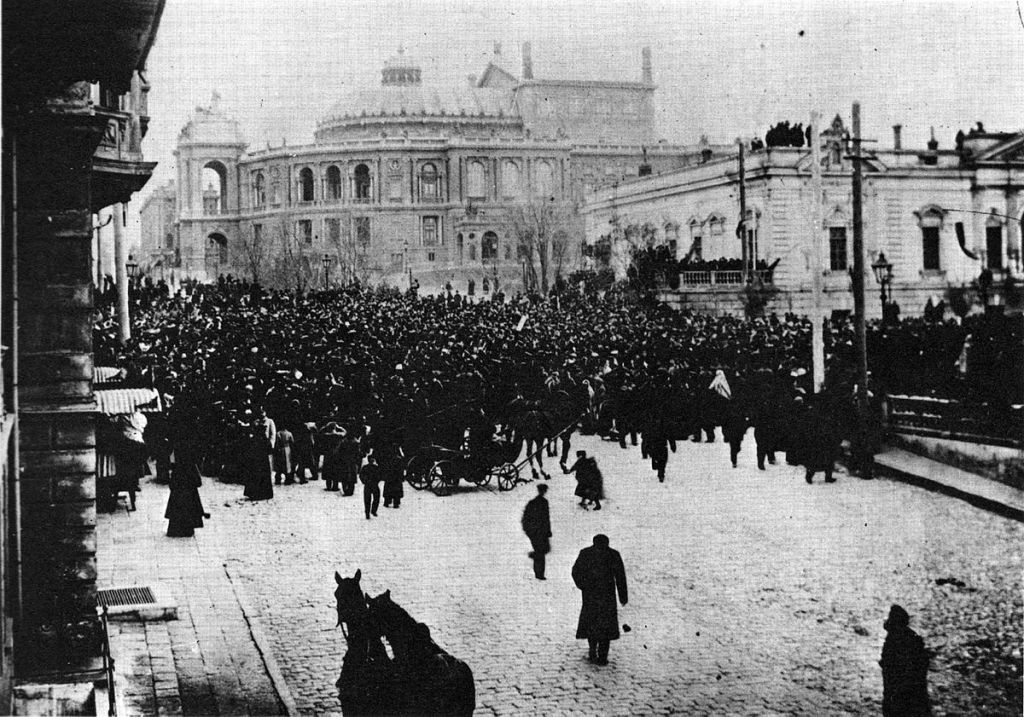
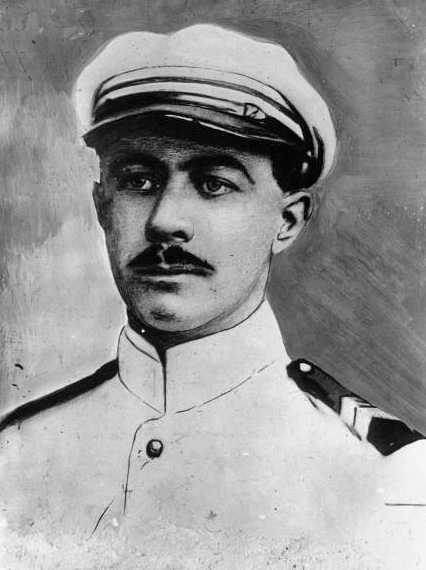
The defeat of the French intervention in south-west Ukraine and Crimea was achieved with the most humanistic methods: through finding common cause with the enemy combatants, rather than by shooting at them. It was no less decisive for that. The new Soviet regime held a new and powerful weapon in its hands: the power of the class appeal. The Black Sea revolt represents the most outstanding example of mutiny and fraternisation, but it was a general feature of the Russian Civil War, and an inspiring one.

Go to Revolution Under Siege Archive

Go to Home Page/ Archive

Sources

May Day in Odessa, a sketch showing a monument erected for the occasion

Sources

Most of the above is drawn from these sources:

  • ‘The Black Sea Revolt’ from Revolutionary History:

https://www.marxists.org/history/etol/revhist/backiss/vol8/no2/blacksea.html

  • ‘During the Black Sea Mutiny, French Sailors rejected France’s war on Soviet Russia,’ from Jacobin:

https://jacobin.com/2020/12/black-sea-mutinies-france-sailors-soviet-russia

  • The Epic of the Black Sea Revolt by André Marty:

https://stars.library.ucf.edu/prism/821/


[i] The Globe, February 13th 1919

[ii] André Marty, The Epic of the Black Sea Revolt, (See Above) p 8

[iii] Anthony Read, The World on Fire, Jonathan Cape, 2008, p 164

[iv] Mawdsley, 178

[v] Mawdsley, 48

[vi] Marty, 28

[vii] Marty, 41

[viii] Read, 164

15: Terror on the Don (Premium)

Become a paying supporter to get access

Access to this article is limited to paying supporters. If you already subscribe by email, thank you. But if you want to become a paying supporter, please hit ‘Subscribe’ below.

Donate less than the price of a coffee, and you can access everything on this blog for one year.

If you don’t feel like donating, most of my posts are still 100% free, so browse away, and thanks for visiting.

Go to Revolution Under Siege Archive

Go to Home Page/ Archive

Sources

New Podcast and Youtube Episodes

Warlords of Siberia‘ and ‘Warlords of Ukraine‘ are now up as podcasts, AND up on Youtube.

Revolution Under Siege on Google Podcasts

Revolution Under Siege on Youtube

I’m enjoying doing these in my own voice, so much so that I’m going to update, re-record and re-edit all of the first series, Episodes 00 to 10.

Meanwhile the main series, in text form, will be powering ahead. Next week: ‘Terror on the Don.’

14: First Drafts of the Future

In the cities of Central Russia, hope contends with hunger. On the Eastern Front, the Red Army faces Kolchak.

Oriyentatsiya: this post deals with events in ‘Central’ Russia and in the Ural Mountains.

Red wedge and white circle are set on a canvas. The red wedge is slicing into the white circle. Around them smaller shapes are scattered, perhaps fragments shaken loose by violence, or forces of secondary importance in the conflict. It is an abstract image, but it is suffused with energy and struggle. The red object is not larger than the white, but it has shape, momentum, direction.
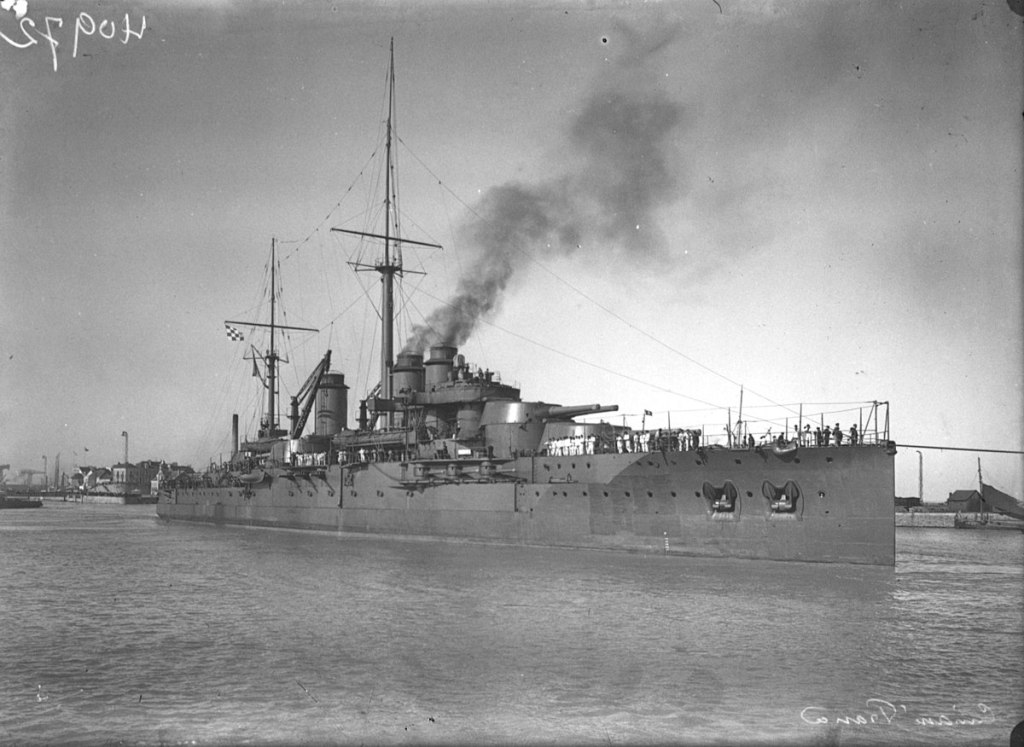
El Lissitzky painted Beat the Whites with the Red Wedge in 1919, the decisive year of the Russian Civil War. It is one product of the ‘tidal wave of artistic creativity’ which followed the Revolution. This was a golden period for the Constructivist and Suprematist schools, for Malevich, Tatlin, Popova, Rodchenko and many other artists.[i]

The Promise of Revolution

The innovation and excitement on the canvas (and of course in the work of poets and writers) was a reflection of the changes the Revolution promised. Serge remembers the officials of the new state apparatus hurrying through the streets: ‘men and women alike, young or ageless, carrying over-stuffed briefcases under their arms’ filled with dossiers, decrees, mandates – ‘the precious first drafts of the future, all this traced in little Remington or Underwood characters.’[ii]

The town houses of individual bourgeois families had been transformed into communal dwellings, housing multiple families. Better than the slums and barracks – or shelled ruins – they had come from. Palaces that had once housed princes and their mistresses now housed public institutions such as the Palace of Motherhood where modern maternity care was driving a wedge into an over-medicalised and patriarchal tradition. Public canteens served up nutritious meals for free. Families availed of public laundries and crèches.
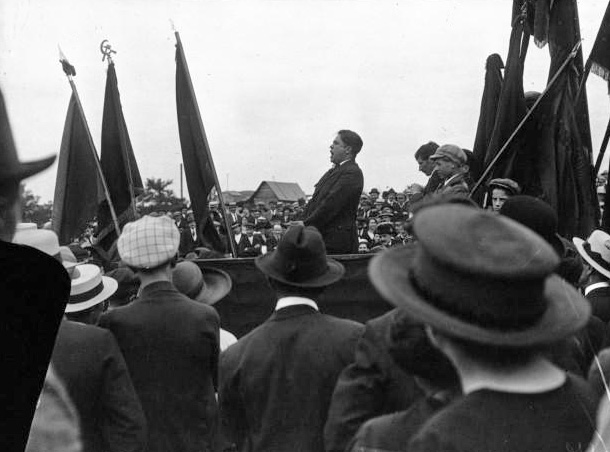
The Ural Mountains

The promise of the revolution delivered on the frontlines too. In February, before the outbreak of Kolchak’s great offensive, the Whites faced a complication in the middle of their frontline when the Bashkirs switched sides to the Reds. The Bashkirs were traditionally a nomadic people. They were one of several ethnic groups like the Tatars and Chuvash who predominated in parts of the Ural and Volga regions (Lenin’s grandfather was a Chuvash tailor from the Volga). It was the Bashkirs who had named the Ural mountains, after their legendary hero who sacrificed himself to enrich the earth.

When the 6,000 Bashkir cavalry went over to the Reds, it was as I said a complication for Kolchak, not a devastating blow. But in hindsight it matters a great deal. The Bashkirs, who lived under a near-medieval social structure, were at first disoriented by a revolution they could not understand, and followed their chiefs and Islamic clerics into the White camp. But the Whites mistreated them and refused to give them autonomy. The Reds made a better offer. It was to be an early example of the decisive importance of the Soviets’ democratic policy on the national question.

A Bashkir railway worker in the Urals, 1910

Neil Faulkner writes of ‘the explosion of creative activity unleashed by the October Revolution,’ particularly in education. The country went from six universities to sixteen, in just over a year, and courses were open to all and free of charge. ‘The workmen crowd to these courses’, reported journalist Arthur Ransome. ‘One course, for example, is attended by a thousand men, in spite of the appalling cold of the lecture rooms.’ The number of libraries had doubled in Petrograd and tripled in Moscow. ‘In one country district, there were now 73 village libraries, 35 larger libraries, and 500 hut libraries or reading-rooms.’[iii]

Today’s cover image: ‘Spatial Force Construction,’ Lyubov Popova, 1920

A Hungry Winter

These are only a few examples of the sweeping social changes. But the winter of 1918-19 was bleak beyond description. A wreck of an empire emerging from the most terrible war in human history into the disruption attendant upon revolution – these would have been years of hardship even in the best possible scenario. Now, on top of that, civil war had thrown transport and supplies into complete chaos. The food supply system had been broken by the Great War. In 1918 the Soviets had taken grain by force from the villages to avert starvation. Many of the peasants hadn’t bothered planting.

There was no international famine relief effort to speak of. The American Red Cross made a difference – but their activities were confined to Siberia. The Fridtjof-Nansen scheme attempted to feed civilians in both zones. It showed what might have been possible if the rulers of the world had responded with humanity and compassion rather than with an all-out crusade against the revolution. But it was the exception rather than the rule.

The Soviets had nationalised industry and given land to the peasants; for this crime tens of millions of civilians would be collectively punished with the weapon of mass hunger, like the German civilians during World War One, or the Iraqi and North Korean civilians under sanctions in more recent years.

The city and town dwellers of Russia, their immune systems weakened by hunger, became easy prey for typhus and the so-called ‘Spanish Flu’ pandemic. Factories were short of supplies, understaffed by the hungry and the sick. Things were worst of all in Petrograd – a city with no farming hinterland from which to feed itself. Kollontai, the Bolshevik minister who was behind the Palace of Motherhood and other impressive projects, joked bitterly that ‘there is a great deal of moral satisfaction in deciding whether you want thick cabbage soup or thin cabbage soup.’[iv]

The industrial workforce fell from 2.5 million in 1918 to 1.5 million in 1920.[v] Where did all the workers go after the workers’ revolution? Hundreds of thousands into the Red Army; tens of thousands into the state apparatus; millions to the countryside, where food was more plentiful.

In the novel Conquered City, we see a crowd of exhausted and angry factory workers in Petrograd. Timofei sees the sad contrast between this crowd and the same crowd just a few months ago:

This crowd is spineless. The best among them have left. Some are dead. Eight hundred mobilised [for the Red Army] in six months […] they say [Leonti] died in the Urals. Klim is fighting on the Don. Kirk is head of something. Lukin, what happened to Lukin? Timofei could still visualise these veterans standing in this very shop, three or four ranks of men, successive generations who had come up and disappeared within a year. Gone. At the head of the army, at the head of the state, dead: heads riddles with holes, lowered into graves in the Field of Mars to the sound of funeral marches. The Revolution is devouring us. And those who remain are without a voice, for they are the least courageous, the most passive…[vi]

Peace Offensive

There was cause for hope that things would improve soon. Moscow had launched a ‘peace offensive’ in late 1918. They were offering to let the Whites and their Allied backers hold onto whatever territory they held in exchange for a peace treaty. It was the same basic equation as Brest-Litovsk the year before: space for time. The Soviets had the most to gain from time and the least to gain from war.

The call reached some receptive ears in the west. The Allied leaders were not all on the same page with regard to Russia. The Whites had basically failed in 1918, and many Allied leaders were growing tired of betting on losers. Some, such as Lloyd George in Britain, worried about what might happen even if these losers were to win. The Allies would be responsible for forcing a vicious reactionary regime onto Russia against the will of its people; Lloyd George saw that this would give labour and communist parties ammunition against the establishment.

So in January 1919 a radio broadcast went out from the summit of the Eiffel Tower inviting the Red and White leaders to a peace conference at the Isles of Prinkipo near Istanbul.[vii] In early March the US official William Bullitt was in Moscow offering generous terms for a peace treaty.

There were other promising developments. The partial bans on the Social-Revolutionaries and Mensheviks were lifted. Strict limits were placed on the power of the Cheka (a quick reminder, the Cheka was the police force which imposed harsh security measures). Central Europe was in the throes of revolution. Southern Europe appeared not to be far behind – see the factory occupations in Italy and the ‘Triennio Bolshevico’ in Spain. In March 1919 the first Comintern Congress met, founding a new communist workers’ international. The artist Tatlin designed an elaborate tower to serve as its headquarters.

But as we saw in Episode 11, in March Kolchak launched an offensive all along the Eastern Front. Kolchak had been enraged by the Eiffel Tower broadcast, and his offensive was in large part intended to cut off the possibility of a peace treaty. In this it was a complete, unqualified success. The advance through the Urals convinced the Allies that the Reds could be crushed, so they made another throw of the dice. The Istanbul conference never happened. Now the Allies were all in.

Tatlin and an assistant with a scale model of his famous tower. Like the Istanbul conference, like the promise of Soviet democracy, this tower never had its day; the steel was needed for guns and shells and rails.

‘Everything for the Front’

For civilians in the Red zone, the advance of Kolchak meant new sacrifices – of food and raw materials, of men and women, of energy and time. War production – weapons, boots, uniforms – would remain the priority over civilian production. The slogan was ‘Everything for the Front.’

But hadn’t the people already given everything? Just a few months ago it had sent a levy of thousands of communists and trade unionists into the battle for Kazan. But somehow new reserves were found. A fresh levy of thousands of activists volunteered and went from civilian life into the Red Army. It is a measure of how genuinely popular the Revolution was. It is proof of the fact that great masses of self-sacrificing activists were its lifeblood.

This blood was plentiful but still finite. Sending the best administrators and the most politically active and talented workers into the Red Army meant further impoverishing civilian life. Producing more rifles and uniforms and boots meant not producing consumer goods. Not producing consumer goods meant it was impossible to trade with the countryside. No trade meant that the seizure of foodstuffs from the village had to continue. For every victory at the front, the people were forced to pay a heavy price. For every victory at the front, the Soviet Union was forced to pawn more and more of its assets – Soviet democracy, relations with the peasants, the support of the working class – with the knowledge that they could only be redeemed at great cost, and the fear that they might never be redeemed at all.

Limits on the Cheka and decrees on legality did little or nothing to curb the terror. Contrary to what certain scholars profess,[viii] the Red Terror was not a product of any lack of regard for human rights or the rule of law. It was rather (and the same goes for the White Terror) an expression of the extreme intensity and bitterness of the conflict. The war intensified in early 1919, grew more complex, more threatening. Accordingly, terror on all sides escalated.

Who was the new Soviet state official, carrying some first draft of the future in their briefcase? Perhaps their factory’s Soviet delegate, or that of their regiment or village, or some party activist going back years, recruited to some job in the administration of the new state. They would read appeals in the papers, hear them at meetings and rallies, urging them to go to the front. They would talk the matter over with comrades and loved ones. What entered into the decision? The fear of a bloody White victory. The prospects for revolution in Germany. Maybe lower motives, like a desire to escape the squalor of the city, or to make a name for oneself as a military hero.

From Dr Zhivago, dir David Lean, 1965. This part of the movie (if my reading of the novel’s ambiguous timeline is correct) is set during the Spring 1919 fighting around Perm. Yuri is interrogated aboard an armoured train. It is accurate that the uniforms are not exactly, well, uniform. But one of the sentries has the new bogatyrka hat, which was entering circulation at this time.

They would decide to take up a rifle and go to the Urals. They might take a day or a week to settle their affairs, then they would go out on the railways across a countryside that was rife with discontent. Entering the Iaroslavl, Ural or Volga military districts, they would take their place in the rear. Here were 147,000 Red Army soldiers, only 18,000 armed – one in seven. The other six would be on transport, supplies, logistics, policing. This was an army without training centres or supply depots. New recruits were simply rushed to their units and there (usually) trained and (sometimes) equipped. This was anything but a streamlined red wedge.

In one of these rear military districts, the Middle Volga, there was a peasant guerrilla campaign against the Red Army. It fought under the confused slogan ‘Long live the Bolsheviks, Down with the Communists!’ How to explain this? The Bolsheviks had given the land to the peasants, and then under the new name of ‘Communist Party’ had come back a few months later to seize their grain. An Extraordinary Tax imposed in November 1918 had proved desperately unpopular, and the civilian Soviet administration was guilty of ‘manifest malpractises.’ Of course it was, if the best people had been poached by the Red Army.

Having passed through the rear areas, the volunteer would arrive at the eastern front.

The front against Kolchak was huge and complex (though in scale it did not even approach the frontlines of the First World War). From Perm in the north to Ufa in the centre and on to Orenburg in the south is a distance of over 700 kilometres. While they stretch a long way north to south, from snow to sand, the Ural Mountains are nowhere near as tall as the Andes or the Himalayas. Nonetheless, they represent a barrier with dense forests and steep, rough ground.

Five Red Armies were distributed across this front, billeted in the villages or in the mining and factory towns. Each Red Army numbered between 10 and 30,000, to a total of 120,000. Here 84,000, two in three, were armed. It was not a case of ‘every second man gets a rifle’ or anything so absurd. The unarmed were driving wagons, carrying stretchers or cooking dinner.

Now let’s look at the other side of the frontline, once again surveying the situation from north to south. There was a White army of 45,000 around Perm and another, 48,000-strong, at Ufa in the middle. In the south were two loose armies of White Guards, Cossacks and others, one numbering 20,000 and another numbering 25,000, who had been fighting against Red Guard militias around Orenburg on-and-off for over a year.

Eastern Front, Spring 1919

I have remarked that Kolchak was a landlocked admiral, but the irony is spoiled by the fact that Russia is a land of massive waterways and on this eastern front there was a naval struggle between Red and White flotillas on the Volga and Kama rivers. Here the Reds had the advantage thanks to the sailors of the Baltic fleet. This advantage on the water meant they could outflank Gajda on the land. The Czech officer had covered himself with ostentatious honours after his victory at Perm, but now he was on the back foot.

Back on the Red lines, the newcomer would have found the Red Army in a state of internal struggle and rapid change. In early 1919 a new culture of discipline still contended with the Red Guard and guerrilla mentality. In March the 8th PartyCongress thrashed out the arguments even as Kolchak was advancing. In a political victory for Trotsky, the delegates came down on the side of the centralised, disciplined, professional army. A congress decision is instant, but the implementation of the decision in the real live Red Army would be a more difficult matter.

The Whites Falter

Having conquered an area the size of Britain, the Whites dug in from April into May as the spring floodsmade the roads impassable. But challenges emerged in the new territories. In Siberia, the land question was not the burning issue it was in Central Russia. So the regressive land policy of the Kolchak regime was not a huge liability. But the further west they advanced, the more of a liability it became.

In March the White vanguard had distributed leaflets proclaiming ‘Bread is coming!’ from Siberia. But, like all the contending forces in the Russian Civil War and in every war in Russian history to that point, the soldiers distributing these fliers were taking bread from the people.

In short, the people of the conquered territories had no reason to welcome the Whites.

Even at the high point of their advance, one anonymous White officer was pessimistic: ‘Don’t think that our successful advances are a result of military prowess. For it is much simpler than that – when they run away we advance; when we run away they will advance.’[ix] Here is a cynical but not entirely wrong view of the Civil War: retreat and attack as a function of inertia, not élan on the one hand or disintegration on the other.

In Mid-April Kolchak was at his height. But on the southern end of his front the worker militia at Orenburg still held out, a wedge sticking into his lines and forcing him to widen his front. A fresh attack by two divisions of his Fourth Corps ended in disaster on April 27th, when they were almost annihilated on a river bank near Orenburg.

A brewery in Orenburg, some time before 1918. This picture is here so that you notice the camels and register that Orenburg is very much in Central Asia.

Desertion was becoming a serious problem. An order to Red Army units from May 1st gives a vivid sense of what this meant:

Deserters from the enemy are to be received in a friendly way, as comrades who have freed themselves from under Kolchak’s lash, or as repentant adversaries. This applies not only to soldiers but also to officers. […] Enemies who have surrendered or who have been taken prisoner are in no case to be shot. Arbitrary shooting of men who come over from the enemy, as also of prisoners of war, will be punished ruthlessly in accordance with military law.[x]

This indicates that trigger-happy Red soldiers were still a problem. It also indicates that by May desertion from the ranks of Kolchak was occurring on a considerable scale. Finally this order shows us how, reinforced by the Congress decision of March, a new level of discipline was emerging in Eastern Army Group.

Red Advance

The Spring floods receded. In a few months, Eastern Army Group had tripled in numbers, from 120,000 to 361,000. The resistance at Orenburg made a concentration of forces possible, and on May 4th a mobile group went on the offensive. Soon the five Red Armies were on the move eastward again. The White Western Army, which had seized the town of Ufa in March, was driven back to the Belaia River. More Whites deserted. Red prisoners-of-war incorporated into the White ranks changed sides again at the first opportunity. The White force around Ufa had numbered 62,000. It soon withered to 15,000.

White soldiers in retreat near Ufa

The fresh communist volunteer in the ranks of the Red Eastern Army Group would have encountered people like Vasily Chapaev, an NCO in the Tsarist army turned Red commander. In the 1934 war film Chapaev he is a truly magnetic character, played by Boris Babochkin. He is depicted as being in conflict with himself: he is very much the Red Guard leader, rakish and untidy, thundering around on a cart gesturing furiously. He only learned to read in 1917 and is not what a communist would call politically developed; he is not sure whether it’s the first, second or third international that he is supposed to support. But his bluster shows that these are deficiencies he is deeply ashamed of.

His commissar, a newcomer to the unit, has some of the men arrested for looting. Chapaev’s first instinct is to stick up for his men and to tell his commissar to go to hell, but once his initial rage has passed he submits in a dignified way to his commissar, and has the criminals punished. After this, he and the commissar work as a team; he dresses more sharply; he demands more of the soldiers.  

For the purposes of the point I’m making, I don’t care whether these details are accurate in relation to Chapaev himself. Nor am I concerned with the realism of this or that battle scene. My point is that the key conflict in Chapaev captures in an authentic way the development within the Red Army at this moment. It was a decisive advance, not only geographically but in terms of organisation.

Meanwhile the real Chapaev was playing a key role in the advance of Eastern Army Group. On June 9th he led his 25th Division in a sudden strike across the Belaia River and seized Ufa. There they found huge reserves of food and grain.[xi]

A monument to Chapaev in Samara

Even the Third Red Army, much maligned after it was devastated in the ‘Perm Catastrophe’ of December 1918, recovered its fighting spirit and, on July 1st, recovered Perm itself.

On May 29th Lenin had said, ‘If before winter we do not take the Urals, I consider that the defeat of the revolution will be inevitable.’[xii] Perhaps he feared Kolchak consolidating his hold over the Urals, developing war industries there, with Allied aid pouring in all the while. He need not have worried. Never mind winter – by August, the White Guards had been cleared out of the Ural Mountains. The red wedge was cutting deep into the sphere of the Whites.

To finish where we began, the Bashkir cavalry had picked the winning side before it was clear who would win. But by late summer they would have been confident that their choice had been the right one, at least as far as the Eastern Front was concerned. They were the first of many minority peoples to come over to the Reds, really their first successful advance beyond ‘Great Russia’ since the outbreak of full-scale war in spring 1918.

Banner of the Bashkir Division – I think this is from World War Two.

The Revolution had won over the Bashkirs with the promise of autonomy and respect for their culture. Today the Autonomous Republic of Bashkortostan lives on as a direct descendant of the first Autonomous Soviet Socialist Republic. It has four million inhabitants, most of them Bashkirs and Tatars, and its capital is Ufa. This territory was wrested from the hands of ‘Great-Russian’ chauvinists by the advance of the Red Army in spring 1919.

Go to Revolution Under Siege Archive

Go to Home Page/ Archive

Sources


[i] Conor Burke, ‘How revolution unleashed a tidal wave of creativity,’ Socialist Alternative journal, Winter 2017, pp 11-14

[ii] Serge, Victor, Conquered City, trans Richard Greeman, New York Review of Books, 1932 (2011), p 14

[iii] Neil Faulkner, A People’s History of the Russian Revolution, Chapter 9, World Revolution. Stable URL: https://www.jstor.org/stable/j.ctt1k85dnw.16

[iv] Ibid

[v] Ibid

[vi] Serge, Conquered City, p 65

[vii] Smele, p 110. It was to Prinkipo that tens of thousands of Whites later fled. There, too, Trotsky was exiled from the Soviet Union years later. 

[viii] Smith: ‘The Bolsheviks simply did not believe in abstract rights, and one consequence was that it left Soviet citizens bereft of a language in which they could seek redress against the arbitrary actions of the state.’ Russia in Revolution (p. 386). OUP Oxford. Kindle Edition. See also the essay ‘Red Tsaritsyn’ by Robert Argenbright

[ix] Smele, p 114

[x] Trotsky, How the Revolution Armed, Volume 2, Order 92, May 1st 1919

[xi] This episode is absent from the film. Beevor’s account (p 298) is a little unclear but he seems to suggest Chapaev was dead by February 1919 in which case his most significant military feat could not have happened. Either that or Beevor jumped forward a year, or it was a typo. As a brief update on my ongoing assessment of Beevor’s contribution, I am still getting good concrete details out of this book. He knows when to slow the narrative down to real-time and when to focus on an interesting character. His anti-communist bias is still obvious but generally not as intrusive as in the chapter I reviewed in detail. He hasn’t mentioned Lenin much in a while, so I haven’t been forced to visualise the veins standing out purple on his forehead. But there is something about his preoccupation with squalor and gore that nearly repels me. I think it’s a question of theme. What is he trying to say with this book? That Russia is a land of squalor and gore?

On the Chapaev film and on the commmoration of the Civil War more generally, this is fascinating: https://iro.uiowa.edu/esploro/outputs/doctoral/Children-of-Chapaev-the-Russian-Civil/9983777197702771

[xii] Mawdsley, p 203

Short Post: Baltic Revolution

A British officer named Gough, before being sent out to the Baltic to join the ‘crusade’ against the Russian Revolution, spoke with Winston Churchill in London:

Pacing about his room and constantly referring to a map of Russia on the wall, Churchill optimistically explained to Gough how the various invasions then under way against the Bolsheviks – Kolchak from the east, Denikin from the south and the British from the north, together with the one proposed by General Iudenich from the Baltic – would encircle and crush the Reds. ‘He seemed to overlook the scale of the map,’ Gough noted, ‘and that these four movements, separated by immense distances, were handicapped by very inferior numbers and equipment […]’

Churchill dismissed these arguments: ‘Bolshevik morale was low and the resolute advance of even small armies would cause their organisation to disintegrate.’[i]

Like our cover image, this photo shows British ships and personnel operating in the Baltic in late 1918. The ship in the periscope sight, incidentally, was later sunk by one of the 60,000 mines left in the Baltic during the Great War.

This is a short post in Revolution Under Siege, a series about the Russian Civil War. There are theatres of the war which I have neglected in the main narrative. I have never been quite so crazy as to think I can write this series as a comprehensive history of the war. In this short post we will deal with one of these neglected areas: the Baltic, specifically Estonia and Latvia.

Estonia and Latvia

Estonia and Latvia, proudly independent states today, were until 1917 mere provinces of the Russian Empire – though like Poland they were more industrially and commercially developed than Russia itself.

The main landowners were all to be found among the ‘Balts,’ a privileged German minority of 10% or so. These Baltic barons were more German than the Germans (like the Nazi Alfred Rosenberg) and more Russian than the Russians (Like Budberg and Ungern-Sternberg) but dismissive of the language and culture of the majority. Their wealth and titles rested on the labour of Estonian-speaking and Latvian-speaking farmers. In the cities lived the cultural melting pot that was the working class – Estonian, Latvian, Lithuanian, Polish, Jewish, Russian, German and Belorussian. Among the middle classes and professionals, here as in many European countries in the era, national pride was awakening.

In 1917, Estonia and Latvia were Bolshevik. This will not be a surprise to readers who recall the key role of the Latvian Rifles in 1918.

For reasons we have discussed before, the Constituent Assembly elections of December 1917 gave a massive and unfair advantage to the Right SRs. Even so, the Bolsheviks won 40% of the popular vote in Estonia – as against 32% for the Estonian Nationalists. In Latvia, the result was 72% for the Bolsheviks, 23% for the nationalists, the highest Bolshevik vote of any electoral district in the whole of the former Russian Empire.

Tallinn (Capital of Estonia, then called Reval) had its own October Revolution a day before the events in Petrograd, when Jan Aanvelt declared a Soviet Republic. In the first week of November, every major city in Estonia declared for the Soviet power.

‘The Doom of Soviet Latvia’

But already by mid-1917 the German military had conquered Riga (Capital of Latvia). In February 1918 the Germans renewed the offensive, conquering Estonia. Part of their casus belli was that they wanted to ‘protect’ the Baltic German barons from having their lands taken off them.

On February 22nd the Soviet government debated whether to accept the Brest-Litovsk Treaty, which would effectively hand over Latvia and Estonia to the German Empire.

Stupochenko, who took part in the debate, described its conclusion: ‘The fraction decided by a majority to sign the treaty, making voting compulsory for all Bolshevists [sic] except the Latvian comrades, who were permitted to leave the room before it took place, since they could not be expected to take responsibility for the doom of Soviet Latvia.’[ii]

The offensive and the treaty destroyed the revolution in the Baltic States. These were grim days for the working class. German occupiers put the Baltic German barons back in charge and destroyed the Soviets. My Anglophone sources are silent on how the occupiers treated the Bolsheviks and other socialist parties, but they tell me that the liberal nationalist politicians were scorned by the occupiers, now and then locked up; but that in general the period of German occupation was favourable to them.

Evan Mawdsley phrases this in a curious way. Nine months of ‘relative stability’ gave a chance for ‘national consolidation.’ I would word it differently: nine months of military occupation destroyed the workers’ revolution and gave the wealthier classes a breathing space to rebuild their hegemony. Under the protection of the Germans, Russian White Guards began building armies in Estonia and Latvia. The Baltic States began serving as ‘a kennel for the guard-dogs of the counter-revolution.’[iii]

Revolution

Estonian nationalists celebrate their independence in Tallinn, February 1919

At the start of November 1918, with revolution and surrender in Germany, everything changed. In Estonia and Latvia a new, dynamic, complex situation emerged. New states, foreign intervention, revolutionaries and counter-revolutionaries were all in the mix.

British historians (see Kinvig and Mawdsley) tend to take the British ruling class at its word. It goes without saying, for them, that the Germans and the Soviets were up to no good but that the British armed forces intervened in the Baltic area to defend small nations and democracy.[iv] The Estonian and Latvian nationalists who eventually won are treated, in a teleological scheme, as the only legitimate local forces.

These parties and institutions are referred to by the name of their respective country – so it’s ‘Estonia’ against ‘the Bolsheviks,’ treating the former as the very embodiment of an entire nation and downgrading the latter to a wretched bunch of interlopers.[v] They will acknowledge that Estonia and Latvia had ‘significant groups of Bolshevik sympathisers among their population,’ but also say that they were ‘invaded by the Bolsheviks… under the guise of creating a federation.’ The British, meanwhile, wish to ‘come quickly to the aid of the new states.’ No ‘guises’ here.[vi]

Estonian machine-gunners, early 1919

I think we should start from a different perspective.

Civil War took place across the Baltic States, spilling over national boundaries. It was a class war with national cross-currents. As far as I can make out (reading between the lines of sources which are not interested in such questions), the main class forces were as follows:

  • The old landowners (Baltic Germans), eager to restore their privileges – supported by the German military.
  • Professionals and business owners, rallying a part of the workers and peasants under the banner of national freedom – supported by the British Empire.
  • Workers (of a range of nationalities) seeking to combine national freedom with socialist revolution – supported by the Soviet Union.
  • …and there were White Russians in the mix, allying variously with Germans, Allies and nationalists, but always against the Soviets.

Let’s flesh out this simple schema by introducing some of the concrete forces and events involved.

Germans, British and Whites

First, meet General Ruediger Von Der Goltz.[vii] Right when the Allies were cooking up the Versailles Treaty with the aim of trampling Germany into the ground, they were allowing thousands of German soldiers to represent German imperialism in Latvia. Against the Reds, any ally was a worthy ally.

By 1918 the German occupation force in the Baltic was ‘demoralised, mutinous and frankly Bolshevik’[viii] but help was on the way. Von Der Goltz arrived in February 1919 and took over an area around Libau, Latvia. He had a powerful base of support in the form of the wealthy Baltic Germans, plus German volunteers who had fought under him in the Finnish Civil War. Then came the ‘Freikorps,’ those military veterans turned paramilitaries who had crushed the Spartacus Uprising of January 1919.

Finnish volunteers arrive in Estonia. Fresh from the bloody Finnish Civil War. The Finns would return home in Feb-Mar 1919 after suffering 150 fatalities.

Within days of the Estonian and Latvian nationalists declaring independence in November 1918, the British navy was knocking on their doors and dumping thousands of weapons on their doorsteps. A little way into 1919, the armies of the Latvian and Estonian nationalists were kitted out from head to toe in British uniforms. The British fleet dominated the Baltic Sea and soon the Gulf of Finland, too. They sank Soviet ships in brief and one-sided naval battles, laid siege to the island fortress of Kronstadt, made daring raids into its harbour, ran agents in and out of Petrograd by boat, and lobbed shells at any Red Army unit that strayed into range near the coast. When the Red troops at the coastal fort of Krasnaya Gorka rose in a mutiny against the Soviets, the British supported them with artillery fire.

They also operated a kind of taxi service across the Baltic, ferrying White Russians, nationalists and Germans around to engage in talks; the British sometimes lost their patience in their attempts to get these mutually hostile forces to work together. They were the fixers. Without them the component parts of this anti-Soviet alliance would have been at each other’s throats.

The counter-revolutionary Russians who gathered their forces in Estonia constituted perhaps the most openly reactionary of the White Guard armies. There was none of the ‘keeping up democratic appearances’ that we get with Kolchak and Denikin; their recruits took the oath of loyalty to the Tsar.

But Estonia was exactly where a little bit of moderation would have gone a long way; the Whites and the Estonian nationalists fought side-by-side against the Reds, but their refusal to even consider granting self-determination meant the Estonians were not exactly ready to follow them to the gates of hell (or even, as it happened, Petrograd).

Rise and Fall

A Soviet Latvian banknote from 1919

Early in 1919, the Latvian Soviet Republic made great gains, took Riga, and looked fairly secure. Meanwhile the Estonian Workers’ Commune established itself in the east of Estonia and took on the nationalists. The Workers’ Commune was supported by the Seventh Red Army, and soon it was 40 miles from Tallinn.

But by summer this had all melted into air. Finnish, White Russian and British aid for the Estonian nationalists secured a military victory. The Red Estonians (and there were many) were defeated and driven into Russia.

British naval guns were used to ‘help put down a mutiny among the Latvian [nationalist] troops’ and then to support the Germans in an assault on the Red-held town of Windau.

So far, so much foreign intervention. But there was a political side to these defeats. The Latvian Communists were ultra-left, like their Ukrainian comrades. They engaged in ambitious economic experiments and refused to give the nobles’ land to the peasants. This was in stark contrast to the Estonian nationalists, who carried out an ambitious land reform programme and gained popularity. This is barely remarked upon by my sources but it must have been of decisive importance.

Late in spring, things had turned so sour for the Soviets that the White Russians were able to make an attack from Estonia onto Russian soil. This attack was defeated, but it seems it was only a probing attack; the real onslaught came in October.

Iron Division

Meanwhile Von Der Goltz had risen up against the Latvian nationalists. In April forces semi-connected to him took Libau and arrested the Latvian government, denouncing them as Bolshevik sympathisers. A few weeks later, he invaded Estonia.

His ‘Iron Division’ took Riga in May and 3,000 people lost their lives during ‘a veritable reign of terror’ in the occupied city. His ambition appears to have been to carve out a Baltic German state.

Trailer for Defenders of Riga, dir Aigars Grauba, 2007

In June the Latvian and Estonian armies ganged up and defeated Von Der Goltz and his army. The British, ever with their eyes on the prize (smashing communism), brokered a peace deal which involved clearing the Germans out of Latvia.

With the Germans defeated and the new independent republics consolidated, the situation by the end of the summer was not quite so complex: there were now two small anti-communist states consolidated just to the east of Petrograd, armed to the teeth with British rifles… And playing host to thousands of armed and trained White Russians who would rather see them dead than independent.

And the British had a task for these White Russians.

Towards Petrograd

In late summer, a celebrated Russian general named Iudenich arrived in Helsinki. He had made his name inflicting heavy defeats on the Turkish army during the World War, and now he had been appointed commander of the White Guards in Estonia by Admiral Kolchak. British supplies began flooding in: 40,000 uniforms in August and September 1919 alone.[ix] Iudenich set out to take Petrograd, and by early October he was in the suburbs of the city.

But that’s a story for another post; this short post can at most serve as a prologue to that drama.

Let’s finish with a strange image that Kinvig gives us.[x] After the defeat of Von Der Goltz, the Baltic German force known as the Landwehr were not disarmed. Instead Harold Alexander, a Lieutenant-Colonel of the Irish Guards who was somehow still in his 20s, took command of 2,000 of them and led them to the front against the Reds. He campaigned ‘dressed in his Irish Guards uniform, but wearing Russian highboots and a grey astrakhan Cossack-type hat.’ I think this image sums up the strange features of revolution and counter-revolution on the Baltic.

Local women dig trenches, somewhere on the southern front (that is, the south of Estonia, not of Russia). I don’t know are these women Russian or Estonian, or what side they are toiling on behalf of. A stark reminder that all this military stuff comes at the expense of the civilian population

Note:

By way of an appendix, I am getting a lot out of Clifford Kinvig’s book Churchill’s Crusade. It is heavily critical of British intervention – of course it is, since it is based on the testimony of the British officers who saw the fiasco first-hand. It’s a great book.

But one tic of Kinvig’s really annoys me: he relentlessly refers to the Red Army as ‘the Bolsheviks.’ The party was renamed in March 1918 to ‘Communist Party’ – and anyway, we are talking about the army, not the party. There were SRs and non-party individuals in high positions in the Red Army throughout the Civil War period. It’s true that 5-10% of the army were party members by late 1919. But obviously 90%+ were not!

By using the term in the way that he does, Kinvig is telling us how he sees the revolution: as the accidental triumph of a bunch of cranks. I hope this series has demonstrated that nothing could be further from the truth.

The non-party Red Army soldier and Red commander had various and complicated motivations; national defence, a desire to beat the landlords, a genuine ‘non-political’ ethos of service, state compulsion, etc. They would not have been surprised to be sneered at as a ‘Bolshevik’ by their conservative uncle or their kulak neighbour, they might be surprised that a historian is still using the term decades later.

Go to Revolution Under Siege Archive

Go to Home Page/ Archive


[i] Clifford Kinvig, Churchill’s Crusade, 142

[ii] Erich Wollenberg, The Red Army, chapter 1. https://www.marxists.org/history/ussr/government/red-army/1937/wollenberg-red-army/ch01.htm

[iii] LD Trotsky, How the Revolution Armed, Volume 2: ‘Petrograd, be on your guard!’ – December 22nd 1919

[iv] It is accepted, after all, by a majority of people the world over that one’s own nation (whichever nation that might happen to be) is the only benevolent force in a dangerous world.

[v] Exercising hindsight in this way is not necessarily outrageous. But the contrast between the treatment of Estonia [applause] and Soviet Russia [Boo! Hiss!] is striking. Even the most enthusiastic Irish Nationalist historians do not refer to the underground Dáil Éireann of 1919 as ‘Ireland.’

[vi] Kinvig, 135

[vii] ‘Ataman Goltsev’ to the People’s Commissar for Nicknames, Trotsky

[viii] Kinvig, 136

[ix] Khvostov and Karachtchouk, White Armies, 12

[x] Kinvig, 143

13: Warlords of Ukraine (Continued)

This post continues our explainer on the main factions contending for power in Ukraine in 1919. Note the factions we already looked at last week: the Ukrainian Rada and the White Guards. The German military and their puppet Hetman are already out of the game, and in the east the new Polish state is muscling in.

1.      The Reds

The Reds supported self-determination for Ukraine and said so before the world many times. Their preference was for Ukrainian autonomy within a federation, and language and cultural freedoms. This was no less than what the Rada had called for in 1917: ‘Long live autonomous Ukraine in a federated Russia.’[i] The difference between Rada and Soviet was one of class.

The Red Army entered German-occupied Ukraine in September 1918. After the German Revolution, intervention gathered pace. On 30 November a Ukrainian Red Army was officially founded.

In early December a 3-day general strike broke out in Kharkiv, in Eastern Ukraine, and a revolution from below installed Soviet power in the city. Note the contrast between 1919 and 2022: Kharkiv, which has a large Russian-speaking population, has held out against the Russian invasion up to the time of writing. In 1919 it went Red almost without a fight.

According to EH Carr, the fact that the Communists were unable to organise a revolution directly in Kyiv shows how little active support they had in Ukraine.[ii] But after the events in Kharkiv, the Reds took just two months to cover the distance to Kyiv. In February 5th the Ukrainian Red Army captured Kyiv from the Rada. In contrast to the bloody and destructive five-day struggle between Red Guards and Rada in February 1918, and in stark contrast to the fiasco which Putin presided over in 2022, in 1919 the Reds ‘were greeted by the population with every display of enthusiasm.’[iii]

Ukrainian postage stamps from 1919. It is variously attributed to Soviet Ukraine or to the Anarchists. In spite of how much the guy there looks like Makhno, I’m more inclined to think this is a Communist than an Anarchist artefact

The Ukrainian Red Army was a horde of Red Guards and partisan units, a throwback to the freewheeling revolutionary days of early 1918. As if to underline this, the Red commander was Antonov-Ovseenko and one of his main officers was Dybenko; these two men had led the October 1917 insurrection in St Petersburg.

The war in Ukraine in 1919 was a war of loose ‘detachments’ and charismatic leaders, sudden spins of the wheel of fortune, and unstable alliances. ‘Being in an early phase of revolutionary ferment,’ according to Deutscher, it was ‘congenial ground’ to the left wing of the Communist Party.[iv]

The Red Ukrainian regime made rapid gains but it was soon overstretched. It was too aggressive on the land question, and dismissive on the national question. Instead of taking the land of the nobility and sharing it out, the Reds decided to turn this land over to state farms. The Ukrainian peasants might have just about tolerated the seizing of food, but this added insult to injury. Huge numbers of peasants rose up in rebellion.

‘In Ukraine today historians argue that Great Russian chauvinism coloured the whole of Bolshevik policy toward Ukraine in this period.’[v] Many Bolsheviks – especially, for some reason, Ukrainian Bolsheviks – were dismissive of the country’s national identity. But the general picture is of a movement with a real social base within Ukraine, in the cities especially but also among many peasants. The idea of the Reds as an imposition from outside is only tenable if we decide arbitrarily that Russian-speakers and Jews cannot be regarded as Ukrainian. The early missteps were later rectified thanks to intervention from Moscow – which goes against the impression that it was Russian imperial chauvinism. If we look back through the prism of later events, especially the famine and terror of the 1930s and the ongoing war, we will lose sight of this. Something very different was going on here.

Later in 1919 and into 1920, as noted above, the Ukrainian Reds, urged thereto by Moscow, adopted more sympathetic policies on land, food and the national question.[vi] But early 1919 was characterised by bold advances, impressive in the short term but storing up huge problems in the longer term.

A Red poster from Ukraine, 1919

The civilian administration of Red Ukraine was threadbare. The military presence was more fleshed-out, but not by much. The Dniepr River runs roughly north-south through the middle of Ukraine – from Chernobyl by the Belarus border to Kherson on the Black Sea. The commander-in-chief of the Red forces, Vacietis, wanted this to be the line at which the Red forces stopped short and dug in. But Moscow could not control Antonov-Ovseenko, and in any case Antonov-Ovseenko could not control his Red Guards and partisans. As winter turned to spring they swept on into the western half of Ukraine, carried on their own momentum.

At first the Red advance appeared to be successful. But the overreach had terrible consequences. One was that the Reds ended up dependent on deeply unreliable allies.

2.      The Warlord

Painting by Mitrophan Grekov (probably showing South Russia rather than Ukraine)

The civil war in Ukraine, like that in Siberia, was a war of atamans. An ataman was a charismatic warlord who raised and led an army in wild pursuit of some quixotic, obscure or horrifying programme.

How would one go about becoming an ataman? What must you have on your CV? Below is a step-by-step guide for this career path, illustrated with reference to Nikifor Grigoriev, the foremost warlord of Ukraine. Grigoriev was a military officer who, by the hour of his death, had joined or tried to join almost every single one of the contending factions mentioned here.

Step One: Have murky origins

Grigoriev ‘constantly emphasized his Ukrainian origin, called for the destruction of Russians, but at the same time for some reason had a Russian surname’[viii] – the solution to the mystery is that he replaced his real name, Servetnik, with the more Russian-sounding ‘Grigoriev.’

And here we encounter another Lviv or Derry, because it is variously spelled Hryhoriiv and Hryhor’yev.

Step Two: Join the Tsar’s army

Apart from two years of elementary education, Grigoriev’s only school was the Tsarist military. Service as a Cossack cavalryman in the Russo-Japanese war taught him to fight and to lead. After the war followed eight years as either a tax official or a cop. Then in the Great War he returned to the cavalry, and won medals for his courage and skill.

Ataman Grigoriev in 1919

Step Three: Make a lot of friends

He is described by contemporaries as a rude, ugly, heavy-handed man who spoke through his nose. But ‘the soldiers liked him for his recklessness, eternal drunkenness and simplicity in relations with the lower ranks. He was able to convince the rank and file to go into battle, often setting a personal example.’

Step Four: Find a political cause

Grigoriev took part in the soldiers’ committees during 1917. He eventually joined with Semion Petliura and the Rada (Ukrainian Nationalists), and became a Lieutenant-Colonel in its army in 1917-1918.

Step Five: Be fickle

When the Germans booted out the Rada and brought in their puppet Skoropadskii, Grigoriev sided with the Hetman and served in his forces. He may even have participated in the coup. But after a few months he joined the Rada again in their uprising against the Hetmanate.

Step Six: Raise hundreds of fighters, then thousands

He returned to his native Kherson region and convinced 200 middle peasants to fight alongside him. They attacked the Hetman’s police in order to lure out a German punitive detachment, which they defeated. Next they ambushed an Austrian train and made off with enough rifles, machine-guns and grenades to equip a force of 1,500.

This was all in the context of a developing revolution against the Hetman, which culminated in November 1918. In December, Grigoriev led 6,000 rebels into the town of Mikolayiv, seizing it from the Allies, the Germans and the Hetman’s troops.

He threatened the Germans: ‘I’m coming at you […] I will disarm you, and our women will drive you with clubs through the whole of Ukraine to Germany itself.’

Step Seven: Insist on your own independence

Soon, virtual dictator of a large swathe of southern Ukraine, Grigoriev began to turn against Kyiv, insisting on his own independence but also demanding to be made minister for war. He began to flirt with the left even while saying that ‘Communists must be slaughtered’ and threatening to attack striking workers. He joined the Borotbisti, the Left SRs of Ukraine, who were in alliance with the Communists.  

Then the French military landed at the Black Sea ports of Ukraine. Petliura was hoping for aid from the French, so he forbade Grigoriev from attacking them. Angered by this, the warlord changed sides once again. He went over to the Reds.  

This is not the last we’ll be hearing of ataman Grigoriev.

Grigoriev standing next to Antonov-Ovseenko, who co-led the October 1917 insurrection in Petrograd.

3.      The Black Army

The village of Huliaipole lies in south-east Ukraine, some way inland from Mariupol. There, in 1907, a local school teacher named Nestor Makhno led a peasant protest movement. Makhno was an anarchist-communist. He may have absorbed from his upbringing the Cossack tradition of fierce independence and self-government. The Bolsheviks looked to the working class, but Makhno looked to the peasants.

Nestor Makhno, known as ‘Batko’ or ‘father’ to his supporters. Note the sailor’s cap on the bloke beside him.

In 1907 he was arrested and exiled. But in the days of the Revolution he surfaced again. Ten years after his failed rising in Huliaipole, he was elected leader of its soviet.

Summer of 1918 found him in Moscow. He had friendly interviews there with Communist leaders such as Lenin and Sverdlov. But Makhno believed that all state authority was oppressive and counter-revolutionary. He was unimpressed by the anarchist groups which operated freely on Soviet territory.

He returned to Huliaipole in autumn 1918, leaving behind the ‘paper revolution’ of the urban anarchists in favour of rifles and guerrilla attacks. He organised a partisan band, displaying exceptional ability in battles with the forces of the German puppet Skoropadsky.

Then the German empire crumbled and Ukraine became a political vacuum overnight. He organised his partisan band into a stateless peasant commune centred around Huliaipole and defended by a force numbering in the thousands, the Revolutionary Insurrectionary Army of Ukraine.

Makhno and his lieutenants pose before a studio backdrop in 1919

The Anarchists travelled on horses and carts, loaded down with all kinds of weapons: ‘curved swords, naval cutlasses, silver handled daggers, revolvers, rifles and cartridge pouches made of oilskin. Enormous black and red ribbons flew from every kind of hat and sheepskin cap.’[ix]

The Whites were among the first to confront the Black Army. Mai-Maevsky warned his troops about Makhno: ‘I don’t doubt your ability, but it is not likely that you will manage to catch him. I am following his operations closely and I wouldn’t mind having such an experienced troop leader on my side.’[x] Makhno’s mode of warfare was mobile. For example, as early as November 1918 his troops captured Ekaterinoslav (today Dnipro) simply by boarding a train in disguise, pulling up to the main station, then drawing their weapons and charging out. But they abandoned the town just three days later and returned to guerrilla struggle.

Makhno next to Pavel Dybenko, a Red commander and key leader of the October Revolution

In early 1919 Makhno’s ‘Black Army’ joined the Red voluntarily. One Red Army division was co-led by Dubenko, Grigoriev and Makhno.

Conclusion

We leave it there in early 1919. The Reds are in control of a vast area but stretched thin, and things are about to go sour for them. Soon Ataman Grigoriev will change sides once again. In future posts in this series we will also look more closely at the Anarchists and the Ukrainian nationalists. Future posts will also explore what happened when the French military blundered into this mess with an invasion of Ukraine’s Black Sea coast. And keep an eye on those White Guards in the Donbass.

Go to Revolution Under Siege Archive

Go to Home Page/ Archive

Sources


[i] Smith, 128

[ii] Carr, 306

[iii] Again, Carr, 306

[iv] Deutscher, The Prophet Armed, 360

[v] Smith, 186

[vi] Smele, 102. Smith, p 186: ‘Thanks to Lenin’s intervention in December 1919, Russian chauvinists had been removed from the leadership of the Ukrainian party, and the absorbtion of the Borot’bisty, a left-wing splinter from the Ukrainian SRs, finally gave the party cadres who could speak Ukrainian and had some understanding of the needs of the peasants.’

[vii] Deutscher, 364

[viii] Most of my information on Grigoriev comes from this very informative essay: http://militera.lib.ru/bio/savchenko/04.html/index.html

[ix] Beevor, 261

[x] Beevor, 260