This is a review of the 2023 Netflix movie Leave the World Behind (dir. Sam Esmail). Rather than review it myself, I have delegated the job to a time-traveler from the early Soviet Union. If he does a good job, I will delegate other reviews in the future to other time travelers – 7th-century monks figuring out crime thrillers, eighteenth-century rakes getting teary-eyed over Pixar cartoons, 24th-century asteroid-croppers watching rom coms...
I have spent only a few days in the 21st Century. I have barely ventured outside, as I find this world disorienting and distressing. My host suggested watching a film set in this current century to help orientate me. So I watched the most prominently-advertised film on his home cinema screen: Leave the World Behind.
In this film a family of the intelligentsia leaves the capital for a few days to rent a dacha in the countryside. But their social order begins collapsing around their ears. First, communications and transport are cut. Next, the country is flooded with disorienting enemy propaganda. Last, civil war breaks out. The same thing happened to us in 1918 only, as with everything in Russia, it took longer. They are under attack from an unknown enemy – and speaking from my own bitter experience, it’s probably the Czechoslovak Legion in league with the Cossacks, backed by the Anglo-French imperialist bandits.
The owner of the dacha flees from a calamity in the city along with his daughter, and they arrive at the dacha seeking shelter. He is bourgeois, and he is the owner of the house, but he is also a member of an oppressed nationality. So the mother of the intelligentsia family treats him with chauvinistic suspicion and contempt.
So far, the film presents a situation I can easily comprehend. The characters, too, were familiar types to me.
The father has a fine head of greying hair and a small beard. He is professor, and he looks not unlike some of my own old professors. I recognised him at once as a Narodnik, as he is generous and feckless, democratic in his opinions but not always democratic in his instincts. As the film went on I was again and again confirmed in my impression.
They have a young daughter who is obsessed with fictional works composed several decades before she was born. Naturally, I am unfamiliar with the works in question (Friends and The West Wing), but I felt sympathy with this character as I spent much of my youth engrossed in Turgenev and Tolstoy.
The intellectual family also have a son, a worthless fellow who is cruel to his sister. Late in the film, his teeth fall out of his head. It appears to be a side-effect of some epidemic – again, this to me is very familiar. So the boy and the two men go to a local kulak, who has been hoarding medical supplies. But in this crisis the rural population has turned inward, and the wealthier peasants are solely concerned with individual property and family. The kulak refuses to accept their worthless paper money, and threatens them with a rifle. I could have warned them this would happen.
The bourgeois draws a pistol, intending to expropriate the kulak’s medical supplies by force, but the intellectual becomes histrionic, bares his chest to both firearms, and throws himself on the kulak’s mercy.
The wily peasant relents and accepts the paper money, saying that a ‘barter system’ is acceptable to him.
There was much I did not understand in this film, but I gave a hearty and appreciative laugh when the intellectual salvaged a little of his dignity by correcting the kulak: ‘Well, I gave you money, so it’s not really barter.’
Stripped of their collectivity, these individuals and family groups still respond to their class instincts but lack any actual power. They flounder and tread water. They are saved only by a happy accident; the local landlord has abandoned his mansion, taking his family and all his servants with him, leaving a well-appointed cellar stocked with supplies and cultural riches, which the intelligent young girl finds. The only danger is that the adults will find the nobleman’s wine cellar and drink themselves into oblivion.
They will take refuge from the coming civil war in a nobleman’s cellar. Well and good for them. But what about the fate of their nation and people? To this they appear completely indifferent.
To myself, a man out of time, much was strange, much was familiar. These people of 2023 have screens instead of newspapers; that much is easy enough to grasp. The only printed material in the film is a leaflet in Arabic dropped by some Basmachi aviator. People still smoke, but their pipes are made of metal. With regard to motor cars, it appears the rabid anti-Semite and union-buster Ford has been long since put out of business by Monsieur Tesla’s company.
My host expected me to be awed by the technology. But I expected more from the 21st Century than handheld screens and motor cars which drive themselves (very poorly). At one point wee see that there is a tattered-looking American flag on the moon. That’s it! Only a flag. The relations between men and women appear to be less unequal than in my own time, but aside from that I was, I confess, disappointed by how readily I felt I could comprehend the social relations on screen.
This post tells how the White Guards fled South Russia in a state of complete chaos, but survived and established a new base in Crimea. This is Series 4, part 3 of Revolution Under Siege, an account of the Russian Civil War.
A Red soldier named Eduard Dune was captured during Denikin’s advance on Moscow. Among other terrible ordeals in captivity, he succumbed to typhus. Thirst and headaches gave way to two long comas; the second time, he woke up in the war-scarred city of Tsaritsyn, far away from where he’d passed out, and was soon loaded on a train bound for Novorossiysk. There he slowly recovered in an infirmary near the Black Sea port city, and as his faculties returned, he got active in underground work.
There were partisans in the hills near town, and he stole medical supplies from the infirmary and passed them to these ‘Green’ guerrillas. This close to the port of Novorossiysk, the supplies sent by the British government were piled up.
There was so much in storage that food supplies were lying under the open sky, and still the English continued to send more in ship after ship. Now that the White Army had their backs to the sea, the English had begun to supply all that had been promised when the army had stood near Moscow. The prisoners’ infirmary now enjoyed bed linens and other English hospital linen. In our storeroom lay trunks packed with English food products, including cocoa and dried vegetables. There was more than our cook could cope with.
There was a sand spit within sight of the infirmary where the Whites regularly took people for executions. The patients kept watch on this spot, collected intel and helped escapees. Dune and his fellow captive invalids stole papers from comatose typhus-inflicted Whites and supplied them to Red and Green agents in the city. They had a workshop on hospital grounds where they turned out false documents.
Novorossisyk had already been the site of things so strange and terrible they are difficult to visualise; way back in the fourth episode of this series, we followed the Bolshevik sailor Raskolnikov on his mission to scuttle the Black Sea Fleet. Very soon after that, the port fell to the Whites. Now, less than two years later, it was to witness one of the most surreal and pitiful scenes of the war.
Russian Civil War pictorial map number 7, ‘Liquidation of Iudenich and Denikin.’ The White Guards (coloured green) are pursued southward. Trace the Red arrows across the Don River, over the Kuban steppe, and down the Black Sea coast. Note also in the map two things we’re not going to deal with in much detail here: the final victory in North Russia and the rise of Soviet power around Baku, Azerbaijan.
Rostov
Meanwhile the war was raging on, the Whites falling back, the Reds surging southward: in January Tsaritsyn (later Stalingrad, now Volgograd) saw its last battle of the Civil War when it fell to the Reds. But when the Whites reached their old base area of the Don and Kuban Countries, they rallied. The river Don, as if it was in sympathy, froze to let the Whites retreat across it, then thawed before the Reds could. Alongside this military recovery, the White civilian government, such as it was, promised reforms and tried to juice up some popular support. The Red Army hit the moat of the Don in disarray from its long advance, overstretched and agitated with internal disputes.
The Whites recaptured Rostov-on-Don on February 20th. But the Reds were by this time over the worst of their confusion, and it was the Whites’ turn to have some internal disputes. Denikin had made concessions to the Kuban Cossacks – not enough to stop them deserting, but enough to enrage the White officers. ‘What are we?’ they demanded. ‘Cannon fodder for the defence of the hated separatists?’
The First Red Cavalry Army (which by this time boasted 16,000 riders, 238 machine-guns, nineteen artillery pieces and eight armoured trains) crossed the Don and threatened the rear of Rostov; there was nothing for it but to abandon the town and fall back to Ekaterinodar (the city outside which a shell had killed the Whites’ chief inspirer Kornilov two years earlier) and then, after a short hopeless struggle, on to Novorossiysk.[1]
One of many grim chapters in Beevor’s recent book deals with the entry of the Reds into Ekaterinodar. He describes the summary murder of men falsely identified as officers, Kalmyks being massacred for no apparent reason, and dead White Guards being mounted on a locomotive as trophies. Beevor appears to be repeating contemporary rumours which his source’s author heard second-hand, which is consistent with some of my criticisms of the book. [2] But even allowing for exaggeration and rumour-mongering, such excesses probably did form a part of the picture of the Red Army’s advance in some areas.
1st Red Cavalry Army
The cover image is a detail from this 1921 Soviet poster. Of the text, all I can tell you is that the heading means a frontline soldier. Thankfully the images are self-explanatory.
Novorossisk
The resumption of Red advance translated into rumours heard by Dune in the Novorossiysk infirmary: ‘The Whites had won victories with the aid of their cavalry, but ever since Trotsky had said, “Proletarians, to horse!” we too fielded a cavalry, and ours beat the Cossacks all hollow. The Red cavalry had captured all the English tanks.’
This was confirmed by what Dune could see with his own eyes; White Guard Russia was visibly shrinking and contracting around him. First, discipline grew lax, and he could get out into the city on errands. Once there he saw the streets fill up with a strange juxtaposition of affluence and squalor: cartloads of expensive household goods, and huge numbers of typhus-stricken refugees. White officers began taking entire battalions to join the Greens. Back at the infirmary, White Army supplies were stolen wholesale now instead of retail.
Moving away and up the chain of command from the humble soldier Dune, the British General Bridges was disgusted: ‘the whole affair was a degrading spectacle of unnecessary panic and disorder, and I urged the government by cable to dissociate themselves from the White Russians who had no prospects and little fight left in them.’ But Winston Churchill, Secretary of State for War and Air, overruled him. So the British remained and took responsibility for the evacuation of White officers and their wives and children. [3]
Suddenly the British project of pumping in great quantities of supplies and war materiel had to go into reverse: now the British were evacuating White officers and their families, and anyone else who could be crammed on board. At the quays, crowds pressed against the British Army cordon and the ships heaved with people. A tank drove slowly over a row of thirteen British aeroplanes, turning them to matchwood so that the Reds couldn’t use them. Then, of course, the tank itself was abandoned. Other engines of war littered the sea floor where they had been dumped. Tearful Cossacks shot their horses.
The other White naval evacuations were disasters, but Novorossiysk was the worst. [4] It was so bad, Denikin resolved to resign as soon as it was all over. The misery, destruction and desperation were extraordinary:
…the waterfront was black with people, begging to be allowed on board the ships… Conditions were appalling. The refugees were still starving and the sick and the dead lay where they had collapsed. Masses of them even tried to rush the evacuation office and British troops had to disperse them at bayonet point. Women were offering jewels, everything they possessed – even themselves – for the chance of a passage. But they hadn’t the ghost of a chance. The rule was only the White troops, their dependants and the families of men who had worked with the British were allowed on board. [5]
Above: the chaos at Novorossiysk.
The 2nd Royal Scots Fusiliers acted as a rear guard, supported by a naval bombardment (one of the ships firing was the Waldeck-Rousseau, which had mutinied the year before). On March 27th the Red Army arrived, lobbing shells after the fleeing ships. By then, 34,000 had been evacuated (A disproportionate number were Volunteers, which suggests the Don Cossacks got shafted).
The Reds found on the quays an indescribable landscape of dead horses and destroyed equipment – but also heaps of intact supplies, such as one million pairs of socks. General Bridges had not been permitted to abandon the Whites, but he had left food and clothing to try to alleviate the suffering of ordinary people in war-torn South Russia. The Reds captured 22,000 White Guards in the town, and 60,000 later surrendered further down the coast at Sochi.
Other Whites fled into the Kuban steppe, where they waged a guerrilla war. As for the Green armies, at the moment of victory they suffered a split between the pro-Communist elements and the various other forces who were in the mix, and soon dissolved. [6]
London
Meanwhile in London, time of death was called on the White cause. Field Marshal Henry Wilson wrote in his diary: ‘so ends in practical disaster another of Winston’s attempts. Antwerp, Dardannelles, Denikin. His judgement is always at fault.’
Several days later he wrote: ‘cabinet at 6pm. We decided, Curzon leading, finally to tell Denikin to wind up affairs and come to terms with the Soviet government. Great joy. Winston fortunately absent.’ [7]
It was neither the first nor the last time the British had decided to withdraw from the Russian Civil War. They were sick of being on the sidelines of the bloody mess, acting as referee and sponsor, and occasionally stepping onto the pitch to play midfield, only to be frustrated again and again by the unexpected strength of the opposition and the shocking failures of their own side. In spite of all this, British intervention continued while the Whites made another throw of the dice. The fact that some tens of thousands of White Guards had escaped in one piece, plus an accident of geography and miitary fortune, gave the Whites an opportunity.
During the chaotic White retreat across Ukraine, one White officer had fought his way through Makhno’s anarchists to reach Crimea. There he held the Perekop Isthmus, the narrow strip of land connecting Crimea to the mainland. This officer, who had entered Ukraine as one of Shkuro’s notorious ‘White Wolves,’ bore the evocative name Slashchev.
Because of Slashchev’s feat the Whites held onto Crimea, an area 27,000 square kilometres in size, or one-third the size of Ireland. The Reds had no fleet on the Black Sea and the Allies had, so Crimea was a natural fortress as well as a base area of manageable size and with a population of over a million. That’s where the British fleet obligingly left those 35,000 evacuated White Guards. We have the strange picture of masses of hardened veterans disembarking at seaside resort towns.
Crimea
The first item on the agenda was leadership. At a Council of War in April, power passed from Denikin to his rival and critic, the ‘Black Baron’ Wrangel. The military chieftains objected on principle to electing Wrangel. To be clear, they did not object to Wrangel himself, only to the idea of electing a leader. So they insisted Denikin appoint him. After the galling experience of handing power to his rival, Denikin had nothing left to do but depart for Constantinople on a British destroyer, never to return. [8]
Above: photographs and a poster depicting Wrangel
Wrangel was not a graduate of Bykhov prison-monastery or a survivor of the Kuban Ice March, not at all one of the original Kornilov club. But with his height and striking features, he looked the part more than any other major White leader; Soviet cartoons and posters got great mileage out of him.
But there was still a line of continuity going all the way back to those origins as ‘the saga of the Volunteer Army continued in the Crimea.’ The elite ‘colourful units’ that were named after Markov, Alexeev, Kornilov and the others still existed as I Corps. [9] Like his predecessors, Wrangel called himself ‘Ruler’ and his army the ‘Russian Army.’
One of the themes that keeps popping up in this series is the role of the individual in history. Wrangel is a striking case study, because under him a new and distinct White Guard regime emerged in Crimea. Whereas Denikin’s regime was overstretched, ragged and undisciplined, Wrangel’s was every bit as lean and severe as he was.
In contrast to the previous White regimes, there was a functioning government and strict discipline. Reds who deserted were given a fair hearing. Looters were shot. Wrangel’s government would even pass a law redistributing landlords’ holdings to peasants – yes, the Whites were finally ready to cut their losses on that one, and the irony is that Wrangel, unlike Denikin, was actually of the land-owning nobility. His regime also made overtures to Tatars and Ukrainians, and cooperated with the Poles.
(L) Wrangel inspecting White pilots, and (R) his functioning government
Was this all down to Wrangel’s personality?
Perhaps not so much. Actually, the Baron had been a champion of the conservatives within the White movement against the more ‘liberal’ Denikin. Wrangel spoke of the need ‘to make leftist policies with rightist hands’ and pronounced a policy of ‘With the Devil, but for Russia and against the Bolsheviks.’ [10] Every living White Guard, one assumes, had learned extremely harsh lessons in 1919. Popular opinion and practical common sense would have favoured this new approach.
Above, images of Wrangel from the Soviet point of view. ‘Three grenadiers’ labelled Iudenich, Denikin and Wrangel; Wrangel as Khan of the Crimea; and ‘The Tsarist gendarme, Baron Wrangel’
What made this approach possible was the fact that an overwhelming mass of White Guards were now concentrated in a stable, small, self-contained base area. Just as one example of how Crimea insulated the Whites from the chaos that had messed things up before, the Cossacks could no longer do the old loot-and-desert routine. They didn’t have horses anymore, let alone horses that could swim across the Black Sea. The character of the new regime had more to do with the new base than with any other factor. But it is one of those interesting moments when so many things, right down to the physical appearance of the leader, produce the same impression: this was a White army, but leaner and smarter, confronting Moscow with a new type of challenge.
[1] Mawdsley, pp 302-309. Special thanks are due to Mawdsley, on whose book I relied heavily for this post. Dune, 180-198
[2] Beevor, pp 431-2
[3] Kinvig, p 311
[4] Smele,p 140
[5] Kinvig, p 309
[6] Smele, p 140. Dune, p 211. On the Greens, see the notes from Diane Koenker and SE Smith in Dune’s memoirs, p 187
[7] Kinvig, p 312
[8] Mawdsley, p 309
[9] Mawdsley, p 364
[10] Ibid, p 363
The new texture behind the ‘Revolution Under Siege’ text is from the Wikimedia Commons image ‘Rust and dirt’ by Roger McLassus. Not that anyone is eagle-eyed enough to notice, but it is important to credit people
This short post expands on ‘The Pogroms of 1919,‘ making a few points about the relevance to modern politics. Because, as Immortal Technique said, ‘the past refuses to rest in its shallow grave.’
Avenger Street, which bears the name of Shalom Schwartzbard, is less than 35 kilometres from the Gaza Strip, and a short car journey from Ofakim, site of a battle during the October 7th 2023 Hamas raid. It’s remarkable that two significant places in Schwartzbard’s story, Ukraine and Palestine, are sites of conflict at the time of writing. But it has been the Israeli military response, its mass killing of tens of thousands of civilians, its bloody violation of hospitals, schools, ambulances, border crossings and refugee camps, that most reminded me of the genocide of 1919. I thought of Schwartzbard and his fifteen murdered relatives when I read of Abdel Kareem Rayan, a young man in Jabalia refugee camp in Gaza who showed journalists a list of 15 family members who were killed in Israeli airstrikes, and Dana Abuqamar, a student activist in Manchester who says 15 of her relatives were killed when a missile hit their residential building. Unfortunately there are many more such examples.
In September 2023 the Canadian parliament gave two standing ovations for Yaroslav Hunka, a Ukrainian by birth described by the Canadian house speaker as a ‘war hero’ who fought against Russia during World War Two. The 98-year-old Hunka was indeed a veteran – of the Waffen-SS, a notorious military organisation which fought Hitler’s genocidal war. There was an apology and even a resignation, but any adult should have known who fought against ‘Russia’ in World War Two.
The incident in the Canadian parliament reflects a thorny problem for ideological supporters of the United States, NATO, Israel and their allies in Eastern Europe. Ideologues must compose a historical narrative which is acceptable to Jewish Israelis but also to people in Eastern Europe and the Baltic States who, for whatever reason, want to rehabilitate collaborators and pogromists as ‘national heroes.’
In discussions about the several thousand collaborators the Nazis managed to recruit in Ukraine, we see scant mention of the far greater number of Ukrainians who fought in the Red Army against the Nazis.
Also ignored are the pogroms of 1918-1919. There is at least some critical discussion about the prevalence of Nazi iconography in the Ukrainian military. Invocations of the Rada and Petliura in modern Ukraine come in for less discussion in the West because very few people know who they were.
The pogroms serve as a reminder that until recently western leaders did not give a damn about either Ukrainians or Jews. For example, in the Russian Civil War, they kept on funding and supporting pogromists who called Ukraine ‘Little Russia’ long after it became obvious they were a lost cause.
Modern Russia, too, has consigned the pogroms of 1919 to oblivion. Putin spoke to a crowd of thousands at the re-interment of General Denikin in a place of honour in Moscow in 2005.
In 1919 and in the 1940s, the Jews were an unarmed captive population. In 1919 armed gangs would come to town and reign supreme for days or longer. In the 1940s the German military machine was bent on mass extermination. In the Middle East today, the Palestinians are the ones who are captive and vulnerable to unrestrained violence, in this case of settler pogromists and the Israeli army, armed to the teeth by the US. The Palestinians are the ones subjected to dehumanising language and narratives, caricatured, confined, treated with contempt and paranoia.
If you ask me, the 21st-century pogromists are the settlers who have killed hundreds in the West Bank since October 7th. The anti-Semitic threat comes from the growing far right in Europe and North America – not from supporters of basic human rights of Palestinians. Another worrying conclusion you can draw from the points above is that NATO interests now cut against a sincere reckoning with the history of anti-Semitism in Eastern Europe, and provide an opening for attempts to rewrite history, to trivialise the Holocaust, to blame the victims.
The killing and abduction of hundreds of Israeli civilians on October 7th was both cruel and strategically irresponsible. But here again we run into the double standards that are deployed to justify pogroms and genocide. For my arguments in favour of the dignity and humanity of Palestinians to receive a fair hearing, I am expected to include a caveat and a condemnation. But the ‘right to self-defence’ of Israel is invoked by world leaders without any conditionality whatsoever. The humanity of Israelis is – rightly – taken as read. The authoritarian and genocidal character of the government they elected does not diminish their humanity. The thousand atrocities committed by their military does not make civilians fair game. If the humanity of Palestinians were taken as read in the same way, the war would end tomorrow. And I don’t just mean the current onslaught on Gaza, I mean the whole ethnic cleansing project going back to the Nakba.
Those who have read a bit of history, for example on the pogroms of 1919, who have gotten a sense of how people are dehumanised as part of the groundwork for horrific atrocities, should have seen clearly years ago what was being done to the Palestinians, how the whole world was being primed for the slaughter that is now taking place.
This post is about the anti-Semitic massacres carried out by the White Armies and the Ukrainian Rada forces during the Russian Civil War. It is the first part of the fourth series of Revolution Under Siege, my account of the Russian Civil War.
The Russian Civil War sent fragments spinning in random directions, to lodge in unexpected places. Years later, a piece of shrapnel from the war hit the ground with lethal effect in Paris. On May 26th 1926 Shalom Schwartzbard, a refugee from Ukraine, approached a man on Rue Racine, drew a revolver and shot him multiple times.
‘When I saw him fall,’ said Schwartzbard later, ‘I knew that he had received five bullets. Then I emptied my revolver [into the body].’
He handed his revolver to a police officer and, in case there was any doubt, confessed on the spot: ‘I have killed a great assassin.’
More details filtered out to a shocked public. Schwartzbard had fought for the French Army in World War One. After the Russian Civil War, he had returned to his home country of Ukraine to discover that fifteen members of his immediate family had been murdered in a wave of anti-Semitic violence. The man murdered on that Paris street was Symon Petliura, the Ukrainian nationalist leader whose forces were responsible.
Shalom Schwartzbard
It is perhaps fitting that this blood was spilled on a French street. The French government was one of those which had by turns supported and spurned Petliura and his movement. France also supported other factions whose forces carried out pogroms, such as the White Armies and the Polish government.
Schwartzbard’s murder trial turned into a kind of tribunal about the pogroms of 1919. France itself was no stranger to anti-Semitism – this was only twenty years after Captain Alfred Dreyfus, an innocent Jewish officer in the French army, was branded as a spy. But such a horrific picture emerged of the 1919 pogroms that the French jury acquitted Schwartzbard in spite of his obvious guilt.
The carnage of 1919 has its echoes in the warzones of today. There is a street in Kyiv, Ukraine named after Petliura. And in Beersheba in southern Israel we can find Avenger Street, subtitled Shalom Schwartzbard Street. [i]
This chapter will attempt to trace that fragment back to its source, examining the storm of pogrom violence which raged across the former Russian Empire.
The Schwartzbard Trial
The White Pogroms
In 1919 the White armies of General Denikin marched on Moscow. Killings of Jews often followed the conquest of a town or the capture of a Red unit. This was the first time that districts where Jews lived in large numbers fell under the control of the White Armies, leading to a wave of pogroms in August and September. They ‘combined “normal” undisciplined looting with ideological anti-Semitism.’[ii]
One Red unit retreating from the Don Country fell into the hands of a partisan ‘Green’ band of Cossacks. At first the Cossacks only killed those who tried to escape, and mainly concerned themselves with robbing from or bartering with their captives. When an officer of the advancing Whites appeared, however, these ‘Greens’ joined the Whites instantly, and lined the prisoners up for inspection.
Eduard Dune remembered the massacre which followed:
Many of the Cossacks had drunk more wine than they should have, but even the [White] commandant, who was sober, took us in with a vacant, sarcastic glance. He began his tour of the ranks without a single word; he would stop silently, look us over, and move on. […]
“Yid?” he asked Aronshtam, the brother of the brigade commissar.
“I am a Jew!” he replied.
“Two steps forward. Right face-run!”
Aronshtam turned to the right, but he didn’t run. He moved forward a step and looked back. The officer wasn’t looking at him, he was going on to the next man.
The Cossacks maliciously cried, “Run, you mangy sheep!”
But he didn’t know where to run, there was a half circle of Cossacks in front of him, Cossacks with rifles pointed. He approached almost to their muzzles, and then fell backward from a shot at point-blank range.
Stunned by the image of Aronshtam’s death, I tried not to look at the next shootings of “Yids,” which included Russians as well as Jews. [iii]
The White officer wanted to single out and murder Jewish people – or sometimes merely those he suspected of being Jewish. And the Cossacks were willing participants. Why?
The officer and the Cossacks grew up in Tsarist Russia, where Jews were openly persecuted. The Tsar’s secret police wrote and published the notorious Protocols of the Learned Elders of Zion, a book which purported to disclose the details of an alleged Jewish plot for world domination. Laws discriminated against them, and state-sponsored mobs from time to time waged brutal campaigns of arson, robbery, rape, assault and murder against them. These campaigns were known as pogroms. Naturally, this ethos of persecution permeated the upper classes and the army and seeped out through the whole society.
Beevor gives the impression that the Revolution, by empowering workers and poor people, thereby opened the floodgates for anti-Semitic violence. This stands reality on its head. Those who hated the Revolution shamelessly used anti-Semitism as a weapon against it. The Protocols circulated widely in the ranks of the White Armies; ‘Jew’ and ‘communist’ were practically synonyms in their propaganda; and they also published another forgery, the ‘Zunder Document,’ which was supposedly found on the body of a Red commissar – ‘evidence’ that the whole Revolution was a Jewish conspiracy.[iv] Famous White propaganda posters such as ‘Victims of the International’ and ‘Witness the Freedom in Sovdepiya’ were weighed down with anti-Semitic caricatures and tropes.
There was a spectrum of anti-Semitic delirium. On the extreme end was Baron Ungern-Sternberg, who believed he had a sixth sense which could identify Jews and who had an elaborate occult mythology to justify his desire to murder them all. On the more pragmatic end, White generals such as Budberg were not so unhinged. Still anti-Semitic assumptions were so much a part of their make-up that they took for granted the idea that ‘the Jews’ were behind the Revolution.[v]
In the early 20th Century, Jews were widely blamed for all the evils of life under capitalism and, conveniently, also for the revolutionary movements which developed in response to these evils. They were all-purpose scapegoats for modernity. For the reactionary officer who didn’t want to remove his head from the sand, it was far easier and more comforting to blame the Jews than to accept that the revolution was a mass movement with deep roots in Russian society.
The Soviet military commissar Trotsky was himself from a Jewish background, from a farm in South-West Ukraine. He answered the question of why Jews made up a ‘fairly high’ proportion of the Red leadership, although ‘far from constituting such a big percentage of the total as is maintained in White-Guard reports, leaflets and newspapers.’ He also noted that White officers not only hated the Jews, but imagined them to have superior talents.
Anti-semitism means not only hatred of the Jews but also cowardice in relation to them. Cowardice has big eyes, and it endows its enemy with extraordinary qualities which are not at all inherent in him. The socio-legal conditions of life of the Jews are quite sufficient to account for their role in the revolutionary movement. But it has certainly not been proved, nor can it be proved, that Jews are more talented than Great Russians or Ukrainians.[vi]
Jules Grandjean, an image of the Kishinev Pogrom of 1903
Denikin apparently issued several edicts against anti-Semitism. But they were ignored, and he didn’t try to enforce them.
The British chief rabbi counted ‘no less than 150 pogroms carried out by Denikin’s army,’ and the Red Cross reported that the ‘Retirement of Soviet troops signified for the territory left behind the beginning of a period of pogroms with all their horrors.’
Winston Churchill, the foremost advocate of intervention in Britain, was under pressure from his liberal coalition partners. Lloyd George urged him: ‘I wish you would make some enquiries about this treatment of the Jews by your friends.’
So Churchill made a half-hearted attempt to get Denikin to stop his men slaughtering Jewish people; ‘the Jews were powerful in England, he declared.’ Historian Clifford Kinvig remarks: ‘not the most altruistic expression of concern, it must be said.’
But General Denikin would not oblige. In fact, he formally refused to declare Jews equal before the law.[vii]
By mid-November 1919 Denikin’s advance had reached its limit. The retreat was orderly at first. But after the fall of Kharkiv to the Reds, panic set in. Baron Wrangel launched a tirade against Denikin. Denikin responded by accusing Wrangel of plotting a coup. Wrangel was fired and packed off to Constantinople. The Whites gave up most of Ukraine without offering resistance (a key exception was Crimea, which will be very important later). In Odessa another evacuation of White sympathisers took place, this one even more chaotic than the last. ‘Ships slowly listed under the weight of people clinging to the deckrails and scrambling aboard.’ The revolts in Denikin’s rear gathered pace.[viii]
The British general Holman spent the months of retreat jumping in aeroplanes to personally fly bombing missions against the advancing Reds. It must have been dispiriting that the flights kept getting shorter. Even after retreating to Ekaterinodar, his refrain did not change: ‘let’s take an aeroplane and a tank and bomb the blighters.’
General ‘bomb the blighters’ Holman, according to another officer, ‘is obsessed by the idea of wiping out the Jews everywhere and can talk of little else.’ He even asked a military chaplain why the Anglican church ‘did not start a crusade against them.’ Another Englishman, Commander Goldsmith, is quoted as saying that ‘a Russian Jew is quite the most loathsome type of humanity.’ [ix]
When so many powerful people in the Allied camp were themselves Anti-Semitic, it’s no wonder the Allies continued to support the Whites even though they murdered Jews.
The retreat saw a terrible wave of pogroms. The White Guards would sing: ‘Black Hussars! Save our Russia, beat the Jews. For they are the commissars!’ And they were as good as their word, once again inflicting terror on the Ukrainian towns and villages.
Kolchak’s forces in Siberia did not enter Jewish-majority areas, but still made their violent prejudices known, especially during retreats. They had killed 2,200 Jewish people in a pogrom just before they pulled out of Yekaterinburg on July 15th. Dragomirov, the White general presiding in Kyiv, allowed his forces to torment the Jews of that city for six days. [x]
‘Victims of the International’ – containing anti-Semitic elements such as racist caricatures, blood libel, and accusations of treachery (‘thirty pieces of silver’)‘Witness the freedom in Sovdepiya’ – another anti-Semitic fever dream. In this and in the previous poster, Chinese people and sailors feature prominently
Pogroms in Ukraine
From February 1917 through 1918, attacks on Jews throughout the former Tsarist empire were in general sporadic and small in scale. Nor did Petliura’s forces begin the massacres when they first took over large parts of Ukraine in late 1918. It was when the Petliura forces were defeated by the Red Army at the very end of 1918 and the start of 1919 and fled westward in demoralised fragments that they began attacking Jewish communities. These attacks carried on through 1919. The horrific atrocities of Ataman Grigoriev (See Chapter 17) constituted a major escalation.
The first large-scale pogroms were carried out by retreating Ukrainian Rada soldiers on December 31st 1918. The Proskurov Pogrom of February 1919 provides a vivid example of what a pogrom looked like. Rada forces under Ivan Samosenko entered the town of Proskurov (now Khmelnytskyi) and, under the slogan ‘Kill the Jews, and Save the Ukraine’, murdered 1,500 Jewish men, women and children in three or four hours, using sabres and bayonets. The pogrom was supposedly a reprisal for a failed Soviet uprising in the town.
Another hard-hit area was Chernobyl, where gangs under a warlord named Struck raided towns and boarded steam ships on the river Dnipro in order to carry out murders.
In the Brusilov/ Khodorkov area in mid-June 1919, 13-year-old Jack Adelman was woken in the middle of the night by gunfire. People he refers to as ‘bandits’ had seized the town.
My mother, sister and I quickly dressed and ran. My grandparents refused to leave. We joined hundreds of other Jews who quickly left town and walked or ran into the countryside. It soon got light and we saw several armed men on horseback come closer and closer. When they reached us, they ordered us back and lined us up near a sugar factory on the outskirts of the town. They separated the men from the women and children. I was thirteen years old, but very small and was left with the women and children. The men were driven back into town and locked up in a synagogue. This and adjacent buildings were set on fire. The men perished in the fire. One person survived. He was thirteen years old, but tall for his age. I never found out how he managed to survive.
The whole town burned down. Many people were killed, and more were wounded. One aunt of mine was badly wounded and died a few days later. Two of her daughters were wounded by swords but survived. I saw a teacher of mine sitting in the ditch off the road. I realized he was shot and killed while trying to hide in that ditch. I never really learned how many people died in this pogrom.
Around noon the bandits left after the entire town was destroyed. We headed toward the nearest railroad station, about twenty miles from our town. We finally came to Kiev a day or two later and there learned that my aunt was dead.
The dates suggest that the bandits were part of the Grigoriev revolt.
‘The Ukraine Terror and the Jewish Peril,’ a contemporary pamphlet, contains numerous other graphic and disturbing accounts. Often the ordeal was drawn out over several days and involved a steady one-sided escalation – from robbery, the levying of collective ‘contributions,’ public humiliation and sexual assault to massacre. The survivors might again be extorted for ‘contributions.’[xi]
Pogroms were able to happen because the pogromists had the monopoly or near-monopoly on armed force. The pogromists had all the rifles, grenades, bayonets and sabres, and the victims were a helpless captive population.
Issachar Ber Rybak, The Small Town After the Pogrom, 1917
Why Ukraine?
Jews made up 9% of Ukraine’s population. Because of historic persecution, they were concentrated in the cities and many were merchants and professionals. The natural antagonism between the farmer and the merchant was supplemented by national tensions and religious bigotry. Where the White officer assumed that Jews were traitors to Russia, Ukrainian nationalists tended to see them as agents of Russian imperialism. The Jews were general purpose, one-size-fits-all scapegoats.
Carr writes: ‘According to a Jewish writer, a member of the Rada called anti-Semitism at this time [1918] “our principal trump.”’ This suggests that at least some Ukrainian Nationalist leaders were happy to make political capital by fuelling anti-Jewish hatred.
Some historians defend Petliura today. His regime made some ‘efforts towards combating anti-Semitism within its lands’ and it is argued that he was ‘not culpable for events that were beyond the control of a weak and besieged government in a chaotic land.’ This is not a bad argument, but it must be extended to nearly all factions in the conflict. [xii]
Injured survivors of pogroms, 1919
A 2013 article from the Times of Israel follows a descendant of Shalom Schwartzbard who is not sure who to believe – her relatives for whom Petliura was a villain or modern Ukrainian scholars who are trying to rehabilitate him.
“Petliura was not anti-Jewish — but as a leader, he was responsible,” said [Anatoly] Podolsky, [Director of the Ukrainian Institute for Holocaust Studies] who cited recent research into a pogrom in Proskurov in February 1919 in which 1,500 Jews were killed. One of Petliura’s military chiefs was the pogrom’s leader; Petliura ordered him executed, Podolsky said. [xiii]
Israel and Ukraine today are members of the same broad US-led coalition. Attempts to reappraise the history and rehabilitate Petliura align with modern political agendas. But they obviously clash with other modern political agendas, namely the United States’ arming of Israel. We can resolve this clash by pointing out that, whatever they may say today, very few politicians in Western Europe or North America in 1919 cared about either Ukrainians or Jews.
There is more ambiguity about the role of the Ukrainian anarchist Nestor Makhno. There are claims that he engaged in pogroms, though Makhno himself made a strong rebuttal.[xiv] Polish forces also carried out pogroms and, during the 1920 war with the Soviet Union, interned Jews en masse and discharged them from the army. There were also instances of Red units carrying out pogroms, especially in 1920 with Budennyi’s Red Cavalry in Poland but also earlier: in the pamphlet ‘The Ukraine Terror,’ we learn of bloody incidents in Rossava, February 11th to 15th 1919, and a couple of months later in Vasilkov. This was in a context where Red forces were newly mobilising in Ukraine and were still plagued by ‘partisanism’ and indiscipline.
The difference is that the Black and Red armies both ruthlessly punished those of their own soldiers who carried out pogroms, and this resulted in a much lower incidence. White officers responsible for pogroms were almost never punished.
Illustration of a pogrom in Lviv in 1914
Once again, destruction in Lviv, after a pogrom in November 1918.
Who were the worst offenders when it came to pogroms, the Ukrainain Rada or the White Armies?
Kinvig says it was Denikin and the Whites (p 232): ‘many, no doubt, [were killed] by partisan forces and bandit groups, but the majority, it seems, by Denikin’s armies’); Smele says it was probably Petliura and the Rada. ‘Most of these pogroms – and certainly the most brutal and extensive – occurred during the rule in those regions of the Directory of the UNR [the Rada] in 1918-19.’ (p 161)
Most pogroms were carried out by soldiers – soldiers who had received their training in the openly anti-Semitic institution that was the army of the Tsar. 15 million men passed through this army during World War One, and went on to fight for all sides in the Civil War. So whether it manifested in the White or in the Ukrainian Rada armies, or even amid the Reds or Anarchists, hatred of Jews was a legacy of Tsarist Russia. That said, the Red Army suppressed that legacy while the White Armies basked in it.
Conclusion
There were 1,500 pogroms in 1,300 localities across Ukraine and Galicia in 1918-1919. In all, somewhere between 50,000 and 200,000 lost their lives with another 200,000 ‘casualties and mutilations’ and millions forced into exile. Thousands were sexually assaulted and that some who served ‘in the local Soviets were even boiled alive (‘communist soup’).’ [xv]
If we compare these pogroms with the Holocaust twenty years later, we see some disturbing parallels. The two atrocities happened in the same regions and were visited on the same communities. There is a certain overlap between the White Guard, Baltic German and nationalist movements in Eastern Europe in 1918-19 and the Nazis and collaborators in the same region in World War Two. The White movement functioned as a greenhouse in which anti-Semitic ideas flourished which would later be employed by the Nazis.
On the other hand, the Holocaust killed millions whereas the victims in 1919 numbered in the low hundreds of thousands. The Holocaust was carried out not by locals (notwithstanding the participation of some) but by an occupying imperial power, Nazi Germany. Finally, the genocide of 1919 was carried out with primitive methods (often, literally, with fire and the sword) while the genocide of the 1940s was carried out with a developed industrial apparatus of death factories.
The pogroms of 1919 were certainly the worst massacre of Jews in modern times excluding the Holocaust, and they had both immediate and long-lasting impacts. The historian Budnitskii, quoted in Smele’s book (162), writes that ‘The experience of Civil War showed the majority of the Jewish population of the country that it could only feel secure under Soviet power,’ and in the 1920s Soviet Jews showed a very accelerated rate of assimilation. On the other side, the pogroms rebounded upon their perpetrators, causing moral rot and civil chaos within the White camp and hastening its defeat.
In the 32nd Century, a crew of misfits blasts off from an obscure corner of our solar system on a quest to the heart of an exploding star.
Delany’s prose does justice to the awesome premise. Here is the moment of take-off: ‘And the moon fell into Neptune; Neptune fell into the sun. And the sun began to fall. Night exploded before them.’ (p 41)
Much later in the quest, the crew arrive at a sun known as the Dim, Dead Sister. It is described as follows: ‘the explorer who decided to name the outermost of the Dim, Dead Sister’s planets Elysium had indulged a poor joke. With all the planoforming devices available, it was still a frozen cinder ellipsing at trans-Plutonian distances from Her ghost-light, barren and uninhabited.’ (p 181)
It is no spoiler to throw in these two lines from the climax of the novel. A ship ‘received the shuttle boat like a cannon shot in reverse.’ (p 225) A while later, I won’t say what page, ‘the star went nova. The inevitable is that unexpected.’
Humanity has spread out across many stars and worlds, forming three distinct polities. A key contradiction of capitalism has been overcome by means of a technological innovation that makes labour fulfilling rather than alienating. But at the heart of the plot is a battle between corporations for an extremely rare fuel, Illyrion – so yeah, there are plenty of contradictions left in capitalism.
From the cover of the 1st edition
By attempting to harvest a massive quantity of Illyrion from the heart of a star as it goes nova (that is, explodes catastrophically!), ship’s captain Lorq Van Ray is not only risking his life and his senses, and not only attempting to settle a feud with some powerful enemies – he is also blasting wide open the economics and politics of interstellar humanity.
For the most part the novel follows through on its promise. Along the way, there’s a lot of food for thought, particularly in the discussions between two crew members, Katin and Mouse.
This is a novel set in a new interplanetary society, where people feel rootless – like the 20th Century with its urbanization. Someone complains (p 46) that ‘We live in an age when economic, political and technological change have shattered all cultural tradition.’ This is a platitude, but it’s deliberate; Delany is well aware that people in every age have said similar things. In this age as in others, people who say such things are mostly wrong, and the novel is quietly demonstrating this to us throughout.
This is a story about a sudden, revolutionary change, and that is offset by Delany’s focus on a deep human culture thousands of years old. The story blasts off, but the setting has a certain weight and grounding. Mouse, the artist, represents a cultural continuity. Before his mission across the stars, we get page after page about his adventures on Earth – an Earth that is not so different from our own.
This is also where the tarot cards come in. Katin, the educated man, thinks that to be ‘skeptical about the Tarot’ is ‘a very romantic notion’, linked to ‘petrified ideas a thousand years out of date.’ (p 123) The people of this world believe in the scientific efficacy of tarot.
The flashback which explains Lorq Van Ray’s motivations is very strong. The climax of the story is exciting and really pays off. I love the syrinx, a musical instrument belonging to Mouse, an object which earns its keep in different and unexpected ways for the entire novel.
But Nova suffers from a slow middle – one of the most obvious cases I’ve seen in a while. Out of 240 pages, it meanders from about page 120 to page 200. There seems to be little purpose to the characters’ itinerary and activities. Katin’s lectures are interesting but not always relevant. My attention sagged when Delany began to dwell on the Tarot cards and picked up again when the bad guys suddenly showed up to crash the good guys’ hiding place.
I have a few other complaints. Sometimes the descriptions aren’t clear enough to do justice to an action scene – there was a fight involving nets and gas on a flight of steps which I just couldn’t visualize. On page 202 we are told, ‘a hand slapped Lorq’s sternum, slapped it again, again. The hand was inside.’ What does this phrase mean? Whose hand? It was inside his sternum? How?
Lorq, Katin and Mouse are good characters, and their rapport facilitates a lot of exposition, most of it neat. Katin seems confident and Mouse seems taciturn, shy. But Katin over-thinks and, beneath it all, he’s anxious. At one point Mouse has to reassure him, ‘Hey […] It’s all right. I like you. I was just busy, is all.’ (p 177) It’s rare for Mouse to speak, so it’s telling that when he chooses to speak his words are kind. But while the other members of the crew have their interesting quirks, they never really live up to their potential.
The slow middle didn’t put me off, and had enough interesting ideas, conversations and images to keep me reading. But it lacked that rocket fuel which powered the beginning and end. The premise, the beginning and the end are more than strong enough to compensate. In hindsight, too, there are motifs and undergirding ideas running through the structure of the story – the idea of sensory overload, and linked to it the image of a person walking into fire like a bug drawn to a light – that lend the story power and coherence.
Have you ever seen buildings that look like these?
Maybe there are some of these majestic constructions in your town. Maybe you even live in one of these masterpieces. But have you ever stopped to wonder who built them, and why? We can see these buildings in Britain and in Argentina, in the United States and in China, in Russia and in Iran, and in countless other countries. How can we possibly explain so many amazing buildings, built in the same style, built on such a scale and in such widely-separated parts of the world? Is it just a coincidence? I’ve Done My Own Research and discovered the truth: that these buildings were all built by a civilisation called the Manchukuo Empire. This was a vast civilisation which spanned several continents and several centuries, though I have not yet confirmed which continents, or which centuries.
Lies of Big History
But Big History would prefer that you did not know about Manchukuo. If you dare to speak out against their dogma, you will be shouted down and ridiculed. They are very defensive. They will claim that their opinions count for more than yours or mine just because they have read actual books about history. This is a logical fallacy known as the Appeal to Authority. But I am a fearless maverick, I have excellent critical thinking skills, and I am immune to any appeals to authority.
The favourite argument trotted out by the shills of Big History and Big Archaeology is to say that the Manchukuo Civilisation never existed. But you can just Google ‘Manchukuo.’ See? There’s a Wikipedia page with that name. So even Wikipedia acknowledges that Manchukuo existed. How can anyone deny it?
But there is a sneakier version of this argument. They say that while something called Manchukuo did actually exist, it was actually something entirely different, a puppet state of Japan in China, that only lasted for a few years. These hair-splitting bores know no shame. They want you to believe that there are two completely different Manchukuos, one mythical and one real! They hope to bamboozle you with this convoluted nonsense. Compare this to my simple and straightforward answers.
And it’s not just buildings. Here is a surviving Manchukuo poster!
The Manchukuo Code
But how did I discover the truth where so many have been led astray by the history establishment? The answer is simpel: I made an amazing discovery.
Driven by a passion for these magnificent buildings and a desire to uncover the truth behind their construction, I cross-referenced the locations of over 500 of them and tagged each one on a map. The result was staggering:
Wow.
Assuming the Manchukuo had the same alphabet as us, which is not an unreasonable assumption as they probably invented alphabets and numbering systems, then the conclusion from my research is obvious. The Manchukuo Empire left its initials literally written on the face of the planet: M.E.
After I made this remarkable discovery, which was my discovery, made my me, everything else fell into place, because there is no other way to explain this remarkable discovery, which I made.
Features of Manchukuo Civilisation
The Manchukuo were not only more technologically-advanced than us (with access to amazing building techniques and possibly even telepathic powers) – they were also morally superior to us.
I can prove this using my critical thinking and logic: I like this type of architecture personally, which means that, objectively, it is the best type of architecture. If it is the best type of architecture then it must be morally superior to other types of architecture. It follows that the people who built it must have come from the most wise and moral civilisation ever to have existed.
We know, too, that the Manchukuo were a technologically-advanced people. They must have been, to have built such awesome buildings in so many places. In fact, for one civilisation to have built so much in so many places it would have demanded superhuman powers and technology beyond what is considered possible today, which leads us to even more exciting and tantalising questions.
Hidden Agenda
But Big History and Big Archaeology have colluded with Big Architecture to erase Manchukuo from the record. Why? To protect their own professional reputations, and to further their own agenda. I have not yet figured out all the details of their twisted plans, but I think I’m beginning to understand. You see, The Past Was Better Than Now. Right? Everyone knows that. And the Manchukuo Empire was Better Than Now. Therefore, the Manchukuo Empire must have existed in the past.
But Big History, Big Archaeology and Big Architecture (and don’t get me started on Big Urban Geography) are staffed by people with university degrees in the liberal arts. They are soy-eating rootless cosmopolitans who are too narrow-minded to be inspired by the manifest grandeur of The Past. They don’t get it. They don’t get what history and archaeology are for. They have whiny mid-Atlantic voices. They want to cut us off from our past with their timid attitudes, their red tape and their fussy theories. It doesn’t matter who you are, what walk of life, what income you have, these people are out to undermine your identity and your connection with the glorious past. They want to steal the past from you. They want to ruin it for you. They don’t want to let you enjoy it.
When you say that the Spartans were the direct ancestors of the US Marine Corps, when you say that the leading cause of the collapse of empires is limp-wristedness, when you say that aliens built all the pyramids in the world, they are the people who raise a finger and say in their nasal voices, ‘Well, actually…’
Listen not to the nasal voices. Heed not the scolding finger. Just look up at the magnificent buildings that tower over you like monuments. Buildings like these
And these
And these
And these.
The evidence is all around you: the Manchukuo Empire really did exist, and it can never be truly erased.
But how did the Manchukuo fit in with the Tartarian Empire and the Atlanteans? The hidden past is getting pretty crowded, and Big History won’t be able to keep it all a secret for much longer. Only one question remains. Could the Manchukuo people have been giants, or aliens, or perhaps giant aliens? Nobody can say for sure either way.
Access to this article is limited to paying supporters. If you already subscribe by email, thank you. But if you want to become a paying supporter, please hit ‘Subscribe’ below.
Donate less than the price of a coffee, and you can access everything on this blog for one year.
If you don’t feel like donating, most of my posts are still 100% free, so browse away, and thanks for visiting.
During the Russian Civil War the Soviet Republic was a besieged fortress. What’s less well-known is that it had an outpost thousands of kilometres away in Central Asia, centred on the city of Toshkent (Tashkent) in modern-day Uzbekistan. The Toshkent Soviet was itself a Red island surrounded by enemies, and its struggle for survival, like the broader Civil War, was a drama rich in ironies and sudden reversals, sometimes horrifying, sometimes inspiring. It is also a historical curiosity: a revolutionary workers’ republic in the heart of Asia, where Muslim farmers and nomads outnumbered the Russians ten to one. It demands attention as a kind of scientific ‘control’ for the Soviet experiment; there was another Soviet Union, separated from the main one for a long time, and unlike the Soviets of Hungary and Bavaria, it survived.
A literal fortress in Kokand, modern-day Uzbekistan
‘For nearly two years,’ wrote the Bolshevik Broido, ‘Turkestan was left to itself. For nearly two years not only no Red Army help came from the centre in Moscow but there were practically no relations at all.’ (Carr, 336) What’s this Turkestan? It was their name at the time for, broadly speaking, the lands we now call Uzbekistan and Tajikistan. A more recent historian writes: ‘The survival of Soviet power in Turkestan is another testament to the popularity of the Soviet revolution and the weakness of other forces.’ (Mawdsley, 328)
Ultimately the Revolution would bring massive changes to Central Asia, which included:
Land redistribution at the expense of the feudal rulers;
The expulsion of vast numbers of racist and violent Russian settlers;
The birth of the states which would become Turkmenistan, Uzbekistan, Tajikistan, the Kyrgyz Republic and Kazakhstan;
The enormous expansion of schools, universities and libraries.
(Dilip Hiro, Inside Central Asia, Overlook Duckworth, 2009, 2011, p 31, 33)
But when you read on about the massive forces ranged against it – from White Guards, Muslim rebellions and British intervention to the racist attitudes of many local Soviet leaders toward the Muslim majority – you will wonder how this revolution survived for a single year.
Class War and Holy War: Revolution Under Siege in Central Asia, 1918-1920 will be a three- or four-part miniseries branching off from my series Revolution Under Siege.
(I’m grateful to this article on an exhibition titled ‘Posters of the Soviet East’ by the Mardjani Foundation for many of the images I have used in this series, including the cover image for this post.)
For example: this poster from the 1920s in Tajik. ‘Peasant: Don’t elect these people. They were your enemies and they remain your enemies.’ I assume they are landlords and clerics.
How people lived
My readers are mostly from English-speaking countries, where ignorance reigns about Central Asia. The only reference point common to most of my readers is a mockumentary starring a guy from London posing as a representative of the Kazakh government, who says outrageous things in a funny accent (‘Very nice, how much?’ – ‘You are retarded?’ etc), his Polish-Yiddish ‘hello’ standing in for Kazakh.
Not to get up on my high horse. All I know about Central Asia is what I read in a handful of books over the last few months. But learning proceeds by successive approximations. I’ll be guilty of mistakes and omissions, but anything is better than nothing. For knowledge – obviously not for laughs – I reckon I can probably improve on Borat.
To visualise these peoole, first let’s exorcise from our minds images of Sacha Baron-Cohen’s jaunt around an unsuspecting Romanian village. The best place to start is by sketching how the people lived in this region around the time of the Revolution.
Imagine a house with a courtyard surrounded by a wall high enough to block you from seeing in from outside. In the house lives a father with a white beard who wears a turban and a long black jacket. Under his patriarchal authority live his sons and their wives and children, each in their own room which opens on the garden and courtyard. None of them can read.
(Dilip Hiro, Inside Central Asia, Overlook Duckworth, 2009, 2016, 20-30)
If they are poor, there is no glass in the windows, and the children and even babies go naked while their only set of clothes is being washed – even in the snows of winter. The ubiquitous item of clothing is the khalat, a loose gown.
The house is part of a community built near an oasis or a river in a landscape of ‘sparsely populated and starkly contrasting reaches of steppe and mountains.’ (Smele 228) They make a living through farming, commerce and handicrafts. The white-bearded old men of the locality are in charge. They answer to beks, landlords who administer justice. The Muslim clerics are another source of authority, divided into two schools: the conservative Qadim and the modernising Jadid. There are 8,000 Islamic schools in the region but only 300 national schools.
The bek might sentence a criminal to hanging, shooting or beating or to the public humiliation of face-blackening. Above the bek there might be a khan or emir, who answers in turn to a white Orthodox Christian in distant St Petersburg, the Tsar of Russia, whose forces conquered the region only within the last two or three generations.
Mountains in the Kyrgyz Republic
These are the settled people: 4 million Uzbeks, who spoke a Turkic language, and their close neighbours, the million Persian-speaking Tajiks. The Fergana Valley lies between the two, an area rich in cotton which, under the Tsar, has been intensively developed and commercialised.
Then there are the nomads. Imagine another house, this one made of felt and furs, which the women of the family can assemble or take down in a few hours. The Kazakhs, whose name means ‘Wanderer,’ are the most numerous, 4.5 million of them divided into three ‘hordes’ between the Caspian Sea and the border of China. The most stubbornly nomadic of the Kazakhs are distinct as the ‘Forty Tribes,’ the million Kyrgyz who live on the eastern plateaux, brave draft-dodgers and rebels. By the Caspian Sea live several Turkmen tribal groups, nomads whose numbers add up to another million. The nomads live by nomadic stock-breeding, along with marginal agriculture and the caravan trade.
(Smith, SE, Russia in Revolution, 57)
These 11 or 12 million scattered Muslims, who mostly identify not with any national project but with the local clan, village or oasis, are held by the centrifugal force of the 78 million Russians of the Empire, 3 million of whom live in Central Asia. (Mawdsley, 31, 38)
Silk roads and iron roads
This region was once the nexus of the world, ‘full of the traditions and monuments of an ancient civilisation’ along the legendary trade routes known as the Silk Roads. (Carr, 334) Around 1000CE it used to be said that the sun doesn’t shine on Bukhara – Bukhara shines on the sun. In 1918 it was still considered the holiest city in Central Asia, difficult of access to non-Muslims. Mary (Merv) was ‘Queen of the World’ until the Mongols sacked it. Samarqand was famous for its beautiful turquoise domes, and as the one-time capital of the vast empire of Timur Bek, known and feared in Europe as Tamerlane. There were also sites associated with a recent history of resistance, such as Geok Tepe, where the Turkmens made their heroic last stand against the Tsar in 1881.
(Teague-Jones, Reginald, The Spy Who Disappeared, Gollancz, 1990, 1991, 55)
During the time of our story all these peoples and cities are lumped together in three vague regions: Kazakhstan, ‘Trans-Caspia’ (modern-day Turkmenistan) and ‘Turkestan’ (Uzbekistan and Tajikistan to us). Got that? Turkestan and Turkmenistan are not the same place. Most of these groups were intermingled throughout the region, rather than having their own exclusive territories. Also, the Russians mistakenly called the Kazakhs ‘Kyrgyz’ and the Kyrgyz ‘Kara-Kyrgyz’… And then there’s the Kalmyks…
But I’ll try to stay on course. Just remember that these different communities and identities are no more and no less complex than, say, those of Europe – just less familiar to the English-speaking reader.
Crossing the deserts and mountains and valleys are two railway lines and some telegraph wires. They are the slender threads by which Imperial Russia sends in settlers and extracts cotton. By 1917 there are many Russians in Central Asia, concentrated in their cities, depending on the metal threads, or else spread out in farming settlements, clashing with the natives over land and water rights. Cotton production has boomed since Tsarist rule began in the 1860s, machine-compressed bales of cotton exported by the thousand over the railways, north-west to Orenburg, or west to the Caspian Sea. But the link to a global capitalist market is a mixed blessing: now and then the market crashes with devastating results for local people: ‘a bumper crop in Louisiana could spell disaster for Fergana.’ (Smele, 18)
The iron roads have transformed Toshkent, an ancient site whose name means ‘city of stones.’ 2,000 Tsarist soldiers crossed the river one night in 1865 and seized the town; since then the Europeans have built a grid-patterned ‘new town,’ wide boulevards lined with silver poplars, turtle-doves on the rooftops. Hundreds of thousands of Russians migrated there to serve as clerks, technicians, skilled and semi-skilled workers, not to mention soldiers. There they enjoy electricity, piped water, trams, phones, cinemas, and a commercial district. It is a city of 500,000 people. Rents are high. Sedentary Uzbeks work the less prestigious jobs in cotton processing. Like in another region associated with cotton, the South of the United States, the front seats on the trams are reserved for white people.
(Hopkirk, Setting the East Ablaze, Oxford Univeristy Press, 1984, 2001, 21. Hiro, 27)
This is a diverse and colourful region. One day at a train station in 1918 in modern-day Turkmenistan, ‘Russian peasants in red shirts, Persians, Cossacks and Red soldiers, Sart traders and Bokhariots, Turkmans in their gigantic papakhas [hats]… pretty young girls and women in the latest Paris summer fashions’ could be observed clamouring at a counter for tea and black bread. (Teague-Jones, 57)
Cotton picking in Kokand, late 19th or early 20th Century
World War One brings first difficulties and then devastation. The price of cotton plummets, those of consumer goods rise. The Tsarist government requisitions horses. Early on, food is more plentiful here than in other parts of the empire. Captives from the armies of Germany and (far more so) Austria are sent here in their thousands – 155,000 by the start of 1917. (Mawdsley, 328) There are eight squalid prisoner-of-war camps in the vicinity of Toshkent alone. Food becomes scarce later in the war, and the captives begin to die in terrible numbers.
In 1916 the government tries to conscript the peoples of Central Asia for combat and forced labour. The Kyrgyz and Kazakh nomads start a guerrilla war in response, backed up by settled Uzbeks protesting in Toshkent and Kokand. The Tsar responds with a fury that will not be matched until the period of forced collectivisation under Stalin. Three years later an eyewitness will record that once-busy villages are still absolutely deserted. At least 88,000 are killed in the crackdown led by General Ivanov-Rinov, and twenty percent of the region’s population flee into China. (Smele, 20-21)
Revolution
So the Muslims of the Russian empire anticipated the Revolution with their failed rising. They were also active participants in the 1917 Revolution – though the most active elements were not those of Central Asia but their distant cousins, the Muslim minorities who lived around the Volga and the Urals. There were great Muslim congresses in 1917, from which emerged three political tendencies:
The Jadids – modernising clerics who called for ‘land to the landless’ and to ‘expropriate the landlords and capitalists.’ These were stronger on the Volga than in Central Asia.
The Qadims – conservative clerics, who called for Islamic law for Turkestan. Their organisation, the Council of Ulema, was the only real political party among the Central Asian Muslims.
The Alash-Orda – these Kazakh and Kyrgyz nomads demanded the return of land from Slavic settlers.
It is interesting that there was no prominent demand for independence or any obvious signs of Pan-Turkism.
(Hiro, 31-3)
When the October Revolution took place, it was obvious even from the distant vantage point of revolutionary Petrograd that there would be profound consequences for Central Asia. After the 650 delegates of the All-Russian Congress of Soviets seized power they immediately ‘resolved to decolonise the non-Russian areas of the Tsarist Empire.’ (Hiro, 33)
A voice from Central Asia, albeit a Russian one, was heard at the congress. The Menshevik-led railway union declared a strike against the new Soviet power, but it was clear that they did not speak for all railway workers. ‘“The whole mass of the railroad workers of our district,” said the delegate from Tashkent, “have expressed themselves in favour of the transfer of power to the soviets.”’ This decision of the Toshkent rail workers in favour of Soviet power was to have historic consequences.
This was the age of the “white man’s burden,” when moderate British politicians spoke approvingly of “maintaining White Supremacy” in India; when a racial equality clause was rejected for inclusion in the Versailles Treaty; when almost all of Africa was under the control of a handful of European empires.
In this context, to declare support for self-determination, up to and including full independence, was a revolutionary act. Lenin, Trotsky and the Bolshevik party as a whole showed a bold and liberatory approach in this respect.
In Finland, a few hours by boat from where the delegates met, the resolution on self-determination was given effect within days. Six months later, however, the Finnish socialists had been killed in their tens of thousands by a triumphant White Finnish army. The episode raised uncomfortable questions about the Soviets’ support for national minority rights and self-determination. The Finland events illustrated the tension between the principle of self-determination and the cruel realpolitik of a world still dominated by imperial and bourgeois forces. Nationality and religion could be employed as flags of convenience for the threatened ruling classes to play divide and rule and to rally a constituency against the demands of the poor and the working class. The equal and opposite danger was that the Revolution would be used as an excuse to re-impose the old centralised, top-down and racist order. These were the rock and the hard place between which the Revolution would have to navigate. In this delicate task the inexperienced revolutionaries at the helm in Toshkent would fail utterly.
National Chauvinism
The Toshkent Soviet had zero Muslims in its highest tiers of authority. In fact, Muslims were openly excluded from such positions in a resolution of the Toshkent Soviet of December 2nd 1917. (Carr, 336)
How much of this is sociology bleeding into nationality? The difference between Russians and Muslims was in a sense just the local version of the difference between workers and peasants. Relations between the cities and the villages were often extremely tense during the Civil War. Was this not just the familiar urban-rural divide, with different trappings?
But the national-religious division in Central Asia was much deeper and more violent. The Russian worker was two, one or zero generations removed from the village, spoke the same language and practised the same religion as his rural cousins. The Russian settler in Central Asia was a stranger whose impositions were backed up by the force of an empire. This informed the ‘pronounced chauvinism of local Bolsheviks.’ (Smele 232) Almost all of these Bolsheviks, by the way, were recent recruits to the party; there were few Social Democrats in Central Asia pre-1917, and they had not split into Bolsheviks and Mensheviks. (Carr, 337) Hence they lacked any grounding in basic party policy on nationalities.
Throw in three years of total war and a year of revolution, and it was all-too-easy for some Russian workers to default to chauvinism and racist violence.
The indisputable example of this is the Kokand massacre. In all the history of terror in the Civil War, there are few parallels with the events in Kokand in February 1918. But before we deal with that event, we’d better explain how the October Revolution took place in Central Asia.
October in Toshkent
China Miéville has a novel called The City & The City in which two states occupy the same physical space, each wilfully ignoring the other, the inhabitants carefully ‘un-seeing’ citizens of the other city. Central Asia in the revolutionary period was a bit like that. Two peoples living parallel lives went through parallel revolutions. Large numbers from the ten-to-one Muslim majority rose up in a guerrilla struggle in 1916, as we have seen. The Russian workers in Central Asia, meanwhile, were thousands of kilometres from Petrograd or Moscow, but those railway lines and telegraph wires were like neural pathways, rapidly transmitting stimuli and responses. There developed a Toshkent Soviet and a Toshkent Red Guard 2,500-strong. Not only did it keep step with the Soviets of European Russia, it seized power for 5-6 days a month before the October Revolution with the support of a Siberian regiment. (Hiro, 34) Here the Social Revolutionaries and not the Bolsheviks held a majority in the Soviet. The uprising was suppressed by Kerensky’s Provisional Government with military force. But this provoked a backlash: forty unions participated in a general strike against the imposition of martial law.
Just seven days after the storming of the Winter Palace in distant Petrograd the Toshkent Soviet took power again. This time Soviet power was here to stay. The new commissars included as many SRs as Bolsheviks. Sometimes it becomes quite obvious that revolutionary politics is sociology with guns: the key force behind the Toshkent Soviet was the working class of the city, especially the railway workers. The president was a Bolshevik, F.I. Kolesov, a railway worker like most of his fellow commissars.
Railway workers featured in a multilingual poster produced in Toshkent in 1920. The caption, I assume, indicates that this is the front cover of ‘Toshkent Railway Hunks Topless Calendar 1920.‘
The Turkestan Bolsheviks were weak. They only held their first conference as late as June 1918, at which a grand total of 40 delegates were present. Nationally, the Bolshevik-Left SR coalition broke up in March 1918; in Toshkent the coalition continued into 1919.
But the parallel revolutions were set to collide.
In September a Muslim congress had taken place in Toshkent, producing a demand for autonomy and Islamic law in Central Asia. (Hiro, 33) On 26 December a mass demonstration of Muslims took place in Toshkent – a crowd of hundreds of thousands filled the streets with people, horses and religious banners. The marchers wore white turbans, colourful silk coats and high leather boots. This demonstration descended into bloodshed after demonstrators attacked the town prison and freed the prisoners. Next they tried to seize the arsenal, the jail and the citadel. The Soviet intervened with machine-guns. (Hopkirk, 23)
By the start of 1918, two rival governments had arisen: the Toshkent Soviet and the Kokand Autonomous Government. Kokand was a mud-walled caravan city, a few stops eastward on the railway. The Kokand government was an alliance of modernising Jadids and conservative Qadims, (Smith, 192), a continuation of the Muslim conference of September, which had gathered 197 delegates from Syr Darya, Bukhara, Samarqand and Fergana. Its programme, according to Carr (336) included the maintenance of private property, religious law and the seclusion of women. ‘It received support from bourgeois Russians hostile to the Bolsheviks’ but in general the national-religious question was paramount.
The Kokand Massacre
Through most of January the two sides tried to negotiate, without success.
The Kokand Citadel was still occupied by revolutionary Russian soldiers. The forces of the Kokand Autonomy made a failed attack on the Citadel in early February, and the soldiers inside appealed to Toshkent for aid. An army set out at once by rail, a haphazardly-gathered force: Russian soldiers and Red Guards, and former POWs from Central Europe, and mixed in with these, mercenary elements out for loot. The army crossed the red-tinted mountains by the 2,000-metre-high Kamchik Pass and descended into the Fergana Valley. This army laid siege to the walled Old City of Kokand. One week later, reinforcements arrived from Orenburg; these forces had just defeated the Cossack Ataman Dutov and his Muslim allies, the Alash-Orda.
After another week the city walls were breached, and the carnage began. For three days the forces of the Toshkent Soviet looted and murdered in the city. Homes, mosques and caravanserais were burned or desecrated. Somewhere between 5,000 and 14,000 civilians were murdered in this rampage, apparently ‘almost 60 per cent of the population.’
(Hiro, 36, Hopkirk, 25, Smith, 192)
A graveyard in Kokand, modern-day Uzbekistan
Along with the roughly concurrent events in Kyiv, the massacre in Kokand was an important early outlier of violence from the Red side. What the Kokand and Kyiv violence had in common was that they were carried out by forces at a remove from the Bolshevik-led government; the Kyiv forces were led by the adventurer Muraviev who later revolted against the Soviets, while the Toshkent forces likewise had a weak Bolshevik presence and had little contact with Moscow. More damningly, both early outliers of terror were carried out in non-Russian areas of the former Tsarist Empire, which points to racist motivations.
The similarities end there; in Kyiv, the Red forces targeted mostly officers and the death toll may have been in the hundreds and not the thousands, while in Kokand, the terror was a sack and massacre worthy of the Crusades. A Danish officer recorded that every one of the participants in the medieval-esque conquest of Kokand came back to Toshkent rich. ‘Elsewhere in the Fergana Valley armed Russian settlers terrorized the natives,’ adds Smith.
That was the end of the Kokand government. But the Soviet project would pay a heavy price for the brutal actions of the Toshkent commissars. The massacre was a key event in triggering the Basmachi rebellion, a guerrilla war which would, as we will see in future posts, torment the region for years to come. 1918 saw 4,000 Muslim kurbashi, ‘fighters,’ begin to wage guerrilla war in the Fergana Valley.
‘Barbaric deeds were performed by both sides’ in the Civil War in Central Asia, writes Hopkirk (4). ‘Some of those carried out in the name of Bolshevism would have dismayed Lenin.’ Alarmed by events in Turkestan, which they probably only had partial knowledge of, Moscow authorities sent P. A. Kobozev to urge a change of course.
The Toshkent Soviet still had other opponents in neighbouring towns. Under the Tsar autonomous kings had ruled in parts of Turkestan, ‘the already enervated and last remnants of the Mongols’ Golden Horde’ (Smele, 232) and these emirs and khans fought hard to hold onto their lands and titles. The Reds took Samarqand, though the troops there soon mutinied; a trainload of Austro-Hungarians put down the mutiny after a brief clash.
Bokhara, Uzbekistan, in 2010
Bokhara proved a tougher nut to crack. President Kolesov showed up outside its gates one day with a large force of soldiers, some artillery, and an ultimatum. He sent a delegation into the city demanding the Emir’s surrender. The Reds were counting on supporters inside the walls, left-wing Muslims associated with the ‘Young Bokhara’ movement. The Emir played the Reds, strung them along, then struck hard. He had the rail lines cut behind them, had their delegation all ambushed and all but two killed, had many of their allies in the city seized and murdered. A massacre of Russians ensued; hundreds were killed. The Reds fired a few shells, then ran out of ammunition. They high-tailed it back to Toshkent. In another scene reminiscent of China Miéville, they had to cover a part of the distance by tearing up railway tracks behind them and laying them down ahead. They signed a treaty with Bokhara on March 25th.
In short: the Reds took Samarqand, but Bokhara stayed independent under its old feudal ruler.
Hell breaks loose
I should emphasise here that most of my information, unavoidably, comes from British and other Western European observers and writers, though Dilip Hiro is more balanced.
Kobozev, the agent sent from Moscow, soon saw his work bearing fruit. In April 1918 the Turkestan Autonomous Soviet Republic was established at a Regional Conference whose proceedings, in an encouraging sign, were held both in Russian and in Uzbek. The ban on Muslims in high government posts was removed (Carr, 338) and ten liberal or radical Muslims were included in the government. (Smith, 192) There were numerous Muslim supporters of the Soviet even from day one, and even prominent Muslim Bolsheviks. (Smele 228) A Kazakh named Turar Ryskulov joined the party in September 1917 and held high positions. There was also the prominent Volga Tatar Bolshevik leader, Sultan Galiev, who led an autonomous Muslim Communist Party. Many people from the Central Asian nationalities had joined the Red Army voluntarily by the end of 1918. (Hiro, 39)
These encouraging developments were rapidly cut across. From May all hell broke loose across the Soviet Union. Central Asia was no exception. The rise of the Czechs, Cossacks and White Guards cut off Toshkent from Moscow. World War One was still raging: a Turkish army advanced on Baku, threatening another key link. There was a Cossack host threatening from the north, a Menshevik-Turkmen government to the west, and British intervention from Persia to the south. A more detailed account of this will follow in the next post.
It is interesting that the bloodshed in Kokand has been neglected by historians and writers, including those whose narratives emphasize revolutionary violence. These events don’t fit the usual moulds of Red Terror, either the excesses of mobs of sailors, or the executions carried out by the Cheka and Revolutionary Tribunals. It resembles more the White-Guard pogroms – a case of racist and brutalised rank-and-file being let loose by the commanders on a defenceless population. It’s not difficult, either, to see in it a continuation of the history of revolt and repression in Tsarist Central Asia since the 1860s.
I have come across no contemporary mention of the Kokand massacre by either White or Red sources. Correspondence from Lenin to President Kolesov amounts to hurried telegrams from the chaotic summer of 1918, guardedly promising help that I assume never materialised. Scholars who have more access or time than me might be able to shine a light here.
Perhaps once Moscow had re-established a stable link with Toshkent and the scale of the settler-colonial violence became clear, heads would have rolled. But by the time that link was made, many of those responsible were already dead and buried. As for how they wound up dead, and how the Toshkent Soviet survived the killing of its key leaders – that, too, will have to wait for the next post.
The cover image, by the way, is from 1927 so it’s not strictly contemporary. The caption, in Russian and Uzbek, reads ‘Don’t let them destroy what was built over ten years.’
[This article/book review from 2014 is another reprint from the old blog. I like how I straight-up vandalised the book and posted images of it. The article has dated well, anticipating the student climate strikes of 2019.Thankfully, “overpopulation” ideas along the lines of those which I criticise here were not prominent in that movement.If we fail to move toward an eco-socialist transformation of society, however, it is inevitable that such ideas, and worse, will emerge.]
With over 400,000 people hitting the streets of New York and marching for climate justice, with resistance to the Keystone XL pipeline, with Naomi Klein’s book This Changes Everything hitting the shelves, with this blogger finally getting a free Sunday morning away from the assembly line, it’s a good time me to write an article that I’ve wanted to write for some time, a furious review of a terrible book. It’s also the first long-ish article I’ve written in a long time, so put on the kettle, sit back and relax.
The book is 10 Billion by Stephen Emmott (Penguin 2013). It is basically a long essay that manages to take up a whole book by having a strange format that leaves a lot of blank space on each page. It also makes what Emmott is saying seem more vehement, clear and serious. Like this:
Another benefit of this strange format revealed itself to me as I read.
Though if you care to read it, the above page might seem innocent and informative, the book as a whole is absolutely infuriating. Emmott, a computational scientist who knows a lot about the climate and the economy, leads a lab at Cambridge, etc, has huge and astonishing blind spots. As I read on and on I found I couldn’t stand it; I couldn’t leave his stupid statements unanswered anymore, and I started reading it with a pen in my hand, scribbling furiously in the wide, empty spaces of the book. Like this:
First, the good points of the book. It contains a large amount of information that makes it abundantly clear how unsustainable human society is right now. Emmott doesn’t just talk about climate change or greenhouse gases, though he does deal with these in some detail. He talks about the unsustainability of land use, food production and water supplies, of a world economy in which hundreds of millions of shipping containers travel around the world zig-zagging between cheap labour and rich consumers, polluting the earth, the skies and the seas. It also contains powerful pictures, like this:
It looks like hell in some old painting, but it’s actually a burning tyre yard like the one in The Simpsons.
The negative aspect of the book, the one that makes it toxic, offensive and anti-human, is suggested by the title. Stephen Emmott believes that there are far too many people in the world. Far too many people, who consume too much land, energy, food and water. He sees absolutely no solution to the problems the Earth faces. The only advice he gives, on the last pages of the book (we are down to one or two sentences per page by now) is as follows: teach your children how to use firearms.
He has made it clear what he means by this: when society collapses and food riots erupt, your children will need to protect themselves from the seething, violent mass of humanity.
He makes it clear that in the book he is only addressing “rich people (like us)”. That is an actual quote. We get to page 185 of a 200-page book before Emmott lets us in on the fact that when he’s been talking about “us” and “we” for the entire book, he’s been talking not about the human race but about “the people who live in the north and west of the globe”. The rest, in his eyes, either don’t read, or don’t count.
A welfare line in the USA: “Rich people” who live in “the north and west of the globe” who need to “radically” cut their consumption.
An infuriating blind spot: his assumption that everyone in Europe and North America (not to mention Australia and New Zealand) is a “rich person” (like Stephen Emmott). The homeless, the unemployed, the working poor, the low and middle-income workers, in short, the majority of people in “the north and west of the globe” are walking evidence that Emmott in some very important ways doesn’t have a clue what he’s talking about.
Blaming Humanity
He blames the sustainability crisis clearly and squarely on humanity itself: “our cleverness, our inventiveness and our activities are now the drivers of every global problem we face.” In actual fact, the problems he outlines throughout the book are very obviously problems created by private ownership of wealth, by corporations, by neo-liberal governments, not by humanity itself. He doesn’t mention such facts as the following: since the industrial revolution, just 90 companies have been responsible for two-thirds of human-made global warming emissions.
But far more criminally, he points out many facts that are just as interesting, that are just as much a condemnation of the capitalist system and of private corporations; and having pointed these facts out, he then draws the conclusion that humanity is to blame, that our “cleverness” and “ingenuity” are responsible.
Water Use
Let’s start with a small example from page 74. “It takes something like four litres of water to produce a one-litre plastic bottle of water. Last year, in the UK alone, we bought, drank and threw away nine billion plastic water bottles. That is 36 billion litres of water, used completely unnecessarily.”
How to save these 36 billion litres of water? First you have to grasp the absurdity of private companies selling us bottles of water in the first place. Next think about how we replaced plastic shopping bags with big, sturdy, re-usable shopping bags. Everyone should have a re-usable canteen of water, like the filter-headed Bobble bottles you can buy, which you can replenish at a clean public fountain on every street, or a free tap in every shop or bar or restaurant. [They have something like this in Paris now – ML, 2023]
Never once in the book does Emmott consider the possibility of stepping on the toes of corporations, of getting in the way of private profits. Emmott contemplates the collapse of society, he imagines billions of people rioting as they starve to death. He imagines teaching his son how to kill others in order to stay alive. But never once does he even begin to contemplate socialising resources or nationalising industries to cut out waste and re-orientate to sustainable goals.
Let’s move on to a bigger example.
Greenhouse Gases
Emmott is rightly worried about the use of fossil fuels, which as we know contribute to global warming. He laments that Exxon Mobil has just signed a deal with the Russian government worth $500 million for oil and gas exploration in the Kara Sea. He says the British government has issued 197 licenses to drill for oil and gas in the North Sea. He quotes then UK energy minister John Hayes as saying that “The government is taking the right action to offer certainty and confidence to investors.”
Exxon Mobil and Putin sign a deal to wreck the environment for private profits; a British minister defends a similar move in the North Sea by saying that private corporations need to have “certainty” and “confidence” about their future profits. Corporations and ministers, driven by the private profit motive and the subservience of governments to the rich, all ignoring the scientific certainty that greenhouse gases will wreck the planet, all for a short-term increase in the wealth of a tiny number of people who are already far too rich. Has there ever been a clearer illustration of how capitalism is responsible for the destruction of the environment?
Emmott doesn’t think so. The connection never even seems to occur to him. He never once uses the word “capitalism” in the whole book. The fault, he makes clear many times, lies with us stupid, stupid humans.
3.5 billion under capitalism or 20 billion under socialism
Another massive problem is Emmott’s hang-up about the number of humans who live in the world. He has this really basic, stupid, doltish conception of things that crudely says that (1) more humans equals more consumption, and (2) more consumption equals more destruction.
But it’s obvious that this isn’t true. A community of a hundred people who are well-organised, cooperative and efficient will consume less than a community of fifty that is segregated into different economic units, that is inefficient, that duplicates labour and that does not re-use or recycle. The progress of human history has been in a large part the story of collective and social production methods overcoming petty, wasteful individual economic units.
I scribbled a note on page 117 that wasn’t intended to sound as alarming as it does: “The number of humans is secondary. How these humans are organised and relate to one another is primary. Even if we killed half the human race and enforced a draconian one-child policy, the destruction of the environment would continue if those 3.5 billion people were organised in a capitalist mode of production.”
And of course, on the other side of the same equation, even if there were 20 billion people on the planet, if they were organised in a reasonably harmonious, collective, efficient manner, with a maximum of democracy and a minimum of large-scale private wealth, these 20 billions could live in peace and relative prosperity.
(In such a society, of course, it would be unlikely that the population would reach 20 billion. Greater opportunities for economic advancement would lead to lower birth-rates.)
Emmott devotes some pages to casting about for a technological fix to these crises. He doesn’t entertain the possibility, not for one minute, that the problem is social and economic, and therefore that the solution must be social and economic.
Revolution
The food riots of 2010-2011 he simply describes as “violence and unrest”, more signs of the end times. The fact that this “violence and unrest” led to massive political revolutions is not of interest to Emmott. Our unsustainable economy is already pushing people onto the streets, sparking revolutions and uprisings. Those who took part in the march in New York were largely people from communities effected by climate change and pollution. Tunisian Revolution, 2010-2011. Sparked largely by high food prices.These billions of people, these multitudes of humanity, who Emmott sees as the problem, are in fact the solution. Faced with these massive ecological and economic problems, people are not just going to knuckle under and starve. They’re going to seek for an alternative, a democratic, ecological socialist society. Unless Emmott’s children shoot them first.
Tragedy of the commons?
Emmott claims that the destruction of the environment is a “tragedy of the commons”. Paraphrasing The Economist, he says that climate change “is a textbook case of the commons-despoiling tragedy.”
What he means by this is that the environment is like a field owned in common between a bunch of farmers. All of the farmers profit from the field but none wants to fork out money and time to maintain it, each hoping someone else does it. So the field degrades over time and in the end there’s no more field and no more profit.
Does this comparison work? Are the world’s resources owned in common by all the people of the world? No. They are owned primarily by private companies, or sometimes by state-owned companies that operate exactly like private companies. They are motivated in the final analysis by the profit motive, and all destruction of the environment, all damage to the sustainability of human life, is an externality that doesn’t show up on the balance sheet.
Garret Hardin’s theory of the tragedy of the commons is a criticism of the profit motive, and an argument that “rational” self-interest works against the interests of the collective good. The climate crisis is the tragedy of private ownership, the tragedy of the profit motive. It is applicable to the climate crisis in this sense. But not entirely. I see the tragedy, but where are the commons? We are not all farmers exploiting a field on an equal basis. Most of the human race are workers without large-scale property, who have no control over resources or means of production. How can we despoil what we don’t have access to?
Claiming that we’re all “despoiling the commons” places the blame on the species. But our incredibly creative and brilliant species is more than capable of reorganising society to overcome these problems. The will is there and the technology is there. But the means of making this a reality are held in the hands of private individuals, and directed toward private profit.
Capitalism has had twenty-five years to implement the Kyoto protocols, to make some kind of a dent in carbon emissions. But the only dents capitalism has made in carbon emissions have come about accidentally, because of massive economic crises and collapses.
At the same time, the Stalinist countries, the USSR, Eastern Europe etc, had a terrible record in terms of the environment. Maybe this is one of the ways Emmott and those like him justify the fact that they do not even begin to contemplate socialism, or any kind of system change, as a way of guaranteeing sustainability. But this argument doesn’t stand up; the economy in these countries was not managed democratically by the working class, but by a small isolated layer of privileged bureaucrats.
But in the early years after the Russian Revolution, and during other events such as the Spanish Civil War, power has been wielded by elected councils of workers. Industries were run and cities managed in the most democratic – and robustly effective – systems ever devised. This raises the idea of a future in which the economy is run not by profit-hungry capitalists or distant bureaucrats but by the people themselves. Answering not to shareholders but to the people, there would be no “externalities” for these delegates. Discussing problems reasonably and sanely, not each trying to wrestle against everyone else for private profit, issues of sustainability and the environment will become technical, not political, problems.
How do you re-orientate the whole of the economy toward sustainability and eco-friendly production without creating mass unemployment and economic chaos? Under capitalism, we’ve had 25 years since the Kyoto protocols, and the most capitalism has allowed are carbon-trading schemes that became just another financial con-trick. Under socialism, re-training workers and re-equipping workplaces would be just ABC stuff.Talk of “too many people” and the “tragedy of the commons” is nonsense. Humanity is not in control of the resources of the world. A tiny percentage of humanity is, the capitalist class, those who own and manage large amounts of wealth. When they exploit and damage people in order to maximise profits, there’s a clear comparison to be made with the way they exploit and damage the environment. This means that humanity and the environment are not enemies. They are natural allies against the 1%, against an obsolete and destructive system.
[This is another good article from the old blog, though it was originally a college essay. To learn more, check out the more recent podcast on DK by No Dogs In Space.
[This is dedicated to the memory of DK’s drummer DH Peligro, who passed away a few months ago, in October 2022]
In 1978 Dead Kennedys released their first single, California Über Alles, in which they mocked the liberal, marijuana-smoking governor of California, Jerry Brown. They imagined the “zen fascist” Brown sending out his “suede denim secret police” to have un-cool people killed with organic poison gas. In 1981 the band rewrote the song into a comment on “Emperor Ronald Reagan/ Born again with fascist cravings.” This new version was called “We’ve Got a Bigger Problem Now.”[1] This was the first recognition of a struggle against Reaganism, here broadly defined as cultural traditionalism, militarism and free-market economics, which increasingly came to define DK. Overall DK’s story both illustrates and contradicts Robert Collins’ assertion that culture moved to the left in the Reagan years as politics moved to the right.[2] Certainly DK’s left-wing politics were hardened by the advances of the right, but equally DK’s body of work is a comment and a documentary source on a move to the right both politically and culturally, a conservative surge that eventually claimed the band’s life.
Some of my DK albums, the CD format marking them as artefacts of the era of Bush rather than Reagan (In the ’80s I wasn’t born yet, much less listening to punk music)
In examining DK as it relates to US Culture in the “age of Reagan” we have to keep in mind that the more immediate context for the band members themselves was the San Francisco and Bay Area punk scene in the late ‘70s and ‘80s. We should also remember that “hardly anybody was listening to it [punk rock] in the ‘80s. For everybody who was digging Black Flag there were another 10,000 people who were more interested in The Eagles or Saturday Night Fever.”[3] However, DK reached perhaps the widest audience of all their peers, such that members of other bands grew angry at seeing jocks and “suburban morons” coming to their gigs to see DK.[4] They were also one of the most consistently politically-engaged punk bands of that period, providing a constant commentary on US culture and politics. Against the backdrop of the age of Reagan, their work became more than escapism or entertainment or a career; the 1980s turned it into a struggle.
The first and most important aspect of this struggle are DK’s lyrics, most of which were written by singer Jello Biafra. In this respect DK’s first album, 1980’s Fresh Fruit for Rotting Vegetables, was very different from later releases. Featuring songs written in the late ‘70s and 1980, the lyrics reflect a sense of decay, or the “rot” of the album title. Most of the lyrics (mostly by Biafra but also by guitarists 6025 and East Bay Ray) are not explicitly political, but crude, violent and shocking. The infamous “I Kill Children” is perhaps not as disturbing as the scene of funfair sabotage depicted in “Funland at the Beach”. Other song lyrics are more flippant than shocking but are still simply about violence and delinquency rather than explicit protest.[5]
Fresh Fruit for Rotting Vegetables, a record of Carter-era ‘malaise’
“Eighty percent of the songs were like getting inside some sort of crazed psychopath’s head and trying to figure out what made them think that way,” says Klaus Fluoride, DK’s bass player.[6] A search through the rest of DK’s albums for similar songs yields very little. After Fresh Fruit DK’s lyrics became over time a more overt commentary on politics and culture.
Overall while Fresh Fruit does have some songs which are unambiguous political statements, most convey a sense of the years of the Carter Presidency which are usually associated with the term “malaise”. This was a period defined by economic crisis, the aftermath of defeat in Vietnam, unresolved issues of race and class, the Watergate scandal and the impotence of liberal America.[7] More locally, San Francisco had just witnessed the Moscone-Milk killings, the White Night Riots (in which “all the punks were out, rioting and burning cop cars”) and the mass suicide at Jonestown, whose victims had until recently been based in San Francisco.[8] The lyrics on Fresh Fruit, written between 1978 and 1980, reflect an ill-defined but violent discontentment.
The admission in 1981, following Reagan’s inauguration at the start of that year, that “We’ve Got a Bigger Problem Now,” may mark a shift in the band’s focus lyrically. Reaganism on the offensive has become “a bigger problem” than hypocritical liberalism. 1981’s In God We Trust, Inc was dominated by songs with definite social and political messages, including the band’s two great anti-religious anthems, “Moral Majority” and “Religious Vomit”. 1982’s Plastic Surgery Disasters was stuffed from start to finish with political and cultural statements that it was impossible to mistake. Frankenchrist (1985)and Bedtime for Democracy (1986) continued on the same path with overtly political songs.
Details of artwork by Winston Smith from the booklet in my CD of Plastic Surgery Disasters and In God We Trust, Inc. The albums rock but they were worth it for the artwork alone
In their last two albums, while still making plenty of criticisms, DK were beginning to ask searching and sincere questions. DK were, to use the words of one critic examining the punk genre, moving on from their “historical task of negation” toward finding out what positive message they could give and how; but losing confidence in the face of the rise of the right.[9]Frankenchrist’s “Stars and Stripes of Corruption” has the character of an all-encompassing manifesto for Jello Biafra, expounded with an earnestness and sincerity that is a long way from his early lyrics about killing children or lynching landlords. “A Growing Boy Needs his Lunch” subverts this fragile optimism: “Stick your neck out and trust/ And it’ll get chopped away.”[10]Bedtime for Democracy, recorded after the band had decided to break up, includes no less than three songs which build on a dissatisfaction with many elements of the punk scene first flagged in “Nazi Punks Fuck Off” in 1981. “Where do ya draw the line?” meanwhile expresses a wider political weariness and uncertainty:
Between the inchoate gleeful violence of their early days and the hints at a loss of certainty in 1985-6 lies the main body of DK’s lyrics, which are almost entirely satirical. Many songs from all of DK’s albums are directly political, dealing with war, unemployment, US policies in Latin America, government surveillance and pollution. Forming a bigger portion of their songs, however, are those which are more cultural than directly political. DK are perhaps best remembered for songs such as “Holiday in Cambodia” and “MTV Get Off The Air” which are critiques of the prevailing culture in the US rather than attacks on any specific action, policy, individual or distinct group. These two labels, “cultural” and “political”, are not ideal but they are useful when applied in a broad sense. The difference between the two is illustrated by “Rambozo the Clown” and “When Ya Get Drafted”. “Rambozo” is an attack on hawkish action movies. This song is of course political but it its main concern is everyday culture. “When ya get drafted” on the other hand makes direct criticisms of various aspects of war itself. This is anti-war, and “Rambozo” is anti-militarism. Side one of Plastic Surgery Disasters is broadly cultural while side two is broadly political. The split between these two kinds of songs in DK’s discography works out at roughly three “cultural” songs for every two “political” songs. The main, but not overwhelming, bulk of DK’s lyrics are therefore a sustained critique of US culture in the Reagan years.
To return to Collins’ assertion that in the Reagan years politics moved to the right while culture moved to the left, it seems that DK’s politics and culture remained firmly on the left, but that their songs, taken as a whole or one by one, constitute a record and a critique of a massive rightward shift in both politics and culture. Their abandonment of shock lyrics and their turn toward a real urgency and stridency in lyrics follows naturally from their recognition that “We’ve Got a Bigger Problem Now” in 1981. The greater number of agitational songs from 1981 onwards would seem to reflect a growing number of obvious targets for DK’s criticism compared to the more general anxieties which are expressed in a song like “Funland at the Beach.” The greater focus on cultural aspects of conservatism gives us a dark insight from a highly critical point of view into everyday life and culture in the Reagan era.
In an interview in which he was otherwise highly critical of Biafra, East Bay Ray defended Biafra’s habit of delivering short speeches on social and political matters between and during songs at gigs.[12] An example is a speech given during a rendition of “California Über Alles” in 1986 in which he claimed that Reagan had manipulated the 1983 Beirut barracks bombing in order to encourage jingoism.[13] A recording of a full set from 1980, however, includes no such speeches; Biafra engages in a little rapport with the audience, but these are not performances.[14] Biafra’s later move toward peppering a gig with auxiliary harangues could partly reflect a growing on-stage confidence and experience. However, it would more so seem to agree with our interpretation of DK’s lyrics: that as time went on, as Reagan came to power and the right grew more confident, Biafra and DK were fired up with a sense of urgency in addressing political and cultural questions. Not content with addressing such questions in practically every song, politics were bursting through the seams between songs. If there was a cultural war in the 1980s, as Pat Buchanan claimed in 1992,[15] then Biafra was an irrepressibly enthusiastic participant. Not everyone in the scene liked this: “And here came Jello, ‘Wha wha wha, you shouldn’t be doing that, you should be more political’”. Others, however, maintained that “Dead Kennedys was actually opening people’s eyes”.[16]
The scene of which DK were a part was initially a reaction to and a criticism of the “hideous interlude of corporate rock” in the 1970s. Klaus remembers that what got him into punk was in fact The Eagles: “Nothing in the mainstream that was calling itself rock’n’roll was really rock’n’roll. It was easy listening music at that point.”The scene was itself a critique of US musical culture. Politically, “In Berkeley and the Bay Area, Reagan was seriously the devil,” (Oran Cornfield, p 246) so DK were not unique in their politics either. In other respects, however, they did not fit in so comfortably.
Klaus and Ray alike had played in very different bands before DK; Ray in a band called Cruisin’ that played “all this ‘50s shit” (Dennis Kernohan, p 66) while Klaus played in “bands that were basically white guys playing R&B” (Klaus Fluoride, p 65). Both were inspired by the energy of bands like The Weirdos in the Bay Area to turn towards punk. Biafra claims Klaus and Ray therefore had “a lot of ‘70s bar-band damage to hack through… solos and fills in every possible place” (Biafra, 66). The result of this was, in the opinion of one of their peers, that “Their music was New Wave, surfy, kind of accessible. It wasn’t hard and mean and angry, even though Jello was doing his best to hold up his end. It was the other guys in the band that wrote […] Very wimpy music.” (Dave Chavez, 81). Other contemporaries who were “there” remember them as representing either the more nerdy edge of the punk scene or the more mainstream, jock, preppie edge (Frank Portman, 87; John marr, Murray Bowles, p 82). One musician thought Jello’s voice was irritating, and claimed “a million” others would agree (Penelope Houston, p 80).
These divisions played a part in DK’s eventual break-up and in later legal controversies over “a backlog of petty grievances” (James Sullivan, p 95). This musical diversity, however, was a huge factor in their success. Ray says there was a strong “cross fertilisation” in the scene generally in the early days, as the main venue, the Mabuhay Gardens, would be booked out with all kinds of different bands every night, from which punk eventually emerged and became dominant.[17] Biafra remembers that at the time the attitude was: “Every band must sound different from every other band, or none of us are gonna be interested.” He remembers competing with other songwriters to come up with the next song that would be as different as possible from the last. Biafra is widely remembered as a “record junkie” and “a crazy collector and he probably has the broadest taste in music of any of us.” (Ruth Schwarz, p 55). Ray believes that DK’s success – which was apparent from their first gigs – was down to the energy and inspiration of the Mabuhay scene plus his and Klaus’ “trained ability” (p 66). While this definitely sells Biafra short, both were clearly essential factors.
Ray’s 1950s rock’n’roll, surfy sound was in fact central to DK. The solo on “Let’s Lynch the Landlord”, a song that reflects this influence very strongly, sounds as sarcastic as is possible for a guitar. The strange musical patchwork brought to the songs by Klaus and Ray, as well as by Biafra’s broad tastes, was consciously or unconsciously a vital part of DK’s critique of US culture. Like Winston Smith’s collages, discussed below, the band would, says Klaus, “take certain things from different things, and just sort of jumble them together.” What we hear in many DK songs is a dissected and reassembled soundscape, old elements placed in new relations, an audio parody of music sounding deliberately disjointed.
“Kill the Poor”, “Chemical Warfare”, “Terminal Preppie”, “Jock-O-Rama”, “Forest Fire”, and “MTV – Get Off the Air” are the most obvious examples of this sarcastic imitation of US culture but elements are visible throughout DK’s work. Their only definitely hardcore punk EP was In God We Trust, Inc. The later criticism of Biafra and Ray for one another must be interpreted with caution as Biafra and the three other band members faced each other in court in 2000 and the two camps have been very hostile since then.[18] We should also understand that the criticism of others on the scene represented somewhat widespread but by no means dominant opinions. They do represent the fact that while DK were and could only have been a product of the Bay Area scene, they did not belong exclusively to it. DK’s unique musical sound was a combination of factors introduced by each of the band members. The use of music was an element of DK’s critique of US culture that was at least as important as the lyrics.
Artist Winston Smith was so attracted by punk aesthetics as a means of artistic expression that he began by designing flyers and posters for fictional bands playing at imaginary venues. Soon he was designing album covers and inserts for real, including the famous DK logo. His artwork is such a crucial part of each of DK’s albums and of their commentary on culture and politics that we should examine it on an equal footing. We should also note that Biafra collaborated in the creation of these images and that they were in no way created in a vacuum removed from the band.
Collage by Winston Smith from Fresh Fruit for Rotting Vegetables. Includes a photograph of Klaus Fluoride
Fresh Fruit included a two-sided poster made up of clippings from advertisements, comics, newspaper and magazine headlines, photographs and text, along with films such as The Exorcist, Taxi Driver and M. The images range from famous ones such as a photograph from the Vietnam War to bizarre and apparently pointless ones. They also range from the crude – Reagan’s face with a Hitler moustache and the word “sex” drawn all over it in marker – to the subtle. The newspaper clippings concern the disturbing and the marginal: one describes the police in Orange County hunting for “a small man with a large beard who likes to hide in the median of the Riverside Freeway and heave flat stones through automobile windshields” and who has stabbed a pursuing policeman. Another concerns a Vietnam War veteran who has poisoned a swimming pool using components of Agent Orange, affecting over a hundred people.[19]
Overall the impression given is of the “Rotting Vegetables” of American society. Innocent headlines and images removed from any context and presented in strange new combinations give a vaguely-defined but very strong impression of a society that is going insane. Later album art follows similar techniques. Plastic Surgery Disasters includes an entire booklet of collages similar in nature to that of Fresh Fruit though making heavier use of innocent old-fashioned advertising in order to expose what one song describes as “The dark shattered underbelly of the American dream.”[20]
Further Winston Smith art from Fresh Fruit, including a photo of East Bay Ray
Bedtime For Democracy abandons collages and photos for drawings and cartoons. The cover picture is a crowded, epic image of the statue of liberty overrun by yuppies, businessmen, Nazis, riot policemen and beer-swilling idiots. As such the message is far more direct. It is also deeply pessimistic: mushroom clouds blossom, waste pours into the sea, cops beat up protesters, “Top Goon” and “Rocky Balbigot” are playing at the cinema and immigrants, veterans and African-Americans are falling to their doom through a safety net with gaping holes. A companion picture, printed on the back of the CD edition, shows the Statue of Liberty on a vengeful rampage, complete with laser eyes and a fire-breathing mouth.[21] However, this redeeming revolutionary image has no basis in reality while every detail on the main picture is a deliberately-crafted comment on an aspect of the contemporary US. There is nothing vague, confused or elusive in this as there was in the collages, and no room for interpretation. As DK moved toward more definite statements in their lyrics, Smith followed with his artwork; as DK grew more pessimistic, urgent and strident, so did Smith. The artwork followed a similar trajectory to the lyrics in an ever more sharply-defined struggle against Reaganism.
Detail from Bedtime for Democracy cover art, Winston Smith
The most famous piece of DK-related artwork, however, had nothing to do with Winston Smith. This was HR Giger’s Work 219, Landscape XX, also known as “Penis Landscape.” In 1986 Biafra’s home was raided by police and he was charged with distributing harmful matter to minors. If DK had spent the last five years in a cultural war against Reaganism, Biafra’s obscenity trial represented Reaganism hitting back hard, pushing DK into a defensive battle. For over a year the Parents’ Music Resource Centre (PMRC), headed by four wives of prominent national politicians, had been criticizing DK along with others including Black Sabbath, Judas Priest, Mötley Crüe and Madonna, linking their music to teen pregnancy and other social problems (Suzanne Stefanac, p 90). Michael Guarino of the District Attorney’s office later ashamedly recalled, “I remember looking at that piece of art and thinking… We’ve got a great case.” Elsewhere he admitted, “the whole thing was a comedy of errors. About midway through the trial we realized that the lyrics of the album were in many ways socially responsible, very anti-drug, and pro-individual. We were a couple of young prima donna prosecutors.”[22] Biafra alleged that the prosecuting team had chosen DK “out of a pile” of bands to prosecute, and that they chose DK because they were an independent band who would be broken by legal fees and fines. (p 90) This was an offensive by cultural traditionalists against DK specifically, and against wider aspects of popular culture, which was entirely characteristic of the culture of the “age of Reagan.”
DK, with the support of important elements of the Bay Area scene, fought a very effective defensive battle. Gaining nationwide coverage, they raised a “No More Censorship Defense Fund” from a vast number of grassroots donors to meet costs predicted to come to $50,000. Musician and anti-censorship campaigner Frank Zappa met with Biafra and advised him always to present himself as the victim and Biafra followed this advice very well.[23] He defended the poster on the basis that it was a portrayal of “the me generation, the yuppie majority… Here we all are, screwing each other, in more ways than one.” Guarino’s comments and the 7-5 jury verdict in favour of acquittal in August 1987 prove Biafra’s assertion that the prosecution “won’t admit it but they learned something from it too.”[24]
This attack from conservative traditionalists nonetheless finished off DK. The trial and the preparation for the trial effectively took months out of the life of the band and despite the case being dropped Wherehouse and other major retailers now refused to sell DK albums. Ray stated that he wanted to end DK and the band performed their final gig with Biafra before recording one final album, Bedtime for Democracy, before going public with the break-up in November 1986. Others from the scene claim that the four were never “tight” as a group, but the strain of the trial was definitely a major factor. Jello said during the trial, with DK already disbanded, that for him “it may take years to pick up the pieces.”[25] DK had been defined over five years by its struggle against Reaganism and in 1986 it met its death at the hands of its arch-enemy.
DK’s lyrics were always closely pegged to the zeitgeist and were so intensely political by scene standards that they both enraged and enlightened audiences. DK’s eclectic and parodic use of music created a form of satire and cultural commentary that was just as powerful. Winston Smith’s excellent subversive artwork did visually what the music did for the ears. To experience all three at once is not only an intense artistic experience; it gives historians a dark and artistically brilliant “ground-level” view of US politics and culture in the “age of Reagan.” In itself DK’s work is a cultural artefact but it is also in many ways a comment on and a storehouse of culture itself, both in the way it directly satirized it words but also in the way it acoustically and visually dissected, collected, reassembled and presented culture in distorted, revealing new forms.
Jason Toynbee, review of Greil Marcus, In the Fascist Bathroom: Writings on Punk 1977-1992, in Popular Music, Vol 15, No 3, Australia/ New Zealand Issue, October 1994, pp 365-366
Records:
Dead Kennedys, Bedtime For Democracy, Decay Music, 1986 (Manifesto Records)
Dead Kennedys, Frankenchrist, Decay Music, 1985 (Manifesto Records)
Dead Kennedys, Fresh Fruit for Rotting Vegetables, Cherry Red Records, 1980
Dead Kennedys, Plastic Surgery Disasters/ In God We Trust, Inc, Decay Music, 1981 (Manifesto, 2001)
Dead Kennedys, Live at the Deaf Club, Decay Music, 2004
Dead Kennedys, Mutiny on the Bay, Decay Music 2001
Books:
Eds. Jack Boulware & Silke Tudor, Gimme Something Better: The Profound, Progressive and Occasionally Pointless History of Bay Area Punk from Dead Kennedys to Green Day, Penguin 2009
Robert M Collins, Transforming America: Culture and Politics in the Reagan Years, Columbia University Press, 2007
Jacobs and Zelizer, Conservatives in Power: The Reagan Years, 1981-1989, Bedford/St Martin’s, 2011
[1] Dead Kennedys, Plastic Surgery Disasters/ In God We Trust, Inc (CD, Manifesto, 2001), 1981, track 21; Dead Kennedys, Fresh Fruit for Rotting Vegetables, Cherry Red Records, 1980, track 8
[2] Robert M Collins, Transforming America: Culture and Politics in the Reagan Years, Columbia University Press, 2007, p 5. Collins leaves it unclear what he means by a “cultural” move to the left – for instance he seems to imply that a wider spread of left-wing attitudes has led to there being more single mothers. This display of a remarkable ability to miss the point is not something I want to focus too hard on in this piece, but Collins’ initial statement is useful rhetorically.
[4] Eds. Jack Boulware & Silke Tudor, Gimme Something Better: The Profound, Progressive and Occasionally Pointless History of Bay Area Punk from Dead Kennedys to Green Day, Penguin 2009, p 82
[5] “Let’s Lynch the Landlord” and “Stealing People’s Mail” are examples. Fresh Fruit, tracks 4, 9, 10, 11, 12
[9] Jason Toynbee, review of Greil Marcus, In the Fascist Bathroom: Writings on Punk 1977-1992, in Popular Music, Vol 15, No 3, Australia/ New Zealand Issue, October 1994, pp 365-366
[13]Mutiny on the Bay, Decay Music 2001, track 6. This harangue anticipated Bedtime for Democracy’s “Potshot Heard Around the World”. It also receives an unconscious echo in Anthony Swofford’s memoir of the Gulf War, Jarhead, in which he describes the Beirut barracks bombing as the event that made him want to join the US Marine Corps: Swofford, Jarhead, Scribner, 2003
[14]Live at the Deaf Club, Decay Music, 2004, tracks 7, 15
[16] James Angus Black, Sergie Loobkoff, quoted in Brauware & Silke, pp 81, 86. Further quotations from contributors to Brauware & Silke will take the form eg. “James Angus Black, p 81”


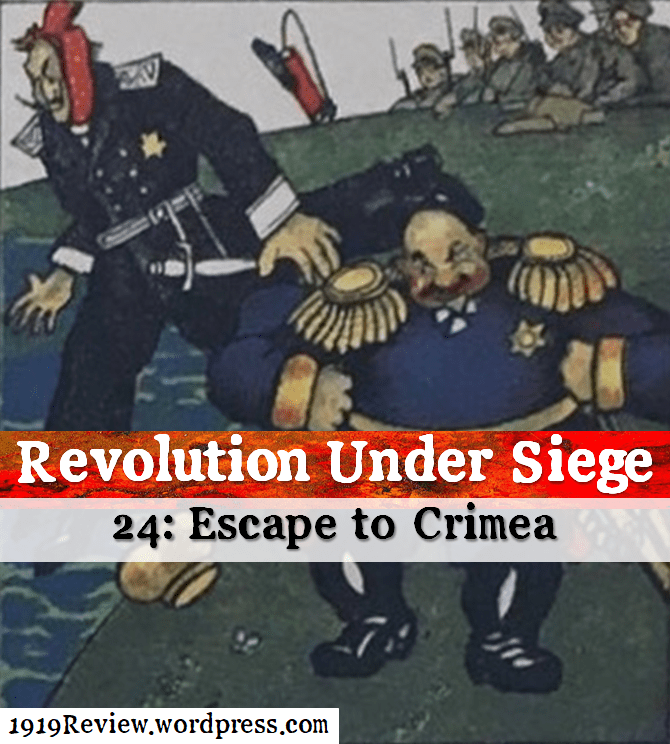
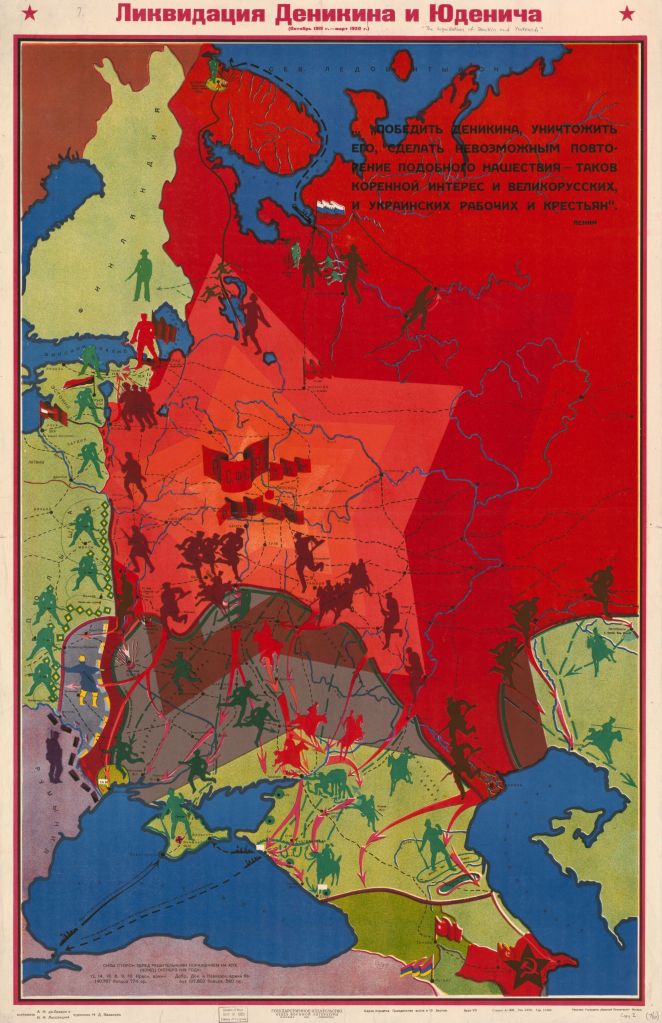

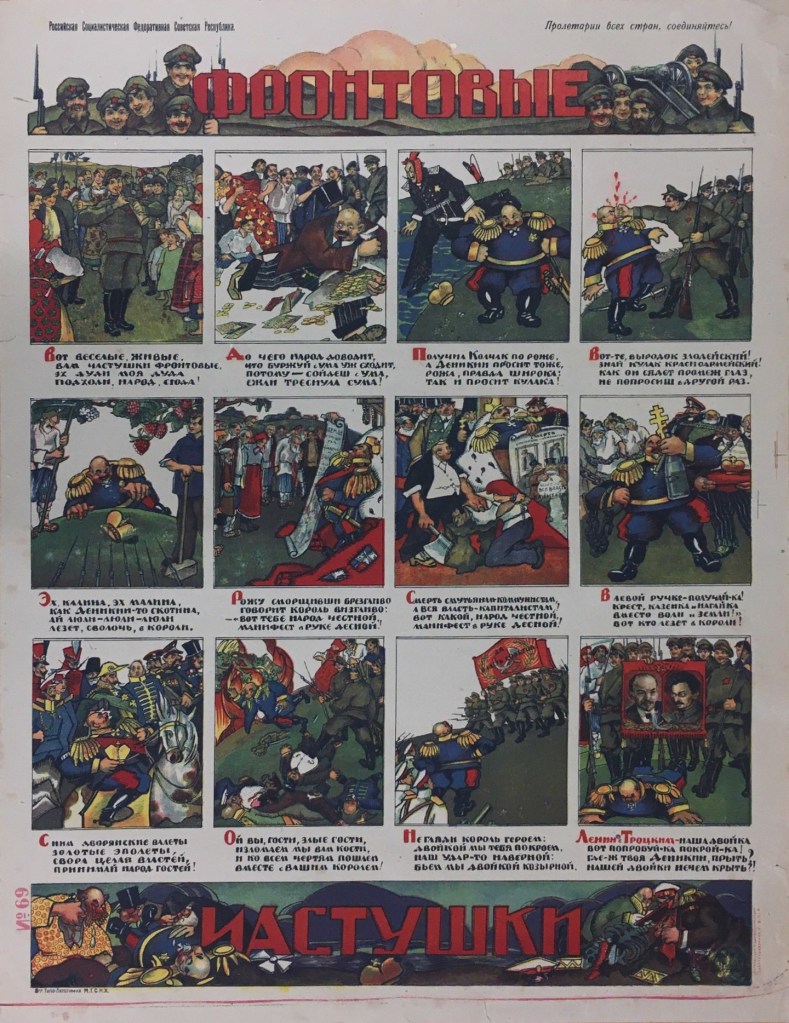
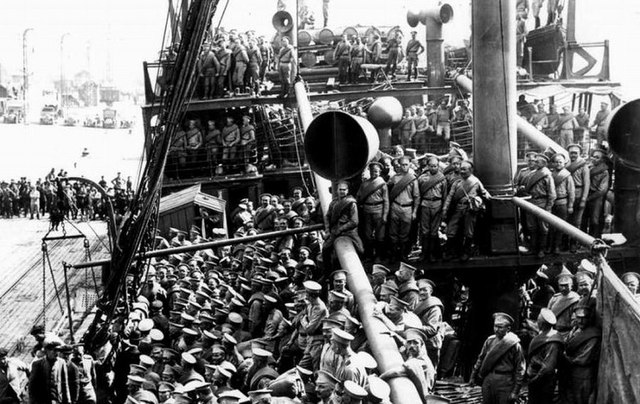
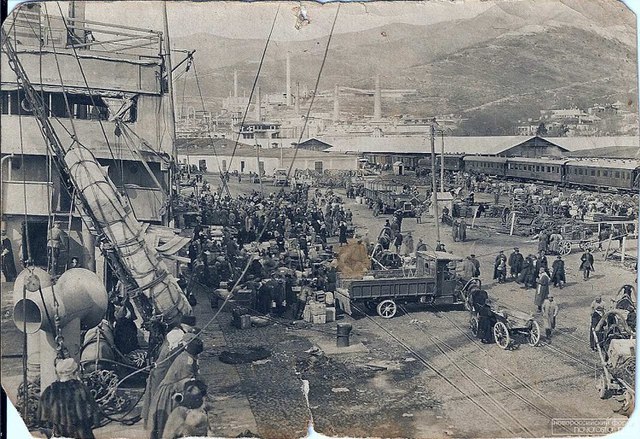
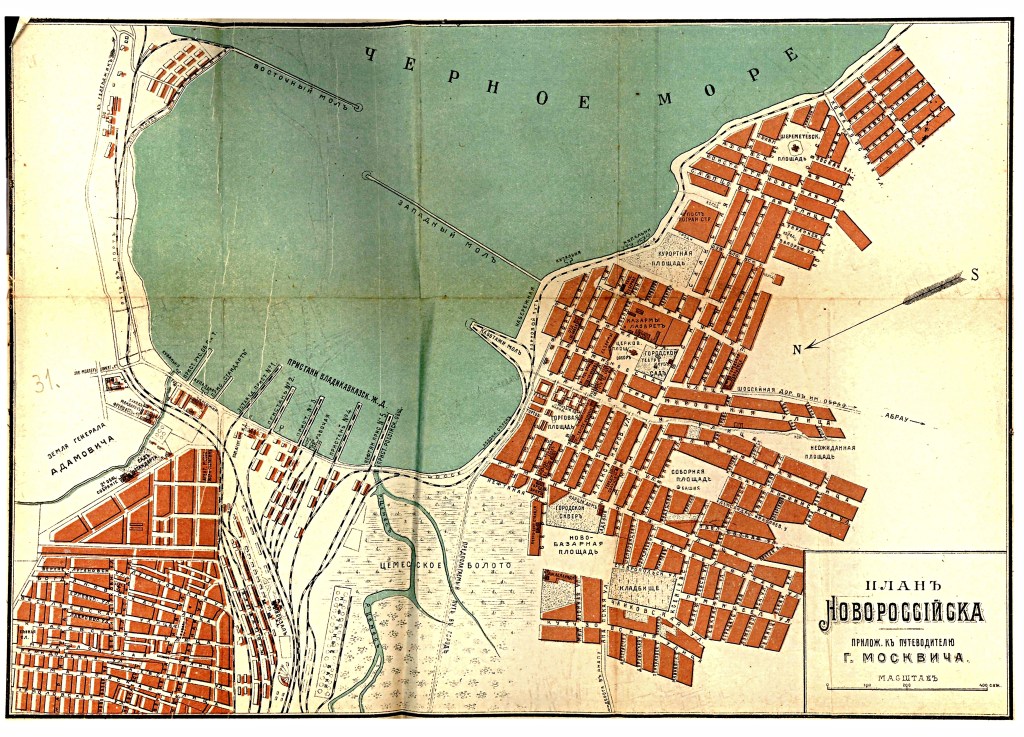

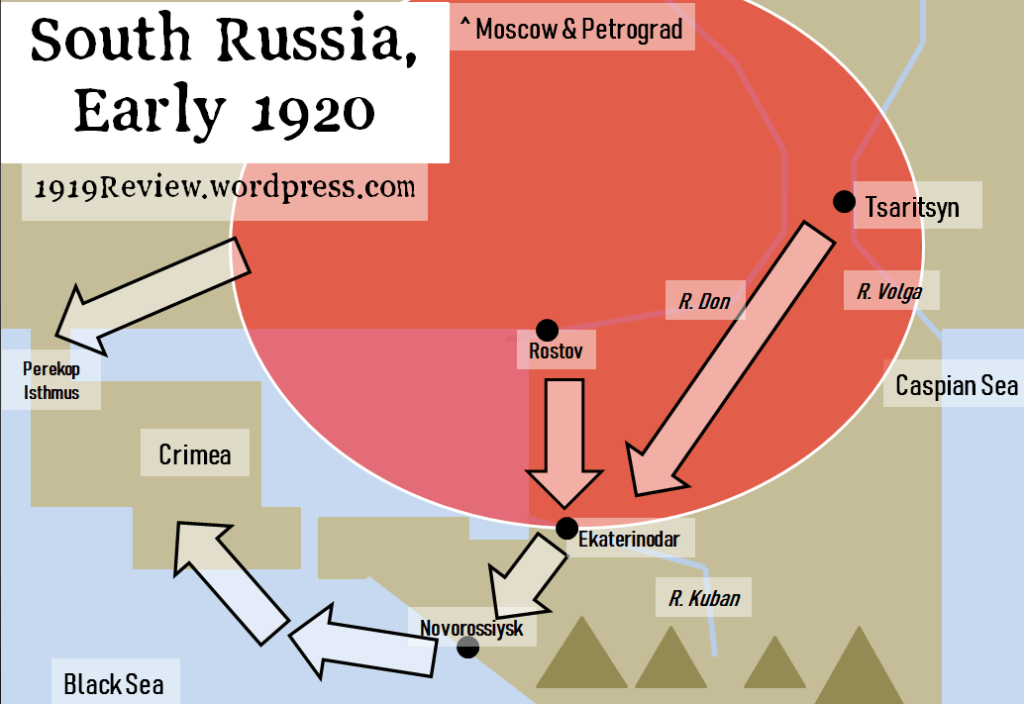
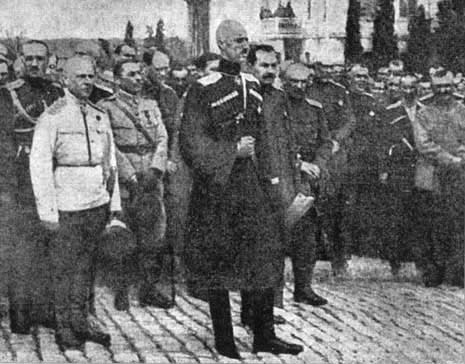


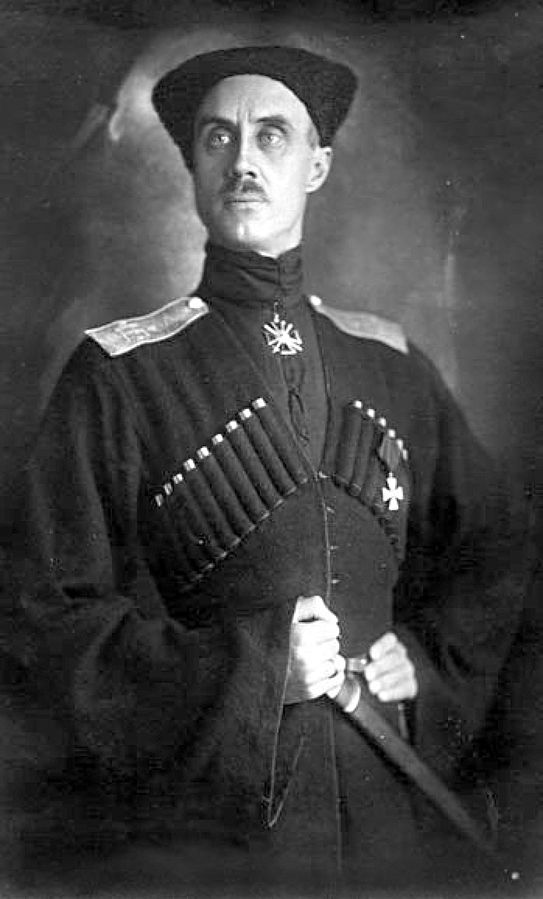


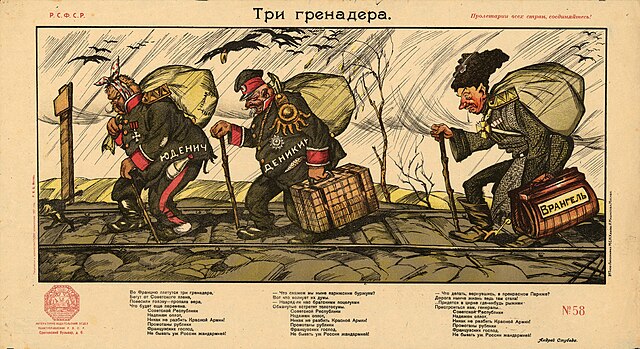
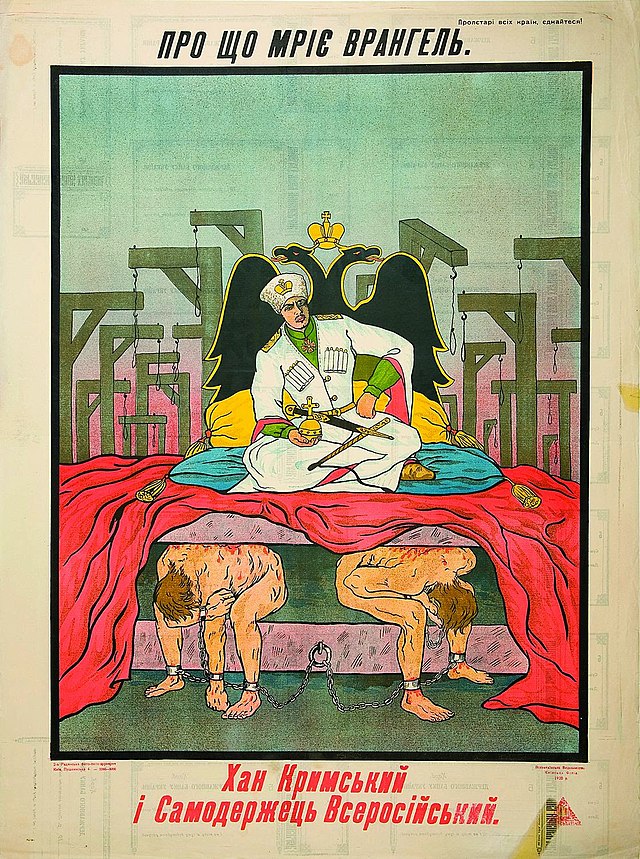
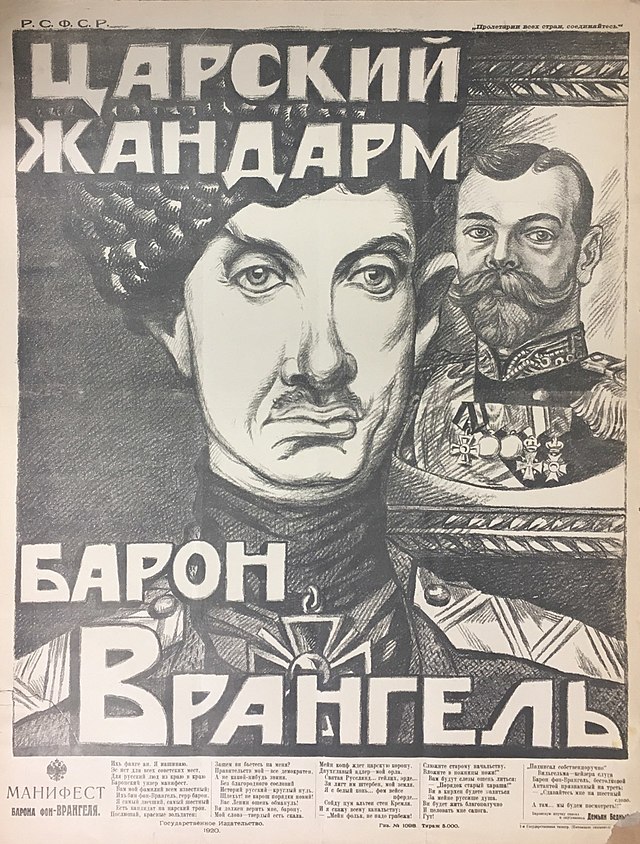

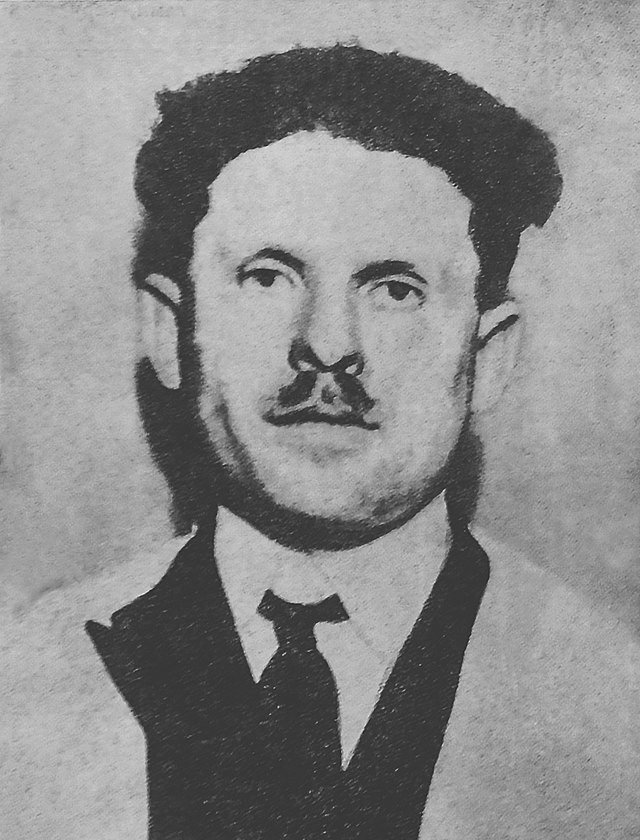
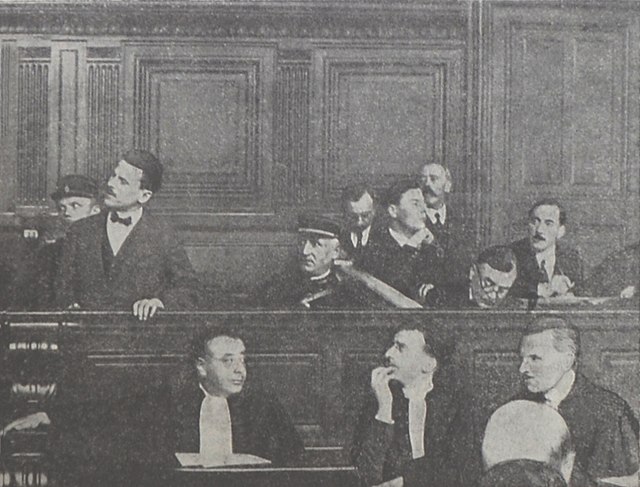

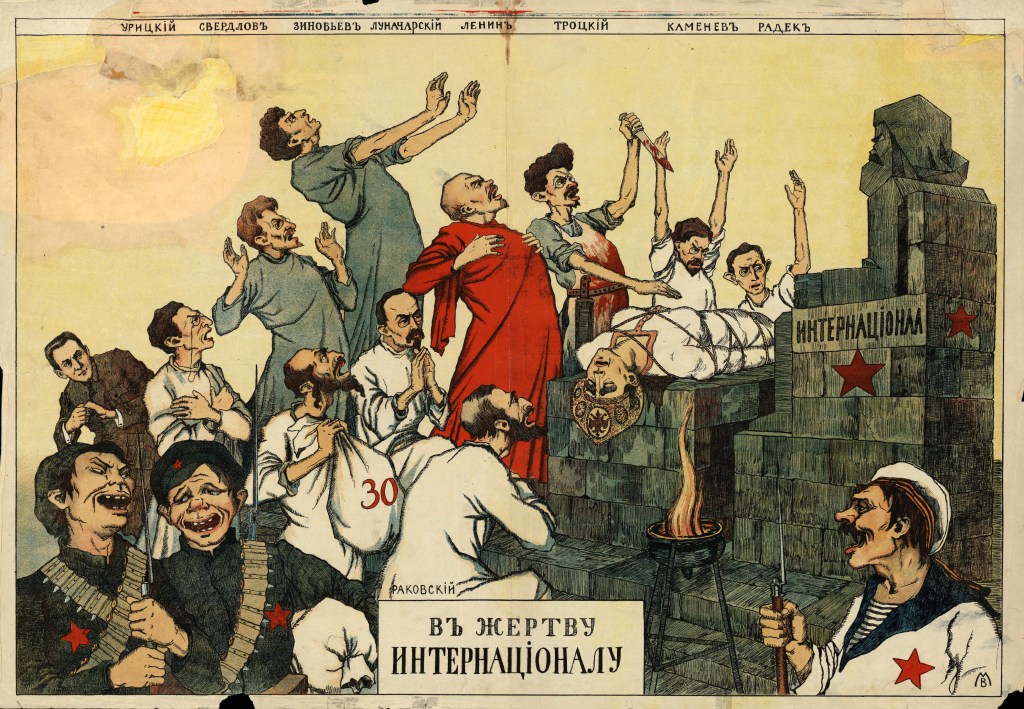

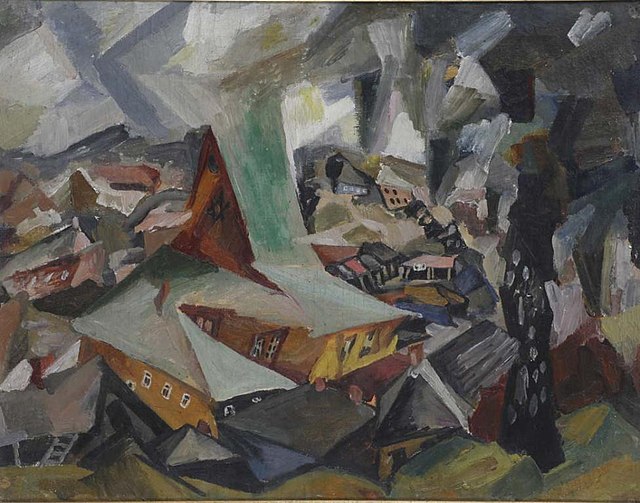
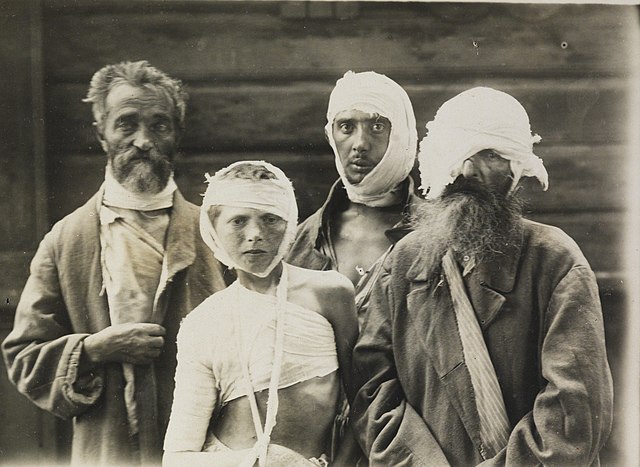


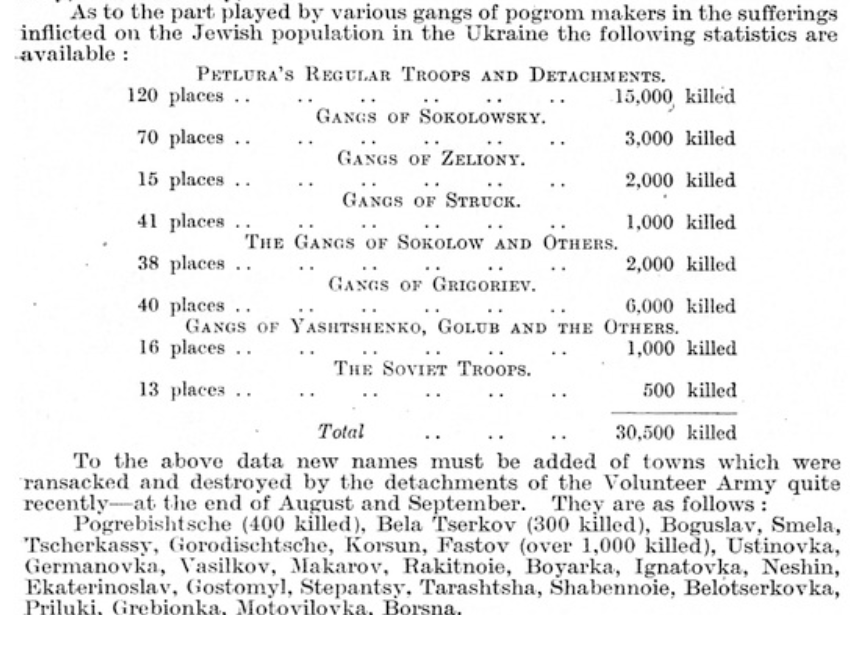
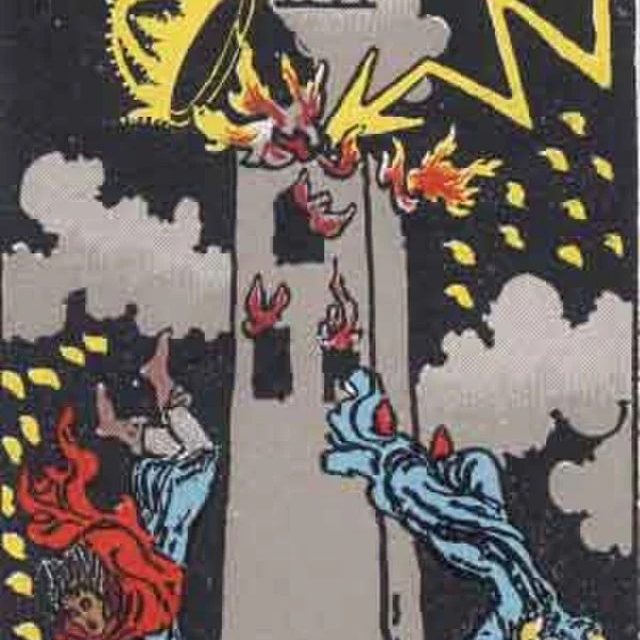
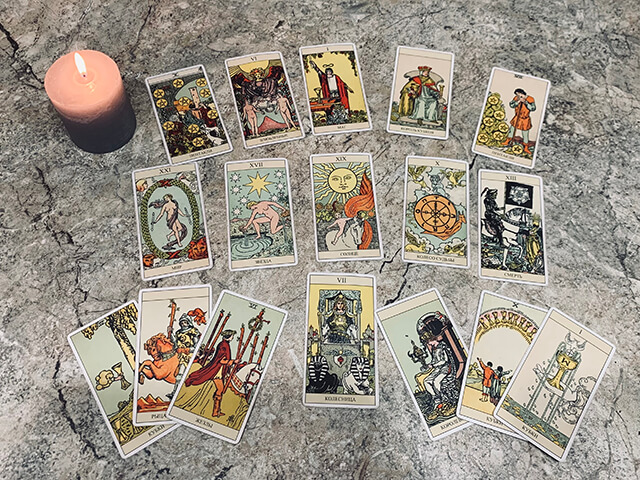

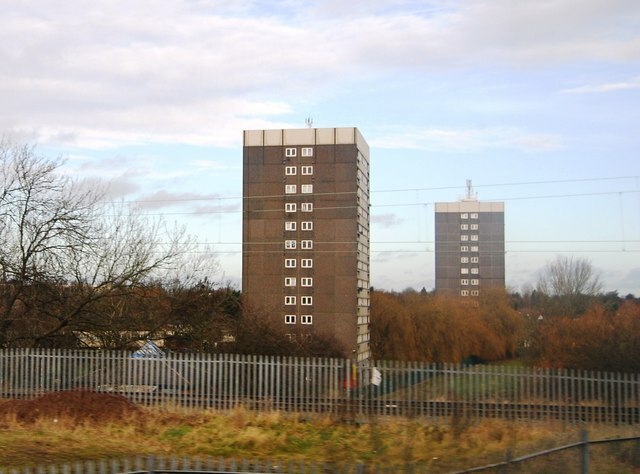
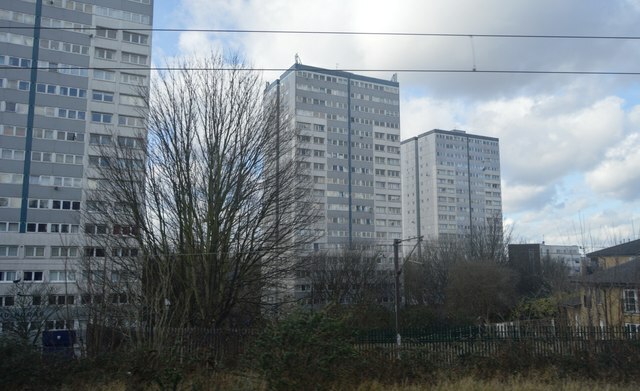
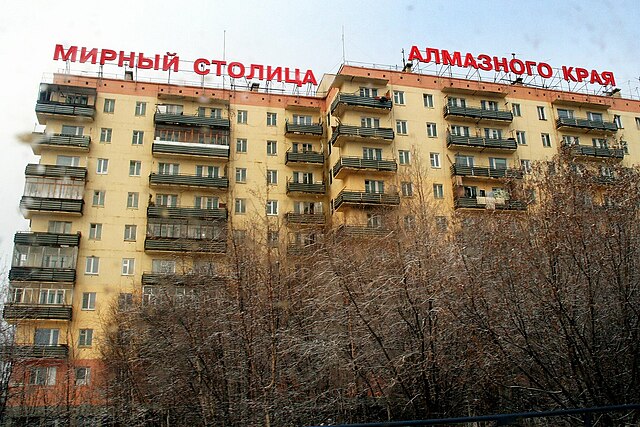
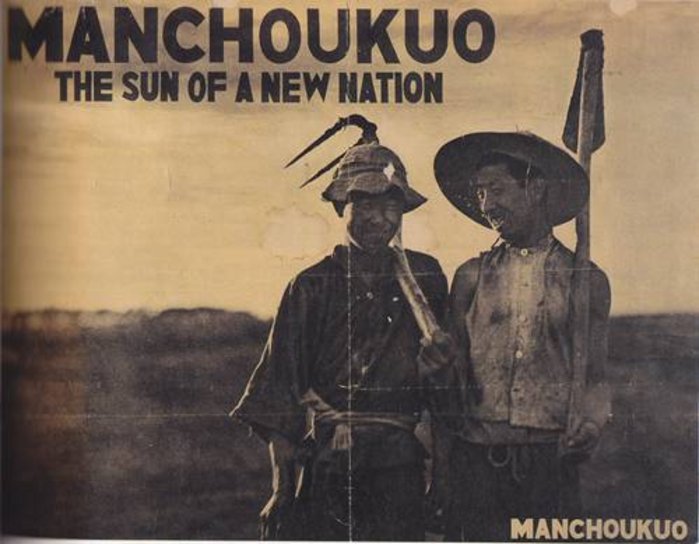
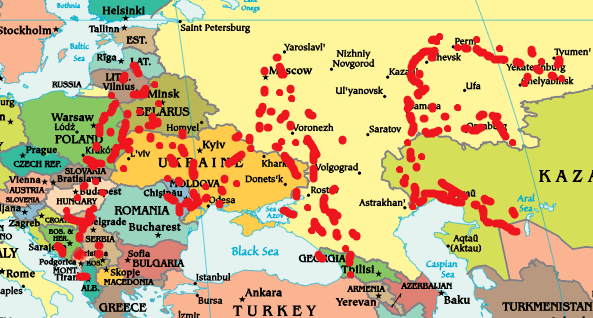

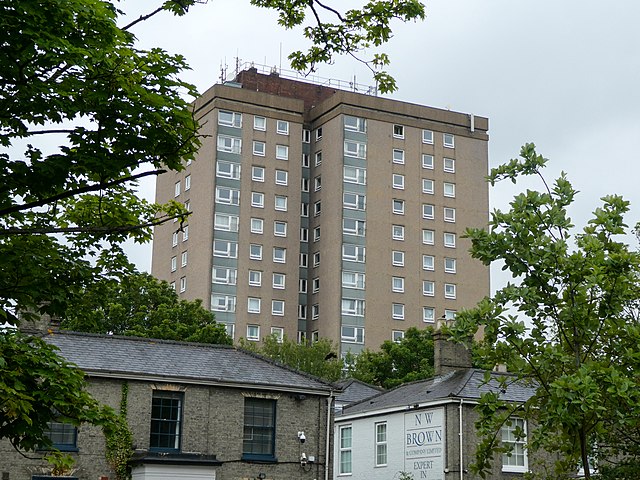
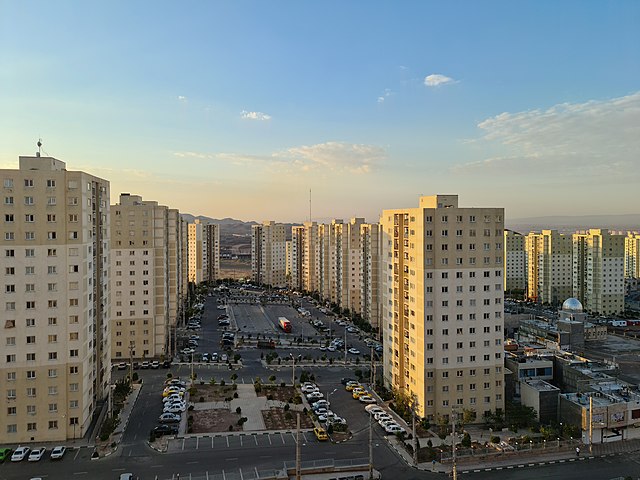
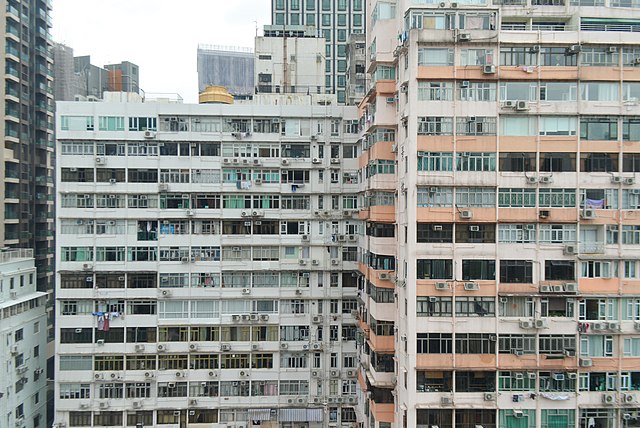
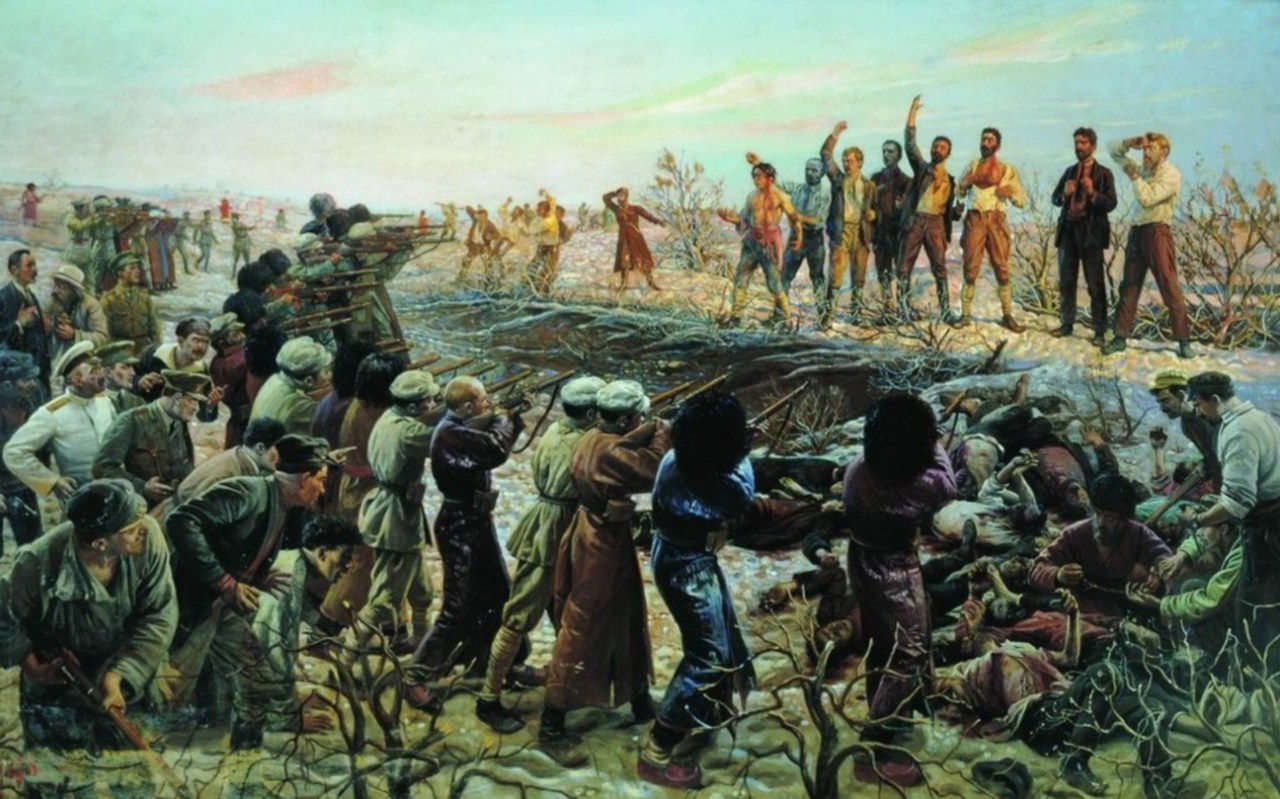


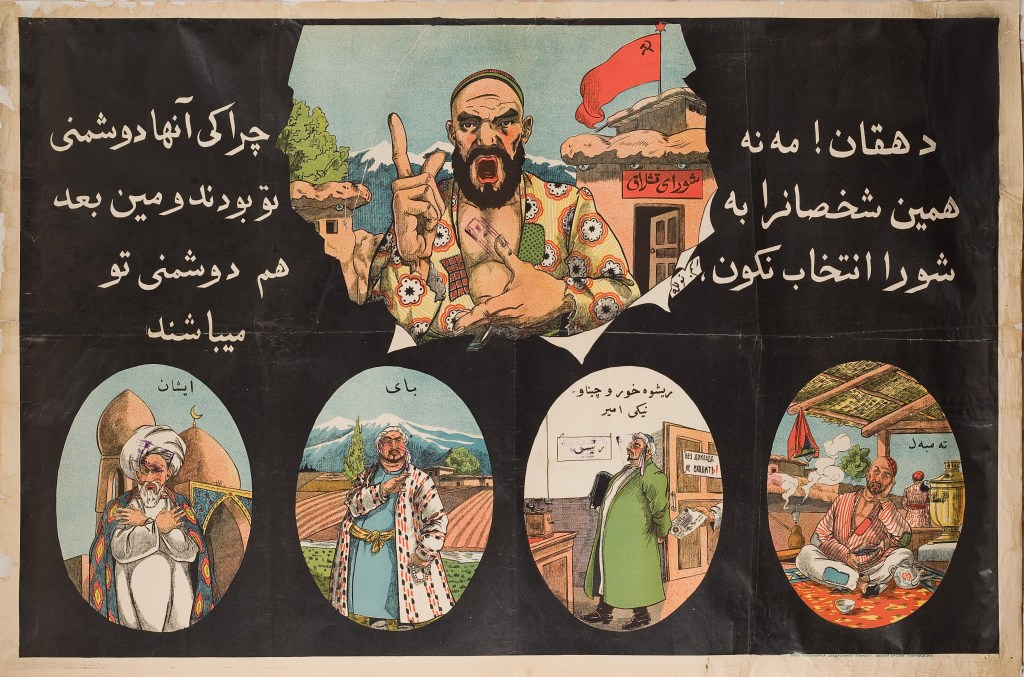

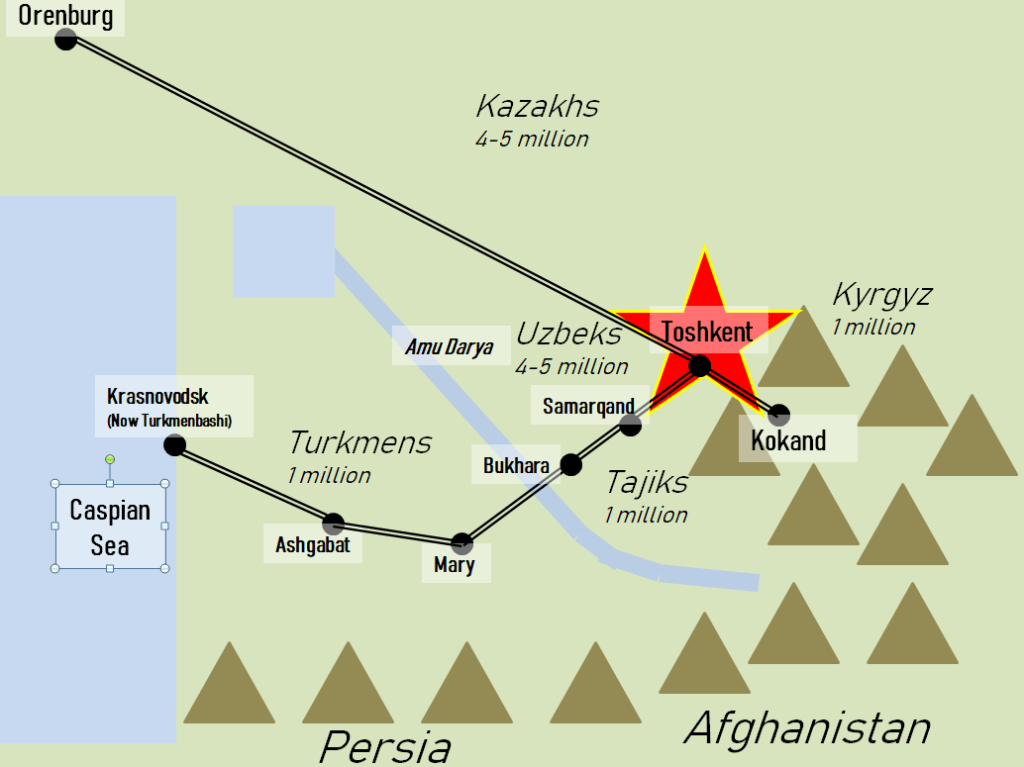

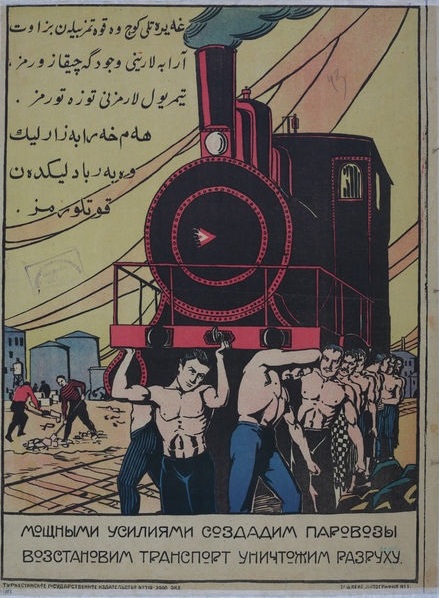
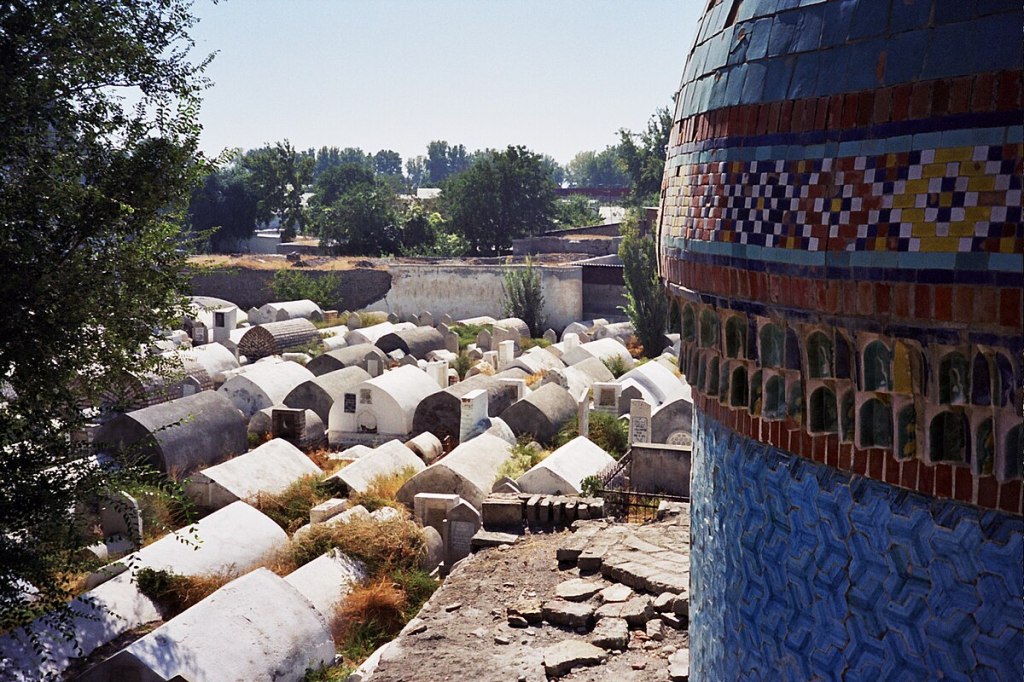
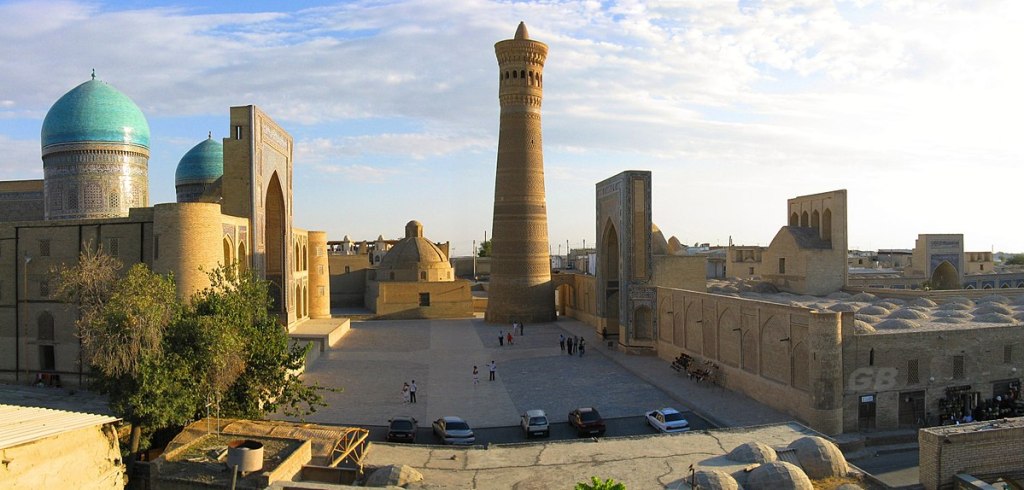
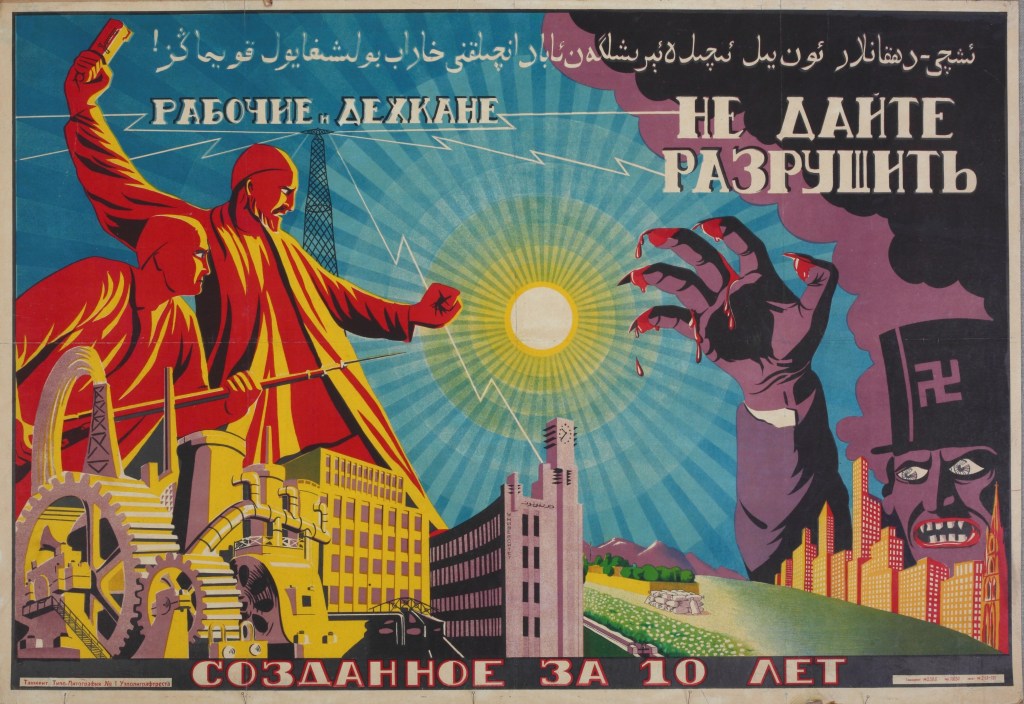


 The 1919 Review