This is an appendix to my series of posts looking at the plausibility of Orwell’s Oceania and the merits of the novel it features in, 1984. Here is a timeline I worked out for Orwell’s invented world, based on clues and cues in the novel itself.
‘a long interval of peace in [Winston Smith’s] childhood’
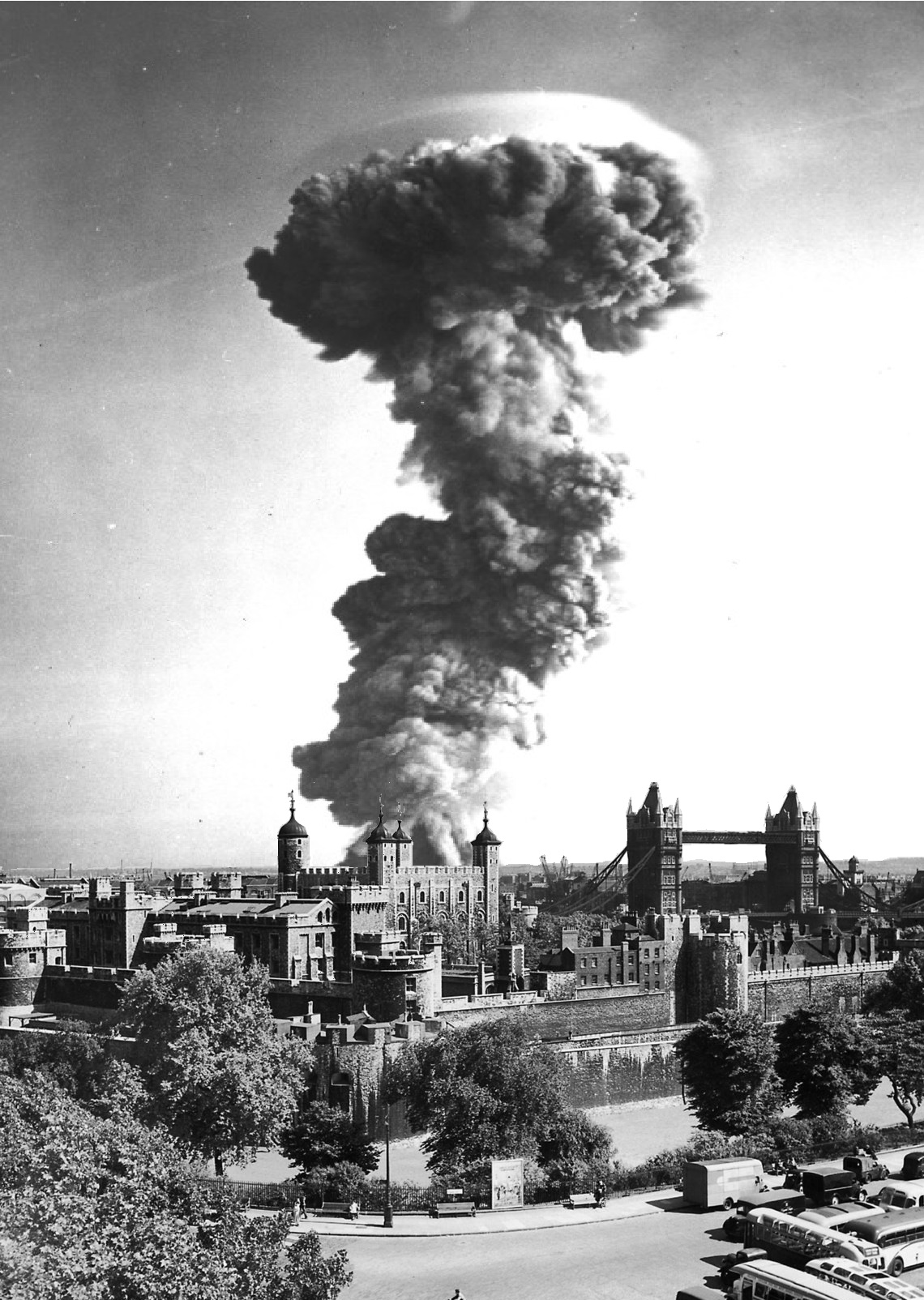
An atomic strike near London, early 1950s
c. 1950-1952
Surprise air raid alarm in London; this is likely a surprise attack by Eastasia, probably with atomic bombs
From this date, world war is continuous
1950s: Atomic warfare causes huge destruction. Hundreds of cities, mostly in North America, European Russia and Western Europe destroyed (the only named city is Colchester)
By ‘the middle of the twentieth century’, Russia absorbs Europe, USA absorbs British Empire.
1950s:
In England, an underground struggle by socialist revolutionaries, a revolution and a civil war
Street fighting in London for several months
‘one of the first great purges’
1954:
Disappearance of Winston’s father
c. 1955-57:
A time of air raids and civil conflicts, of political youth gangs wearing shirts of the same colour, proclamations, severe food shortages
Political ‘disappearances’ are already commonplace
Disappearance of Winston’s mother and sister
Winston enters state institutions
Birth of Julia in 1957
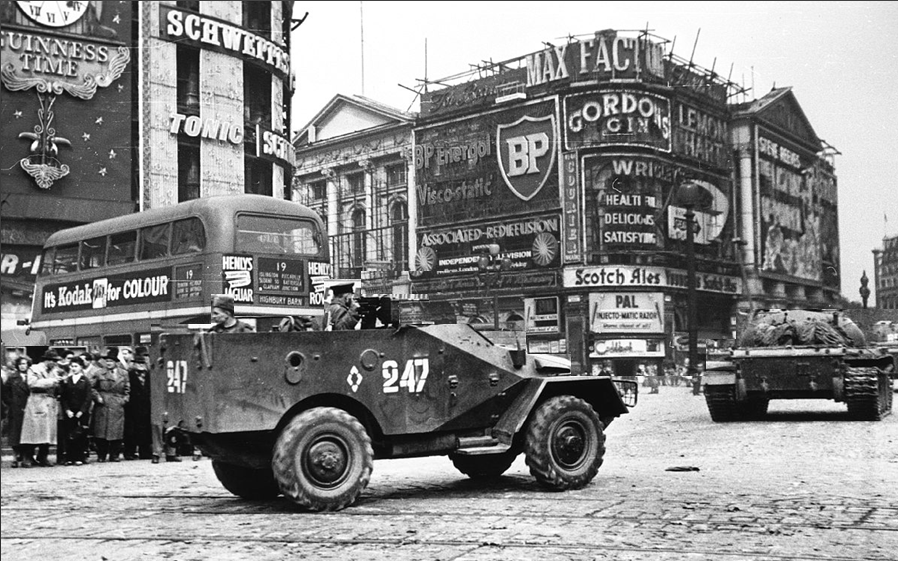
Piccadilly Circus during street fighting in London, 1950s
By 1960:
Eastasia has emerged as a unified state from ‘a decade of confused fighting’
Around 1960:
Ingsoc becomes a widely-used term
1960s:
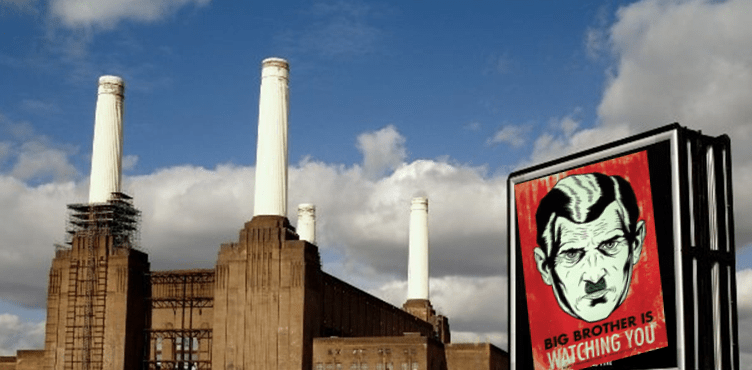
Big Brother becomes a household name
c. 1962-4
Revolutionary leaders Jones, Aaronson and Rutherford are photographed in prominent roles at some important Party function in New York
Around 1965:
Goldstein flees
‘in the middle ‘sixties’, ‘the old, discredited leaders of the party’ were ‘purged’ – ‘wiped out once and for all.’
1965:
Oceania currently at war with Eurasia
Julia’s grandfather disappears
Jones, Aaronson, Rutherford disappear
1966 or 7:
Jones, Aaronson and Rutherford confess in a show trial and, around a year later, disappear
1970:
The older generation of Party leaders is wiped out. Only Big Brother remains
Around 1973:
Winston is married to Katharine for 15 months
1977:
Winston has a strange dream involving O’Brien
O’Brien later says that he has been working on Winston’s case since this date
1980:
Oceania is now at war with Eurasia
1981:
Winston seeks out a sex worker
1984:
Ninth Three-Year Plan under way
Oceania conquers large parts of India
From Hate Week on, Oceania is now at war with Eastasia
Winston and Julia are arrested
At least one year later:
Oceania, now at war with Eurasia, first suffers defeat in Africa then wins a significant victory
In a quiet little library in a certain small town in Ireland you can find no fewer than four biographies of Michael Collins side-by-side on the shelves, along with further titles in the children’s section. A few years ago, members of the youth wing of Fine Gael used to brandish a life-size cut-out of Michael Collins in military uniform (only half ironically). And just yesterday I saw in a bookshop window a children’s book about him titled ‘The People’s Peacemaker.’ As we approach the centenary of his death, Michael Collins is still a very big deal in Ireland.
A while ago I answered a ‘What If’ question about Collins. Would it have changed the course of Irish history if he had survived the Irish Civil War?
My reply was dismissive. I wrote that if he had lived he would have been associated with all the atrocities committed by the Free Staters. The only difference between our timeline and that alternative timeline where he survived would be that the name ‘Michael Collins’ would not be surrounded with such a halo.
But I’ve done some further reading and it’s clear to me that I was wrong. Let’s address the question again.
How could Collins have survived?
Usually it’s difficult to come up with a good explanation for how things could have turned out differently. But in this case it’s very easy. Collins’ death was the result of a whole series of accidents. Those who killed him didn’t want to kill him specifically and it’s possible they weren’t shooting to kill at all. Peter Hart blames Collins’ bravado, his combat inexperience and his possible hangover. But even with all that, the chance of that bullet killing him was tiny. He was the only fatality in twenty minutes of fighting.
My alternative scenario is simple: the bullet didn’t hit him, or else it hit him in the arm or the leg rather than the head.
Usually this is the part where we say ‘If he hadn’t died that day, there was a good chance he’d have died some other day.’ Really, there wasn’t. 1500 people died in combat in the Irish Civil War. Collins was a commander on the winning side. He was respected by his enemies, who had no motive to target him. He had a very good chance of making it out alive.
Collins the conciliator
Michael Collins and Éamon De Valera are often presented as arch-enemies who were at loggerheads from the moment the Treaty was signed. In fact they were the most conciliatory figures in their respective factions.[i] Before the Treaty was signed, the British in fact saw De Valera as the one who was willing to talk, and Collins as the ‘extremist gunman’ holding him back.[ii] Collins and De Valera worked together to get others to go into negotiations. For example Collins supported a bizarre suggestion by De Valera that the relations between Cuba and the USA under the ‘Monroe Doctrine’ would be a suitable model for Anglo-Irish relations.[iii]
Neil Jordan’s 1996 movie Michael Collins skips over a key episode between the signing of the Treaty and the outbreak of Civil War six months later. Collins spent these six months trying to fudge the Treaty by means of the new Free State constitution. He ‘fumed’ not over the anti-Treaty side but over the British, with their ‘insolence’ and intransigence. He tried to come up with a constitution that would bridge the divide between pro-and anti-treaty factions, but Churchill and Lloyd George again and again renewed their threat of war. I would have scoffed at the title ‘People’s Peacemaker’ before – but he really did make peacemaking his number one task at a time when other Free Staters (Blythe, Griffith and O’Higgins) wanted war as a chance to wipe out the anti-Treaty forces.
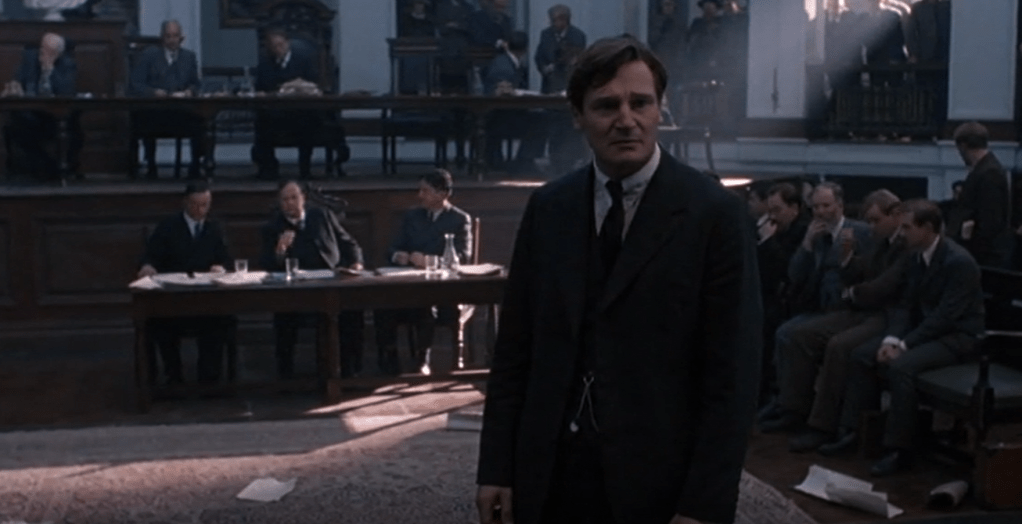
Michael Collins (Neil Jordan, 1996)
Collins in the Civil War
Memos from early July 1922 (the first weeks of the Civil War) indicate that Collins was open to peace proposals: ‘We will meet them every way if only they obey the people’s will.’ He allowed open anti-Treaty political activity and opposed the punishment of civilians near ambush sites or indiscriminate firing in the direction of snipers.[iv]
This marks a contrast with how, in the months after his death, the Free State cabinet signed off on executions without trial. They passed the draconian Public Safety Act, then applied it retroactively to enemies captured before it was in force, just so that they could have an excuse to put their opponents up against a wall.
During the fighting in Dublin in the first week of the war, when Collins was still in charge, the Free State troops kept only a very loose cordon around the city. This made military and political sense. It encouraged the anti-treaty forces to slip away instead of fighting to the end.
Again, there is a profound contrast with how the war was conducted later. WT Cosgrave, the head of the Free State government, in January 1923 dismissed any attempt to make peace with the anti-treaty forces. The executions probably prolonged the war, but he didn’t mind; his goal was to wipe out the anti-treaty forces, not to end the fighting and risk ‘another Four Courts.’[v]
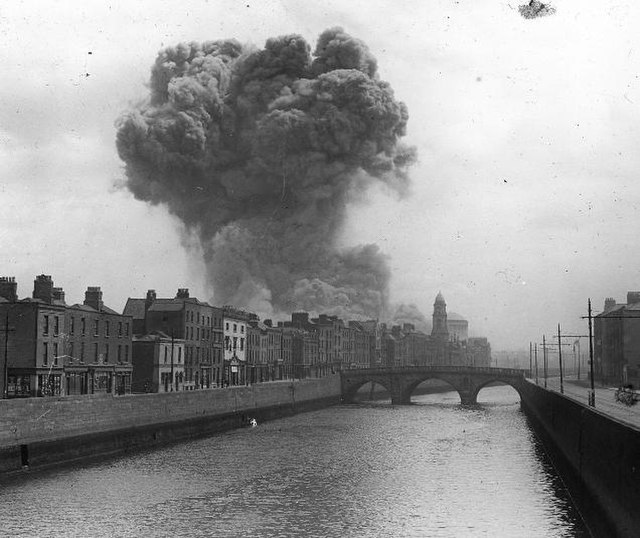
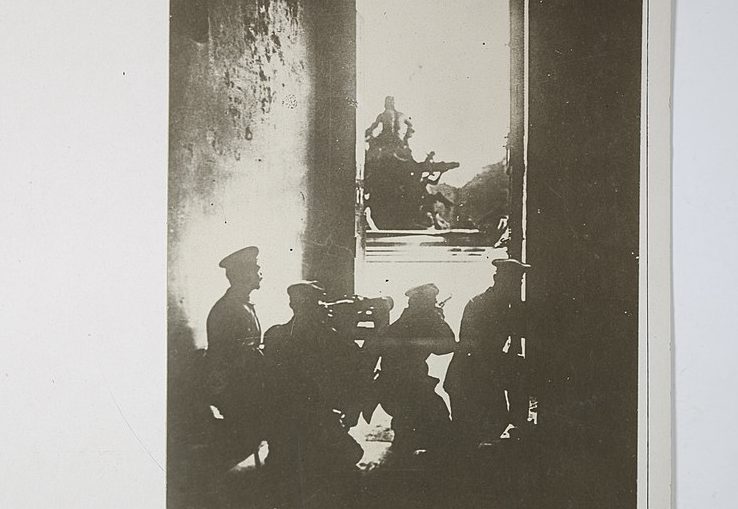
Free State forces ignite the ammunition dump of the Four Courts garrison, June 1922. This marked the end of the Four Courts occupation by anti-Treaty forces and the start of the Civil War.
There was a fundamental disagreement on strategy: Collins wanted a victory to bring an end to the fighting. The hardliners (who were mostly civilians!) wanted to exterminate their enemies.
OK, the sceptical reader might say. But that was later. You’re comparing statements from July with statements from the following January. Maybe Collins would have had a different attitude with the war dragging on.
But even in the early weeks of the war other Free State figures were waging a different war from Collins. Eoin O’Duffy (third-in-command after Collins and Mulcahy) was opposed to any peace initiatives. ‘The Labour element and Red Flaggers are at the back of all moves towards “Peace” […] if the Government can break the back of this revolt, any attempts at revolt by labour in the future will be futile.’[vi] Collins was still alive and probably read those words. He was not sympathetic to labour. But he didn’t agree with this approach.
So… What if he had lived?
I still don’t have a positive view of Michael Collins. He supported the disastrous Treaty. He broadly supported the counter-revolution which the pro-Treaty side represented, such as the suppression of the Republican popular courts system in July. His ‘Squad’ of assassins would go on to commit atrocities in Kerry during the Civil War. He was part of the guerrilla movement which wanted an independent capitalist Ireland (and was willing to settle for much less). He was emphatically not part of the mass labour movement of the time which in my view really promised a way forward and held the potential to avert Ireland from the mire of partition, Civil War and Church control.
And as a peacemaker, he failed. He acted under the British government threat of ‘terrible war,’ and allowed them to drive him into a ‘terrible war’ with his former comrades.
But I’m now convinced that he was very different from those who ruled in the new Free State – Cosgrave, O’Higgins, Blythe, O’Duffy, etc. In the Civil War itself, there are plenty of indications that he was pursuing a different strategy. In our own benighted timeline, the war dragged on until the scattered and miserable remnants of the anti-treaty forces dumped their arms and went home. There was no peace treaty. The Civil War remained an open wound. Had Collins lived, he might have used his personal authority to call for a peace process or treaty negotiations. There were plenty of voices calling for peace, and the addition of Collins’ voice would have been significant. The war might have been wound up earlier with a negotiated settlement, with less bitterness and bloodshed – crucially, with less of a total, sweeping victory for the greasy till-fumbling Irish big business class.
There are limits to this. Conor Kostick argues in Revolution in Ireland that Collins was a kind of Bonapartist figure: someone who has personal authority and is able to ‘rise above’ social and class conflict, or at least to appear to do so. In the case of Collins, he had the support of many armed paramilitaries and a huge section of the broader public. He leveraged this to try to bridge the divide between the pro- and anti-treaty forces.
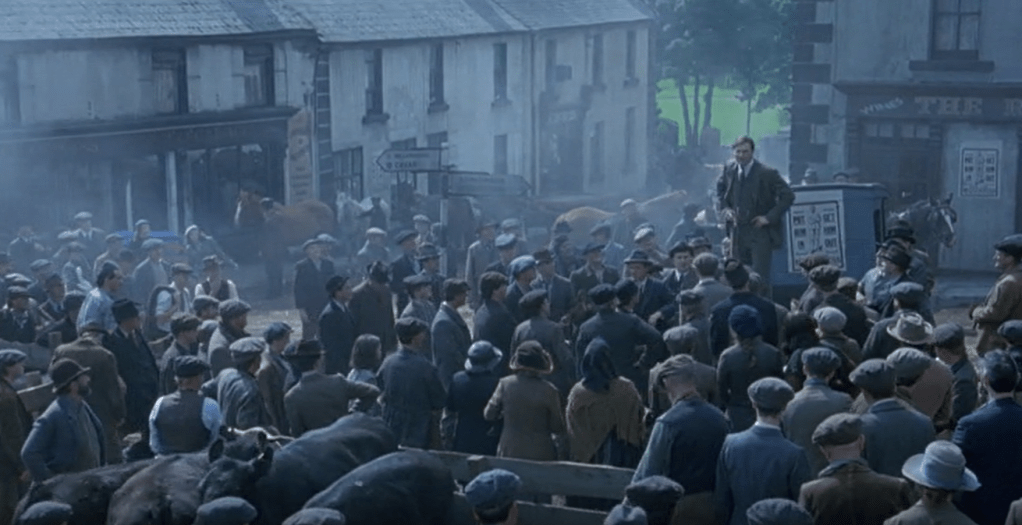
Collins addresses a street meeting. Michael Collins (Neil Jordan, 1996)
But the thing about Bonapartist figures is that they are given power by conditions of social, economic and political stalemate. This appears as their own personal ‘greatness’ but it is not the case. These conditions of stalemate are temporary, so Bonapartes have a sell-by date. The really striking fact about Collins’ death is that it came at the exact historical moment when the Free State forces had triumphed and the stalemate had come to an end.
What does this mean concretely? Had Collins lived, his authority would have waned. The Free State would have tamed him or discarded him. He had decades more to live, and he could have lent his remaining personal authority to other causes. He becomes a blank slate and we can imagine him as a dissident, as a politician or as a military man, as a Pilsudski-type authoritarian strongman, or as a repentant Republican, or as a statesman who reconciles Fianna Fáil and Fine Gael, or who ends partition. We can imagine whatever we like. This kind of wild speculation can produce a scenario where he changes the course of Irish history. But with his waning authority, the boost he could have given to this or that cause would probably not have been decisive.
But if he had lived, the differences between him and the hard-line Free Staters would have become more obvious. There would have been a breach so clear and vitriolic no 1990s biopic would have been able to skate over it. Those Free Staters with whom Collins would have split, from Cosgrave to O’Duffy, were the same people who went on to lead and to found Fine Gael.
But in this scenario where Collins lives and, in the short term, struggles for a peace treaty, two things are certain.
One: in this alternate timeline, if the title ‘The People’s Peacemaker’ was applied to Collins, it would have a totally different meaning, a meaning which implies criticism of the Free State government rather than support for the Anglo-Irish Treaty.
Two: Young Fine Gaelers, if such a specimen existed in this alternate timeline where Michael Collins lived, would not be seen dead carrying around an effigy of him.
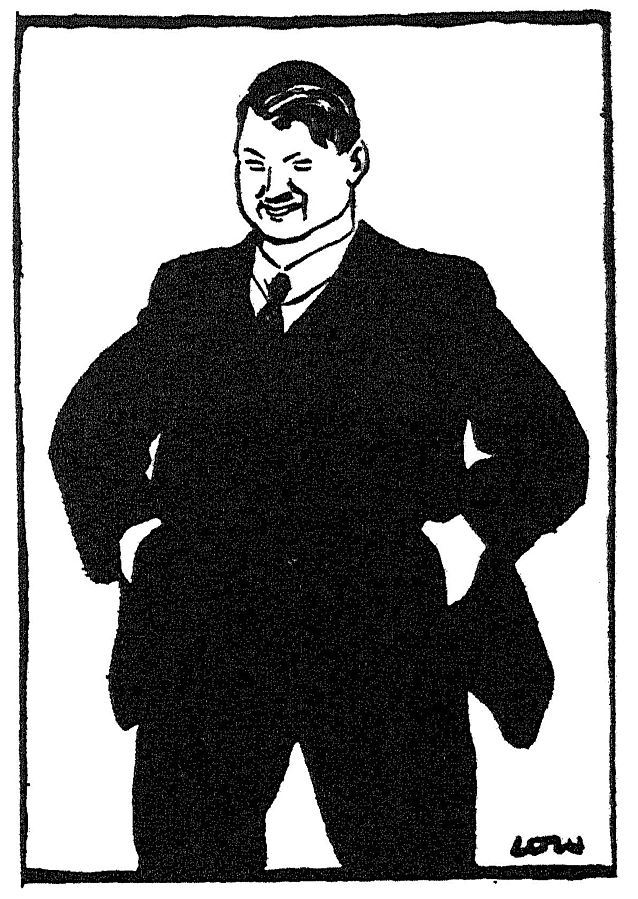
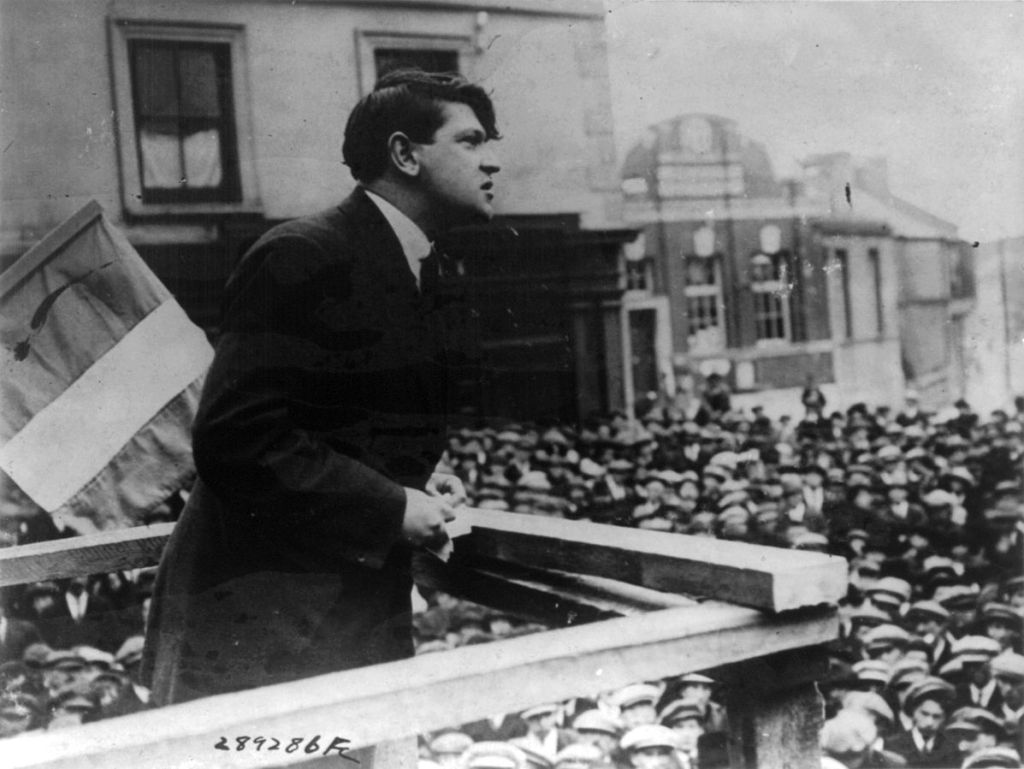
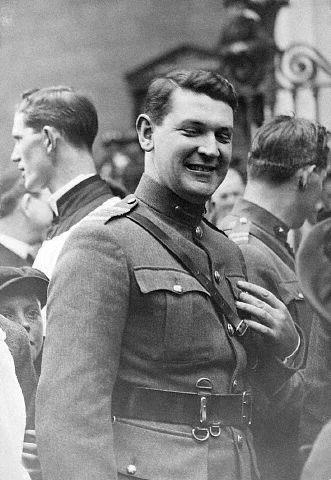
A picture of Collins which I find disarming and humanising. He has been caught with an awkward, perhaps pained expression on his face. Collins the politician, in a caricature by David Low.
[i] Conor Kostick, Revolution in Ireland: Popular Militancy 1913-1923, Cork University Press, 1996 (2009), p 194
[ii] Peter Hart, Mick: The Real Michael Collins, Macmillan, 2005, p 268-270
In January 1918, a few months after the October Revolution in Russia, a parliament called the Constituent Assembly met for one day before it was suppressed by the Soviets. This blog has dealt with the episode before. The incident suggests a ‘What if?’
In OTL (Original Timeline, ie, real life), the Soviets were willing to allow the Constituent Assembly (CA) to exist as a subordinate body. Likewise the CA was willing to let the Soviets exist as a subordinate body. But neither would tolerate the other attempting to assume state power.
But what if the Soviets were willing to bend the knee? What if the Constituent Assembly was allowed to assume control? How might the Russian Revolution and Civil War have developed from there? How might the Russian Twentieth Century have been different?
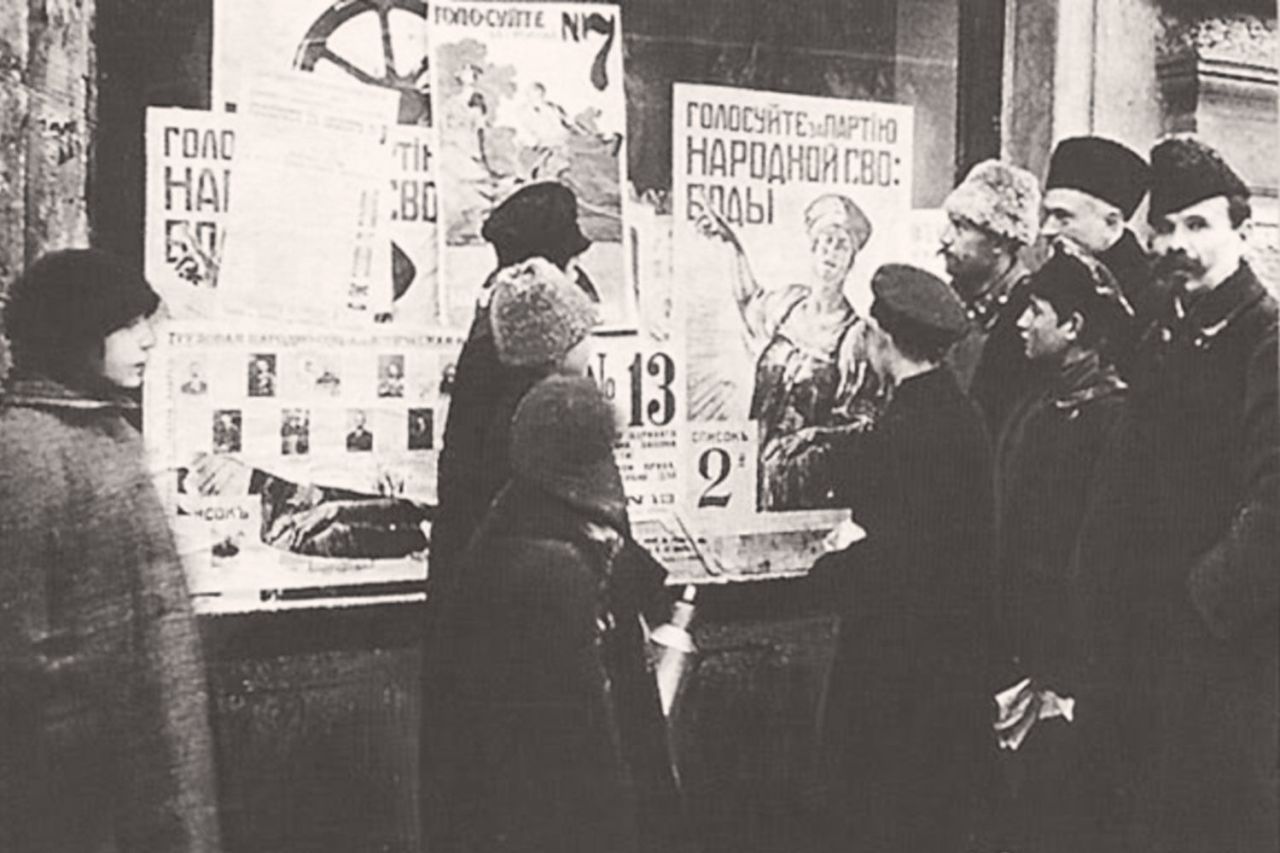
Posters for the Constituent Assembly elections
Element of Divergence
First we should explore plausible scenarios where this could take place. We should answer the question of why and how it might come about that the Soviets, having seized state power, would be willing to hand it over to the CA.
The Soviets were workers’ councils, a system of direct participatory democracy. The Bolsheviks Party had won a decisive majority in these councils in September 1917. They believed that the Soviet was a higher form of democracy than the CA. They hated the Right Social Revolutionary party (RSR), which over 1917 had made compromises to the right and enacted repression against the left. They believed that the split between the RSRs and the Left SRs rendered the election results meaningless.
In other words, the Bolsheviks (along with their allies the Left SRs) had strong reasons to suppress the CA.
In spite of these strong reasons, it is not that difficult to imagine the Soviets giving up power to the CA. In Germany and in Austria in this period, and in Spain in the 1930s, we see many examples of communists, socialists and anarchists giving up power to a bourgeois-democratic government in exactly this way. In fact, they were far more flagrant. The German Social Democrats assembled militias of far-right veterans to suppress the German Revolution. The Communists in Spain became the enthusiastic apologists of a liberal-republican government and preached that Spain was not ready for revolution. In short, the Bolsheviks are the outlier among social-democratic and even nominally communist parties in the Twentieth Century in that they were really willing to seize and hold power.
In our ATL (Alternative Timeline), the leadership of the Soviet is more in line with the mainstream of international social democracy – ie, more timid and cautious.
I do not propose a single ‘Point of Divergence’ – for example, Lenin is murdered by agents of the Provisional Government; Trotsky stays in a British concentration camp in Canada. Rather I propose an Element of Divergence, a factor which develops differently over a whole period of years and even decades. In this ATL, the Bolshevik Party as we know it simply do not develop. The more radical and militant trends within the Russian Social-Democratic and Labour Party (RSDLP) do not cohere into the Bolshevik party from 1903 to 1912; rather they remain loose and scattered and undefined. We will, for convenience, refer to them as the militant socialists.
Fighting during the German Revolution, during which the equivalent of the Soviets did hand over power to the equivalent of the Constituent Assembly.
The Alternate Timeline
Pushed by a mass upsurge of workers, soldiers, sailors and peasants, the militant socialists end up in control of the Soviet by October 1917. They proceed to seize power in some incident corresponding to the October Revolution. But by January they are afraid of their own power and uncertain what to do with it. Their own base – workers and poor peasants – feel the hesitancy from above and demoralisation begins to set in. Meanwhile the militant socialist leaders feel pressure from the Russian ‘intelligentsia’ (professional middle classes) which supports the RSRs and the CA.
Instead of shutting down the CA after a single day, they remain in it, trying to negotiate a strong position for the Soviets within a new CA-dominated political regime. In other words, they turn back the clock and accept Provisional Government Mark 2. The discredited Provisional Government, attacked from right and left then finally overthrown in the October Revolution, has returned in a new guise with many of the same personnel.
Thus begins the Chernovschina – the regime of Viktor Chernov, a firebrand within the RSRs who in OTL served for that one day as President of the Constituent Assembly.
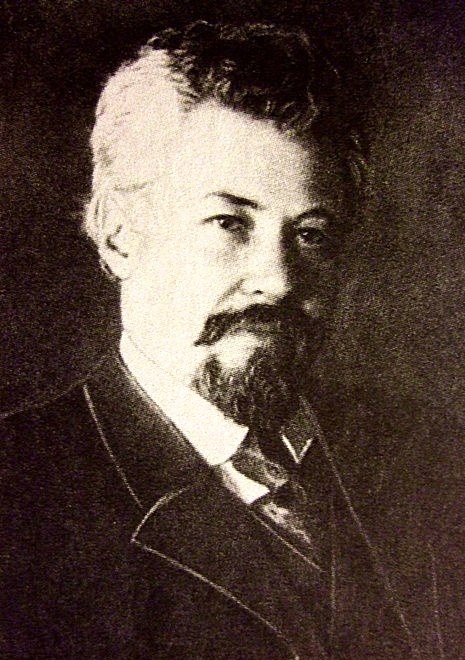
Viktor Mikhailovich Chernov, president of Russia for one day in 1918. During 1917, though a Right SR, he had been critical of the doomed policy of coalition with the right-wing parties
Chernovschina
In OTL, the RSRs set up a government at Samara during the Civil War in the name of the Constituent Assembly. This government was called Komuch. It gives us valuable insights into the main features of the all-Russian Chernovschina which develops in this ATL.
The Chernovschina, like Komuch, would have a narrow base of support: a layer of the intelligentsia, and not much beyond that. Its decisive majority vote in the CA elections may seem to indicate that it had a mandate. But for Komuch, this mandate translated into precisely nothing. It was unable to raise an army. It suppressed the Soviets on its own territory and gave back the industries to their capitalist owners; still the wealthy refused to support it.
Komuch governed a population of 12 million people on the Volga. Chernov would govern all of Russia, including the central industrial region where the factory workers in their millions are enthusiastic supporters of the Soviet. In these central provinces and great cities, the Bolsheviks actually won a majority in the CA elections. Unlike Komuch, the Chernovschina would be able to present itself as having the support of the Soviet; this and this alone, the support (really the submission) of the Soviet, explains why it is in power.
It has a tense relationship with the Soviet, with the working class, with the poor peasants. But the militant socialists are forced to act as the enforcers of the Chernovschina. They try to whip their supporters into line, because to do otherwise would be to admit their own bankruptcy.
As in OTL, famine begins, striking the cities hardest. Chernov refuses to consider the kind of expropriations which the Bolsheviks practised in OTL; thus he retains the passive support of the peasant majority, but loses the active support of the cities.
Thus the working class, its hopes raised high by the October Revolution, feels a horrendous demoralisation set in as 1918 advances. Many still hold out hope that the Chernovschina will deliver for them, or that the Soviet might yet overthrow the CA. On that basis, Chernov is still able to mobilise some support.
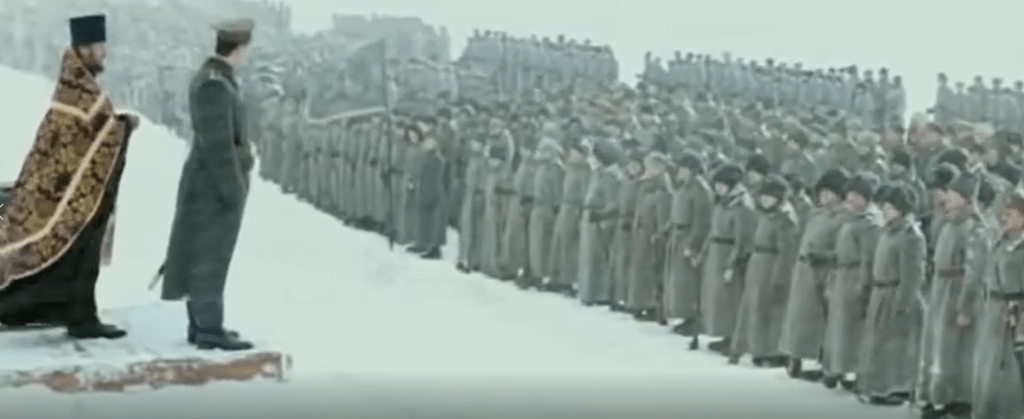
Still from the movie Admiral, dir Andrey Kravchuk, 2008. In ATL as in OTL, the White Guards, with the blessing of the church, rallies the troops for counter-revolution.
Civil War
And support he needs. The Russian armed forces, though in an advanced state of collapse, are fighting a desperate war against Germany. Meanwhile in ATL as in OTL, military officers, nobles, the bourgeoisie and the church organise counter-revolutionary armies. They see the RSRs as little better than the militant socialists; in any case, the militant-socialist bogeyman is an integral part of the Chernov coalition. Alongside the new Russian army which Chernov is trying to build, the Red Guards are the main armed force on which the CA can rely.
And Chernov himself, as in OTL, supports the seizure of noble land by peasants. The emergent White Guards have no reason to be less hostile to the RSRs than they were to the Bolsheviks in OTL.
It is frankly impossible to see how the Chernovschina can win the war against Germany, or even to hold out until Germany’s defeat in the West. But as in OTL, they are determined to continue the war. We must envisage an inexorable German advance to the gates of Moscow itself, even the fall of Petrograd, before the RSRs are forced to sign a peace treaty even more humiliating than the Treaty of Brest-Litovsk.
The Allies, meanwhile, look askance at the Chernovschina for the same reasons the Whites do: the communist bogeyman. Initially they support Chernov against Germany, but then turn against it when the peace treaty is signed.
So we end up as in OTL: White armies, backed by the Allies, fighting against the ‘Red’ (perhaps the ‘Pink’) regime of Chernov. The Allies might be less enthusiastic about intervention because the Chernov regime is more amenable to them – paying the debts and not seizing the factories. It is possible the Allies, or at least some of the Allied countries, would remain neutral. But on the other hand the Allies would not be held back by their own people. In OTL, there was deep support for the October Revolution among working-class people in the western countries, resulting in the ‘Hands off Russia’ movement and the Black Sea mutiny. These factors tied the hands of Allied intervention. It is doubtful the western working class would be as sympathetic to the Chernov government, so the Allies’ hands would not be tied in the same way.
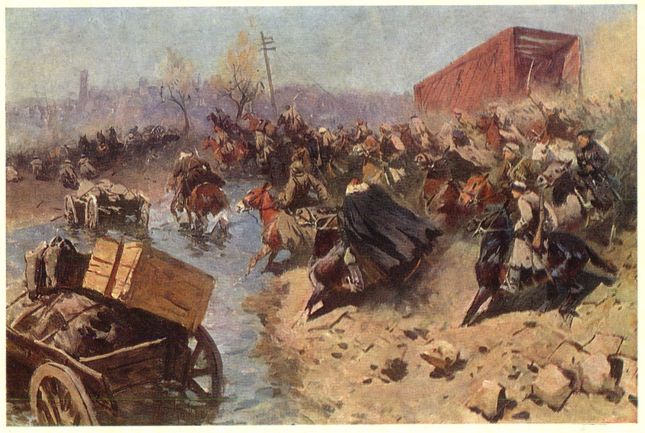
Painting on the Civil War by Mitrophan Grekov
The Fall of the Constituent Assembly
Increasing discontent in the ranks of militant socialists at some point breaks out into a mass uprising against Chernov in Moscow. Meanwhile Chernov and co have grown impatient with the Soviet; they see it as the main obstacle to Allied support. So the Chernovschina engage in the bloody suppression of the uprising of the Moscow proletariat. This results in the final liquidation of the Red Guards and the Soviets, and the final demoralisation of the working class. The Revolution is over.
The Chernovschina tries to fight on, but its people are utterly demoralised and it is beleaguered on all to sides. It succumbs to the onslaught of the White Armies. The death-blows are probably dealt in the campaigning seasons of Spring and Summer 1919.
So this ATL leads us to a White victory in the Russian Civil War. That is a ‘What If’ for another day and another post. But suffice it to say that a White military victory would only be the beginning of the violence. The White movement, in order to fulfil its aims, would terrorise the urban population into submission and seize the land back from the peasants. The scene would be set for decades of conflict as the White generals invade the newly-independent republics one after another, trying to restore their vision of ‘Russia one and indivisible.’
Conclusion
This alternate history is based on two main real-life analogues: Komuch (which I have written about here, here and here) and the Republican side during the Spanish Civil War.
For some, it is tempting to imagine that the CA might have led Russia to stable parliamentary democracy, averted civil war, etc. But an electoral majority does not invest a political party with magical powers. In terms of sheer numbers, the RSRs won an overwhelming vote. But the vote was confused and passive in character. They had a very narrow base of confident, active supporters. The CA could only have survived if the Soviets had made the terrible mistake of propping it up at their own expense – at their own very great expense.
Access to this article is limited to paying supporters. If you already subscribe by email, thank you. But if you want to become a paying supporter, please hit ‘Subscribe’ below.
Donate less than the price of a coffee, and you can access everything on this blog for one year.
If you don’t feel like donating, most of my posts are still 100% free, so browse away, and thanks for visiting.



 The 1919 Review