
Last week I presented a lukewarm defence of the controversial Game of Thrones Season 8. I argued that the final season was actually OK, and to add further support to my case here is an outline for an alternative final episode. The point here is to illustrate that even as late as the final hour, the show could have been rescued from some of the worst elements of that final season.
*
The second-last episode (‘The Bells’) ended with King’s Landing burned to the ground. The final episode (in my mind) begins fifteen or twenty years later. Middle-aged Danaerys rules from a rebuilt Harrenhall. The Unsullied and the Dothraki form her army, her retainers and some of the major lords of the kingdom – but they are in pimped-out new armour and uniforms. In them we see a new merging of the cultures of Westeros and Essos. The wild nomad riders have become complacent petulant knights. The eunuchs are now just an aging cadre within the Unsullied.
What is the impression we get of Dany’s regime? It is not a new world. The wheel has not been broken. Things look and feel different in the culture. Her regime is more just, stable and functional than the status quo back in Season 1 – but only by a modest margin. The ruins of King’s Landing and the visible presence of the maimed and the bereaved serve as a reminder of the price paid and pose the question of whether it was worth it. But like the Tiananmen Square events in China, the burning of King’s Landing is a taboo subject. Drogon is a fat, lazy creature but still powerful and fierce.
Danaerys has to tax everyone hard to pay for the upkeep of the Unsullied and to deal with the consequences whenever a Dothraki khal decides to go bandit. Her power keeps the nobles in check. All in all, she is no better and no worse a ruler than the usual run. No Triumph of the Will visuals, but no white saviour fantasies either. The exalted myths about her have come down to earth. The wheel is still turning, just with her on top.
A crisis threatens – it doesn’t matter what. Let’s say Lord Bronn of Highgarden has betrayed the kingdom and risen up in revolt (which is absolutely what would happen, probably a lot sooner, if he was given a position of power). Maybe he has even killed Drogon. Dany decides there is only one person who can deal with this challenge, who can lead an army against the rebels: Jon Snow.
Sansa is Queen in the North and middle-aged Jon is serving her regime. The kingdom consists of northerners and wildlings rebuilding and resettling the North after the apocalypse of the wight invasion. Some are talking about going beyond the wall.
Tyrion arrives as an emissary from Danaerys. Jon and Dany have not spoken in years; he departed right after the burning of King’s Landing, and took the Northern forces with him. Tyrion asks Jon to come south. Dany wants Jon to serve as Hand of the King and to lead her armies. There are powerful echoes of Season One, when Ned was summoned south by Robert.
Jon agonises over the decision. He has deep meaningful conversations with Tyrion and with whatever other fan faves the writers decide to give screen time to. Te main characters have still not addressed or mentally processed the horror of the burning of King’s Landing.
We cut away from Jon as he makes his decision – but we don’t know what it will be.
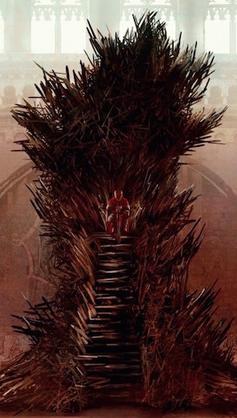
Cut back to the South, to Harrenhal. Tyrion returns to Dany and tells her that no, Jon will not be coming South. He explains that Jon doesn’t want to get caught up in all this dirty politics and bloody warfare all over again. Dany is angry, and remarks that while Jon has a conscience to wrestle with, she has a kingdom to rule. The last we see of her, she is giving decisive commands to deal with the rebellion. But we get visual hints that behind her stern facade she is just as cut-up as Jon.
Cut back to the North. (As in the real-life version of the final episode) Jon is leading a crowd of people into the wild wastes beyond the wall, and spring is coming.
*
A brief comment on what I like about this ending.
It would be immensely satisfying to see these characters years later, even if their dialogue was only passably well-written. Just as Game of Thrones happened in the shadow of the events of Robert’s Rebellion all those years ago, now we get a glimpse of another era, one overshadowed by the events of Game of Thrones.
Within the framework of this episode, each secondary character can get a little ending of their own, as we see who is serving Sansa and who is serving Dany, and in what capacity, who has turned cynical and who is still trying to seek a better world, etc. For example I think a creepy adn inhuman Bran is serving her as a spymaster.
Martin is very good at showing us characters who have illusions, and then shattering those illusions. Think of the poor Dornish prince in A Dance With Dragons. The key theme of the whole story seems to be disillusionment. Characters set out with the ideologies of this society deeply-ingrained in their heads. These illusions come up against the friction of reality, are sanded down, rubbed raw, eventually break.
This alternative ending hits that theme hard. The myths about Dany are shattered, not by crudely portraying her as a Nazi, but by showing she’s not much better than the rest of them.
It’s still a fundamentally conservative message – if you take Jon’s point of view, stay out of politics, it’s too dirty, and don’t try to change the world; if you take Dany’s, be realistic, settle for incremental improvements, the sacrifices are worth it for the greater good. But at least there are different perspectives. We’re not being beaten over the head with the writers’ irrelevant opinions about 20th Century history.
This is not a perfect ending. A perfect ending would require a much better run-up from Seasons 7 and 8. But it’s a morally grey ending for a morally grey story. It’s an ending that suggests ‘the more things change, the more they stay the same,’ while also leaving space for this cynical conclusion to be refuted. It’s an ending in which Ice and Fire, instead of coming together in a contrived situation where one must destroy the other, are finally and forever parted.
 The 1919 Review
