
It is August 4th 1922, and the scene is a remote hillside in Tajikistan, near the Afghan border. Ismail Enver Pasha, the former war minister of Turkey, draws his sabre and leads a group of riders on a wild charge downhill into machine-gun fire. Somehow, the riders take out one machine-gun, but they are twenty-five against 300 Red Army soldiers.
Enver Pasha’s charge was an episode in a movement known as the Basmachi, the subject of this short post. This is a part of Class War and Holy War, a mini-series attached to my bigger project Revolution Under Siege.
The Basmachi were guerrilla forces active in Central Asia from 1918 on and off until the early 1930s, a divided and diverse constellation of irregular bands which attacked Red Army outposts and convoys. At times there were multiple armies numbering in the low tens of thousands active in different places.
The name apparently comes from the Uzbek verb basmak, ‘to attack,’ a word with connotations of banditry. But they called themselves kurbashi, fighters.
As far as I can see, this guerrilla movement drew on several sources of support all at once. Here they are, not in order of priority:
- First, as noted, it reflected the failures and the atrocities of the Toshkent Soviet in its early phase, when Kokand was sacked and Russian settlers ran riot across the Fergana Valley. This caused the movement to emerge in early 1918.
- Second, it was a response by desperate people to the harsh Civil War conditions and the attendant famine; the movement really became a force over the winter of 1919-20, when a 62% drop in the cultivated area of Turkestan had taken place and half the population was at risk of starvation. In this context the Red Army got first call on food, infuriating many local people.
- Third, it was a spill-over from the White movement and the enraged old ruling classes, such as the army of Junaid Khan which cooperated with Kolchak, and the Emir of Bokhara, who was kicked out by his own people in 1920. From the start the movement was sponsored by these bastions of feudal reaction, and Khvostov in his book The White Armies treats the armed forces of Khiva and Bokhara unambiguously as a component of the Basmachi.
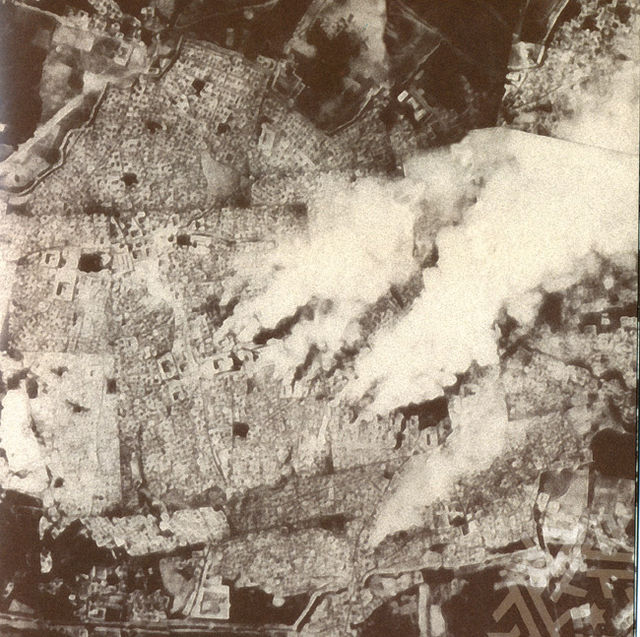
As I say, these sources of support are not presented here in order of importance, because to be honest I have no idea what that order was. A definitive history of the Basmachi has not yet been written. A full account of this fascinating movement is beyond my abilities, and their most active and significant phase falls outside the 1918-1920 period which is my focus in Revolution Under Siege and Class War and Holy War.
But they overlap with my narrative and serve as a sequel to it. Also, they throw a different light on the story I have told in Class War and Holy War, sometimes complicating and other times confirming the case I have made. You can read on and make up our own mind.
Phase One
The 1916 rebellion against conscription represents the prologue to the Basmachi. The first phase of the movement is its emergence after the Kokand massacre, mostly under the sponsorship of the Emir of Bokhara. It remains small until the summer of 1919-1920; in Summer 1920 it is strong enough to seize the Ferghana Valley. Meanwhile other bands are operating in other parts, such as one up by the Aral Sea helping Kolchak.

In Hiro’s account (42), the Soviets did not defeat the Basmachi with violence alone. Moscow sent in two renowned and capable generals, Frunze and Kamenev. Their approach was to return mosques and religious properties to Islamic authorities, to allow religious schools and courts to re-open, and to build a militia of poor Muslim farmers called the Red Sticks. Crucially, they confronted the Basmachi not with Russians but with Muslim units, which the Red Army by now had plenty of. (42-3)
Smele’s account (243) supports this: once the Whites were defeated, the Reds were able to wage heavy offensives against the Basmachi, combined with economic, religious and social concessions: NEP; the return of property to the clergy and the toleration of Islamic courts and schools.
Phase Two
Here the scene shifts to Turkey and the spotlight to Enver Pasha. As a young army officer from humble origins, he led the Young Turks revolt of 1908. But as War Minister during Turkey’s disastrous First World War he lost a lot of prestige. In 1920 he fled to the Soviet Union, and made an improbable deal with Lenin. The peoples of Central Asia (at least some of them, anyway) had, during the war, looked to the Turkish Empire as a potential liberator from Russia. Enver Pasha now promised to use his prestige as a Turkish military leader, anti-clerical moderniser and revolutionary to win over the Central Asian nationalities more firmly to the Soviet banner.
So this seems to have been an example of the Soviet Union making a kind of concession to pan-Turkic identity in order to forge a closer bond. If so it was a complete disaster.
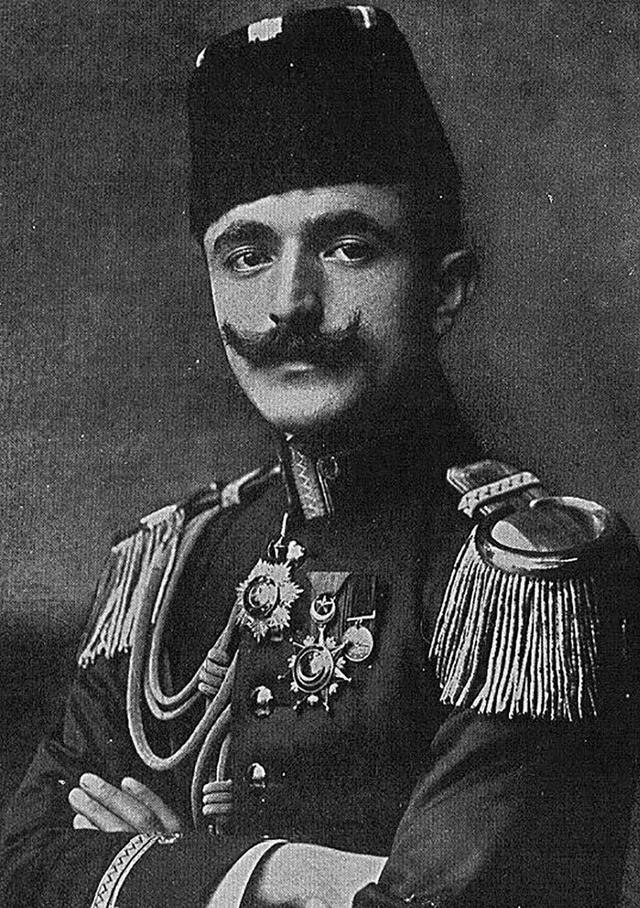
On November 8th 1921 Enver Pasha arrived at Bokhara. The next day he rode out ‘on a hunting trip’ with 24 followers. Now he showed his true colours – he not only joined the Basmachi, he recruited thousands to their cause. Had he been fooling the Soviets all along, or did he change his mind after Moscow signed treaties with Turkey in 1921?
Into 1922, Enver Pasha and the Basmachi went from strength to strength. His allies included the Emirs of Bokhara and of Afghanistan. He had 2,000 soldiers under his command, and 14,000 more in his broader alliance. He was ‘commander-in-chief of all the Armies of Islam,’ though privately he called his religious followers ’bigots.’ Soon he controlled Dushanbe (which he seized with just 200 guerrillas) and large parts of the old territory of Bokhara.
The Soviet Union sued for peace. Enver Pasha told them: ’Peace is only acceptable after the withdrawal of Russian troops from Turkestan soil. The freedom fighters, whose leader I am, have sworn to fight for independence and liberty until their last breath.’
But his movement faced serious problems. There were tensions between the various nationalities and between religious and secular tendencies. Many civilians supported the Reds or were neutral. Splits developed and Enver Pasha’s followers went to join other bands or even to join the Reds. In the summer, the Red Army defeated Enver Pasha in a regular battle, after which he was on the run in the direction of Afghanistan with a dwindling band. In early August he celebrated the Islamic festival of Bayram, enclosed mountain flowers in a letter to his wife, and died in that desperate charge into Red machine-guns. His body was only identified some days later.
(In passing, one well-read blogger has recently described Enver Pasha as follows: ‘the worst human being who happened to be a general [during World War One…] Ottoman Minister of War from 1914 to 1918, a vain, arrogant strutting sort of man who not only utterly botched the only battle in which he commanded directly (Sarikamish, Dec. 1914 – Jan 1915) but who also then blamed his defeat (falsely) on the Armenians and subsequently instigated and played a key role in the Armenian genocide. He then sold his services to the Soviets, before betraying them to side with the Basmachi movement, which didn’t go particularly well either.’ No-one else I’ve read mentions the connection to the Armenian genocide, probably because this was in the past a neglected subject. A friend, a Kurdish-Turkish communist, has described Enver Pasha to me as a quasi-fascist counterpart to the more left-leaning Kemal Ataturk – the two men embodying different facets of Turkish nationalism.)
Phase 3
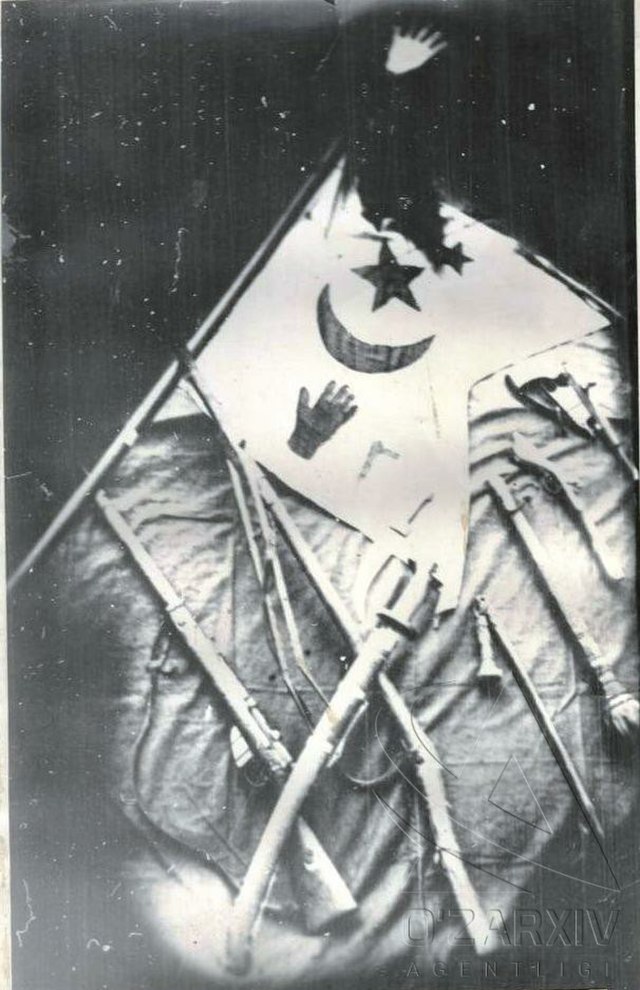
The Basmachi experienced a final revival in 1925-6. Their supporters stood for election in the Soviets, took over several in the region, and re-launched the insurgency. Only with their defeat in 1926 did the Soviet Union formally close the last front of the Russian Civil War, three years after the destruction of the last White Army.
But the movement was not finally destroyed until the early 1930s, the period of forced collectivisation and repression on a hitherto unseen scale.
Conclusion
A little while ago I wrote: ‘The peoples of Central Asia articulated demands for autonomy many times, but as far as I can see, demands for independence were few, inchoate and scattered. When they were put forward, they were complicated by being linked to broader identities: pan-Islamic or pan-Turkic ideas.’ It should be clear from the context that I’m talking about 100 years ago, not today.
But according to one author quoted by Smele, the Basmachi movement was nothing less than a civil war with the goal of national independence. Smele says this is going too far: this was a disunited and inchoate movement. I’d add that the khans and emirs were unambiguous counter-revolutionaries, not freedom fighters; and that European Russia, too, produced revolts of the rural population in anger at the severity of Civil War conditions.
Moscow confronted the Basmachi with concessions alongside military offensives. How effective was this strategy? On the one hand, the Basmachi were not finally defeated until the early 1930s, but they never threatened the ‘centres of Russian power’ and ‘frequently fought among themselves.’ (Mawdsley, 239) The Soviets played a long game, pushing the Basmachi campaign to a lower level, though they remained endemic. The fact that a long game of concessions was effective, and the fact that Moscow chose to pursue it, represent points against the view of the Basmachi as a movement representing a general desire for independence.
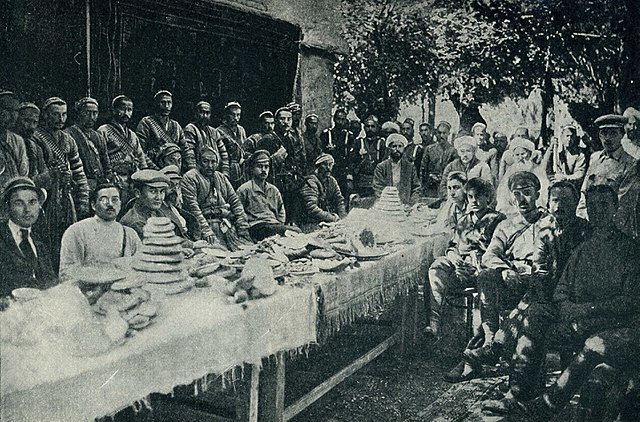
Let’s not forget, though, that the Reds were fighting these guys for more than a decade. I don’t think the numbers quoted by Smele are plausible – apparently some say that over half a million Red soldiers died in combat with the Basmachi after the end of the Civil War – but it was a serious struggle. The Basmachi represented something more significant than the rural uprisings which Russia witnessed in 1921. It was not mere feudal reaction, but was in part a ‘scourge of god’ punishing the Toshkent Soviet for its undemocratic policy and the violence which served it. We can see feudal particularism, Pan-Turkism and Pan-Islam all in the mix. While it was something less than, or even other than, a movement for national liberation, it’s not difficult to see tendencies in that direction.
 The 1919 Review