
A thing I’ve come to realise from writing this blog is that it’s not so easy to write about things that are really good. I wrote brief things on Andor and the new Dune movies because brilliance speaks for itself and I don’t go in for gushing. It’s much easier to write about something you hate. Look how much I wrote on Antony Beevor’s Russia. It’s easier, and often it’s right and proper, but it’s negative and unhealthy.
The best thing is to talk about something of ambiguous quality. Something lots of people love, that you have big problems with, or something nobody gives a damn about but that you really like.
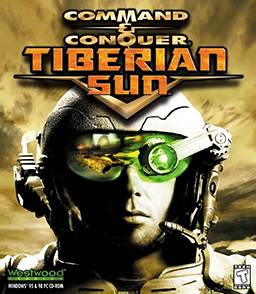
For example, Command & Conquer: Tiberian Sun.
In Part 1 I talked about the themes of Tiberian Sun (TS): its semi-accidental relevance in terms of ecology, and the dead-end politics of its very literal “end of history”. But on its face it is a story about a struggle between two magnetic characters, Anton Slavik (Frank Zagarino) and Michael McNeil (Michael Biehn).
Slavik and McNeil
Most people find that playing as the villain leaves a bad taste in the mouth. TS gets around this in clever ways. Anton Slavik is a high-ranking officer in the service of a ruthless totalitarian cult. But when we first see him, he is about to be executed as a traitor. So when we first see him, he’s a victim, he’s vulnerable, and we side with him instinctually.
Our identification with Slavik deepens as the story gets into gear. He escapes in a tense action scene, and soon we realise that his accuser, General Hassan, is the real traitor. It doesn’t matter a damn that Nod are evil; we root for real Nod over fake Nod. Our instinct for lesser evilism runs that deep. And when we see a genuine injustice being done on a complete prick, we extend the prick a partial forgiveness.
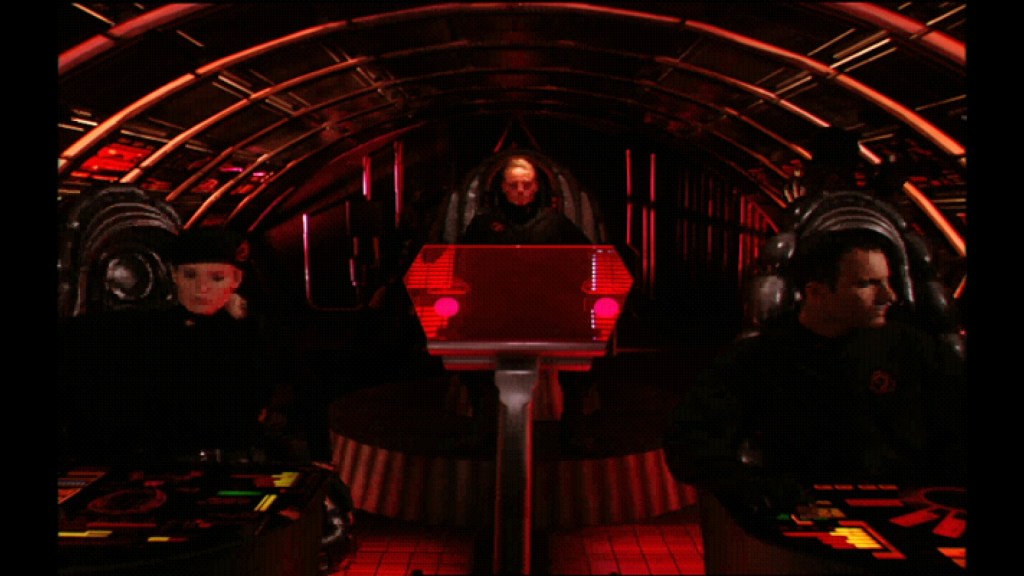
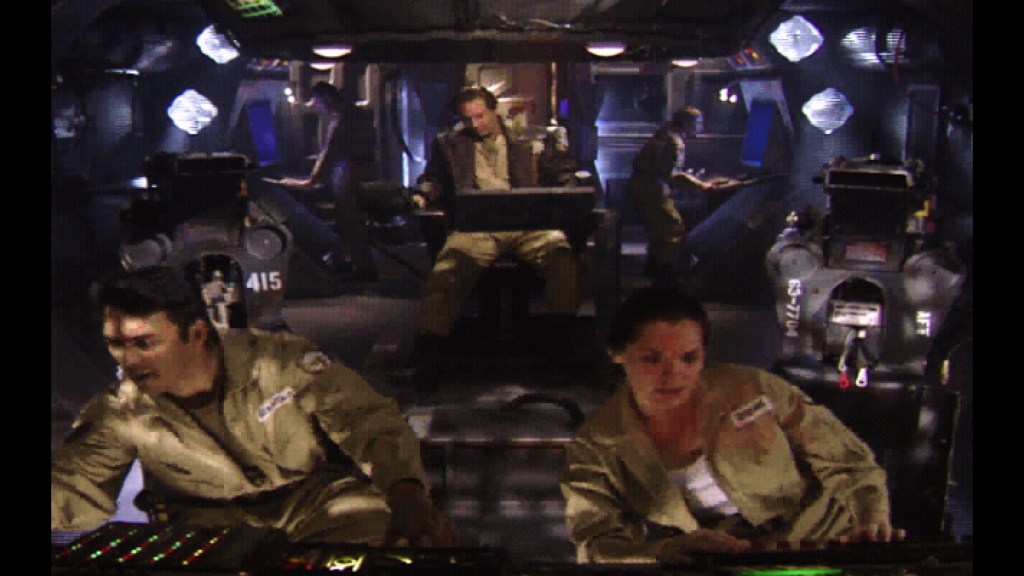
Slavik continues to command our respect, though not our affection, as his story unfolds. His overlord, the Nod prophet Kane (Joseph David Kucan), is a gloating and showboating kind of villain, video-calling his enemies just to mock them and quote Shakespeare at them before he blows things up. Slavik, by contrast, has a restrained and ultra-disciplined kind of fanaticism. He is ruthless, decisive, humourless.
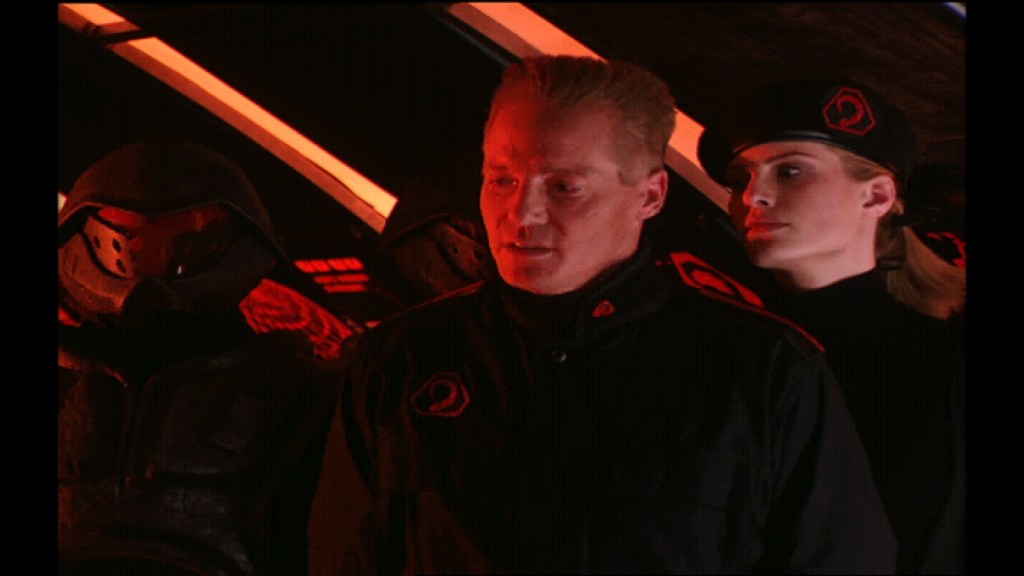
His second-in-command is Oksana (Monika Schnarre). This is strictly a story for adolescents, and any intimate relationship between the two remains implicit. Oksana herself is a true believer, but allows her personal prejudice against “shiners” (mutants, AKA The Forgotten) to get her worked up. She serves as a foil to Slavik: in her light we can see more clearly that he does what Kane commands but without special rancour. This is not from lack of enthusiasm, but because such loss of control would be unbecoming. He only betrays emotion when we see in his eyes, to quote Liam O’Flaherty, “the cold gleam of the fanatic.”
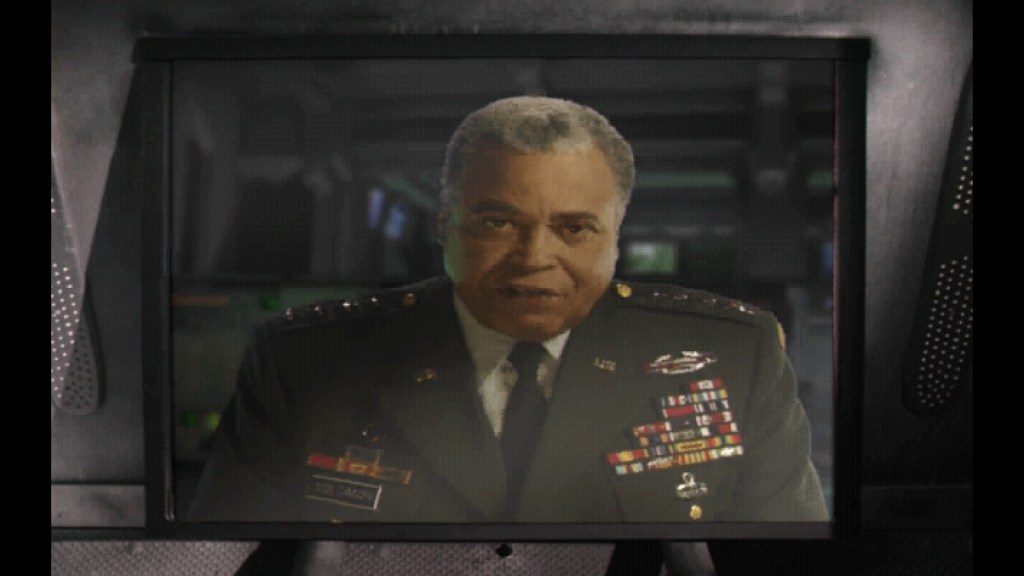
Slavik’s GDI counterpart McNeil is more of a standard game character. He’s cocky but easy to like in spite of this. He has enough humility that later he learns a grudging respect for the mutants. An embrace is as far as him and the mutant commando Umagon get with each other on screen. Umagon and co even get McNeil to entertain doubts about his superior officer General Solomon (the late and celebrated James Earl Jones), who also harbours prejudices against ‘shiners.’
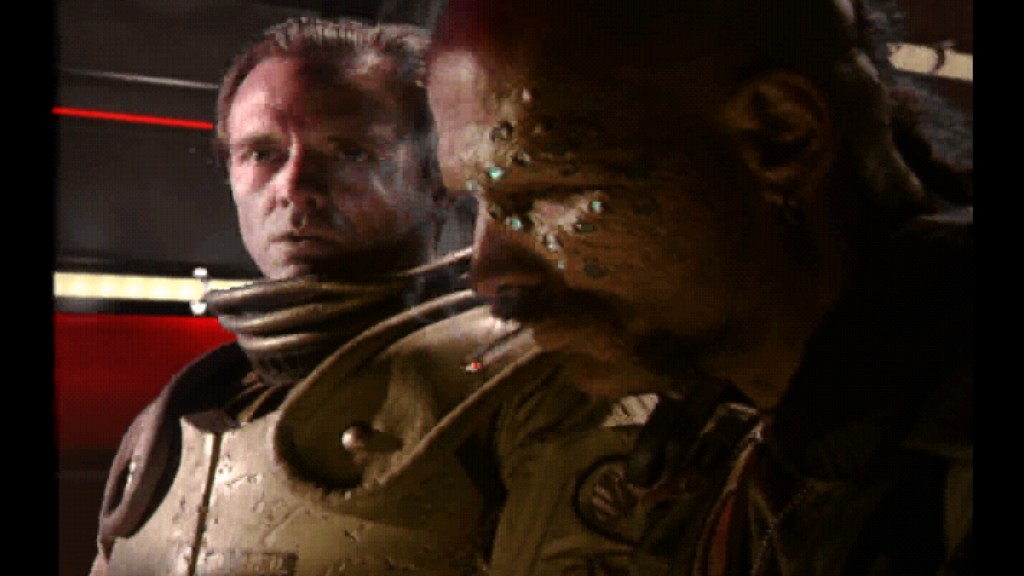
Why am I going on about Slavik and McNeil? Because TS is different from every other C&C game in this respect: it actually has protagonists.
How every other C&C title works is, in between each mission, some great actor like Michael Ironside or Grace Park turns to the camera and explains the plot with a straight face. Like: “Well done, commander. Roderick Spode and his Blackshorts are on the run. But we’ve just received some troubling news. The Anarcho-Aztecs have launched a full-scale invasion of Andorra. Thankfully, we have a new prototype anti-gravity device that should prove useful. Come on through to the lab, commander. Allow me to introduce you to Sir Isaac Newton…”
(Incidentally, my phone autocorrected Michael Biehn’s surname to ‘Biden.’ Jesus wept. Imagine him giving you a C&C mission briefing: “Let me tell you something, Mack… You did a good job with the uh, the Presinald Trunt, on the little battle fella…”)
Out of all of C&C, only in TS is “the commander” of each faction given a name and a face. Now that’s a risky choice because in trying to make a movie rather than a set of briefings, TS’s developers risk being ‘cringe.’ It is visibly low-budget and Bowfinger-esque in places, but all in all it turns out much better. The player is a third-person observer of a drama. There are human stakes to the missions. TS doesn’t have an Oscar-winning screenplay by any means (I think it accidentally stole the line ‘Get me McNeil’ from a parody movie featured in The Simpsons) but it engaged me in the story far better than any other game in the series. That is because the expensive professional actors were talking to each other, not to me. Sparks fly when Kane and Jones’ General Solomon confront one another on video calls.
No other C&C title, before or since, did this. So once again, TS stands out. Before I actually replayed it, I had the vague impression that TS was guilty of ‘taking itself too seriously.’ Not a bit of it.

The story is told through three media:
- Live action (or full motion) video – the bits with Michael Biehn and James Earl Jones, which we’ve just talked about.
- Computer-animated videos, not in the game engine, showing 3d clips of the various weapons and unit types in action in the game world; victory and defeat cinematics.
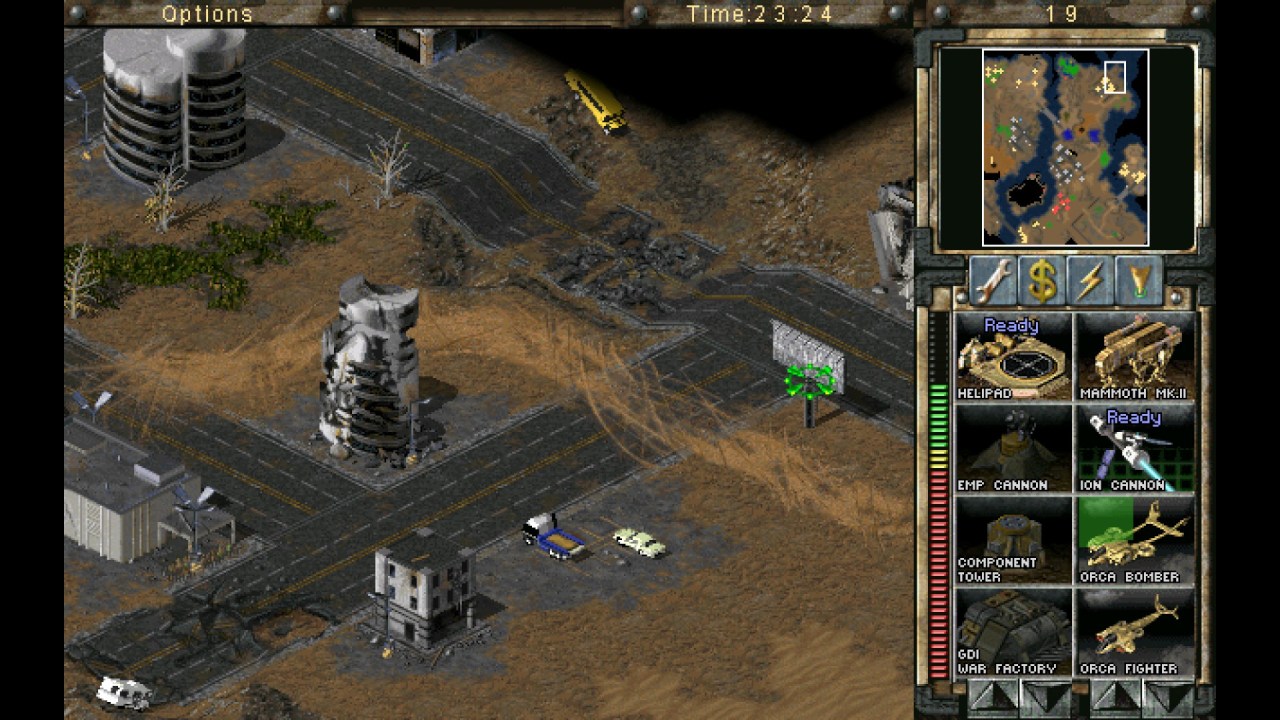
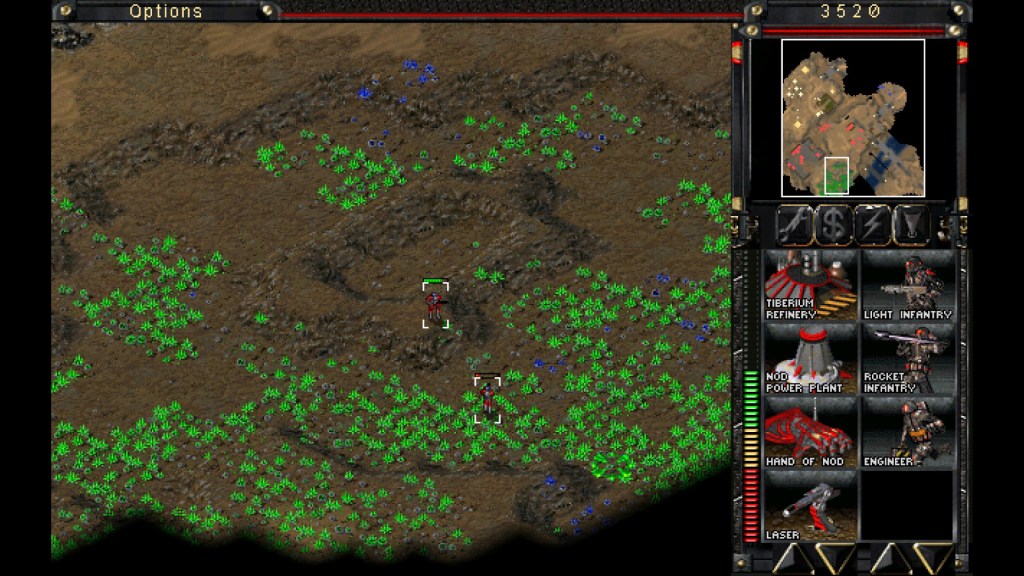
- The game itself – little guys moving around a 2d isometric map studded with structures and canyons and Tiberium fields, and lots and lots of motorway overpasses. This is where we see the environmental storytelling we talked about last week.
These three levels tie in together really well. The 2d isometric world, we understand, is only a representation of the real world. We’re at one remove. The action and dialogue clips supply a taste of what it ‘really’ all looks like, how it feels to be in this world, and our imagination does the rest.
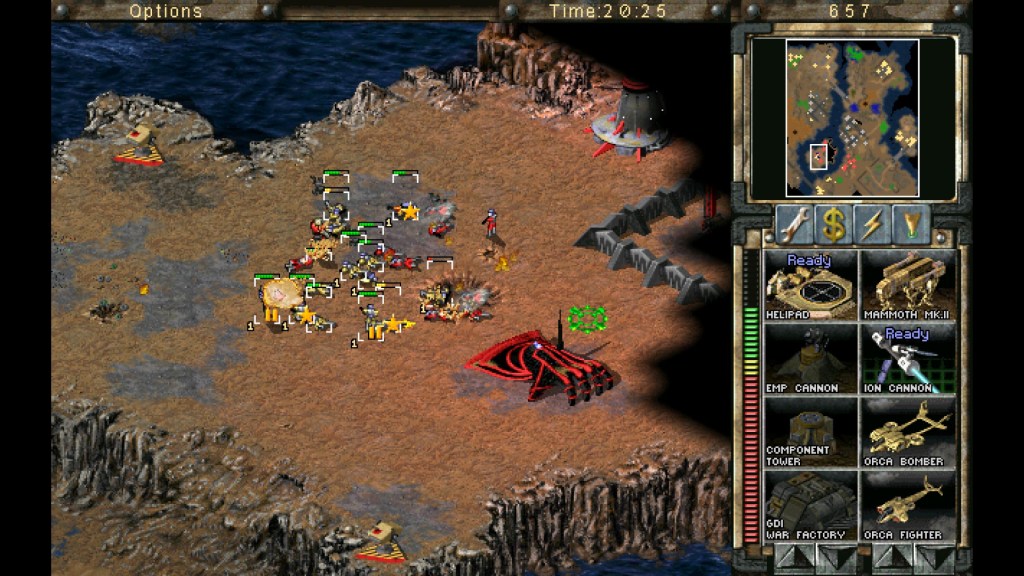
Tiberium Wars and Kane’s Wrath have better graphics. They look great. But they lose this power of suggestion, the way these three levels of storytelling stimulate the imagination in TS. We don’t just play on the screen. We play in our imaginations, in the gap between the game’s now-primitive graphics and what this world would really look like.
Gameplay: This land was not made for you and me
We haven’t talked about the experience of actually playing TS. Well, if you’ve played one C&C title you have a pretty good idea what all the others are like. But here as elsewhere this game just feels subtly different.
Tiberium Wars and Red Alert 3 are fast-paced games. Each map feels like an arena, even the bigger ones. Turtling is usually punished; momentum and initiative are key. If you spend five minutes exploring, if you take an eye off your production queues, then before you know it some tank is going to be smashing in the garage door of your con yard.
Fast-paced is what they were going for, and it’s well-executed. But TS has something else, which I like better. It has empty space.
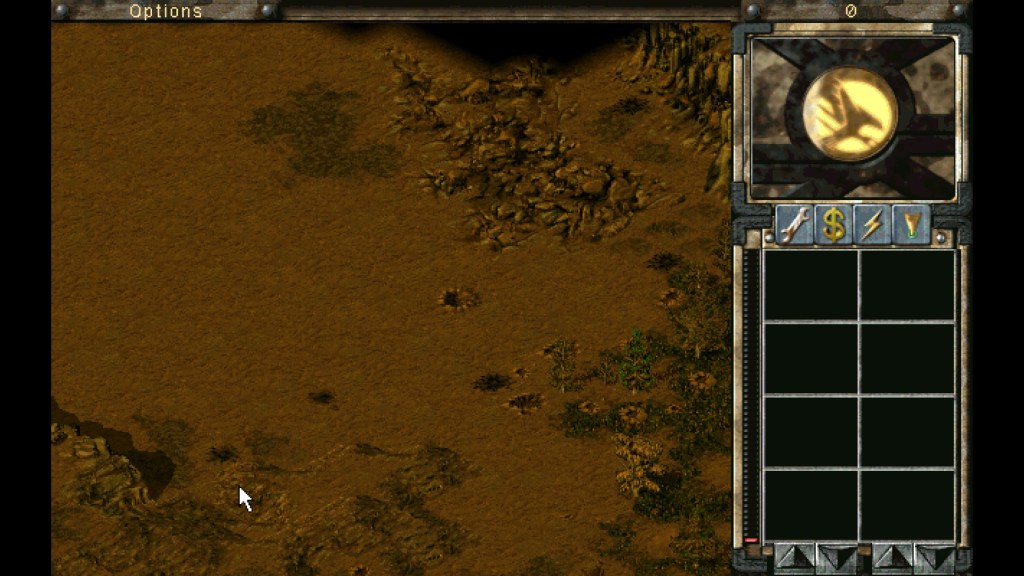
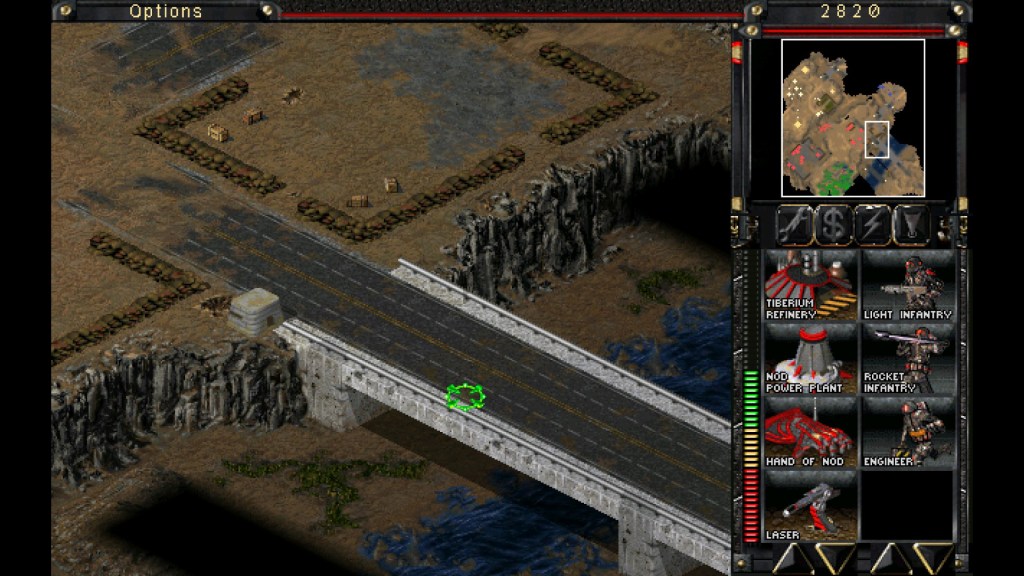
It has deserted plains and desolate canyons that lead nowhere. It has space, free uncertain space that might or might not have enemies in, and you won’t know until you send in a couple of buggies. There are no bright objective markers on the map; you’d better just figure out where those enemy SAM sites are the old-fashioned way, by sending out some guys who might get killed. This land was, emphatically, not made for you and me, which underlines the theme of the environment being indifferent to humanity. It makes the factions and the war they are fighting seem small in the grand scheme of things. This is in harmony with the game’s general vibe of being less gung-ho and more reflective than the average run of C&C.
(Going back to the cutscenes for a moment, the Nod ones start with a horribly realistic-looking shot of a dead Nod soldier, his helmet and the face under it both smashed. See what I mean? Less gung-ho, more reflective.)
And what is more, it slows the game right down. Other C&C games have an element of frenzied button-mashing and horrible meat-grinder combat where you produce wave after wave and send them out to be slaughtered. In TS, defence systems are solid and turtling is as good a strategy as any. While you hold the line, you explore, probe, experiment with different unit types, advance through trial and error, and by degrees refine your strategy, which may be very different from someone else’s. The final Nod mission, which involves setting up three massive missile launchers in enemy territory, is a fine example. There are several approaches to the main enemy base. I went in a roundabout way, battering through with rocket motorbikes, flattening a quarter of the base and bypassing the rest. I could have done it in a range of other ways, but I felt proud of the plan which I figured out and executed. Another good example would be the GDI mission where the enemy is launching poison gas missiles at you every five minutes. You have to choose wisely where to set up your base – it has to be somewhere you can spread it out, or each missile strike will be devastating. The challenge is usually not to fight a meat-grinder war of attrition, but to crack some seemingly impregnable fortress. What develops is an engrossing game of twelve-dimensional rock, paper, scissors as you figure out just the right moment and location to send in your armour, your air force, your artillery, your infantry.
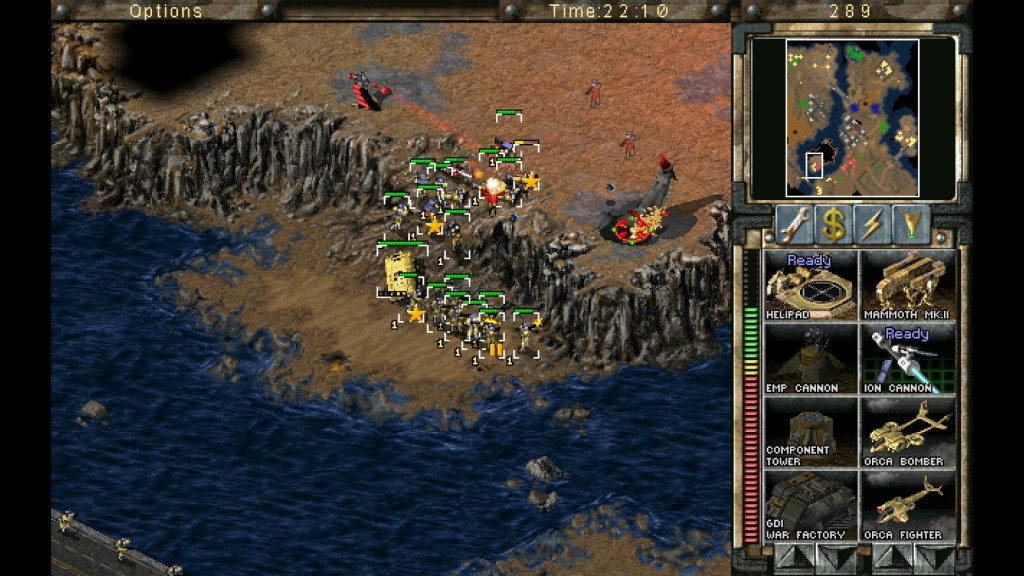
There are other neat little things. If you fight in woodland, the trees catch fire and the fire spreads and hurts nearby units. The Nod artillery makes craters that are actually depressions in the landscape, not just cosmetic scars. Careful where you put your flame tanks; they will incinerate your own guys if they are standing in the wrong place. These neat little things were abandoned in subsequent C&C titles.
It is annoying, of course, to be limited to a production queue of just five units. Until it isn’t. You get used to it, and you realize that it has freed you up to really think about what you’re building. Armies stick to a manageable size and you have an incentive to preserve them. The five-units thing is a limitation which in effect frees you up.
Conclusion
What I like best is writing about something that you both love and hate – or that you simply feel others have overpraised or over-criticised. It’s satisfying to identify where the good and bad sides of a thing fit together like yin and yang, when the great and the gammy mutually constitute each other, when you couldn’t have the one without the other. It’s equally satisfying to talk about excesses and excrescences, unforced errors and unexpected flashes of brilliance. Best of all when the thing you’re talking about is not ‘high culture’ by any definition, but a vulgar-arsed text that was consumed by tens of millions of people even as it went completely unnoticed in newspapers and academia.
Such a text is Tiberian Sun. I wouldn’t be surprised to learn that it was experienced by more people in its day than many earnestly and widely reviewed Oscar-nominated movies of the same era. The kids playing it then, aged in or around thirteen, are in their thirties and forties now, voting and operating forklifts, approving loans and being approved for loans, or not, and having kids and colonoscopies. Grown-up stuff, far away from the visceroids and Tiberium fields. These posts on Tiberian Sun are for those people, and I hope it has given them the satisfaction of excavating long-neglected recesses of their own minds.

 The 1919 Review