Cuba Libre! Fidel, Che and the improbable revolution that changed world history
By Tony Perrotet
This account of the Cuban Revolution is rich in character and narrative, short on analysis. I was gripped all the way through, though near the end I grunted with surprised laughter at the boldness of one particular thing Perrotet left out.
This book sketches the background of Cuban history, introduces us to the dictator Batista and the revolutionary Fidel, then takes us through the Cuban Revolution from the failed attack on the Moncada Barracks to the extraordinary triumph of the rebels.
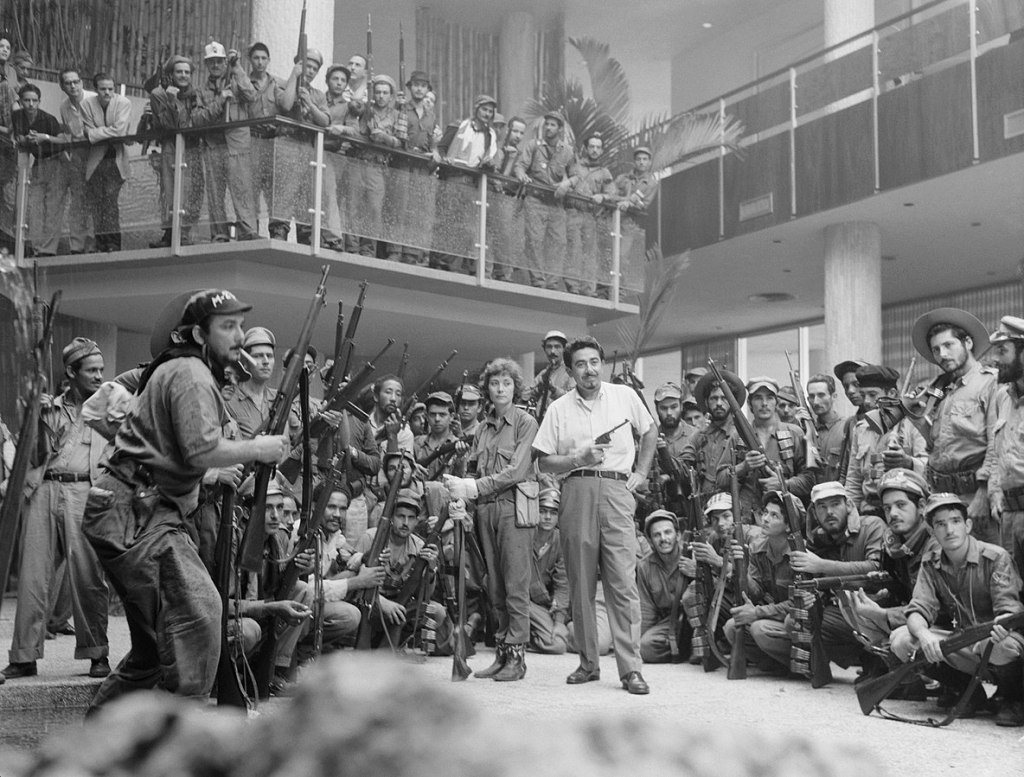
I have read – and watched, and listened to – a fair amount on the Cuban Revolution, Che and Fidel. But I learned something new on practically every page of Cuba Libre. For example, all I had in my head about Celia Sanchez was her name and the vague understanding that she played some role in the Revolution; Perrotet takes the time to give her a full introduction, then he shows her in action – organising the Granma landing, escaping from cops, supplying the guerrillas, organising the underground.
The Batista regime, in its few years in power on the small island of Cuba, may have killed as many as 20,000 people. This is remarkable and horrifying (though somehow Batista comes across in the book almost as a vulnerable figure). The depravity of the Batista regime really comes across in Cuba Libre in harrowing stories from the prisons and barracks. But so does the courage and cunning of the guerrillas and of the urban underground. In addition, they must have been the most magnanimous revolutionaries in all of history – treating enemy wounded, freeing prisoners, treating their hostages like honoured guests.

In spite of the violence and the brutality of the Batista regime, and the harrowing conditions the guerrillas had to endure in the wilderness, Cuba Libre is not a heavy or dense read. It tells its story through anecdotes and characters. The events, locations and people are easy to follow because care is taken to make them vivid and memorable. When the writer mentions a name, the reader never has to scratch their head and ask, ‘Who’s that again?’
Another thing I like about the Cuban Revolution – and it may sound stupid – is this: the guerrilla movement in its early stages was operating with tens and twenties of fighters, at times even twos and threes. I like being able to grasp and visualise the numbers involved in a narrative. Once we are into the thousands, as we usually are with military history, it all becomes very abstract. This favours the intimate way Cuba Libre is written.
But as I said, it’s short on analysis. Towards the end, explaining why the Americans turned against Castro so suddenly, Perrotet writes that land reform angered US companies. I had to laugh, because this was the first mention of land reform in the entire book. It is also the last; he quickly moves on. You would not think it was a central question.
Lively and all as the narrative is, it does not explain why the rural population supported the guerrillas – which, of course, has to do with economics, class and land reform. The central condition of the guerillas’ success – the support of the rural population – simply falls from the sky. There’s nothing wrong with a narrative-driven, character-focused account – but there are ways of talking about economics and class within that kind of writing. The characters on whom Cuba Libre focuses tend to be middle-class professionals. There is no character giving us an insight into the land question.
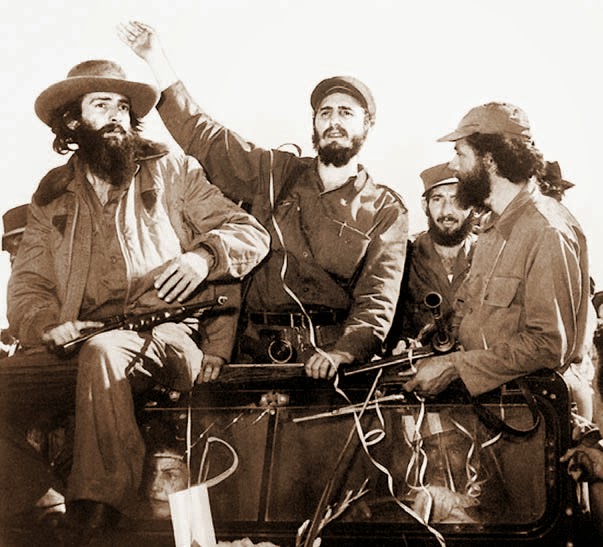
Overall, Perrotet gives a very sympathetic account of the revolution. While he says Fidel had a tendency toward megalomania, his tone when writing about the guerrilla leader is usually one of mixed exasperation and awe. American public opinion, he says, liked Fidel playing the part of a glamorous revolutionary but didn’t want him to actually carry out any revolutionary measures. Perrotet lays the blame for the falling-out squarely at the feet of the US, while pointing out that thanks to the revolution Cubans have healthcare and education systems to rival anything in the advanced capitalist countries.
 The 1919 Review