Nine things that inspired Star Wars

This week I’m taking a break from Miseducation Misadventures to let you in on what runs through my head when I watch Star Wars. Re-watching it as an adult, I notice little things that I can trace back to their source – like the scattered mentions of spice mines and spice freighters in the first movie. Any guesses which SF novel that’s a nod to?

Here are nine sources from which Star Wars drew key ideas. If I’ve missed any interesting ones, chime in down in the comments.

1: Reproductive Biology (2,000 million BCE)
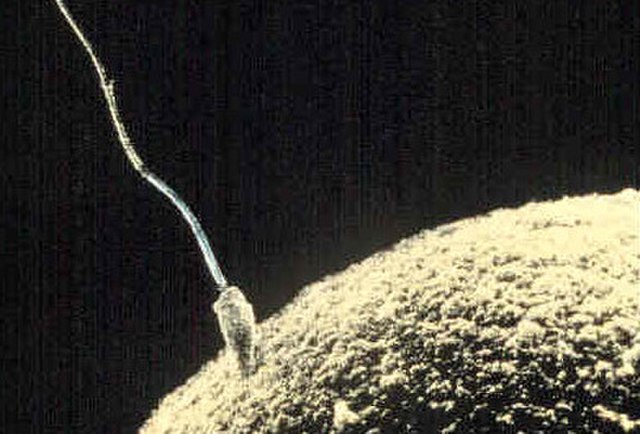
The final battle in 1977’s Star Wars involves a swarm of small starfighters approaching and seeking to penetrate the much larger orb of the Death Star. This looks a hell of a lot like a load of sperm trying to fertilise an egg, with zero-gravity space standing in for the liquid medium through which the little swimmers propel themselves. This was probably not deliberate – the imagery probably bubbled up from the filmmakers’ subconscious. It stands out all the more starkly against this pre-adolescent and mostly sexless galaxy.

2: Metropolis (1927)
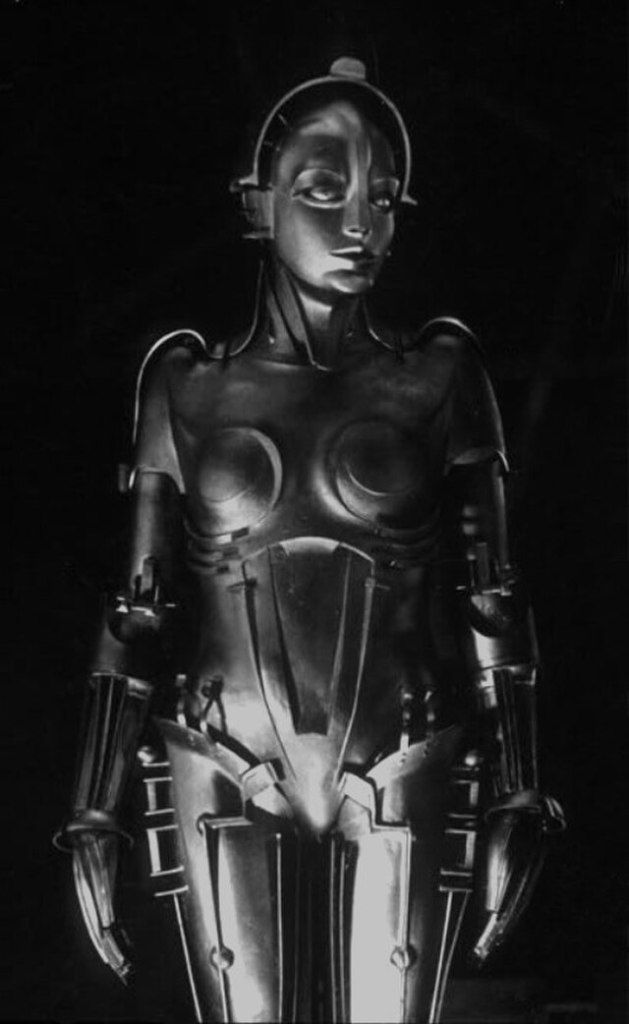
And here we have a female version of C-3PO, in an experimental silent film from Weimar Germany.

3: Flash Gordon (Comic and movies, 1930s)
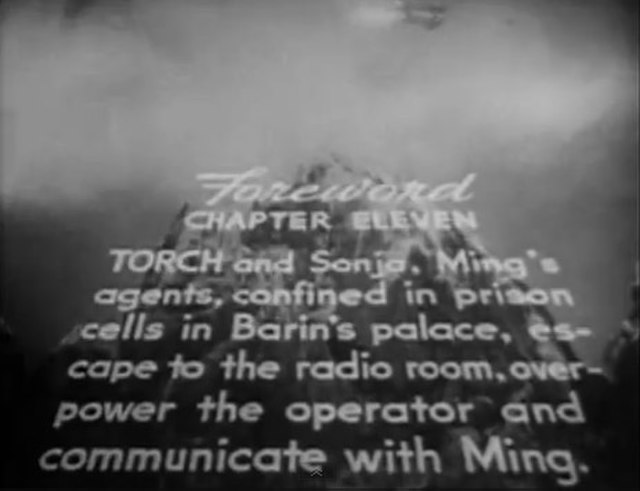
Star Wars took a few cues from Flash Gordon – most obviously the opening text crawl but also the general idea of a series about fun adventures in space.

4: World War Two (1939-1945)
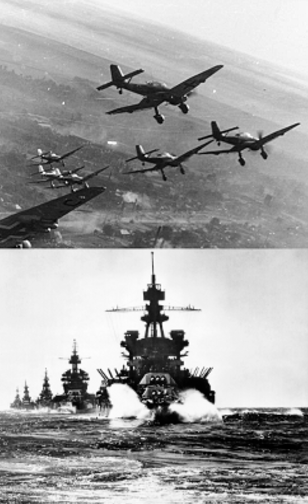
In 1977 when Star Wars came out, World War Two was as recent as the collapse of the Soviet Union, or the first episode of The Simpsons, is to us.

And the movie helps the audience to grasp what is happening in space by using a visual language familiar to them: it has World War Two-era fighter planes in space. The Empire’s star destroyers resemble the warships of the mid-century. The Imperial officers dress like Nazis.

On the other hand, weirdly enough, Star Wars references the Nazi propaganda film Triumph of the Will. The final scene where the rebels have a rally and the human characters all get medals (a weird enough scene in itself) follows part of this notorious film very closely. An odd choice, having the good guys mimic the visuals of a genocidal regime, especially when the bad guys are clearly based on them.

5: Casablanca (1942)

In a colourful jazz bar full of diverse people, in a town full of thieves and refugees, in a desert land where an evil empire is tightening its grip, we meet a cynical smuggler who is secretly an idealist. Will he find it in himself to help the two desperate fugitives who are seeking passage to safety? Of all the cantinas in all the systems in all the galaxy…

6: Foundation by Isaac Asimov (1940s-1950s)
The story and themes of Star Wars and Foundation don’t resemble each other at all. But there are many little things which Asimov seeded in the science fiction genre which pop up in Star Wars:

  • Hyperspace travel
  • Weapons called blasters (much more lethal in Asimov)
  • A galactic empire
  • Space feudalism
  • A city which covers an entire planet (Trantor/Coruscant)
  • The wild outer rim of the galaxy
  • It goes right down to random names: Asimov’s Korellian Republic is echoed in the Corellian shipyards
  • Roguish traders who do the right thing in the end (Foundation has several Han Solos in it, who say things like ‘Never let your sense of morals prevent you from doing what is right.’)

But for Asimov, empires are fundamentally good, the roguish trader is an advertisement for a doctrine of enlightened self-interest, and mysticism is nothing but a charade. All this is at odds with the anti-authoritarianism and sincerity of Star Wars.

7: Akira Kurosawa (1930s-1980s, especially 1950s)

Japan’s most well-known film director had a huge influence on George Lucas and Star Wars. I haven’t seen The Hidden Fortress (1958) but apparently it involves two peasants who escape from a battle (like C-3P0 and R2D2) and meet a princess; there are sword fights, and in the end a bad warlord changes sides. But I’ve seen a few others, like Throne of Blood, Ran and Seven Samurai. Any of these great samurai films show themselves to be ancestors of Star Wars. There are the sword fights and the robes and Darth Vader’s helmet. In a western ear, names like Obi-Wan Kenobi have a Japanese ring to them, and the Jedi resemble an idealised version of the Samurai.

8: Dune (1965)
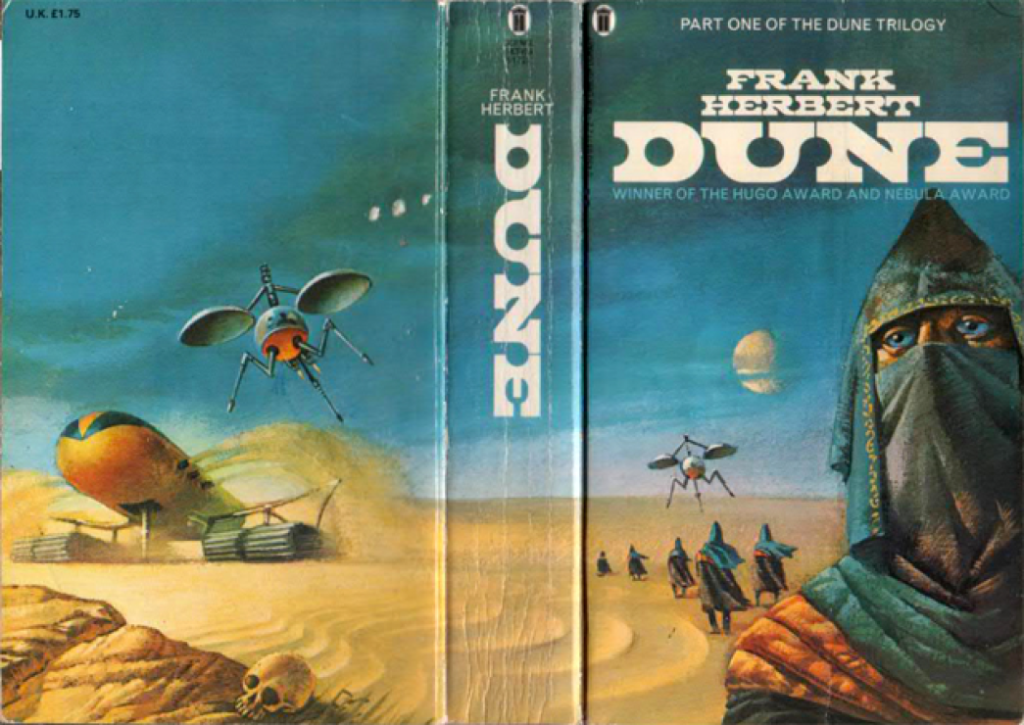
Frank Herbert’s Dune is riding high after Denis Villeneuve’s great film adaptation and I’ve written about it a few times before. Like Foundation, it provided a lot of ideas for Star Wars to pick up.

  • Dune is closer than Foundation to the themes of Star Wars. It is a text that was obviously written at the height of the anti-colonial struggles of the 1960s; it is pretty negative about empire; it is deeply sincere about religion and mysticism (even in charade form!).
  • The Jedi look like samurai, but they owe much to Dune‘s Bene Gesserit, an order of women who cultivate superhuman powers.
  • Both texts feature a harsh desert planet (Arrakis/Tatooine)
  • And giant worms,
  • robed nomad raiders,
  • smugglers,
  • and moisture-harvesting technology.
  • As noted above, scattered references to spice in the first Star Wars movie are another nod to Dune.
  • And once again we have space feudalism.

Foundation and Dune are the best examples I can think of, but they are stand-ins for a whole rich genre of mid-century science fiction without which Star Wars would not have existed.

9: The US War in Vietnam (1965-1973)

A few years ago Star Wars creator George Lucas confirmed in this interview that his story was fundamentally anti-colonial, that his heroic rebels were based in part on the Vietcong and that the evil empire was based on the United States – along with other past empires and freedom fighters throughout history.

Vietnam has featured just as heavily in other radically different readings of Star Wars, which is unsurprising as the war ended just a couple of years before the movie came out. I can’t remember who exactly wrote this, but the idea is that Star Wars was an infantilising nostalgic escape for a US public keen to avoid thinking about their country’s military and moral defeat in Vietnam. White people with American accents got to be the guerrilla heroes – though from the costumes to the names and decor, it is one of the strengths of Star Wars that it has never looked or felt ‘western’ (unless you mean spaghetti western, as there’s more than a hint of ersatz Mexico and Sergio Leone in there).

A last word…

The point of this is not to be like ‘Star Wars is a rip-off’ but to remind everyone that it’s just a movie, a cultural text rooted in its time. Today we have the corporate cynics for whom nostalgia is a currency and the toxic fandom for whom nostalgia and innovation are just different kinds of betrayal. The worst excesses of the fandom, I suspect, are boosted and incentivised by social media, and the back-and-forth whining and apologetics are increasingly astroturfed online by accounts which have harvested awesome volumes of engagement in the past from people bickering about fun movies, and who see the next big controversy as a payday. In all of it, Star Wars is reified, taken out of culture and history, put on a pedestal. One would think it feel from the sky. Actually the movie is a brilliant synthesis, and if Lucas had the precious and pious attitude on display in so much of the online commentary, it never would have been made at all.

Home Page/ Archives

Want to read more like this? Become a subscriber here:

Screen Adaptations of Dune

The new Dune is phenomenal. Two-plus years ago Dune: Part One got me out to the cinema for the first time since Covid and it was exhilerating. Part Two is reported to be even better. But Frank Herbert’s 1965 novel Dune has been adapted for the screen before, more than once. I have seen all these adaptations, because I have a strange fascination with Dune which is part nostalgia because I first read it aged 14, part a mature realisation that the things we enjoy don’t have to coincide with the things we believe in, and part, no doubt, reasons that could be best explained by Freud (sandworms), Marx (family retainers) and Edward Said (white saviour complex).

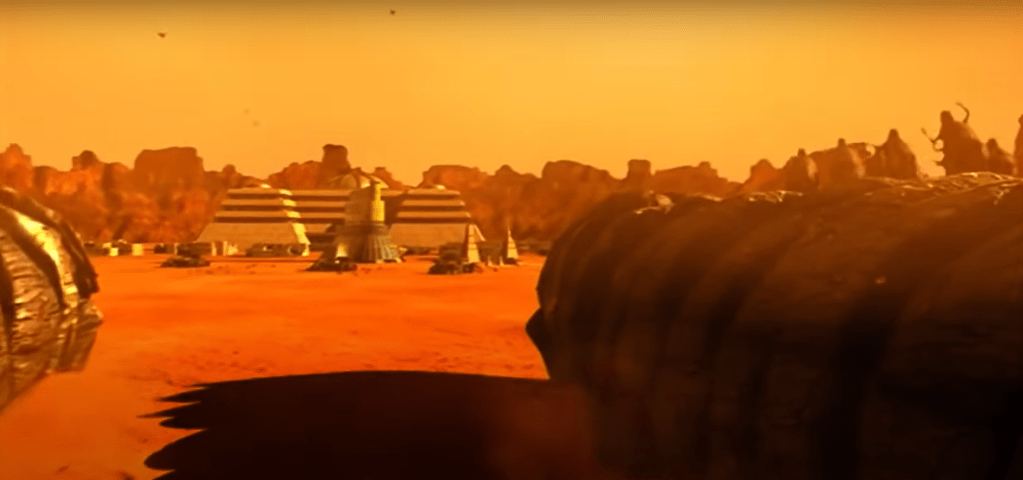
Freudian beasts, their hour come round at last, slouching toward Arrakeen. From the 2000 TV version, dir. John Harrison.

Enough deprecation. I also like this story because it’s exciting, intelligent and haunting. The author takes politics, economics and ecology seriously while telling a great story. How well has that translated to the screen?

This review will take a look at David Lynch’s 1984 movie, the Sci Fi Channel’s 2000 miniseries, and Denis Villeneuve’s 2021 adaptation of the first half of the novel.

Villeneuve is talking about adapting the Dune sequels. In a bit of a sequel to this post, we will look at the 2003 adaptation of Dune Messiah and Children of Dune.

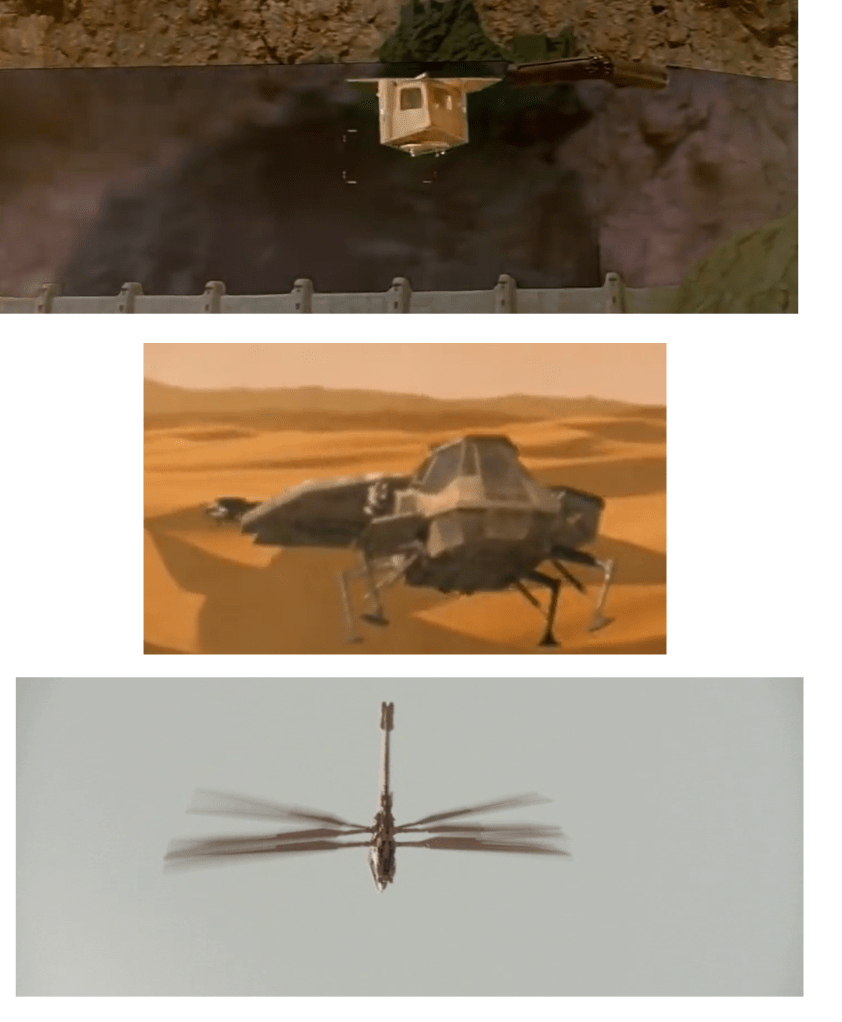
Three different versions of the ornithopter from, top to bottom, 1984, 2000 and 2021.

Harkonnen Horror Picture Show

God created 1984’s Dune to train the faithful. For every good thing I can say about it, there’s a bad thing too, and vice versa.

To begin with, something bothers me about the interiors. The Atreides live in surroundings of Victorian frumpiness, gaudy but flat, like the decor in Boris Johnson’s house; the Harkonnens in a green-lit space slaughterhouse. For all the implicit homophobia in the way the Baron is portrayed, something about the campiness of the whole set-up makes me think the whole evil cabal might jump out of their chairs and start singing ‘Time Warp’ at any moment. But other elements of the visual design are brilliant – the guild spice navigator and his cohorts, who prefigure the fascinating visual excess of Warhammer 40,000; the tonsured Bene Gesserit; the faceless rubber menace of the Harkonnen troops.

The spaceships look cool; but the visual sequence in which the guild navigator bends time is slow, unclear and not necessary.

I like the weirding modules. These are invented out of whole cloth for the movie: in short the Atreides have a special weapon that can kill with the utterance of a sharp syllable. This idea fits pretty well in the world of Dune and helps the story along. For example, it explains what’s so special about Paul from the point of view of the Fremen: he brings a powerful new weapon to the table. But the shields, personal force-fields used by combatants in the universe of Dune, look silly.

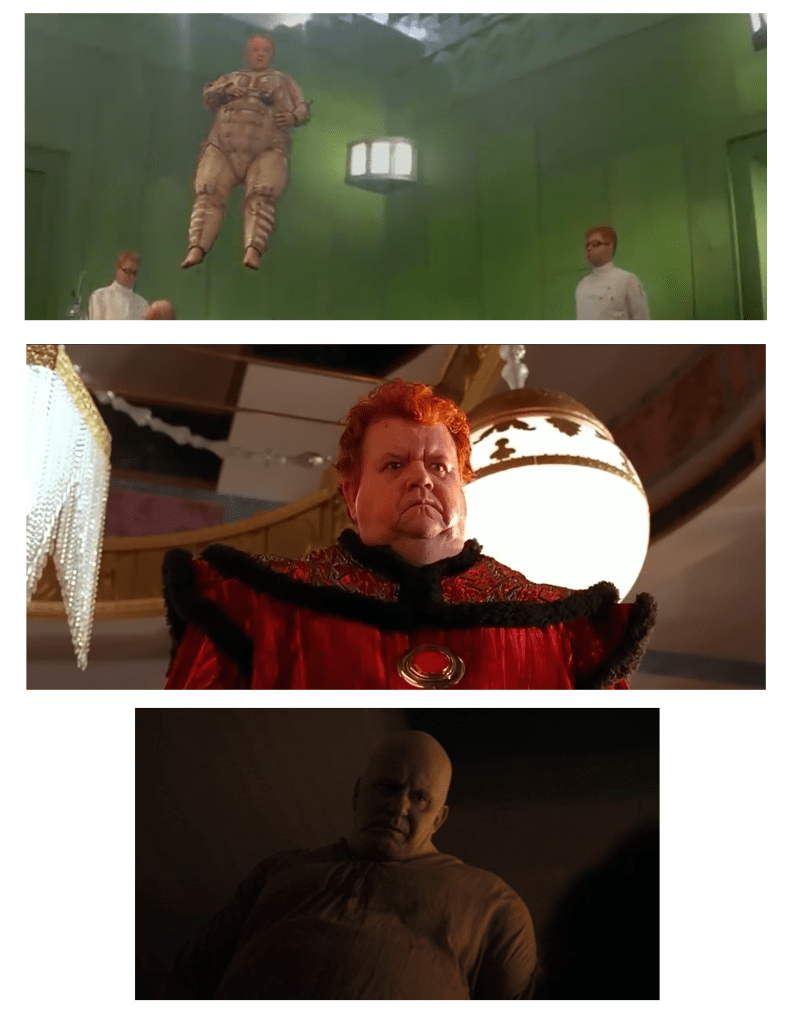
Top to bottom: Kenneth McMillan, Ian McNiece, and Stellan Skarsgard as Baron Vladimir Harkonnen. Top to bottom, the colour pallettes of a 1980s movie, a TV show from 2000 and a 2020s movie

The movie is rushed and incoherent. It might have gotten away with telling such a huge story in just over two hours, but it goes out of its way to be confusing and to trip us up on irrelevant things. It’s difficult to imagine anyone who hasn’t read the books being able to follow what’s going on. But the final half-hour strides along with a formidable momentum and plenty of cool imagery.  

At the very end of the movie it suddenly rains on Arrakis – a development that makes no sense in the logic of the world, but which is absolute magic on a simple storytelling and thematic level. I can see why they couldn’t resist.

It’s a movie I could talk about, back and forth, is it good or is it bad, for a long time.

The guild spice navigator, from the 1984 Dune, dir David Lynch

A very delicate time

The opening of 1984 Dune is problematic in ways that are thrown into sharp relief by the quality of the 2021 Dune’s opening. In 1984 Dune, we begin with Princess Irulan, a very formal narrator who stares straight into the camera and explains things, followed by a scene in the imperial throne room. In 2021 Dune we begin with Chani narrating over a striking visual sequence. 

The 2021 approach is more democratic and materialist, centring the indigenous Fremen and the key resource they control rather than the galactic aristocracy. But it is also much better from a storytelling point of view: it is rooted in real and tangible things, while narrators and the high politics of throne rooms are distant and abstract. Chani is narrating but also participating in a sequence that conveys visually the importance of the spice, the oppression of the Fremen by the Harkonnen, and the transfer of power from the Harkonnens to another noble house.

The guild spice navigator in the 1984 Dune is a top-tier movie monster. In the books we don’t see him until Dune Messiah, but here he makes his grand entrance in the opening sequence. Unfortunately that is a big problem. Although he is cool, he is one of several big things that we don’t need to know about this universe right away, or at all. But the movie goes out of its way to foreground him.

From the 2021 Dune, dir Denis Villeneuve. Murky.

Comedians of Dune

The Harkonnen scenes in the 1984 Dune leave me with a vague impression of grotesque-looking people bellowing and jabbering monstrous things at one another, punctuated with maniacal cackling. The 2021 Dune is a bit humourless by comparison. There is an early moment in which Paul and Duncan Idaho share a chuckle. But that is an oasis in a desert of dourness.

There is, to be fair, one other joke in the movie:

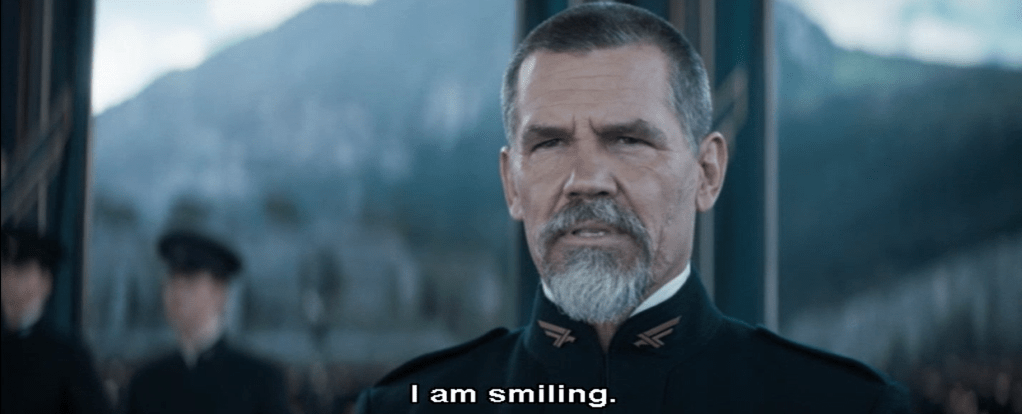
‘Smile, Gurney,’ says Duke Leto.

Scowling, Gurney replies: ‘I am smiling.’

Someone has decided to make Gurney ‘the grumpy one.’ It’s a good joke, delivered well by the actors. Is the movie taking a dig at its own serious tone? Or is it opening itself up to the retort: ‘Which grumpy one?’

Still, the 2021 Dune is better in almost every way. The storytelling and worldbuilding are far more skilful, conscious, economical; the screenwriters treat words as the Fremen treat water. The visuals play with light and shade, convey weight, grit, thirst, scale. It does not lack that essential quality: weirdness, accident, quirkiness (Who thought of giving the Atreides bagpipes? Give them a medal) but it doesn’t allow that element, either, to get in the way of the story.

In any adaptation, fidelity to the original is not crucial for me. Things have to change in the move from one medium to another. A change for the better, or a change necessary for the medium, justifies itself. But for what it’s worth, the 2021 Dune is much more faithful to the original. Both other adaptations resort to arming their extras with projectile firearms. But in the book and the 2021 version, shields have rendered firearms obsolete, and combat is primarily a hand-to-hand affair.

Budgets of Dune

An even smaller point against the 2021 Dune is its portrayal of the city of Arrakeen. In a movie that cost $165 million to make, this key location appears to be nothing more than a scale model, entirely devoid of human life. The 2000 TV adaptation, working with a budget of $20 million, manages to convey a lively and bustling place. (In case you’re wondering, the 1984 Dune cost about $40 million.)

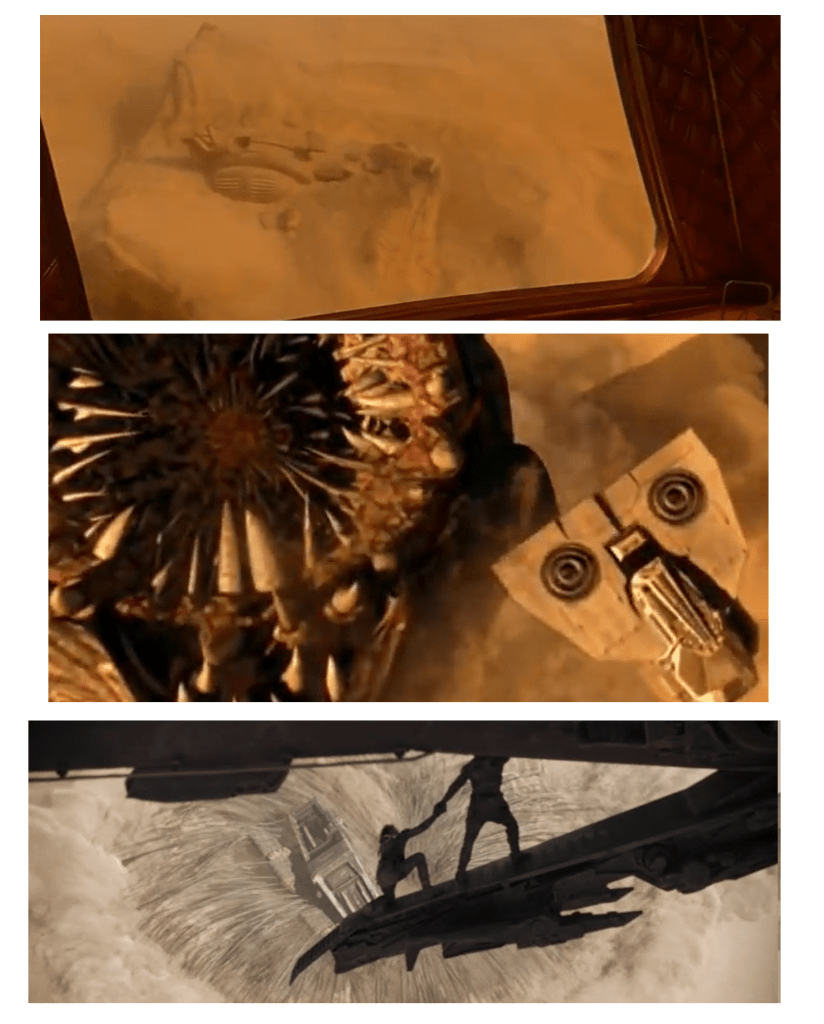
The same moment in three different versions: fleeing by ornithopter as a sandworm eats a spice factory. Top to bottom, 1984, 2000 and 2021.

Now we come to the most obscure adaptation, Frank Herbert’s Dune, a three-part miniseries for the Sci Fi Channel written and directed by John Harrison.

(It was one of three very fine miniseries released by the Sci Fi Channel around that time, along with Steven Spielberg’s UFO epic Taken and Battlestar Galactica. The latter ended up running to the proverbial six seasons. It was an underappreciated moment in the history of ‘prestige TV’.)

I’ll level with you up front: Frank Herbert’s Dune is not visually spectacular – the CGI is dated and some of the costumes look tacky.

But the actors are impressive. It is long not because it is bloated, but because it has made a conscious decision to tell the story more fully and faithfully, without unseemly haste. Everything about this adaptation is confident and assured, as if having a smaller budget gave it much more freedom.

And about that CGI: on a technical level, it would not pass muster today. (Though nostalgia or irony might induce people to deliberately copy this style in the future – stranger things have happened). The images are well-composed and are shot and edited in such a way that, interspersed with live-action footage, they tell a compelling and comprehensible story. A lot of today’s filmmakers could learn a lot from how the CGI is used here, how John Harrison does so much with relatively little. The result is that a CGI-heavy action scene, such as when the spice factory is eaten by a worm, is a genuinely tense experience.

In a fantastic scene, the ‘Beast Rabban’ gets a personal comeuppance he never gets in the novel when he is killed by a mob in the streets of Arrakeen. I guess budget dictates that some additional scenes must happen in this set, to justify the expense of building it; but budgetary needs can coincide with storytelling needs. It is satisfying to see this showdown happen in this familiar place. In the novel, by contrast, we are told in the most perfunctory Shakespearian way that ‘Rabban, too, is dead’ – offscreen somewhere.

I don’t want to over-praise something that, after all, will have dated poorly, especially measured against the new big-budget spectacle. But here’s one last piece of praise: Frank Herbert’s Dune is the only adaptation to leave in the crucial banquet scene (into which it inserts the Princess Irulan and a bodyguard of Sardaukar. It’s important later that we know who these people are, so it makes sense to feature them here).

It was shot in Czechia, and you can decide for yourself whether that (a) results in lamentable whitewashing of the Middle Eastern elements or (b) to your great relief, distances the adaptation from the wild orientalism of the novel.

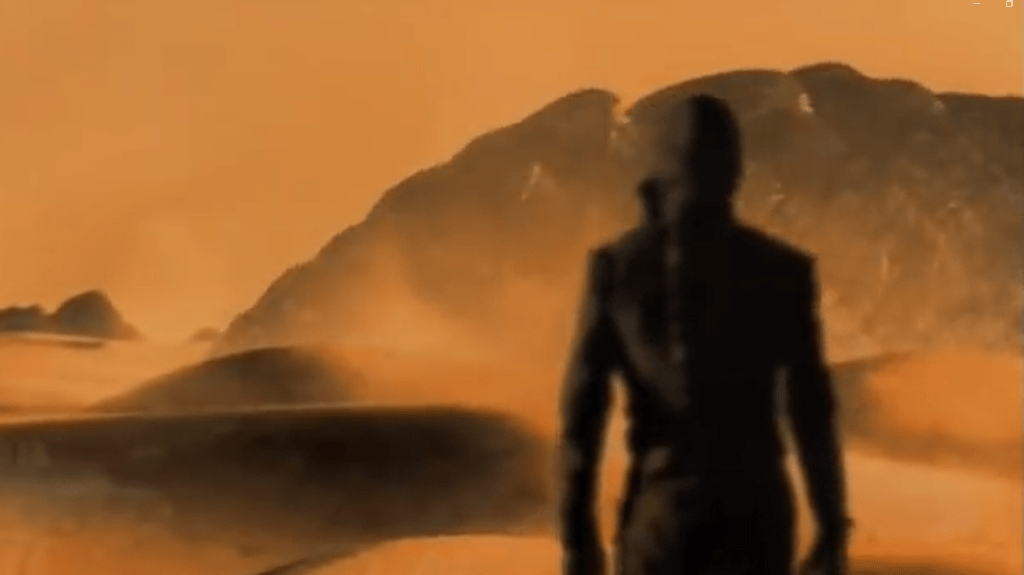
Paul in stillsuit watches a sandworm’s back cresting the sand. From the 2000 version.

Recommendations of Dune

If you want a spectacular modern science fiction epic, well-conceived and well-executed, with current stars and big budget, you should watch the Denis Villeneuve Dune.

If, like me, you are really into Dune and also interested in the process of storytelling and adaptation, these versions are all deeply intriguing.

If, like me, you are interested in things that are good but also kind of bad, you should watch David Lynch’s Dune. The highs and lows are equally bold and striking.

If you liked the 2021 Dune and want to know more, but aren’t much of a reader or can’t get into the books, the 2000 miniseries is a good place to go to delve deeper into the story. It would be a good option for someone who prefers the pacing and serial form of TV shows. It also has the great advantage that it has a direct sequel to introduce you to the later books in the series.

Next week I’ll talk about that sequel: the novels Dune Messiah and Children of Dune, along with the TV miniseries Frank Herbert’s Children of Dune (2003). Stay tuned for that if you want to hear about how a low-budget TV adaptation can be better than the source material. Until then, enjoy Dune: Part Two.

Home Page/ Archives

How Dune gets away with it

How Dune gets away with it

When it was briefly mentioned on The Mindy Project, it was described as (something like) ‘That book that every guy loves for some reason.’ I read Dune at age 15. The years passed and I forgot some of the details of the story, but it held on in some remote sietch in the back of my mind, from which echoed phrases like Gom Jabbar, Muad’Dib, Kwisatz Haderach; mantras like ‘Fear is the mind-killer’ and ‘Who controls the spice controls the universe.’ The recent film captured some of that hypnotic power, and gave me an urge to visit that strange place again.

Re-reading it was a trip. Here are some things that struck me. In each case I was left wondering, ‘How does the novel get away with that?’

There is no scene of space travel in Dune. A chapter on planet Caladan ends; the next chapter begins with the characters literally unpacking their bags on planet Arrakis. The author Frank Herbert tells us that the Guild of Navigators have a monopoly on space travel, but he is not interested in exploring the technical details. He is more interested in the Guild as a political force. Therefore, unlike both of the movie versions, the space travel happens off-screen. It’s a bold move but it works. It brings focus to the story.

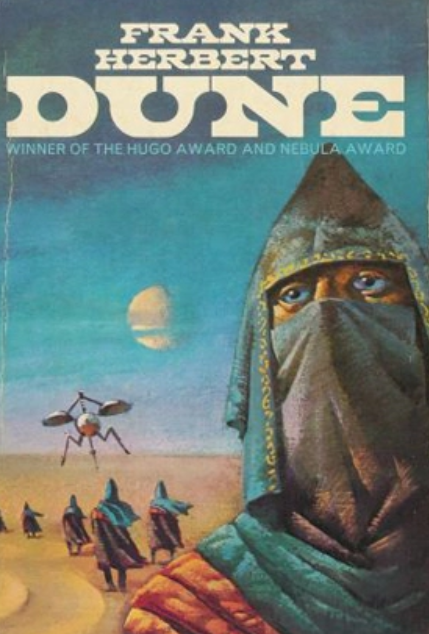
Below, a spice harvester. Above, one of many attempts to portray an ornithopter. From fontsinuse.com, as is the cover image.

Dune’s rich and strange world

In the early pages we are immersed in a kind of Renaissance space feudalism. It’s all nobles having conversations in palaces; it really shouldn’t be so interesting. I don’t think space capitalism, let alone space feudalism, is plausible. There are books I’ve abandoned because there were too many nobles, too many palaces. But somehow Dune gets away with it. It confronts us with a world that runs on its own rules, and doesn’t care what we think of it. Its people are medieval in outlook, and they don’t make any effort to relate to us on our terms. Not only do these people all do drugs, drugs are at the very the centre of their society. They have slaves, they hold entire planets as fiefs and some of them have psychic powers.

In short, Herbert doesn’t try to meet us half-way. We must either dismount from the great sandworm that is this book, and watch it slither away into the distance wondering to what fascinating places it might be going, or else cling to it stubbornly in spite of its efforts to shake us off.

By the way, I was converted to the idea of space feudalism being plausible. Humanity expanded across the stars, but suffered some kind of social and cultural catastrophe as a result. Their machines advanced to the point of being dangerous, so they waged war on the machines in the Butlerian Jihad. Feudalism didn’t bring humanity to the stars; humanity, having reached the stars through some advanced social system, reverted to feudalism, a feudalism modified with the remnants of the technology built up in ancient times.

Foreshadowing

But I wouldn’t have read on for long enough to care about the Butlerian Jihad unless the foreshadowing was laid on thick. The switches between different characters and their points of view, the dense undergrowth of exposition – these are not fashionable in sci-fi/ fantasy writing today. But  anyone who notices these unfashionable features and concludes that they are dealing with a clumsily-written book is mistaken.

When we ‘observe the plans within plans within plans’ we begin to wonder how these plans (within plans within plans) will work out. The story does not go from A to Z, from safety to danger. It goes from Y to Z, from less extreme danger to more extreme danger. We know the Harkonnens are going to attack. The Atreides know it. If they didn’t, the book and its sympathetic characters would be very irritating. We know Yueh is a traitor; if we didn’t, the revelation would be a pretty limp and predictable twist. We are not waiting to see if this Jenga tower will come down. We are waiting to see how.

While we are waiting for the Harkonnens to strike, we get sucked into the Duke’s administrative and political problems in a way that lulls and distracts us.

The writing and worldbuilding are open to criticism in places. I didn’t like how squeaky-clean and wholesome the Atreides were. ‘Good nobles’ vs ‘ bad nobles’ – come on. They’re an unelected ruling class who think they’re better than us. They’re all degrees of bad.

There’s a whole double-bluff intrigue where the Duke is pretending to be suspicious of Jessica. This is a tedious sub-plot, totally far-fetched. It’s just conflict for the sake of conflict. The book would be better without it. The mentat Thufeir Hawat is closely connected with this plot, but all in all I don’t see what he brings to the table. I think the book would pack a heavier punch if this sub-plot was gone and this character stripped back 90% or so.

Phallic sandworms

Paul is 15 but completely devoid of horniness or sexual neuroses; in the banquet scene, an attempt to seduce him falls flat. This is no doubt because of his Bene Gesserit training. But the repressed sexuality is central to the story. It’s more obvious to my grown-up mind that the sandworms are basically big dicks. And to paraphrase the book, who controls the big dicks controls the big dick energy. After Paul learns to harness and steer the big dicks, the climax of the story soon follows. Sorry for saying climax.

How does Frank Herbert get away with this insane sexual imagery? It’s even more obvious than King Solomon’s Mines. But it works because the sandworms work on their own terms. Arrakis without them wouldn’t be the same. Herbert doesn’t give a damn about space travel, but he cares about ecology. He reveals how this ecosystem works, and it is not a lecture we endure but a story mystery that is very satisfying to engage with and to solve.

Dune’s rich and strange hero

Speaking of Paul, even as a young reader I never quite liked him, and I never thought he was a good person. I rooted for him, and was invested in him. But I didn’t like him. He wrestles with his ‘terrible purpose’ and his visions of jihad for most of the story. As we read on, it becomes clear that is the story about the rise of a vast and terrible historical figure. It’s visible from the start, but the shock of the Harkonnen coup shakes something loose in him. As readers we come to respect the Fremen, but Paul is deceiving and manipulating them. Near the end (page 504) Gurney reproaches him when he reveals that he doesn’t really care about those killed in the final battle. He doesn’t care much about his murdered son either. And around the same time he finally embraces his ‘terrible purpose’ of galaxy-wide jihad; in his view there is no other way to cleanse the stagnant social order. The upheaval of the jihad will put a mixing spoon into the galactic gene pool and give it an almighty stir. This is the way he sees the world.

The unsettling presence of Paul’s little sister Alia is significant; he is only a little bit less weird than she is.

I haven’t read the sequels; I have been discouraged by some who have. What’s more, I consider the story complete and self-contained. It’s obvious to me that Paul is on track to become a genocidal god-emperor. There are no narrative questions left to answer.

The book suggests that Herbert does hold some beliefs that are repugnant to me: in the efficacy of eugenics, and in deep, inherent differences between men and women (‘takers’ and ‘givers’). He is cynical about humanity and believes that we will always be in thrall to religions and monarchs. But it seems clear enough that Frank Herbert doesn’t approve of Paul’s ‘terrible purpose’ or of the Bene Gesserit and their biological intrigues.

Atreides of Arabia

The ‘white saviour’ stuff is pretty blatant; Paul joins the Fremen and two years later has risen to be their messiah. This clearly takes inspiration from Lawrence of Arabia, and went on to inform Jon and the Wildlings, Dany and the Dothraki, etc.

With the Fremen, the Muslim coding is not just heavy but overwhelming. I didn’t see any problem with this when I was 15. But there was something more positive that I didn’t see either: that this is a text about the anti-colonial revolutions of the 1950s and 1960s. The Muslim stuff could be read as a tribute (perhaps a clumsy one) to the anti-colonial struggles of the Arabs, the Algerians, the Libyans. In fact the wikipedia page tells me it was also inspired by struggles of Caucasian Muslims against Tsarist Russia (hence, no doubt, the presence of a baddie named Baron Vladimir). The new film version appears to be leaning into this reading.

Conclusion

As an experiment, try to describe Dune in bald terms. It’s about a teenager who vanquishes his enemies and becomes emperor of the galaxy by convincing native people that he’s their god and by harnessing the power of huge phallic monsters.

When you put it like that, it actually sounds embarrassing.

What rescues Dune from being ‘That book that every guy loves for some reason?’ What raises Dune above the level of a basic power fantasy?

First, the world and the hero are so strange. Neither invites you in. You are forced to approach as a stranger. Paul is not the avatar for your fantasies; you end up walking many miles in his stillsuit, but you are never at all comfortable in it.  

Second, it’s primarily a story about ecology and religion, not violence. It’s a story that forces us to pay attention to things we take for granted in life, such as water and faith. The indigenous people, taken for granted above all others, turn out to be the key not just to Arrakis but to the universe. It’s a book that humbles the reader, that confronts the reader with vast superhuman forces.

Last, it forces to reader to consider the cost of power. The more Paul masters these forces, the more alienated we are from him as a character. The Fremen are liberated, so it’s a satisfying ending. The ‘plans within plans within plans’ produce the most terrible blowback – for the Emperor, for the Harkonnens, for the Bene Gesserit. But Paul has reached a place where he is both all-powerful and inhuman. The worst blowback might be for the billions of innocents who will die in his jihad.

Everything feels earned. It feels earned because the desert exacts a terrible price for every blessing it gives, and there are no happy endings in this social order.

Go to Home Page/ Archive

Appendix:

A note on Dune and videogames.

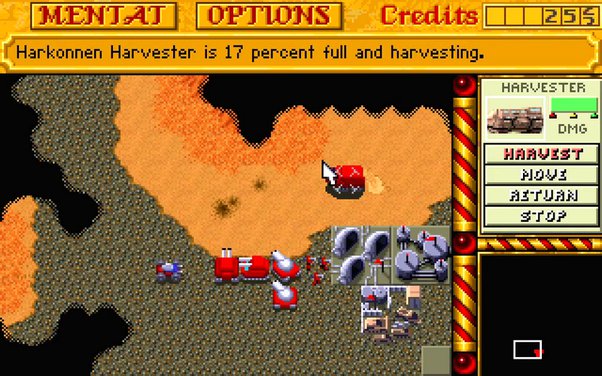
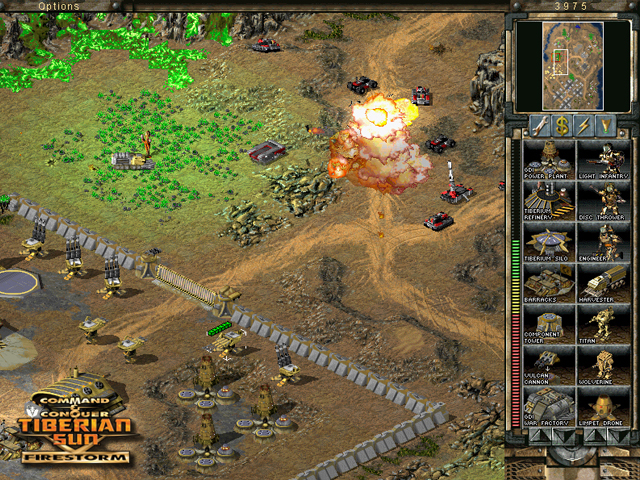
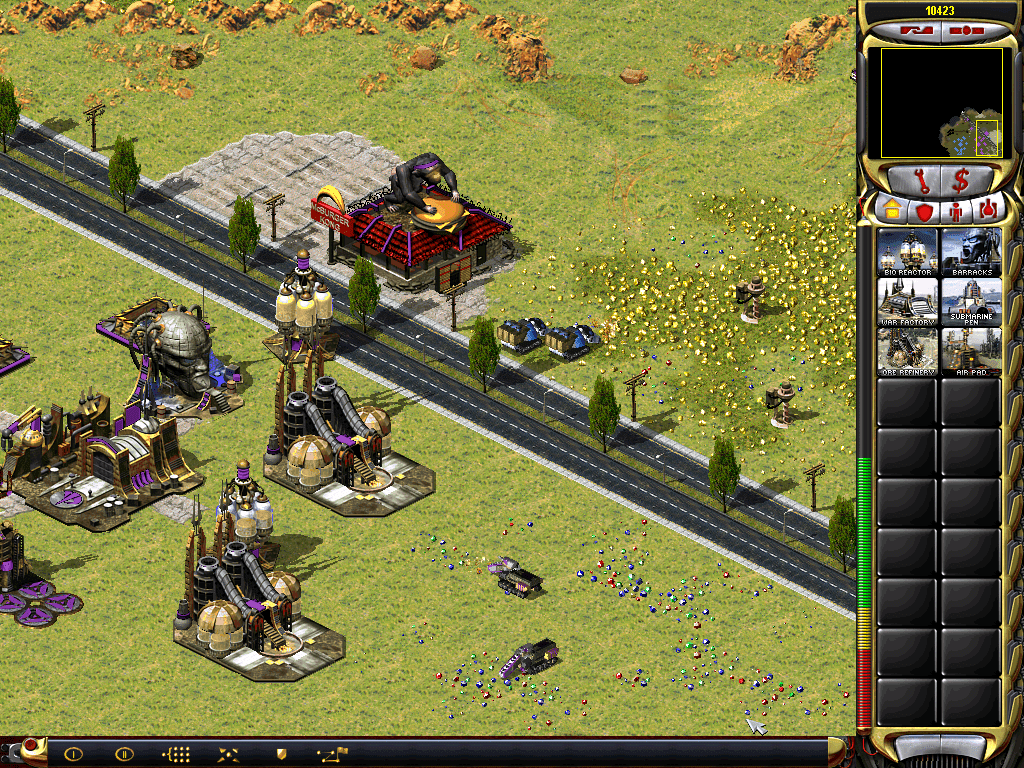
Dune 2 was the first strategy game, and it adapted straight from the novel a model of resource-collection that went on to exert a huge influence. There is a single resource, the spice, which lies on the surface of the ground. It is collected by huge harvesting vehicles. In Command and Conquer, the spice became tiberium, which has its own interesting back-story but is functionally identical, with the big harvesting vehicles and all. In the Red Alert spin-off, the spice appears in an alternate-history Cold War setting as Ore, a single one-stop-shop resource. Armies supply themselves by mining this resource on the battlefield. Helpfully, it is spread in pockets evenly across the surface of the earth from Manhattan to the Siberian taiga. 

So when Frank Herbert wrote about spice-harvesting in the early 1960s, he was creating a model which videogame developers would still be using in the 21st century. It was such a useful model for gaming that the plausibility of the game world of Red Alert was stretched to the limit just to accommodate it.