

‘That night must have been a night of terror for the young King and his Court. From a high turret the King looked out over the greatest city of his realm, which was now no longer his. Below him, stretching away far into the darkness of the June night, was the great rebel force, and there rose to his ears the hoarse murmurs of a vast multitude, alert and watchful. Away on the horizon was the glare of the burning mansions of his friends and counsellors, men of the highest authority in the land, whose will and command was now as unheeded as the whimper of a puppy. To the West burned the prison and mansions in Westminster. Closer, in the fields of Clerkenwell, burned the buildings of the Knights Templar, whilst close by, almost near enough for him to stretch out his hand to touch the flames, burned the great palace of his uncle, John of Gaunt, now master of nothing but a few hundred troops on the Scottish borderlands. Yet nothing had changed, the land was still there, the river still flowed and the stars still shone.
Nine Days that Shook England by H. Fagan, P 190
‘All that had happened was that his people no longer obeyed his commands.’
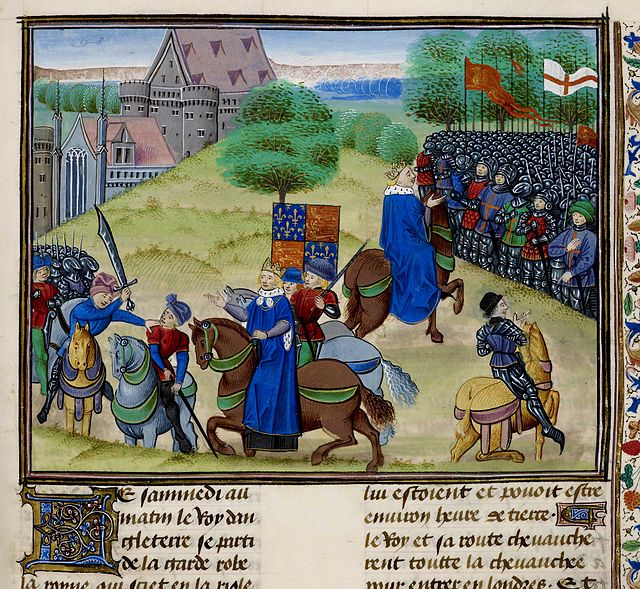
Nine Days that Shook England (Victor Gollancz, Left Book Club, 1938) is ‘An Account of the English People’s Uprising in 1381.’ A vast rebellion of the peasants along with the poorer strata of clergy, knights and merchants came close to the overthrow of the English aristocracy. Pushed to the limit by exploitation, endless war, corrupt and incompetent ruling circles, and yet another poll tax, armed bands rose up to battle tax collectors, then united and marched on London and other towns. They conquered the capital with help from the masses inside the walls. But just as suddenly the ruling class dispersed them with a bold strike at their leadership, and put down the rebellion with over 7,000 executions and at least two stand-up battles.
Fagan is a very good writer, as you can see in the paragraph quoted above. Passages of comparable quality are many. The early chapters explain the socio-economic changes that laid the basis for the revolt, and do so in a way that any reader can easily understand and follow. The account is shot through with vivid and memorable moments and movements: he describes how an underground organisation called the Great Society built for the rebellion for years in advance. Wandering clergymen and outlawed peasants served as organisers for the Great Society.
The above quote marks the high point of the revolt. Fagan then narrates the sudden turn by which the ruling class re-established control – through what must be one of the most shameful state murders in the history of England. Such a sudden and extraordinary turnaround demands a good explanation, and Fagan supplies one.
The book is unfortunately weighed down with emotive verbiage. In itself, I have no major problem with the following passage…
‘…the indomitable spirit of the Englishman was roused. They became determined to fight for what had been given them by the King willingly and of his own accord. Soon many of them were dying heroic deaths in action against the forces of terror, for the defence of freedom and for the maintenance of their just rights.’
…but there’s too much of this kind of language. After a while, my mind became apt to spot such passages coming, and to switch into a kind of half-reading mode, not quite skimming but not quite taking it all in either.
Readers of today, or even readers of 50 years ago, will also have a problem with all the contemporary references. The references to Spain and Russia, while they were of course topical at the time, must have seemed of questionable relevance even then (There is even one approving reference to Stalin). The Great Society was not really anything like the Bolshevik Party – the comparison does a disservice to both. The comparisons are usually more skilful than that, but they are frequent and sometimes take up whole paragraphs.
I’ve never read anything else on the 1381 rebellion, so I can’t comment on accuracy or historiography. I can say that the story is compelling and coherent. My eyes were really opened to how well-organised the insurgents were, and how close they came to tearing down the English ruling class. It is impossible not to be moved by how the King betrayed the misplaced trust of the insurgents. Don’t be misled by the emotive passages: the author is unromantic and clear-eyed about the weaknesses of the insurgents’ political programme, about the unpleasant reality that English society was not yet ripe for a democratic revolution.
Nine Days that Shook England was a take on medieval history that really was something new to me; I haven’t ever before read about a popular revolutionary movement in the Middle Ages. It is a dramatic story and there are plenty of good primary sources on it, and Fagan makes very good use of both the drama and the sources. Its problems we can file under ‘of its time.’ More than that: you will get more out of the book if you approach it both as a fascinating story from medieval history and as an intriguing artefact of the socialist movement in Britain in the 1930s. The didactic parts are not some spectacular artistic misjudgement; they are the flip side of the passion which drives the narrative.
Note:
The author, Hymie Fagan, was an interesting character in his own right. Here are some links: a few facts about his biography suffice to explain his revolutionary enthusiasm. The life story of his second wife, Marian Fagan, throws another very interesting light on things.
 The 1919 Review