In this post we trace the collapse of White Siberia in late 1919 and early 1920. This is Series 4, Part 2 of Revolution Under Siege, an account of the Russian Civil War .
Become a paying supporter to get access
Access to this article is limited to paying supporters. If you already subscribe by email, thank you. But if you want to become a paying supporter, please hit ‘Subscribe’ below.
Give me less than the price of a coffee, and you can access everything on this blog for one year.
I listen to Chapo Trap House and Hell on Earth, and those lads often coin a phrase – Maga Chud, Hot Couch Guy, Lanyard, etc. One of the little phrases they have pioneered on there, especially with reference to the podcast Blowback, is the idea that guys or weird little guys are a big part of what makes history interesting. They mean, basically, a character. A guy is some outrageous, fascinating, usually horrible individual, almost always a literal guy: Macarthur; Charlie Wilson in Afghanistan; Von Manstein and Gustavus Adolphus in the Thirty Years’ War. I think the ‘Great Man’ Theory of History is bullshit but I believe in the explanatory power of biography, particularly of the not-so-great man. An individual character can be a strong nail on which to hang a narrative.
My writing has progressed from an obsession with the Celts and the Gaels to an even deeper obsession with the Russian Civil War. That has involved wading through a sea of colourful characters. That’s no surprise: an empire collapsed, and with all institutions turned to dust, the force of personality briefly became a real material force. Any half-way charismatic character could ‘shark up a band of lawless resolutes’ and just have a go at conquering Russia.
I’m going to try and narrow it down to the five most interesting guys I’ve come across. But we can’t go with the obvious big names – Lenin, Trotsky, Kolchak or Denikin. For all their differences and their interesting features, these characters are straightforward. ‘Guys’ are hard to define but they have to defy expectations, or even to defy the laws of political gravity. It’s also difficult to rank them. Below, number 1 is definitely number 1 but the other four are joint second. Here goes.
Top: Grigoriev and his movement, as depicted in a Red poster; bottom, Red army routing Grigoriev
Grigoriev was the pure distillation of the contemporary warlord. He fought for, or at least flirted with, literally every side that was active on his front of the war. Let’s go through the list. From the Tsarist Army he went to the Ukrainian Nationalist Rada (check); he helped overthrow them on behalf of the German-backed Hetman Skoropadsky (check); then he rejoined the Rada and helped overthrow Skoropadsky. Then he linked up with the Ukrainian Left SRs (check); next he brought his partisan horde into the Red Army and captured Odessa for them (check). In May 1919 he set up shop on his own when he launched a massive revolt against the Soviet power which covered about a third of Ukraine and which was accompanied by vicious anti-Jewish pogroms. After his revolt was put down he tried to make an alliance with Makhno and the Anarchists (check). They discovered that he had made a secret alliance with the Whites (check), so they killed him and brought his followers into their army.
Grigoriev is an easy pick for this list. He was notably rude and charmless, and he was pissed as a newt when he took Odessa. Frequently to be found RHUI – Riding a Horse Under the Influence – but he led from the front and for this he was admired by his men. In his drunken, fearless, martial, bigoted figure he embodied the chaos of his land in 1919. If the Reds had followed through on their plan to send him and his army to help the Hungarian Soviet, he probably would have ended up joining the Slovakians or something.
4: Larissa Reissner
Larissa Reissner was one of thousands of women who volunteered to fight in the Red Army, not to mention those who fought in, and even led, Red partisan forces.
After fighting in and writing about that battle, she went on to spy behind the Japanese lines in Siberia, disguised as a peasant woman. She was captured, because her disguise was utterly unconvincing, but she escaped. Along with her husband Raskolnikov (aka Ilyin, another contender for ‘guy’ status), she went to Kabul and negotiated a diplomatic agreement with the King of Afghanistan.
She knew many famous writers and artists, from Mandelstam to Akhmatova. Most Bolsheviks’ personal lives appear to have consisted of drinking tea and country hikes, but Reissner’s was far more interesting and colourful. Of how many people can we say that they conversed about poetry with Anna Akhmatova, and also spent a month in the squalor and danger of the frontlines at Kazan?
Larissa Reissner died young of typhus in 1926.
3: Prince Pavel Rafalovich Bermondt-Avalov
This was a complex war, with foreign powers (Germany, Britain, Japan…) layered on top of national and ethnic movements (Estonians, Bashkirs, Armenians…), themselves layered on top of class factions (workers, peasants, intelligentsia, capitalists, landlords…). On top of that, people switched sides a lot (General X was a pro-German monarchist who was in favour of independence for Y nationality, now he’s a pro-Allied SR; tomorrow he will be a Red military specialist, but preparing a mutiny on behalf of the Green partisans…) For every political orientation, for every trajectory through this mess, there was an individual character, a guy.
Bermondt-Avalov is the best example. ‘Bermondtian’ came to mean a pro-German, anti-Baltic Nationalities anti-communist. He built up a White Army by recruiting Russian soldiers from German prison camps. As you might have guessed, he was a protégé of the German government, and became one of their instruments in trying to build up a Baltic German Empire in 1919 (Yes, after the war the Allies gave the Germans a chance to conquer the Baltic, just to have a go at the Soviets). For a time Bermondt-Avalov and co had to play nice with the British and the British-backed Latvian and Estonian Nationalists. But his German-backed Whites were very distinct from the Allied-backed Whites. While the latter marched on Petrograd, he decided it would be a great time to march on Riga – ie, to declare war on the British-backed Latvian government. The Latvian and Estonian Nationalists defeated him, but his war undermined the White attack on Petrograd.
I chose Bermondt-Avalov not because I know a whole lot about his personality, temperament, etc, but because he raised an army to fight the Reds and ended up fighting other anti-communists. He may have been more interested in establishing Baltic German power than in fighting communism, but the two were not necessarily mutually exclusive. The way things turned out, German-oriented Whites were a historical curiosity. But if the Allies had not intervened, or if the Germans had come out of World War One stronger, then the Bermondt-Avalovs would have represented something different.
He fled to Germany, served the Nazis, for some reason was deported to Yugoslavia in 1941, and went to the United States where he died in the 1970s.
2: Jukums Vacietis
Vacietis, AKA Vatsetis, is another guy who stood in the thick of the raging national and class cross-currents.
He was a son of farm labourers who rose through the ranks of the Latvian Rifles, an all-Latvian unit of the Tsar’s army. Unlike most of the soldiers of the Tsar they had strong and bitter reasons to resist Germany right to the end: if Germany conquered Latvia, then the arrogant Baltic German barons would oppress them and push them around even more than before. So even while revolutionary consciousness spread among the Latvians, their discipline and spirit did not diminish.
He got in hot water in 1919 – partly for losing a debate over strategy, and partly because he fantasized out loud in front of his comrades about maybe someday being the next Napoleon. He was replaced with the less temperamental Sergei Kamenev (another non-party military officer who gets too little credit). He became a professor at the Red Army military academy after capital charges against him were proved false. But like most of his contemporaries in the Red Army, he did not survive the Stalinist terror of the late 1930s.
1: Baron Roman Von Ungern-Sternberg
What can one say about the ‘Mad Baron’? Where do you start?
Ungern was one of those Baltic Germans that the Latvians were so worried about. If he’s anything to go by, they were right.
He was a Buddhist of some kind, also influenced by Theosophy, but Lutheran in origin, Orthodox insofar as he served Tsarism. He believed in magic and occult secrets. Other White Guards looked to Europe to save them from Revolution, but Ungern saw Europe as the epicentre of the revolutionary earthquake. I am obliged to give him grudging points for consistency and rigour in that he rejected the whole Enlightenment and modernity along with the October Revolution.
His remedy for the revolutionary storm in the West? In the words of one of his disciples: ‘Here in these historic plains [Mongolia and adjacent parts of China and Russia] we will organize an army as powerful as that of Genghis Khan. Then we will move, as that great man did, and smash the whole of Europe. The world must die so that a new and better world may come forth, reincarnated on a higher plane’ (Alioshin, Dmitri. Asian Odyssey, H Holt and Company, New York, 1940, p 15).
Unlike most other White warlords, he did not get drunk, have orgies, or amass a fortune. He gave his own money to support his soldiers. He liked animals, or at least hated humans; if someone served bad food to the horses, he would lock them up and force them to eat it for days. He hated the Chinese, but idolized the Mongolians with an extreme romanticism.
It is sometimes said that he believed himself to be the reincarnation of Ghengis Khan. That’s probably not true. But the Mongolian theocracy declared that he was the reincarnation of another important figure from Mongolian history. They were grateful to him because he drove out the Chinese occupying forces from Mongolia – in the process carrying out an unbelievable sack and slaughter in the Mongolian capital city. So far, things were going well for his dreams of world conquest. But Mongolian communists, backed by the Soviets, soon defeated him, and he was tried and executed on Soviet soil.
There are too many other big characters to name or describe, and I will probably want to revise this list on further reading and reflection.
Honourable mentions to Shkuro, Mai-Maevskii, Frunze, Tukhachevsky… and at least twenty others.
This post tells the story of how, having defeated the White Armies, the Soviet Union fought against racism and inequality in Central Asia.
Developments in Central Asia in the early years of the revolution were viewed with mounting alarm by Moscow. The Central Committee of the All-Russian Communist Party warned of the danger of the Soviet regime in Turkestan becoming ‘A Russian Ulster – the colonists’ fronde [revolt] of a national minority counting on support from the centre.’
Readers of the Russian socialist press before the revolution would have been reasonably well-informed on Irish politics (See Lenin’s 1913 article ‘Class War in Dublin’). The ‘Russian Ulster’ remark was made during the Northern Ireland pogroms of 1920-22. In what are known as the ‘First Troubles,’ gangs of loyalists burned a thousand homes and businesses, killed hundreds of people, and expelled Catholics from the Belfast shipyards along with many Protestant trade union activists.
Of course the comparison only goes so far (see the note at the end of this post). But it must have stung the Russian communists in Toshkent because it was true in many ways.
The Turkestan Communist Party was, in 1921, political home to ‘the communist priest, the Russian police officer and the kulak from Semirechie [East Kazakhstan, near China] who still employs dozens of hired labourers, has hundreds of heads of cattle and hunts down Kazakhs like wild beasts.’ In 1920 a veteran Bolshevik, Safarov, wrote: ‘National inequality, in Turkestan, inequality between Europeans and natives, is found at every step.’
And in response to racism in the region’s Communist Party, the minority of Muslim communists became nationalistic. ‘Militant Great Russian chauvinism and the defensive nationalism of the enslaved colonial masses shot through with a mistrust of the Russian – that is the fundamental and characteristic feature of Turkestan reality.’ Thus wrote Broido, another of the few ‘Old Bolsheviks’ of Turkestan, in 1920.
The Congress of the Peoples of the East in Baku, Azerbaijan in September 1920 was a remarkable event in which supporters of the Soviet regime from across Asia gathered, many in their national costume, many having made dangerous journeys. It was remarkable, too, for the spirit of free debate and criticism which prevailed. A Turkestan delegate condemned the ‘inadequacy’ of communism in Central Asia, demanding the removal of ‘your colonists now working under the guise of communism.’
He was met with applause and cries of ‘Bravo’.
‘There are among you, comrades,’ he continued, ‘people who under the mask of communism ruin the whole Soviet power and spoil the whole Soviet policy in the East.’
Safarov repeated the indictment at the 10th Party Congress in March 1921. (Carr, 338, 341)
A mosque in the Soviet Union, from a 1923 painting by Amshey Nurenberg
Moscow intervenes
EH Carr notes that though nationalities policy was discussed at the 8th Communist Party congress in March 1919, Turkestan was somehow not mentioned. Toshkent was after all as far away and as difficult to access as Soviet Hungary. But from July 1919 official statements began to recognise and to stress the importance of Turkestan. It was described as ‘the outpost of communism in Asia.’ With the realisation of its importance came recognition of the crimes and mistakes of the Toshkent Soviet. A 12 July telegram from the Party Central Committee, written by Lenin, insisted on ‘drawing the native Turkestan population into governmental work on a broad proportional basis’ and on no more requisitioning of Muslims’ property without the consent of local Muslim organisations.
The Tashkent leaders were resistant, but as soon as the rail link with Moscow was restored in October 1919, Moscow ‘despatched a team of ideological troubleshooters’ to Toshkent to respond to ‘reports of blood-letting and anarchy.’ (Hopkirk, 79) This official commission insisted that the ‘mistrust of the native toiling masses of Turkestan’ can only be overcome by offering them self-determination, a principle which was ‘the foundation of all the policy.’ Lenin’s further communications stressed ‘comradely relations’ between Russian and Muslim and urged communists to ‘eradicate all traces of Great Russian imperialism.’ (Carr, 339, 340)
Turkestan remained, however, just one relatively small front in a war fought on a continental scale, and Lenin and co were practical. This is unmistakeable in a coded telegram from Lenin to three Toshkent communist leaders dated December 11th 1919:
Your demands for personnel are excessive. It is absurd, or worse than absurd, when you imagine that Turkestan is more important than the centre and the Ukraine. You will not get any more. You must manage with what you have, and not set yourselves unlimited plans, but be modest.
You can look up this stuff on Marxists Internet Archive. A May 25 1920 telegram from Lenin to Frunze consists of a staccato and bluntly practical series of questions about the state of the oil wells. In two August 1921 letters settling a dispute between a pair of communist leaders in Turkestan, Lenin agrees that Moscow must buy ‘nine million sheep’ from Central Asian merchants. ‘They must be obtained at all costs!’ – hence ‘a number of concessions and bonuses to the merchants.’ But the consistent through-line is that ‘the Moslem poor should be treated with care and prudence, with a number of concessions’ – ‘systematic and maximum concern for the Moslem poor, for their organisation and education’ which must be ‘a model for the whole East.’
Some Bolsheviks (notably Stalin) held the idea that only the working class of a given nation should decide the fate of that nation (Jones). The problem with this position is illustrated starkly in Central Asia, where a few thousand foreign railway workers tried to exercise ‘self-determination’ over the heads of ten million Muslim farmers. But Lenin recognised that vast areas of the territory that fell within Moscow’s gravity well were underdeveloped (that is, even more so than the semi-feudal Russian metropole), and that a more sensitive and democratic policy was necessary.
Through 1919, according to Mawdsley (328), Muslims were given ‘more of a role in the state and party, thanks to Moscow’s influence. The centre kept overall control, but more than a semblance of power was given to progressive natives.’ For example, Turar Ryskulov was a Kazakh who joined the Bolsheviks in September 1917 and went on to hold numerous prominent and powerful government posts. (Smele, 333n42)
You might say, ‘Well, Moscow remained in real control,’ but that misses an important point. The peoples of Central Asia articulated demands for autonomy many times, but as far as I can see, demands for independence were few, inchoate and scattered. When they were put forward, they were complicated by being linked to broader identities: pan-Islamic or pan-Turkic ideas.
In January 1920 there arrived the first ‘Red Train’ of party activists fluent in native languages and there was a ‘rapid improvement during 1920’ in the Soviet authorities’ treatment of Muslims.
‘In the winter of 1920-21,’ writes Carr (340), ‘Friday was substituted for Sunday as the weekly rest day, and the postal authorities for the first time accepted telegrams in local languages.’ It’s really shocking that such basic measures were not in place before that time. But at least the ‘Russian Ulster’ was now steadily being dismantled.
Military conquests
Meanwhile the Red Army was consolidating its hold on Central Asia.
The Khanate of Khiva, south of the Aral Sea, had held out against the Reds. In January 1920 the Young Khivans, an indigenous progressive movement, began a revolt and invited the Red Army into the city. The result was the establishment of the Khorezm People’s Socialist Republic.
The new Russian Socialist Federation recognized the Khorezm People’s Soviet Republic as an independent state –publicly renouncing all claims to territory and offering a voluntary economic and military union with the new state. All property and land that once belonged to the Russian state, as well as administrative structures were handed over to the new government with no demands for compensation. Financial assistance was provided to build schools, to campaign to end illiteracy and to build canals, roads and a telegraph system.
The other major feudal power was Bukhara, which in 1920 suffered under famine conditions and under its regressive and violent Emir. In August 1920 the Young Bukhara movement called in the Red Army just like their counterparts in Khiva. There were four days of fighting in Bukhara. By October the Emir was running for the hills to join the Basmachi, while the First Congress of Bukhara workers met in his palace. (Hiro, 41; Carr, 340) There is even a story (Hopkirk, quoting M.N. Roy) that the women of the Emir’s numerous harem each chose to marry a Red Guard after a bizarre kind of speed-dating session.
Detail from Pictorial Wall Map 08: ‘Liquidation of Kolchak and his followers.’ From the accompanying notes: ‘Former Tsarist Turkestan, essentially most of Central Asia, is represented as a giant fireball erupting out of Tashkent. Red spearheads advance throughout as though they were spreading flames. Various centers of authority had arisen in Central Asia following the revolution, but the Red Army managed to turn the region into a series of soviet republics by the end of 1920. Spread across the region is the name Mikhail Frunze, commander of the Turkestani Red Army, who defeated fierce guerilla opposition to set up a Turkestan Autonomous Soviet Socialist Republic in September 1920.’
In 1920 revolution in Europe was receding as an immediate possibility. Communist leaders turned their attention to the east: there were major independence struggles in India, and in Turkey a guerrilla movement was resisting Allied occupation. In Toshkent there was even a brief attempt to build a revolutionary army of Muslims from the Indian subcontinent.
Social Conquests
The October Revolution did not, as things turned out, attempt to overthrow the British Raj in India, but in the longer term it overthrew illiteracy in Central Asia. For example, in 1926 literacy was only 2.2% in Tajikstan; by 1939 it was 71.7%. 1,600 public libraries were opened across Turkestan. Along with this there was a dramatic rise in the availability of media; newspapers, periodicals, books and radio. Other socio-economic achievements included major road and rail projects and works such as the Fergana Canal.
Red victory in Central Asia brought massive changes to family life, with bans on child marriage and encouragement to women to learn to write. The proportion of women in the workforce in Uzbekistan was 9% in 1925, and 39% by 1939 as women entered into the civil service, schools, colleges, universities, hospitals and labs.
In a 1990 interview with the BBC’s Central Asian Service, a secondary-school teacher reflected on what the October Revolution and its extension to Central Asia meant for her:
I felt I was the luckiest girl in the whole world. My great-grandmother was like a slave, shut up her house. My mother was illiterate. She had thirteen children and looked old all her life. For me the past was dark and horrible, and whatever anyone says about the Soviet Union, that is how it was for me.
She could access free infant healthcare. She could also avail of measures which, in my country in 2023, are not even on the table for discussion: two years’ maternity leave with full salary, and a guaranteed childcare place for her children. (Dilip Hiro, 56)
The revolution in Central Asia was in large part a gender and family revolution, but it was above all a land revolution. From 1920, the major Muslim political parties saw an exodus of members to the Communist Party. Even in rural areas, communism gained popularity. ‘Contrary to the Muslim clerics’ dire warnings […] they [the communists] had concentrated on confiscating the lands of the feudal lords and distributing them to landless and poor peasants.’ (Hiro, 41)
A March 1920 decree returned Central Asian land that had been seized by Russian settlers – 280,000 hectares were given back to local people in a single year. The most notorious racists among the Russian population were deported back to Russia.
From March 1921, the New Economic Policy (NEP) was brought in across the Soviet Union. In Central Asia there was a danger it might cut across land redistribution (hence Lenin’s letters of August 1921 quoted above), but through skilful implementation it was a success. From 1925-1929 there was further redistribution of land at the expense of landlords and clerics. The beks, emirs and khans were simply finished as a ruling class.
The former ruling classes rage at the economic development being achieved by the proletariat. An Uzbek-language poster, published in Tashkent, 1920s. (Source)
Cultural Conquests
Under Soviet rule, the various languages of Central Asia were standardised with Arabic script on a Turkic base of vocabulary and grammar, with the exception of the Persian-influenced Tajik language. Lenin explicitly rejected forcing these languages into Cyrillic script, though as we will see this was later done under Stalin.
For Central Asian languages, this was a historic moment. For example the Kyrgyz language was set down in script for the first time in 1922. (Hiro, 46)
By 1923 there were 67 schools teaching in Mari, 57 in Kabardi, 159 in Komi, 51 in Kalmyk, 100 in Kirghiz, 303 in Buriat and over 2500 for the Tatar language. In Central Asia, the number of national schools, which numbered just 300 before the revolution, reached 2100 by the end of 1920.
This article by David Trilling from Eurasianet.org points out that the surge in artistic achievement which followed 1917 continued for longer in Central Asia:
The 1920s saw an unfettered flowering of creativity in these regions, especially among Russian-trained artists based in Tashkent and Baku. While central publishing houses in Moscow and Leningrad were shifting to Socialist Realism, artists in the periphery continued the avant-garde movement, combining it with local traditions, according to the exhibit’s curator, Maria Filatova. She sees the colorful posters from the 1920s and early 1930s, with their longer texts and multiple figurines, as direct decendents of local calligraphy and miniature traditions.
Filatova feels the relative freedom of the 1920s makes the work from that decade artistically more interesting compared to what followed. The work is also revealing about that period in early Soviet history, when “socialist ideas coexisted with Islamic ideology.”
For example – the cover image for this post, part of the exhibition in question, an Azeri-language Red Army recruitment poster
Political Conquests
These socio-economic gains were the basis for the emergence of new states in Central Asia.
Early in the Civil War Ataman Dutov, a key White leader in the Urals, recognized the autonomy of the Kazakhs. But when Kolchak took over in late 1918, true to form, he suppressed it. So there was a split between the White Guards and the Kazakh people. In Autumn 1919 the Red General Frunze issued an amnesty for all the fighters of the Alash-Orda who had sided with the Whites; this proved a master-stroke politically and militarily. The Kazakhs came over to the Reds in great numbers and within 4 or 5 months the Reds had advanced all the way across the vast expanse of Kazakhstan.
Moscow quickly recognised a Kazakh Autonomous Soviet Socialist Republic (ASSR). Confusingly, it was at first known as the Kyrgyz ASSR, because Russians ignorantly called the Kazakhs Kyrgyz.
This Kazakh ASSR, population 6.5 million, was the first of the Soviet Republics of Central Asia. The others emerged in the next few years:
The Turkmens got the autonomous state for which they had been fighting, in the form of the Turkmenia SSR, population one million;
There emerged the Kyrgyz ASSR, population one million;
And in December 1926 the Tajik ASSR, population one million, separated from…
The Uzbek SSR, population 5 million.
The drawing of the boundaries between these new states was not dictated by Moscow, which confined itself to laying down general principles and settling intractable disputes. The actual borders were worked out by local parties and specially designated commissions. Look at a map of the world and at the vortex of convoluted borders between Kyrgyzstan, Uzbekistan and Tajikistan: this was a result of bargaining between indigenous communists. What a contrast to the suspiciously straight lines we see in parts of the Middle East and Africa, drawn up by imperial officials rather than by people with on-the-ground interests and knowledge. (Hiro, 44)
Yes, I know it’s in Hungarian. But in any language you can see the convoluted tangle of borders
Muslim communists began to come to the fore. But the particular history of Soviet Central Asia also led to particular problems. As outlined above, chauvinism among Russian communists led to a ‘defensive nationalism’ among Muslim communists. This bred further conflict; many of the Muslim leaders who came to prominence in Soviet Central Asia entertained Pan-Turkic ideas as part of that ‘defensive nationalism,’ leading to disagreement between them and Moscow, a struggle which the former lost. (Mawdsley, 332) The Volga Tatar communist Soltangaliev was arrested in 1923, accused of complicity in a Pan-Turkist conspiracy with the Basmachi – an accusation that strikes me as improbable. He was expelled from the party and even jailed, but later released. (Smele, 333n43)
The history of the Soviet Union is sometimes presented as a monolithic story of dictatorship. Certainly the draconian security measures of the Civil War era and the 1921 ban on opposition should not be downplayed, and under Stalin from the late 1920s totalitarian rule was imposed. But as we have seen, even during the Civil War Soviet congresses made important decisions. The Civil War years in fact saw centrifugal tendencies – from Tsaritsyn to Toshkent, local officials turned their noses up at signed credentials from Lenin, and declared that they would do as they pleased. In the 1920s we see some of the potential of Soviet democracy shine through despite extraordinary difficulties such as post-war reconstruction. This is obvious in the case of Central Asia. Hiro writes: ‘the landless, poor and middle-income peasants forming the bulk of the population benefitted economically and politically’ from the extension of the October Revolution to their lands. ‘For instance, in the 1927 to 1928 elections to the Soviets in Tajikistan, the landless, poor and middle-income peasants accounted for 87% of the deputies.’
Conclusion
This post concludes my four-part miniseries Class War and Holy War, a spin-off from Revolution Under Siege. But I’m going to add two short posts to this series, one dealing with the fascinating guerrilla movement known as the Basmachi and another on the impact of Stalinist forced collectivisation and terror in Central Asia.
This series started out bleak and violent. Urban Russia, linked by rail and wire, transplanted the revolution from the Baltic Sea to the Silk Road with remarkable speed. But in Toshkent the Russian population was surrounded by a majority that was of a different religion and of many different nationalities. The workers’ leaders, almost none of whom were developed Bolshevik cadres, filtered the October Revolution through an approach that was at best crude, at worst brutally racist. Instead of combining the anti-colonial revolution with the workers’ revolution, they set the one against the other and risked creating what the Party’s Central Committee termed ‘a Russian Ulster.’
But the Toshkent Soviet did manage to survive a bitter military struggle against many diverse enemies, and from late 1919 the racist element was in retreat. What has been covered in this concluding post really is remarkable: the peoples of Central Asia tore down their ancient lords and shared their land out among the poor; they booted out the worst of the Russian settlers and shared out their land, too; women seized the day; minority languages were revived; the number of healthcare facilities, schools and libraries increased massively; for some years, the people enjoyed free creative expression, democratic rights and real representation; people of different nationalities settled their borders by debate and compromise. Such things really are possible, and in a revolutionary time they can happen quickly.
I’m not describing heaven on earth, and I’m sure the legacy of the Soviet period is disputed and complicated in the diverse countries of Central Asia today, and I understand why the events I have written about might be coloured more negatively in the eyes of people from the region because of later developments. This is a topic I have only begun to look at over the last six months or so, and I feel exactly how I imagine an Uzbek blogger writing about Irish history would feel. While I don’t want to get stuck into comment-section trench warfare, I welcome constructive criticism from people mpre familiar with the region. But it’s difficult for me not to be impressed and even moved, comparing the Central Asian revolution with today’s bitter and violent world with all its bigotry and its apparently intractable national and religious conflicts. Violence and horror are part of history – you didn’t need me to tell you that. But such things as we have described in this post are possible too, even against a background of hate and bloodshed, and they really did happen.
Note on ‘A Russian Ulster’
Speaking of which, here’s a final note about the phrase ‘a Russian Ulster.’ The phrase is inappropriate in important ways.
The first problem is that Central Asia is way bigger, more diverse and more globally significant than Ulster, but because of Anglo cultural hegemony nobody has ever uttered the phrase ‘Ulster is in danger of becoming a British Turkestan.’
Second, the Protestant population in Ireland are not ‘settlers’ but the descendants of settlers from centuries ago, and they have as much of an established place here as anyone. By contrast, the main mass of Russians in Central Asia dated only from the 1890s.
A scene from the Belfast shipyards in 1911
Third, while the sectarian division in Ireland has been and remains bitter and violent, the situation in Central Asia in the early 20th Century appears to have been much worse. I’m sure Northern Irish Catholics and Central Asian Muslims have no interest in competing in the oppression Olympics, but it’s necessary to clarify the limits of the comparison.
Fourth, before the 1920-22 ‘Troubles’ came the 1919 Belfast engineering strike – in which Catholics and Protestants stood together in a strike committee that virtually ran the city. One of several prominent socialist leaders, incidentally, was Simon Greenspon, a man of Russian Jewish background. Here was a glimpse of ‘a Russian Ulster’ in a very different sense.
In July 1918 the ground was shaking under the feet of Soviet power. We have already looked at the situation in ‘Central’ and South Russia, and in the Urals and Siberia: atamans invading, Czechs in revolt, officers, Cossacks and Right SRs forming rival governments, foreign powers invading, insurrections in Moscow, Kazan and Iaroslavl.
Central Asia was one section of this panorama of general catastrophe. The customary apology which I make on the podcast for mispronouncing Slavic names must now be accompanied by another customary apology: that a disproportionate part of my material comes via British military officers with a gift for languages, a high tolerance for deserts, a racist attitude to ‘the natives’ and a loathing for the anti-war and egalitarian programme of the Soviets. These guys bring their biases to the table, and the simple truth is that I wasn’t able to find much material from the other side or even from a balanced standpoint.
A Turkmen, photographed some time between 1905 and 1915. These guys are going to be important in this post.
Turkmens and Punjabis
Civil War proper came to Central Asia with the formation of the region’s first major White government. Here is how that happened.
We have seen how the main support base of the Toshkent Soviet consisted of oilers and drivers on the railways. As we saw, these workers refused to support the Menshevik-led railway strike. But in the Trans-Caspian region (modern-day Turkmenistan), the Mensheviks had the ear of the railway workers. Toshkent sent out an agent, a Latvian named Fralov, to coerce these railway workers into cooperating. According to his enemies (What follows is drawn from Teague-Jones, 83-85), Fralov arrived with a hundred ‘armed Austrians and Magyars,’ and soon developed a reputation for brutality and drunkenness. Apparently local railway workers were furious, but not all that surprised, when Fralov shot three of their representatives at Kizil Arvat.
Around July 11th, news of these killings arrived at the main city, Ashgabat.
Other news would no doubt have been arriving in Ashgabat around the same time: that there was street fighting in Moscow; a mutiny on the Volga led by one of the top commanders of the Red Army; that Britain, Japan and France had taken Murmansk and Vladivostok under their ‘temporary protection;’ and that the United States had just agreed to intervene in Russia. And that’s just the factual news. No doubt other wild rumours would have been in the mix too.
It must have seemed to local people in Ashgabat that the Soviet regime was about to collapse. Why should they tolerate the likes of Fralov any longer?
Local railway workers cut the telegraph wires and proclaimed a revolution against Soviet power. The town militia sided with the railway workers. Turkmen groups joined in, including officers like the Tsarist-era general Oraz Sardar. They killed nine commissars, some of them simply lynched on the spot. The rebels seized the town armoury and distributed 6,000 rifles on a ‘first come, first served’ basis, to whoever showed up asking for one. They also seized 17 million roubles.
200 of the rebels got together on a train and set off for Kizil Arvat. They found Fralov and his followers on the station platform. Fralov was (this is, again, according to his enemies) sitting in an armchair, passed out from drink, with his wife and his companions around him. The train full of insurgents pulled up, the doors opened, and the insurgents immediately opened fire, gunning down Fralov and everyone else on the platform.
From this revolt the Trans-Caspian Government emerged.
65% of the inhabitants of Trans-Caspia were nomadic Turkmens, living in auls or villages near cultivated oases. They dressed in soft leather moccasins and leg wrappings, cotton shirts and pantaloons, long kaftans and big papakha hats of sheepskin. The working-class revolution was at first incomprehensible to the nomads, on top of which Red forces seized their horses and crops. They were also motivated to join the revolt by a desire for self-government. They calculated that the British or the Whites might grant it in return for help against the Reds.
Russians made up only 8% of the population. ‘The Russians, both Red and White, were dependent on the railway, or confined to it. They could not operate and could not even exist save in the immediate vicinity of those two shining steel rails… The Turkmans had the whole of the vast interior in which to roam about.’ (Teague-Jones, p 186)
Like Toshkent, it was a Russian-dominated regime. The leaders were Menshevik railway workers, schoolteachers, counts, Right SR activists, Russian generals and Turkmen patriarchs.
British agents had crossed from Persia, a short distance as the crow flies but withkut roads or raios, over mountains. A British force, large, but not as large as its officers wanted the world to believe, was centered on Masshad (Yes, the British in this period could simply drop a whole army into Iran). Contacts between the new White regime and British agents preceded the anti-Soviet revolt (through General Junkovsky) and developed afterwards, mainly through Lieutenant Reginald Teague-Jones. This meant advice and advisors, diplomatic recognition, money and armed forces. The money was a grudging trickle, and the soldiers numbered only a few hundred. But to the ‘democratic counter-revolutionaries’ of Ashgabat, who felt completely out of their depth, it was comforting to have the British Empire at their back. It enhanced their prestige to the point that, getting ahead of ourselves and taking the long view, it at least doubled the lifespan of the regime.
The new White government sat astride one of the two railways which connected Central Asia with the old Russian Empire; in other words it cut Toshkent off from Moscow. So the Toshkent Soviet sent a thousand fighters across the river Amu Darya. This army, like the formations of early 1918, was run by committees. Theirs was the highest proportion of internationals, recruited from the prison camps of the Great War. The British officer Teague-Jones saw women fighters among their dead. (Mawdsley, 328, Teague-Jones, 194. The credulous British officer also repeats some grotesque and improbable second-hand rumours about ‘their women.’)
Battle at Kaahka
An early battle outside the town and railway station of Kaahka on August 28th was characteristic of this strange linear ‘railway war.’ Teague-Jones (104-110) describes it from firsthand experience.
On the Trans-Caspian side were a few hundred untrained Turkmen, fewer Russians – including some officers and artillery – and a handful of British officers with 500 Punjabi sepoys. Their camp was a collection of carriages on the sidings, fifteen fighters to a car. The Russians would sing at night. Some of the trains were armoured – the Trans-Caspians even discovered that machine-compressed bales of cotton had excellent stopping power against bullets, and covered their trains with them.
Meanwhile there were numerous Russian officers who could have been at this battle, but chose instead to hang around the capital, Ashgabat, with nothing to do because they were too racist to serve in an army whose officers included Turkmen. (Teague-Jones, 125)
The Trans-Caspian forces set up a defensive line in a dry riverbed just outside of Kaaahka to the west, crossing the railway line at right angles. Their eyes followed the railway uphill to a bare ridge. That way, out of sight, were the Reds, who had already been repulsed by Indian machine-guns on August 25th. Soviet aviators flew overhead, scouting the ground.
When the Reds struck, the blow was sudden and fell on the left flank. In the morning they seized an old ruined fortress then advanced into the gardens on the outskirts of town. The Trans-Caspians had to climb out of their ditch and pelt across to the railway station and the gardens in complete disorder. Until midday confused firing raged in the gardens, where nobody could see very far. The British considered the Russians incompetent. Friendly-fire incidents on the Trans-Caspian side led to frenzied suspicions of the Turkmen. The Punjabis could not tell White from Red – you probably couldn’t either, if you were there – and didn’t know who to shoot at. The artillery on both sides was pretty much useless (because the personnel and equipment alike were poor), but its noise and debris no doubt added to the terror and confusion of the fighters.
Painting by Mitrophan Grekov (Probably depicting South Russia rather than Central Asia)
It was one of those clumsy battles so typical of the early Civil War. If the Reds had pressed the attack they probably would have taken the town. But the commanders didn’t know, and if they had somehow known they could not have communicated it to the fighters.
This was also a typical battle of the Civil War in Central Asia- fewer than a thousand combatants per side, drawn from a dizzying array of nationalities. At its most simple, it was a war between Russians, over the heads of the local Muslim population. The latter might feature as allies or auxiliaries but there was not even a pretence – at any point on the White side, and at this early stage on the Red side – that the war was being fought on their behalf. From Mensheviks to British officers, the aspiration of the Turkmens to rule in their own land was regarded as a sinister plot.
At a stretch, you might even boil it down to a war between different factions of social-democratic railway workers – but that would efface the clear class difference between the two Russian factions, the preponderance of the upper class and intelligentsia on the White side. It was a war of accidental alignments and improbable allies: Turkmen nationalists and reactionary Russian officers; Punjabi machine-gunners and Menshevik train drivers; Hungarians fighting for the Toshkent Soviet; slave-trading bandits in the service of a government whose link with the most powerful empire in the world was a junior officer whose friends called him Reggie.
Soviet Toshkent
By late 1918 Toshkent was fighting a war on three fronts: this Trans-Caspian railway war, a struggle with Kolchak’s forces for the Orenburg-Toshkent Railway, and a war against a Cossack host based in modern-day Almaty, Kazakhstan. They had a treaty with Bokhara, but they had heard rumours that a whole regiment of Britain’s Indian Army was stationed in the city. This turned out to be false, but over a dozen Red spies sent to find out were caught strangled by the Emir of Bokhara. (Hopkirk, 85) Like Moscow on a smaller scale, Toshkent was under attack from several angles.
Next we will examine how things stood behind Red lines, in Soviet Toshkent.
Thousands of Germans and tens of thousands from Austria-Hungary lived in 25 camps near Toshkent. Since the Revolution, they were free men. But there was no way home, unless they fancied a stroll across a continent and through a Civil War and a World War, so most still lived in the camps, where they had no protection from the cold, few medicines and little food. 70 died every month in the winter of 1917-18. By the summer hundreds were dying every month due to the heat and the worsening supply situation. Outside one camp sprawled a graveyard in which lay 8,000 dead.
(Antony Beevor, quoting British Consul-General Harris several thousand miles away in Irkutsk, implicitly blames this on the Reds who ‘turned them loose,’ not on the Tsar who locked them up here in massive numbers without providing for their nutritional and medical needs – page 197).
Many had settled in villages or in Toshkent itself, enough that their field-grey uniforms became part of the scenery under the mud walls and domes of the city, and in the chaikhana, tea houses. Some lived as beggars, others married local Muslim or Russian women and settled down. A hundred of them set up a shoe factory. For some reason – and this happened in the Trans-Baikal region as well – many of the captives from Austria-Hungary were accomplished musicians, and every restaurant in Toshkent soon employed an orchestra made up of former prisoners.
A Chaikhana in 1930, depicted in 1947 by Boris Romanovsky
The regime was based on the local working class – transport workers obviously, but there were also, for example, Chekists who used to be shop assistants and circus clowns. Like Stalin in Tsaritsyn, the local leaders were inclined to dismiss signed credentials issued in Russia’s capital cities as ‘merely a scrap of paper,’ and to view the authority of the central government with ambivalence: ‘we do what seems right to us.’ (Hopkirk, 26)
Across the former Russian Empire, civil war had cut across food supplies that were already stretched to breaking point by the years of the Great War. This was worse in Central Asia, which relied on imports. The Toshkent Soviet forced nomads and farmers to hand over food and cotton. The conflict over food was no doubt exacerbated by the colonial arrogance of Toshkent and its agents: according to the official Civil War history published years later, ‘many of the local Bolsheviks,’ to say nothing of the SRs, ‘distorted the policy of the Party on the national question and committed gross mistakes in their dealings with the native population.’ (Hopkirk, 29)
As time went by the Bolsheviks gained more of the balance of power in the coalition. But the vast majority of the local Bolsheviks had not been party members for even a year. Cut off from Moscow, there was no way to integrate them into the party. They hared off in their own direction politically. In relation to the Muslim majority, they were as sensitive as bulls in a china shop. But they also rejected the idea of an alliance with the peasantry. These were some of the ‘infantile disorders’ of newly-minted, ultra-left communists against whom Lenin would soon write a book.
The thing about history is that daily life doesn’t stop in respectful silence when memorable events pass by; twenty minutes’ walk from barricades that will be written about 100 years later you can generally find somewhere to sit out on the terrace and order a cuppa. In Toshkent when British agents arrived there in August The Prisoner of Zenda was showing in the cinema and an Englishman with a troupe of performing elephants was passing through. The British imperialists were worried that the Austro-Hungarian prisoners were getting ready to invade India. But when the Britons walked into a tea-house frequented by the ex-POWs, they would be greeted with a good-natured rendition of ‘It’s a Long Way to Tipperary.’
Western visitors such as these witnessed, and heard rumours about, the Toshkent Cheka carrying out arrests, beatings and executions. But judging by the same testimonies, the local security regime was clumsy. There was a serious White underground in the city known as the Toshkent Military Organisation (which included the brother of General Kornilov, himself also a general). Its agents were continually escaping just before arrest or having messages passed to them after arrest. Such messages were regularly baked into the bread rolls served up in the town’s prison, which was still staffed by the old Tsarist prison guards. It appears (from Hopkirk, 77) that a foreign agent looking for false papers could afford to be picky, such was the supply from Toshkent’s underground.
The British agents had many meetings with the Toshkent commissars, mainly the Left SR Minister for Foreign Affairs, Damagatsky. One of these meetings turned awkward when Damagatsky brought up the recent battles in the Trans-Caspian region, and showed the British agents shell-fragments with English writing to back up the reports he had received of terrible clashes with British-Indian troops along the railway line. The British agents knew that ‘the Bolsheviks [sic], they had to admit, would have been perfectly justified in interning them’ (Hopkirk, 31) since their two countries were now at war. But they bluffed their way out, claiming that the shells were among those donated by Britain to the Tsar, and that the Indians were just bandits. Even after the British landing at Archangel’sk and the beginning of Red Terror after August 30th, the British agents were left at liberty in Toshkent.
It seems obvious to me, and various authors I’ve read agree, that the British Colonel Frederick Marshman Bailey was up to his neck in the White underground, preparing a revolt. Certainly he gave funds to White agents (Hopkirk, 63). But Kolesov, the Soviet President, did not see it this way at the time. ‘My government have grave suspicions of you,’ he warned Bailey, but ‘He added that personally he had none.’
FM Bailey. I can easily find pictures of these British interventionists, and memoirs written by them, and books written about them. Alas it’s not so easy to find material from the other side.
Bailey took the hint and, when he had found false papers that were perfectly to his liking, he disguised himself as an Austro-Hungarian soldier and disappeared. The heat was on: one of his co-conspirators, Pavel Nazarov, was soon arrested.
Hopkirk remarks ‘It is surprising perhaps that they did not attempt to torture’ Nazarov. Surprising – only if, like Hopkirk, we take the second-hand rumours of Chinese and Latvian torture specialists at face value. (43)
In spite or Bailey’s flight and Nazarov’s arrest, the White underground continued to organise its rising. So sloppy was the Soviet apparatus of repression that this White agent Nazarov, who was on the Toshkent equivalent of Death Row, was notified in advance that the White uprising he had been organising would take place on January 6th at 10AM.
And, give or take twenty minutes, so it did.
Pavel Nazarov, underground White Guard organiser in Toshkent
The Osipov Revolt
Toshkent’s Commissar for War was a Bolshevik – like all Toshkent Bolsheviks, one of very recent vintage – named Osipov. He had been a junior officer before the Revolution. He was all of twenty-three years old on the morning of January 6th 1919 when he picked up the phone in the barracks of the Second Turkestan Regiment and summoned his fellow government ministers to meet him there at once. The regiment, he told them, was about to mutiny and must be talked out of it.
Eight commissars arrived, one by one. Osipov had each one shot dead. While this trap was being sprung, Osipov’s co-conspirators were blowing open the gates of the prison and seizing parts of the city. 2,000 of the garrison’s 5,000 soldiers joined the revolt.
Osipov got drunk (According to legend he was drunk when he killed his fellow commissars). Those of White sympathies celebrated in the streets. The former head of the Cheka, who had joined the revolt, paraded through town on a horse with an escort of Cossacks, declaring that the new government would end bloodshed and bring stability. In the meantime, anyone who resisted would be shot. Six more commissars were killed, bringing the total to fourteen. The insurgents controlled most of the city, but had failed to take the railway stations or arsenals.
Red commanders of the Toshkent Citadel, 1918
Those celebrating and lynching in rebel-held parts of the city could not ignore the sounds of artillery, rifles and machine-guns. The battle was still raging. The railway workers again proved to be the key force in the situation: they vacillated, but seeing open White Guards and counter-revolutionaries on the side of the rebels, they stuck with the Soviet. Here is yet another sense in which this was a ‘Railway War.’
The decision of the railway workers tipped the scales. After a couple of days the rebels were clearing out of town and running for the mountains. Osipov and his supporters grabbed a load of gold from the state bank and fled to a fate that remains a mystery to this day.
For days afterwards, Red forces pursued the rebels into the mountains. For weeks, severe retaliation came down on the heads of anyone who had supported the rebels. Brun, the Danish officer sent to look after the prisoners-of-war, was imprisoned because he broke curfew. He avoided execution himself, but witnessed enough, surely, to traumatise him for life. He saw a crowd of condemned men trying to storm out of a prison and being beaten back. Some nights he heard people begging for their lives outside his window. He saw teams of gravediggers at work and saw the bloodstains on the ground. He estimated that 2,800 were killed in all. One chance detail: there was one Red executioner who required an extra alcohol ration in order to kill in cold blood. Is that why Osipov, too, was drunk when he ambushed and summarily executed his comrades?
My sources leave me with important questions unanswered. Here Kolesov disappears from the record – was he one of the unlucky Fourteen Commissars? On which side of the Toshkent barricades were to be found those demoralised fighters who had participated in the slaughter and looting in Kokand? It appears that some Muslims participated on both sides – but were there more on one side or the other? What role did the SRs and Mensheviks play in these events?
One thing is clear: this was another battle between Russians, fought over the heads of the native population.
A Russian Orthodox congregation in Kokand, 1889
The British agent Bailey had, before the uprising, fled Toshkent disguised as an Austrian soldier. By mid-February he felt things were safe enough to return. A few weeks later he celebrated Easter at a crowded mass in the city’s Orthodox cathedral. At midnight the congregants – who must have been disproportionately White sympathisers – stood up, exchanged kisses and declared ‘Christ is Risen.’ Maybe they were hoping that the tide would turn for their cause in 1919. But it was to the other side, to the Toshkent Soviet, that redemption would come in that year.
Review: Prevail by Jeff Pearce, Simon & Schuster, 2014
Prevail by Jeff Pearce is about the Italian fascist war in Ethiopia in the 1930s. Pearce deals with the 1935-6 invasion, the guerrilla struggle, the British intervention and liberation in 1941, and the global impact of the struggle.
This book is important because the Italo-Ethiopian War is often reduced to a bullet point on a list of ‘events leading up to’ the Second World War, or as an episode in the history of appeasement, with the camera focused on white diplomats tugging their collars. In this book the white diplomats get some attention, but the focus is on African protagonists and their epic struggle against conquest. No doubt there have been other good books in English about the war, but I haven’t happened across them. Neither has popular culture, with the exception of Bob Marley, brought it to the attention of the English-speaking world. Eurocentrism has cheated us of a fascinating story.
I hadn’t really read anything on this topic before, so below is a list of twenty interesting facts I learned from Prevail. I hope they give you an appetite to read further.
Ethiopian troops on the way to the Northern Front, 1935
The Invasion 1. The Ethiopian armed forces were made up primarily of the retinues of petulant aristocrats. These guys were wedded to obsolete modes of warfare and refused to submit to any general plan. At one point the foot-soldiers, when they managed to storm some Italian position, ran all the way back to the rear just to throw trophies at the feet of their emperor – to his immense frustration! It was these organic weaknesses, as much as the shortage of modern weaponry, which made the war an unequal struggle.
2. Emperor Haile Selassie was a retiring and dignified character, to the point of being frustratingly passive at times. But in his modesty he is a foil to the strutting and ranting Mussolini, and at one point in the war he did personally mount an anti-aircraft gun and fire on Italian bombers.
3. The Italians justified their war by claiming they wanted to end slavery in Ethiopia. Humanitarian intervention, in other words. Plus ça change…
4. The fascists started the war by engineering stage-managed ‘incidents’ where they could semi-plausibly claim to have been attacked by Ethiopian troops. Japanese imperialism performed the same tricks in China at the time.
5. After starting the war, the Italian state angled for international sympathy by promoting atrocity stories. One Italian pilot was shot down and his grisly fate at the hands of enraged locals was made into headlines. Meanwhile the Ethiopians were being killed in their thousands. Plus ça change…
6. The British and French diplomats sold Ethiopia down the river. Mussolini admitted in 1938 that if the British government had closed off the Suez Canal, the invasion simply could not have gone ahead. They didn’t even have to start a war with Mussolini! Why did they sell out Ethiopia? One answer is appeasement. But in addition, they didn’t want to support an anti-imperialist struggle which might give dangerous ideas to their own imperial subjects.
This grainy image apparently shows the use of mustard gas, which Italian planes dropped on Ethiopian forces
Global Impact
7. The war was seen all over the world as a proxy struggle over racism and imperialism. Thousands marched against the war in Harlem, New York. There were protests in Ghana (Gold Coast), South Africa, and many other places. News from Ethiopia would trigger brawls and riots between Italian-Americans and African-Americans.
8. A year before the International Brigades were recruited to fight in Spain, thousands of Black people from the US volunteered to fight in Ethiopia. As the last independent country in Africa, Ethiopia was a potent symbol of resistance to white supremacy – even if as an absolute monarchy it was an unlikely icon for progressive forces. But very few of these volunteers ever made it there; the US government cracked down hard.
9. Two Black aviators made it from the US to Ethiopia. One was a prima donna and con artist, the other a dedicated and brave pilot who would go on to fly Haile Selassie’s personal plane throughout the 1935-6 struggle.
Ethiopian guerrillas on the move
Occupation and Guerrilla Struggle
10. The Italian occupation in Ethiopia was incredibly racist, brutal and vindictive, even by the low standards of European imperialism in Africa. There was a massacre of one-fifth of the population of Addis Ababa when the Italian troops and their allies were given three days to loot and destroy the city. this was a reprisal after the Ethiopian resistance tried to assassinate a top Italian official.
11. Guerrilla struggle continued after the defeat of the Ethiopian armed forces in 1936 right up to 1941. Groups called the Black Lions and the Patriots (Arbegnoch in Amharic) carried on a struggle from remote areas. Some key leaders were women. The young men grew massive afros.
12. Sylvia Pankhurst, who was previously well-known as a suffragette and communist, became the foremost champion of the Ethiopian cause in Britain. She printed a newspaper documenting Ethiopian resistance victories. It’s difficult not to admire her dedication to internationalism even though it seems she was uncritical of reactionary features of Ethiopian society. On her death she was given a state funeral in Ethiopia.
An Ethiopian irregular soldier carries a wounded comrade
13. The Ethiopian war was a key moment in history for other socialist, black freedom and pan-African leaders. Pearce cites the contemporary writings and activities of CLR James, Kwame Nkrumah, Marcus Garvey, Leon Trotsky and many others.
14. Josephine Baker, an African-American singer who was one of the most famous people in the world at the time, made a vocal statement in support of Mussolini’s invasion. Pearce explores the possible reasons for this bizarre action.
15. Haile Selassie lived in exile in England from 1936 to 1941 and allegedly snubbed Marcus Garvey.
Members of the Argebnoch
Liberation
16. World War Two changed the political landscape and made Ethiopia a soft spot for the Allies to strike blows at Italy. Britain and France, remember, controlled all the surrounding countries as imperial colonies. Even so, intervention was grudging, delayed and under-funded.
17. The British intervention was led by some glorious English eccentrics and consisted of just 2,000 guys – Sudanese, Ethiopians and British. But they brought supplies, arms and trained military specialists to the Ethiopian resistance, which transformed the situation. It was not an easy struggle, but the Italian forces were overstretched and hated by the local people. They were defeated quite rapidly.
18. After liberation, the British state set about looting everything they could get their hands on – treasure, machinery, vehicles, etc. They stripped bare an already underdeveloped country. Selassie was further enraged by Ethiopia’s treatment at the hands of the Allies. Even though they died in their thousands in the anti-fascist struggle, the Ethiopians were not recognised as a constituent part of the Allied cause.
19. Selassie gave little reward to the youth who had made up the ranks of the Patriots. Ethiopia remained a very conservative and stagnant society under his rule – though the impact of war and occupation could not have helped in its development.
20. During the war, the Italian fascists looted a huge monument called the Aksum obelisk, which stood in Rome for decades. It was only returned to Ethiopia in 2005 – a symbol of how unrepentant the powers-that-be in Italy remained for a long time after the whole brutal affair.
That was, until I Googled a few of the mainstream media reviews. Apparently it’s ‘a masterpiece,’ ‘grimly magnificent‘ and ‘a fugue in many tongues.’ Since the moment I was exposed to this gushing, I have felt an urge to point out that the emperor has no clothes. Judged as a work of popular history, Russia is deeply flawed. Judged as a work of anti-communist demonology, it’s spirited but crude. The fact that it demonises the Red side would be a selling point for some, but many have failed to notice what a clumsy demonisation it is.
So I’ll be reviewing the book in a short series of posts. This first post will deal with the things I liked about the book, and then go into some serious criticisms of its one-sidedness, its bias toward the rich, its credulity and its general sloppiness.
Positives
Fortunately, the whole book is not as bad as that one chapter I looked at before. That chapter is merely on the bad side of average. Overall, the book has some strong features which manage to shine through.
First, it is a detailed narrative history of the Russian Civil War, a rare thing in the English language, which gives the book a certain value in itself.
Second, Beevor had the help of researchers in Eastern Europe, so there is a wealth of new material here that I haven’t come across elsewhere.
Third, when it is in narrative mode and not moral judgement mode, the book is well-written. For example, the section on the year 1919 is mostly good, and if I was reviewing only that one-fourth of the book I wouldn’t have much bad to say.
Fourth: the book deals with White Terror as well as Red. I was honestly surprised because most western accounts pass over anti-communist atrocities in tactful silence. However, even in this treatment of White Terror there are big problems, which I’ll point to below. Another thing to stick a pin in and come back to later: here as elsewhere, Beevor’s own evidence makes a joke of his conclusions.
Not every element of the book is crude. The narrative is strong at times. In short, for its style it is readable, and for its content it is a useful resource. Per-Ake Westerlund has written a useful review in that spirit.
Now, on to the bad points.
Cossacks and a White officer in Odessa railway station, 1919
What were they fighting about?
In its review the Wall Street Journal asks: ‘If the American Civil War ended slavery, and the English Civil War restrained the monarchy, what did the Russian Civil War achieve?’
If this book was the only thing you ever read about the Russian Revolution, you could be forgiven for asking such a question. The most striking feature of Russia: Revolution and Civil War is its complete inability to see anything positive in the revolution. It’s such a one-sided book, you would probably be appalled to find out there are well-read people (such as me) who regard the Revolution as a great event in world history. If you uncritically accept everything Beevor says, you could only regard me as a dangerous lunatic for holding such a belief.
I suppose it is true that the seizure of the land of the nobility by the peasants was not an enjoyable experience for the nobles. But what about the point of view of the peasants themselves? Weren’t they happy to get more land? And weren’t they a hundred times more numerous than the nobles? Beevor doesn’t even ask the question. But when the peasants began ‘to seize their landlords’ implements, mow their meadows, occupy their uncultivated land, fell their timber and help themselves to the seed-grain,’ he describes it as ‘violence’! (p 50-51)
Was there nothing inspiring in the fact that millions of poor people organized themselves and exercised power through workers’ councils? Apparently not; Beevor dismisses Soviet democracy in a few lines.
The author acknowledges how bad the Great War was, so how can there be nothing positive or even viscerally satisfying for him in the revolt of the soldiers? Was the liberation of women really such a trifling matter that it can pass without any mention at all in 500 pages? How about free healthcare? The world’s first planned economy, which provided healthcare, education and housing to 200 million people and turned a semi-feudal country into the world’s second industrial power?
Isn’t it at least interesting for a military historian that, in the Red Army, formal ranks were abolished and a regime of relative egalitarianism prevailed between commanders and soldiers? That sergeants, ensigns, steelworkers and journalists found themselves commanding divisions and armies, and won? 3/4 of the way through this post I wrote you will find a bullet-point list of similar points.
What, indeed, did the Russian Revolution achieve? Nothing at all – unless we count the achievements.
By failing to deal with these points, the book is neglecting to tell us what the Reds were fighting for, or what the Whites were fighting against. The whole thing becomes a leaden nightmare. People in funny hats are dying of typhus and hacking each other to pieces with sabers for no apparent reason.
Every writer on history makes decisions about what to include and what to leave out. Beevor left in all the bits about dismemberment and torture chambers and rats gnawing at the soft parts of people, and left out all of the above. That’s his prerogative. But isn’t it manipulative? Isn’t it morbid? If you are that reader who has never read anything else on the subject, don’t you have a right to feel cheated?
Baking the evidence
The first half of the book, especially, exhibits all the features I outlined in my previous post.
Whenever Beevor comes across a quote from a communist that can be interpreted in a negative way, he proceeds to bake it, to over-interpret it until it is twisted beyond recognition. I imagine him sitting at his keyboard and muttering ‘Gotcha,’ before he ascends to the pulpit with a scowl on his face to deliver a sermon whose theme is the wickedness of the Bolsheviks.
One example: in June 1917 a Menshevik stated that no political party in Russia was prepared to take power by itself. Lenin responded that his party was ‘ready at any moment to take over the government.’ The meaning of this statement is blindingly obvious: they were ready to form a single-party government if necessary, though still open to a coalition government. But Beevor ascends to the pulpit. Apparently it was a ‘startling revelation’ which ‘proved that Lenin cynically despised the slogan “All power to the Soviets”’ and sought ‘absolute control.’ A large part of the texture of the book consists of moments like this.
At other times he caricatures wildly, or presents his own very strange interpretations as if they were factual statements. A street protest in April 1917 is described as a ‘tentative coup’ and a ‘little insurrection’ – ‘tentative’ and ‘little’ are doing a lot of heavy lifting. Any kind of peaceful, democratic Bolshevik political activity – visiting soldiers and talking to them; winning a Soviet election – is invariably described as ‘infiltration.’
Lenin, who Beevor loves to hate
Credulity
In addition, Beevor gives credence to dodgy sources. One example: it has been generally accepted for 100 years that the October Revolution in Petrograd was almost bloodless. Or so communist propaganda would have us believe!
Beevor quotes the memoirs of one Boyarchikov, describing a clash at the telephone exchange during the fateful first night of the Revolution. There is a fierce gun battle in which loads of people are killed. After the fight, the pro-Soviet Latvian Riflemen pick up all the dead and the wounded, the enemy’s and their own, and throw them out of an upper-storey window! Next they throw the dead and dying into the river, presumably to hide the evidence (Page 99-100).
This account is obviously absurd. A slaughter such as the one described would have had many, perhaps hundreds, of participants and witnesses, and the press would not have been shy about spreading the news. Why would the Latvians throw their own comrades out of a window and then into a river? For that matter, why would they even do that to the enemy?
You might wonder why someone would make up such a Ralph Wiggum-like story. The answer is that the October events in Saint Petersburg triggered a veritable fever dream of fabricated atrocity stories. The detail about the bodies being dumped in the river was probably invented to explain the lack of corroborating evidence, ie, a massive pile of dead bodies, or a politicised mass funeral.
Beevor repeats some of the discredited rumours from the time: that the Women’s Battalion were ill-treated, and that the Bolshevik Party was funded by ‘German gold.’ In both cases he admits that there’s no evidence, but this doesn’t stop him from bringing it up in the first place, or from writing words to the effect of shrugging his shoulders and saying ‘I guess we’ll never know.’ It’s the old ‘shouted claim, mumbled retraction’ trick.
Russian and Finnish Red Guards, 1918. CC-BY Tampere 1918, kuvat Vapriikin kuva-arkisto. Finnish Civil War 1918 Photo: Museum Centre Vapriikki Photo Archives.
Only trust the affluent
In addition, he describes too much of the story from the point of view of officials who were trying to suppress the revolution, or members of the intelligentsia and bourgeois who were observing it with detachment at best, or horror at worst. Rarely does he condescend to show what a worker, peasant or rank-and-file soldier experienced or thought. As individuals, working class people enter the narrative only as sadistic persecutors. As a mass, they enter the narrative only as a ‘blindly’ destructive force which ‘the Bolsheviks’ exploit for their own ends.
This is because Beevor only trusts bourgeois and middle-class testimony. Second-hand rumours recorded in officers’ letters or bourgeois diaries are gospel. Later in the book he remarks, surprised, that the Red Army was magnanimous and fair after its conquest of Omsk. He accepts this about Omsk only because he has a first-hand account from a solid bourgeois citizen confirming that it was the case. Instances where the Reds were magnanimous to poor people are not relevant.
When Beevor spent a few pages writing about a failed attempt to get Tsar Nicholas’ brother to assume the throne, I left the following note in my ebook (Here it is with the original typos, because they’re funny):
jesus christ, this is a historian in the 21st century, obsessing about dynastic minutiae while ignlring the sociology and street politics where historyis really beimg decided [sic]
This book must be confusing for the casual reader. How did the Bolsheviks take power? Did they convince everyone to support them with a flashy German-funded ‘press empire’ (Page 76) or was it by prevailing upon a bunch of simpletons to ‘repeat slogans’ until they were blue in the face? (Page 93) In theory both could be true, I suppose, but it doesn’t really explain why a tiny party grew so rapidly to the point where it was able to lead the Soviet in a popular insurrection.
Eyewitness accounts of the February Revolution which described soldiers firing machine-guns at demonstrators were ‘repeated constantly’, he says, but it is ‘impossible to tell’ if these accounts are true, even though he admits that there were machine-guns trained on them and that rifles were fired at them (Page 34). What contempt for the working-class authors of these eyewitness accounts.
His default ‘point of view’ in the narrative is that of the affluent person ruined by the Revolution, or even just inconvenienced. For example he bemoans the lack of ‘privacy’ for wealthy people who had to share their large homes with multiple poor families. Not a word about the lack of privacy suffered for decades by working-class people who lived in slums (often three to a room, often sharing beds) or in company barracks. He laments the fact that formerly wealthy families had to sell their goods in the streets. No hint of sympathy for the vast majority of families, who never got to own such goods at all until after the revolution.
‘Revolution could also reveal that the downtrodden harboured some terrifying prejudices,’ he says, and then tells us an anecdote about a stall holder who made an anti-Semitic comment. Of course, the not-so-downtrodden (Tsar Nicholas, and all those generals and ministers who Beevor loves to quote, and the entire Orthodox Church, and the entire White movement) held the exact same prejudices, but in their case it is apparently not terrifying.
Early on, he briefly acknowledges how squalid and difficult life was for 90% of people under the old regime. But he does so in a way that’s not meant to evoke sympathy or understanding; it’s just more icky details to make the book even more ‘grimly magnificent.’ The effect is to humiliate and dehumanise the poor. And he goes on to humiliate and dehumanise them with a sweeping, derogatory remark here and a prejudiced quote there in every other chapter. Usually through the safe remove of quotation marks, but with insistent repetition, Beevor describes workers, peasants and Russian people generally with phrases like ‘Asiatic savagery,’ ‘children run wild,’ ‘ignorant,’ ‘blind,’ ‘dark mass,’ ‘grey mass,’ ‘anarchic Russia.’
But as we noted, when Lenin calls rich people parasites, Beevor charges him with incitement to genocide!
A Russian peasant, depicted in a Red Army poster
Stalinism
One reviewer writes that Beevor ‘comments occasionally on the ways events foreshadow (‘give a foretaste,’ he calls it) of horrors to come.’
(As an aside, imagine being so impressed by the phrase ‘Give a foretaste’ that you would note it in your gushing review. Has she never read a book before?)
Russia: Revolution and Civil War actually makes no mention of Stalinism, of the later development of a bureaucratic tyranny that was responsible for such crimes as the Great Terror of 1936-39, the catastrophe of forced collectivisation and the mass deportation of minorities. This is probably because the book is too busy alternating between narrative and moralising to bother with analysis, but it is actually refreshing. Beevor does, however, set things up so that his star-struck reviewers can easily kick the ball into the net: they repeat in chorus, like the sheep from Animal Farm, that this book proves Lenin was just as evil as Stalin.
The reviewers don’t show any understanding that the violence and suffering of the Civil War was completely different in scale, in context and in character from the atrocities of Stalinism. Nor do they appear to suspect that anyone apart from the Bolsheviks might have been responsible for the Civil War and for the violence and suffering that ensued. More on that in future posts.
Sloppiness
Russia: Revolution and Civil War is often sloppy. Beevor repeats several times that Lenin was cowardly, but provides only one example (he went into hiding when the government wanted to arrest him, which seems pretty reasonable). Then he goes on to provide several examples of the Bolshevik leader being personally brave. Each time he remarks on it as a strange exception! Similarly, he says that Lenin is intolerant, but goes on to note one ‘exception’ after another. He doesn’t modify his characterizations, just lets them stand even when they’re full of holes.
Lenin is a key character in the first half of the book, but disappears in the second half – which suggests the heretical idea that maybe he didn’t have complete totalitarian control over events. The atamans of Siberia are introduced – then never followed up on. The narrative ends with Kronstadt, as if the author simply got tired; but at this point the Whites were still in Vladivostok. The introduction and conclusion are insubstantial, especially in comparison to the leaden weight of the book. They are like the wings of a fly growing out of the flanks of an elephant.
Another confusing point: Beevor notes in passing, half-way through the book, that Lenin was good friends with the writer Maxim Gorky. Up to this point Beevor has frequently quoted Gorky, always cherry-picking his most extreme criticisms of the Bolsheviks, never giving a more balanced impression of Gorky’s politics. The reader will wonder how Gorky could possibly stand to be in the same room as Lenin, and how for his part the ‘intolerant’ Lenin could be friends with Gorky. If reality corresponded to Beevor’s unbalanced account of the Revolution, then Gorky would have lasted about six weeks before being shot by the Cheka. As opposed to having a park in Moscow named after him!
As I noted before, much is made of the Cheka in December 1917 – all twenty of them. The development of this institution is not described in the rest of the book either; the Cheka just enters stage left and immediately starts slaughtering people. More on that next week.
In the chapter I reviewed before, Beevor was simply too strident and excitable to give an inch on anything. In the examples above he’s more conscientious, mentioning facts that are inconvenient to the case he’s making. But in failing to reconcile his characterizations with the evidence, he is making a bit of a mess that will leave readers scratching their heads.
And there I will leave you, perhaps scratching your own head; if you read the book and thought Beevor was courageously bearing moral witness to some hitherto-undiscovered chapter of history unsurpassed in horror and squalor, I hope I’ve given you something to think about.
Please subscribe and keep an eye out for Part 2 of this review.
This episode tells how the warlord Grigoriev in Ukraine led a bloody revolt against the Soviet power. The episode will then describe his fatal showdown with the anarchist Nestor Makhno.
‘Anarchy’ means ‘without rulers,’ not ‘without order’ or ‘without laws.’ Still the word is often used to signify chaos. Here we can sidestep the controversy, because the word applies in both senses to Ukraine in 1919. The title of this post refers to the Anarchist army which operated in Ukraine at this time, ‘a singing army which moved in carts – a machine-gun and an accordion in each cart – under black banners.’[i] But it also refers to the state of chaos and violence which prevailed in many parts of the country and under flags of all colours – not just black. By May, ‘villages turned in on themselves’ for protection, ‘while armed bands roamed the countryside, led by warlords.’[ii]
Nikolai Grigoriev, aka Nikifor Hrihoriiv, aka Nychypir Servetnyk. His identities were as unstable as his loyalties.
Grigoriev in Odesa
When last this series covered events in the great port city of Odesa, it was in a state of utter chaos with the evacuation of Allied interventionists. Reds were already marching in.
A Red commander reported to Moscow that the city had been taken ‘exclusively’ by the forces of the charismatic partisan leader Nikifor Grigoriev. These fighters had shown ‘revolutionary stamina’ and Grigoriev had led from the front: he had two horses shot from under him, and bullet holes in his uniform. But on the day before the fall of Odesa he was taking a well-earned break: he spent the day drinking from a bucket of wine and listening to the regimental band.[iii]
A Red demonstration in Odesa, April 1919
Odesa was a wealthy city, and in 1919 its warehouses were bursting with the goods and equipment which the Allies had left behind in the chaos of their evacuation. Grigoriev made himself a kingly giver of gifts in relation to all this loot – for example, 30,000 rifles were apparently sent to the villages of the Kherson region. There is also a story that he looted hundreds of kilograms of gold from the Odesa State Bank.[iv]
The local Communists – those who had fraternised with the French in the cafés – celebrated the liberation. But very soon the city’s revolutionary committee was addressing complaints to the warlord about his claiming of the loot.
‘… I occupied Odessa,’ he later told Makhno, ‘from where the Jewish Revolutionary Committee appeared. They came to my headquarters … They began to demand that [I obey them], that the lads stop beating the Jews. And you know, people on the campaign were torn, worn out, and there are a lot of Jewish speculators in the city […] I took the city, therefore, it is mine, and then the Revolutionary Committee crawled out of the underground and stood in my way, talking about submission. When I attacked, there wasn’t a single member of the Revolutionary Committee with me, but now, you see, they decided to be the boss.’
He was just boasting. But the eyes of the Soviet government were not blind to the problems Grigoriev might present. He had switched sides three times already. He gave lip-service to communism but anti-Semitic slogans were current among his supporters. Yet he had driven the Allied interventionists right out of Ukraine. The Soviet government awarded him the Order of the Red Banner for this triumph.
After ten days in Odesa, local communists were already demanding that Grigoriev be arrested. A bloody clash appeared inevitable. But Grigoriev and his forces withdrew to the villages near Kropvynitsi (then known as Elizavetgrad). To give you a sense of the distance, today that’s a five-hour drive inland.
Grigoriev in Budapest?
As summer approached, the Soviet laid plans to have Grigoriev carry the banner of the October Revolution to the very heart of Europe. The Hungarian Soviet Republic was isolated and under attack. Grigoriev’s force was, on paper, a short distance from Hungary: just charge right through Transnistria and Romania (Or through Poland and Slovakia), and boom, there you are. But the problems are so obvious that one is forced to wonder what the hell the Soviet leaders were thinking. Grigoriev was not exactly the ideal ambassador for communism, and once he’d seized Budapest he might well change sides again. He was a partisan leader, not a rounded-out military genius, and such an ambitious attack was likely beyond his capabilities. Maybe the Soviet government was desperate (We have to help the Hungarian comrades, no matter the cost or the risks!) or maybe they were cynical (this might keep Grigoriev out of trouble – and with any luck he won’t come back alive) or maybe some mixture of the two was at work. At the very least Grigoriev might divert Romanian forces and take the pressure off Soviet Hungary.
Note Soviet Hungary, and the dark arrow linking west Ukraine to it.
For better or for worse, probably for better, it never happened. Grigoriev switched sides again. He had turned from Rada to Hetman and back again, before turning to the Reds. Now he struck out on his own, backed by tens of thousands of armed soldiers and by a large part of the Ukrainian farming classes.
Grigoriev in Revolt
When is an ataman officially in revolt? When does he cross the line? He always has plausible deniability, because he is not fully in control of his forces. Many Communists, such as Antonov-Ovseenko, were in denial about his revolt at first.
By his own account, his revolt developed organically as a response to overbearing communists: ‘My troops could not stand it and began to beat the [Cheka] themselves and chase the commissars. All my statements to Rakovsky and Antonov ended only with the dispatch of commissars. [Eventually] I just kicked them out the door.’
From the communists’ perspective, Grigoriev had been operating as a law unto himself for too long. Soviet government officials were allowed no authority on his territory, and many communists were quietly murdered. One commissar ordered to go to strike a deal with Grigoriev refused, citing poor health. But it is obvious the commissar was in fear for his life, with good reason.
On May 1st a Grigoriev armoured train celebrated International Workers’ Day by firing explosive shells into Kropvynitsi. Over the next week, anti-Jewish and anti-communist pogroms swept through the local area. On May 7th a Red commander threatened to attack Grigoriev if the pogroms did not stop. On the same day several Chekists boarded Grigoriev’s armoured train and tried to arrest him. They were themselves captured and later shot.
On May 8th (one month after literally riding into Odesa on a white horse), Grigoriev published a manifesto titled the ‘First Universal.’ It was no longer possible to doubt his intentions.
It was a forceful appeal to the Ukrainian farmer. It began by recounting the horrors of the Great War and German occupation before moving on to those of the Civil War. It blames the ‘Muscovites’ and those ‘from the land where Christ was crucified.’
‘Those who promise you a bright future exploit you! They fight you with weapons in their hands, take your bread, requisition your cattle and assure you that all this is for the benefit of the people. Hard-working, holy man of God! Look at your calloused hands, look: all around – untruth, lies and insults […] You are the Feeder of the World, but you are a slave.’
He called for soviets but without communists, along with representative bodies where the majority of seats would be reserved for Ukrainians. He demanded that the Ukrainian Soviet government ‘leave us’ and summoned each village to send fighters to Kyiv and to Kharkiv – with weapons, and if there were no weapons to hand, with pitchforks.
By May 10th there was no longer any pretense or hesitation. Grigoriev’s army, which was between 16,000 and 20,000-strong, had risen up against Soviet Ukraine, with armed columns speeding out in all directions from Kropyvnitsi.
What did this revolt look like? A Grigorievite column would ride into town by horse or by train, or a Red garrison would declare for Grigoriev; usually a combination of the two – for example at Kremenchug, Chigirin, Zolotonosha and Cherkasy. In Pavlograd the Red Army soldiers revolted of their own accord. In Dnipro anarchists and sailors went over to Grigoriev and handed him the city. In all, about 8,000 Red Army soldiers went over to Grigoriev.
Soviet officials would be shot. Jews would be robbed, violated, killed. Prisons would be opened. In Kropyvnitsi, epicentre of the revolt, we see all of the above on May 15th: a pogrom which killed 3-4,000 Jews and several hundred Russians. Some of the murderers were those who had deserted from the Red Army. In other towns and villages, we see hundreds killed here, thousands killed there. According to Savchenko: ‘The commanders of the Grigorievites in Cherkassy urged each insurgent to kill at least 15 Jews. An eyewitness writes: “There is no street in Cherkassy where families have not been killed. Russians and Jews were dying… indiscriminately.”’
Dnipro was briefly recaptured by the Reds, and they executed one out of every ten ten of the captured Grigorievites. But in short order the other nine out of ten revolted in prison, and again took over the city.
What was the scope of the revolt? The Dnipro River runs through the heart of Ukraine, and within two weeks the Grigorievites had taken over the middle third of that river. Roughly speaking, their power stretched 100-200km wide to the west side of the river and 50-100km to the east, in places much further. At their furthest advance, they came within 80km of Kyiv and 20 of Poltava.
There was a considerable crossover between Grigoriev’s base and Makhno’s, and as we have seen some anarchists joined the revolt. But Makhno resisted any pressure to join Grigoriev, and stayed with the Red Army, though he denounced the latter as ‘political charlatans’ and condemned the ‘feud for power’ between the two.
Titled ‘The End of the Adventure,’ this cartoon shows Grigoriev watering ‘Hetmanism’ (Warlordism) with ‘Innocent Blood’
The Ukrainian Soviet Government
The Ukrainian Soviet government under Yuri Pyatakov, and even its more moderate successor under Christian Rakovsky, had in many ways sown the seeds of the Grigoriev revolt. There were trigger-happy Chekists gunning down innocent people, Red Army units looting villages, and there was the same grain requisitioning that had angered the Russian peasants. Pushing Ukraine over the edge were the same ultra-left policies on the land and the national question which had done so much damage in Latvia. The ‘First Universal’ complained about land nationalisation directly, with a complaint about the farmers being forced into a ‘commune.’
In an aside, it is customary at this point to lob a casual accusation that the Communists refused to cooperate with other parties, specifically the Borotbisti, who were the Ukrainian Left SRs. But Grigoriev himself was a Borotbist. His membership in the party was symptomatic of the unstable streak that was part of the Left SR DNA. It’s hardly fair to criticise the Communists for cooperating with a Borotbist and in the same breath to criticise them for not cooperating with the Borotbisti.[v]
It is tempting to present Grigoriev as a monster and to invite ridicule of his changing loyalties. Yes, as Golynkov says, he was politically illiterate and unprincipled.[vi] But a more nuanced interpretation comes from Timkov: that Grigoriev was a ‘hostage’ to his large and varied support base. ‘[I]n order to preserve his power, the chieftain had to wade into the chaos of the opinions and wishes of the peasant masses. You can say that he became their hostage.’[vii] He was, says Smele, ‘a complex and possibly unbalanced character’ and an ‘outrageous freebooter,’ but on the other hand he was ‘genuinely popular.’[viii]
His vacillations are more understandable as the vacillations of a large mass of people, not of one individual. And the wild character of these twists and turns – the turn from Rada to Hetman and back again, from Rada to Reds, from Reds to vicious pogroms – can be better understood as the throes of a mass of people in severe pain.
And we can’t blame all this pain on the mistakes of Soviet Ukraine. The Allies, the Whites, the Germans, the Rada and the Poles had all played their part as well. Further, regardless of specific mistakes or crimes by this or that force, the Grigoriev revolt was an outbreak of rage against the intolerable burdens which the Civil War had placed on rural communities in Ukraine. Partisan armies would have revolted against whoever was in charge, and later did revolt en masse against the Whites.
The Grigoriev revolt was a severe trial for the Ukrainian Red Army. As we have seen, this army was in a shambolic state. But a force of about 20,000 Ukrainians and 10,000 Russians was quickly assembled. Officials, communist youth members and members of the Jewish Socialist Bund all volunteered.
The revolt had spread like flames on petrol, but within a few weeks it had burned itself out. On May 14th large Red forces set out from Odesa, Kyiv and Poltava. Grigoriev’s all-out advance in all directions, meanwhile, was faltering. It seemed early on that his columns were advancing and conquering at lightning speed. In fact they were dispersing in all directions and disintegrating in the vast spaces of Ukraine. One by one the Red Army re-conquered the cities Grigoriev had taken, and in a series of battles in late May he lost 8,000 killed and wounded.
Grigoriev’s army disintegrated. The 3,000 who remained loyal switched to guerrilla warfare west of the Dnipro. While the Reds could declare complete victory, other local warlords had risen up in other parts of Ukraine, and Grigoriev could still raid towns, hold up trains, destroy railways.
A poster warning peasants not to shelter partisans in their villages
The Whites Attack
Meanwhile the Whites had been well-positioned in the Donbass region, and in late May they had seized their moment. The White general Mai-Maevsky himself had warned his men not to underestimate Makhno’s Revolutionary Insurgent Army of Ukraine, the army on carts under the black flag of anarchism. Their partisan tactics had run rings around the Germans and the Whites. But in late May Mai-Maevsky’s forces struck deep into Ukraine. The Whites simply cut through the Anarchists. The Black Army fled, like Grigoriev, to the western fringes of Ukraine. They had been reduced to 4,000 fighters.
Arshinov, an anarchist writing in 1923, presents this move as a stubborn fighting retreat.[ix] He claims that the Reds, by contrast, gave up Ukraine to the Whites without any fight-back at all. The first claim is probably an exaggeration, and the second is completely untrue. Trotsky’s armoured train rolled into the Mikolayiv-Kherson region (Trotsky’s own home turf where his dad still had a farm) and there tried to make a stand; Kharkiv was turned into a fortress; Iona Yakir led several divisions on one of those ‘Long Marches’ which so characterized the Civil War – a 300-mile fighting retreat which succeeded in preserving large forces from destruction.
The failure of Makhno’s Revolutionary Insurgent Army of Ukraine requires explanation. The Black Army was a partisan army, its military doctrine an extension of its political philosophy. There was no contradiction between Mai-Maevsky’s appreciation of its strengths and the ease with which the same general scattered it. Its strength lay in raids and mobility; it was utterly incapable of holding a line against a determined advance. At the very least this defeat represented a political and military failure for the Anarchists. For Moscow, it was nothing less than treachery, and Makhno was outlawed.
Warlords in Exile
West Ukraine was getting crowded with the remnants of defeated armies. The Anarchists were pursued there by the General Shkuro, a cunning and merciless Kuban Cossack whose personal bodyguard were known as the ‘Wolf Hundred.’
To survive the onslaught of the White Wolves, the Anarchists made a tactical alliance with the Rada forces of Semyon Petlyura who, like themselves and Grigoriev, had ended up west of the Dnipro. The alliance was short-lived. Arshinov says the Ukrainian Nationalists soon betrayed them, a development which all parties had anticipated.
Next Grigoriev came knocking on Makhno’s door. Though Makhno had previously condemned Grigoriev and his pogroms, he agreed to cooperate pending an investigation. They fought side-by-side for three weeks against the Reds.
Grigoriev, Makhno and other Ukrainian partisans – reportedly 20,000 in all[x] – gathered for a great congress on July 27th in a village near Oleksandriya. The supposed aim of this peasant congress was to unite an anti-Bolshevik army.
A tachanka (machinegun cart) in a Moscow museum. Today’s cover image shows a Soviet-era monument in the shape of a tachanka
There are different versions of what happened next, which you can follow up and tease out in the sources. Here is my composite sketch:
The Grigoriev forces were camped outside the village, but the village itself was occupied by Makhno’s forces, the lanes dominated by his tachankas, machine-gun carts.
At the congress, the Makhnovist Chubenko stood up at the podium and denounced Grigoriev as a murderer of Jews and a hireling of the Whites. Grigoriev denied the charges and reached for one of his Mauser semi-automatic pistols. But he realized he was surrounded by armed anarchists. He placed the Mauser in the back of his boot and fled from the scene, intending to make an appeal to the village council. But he found Makhno and his lieutenants waiting for him at the house ofthe village council. Chubenko arrived and a heated argument began.
Some days before, the anarchists had captured some White officers who had letters addressed to Grigoriev. It was obvious from the letters that the ataman was planning to join with Denikin. Remember I mentioned Iona Yakir and his fighting retreat across Ukraine? It appears Shkuro and Grigoriev were planning together to catch and destroy the retreating Reds. The anarchists shot the captured White officers and kept this intel to themselves, for the time being. Now, at the congress of July 27th, they revealed it before 20,000 partisans.
Chubenko told the Soviet security forces later:
‘Grigoryev began to deny it, and I answered him: “And who and to whom did the officers whom Makhno shot come?”
‘As soon as I said this, Grigoriev grabbed the revolver, but I, being ready, shot point-blank at him.’
Grigoriev called to Makhno by his nickname: “Oh, father, father!”
‘Makhno shouted: “Beat the ataman!”
‘Grigoriev ran out of the room, and I followed him and shot him in the back all the time. He jumped out into the yard and fell. That’s when I finished him off.’
By other accounts, such chaos ensued when Grigoriev fled, with people running in all directions, that it was impossible to see who fired the fatal shot.
Makhno and his men shot down Grigoriev’s bodyguard, then went around the village to kill the ataman’s head honchos.
‘That was the sort of treatment I always reserved,’ Makhno later wrote, ‘for those who had carried out pogroms or were in the throes of preparing them.’
But why did the Anarchists ever collaborate with these pogromists in the first place? Arshinov explains that many of the mass following Grigoriev were genuine revolutionaries, who must be won over. The July 27th congress was in fact an elaborate trap for Grigoriev. It is even rumoured that someone had secretly emptied the bullets out of the ataman’s Mauser.
The Anarchists got what they wanted: the leadership of Grigoriev’s band was wiped out, but the rank-and-file joined the Black Army.
Another rumour has it that the gold reserves of the Odesa State Bank had been in Grigoriev’s train, and that Makhno’s men immediately rode out to seize it, then buried the gold a month later. The place where they are supposed to have buried the gold is near Kherson, not far from the frontline in the current war at the time of writing. If there is any gold around there, it’s under water as well as earth. Since the 1950s the area has been flooded by the Khakovsky reservoir. Maybe someone reading this will go on a mission to the heart of a warzone to look for Makhno’s Gold.
The Fall of Soviet Ukraine
That summer, Soviet Ukraine collapsed. In August, two weeks after Trotsky recorded that half of Red Army soldiers in Ukraine had no boots or underwear, Kyiv fell to the Whites.[xi] A number of factors which we have dealt with in the last few episodescame together to produce this collapse. The Don Cossack revolt in neighbouring South Russia, the pressure from Kolchak’s Spring Offensive, the Grigoriev revolt and the flight of the Anarchists all weakened the Red southern and Ukraine fronts. This set the stage for the defining campaign of the whole Civil War: Denikin’s march on Moscow.
[iii] Savchenko, ‘Ataman of Pogroms Grigoriev’, http://militera.lib.ru/bio/savchenko/04.html/index.html. Most of my information comes from this long and remarkable essay. That, unless otherwise stated, is generally the source for whatever detail or quote you may want to follow up.
[v] On the Borotbisti more generally, my sources offer a sliding scale of sweeping statements. Supposedly the Communists merged with the Borotbisti, but also they banned them; they also, it seems, cooperated with them, all the while completely refusing to cooperate with them. I can only throw my hands up. Of course historians are supposed to summarise, employing their own interpretations. But in this case the same set of data produces completely contradictory interpretations. See EH Carr and SA Smith.
I learned a lot from Stalingrad and The Battle for Spain, so I was interested to learn that Antony Beevor was tackling the Russian Civil War in his latest book.
But judging from what I’ve read so far, Russia: Revolution and Civil War 1917-1921 is a crude offering. I’ll show what I mean by reference to a single chapter (which is more or less all I’ve read).
When I looked at the contents page, my eye was drawn to a chapter titled ‘The Infanticide of Democracy, November-December 1917.’
If you’re going to put an image of infanticide into my head, you’d better have a good reason. In this case, there is no good reason: during those two months, November and December, the Bolsheviks secured a majority in the Soviets, then received the blessing of a peasant soviet congress. They passed decrees on peace and land. They went into coalition with the Left SRs. They held the Constituent Assembly elections. The street fighting lasted only a few days, and the Whites involved were in general treated with magnanimity. Throughout, the Bolsheviks resisted the pressure to enter coalition with parties whose programme was diametrically opposed to theirs, and relied instead on the active support of millions of people.
All in all, I see this period as one during which, against challenging odds, the new soviet government lived up to its promise. But Beevor doesn’t see it that way.
Peace
He starts out talking about the war. Even though he dubs World War One ‘The Suicide of Europe’, he condemns the Soviets for trying to end the war. For him, the peace efforts were a bad thing because they encouraged rowdy and violent deserters (as if the rotten Tsarist army was not already collapsing due to mass desertion). If the Bolsheviks had broken their peace promise and forced everyone to fight on at gunpoint, no doubt Beevor would condemn that too. And he would be right!
Next in line for condemnation are the deserters themselves – because they ripped the upholstery out of first-class train carriages to wrap around their bare feet. Unmoved by the bare feet of the soldiers, Beevor is moved by the plight of the upholstery.
It must be fun for Beevor to come up with these taboo-busting chapter titles. ‘The Suicide of Europe,’ ‘The Infanticide of Democracy’… What’s next? ‘The Incest of Asia’? ‘The Opioid Addiction of Oligarchy’?
Plotting Civil War
Lenin, Beevor tells us, ‘welcomed destruction for its own sake.’ From there, he argues that Lenin wanted to start a civil war – ‘to achieve tabula rasa through violence,’ that he wanted all the horrendous destruction and inhumanity of 1918-1921 to happen so that he could ‘retain power’ and build communism on a clean slate.
So according to Beevor, Lenin’s plan was to hold power and to build communism in a context where the industries were devastated, where the areas which produced food and raw materials were occupied by enemy armies, where the urban working class – his support base! – were dying in huge numbers, where military spending made it impossible to pursue ambitious social programmes. Needless to say, this was not his plan.
By April, Lenin was happy (an unfortunately very wrong) to declare that the war was over. The idea that he wanted the Civil War at all is just as absurd as his alleged motivation.
But Beevor ‘proves’ his contention by cooking up the most negative and hostile interpretations of carefully-selected utterances by Lenin, then presenting these interpretations as fact.
You can feel Beevor’s fury and disgust every time he mentions Lenin. Whenever we see that name, it is accompanied by a bitterly hostile remark. He must have damaged his keyboard, angrily banging out L – E – N – I – N again and again. And yet to Lenin he keeps returning, as though the revolution revolved around one man.
Food
He ridicules Lenin’s claim that wealthy people were sabotaging food supplies. But this sabotage was taking place. First, there was speculation, or in other words the hoarding of food to drive up prices. Second, there was the strike of government employees, which was creating a humanitarian crisis, the sharpest edge of which was a food shortage. This strike was financed by rich people and big companies, and collapsed when they withdrew their support.
In a context of looming famine, when Lenin calls wealthy people ‘parasites’ and calls for a ‘war to the death’ against them, Beevor says this is ‘tantamount to a call to class genocide.’
The blind spots Beevor reveals are interesting. In this passage he talks about two things: 1) rich people starving poor people to death, and 2) Lenin making an inflammatory speech. If you asked me which of those two things could best be described as ‘class genocide,’ I know which one I’d pick. But for Beevor, it’s the first-class upholstery all over again. He gets upset about dangerous words and not about empty stomachs.
The food supply crisis, naturally, he blames on the Bolsheviks – even though the food crisis had been getting worse since 1915 and the Bolsheviks had been in power for all of five minutes.
Kornilov
The author turns his attention to the right-wing General Kornilov, who broke out of prison and rode across Russia to the Don Country where he met up with thousands of other officers and set up a rebel army to fight the Soviet government. His descriptions of Kornilov in this chapter make him sound like a fearless adventurer whose only fault is that maybe he’s too brave. There were ‘innumerable skirmishes.’ No doubt if it had been Lenin fighting his way across the country Beevor would pause to describe the blood and guts of his ruthlessly slaughtered victims. Instead of this, he compares the whole thing to Xenophon’s Anabasis (That’s The Warriorsto you and me).
Lenin is portrayed as plotting to start a civil war. But Beevor never ventures to speculate that maybe Kornilov is plotting to start a civil war. Apparently Kornilov is fighting his way across the country and raising a rebel army for some other purpose.
Beevor’s version of Lenin can only retain power by achieving ‘tabula rasa through violence’ – as opposed to retaining power by democratic means. Meanwhile what was Kornilov doing, and why does it not come in for any scrutiny?
Lenin’s power rested on the active support of many millions of people through the Soviets, which were at this stage still a robust participatory-democratic system. Meanwhile Kornilov’s power rested on the support of several thousand men who gathered by the Don river at the end of 1917. They were united in the conviction that no elections were possible in Russia until the country was ‘purged’ and ‘cleansed’ of the soviets, along with nationalist movements and minorities.
In other words, they wanted to achieve tabula rasa through violence. But, at least in this chapter, it does not occur to Beevor to present them in this way.
Anti-Semitism
The most dishonest part of the chapter comes with Beevor’s remarks on anti-Semitism. He relates two local episodes in which soldiers and sailors attacked Jewish people. These incidents are supposed to prove that the Soviets tolerated or even encouraged anti-Semitism. We read: ‘Soviet authorities tacitly condoned violence against Jews’!
But just a few pages earlier, Beevor writes at length about the foundation of the Cheka. Somehow he fails to mention that one of the main purposes for which the Cheka was founded was to combat anti-Semitic pogroms. The very incidents he describes may have been those which the soviets responded to by setting up the Cheka.
Nor does he mention the outlawing of all racist discrimination, including anti-Semitism, by the new government.
The Cheka
The Cheka during November-December 1917 was a security organisation with only a few dozen full-time staff. But Beevor writes of it as if it were already the feared and controversial instrument of terror that it became over the year 1918. No, scratch that, he writes about it as if it were already the NKVD under Lavrentiy Beria.
For example, he quotes a poem which he says was ‘later’ published in a Cheka anthology. This is a disgusting, psychopathic little poem which celebrates killing. What Beevor doesn’t mention is that this poem was published a lot later, 1921 at the earliest. The entire Civil War took place between the point we’re at in the narrative and the date when the Cheka published this unhinged poem. Four years is an age in times of revolution and civil war. This poem was not written or published in December 1917 and could not possibly have been. The brutality it reflects was a product of the Civil War. Beevor presents it as if it were a cause of that war, part of the ‘infanticide’ of democracy, as if that mindset was there from the start, was in the DNA of the Cheka.
After the Civil War, by the way, the Cheka was radically downsized. Its role, under different names and big organisational changes, as Stalin’s executioner was yet another even later development.
By jumping around in time like this Beevor doesn’t just present a misleading account. He tells a dull story, a smooth and frictionless history of the Russian Revolution. Stalin’s totalitarian state is already there, fully-formed, in November 1917.
The Bolsheviks were initially humane and even magnanimous. Utterances from revolutionary leaders in which they speak in military metaphors can be easily found. But it is just as easy to find them expressing the hope that the Russian Revolution would be a lot less bloody than the French (so far, it had been). Krasnov was paroled after attacking Petrograd. Many Whites who fought in Moscow were let go and allowed to keep their weapons. Lunacharsky was so horrified by the fighting in Moscow he resigned as a minister. Lenin was the victim of an assassination attempt in January 1918, but it was hushed up at the time so as not to provoke reprisals. But 1918 saw Kornilov and his successors, along with foreign powers and the Right SRs, create a terrible military, political and humanitarian crisis in a bid to crush the soviets. This was the context for the development of the Cheka into what it became.
But in the monotonous world in which this chapter takes place, there is no change, no development of characters or institutions. A is always equal to A. The Cheka is always the Cheka. This way of looking at the world may pass muster in a book where, for example, Guderian’s Panzer Corps remains for a long period a dependable, solid and unchanging entity. But it is ill-suited to talking about revolutions and civil wars, in which institutions can pass through a lifetime of changes in a few months.
It’s not just that he gives a misleading, flattened account. It’s that he misses an opportunity to tell a far more interesting story.
The Left SRs
To minimise the significance of the coalition, Beevor treats the Left SRs as a bunch of ineffectual idiots and claims that the Bolsheviks always got their way. In fact, many of the key early leaders of the Red Army and Cheka were Left SRs; all Soviet institutions were shared between the two parties, for long after the coalition broke up in March 1918, and even after the Left SR Uprising of July 1918. But here Beevor treats the Left SRs just as he treats the Cheka: by jumping around in time as if context does not matter.
It’s real Doctor Manhattan territory. It is December 1917, and the Bolsheviks and Left SRs are making a coalition; it is March 1918, and they are breaking up over the Brest Treaty; it is July 1918, and they are shooting at each other in the streets of Moscow.
It gets worse. We are informed that ‘Leading Left SRs also fought for the distribution of land to the peasants, against what they now suspected was the Bolshevik plan of outright nationalisation.’
They ‘fought’, did they? Against whom?
Collectivisation, let alone ‘outright nationalisation,’ of land was not attempted, and it certainly was not an issue in the Bolshevik-Left SR split. Local experiments in state farms, and certain ultra-left policies in Ukraine and the Baltic States, are the only thing that comes close to what Beevor is suggesting. Stalin’s policy of forced complete collectivisation, meanwhile, was ten years away, and was never even contemplated by Lenin.
When Beevor writes that Lenin ‘had shamelessly copied’ Left SR policy on land, he is committing a double absurdity. First, because Lenin’s own position on the land question, consistent over twenty years or so, was broadly the same. Second, because the rules of plagiarism and copyright do not apply to policies. Adopting the policy of another party is a concession to that party.
But that wouldn’t do for Beevor. He cannot show Lenin being agreeable in any way. He insists that Lenin was like an icebreaking ship, that he was a worse autocrat than Nicholas II. Whenever Lenin’s actions contradict the extreme characterisations, Beevor cooks up a sinister motivation, rather than just reassessing his views, or admitting that politics and history are complex. The coalition with the Left SRs? A nasty trick. The Constituent Assembly elections? ‘Lip service.’ Soviet democracy? He claims it was ‘sidelined’ even though Soviet Congresses continued to meet and to decide key questions of policy well into the crisis of summer 1918.
Every narrative trick in the book is on display in this chapter. For example, Beevor describes the Left SRs getting in on the ground floor of the Cheka in a way that would leave an unattentive reader with the impression that they had been excluded. He describes up as down and black as white.
Two-thirds of the way through, the chapter changes tack. It follows the critic Viktor Shklovsky as he runs off to Persia at around this time. This was horrifying reading, but at least I learned something I hadn’t already known. The Tsarist army was in occupation of a part of Persia, which was a major contributor to the fact that a third of Persia’s population died of famine and disease during the First World War. The Russian soldiers shot civilians for fun, abducted women and sold them in Crimea. Beevor notes that there was a different going rate for women who had already been raped and for those who had not.
Horrified, I read an article going deeper into this. Here – it seems by accident – the title ‘The Infanticide of Democracy’ earns its place. The Persians had a democratic revolution in 1909. Russia and Britain could not tolerate the possibility of an independent Persian Republic. They invaded, supported the reactionaries, and slaughtered thousands.
The horrors of the Tsarist occupation of Persia should give Beevor pause for thought. Was Lenin really ‘a worse autocrat than Nicholas,’ if this is what Nicholas did to Persia? These killers and slave-traffickers were many of the same officers and Cossacks who staffed the White Armies. If the Reds were fighting against such a heavy legacy of oppression, shouldn’t even a consistent liberal historian cut them some slack?
Beevor does not mention (at least in this chapter) that the Soviets renounced any Russian claim on Persian territory, and withdrew what was left of the Russian army. I had to learn that from the article linked above. But if he did mention it, no doubt he would find a way to twist it into something sinister and evil.
Conclusion
A lot of this chapter is taken up with abstract little sermons like the following: ‘This summed up the Bolsheviks’ idealised ruthlessness, elevating their cause above any humane concern such as natural justice or respect for life’ – or upholstery.
I don’t want the reader to think I have it in for Beevor just because I disagree with him. My shelf and my devices are full of titles whose authors I disagree with. Take the following remark by Laura Engelstein from her introduction to Russia in Flames: ‘there were no halcyon days of the Bolshevik Revolution. There was no primal moment of democratic purity that was later betrayed.’ I disagree with this statement, but at least there’s something there with which to disagree. It’s not a strident condemnation, let alone the third or fourth strident condemnation on a single page.
Evan Mawdsley’s book answers all kinds of fascinating questions about the Russian Civil War. It does so in a way that’s biased toward the Allies, but which leaves space for the reader to disagree, which often gives the other side the best lines, etc.
I have no problem, obviously, with polemical or agitational or partisan writing. But Beevor batters us over the head with his opinion and leaves us no space to interpret what he tells us. He writes in a ‘take it or leave it’ manner that does not invite debate. If he’s writing about 1917 and can’t find the evidence he needs to shock you into submitting to his point of view, he’ll go as far as 1921 to get it, then neglect to tell you where it came from.
I don’t know whether it’s complacency – he believes that he has a water-tight case, so he makes it with maximum force – or anxiety – he has serious doubts about what he’s writing, so he leaves no room for the reader to make up their own mind.
To sum up, the first part of the chapter was about a government that was trying to end World War One, share land with the peasants, and give power to workers’ councils. The author could hardly contain his rage and disgust. The end of the chapter was about a Tsarist army mass-murdering Persian people for eight long years. Here the author suddenly dropped the sermonising, the angry tone, the condemnations. Without his stranglehold on the narrative it was easier to read, in spite of the horrors he was describing. But the sudden shift in tone – oh man, it spoke volumes.
I have a sinking feeling that the whole book is going to be like this.
Cuba Libre! Fidel, Che and the improbable revolution that changed world history
By Tony Perrotet
This account of the Cuban Revolution is rich in character and narrative, short on analysis. I was gripped all the way through, though near the end I grunted with surprised laughter at the boldness of one particular thing Perrotet left out.
This book sketches the background of Cuban history, introduces us to the dictator Batista and the revolutionary Fidel, then takes us through the Cuban Revolution from the failed attack on the Moncada Barracks to the extraordinary triumph of the rebels.
Guerrillas in the lobby of the Havana Hilton, 1959
I have read – and watched, and listened to – a fair amount on the Cuban Revolution, Che and Fidel. But I learned something new on practically every page of Cuba Libre. For example, all I had in my head about Celia Sanchez was her name and the vague understanding that she played some role in the Revolution; Perrotet takes the time to give her a full introduction, then he shows her in action – organising the Granma landing, escaping from cops, supplying the guerrillas, organising the underground.
The Batista regime, in its few years in power on the small island of Cuba, may have killed as many as 20,000 people. This is remarkable and horrifying (though somehow Batista comes across in the book almost as a vulnerable figure). The depravity of the Batista regime really comes across in Cuba Libre in harrowing stories from the prisons and barracks. But so does the courage and cunning of the guerrillas and of the urban underground. In addition, they must have been the most magnanimous revolutionaries in all of history – treating enemy wounded, freeing prisoners, treating their hostages like honoured guests.
Fulgencio Batista in 1957
In spite of the violence and the brutality of the Batista regime, and the harrowing conditions the guerrillas had to endure in the wilderness, Cuba Libre is not a heavy or dense read. It tells its story through anecdotes and characters. The events, locations and people are easy to follow because care is taken to make them vivid and memorable. When the writer mentions a name, the reader never has to scratch their head and ask, ‘Who’s that again?’
Another thing I like about the Cuban Revolution – and it may sound stupid – is this: the guerrilla movement in its early stages was operating with tens and twenties of fighters, at times even twos and threes. I like being able to grasp and visualise the numbers involved in a narrative. Once we are into the thousands, as we usually are with military history, it all becomes very abstract. This favours the intimate way Cuba Libre is written.
But as I said, it’s short on analysis. Towards the end, explaining why the Americans turned against Castro so suddenly, Perrotet writes that land reform angered US companies. I had to laugh, because this was the first mention of land reform in the entire book. It is also the last; he quickly moves on. You would not think it was a central question.
Lively and all as the narrative is, it does not explain why the rural population supported the guerrillas – which, of course, has to do with economics, class and land reform. The central condition of the guerillas’ success – the support of the rural population – simply falls from the sky. There’s nothing wrong with a narrative-driven, character-focused account – but there are ways of talking about economics and class within that kind of writing. The characters on whom Cuba Libre focuses tend to be middle-class professionals. There is no character giving us an insight into the land question.
Camilo Cienfuegos and Fidel Castro enter Havana
Overall, Perrotet gives a very sympathetic account of the revolution. While he says Fidel had a tendency toward megalomania, his tone when writing about the guerrilla leader is usually one of mixed exasperation and awe. American public opinion, he says, liked Fidel playing the part of a glamorous revolutionary but didn’t want him to actually carry out any revolutionary measures. Perrotet lays the blame for the falling-out squarely at the feet of the US, while pointing out that thanks to the revolution Cubans have healthcare and education systems to rival anything in the advanced capitalist countries.


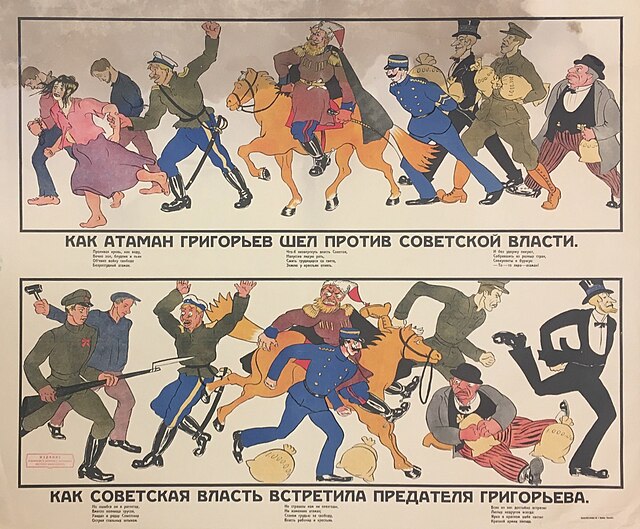
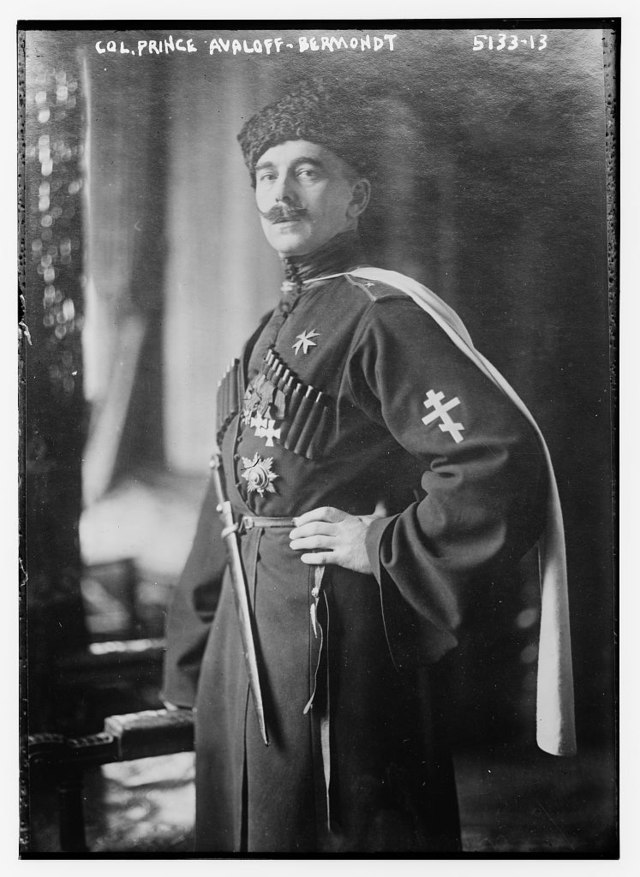


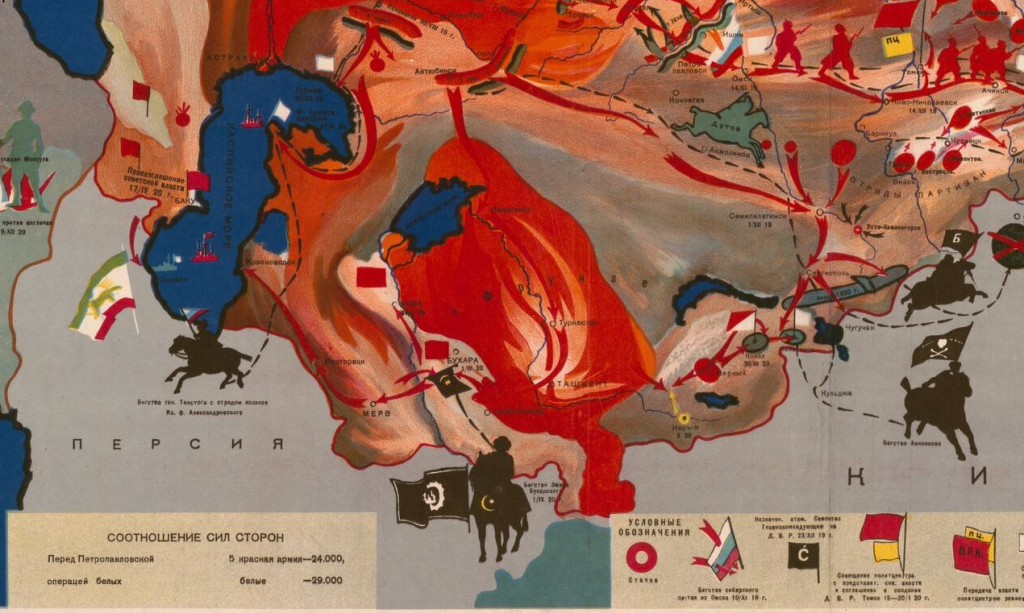
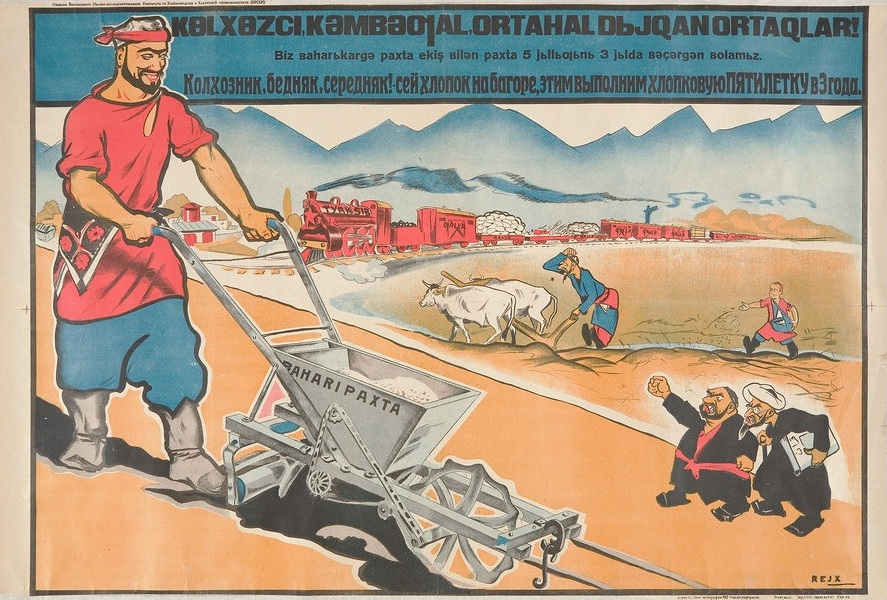

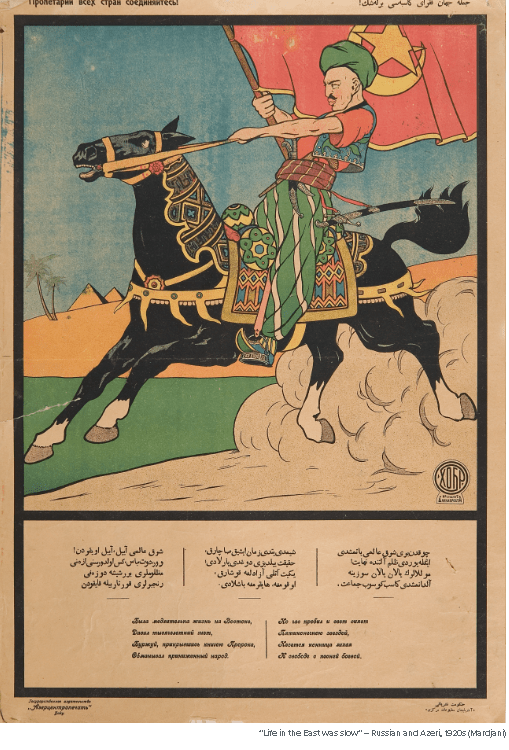
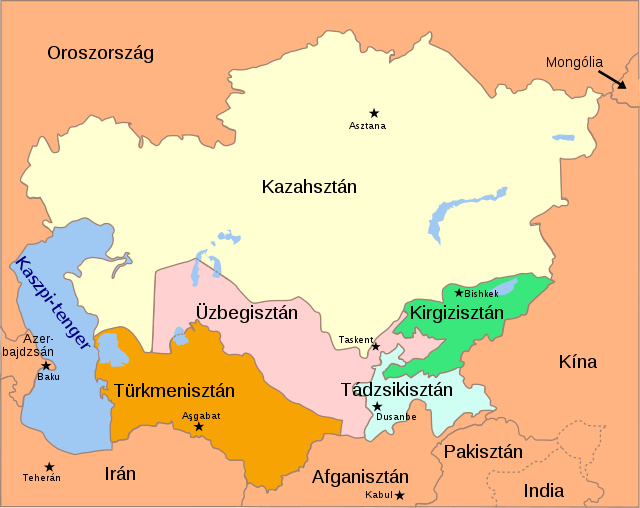

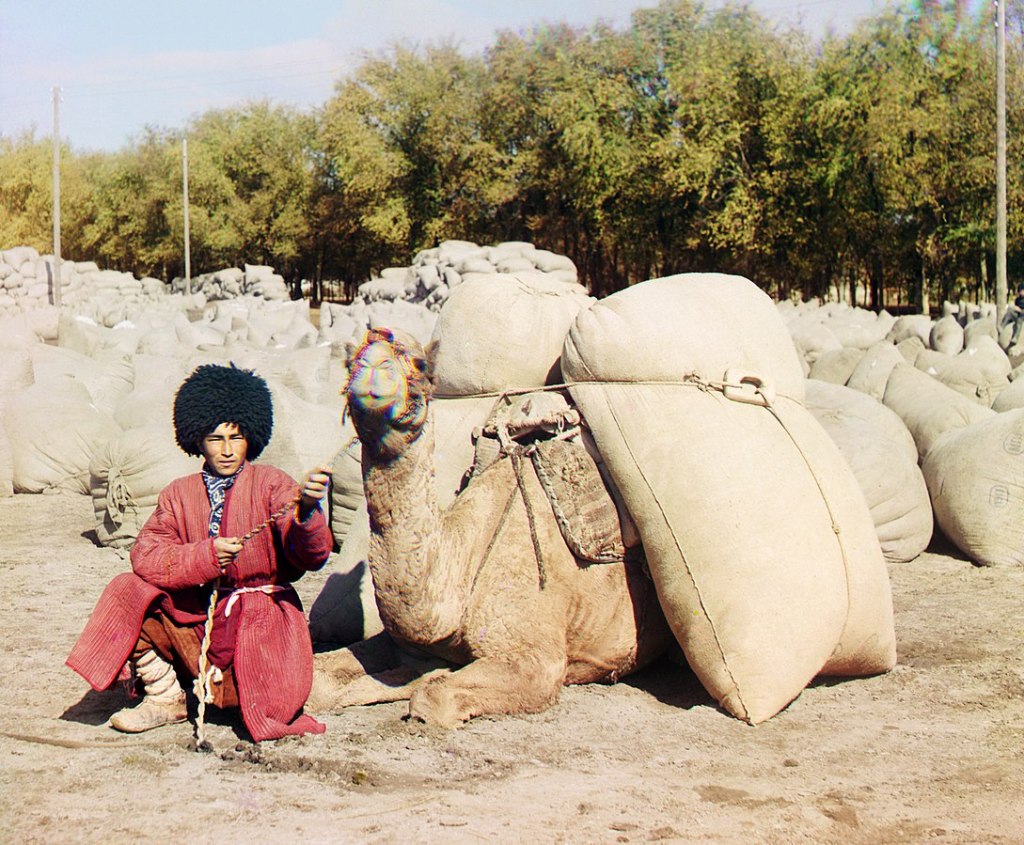
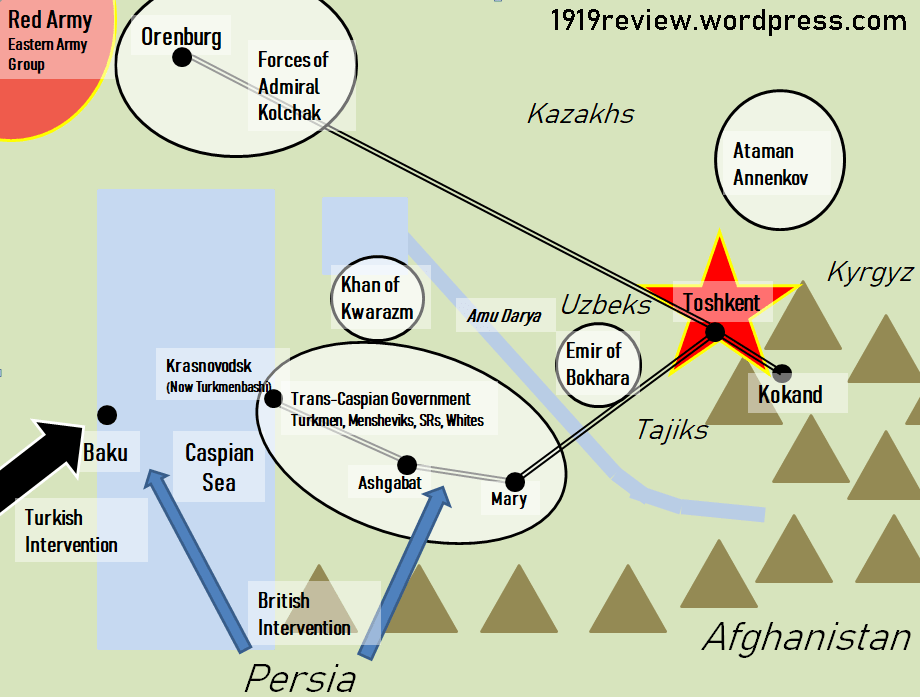
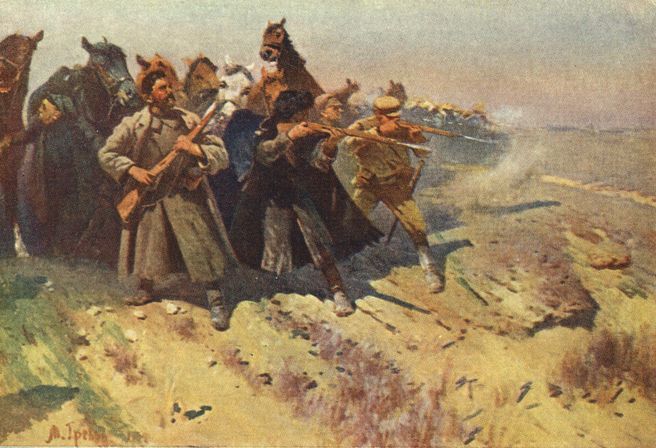
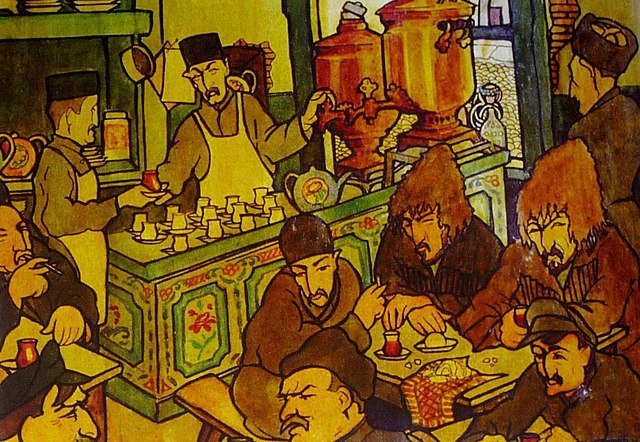

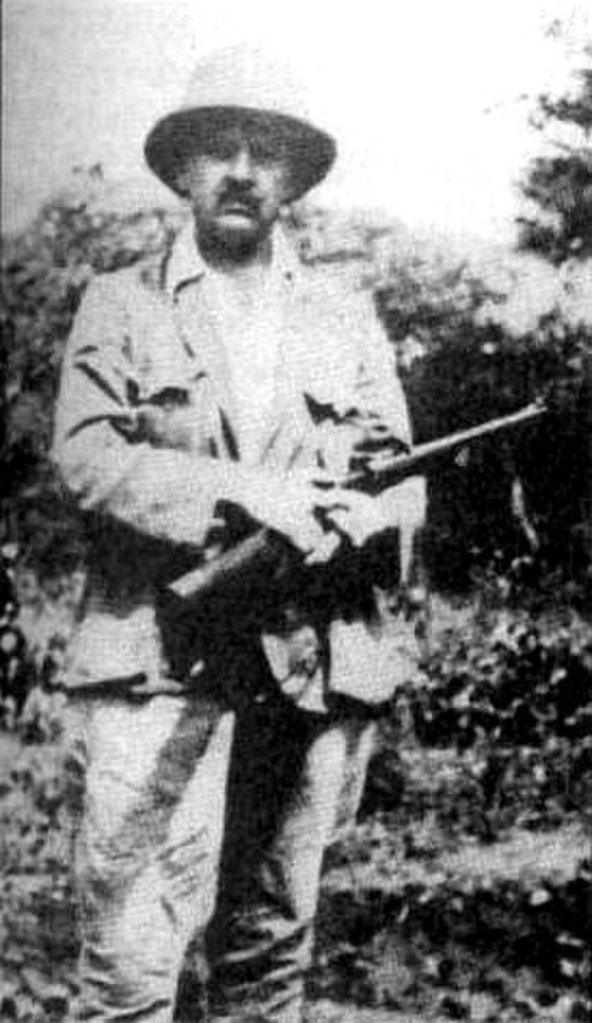

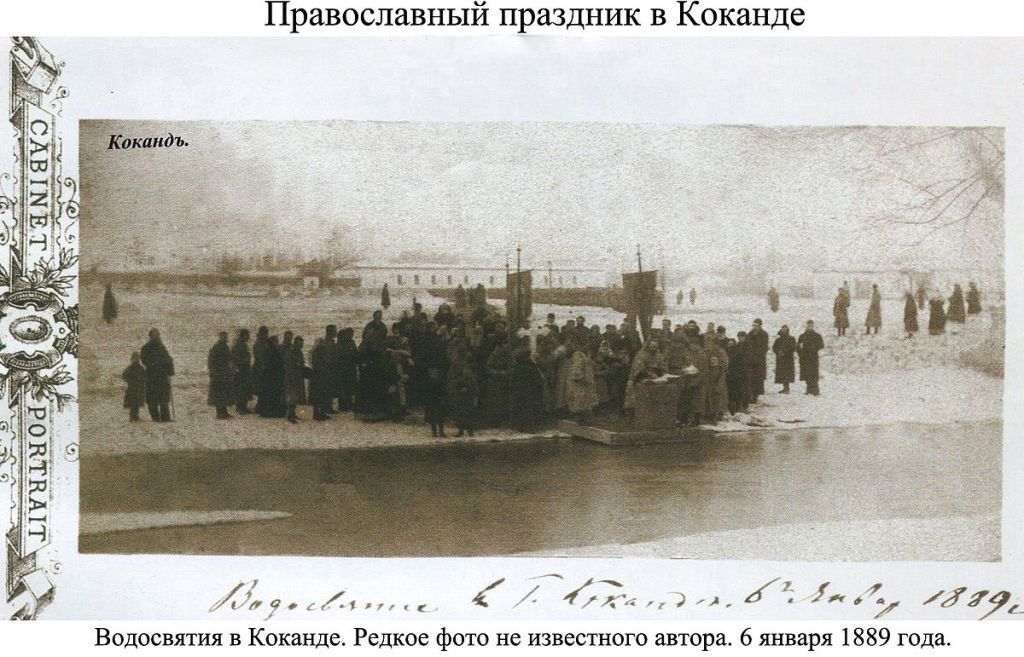
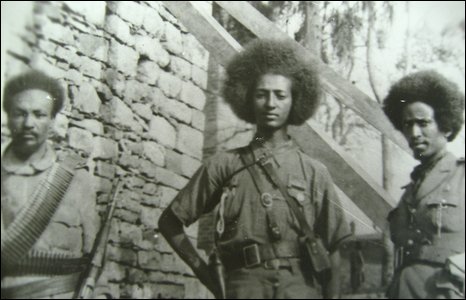


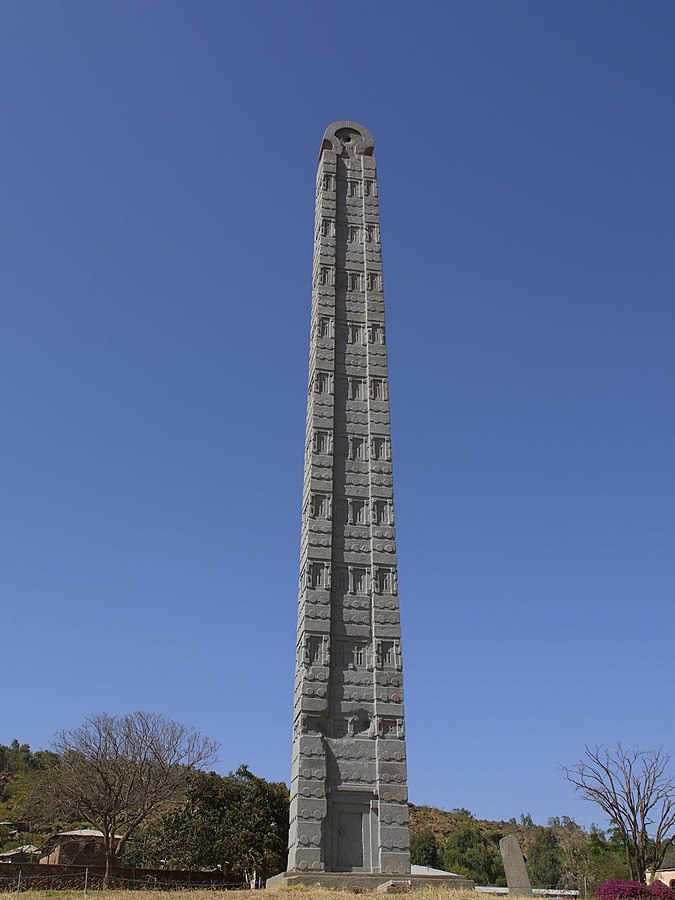

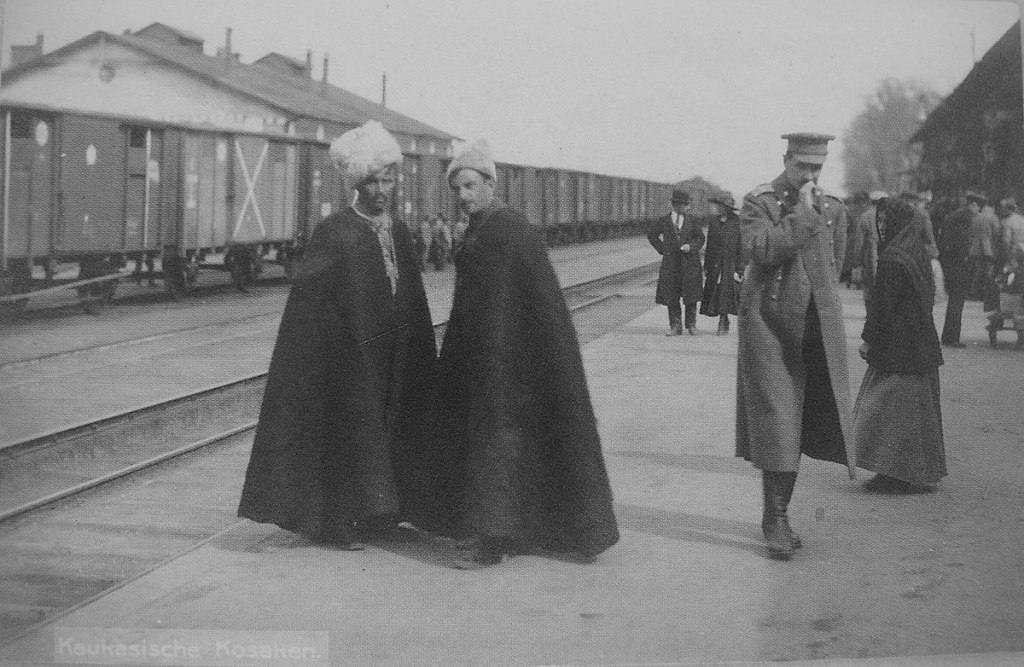
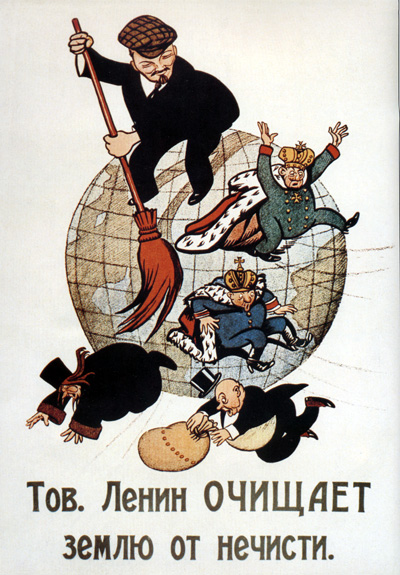

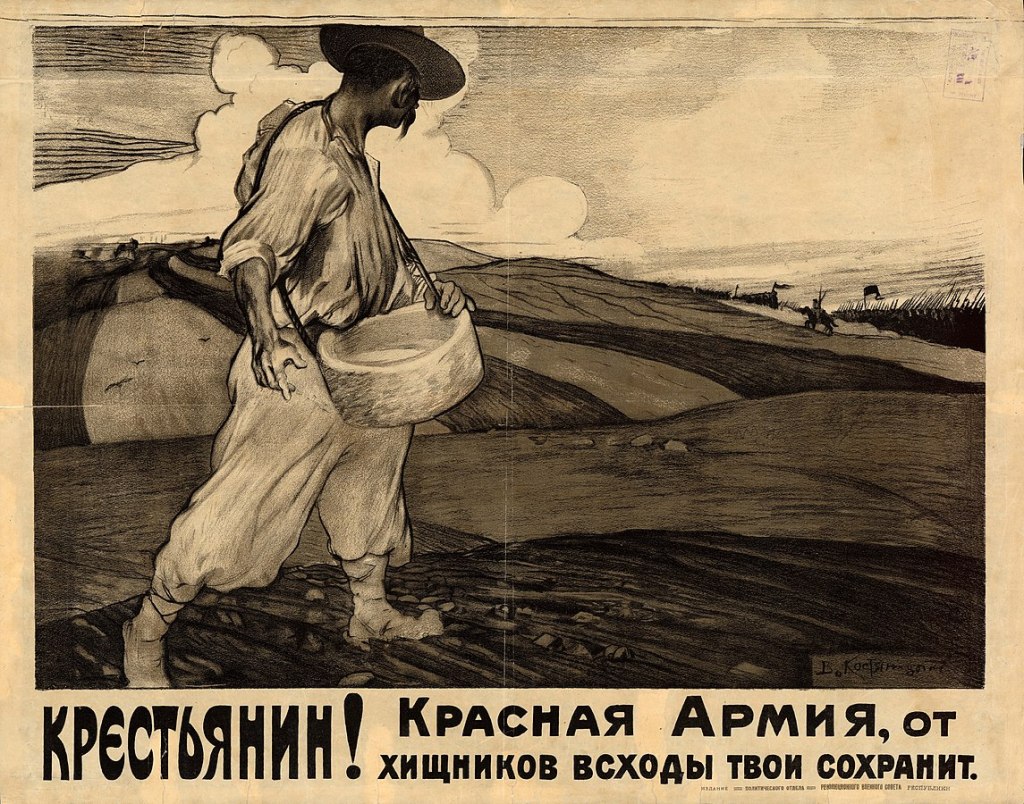
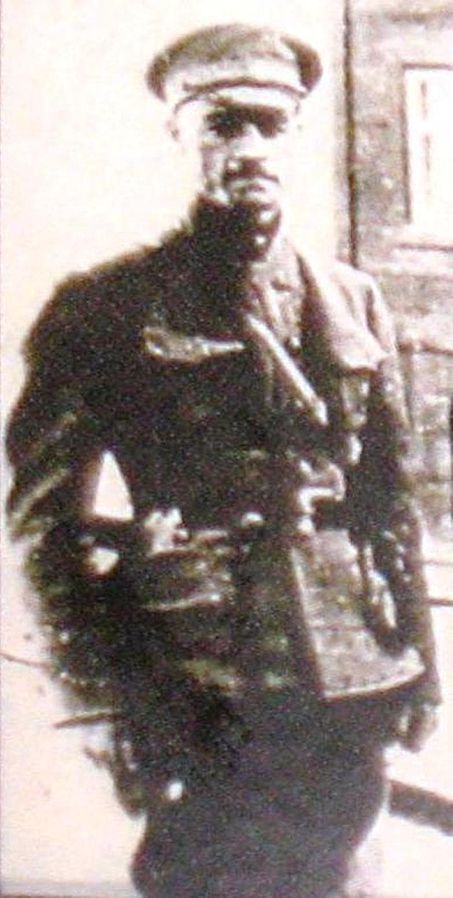
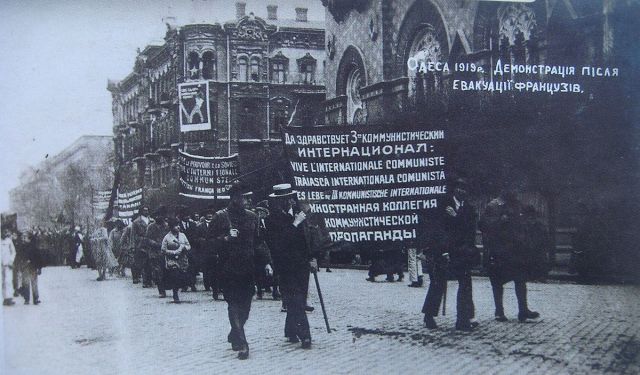
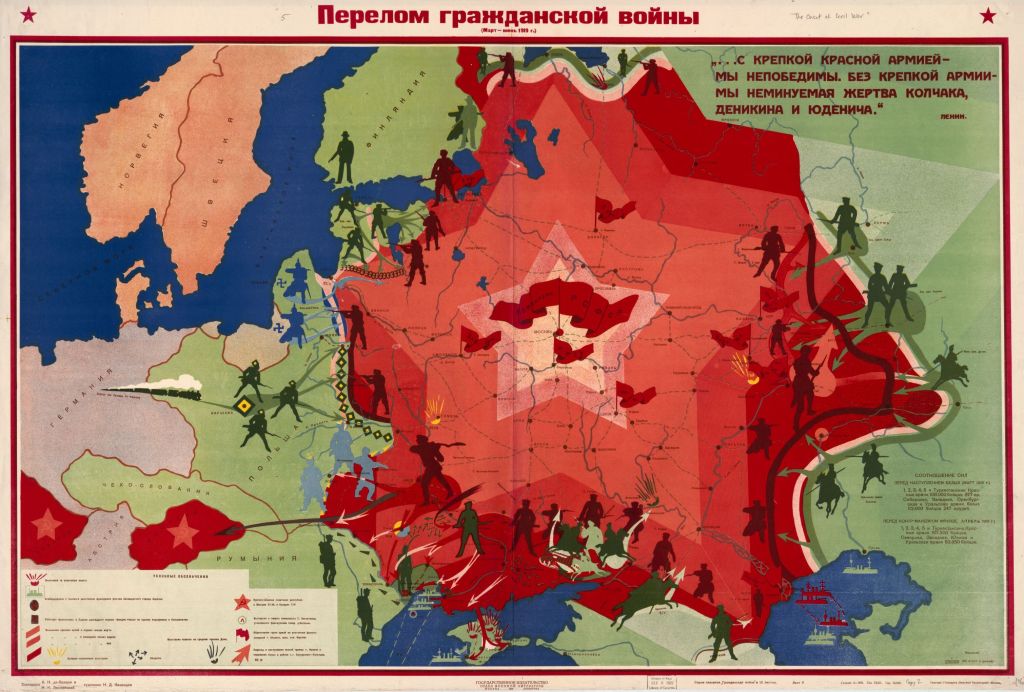
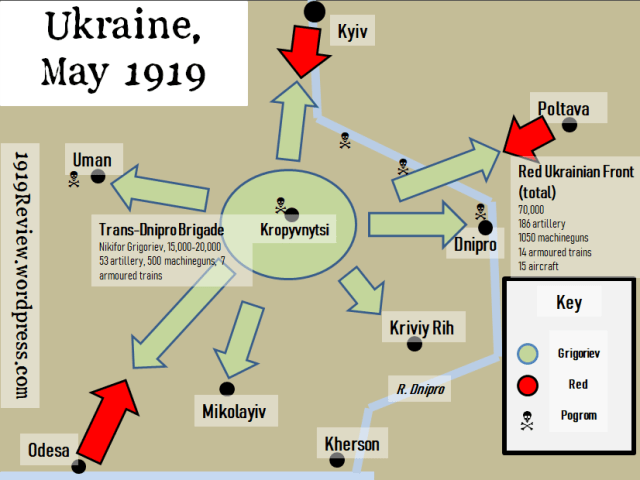
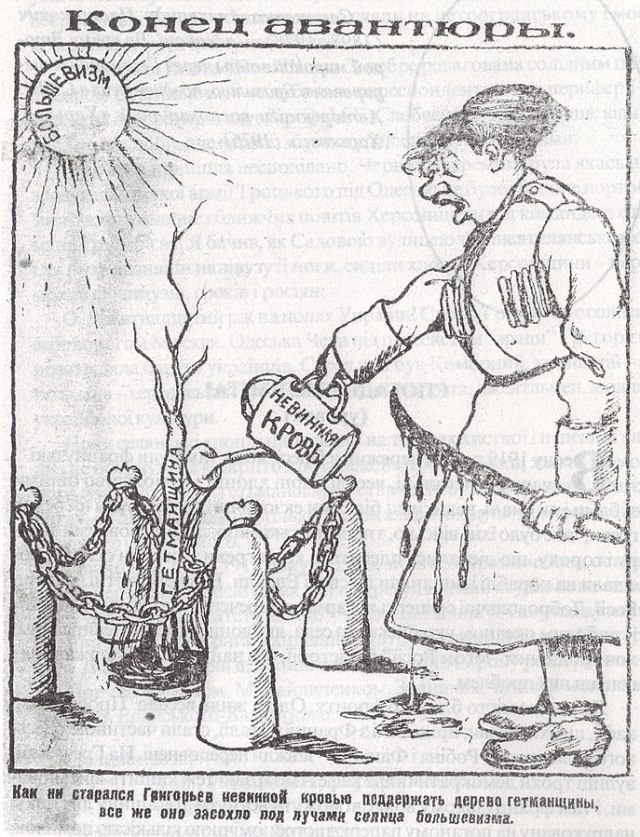

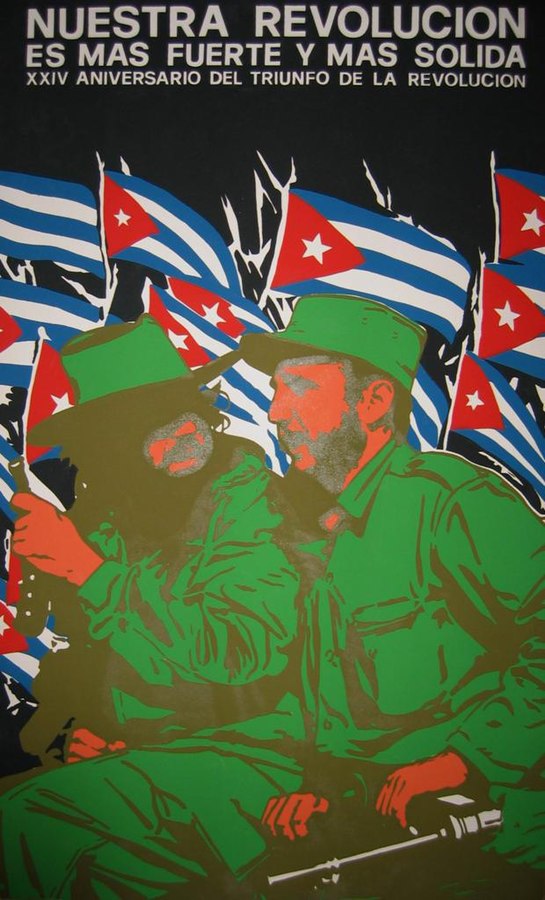
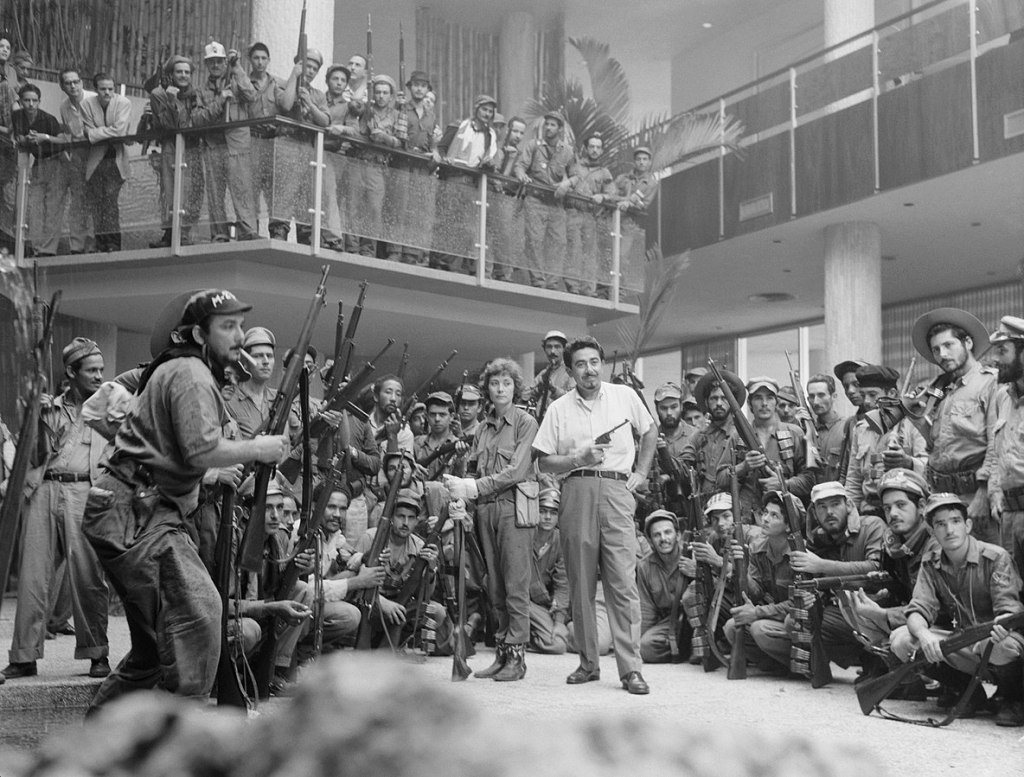

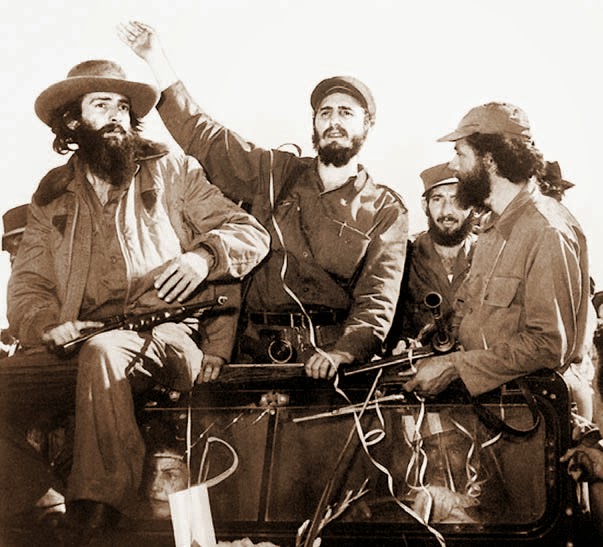
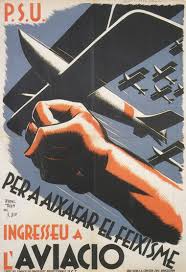
 The 1919 Review