
Have human societies always been divided into classes? Do we naturally tend toward hierarchies? If not, when and how did we stumble into this vale of tears, and which way is the exit?
This blog meditated on these questions before in my series Celtic Communism? in which I asked whether James Connolly and others were right to assert that Gaelic Ireland was socialist.
At the moment I’m reading the very successful 2021 book The Dawn of Everything: A New History of Humanity by David Wengrow and the late David Graeber. So far, it’s fascinating – which is not to say that I agree with all of it. Reading it, I sometimes tut and shake my head, sometimes suppress an urge to cheer out loud.
To continue my ruminations on history, hierarchy and communism, I’m going to be blogging my reactions to The Dawn of Everything chapter by chapter, as I read it.
This post looks at…
Chapter 1: Farewell to Humanity’s Childhood
From The Dawn of Everything: A New History of Humanity by David Graeber and David Wengrow, 2021 (Penguin, 2022)
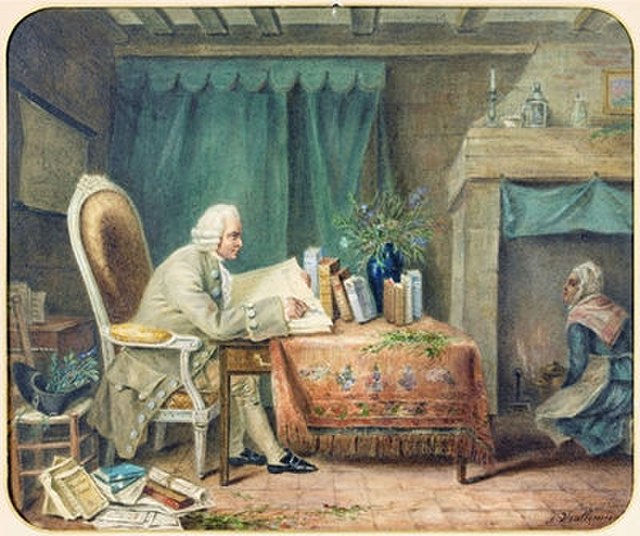
The authors set up two philosophers, Rousseau and Hobbes, as reference points. I haven’t read either myself, but here is a brief summary of what I learned from this chapter:
- Hobbes argued that in early human societies life was ‘nasty, brutish and short,’ ‘a war of all against all,’ and that inequality, hierarchy and harsh penal systems rescued us from this chaotic state.
- Rousseau argued that humans once lived in a state of wholesome communist innocence, but ‘ran headlong into their chains’ because inequality was a necessary overhead of prosperity and progress.
- Graeber and Wengrow, on the other hand, argue that humans are neither innately good (as implied by Rousseau) nor evil (as implied by Hobbes), but creative and brilliant, and that actual early societies do not conform to either the Hobbes or the Rousseau model.
These two models, they argue, have three basic faults in common:
- They ‘simply aren’t true.’
- They have ‘dire political implications.’
- They make the past ‘needlessly dull.’
The chapter is engaging and witty, and plenty of the evidence presented here is really interesting. But my nagging feeling throughout was that ‘a plague on both your houses’ doesn’t really cut it.
For example on page 4 we read that many of the ‘first farming communities’ and the ‘earliest cities’ (my emphasis) remained democratic and egalitarian. This statement is meant as a refutation of Rousseau’s claim that once we invented agriculture we all started bowing down to priests and kings. But the authors are saying, in essence, ‘it took a while and didn’t happen everywhere all at once’ – not ‘it didn’t happen.’ It’s zooming in closer to the transition from primitive communism to class society and pointing at the messy interface. I am fascinated by that messy interface and I want to zoom in. But this chapter has failed to convince me that Rousseau’s version of events is broadly untrue.
Moving on to the ‘Dire political implications.’ Regarding Hobbes, the dire implications are obvious to me: his model is an argument against freedom and for authoritarianism, against equality and for hierarchy. No thanks.

But what are the dire implications of Rousseau? The authors say that talk of ‘inequality’ tends to reinforce inequality, to make it seem permanent, and that fifty or a hundred years ago there was a more powerful critique of ‘concentration of capital’ rather than inequality. But those who critiqued ‘concentration of capital’ 50-100 years ago, the communists, socialists and anarchists, would have had a much firmer theoretical grounding in Rousseau, via Engels, than the critics of inequality today. I feel Graeber & Wengrow do not shoulder the burden they have taken on themselves to prove that Rousseau has ‘dire political implications.’
The Marxist development of the ideas of Rousseau added a vital component: that modern industrial society has created such an abundance of goods that it is possible to return to a classless and stateless society while preserving material prosperity. This view is not pessimistic, does not accept inequality as inevitable. I assume it is dealt with later, but it is an omission here.
There is a powerful and memorable assertion on page 8: ‘The ultimate question of human history […] is not our equal access to material resources […] but our equal capacity to contribute to decisions about how to live together.’ Now, I don’t actually agree with that. I think the part about contributing to decisions (politics) is actually subordinate to the part about material resources. First, because most of the decisions will tend to be about how to allocate resources; second, because if there are some people who control most of the wealth, they will in the final analysis call the shots even in the most democratic system. But I appreciate the authors laying their cards on the table. The word that springs to mind for me is ‘voluntarism’ – an approach that downgrades considerations of how material conditions might limit the possibilities of human agency.
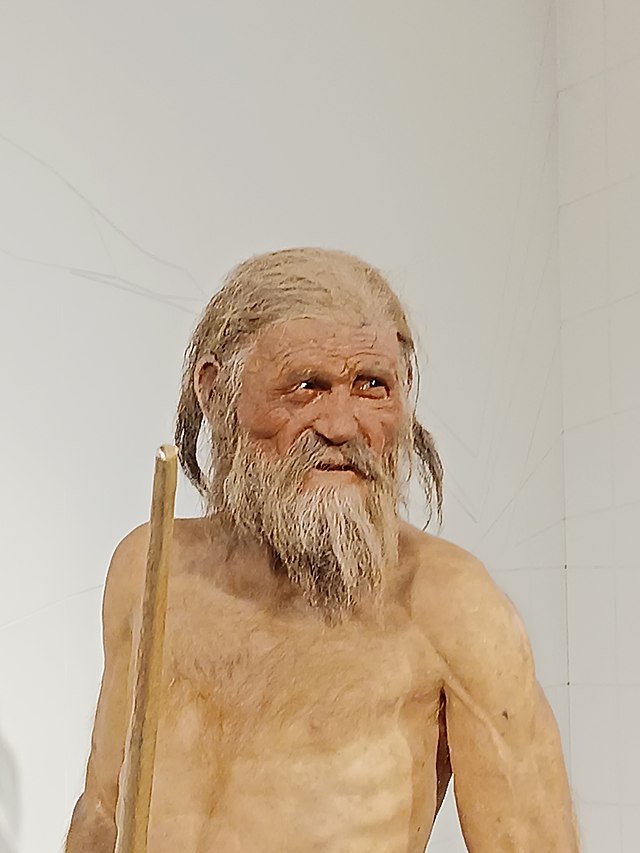
This first chapter contains a satisfying rebuke to some modern-day iterations of the Hobbes model – the writings of Francis Fukuyama, Jared Diamond and Stephen Pinker. The latter presents Ötzi, a 5,000-year-old body found in the Alps with an arrow wound, as a ‘poster child for humanity in its original condition’ – the whole nasty, brutish and short thing. Graeber and Wengrow introduce Ötzi to Romito 2 – the 10,000-year-old remains of a man who suffered from a severe disability. Romito 2, in life, was taken care of by his community, given an equal share of meat, and when he died he was buried with care and respect.
The book also promises to be a stinging rebuke to eurocentrist and basically racist assumptions about history. ‘Western civilisation’ is just today’s ‘accepted synonym’ for what used to be called ‘the white race.’ As for the supposedly ‘western’ tradition of freedom, democracy and equality, ‘it is almost impossible to find a single author in the Western tradition, from Plato to Marcus Aurelius to Erasmus, who did not make it clear that they would have been opposed to such ideas […] it’s almost impossible to find a single European author before the nineteenth century who suggested [democracy] would be anything other than a terrible form of government.’ (Page 16) I agree wholeheartedly and I look forward to the further development of these ideas.

The last part of the chapter argues that the Hobbes and Rousseau models make history ‘needlessly dull.’ For example, material artefacts travelled great distances through such diverse means as vision quests, travelling healers and entertainers, women’s gambling, and the death-defying adventures of the Massim Islanders. To assume that objects can only travel through ‘trade,’ or to sum up such fascinating cultural activities as mere ‘trade,’ is to sell history and archaeology short. I’m not sure how much Rousseau or Hobbes can be blamed for the poverty of imagination which is under fire in these passages, but I’m looking forward to learning more about such cool and interesting stuff in the pages that follow.
 The 1919 Review