Most of the placenames mentioned below. Thanks Google Maps
Become a paying supporter to get access
Access to this article is limited to paying supporters. If you already subscribe by email, thank you. But if you want to become a paying supporter, please hit ‘Subscribe’ below.
Donate less than the price of a coffee, and you can access everything on this blog for one year.
If you don’t feel like donating, most of my posts are still 100% free, so browse away, and thanks for visiting.
In July 1918 the ground was shaking under the feet of Soviet power. We have already looked at the situation in ‘Central’ and South Russia, and in the Urals and Siberia: atamans invading, Czechs in revolt, officers, Cossacks and Right SRs forming rival governments, foreign powers invading, insurrections in Moscow, Kazan and Iaroslavl.
Central Asia was one section of this panorama of general catastrophe. The customary apology which I make on the podcast for mispronouncing Slavic names must now be accompanied by another customary apology: that a disproportionate part of my material comes via British military officers with a gift for languages, a high tolerance for deserts, a racist attitude to ‘the natives’ and a loathing for the anti-war and egalitarian programme of the Soviets. These guys bring their biases to the table, and the simple truth is that I wasn’t able to find much material from the other side or even from a balanced standpoint.
A Turkmen, photographed some time between 1905 and 1915. These guys are going to be important in this post.
Turkmens and Punjabis
Civil War proper came to Central Asia with the formation of the region’s first major White government. Here is how that happened.
We have seen how the main support base of the Toshkent Soviet consisted of oilers and drivers on the railways. As we saw, these workers refused to support the Menshevik-led railway strike. But in the Trans-Caspian region (modern-day Turkmenistan), the Mensheviks had the ear of the railway workers. Toshkent sent out an agent, a Latvian named Fralov, to coerce these railway workers into cooperating. According to his enemies (What follows is drawn from Teague-Jones, 83-85), Fralov arrived with a hundred ‘armed Austrians and Magyars,’ and soon developed a reputation for brutality and drunkenness. Apparently local railway workers were furious, but not all that surprised, when Fralov shot three of their representatives at Kizil Arvat.
Around July 11th, news of these killings arrived at the main city, Ashgabat.
Other news would no doubt have been arriving in Ashgabat around the same time: that there was street fighting in Moscow; a mutiny on the Volga led by one of the top commanders of the Red Army; that Britain, Japan and France had taken Murmansk and Vladivostok under their ‘temporary protection;’ and that the United States had just agreed to intervene in Russia. And that’s just the factual news. No doubt other wild rumours would have been in the mix too.
It must have seemed to local people in Ashgabat that the Soviet regime was about to collapse. Why should they tolerate the likes of Fralov any longer?
Local railway workers cut the telegraph wires and proclaimed a revolution against Soviet power. The town militia sided with the railway workers. Turkmen groups joined in, including officers like the Tsarist-era general Oraz Sardar. They killed nine commissars, some of them simply lynched on the spot. The rebels seized the town armoury and distributed 6,000 rifles on a ‘first come, first served’ basis, to whoever showed up asking for one. They also seized 17 million roubles.
200 of the rebels got together on a train and set off for Kizil Arvat. They found Fralov and his followers on the station platform. Fralov was (this is, again, according to his enemies) sitting in an armchair, passed out from drink, with his wife and his companions around him. The train full of insurgents pulled up, the doors opened, and the insurgents immediately opened fire, gunning down Fralov and everyone else on the platform.
From this revolt the Trans-Caspian Government emerged.
65% of the inhabitants of Trans-Caspia were nomadic Turkmens, living in auls or villages near cultivated oases. They dressed in soft leather moccasins and leg wrappings, cotton shirts and pantaloons, long kaftans and big papakha hats of sheepskin. The working-class revolution was at first incomprehensible to the nomads, on top of which Red forces seized their horses and crops. They were also motivated to join the revolt by a desire for self-government. They calculated that the British or the Whites might grant it in return for help against the Reds.
Russians made up only 8% of the population. ‘The Russians, both Red and White, were dependent on the railway, or confined to it. They could not operate and could not even exist save in the immediate vicinity of those two shining steel rails… The Turkmans had the whole of the vast interior in which to roam about.’ (Teague-Jones, p 186)
Like Toshkent, it was a Russian-dominated regime. The leaders were Menshevik railway workers, schoolteachers, counts, Right SR activists, Russian generals and Turkmen patriarchs.
British agents had crossed from Persia, a short distance as the crow flies but withkut roads or raios, over mountains. A British force, large, but not as large as its officers wanted the world to believe, was centered on Masshad (Yes, the British in this period could simply drop a whole army into Iran). Contacts between the new White regime and British agents preceded the anti-Soviet revolt (through General Junkovsky) and developed afterwards, mainly through Lieutenant Reginald Teague-Jones. This meant advice and advisors, diplomatic recognition, money and armed forces. The money was a grudging trickle, and the soldiers numbered only a few hundred. But to the ‘democratic counter-revolutionaries’ of Ashgabat, who felt completely out of their depth, it was comforting to have the British Empire at their back. It enhanced their prestige to the point that, getting ahead of ourselves and taking the long view, it at least doubled the lifespan of the regime.
The new White government sat astride one of the two railways which connected Central Asia with the old Russian Empire; in other words it cut Toshkent off from Moscow. So the Toshkent Soviet sent a thousand fighters across the river Amu Darya. This army, like the formations of early 1918, was run by committees. Theirs was the highest proportion of internationals, recruited from the prison camps of the Great War. The British officer Teague-Jones saw women fighters among their dead. (Mawdsley, 328, Teague-Jones, 194. The credulous British officer also repeats some grotesque and improbable second-hand rumours about ‘their women.’)
Battle at Kaahka
An early battle outside the town and railway station of Kaahka on August 28th was characteristic of this strange linear ‘railway war.’ Teague-Jones (104-110) describes it from firsthand experience.
On the Trans-Caspian side were a few hundred untrained Turkmen, fewer Russians – including some officers and artillery – and a handful of British officers with 500 Punjabi sepoys. Their camp was a collection of carriages on the sidings, fifteen fighters to a car. The Russians would sing at night. Some of the trains were armoured – the Trans-Caspians even discovered that machine-compressed bales of cotton had excellent stopping power against bullets, and covered their trains with them.
Meanwhile there were numerous Russian officers who could have been at this battle, but chose instead to hang around the capital, Ashgabat, with nothing to do because they were too racist to serve in an army whose officers included Turkmen. (Teague-Jones, 125)
The Trans-Caspian forces set up a defensive line in a dry riverbed just outside of Kaaahka to the west, crossing the railway line at right angles. Their eyes followed the railway uphill to a bare ridge. That way, out of sight, were the Reds, who had already been repulsed by Indian machine-guns on August 25th. Soviet aviators flew overhead, scouting the ground.
When the Reds struck, the blow was sudden and fell on the left flank. In the morning they seized an old ruined fortress then advanced into the gardens on the outskirts of town. The Trans-Caspians had to climb out of their ditch and pelt across to the railway station and the gardens in complete disorder. Until midday confused firing raged in the gardens, where nobody could see very far. The British considered the Russians incompetent. Friendly-fire incidents on the Trans-Caspian side led to frenzied suspicions of the Turkmen. The Punjabis could not tell White from Red – you probably couldn’t either, if you were there – and didn’t know who to shoot at. The artillery on both sides was pretty much useless (because the personnel and equipment alike were poor), but its noise and debris no doubt added to the terror and confusion of the fighters.
Painting by Mitrophan Grekov (Probably depicting South Russia rather than Central Asia)
It was one of those clumsy battles so typical of the early Civil War. If the Reds had pressed the attack they probably would have taken the town. But the commanders didn’t know, and if they had somehow known they could not have communicated it to the fighters.
This was also a typical battle of the Civil War in Central Asia- fewer than a thousand combatants per side, drawn from a dizzying array of nationalities. At its most simple, it was a war between Russians, over the heads of the local Muslim population. The latter might feature as allies or auxiliaries but there was not even a pretence – at any point on the White side, and at this early stage on the Red side – that the war was being fought on their behalf. From Mensheviks to British officers, the aspiration of the Turkmens to rule in their own land was regarded as a sinister plot.
At a stretch, you might even boil it down to a war between different factions of social-democratic railway workers – but that would efface the clear class difference between the two Russian factions, the preponderance of the upper class and intelligentsia on the White side. It was a war of accidental alignments and improbable allies: Turkmen nationalists and reactionary Russian officers; Punjabi machine-gunners and Menshevik train drivers; Hungarians fighting for the Toshkent Soviet; slave-trading bandits in the service of a government whose link with the most powerful empire in the world was a junior officer whose friends called him Reggie.
Soviet Toshkent
By late 1918 Toshkent was fighting a war on three fronts: this Trans-Caspian railway war, a struggle with Kolchak’s forces for the Orenburg-Toshkent Railway, and a war against a Cossack host based in modern-day Almaty, Kazakhstan. They had a treaty with Bokhara, but they had heard rumours that a whole regiment of Britain’s Indian Army was stationed in the city. This turned out to be false, but over a dozen Red spies sent to find out were caught strangled by the Emir of Bokhara. (Hopkirk, 85) Like Moscow on a smaller scale, Toshkent was under attack from several angles.
Next we will examine how things stood behind Red lines, in Soviet Toshkent.
Thousands of Germans and tens of thousands from Austria-Hungary lived in 25 camps near Toshkent. Since the Revolution, they were free men. But there was no way home, unless they fancied a stroll across a continent and through a Civil War and a World War, so most still lived in the camps, where they had no protection from the cold, few medicines and little food. 70 died every month in the winter of 1917-18. By the summer hundreds were dying every month due to the heat and the worsening supply situation. Outside one camp sprawled a graveyard in which lay 8,000 dead.
(Antony Beevor, quoting British Consul-General Harris several thousand miles away in Irkutsk, implicitly blames this on the Reds who ‘turned them loose,’ not on the Tsar who locked them up here in massive numbers without providing for their nutritional and medical needs – page 197).
Many had settled in villages or in Toshkent itself, enough that their field-grey uniforms became part of the scenery under the mud walls and domes of the city, and in the chaikhana, tea houses. Some lived as beggars, others married local Muslim or Russian women and settled down. A hundred of them set up a shoe factory. For some reason – and this happened in the Trans-Baikal region as well – many of the captives from Austria-Hungary were accomplished musicians, and every restaurant in Toshkent soon employed an orchestra made up of former prisoners.
A Chaikhana in 1930, depicted in 1947 by Boris Romanovsky
The regime was based on the local working class – transport workers obviously, but there were also, for example, Chekists who used to be shop assistants and circus clowns. Like Stalin in Tsaritsyn, the local leaders were inclined to dismiss signed credentials issued in Russia’s capital cities as ‘merely a scrap of paper,’ and to view the authority of the central government with ambivalence: ‘we do what seems right to us.’ (Hopkirk, 26)
Across the former Russian Empire, civil war had cut across food supplies that were already stretched to breaking point by the years of the Great War. This was worse in Central Asia, which relied on imports. The Toshkent Soviet forced nomads and farmers to hand over food and cotton. The conflict over food was no doubt exacerbated by the colonial arrogance of Toshkent and its agents: according to the official Civil War history published years later, ‘many of the local Bolsheviks,’ to say nothing of the SRs, ‘distorted the policy of the Party on the national question and committed gross mistakes in their dealings with the native population.’ (Hopkirk, 29)
As time went by the Bolsheviks gained more of the balance of power in the coalition. But the vast majority of the local Bolsheviks had not been party members for even a year. Cut off from Moscow, there was no way to integrate them into the party. They hared off in their own direction politically. In relation to the Muslim majority, they were as sensitive as bulls in a china shop. But they also rejected the idea of an alliance with the peasantry. These were some of the ‘infantile disorders’ of newly-minted, ultra-left communists against whom Lenin would soon write a book.
The thing about history is that daily life doesn’t stop in respectful silence when memorable events pass by; twenty minutes’ walk from barricades that will be written about 100 years later you can generally find somewhere to sit out on the terrace and order a cuppa. In Toshkent when British agents arrived there in August The Prisoner of Zenda was showing in the cinema and an Englishman with a troupe of performing elephants was passing through. The British imperialists were worried that the Austro-Hungarian prisoners were getting ready to invade India. But when the Britons walked into a tea-house frequented by the ex-POWs, they would be greeted with a good-natured rendition of ‘It’s a Long Way to Tipperary.’
Western visitors such as these witnessed, and heard rumours about, the Toshkent Cheka carrying out arrests, beatings and executions. But judging by the same testimonies, the local security regime was clumsy. There was a serious White underground in the city known as the Toshkent Military Organisation (which included the brother of General Kornilov, himself also a general). Its agents were continually escaping just before arrest or having messages passed to them after arrest. Such messages were regularly baked into the bread rolls served up in the town’s prison, which was still staffed by the old Tsarist prison guards. It appears (from Hopkirk, 77) that a foreign agent looking for false papers could afford to be picky, such was the supply from Toshkent’s underground.
The British agents had many meetings with the Toshkent commissars, mainly the Left SR Minister for Foreign Affairs, Damagatsky. One of these meetings turned awkward when Damagatsky brought up the recent battles in the Trans-Caspian region, and showed the British agents shell-fragments with English writing to back up the reports he had received of terrible clashes with British-Indian troops along the railway line. The British agents knew that ‘the Bolsheviks [sic], they had to admit, would have been perfectly justified in interning them’ (Hopkirk, 31) since their two countries were now at war. But they bluffed their way out, claiming that the shells were among those donated by Britain to the Tsar, and that the Indians were just bandits. Even after the British landing at Archangel’sk and the beginning of Red Terror after August 30th, the British agents were left at liberty in Toshkent.
It seems obvious to me, and various authors I’ve read agree, that the British Colonel Frederick Marshman Bailey was up to his neck in the White underground, preparing a revolt. Certainly he gave funds to White agents (Hopkirk, 63). But Kolesov, the Soviet President, did not see it this way at the time. ‘My government have grave suspicions of you,’ he warned Bailey, but ‘He added that personally he had none.’
FM Bailey. I can easily find pictures of these British interventionists, and memoirs written by them, and books written about them. Alas it’s not so easy to find material from the other side.
Bailey took the hint and, when he had found false papers that were perfectly to his liking, he disguised himself as an Austro-Hungarian soldier and disappeared. The heat was on: one of his co-conspirators, Pavel Nazarov, was soon arrested.
Hopkirk remarks ‘It is surprising perhaps that they did not attempt to torture’ Nazarov. Surprising – only if, like Hopkirk, we take the second-hand rumours of Chinese and Latvian torture specialists at face value. (43)
In spite or Bailey’s flight and Nazarov’s arrest, the White underground continued to organise its rising. So sloppy was the Soviet apparatus of repression that this White agent Nazarov, who was on the Toshkent equivalent of Death Row, was notified in advance that the White uprising he had been organising would take place on January 6th at 10AM.
And, give or take twenty minutes, so it did.
Pavel Nazarov, underground White Guard organiser in Toshkent
The Osipov Revolt
Toshkent’s Commissar for War was a Bolshevik – like all Toshkent Bolsheviks, one of very recent vintage – named Osipov. He had been a junior officer before the Revolution. He was all of twenty-three years old on the morning of January 6th 1919 when he picked up the phone in the barracks of the Second Turkestan Regiment and summoned his fellow government ministers to meet him there at once. The regiment, he told them, was about to mutiny and must be talked out of it.
Eight commissars arrived, one by one. Osipov had each one shot dead. While this trap was being sprung, Osipov’s co-conspirators were blowing open the gates of the prison and seizing parts of the city. 2,000 of the garrison’s 5,000 soldiers joined the revolt.
Osipov got drunk (According to legend he was drunk when he killed his fellow commissars). Those of White sympathies celebrated in the streets. The former head of the Cheka, who had joined the revolt, paraded through town on a horse with an escort of Cossacks, declaring that the new government would end bloodshed and bring stability. In the meantime, anyone who resisted would be shot. Six more commissars were killed, bringing the total to fourteen. The insurgents controlled most of the city, but had failed to take the railway stations or arsenals.
Red commanders of the Toshkent Citadel, 1918
Those celebrating and lynching in rebel-held parts of the city could not ignore the sounds of artillery, rifles and machine-guns. The battle was still raging. The railway workers again proved to be the key force in the situation: they vacillated, but seeing open White Guards and counter-revolutionaries on the side of the rebels, they stuck with the Soviet. Here is yet another sense in which this was a ‘Railway War.’
The decision of the railway workers tipped the scales. After a couple of days the rebels were clearing out of town and running for the mountains. Osipov and his supporters grabbed a load of gold from the state bank and fled to a fate that remains a mystery to this day.
For days afterwards, Red forces pursued the rebels into the mountains. For weeks, severe retaliation came down on the heads of anyone who had supported the rebels. Brun, the Danish officer sent to look after the prisoners-of-war, was imprisoned because he broke curfew. He avoided execution himself, but witnessed enough, surely, to traumatise him for life. He saw a crowd of condemned men trying to storm out of a prison and being beaten back. Some nights he heard people begging for their lives outside his window. He saw teams of gravediggers at work and saw the bloodstains on the ground. He estimated that 2,800 were killed in all. One chance detail: there was one Red executioner who required an extra alcohol ration in order to kill in cold blood. Is that why Osipov, too, was drunk when he ambushed and summarily executed his comrades?
My sources leave me with important questions unanswered. Here Kolesov disappears from the record – was he one of the unlucky Fourteen Commissars? On which side of the Toshkent barricades were to be found those demoralised fighters who had participated in the slaughter and looting in Kokand? It appears that some Muslims participated on both sides – but were there more on one side or the other? What role did the SRs and Mensheviks play in these events?
One thing is clear: this was another battle between Russians, fought over the heads of the native population.
A Russian Orthodox congregation in Kokand, 1889
The British agent Bailey had, before the uprising, fled Toshkent disguised as an Austrian soldier. By mid-February he felt things were safe enough to return. A few weeks later he celebrated Easter at a crowded mass in the city’s Orthodox cathedral. At midnight the congregants – who must have been disproportionately White sympathisers – stood up, exchanged kisses and declared ‘Christ is Risen.’ Maybe they were hoping that the tide would turn for their cause in 1919. But it was to the other side, to the Toshkent Soviet, that redemption would come in that year.
During the Russian Civil War the Soviet Republic was a besieged fortress. What’s less well-known is that it had an outpost thousands of kilometres away in Central Asia, centred on the city of Toshkent (Tashkent) in modern-day Uzbekistan. The Toshkent Soviet was itself a Red island surrounded by enemies, and its struggle for survival, like the broader Civil War, was a drama rich in ironies and sudden reversals, sometimes horrifying, sometimes inspiring. It is also a historical curiosity: a revolutionary workers’ republic in the heart of Asia, where Muslim farmers and nomads outnumbered the Russians ten to one. It demands attention as a kind of scientific ‘control’ for the Soviet experiment; there was another Soviet Union, separated from the main one for a long time, and unlike the Soviets of Hungary and Bavaria, it survived.
A literal fortress in Kokand, modern-day Uzbekistan
‘For nearly two years,’ wrote the Bolshevik Broido, ‘Turkestan was left to itself. For nearly two years not only no Red Army help came from the centre in Moscow but there were practically no relations at all.’ (Carr, 336) What’s this Turkestan? It was their name at the time for, broadly speaking, the lands we now call Uzbekistan and Tajikistan. A more recent historian writes: ‘The survival of Soviet power in Turkestan is another testament to the popularity of the Soviet revolution and the weakness of other forces.’ (Mawdsley, 328)
Ultimately the Revolution would bring massive changes to Central Asia, which included:
Land redistribution at the expense of the feudal rulers;
The expulsion of vast numbers of racist and violent Russian settlers;
The birth of the states which would become Turkmenistan, Uzbekistan, Tajikistan, the Kyrgyz Republic and Kazakhstan;
The enormous expansion of schools, universities and libraries.
(Dilip Hiro, Inside Central Asia, Overlook Duckworth, 2009, 2011, p 31, 33)
But when you read on about the massive forces ranged against it – from White Guards, Muslim rebellions and British intervention to the racist attitudes of many local Soviet leaders toward the Muslim majority – you will wonder how this revolution survived for a single year.
Class War and Holy War: Revolution Under Siege in Central Asia, 1918-1920 will be a three- or four-part miniseries branching off from my series Revolution Under Siege.
(I’m grateful to this article on an exhibition titled ‘Posters of the Soviet East’ by the Mardjani Foundation for many of the images I have used in this series, including the cover image for this post.)
For example: this poster from the 1920s in Tajik. ‘Peasant: Don’t elect these people. They were your enemies and they remain your enemies.’ I assume they are landlords and clerics.
How people lived
My readers are mostly from English-speaking countries, where ignorance reigns about Central Asia. The only reference point common to most of my readers is a mockumentary starring a guy from London posing as a representative of the Kazakh government, who says outrageous things in a funny accent (‘Very nice, how much?’ – ‘You are retarded?’ etc), his Polish-Yiddish ‘hello’ standing in for Kazakh.
Not to get up on my high horse. All I know about Central Asia is what I read in a handful of books over the last few months. But learning proceeds by successive approximations. I’ll be guilty of mistakes and omissions, but anything is better than nothing. For knowledge – obviously not for laughs – I reckon I can probably improve on Borat.
To visualise these peoole, first let’s exorcise from our minds images of Sacha Baron-Cohen’s jaunt around an unsuspecting Romanian village. The best place to start is by sketching how the people lived in this region around the time of the Revolution.
Imagine a house with a courtyard surrounded by a wall high enough to block you from seeing in from outside. In the house lives a father with a white beard who wears a turban and a long black jacket. Under his patriarchal authority live his sons and their wives and children, each in their own room which opens on the garden and courtyard. None of them can read.
(Dilip Hiro, Inside Central Asia, Overlook Duckworth, 2009, 2016, 20-30)
If they are poor, there is no glass in the windows, and the children and even babies go naked while their only set of clothes is being washed – even in the snows of winter. The ubiquitous item of clothing is the khalat, a loose gown.
The house is part of a community built near an oasis or a river in a landscape of ‘sparsely populated and starkly contrasting reaches of steppe and mountains.’ (Smele 228) They make a living through farming, commerce and handicrafts. The white-bearded old men of the locality are in charge. They answer to beks, landlords who administer justice. The Muslim clerics are another source of authority, divided into two schools: the conservative Qadim and the modernising Jadid. There are 8,000 Islamic schools in the region but only 300 national schools.
The bek might sentence a criminal to hanging, shooting or beating or to the public humiliation of face-blackening. Above the bek there might be a khan or emir, who answers in turn to a white Orthodox Christian in distant St Petersburg, the Tsar of Russia, whose forces conquered the region only within the last two or three generations.
Mountains in the Kyrgyz Republic
These are the settled people: 4 million Uzbeks, who spoke a Turkic language, and their close neighbours, the million Persian-speaking Tajiks. The Fergana Valley lies between the two, an area rich in cotton which, under the Tsar, has been intensively developed and commercialised.
Then there are the nomads. Imagine another house, this one made of felt and furs, which the women of the family can assemble or take down in a few hours. The Kazakhs, whose name means ‘Wanderer,’ are the most numerous, 4.5 million of them divided into three ‘hordes’ between the Caspian Sea and the border of China. The most stubbornly nomadic of the Kazakhs are distinct as the ‘Forty Tribes,’ the million Kyrgyz who live on the eastern plateaux, brave draft-dodgers and rebels. By the Caspian Sea live several Turkmen tribal groups, nomads whose numbers add up to another million. The nomads live by nomadic stock-breeding, along with marginal agriculture and the caravan trade.
(Smith, SE, Russia in Revolution, 57)
These 11 or 12 million scattered Muslims, who mostly identify not with any national project but with the local clan, village or oasis, are held by the centrifugal force of the 78 million Russians of the Empire, 3 million of whom live in Central Asia. (Mawdsley, 31, 38)
Silk roads and iron roads
This region was once the nexus of the world, ‘full of the traditions and monuments of an ancient civilisation’ along the legendary trade routes known as the Silk Roads. (Carr, 334) Around 1000CE it used to be said that the sun doesn’t shine on Bukhara – Bukhara shines on the sun. In 1918 it was still considered the holiest city in Central Asia, difficult of access to non-Muslims. Mary (Merv) was ‘Queen of the World’ until the Mongols sacked it. Samarqand was famous for its beautiful turquoise domes, and as the one-time capital of the vast empire of Timur Bek, known and feared in Europe as Tamerlane. There were also sites associated with a recent history of resistance, such as Geok Tepe, where the Turkmens made their heroic last stand against the Tsar in 1881.
(Teague-Jones, Reginald, The Spy Who Disappeared, Gollancz, 1990, 1991, 55)
During the time of our story all these peoples and cities are lumped together in three vague regions: Kazakhstan, ‘Trans-Caspia’ (modern-day Turkmenistan) and ‘Turkestan’ (Uzbekistan and Tajikistan to us). Got that? Turkestan and Turkmenistan are not the same place. Most of these groups were intermingled throughout the region, rather than having their own exclusive territories. Also, the Russians mistakenly called the Kazakhs ‘Kyrgyz’ and the Kyrgyz ‘Kara-Kyrgyz’… And then there’s the Kalmyks…
But I’ll try to stay on course. Just remember that these different communities and identities are no more and no less complex than, say, those of Europe – just less familiar to the English-speaking reader.
Crossing the deserts and mountains and valleys are two railway lines and some telegraph wires. They are the slender threads by which Imperial Russia sends in settlers and extracts cotton. By 1917 there are many Russians in Central Asia, concentrated in their cities, depending on the metal threads, or else spread out in farming settlements, clashing with the natives over land and water rights. Cotton production has boomed since Tsarist rule began in the 1860s, machine-compressed bales of cotton exported by the thousand over the railways, north-west to Orenburg, or west to the Caspian Sea. But the link to a global capitalist market is a mixed blessing: now and then the market crashes with devastating results for local people: ‘a bumper crop in Louisiana could spell disaster for Fergana.’ (Smele, 18)
The iron roads have transformed Toshkent, an ancient site whose name means ‘city of stones.’ 2,000 Tsarist soldiers crossed the river one night in 1865 and seized the town; since then the Europeans have built a grid-patterned ‘new town,’ wide boulevards lined with silver poplars, turtle-doves on the rooftops. Hundreds of thousands of Russians migrated there to serve as clerks, technicians, skilled and semi-skilled workers, not to mention soldiers. There they enjoy electricity, piped water, trams, phones, cinemas, and a commercial district. It is a city of 500,000 people. Rents are high. Sedentary Uzbeks work the less prestigious jobs in cotton processing. Like in another region associated with cotton, the South of the United States, the front seats on the trams are reserved for white people.
(Hopkirk, Setting the East Ablaze, Oxford Univeristy Press, 1984, 2001, 21. Hiro, 27)
This is a diverse and colourful region. One day at a train station in 1918 in modern-day Turkmenistan, ‘Russian peasants in red shirts, Persians, Cossacks and Red soldiers, Sart traders and Bokhariots, Turkmans in their gigantic papakhas [hats]… pretty young girls and women in the latest Paris summer fashions’ could be observed clamouring at a counter for tea and black bread. (Teague-Jones, 57)
Cotton picking in Kokand, late 19th or early 20th Century
World War One brings first difficulties and then devastation. The price of cotton plummets, those of consumer goods rise. The Tsarist government requisitions horses. Early on, food is more plentiful here than in other parts of the empire. Captives from the armies of Germany and (far more so) Austria are sent here in their thousands – 155,000 by the start of 1917. (Mawdsley, 328) There are eight squalid prisoner-of-war camps in the vicinity of Toshkent alone. Food becomes scarce later in the war, and the captives begin to die in terrible numbers.
In 1916 the government tries to conscript the peoples of Central Asia for combat and forced labour. The Kyrgyz and Kazakh nomads start a guerrilla war in response, backed up by settled Uzbeks protesting in Toshkent and Kokand. The Tsar responds with a fury that will not be matched until the period of forced collectivisation under Stalin. Three years later an eyewitness will record that once-busy villages are still absolutely deserted. At least 88,000 are killed in the crackdown led by General Ivanov-Rinov, and twenty percent of the region’s population flee into China. (Smele, 20-21)
Revolution
So the Muslims of the Russian empire anticipated the Revolution with their failed rising. They were also active participants in the 1917 Revolution – though the most active elements were not those of Central Asia but their distant cousins, the Muslim minorities who lived around the Volga and the Urals. There were great Muslim congresses in 1917, from which emerged three political tendencies:
The Jadids – modernising clerics who called for ‘land to the landless’ and to ‘expropriate the landlords and capitalists.’ These were stronger on the Volga than in Central Asia.
The Qadims – conservative clerics, who called for Islamic law for Turkestan. Their organisation, the Council of Ulema, was the only real political party among the Central Asian Muslims.
The Alash-Orda – these Kazakh and Kyrgyz nomads demanded the return of land from Slavic settlers.
It is interesting that there was no prominent demand for independence or any obvious signs of Pan-Turkism.
(Hiro, 31-3)
When the October Revolution took place, it was obvious even from the distant vantage point of revolutionary Petrograd that there would be profound consequences for Central Asia. After the 650 delegates of the All-Russian Congress of Soviets seized power they immediately ‘resolved to decolonise the non-Russian areas of the Tsarist Empire.’ (Hiro, 33)
A voice from Central Asia, albeit a Russian one, was heard at the congress. The Menshevik-led railway union declared a strike against the new Soviet power, but it was clear that they did not speak for all railway workers. ‘“The whole mass of the railroad workers of our district,” said the delegate from Tashkent, “have expressed themselves in favour of the transfer of power to the soviets.”’ This decision of the Toshkent rail workers in favour of Soviet power was to have historic consequences.
This was the age of the “white man’s burden,” when moderate British politicians spoke approvingly of “maintaining White Supremacy” in India; when a racial equality clause was rejected for inclusion in the Versailles Treaty; when almost all of Africa was under the control of a handful of European empires.
In this context, to declare support for self-determination, up to and including full independence, was a revolutionary act. Lenin, Trotsky and the Bolshevik party as a whole showed a bold and liberatory approach in this respect.
In Finland, a few hours by boat from where the delegates met, the resolution on self-determination was given effect within days. Six months later, however, the Finnish socialists had been killed in their tens of thousands by a triumphant White Finnish army. The episode raised uncomfortable questions about the Soviets’ support for national minority rights and self-determination. The Finland events illustrated the tension between the principle of self-determination and the cruel realpolitik of a world still dominated by imperial and bourgeois forces. Nationality and religion could be employed as flags of convenience for the threatened ruling classes to play divide and rule and to rally a constituency against the demands of the poor and the working class. The equal and opposite danger was that the Revolution would be used as an excuse to re-impose the old centralised, top-down and racist order. These were the rock and the hard place between which the Revolution would have to navigate. In this delicate task the inexperienced revolutionaries at the helm in Toshkent would fail utterly.
National Chauvinism
The Toshkent Soviet had zero Muslims in its highest tiers of authority. In fact, Muslims were openly excluded from such positions in a resolution of the Toshkent Soviet of December 2nd 1917. (Carr, 336)
How much of this is sociology bleeding into nationality? The difference between Russians and Muslims was in a sense just the local version of the difference between workers and peasants. Relations between the cities and the villages were often extremely tense during the Civil War. Was this not just the familiar urban-rural divide, with different trappings?
But the national-religious division in Central Asia was much deeper and more violent. The Russian worker was two, one or zero generations removed from the village, spoke the same language and practised the same religion as his rural cousins. The Russian settler in Central Asia was a stranger whose impositions were backed up by the force of an empire. This informed the ‘pronounced chauvinism of local Bolsheviks.’ (Smele 232) Almost all of these Bolsheviks, by the way, were recent recruits to the party; there were few Social Democrats in Central Asia pre-1917, and they had not split into Bolsheviks and Mensheviks. (Carr, 337) Hence they lacked any grounding in basic party policy on nationalities.
Throw in three years of total war and a year of revolution, and it was all-too-easy for some Russian workers to default to chauvinism and racist violence.
The indisputable example of this is the Kokand massacre. In all the history of terror in the Civil War, there are few parallels with the events in Kokand in February 1918. But before we deal with that event, we’d better explain how the October Revolution took place in Central Asia.
October in Toshkent
China Miéville has a novel called The City & The City in which two states occupy the same physical space, each wilfully ignoring the other, the inhabitants carefully ‘un-seeing’ citizens of the other city. Central Asia in the revolutionary period was a bit like that. Two peoples living parallel lives went through parallel revolutions. Large numbers from the ten-to-one Muslim majority rose up in a guerrilla struggle in 1916, as we have seen. The Russian workers in Central Asia, meanwhile, were thousands of kilometres from Petrograd or Moscow, but those railway lines and telegraph wires were like neural pathways, rapidly transmitting stimuli and responses. There developed a Toshkent Soviet and a Toshkent Red Guard 2,500-strong. Not only did it keep step with the Soviets of European Russia, it seized power for 5-6 days a month before the October Revolution with the support of a Siberian regiment. (Hiro, 34) Here the Social Revolutionaries and not the Bolsheviks held a majority in the Soviet. The uprising was suppressed by Kerensky’s Provisional Government with military force. But this provoked a backlash: forty unions participated in a general strike against the imposition of martial law.
Just seven days after the storming of the Winter Palace in distant Petrograd the Toshkent Soviet took power again. This time Soviet power was here to stay. The new commissars included as many SRs as Bolsheviks. Sometimes it becomes quite obvious that revolutionary politics is sociology with guns: the key force behind the Toshkent Soviet was the working class of the city, especially the railway workers. The president was a Bolshevik, F.I. Kolesov, a railway worker like most of his fellow commissars.
Railway workers featured in a multilingual poster produced in Toshkent in 1920. The caption, I assume, indicates that this is the front cover of ‘Toshkent Railway Hunks Topless Calendar 1920.‘
The Turkestan Bolsheviks were weak. They only held their first conference as late as June 1918, at which a grand total of 40 delegates were present. Nationally, the Bolshevik-Left SR coalition broke up in March 1918; in Toshkent the coalition continued into 1919.
But the parallel revolutions were set to collide.
In September a Muslim congress had taken place in Toshkent, producing a demand for autonomy and Islamic law in Central Asia. (Hiro, 33) On 26 December a mass demonstration of Muslims took place in Toshkent – a crowd of hundreds of thousands filled the streets with people, horses and religious banners. The marchers wore white turbans, colourful silk coats and high leather boots. This demonstration descended into bloodshed after demonstrators attacked the town prison and freed the prisoners. Next they tried to seize the arsenal, the jail and the citadel. The Soviet intervened with machine-guns. (Hopkirk, 23)
By the start of 1918, two rival governments had arisen: the Toshkent Soviet and the Kokand Autonomous Government. Kokand was a mud-walled caravan city, a few stops eastward on the railway. The Kokand government was an alliance of modernising Jadids and conservative Qadims, (Smith, 192), a continuation of the Muslim conference of September, which had gathered 197 delegates from Syr Darya, Bukhara, Samarqand and Fergana. Its programme, according to Carr (336) included the maintenance of private property, religious law and the seclusion of women. ‘It received support from bourgeois Russians hostile to the Bolsheviks’ but in general the national-religious question was paramount.
The Kokand Massacre
Through most of January the two sides tried to negotiate, without success.
The Kokand Citadel was still occupied by revolutionary Russian soldiers. The forces of the Kokand Autonomy made a failed attack on the Citadel in early February, and the soldiers inside appealed to Toshkent for aid. An army set out at once by rail, a haphazardly-gathered force: Russian soldiers and Red Guards, and former POWs from Central Europe, and mixed in with these, mercenary elements out for loot. The army crossed the red-tinted mountains by the 2,000-metre-high Kamchik Pass and descended into the Fergana Valley. This army laid siege to the walled Old City of Kokand. One week later, reinforcements arrived from Orenburg; these forces had just defeated the Cossack Ataman Dutov and his Muslim allies, the Alash-Orda.
After another week the city walls were breached, and the carnage began. For three days the forces of the Toshkent Soviet looted and murdered in the city. Homes, mosques and caravanserais were burned or desecrated. Somewhere between 5,000 and 14,000 civilians were murdered in this rampage, apparently ‘almost 60 per cent of the population.’
(Hiro, 36, Hopkirk, 25, Smith, 192)
A graveyard in Kokand, modern-day Uzbekistan
Along with the roughly concurrent events in Kyiv, the massacre in Kokand was an important early outlier of violence from the Red side. What the Kokand and Kyiv violence had in common was that they were carried out by forces at a remove from the Bolshevik-led government; the Kyiv forces were led by the adventurer Muraviev who later revolted against the Soviets, while the Toshkent forces likewise had a weak Bolshevik presence and had little contact with Moscow. More damningly, both early outliers of terror were carried out in non-Russian areas of the former Tsarist Empire, which points to racist motivations.
The similarities end there; in Kyiv, the Red forces targeted mostly officers and the death toll may have been in the hundreds and not the thousands, while in Kokand, the terror was a sack and massacre worthy of the Crusades. A Danish officer recorded that every one of the participants in the medieval-esque conquest of Kokand came back to Toshkent rich. ‘Elsewhere in the Fergana Valley armed Russian settlers terrorized the natives,’ adds Smith.
That was the end of the Kokand government. But the Soviet project would pay a heavy price for the brutal actions of the Toshkent commissars. The massacre was a key event in triggering the Basmachi rebellion, a guerrilla war which would, as we will see in future posts, torment the region for years to come. 1918 saw 4,000 Muslim kurbashi, ‘fighters,’ begin to wage guerrilla war in the Fergana Valley.
‘Barbaric deeds were performed by both sides’ in the Civil War in Central Asia, writes Hopkirk (4). ‘Some of those carried out in the name of Bolshevism would have dismayed Lenin.’ Alarmed by events in Turkestan, which they probably only had partial knowledge of, Moscow authorities sent P. A. Kobozev to urge a change of course.
The Toshkent Soviet still had other opponents in neighbouring towns. Under the Tsar autonomous kings had ruled in parts of Turkestan, ‘the already enervated and last remnants of the Mongols’ Golden Horde’ (Smele, 232) and these emirs and khans fought hard to hold onto their lands and titles. The Reds took Samarqand, though the troops there soon mutinied; a trainload of Austro-Hungarians put down the mutiny after a brief clash.
Bokhara, Uzbekistan, in 2010
Bokhara proved a tougher nut to crack. President Kolesov showed up outside its gates one day with a large force of soldiers, some artillery, and an ultimatum. He sent a delegation into the city demanding the Emir’s surrender. The Reds were counting on supporters inside the walls, left-wing Muslims associated with the ‘Young Bokhara’ movement. The Emir played the Reds, strung them along, then struck hard. He had the rail lines cut behind them, had their delegation all ambushed and all but two killed, had many of their allies in the city seized and murdered. A massacre of Russians ensued; hundreds were killed. The Reds fired a few shells, then ran out of ammunition. They high-tailed it back to Toshkent. In another scene reminiscent of China Miéville, they had to cover a part of the distance by tearing up railway tracks behind them and laying them down ahead. They signed a treaty with Bokhara on March 25th.
In short: the Reds took Samarqand, but Bokhara stayed independent under its old feudal ruler.
Hell breaks loose
I should emphasise here that most of my information, unavoidably, comes from British and other Western European observers and writers, though Dilip Hiro is more balanced.
Kobozev, the agent sent from Moscow, soon saw his work bearing fruit. In April 1918 the Turkestan Autonomous Soviet Republic was established at a Regional Conference whose proceedings, in an encouraging sign, were held both in Russian and in Uzbek. The ban on Muslims in high government posts was removed (Carr, 338) and ten liberal or radical Muslims were included in the government. (Smith, 192) There were numerous Muslim supporters of the Soviet even from day one, and even prominent Muslim Bolsheviks. (Smele 228) A Kazakh named Turar Ryskulov joined the party in September 1917 and held high positions. There was also the prominent Volga Tatar Bolshevik leader, Sultan Galiev, who led an autonomous Muslim Communist Party. Many people from the Central Asian nationalities had joined the Red Army voluntarily by the end of 1918. (Hiro, 39)
These encouraging developments were rapidly cut across. From May all hell broke loose across the Soviet Union. Central Asia was no exception. The rise of the Czechs, Cossacks and White Guards cut off Toshkent from Moscow. World War One was still raging: a Turkish army advanced on Baku, threatening another key link. There was a Cossack host threatening from the north, a Menshevik-Turkmen government to the west, and British intervention from Persia to the south. A more detailed account of this will follow in the next post.
It is interesting that the bloodshed in Kokand has been neglected by historians and writers, including those whose narratives emphasize revolutionary violence. These events don’t fit the usual moulds of Red Terror, either the excesses of mobs of sailors, or the executions carried out by the Cheka and Revolutionary Tribunals. It resembles more the White-Guard pogroms – a case of racist and brutalised rank-and-file being let loose by the commanders on a defenceless population. It’s not difficult, either, to see in it a continuation of the history of revolt and repression in Tsarist Central Asia since the 1860s.
I have come across no contemporary mention of the Kokand massacre by either White or Red sources. Correspondence from Lenin to President Kolesov amounts to hurried telegrams from the chaotic summer of 1918, guardedly promising help that I assume never materialised. Scholars who have more access or time than me might be able to shine a light here.
Perhaps once Moscow had re-established a stable link with Toshkent and the scale of the settler-colonial violence became clear, heads would have rolled. But by the time that link was made, many of those responsible were already dead and buried. As for how they wound up dead, and how the Toshkent Soviet survived the killing of its key leaders – that, too, will have to wait for the next post.
The cover image, by the way, is from 1927 so it’s not strictly contemporary. The caption, in Russian and Uzbek, reads ‘Don’t let them destroy what was built over ten years.’
Street fighting during the Civil War. From the Mosfilm movie The Sixth of July, dir Yuli Karasik, 1968
Become a paying supporter to get access
Access to this article is limited to paying supporters. If you already subscribe by email, thank you. But if you want to become a paying supporter, please hit ‘Subscribe’ below.
Donate less than the price of a coffee, and you can access everything on this blog for one year.
If you don’t feel like donating, most of my posts are still 100% free, so browse away, and thanks for visiting.
Review: Russia: Revolution and Civil War, 1917-1921 by Antony Beevor
Welcome to Part Two of my review of Russia: Revolution and Civil War, 1917-1921 by Antony Beevor. The previous post looked at some of the distortions and mistakes in the book. It also acknowledged some of the book’s good points. This post will set out to deconstruct the book’s overall narrative. We will expose how it shuffles around timelines and how it assumes, with zero evidence, that the events of the Civil War unfolded according to some master plan created by Lenin.
Before we begin, for the sake of balance I want to say that I don’t think the author is a liar or an idiot. My guess is that this book was produced (1) with a complacent attitude, without the author challenging the assumptions he held at the start of the project and (2) too quickly.
Back-dating famine and terror
First, let’s take a look at how the book juggles with the timeline, and what effect this has on the reader’s understanding of events.
Last week we saw how selectively Beevor quotes the writer Maxim Gorky. Likewise, he quotes Victor Serge without giving a fair indication that Serge was actually a Communist.
Beevor uses quotes from Serge to give a very bleak description of St Petersburg in January 1918 ‘after just a couple of months of Soviet power’ (Page 156). It was indeed bleak at that time. And it had been before the October Revolution too, and even before the war, working-class districts had unpaved and unlit streets. The problem is this: Beevor is quoting from Victor Serge’s novel Conquered City, and that novel is set between early 1919 and early 1920. Serge was not in Russia in January 1918. He was describing the city a year-plus later, after six to eighteen months of full-scale Civil War – not after ‘a couple of months of Soviet power.’
Beevor is back-dating the social and economic collapse of Petrograd in order to mix up cause and effect. He wants to blame economic collapse on the Revolution, not on Civil War.
A Soviet poster from the Civil War era shows a looming menace labelled ‘Cholera’
We see the same pattern with the question of terror.
Red Terror did not begin until months into full-scale Civil War.[i] There were important outliers – the killing of officers in Kyiv (which Beevor describes[ii]) and the massacre by Russian settlers in Kokand, modern-day Uzbekistan (which he does not mention), which both occurred in February 1918. But in general, Red Terror escalated over the summer as the military and economic crisis deepened, then hit full-force at the start of September 1918.
There is state terror and then there is mob violence. Russia: Revolution and Civil War tries to blur the line between the two. Tsarist Russia was an empire of 150 million people with a threadbare state apparatus even before the Revolution,[iii] in which twelve million had been given rifles and boots and sent into a war whose traumatizing horror Beevor acknowledges. Unsurprisingly, there was mob violence and crime, and there would have been, revolution or no revolution.
He quotes an account by a bourgeois observer as evidence that the Soviets were conducting an onslaught of terror against the more affluent people: ‘They stir up the population and incite them to take part in raids and riots. This is not going to end well. There are robberies in the streets. They take people’s hats, coats and even clothes. Citizens are forced to stay at home after dark’ (Page 97-98).
Here is the note I left in my ebook:
like clearly this is a scared bourgeois conflating crime and ‘bolshevism’, not an accurate account of bolshevik activities [sic]
Did the Soviets encourage criminal gangs and robberies? No. In fact, the draconian security measures brought in by the Soviets were partly directed against such criminal activity.
Page 137: ‘Echoes of the atrocities in the south soon reached Moscow’ in early 1918 – reading this sentence I thought, ‘That’s just another way of saying you’re about to report some unconfirmed rumours you found in diaries and letters.’ Sure enough, that’s what he does, and even accepting everything at face value, you can see that this is the violence of mobs and of local self-appointed revolutionary leaders.
In the last post I mentioned Beevor’s class bias – how he tends to credit sources written by wealthy and middle-class people, and to dismiss or ignore sources written by workers. We see it at work in the example above. It is with this one-sided approach to his sources that he invents a whole new wave of Red Terror that supposedly began instantly following the Revolution. He gathers an imposing collection of anecdotes about violent acts, giving the impression that the Soviets organized it all. The number of anecdotes makes a certain impression, but no attempt is made to quantify this phenomenon.
Why does this matter? Because having back-dated the economic collapse, he is now back-dating the Red Terror. He is telling a story in which, within a few weeks of the October Revolution, Terror is in full swing and Saint Petersburg has regressed to the Stone Age.
Is this really what Russia was like mere weeks after the October Revolution? No, this is what Russia was like a year after three-quarters of its territory was seized by insurgent officers, Cossack hosts and invading foreign armies.
Cover image: a White Army poster. A worker is being convinced to sign up for Denikin’s army
Blind taste test
To illustrate further why this matters, I’m going to invite you to play a game, a kind of historical blind taste test. I’m going to give a brief account of two governments in two different parts of the world, decades apart. Let’s call them Govt A and Govt B. One is the Soviet Union. See if you can guess which one.
Govt A came to power in a coup in October 19__. It immediately set out on a nationwide purge of political opponents. By summer, somewhere between half a million and two million unarmed people had been killed by Govt A. Peaceful opposition parties and organisations with mass membership were not just banned but destroyed by terror, all within a few months of that October coup. Ten years later, a million peaceful oppositionists were still imprisoned in a vast network of concentration camps.[iv]
Govt B came to power in October 19__. By April of the following year Govt B had been threatened by a series of armed revolts led by military officers, but it remained a multi-party regime. In May a civil war began when most of the country’s territory was seized by insurgent forces and foreign armies. Even months into this war, congresses whose delegates were elected from field and factory still met. But eleven months after coming to power, Govt B began a campaign of terror which lasted three years and claimed somewhere between 50,000 and 280,000 lives.[v] Ten years later, the entire prison population was around 192,700.[vi]
So take your guesses. Scroll down for the answer.
.
.
.
.
.
.
.
.
Govt A is the Suharto regime in Indonesia (1965). Govt B is the Soviet regime in Russia (1917).
Suharto killed far more people in a far shorter span of time. The murder of a handful of generals by a conspiracy of junior officers was used as a pretext for massive violence against groups who had no connection to that inciting incident. On coming to power, Suharto immediately exterminated the unarmed Communist Party of Indonesia, the feminist organization Gerwani, and the trade unions. There were no exacerbating circumstances. There was no tragic upward spiral of violence. There was not the slightest element of self-defence.
It’s a very different story with the Soviet regime, which had enthusiastic popular support in the cities and at least acceptance elsewhere, and which resorted to repression only in the context of all-out war on its territory. To what extent repression was justified is a question that is not relevant to this book review. Right now all we’re doing is clarifying the context and what actually happened.
Because in essence, Beevor’s goal in the first half of Russia: Revolution and Civil War is to convince the reader that Govt B was Govt A, that Lenin was Suharto. He wishes to tell a story in which the Soviet regime, like the bloody right-wing military coups in Indonesia (1965), Chile (1973) or Spain (1936), seized power then immediately murdered the opposition. But this is simply not what happened in the Russian Revolution.
This Civil War-era Soviet poster gives a panorama of life during that time.
The Master Plan
A more nuanced criticism of the Bolsheviks is that they were utopian and irresponsible, that the October insurrection triggered a chain of events that forced them to adopt terror and dictatorship, and later to degenerate into Stalinism. I don’t agree with this view; I blame invasion, insurgency and blockade for the Civil War and the mass mortality which attended it.
But whichever of those two arguments you accept, Beevor’s argument stands off to one side with a demented look in its eyes. He believes that Lenin planned it all in advance – the Civil War, the confiscation of grain, terror, the suppression of opponents, one-party rule. Of course, there is absolutely no evidence that Lenin had such a plan. But for Beevor, the lack of evidence shows only that Lenin was dishonest and hid his real intentions! Childish stuff.
Just in case you think I am caricaturing Beevor’s position, here is what he says:
Grain requisitioning was in fact an emergency response to famine; but for Beevor, it was an act of malice long premeditated in the mind of Lenin. ‘The peasants were encouraged to believe that the land would be theirs to own and work as they saw fit. There was no mention of the need for grain seizures to feed the cities or the forced collectivisation of farms.’ (Page 50) Grain seizures were not foreseen, though Fitzpatrick comments that the Bolsheviks themselves were probably more surprised by it than the peasants, from whom contending armies had seized supplies since time immemorial. And it was fair enough not to mention forced collectivisation, right? Seeing as, well, in Russia in these years, it wasn’t Communist policy and in fact it actually didn’t happen..?
The withering of Soviet democracy was an effect of Civil War, famine and polarisation; but in this account, it was the fulfilment of a secret blueprint for a one-party state. ‘In his determination to achieve total power for the Bolsheviks, Lenin did not make the mistake of revealing what Communist society would be like. All state power and private property, he claimed, would be transferred into the hands of the Soviets – or councils of workers – as if they were to be independent bodies and not merely the puppets of the Bolshevik leadership.’ (p 50) ‘And because he knew very well that his plan of complete state ownership was not popular, he simply paid lip service to the idea of handing the land over to the peasants and factories to the workers.’ (Page 62) The casual reader, for whom this is the first thing they ever read on the Russian Revolution, would not suspect that such documents as ‘The State and Revolution’ or ‘The impending catastrophe and how to combat it’ ever existed. They would assume that what Beevor is saying is based on some document or other written by Lenin where he reveals his secret plans. There is no such document. The casual reader (and maybe even Antony Beevor) would be surprised to learn that four Soviet congresses met in 1918 and that by the end of the war there were still large numbers of factories democratically run by their workers.
The other elements of the master plan, the Cheka and Lenin’s supposed plan to deliberately start a Civil war, are dealt with here.
We can say categorically that there is no evidence that such a master plan ever existed. If you look at what the revolutionaries actually wrote, said and did, it is clear that they favoured a gradual socialisation of the economy, the sharing-out of land rather than collectivisation (collectivisation was to be a gradual and voluntary process lasting decades), and multi-party democracy in the Soviets.
Later, some Communists made a virtue of necessity. But still, more than traces of the original plan are visible down through the years. In early 1919 the Soviets were willing to surrender most of the territory of Russia to the Whites, just to end the war – hardly consistent with the supposed master plan. Right after the abrupt ending of Beevor’s narrative, millions were demobilised from the Red Army, the Cheka was radically downsized and curtailed, and the New Economic Policy (NEP), which favoured the peasants, was brought in.[vii]
Headquarters of naval cadets near Narva, September or October 1919. What are they reading? Lenin’s master plan?
This point applies to the back-dating which I described earlier. Why does it matter if a writer shuffles things around by a few months? Isn’t this a justified simplification for the sake of clarity? In his point of view it probably is. But months, weeks and even days can matter a great deal. Torture, invasions and the USA Patriot Act were not brought in before September 11th 2001. Likewise events before May 1918 and after May 1918 must be judged by different criteria. For example, a radical economic plan from the Left Communists was actually rejected by the Party in March 1918. But in the context of the extreme military and economic emergency that very quickly emerged, most aspects of it were adopted out of necessity and became known as ‘war communism.’
I don’t accept Beevor’s narrative. I believe that the forced seizure of grain was an emergency response to famine, not an act of senseless vandalism born under the malicious cranium of Lenin.
The reasonable debate you can have here is whether they were effectice or fair reaponses. But because Beevor has set out to tell a certain story, we never get that far.
The crises which led to terror, requisitioning, dictatorship etc are treated as if they were results of terror, requisitioning, dictatorship etc. Beevor leaves the uninformed reader with the impression that the officers and Cossacks rose up in arms because they were outraged by a situation which did not arise until months later – and which arose due to their insurrection! In this way, Russia makes an absolute mess of cause and effect.
Blame on both sides of the equation
In passing, note how no opportunity is missed to condemn the Reds. The ‘Bolsheviks’ are blamed for supposedly failing to cooperate with others, but they are also blamed whenever someone with whom they cooperate does something bad (Muraviev); they are blamed for crime, and also for the draconian security measures which were partly directed against crime; they are blamed for the mistreatment of civilians by the Red Guards, and also for the harsh discipline which put an end to this behaviour. Further explanation is required, surely, when blame is placed on both sides of the see-saw.
Conclusion
This is a vigorous but crude book because, for all its grisly detail, it dispenses with nuance. The author has decided to convince us that Lenin is like Suharto, even like Hitler (more on that next post!). He’s not the first but it’s a bold move. This all-out ‘take-no-prisoners’ approach gives the writing some vigour, but it goes against the grain of reality, compelling the author to back-date key developments and, furthermore, to insist that these developments were the fulfilment of a secret master plan. What emerges is something compelling but not convincing.
A more skilful demonisation of the Reds would emphasise that ‘the road to hell is paved with good intentions,’ etc, etc, would use the bright colours as well as the dark, would not neglect to use the elements of tragedy which so obviously present themselves. Most accounts, from every side of the political spectrum, do this to some extent. But Beevor has taken a gamble, and gone for something bolder. He has fallen short, because reality does not correspond to the story he is trying to tell.
So Russia: Revolution and Civil War lands with some force, but it does not stick. Even those who are stunned into an uncritical acceptance of Beevor’s narrative will be able to see clear daylight through the gaps in the narrative, and may later reconsider, especially if they end up reading a few other bits and pieces on the same topic.
[i] This is not just my contention. Here is just one example which I have to hand as I write, from an account not sympathetic to the Soviets: Silverlight, The Victors’ Dilemma, Page 15: ‘real oppression did not start until the Terror, several months later.’
[ii] This massacre of officers cannot be justified with reference to existential threats. Estimates of the death toll range from the low hundreds to the thousands. But important parts of the context are missing from Beevor’s account: the suppression of the Kyiv Arsenal revolt by the Rada, the killing of prisoners by the Rada, and the fact that the Red Guard force which carried out the massacre was a notably undisciplined one led by the adventurer Muraviev, an officer who had recently joined the SRs. Needless to say, the broader context (his account of the conflict between Rada and Soviet) is one-sided.
[iii] ‘in 1900 an individual constable in the countryside, assisted by a few low-ranking officers, might find himself responsible for up to 4,700 square kilometres and anywhere between 50,000 and 100,000 inhabitants.’ Smith, Russia in Revolution (p. 19)
[iv] See The Jakarta Method by VIncent Bevins, PublicAffairs, 2020
[v] The lower figure comes from Faulkner, ‘The Revolution Besieged’ in A People’s History of the Russian Revolution and the higher figure from Smith, Russia in Revolution: ‘One scholar estimates that between October 1917 and February 1922, 280,000 were killed either by the Cheka or the Internal Security Troops, about half of them in the course of operations to suppress peasant uprisings.’ (p. 199)
[vi] Peter H Solomon Jr, Soviet Penal Policy, 1917-1934: A Reinterpretation
[vii] None of this is secret lore. On the land question, see the collection The Land Question and the Fight for Freedom. On the rejection of the Left Communists’ proto-war communist plans, see Year One of the Russian Revolution by (none other than) Victor Serge. On the Soviets’ peace plan, see any history of the Civil War. On the downsizing of the Cheka, see Smith: ‘At the end of 1921 there were 90,000 employees on the official payroll of the Cheka, but by end of 1923 only 32,152 worked in OGPU.’ (Russia in Revolution, p. 296).
That was, until I Googled a few of the mainstream media reviews. Apparently it’s ‘a masterpiece,’ ‘grimly magnificent‘ and ‘a fugue in many tongues.’ Since the moment I was exposed to this gushing, I have felt an urge to point out that the emperor has no clothes. Judged as a work of popular history, Russia is deeply flawed. Judged as a work of anti-communist demonology, it’s spirited but crude. The fact that it demonises the Red side would be a selling point for some, but many have failed to notice what a clumsy demonisation it is.
So I’ll be reviewing the book in a short series of posts. This first post will deal with the things I liked about the book, and then go into some serious criticisms of its one-sidedness, its bias toward the rich, its credulity and its general sloppiness.
Positives
Fortunately, the whole book is not as bad as that one chapter I looked at before. That chapter is merely on the bad side of average. Overall, the book has some strong features which manage to shine through.
First, it is a detailed narrative history of the Russian Civil War, a rare thing in the English language, which gives the book a certain value in itself.
Second, Beevor had the help of researchers in Eastern Europe, so there is a wealth of new material here that I haven’t come across elsewhere.
Third, when it is in narrative mode and not moral judgement mode, the book is well-written. For example, the section on the year 1919 is mostly good, and if I was reviewing only that one-fourth of the book I wouldn’t have much bad to say.
Fourth: the book deals with White Terror as well as Red. I was honestly surprised because most western accounts pass over anti-communist atrocities in tactful silence. However, even in this treatment of White Terror there are big problems, which I’ll point to below. Another thing to stick a pin in and come back to later: here as elsewhere, Beevor’s own evidence makes a joke of his conclusions.
Not every element of the book is crude. The narrative is strong at times. In short, for its style it is readable, and for its content it is a useful resource. Per-Ake Westerlund has written a useful review in that spirit.
Now, on to the bad points.
Cossacks and a White officer in Odessa railway station, 1919
What were they fighting about?
In its review the Wall Street Journal asks: ‘If the American Civil War ended slavery, and the English Civil War restrained the monarchy, what did the Russian Civil War achieve?’
If this book was the only thing you ever read about the Russian Revolution, you could be forgiven for asking such a question. The most striking feature of Russia: Revolution and Civil War is its complete inability to see anything positive in the revolution. It’s such a one-sided book, you would probably be appalled to find out there are well-read people (such as me) who regard the Revolution as a great event in world history. If you uncritically accept everything Beevor says, you could only regard me as a dangerous lunatic for holding such a belief.
I suppose it is true that the seizure of the land of the nobility by the peasants was not an enjoyable experience for the nobles. But what about the point of view of the peasants themselves? Weren’t they happy to get more land? And weren’t they a hundred times more numerous than the nobles? Beevor doesn’t even ask the question. But when the peasants began ‘to seize their landlords’ implements, mow their meadows, occupy their uncultivated land, fell their timber and help themselves to the seed-grain,’ he describes it as ‘violence’! (p 50-51)
Was there nothing inspiring in the fact that millions of poor people organized themselves and exercised power through workers’ councils? Apparently not; Beevor dismisses Soviet democracy in a few lines.
The author acknowledges how bad the Great War was, so how can there be nothing positive or even viscerally satisfying for him in the revolt of the soldiers? Was the liberation of women really such a trifling matter that it can pass without any mention at all in 500 pages? How about free healthcare? The world’s first planned economy, which provided healthcare, education and housing to 200 million people and turned a semi-feudal country into the world’s second industrial power?
Isn’t it at least interesting for a military historian that, in the Red Army, formal ranks were abolished and a regime of relative egalitarianism prevailed between commanders and soldiers? That sergeants, ensigns, steelworkers and journalists found themselves commanding divisions and armies, and won? 3/4 of the way through this post I wrote you will find a bullet-point list of similar points.
What, indeed, did the Russian Revolution achieve? Nothing at all – unless we count the achievements.
By failing to deal with these points, the book is neglecting to tell us what the Reds were fighting for, or what the Whites were fighting against. The whole thing becomes a leaden nightmare. People in funny hats are dying of typhus and hacking each other to pieces with sabers for no apparent reason.
Every writer on history makes decisions about what to include and what to leave out. Beevor left in all the bits about dismemberment and torture chambers and rats gnawing at the soft parts of people, and left out all of the above. That’s his prerogative. But isn’t it manipulative? Isn’t it morbid? If you are that reader who has never read anything else on the subject, don’t you have a right to feel cheated?
Baking the evidence
The first half of the book, especially, exhibits all the features I outlined in my previous post.
Whenever Beevor comes across a quote from a communist that can be interpreted in a negative way, he proceeds to bake it, to over-interpret it until it is twisted beyond recognition. I imagine him sitting at his keyboard and muttering ‘Gotcha,’ before he ascends to the pulpit with a scowl on his face to deliver a sermon whose theme is the wickedness of the Bolsheviks.
One example: in June 1917 a Menshevik stated that no political party in Russia was prepared to take power by itself. Lenin responded that his party was ‘ready at any moment to take over the government.’ The meaning of this statement is blindingly obvious: they were ready to form a single-party government if necessary, though still open to a coalition government. But Beevor ascends to the pulpit. Apparently it was a ‘startling revelation’ which ‘proved that Lenin cynically despised the slogan “All power to the Soviets”’ and sought ‘absolute control.’ A large part of the texture of the book consists of moments like this.
At other times he caricatures wildly, or presents his own very strange interpretations as if they were factual statements. A street protest in April 1917 is described as a ‘tentative coup’ and a ‘little insurrection’ – ‘tentative’ and ‘little’ are doing a lot of heavy lifting. Any kind of peaceful, democratic Bolshevik political activity – visiting soldiers and talking to them; winning a Soviet election – is invariably described as ‘infiltration.’
Lenin, who Beevor loves to hate
Credulity
In addition, Beevor gives credence to dodgy sources. One example: it has been generally accepted for 100 years that the October Revolution in Petrograd was almost bloodless. Or so communist propaganda would have us believe!
Beevor quotes the memoirs of one Boyarchikov, describing a clash at the telephone exchange during the fateful first night of the Revolution. There is a fierce gun battle in which loads of people are killed. After the fight, the pro-Soviet Latvian Riflemen pick up all the dead and the wounded, the enemy’s and their own, and throw them out of an upper-storey window! Next they throw the dead and dying into the river, presumably to hide the evidence (Page 99-100).
This account is obviously absurd. A slaughter such as the one described would have had many, perhaps hundreds, of participants and witnesses, and the press would not have been shy about spreading the news. Why would the Latvians throw their own comrades out of a window and then into a river? For that matter, why would they even do that to the enemy?
You might wonder why someone would make up such a Ralph Wiggum-like story. The answer is that the October events in Saint Petersburg triggered a veritable fever dream of fabricated atrocity stories. The detail about the bodies being dumped in the river was probably invented to explain the lack of corroborating evidence, ie, a massive pile of dead bodies, or a politicised mass funeral.
Beevor repeats some of the discredited rumours from the time: that the Women’s Battalion were ill-treated, and that the Bolshevik Party was funded by ‘German gold.’ In both cases he admits that there’s no evidence, but this doesn’t stop him from bringing it up in the first place, or from writing words to the effect of shrugging his shoulders and saying ‘I guess we’ll never know.’ It’s the old ‘shouted claim, mumbled retraction’ trick.
Russian and Finnish Red Guards, 1918. CC-BY Tampere 1918, kuvat Vapriikin kuva-arkisto. Finnish Civil War 1918 Photo: Museum Centre Vapriikki Photo Archives.
Only trust the affluent
In addition, he describes too much of the story from the point of view of officials who were trying to suppress the revolution, or members of the intelligentsia and bourgeois who were observing it with detachment at best, or horror at worst. Rarely does he condescend to show what a worker, peasant or rank-and-file soldier experienced or thought. As individuals, working class people enter the narrative only as sadistic persecutors. As a mass, they enter the narrative only as a ‘blindly’ destructive force which ‘the Bolsheviks’ exploit for their own ends.
This is because Beevor only trusts bourgeois and middle-class testimony. Second-hand rumours recorded in officers’ letters or bourgeois diaries are gospel. Later in the book he remarks, surprised, that the Red Army was magnanimous and fair after its conquest of Omsk. He accepts this about Omsk only because he has a first-hand account from a solid bourgeois citizen confirming that it was the case. Instances where the Reds were magnanimous to poor people are not relevant.
When Beevor spent a few pages writing about a failed attempt to get Tsar Nicholas’ brother to assume the throne, I left the following note in my ebook (Here it is with the original typos, because they’re funny):
jesus christ, this is a historian in the 21st century, obsessing about dynastic minutiae while ignlring the sociology and street politics where historyis really beimg decided [sic]
This book must be confusing for the casual reader. How did the Bolsheviks take power? Did they convince everyone to support them with a flashy German-funded ‘press empire’ (Page 76) or was it by prevailing upon a bunch of simpletons to ‘repeat slogans’ until they were blue in the face? (Page 93) In theory both could be true, I suppose, but it doesn’t really explain why a tiny party grew so rapidly to the point where it was able to lead the Soviet in a popular insurrection.
Eyewitness accounts of the February Revolution which described soldiers firing machine-guns at demonstrators were ‘repeated constantly’, he says, but it is ‘impossible to tell’ if these accounts are true, even though he admits that there were machine-guns trained on them and that rifles were fired at them (Page 34). What contempt for the working-class authors of these eyewitness accounts.
His default ‘point of view’ in the narrative is that of the affluent person ruined by the Revolution, or even just inconvenienced. For example he bemoans the lack of ‘privacy’ for wealthy people who had to share their large homes with multiple poor families. Not a word about the lack of privacy suffered for decades by working-class people who lived in slums (often three to a room, often sharing beds) or in company barracks. He laments the fact that formerly wealthy families had to sell their goods in the streets. No hint of sympathy for the vast majority of families, who never got to own such goods at all until after the revolution.
‘Revolution could also reveal that the downtrodden harboured some terrifying prejudices,’ he says, and then tells us an anecdote about a stall holder who made an anti-Semitic comment. Of course, the not-so-downtrodden (Tsar Nicholas, and all those generals and ministers who Beevor loves to quote, and the entire Orthodox Church, and the entire White movement) held the exact same prejudices, but in their case it is apparently not terrifying.
Early on, he briefly acknowledges how squalid and difficult life was for 90% of people under the old regime. But he does so in a way that’s not meant to evoke sympathy or understanding; it’s just more icky details to make the book even more ‘grimly magnificent.’ The effect is to humiliate and dehumanise the poor. And he goes on to humiliate and dehumanise them with a sweeping, derogatory remark here and a prejudiced quote there in every other chapter. Usually through the safe remove of quotation marks, but with insistent repetition, Beevor describes workers, peasants and Russian people generally with phrases like ‘Asiatic savagery,’ ‘children run wild,’ ‘ignorant,’ ‘blind,’ ‘dark mass,’ ‘grey mass,’ ‘anarchic Russia.’
But as we noted, when Lenin calls rich people parasites, Beevor charges him with incitement to genocide!
A Russian peasant, depicted in a Red Army poster
Stalinism
One reviewer writes that Beevor ‘comments occasionally on the ways events foreshadow (‘give a foretaste,’ he calls it) of horrors to come.’
(As an aside, imagine being so impressed by the phrase ‘Give a foretaste’ that you would note it in your gushing review. Has she never read a book before?)
Russia: Revolution and Civil War actually makes no mention of Stalinism, of the later development of a bureaucratic tyranny that was responsible for such crimes as the Great Terror of 1936-39, the catastrophe of forced collectivisation and the mass deportation of minorities. This is probably because the book is too busy alternating between narrative and moralising to bother with analysis, but it is actually refreshing. Beevor does, however, set things up so that his star-struck reviewers can easily kick the ball into the net: they repeat in chorus, like the sheep from Animal Farm, that this book proves Lenin was just as evil as Stalin.
The reviewers don’t show any understanding that the violence and suffering of the Civil War was completely different in scale, in context and in character from the atrocities of Stalinism. Nor do they appear to suspect that anyone apart from the Bolsheviks might have been responsible for the Civil War and for the violence and suffering that ensued. More on that in future posts.
Sloppiness
Russia: Revolution and Civil War is often sloppy. Beevor repeats several times that Lenin was cowardly, but provides only one example (he went into hiding when the government wanted to arrest him, which seems pretty reasonable). Then he goes on to provide several examples of the Bolshevik leader being personally brave. Each time he remarks on it as a strange exception! Similarly, he says that Lenin is intolerant, but goes on to note one ‘exception’ after another. He doesn’t modify his characterizations, just lets them stand even when they’re full of holes.
Lenin is a key character in the first half of the book, but disappears in the second half – which suggests the heretical idea that maybe he didn’t have complete totalitarian control over events. The atamans of Siberia are introduced – then never followed up on. The narrative ends with Kronstadt, as if the author simply got tired; but at this point the Whites were still in Vladivostok. The introduction and conclusion are insubstantial, especially in comparison to the leaden weight of the book. They are like the wings of a fly growing out of the flanks of an elephant.
Another confusing point: Beevor notes in passing, half-way through the book, that Lenin was good friends with the writer Maxim Gorky. Up to this point Beevor has frequently quoted Gorky, always cherry-picking his most extreme criticisms of the Bolsheviks, never giving a more balanced impression of Gorky’s politics. The reader will wonder how Gorky could possibly stand to be in the same room as Lenin, and how for his part the ‘intolerant’ Lenin could be friends with Gorky. If reality corresponded to Beevor’s unbalanced account of the Revolution, then Gorky would have lasted about six weeks before being shot by the Cheka. As opposed to having a park in Moscow named after him!
As I noted before, much is made of the Cheka in December 1917 – all twenty of them. The development of this institution is not described in the rest of the book either; the Cheka just enters stage left and immediately starts slaughtering people. More on that next week.
In the chapter I reviewed before, Beevor was simply too strident and excitable to give an inch on anything. In the examples above he’s more conscientious, mentioning facts that are inconvenient to the case he’s making. But in failing to reconcile his characterizations with the evidence, he is making a bit of a mess that will leave readers scratching their heads.
And there I will leave you, perhaps scratching your own head; if you read the book and thought Beevor was courageously bearing moral witness to some hitherto-undiscovered chapter of history unsurpassed in horror and squalor, I hope I’ve given you something to think about.
Please subscribe and keep an eye out for Part 2 of this review.
‘[T]he Bolsheviks are failing… their regime is doomed.’
Winston Churchill to Lord Curzon, Autumn 1919 (Kinvig, Churchill’s Crusade, p 305)
January 15th, 1920
The date by which, in Autumn 1919, British military officials predicted Moscow would fall to the Whites
‘Na konii, proletarii!’
‘To horse, proletarians!’ Red Army slogan, 1918-1919
Today’s cover image: a 1968 postage stamp commemorating the Civil War-era Red Cavalry
Become a paying supporter to get access
Access to this article is limited to paying supporters. If you already subscribe by email, thank you. But if you want to become a paying supporter, please hit ‘Subscribe’ below.
Donate less than the price of a coffee, and you can access everything on this blog for one year.
If you don’t feel like donating, most of my posts are still 100% free, so browse away, and thanks for visiting.
At the climax of the Civil War, a White Army made a bold attack on Petrograd, the city whose working population and garrison had made the October Revolution almost exactly two years earlier.
The city was no longer called Saint Petersburg, and not yet Leningrad – as if to remind us that the Civil War-era Bolshevik regime was something separate not only from Tsarism but from Stalinism. But even within that era, Petrograd in 1917 and in 1919 were two different cities. Petrograd in 1917 was inhabited by over two million people; the city of 1919 had a population of 600-700,000. One was an industrial giant, the other had a skyline of idle chimneys rising into cold smokeless air. Petrograd in 1917 was already a city of bread lines and food riots; by 1919, cut off from the places that had for hundreds of years supplied it with food and fuel, it was barely surviving on public canteens, the spoils of requisitioning squads, rations, and the black market. It was a starved, brutalized and cynical city.
Two years after the Revolution, did the popular masses of Petrograd still have the ability, or even the desire, to fight for it? The answer to that question will represent a judgement on the Soviet state and the Red Army.
Monumental art in Red Petrograd……and beggars in the streets of the blockaded and hungry city.
Iudenich
If you’ve read John Reed’s book Ten Days that Shook the World, you will know that a force of Cossacks tried to seize Petrograd in the days following the October Revolution. This was a force of just 700. The attacker in 1919 was a White Army of tens of thousands, led by the war hero General Iudenich.
Right on the doorstep of Petrograd lay the Baltic States, which, first under German occupation and then under British clientship, had served as an incubator for White armies. One White army which mustered in Estonia became known as the North-West Army, an aggregation of officers and reactionaries who swore allegiance to the Tsar. Admiral Kolchak, reigning as Supreme Leader of the White armies in distant Omsk, appointed General Iudenich to command this Baltic army in mid-1919.
Iudenich had conquered a supposedly impregnable mountain fortress from the Turks in the First World War. He had served in the anti-Soviet underground in Petrograd; one wonders how this was feasible given his fame and distinctive appearance (he was a large man with long tusk-like moustaches). He had fled Petrograd in late 1918. Then for the first few months of his command he lived in a hotel in Helsinki with what we can charitably call a government-in-exile – the oil baron Lazonov held three different portfolios, and the ministers were more rivals than colleagues.[i]
Soon after he assumed command, in May 1919, his North-West Army made an initial assault on Soviet territory. There was a spasm of fear in Petrograd. But Iudenich contented himself, for now, with conquering Ingermanland, a sliver of the Russian-Estonian border area.
Yudenich in 1916A White-Guard tank in 1919 in Estonia. Imposing in itself, like with Denikin the tank also represents British support
We learned very little about the Russian Civil War in school, but we did memorise the names of the three White generals – Kolchak, Denikin and Iudenich. The army under Iudenich was not in the same league as the other two – 20,000 fighters to their (roughly) 100,000 each. This was because he had no Cossacks in his neighbourhood and no large population from which to recruit. On the other hand, he had some distinct advantages. The Estonian border is only 130 kilometres from St Petersburg (Dublin to Enniskillen, or London to Coventry) – there were no vast Russian expanses between him and his objective. Of all the White armies his had the shortest lines of supply and communication with the Allies; British naval forces controlled the Baltic and could slip vessels right into Kronstadt harbour. Lastly, if he played his cards right, Iudenich might be able to bring in two neighbouring states on his side.
How to Lose Finns and Alienate Estonians
The Whites and the Finnish and Estonian governments were common enemies of the Soviet regime. Between them, Finland and Estonia could send enough soldiers into Russia to boost Iudenich’s numbers up from 20,000 to 100,000. But the national question was a massive weak spot for the White Russians. They often enraged their potential allies. In Autumn 1919 they would appoint a ‘Governor’ of the Estonian capital city – a city over which they had no control anyway. Iudenich insisted: ‘There is no Estonia. It is a piece of Russian soil, a Russian province. The Estonian government is a gang of criminals who have seized power, and I will enter into no conversations with it.’[ii]
The British mikitary tried to get them to make friends. Brigadier-General Marsh threatened Iudenich: ‘We will throw you aside. We have another commander-in-chief all ready.’
On another occasion Marsh, in person, issued an ultimatum to a gathering of White Russians. He declared that they had 40 minutes to form a democratic government which recognized Finland.[iii] Such measures usually don’t work for parents or teachers (‘I’m going to count to three! One…’) and they didn’t work for a Brigadier-General either. But they show the role which Britain took on itself.
British officers were match-makers, kingmakers, fixers, naval support, and a source of massive supplies of arms and uniforms. They operated a veritable taxi service across the Baltic for various anti-communists to meet up and try to overcome their differences. In spite of everything, Estonia ended up joining the attack on Petrograd – a degree of cooperation which surely would have been impossible without patient British intervention.
Things were no better as regards Finland. In summer 1919 the Finnish government offered the Whites an alliance in exchange for some small territory in Karelia. Iudenich’s superior Kolchak reacted with the words: ‘Fantastic. One would suppose Finland had conquered Russia.’[iv]
In late 1918 and early 1919 the Soviet government supported Estonian and Lithuanian socialists in a series of wars against the British-backed nationalist regimes. But by summer, the Reds had recognised that the potential for a Soviet Baltic was lost for the near future, and they were willing to make a deal with the governments of the Baltic States. For example, on August 8th they offered to recognize Estonia in exchange for the town of Pskov.
Operation White Sword
In summer 1919, General Denikin’s forces conquered southern Russia and swathes of Ukraine, then in the autumn surged north toward Moscow. These victories told Iudenich it was time to make his long-awaited move on Petrograd.[v]
From July British aid began to pour into the hands of Iudenich. And on October 12th, North-West Army began Operation White Sword, a two-pronged advance toward Petrograd. Meanwhile the Estonian Army attacked along the coast and laid siege to the fortress of Krasnaya Gorka. There were 50,000 soldiers in the White Army, with 700 cavalry, four armoured trains, six planes and six tanks.
White Armies always exhibit interesting disproportions, and this one was no exception: one in ten of the 18,500 combat troops were officers, and there were nearly as many generals (53) as there were artillery pieces (57).[vi]
Against this, the Reds were in disarray. Their Baltic Fleet was bottled up in Kronstadt Harbour by the British fleet. The approaches to Petrograd were held by the Red 7th Army. Its 40,000 personnel were not all armed, and had been mostly idle for months. The defeat in Estonia early in the year; the transfer of the best elements to other fronts; and the Liundqvist Affair, in which one of the top officers turned out to be a White spy, all sapped morale. With the onset of the offensive, despair and panic broke out amid the frontline soldiers and soon took hold in Petrograd. 7th Army’s soldiers ran away, dropping their weapons. An entire regiment went over to the Whites.
So great were the early failures of Red Seventh Army that leaders on both sides almost took for granted the fall of Petrograd. The newspapers in the west spent the week reporting that it was imminent. They were not delusionary: in Moscow on October 15th Lenin spoke in favour of surrendering the city. It would be a temporary concession, he argued: the city was home to countless thousands of communists, each one a potential insurgent; let the Whites rest upon it as on a bed of nails.
In early October the pressure on the Southern Front was intense. Whether to defend Petrograd or to let it fall was a decision which, in the words of the Red commander Kamenev, ‘burned in my brain.’ If reinforcements were sent to Petrograd, would there be enough to defend Moscow?
But Trotsky and Stalin both protested against the idea of surrender. Lenin relented, and Stalin took over command of the Southern Front while Trotsky and his armoured train took off for Petrograd.
An incredibly detailed map of the whole operation in Estonian. Estonian forces are shown in blue, Whites in purple.
Trotsky’s Armoured Train
The rail line from Moscow to Petrograd was in danger of being cut off by the inland prong of Iudenich’s advance. So for Trotsky and his staff it must have been an anxious journey.
This was the same train on which the war commissar had arrived at Kazan in August 1918. In the intervening year it had been encased in armour and given three back-up locomotives. Wherever it went, even when it passed a small village, flyers and newspapers rolled off its printing press and Trotsky himself would give a speech. ‘Workers and peasants who listened to him were frequently entranced.’ By the end of 1918 the train had over 300 personnel – it was ‘a full military-political organization.’[vii] It initiated changes at the front, tied the front to the rear and delivered the ‘ideological cement’ which held together the Red Army.[viii]
By war’s end it had visited every front and covered 120,000 kilometres on 36 trips, had been in battle thirteen times and suffered 30 casualties. After the war, the train itself was awarded the Order of the Red Banner [ix] – a whimsical notion, like something out of Thomas the Tank Engine.
Badge of Trotsky’s train guardThe war commissar arrives by trainV Puti, ‘En Route,’ the train’s newspaper
The Stone Labyrinth
The arrival of Trotsky in Petrograd had an electrifying effect, by all accounts (including his own). Trotsky and his staff shook up the demoralised local officials by force of argument and, where deemed necessary, by sacking and replacing people. The mood changed in the city overnight as the population saw stern measures being taken first of all at the top, while food rations were doubled.
A plan was drawn up to turn the city into a fortress. Trotsky said that it was better if the Whites were defeated outside the city because ‘Street battles do, of course, entail the risk of accidental victims and the destruction of cultural treasures.’[x] But if that should fail, he was prepared for urban warfare in a plan that anticipated Stalingrad. The army of Iudenich would be lost and ground down in the ‘stone labyrinth’ [xi] of hostile streets.
Trotsky was able to mobilise the population to dig trenches, to barricade the streets, and to search, house by house, for White agents. His memoir captures the mood:
The workers of Petrograd looked badly then; their faces were gray from under nourishment; their clothes were in tatters; their shoes, sometimes not even mates, were gaping with holes.
“We will not give up Petrograd, comrades!”
“No.” The eyes of the women burned with especial fervor. Mothers, wives, daughters, were loath to abandon their dingy but warm nests. “No, we won’t give it up,” the high-pitched voices of the women cried in answer, and they grasped their spades like rifles. Not a few of them actually armed themselves with rifles or took their places at the machine-guns.Detachments of men and women, with trenching-tools on their shoulders, filed out of the mills and factories. The workers of Petrograd looked badly then; their faces were gray from under nourishment; their clothes were in tatters; their shoes, sometimes not even mates, were gaping with holes.
“We will not give up Petrograd, comrades!”
“No.” The eyes of the women burned with especial fervor. Mothers, wives, daughters, were loath to abandon their dingy but warm nests. “No, we won’t give it up,” the high-pitched voices of the women cried in answer, and they grasped their spades like rifles. Not a few of them actually armed themselves with rifles or took their places at the machine-guns.
Worker-volunteersA square is barricadedBourgeois citizens conscripted for labour
The Bashkirs
Alongside these traditional supporters, Petrograd hosted new and improbable allies. The Bashkir cavalry, the Muslim nomads who had come over to the Reds back in February, happened to be on a visit to the city. We find this description in a novel written by an eyewitness:
They seemed to be happy riding through a town where the horses’ shoes never struck the soil, where all the houses were made of stone… but which was unfortunately lacking in horse troughs. And life must be sad there since there are neither beehives, nor flocks, nor horizons of plains and mountains… their sabres were bedecked with red ribbons. They punctuated their guttural singing with whistle blasts … Kirim always wore a green skullcap embroidered in gold with Arabic letters, even under his huge sheepskin hat. This man was learned in the Koran, Tibetan medicine, and the witchcraft of shamans … He also knew passages of the Communist Manifesto by heart.[xii]
According to western newspapers, pecking at crumbs of rumours in Helsinki, the Bashkirs brought with them a new strain of typhus. Not improbable; the country was riddled with it. Nor is it improbable that this was a racist myth.
A group of commanders of a Bashkir division in 1919
The Bashkirs caused a stir in Helsinki for other reasons too. Finland had 25,000 troops facing Petrograd, threatening the prospect of a second front. It must have been a tempting prospect for the White Finns: if they helped take Petrograd they could hold onto some of the territory they would grab in the process. But the White Russians alienated them, and the war hawk Mannerheim was out of power, and there was an anti-war mood among the public. Trotsky had, since September 1st, been making the most of these factors by alternating generous peace proposals with dire threats. In response to any Finnish invasion, he said, the Soviets would unleash a horde of Bashkirs to ‘exterminate’ the bourgeoisie of Finland.[xiii]
The First Soviet Tanks
The Whites made rapid progress toward the city. Early in the campaign the Reds were outnumbered. But throughout the campaign, even later when the scales shifted, the White Guards punched above their weight. They would sneak around Red positions, open fire at them from multiple directions, and set off a stampede of red-star caps and bogatyrkas in the direction of Petrograd.
As at Tsaritsyn, the Whites had only six British tanks. In such small numbers and in this mode of warfare they were of little practical use. But the sight of the crushing treads of these bullet-proof killing machines, or even the rumour of them, terrified the Red soldiers.
In response, the steelworks of Petrograd began to produce the first Soviet tanks. These were not marvels of engineering. Different accounts describe them as almost static, or as tactically useless. But they proved to be a psychological antidote to a psychological threat. The sight of Red ‘tanks’ rolling out of the Putilov works or taking their places in the defensive lines was a source of great encouragement to the Red fighters, who made cheerful puns playing the word ‘Tanka’ and the name ‘Tanya’ against each other.
Seventh Army was heartened by all these changes. ‘The rank-and-file of the Red army got some heartier food, changed their linen and boots, listened to a speech or two, pulled themselves together, and became quite different men,’ writes Trotsky. The Mensheviks put aside their differences with the Bolsheviks and rallied to the defence of the city.
Meanwhile ‘field tribunals did their gruesome work.’[xiv] White organizations – the National Centre and the Union for the Regeneration of Russia – operated underground in the city and the Cheka worked to root them out. Notices would appear bearing lists of ‘COUNTER-REVOLUTIONARIES, SPIES, AND CRIMINALS SHOT.’[xv] The judgments of the Cheka were quick and ruthless.
Sailors check passes in Petrograd, 1919
Could Iudenich take Petrograd?
The historian Mawdsley dismisses the threat posed by Iudenich on the basis that his army was relatively small. Trotsky agreed. In his view, even if the Whites took the city, they would not be able to hold it or to build on their success.
There are grounds to disagree with both Mawdsley and Trotsky on this. In this war, numbers counted for less than morale. In the Caucasus, 20,000 Whites had defeated 150,000 Reds. If panic had been allowed to continue in Petrograd, even a large army would have been unable to hold it.
If Petrograd fell it would later be recaptured, all things being equal. But how could all things possibly stay equal if Petrograd fell? We must consider the moral effect on Red and White soldiers, and beyond Russia. Among the Allies it would give a tremendous boost to the hawks like Churchill. The Finnish government might open a second front, and the Estonian government might commit fully to the war. A White Petrograd would be as open to British shipping as Tallinn or Helsinki. Military and economic aid could pour in just as it had poured into Tallinn.
Today’s cover image: A poster from the time shows the Soviet Union as a gigantic industrial fortress under attack. This image is a fantasy, like something from Mortal Engines. It is a kind of metaphor, not an actual representation of the defences which Petrograd or Moscow enjoyed!
But the prospect of a White victory was made dimmer by discord behind the lines. In Latvia, a rival White Russian general thought this would be a great moment to try and conquer Riga, the Latvian capital. Not only did this distract the British and the Estonians; the resulting in-fighting, from October 8th, guaranteed that there would be no attack on Russia from the Latvian border, so the entire 15th Red Army, which had been stationed there, now began a slow advance north to join the battle for Petrograd.
The White commanders often let their personal pride get in the way of success. The Latvian diversion is one example; another came when a division commander ignored orders to cut the Moscow-Petrograd railway line because he wanted to be the first into Petrograd.[xvi] This allowed reinforcements from Moscow to bolster the defence.
The Commissar for War Saddles Up
The White advance continued in spite of these challenges. Away in England, Churchill was confident of success, promising a massive consignment of equipment, enough for Iudenich to equip a whole new army, and predicting that there would be ‘lamentable reprisals’ – White Terror – when the city fell.[xvii]
The Reds did not have a cordon or a trench line in front of the city. They had concentrated striking groups which, in theory, were supposed to pounce on less numerous White detachments. But the Reds were on edge. Gatchina was lost on October 17th when some Red cadets came under impressive volleys of fire, took fright, and fled. It turned out to be the work of a single enemy company hiding in the town’s park.
Just the next day Trotsky happened to be in the division headquarters at Aleksandrovsk when a mob of Red soldiers came hurrying past. Winded and panic-stricken men halted to report that an enemy force had appeared on their flank, so they had briefly opened fire then retreated ten kilometres.
The officers at division headquarters consulted their maps and informed the fleeing soldiers that the ‘enemy force’ was actually a Red column. The commander of the fleeing soldiers must have flushed with shame. His battalion had shot at their own friends then fled in terror, leaving a gap which the Whites, at this moment, would be exploiting.
Trotsky took hold of the nearest horse and mounted it in the midst of the hundreds of frightened soldiers. They were at first confused by the spectacle of the war commissar riding around issuing orders to them directly, face to face. They watched him chase down, one by one, all those soldiers who were still retreating, and with stern commands prevail on them to turn around.
A voice was yelling, ‘Courage, boys, Comrade Trotsky is leading you.’
It was Trotsky’s orderly Kozlov, an old soldier from a village in Moscow province. He was running around after Trotsky, waving a revolver in the air and repeating his commands. To a man, the battalion advanced with the war commissar mounted in their midst. After two kilometres, writes Trotsky, ‘the bullets began their sweetish, nauseating whistling, and the first wounded began to drop.’ They did not slacken their pace, but ran quick enough to break a sweat in the late October chill.
Combat was joined. The regimental commander who had taken fright at a friendly unit was, it appears, eager to redeem himself. He went fearlessly into the line of fire and was wounded in both legs. The battalion advanced the remaining eight kilometres under fire until the position it had fled from was ‘thus retaken by some brawny lads from Kaluga, where they drawl their a’s,’ and Trotsky returned to HQ on a lorry, which picked up the wounded as it went.
Serge imagines the War Commissar as, seated in the truck, he ‘wiped the sweat off his brow. Ouf! He had almost lost his pince-nez.’[xviii]
But in spite of feats like this, the frontlines closed in on the outskirts of the city. The Whites could see in the distance the sunlight on the golden dome of St Isaac’s cathedral in the middle of Petrograd, and they boasted that they would be marching down the Nevsky Prospekt in the coming days.
But as the fighting came closer and closer to Petrograd, the resistance grew tougher. At the Pulkovo Heights south of town the Red frontline at last began to hold. The British had sunk the warship Sevastopol in a raid on Kronstadt Harbour months before; somehow the Reds raised it up and restored its guns to working order. Along with all the naval artillery concentrated in Kronstadt, the guns of the Sevastopol pointed inland and let loose terrible volleys on the Whites.
Cadets from the training schools were rushed to the frontlines. The coastal fort of Krasnaya Gorka had defeated the Estonian advance along the shore, so 11,000 Kronstadt sailors were freed up to join the defense of Petrograd.[xix]
Estonian soldiers try to take Krasnaya Gorka in October 1919
Pulkovo Heights
The Whites were given an order to capture the Pulkovo Heights, a rise just south of the city, on the night of October 20th-21st. But at 11pm the Reds went on the attack, jumping the gun. High-explosive shells manufactured in Britain or France exploded over the heads of Bashkir cavalry, of young peasant conscripts in khaki, of sailors in black. The sailors and worker-volunteers ‘fought like lions.’ They charged at tanks with bayonets and revolvers.[xx] The attackers took heart when the makeshift Red tanks joined the battle: ‘The Red troops greeted with delight the appearance of the first armoured caterpillar.’[xxi]
The Whites were at the end of their supply lines and, in the words of Isaac Deutscher, the power of the Red Army was like a compressed spring ready for the recoil.[xxii] The Reds no longer had any space behind them into which to retreat. Supplies and communications, for once, ran smoothly thanks to the proximity of Petrograd and its supplies, infrastructure and volunteers. But the Whites were determined and brave, and Iudenich brought up reserves to bolster them. On October 22nd the Whites held firm in a day of terrible fighting.
The Reds now had a massive superiority in numbers. Morale was transformed from a few days before: units tried to out-perform one another. The sailors were ‘splendid’ because they knew the Whites would take no prisoners from among them.[xxiii] Trotsky’s train crew was in the thick of the fighting in these days: three were killed, six wounded, and three shell-shocked.
On October 23rd the Reds recaptured the key suburb of Tsarskoe Selo. Meanwhile 15th Army – the army which had been freed from the Latvian border thanks to White in-fighting – was advancing slowly into the deep rear of the Whites. White soldiers began surrendering by the dozen.
The guard of Trotsky’s train, whose distinctive leather uniform is discernible here
Red Initiative
The Whites began a fighting retreat, and the Red Army pursued.
Trotsky’s orders contained humanistic messages. Enemies who surrendered must be spared – ‘woe to the unworthy soldier’ who hurts a prisoner. ‘Only a tiny minority’ of the Whites, both officers and enlisted soldiers, are determined enemies, argued an order of October 24th. On the same day, an order urged ‘Red warriors’ to draw a distinction between the British government and the British working people.[xxiv] A later order (No 164) says that peasants conscripted by the enemy will be paid, given horses and allowed to keep their uniforms if only they hand over their rifles.
Draconian tones reassert themselves in italics in an order of October 30th (No 163), a sign that the White retreat was a controlled one and that the fighting was still formidable: ‘anyone who tries to start a panic, calling on our men to throw down their arms and go over to the Whites, is to be killed on the spot.’
Iudenich fought hard until November 3rd, then began a general retreat toward the Estonian border. Trotsky was for sending the Red Army after them into Estonia. But Chicherin and Lenin argued against this, and prevailed.
When the forces of Iudenich reached the border, the Estonians first denied them entry then let them in, disarming and imprisoning them. The White army was already afflicted by typhus, and in prison conditions it only got worse. The Estonian government fed them only on lampreys and forced them to cut down trees through the Baltic winter. It is estimated that 10,000 perished [xxv] – if so, the Estonians killed more of them than the Reds.
White soldiers interned in EstoniaWhite soldiers interned in Estonia
Before the end of the year, Estonia and Soviet Russia had signed an armistice, and a peace treaty soon followed. Over the next year the Soviet Union sealed peace treaties with Latvia and Lithuania as well.
The Battle of Petrograd was a judgment on two years of Soviet power. Looking at the depressed and almost lifeless city in autumn 1919, you’d be forgiven for thinking that there was nothing left of the spirit of revolution. But thousands of the city’s workers fought or participated in the battle. Early on, the Red Army was prone to humiliating attacks of panic – but strong leadership, tight supply lines and an urgent threat brought out its strengths in the end, and once the initiative passed to their side these strengths proved overwhelming.
In this post we have seen the working class of the young Soviet Republic and its army tested on the relatively small scale of one city. During those weeks, Central Russia went through a trial that was bigger in scale to the point where it was qualitatively different. That will be the subject of the next episode – the final chapter of this second series of Revolution Under Siege and the decisive chapter of the whole story.
A poster from 1919 shows, strangely, a White attack by sea. But the message applies: the text reads ‘We will not give up Petrograd’
[v] Churchill believed that Iudenich could take Petrograd, so much so that he had moved on to second-order concerns: earlier in the year he had communicated to Iudenich his concern that the conquest of Petrograd would turn into one massive pogrom: ‘Excesses by anti-Bolsheviks if they are victorious will alienate sympathy British nation [sic] and render continuance of support most difficult’ (Kinvig, 274)
[xxiv] The Soviet Union had suffered thousands of deaths from the weapons of the British navy and millions of deaths from a British blockade, and was at that moment fighting against three armies in British uniforms and with British rifles, and furthermore had, on the night of October 21st, lost three destroyers with all hands to British mines; but Order No. 159 ended with the words: ‘Death to the vultures of imperialism! Long live workers’ Britain, the Britain of Labour, of the people!’ All references to Volume II of How the Revolution Armed.
The Russian Civil War was turning against the Reds in Russia at the end of the summer of 1919. In the East there were setbacks. In the South the situation was dire. From the West a White Army threatened Petrograd. Meanwhile the global revolutionary struggle was taking the same turn, only more sharply. That will be the focus of this post.
Become a paying supporter to get access
Access to this article is limited to paying supporters. If you already subscribe by email, thank you. But if you want to become a paying supporter, please hit ‘Subscribe’ below.
Donate less than the price of a coffee, and you can access everything on this blog for one year.
If you don’t feel like donating, most of my posts are still 100% free, so browse away, and thanks for visiting.
This post is about the most decisive campaign of the Russian Civil War, in which the armies of Denikin swept toward Moscow. We will be following three White Armies on a front spanning the huge distance from Crimea to the Volga.
This is a lot to wrap our heads around, so let’s start smaller: with a single combatant in these operations. British support was a key factor in the campaign we are about to describe. So let’s focus on a British officer.
The man who took Tsaritsyn
When in 1921 Major Ewen Cameron Bruce was jailed and stripped of his medals, it was the shabby end of a stunning career in the service of the British state…
Become a paying supporter to get access
Access to this article is limited to paying supporters. If you already subscribe by email, thank you. But if you want to become a paying supporter, please hit ‘Subscribe’ below.
Donate less than the price of a coffee, and you can access everything on this blog for one year.
If you don’t feel like donating, most of my posts are still 100% free, so browse away, and thanks for visiting.



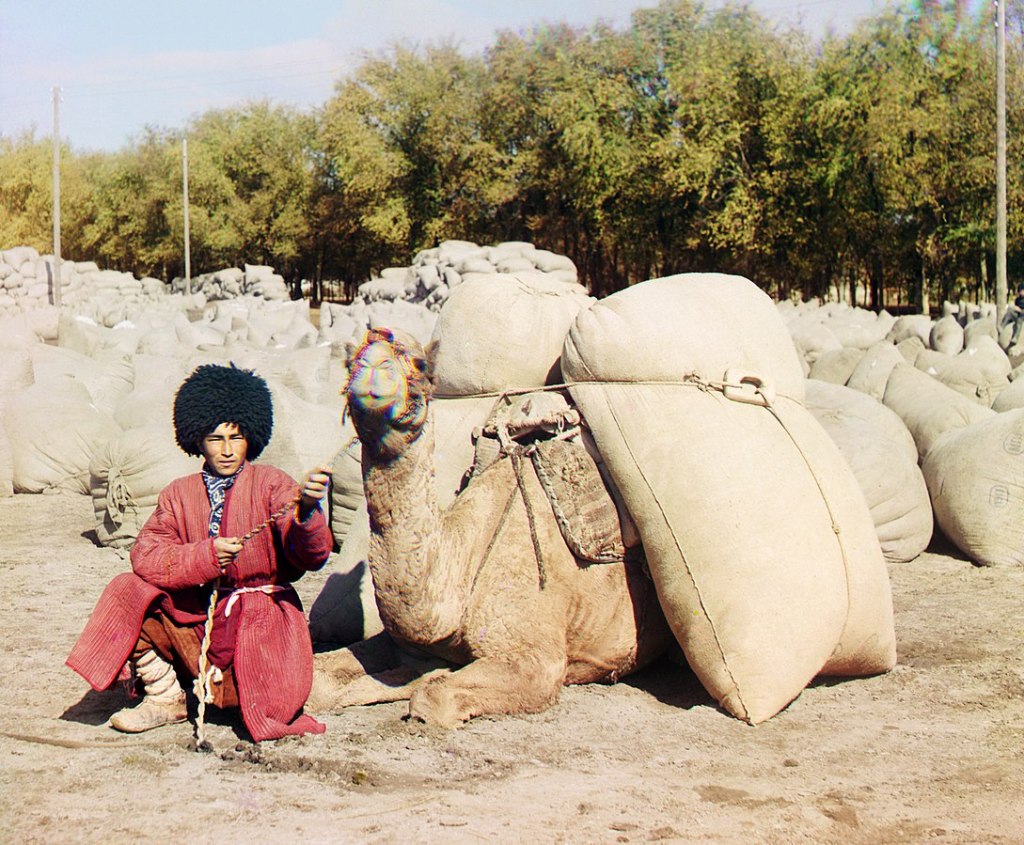
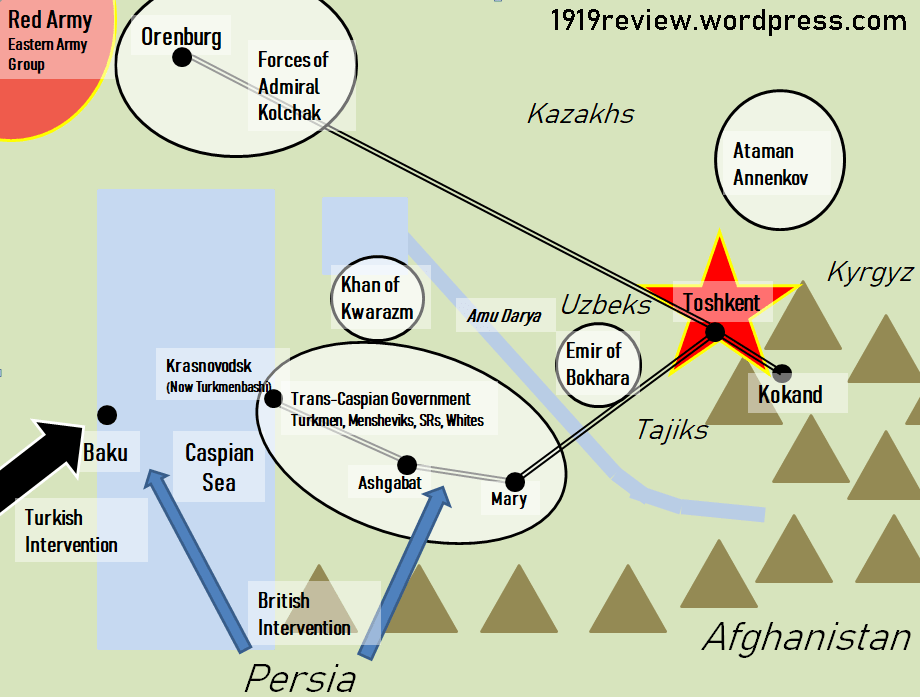
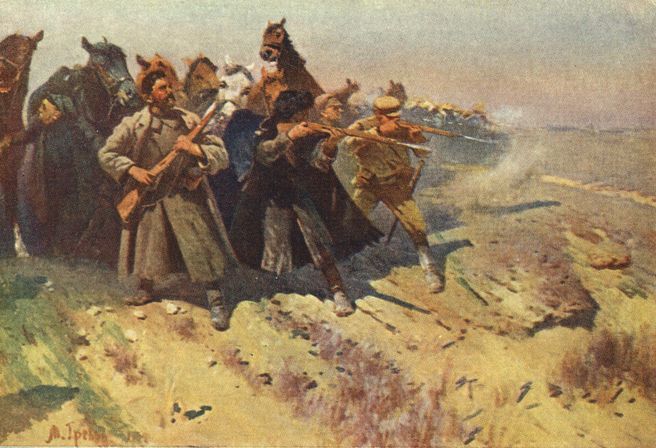
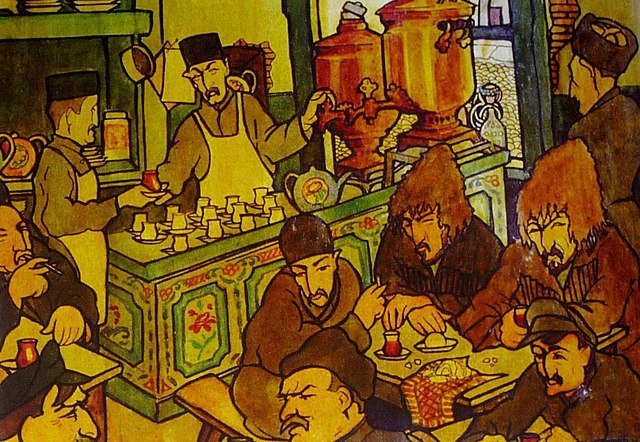

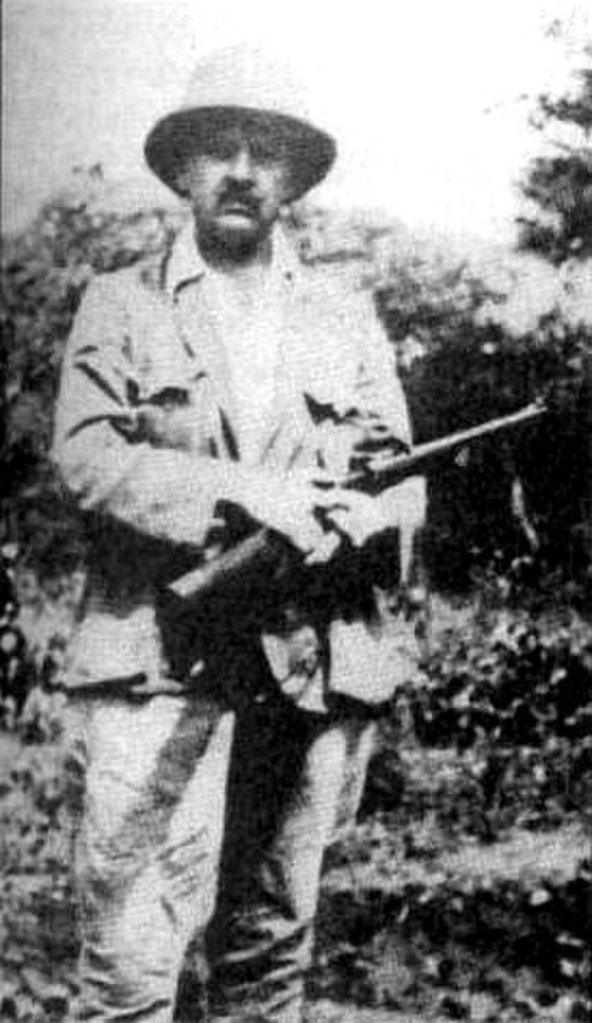

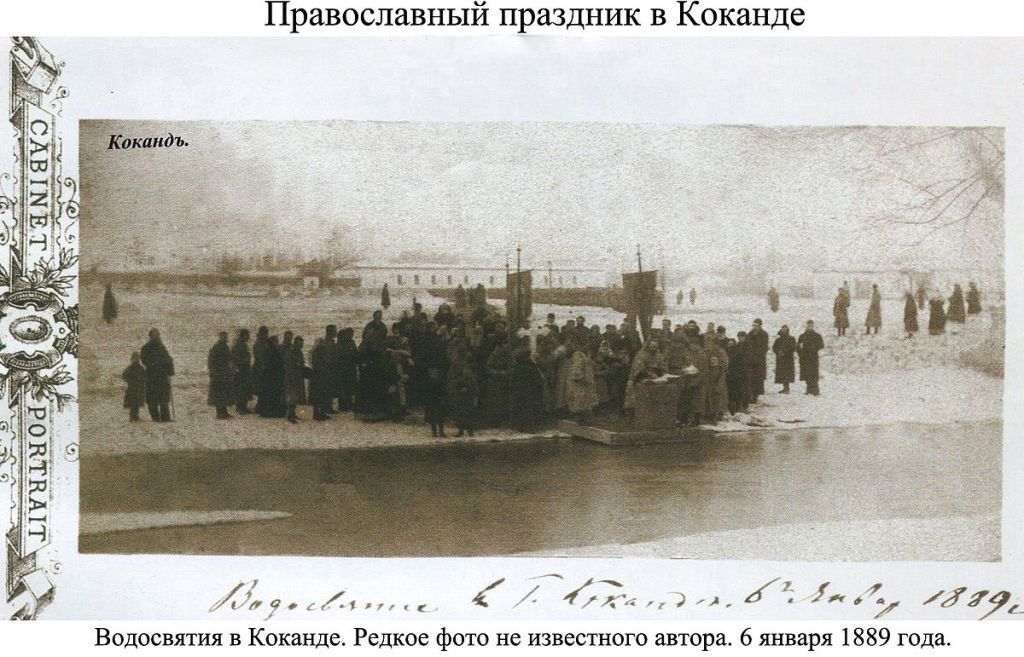


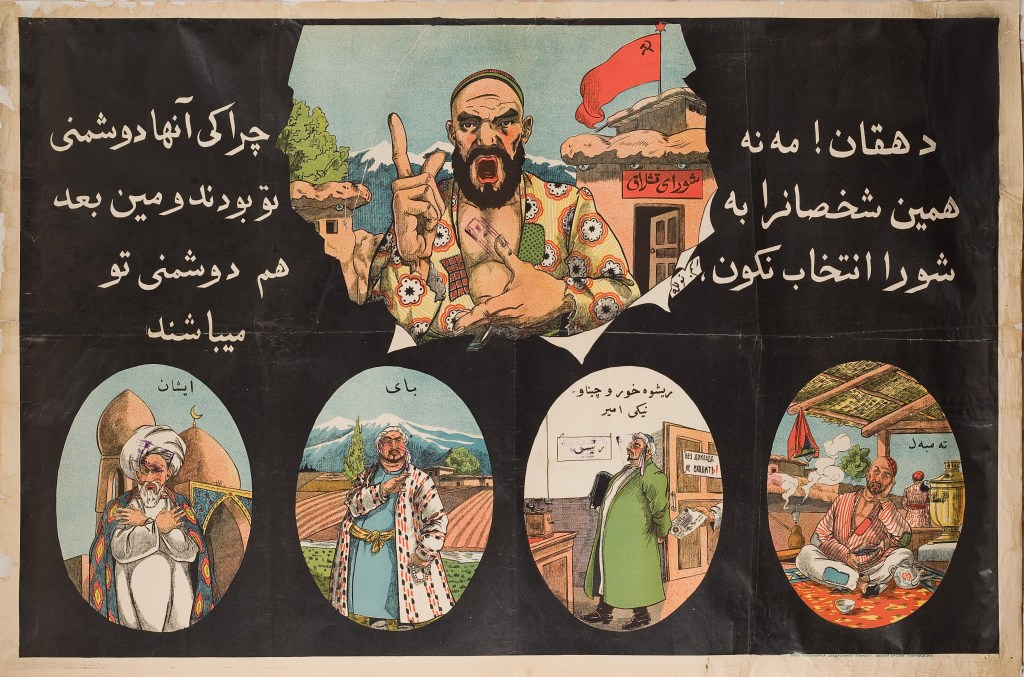

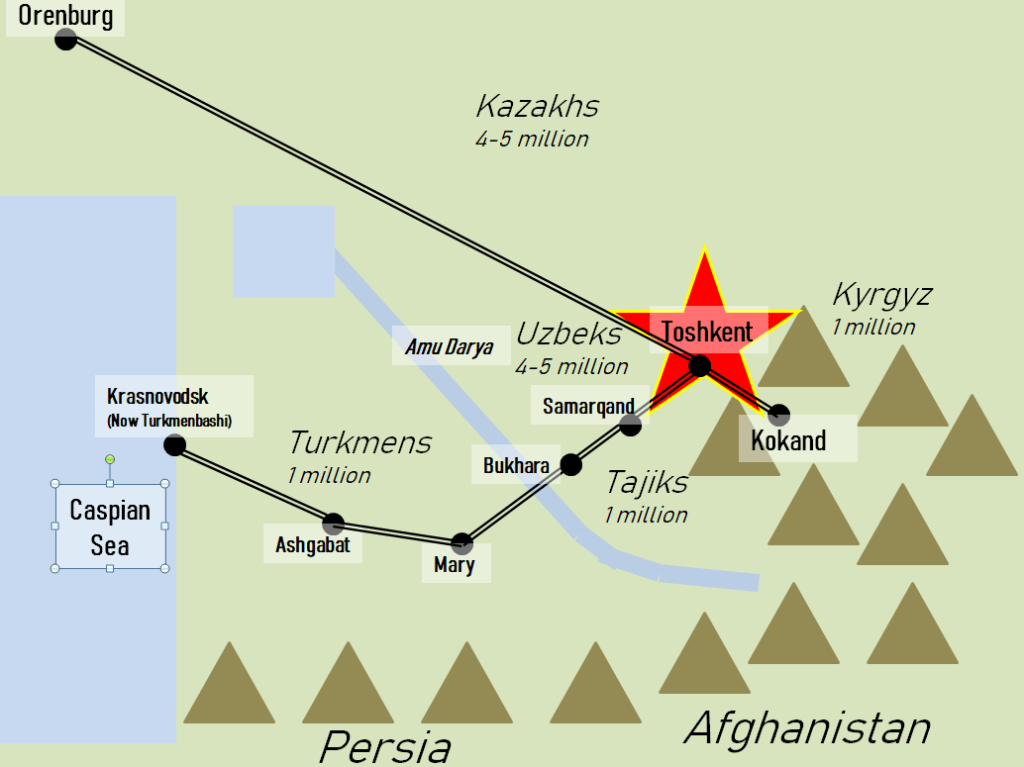

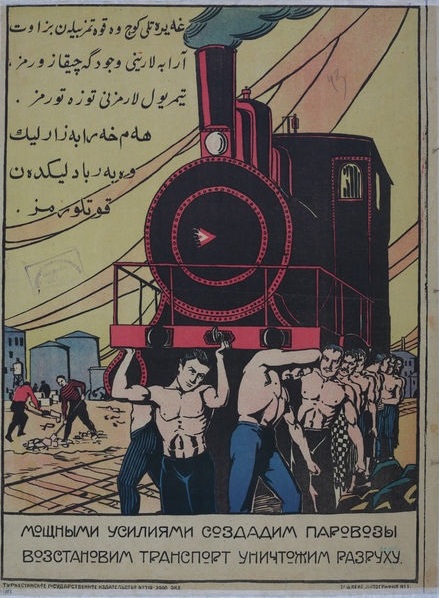
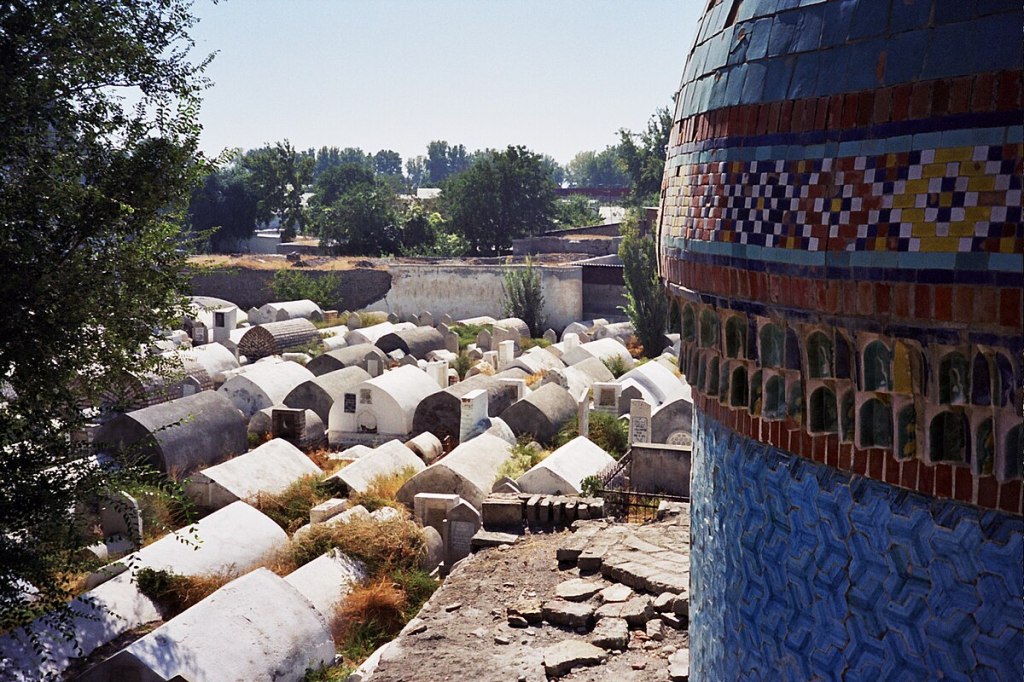
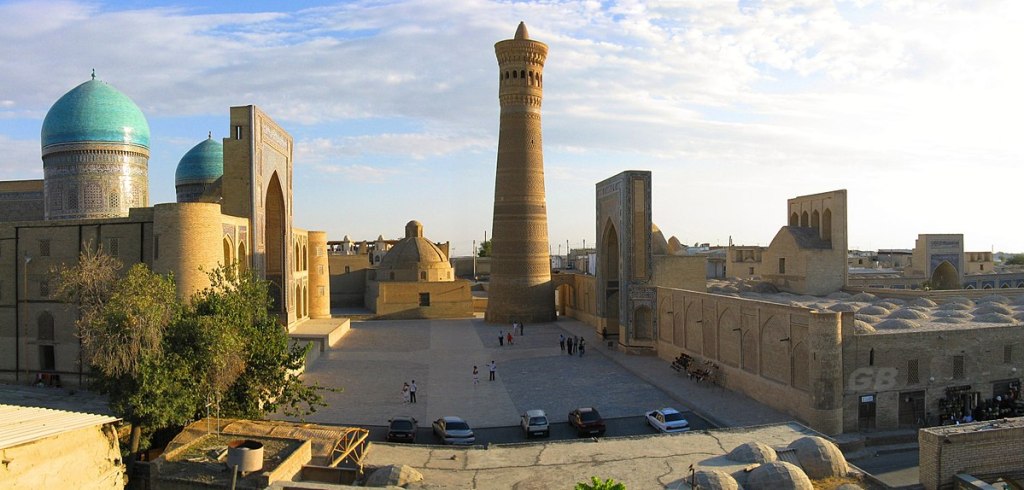
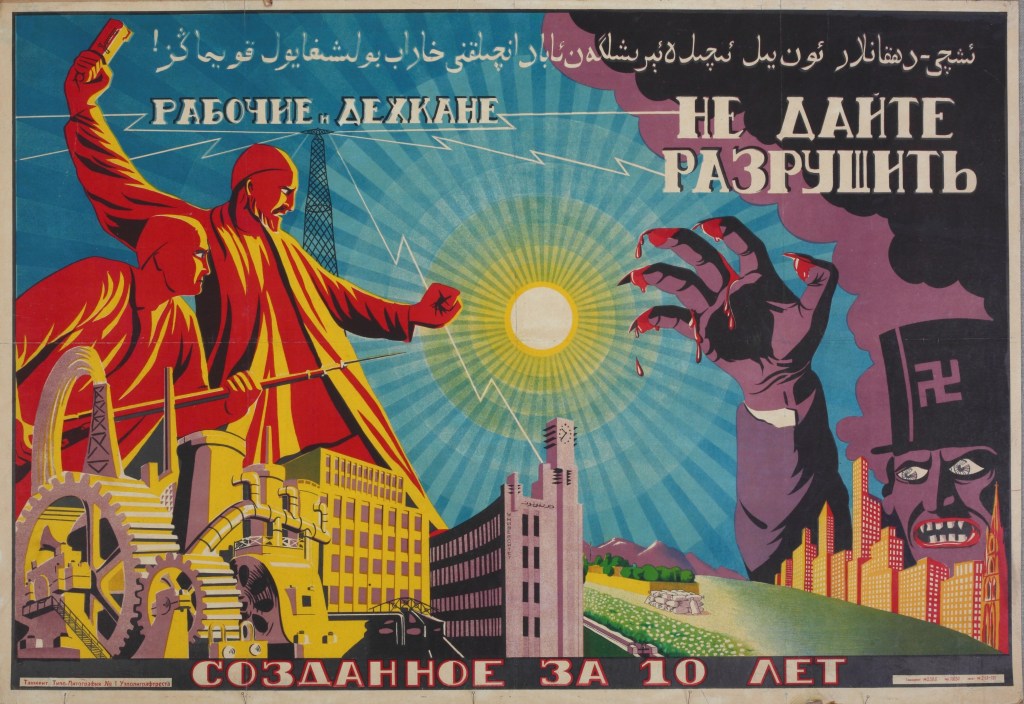
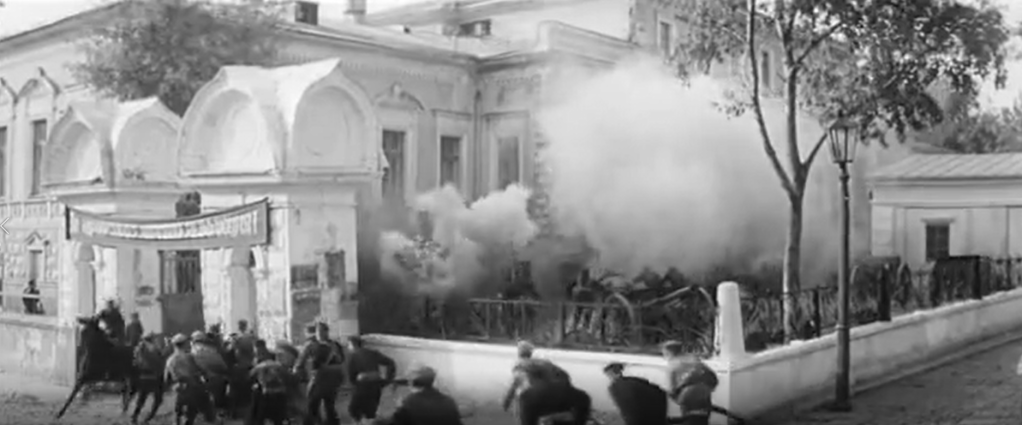

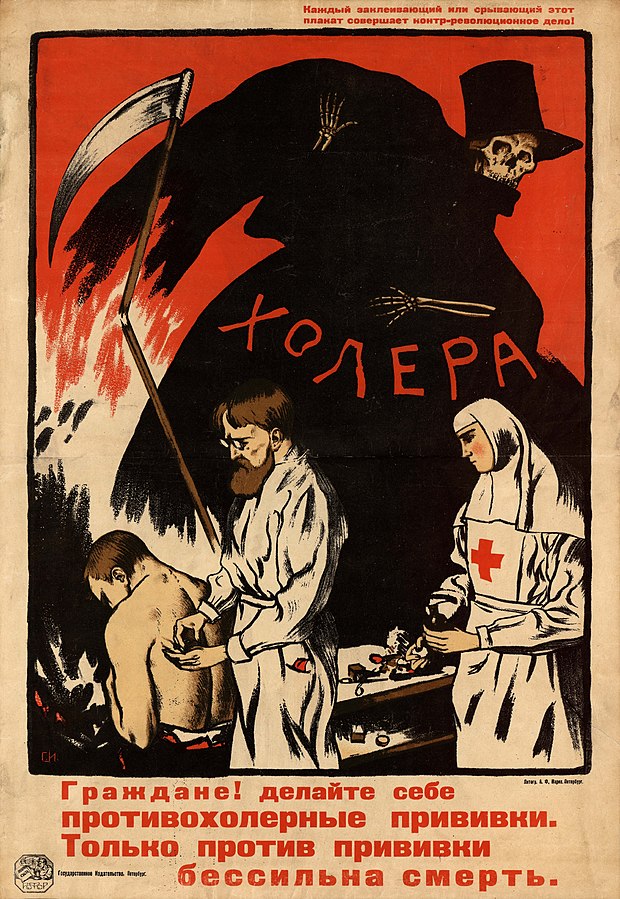
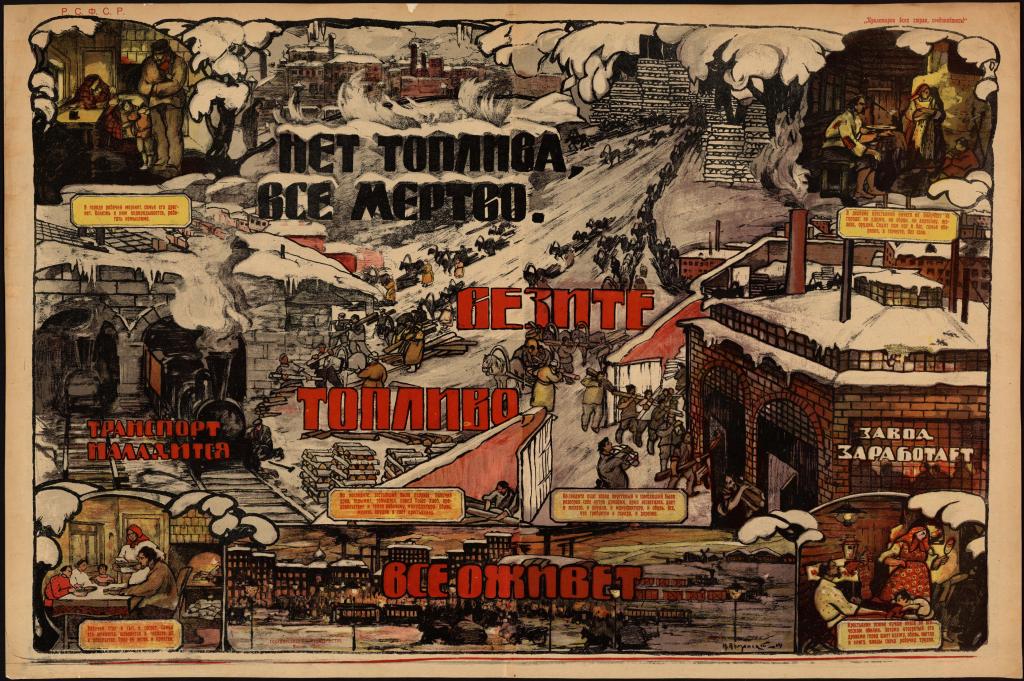
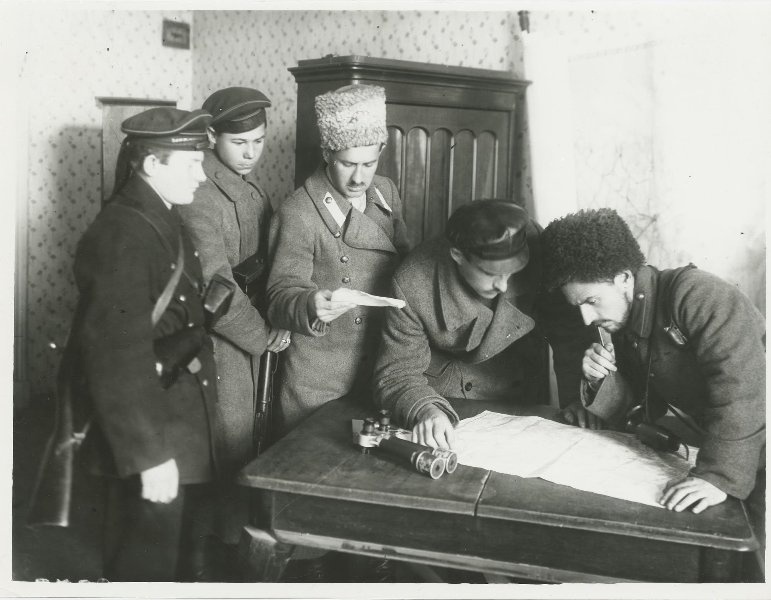

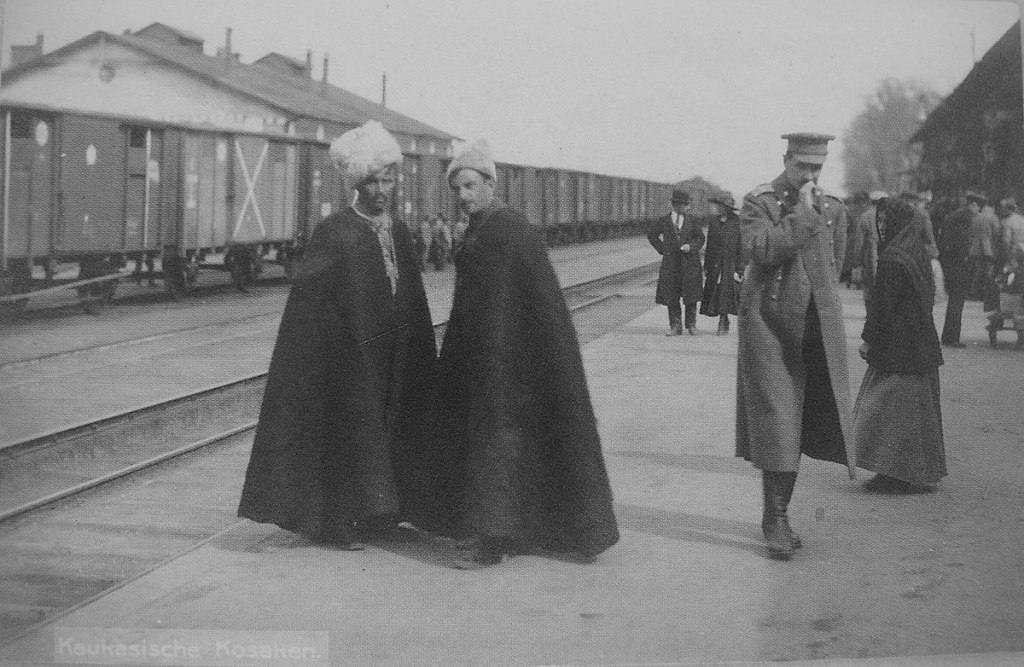
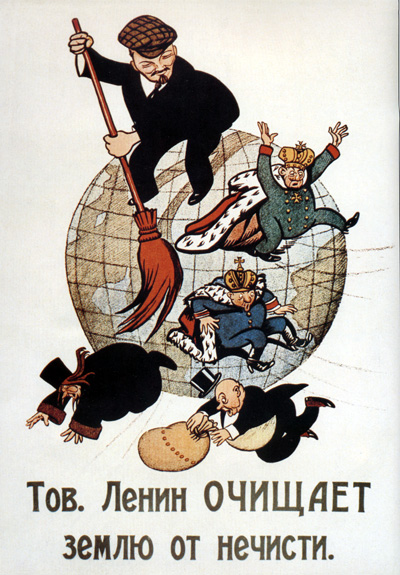

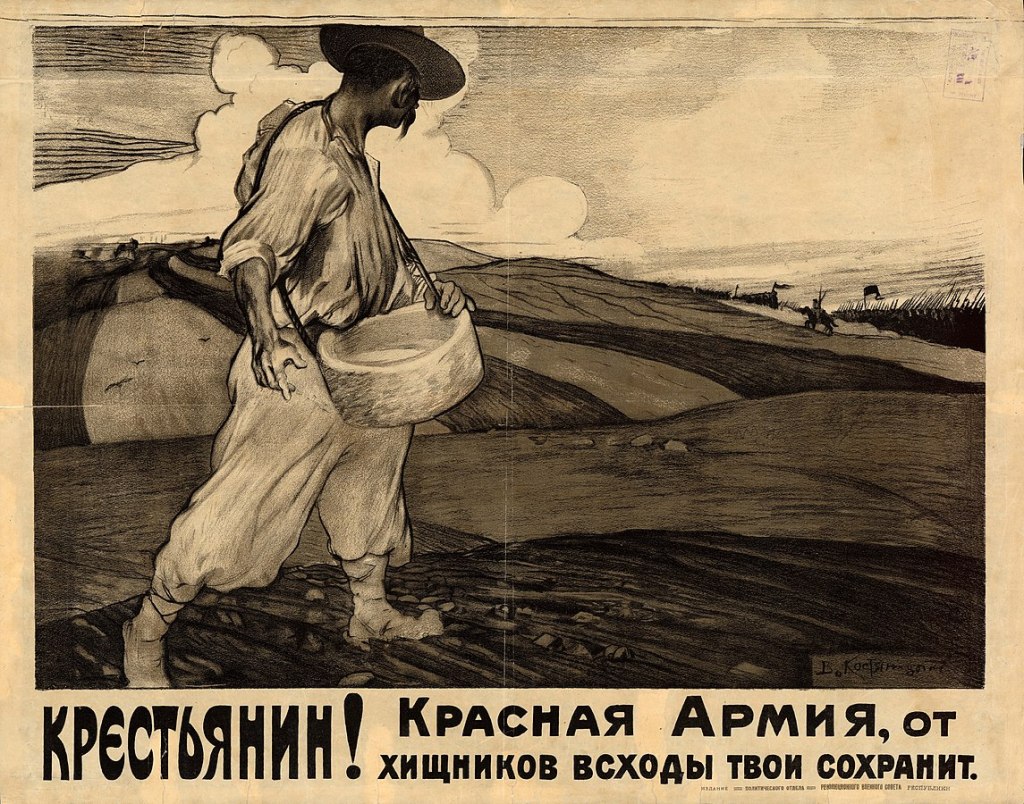
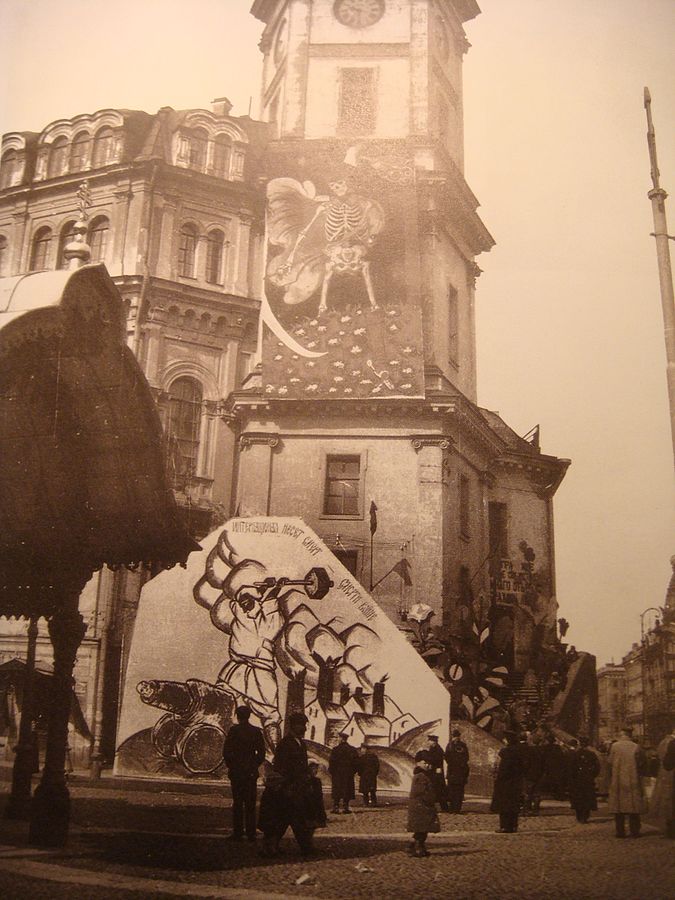
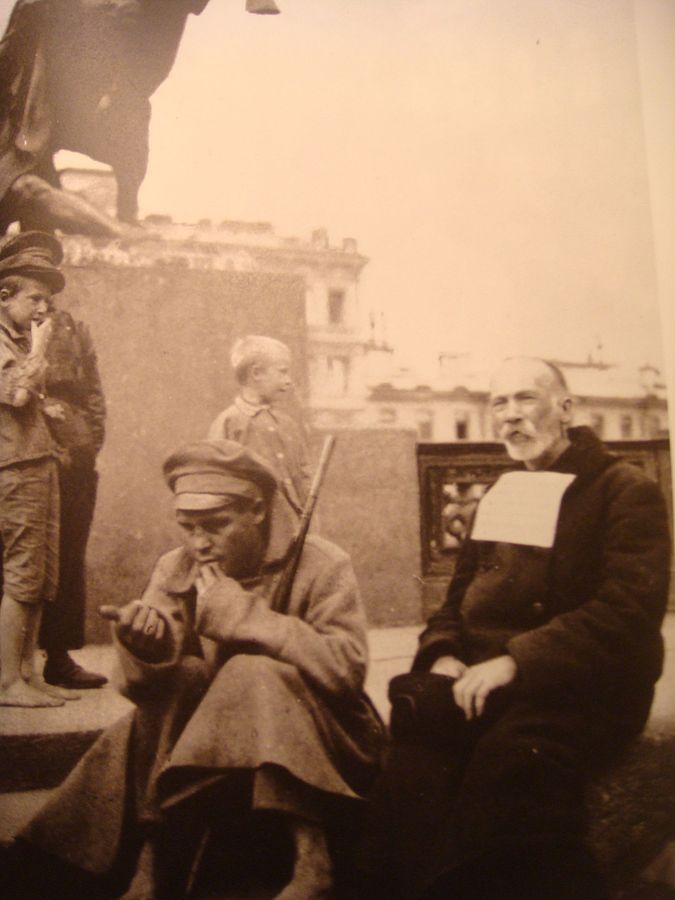
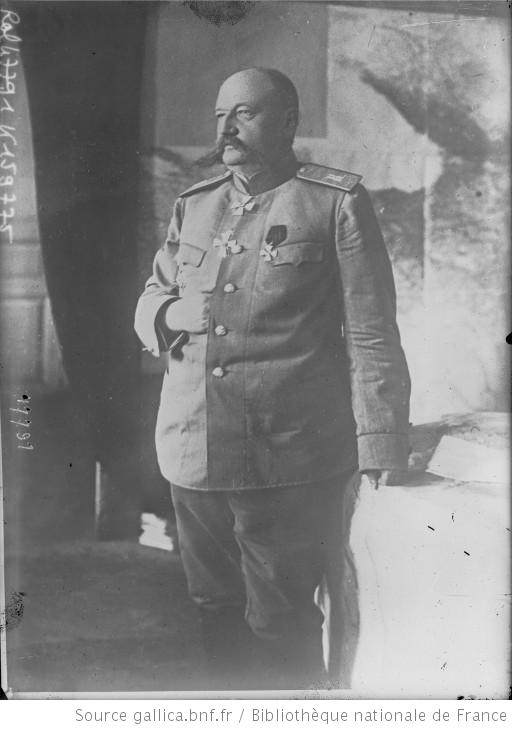
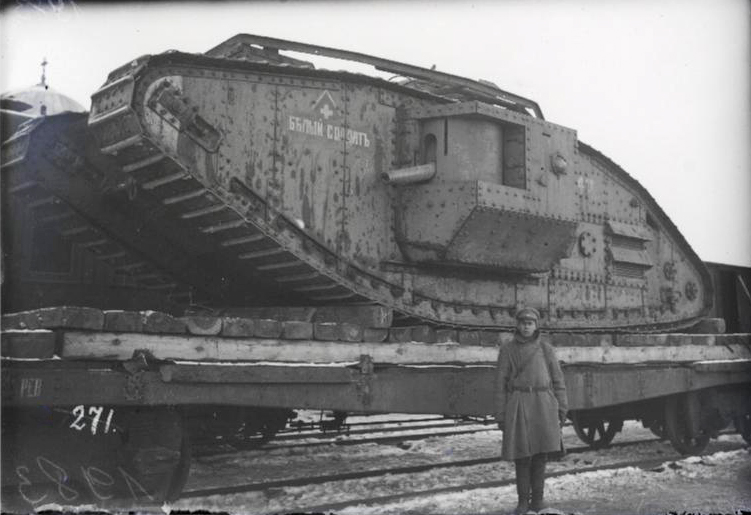

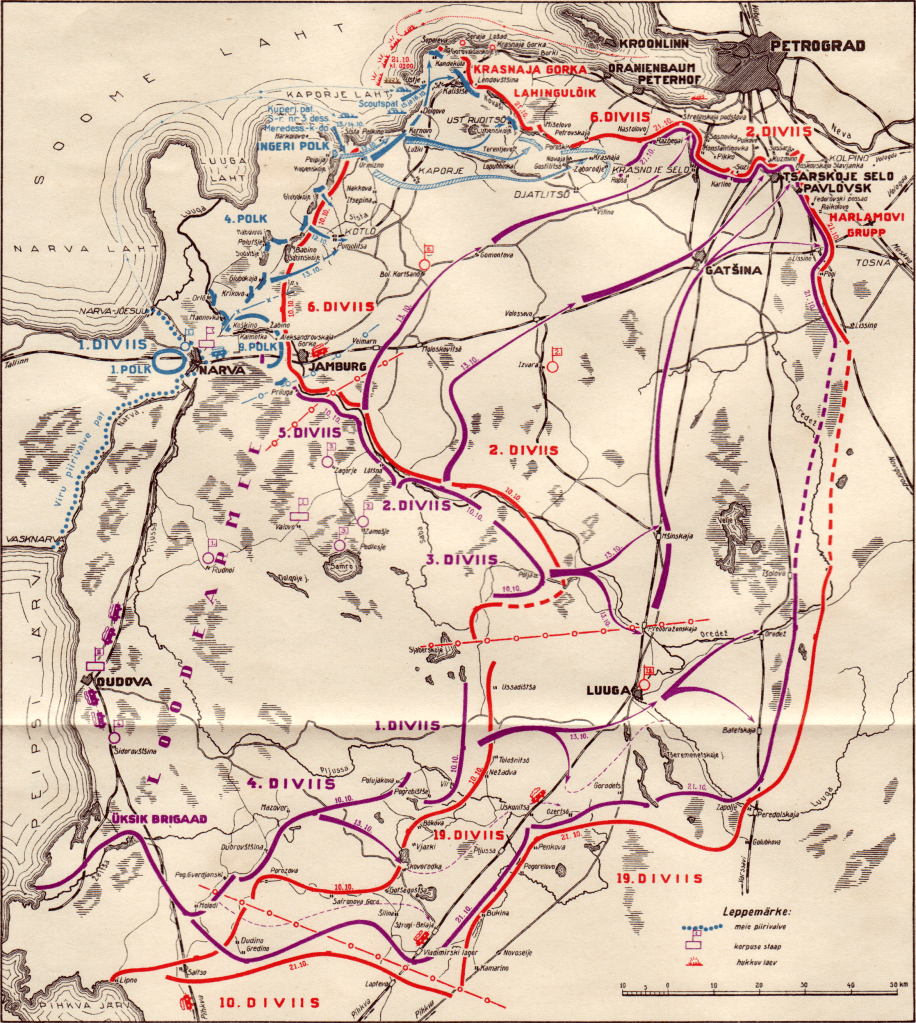


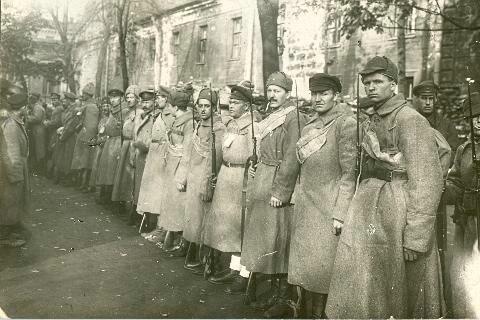
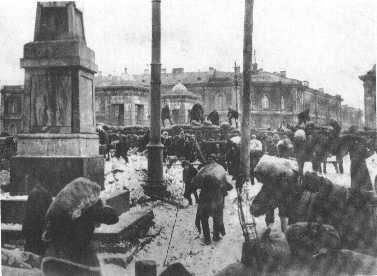
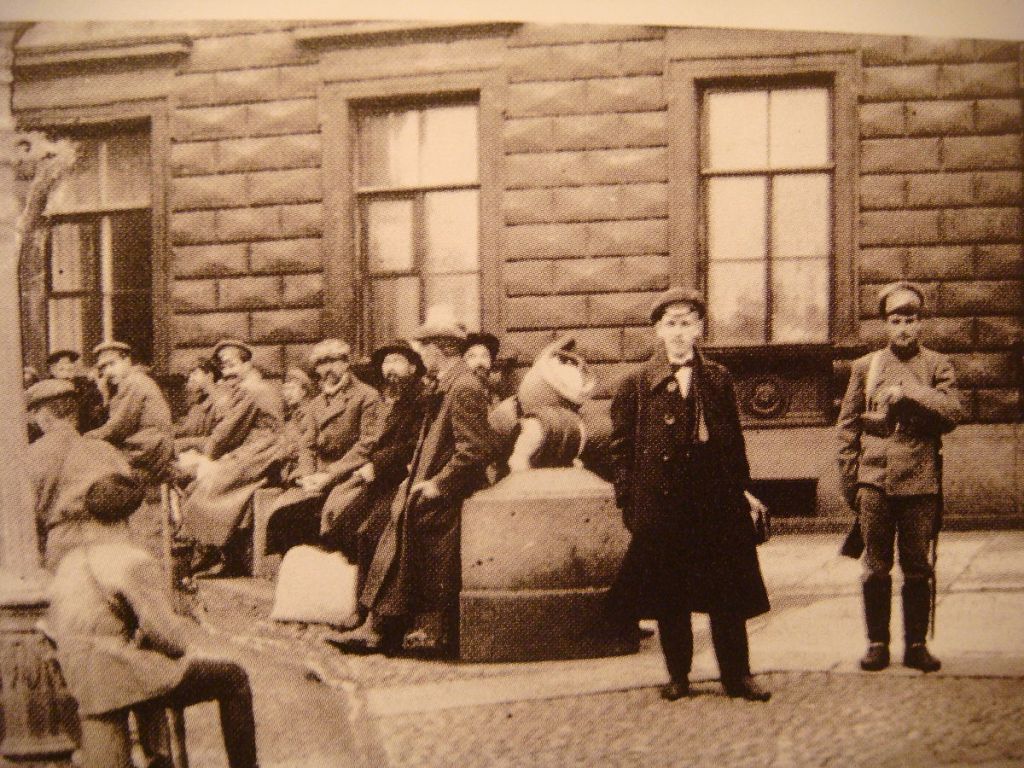
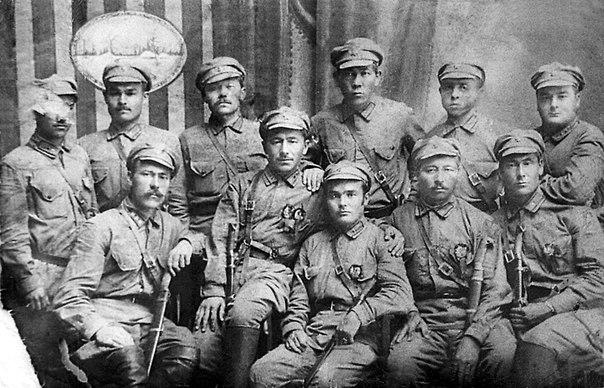
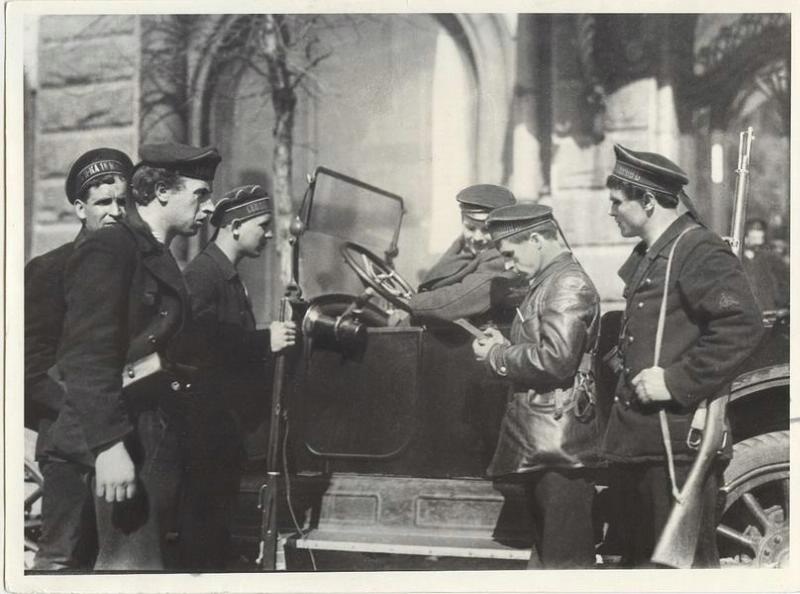

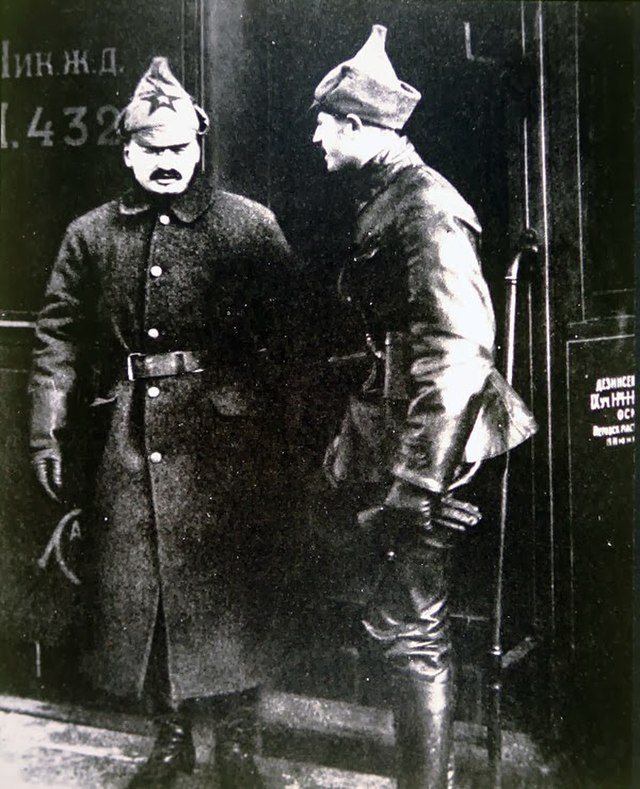
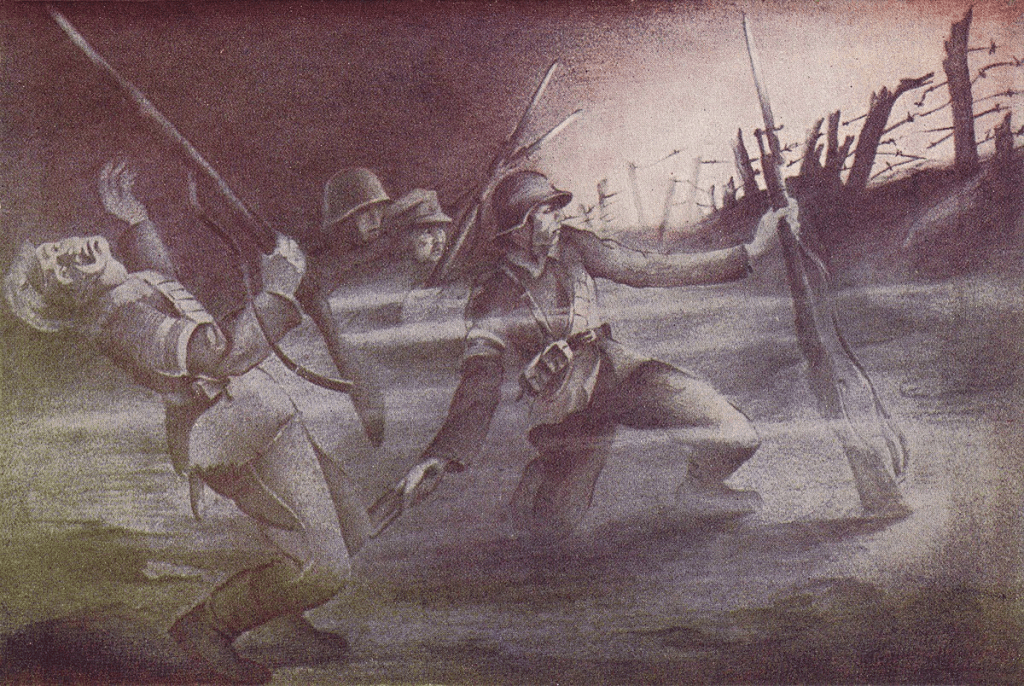
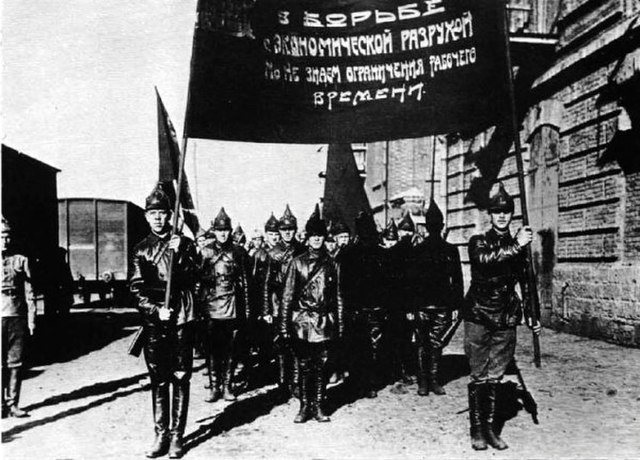
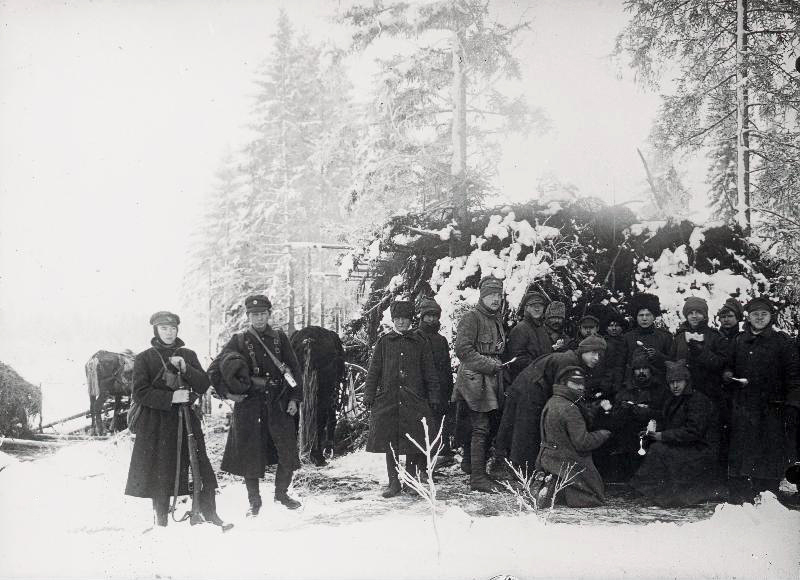
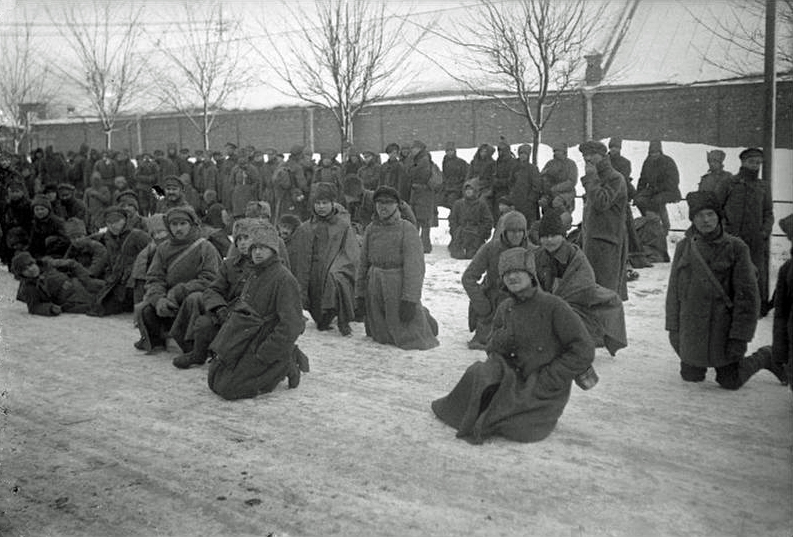
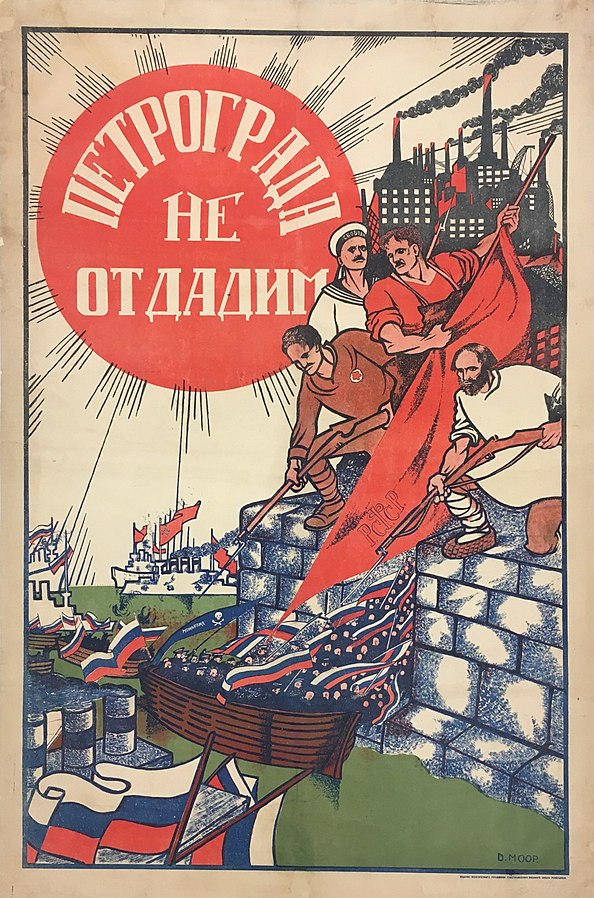
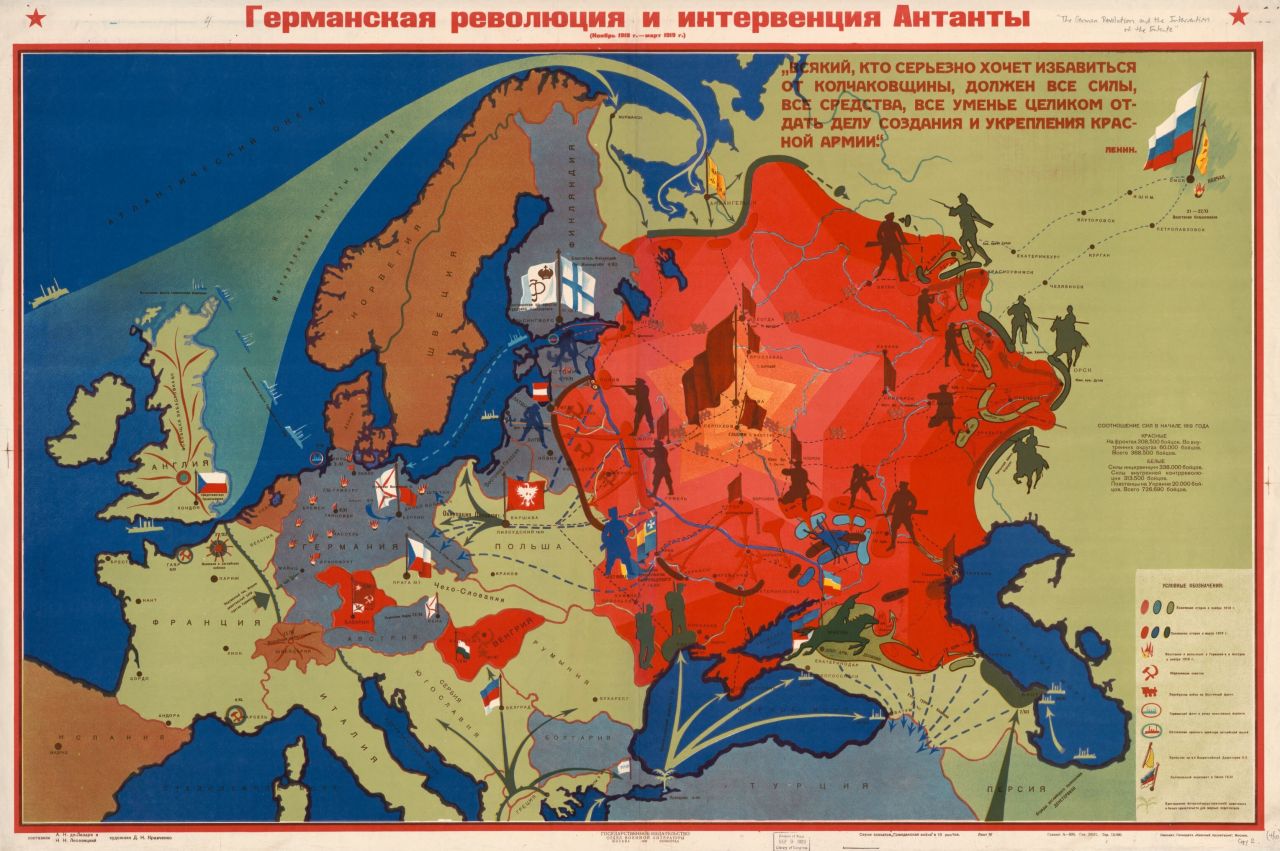

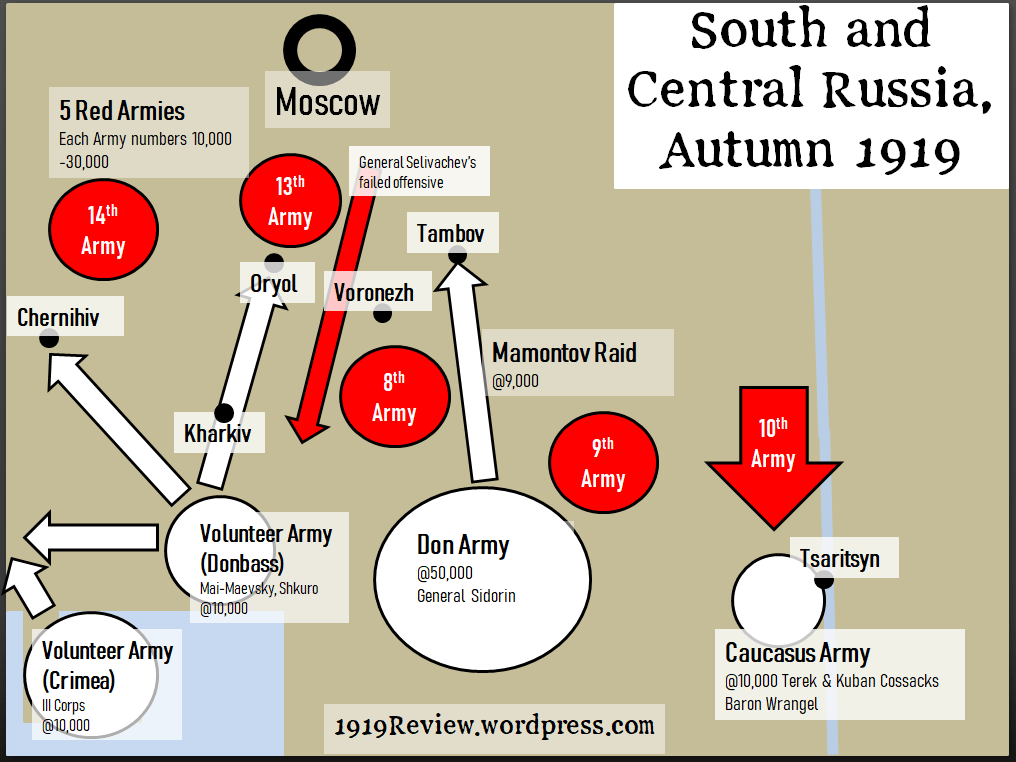
 The 1919 Review