
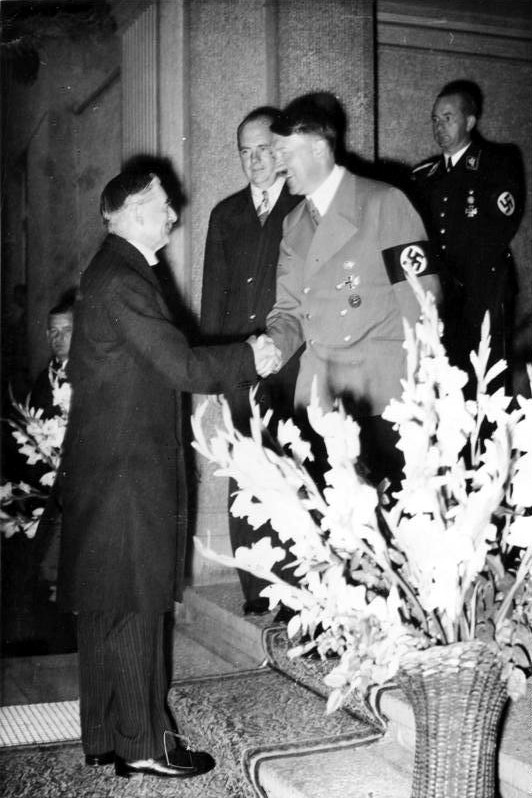
Appeasing Hitler (Tim Bouverie, Bodley Head, 2019)
“How bad do you think it’s gonna be?”
Michael Corleone and Peter Clemenza in The Godfather
“Pretty goddamn bad. Probably all the other Families will line up against us… You know, you gotta stop them at the beginning. Like they should have stopped Hitler at Munich. They should never let him get away with that. They was just asking for big trouble.“
If there’s one thing everyone knows from history, it’s that in the 1930s when Nazi Germany was on the rise, British politicians tried to give Hitler what he wanted instead of fighting him. It’s become a cliché.
Clemenza can be forgiven since the events of The Godfather happen only a short time after the war, and what he says is not wrong, as far as it goes. But over the last 80 years, this infamous policy of appeasement has been trotted out as a morality tale again and again. The funny thing is, it is usually invoked to justify aggression (Iraq, Vietnam), not to resist it. Anyone who opposes bombing a third-world former colonial country, anyone who has a problem with killing children and blowing up hospitals, is accused of being an appeaser. And any little warmongering psycho can strut around fantasising that he’s Churchill, the only one (so the fable goes) with the moral courage to stick it to the Nazis. If Hitler was around today, he’d be accusing his opponents of wanting to appease Poland.
I reccomend this article from Spartacus Educational and Claud Cockburn’s brilliant memoir I, Claud, both of which challenge the standard narrative around appeasement. I wanted to know more so I attempted to read Appeasing Hitler by Tim Bouverie. The covers of this 2019 book are weighed down with all kinds of glowing quotations and accolades (‘fresh, challenging’) so I expected to learn something.
But I gave up after 79 pages. Here’s why.
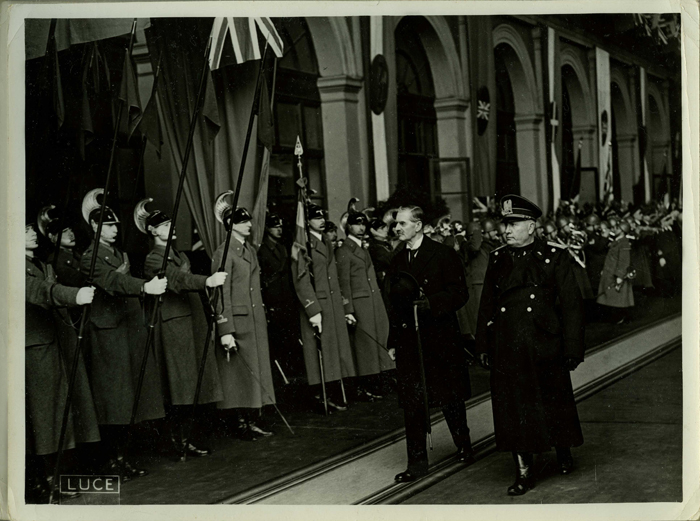
The author Tim Bouverie gets a real kick out of writing long, loving sketches of British Tory politicians. We get one deft little character introduction after another. We are told about their histories, their personalities, their quirks. Sketches of Tories just keep piling up, going nowhere. They are not badly written, but it’s unclear why we’re supposed to care.
For some, naturally, this is a selling point. One reviewer says that the author Bouverie ‘excels at capturing the atmosphere and conveying the debates in the dining clubs, drawing rooms and society playgrounds of interwar Britain.’ Well, good for him. But I don’t really care about the atmosphere in the society playgrounds, or whatever.
‘Abyssinian Imbroglio’
I stopped reading at a chapter which described the diplomatic storm caused by Italy’s invasion of Ethiopia in 1935. The chapter was titled ‘Abyssinian Imbroglio.’
What a bizarre title.
Google tells me that an ‘imbroglio’ is ‘an utterly confused, complicated or embarrassing situation.’ So it was confusing and embarrassing when 380,000 Ethiopian civilians died under the bombs and bullets and poison gas of the fascists. It was so complicated when 20% of the population of Addis Ababa was wiped out in a terror campaign.
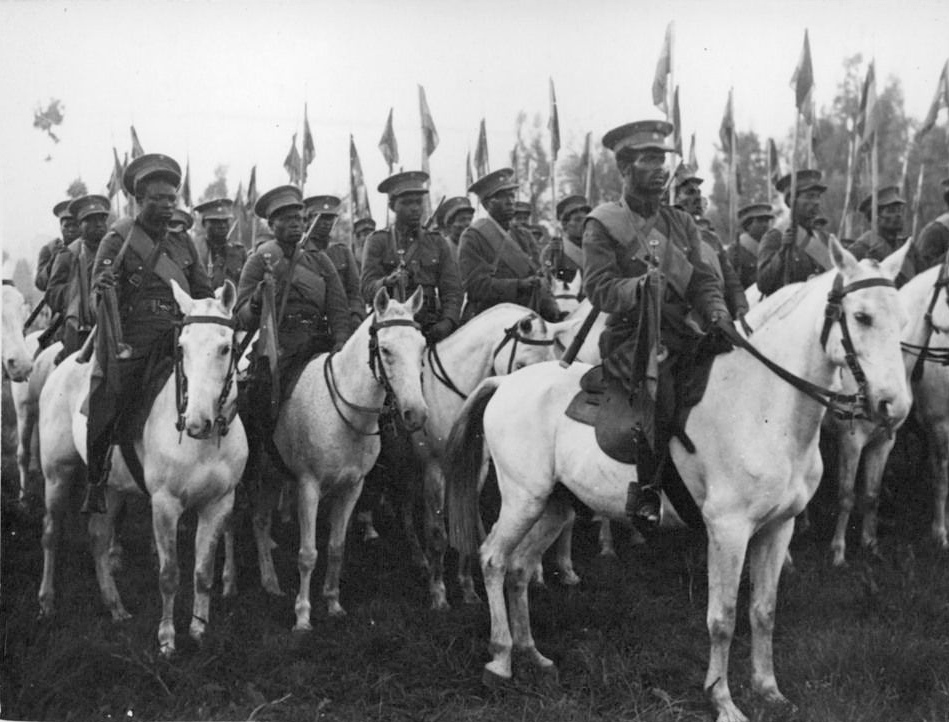
I suppose my problem is that I’m looking at things from the perspective of humanity in general. If, like Bouverie appears to do, I looked at the world solely from the point of view of male British Tories from the 1930s (and their dining clubs and society playgrounds), I would see the Italian invasion of Ethiopia simply as a complicated, embarrassing situation.
Racial Hatred
Bouverie says some… well… interesting things about anti-Semitism.
They don’t really mention this in the school history books, and it’s not talked about in polite society, but one reason why appeasement happened was that most British conservatives hated Jews.
…or so I thought, until Bouverie reassured me that it wasn’t an issue. This hatred, he tells us, was ‘broadly social and snobbish, rather than racial and extremist.’
Phew. Thank goodness for that.
Let me remind you that this book was published in 2019, year number four of Jeremy Corbyn being publicly scourged over alleged anti-Semitism. At various stages Corbyn was keel-hauled by the press for liking Charles Dickens, for praising J.A. Hobson and for mispronouncing Epstein. But two reviews of Appeasing Hitler in the Guardian make no mention of the author’s bizarre comments (The Guardian, which eviscerated Corbyn for much, much less). One review in the New York Times paraphrases the offending comments with approval. Bouverie’s obvious sympathy for the Conservative Party makes this all the more galling.

The nuances and cross-currents of Viscount Rothermere’s Nazi sympathies are explained at great length and put into context – because of course one mustn’t be unfair to Viscount Rothermere. In this ‘fresh, challenging’ account of appeasement, Churchill is once again lionised, clever little things he said are quoted ad nauseam, every twist and turn of his policy is explained and justified. But the positions of the Labour Party are caricatured in passing, in contemptuous fragments of sentences.
Even though I was interested in the topic, there was nothing in this book for me. The camera lens was fixed exclusively on the least interesting part of the scene. So I gave up.
Conclusion
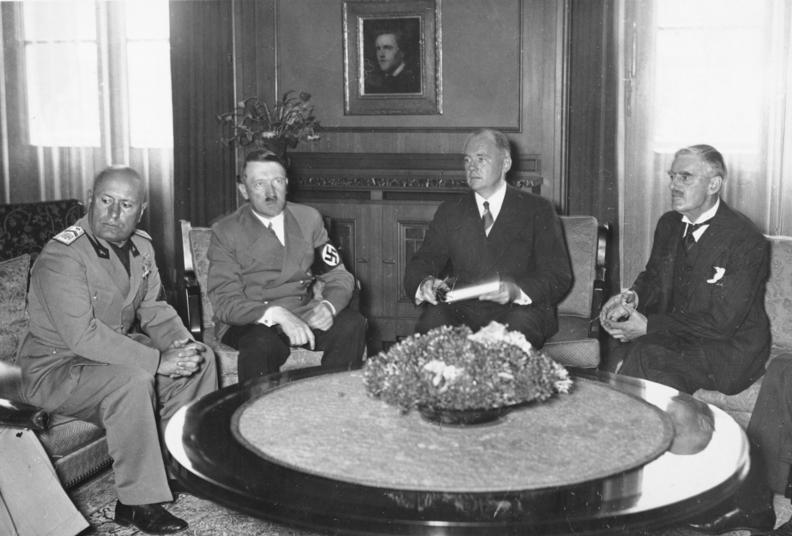
It seems to me that the British Empire is the elephant in the room in discussions of appeasement. These politicians held hundreds of millions of people in thrall in Africa and Asia and the Caribbean. It was certainly not any lack of aggression or militarism that stayed their hand when they were confronted with Hitler. They were not meek in India – contemporary training booklets advised soldiers on the best methods of burning villages. The attitude of Churchill toward non-white people was certainly ‘racial and extremist.’
From a selfish British imperialist point of view, the logic of appeasement held water. In exchange for an alliance with Britain, Hitler probably would have reserved his aggression for Eastern Europe. It seems to me that the appeasers calculated on letting Hitler loose like a wild dog on the east. They were willing to let him kill tens of millions without impediment as long as he destroyed communism in the process. Looked at this way, appeasement becomes even more disgusting. It also explains why supposed anti-appeasement politicians like Churchill in fact flip-flopped on the issue. But he eventually settled on a harder anti-Hitler position; more far-seeing British imperialist policy realised that facing a vast German empire five or ten years down the line was too big a price to pay.
Well, that’s my understanding of it based on admittedly limited reading. Maybe if I’d read past page 79 of Appeasing Hitler, I would be better-informed on the topic. Then again, maybe I’d have just learned about society playgrounds and drawing rooms. Either way, I couldn’t bear to read another deft portrait of another rich Tory whose racial hatred was only social and snobbish.
 The 1919 Review