Access to this article is limited to paying supporters. If you already subscribe by email, thank you. But if you want to become a paying supporter, please hit ‘Subscribe’ below.
Give me less than the price of a coffee, and you can access everything on this blog for one year.
This is Episode 28 of Revolution Under Siege, my series on the Russian Civil War. In this post, we look at the invasion of Ukraine by the ‘Black Baron’ Wrangel.
By the time the Soviets signed a ceasefire with Poland, another serious war had been raging for months in the south of Ukraine: the struggle with the forces of Baron Wrangel.
White Crimea
Wrangel’s Crimea, to which the survivors of Denikin’s army had fled, was a strange place. The only parallel would be Taiwan soon after the Chinese Revolution. Imagine if the top politicians, billionaires and military officers got chased out of the mainland United States and washed up in the hotels and resorts of Hawaii or in Puerto Rico. People today talk about a ‘refugee crisis’ when a few hundred thousand people seek refuge on a continent home to hundreds of millions. Imagine being Crimean – one of fewer than a million – and seeing tens of thousands of Russian counter-revolutionaries and their dependents descending on your little peninsula. To people from that part of the world, Crimea was and is associated with holidays, beaches, cypress trees and nightingales, the mosques and masjids of the Tatar villages.
In 1920 this idyllic holiday destination was a refuge for Don Cossacks still mourning the horses they shot at Novorossisyk; women who had married conservative and strong-willed army officers, only to see them humbled by soldiers’ committees; children cast out of the homes they grew up in; business owners and aristocrats who have nightmares about the sailors and the Cheka; famous ministers under the Tsar; the agents of half-a-dozen foreign powers, selling information; speculators turned refugees turned speculators again; former bloodhounds of the Tsarist secret police who have found a new employer in Wrangel; people who cheered on February but saw October as a kind of apocalypse; people who saw February as an apocalypse; infants of the Civil War who have known crowded billets, refuges and train carriages during headlong typhus-haunted flights; elderly dependents; girlfriends. Between the price of bread and the low pay of a soldier (even of a junior officer) most of these people must have lived in a state of desperation.
The father, husband, or son, the ally, pawn or constituent who stands at the centre of all these figures, whom they all have in common, is the White officer. This character has changed little since we first introduced him back in Episode 2, in spite of ordeals, triumphs, humiliations, allies gained and lost along the way.
Many of the White officers remember the Russo-Japanese War, and most the Great War. Some go back to the very start of the White movement: the Kornilov Affair, imprisonment in Bykhov Monastery, Rostov and the Kuban Ice March; some rode across the seething Ukraine of 1919, drunk and high under wolf talismans.
Some of these individuals crack under the pressure of the war. General Slashchev was fired after the stern Wrangel found him passed out from drugs and alcohol, dressed in a gold-trimmed Turkish robe, surrounded by his collection of birds. [1] But let’s speak of them as a collective. The White officer will fight on to the end, because to accept the egalitarian order promised by communism would be, to his mind, to accept the downfall of civilisation and the obliteration of his personal dignity.
Today’s cover image is a detail from the above, a poster from 1920 whose theme is how the forces of the Revolution in 1917 compare with three years later. Note the slender figure of Wrangel, near bottom right.
Circumstances dictate an offensive
Speaking with journalists, Wrangel outlined a cautious strategy. ‘I don’t make big plans. I think I need to gain time.’ Here in Crimea, he explained, one can live, free of hunger and terror; more will join us, and we will expand gradually at the expense of the Soviet territory [2]. But circumstances dictated a bolder strategy.
First, there was the Polish-Soviet War. The Whites had hardly settled in Crimea when Piłsudski marched into Kyiv. A better opportunity for a breakout would not come along. Immediately they began to make plans for an attack on the mainland.
Second, there was the crowded Crimea and the looming winter. Wrangel’s people would not have enough food to stay alive, let alone provide an instructive contrast to the hungry Soviet territory. The price of food in Crimea rose at least 16-fold between April and October 1920. [3] The Allies might be so kind as to keep them all alive for a while, but now less than ever before could the White officer take foreign aid for granted. Nutrition, never mind strategy, dictated that they must seize the harvests from other parts of Ukraine and Russia.
It was necessary to make a move.
The British government heard of plans for the coming offensive and tried to dissuade Wrangel. They had been through all this before with Denikin and Kolchak. But they could not dissuade Wrangel: in June the ‘Russian Army’ broke out in all directions.
History is being helpful for once: the main frontline of that war is very similar to one of the main frontlines in today’s war in Ukraine, following the course of the Dnipro River. Like Putin’s in 2022, Wrangel’s forces burst out of Crimea in April 1920 and seized the neighbouring chunk of the mainland, an area known as the Northern Tauride. It was the ‘colourful’ units, named after dead White generals like Markov and Kornilov and composed of the most professional, determined and experienced soldiers, which broke out from Crimea to the river Dnipro in just one week. His forces numbered somewhere between 40,000 and 70,000, an imposing number concentrated in such a small area. They advanced westward as far as the Dnipro and east as far as Mariupol (site of a terrible battle in 2022). They also landed forces by sea in the Don and Kuban regions in Russia.
Red soldiers drill in Kharkiv, 1920
The Allies draw back
Now something unprecedented happened: the British really did cut them off. It turned out there was after all a limit to the number of rifles they were willing to pour into the Soviet Union (That limit was somewhere in the millions, but it did exist). British trade unionists had protested and gone on strike under the slogan ‘Hands off Russia,’ and this was a key part of the context in which the sceptical Prime Minister Lloyd George at last won out over the pro-war Churchill.
The French government, on the other hand, gave massive aid to Wrangel. This mostly arrived from Romania in August and September [4]. Other foreign aid included from Poland and from the Menshevik government in Georgia; Whites who had been interned in those countries were sent to further boost Wrangel’s numbers. But the French took the opportunity to wring heavy economic concessions out of Wrangel, and in the French agenda, Wrangel was only a distraction to help the Polish war effort.
But…
Here are two qualifiers: first, this White Army would not have come into existence, and would not have escaped destruction in the Kuban, without Allied aid. So Wrangel’s regime was a legacy of intervention. Second, if Wrangel were to defeat a few Red Armies, were to take over large parts of Ukraine, were to ignite the Kuban and the Don in revolt again, the British and the French would surely get over their scepticism and part with another few million rifles. It would be 1919 all over again: ‘To Moscow!’
But as it stood, the Whites were on their own – or as close to ‘on their own’ as they had ever been. The British had cut them off, and the French were obviously using them toward limited ends.
The Cossacks draw back
The Allied spigot had waned to a trickle. So had the Cossack spigot.
There was still a large Don Cossack contingent in Wrangel’s ‘Russian Army.’ And there was a White guerrilla army, independent of Wrangel, surviving in the remote parts of the Kuban. Wrangel made strenuous efforts to raise the Don and Kuban in revolt again, through landing his forces in those regions by ship. But the population failed to rise. In the Kuban, the beachhead was surrounded by an amphibious counter-strike by the Red Army.
The Cossacks had seen war, revolution and counter-revolution pass over them so many times they were sick of it. This, along with a ‘more conciliatory Bolshevik policy’ and a ‘more effective occupation force’ meant they would not be enlisted in another adventure this time. [5]
The peasants draw back
With his old friends abandoning him, the White officer had to find new ones. He tried to win over the peasants. Wrangel’s government, as it advanced in June, announced a new land law. The estates of the nobility would be given to the peasants, and the nobility compensated. A more direct hearts-and-minds campaign was waged by General Dragomirov. He would roll into a Crimean village and (instead of embarking on a pogrom as he had done in Kyiv) would set up some tables, roast a few lambs, share out barrels of booze, and raise a toast: ‘the day will soon come when we will hear the bells of Moscow.’ [6]
But the land law was more than a day late and more than a rouble short. The Soviets had already shared out the land – without compensation. So there was no popular upsurge for Wrangel on account of this land law.
A Red poster from 1920. ‘Wrangel is coming to us […] What we earned with blood, we will defend with blood.’
Reds on the back foot
Their list of friends was not getting any longer. But the White officers held the Northern Tauride all through the summer and into autumn despite determined counter-attacks. One time a whole Red Cavalry unit was surrounded and ‘practically wiped out.’ Communists and commissars would have been executed on the spot; [7] others would have been propositioned for recruitment. Thousands of horses would have been captured – to the delight of every Don Cossack who found himself back in the saddle.
Things went badly for the Reds here for a long time. The war with Poland was the biggest and most intense campaign of the Civil War, and large parts of Ukraine were still unfriendly. The Anarchists wished to retake Dnipo, which had served for some weeks in 1919 as the centre of their utopian experiment. Beevor describes how they entered the town in the guise of farmers with carts piled high with hay. Once in the city, they revealed machine-guns under the hay and started blasting. They were driven out of the city, but they left ten captive Red soldiers behind, their guts torn out and grain stuffed into the cavities.
Bridgehead
Despite these setbacks and troubles, the Reds managed to make headway even before the end of the Polish-Soviet War.
Like today, the river Dnipro formed the most important front line. Here the Reds forced a few bridgeheads in the face of stiff White resistance; the high right bank commands the low left bank. Most of the bridgeheads were lost again, but at the town of Khakovka they held out. (Today Kakhovka is in Russian hands. Nova Kakhovka, ten kilometres down the river, was where that dam got blown up in June 2023.) Around Khakovka there was an intense, dug-in battle lasting months. Contrary to Beevor’s claim that Wrangel ‘never presented a serious threat to the Red Army’s rear,’ (p 479) this seems to have been one of the most intense battles Red and White ever fought.
The White general Slashchev (soon to be dismissed after the Turkish robe incident) sent repeated cavalry charges against Red trenches and barbed wire. The Whites also sent in twelve British Mark V tanks. They had a dozen aircraft, 60 artillery pieces and 14 armoured cars. These would seem like pathetic numbers today but this represented a concentration of machine force not hitherto seen in the Civil War [8]. Each tank was named, like a ship, after some general of the White cause or of the old empire.
But soon the Whites could feel keenly the effects of the withdrawal of Allied support. At the height of the battle they were down to twenty artillery shells a day. [9] When Poland and the Soviet Union signed a peace treaty in October, the tide turned instantly against the Whites. Their isolation was now as complete as it had ever been. With the war in the west over, there began a vast concentration of forces against Wrangel.
Meanwhile on October 14th the Whites made a great assault on the Khakovka bridgehead. The Reds defended the small town with three lines of trenches and barbed wire. There wasn’t enough time to dig the tank traps, and White scouts spotted where the Reds put their mines, so it looked like the Reds would have no effective counter to the tanks. 6,000 Whites went into the attack against 10,000 dug-in Reds. The Whites were confident in spite of their smaller numbers; they had beaten far worse odds in 1918 and 1919.
But the great White attack ran into a level of Red resistance the Whites had never seen before. The tank ‘Generalissimo Suvorov’ was destroyed by a Red armoured car bearing the name ‘Antichrist.’ Another tank (‘Ataman Ermak’) ended up crashing into a regimental bathhouse, where it kept up fire until a Red cannon blasted six shells into it from a distance of ninety metres. A White horse battery ran into the shock troops of the veterans from Siberia, who showed them an unexpected and terrible weapon: two volleys from flamethrowers, which sent them fleeing in panic, dropping their weapons. [10]
A Red soldier with an artillery piece
The Red Worker
The White officer has changed little, but he has just discovered that his opponent, the Red worker, is almost unrecognisable. When the Red Guards first came down to the Don Country in pursuit of Kornilov at the start of 1918, they patrolled trains and verbally asked the passengers to give up any concealed weapoms – basically operating on the honour system. In that, there was as much nervousness as humanity. In summer 1918 some Red units would abandon the front line en masse to have a nap. The unit from one town would refuse to share its horses with that from the next.
See them now massing for the attack on the Northern Tauride. They are in long overcoats with red trimming and spiked bogatyrka hats which give them a distinctive appearance redolent of the steppe. They have rifles and are well-accustomed to using them. The lads at Khakovka have 200 rounds each. Amphibious landings, bridgeheads, cavalry assaults, digging and holding trenches, knocking out tanks and aircraft, fighting on when outflanked – none are beyond them.
But first, try to make out the familiar figure of the Red Guard of 1917-18 amid 133,000 armed and uniformed fighters, amid the tachanki, armoured cars and armoured trains, their old allies the Latvian Rifles, and the mass of conscripts from the farming population. Budennyi’s Red Cavalry are here. There is even a detachment of long-haired Anarchists with their black banners; in August, the Soviets and Makhno signed up to a temporary alliance against Wrangel.
This description of the aspect of the Red soldiers in the neighbouring Kuban region probably applies to the Reds in Ukraine:
In every battalion now there were as many Communists as used to be found in a whole regiment. The political section of the division grew into a huge institution with dozens of organizers, agitators, and instructors. We published our own newspaper, we had our own printing press. For illiterates or those who could barely read we organized schools in the regiments with a corps of teachers. [11]
Communists make up 8% of this massed force, probably a higher proportion than you would have seen at Kazan, Perm or Petrograd [12]. Many of the Red Guards of the 1917-18 vintage have been promoted or died in battle or from epidemics. Still there is a politicised core of working-class recruits which holds the army together: many would have joined from the great wave of communist, worker and trade unionist volunteers that signed up around the time of Kazan in the summer of 1918; or those called up to resist Kolchak; or the wave recruited to resist the Polish invasion.
This picture of the Red Army in 1920 is significant for our assessment of the whole war and the whole revolution. Smith and others argue that the Soviet power basically lost its support base in the first half of 1918. I don’t subscribe to this view. Laura Engelstein, who is far more critical of the Reds than I am, would also be sceptical. [13] Historians recognise an implicit popular endorsement of the Polish government in the massive upsurge of volunteers during the Red advance on Warsaw. It’s long past time to see the significance of these successive waves that entered the Red Army. Even this late, after the dissolution of a large part of the working class, the defeat of revolutions abroad, and the emergence of a Soviet state which, under pressure of war, showed increasingly its severe aspects, another wave of genuine enthusiasm was conjured in response to Wrangel. Where did they keep coming from?
And that army was increasingly professional and formidable. The White General Dostovalov would later write that the Reds had developed even since Novorossiysk earlier that year. There were now ‘excellent Russian divisions’ alongside the stereotypical image of Latvians and Chinese. ‘The Kakhovka bridgehead was fortified in an exemplary manner’ with well-built trenches, marked firing distances and consideration given to crossfire. ‘The Red Army grew before our eyes and surpassed us in its growth.’ [14]
Breakthrough
The challenge facing this army was an unusual one. Their aim was not to make Wrangel retreat, but to trap and destroy his army. If Wrangel managed to withdraw to Crimea, it would be extremely difficult to follow him. The peninsula was a natural fortress.
After the defence of Khakovka, the Reds attacked from several directions. From Khakovka the Red Cavalry raced southward to try and cut off retreat to Crimea.
The Red commander Frunze was impressed by the Whites: ‘I am amazed at the enormous energy of the enemy’s resistance.’ [15] Wrangel’s men had tried to hold on until they could grab the harvest and bring it back to Crimea. But a large part of the harvest had to be left in the fields. Wrangel saw the writing on the wall for the Northern Tauride, and given the natural fortress behind him he had an incentive to retreat. At the end of October his fighters fell back to Crimea. 20,000 of them had to surrender to the Reds with 100 artillery pieces and 7 armoured trains. Another 20,000 – the hardcore ‘colourful’ units and the Don Cossacks – made it back to Crimea.
The stage was set for the last struggle between Red and White in European Russia. The Reds had an overwhelming superiority in numbers, but the Whites had a great advantage in geography. The Revolution was no longer a besieged fortress. Now the remnants of the besieging forces were making a stand in a fortress of their own.
[13] Engelstein, Laura. Russia in Flames, Oxford University Press, 2017. P 592. Writing of examples of worker protest against the Soviet state she says: ‘The fact that workers resisted the regime acting in their name did not, however, mean that most or all of them wished to overthrow it, that the Bolsheviks had “lost their base.” It was a sign above all that laboring people needed to survive no matter who was in power.’ I have not yet read much of this book but I am interested in delving further into it. I think its author is very much against the Reds but she appears to be more conscientious and basically more serious than, say, Beevor.
Full-scale war breaks out between the young Polish Republic and the young Soviet Union. This is Episode 25 of Revolution Under Siege, an account of the Russian Civil War. We are approaching the half-way point in the fourth and final series.
The Bloodless Front
Readers will remember the young Red Cossack Vasily Timofeich Kurdyukov, whose father was a White Guard but who himself joined the Reds along with his brothers. Vasily – I hope Isaac Babel, who recorded this story, changed the names, but let’s call him Vasily – was a witness to the murder of one brother by the father. Is this ringing a bell yet? He was there too when, after the defeat of Denikin, he and his brothers tracked down their father in Maikop and killed him in retaliation despite the protests of the ‘Yids’, by which Kurdyukov meant the Soviet officials.[1]
April 1920 found VasilyKurdyukov on the move. Denikin was, along with Timofei Kurdyukov, vanquished. So Vasily, his older brother Semyon, and 16,000 other members of Budennyi’s First Red Cavalry Army had left South Russia, going from Maikop through Hulyaipole. They were making their way across Ukraine to take part in another campaign, covering 1200 kilometres in 30 days. Compared to the epic struggle against counter-revolution that was behind them, nothing too serious or historic appeared to lie ahead. The war was over, bar the fighting in parts of Siberia, the Caucasus and Central Asia. The political regime seemed to be opening up, loosening up. The Allies lifted the blockade in January. The death penalty had been abolished. The leaders in the Kremlin were discussing post-war reconstruction, not the starting of new wars. Back east in the Urals, Third Army had laid down their rifles and turned to chopping down wood as the first Labour Army. 7th Army, after routing Iudenich near Petrograd, began digging peat. ‘Communiques from the bloodless front’ announced the rebuilding of this bridge or that railway line, the numbers of locomotives repaired, etc. And throughout the Red Army, literacy classes were a day-to-day reality, with thousands of mobile libraries in operation. As Kurdyukov rode, he would have been able to read educational letter-boards on the backs of the riders in front of him. [2]
For most Red Cossacks and for the large minority of worker-volunteers in the Red Cavalry, we can assume that peace couldn’t come soon enough. The fields of the Don and Kuban had been tended largely by the women and the old men since 1914. But we can easily imagine that for some Cossacks who had been at war for six years, life in the saddle with a sabre was the only life they had known as adults.
The First Red Cavalry Army was going west to join up with the Red South-Western Front under Egorov. They would then grab a few Ukrainian towns from the Polish Army, so that when the Soviets and Poland finally got around to signing their peace treaty, the line on the map would be a little further west and the Ukrainian Soviet Republic that bit bigger.
So far, the Poles had been having their own way – defeating the Ukrainian Nationalists in Galicia and seizing from them the city of L’viv (which they called Lwów and the Russians called L’vov, and which is today part of Ukraine); and to the north, beyond the Pripet marshes, the Polish forces had been chipping away at the Soviet border for a year, seizing one Belarussian town after another. But now that Denikin and Kolchak were finished, it was time to hit back. In a few weeks or a month – if peace with Poland hadn’t been signed by then – the Red Army would be ready to launch an offensive, to hammer that border into a more agreeable shape.
But on April 24th 75,000 Polish soldiers invaded Soviet Ukraine. 11,000 fighters lately incorporated into the Red Army mutinied, led by their commanders, and went over to the Poles. The Polish government had signed a treaty with Petliura, the leader of the late Rada, and he and two divisions of Ukrainian soldiers were aiding the invasion. To make matters worse, Makhno chose this moment to strike the Reds: on 25 April his guerrillas massacred a regiment of the Ukrainian Labour Army at Marinka on the Donets. They also blew up bridges around the Kyiv area, crippling transport.
The Polish invasion made swift progress. This was no border skirmish. They were well-armed. Motor trucks infiltrated Red lines on small country roads. 150 planes supported them from the air with devastating attacks on armoured trains and on flotillas on the Dnipro river. There were 82,847 Red Army personnel on the whole South-West Front – but only 28,568 of them had weapons, and they were in disarray. Egorov pulled back his troops rapidly. The Poles gained 240 kilometres in two weeks. On May 7th they took Kyiv, and soon they had bridgeheads east of the Dnipro River. Since April 24th they had suffered only 150 fatalities.
Less than one month later, the White Guards who had found refuge in Crimea began an assault on Ukraine’s mainland. Wrangel’s 35,000-strong ‘Russian Army,’ which contained many of the same officers and Cossacks who had been fighting Soviet power since 1917, had rejoined the fray. Two new fronts had opened up, and the prospect of peace had receded to the very distant horizon.
Petliura (left) and Pilsudski on April 9th, not long before the invasion
At War Again
We can imagine the dismay and fear now felt by people in the Soviet Union, from the Kurdyukov brothers in Budennyi’s ranks to their mother back in South Russia. Just when the country was escaping, at long last, from the realm of war, here was another massive foreign intervention. It would set off the dreadfully familiar cycles of confusion, fear, revolt, hunger, disease, red and white terror. The death penalty was soon restored. The railways were militarised.
In the words of John Reed:
The cities would have been provisioned and provided with wood for the winter, the transport situation would have been better than ever before, the harvest would have filled the granaries of Russia to bursting – if only the Poles and Wrangel, backed by the Allies, had not suddenly hurled their armies once more against Russia, necessitating the cessation of all rebuilding of economic life – […] the concentration once again of all the forces of the exhausted country upon the front.
In the words of Trotsky: ‘Ahead of us lie months of hard struggle… before we can cease to weigh the bread-ration on a pharmacist’s scales.'[3]
This time there was also a strong element of patriotic indignation. A repeat of the Polish invasion of 1612 was widely feared. The famous tsarist General Brusilov came out of hiding and volunteered his services as an advisor to the Red Army.
Communists, from the Politburo in the Kremlin down to the volunteer in the trenches, found themselves trying to rein in patriotism whenever it threatened to spill over into the familiar Tsarist channels of imperialistic contempt for the Polish people. Trotsky and Lenin were scrupulous about never speaking of ‘The Poles’ or ‘Poland’ but only ‘The White Poles’ or the ‘Polish landlords.’ ‘Do not fall into chauvinism,’ urged Lenin. One Red Army paper, Voyennoye Dyelo, got into big trouble. Officers were sacked from the editorial board and the paper was suspended over the use of the phrase ‘the innate jesuitry of the Polacks.’
Trotsky affirmed that ‘defeat of the Polish White Guards, who have attacked us will not change in the slightest our attitude concerning the independence of Poland.’
Ukrainian communists, too, made appeals for the defense of Ukraine as a nation. A common charge was that Petliura was the chosen caretaker of the Polish landlords, to mind the Ukrainian estate which they had their eyes on. [4]
The rest of this post will explore the background to the invasion from the perspective of the Polish Republic, then describe the initial Soviet response.
A Soviet poster from this time. The caption says, ‘This is how the Polish lords’ invasion will end up.’
Intermarium
With the defeat of Germany in November 1918, a strong Polish military force emerged. Four of the combatant empires had large Polish units in their armies – not least a 35,000-strong Polish unit that had been raised in France and was now sent back into Poland. Also important was the Polish unit in the Austrian military, which was led by a man named Józef Piłsudski. The strength of the Polish military is probably what led to the emergence of a bourgeois capitalist Poland instead of a proletarian socialist Poland (though we will look next week at how close Poland came to a socialist revolution).
Let’s dwell for a minute on Józef Piłsudski. A Pole from Eastern Lithuania, he grew up under the heavy hand of Tsarist oppression, became a socialist but in his own words he dismounted from ‘the socialist tramcar at the stop called independence.’ He was not a leader of masses but a back-room conspirator and bank robber. [5] Service as an officer in the Polish unit in the Austrian military during World War One promoted him to the front rank of national leaders. In 1920 he was head of state and commander-in-chief of the armed forces. His huge moustache belonged to the flamboyant 19th Century, but his glowering eyebrows and cropped hair gave an impression of urgency and severity.
Józef Piłsudski
Piłsudski had a vision of what he called Międzymorze, ‘Between the Seas,’ also known as the Intermarium. Without understanding Międzymorze we can’t understand the Polish-Soviet War. The idea was that Poland should lead a federation of countries stretching from the Black Sea to the Baltic – which meant taking over, or at least installing pliable governments in, Ukraine and Lithuania. This idea harked back to the Polish-Lithuanian Commonwealth of centuries past.
But in Poland as in Russia and Ukraine, grand plans had to be put on hold, as famine gripped the countryside and there were years of misery and want. Poland was not torn apart by war as Russia and Ukraine were, but the new Polish state battled with Germans, Czechs and, as we have seen, Ukrainians. Unlike in the Soviet Union, vast amounts of American aid alleviated the situation – in 1919-1920 the American Relief Administration fed and cared for 4 million Poles. By the end of 1919 a strong Polish state was in existence with a population of around 20 million and armed forces numbering 750,000. [6]
The time was ripe for Międzymorze. And the territories of the new Polish empire would be wrestled from the small Lithuanian republic and from the war-weary and ragged Soviet regime.
The communists, as imagined in a Polish wartime poster
Toward War
The revolutionary tradition, and most especially those trends around Lenin, had long supported Polish independence, and the Soviet government never made any territorial claim over Poland. An independent capitalist Poland, like Finland, Estonia, Latvia and Lithuania, would be accepted by Moscow.
Of course, the Soviet Union was in favour of world revolution. But this amounted to supporting communist revolutions and parties in other countries. Military intervention, even in the form of support for indigenous movements, was controversial. As the Brest-Litovsk episode showed, the Bolsheviks’ confidence in world revolution could in the right circumstances make them more amenable to signing a peace treaty, not less, because future revolutionary events would render an unfavourable treaty void.
The issue was where to draw the Soviet-Polish border – where, in the ‘300-mile band of polyglot territory between indisputably ethnic Poland and indisputably ethnic Russia,’ [7] would one state end and the other begin? This question had not been on the agenda since the 18th Century, and there was no recognised border. While Soviet Russia was busy fighting against the White Armies in 1919, Poland was settling this question at the point of a bayonet, making steady gains in a small-scale but one-sided war. Galicia was theirs by July 1919.
So the Polish and Soviet armies had been skirmishing for a year before the Polish invasion in 1920. Since the first clashes between Polish and Red troops took place as early as February 1919, the historian Norman Davies accuses other historians of ‘ignoring’ the ‘first year’ of the Polish-Soviet War. [8] It is Davies who here ignores the qualitative difference between the low-level conflict of that ‘first year,’ and the all-out war which began in April 1920 (This is a flaw in his generally great book).
The borderlands between Poland and the Soviet Union can be divided roughly into a northern area around Belarus and Lithuania, and a southern area, Galicia and Ukraine. The Pripet marshes lay in between the northern and southern areas. Polish, Russian and Jewish people lived in both, Belarussian and Lithuanian farmers in the north, Ukrainian farmers in the south.
The possibility of a peace settlement was there. The Soviets had no shortage of competent Polish supporters, some of whom they sent to Poland to try to negotiate peace from late 1918 right up to the eve of the invasion. One typical offer was of territory and plebiscites in exchange for peace. These got off to a bad start when a joint delegation of Soviet diplomats and Red Cross officials visited the Polish Republic soon after its foundation. They were immediately arrested and deported. During their deportation, Polish police dragged them out into the woods and shot them, killing three and leaving one who survived by playing dead. Nonetheless the Soviets kept up their peace efforts through 1919 and into 1920.
Frustration and alarm gripped Soviet diplomats and politicians in early 1920. They were still at the ‘talks about talks’ stage, and the Polish negotiators were stubborn and demanding. They would only agree to meet for peace talks in Barysaw (Borisov), a town recently captured by the Poles. It was not acceptable to the Reds as it was in a zone of active military operations. The Soviets proposed Warsaw, Estonia, Moscow, or Petrograd, all of which the Polish side rejected. Meanwhile Soviet leaders had accepted six out of seven conditions presented by the Poles as a basis for talks, but balked at the seventh – it demanded that they never attack the Ukrainian Nationalist leader Petliura. [9] When Moscow pushed back, Piłsudski broke off talks.
Beevor characterises all this as Piłsudski ‘playing for time.’ The time, from the first Soviet peace mission, was nearly 18 months. Piłsudski ‘s stubbornness is explained by the fact that he did not seek to make peace, but sought a pretext to invade.
‘When diplomatic moves failed,’ writes Robert Jackson, ‘the Reds launched a series of small attacks along their western front; the Poles beat them off and held their positions.’ [10]
The Soviet leaders were not naive, so they understood that a Polish attack was likely. They developed their own plans for a strategic offensive as far as Brest – hence Kurdyukov and 16,000 other riders hurrying over from South Russia. The limit of the Red Army’s ambition was to seize a few more towns before the signing of a peace treaty, and to foil any plans the Poles might have of doing the same.
Unfortunately, some writers highlight a few facts out of context – a troop build-up here, a local offensive there – and paint a picture of a savage communist horde massing to trample and enslave Poland. Piłsudski’s grandiose imperial ambitions, his deliberate wrecking of peace talks, and his very ambitious and large-scale invasion of Ukraine feature only as minor details, if at all. [11]
The Allies
The Soviet leaders were convinced that the Polish invasion was the work of the Allies. It was characterised as ‘The Third Campaign of the Entente’ in an article written by Stalin in Pravda on May 25, 1920. We can say with hindsight that this impression was wrong.
The Allies did not egg on the Poles to attack the Soviet Union. In fact they were shocked and dismayed by the attack. The Allied leaders had learned that the Soviets were not to be trifled with, and they were getting cold feet on the question of intervention. On the more liberal end, Lloyd George thought the Poles had ‘gone rather mad’ and were behaving as ‘a menace to the peace of Europe.’ [12]
The Allies had rejected schemes proposed by Polish leaders which involved the Allies bankrolling a Polish march on Moscow. In addition to their growing wariness toward the Red Army, the Allies still held out hope that the Soviet regime would collapse, and they didn’t want to big up the Poles too much in case it offended a future conservative regime in Russia. Ideally, they wanted Poland to act as a ‘cordon sanitaire’ protecting Germany from the influence of revolutionary Russia – much as Stalin would use it later as a defensive glacis against the west. To that end the Allies began arming Poland in earnest from January 1920: rifles captured from the Austrians, planes and pilots, 5,000 French officers to train them. It was not much compared to the total resources of the Allies. But for a Polish army severely overstretched by its recent conquests, it was a game-changer [13].
In that very important sense, the Soviets were right. The Allies had backed (and still backed) the Reds’ opponents up to this point, and although they did not push Poland into war, in the months and years leading up to the war they backed Poland, armed its soldiers, gave equipment, lent advisors – in short, made the war possible. People on the Soviet side could not have known the ins and outs of Allied policy, and would have been innocent to believe any verbal reassurances along the lines of, Yes, we are bankrolling the army that’s invading you, and we got some other people to invade you a few months ago, but we didn’t actually want this army to invade you right now.
So the Soviets treated it as a seamless continuation of the Civil War. But the fact remains that their strategic understanding of the situation was wrong on a fundamental point. The initiative had come from Piłsudski, not from the Allies.
Moscow: volunteers for the Red Army during the Polish-Soviet War
The Soviets Rally
This was one of several mistaken ideas with which the Soviets were burdened as this war began. But it would take time for these mistakes to have their fatal effects.
The Poles had made their own strategic mistakes in counting on Petliura and the Rada. After a month in Kyiv, things were not going well. Their ally (or ‘caretaker’) Petliura could not rally the Ukrainian people to his cause. It did not help that the price of the alliance was for the Rada to sign away Lviv and West Ukraine to Poland, which demoralised many Ukrainian Nationalists. This was on top of the basic point that Petliura was acting as an ally to the Polish landlords and business owners who had oppressed and exploited Ukrainians.
On May 25th the Reds began their general counter-offensive. At first, the Red Cavalry tried advancing directly on Polish trenches. They rapidly discovered that wild Cossack charges would not work as well as they had against Denikin, and the first few days of the offensive saw little progress. The Poles were experienced at trench warfare, and it was futile to attack them head-on. The Red Cavalry commanders refined their tactics. They would dismount close to the enemy, use artillery, use small striking forces to take strong points; or find gaps in the enemy line, turn enemy flanks, wreak havoc in the rear.
This Budennyi did personally on June 5th. He spent a sleepless night worrying about the following day’s attack, and rose to bad news about one of his divisions being forced to retreat during the night. He personally joined 1st Brigade of 14th Division and led the unit into marshy ground shrouded in early morning mist. They ran into some Polish cavalry, known as uhlans, and gave chase. One uhlan fired at Budennyi and missed. Budennyi caught up to him, knocked him from his horse. The dismounted uhlan fired again, and the bullet whined past Budennyi. The Red Cavalry commander used the flat of his sabre to disarm the uhlan, and brought him in for questioning. This encounter bore fruit: Budennyi learned of an ideal place to cross the Polish trench lines, and even found good places to fire directly down the trenches. The brigade passed through into the Polish rear.
This cavalry infiltration tactic saw widespread success. The area was too large for Great War-style trenches to cover it fully. Zhitomir, far behind Polish lines, was recaptured by the Reds on June 8th. On June 10th the Poles, threatened with being surrounded, evacuated Kyiv. Two or three days later the Reds marched in – this was, Mawdsley points out (p 348) the sixteenth time that the city had changed hands during the Civil War. Fortunately for the residents of the city it was also the last time.
Egorov’s South-West Front had been evacuated quickly enough that they did not suffer major losses during the Polish advance. It showed lessons learned from 1919: let the enemy advance run out of steam, then hit back hard. A Polish veteran summed it up bluntly: ‘We ran all the way to Kiev, and we ran all the way back.’ [14]
As the South-West Front covered the distance between Kyiv and Lviv, the Reds felt the wind at their backs. The insolent invaders were on the run. They might run all the way back to Warsaw. The Polish army appeared to be weak.
Mikhail Kalinin, president of the Soviets, predicted that the defeat of the Polish Army by the Red would deal the first blow to the Polish bourgeoisie, but that the Polish people themselves would deal the second and fatal blow. Likewise Trotsky ‘assumed that Poland would be liberated by her own people… His only recognisable war aim was to survive.'[15]
The Polish defeat, like the Tsar’s, might lead to revolution at home. A fraternal Soviet Poland might help alleviate the horrible suffering in the Soviet Union, might push Germany into revolution, might ignite Europe. The Reds had entered into the conflict with a notion of a struggle over the borderlands. Now they were being tempted by the idea, to use a modern phrase, of regime change.
[3] On the numbers on South-West Front, Makhno, and mutiny of East Galicians, see Davies, p 108. Quote from Reed, ‘Soviet Russia Now.’ Quote from Trotsky, ‘Speech at a meeting in the Murom railway workshops,’ June 21st 1920. In How the Revolution Armed, Volume 3
[4] Davies, p 115, Smele, p 357, Trotsky quote from ‘The Polish Front and Our Tasks’ in How the Revolution Armed, Volume 3
[5] Davies, p 63
[6] Davies, p 93; Smele, p 153-154
[7] Smele, p 153
[8] Davies, p 22
[9] Davies, p 71-73
[10] Jackson, Robert. At War with the Bolsheviks, Tom Stacey, 1972, p 229.p 230
[11] See Beevor, The Russian Civil War, Chapter 36; and Read, The World on Fire, p 110-111. Trotsky in May 1920 said: ‘[T]the most double-dyed demagogues and charlatans of the international yellow press will be quite unable to present to the working masses the irruption of the Polish White Guards into the Ukraine as an attack by the Bolshevik ‘oppressors’ on peaceful Poland’ How wrong he turned out to be. ‘The Polish Front: Talk with a representative of the Soviet press.’ How the Revolution Armed, Volume 3
This post tells the story of how the French military invaded Ukraine and was defeated – by its own personnel. The French soldiers and sailors fraternised and mutinied under the Red Flag, singing the ‘Internationale’ – symbols of the regime they had been sent to fight.
Tiraspol
Orientatsiia: South-West Ukraine and Transnistria/ Moldova
Let’s imagine a member of the 58th Infantry Regiment, from Avignon in the South of France. This soldier would have spent a large part of the First World War fighting in Bessarabia (today called Moldova). But when the war ended in November 1918, instead of being sent home or given quiet garrison duties, the French soldier of the 58th received orders to cross the Dnister River and to enter the former Tsarist Empire – in other words, to stick his hand into the furnace of the Russian Civil War.
Some soldiers in the 58th had been involved in the vast mutinies which swept the trenches of the Western Front in 1917; they had been deported to this part of the world as a punishment. The average soldier in the Regiment might also have known that there was a revolutionary committee active in the ranks – there was Corporal Thomas, and the soldier Tondut who had been in the Socialist Youth.
The 58th were ordered to capture Tiraspol from the Reds (Tiraspol is today the capital of the breakaway republic of Transnistria). A French scouting party was captured by the local Tiraspol Red Guards, but treated well. The Red Guards had lengthy political discussions with them, then released them with their weapons. So when these scouts came back to the French ranks, they were practically enemy agents.
When the whole regiment was ordered to advance on Tiraspol, there were protests: ‘So, that’s what it is! We’ve come to invade Russia! It’s the war again! We’ve had enough! Enough!’
To most people at the time, Transnistria and Ukraine were simply parts of ‘Russia.’
An officer replied to the complaints of the soldiers: ‘The Russians borrowed money from us, which they refuse to pay us. We shall encounter revolutionary patrols, but since they are badly commanded and lack arms, the Bolsheviks will flee.’
But when the regiment advanced, it came under machine-gun fire. By prior agreement, the French rank-and-file refused to fire back or to advance.
Refugees streamed out of the town, and French artillery fire swept the fleeing carts with shrapnel. The artillerymen could not see the civilians being killed, but the infantry, already mutinous, saw the death and destruction, and grew even angrier. They cut the telephone wires so that no orders could reach the artillery. Then they deserted. They packed up and returned across the river to the town of Bender.
The 58th Regiment only entered Tiraspol after the Polish army had captured the town from the Reds. The mutinous French soldiers were soon disarmed, shipped to Morocco, and drafted into disciplinary companies.
But the Tiraspol Mutiny was just the beginning.
Kherson and Mikolayiv
Between late 1918 and early 1919, in a complicated series of acts, south-west Ukraine passed from German to Allied occupation. There were 10,000 French, 30,000 Greeks, 3,000 Poles, 32,000 Romanians and apparently 15,000 of Denikin’s White Guards in the vicinity of Odesa.
French and North African soldiers in Odessa, 1919
In November 1918 General Franchet D’Esprey anticipated the mutinies: ‘The moment military operations are shifted to Russian territory, there will be a danger that active revolutionary propaganda may be attempted among the troops.’
He supported a ‘carrot and stick’ approach. He urged officers to see that troops were provided with good food and billets. Meanwhile they must ‘ruthlessly’ deal with every violation of discipline.
After the hell of the First World War, the French soldier now feared that his government had dreamt up a whole new war for him to die in. And the political justification for this war was even more flimsy than for the last one.
The underground Communist movement gave expression to this mood – local Ukrainian communists published leaflets and even a newspaper in French, and distributed them among the occupying forces. Here is a part of an article from that paper:
Today we have a right to ask why it was that when Russia was headed by a tsar, by an autocratic despot, our government was on friendly terms with her. Now everything has changed. Russia is now undeniably a Republic, a Soviet republic. Are not our two sister republics akin in their ideas and tendencies? Could they not unite and work for a common cause? Is it perhaps because the Soviet republic is too socialistic?
The French at the time ruled a vast colonial empire, and it appears a majority of their 10,000 soldiers were in fact from Algeria and Senegal. Later, war veterans would play an important role in the liberation struggles on the African continent. But in 1919 the high command considered them reliable, even as their trusted enforcers.
All the same, in November French ‘colonial’ troops at Archangel in the Arctic Circle had staged a mutiny. And at a key moment in early April the 1st Zouave Route Regiment (an Algerian unit) refused to harness horses to artillery, in effect aiding the Red advance.
Among English-speaking historians there is a tendency to downplay Allied intervention in the Russian Civil War. The attitude is: ‘Quit complaining: we barely invaded you at all.’ We are told that there was very little direct fighting between Allied and Red forces… apart from the fierce battles in North Russia; and with the Japanese in the Far East; and the unauthorised frontline role of British personnel in the South. Likewise at Mikolayiv and Kherson there was heavy fighting. But we should grant the Anglophone historians this much: the Allied rank-and-file were not keen to fight. In early March when the fighting was heaviest, some refused to go to Kherson, and others, when they arrived, refused to fight. In the end Ataman Grigoriev (whom you will recall from ‘Warlords of Ukraine: Continued’) drove 1,000 French and Greek soldiers out of Kherson.
On March 20th the London Globe reported:
The Bolshevik occupation of Kherson and Nikolaieff [today Mikolayiv] was only effected after heavy fighting on the part of the French troops, who had, however, eventually to evacuate the towns and were transported by sea to Odesa. The German garrisons left behind apparently made no opposition, and even handed over their arms and fraternised with the Bolsheviks.
From the cover of André Marty’s book on the Black Sea revolt (See below)
Odesa
French intervention in Ukraine, meanwhile, followed no clear policy.
They arrived in Odesa, fought and killed the local Ukrainian Rada troops who had just prevailed over the Hetman, and took over the city in collaboration with Whites who had landed by sea. As we have seen, at first they fought alongside the Hetman, the German puppet, until his regime died a death. For a long time after that the French ignored the Rada, because they were German collaborators (yeah, I know!). At the last possible moment, right before the Reds took Kyiv, the French recognised the Rada. It was too late to be of any use to either the French or the Rada, but it was in plenty of time to anger the White Volunteer Army under Denikin.
The French soldier met the Reds not just on the battlefield, but in the cafés and bars and on the streets. We have seen how the Red advance across Ukraine was sweeping but precarious. But in the cities the Communists were in their element. Odesa especially was a hotbed of fraternisation between Reds and Allied soldiers.
Written appeals once again give us a sense of what was said in their discussions:
Demand your immediate return home! And if your leaders don’t agree to send you back home, then organise your own return! Go back home and work with all your strength at the great task begun by the Russian Revolution, which will guarantee to the proletarians of the whole world, together with freedom and dignity, a greater well-being and happiness. Long live the soldiers’ and sailors’ soviets!
French officers grew scared at the influence of Red agents. They warned that ‘robbers, murderers, and Bolshevik agitators will be shot on the spot.’[i]
A commemorative stamp featuring Jeanne Labourbe
They were as good as their word. Ivan Smirnov, the leader of the Odesa communists, was tortured and shot by the French military. A French teacher named Jeanne Labourbe, who had been won over to communism and helped the Reds in their fraternisation efforts, was arrested. French officers and White Russians tortured and then shot her, along with ten of her comrades – five men, five women.[ii]
By the end of March Odesa was ‘without food and in a state of virtual anarchy.’ The Red Guards were outside the city. No doubt the presence of Red sabres and rifles helped to focus minds. But the French were troubled by their friends as well as their adversaries. The large Jewish population in Odesa brought into stark relief the anti-Semitism among the Whites and the Ukrainian nationalists. Anti-Semitism was no stranger to the France of the Dreyfus affair, but the massacres which had begun would have shocked the French soldiers, and posed once again the question of what they were doing there.
The French top brass made the decision to quit Odesa without consulting Denikin. The evacuation was a complete disaster, characterised by mass panic. The Reds were entering the city and the French troops were, in places, refusing to fight or even sabotaging the defence. 10,000 Russian Whites and 30,000 civilians crowded onto the Allied ships, including 8,000 of the Greek community in Odesa.[iii]
French military personnel embarked on April 5th. Entire units marched to the ships singing the ‘Internationale.’
Odesa during the evacuation
But the real mutiny, that is, the one that our historians deign to mention, had not even begun.
Historian Evan Mawdsley makes a strange remark about the evacuation of Odesa: ‘The French did not leave – as is sometimes suggested – because of a naval mutiny; this came three weeks afterward.’[iv]
It was two weeks. More importantly, Mawdsley’s remark neglects to take into account the whole cycle of fraternisation and mutiny which we have just described. And after evacuating Odesa the French just sailed a little ways down the coast and invaded Sevastopol. Intervention was not finished after the Odesa evacuation.
Red soldiers enter ODesa, April 1919
A rally in Odesa in 1918-1919
Anger in the fleet
On April 16th, in the Romanian port of Galaţi, a plot was unfolding on board the French vessel Protet. This vessel had quit Odesa just a few days before.
André Marty, who was on board the Protet, believed that mutiny was ‘the most sacred of duties.’ By attacking Russia without a declaration of war the French fleet was violating the constitution. Marty, an engineer, planned to seize the Protet and take it to Odesa under the red flag. His conspiracy was betrayed by informers, and he was arrested.
André Marty in 1921
But discontent in the French fleet was not confined to the Protet or to Marty’s circle of conspirators. Throughout the fleet, the sailors were ready to revolt. They had been deeply effected by the experience in Odesa, and unknown sailors had even composed the Odesa Song which had caught on throughout the fleet.
After eight days on the high seas
We’ve arrived at last in Odessa town.
The Russians celebrated the went
With cannon and vintovka shots.
We were made to join the Volunteers,
A corps made up of officers,
So that we would our brothers fight
For the Bolsheviks are workers all.
You who run the show
Because you’ve got the dough
And piles of stocks and bonds,
If you want the cash,
Make haste to embark,
Ye capitalists
For the true poilus,
Those who fought in the war,
Are determined today
Not to fight any more,
Nor their brothers to kill
Or by them be killed.
The song goes on to promise to bring the Russian Revolution home to Clemenceau and to the French ruling class.
The sailors also knew and sang the ‘Hymn to the 17th’ – a song about a French military unit sent to crush a strike in 1907, who mutinied in protest.
The grievances of the sailors of 1919 are best summed up in the demands they would soon raise during the mutiny:
1. An end to the war against Russia.
2. Immediate return to France.
3. Less rigorous discipline.
4. Improved food.
5. Leave for the crew.
A list of demands raised by a different group of sailors raised similar points:
Immediate return to France.
Better food.
Display in all artillery emplacements of all news picked up by radio.
Demobilisation of reservists.
Immediate putting ashore of the master-at-arms.
Leave to be granted in a regular order.
As these grievances simmered, action committees were organised on most of the French warships. Petty officers and engineers were the leaders in this underground work. There was an anti-war socialist newspaper called ‘The Wave’ which reportedly had a circulation of 300,000 within the fleet. Every issue had a page of correspondence from ordinary sailors airing their grievances. It was banned, and officers would confiscate it on sight. But often the orderlies would steal it back for the sailors. Cuttings from the paper were hidden inside the right-wing newspapers. There were besides The Wave at least five other underground papers in regular circulation in the fleet.
Sevastopol: mutiny on the ships
The battleship France
Scene: the battleship France, a vessel 166 metres long and 27 wide, with over 1100 men on board. It is April 16th, and eleven days after evacuating Odesa the France sails in the outer harbour of Sevastopol, a port on the west coast of the Crimean peninsula.
A mechanical engineer named Vinciguerra maintains an underground library of socialist books, papers and pamphlets. He is at the centre of a group of twenty or thirty members of leftist organisations, most of an anarchist persuasion. This group exerts an influence over a great part of the crew.
In 1918 the ministers of the Crimean Soviet Republic were massacred in a Tatar uprising.[v] But by April 1919 the Reds have returned to Crimea, and they are advancing on Sevastopol.
The France, lying in the outer harbour, opens fire with its artillery and sends ashore landing parties to block the Red advance.
On April 17th the crew are called to man the guns. Many hide out in the latrines and refuse to leave; the officers are forced to man the guns on their own. Three French ships fire explosive shells at the Reds all night – so much for the end of the French intervention.[vi] The Reds are forced to retreat. In the morning, the ringleaders of the protest are locked up.
The sailors are informed that they will have to load coal on Easter Sunday, April 20th. This is a laborious task for a holiday, and it is greeted with anger. This is the trigger for the rebellion.
The word goes around the vessel: ‘Those who don’t want to carry coal, assemble on the forecastle, after the piping to quarters in the evening.’
Virgil Vuillemin, a spokesperson for the mutineers on the France
On April 19th, almost all the crew gather on the forecastle for a protest. Things start out with an innocent appearance, but then the Odesa Song is sung. When the strains of the Internationale carry across the water, the crew of the neighbouring vessel, the Jean-Bart, joins in. The 600 on the deck of the France and many of the crew of the Jean-Bart join together in the chorus:
C’est la lutte finale
Groupons-nous et demain
L’Internationale
Sera le genre humain…
The officers, terrified, gather and arm themselves. They are right to be afraid. The sailors storm the prison cells and release their comrades. They take the steam-launch to the Jean-Bart and raise the crew in revolt.
‘To Toulon! No more war against the Russians!’ ‘Rise up! Rise up! Revolution!’
An unsigned article in the journal Revolutionary History takes up the story:
Vice-Admiral Amet, the commander of the fleet, arrived on board the France. Sailors and the Admiral stood face to face. The Admiral’s sermon was interrupted by shouts of ‘Take him away! Kill him!’ When he claimed that the Bolsheviks were bandits, a mutineer shouted at him: ‘You’re the biggest bandit.’ […]
On the Jean-Bart, Amet and the officers bring up great containers of wine in the hopes that the sailors will drink themselves into a stupor. But the sailors place a guard around the wine, and nobody touches a drop.
André Marty writes:
‘Practially every sailor on the France and the Jean-Bart was standing on the vast forecastle heads of the battleships, and, instead of saluting the tricolour being raised on the stern, they faced forward and sang the Internationale while the red flag was being hoisted on the bowsprit.’
An officer shouts, ‘You don’t know what that rag stands for, it means civil war!’
But to the sailors, it is obvious that the Russian Civil War has come on board their ship, not through any desire on their own part, but because their government and their officers are helping the Whites.
There is a moving scene when a Russian ship enters the harbour. It is called the Kherson, and its crew and passengers sympathise with the revolution. While the Kherson is in earshot of the French vessels, they join in a rendition of the Internationale.
At this point mutiny spreads to a fourth vessel, the Justice; the red flag is raised.
The commander is angry.
‘Who hoisted this rag?’
Silence.
‘It wasn’t hoisted by itself, was it?’
‘The entire crew is in on it,’ some of the sailors reply.
‘So I have a crew of Bolsheviks?’
‘We want to go back to France!’
Sevastopol: Mutiny in the streets
French personnel in Sebastopol
Instead of spending Easter Sunday loading coal, large numbers of mutineers go ashore. The city is occupied by Greek and French soldiers and sailors. The Greeks are tense, rifles ready; the French rank-and-file leave their weapons behind and mix with the civilian population. The French mutineers begin a march up Ekaterinskaya Street to the city centre. A group of local trade unionists meet them and present them with the banner of the metal workers’ union; behind that banner the crowd proceeds slowly through the streets, growing to two or three thousand, roughly one in ten of whom are French mutineers.
Outside the city hall they are greeted by the chair of the local Revolutionary Committee, who speaks fluent French; years ago he lived as an immigrant in Paris, working in a department store. He demands the evacuation of the military forces from the city and the transfer of power to the Soviet. The applause is enthusiastic. A French sailor from the crowd speaks in reply, assuring the chairman of the sympathy and support of the French sailors.
The march continues, growing further in size as sailors from all the ships join in. A French officer approaches the crowd and tries to seize the red banner of the metal workers. After a bit of shouting, he is sent packing with a slap to the face.
Retribution is sudden. A French Lieutenant gathers a group of Greek soldiers and a small number of French sailors from the Jean-Bart. Theytake cover on Morskaya Street. As the crowd crests arise, machine-guns and rifles open fire. The demonstration scatters into the side-streets, leaving many dead and wounded lying on the street.
The banner-bearer, a helmsman from the Vergniaud, mortally wounded by a bullet, lay on the ground covered by the red banner he had been carrying. A petty officer, a brave man, who had continued shouting “Forwardl Death to the dogs!” also fell mortally wounded and lay beside a young girl of sixteen who had been killed outright.[vii]
Victory
The Black Sea mutiny could have gone further, and very nearly did.
So enraged were the sailors by the massacre that French and Greek personnel were inches away from a pitched battle. The French did not, as one of my sources claims, open fire on the Greek flagship.[viii] But this was only because the officers and mates rushed to sabotage the guns before the sailors could lay a hand on them. On land, one party of French sailors had to be held back at gunpoint by their own officers, otherwise they would have gone to fight the Greek soldiers.
But the furious reaction to the massacre appears to have shaken the officers. The French Lieutenant who gave the order to shoot on Morskaya Street killed himself that very night. This saved the top brass some embarrassment. It is easier to make a scapegoat out of a dead man.
The sailors were in control of the ships, and in close contact with the soldiers. They held the power. But the officers were smart enough to bend rather than break. They promised that the ships would go home. They promised that there would be no reprisals.
Several days later, the ships quit Sevastopol and sailed home. In spite of the solemn promises of the officers, the ‘ringleaders’ of the mutiny were later arrested and sentenced.
The next vessel to erupt in protest was the Waldeck-Rousseau, back at Odessa. When the prisoner André Marty was brought on board, sailors rallied and sang the Internationale. There were further mutinies at nearby Tendra and on the torpedo boat Dehorter at Kerch.
Unrest in the French fleet carried on unabated all through the summer of 1919 and all through the Mediterranean. Rebellion flared up at Toulon, the main French naval base, with protests in the streets and unrest on the ships in the harbour. Sailors held stormy mass meetings on the glacis of the fort. For several days the town was practically under the control of protestors. From June 12th to 17th the rebellion was discussed in the French parliament.
The revolt comes home to France. Not part of the Toulon movement, but a protest in favour of the release of the mutineers, 1922
From the first scouting party advancing on Tiraspol to the revolutionary events in Sevastopol and all the way back to French soil, the war effort in Ukraine and Russia was sabotaged by French sailors and soldiers. It must have sorely hurt the pride of the politicians and generals and admirals that their rank-and-file had revolted under the red flag – the symbol of the very regime they had been sent to help crush.
France had been the most aggressive of the western Allied powers. But the French soldier and sailor forced all the Allied leaders to recognise that if they pushed their luck in Russia and Ukraine, they would face troubles not just among their own soldiers but on their own streets. On the British side, there was the Calais Soviet, the soldiers’ protest in London, and the rapid spread of the ideas of the Russian Revolution in Ireland and Scotland.
France was forced to drop its policy of intervention in favour of a cordon sanitaire: besieging Soviet Russia in a ring of hostile states armed and funded by France. This policy would bear fruit in the Polish-Soviet War of 1920, which we will look at in Series Three.
What about all those mutineers who were arrested? They were harshly sentenced, but some years later, after a public campaign, they were amnestied and released.
Marty with his brother, on his release from prison in 1923
On May 1st 1919, Sevastopol celebrated its liberation. It was a triumph not of arms, but of ideas, and not of combat but of fraternisation. The revolutionaries of many nationalities who made this victory wrote an important chapter in the history of revolutionary warfare – a chapter which, in most English-language accounts published in the last few decades, is reduced to a dismissive sentence or two.
The defeat of the French intervention in south-west Ukraine and Crimea was achieved with the most humanistic methods: through finding common cause with the enemy combatants, rather than by shooting at them. It was no less decisive for that. The new Soviet regime held a new and powerful weapon in its hands: the power of the class appeal. The Black Sea revolt represents the most outstanding example of mutiny and fraternisation, but it was a general feature of the Russian Civil War, and an inspiring one.
This post continues our explainer on the main factions contending for power in Ukraine in 1919. Note the factions we already looked at last week: the Ukrainian Rada and the White Guards. The German military and their puppet Hetman are already out of the game, and in the east the new Polish state is muscling in.
1. The Reds
The Reds supported self-determination for Ukraine and said so before the world many times. Their preference was for Ukrainian autonomy within a federation, and language and cultural freedoms. This was no less than what the Rada had called for in 1917: ‘Long live autonomous Ukraine in a federated Russia.’[i] The difference between Rada and Soviet was one of class.
The Red Army entered German-occupied Ukraine in September 1918. After the German Revolution, intervention gathered pace. On 30 November a Ukrainian Red Army was officially founded.
In early December a 3-day general strike broke out in Kharkiv, in Eastern Ukraine, and a revolution from below installed Soviet power in the city. Note the contrast between 1919 and 2022: Kharkiv, which has a large Russian-speaking population, has held out against the Russian invasion up to the time of writing. In 1919 it went Red almost without a fight.
According to EH Carr, the fact that the Communists were unable to organise a revolution directly in Kyiv shows how little active support they had in Ukraine.[ii] But after the events in Kharkiv, the Reds took just two months to cover the distance to Kyiv. In February 5th the Ukrainian Red Army captured Kyiv from the Rada. In contrast to the bloody and destructive five-day struggle between Red Guards and Rada in February 1918, and in stark contrast to the fiasco which Putin presided over in 2022, in 1919 the Reds ‘were greeted by the population with every display of enthusiasm.’[iii]
Ukrainian postage stamps from 1919. It is variously attributed to Soviet Ukraine or to the Anarchists. In spite of how much the guy there looks like Makhno, I’m more inclined to think this is a Communist than an Anarchist artefact
The Ukrainian Red Army was a horde of Red Guards and partisan units, a throwback to the freewheeling revolutionary days of early 1918. As if to underline this, the Red commander was Antonov-Ovseenko and one of his main officers was Dybenko; these two men had led the October 1917 insurrection in St Petersburg.
The war in Ukraine in 1919 was a war of loose ‘detachments’ and charismatic leaders, sudden spins of the wheel of fortune, and unstable alliances. ‘Being in an early phase of revolutionary ferment,’ according to Deutscher, it was ‘congenial ground’ to the left wing of the Communist Party.[iv]
The Red Ukrainian regime made rapid gains but it was soon overstretched. It was too aggressive on the land question, and dismissive on the national question. Instead of taking the land of the nobility and sharing it out, the Reds decided to turn this land over to state farms. The Ukrainian peasants might have just about tolerated the seizing of food, but this added insult to injury. Huge numbers of peasants rose up in rebellion.
‘In Ukraine today historians argue that Great Russian chauvinism coloured the whole of Bolshevik policy toward Ukraine in this period.’[v] Many Bolsheviks – especially, for some reason, Ukrainian Bolsheviks – were dismissive of the country’s national identity. But the general picture is of a movement with a real social base within Ukraine, in the cities especially but also among many peasants. The idea of the Reds as an imposition from outside is only tenable if we decide arbitrarily that Russian-speakers and Jews cannot be regarded as Ukrainian. The early missteps were later rectified thanks to intervention from Moscow – which goes against the impression that it was Russian imperial chauvinism. If we look back through the prism of later events, especially the famine and terror of the 1930s and the ongoing war, we will lose sight of this. Something very different was going on here.
Later in 1919 and into 1920, as noted above, the Ukrainian Reds, urged thereto by Moscow, adopted more sympathetic policies on land, food and the national question.[vi] But early 1919 was characterised by bold advances, impressive in the short term but storing up huge problems in the longer term.
A Red poster from Ukraine, 1919
The civilian administration of Red Ukraine was threadbare. The military presence was more fleshed-out, but not by much. The Dniepr River runs roughly north-south through the middle of Ukraine – from Chernobyl by the Belarus border to Kherson on the Black Sea. The commander-in-chief of the Red forces, Vacietis, wanted this to be the line at which the Red forces stopped short and dug in. But Moscow could not control Antonov-Ovseenko, and in any case Antonov-Ovseenko could not control his Red Guards and partisans. As winter turned to spring they swept on into the western half of Ukraine, carried on their own momentum.
At first the Red advance appeared to be successful. But the overreach had terrible consequences. One was that the Reds ended up dependent on deeply unreliable allies.
2. The Warlord
Painting by Mitrophan Grekov (probably showing South Russia rather than Ukraine)
The civil war in Ukraine, like that in Siberia, was a war of atamans. An ataman was a charismatic warlord who raised and led an army in wild pursuit of some quixotic, obscure or horrifying programme.
How would one go about becoming an ataman? What must you have on your CV? Below is a step-by-step guide for this career path, illustrated with reference to Nikifor Grigoriev, the foremost warlord of Ukraine. Grigoriev was a military officer who, by the hour of his death, had joined or tried to join almost every single one of the contending factions mentioned here.
Step One: Have murky origins
Grigoriev ‘constantly emphasized his Ukrainian origin, called for the destruction of Russians, but at the same time for some reason had a Russian surname’[viii] – the solution to the mystery is that he replaced his real name, Servetnik, with the more Russian-sounding ‘Grigoriev.’
And here we encounter another Lviv or Derry, because it is variously spelled Hryhoriiv and Hryhor’yev.
Step Two: Join the Tsar’s army
Apart from two years of elementary education, Grigoriev’s only school was the Tsarist military. Service as a Cossack cavalryman in the Russo-Japanese war taught him to fight and to lead. After the war followed eight years as either a tax official or a cop. Then in the Great War he returned to the cavalry, and won medals for his courage and skill.
Ataman Grigoriev in 1919
Step Three: Make a lot of friends
He is described by contemporaries as a rude, ugly, heavy-handed man who spoke through his nose. But ‘the soldiers liked him for his recklessness, eternal drunkenness and simplicity in relations with the lower ranks. He was able to convince the rank and file to go into battle, often setting a personal example.’
Step Four: Find a political cause
Grigoriev took part in the soldiers’ committees during 1917. He eventually joined with Semion Petliura and the Rada (Ukrainian Nationalists), and became a Lieutenant-Colonel in its army in 1917-1918.
Step Five: Be fickle
When the Germans booted out the Rada and brought in their puppet Skoropadskii, Grigoriev sided with the Hetman and served in his forces. He may even have participated in the coup. But after a few months he joined the Rada again in their uprising against the Hetmanate.
Step Six: Raise hundreds of fighters, then thousands
He returned to his native Kherson region and convinced 200 middle peasants to fight alongside him. They attacked the Hetman’s police in order to lure out a German punitive detachment, which they defeated. Next they ambushed an Austrian train and made off with enough rifles, machine-guns and grenades to equip a force of 1,500.
This was all in the context of a developing revolution against the Hetman, which culminated in November 1918. In December, Grigoriev led 6,000 rebels into the town of Mikolayiv, seizing it from the Allies, the Germans and the Hetman’s troops.
He threatened the Germans: ‘I’m coming at you […] I will disarm you, and our women will drive you with clubs through the whole of Ukraine to Germany itself.’
Step Seven: Insist on your own independence
Soon, virtual dictator of a large swathe of southern Ukraine, Grigoriev began to turn against Kyiv, insisting on his own independence but also demanding to be made minister for war. He began to flirt with the left even while saying that ‘Communists must be slaughtered’ and threatening to attack striking workers. He joined the Borotbisti, the Left SRs of Ukraine, who were in alliance with the Communists.
Then the French military landed at the Black Sea ports of Ukraine. Petliura was hoping for aid from the French, so he forbade Grigoriev from attacking them. Angered by this, the warlord changed sides once again. He went over to the Reds.
This is not the last we’ll be hearing of ataman Grigoriev.
Grigoriev standing next to Antonov-Ovseenko, who co-led the October 1917 insurrection in Petrograd.
3. The Black Army
The village of Huliaipole lies in south-east Ukraine, some way inland from Mariupol. There, in 1907, a local school teacher named Nestor Makhno led a peasant protest movement. Makhno was an anarchist-communist. He may have absorbed from his upbringing the Cossack tradition of fierce independence and self-government. The Bolsheviks looked to the working class, but Makhno looked to the peasants.
Nestor Makhno, known as ‘Batko’ or ‘father’ to his supporters. Note the sailor’s cap on the bloke beside him.
In 1907 he was arrested and exiled. But in the days of the Revolution he surfaced again. Ten years after his failed rising in Huliaipole, he was elected leader of its soviet.
Summer of 1918 found him in Moscow. He had friendly interviews there with Communist leaders such as Lenin and Sverdlov. But Makhno believed that all state authority was oppressive and counter-revolutionary. He was unimpressed by the anarchist groups which operated freely on Soviet territory.
He returned to Huliaipole in autumn 1918, leaving behind the ‘paper revolution’ of the urban anarchists in favour of rifles and guerrilla attacks. He organised a partisan band, displaying exceptional ability in battles with the forces of the German puppet Skoropadsky.
Then the German empire crumbled and Ukraine became a political vacuum overnight. He organised his partisan band into a stateless peasant commune centred around Huliaipole and defended by a force numbering in the thousands, the Revolutionary Insurrectionary Army of Ukraine.
Makhno and his lieutenants pose before a studio backdrop in 1919
The Anarchists travelled on horses and carts, loaded down with all kinds of weapons: ‘curved swords, naval cutlasses, silver handled daggers, revolvers, rifles and cartridge pouches made of oilskin. Enormous black and red ribbons flew from every kind of hat and sheepskin cap.’[ix]
The Whites were among the first to confront the Black Army. Mai-Maevsky warned his troops about Makhno: ‘I don’t doubt your ability, but it is not likely that you will manage to catch him. I am following his operations closely and I wouldn’t mind having such an experienced troop leader on my side.’[x] Makhno’s mode of warfare was mobile. For example, as early as November 1918 his troops captured Ekaterinoslav (today Dnipro) simply by boarding a train in disguise, pulling up to the main station, then drawing their weapons and charging out. But they abandoned the town just three days later and returned to guerrilla struggle.
Makhno next to Pavel Dybenko, a Red commander and key leader of the October Revolution
In early 1919 Makhno’s ‘Black Army’ joined the Red voluntarily. One Red Army division was co-led by Dubenko, Grigoriev and Makhno.
Conclusion
We leave it there in early 1919. The Reds are in control of a vast area but stretched thin, and things are about to go sour for them. Soon Ataman Grigoriev will change sides once again. In future posts in this series we will also look more closely at the Anarchists and the Ukrainian nationalists. Future posts will also explore what happened when the French military blundered into this mess with an invasion of Ukraine’s Black Sea coast. And keep an eye on those White Guards in the Donbass.
[vi] Smele, 102. Smith, p 186: ‘Thanks to Lenin’s intervention in December 1919, Russian chauvinists had been removed from the leadership of the Ukrainian party, and the absorbtion of the Borot’bisty, a left-wing splinter from the Ukrainian SRs, finally gave the party cadres who could speak Ukrainian and had some understanding of the needs of the peasants.’
This is Revolution Under Siege, a series about the Russian Civil War. In this post, we will contrast Ukraine in 1919 with 2022. Then we will begin a round-up of some of the array of factions which contended for power in Ukraine during the Civil War.
From April to November 1918 the Ukrainian revolution was left to simmer under the heavy lid of Austro-German military occupation. With the end of the Great War the German and Austrian empires collapsed. Meanwhile the end of the Turkish Empire opened up Ukraine’s Black Sea coast.
The German soldiers cleared out. From the Taman peninsula at the eastern edge of Ukraine, the Germans vanished. ‘They disappeared in the night, quietly, as if they had never been there at all.’ Likewise one morning in Odessa citizens woke to find them gone.[i] It was not so sudden elsewhere; German soldiers would stay behind for a while, would join one faction or another or just try to keep out of it.
Within a few weeks, an array of diverse factions had appeared all over the country, and for a long time no force was able to hold the capital city, Kyiv, for longer than a few months. Nobody could count on their ‘allies’ and nobody was in full control of their ‘own’ soldiers. Suffice it to say that between 1917 and 1920 Kyiv changed hands sixteen times.
Ukraine in 1919 was as crucial as a theatre of war as the Don Country or Siberia. But civil war in Ukraine was even more complex than in Russia.
So this two-part episode takes the form of an explainer. First, we will go into the main ways in which Ukraine in 1919 was different from Ukraine in 2022. Then we will give a run-down of each of the main contending factions.
An Austrian postage stamp, with the arms of the Ukrainian nationalists superimposed
The current war in Ukraine lends immediacy to this topic. Then, like now, people were dying in terrible numbers in combat; masses of unarmed people were forced to leave their homes; civilians were murdered. The same place names feature, or the same cities under new names.
But if we look at 1919 through a prism of 2022, we will miss some essential points.
This was a civil war between Ukrainians, with direct armed intervention from a range of other countries including Poland, France, Romania and Russia (both White and Red). It was not an invasion of Ukraine by the Russian state, as we see today.
But even to speak of Russian ‘intervention’ in 1919 on a par with French intervention is not fair, as we will go into below.
2. In 1919 the war was fought primarily on socio-economic questions – workers against bosses, peasants against landlords, peasants against the varicoloured armies which lived by pillaging them. But in 2022, the national question is in first place.
Ukraine, in 1919 as in 2022, is not a small nation. Its language, culture and people suffered vicious oppression under Tsarism. But one-fifth of the Empire’s population resided in Ukraine – 20 million people or even 32 million, depending on how you count them.[ii]
Some Ukrainian nationalists in 1919 had a very ambitious idea of what the borders of Ukraine should be
Here we come to another difference between now and then.
3. Ukrainian nationalism in 1919 was simply not the force it is today. In February 2022 when Putin’s regime invaded Ukraine, he probably counted on splits developing within the Ukrainian government, military and society. Over the six months between then amd the time of writing the Ukrainian people have not fragmented under the onslaught, but on the contrary cohered. They got behind the Zelensky government, even though most of them didn’t trust Zelensky before the war.
In 1919 the situation was very different:
[…] enervating to Ukrainian efforts toward statehood was the very weakly developed sense of nationalism in the territories it claimed as “Ukrainian.” Despite the inculcation of Ukrainian nationalism by successive generations of intellectuals during the nineteenth century, few of the region’s numerically predominant peasant population seem yet to have absorbed the notion of a distinct Ukrainian identity by the early twentieth century.
The cities were dominated by Russians and Poles in the civil service and the professions, and by Jewish people in commerce and intellectual life. The urban population was miniscule. Ukraine was a land of farmers and Ukrainian was a language spoken in villages.
In 21st-century Ukraine, 70% of the population lived in cities, and most of those city folk speak Ukrainian. It is a nation of workers and not of peasants. It is ruled not as in the early 20th century by Polish and Russian landlords but by Ukrainian capitalist oligarchs. The classes in Ukraine, the way people live and make a living, the national consciousness, have all changed utterly.
If today Kyiv was only 18% Ukrainian, and many of those 18% spoke Russian and considered themselves Russian, then Putin’s attack on that city would have turned out very differently. But those were the numbers in 1919. In the July 1917 local elections only 12.6% of the vote in small towns went to ‘overtly Ukrainian parties,’ and the corresponding figure for larger towns was 9.5%.[iii]
Unlike today, the idea that Ukraine should be an independent state did not have the support of a critical mass of the people. Among the urban and working-class population, this idea had very little support at all.
Released POWs from the Great War swear allegiance to the Ukrainian Rada, August 1919
4. In 1919 the Ukrainian nationalists did not have the support of the Allies. Today western leaders are effusive in their support for the Zelensky government, weapons have poured into the country, and blue and yellow flags are to be seen across Europe and North America. But in 1919 the Allies were suspicious of the idea of Ukraine being autonomous or independent of Russia. Remember, they hoped to see the White generals win the Civil War. These Whites spoke of Ukraine as ‘Little Russia’ and one of their key slogans was ‘Russia, one and indivisible.’ Why antagonise the White generals by ‘dismembering Russia’?
What was more, in February 1918 the Ukrainian nationalists signed a peace treaty with Germany. For this, the Allies never forgave the Ukrainian nationalists.
So there are some major differences between Ukraine a hundred years ago and now.
Below, our round-up of the various factions that contended for Ukraine in 1919 will further illustrate these points. It is divided into two parts, the second of which will follow next week.
1. The Hetmanate
Skoropadskyi, Hetman of Ukraine, with his boss, Kaiser Wilhelm of Germany
As we have seen, in February and March 1918 the Germans advanced across Ukraine from the West, driving the Red Guards before them. The Ukrainian nationalists, led by Petliura and Vynnychenko, took Kyiv as the Reds cleared out, but soon surrendered to the advancing German military. The Germans tolerated Petliura and Vynnychenko for about five minutes before ousting them in a coup and setting up a puppet government. The leader of this government was Pavlo Skoropadskyi, a Russianised Ukrainian general and a former aide-de-camp to the Tsar, no less. His title was Hetman, which is a Ukrainian term for warlord.
In superficial trappings, the government of Hetman Skoropadskii, known as the Hetmanate, protested its Ukrainian-ness as if to compensate for its subservience to Germany.
The Hetman spoke only a little Ukrainian, and his ministers were from Russian political traditions hostile to Ukrainian liberation: the Costitutional Democrats and the Octobrists. They abolished all of the reforms that had been brought in before the coup, and they banned strikes.
The Hetmanate ‘jarringly bedecked itself with the pseudo-Cossack trappings of a semi-mythologized Ukrainian national reawakening – uniforms, flags, titles and ranks not heard of since the seventeenth century (and some not even then) could be espied on the boulevards.’[iv] The rifleman of the 1st ‘Blue Coat’ Division of the Secheviye Streltsi wore a tall furry hat with a blue flamme, a long blue coat called a zhupan and baggy trousers of seventeenth-century fashion known as sharovari.[v]
But the reality of national oppression is summed up in one statistic: 51,428, the number of railway carriage-loads of grain and other goods which were, with the aid of the Hetman, stolen from the Ukrainian people and taken to Germany and Austria.[vi]
The Hetman’s soldiers, in traditional Ukrainian garb, October 1918
As we have seen, the German empire collapsed in revolution and surrender in November 1918. The pantomime was up, and Hetman Skoropadskii knew it. He cleared out on the next train to Berlin, dressed as a German officer. He made it to safety. Evidently this disguise was more convincing than his attempt to pass as a Ukrainian nationalist.
Most of my sources skim over the fact that there was a serious if brief war between the Hetman and the forces which replaced him, the Rada. In this war, the Allies promised to support the Hetman and even landed 5,000 British troops at Mikolayiv. But they were neutralised by the warlord Grigoriev, who we will look at next week.
2. The Rada
We already saw how in 1917 a parliament took power in Kyiv, calling itself the Rada. It was dominated by liberal and social-democratic Ukrainian nationalists.
Though at first it appeared the Rada and the Soviets might tolerate one another (even after the Rada suppressed the Kyiv Soviet) they ended up at war. The Kyiv Arsenal workers were massacred by the Rada. The Left SR Muraviev (who would later mutiny on the Volga) led a horde of Red Guards into Kyiv with much bloodshed and shellfire.
Then, as we have seen, came the Germans, who first allowed the Rada to stay in power, then had them overthrown in a coup.
The Rada forces led a 30,000-strong rebellion against the Hetman during the summer. Revolts simmered. Partisan forces organised.
After the Hetman jumped on the train to Berlin, ‘a largely peasant army swept Petrliura to power.’[vii] The Rada forces seized Kyiv. This regime was known as the Ukrainian National Republic or the Directorate – but for the sake of clarity and continuity it will be referred to here as the Rada. The leading figures were Vynnychenko and Petliura, two former members of the Social-Democratic and Labour Party. They passed laws nationalising industry and seizing the great private estates of the landlords. But the regime did not have the time or the machinery to implement these reforms, and it was in fact dominated by local military officials.[viii]
Peliura and Ukrainian soldiers (Picture taken later, in 1920)
In one source we read that they nationalised industry, at least on paper. But in another we read that the Rada was a regime of the military and the bourgeois and professional classes which did nothing to win over the workers and did not espouse ‘social reform on any significant scale, thus failing to rally the peasants.’ These failures were ‘frankly and repeatedly admitted by Vinnichenko [sic]’ who also admitted that ‘So long as we fought the Russian Bolsheviks, the Muscovites, we were victorious everywhere, but as soon as we came into contact with our own Bolsheviks, we lost all our strength.’ Ukrainianisation aroused hostility. Vynnychenko also confessed that the Rada’s political appeal forced the Ukrainian people to choose between nation and class, and the Ukrainians chose class.[ix]
The Rada only remained in power a short time. Just like in 1918, the Rada barely got time to unpack its bags in Kyiv before it was chased out, this time by the Red Army. Petliura fled west to Vinnytsia, ‘where he formed a more right-wing regime purged of Social Democrats and Social Revolutionaries.’[x]
3. The Poles
Ukrainians often have cause to explain to foreigners that there are two, three or more ways of pronouncing their name, or the name of their home town. In Irish terms, it’s like the Derry/Londonderry debate, or when a Seán is pointedly addressed as John, or when a member of the Ward family signs off as Mac an Bhaird. The different versions of names are statements rooted in a history of conflict.
Take one city which is today in Western Ukraine: ‘Lwów (Polish), L’vov (Russian), L’viv (Ukrainian), Lemberg (German) and Liov (Romanian) were all current during the revolutionary period.’[xi] In media reports today it is universally Lviv (no apostrophe).
Scenes of misery in Lviv in 1919
Let’s go with Lviv. In 1919 it was the chief city in what the Poles called East Galicia and the Ukrainians called West Ukraine. It had been for centuries a part of the Austro-Hungarian Empire. This empire had all-Ukrainian units in its army. In November 1918, at the war’s end, these Ukrainian soldiers rose up in revolt. They seized Lviv and declared a West Ukrainian People’s Republic (WUPR), allied to the Rada in Kyiv.
But the Polish state newly arisen to the west had designs on the same territory. The WUPR fought a bitter and bloody war for its survival against the new Polish army. The region was stricken by famine in these years as a result of the fighting.
Apparently, this is a shell still lodged in a wall in Lviv, left over from the 1918-9 Polish-Ukrainian war
After the Rada was chased out of Kyiv by the Reds in February 1919, they found refuge with the WUPR. But this refuge was worn down by constant attacks from the Reds to the east and the Poles to the west.
In April, Petliura signed away West Ukraine/ East Galicia to Poland in a peace treaty. For this, the WUPR elements never forgave him, and in émigré circles after the war they denounced the Rada as ‘rude, East Ukrainian peasant cousins.’[xii]
4. The Whites
Ukraine bled seamlessly into the Southern Front of the Russian Civil War. Rostov-on-Don today is only a three-hour drive from Mariupol. The Volunteer Army was going from strength to strength in early 1919, and several thousand of these former officers and cadets occupied the Donbass region.
White officers, General Mai-Maevsky second from left.
The industrial, working-class Donbass region was not their natural habitat. Their numbers were not impressive. Their commander, General Mai-Maevsky, was a heavy drinker who looked ‘like a dissolute circus manager’ and brought with him a travelling brothel.[xiii]
Yet in the first half of 1919 they held the Donbass against three successive Red offensives. How? Professional soldiers are more mobile than militia, and steadier than partisans. They can wring the maximum out of whatever advantages they possess. In this case British aircraft scouted for the Volunteers, who made good use of the dense railway network of the Donbass. Under the leadership of Mai-Maevsky, who was courageous and brilliant in spite of first impressions, they were able to concentrate their forces at the decisive places whenever the Reds advanced.
General Vladimir Mai-Maevsky
The occupation of the Donbass, and the support of the British navy, meant the Whites were a factor in southern Ukraine.
Here we can compare 1919 and 2022. The White programme for Ukraine was broadly similar to Putin’s today: they did not want to loosen their grip on what they called ‘Little Russia.’ As for Lenin and the Bolsheviks, Putin today condemns them for their acknowledgement of Ukraine’s right to its own culture and to self-determination. For him, the prophecies of medieval saints carry more weight than the aspirations of 40 million people who want to live in peace.
Join us again next week for ‘Warlords of Ukraine, continued,’ in which we will look at three more factions: the Reds, the warlord Grigoriev and the Anarchists.
On March 17th Bono wrote a poem about the Ukraine war. Without even proofreading it, he sent it to a top US politician, and she read it out at a public gathering. Then he decided to post it on Twitter,
‘It wasn’t written to be published, but since it’s out, here it is,’ he tweeted. No, he didn’t want it to be out. He just sent it to a luncheon involving top political elites in the most powerful country in the world.
The poem was so bad it was a shock to the senses. But now that a few weeks have passed we should take a closer look. What are the specific features that make it so bad?
It’s on the nose
Usually poems weave in symbols and imagery and metaphors. For example, a poem about a vicious invasion might use snake imagery to signify evil. It might weave the metaphor into various vivid images.
Instead of doing that, Bono simply tells us what his poem’s symbol is: ‘For the snake symbolises/ An evil that rises…’
From this we can surmise that if Bono had written ‘The Road Not Taken’ he would have begun, ‘A fork in the road symbolises a major life choice…’
But that’s not quite it. We need more comparisons to really do it justice. If Bono had written ‘Ode on a Grecian Urn’ he would have begun, ‘This Greek vase is a symbol of stuff not getting old.’
Or ‘This Greek vase is like a wife who you’ve married but haven’t had sex with yet.’
It’s a textbook case of Irish narcissism
How are we to read the line ‘Ireland’s sorrow and pain/ Is now the Ukraine’? It seems that he’s saying Ireland had sorrow and pain in the past, and now Ukraine is getting a taste. As if Ukraine was some kind of bucolic hobbit village during the twentieth century – as opposed to a land ravaged by two world wars, famine, terror, the Nazi Holocaust, nuclear disaster and looting by oligarchs.
In this poem, Bono responds to the horror in Ukraine by talking about Ireland. There are grounds for empathy in our shared history of national oppression. But can’t Irish people engage with global events with a bit of taste, without making it all about us?
It’s largely babble
Let’s repeat that phrase; ‘Ireland’s sorrow and pain/ Is now the Ukraine.’ Sometimes in long complex sentences, we mistakenly switch between the singular and the plural. But what excuse does Bono have here, in a phrase eight words long?
Even if he had written ‘Ireland’s sorrow and pain/ ARE now the Ukraine,’ what would that phrase even mean? I struggle to put it into words. Our emotions have been transferred to another country? …have been transformed into another country?
An updated version of the poem reads ‘Ireland’s sorrow and pain/ Is now in Ukraine.’ Did we put our sorrow and pain on a container ship and send it over to the port of Odesa?
‘And they [saints] struggle for us to be free/ From the psycho in this human family.’ Us? But Bono is already free from Putin! Putin doesn’t control any territory in which Bono or his offshore money reside.
‘For the snake symbolises/ an evil that rises/ and hides in your heart/ as it breaks.’ What does this line mean? You, Nancy Pelosi and a bunch of US politicians, have got evil hiding in your heart. I’m not entirely sure that’s what Bono meant to say. And what’s this about hearts breaking?
All these musings are a waste of time, because later we are told that ‘the evil has risen my friends [sic, no comma] / From the darkness that lives in some men.’ All of a sudden, the evil is not something that rises in the hearts of Bono’s heartbroken friends in the US political elite. It is an outside force that threatens us. From context we can guess that it is Putin.
More examples of this incoherence are nailed down here.
It’s banal
When the poem is coherent, it is usually not saying anything worth saying.
What does itactually say about the war in Ukraine? Only that from time to time ‘sorrow and fear’ come along, because of evil. In this poem, evil is a category which includes (presumably amongst other things), paganism in Fifth Century Ireland and the Russian invasion of Ukraine. But evil no longer hides in Nancy Pelosi’s broken heart. The source of the evil is now ‘the darkness that lives in some men.’
How unfortunate that darkness lives in the hearts of some men. If only it had taken up lodgings in some more convenient place. Then this war wouldn’t have happened.
It’s absurd
When the poem is coherent and not banal, it’s absurd.
It is entirely possible to write a poem paying tribute to the armed resistance of the Ukrainian people and to the resilience of civilians and aid workers under the bombs. But Bono does not go down that route; instead he singles out the politician who happens to be in charge of Ukraine at this time, Volodymyr Zelenskyy. And not only does Bono praise this politician, and not only does Bono compare him to St Patrick. No, at the end of his poem Bono says that Zelenskyy is Saint Patrick.
Because this is the image that comes to mind whenever I hear the name ‘Volodymyr Zelenskyy.’
So St Patrick was personally brave. And yes, it appears Zelenskyy is also personally brave. But there the similarity ends, because (A) St Patrick was never an actor. And (B) he didn’t have a Neo-Nazi paramilitary group on his payroll.
But even if the comparison fit… So Putin is a snake and Zelenskyy is Saint Patrick. Zelenskyy is banishing Putin. But… why? Why say this?
It’s tasteless
In his tweet Bono explains that every year he sends a funny limerick to US politicians for their St Patrick’s Day luncheon. As you do.
This year, he explains, instead of sending a cheeky little rhyme, he felt compelled to send a serious and heavy limerick. Yes, a heavy limerick. Because this year things are different. There’s a war on. People are dying.
Not like all those other years, when there was no war on and nobody was dying. And if there were any wars happening, the US politicians who chuckled at Bono’s funny Irish limericks certainly had nothing to do with any of those wars.
But even leaving all that aside, maybe you shouldn’t write a limerick about a war. Maybe you shouldn’t try to discuss the nature of evil in a limerick. You see, the limerick genre has certain limits.
But as Bono admits, it’s an ‘irregular’ limerick. You can say that again. Limericks are disciplined, with a tight rhyming scheme and rhythm.
For example, ‘There once was a singer from Dublin/ Whose tax situation was troubling…’ etc.
Limericks have to scan well, or else they sound contrived. And they are short, like five lines.
It’s not a limerick
When I first read Bono’s poem, it scanned so poorly I didn’t even realise it was a limerick. There were words that I didn’t realise were supposed to rhyme with other words. I only learned that it was a limerick because Bono said so. Then I went back and read it in the sing-song jokey rhythm of a limerick. It sounded so much more tasteless and bizarre. In other words, it’s not an irregular limerick, it’s an atrocious limerick.
If Bono had written something like the following, it wouldn’t have been quite as bad:
A snakey old psycho named Putin
Escalated the bombing and shooting
But Zelensky had tactics
Because he is St Patrick
And so for Ukraine I am rooting.
It’s absurd, offensive, tasteless, baffling. But it’s brief, and it’s actually a limerick.
And it says everything Bono takes fifteen lines to say. That’s it. All the essential points are there. But to create the impression that he’s saying something deep and heartfelt, he ties the poem up in knots with vague phrases that mean nothing. He does not succeed in covering up his poem’s essential banality and absurdity, only in adding a layer of incoherence.
People are keen for ways to understand and explain the situation in Ukraine. You could do a lot worse than read the speech Putin made when he launched the war on February 24th.
Putin is at his most convincing when he is condemning the western leaders. He mentions Libya, Syria, Iraq:
We have to remind of these facts, as some Western colleagues do not like to remember those events, and when we talk about it, they prefer to point not to the norms of international law, but to the circumstances that they interpret as they see fit.
He is at his least convincing when justifying his own actions:
And for our country, this is ultimately a matter of life and death, a matter of our historical future as a people.
The destiny of the Russian people depended on a full-scale invasion and regime change of Ukraine? Yeah right.
Denazification?
At one moment he defends the operation as a means to defend the separatist ‘People’s Republics’ in the east. The next moment he speaks of demilitarising and ‘denazification’ of Ukraine.
Putin, if he is a sincere anti-fascist, might have started with ‘denazification’ of Russia’s war effort in Syria, where members of neo-Nazi organisation Rusich operate in the mercenary Wagner Group.
But the irony runs deeper. By reducing Ukraine to a warzone, Putin creates the possibility of Ukraine becoming a greenhouse for paramilitary, insurgent, mercenary and terrorist groups of all kinds. If the war is a long one, like in Syria, this is almost a certainty. This would offer new avenues of advance for Ukrainian fascism (which is a real and dangerous force).
In Iraq the chaos of invasion, war and insurgency led to the rise of Isis/Da’esh. We should consider what monsters could emerge from the ruins of Ukraine.
But the ‘denazification’ argument is window dressing in the speech. There is greater stress on the question of Russian security. This is a stronger argument, because NATO, with its bases in Eastern Europe, poses a potential threat to civilians in Russia. In this way the position is different from Iraq, where the ‘threat’ was completely fabricated.
Security
Though I was very young, I was in the anti-war movement at the time of the Iraq War. At the time we did not know for certain that the threat was fabricated. Speaking for myself, I opposed the invasion because – regardless of whether the intel was real or not – I rejected the idea behind it, that the US somehow had the right to bomb and invade Iraq just because there was some potential future threat to US security. The same toxic idea is at the heart of Putin’s speech on Ukraine. The ‘security’ of the stronger party is so important that it has the right to reduce its weaker neighbour to rubble just to head off potential threats.
On paper, a ‘neutral’ Ukrainian regime would be a guarantee of security for people in Russia.
In reality, by launching an obscene war of aggression the Russian state has made the situation far more dangerous, first and foremost for the people of Ukraine but in the long run for the people of Russia too.
There is a deep-seated anti-war sentiment in the US and Western Europe.[i] Since the disaster of the Iraq war, the US government has held back on launching anything on a similar scale. To attempt another war of that kind would create too much instability at home and in the ranks.
The best guarantee of security for people in Russia is not a ‘neutral’ regime planted at gunpoint in Kiev. It is the fact that working, poor and middle-income people in the west have absolutely no interest in going to war against working, poor and middle-income people in Russia.
But this invasion has done much to cut across that sentiment. Leo Varadkar, Tánaiste (deputy Prime Minister) of Ireland, has called Putin ‘the Hitler of the 21st Century.’ That is just as historically illiterate as Putin’s claim that he is ‘denazifying’ Ukraine.[ii] Of course, English-speaking politicians and columnists will bleat about appeasement and Neville Chamberlain literally every time there’s an international stand-off of any kind. Usually the vast majority of people will pay little attention to their grandstanding. But now people see on their screens and newspapers what’s happening in Ukraine. People will be more inclined to listen to the politicians and their pathetic Winston Churchill impressions.
In short, this invasion has made it more challenging to make the case against NATO aggression. People in Western Europe and the US will still, I predict, refuse to be dragged into war. But the mood is very different from a week ago. We cannot predict how the mood will be after months and possibly years of ruined cities, refugees and atrocities.
A member of the Ukrainian Territorial Defense. Photo from Al Jazeera
Strategy of Russian ruling class
But what is the rationale of the Russian ruling class? How does this wild, reckless move make any sense from a strategic point of view?
First off, Putin and his (apparently very small) circle of confidantes don’t care about the prospect for an anti-war movement in Western Europe or North America. They are cynical. This attack has got little to do with security and nothing to do with denazification. My understanding of it at this point is as follows.
Over the last year or so the Russian state has helped to defeat protest movements in Belarus and in Kazakhstan. It bailed out the tyrants in charge of those countries, and in return gained influence. The case of Belarus was significant because the Belarus front appears to have proved crucial for the advance on Kyiv. Victory in Syria is also a factor; the Russian military is much weaker than that of the US, but the Russian military has actually been winning wars. The Russian ruling class is at a relative peak in terms of power and influence.
While the actions of the NATO leaders are those of people who have time on their side, the actions of Putin suggest a desperate sense that whatever advantage he enjoys can only be temporary, and must be exploited to the full.[iii] Exploiting it at the negotiating table did not work, so he is exploiting it on the battlefield – with horrific consequences for the people of Ukraine.
To refer to Iraq again, when the US invaded that country I marched against the war. But it never entered my head to call for Russia, China or Iran to intervene – to send troops to Baghdad, to bomb New York, or anything of the kind. Obviously that would have made the situation far worse. Likewise any call for NATO ‘boots on the ground’ is dangerous.
On both sides, these are sick and cynical power games. The anti-war protestors in Russia have faced arrest in their thousands, just to show the world that their reactionary politicians do not represent them. A principled anti-war movement in Western Europe and North America, opposing the warmongers of all sides, must take inspiration from them.
[i] It may not always seem that way because western governments are always finding ways around the will of their own people to bomb and to engineer coups. They have used their vast resources and unaccountability to continue interfering in other countries in spite of the anti-war sentiment. But another war on the scale of Iraq or Afghanistan has been off the table for a long time.
[ii] In 1938 Britain and France gave Hitler everything he wanted, while in 2021 Putin’s enemies gave him absolutely nothing. Hitler was a fascist, a relative political outsider with dreams of world domination. Putin has been an apparatchik and politician within the Soviet then Russian state for many decades.
[iii] What about China? It is my assessment that, for the moment, the Chinese ruling class have more to gain from peace than from war, and will support the Russian regime economically while acting as a restraining influence. For example, they are helping the Russian leaders to weather the storm of sanctions. Note that I said ‘for the moment.’ If this war escalates and proves to be prolonged, the Chinese leaders might decide that war is upon them whether they like it or not, and that it is time to intervene.
Conversely, if it turns out to be a short war, the Chinese government have no reason to commit. It could be a short war if a) the Ukrainian ‘conventional’ resistance is crushed in a matter of weeks or b) if the Russian military suffers heavy casualties, makes slow progress, suffers from low morale. Recent indications favour B. It is almost certain that the Russian state has arrested more anti-war protestors at home (4,300 at the time of writing) than they have captured Ukrainian soldiers.

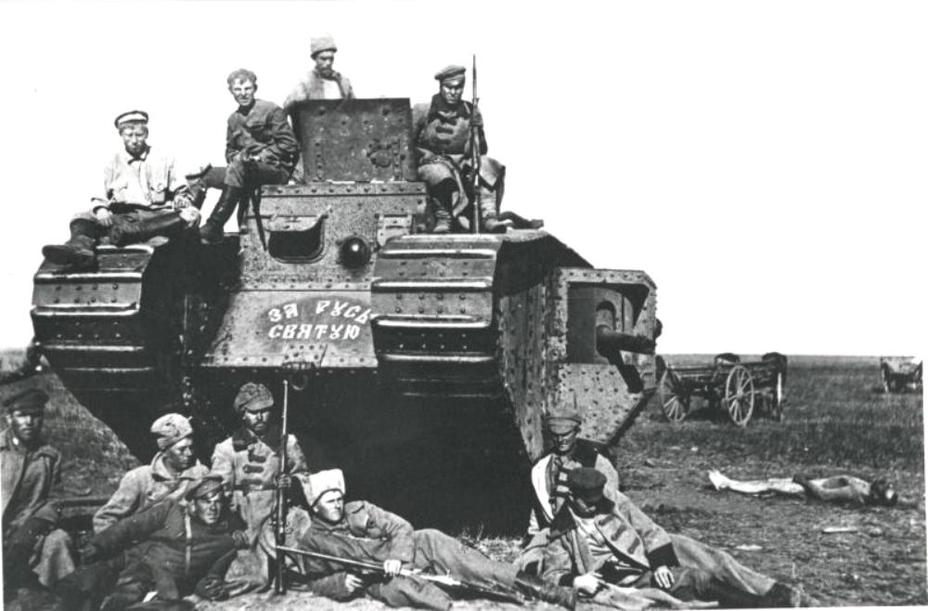
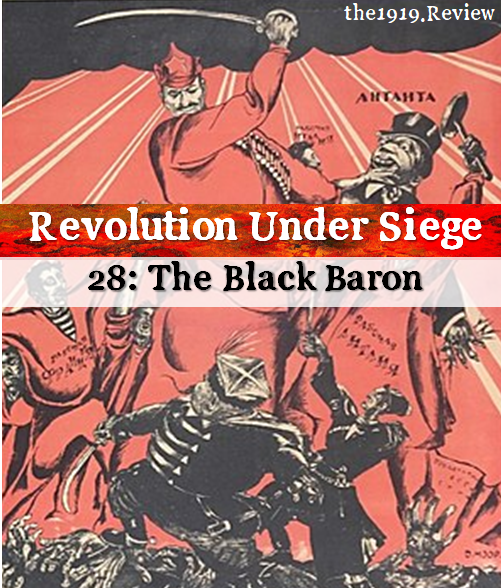

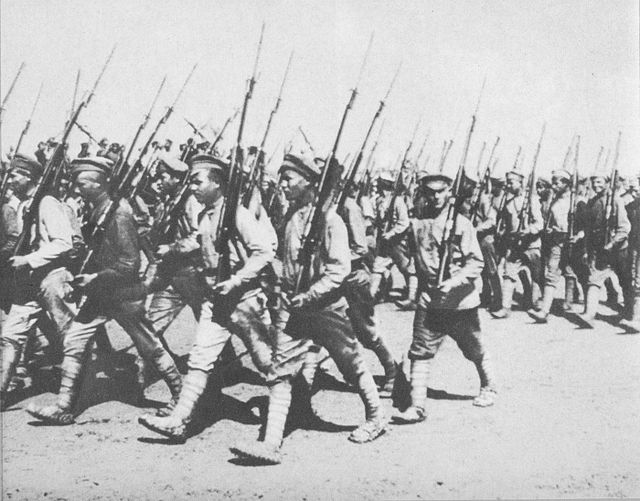
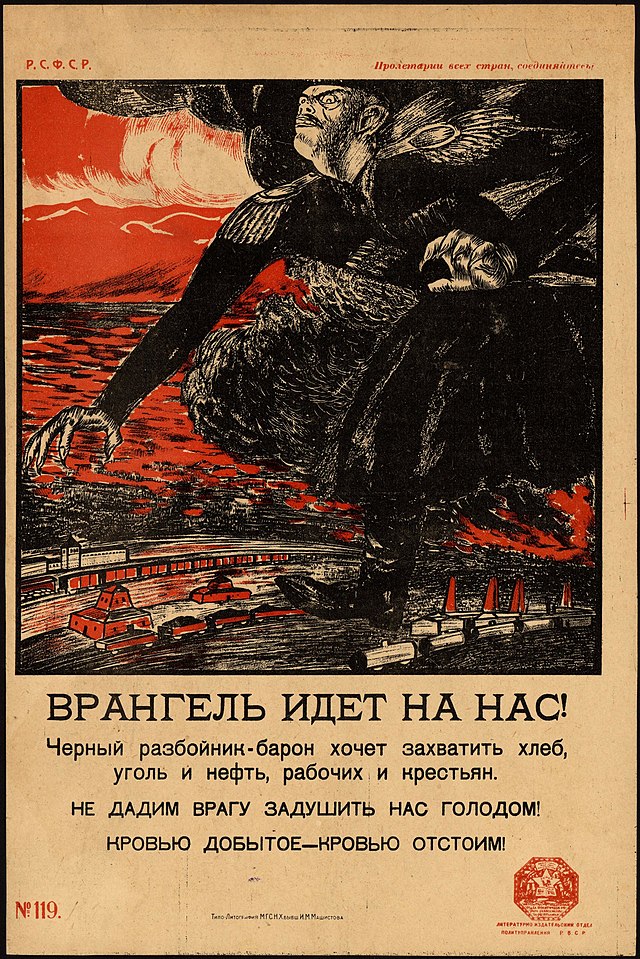
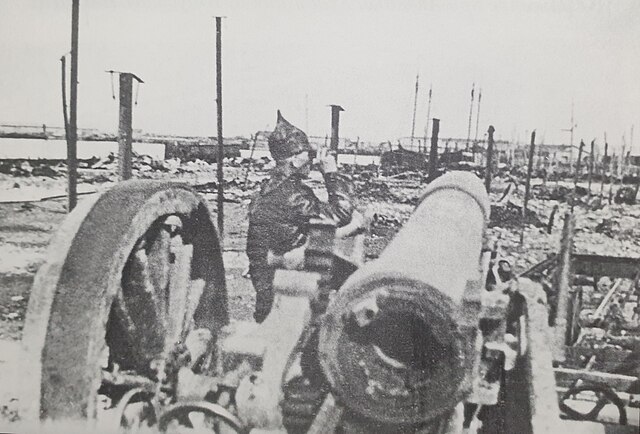

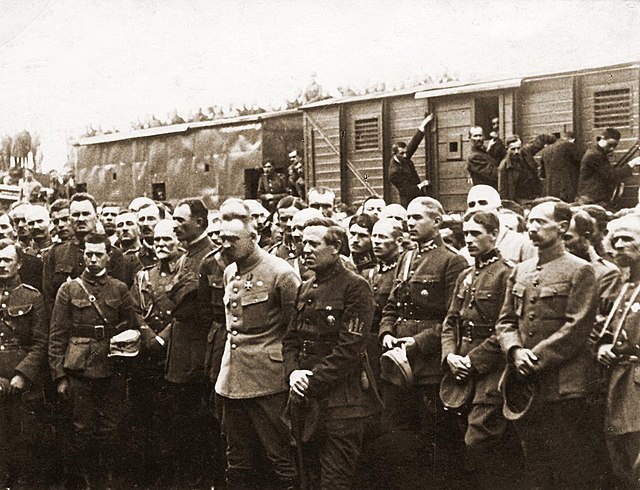
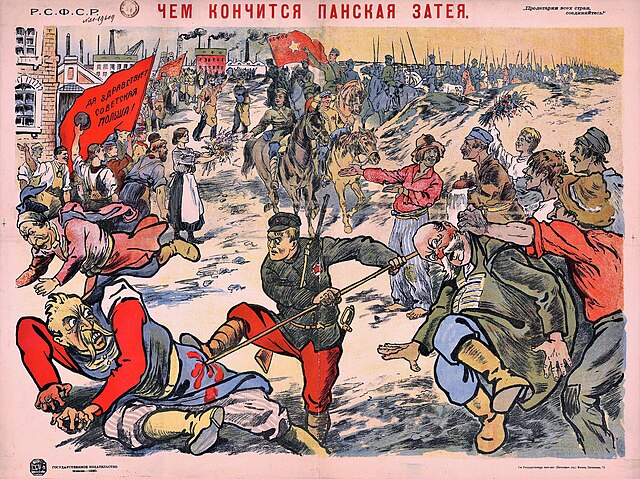
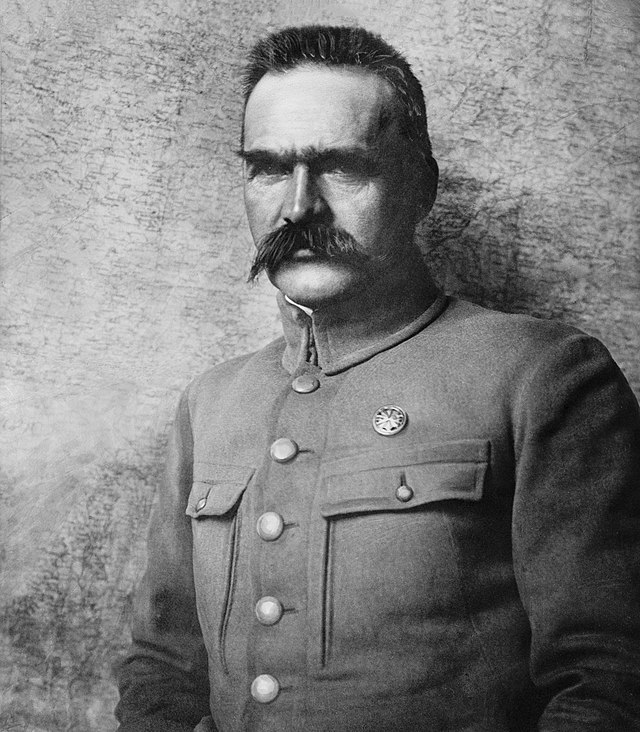

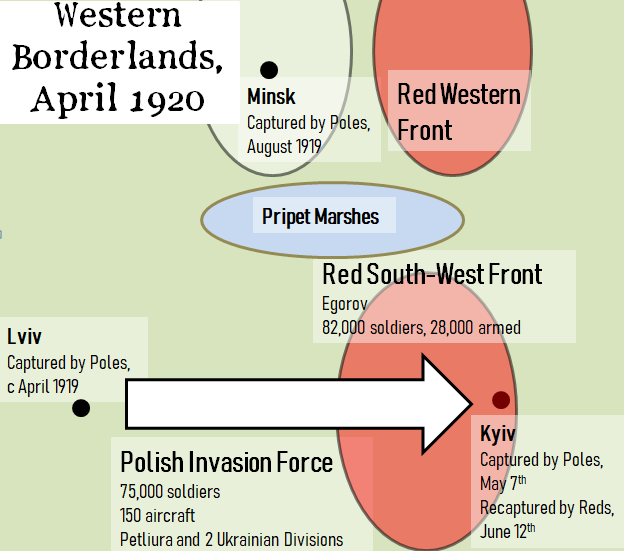
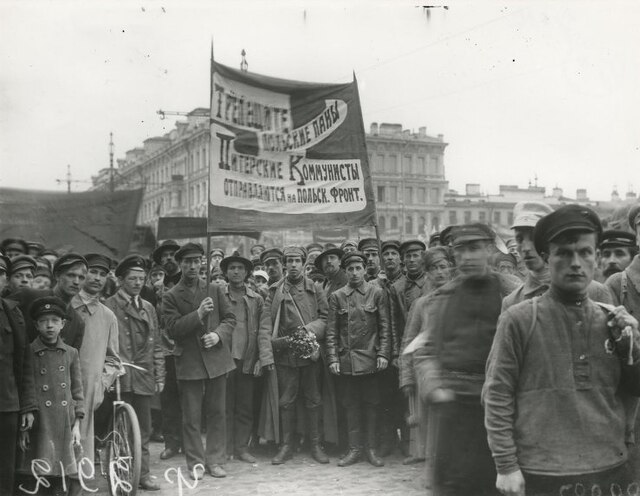

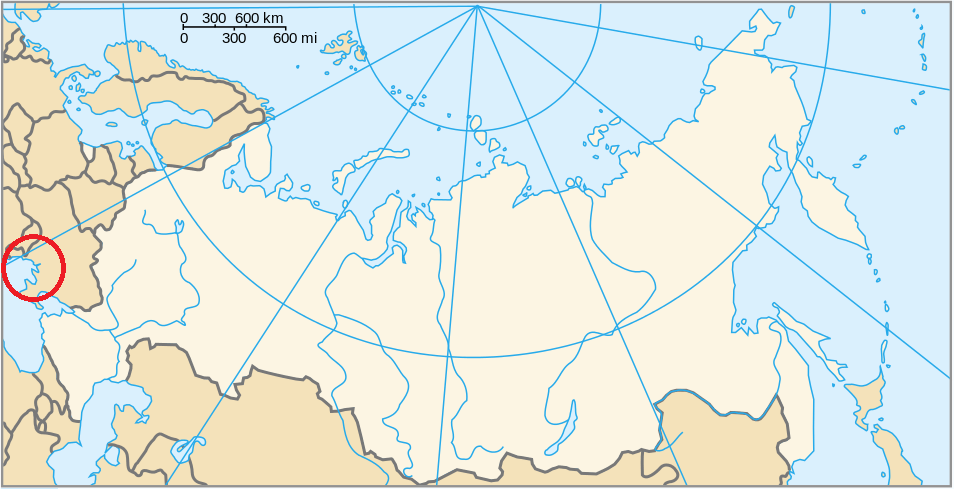
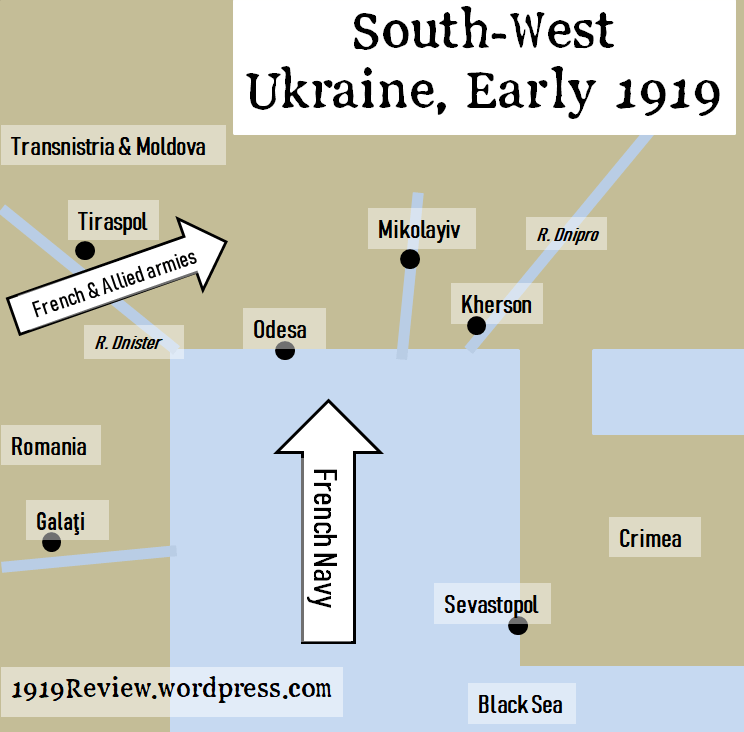
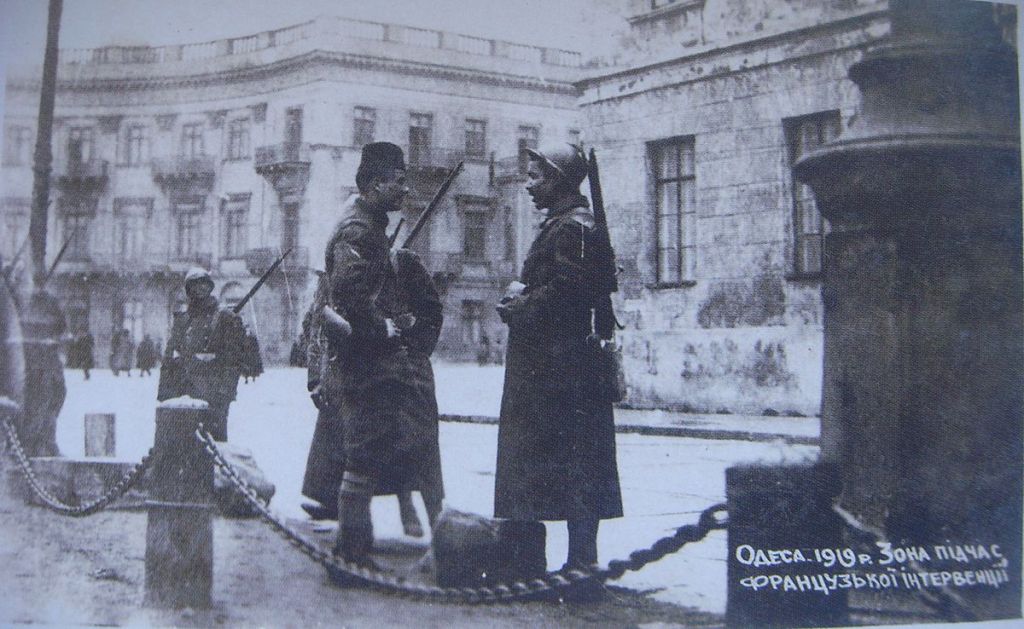
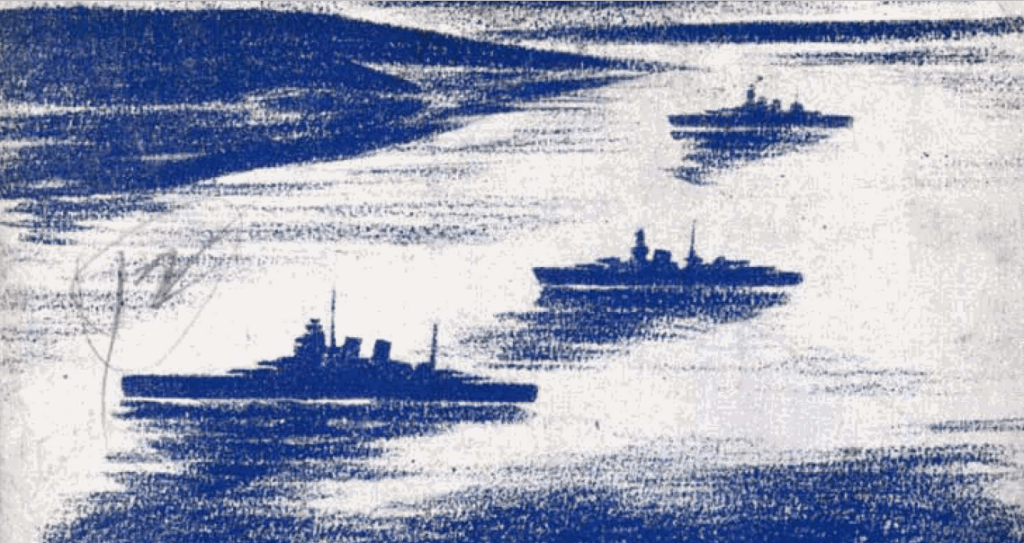
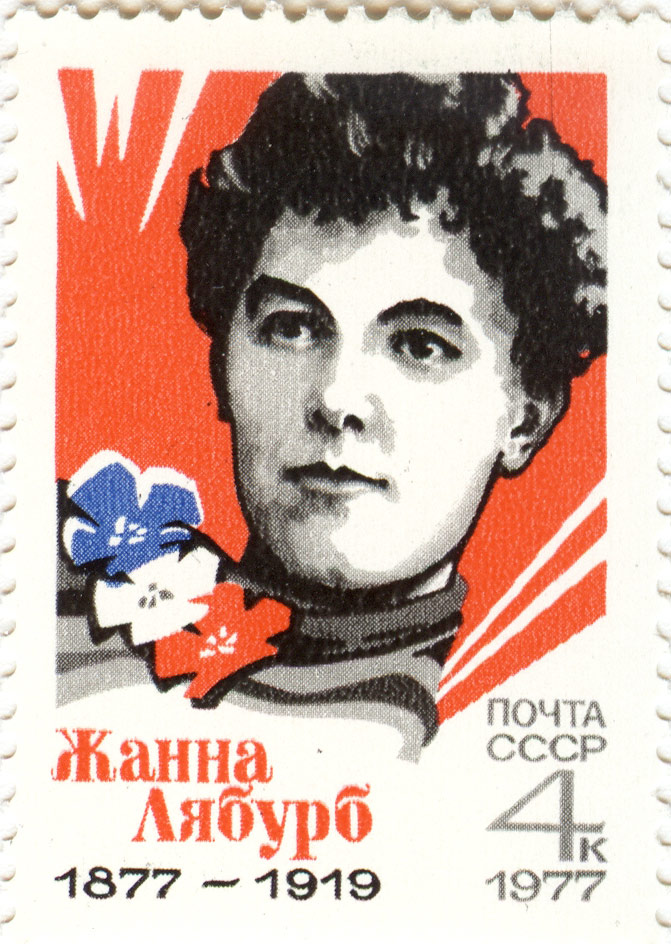
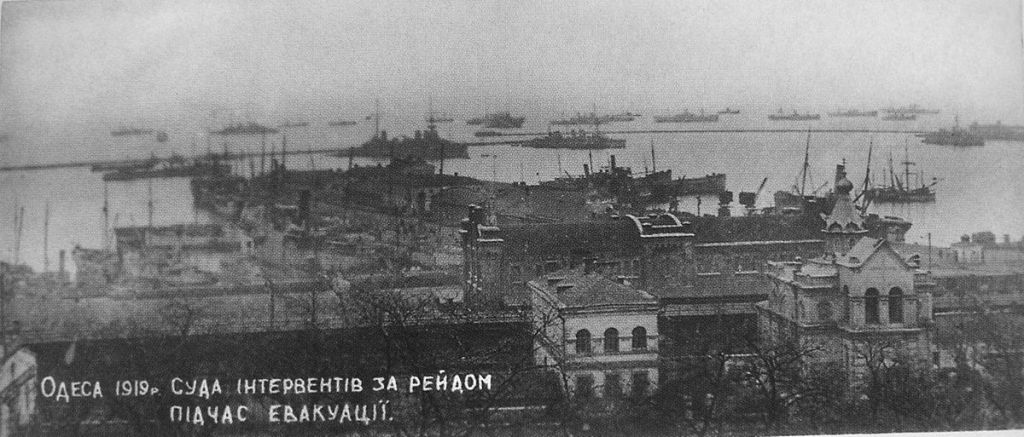

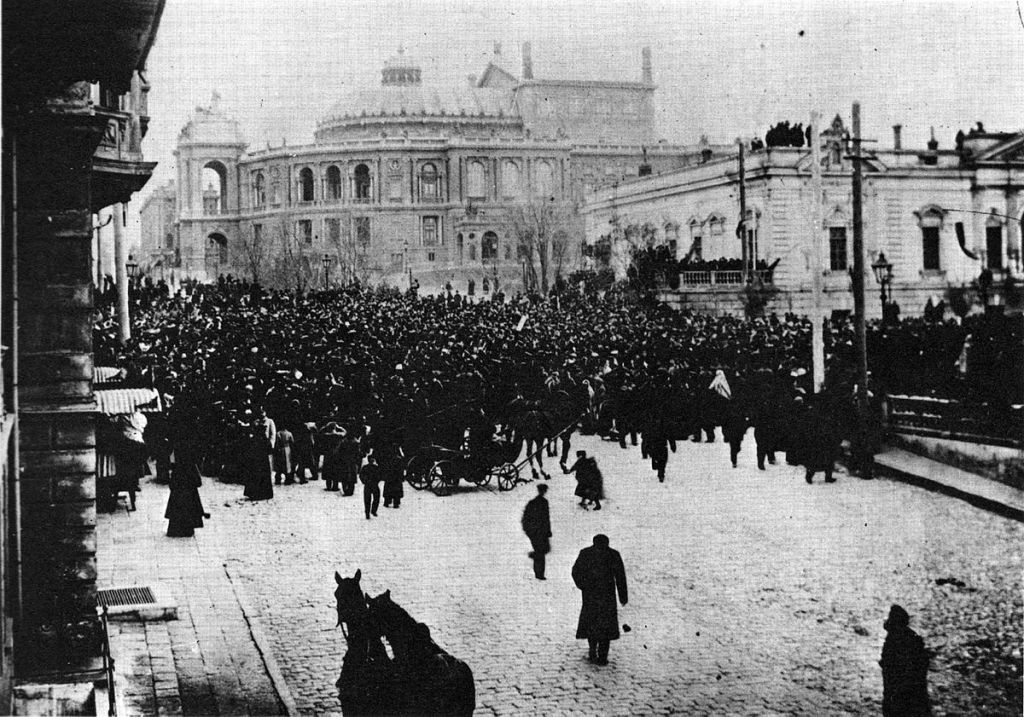
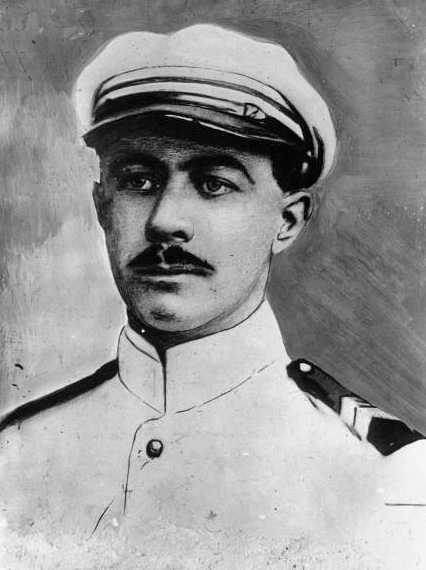
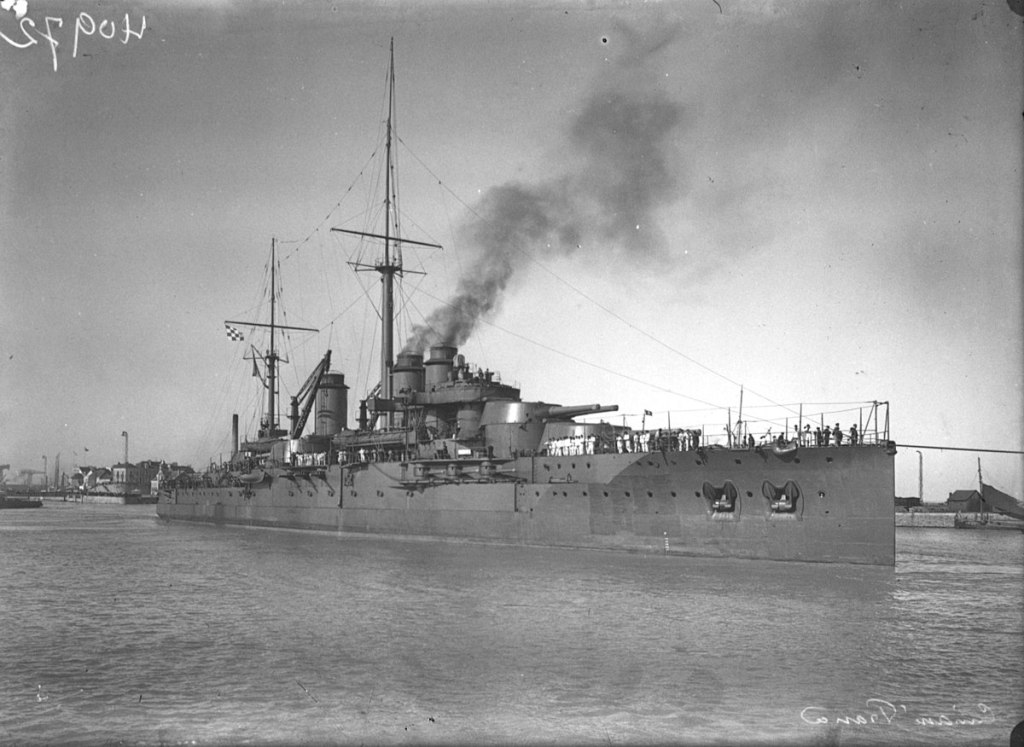


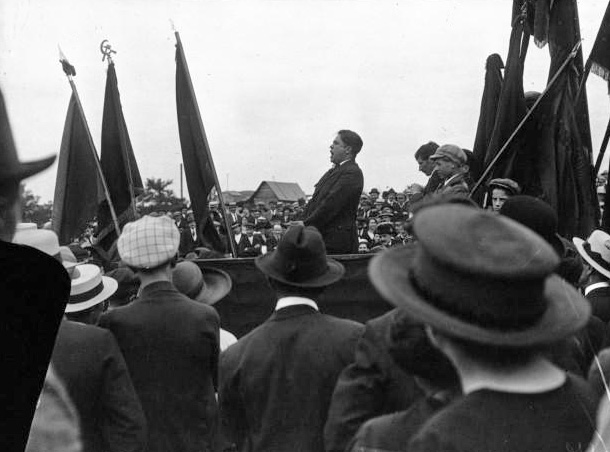


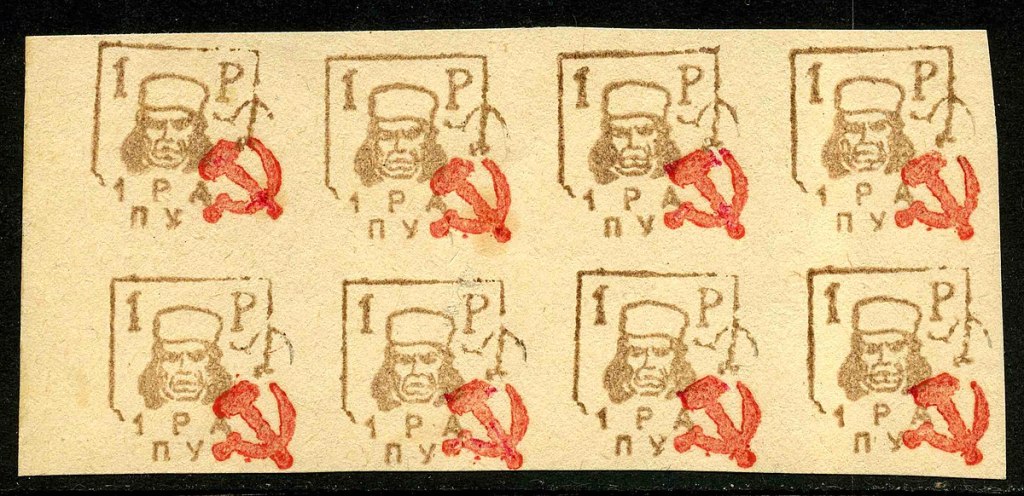
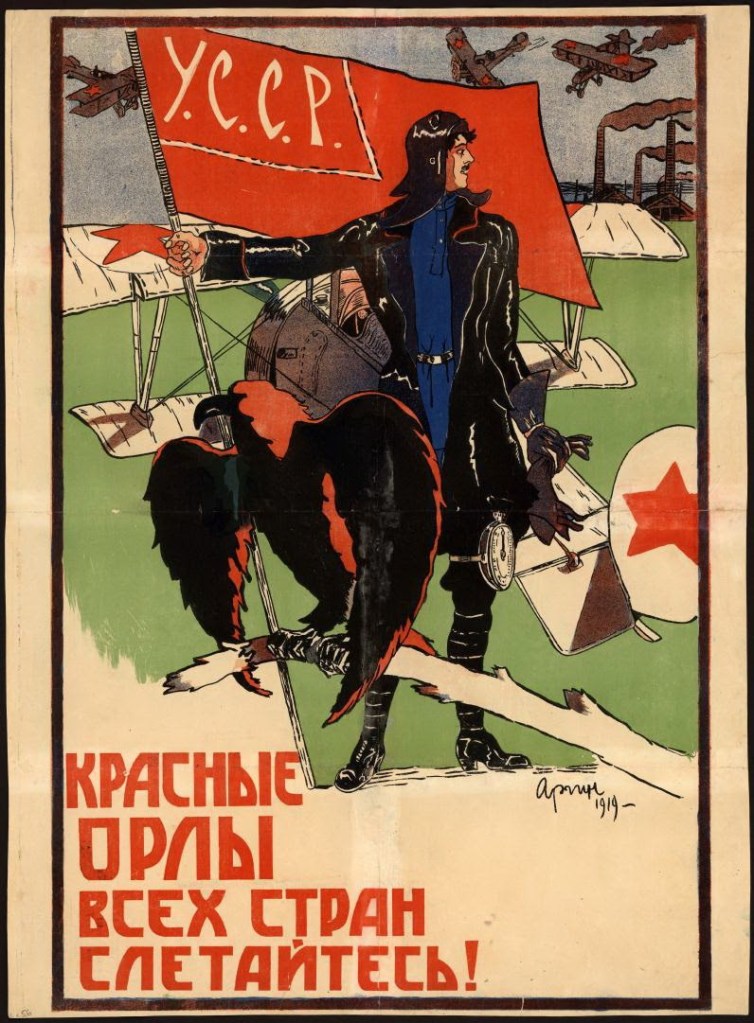
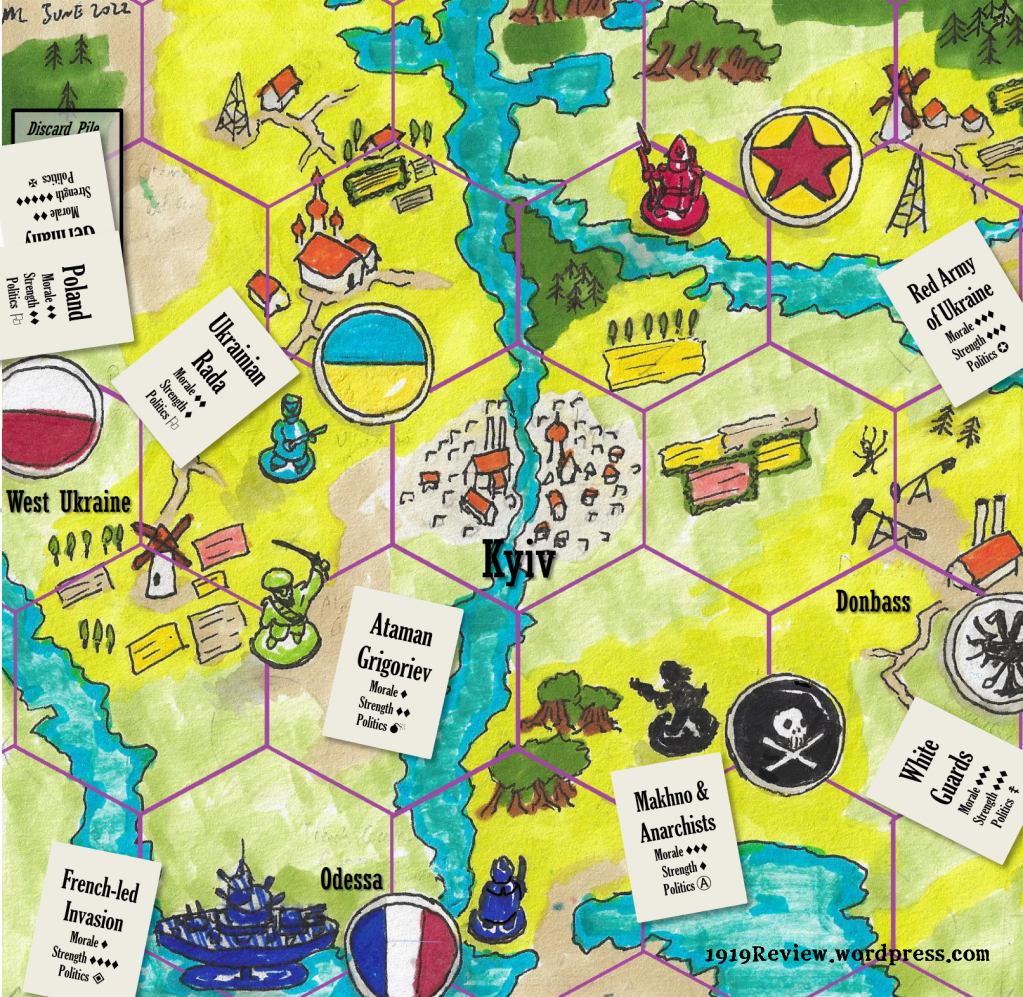
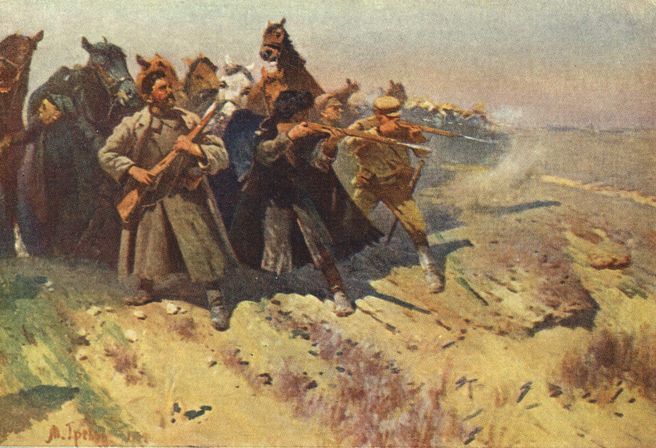
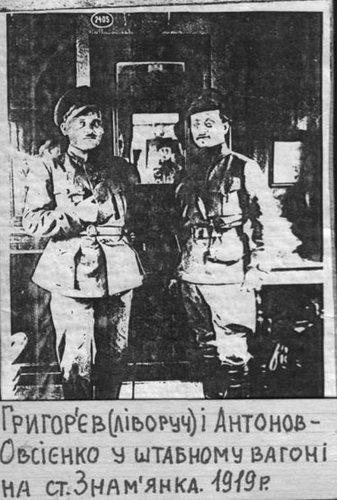
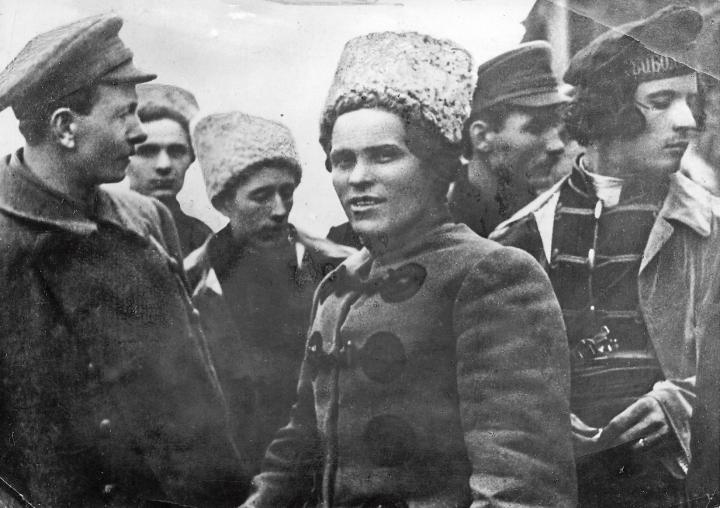

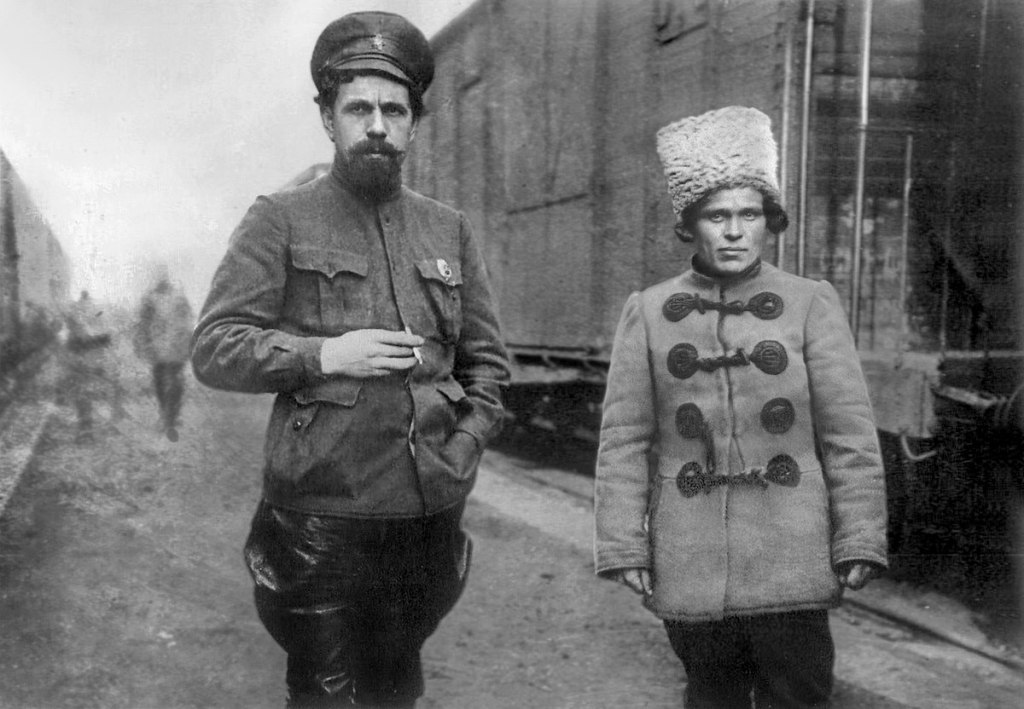
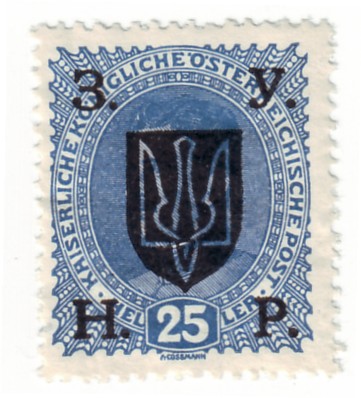
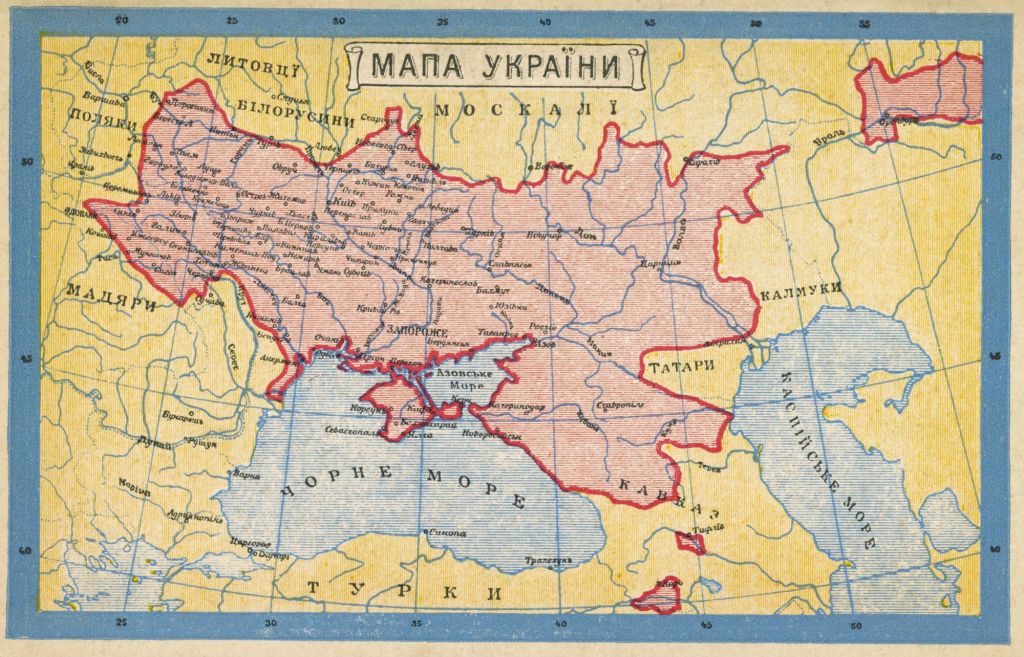
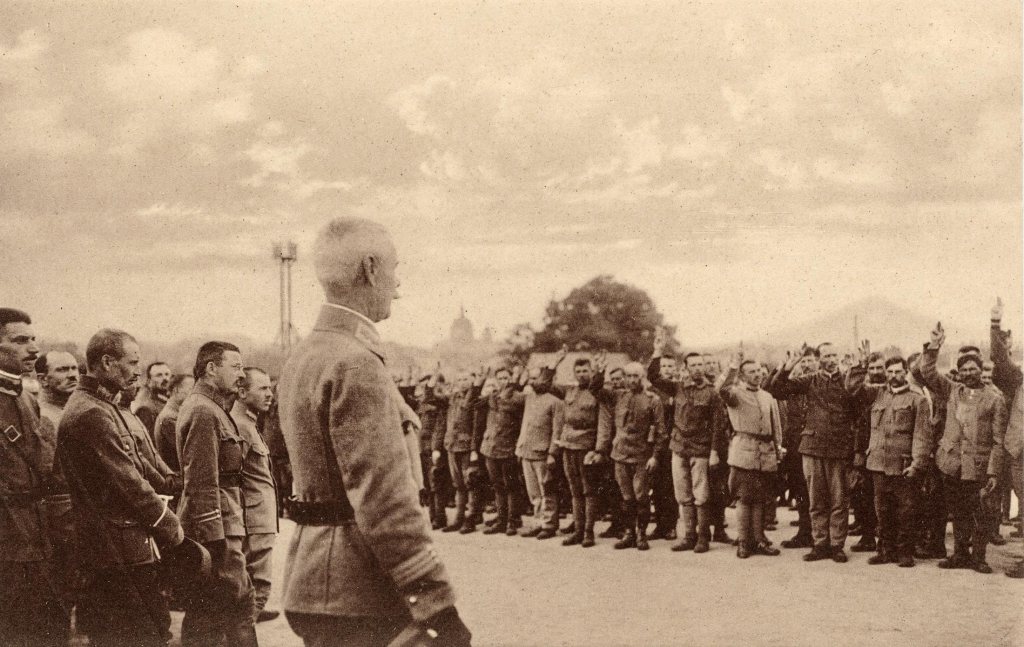
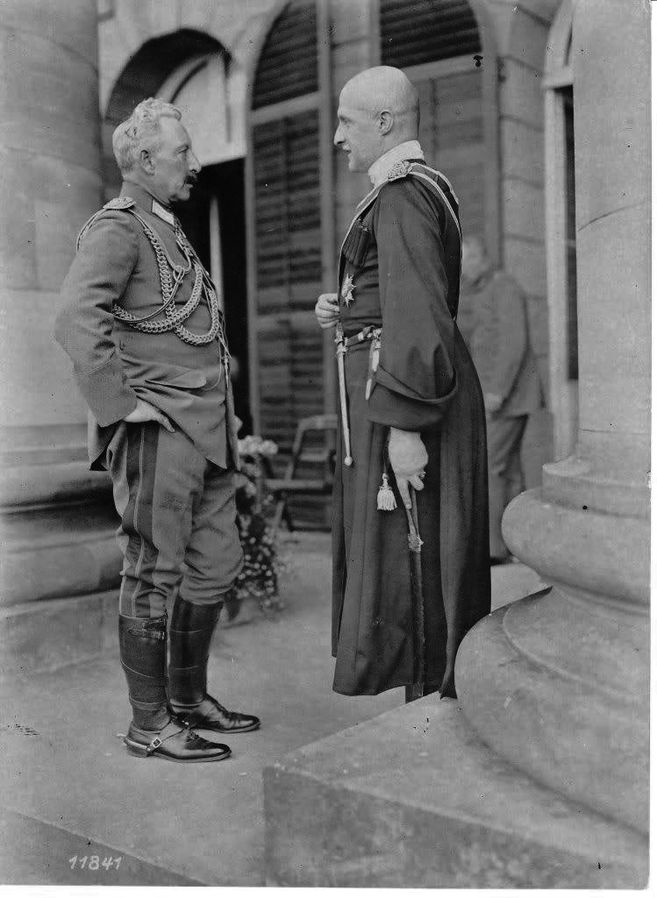
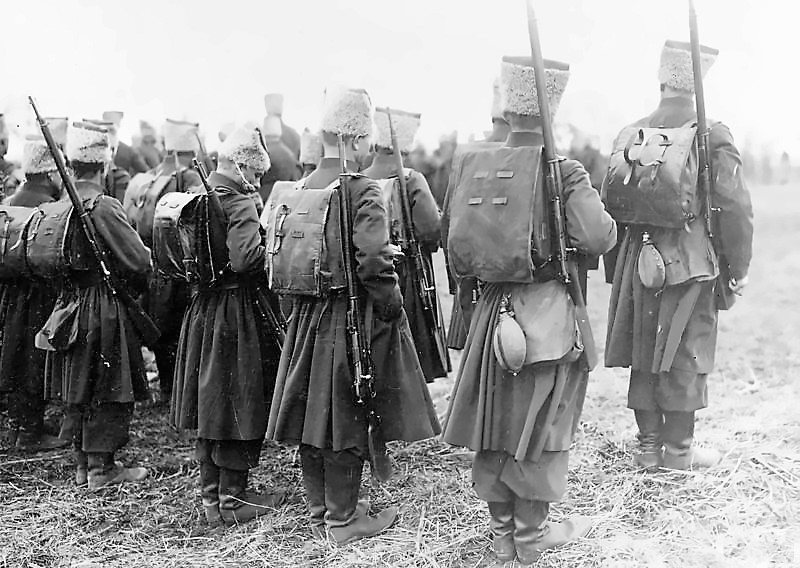
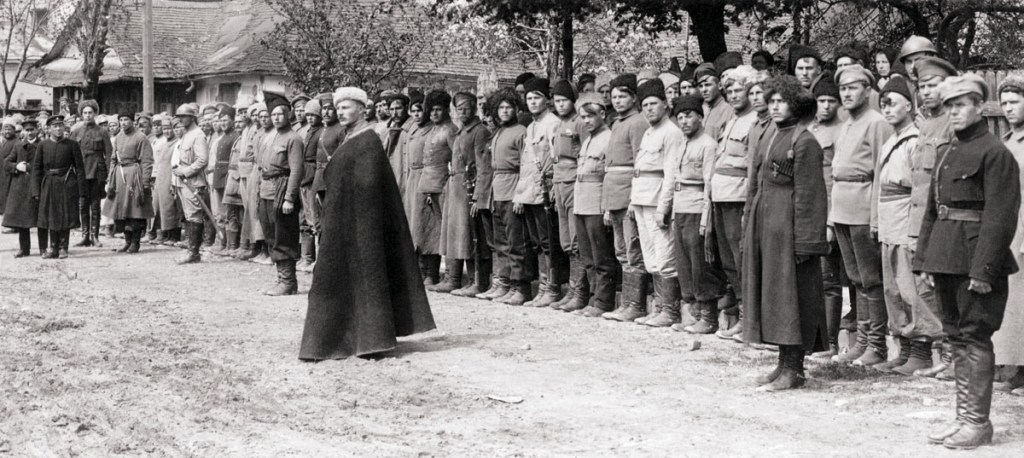

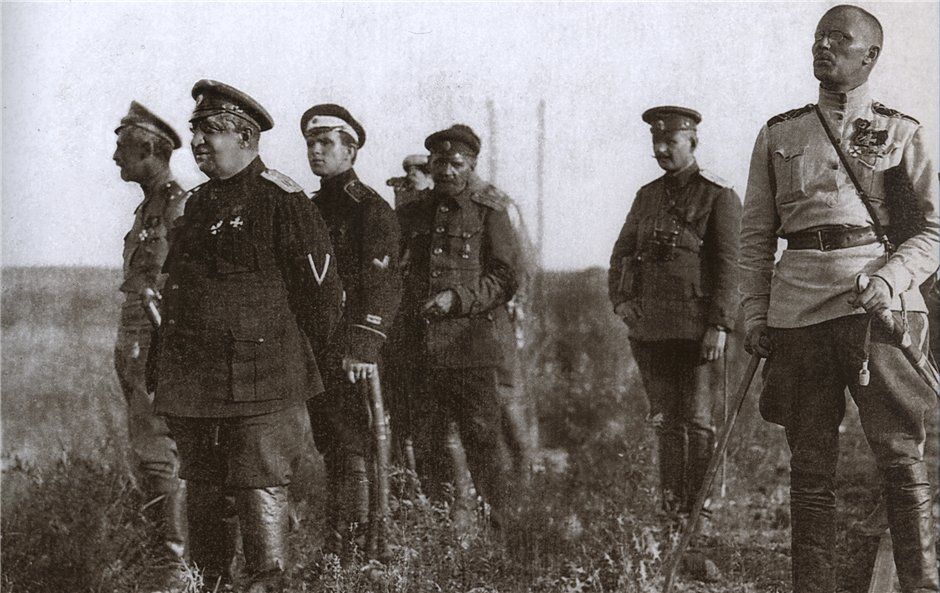
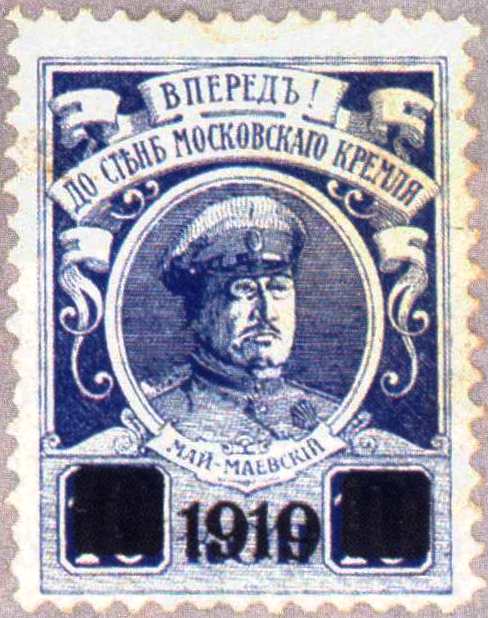
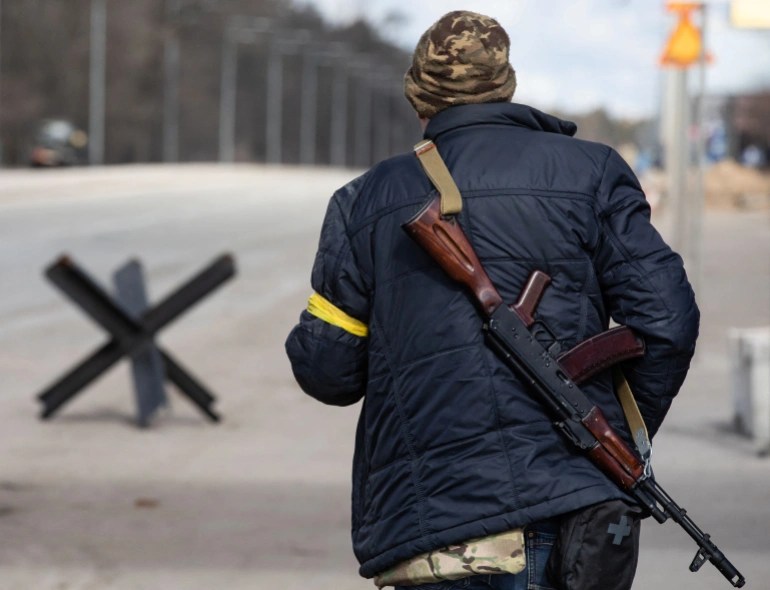
 The 1919 Review