
Since this war started I’ve been paying attention to news reports with a few key questions in my mind. ‘Will the Iranian people rise up in support of the people bombing them?’ was never one of those questions. The first hours of the conflict, when the Iranians fired back forcefully, settled in my mind the question, ‘Will the Iranian government fold?’ They didn’t, and now they won’t. But I’ve been wondering: will Iran reach a point where it can’t launch missiles and drones to significant military effect anymore? The Iranian government would not surrender at that point, so what then? Will the US reach a point where they are not making progress anymore with the bombing, where the costs threaten to pass a tipping point? Would Trump call it off? Or what other means would the US pursue, probably alongside continued bombing? Some of these questions are being answered as we speak as the war transitions to a new phase.
Previous posts in this series: What advantages does Iran have in this war? (US/Israeli War on Iran, Day 4, March 3, 2026) and The Machine War (US/Israeli War on Iran, Day 12 – March 11th 2026)
Battle of Hormuz?
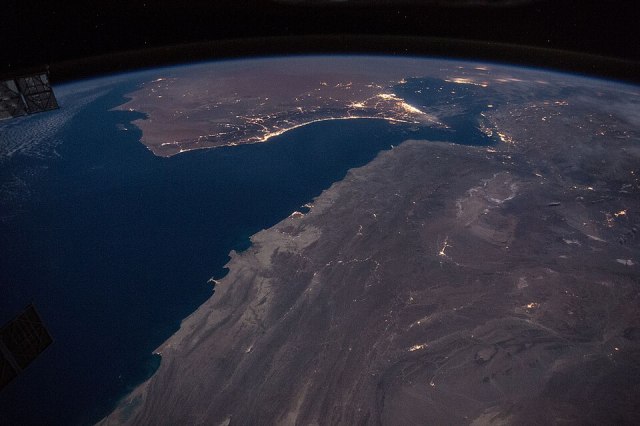
As far as this war goes, the Strait of Hormuz is now the primary focus of the world’s attention. I see potential for a pitched battle to develop in the straits of Hormuz. In other words the US may try to force the straits using naval and air power. To what end? Not only for economic reasons, but for reasons of prestige, power projection etc. Such a battle would be difficult for Iran as they don’t have air superiority. But US vessels would be vulnerable to attacks from the shore and from drones, including naval drones. Could the US force a way through? Most likely yes, but at serious cost. Could it guarantee the safety of civilian shipping for even, say, one week following the end of such a battle? Let alone for years to come? They would have to control the entire shoreline at all times, requiring a massive commitment of resources and personnel. Actually making the strait safe means occupying a decent chunk of Iran. Occupying part of Iran means fighting a ground war.
I wrote the above days ago. Today I read this:
The US operations being contemplated include securing safe passage for oil tankers through the Strait of Hormuz, a mission that would be accomplished primarily through air and naval forces, the sources said.
But securing the strait could also mean deploying US troops to Iran’s shoreline, said four sources, including two US officials. Reuters granted the sources anonymity to speak about military planning.
Jesus Christ.
A ‘Battle of Hormuz’ scenario would draw the US into a painful trap. In a battle like that, Iran could bring its strength to bear much more so than in the current air war, because it would be a question of military power in coastal waters and on the ground. The war would move from air, the favoured element of the US, to water and then to earth. Specifically Iranian soil, where the Iranians would have a massive advantage in terms of numbers, personnel, local support and knowledge. The US would not be able to defeat an Iranian insurgency, and I have my doubts about them even winning a conventional war in this situation.
If the US does not attempt to force the Strait of Hormuz, and just watches as more and more countries cut deals with Iran to get their shipping through, they will be accepting a defeat on the global stage. They may well sit back and try to wait Iran out. I’m not alone in half-expcting this; on March 13th we had Elliot Abrams, former high-ranking diplomat, weighing in with the opinion that Trump will ‘call off’ the war in ‘probably a week or two.’ That does not strike me as implausible. Or, in the circumstances, unwise.
Attempting to force the straits would be a wild thing to do. But launching this war was a wild thing to do. US leaders, given their volatile public profiles, could well go for crazy plans as a way to salvage wounded pride, but only end up committing more and ultimately losing more. They have already blustered their way into a strategic dilemma.
The other depressing fact to remember, though, is that US military power is so huge that these volatile leaders could make every imaginable blunder and still be cushioned from defeat. One fifth of the world’s oil might just have to move through a warzone for a few decades while Iran is torn apart and its people suffer. Stupider things have happened.
Missiles and drones
Another key feature of the last few weeks has been that Iranian projectile and drone launches have fallen to a low but consistent plateau.
I want to draw attention to this article by Muhanad Seloom which makes an argument that the US and Israel are winning the present war. He points out how badly the US/Israeli air campaign has damaged Iran’s capacity:
The weak spot in his argument comes at the end. We can all agree that the bombing campaign has been vast in scale, hitting many thousands of targets in Iran and seriously damaging its military production. But then Seloom asks, ‘What prevents Iran from restarting production? The answer requires a post-conflict framework that does not yet exist in practise.’ I simply don’t see what post-conflict framework, short of military occupation, would prevent the Iranian state from rearming.
The article also acknowledges that communication from the Trump regime has been ‘poor’, a reference to the mishmash of strategic aims that have been declared to the world. I don’t think it’s just communication. The real problem lies in what is being communicated. There was no strategy beyond the assumption that the Iranian government would immediately collapse or surrender. Maybe the Trump administration will move the goalposts and declare victory. But as I’ve said before, the Iranian government is in a position where it can say when the war ends.
The other point is that Iran, even with a diminished capacity, is still launching enough missiles and drones. Just today they hit a power plant in Haifa. The censorship regime prevents us from seeing much. We have to extrapolate from the limited data we can see. The New York Times found 17 damaged US facilities in the region using satellite data. Daily news reports bring us news of mounting horrors in Lebanon and further bombings across Iran, but there are also still regular reports of Iranian missiles striking targets in Israel and across the Gulf.
The US leadership with their sadistic and bombastic speeches are signposting their own untrustworthiness. So I don’t believe their boasts about how much of Iran’s military capabilities they have destroyed. And it seems plausible to me that their air campaign passed a point of diminishing returns a week or two ago. There is a part of the Iranian military capacity which the US cannot hit. Iran is big; there are sites the bombers cannot find or reach. In spite of boasts that they have destroyed all air defences in the country, I would bet there are heavily-defended areas that the Americans are shying away from. Meanwhile a part of what has been destroyed can be restored.
I assumed for a while that Iranian missiles and drones would run out. What’s actually happened is that a massive supply is stuck in a bottleneck of launching capacity. Their machine war has plateaued to a level that is low relative to February 28th. But it’s still going and it’s not going to stop for a long time.
Proxies/Allies
We should consider a scenario where the US, while continuing to bomb Iran, also arms and funds various opposition forces within Iran.
In the first week of the war the question of Kurdish and Baloch insurgents was more to the fore than it is now. With various Iranian Kurdish parties declaring an alliance and with autonomous Kurdish regions now in existence in Iraq and Syria, it’s likely that, at the very least, some Kurdish forces in the northwest of Iran will make some moves. The Balochs in southeast Iran are another national group who might be willing to join the fight. Showing the Iranian leaders’ alarm at such a prospect, they carried out drone strikes in the early days of the war against Kurdish-held outposts.
On March 5th interesting remarks from a Baloch leader were quoted in The Guardian: “I think [everyone] who is against the brutal cleric regime would accept support from the US but it should be a consistent support that resolves the issues of minorities – unlike, for example, when the US gave support for Syrian Kurds and then betrayed Kurds.”
The US lacks moral authority and trust due to its (bipartisan) fickle treatment of proxies in the past. Of course, a tenet of Trumpism seems to be that a great empire doesn’t need trust or moral authority. As a result, these groups within Iran are reluctant to fight in spite of their aspiration for independence. Hard to blame them! Joining the US and Israel wholeheartedly would be very unwise, given Trump could hang them out to dry “probably in a week or two.” There is reluctance on the US side too, because Erdogan does not like the sight of Kurdish people with guns. The same goes for Balochs and Pakistan.
Also, to what end? The purpose of promoting insurgencies would be to distract Iranian ground forces. But unless the US actually tries to occupy the Iranian coast, there is nothing to distract them from. It’s a waste.
The developments toward a regional war, especially in Lebanon where the civilian death toll is now approaching that of Iran, and the continuing ethnic cleansing in the West Bank and genocide in Gaza, deserve more attention than I have been able to give them in this post. So there we have it for Day 20 of the war, as I see it: potential for a pitched battle around the straits, Iranian barrages continuing at the same rate while the far greater US/Israeli bombardment sees diminishing returns, and mixed signals re the development of insurgent movements on the borders of Iran.
Want to read more? Browse my full archive at the Home Page



 The 1919 Review