
The Battle of Stalingrad was the most decisive and bloody confrontation in the Second World War. So the question which this book addresses, ‘How the Red Army Triumphed’ at Stalingrad, is important.
Many in the English-speaking world would answer that question along the following lines: that Russian officers threw masses of unarmed conscripts at enemy positions; that commissars trained machine-guns on the backs of their own soldiers and mowed down anyone who tried to retreat; in short, that this victory was gained primarily by terror. Michael K Jones provides a very different answer – one which is not only much more plausible but even inspiring.
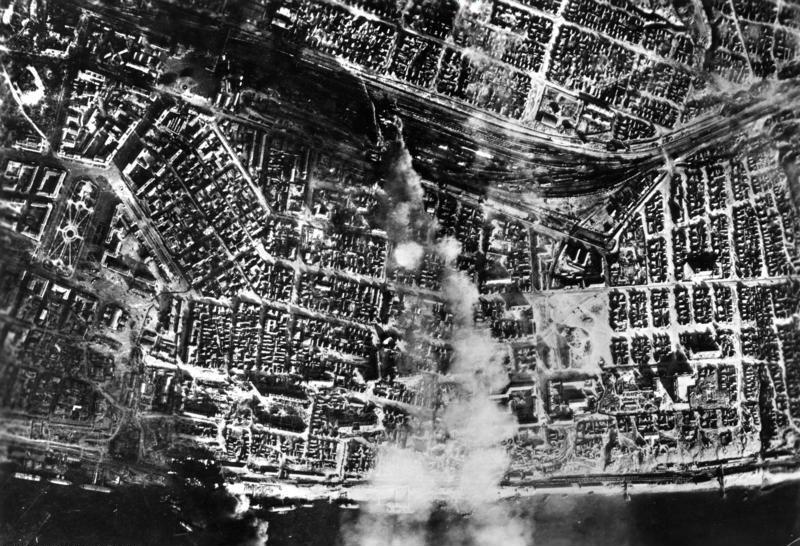
He focuses on the 62nd Army, the force which held the city itself. This is a narrower scope than that of, for example, Antony Beevor’s Stalingrad which describes the whole campaign, but I found this focus made it compelling.
No land beyond the Volga
One of the key insights is that on at least three occasions the outcome of the battle really hung by a thread. Only truly superhuman resistance allowed the Soviets to hold out. For example the Germans, after conquering this or that area of the city, would be unable to consolidate their gains because their new territory would be riddled with surviving Red Army soldiers carrying on the fight in tiny groups, sometimes literally two or three holding out from a house or basement or factory. They fought on to the death. There was no commissar holding a gun to their heads; they were cut off from their own army. They were motivated by determination to resist, summed up in the slogan ‘For us there is no land beyond the Volga.’
This kind of unimaginable self-sacrifice dovetailed with sound tactics. The cautious German commander Von Paulus did not allow his forces to advance until all resistance was mopped up. The heroism of those small groups which held out took full advantage of this approach. In the single hour or day gained by a knot of doomed fighters battling on to the end, fresh forces or supplies could cross the river Volga and arrive in the city.
Jones explores many other examples of clever tactical improvisation – such as the decision to keep as close to the enemy as possible to frustrate their artillery – and of the self-sacrifice which made it possible. The nuts and bolts of how the city was defended – storm groups, the ‘sniperism’ movement, the use of fortified bulwarks such as ‘Pavlov’s House’ – all emerge in this narrative as a brilliant union of morale and tactics. Just as the small groups who held up the Nazi advance for an hour or a day could buy time for reinforcements, ultimately the resistance of the 62nd Army in the city bought time for Operation Uranus, a Soviet counter-offensive which surrounded Von Paulus’ army and destroyed it.
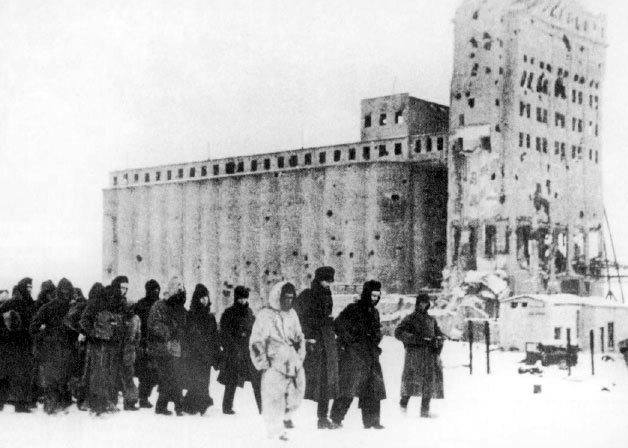
Not one step backward
I recently read Beevor’s book Stalingrad in which he points out the horrifying fact that the Red Army shot 13,000 of its own soldiers during the battle. Jones does not dispute this number, but he challenges the way it’s framed (one of several digs at Beevor). 13,000 were executed across the whole Stalingrad front – which included not just the 62nd Army in the city, but a whole number of armies along the trench lines to the north and south of the city. In the city itself, around 1,000 were shot by their own side. We should put these numbers into perspective: 612 soldiers charged with desertion were shot by the Red Army in the second half of 1919 during the Russian Civil War (out of a total of 1.4 million desertions). The British Army in the First World War shot 278 out of 2,093 charged with desertion (Trudell, 2000). So 1,000 executed in the city and 13,000 across the whole front is still a really shocking number. Only someone immune to quantitative evidence would insist that there’s no difference between 1,000 and 13,000. But what we see in a movie like Enemy at the Gates is pure fiction: there were critical shortages at various times, but there was no practice of ‘every second man gets a rifle.’ There were no machine-guns trained from behind on troops without weapons advancing on entrenched positions. Even allowing for exaggeration, with such an approach the Red Army simply could not have won.

I don’t doubt that there were terrible injustices among the thousand shot by their own side. But Jones forces us to rethink slightly by telling us the story of one of those thousand: an officer who faked an injury and tried to bully his way to the front of the queue for a hospital boat. A nurse shot him dead on the spot.
The Red Army soldiers knew they were fighting the good fight. They were not like Americans in Vietnam or Iraq, wondering what they hell they were doing there. The German armed forces were not just waging a war but carrying out genocide against Jewish and Slavic people. Meanwhile the Red Army had been retreating for over a year, surrendering thousands of miles and millions of human lives to the enemy. The famous slogan ‘Not a step backwards’ was not a threat that anyone who literally stepped back would be shot (obviously the Red Army could not have won without retreats) – it was a signal that the period of general retreat was over. This decision made Stalingrad a hostage to fortune: if the city fell, the blow to morale would be terrible. But it also gave the soldier what they wanted: an opportunity to stand and fight, knowing that the whole weight of the military apparatus was behind them, knowing that this was it.
The disregard for human life of the Stalinist regime can be seen in, to give just one example, the Great Terror of the late 1930s. But the key insight I got from How the Red Army Triumphed was that the 1937 formula of paranoia, top-down rule and mass terror was temporarily thrown out the window at Stalingrad. The battle was won through Stalinism blunting its worst excesses and allowing the troops on the ground to practise initiative and an egalitarian ethos. Thus in the 45th Division ‘the commander ate with his men, swapped jokes and even chopped wood with them. “All of us were on the same level,” remembered Mark Slavin. “The commanders mingled with the soldiers. Everyone counted.”’ (p 239) Jones has a particular soft spot for General Vasily Chuikov, the commander of the 62nd Army, who emerges as a flawed but brilliant hero of the narrative.

The ‘old’ Red Army and the new
Jones conveys these points well, but he has blind spots.
The Soviet soldier knew that they were defending the gains of the October Revolution, of which Stalingrad itself was a symbol: the city had grown nearly tenfold in population under the social and economic transformations of the 1920s and 1930s. While Vasily Grossman’s novel Life and Fate shows how the repressed traumas of forced collectivization and the Great Terror lay just beneath the surface of wartime consciousness, the predecessor of Life and Fate, simply titled Stalingrad and recently published in English for the first time, shows with equal sincerity how the positive aspects of the revolution motivated the fight. The Stalinist political regime had made the Nazi-Soviet Pact and massacred the generals, thus walking right into the terrible disasters of 1941-2; of itself it did not inspire confidence. But the revolutionary social and economic regime had transformed tens of millions of lives for the better. It was worth defending, worth dying for.
But for Jones, ‘communism’ means simply rhetoric and hypocrisy. For him, it can’t be something genuine and inspiring. Instead he talks about how religion and Russian nationalism inspired the soldiers. Talk about missing the point!
Jones describes how an egalitarian ethos emerged in the 62nd Army during the battle. But this was a revival of an older phenomenon. Erich Wollenberg’s The Red Army shows that an ethos of initiative, equality and internationalism was key to the Red Army in the Civil War and the NEP period. While respecting their military-technical expertise, the new Red Army abolished all the pomp and prestige associated with officers and reduced them to ‘commanders’ or ‘specialists.’
During forced collectivisation and the famine that followed, the morale of the Red Army was utterly destroyed. After this, officers’ ranks and privileges were restored. National chauvinism was made the new basis of morale. Commissars were first abolished, then brought back in the form of Stalinist enforcers.
Chuikov (the general of the 62nd Army whom Jones admires) was in the Red Guards in 1918 and made his military reputation during the Civil War. He would have known the ‘old’ Red Army very well. I imagine that to him it would have been a relief to return to it.

Based on what I read in How the Red Army Triumphed, it seems to me that like in Madrid six years earlier, at Stalingrad the communists had to make revolutionary concessions to the masses to inspire the will to fight. Instead of really understanding this development, Jones describes some features of it but then turns around and actually praises the way Stalinism championed national chauvinism and inequality between the ranks.
How the Steel was Tempered
The most glaring example of this blind spot in the book unfortunately comes in one of the most moving incidents.
Two nurses, Sima Merzelyakova and Olga Vlaseva, lived through the hell of the battle and sacrificed their lives to rescue a wounded officer. ‘German machine-gunners opened fire. They died sheltering him with their bodies.’ (p 240)
Later a novel was found in the kitbag of the late Sima: How the Steel was Tempered by Nikolai Ostrovsky (Jones gives an alternative translation of the tile: How Steel is Formed). The novel was one of the most popular of its time. It is about a Red Army soldier named Korchagin and his experiences of the Revolution and Civil War, and afterwards as he copes with an injury. It is an inspiring story of overcoming the most terrible conditions in the struggle for revolution and socialism. The most famous quote is:
The dearest possession of any person is life. It is given only once, and it must be lived so as to feel no torturing regrets for wasted years, never know the burning shame of a mean and petty past; so live that, dying you had a right to say: all my life, all my strength were given to the finest cause in all the world—the fight for the Liberation of Humankind.
The two nurses had underlined such key passages, passing the book back and forth between them. At the end Sima had written:
Olga and I have read this book through to the very last page. Now we feel that there are three of us – us two and Korchagin, who is helping us through these difficult times. We have decided to behave like Korchagin – and we’ll make it.
After the nurses’ deaths, their copy of How the Steel was Tempered was passed from soldier to soldier, treasured, autographed with inspiring slogans, and in the end carried by the Red Army all the way to Berlin.
This is such a moving moment in Jones’ narrative. It is a real shame that he goes out of his way to distort the true meaning of it. Jones does not mention that How the Steel was Tempered had anything to do with the Revolution, the Civil War or the struggle for socialism; he gives a bizarrely distorted summary of the book, telling us little more than that Korchagin was a construction worker who had an injury. The theme: in difficult conditions, ‘one had to draw sustenance from a higher cause. Korchagin’s was a deeply felt love for the motherland’! In other words Jones goes a long distance out of his way to take the politics out of the novel. Why does he do this? My guess is, to avoid admitting that heroes like Sima Merzelyakova and Olga Vlaseva were most likely motivated by a genuine belief in communism. This does a disservice to them.

How the Red Army Triumphed is a study of the different factors influencing the morale of the 62nd Army – so this dismissal of the role of communism is a real problem. The Russian Army in World War One had no shortage of nationalist and religious propaganda, and no shortage of tyrannical officers beating and shooting the rank-and-file. So why did it collapse in an avalanche of mutiny and desertion, while the Red Army advanced over half of Europe?
I don’t think this distortion is due simply to anti-communism.The book draws heavily on the testimony of survivors and it appears from what the author tells us that the survivors themselves are in these latter days more inclined to talk about nationalism and religion than communism. They lived a whole lifetime under a stifling and oppressive political regime which used the genuine traditions of the revolution like a religious dogma. They experienced economic stagnation in the 1970s and 80s, and the disastrous restoration of capitalism in the 90s. All in all they received a poor reward for saving the world from fascism. Stalingrad became part of official dogma, and they are keen to get beyond the propaganda and tell a more authentic story. This is throwing the baby out with the bathwater. If in his general attitude Jones took his cues from the survivors themselves, that’s understandable. But the distortion of the incident with the novel is really bad and not justifiable.
Even with this significant defect, How the Red Army Triumphed gives a gripping and down-to-earth account of the defence of Stalingrad. It convinced me that the victory was one of morale, initiative and innovation, not of terror.

 The 1919 Review