In Pictures: Welcome to the Interslop

Introducing a wailing Youtube therapist, my AI girlfriend and the serious social problem of bus theft.

People have been talking about this for a while but 2025 has been the first year that it really sank in for me: computers and the internet are getting worse, and you…

Hang on. What’s this now? I can’t see the words I’m typing. There’s a big charcoal-coloured box blocking my word processor.
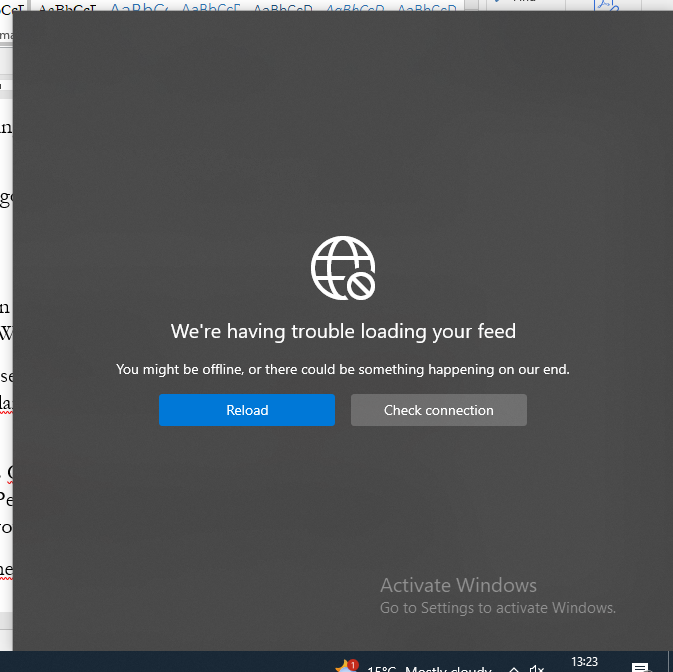
I know I’m offline. I don’t want to see ‘my feed’, I want to see the words I’m writing.

It won’t go away. Does it go away when I click? No. Do I just have to wait?

I’ve figured out that mashing my keyboard keys makes it go away. But the point is, I don’t want to see ‘my feed’ when I’m trying to write. It’s very distra…

UFO CRASH-LANDS IN POLISH FIELD

KATE MIDDLETON’S HAIR IS A DIFFERENT COLOUR

BRUCE WILLIS HAS DEMENTIA

I’M 42 AND ONLY ATTRACTED TO MARRIED MEN

7 SIGNS THAT SOMEBODY LIKES YOU ACCORDING TO PSYCHOLOGIST

FLIGHT ATTENDANT WARNS PASSENGERS: THIS IS THE SEAT YOU SHOULD NEVER SIT IN

10 ACTORS WHO HAVE AGED TERRIBLY

6 THINGS YOU HAVE TO KNOW BEFORE YOU BUY SOLAR PANELS IN IRELAND

THESE 5 FOODS WILL KILL YOU INSTANTLY

Oh look, I’m online now. And ‘my feed’ has popped up again. Ugh. It’s a load of clickbait… Wait. Bruce Willis? No, poor guy…

Shit. What was I going to write again?

I guess I was going to talk about how the internet is shit, how we are descending further every day into the Interslop. And I was going to illustrate it with some screenshots.
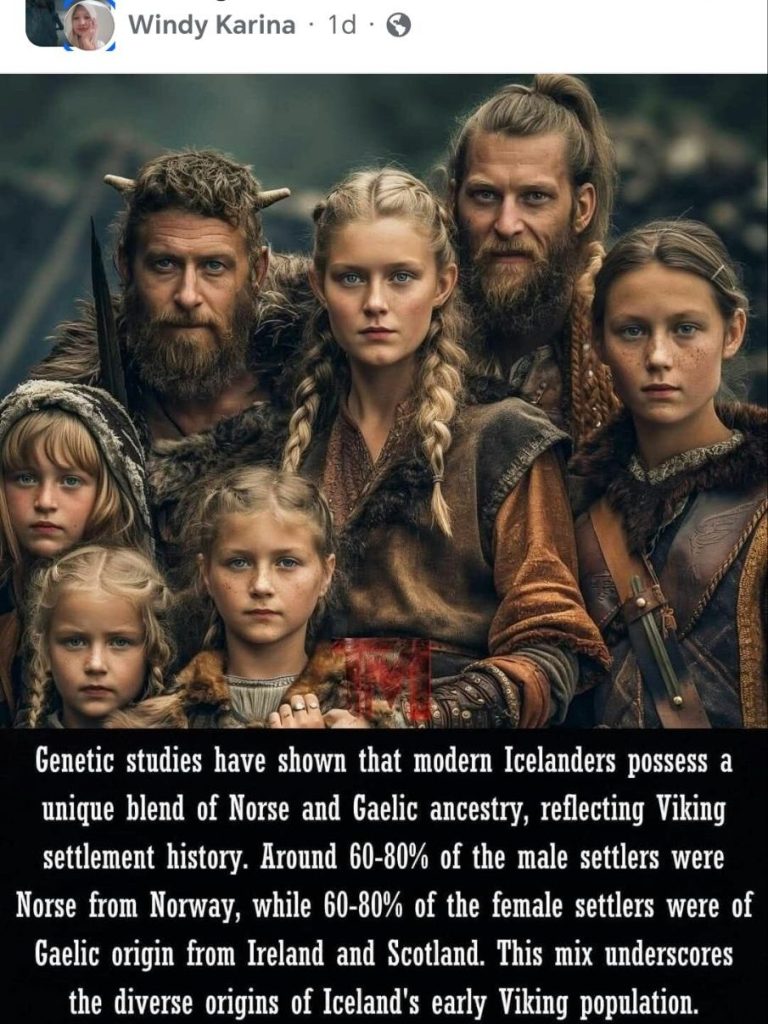
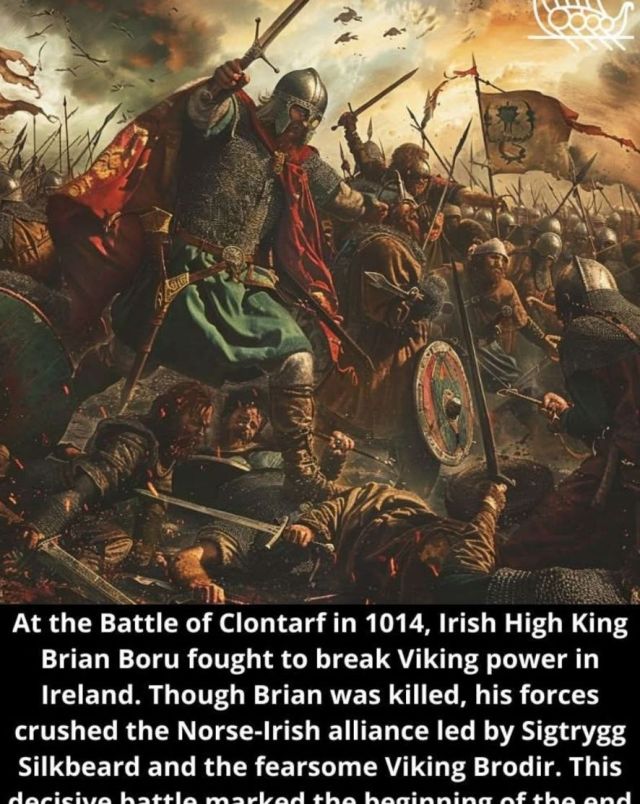
Like this one. More AI slop from ‘history’ pages. Yes, that man has horns. And the text whitewashes what was probably mass sexual slavery. And AI layers this earth-toned grit all over everything that just makes it all the more creepy and uncanny.

But it’s not just AI. And not everything has gritty dirt tones. Now when I want to open a PDF document on my phone, I have to sit through a video ad that usually looks something like this:

Jesus. Hasn’t the internet gotten really tacky? Just vulgar. And when it’s not tacky, it’s weird.

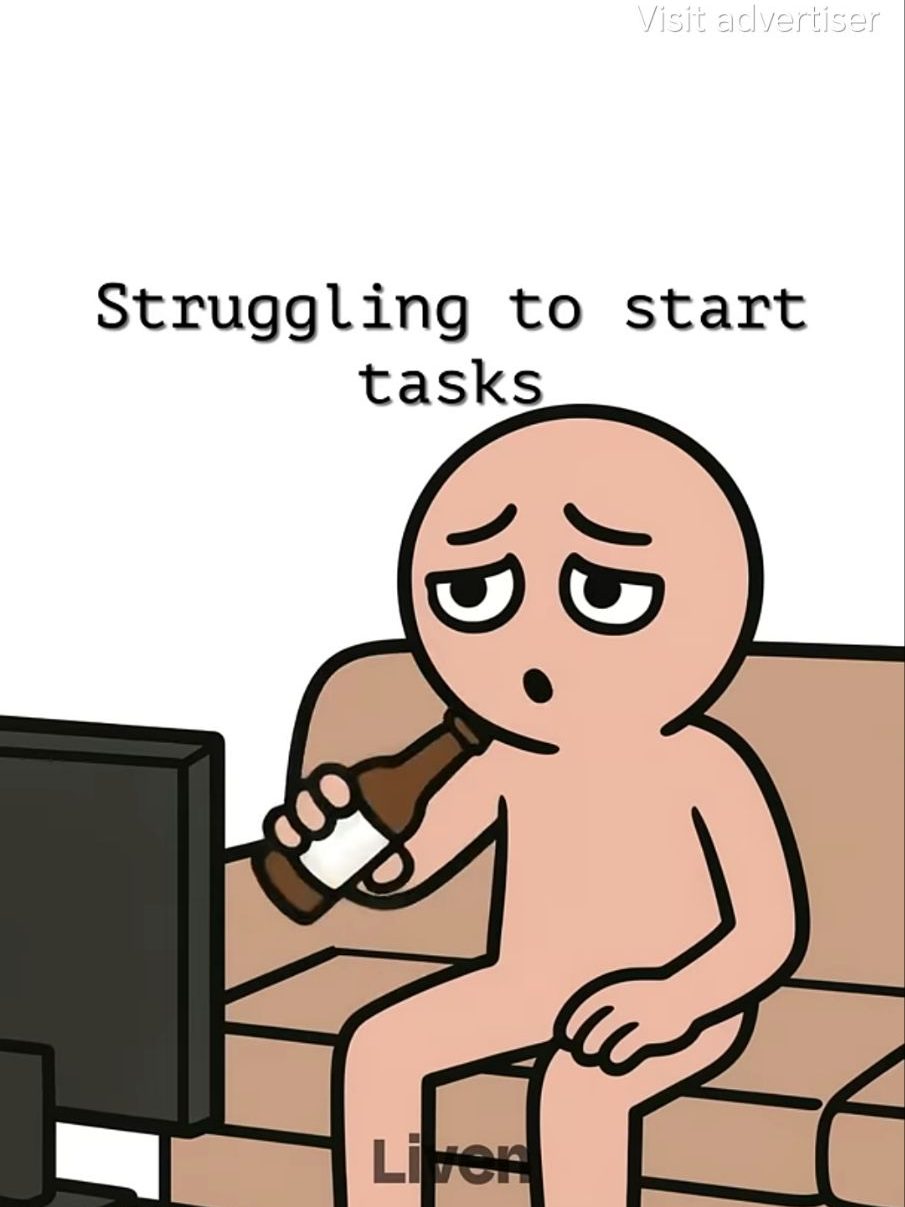
For example: If I’m listening to something on Youtube these days, I get sudden interruptions from a man’s voice wailing at me. And before I show you the screenshots I want you to read the words he wails. Please keep in mind that these words below are sung as if they are song lyrics, in a way that’s anguished, high-pitched, melodramatic and breathless:

…procrastination is a trauma response, not laziness… warning signs of dopamine-chasing behaviour in men… how hypersexuality and procrastination are interconnected…
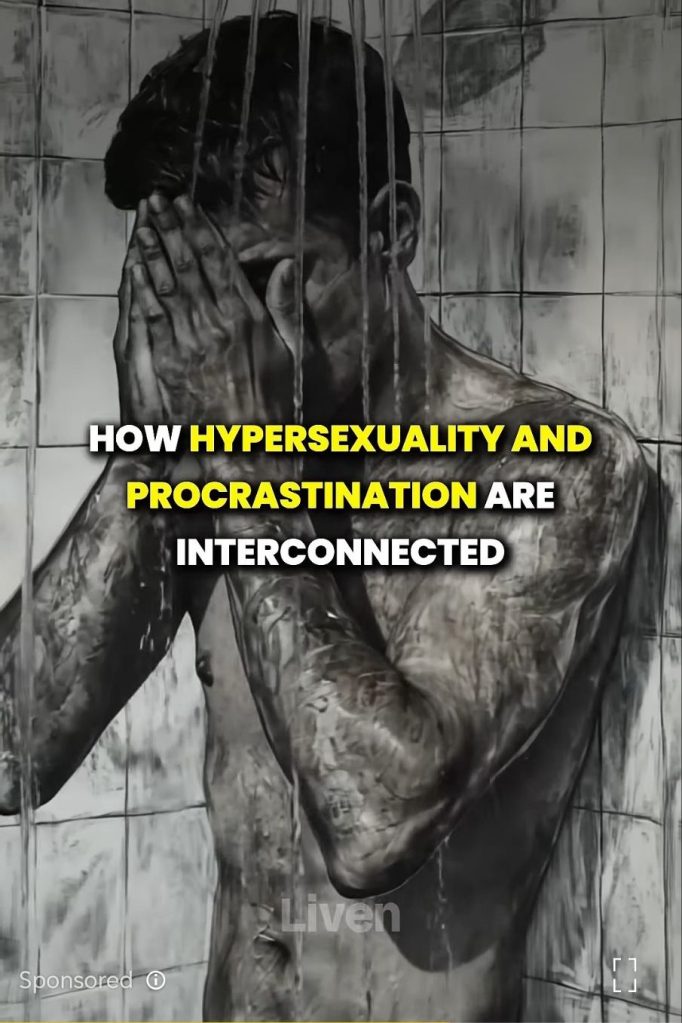
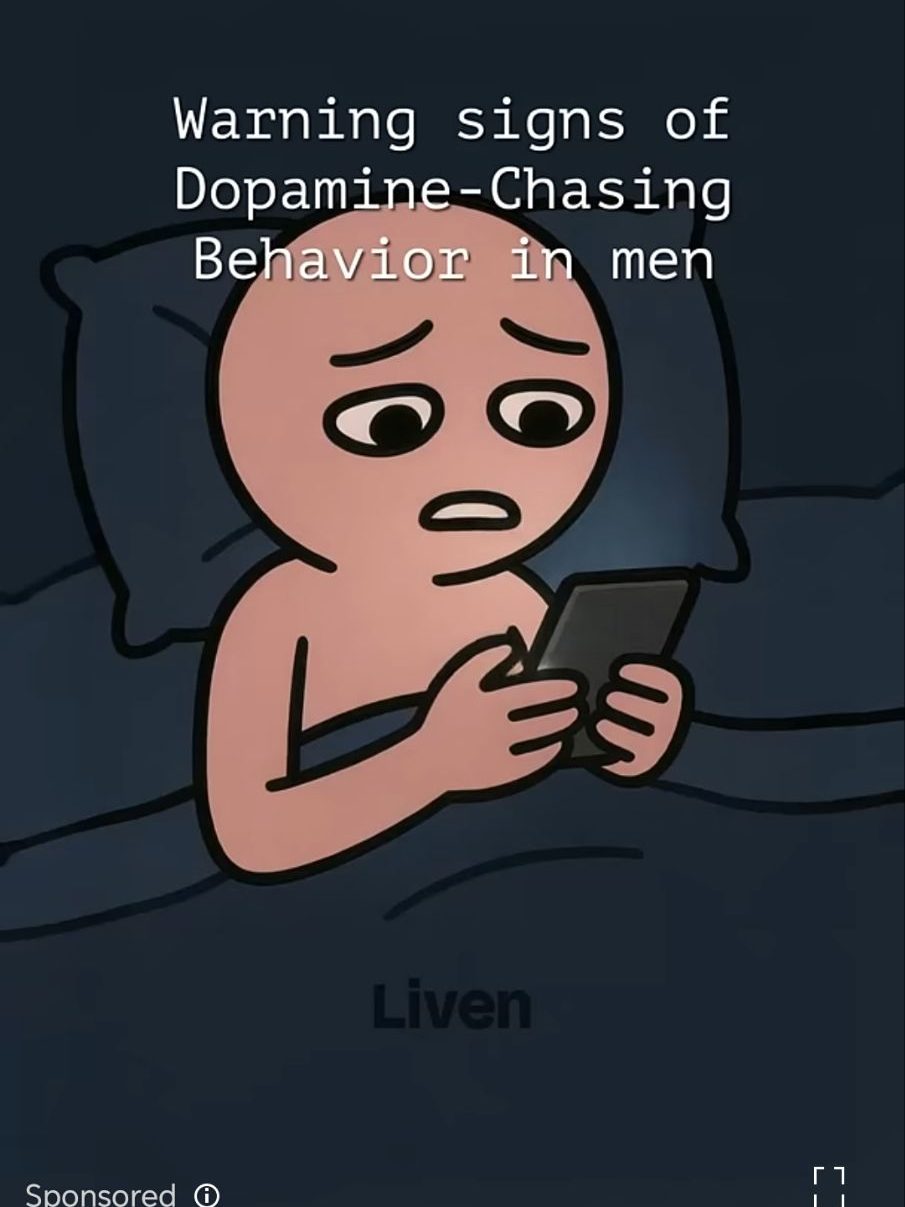
So many questions. First, is this really happening, or am I hallucinating? Well, I took some screenshots so I know it’s real. Next question: why is this apparition saying this to me? Why does the algorithm think I want this? Who thought it would be good to put these words to music? I don’t leave it play til the end because it’s too unsettling, so I don’t even know what it’s an ad for. But it appears to be for some mental health or counselling app. Let that sink in: this is supposed to be good for mental health!

While we’re on the subject of ‘why did Youtube think I wanted to see this’ – introducing my new AI girlfriend:
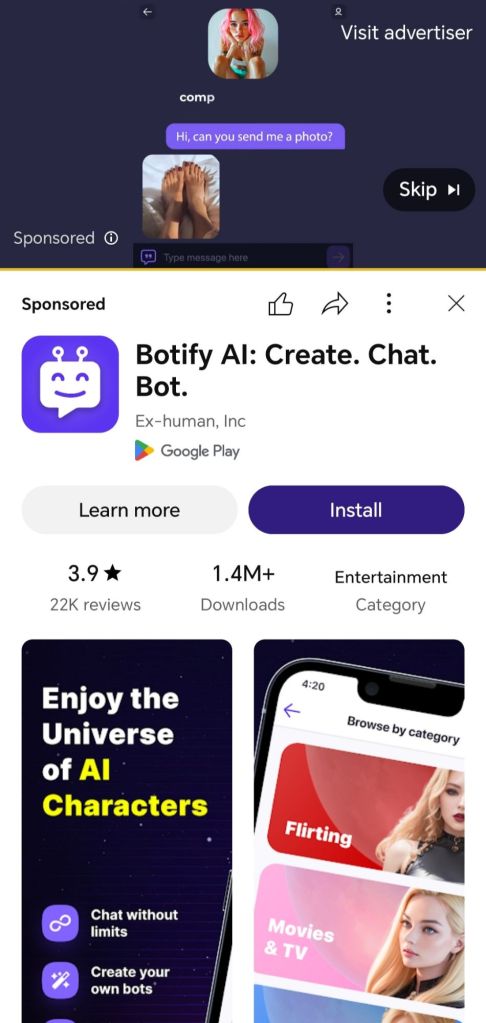
Well. She seems nice.

Youtube also thinks I want to see an ad for a new AI programme that can create songs.

If it’s ‘very scary’, why is she smiling? Even the most pro-AI people appear not to be sure how they are supposed to feel about it.

In other internet news, Facebook now has ad breaks, which I like because it encourages me not to be on Facebook. It’s a little speed-bump on the mindless scrolling. But like everything, Facebook also now has prompts to use AI at every turn.

So you don’t have to write Facebook comments anymore. You can just sit back and let the bot answer on your behalf. But, well, there never was any obligation to write Facebook comments. If you don’t like doing it, you could just not do it. So who is this for?

But bless you, chatbot. You’re here to reassure me if I get frightened about bus theft:
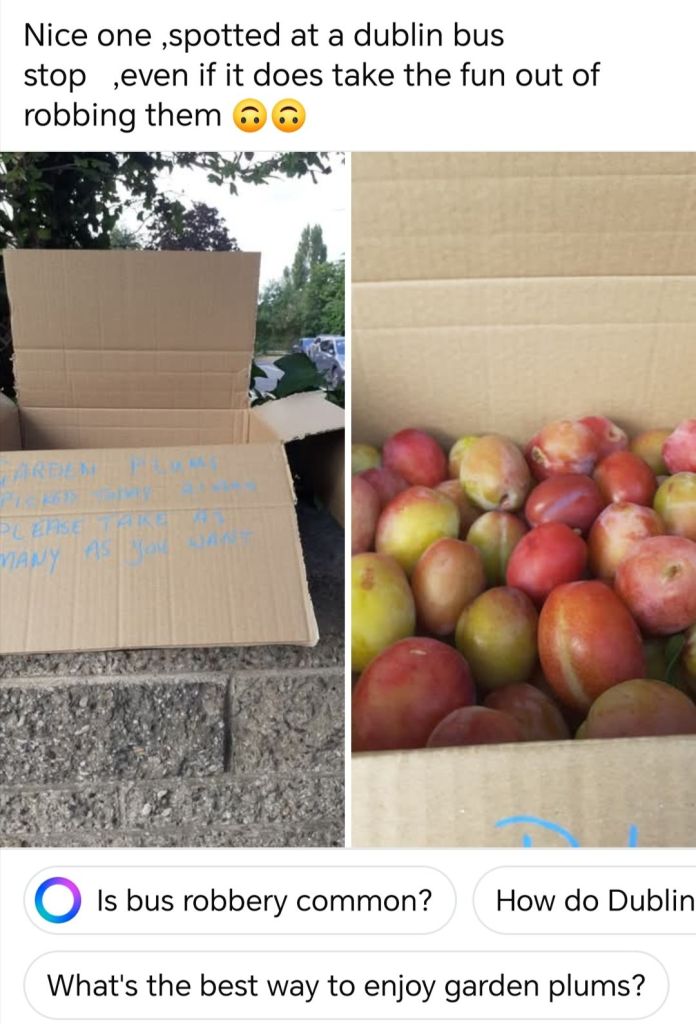
‘Is bus robbery common?’!! It’s good that on top of reading my friends’ funny posts, I get to read AI’s unintentionally funny attempts to assert its relevance.

And if we didn’t have AI, we wouldn’t be able to create awesome, educational, valuable stuff like this:

If you asked me, ‘Who are the Irish?’ the simplest and most straightforward answer would indeed be: ‘Niall of the Nine Hostages, Brian Boru, Bring Boru, Saint Patrick, Newfoundland, Buenos Aires, Newfoundland.’ Well done, chatbot You’ve named two Irish people, one typo, one Welsh person, and some place names in the Americas.

Is ‘Bring Boru’ distinct from ‘Brian Boru?’ He would seem to be, because they have different stone busts. FYI, in case you thought these were real stone busts done by 11th-century Irish masons, no, no they are not, they were just made up by the chatbot.

This preoccupation with nationalities and haplogroups points to another feature that is emerging as the Internet descends into the Interslop. Like so much of the internet in general and AI slop in particular (for example, the creepy horned Aryan Icelandic family), there’s a just-about deniable racialist edge to it.

Being on the Interslop is a strange experience that’s hard to put into words. The closest I can manage is this: it’s like looking at the ads page of an old-time newspaper full of quack remedies and crackpot inventions, but with bizarre, apparently meaningless letters and numbers scrawled on the paper, as if in cipher, filling every margin. While you are reading, the village idiots of a dozen villages you will never visit are yelling in your ear. Meanwhile you are experiencing intervals of auditory and visual hallucinations. But you can screenshot and preserve these hallucinations and pore over them.

You might say it serves us right for putting 40-60% of all social interaction on platforms run for profit by the weirdest and most hubristic North Americans. But we didn’t really get to make a rational choice about it. There was no big vote in 2009-2010; everyone who was twenty just went on Facebook because that’s where everybody else was, and stayed there so they could keep up with their friends who moved to Australia. Youtube was good because it was where all the videos were. If social media had been basically a schizophrenia simulator at the beginning, I doubt it would have taken off. But now that the ascendancy of the big platforms has choked all the competition, they can show their true face, and get as messy and nakedly profit-driven as they want. I’m still going to share this on Facebook. What else am I going to do?

Of course, I know the real reason why the therapy ads were wailing in my ear about procrastination and hypersexuality. It’s not that anyone thought it would be a good idea. Nobody had to think it was a good idea. The people paying to run these ads are rewarded for quantity, not quality. And quantity is no longer an obstacle. In the time it took me to write this post, I could have pumped out many Gigabytes of eerie slop with minimal effort, and I would have got a hundred times more engagement. So why do I bother writing? Well. We were pretty innocent fifteen years ago. If we thought maybe privately-owned, profit-driven tech and social media monopolies might be a bad thing, we couldn’t yet put into words why. But we have no excuse now. Now we know what the online world starts looking like when you base everything on the pursuit of ‘engagement’ for its own sake.


Home Page / Archives

Can a machine write a story?

Last month OpenAI boss Sam Altman announced that his company had created an AI tool that could write a short story. You know the most depressing thing about this news? Sam Altman did not wake up one morning and, just on a whim, ask his software to write a story. His company worked really hard to get it to write a short story. No doubt some tech worker missed a kid’s birthday, maybe even birth, in order to work long hours on it. They plagiarized and polluted for it. Getting an AI that could write a short story was something they had to pursue.

Here’s the thing: even if it was easy and cheap and green, why would anyone want a machine that can write a short story? Is there a shortage of people who can write stories? Is writing stories a chore, like washing clothes or cutting grass? Are people crying out for relief from the burden of being creative?

I made it clear enough last week that I think this Gen AI thing does have limited uses (“a moderate productivity booster in certain situations”, as my commenter, The Director from MilitaryRealism.blog summed it up). I’m not qualified in any very technical fields like engineering, logistics or programming, but I’ll add that I can see potential uses that could be important.

Writing is more my area; I have an English degree and I’ve worked in teaching and libraries. So I don’t hesitate to say that short fiction is a glaring example of something that’s not a useful application of Gen AI by any measure.

Full disclosure, I haven’t read the AI-written short story. I read a lot, but I don’t happen to have a Gen-AI-short-story-shaped gap in my reading.

To illustrate this post, more cringe-inducing AI imagery from social media pages purporting to be about history and mythology

It’s not inevitable

The Guardian got some writers to react to the short story written by the machine. Most of the reactions ranged between ‘Wow, this is actually pretty good’ and ‘I fear for my livelihood.’ Kamila Shamsie pointed out that GenAI will reproduce and reinforce all the biases, all the racism and sexism etc, in its ‘training materials.’ For Nick Harkaway, the story is an ‘elegant emptiness’ and being moved by it is like a bird falling in love with its reflection in a window. He emphasises that ‘none of this will just happen. These are policy choices, and the end result will be the result of a conscious decision.’

That’s what the hype-mongers want us to forget, isn’t it?

The future promised by Gen AI is one where nobody is paid to do anything creative or educational; instead, computer programmes owned and controlled by a few billionaires create flat, uncanny versions of what humans used to create. For some reason we are all supposed to be excited about this. But whether you feel excitement or dread, either way you are making the mistake of treating the whole thing as inevitable and natural.

Actually, there are humans making decisions and investments at every link in the chain here. And some, like CD Projekt Red, are making decisions unfavourable to the spread of AI in creative industries.

I don’t think AI is going to put writers out of a job. The vast majority of us are already out of a job. Tech bros claiming to have made a programme that can do what we do, and expecting us to be pleased about it, is just the latest in a long line of insults, and far from the worst.

I say ‘far from the worst’ because I don’t think these AI tools are about to revolutionise the publishing industry, any more than they have revolutionised any of the other things they were supposed to revolutionise. It will mess with a lot of people’s livelihoods and it will muddy things up for a while. But it will not be a game-changer. The wave may leave behind puddles but it will recede. So I don’t believe the tech bros’ dystopia will happen.

GenAI will probably carve out and retain certain niches, for better or for worse, in the publishing industry. But a machine can’t actually write a story. There’s a few basic category errors at work here.

Another one found in the wild. See if you can spot the warrior who has jumped 200 metres into the air.

Why can’t a machine write a story?

First, the ‘AI’ that exists today is not some sentient machine-mind (‘alternative intelligence,’ in the disappointing words of Jeanette Winterson). Maybe some day we will have that, and our android cousins will write their cyber-Iliads, which will be very cool. I’ll be the first in line. But that’s a whole different thing. I saw someone in a comment section gushing that ‘we have taught sand to dream.’ But what we have now is just glorified predictive text. Whether in written or visual or musical form, it just shows you the lowest common denominator of what’s already out there in the culture.

Second, writing is about expressing your feelings and communicating your thoughts and experiences. A computer doesn’t have these things. It can imitate the way humans express them, provided a bunch of rich people decide to devote stupendous sums of wealth to making it do so. But again it’s not the same thing.

What if the computer’s imitation gets so good we can’t tell the difference? And aren’t some human writers also basically hacks, unoriginal, etc?

First, every writer does not have to be Arundhati Roy for the point to stand that a computer can’t be Arundhati Roy. Stories are rooted in material reality and our experiences of it. No training materials or prompts can produce something like The God of Small Things, which is viscerally a story of its time and place.

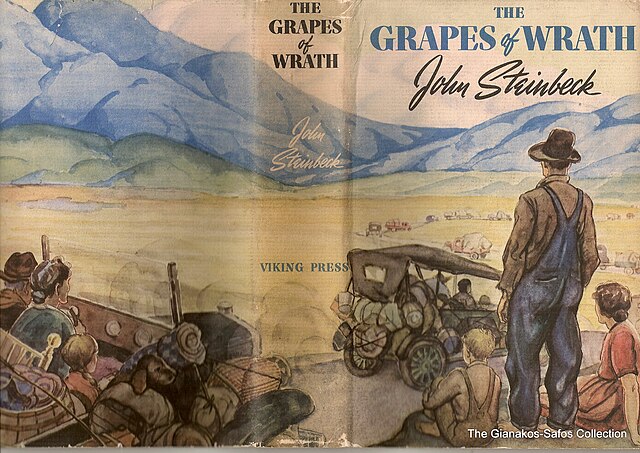
Or imagine if The Grapes of Wrath had been written using pre-existing ‘training materials.’ It would have portrayed the Dust Bowl refugees as incendiary vagrant criminals and the cops as brave defenders of civilisation.

Even if the imitation seems to be perfect and seamless, the above points will tell. Stories are not pure exercises in form. They are about things. The most important ones are about things nobody has written about before. Even science fiction and fantasy stories are about themes and feelings that really exist.

Instead of Steinbeck’s wonderful and evocative descriptions of the human impact of the Dust Bowl, we would get ‘Chapter 2. The Dust Bowl took place in the 1930s and was caused by a number of factors. First…’ Front cover image from 1939. Uploaded to Wikimedia Commons by Folktroubadour

AI in Gaming

I first became familiar with the phrase ‘Artificial Intelligence’ in relation to games. AI is what tells the mercenaries in Far Cry to search the jungle for you systematically when you hide. It’s what tells the hostile army in a Total War game to oppose your cavalry with spears. AI is what’s breaking down when your little villager takes a shortcut past ten enemy catapults, or when a Nazi stands out in the middle of a Norman field waiting for you to shoot him.

You’d think GenAI would have massive applications in gaming. But so far it’s been a real damp squib in that sector.

Recently PCGamer reported on a wild example. Basically, Microsoft made a demo based on a game called Quake 2 using Gen AI. The project used three megawatts of energy – the output of tens of thousands of solar panels. All that, for what? An incoherent, uncanny experience that looked vaguely like Quake 2 and that gave players motion sickness. For context, Quake 2 (that is, a version of Quake 2 that is the full game and that actually works and doesn’t make you nauseous) was made over 25 years ago by a team of just 13 people.

Something to think about: if they had managed to remake a part of the game exactly as it was with AI, that would have been hailed as a triumph. But… Then we’d just have a game level that already exists.

How do I explain this for people unfamiliar with games?

Imagine if I rewrote one chapter of Killing Floor by Lee Child, and presented it here on The 1919 Review expecting your adulation. But in my rewrite, the names of the characters change every other paragraph, and the font somehow gives the reader a headache. I rewrote it by listing every time a particular word is used then arranging the words according to arcane predictive rules. And, somehow, it took the entire output of a nuclear plant just to power the special laptop I used to do this.

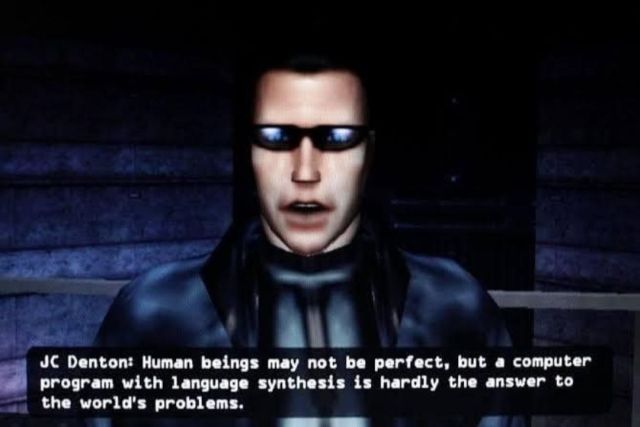
Screenshot from Deus Ex (2000), which predicted this like it predicted everything else. Ion Storm & Eidos Interactive

That’s the essence of the Quake 2 situation, as best I can explain it using books as a comparison, but to be fair (and as I’ve made clear above), GenAI has actually produced more polished results when it’s confined to text.

In both cases the same questions arise: what is the purpose of this? How can the results (good or bad or just trifling) possibly justify the expense and the effort and the pollution? Why are we all expected to indulge Big Tech even when the project into which they are pouring so much wealth is largely unnecessary where it is not actually harmful?

GenAI is in many ways like crypto: the tech bros have invented a new toy and they demand that everyone takes their toy seriously. They demand that we sacrifice the future of the planet in order to sustain their toy. This toy is at the heart of an investor frenzy. They promise that when their toy has taken over the world, it will right all the wrongs it has done along the way (crypto, we were told, will actually save energy by putting all the banks out of business, thus reducing their emissions to zero; in the same way, we are told that AI will actually come up with clever ways to save energy.)

In other ways GenAI is not like crypto. It actually has utility, even if you agree with me that this utility cannot on balance be justified. It can be a lot of fun. It can make it easier to write emails. Its potential in technical fields is an open question.

But it has no utility in writing stories or developing videogames. It’s actually difficult to wrap your head around how stupidly wasteful and contrived such projects are. Even if that wasn’t the case, and even if the results were decent, it’s not worth one single artist losing their livelihood.

Home Page/Archives