
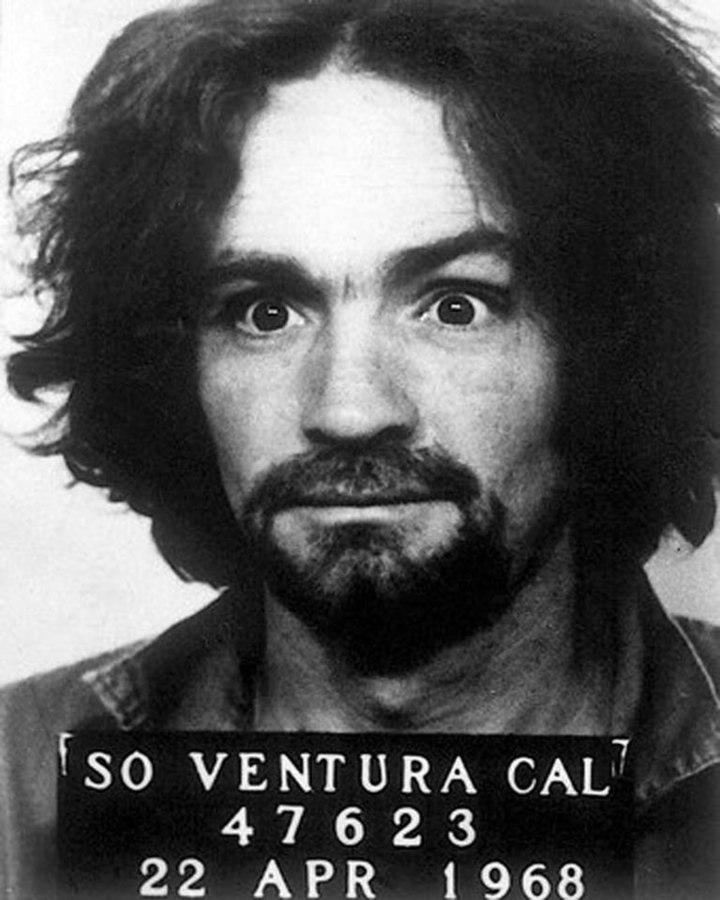
Review: Once Upon a Time in… Hollywood – dir Quentin Tarantino, 2019
Some movies have lines which are repeated and stressed so that they stick in your head for years after. Spiderman has ‘With great power comes great responsibility.’ Once Upon a Time in Hollywood has ‘Fuckin’ hippies.’ The phrase comes up again and again, right up to the moment when the last fuckin’ hippy is burned alive with a flamethrower. If you close your eyes, it’s like you’re watching South Park.
Another tic in this movie is the way the camera and script keep lingering on the titles and tropes of old racist westerns. In a lot of these movies the American Indians were an evil force, menacing the good (white) people of the frontier. Of course, director Quentin Tarantino is against racism and is highlighting this stuff in a mocking way. But he must be smart enough to realise that Once Upon a Time in Hollywood is a movie in exactly the same mould, where good people are threatened by an outside evil. The frontier is Hollywood in the 1960s, and the evil natives are the Manson family.
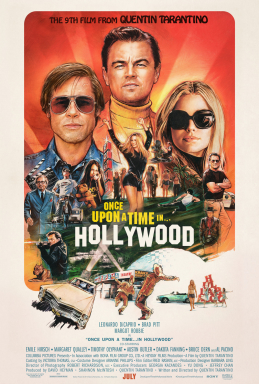
The film is compelling. We follow the travails of a washed-up actor and his stuntman buddy. At first we tag along with impatience as we want to get to the Manson bits, then we get drawn into the story of these two characters. But it remains in our minds that these guys are on a collision course with the Manson family, and we want to find out what Tarantino has to say about the Tate-LaBianca murders. Here’s a Hollywood movie made by big Hollywood names, directed by a Hollywood iconoclast. Surely these people have access to some folk memory, rumour or inside information. What will be revealed?
Meanwhile we get a warm nostalgic portrait of Hollywood in the 1960s: costumes, music, parties, and neon signs. This is just a wonderful place. Within this world, the worst thing that can happen is not so bad: an actor and a stuntman who kind-of deserve to be washed up are in danger of being washed up.
But lurking on the boundary of this world is a malicious presence which we know of as the Manson family but which the main characters simply see as (say it in your Eric Cartman voice) a bunch of fuckin’ hippies.
That’s it. That’s what Once Upon a Time in Hollywood has to say about the Tate-LaBianca murders: that Hollywood in the 1960s was great, until the Manson family came along; and wouldn’t it have been great if someone had been in the right place at the right time to stop the murders? So precisely nothing is revealed.
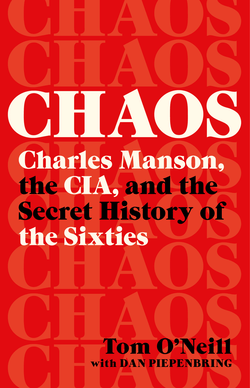
I watched this movie shortly after reading Chaos by Tom O’Brien. This extraordinary book charts a journalist’s attempt to follow up some of the many loose threads of the Tate-LaBianca murders. Bad shit was going on at the Polanski house. Manson knew big Hollywood names (which he gained by pimping teenage girls). The book explores a labyrinth of other strange connections and mysteries, driving at a point which contradicts Tarantino’s movie: that the Manson family were very much a part of the Hollywood ecosystem, and not an outside evil at all.
There is a gesture in this direction in the film. Near the end, one of the Manson family speculates that maybe the experience of growing up watching the violence of Hollywood is what made them violent. But we are expected to see this as pretentious studenty rambling. It is set up for us to dismiss it with self-righteous contempt.
Now, Chaos and Once Upon a Time in Hollywood came out in the same year and Tarantino could not possibly have read the book before making the film. But if you think about the Manson murders for ten minutes it should be clear that all is not as it seems. It’s probably not a coincidence that Manson, the guy who drugged and pimped out minors, showed up at the doorstep of Roman Polanski, the guy who later fled the United States after he drugged and raped a minor. Not only does the film fail to delve into any of the mysteries surrounding the case, it makes no reference to this elephant in the room.
If you’re looking for Hollyweird revelations about the dark underbelly of the movie industry, all Tarantino’s got to say to you is ‘Nothing to see here.’ This is not a film about the Manson murders. It is a western movie about an aging gunslinger and an outlaw who find redemption by defending a settler from the natives; only it happens to be set in1960s Hollywood. If you go in expecting an interesting pastiche along these lines, you will not be disappointed. Pitt and DiCaprio play an amusing pair of fuckups and antiheroes. It’s not necessarily a bad thing that the film mocks the Manson family instead of mythologizing them, for example when Brad Pitt mangles Tex Watson’s one-liner – ‘some devil shit.’ The ultra-violence of the ending could easily be interpreted as righteous fury.
I’ve usually enjoyed Tarantino’s movies but this was more of a mixed bag than usual. The journey was unexpectedly compelling; somehow the film got me to feel sorry for this blustering actor who’s had a successful career and has plenty of money. This journey has texture and verisimilitude. This movie knows Hollywood and cares about it and gets us to care. But the destination, when we finally get there, is disappointing. The ending just left me with screams of agony and the words ‘Fuckin’ hippies’ echoing in my head.
 The 1919 Review
I had seen the obvious connection or possible connection between Polanski’s world and Manson’s as drugs rather than pimping under age girls. Thought provoking
LikeLike