Disco Elysium is a point-and-click RPG which is at once easy to fall into and unlike anything I’ve played before. I heard about it on Chapo Trap House a few years back and saw it in a sale, so I bought it and now I’m 8 hours into it, according to Steam.
The game starts with the player character in a booze coma, in a dialogue with his Limbic System and his Ancient Reptile Brain – ie with aspects of himself. The player’s first task is to summon up the will to awaken.
You wake up in a hotel room you don’t remember trashing last night. The world is strange. It’s modern times, but where are we? Haiti? Finland? It emerges that the game is set not only in a fictional country but in a fictional world, brilliantly realised and compelling.
The player character is a bumbling fuck-up with something desperate and sad under the surface, and possibly a ‘vast soul’ under that again. Characters give you pretty normal RPG quests: Solve the murder; convince X person to let you into Y location; etc. But your own internal voices give you strange quests which emanate from inscrutable inner drives: ‘Find some alcohol and drink it,’ or ‘Sing karaoke.’ You spend as much time in dialogue with your gut feelings and intellect as you do with the characters. These internal dialogues have real consequences for your character’s skills, politics, etc. With names like Empathy, Volition, Inland Empire, Shivers and Half-Light, the internal voices interject, inform and misinform, help and sabotage. They provide dialogue options such as bumming a cigarette, asking for money or blurting out something ridiculous.
At times, they describe a breath of wind, a bleak vista or a distant sound. In these moments, you feel what the character feels. I know nothing about the development team but I can tell it includes poets and novelists.
So far the game has been completely non-violent for me, though I’m aware there are combat dynamics. I did punch a door one time. For some reason I am surprised that a game can be non-violent but still so compelling. I found a ghostly voice trapped on an apartment building intercom and the experience was haunting. It made me entertain the theory that my character was in purgatory, or some such thing, a theory I later rejected.
The game is very funny. More often than not, you are the butt of the joke. It’s a bleak world, lived-in and tired. Every other RPG I’ve ever played has a world from which the class struggle has been mysteriously exorcised. But in Disco Elysium, the politics are right there in front of you, and you can delve deep if you wish.
The graphics are beautiful, but not technically advanced by today’s standards. I’ve been thinking along these lines for a while, that more games need to make this trade-off: invest in good writing and clever mechanics, not in making a game so graphically and technically advanced that it will force me to buy a new machine. If we’re going to talk about graphics, let’s talk about more about art and style, less about a mad quest for photorealism and textures and lighting and crashing my laptop. Disco Elysium is a positive example of what I’m talking about.
So eight hours in, I’m still in a starting area called Martinaise and have not found my missing gun, much less solved the murder. It’s not an easy game, but I feel it half-expects me to be as incompetent as I am, and forgives me with a shrug of the shoulders. And I have a lot of time for a game that rewards me for investing skill points in Empathy.
Access to this article is limited to paying supporters. If you already subscribe by email, thank you. But if you want to become a paying supporter, please hit ‘Subscribe’ below.
Donate less than the price of a coffee, and you can access everything on this blog for one year.
If you don’t feel like donating, most of my posts are still 100% free, so browse away, and thanks for visiting.
We’re nearing the end of Series 1 of Battle for Red October. I’ve just published the podcast version of 06: A Murder in Moscow.
Find it on Youtube here and on Google Podcasts here. It is available too on Spotify and on almost every podcast platform I’ve heard of.
There are only 3 major episodes left in this series:
07: Tsaritsyn. In the south, the town of Tsaritsyn tries to hold the line against the Don Cossacks. Here we see the rise to prominence of a certain Mr Dzugashvili. Both he and Tsaritsyn will be better known to history under other names…
08: Kazan. After a terrible disaster, the Red Army clings to a riverbank under enemy onslaught. Featuring armoured trains, Trotsky, and sudden reversals of fortune.
09: World Revolution. The final episode of the series, dealing with the colossal events of the last few months of 1918. Revolution in Germany transforms the situation. Meanwhile behind White lines, we see a counter-revolution within the counter-revolution.
I predict these 3 episodes will take us well into November because every second week I will be posting the podcast version (As you can probably tell from comparing the earlier to the more recent episodes, I’ve been spending more time on the podcast side of things as the series has gone on. It’s a lot of fun). I might also decide to intersperse these with another ‘Controversies’ episode.
Keep an eye out for Tsaritsyn which will go up around this time next week.
What makes Squid Game different from Hunger Games and Battle Royale? The fight to the death in Squid Game is not just bigger and bloodier. It is voluntary. Stephen King’s Running Man also features a lethal game whose contestants are volunteers. But King’s novel, and its movie version, and Hunger Games and Battle Royale, are set in future dystopias. Squid Game is set in our world, right now.
The conditions in North Korea are so desperate that Sae-byeok risks death to escape. But when she enters the game she risks death again, this time to escape from the desperate conditions for the poor and working class in South Korea, to escape from capitalism. As someone says in Episode 2, it’s worse out there than it is in here.
The final episode of Squid Game hammers home an anti-capitalist argument that has been running through the whole story. Many have commented on this, including the writer and director Hwang Dong-hyuk. This article goes into some detail. But I want to focus on the voluntary nature of the games and how this plays into the anti-capitalist message.
In-ho’s words in the last episode make this point very clear. He says words to the effect that ‘You chose this,’ ‘You signed up for this,’ ‘Nobody forced you.’ Another villain, the psychopathic Sang-woo, insists on Gi-hun’s personal responsibility for all the killing.
Within formal logic, In-ho’s argument is unanswerable. But Gi-hun recoils against his words and against Sang-woo’s. They are wrong. Gi-hun knows it in his gut, and so do we.
It’s true that the game is voluntary. In-ho himself, undercover among the contestants, casts the deciding vote for them all to leave. But for some reason, we don’t accept their arguments.
‘You chose this,’ ‘You signed up for this,’ ‘Nobody forced you.’ That’s what we hear when we complain about our jobs, our mortgages, our car payments. We even hear a version of this in the cliché that ‘people get the government they deserve’ – ie, the people are responsible when their elected leaders betray them. In the most formal sense, it’s all true.
The game’s overseer keeps insisting on ‘equality’ as the fundamental principle of the whole operation. In theory, capitalism is fair and we’re all equal. In theory, the worker and the boss meet one another ‘in the marketplace’ (wherever that is) on a basis of complete equality. They agree to a contract which is satisfactory to both: I work for you, and you pay me. The law says these two people are completely equal. The law says this contract is voluntary.
But the reality is very different from the theory, and from what the law says. That reality is illustrated in every episode of Squid Game.
When we first see Gi-hun, we are invited to see him as a waster and a messer. Then in mid-series we hear about the auto workers’ strike Gi-hun was involved in ten years ago and about the lethal police violence. This sacking was a catastrophe from which his life has never recovered. He got into debt with failed business ventures (Isn’t that what you’re supposed to do? Isn’t that what they tell us to do? Be an entrepreneur?). His family has broken down. No wonder he’s in the situation he’s in. It could happen to you or me.
Another contestant has decades of experience as a glassmaker. We can assume he’s got a similar story to tell. And we see with our own eyes how Ali was scammed by his boss.
The final episode hammers home the point. A TV or radio playing in the background of a scene reminds us about the crisis in household debt. Early on in the series, we might think, ‘OK, these contestants are people in extreme situations – gambling addicts, refugees, gangsters.’ But the final episode insists: this situation is general.
For all its brutality, Squid Game is written with compassion and humanity. These games are not a public spectacle or a reality TV show. They are secret. The public at large do not enjoy the games. They would be sickened if they knew the games were happening. The audience, lapping up other people’s suffering for entertainment, are the handful of billionaires who bankroll the whole operation – and who got rich making everyone’s lives so desperate and precarious in the first place. The indebted and desperate Gi-hun lives on a different planet from these ‘VIPs.’ To claim they are equal is a vicious lie designed to keep Gi-hun in his place – and, perhaps, to soothe the consciences of the wealthy.
People are drawing parallels with Money Heist, another series on Netflix. Like Squid Game, it has won a colossal audience in spite of the fact that it’s not in English. This Spanish crime series is knee-deep in socialism. A miner from Asturias who calls himself ‘Moscow’ sings ‘Bella Ciao,’ talks about the 15M movement and supports his trans comrade; in a fierce battle in the ruins of the national Bank of Spain, the robbers denounce the forces of the state as fascists and draw inspiration from the Battle of Stalingrad. But what’s more important than any of these Easter eggs is what this guy said: that what makes Money Heist popular is the class rage it channels.
What is it about red jumpsuits and masks? Money Heist (above, image from Dress Like That) and Squid Game (Image from Insider.com).
Money Heist and Squid Game tap into our despair and anger at the brutal and unfair system we live under. Hundreds of people being gunned down in a scene that’s part Red Light, Green Light and part Amritsar Massacre – that’s not a fantasy. That’s what it feels like to live in this society. If a story can tap into such a feeling, language is not a barrier. We live under the same system and even if we speak different languages we can relate to common problems and struggles.
We live in a time of mass protest movements against the wealthy and the state on every continent (Colombia, Sudan, Lebanon, Myanmar, and the list goes on and on). It would be strange if this mood was not reflected in some way in popular culture. But it’s a sign of the times that the entertainment industry – and maybe to an extent audiences – are not ready for a story that is simply about class struggle (with surprising exceptions like Superstore). Politics is a dirty word. It has to be smuggled in, disguised in more wholesome and palatable fare, such as a story about the origin of a mass murderer, about a bank robbery, or about a game show in which four hundred people die horrible deaths. In cynical times, the earnest and compassionate stories we secretly crave can only be packaged in the trappings of cynical and pessimistic genres.
Indulge me for a minute and imagine the Russian Civil War superimposed on the United States of America. For the sake of a thought experiment whose purpose will be clear by the end of this post, let’s brush aside the obvious objections and perform whatever mental gymnastics are required. This is the first of several “Controversies” posts on the theme of foreign intervention in the Russian Civil War. I’ll return to the main narrative of the war next week but at some point I’ll follow up on Foreign Intervention.
Let’s get the mental gymnastics out of the way first. Maybe it’s 1968 in an alternate history in which the US has emerged as one of several losers in a nuclear war. Maybe it’s 2038 and the US has been defeated in, we’ll say, Taiwan. The defeat is devastating. The vast US military is in a state of collapse. An alliance of South and Central American states (we’ll call them ASCAS) is invading the south-west.
In this defeated country, a rebellion takes place, led by the military top brass and law enforcement. We can leave aside politics for the purposes of this experiment. If you are a liberal, you can assume the rebels are a cabal of right-wingers with ties to foreign powers. If you are a conservative, you can assume they are deep-state liberal coastal elites. If like me you are a socialist, you can assume that a US revolution has taken place and that the rebels represent the last-ditch resistance of capital and the old state machinery.
Still from the intro video to Red Alert 2, dev Westwood Studios, 2000
Let’s run through a timeline of the first year and a half of this Second US Civil War.
Year One
March: US is forced to sign a peace treaty with the ASCAS, handing over control of Texas, New Mexico, Arizona and California.
May: The states of Louisiana, Mississippi and Arkansas secede from the union. They are in an uneasy alliance with the neighbouring ASCAS occupation forces.
A rogue army made up of officers and led by General Smith takes control over Alabama and Georgia. Smith claims to be the head of the legitimate US government.
North Korean forces land in Alaska, and begin taking over the whole state.
An army of Kurdish fighters has been serving in the US military in exchange for the promise of an independent Kurdish state. They are currently in transit across the Midwestern United States. They are approached by Iranian intelligence. The Iranian government promises support for an independent Kurdistan if the Kurdish Corps will rise in revolt against the US federal government. Tens of thousands of Kurdish fighters seize control over St Louis, Kansas City and Omaha.
June: thousands of Russian soldiers land in Maine and set up a puppet government there. Thousands of Chinese soldiers land in California and Oregon. Iranian forces take control of Seattle.
Half-a-dozen new governments seize control in various parts of the United States, some declaring independence, others claiming that they are the legitimate government of the US.
Warlords cross the border from Canada and seize control over Montana and North Dakota.
July: A series of armed revolts erupt in cities within Federal Government territory, including Washington DC. All are defeated due to lack of popular support but cause destruction and suffering. Foreign intelligence agencies are linked to most of the revolts.
Chicago falls to the rebels.
By this time, the following states are still fully controlled by the US federal government: Michigan, Ohio, Pennsylvania, the Virginias, North Carolina, Maryland, Delaware, New York, Rhode Island, Connecticut and Massachusetts. All other states are controlled, in whole or in part, by rebels or by foreign armies. The East Coast is under a blockade by the Russian and Chinese navies.
September: the federal government seizes back control over Chicago.
September-November: the rebel governments in the Midwest are consolidated in a series of coups. Admiral Garcia, in control of the Midwest and the Rocky Mountains, declares himself supreme ruler of the United States.
November: revolution sweeps Latin Anerica. The ASCAS is no longer a factor. The occupation of California, Texas, New Mexico and Arizona ends. For the next two years, rebels and the federal government will vie for control of these states in a series of bloody conventional and guerrilla wars. Dallas, Texas will by the end of Year Three have changed hands nine times in three years.
Year Two
The various rebel forces go on the offensive.
General Smith, having spent many months crushing the resistance of federal forces in the south-eastern United States and taking control over rival rebel factions, now controls more or less the old territory of the 1860s Confederacy. His armies march on Washington DC. They reach as far as Norfolk, Virginia, roughly 400 kilometres from the capital.
General Anderson, in control of Maine, Vermont and New Hampshire, advances on New York City. They reach the outskirts of the city proper, supported by the Russian Navy.
The rebel forces in the Midwest, led by Admiral Garcia, invade the Rust Belt.
14 foreign governments at this point have troops on US soil, controlling key port cities and securing the rebels’ rear. In places, they fight directly against US federal troops. Their total forces may add up to as many as 300,000 pairs of boots on the ground, including 70,000 North Korean troops in Alaska battling a pro-Federal guerilla movement and the 30,000-70,000 Kurdish fighters in the Midwest.
The offensives of Williams, Anderson and Garcia are bankrolled by the foreign powers. The three rebel leaders receive weapons and ammunition adding up to the total output of munitions for that year in the areas still controlled by Washington DC.
General Anderson’s forces in New England literally wear Russian uniforms, and every bullet fired from the rifles of Admiral Garcia is of Chinese manufacture. Russian, Chinese, Iranian and Korean officers and agents are a ubiquitous presence in the rebel zones. In short, this offensive would be impossible without their support.
We have now reached the most intense point of the Second US Civil War. It is unnecessary for our purposes to pursue these imagined events any further, though readers are free to do so in the comments below. Readers are also free to tease out all the various improbabilities in the above scenario. I’m well aware of them but they may be interesting to discuss.
(Of course, the US entertainment industry has imagined such scenarios many times: off the top of my head I can think of Red Dawn, Homefront, Red Alert 2 and 3, the Call of Duty franchise and Chuck Norris’ Invasion USA. The US has never suffered such an onslaught in reality. But it is a fascinating case of projection. The US has inflicted such onslaughts against other countries too many times to count, often right down to the specific tactics depicted, without irony, in movies and games.)
Still from the intro video to Red Alert 2, dev Westwood Studios, 2000. I’m not from the US and I don’t live there. But I am familiar with its geography, politics and culture. That’s why I picked the US and not, say, China, India or Brazil, for this thought experiment.
We have not touched on the horrible human suffering that this war would entail. How would a military-law enforcement alliance in control of the Deep South treat minorities in the areas it controlled? What kind of humanitarian disasters would unfold in a war-torn and blockaded United States? What kind of severe police state would exist in the territories of all the contending forces, including that of the Federal Government?
I’ll ask you to imagine one more thing: that one hundred years after the events just described, Chinese, Russian and Iranian historians are busy ignoring, denying, downplaying and minimizing the significance of foreign intervention during the Second US Civil War.
‘The revolution is a big and serious machine. What today is a difference of opinion, a perplexity, will tomorrow be transformed into a civil war.’
Trotsky, July 1918
Two Chekists
Moscow, on the afternoon of July 6th 1918. Two Chekists are approaching the German legation on Denezhny Lane. One, Yakov Blumkin, carries a briefcase in which a Browning pistol is hidden. Both carry hand grenades.
A Chekist is a member of the security organ of the Soviet, the Special Commission known by its acronym, Cheka. In later years it will develop into the GPU, the NKVD, the KGB: names synonymous with the brutal enforcement of the one-party state. But in summer 1918 the Cheka is only a few months old, and does not have that reputation. These two Chekists, Blumkin and his companion Andreyev, are not even members of the ruling Communist Party. Like many Chekists, they are Left Socialist Revolutionaries.
The ‘haughty profile’ of Blumkin, played by Vyacheslav Shalevich in the 1968 Mosfilm movie The Sixth of July, dir. Yuli Karasik
It would be difficult to mistake Blumkin for a Bolshevik. Bolsheviks prefer tea to alcohol, but Blumkin is known to get drunk in cafés listening to the poetry of revolutionary and reactionary writers with equal rapture. He is ‘poised and virile… his face solid and smooth-shaven,’ with a ‘haughty profile.’[i] He is not above, on occasion, drunkenly brandishing a pistol in public.
Blumkin and Andreyev show their credentials at the door of the German legation. Their letters of introduction bear the signature of the Cheka head, Felix Dzerzhinsky. They ask to see the German ambassador, Count Wilhem von Mirbach-Harff. Count Mirbach’s son, a lieutenant in the German army, is missing, and Blumkin and Andreyev claim to have news of him. But their letter of introduction is phony, as is their stated reason for being here. They have come here to kill a man and to start a war.
Count Mirbach meets with the two Chekists in a downstairs room. An interpreter and a member of the legation staff are present.
Blumkin opens his briefcase, saying ‘Look here, I have…’
He pulls out the Browning pistol and opens fire at the German ambassador.
The Terrorist Tradition
When Yakov Blumkin drew that pistol, he was acting in a verable tradition of Russian terrorism.
Throughout the 19th Century the Russian liberals, known as Populists, tried to shake the Tsarist autocracy using the weapon of assassination. The older brother of Lenin and the older brother of the Polish nationalist leader Józef Pilsudski were both hanged for their roles in the same assassination plot. Maria Spiridonova, as mentioned in Chapter 1, killed a police chief in 1906 and suffered vicious treatment in prison. Her party, the SRs, descended directly from the terrorist tradition.
1881: Tsar Alexander II assassinated
From the 1880s a new revolutionary tradition grew up in the Russian Empire, one that rejected this tactic of ‘individual terror.’ The Marxists believed that it was necessary to destroy the system itself, not individual human figureheads who could be easily replaced.
The Bolshevik Party came from this tradition, rejecting terror. They were oriented to the working class and to its open, democratic methods of struggle, such as strikes and mass demonstrations, though since they operated under a police state they were often confined to the illegal underground.
Meanwhile, as we have seen, the Right SRs had grown closer to the Constitutional Democrats, while the Left SRs appeared to move closer to the Bolsheviks. But neither Left nor Right SRs ever gave up on the bullet or the bomb. ‘Individual terrorism’ would rear its head in 1918, in events that set the course of the Russian Civil War.
The split between the Bolsheviks and the Left SRs
That morning, as Blumkin and Andreyev went to kill the German ambassador, Soviet Russia was still a multi-party Soviet democracy.
In workplaces, in the fleets, in the Red Guard units, in the Cheka and in the Soviet, Bolsheviks and Left SRs worked side-by-side. As we have seen, in January the Bolsheviks were pleased to vote for Maria Spiridonova, now leader of the Left SRs, as their candidate for president of the Constituent Assembly.
The Bolsheviks and the Left SRs had even formed a coalition Soviet government in December 1917, a coalition which lasted for four months. There was mutual admiration as well as mutual distrust. The Bolsheviks had authority because they had made the October Revolution. The Left SRs had a far higher profile among the rural toilers. But to the Left SRs the Bolsheviks seemed to embody a contradictory mixture of dogmatism and unscrupulousness. For their part, the Bolsheviks saw the Left SRs as muddleheads, terrible at picking their battles. They were always wavering on the most fundamental principles, but proving stubborn on secondary matters.
The slogan ‘Peace, Bread and Land’ united the Bolsheviks and the Left SRs. The land question was the basis of the alliance.
A political meeting in a Russian village, from Tsar to Lenin, dir Herman Axelbank
In power, the Bolsheviks delivered immediately on the land question, passing a decree that took over the land of the former nobility and the church and gave it to tens of millions of peasants. This was a great victory for the peasants: over the next few years the number of farming households rose from 18 to 24 million and the average size of a farm increased. Young couples escaped from overcrowded multi-generational households to start their own farms and homes. In late 1917 and well into 1918 the mass of peasants supported the revolution with enthusiasm. The coalition between the worker-based Bolsheviks and the Left SRs, who had a more rural support base, reflected this fact.
The rupture came over the other two-thirds of the slogan: peace and bread.
Peace
The Brest-Litovsk Treaty making peace with Germany was deeply controversial among the Bolsheviks. But the Left SRs were completely opposed to this ‘obscene peace.’ They were determined to fight German imperialism to the end, even if they were driven out of the cities and up into the Ural Mountains. In March 1918 they walked out of the Soviet coalition government over this question. After walking out they still held many high positions in the Soviet, the Red Army and the Cheka. It was a one-party government (like most British and all US administrations) but by no means a one-party state.
It’s important to appreciate the full and terrible cost of the Brest-Litovsk peace. Finland gained independence from Russia thanks to the Revolution. In free Finland as in Russia, socialists took power with the mass support of workers. But a Finnish White Army, aided by German volunteers and weapons, rebelled, seized power and crushed the revolution. It was all over before May 1918. Tens of thousands of Red supporters were shot. More were starved to death in prison camps. The scale of the bloodshed would have been terrible anywhere, but in a country of only three million people it was staggering. By way of comparison, years of revolution and civil war in Ireland, a country with a population of similar size, claimed the lives of around six thousand people.[ii] Counter-revolution in Finland exceeded that toll many times over in just a few months. The Reds longed to intervene and help their Finnish comrades, but their hands were tied by the peace treaty. Workers in Russia could only stand by in horror while massacres unfolded just a couple of railway stops from Red Petrograd.
They knew that if the White Guards won in Russia, they would suffer the same fate.
From a museum in Finland – uniforms of the Finnish Red Guards
Another consequence of the treaty was that the German army occupied Ukraine and the Baltic States. They began seizing food and executing people. Not just in Finland but in Ukraine, Latvia and Estonia, revolutions were being crushed right on the doorstep of Soviet Russia. Thanks to the treaty there was nothing to be done.
Bread
Even after they resigned from government, the Left SRs still cooperated with the Bolsheviks. But the gulf between the two parties widened further over the question of bread.
‘Suspend the offensive against capital,’ was Lenin’s slogan in early 1918. In the socio-economic as in the military sphere, he judged that the country needed a breathing space. Early on, the Communist Party favoured slow and measured changes in the economy: the nationalisation of the banks and major industries, and gradual intrusions into the rest of the economy. The ‘Left Communists’ argued for faster nationalisation and more state control of markets, but they were soundly defeated in an internal party debate.
But by early summer, the Communist Party as a whole had been forced, by war and by a campaign of sabotage in the factories and mines, to resort to the measures proposed by the Left Communists. According to the Communist Rykov, ‘Nationalisation was a reprisal, not an economic policy.’[iii]
The food crisis which had begun in 1914 was still getting worse. The revolt of White armies led to a breakdown in transport, and the Treaty of Brest-Litovsk cut off Russia from food-producing areas. But the most significant cause of the food crisis was the breakdown of industrial production. There was no shortage of food in the countryside, but the peasants would not trade it for paper money when there was no production and so nothing to buy.
Therefore, according to the dictates of the market, the cities would starve to death. But the Communists were not inclined to accept the dictates of the market or the prospect of their supporters starving to death.
By summer 1918 food detachments were descending on the villages, seizing any surplus grain to feed the cities. There were important continuities between this ‘food dictatorship’ and the food policies of the Provisional Government and even those of the Tsar adopted since 1914.[iv] But this went further. Peasants, especially the wealthier layers, saw the food detachments as an attack on their right to trade. The reaction was furious. Of 70,000 workers who joined food detachments, 7,000 of them were killed by angry peasants in 1918 alone. Kulaks would wait in ambush, sawn-off rifles hidden in the folds of their shirts. Communists would be found dead, their stomachs slit open and stuffed with grain.
The Left SRs’ desire to restart the war with Germany was not popular in the countryside. But they spoke for many peasants when they condemned the food dictatorship. The Bolsheviks, meanwhile, as if to mark the end of the honeymoon, had moved the seat of government from Petrograd to Moscow and had changed their name officially from the Social-Democratic and Labour Party (Bolshevik) to the Communist Party. People who did not follow the news carefully – and it was difficult, in those days, to follow the news – would remark that they supported the Bolsheviks, but hated these new Communists; or would claim that the Bolsheviks were led by Trotsky and the Communists by Lenin, or vice versa, and that they were fighting one another.
July 1918
The conflict came to a head at the beginning of July.
This was a moment of dire military crisis for the Soviets. To the east, the Czechs had revolted and, along with the Whites, were seizing town after town. To the west, the Germans occupied a vast stretch of territory. To the south, the Cossacks and the Volunteers were making steady gains. To the north, British forces landed at Murmansk on July 1st. On the 2nd and 3rd, key cities fell to the Czechs. Throughout these days Count Mirbach, the German ambassador, would sit in the Bolshoi Theatre observing sessions of the Soviet and would relay ever-escalating demands from Berlin. Meanwhile the Left SRs were active on the western border, shooting and bombing and agitating, trying to trigger a war between Germany and the Soviets.
These were the political developments that placed Blumkin and Andreyev in the legation on the afternoon of July 6th, face-to-face with Count Mirbach, the hated representative of German imperialism. By shooting him, they believed they would trigger a response from Germany, beginning a spiral into war.
The Congress of Soviets. From The Sixth of July
*
Blumkin pulls the trigger. Count Mirbach flees into another room while the two members of staff dive under the table. Andreyev throws a grenade after Mirbach, but misses. Blumkin darts forward, grabs the grenade before it can explode, and throws it again. It’s on target. The explosion kills the Count and throws Blumkin out the window and into the street. He and Andreyev flee in a getaway car to the Cheka Barracks on Pokrovsky Boulevard. This barracks is controlled by a Cheka unit under a Left SR named Popov. Popov is in on the conspiracy, and the barracks is a safe house for the assassins.[v]
The grenade that, in a matter of seconds, will kill Mirbach. From The Sixth of July
*
Word of the assassination spreads quickly. At first everyone assumes that the murder is the work of White Guards or Anarchists. Felix Dzerzhinsky, leader of the Cheka, takes on the murder investigation personally.
Stories about Sherlock Holmes are immensely popular in Russia at this time. Dzerzhinsky inspects the crime scene personally in a moment reminiscent of Arthur Conan Doyle. But the Polish Communist’s severe face and sunken toothless mouth, a souvenir of torture and trauma in Tsarist prisons, don’t really fit.
He is quick to find the forged credentials at the murder scene bearing his own signature. Who would have access to such credentials? Not the Anarchists or the White Guards. For the first time, he begins to suspect Left SR involvement. He goes straight to the Pokrovsky Boulevard, to ask his Chekist subordinate Popov to clarify the situation.
He probably assumes it is safe. The initial reaction of Trotsky was to say, ‘It must be individual madmen and criminals who have committed this terroristic act, for it is impossible that the Central Committee of the Left SR Party can be mixed up in it.’ Dzerzhinsky’s attitude is probably similar at this point.
He and his personnel arrive at the Pokrovsky Barracks and begin to search the place. But before they can find the assassins, they open a door to find the Central Committee of the Left SR party in session.
If Dzerzhinsky is shocked he doesn’t let it show. He demands that they surrender the assassins.
Dzerzhinsky confronts the Left SR Central Committee. Played by Vasily Lanovoy in The Sixth of July
The Left SR leaders respond that they take full responsibility for the killing of Mirbach.
Dzerzhinsky, though far outnumbered, declares the lot of them under arrest. He is immediately disarmed and captured.
*
Thirty minutes’ walk away the Fifth Congress of the Soviets is in session in the Bolshoi Theatre. Word has not yet arrived about the murder of Mirbach. It is a fractious meeting. Roughly two thirds of the delegates are Bolsheviks, one third Left SRs, plus anarchists and others. Of the Left SRs, one third are workers, one third peasants and one third intelligentsia.
Another of my crude but simple maps. The Congress of Soviets met in the Bolshoi. The Left SR stronghold was on the Pokrovsky Boulevard.
The delegates have been debating for hours. The Commissar for War Trotsky condemns the Left SRs for agitating on the frontlines, for trying to kill German soldiers and trigger a conflict.
The delegates heckle him, branding him with the name of the disgraced leader of the Provisional Government: ‘Kerensky!’
A Left SR speaker lays out their position: it is impossible ‘to tolerate the German marauders and hangmen, to be accomplices of those villains and plunderers.’[vii]
It is Maria Spiridonova who, around 4pm, arrives at the Bolshoi Theatre bearing the news that Mirbach has been murdered. Spiridonova was in on the plan, but most of the Left SR delegates in the Bolshoi are blindsided. Meanwhile one or two thousand Left SR fighters have gathered around Trekhsvyatitelsky Lane. They attempt to seize key buildings, and they arrest Communist and non-party Red Guards and Chekists.
Troops loyal to the Left SRs gather. From The Sixth of July
The Communists immediately lock down the Bolshoi and imprison the Left SR delegates.
The Soviet government ministers meet and, Trotsky will later write, ‘from a building in the Kremlin, we saw shells – fortunately, only a few – landing in the courtyard.’
During the night the Left SRs seize the post office and send out a telegram to the provinces:
Count Mirbach, torturer of the Russian toilers, friend and favorite of [Kaiser] Wilhelm, has been killed by the avenging hand of a revolutionary in accordance with the resolution of the Central Committee of the Left SR Party. German spies and traitors demand the death of the Left SRs. The ruling group of Bolsheviks, fearing undesirable consequences for themselves, continue to obey the orders of German hangmen.[viii]
An order to the telegraph workers, signed by an SR Maximalist, goes further: ‘…all cables with Lenin’s, Trotsky’s and Sverdlov’s signatures as well as all cables from counterrevolutionaries which are dangerous to Soviet power in general and the Left SR Party currently in power in particular are to be withheld.’
Maybe this order comes from the Left SR leaders, or maybe the SR Maximalist who signed it is basically going rogue. Either way, word has gone out from Moscow that armed insurgents have seized key parts of the city with the intention of overthrowing the Communist government.
*
In the dead of night Vacietis, the leader of the Latvian Rifles, is summoned to the Kremlin.
‘Comrade,’ says Lenin, ‘can we hold out until morning?’
Even to the formidable Vacietis, things must look bad. The Left SR forces are considerable: their own combat units, plus 600 Chekists under the command of Popov, plus a few anarchists and Black Sea sailors. Most of the fledgling Red Army is on the front facing the German threat; whoever else can be spared is either in the east or in the south, fighting the Whites. At that moment Vacietis has only four Latvian Rifle regiments and a force of Hungarian communists, former prisoners-of-war led by Bela Kun.
*
Insurrection is dangerous. You don’t know who is going to rally to your side until after you’ve stuck your neck out. Then it’s too late to call it off; if you back down, your plans will be discovered and you’ll face the consequences anyway. Insurrections therefore often hedge themselves in a ‘defensive’ political cover. Even the October Revolution employed such cover. The Left SR uprising of July 1918 attempts to do the same. The order to the telegraph workers referring to the Left SRs as ‘currently in power’ is unusually bold. The resolution of the Left SR central committee is more cautious and more typical of its communications during the revolt:
We regard our policy as an attack on the present policy of the Soviet government, not as an attack on the Bolsheviks themselves. As it is possible that the latter may take aggressive counteraction against our party, we are determined, if necessary, to defend the position we have taken with force of arms.
In October the defensive cover deceived and demoralised the government. But in July 1918 the defensive cover deceives and demoralises the insurgents. The Left SR fighters don’t know what they’re doing. They fight without energy or initiative; after the initial gains, there are no further advances. There are high-ranking Left SR Red Army officers in the vicinity of Moscow with large forces at their command. But they do not join the revolt. Vacietis himself is not a member of the Communist Party (According to some sources he is even a Left SR).[ix]
Street fighting in Moscow. From The Sixth of July
The next morning there is heavy fighting in the central Kitai-Gorod area of Moscow. Left SR fighters are chased out of Trekhsvyatitelsky Lane and pursued to the Kursk railway station. They abandon armoured cars and weapons as they flee. The Latvians manage to get a 152mm howitzer up close to the Left SR headquarters and they open fire at point-blank range. By noon the Left SRs are defeated and Dzerzhinsky has emerged from the shell-scarred building.
Three hundred are arrested and thirteen, all Left SR members of the Cheka, are executed. One of them is a young man called Alexandrovitch, deputy head of the Cheka. Dzerzhinsky respected Alexandrovitch and is disturbed by his execution.
The poet-terrorist Blumkin, who threw the fatal grenade, has meanwhile fled to Ukraine, where he works in the guerrilla underground against the German occupation.
The Left SR headquarters are bombarded. From The Sixth of July
Muraviev
In the aftermath of the uprising the Left SR party is destroyed – but not by executions or arrests.
Trotsky describes the Left SR leaders as isolated intellectuals surrounded by a ‘yawning void’, and claims they were egged on by ‘bourgeois public opinion.’ But he also declares that ninety-eight percent of Left SRs are blameless. Any Left SR who renounces the actions of their central committee faces no sanction. Those who openly support the uprising and the murder of Mirbach are not arrested, though any employed by the Soviet state lose their jobs.
The party splits. Many join the Communist Party. Others attempt to rebuild the Left SRs as a party of legal opposition, but make little headway. Others still go underground to continue the armed struggle.
Months later the SR central committee are put on trial. Maria Spiridonova and her comrade Sablin are each sentenced to a year in prison. The other committee members are all on the run; they get three-year sentences except for the Chekist Popov, who is condemned to death. But he joins the Anarchist Nestor Makhno. From time to time as the civil war rages on such ex-Left SR groups and individuals will rise briefly to prominence in one faction or another.
*
In the days immediately after the rising, anxiety hung over the Kremlin. Colonel Muraviev, ‘effectively the commander-in-chief of the Red Army,’[x] was a Left SR. He was at Kazan on the Volga, facing the Czechs. Lenin’s worries were soothed after a friendly exchange of telegrams; Muraviev renounced his Left SR membership, and Lenin publicly declared complete confidence in him. This was the same soldier who had defended Petrograd from a Cossack onslaught in November 1917; the same officer who won the battle of Kyiv in January 1918.
But everything changed in a matter of hours. On July 9th Muraviev rose in revolt against the Bolsheviks and sailed down the Volga with a thousand soldiers, declaring himself ‘the Garibaldi of the Russian people.’ He called on the Red Army and the Czechoslovaks to join forces in a crusade against Germany. His thousand men disembarked and seized the town of Simbirsk. ‘On the night of the 10 July Communist rule on the Volga, and perhaps ultimately in all of Russia, hung by a thread.’[xi] But a young Bolshevik worker and Soviet official, a Lithuanian named Vareikis, set an ambush for Muraviev. The commander’s body was left with five bullet holes and several bayonet wounds. The revolt collapsed.
But the damage was done. Two weeks later Vareikis and his comrades were chased out of Simbirsk by a force of just 1,500 Czechs and Whites.
In the days following the Moscow rising there was a series of failed revolts in provincial towns – the work of White officers with Allied backing. The most serious was at Iaroslavl’, a town of 100,000 on the Volga and on the railway line between Moscow and Archangel’sk. The insurgents got away with their coup because the local Red regiment declared neutrality. The local Mensheviks did the same (no doubt they were embittered by a recent dispute in which the local Bolsheviks had gone to the lengths of shutting down the Soviet and arresting the Menshevik delegates [xii]).
The Allies had promised help from their base at Archangel’sk, but it did not come, and the local workers and peasants gave no aid to the Iaroslavl’ insurgents. The Red Army closed in and bombarded the town with artillery for twelve days, one of the few examples during the Civil War of such a heavy bombardment of a town. The Whites surrendered on July 20th, after which the Reds shot around 400 of them. ‘It was the first serious episode of the Terror,’ notes Victor Serge. 40,000 of the population of Iaroslavl’ were left homeless due to the destruction caused by the battle.
The Tragedy of Soviet Democracy
The Left SR uprising was a milestone in the slow death of Soviet democracy, though that was not obvious or inevitable at the time. Here we have to get ahead of ourselves to draw out the significance of what had happened.
The Communist Party had never called for a one-party state and never formally instituted one. On the contrary, the writings of Lenin and Trotsky show that the plan was for a multi-party Soviet democracy. [xiii] In the early period of the Revolution the Communists tolerated any party that did not take up arms against them, and even some that did take up arms. But after the Left SR Uprising, the Soviets were dominated by a single party. It was a one-party system de facto, not de jure. There were several causes for this.
The SRs and Mensheviks were kicked out of the higher Soviet bodies from June 1918 because they had thrown their lot in with armed counter-revolution (The SRs to a greater extent than the Mensheviks). They still operated freely in local Soviets and congresses, and later the bans were lifted. The Left SRs were never banned, but discredited by their own actions in the July uprising. ‘Bound in shallows and in miseries’ in the years after their failed insurrection, they must have cursed themselves. Instead of preserving the possibility of a multi-party Soviet system, they had risen up in arms. On top of that, they had chosen the wrong hill to die on. They might have gained some traction if they had risen up on behalf of the peasants, with a programme of opposition to Bolshevik food policy. But they rose up for the sake of the war, which the peasants did not want.
To sum up, those who supported armed counter-revolution were (sometimes) kicked out of the Soviets, and ‘loyal opposition’ groups failed to win mass support.
The Fate of Blumkin
What happened to Yakov Blumkin, the warrior-poet and assassin of Count Mirbach?
By April 1919 the Civil War was raging in its full fury, and Ukraine was a front of its own. Blumkin was arrested there by the Reds. Trotsky spoke at length with him. Maybe their interview was a fierce debate on the key questions of the Russian Revolution: peace, bread, land, freedom. Or maybe the end of the World War had narrowed the political distance between the Bolshevik and the Left SR. Whatever was said, we know that Trotsky convinced Blumkin, won him over to the Communist point of view. Not only was Blumkin amnestied, he joined the Cheka and became an intrepid Communist agent in Persia, Mongolia and elsewhere.
His former comrades in the Left SR party tried to kill him as a traitor. While he was recovering in hospital from the attempt, they tried again, throwing a grenade in the window. Blumkin repeated the trick he claimed to have pulled in the German legation in 1918: he picked up the grenade before it could detonate, and threw it back out the window.
When the tide of revolution went out and Stalinist counter-revolution took hold, Blumkin was an early victim. In 1919 he was forgiven for taking part in an armed uprising and for trying to drag Russia into a war at a time when it barely had an army. But by 1931 a lot of things had changed. Trotsky had been in exile for several years. Blumkin, while on an official trip abroad, paid his old comrade a visit. For this crime, Blumkin was arrested and executed on his return to the Soviet Union.[xiv]
I’ve used a lot of stills from the 1968 Soviet film The Sixth of July. Neither my Russian nor the automatic subtitles were good enough for me to do more than follow the general outlines of the story. But it is remarkable that they felt it necessary, as late as 1968, to erase Trotsky entirely! It’s completely crazy.
[ii] In Ireland, a country with a similar population to Finland, the struggle for independence claimed 2,850 lives (Pádraig Óg Ó Ruairc, review of The Dead Of the Irish Revolution in History Ireland, March/April 2021). The fatalities of the Irish Civil War (1922-23) add up to a similar number.
[iii] Serge, Victor. Year One of the Russian Revolution, 1930 (Haymarket, 2015)
255
[iv] Traditionally, rural society was divided into poor peasants, middle peasants and kulaks.
[v] That’s the way Blumkin told the story to Victor Serge years later. For some reason, Serge got the impression that this all happened at the dead of night, not on a summer afternoon. According to other accounts Andreyev, not Blumkin, fired the fatal shots.
[vii] Hafner, Lutz, ‘The Assassination of Count Mirbach and the “July Uprising” of the Left Socialist Revolutionaries in Moscow, 1918,’ The Russian Review , Jul., 1991, Vol. 50, No. 3 (Jul., 1991), pp. 324-344
[ix] Lutz Hafner interprets the defensive posture of the Left SRs as evidence that there was, in fact, no ‘Left SR Uprising’ and that the whole thing was cynically hyped up by the Bolsheviks for their own ends. But in my reading, information in Hafner’s own article disproves this conspiracy theory.
[x] Mawdsley, Evan. The Russian Civil War, 1982 (Birlinn, 2017)
Access to this article is limited to paying supporters. If you already subscribe by email, thank you. But if you want to become a paying supporter, please hit ‘Subscribe’ below.
Donate less than the price of a coffee, and you can access everything on this blog for one year.
If you don’t feel like donating, most of my posts are still 100% free, so browse away, and thanks for visiting.
If you look up a map of the Russian Civil War, you will see that the Reds were reduced to a small part of Russia. How did that happen? Mostly due to the Czech Revolt.
This post will tell the story of how the Eastern Front of the Russian Civil War blazed up in Spring 1918. The major players were the Allied powers, the Right SRs, the officers and the Cossacks. The biggest part of the heavy lifting, however, was done by an outfit called the Czechoslovak Legion, an improbable but enormously significant presence in Russia in 1918.
THE ALLIES
The first piece of context here is the implacable hatred with which the October Revolution was greeted by the wealthy and powerful in the Allied countries.
All over the world there were many who sympathised with the Revolution – from the IWW in the United States to followers of the late James Connolly in Ireland.
But in politics and media it was a different story. Newspapers reported that all women over the age of eighteen had been made public property; that Lenin, ‘alias Zederblaum’[i] was secretly Jewish, and that he and Trotsky were busy murdering one another in drunken brawls over gambling debts; that Red Guards, who were ‘chiefly Letts [Latvians] and Chinese’, had spent the spring of 1918 gunning down crowds of people in the cities.
The viewpoint of the Allied leaders was distorted; they saw the revolution only through the prism of the war. With the Russians out of the war, they believed, the Germans would soon be in Paris and the Turks on the borders of India. The Russian revolutionaries were referred to as ‘Germano-Bolsheviks.’ Count Mirbach, the German ambassador, was described by the US ambassador as ‘the real dictator of Russia.’ It was taken as a fact that the Bolsheviks were funded by German intelligence and that the Red Guards were led and trained by German officers. The Allied leaders seriously imagined that from the POW camps of Russia would be recruited a new German army, millions strong, armed and equipped from the Allies’ own bloated supply depots in Vladivostok and Murmansk.
Anti-Semitic conspiracy theories were expounded by, among many others, Winston Churchill (to whom the Reds were a ‘strange band of Jewish adventurers’) and the London Times (they were ‘adventurers of German-Jewish blood in German pay’).
Western journalists knew so little about the Bolsheviks that they confused them, perhaps through a clumsy translation, with the SR Maximalists. The Bolsheviks were an open mass party which rejected terrorism and had hundreds of thousands of members; the Maximalists were a conspiratorial terrorist outfit with a membership of one thousand. But even without the translation problems, many in the Allied camp probably would not have known the difference. They behaved as if a few hundred bohemian bomb-throwers had stumbled into power.
Some were, in hindsight, more sensible: the Tory Arthur Balfour reasoned that hostility to the Soviets would push them into the arms of the Germans, while a pragmatic accommodation with the Soviets might deny the Germans resources and the opportunity to redeploy their armies to the west.[i]
But they were up against others whose grasp on reality was less firm: to Lord Robert Cecil the Soviet regime was ‘outside the pale of civilised Europe’ – and it was treated as such: western diplomacy boycotted Moscow.
“Revolt will be short lived”!
Journalists who were actually in Russia in the first half of 1918 tried to convey the reality. Louise Bryant from the US bore witness to a revolution that was remarkable for its clemency and tolerance, that had mass support and that had already made drastic improvements to the lives of workers, women and peasants. On Stockholm on her way out of Russia in early summer, she met ‘a correspondent from one of our biggest press agencies,’ who immediately described the Bolsheviks as ‘scum.’
I felt myself forced to ask one more question. ‘If you had to choose between the Bolsheviki and the Germans, which would you prefer?’
Why were they so hostile? We can dismiss any notion that their hostility was based on a prophetic fear of Stalinist totalitarianism. On the contrary, they denounced ‘anarchy,’ ‘chaos,’ ‘adventurers,’ etc. The picture of Bolshevism in their heads was quite the opposite of the totalitarian caricature. The real reasons were as follows:
Because the Bolsheviks had pulled Russia out of the war and published the secret treaties between Russia and the Allies. This became especially urgent from Spring 1918, as German forces, reinforced by divisions redeployed from the quiet eastern front, made a devastating offensive, and later Turkey seized Baku.
Because the revolution had renounced Russia’s debts to the Allied countries and had nationalised foreign-owned industries.
Because the Bolsheviks had made a socialist revolution, which might inspire the workers to take power in other parts of the world.
THE ALLIES
From the very start, Allied powers supported the White Guards. On December 2nd the British cabinet voted to give money to the counter-revolutionary armies of Alexeev and Kaledin.[ii] On December 23rd, Britain and France did a ‘carve-up’ of their respective spheres of influence in Russia: Britain’s ‘sphere’ corresponded suspiciously to British money invested in the oil of the Caucasus, France’s to French money in Ukrainian coal and iron.
Early on, the Soviets tried to come to an understanding with the Allies. With the ever-present threat of the German military, even after the signing of the Brest-Litovsk treaty, a pragmatic orientation to the Allies made sense. There was cooperation early on, for example in relation to Murmansk – where a British battleship fired a salute to the Red Flag, and an Allied train went to the aid of Red Finns against White Finns.
Some Bolsheviks opposed this cooperation on principle, but Lenin spoke for most when he said, ‘We will accept guns and potatoes from the Anglo-French imperialist bandits.’
The Americans were reluctant to intervene at first. President Wilson believed his democratic peace plan, known as the Fourteen Points, would induce the Russians to rejoin the war, and I read that 30,000 copies of it were pasted up by American agents all over the walls of Petrograd.[iii]
Early on, the Soviet regime planned to have a mass civilian militia instead of a standing army. It was in response to the threat of the German military that the Soviet regime shelved this idea and began, from February, to build the Red Army. The Red Army’s first battles at Pskov and Narva, commemorated annually in Russia and beyond even to the present day, were not against the Whites or the Allies but against the German invasion of late February.
Meanwhile in Ukraine the Red Army fought alongside an Allied force against the Germans. This force was the Czechoslovak Corps or Legion.
A Red commander paid tribute to the Czechs’ fight against the German advance: ‘The revolutionary armies of South Russia [sic] will never forget the brotherly aid which was granted by the Czech Corps in the struggle of the toiling people against the hordes of base imperialism.’[iv]
The Germans were ‘the hordes of base imperialism’! Germano-Bolsheviks indeed.
But the World War was the all-consuming priority. Allied representatives promised aid, if only the Soviets would force their own people back into the trenches. They would not. Allied attitudes hardened.
Russia was meanwhile crawling with Allied military missions, officials and agents, a legacy of the war. By May 1918 this apparatus was busy making links and distributing funds. AJP Taylor writes, ‘they imagined that somewhere in Russia was to be found some group of people who wanted to continue the war.’[iv]
The wealthy, the officers and the professional classes did want to continue the war. They felt humiliated and threatened by the revolution, believed that the fatherland and/or civilisation were about to perish, and still possessed enough wealth, connections, self-confidence and skills to fight back. These people formed leagues, networks, councils, and linked up with foreign powers. Funds were transferred, plans laid, promises made.
At this point the intelligentsia were deeply conflicted about the revolution, symbolised in the split within the SRs. Looking at where the two sides stood in May 1918, it is difficult to imagine that they had ever been in the one party. The Left SRs held high positions in the Soviets, the fledgling Red Army and the Cheka, while the Right SRs were in the various leagues and councils of the underground counter-revolution, shoulder-to-shoulder with Black Hundreds and Tsarist generals.[v] In that milieu they nursed their grudges over the Constituent Assembly and waited for a chance to strike back.
Thus the Allies saw the Soviets as an enemy, and possessed the assets on the ground to wage a struggle against them.
The original purpose of intervention was to rebuild a front against the Germans in Russia, either with the Reds or over their dead bodies.
It is often denied that the Allies wanted, at this stage, to overthrow the Reds. But this second aim of intervention, the overthrow of the Soviet regime, was neatly encapsulated in the first aim from the very beginning.
If the destruction of the Soviet power was only of secondary concern at this point, that is only because the Allies had contempt for that regime. They believed that the Tooting Popular Front had seized power by accident in a temporary episode. They believed the Soviet regime would collapse sooner or later, with or without their intervention.
The first aim was foremost while the war continued; the second aim became obvious when intervention not only continued but deepened after the war’s end.
But counter-revolution would not have assumed the explosive form it did without the Czech Legion. The time has come to explain what this force was doing in Russia.
CZECH LEGION
On Russian soil in 1918 there were tens of thousands of Czech and Slovakian soldiers. Czechia and Slovakia were oppressed by the Austro-Hungarian Empire. A Czechoslovak Legion was initially recruited from among immigrants in Russia, then from among prisoners of war. They were induced to fight with the promise of an independent state after the war. By 1917 the Czechs made up a whole Corps, numbering 30,000-70,000 and fighting on the Eastern Front against the Germans and Austrians, under Russian officers and with liaisons and attachés from the Allied powers.
A Czechoslovak scout
The Czechs[vi] did not join in the Russian Revolution. While the Russian army disintegrated, the Czechoslovak Legion remained cohesive. The Russian soldier deserted and went home to his land. The Czech had no home. He was fighting against Germany and Austria to secure one, and he was determined to carry on the fight.
Virtually all other military forces, both White and Red, were either in the final stages of collapse or just coming into being. In the Legion, then, the Allies possessed a unique asset that could really test the strength of Soviet power: a military force that was large, cohesive and present.
Various telegrams and other communications between British agents on the ground and their superiors in London are referred to in the postscript which Peter Sedgwick has added to Victor Serge’s book Year One of the Russian Revolution, published by Haymarket Books, 2015. Taken together they show the outlines of the Allied plans, which had four main elements:
A revolt of the Czech Legion against Soviet power, possibly linking up with the White warlord Semyonov, who was raiding across the border from China.[v]
Several central Russian towns to be seized by officers, Black Hundreds, Right SRs etc, designed to encircle Moscow.
These Czechs and White Guards to link up with the British, French and US forces at Archangel’sk, in the far north of Russia.
Another element of the plan was outlined by Balfour, previously a critic of intervention: the Czechs could be used to trigger a conflict, drawing in Japan and the US who had been reluctant up to that point. ‘If we act, the Japanese will; if the Japanese do, the United States will.’[vi]
General Lavergne of the French mission in Russia, after explaining this plan to a colleague, added, ‘But I shall feel guilty because, if our plan succeeds, the famine in Russia will be terrible.’ The plan did not succeed entirely, but as we will see the resulting famine was indeed terrible, probably beyond Lavergne’s ability to comprehend.
The French had a second misgiving about the plan: they would rather have the Czechs on the Western Front. But these were misgivings, reservations, not opposition. Simply put, Allied agents ‘had been plotting for [a Czechoslovak revolt] since… late 1917.’[vii]
The Czechs themselves, for the most part, wanted to get out of Russia and to fight on the Western Front. Both the Tsar and Kerensky had refused to let them go. The Reds, however, made a sincere effort to grant this wish. At first there was no ill-feeling between the Reds and the Czechs; the Czech rank-and-file were mostly republican or social-democratic in their sympathies. Czech leader Masaryk had ignored appeals from Alexeev to join the White Guards. The Reds allowed them to travel with 168 rifles and one machine-gun per carriage – this shows trust, not draconian suspicion (and on top of this, the Czechs had concealed weapons).
But the Soviets were bedevilled by the challenges of transporting tens of thousands of soldiers out of a vast, hungry, war-torn territory. First it was decided – by the Reds and the Allies – that the Czechs were to circumnavigate the globe via North America to get from the Eastern Front to the Western Front. So the Soviets began to move the Czechs from European Russia to the Pacific Ocean. But on April 4th Japan (a member of the Allies) made a first tentative landing at Vladivostok in the far east, which was the Czechs’ destination. Later in the year the Japanese would occupy eastern Siberia with an army of tens of thousands, so Moscow’s fear that the landing was part of a full-scale invasion was reasonable. This fear meant that the Czechs were left stranded for a week, strung out in detachments all along the Trans-Siberian Railway from the Volga to Vladivostok. Tension was rising: on April 14th a Czech congress demanded more weapons, plus control over their locomotives.
Czechs on the railways
Meanwhile it was far from pleasant for the Czechs to be high and dry at railway stations spread across the whole breadth of revolutionary Russia. Raids by White warlords caused further delays, and these delays bred distrust. Local soviets were sometimes truculent, even hostile. The Czechs, egged on by SRs and Allied agents, suspected that the Soviets were working hand-in-hand with the Germans and were somehow plotting to hand them over. The Soviets, on their side, suspected that the Czechs might join the White-Allied cause.
Czech fears were delusional in that there were no German soldiers within thousands of kilometres of even the westernmost of the Czech detachments. But millions of people were moving across Russia at that moment in the opposite direction to the Czechs, prisoners of war from the German, Austro-Hungarian and Turkish empires, released and being borne home (Among them was Josip Broz who would later be known as Tito, Bela Kun who would lead the Hungarian Soviet Republic, and the writer Jaroslav Hašek). The Czechs identified these former POWs as proxy Germans, as a threat. Even if they weren’t a threat, they were still a nuisance to the Czechs, burdening the railway system and causing further delays. The tragedy is that they were mostly subject peoples of Austria, like the Czechs, and like the Czechs all they wanted to do was go home – and, no doubt, like the Czechs they were frustrated with the state of the railways and the often-squalid and chaotic conditions in Russia.
In short, there was a massive armed-to-the-teeth traffic jam on the railways, and no solution in sight. An alternative plan to move half of the Czechs north and ship them out of Archangel’sk was agreed by the Allies and the Soviets. But the Czechs were angered by this plan, and further frustrated by another week-long delay caused by White attacks.
On May 14th, Czechs going east and Hungarians going west met at a railway station in the Ural town of Chelyabinsk. In that same town at that moment a Czech congress was taking place, discussing how to get out of Russia.
At first the Czechs and Hungarians were friendly enough; the Czechs shared rations. Then an argument broke out, and a Hungarian threw a scrap of iron at a group of Czechs. Someone fell – scholars are not sure if it was a fatality or an injury. Czechs lynched the Hungarian.
The Chelyabinsk town soviet investigated the murder and arrested several Czechs for questioning. The Czechs were furious. They sent two battalions into town, disarmed the Red Guards, seized the arsenal and freed their comrades.
The situation in Chelyabinsk was actually settled by negotiations. But by then word of it had got out, and there was no going back. ‘To the Bolsheviks,’ says Silverlight, ‘the Chelyabinsk incident must have looked like unprovoked aggression.’ Trotsky, the Commissar for War, ordered the arrest and disarming of the entire Czechoslovak Corps.
I’ve mentioned that there was a conference going on in Chelyabinsk during all this drama. Allied agents met with the leaders of the Czech Legion at this conference and on May 23rd the Czechs agreed to join an all-out armed struggle against the Soviets. Two days later, on May 25th, Trotsky ordered that the Czechs not just be disarmed, but that any armed Czechs be shot on the spot.
In some accounts I’ve read, all the above is summarised very quickly, and the impression is given that Trotsky’s second, more severe order to disarm the Czechs was the inciting incident.
While Trotsky issued his orders, violence was flaring up in half a dozen places along the Trans-Siberian Railway. In town after town, the Czechs drove out Soviet power. There were 15,000 Czechs in Vladivostok – who were still there because the Allies had, through negligence or design, failed to provide ships to get them out. On June 25th these Czechs seized the town and linked up with the Allied naval forces which had been gradually massing in the harbour all year. By this stage they were fully committed to all-out war.
Silverlight attributes this all to a string of misunderstandings. This is a common trope. I am less charitable. It seems clear to me, beneath the usual plausible deniability, that the British and French governments each played a role in using the Czechs to trigger a war. French policy was more reluctant (they wanted the Czechs on French soil to defend Paris, on which the Germans were advancing) but they were also more active in funding Russian counter-revolutionary groups. It’s difficult to see how things could have gone down the way they did without the Allies’ utterly deluded project of rebuilding a front against Germany.
The Czechs’ perspective seems to have been that the Bolshevik adventure would collapse and a new Eastern Front for World War One would take shape in Russia. What they ended up doing was setting up a new Eastern Front within the Russian Civil War. Their tragedy is that all they wanted to do was get the hell out, but in their impatience they triggered a war from which they would struggle to extricate themselves for two more years.
The plans of Britain and France were partly frustrated. Their forces in the Arctic would have been too little, too late to help the Czechs or the Whites. That would be if the Czechs had consented to march north, which they did not. The plan for White-Guard risings fell short by a long way, as we will see in the next post. In short, the French and British conspiracy came off about as well as any plan of such ambition and scale could be expected to, in the confusion and vast distances of revolutionary Russia. Also, they spectacularly underestimated the stability and social base of the Soviet regime.
But that last point was not at all obvious in the Spring and Summer of 1918. The result of all these plans was an earthquake under the feet of Soviet power. The Czech Revolt presented an opportunity for all the organisations of counter-revolutionaries and many of the Cossack hosts to rise up. ‘Revolt flared along the powder trail of the [Czech Legion’s] scattered elements, stretching over 4900 miles of the Trans-Siberian Railway.’[viii]Moscow was cut off from a vast and rich territory, from tens of millions of workers and peasants.
Another detail from Map 3 of the series. Moscow and Soviet territory are in the north-west corner. Note what a vast expanse of territory they don’t hold. The Green men represent Allied-oriented soldiers – Czechoslovaks, for the most part, stretched out across the Trans-Siberian from The Middle Volga all the way to Lake Baikal. The French flag represents the French officers who staffed the Legion – they were formally part of the French Army. The yellow flag surrounded by outward-thrusting yellow arrows is marked ‘Komuch’. The sinuous red arrow may represent the workers of Ekaterinburg, Troitsk and Verkhne-Uralsk in their heroic march under Blyukher (I’m not sure if the geography is right so it might represent something else). The execution of the royal family is marked by an X over the crown. See the green-and-white Siberian flag raised at Omsk. All the yellow pockets represent the Right SRs – the ones in the far east are marked “SR detachment” and “People’s Army.”
KOMUCH
Under the wing of the Czechs, new White governments sprouted like mushrooms after rain. They expanded, shrank, absorbed one another peacefully or at gunpoint.
The most interesting of the new governments was led by the Right SRs. In early June Czechs were passing through Samara on the Volga on their way east. Local Right SR party members convinced the Czechs to stay and to help them seize power. The Czechs agreed. On June 9th at dawn they overthrew Soviet power in Samara. That evening the Committee of Members of the Constituent Assembly was set up. The name, abbreviated as Komuch, claimed the dubious electoral mandate which we looked at in Part 3.
Komuch was later referred to by Soviet historians as part of the Democratic Counter-Revolution. It is tempting to put scare quotes around the word ‘Democratic’ there; in the formal sense of being elected, the rule of law, democratic freedoms, etc, Komuch was no more ‘democratic’ than any other force operating in the war-torn Russia of 1918. The Constituent Assembly was in its name, but it never got a quorum of deputies together in one place. According to a report from a Komuch organ, ‘At Simbirsk, most of the Red Army soldiers captured in the town were shot. There was a real epidemic of lynchings.’ In August Komuch set up its own repressive police organ to parallel Moscow’s Cheka.
But the term ‘Democratic Counter-Revolution’ does not refer to democratic forms. It refers to property. Komuch was bourgeois-democratic in the classical sense that it was anti-landlord but pro-capitalist. It did not attempt to give the landlords back their land, but it ended workers’ power in the factories and brought back the private owners.
Cathedral in Samara, some time around 1918
FAILURES OF THE RED ARMY
How was the new Red Army coping with all this?
When the Czechoslovak Legion revolted in the east, the Red Army was a thousand-plus miles away and facing in the other direction. As Mawdsley says, ‘the new army was pointed backwards.’[ix] Along with the simultaneous Cossack Revolt in the South, the Czech Revolt marked the real start of the Civil War. It should be obvious how little the Red side expected or prepared for, much less planned or wanted, that war. The Red Army had designated the Volga and the Urals as ‘Internal’ not ‘Border’ regions. So little did the Soviet government anticipate civil war in the east that their contingency plan in the event of German invasion, as we have mentioned, was to retreat east and form an ‘Uralo-Kuznets Republic’ in the Urals and Siberia. That was obviously off the agenda now.
Meanwhile in the Urals and along the middle third of the great arc of the Volga, local Soviets surrendered or fled without a fight. Where the Red Guards tried to fight back, they suffered humiliating defeats. Trotsky held out hope, manifested in alternating dire threats and magnanimous appeals, carrots and sticks, right up until November, that the Czechs could be split along class lines like the Don Cossacks in January 1918. It was not to be.
Trotsky, Commissar for Military and Naval Affairs
Irregular ‘detachments’ of workers, thrown together from whatever volunteers presented themselves, had been sufficient in the early months after the October Revolution. But now full-scale civil war had broken out. To win, the Reds needed a real army. This was something they did not have. Facing the Czechs near Chelyabinsk, for example, was a force of 1,000 armed Red Guards, made up of thirteen local detachments numbering from nine members to 570, each with its own commander, each pretending it was autonomous.
By the river Kyshtyma, Red Guards heard a rumour that the enemy were approaching their home villages; whole units deserted the frontline to defend their own homes.
Nearby, the Seventh Ural Regiment was absent from its positions. The commander reported: ‘The men wanted to get themselves dry and have a sleep; they decided to go off only for half an hour but are still sleeping; I can’t do any more.’[x]
KOMUCH IN POWER
Faced with this kind of feeble resistance, or even sometimes no resistance at all, the Czechs took over the Middle Volga region. Komuch would set up shop in each locality before the dust had settled. French officers would start to appear in great numbers. Students and Russian officers would go on a reign of terror against local workers, and Komuch would make half-hearted and impotent appeals for the killing to stop.
According to the Czechoslovak nationalist leader Beneš, ‘The Czechoslovak army on principle shoot every Czech found fighting with the Red Guards and captured by them, for instance at Penza, Samara, Omsk etc (200 at Samara).’[xi]
Czech Legion members, later in 1918
Komuch would restore the bosses to their factories and end fixed grain prices. On the other hand it would confirm the peasants in the ownership of the land. It flew red flags over public buildings and held peasants’ conferences. It formed a military force called the People’s Army. It even attempted to set up a Soviet – which was hastily disbanded after it passed a Bolshevik resolution!
At its height, this state had twelve million people in its territory. It held rich land, key transport links and important cities such as the capital, Samara. It included at its furthest reaches the factory town of Izhevsk. The munitions workers there, who were loyal to the Right SRs, rose on their own initiative to join Komuch – a unique episode of an armed workers’ revolt against rather than for the Soviets. ‘The Samara Komuch never paid much attention to distant Izhevsk.’[xii] But the Izhevsk workers formed a cohesive unit in successive White armies.[xiii]
Mawdsley asks, ‘Did the [Izhevsk] rising foreshadow what would have happened had the People’s Army succeeded in striking west?’ There are good reasons to doubt it. It is striking that in a territory embracing 12 million people, there was only one Izhevsk.
The wealthy classes owed a lot to Komuch, but they did not repay it with loyalty. The well-off citizens were happy to carry out terror in the rear, but in general did not deign to go anywhere near the frontline. One business owner summed up the attitude of the wealthy to the struggle between Komuch and the Reds: ‘When two dogs are fighting, a third shouldn’t join in.’ In the eyes of the bourgeoisie, the Right SRswere on the same canine level as the Bolsheviks.
Recall Lenin’s anxious remark as he contemplated the Komuch territory on a map: ‘I know the Volga countryside well. There are some tough kulaks there.’ He was born and raised in Simbirsk, which fell to Komuch on July 22nd. We can safely assume that the Middle Volga kulaks (the relatively rich peasants) were happy to be out of the grip of Soviet power; now they could sell their grain at whatever price they liked, or indeed not sell it at all. But the poor and middle peasants showed no enthusiasm for the new regime. The Right SRs had received a very impressive vote in this region in the Constituent Assembly elections, but in the end that didn’t translate to very much.
Komuch attempted to recruit 50,000 soldiers from the rural population, but only managed 10,000-15,000. After this failure 30,000 were conscripted. There was no time to train them up, and arms were in short supply, so a large part of the People’s Army was shut up in barracks. There were small, capable detachments under a talented and popular commander, a Russian officer of the Czech Legion named VO Kappel. With considerable Czech assistance, these detachments took town after town. But they were always on an exhausting itinerary, being shuttled up and down the Volga fighting the Reds in one place after another.
In general, as we have seen, workers were hostile to Komuch. For every Izhevsk, there were several stories of heroism on the part of Red-aligned workers. The people of Ekaterinburg, Verkhne-Uralsk and Troitsk, miners and factory workers, formed a partisan army to oppose the Czechs. This army consisted of 10,000 fighters, followed by civilians in carts with their samovars and household linen. Surrounded, they had to fight their way over mountain ridges and across rivers, covering 1,000 miles in fifty days. Arms were scarce; many fought with pikes and clubs and even old weapons from museums. They manufactured their own bullets wherever they could find equipment. At around the same time, a similar Anabasis was taking place in the South, where the Taman Red Army escaped from the Kuban Cossacks.
Vasily Blyukher, leader of the 10,000-strong partisan army of Ekaterinburg, Troitsk and Verkhne-Uralsk
Heroism by itself was not sufficient to win this war. But it mattered. When Service writes that the October Revolution was basically a matter of Trotsky firing up a bunch of ‘disgruntled’ soldiers, and when Ulam claims that the Bolsheviks deliberately fomented chaos in order to step into a power vacuum, and when a documentary on the Russian Revolution gives no reason for its success except ‘the skilful use of black propaganda,’[xiv] they are wide of the mark. The revolution was not some trick played behind the backs of the people. It would not have survived without the sincere enthusiasm of millions. The heroic marches in the Urals and the Kuban were of minor military significance in themselves. But they were evidence of that enthusiasm and spirit of self-sacrifice, which would prove decisive over the next few years.
SAMARA AND OMSK
While Komuch fought with the Reds to the west, it was waging a peaceful but bitter struggle with a rival White government that had sprung up to its east: the Provisional Siberian Government.
The vast expanse of Siberia was populated by Russian settlers and a wide range of indigenous peoples. Class distinctions were not so stark here as elsewhere, and the Communist Party had received only 10% of the Constituent Assembly votes – as against 25% nationally. Three-quarters of Siberian votes had gone to the SRs. Since then, ‘hamfisted’ attacks on the farmers’ co-operatives had damaged the popularity of the Soviets. There were solid Red Guard units in Siberia – but they were away beyond Lake Baikal far to the east, battling the warlords Semyonov and Ungern. Meanwhile there were several Cossack hosts ready to kick off rebellion at any moment – the Siberian Host alone numbered 170,000 – and an underground White network of 8,000 officers, one-third of them concentrated in the city of Omsk.
When the Czech revolt took place, all this dry kindling went up in flames. The Cossacks and the officers rose up. Here as on the Volga, Czech assistance was key; there was only one city (Tomsk) which the Siberian Whites captured without their assistance. But Soviet power was wiped off the map of Siberia. Workers took to the forests and formed the nuclei that would later become Red partisan armies.
From the chaos emerged a new power, centred on the city of Omsk: the Provisional Siberian Government, founded at the end of May.[xv] This government flew a white-and-green Siberian flag – white for snow and green for the coniferous trees of the taiga. This was a nod to a tradition of Siberian regionalism, which The Provisional Siberian Government (henceforth ‘Omsk’ for short) managed to bring on board, albeit in a way that was only ‘skin-deep.’[xvi] It was a stern conservative regime which represented the rifles and sabres of Tsarist military remnants rather than any popular mandate, even a contrived one.
The Iron Bridge, Omsk
In Siberia the SRs were even more popular than on the Volga. But in Siberia, even more so than on the Volga, this support base punched below its weight. This proved how passive and confused that vote was. There was an elected Siberian Regional Duma, which Komuch and the SRs attempted to convene, but the Omsk Government shut it down. This was one of many significant clashes between Komuch and Omsk.
Komuch was not the only example of the Democratic Counter-Revolution. At this point it’s worth getting ahead of ourselves chronologically to look at the trajectory of some of the other governments in a similar mould to Komuch. The British in Persia linked up after the fact with an uprising in the Transcaspian region on 11-12 July. The Reds were chased out, and a Transcaspian Provisional Government led by SRs and Mensheviks ruled there until January when it was replaced by the ‘far more conservative’ Committee of Social Salvation. In July 1919 this government merged with the White regime of General Denikin in the south of Russia. In short, this Central Asian equivalent of Komuch was cannibalised by the reactionary generals.
The snows of North Russia saw the same political developments as the sands of Central Asia, only at a faster pace. On August 2nd the British forces landed at Archangel’sk. On the same day, the Archangel’sk Soviet was overthrown in a military coup, and the Supreme Administration of North Russia came to power. This was staffed by Right SRs and led by Chaikovskii of the Popular Socialist party. On September 6th the local military forces, supported by the Allies, overthrew this ‘moderate socialist’ government. Chaikovskii was first deposed, then brought tentatively back into the fold, then exiled.
Smele writes:
On the day of Chaikovskii’s departure, 1 January 1919, there duly arrived at Archangel’sk General EK Miller, who was to become military governor of the region for the remainder of the Civil War in the North. They must have passed each other in the harbour; socialist democracy was leaving Russia as White militarism disembarked.[xvii]
The ‘Democratic Counter-Revolution’ had suffered the same fate in Central Asia and in the Arctic Circle: a government of ‘moderate socialists’ had come to power with the help of right-wing authoritarian officers and Allied interventionists, only to realise sooner or later that it existed on their sufferance, that it had no social base of its own, that in the polarised conditions of civil war the fate of ‘moderates’ could not be a happy one.
Would things turn out the same way for Komuch?
Later we will trace a similar conflict between ‘moderate socialists’ and militarism in the relationship between Komuch and Omsk. But at the height of the revolt in Siberia, in July, seismic events occurred behind Red lines, and these will be the focus of the next post.
Sorry the footnotes are a mess. I’ll sort them out when I get a chance. Though they are in two different formats, it should still be possible to follow up any quotes or facts.
[i] Robert Silverlight, The Victors’ Dilemma: Allied Intervention in the Russian Civil War, p 8-9
[i] Tsederbaum (not Zederblaum) was actually the name of Lenin’s former comrade, now opponent, Julius Martov of the Menshevik-Internationalist faction.
[v]Dr Zhivago imagines that, at the fictional battle of Yuriatin, the Red and White commanders are former neighbours and revolutionary comrades from Moscow. While I have questions about the novel’s timeline, I think this detail is plausible enough.
[vi] It is fair to refer to them as Czechs since only around one in ten were Slovaks.
[xiii] Khvostov, The Russian Civil War – The White Guards, p 46. They addressed one another as ‘comrade’ and attacked to the music of accordions. They maintained their cohesion right to the end of 1920, after which many settled on farms in Manchuria.
[xiv] See (or don’t!) Service, Robert, Trotsky: A Biography, Belknap Press, 2009, Ulam, Adam B, Lenin and the Bolsheviks, 1965, The Russian Revolution (documentary film), Dir. Cal Seville, 2017
[xv] For the first month of its life it bore the name ‘Western Siberian Commissariat’
In May 1918 the simmering civil war in Russia went suddenly to boiling point. The working class was looking west to the danger of German imperialism, not south to the Cossacks or east to Siberia. But in May twin explosions of revolt occurred in the South and in the East. In a few months, the Soviets lost control over two-thirds of the territory of Russia.
These revolts were brought about by three major forces. The first is familiar to us, their motivations obvious: the officers and the Cossacks, who were involved both in the south and in the east. The second is the foreign interventionists; German invasion in the south triggered the revolt there, and Allied intervention played a key role in the explosion in the east. The third, active in the east but not in the south, was the Socialist Revolutionary Party. This surprising new addition to the White cast of characters will receive the most attention from us in the coming episodes.
But to understand the motivation of the SRs, we have to back-track to a profound humiliation they suffered in January of 1918.
Down at the Depot
At this moment, in the early days of the year, the calendar had not yet been changed and the struggles in Kyiv and on the Don were not yet concluded.
By a quiet canalside in Petrograd stood a naval depot, and inside the sailor Raskolnikov was arguing until he was hoarse. His real name was Ilyin – his alias ‘Raskolnikov’ suggests the Russian word for ‘heretic’ and is also the name of the killer in Dostoevsky’s Crime and Punishment. Raskolnikov was in his late 20s, an ‘Old Bolshevik’ by the standards of his comrades. He had known the inside of Tsarist prisons, and was a respected leader among the Kronstadt sailors.
The scene inside the depot club was one familiar to those who had lived through the revolutions of 1917: a mass meeting of sailors in the dim light of electric lamps, orators on the low platform inciting them to revolt against the government. But the speakers on the platform were not Bolsheviks. They were leaders of the Socialist Revolutionary party.
A parliament called the Constituent Assembly was due to open in a few days’ time, and in that assembly would sit a decisive majority of right SR deputies. They planned to wrest control from the Bolsheviks and from the Soviets, and they would need a few thousand armed sailors and soldiers to give physical force to whatever moral force their parliamentary majority could command.
‘You Bolsheviks have blood on your hands,’ an SR speaker growled from the platform of the sailors’ club, shaking his finger.
But Raskolnikov was there to answer their arguments. His memoirs do not record what exactly he said, but it worked. The SRs were defeated in the depot, as they were in every unit of the garrison.
They settled for calling a street demonstration on January 4th, the day the Constituent Assembly was due to meet. Also, they still had their majority in the Constituent Assembly. How had they managed to win this majority in the first place?
The cover image is an election poster for the SR party
THE SOCIALIST REVOLUTIONARY PARTY
Before 1917, the Socialist Revolutionary party were a presence in the revolutionary milieu. Their members took pride in their roots in the terrorist movement which had claimed the lives of Tsars and ministers. But the party was changing. In 1904 the SR Maximalists, a group of around a thousand members, split away. They were dissatisfied that the party was becoming moderate, respectable, middle-of-the-road. But as we will see, the SR tradition never really let go of terrorism.
During the year 1917, the Socialist Revolutionaries were a key force in the Provisional Government. Along with the Mensheviks, they were the ‘moderate socialists’ who continued the war, dragged their feet on the land question, insisted on coalition with the right, and presided over an economic crisis that threatened the cities with mass unemployment and famine.
There was trouble in the ranks of the party. In the words of Smith, ‘From May [1917] left-wingers in the SRs began to crystallize as an embryonic party, by virtue of their support for the peasants’ seizure of landowners’ estates, their hostility to the ‘imperialist’ war, and their backing for a pan-socialist government.’ The party now had 700,000 members, and ‘by autumn most party organizations in the provinces had come out in favour of power to the soviets.’[i]
The leader of the Left SRs was Maria Spiridonova whom we met in Part 1, whose brutal treatment in prison had shocked the world.
Bryant writes: ‘An All-Russian Peasants’ Conference was held in Petrograd shortly after the [October Revolution]. The majority of the delegates came right Socialist Revolutionists–in three days they had joined the left wing; had elected Spirodonova president and gone over to the Soviets, marching in a body to [the Soviet headquarters]. There were two All-Russian Peasants’ assemblies–both did the same thing.’[ii]
A peasants’ congress in 1917
Unlike Lenin and the Bolsheviks, the SRs had a severe aversion to splits. As late as the October Revolution itself, the Left and Right SRs were still formally in one party, even though they were on opposite sides of the barricades. Kerensky, the last leader of the Provisional Government, was a Right SR; he sent Krasnov and his Cossacks to attack Petrograd a few days after the October Revolution. An officer named Murav’ev defeated the Cossacks and captured Krasnov – and this Murav’ev was a Left SR. The Left and Right SRs were literally shooting each other in the streets. But they were doing so under the same banner and with the same party membership card in their pockets. The split did not happen until December 1917.
ELECTIONS
Elections to the Constituent Assembly were held in the weeks after the October Revolution. The Constituent Assembly Elections were yet another thing the Provisional Government had promised but had kept delaying, and which the Bolsheviks delivered a few weeks after taking power. The irony was that Bolsheviks believed that the Soviets were a superior form of democracy to any parliament.
Voters in Petrograd consider the election posters – far more artistic and political than, for example, modern Irish election posters
They won a very impressive vote in the cities and the armies. But the SRs were the hands-down winners of the election. Here are the results by percentage of votes cast.
SRs: 39.5 per cent
Bolsheviks: 22.5 per cent
Constitutional Democrats: 4.5 per cent
Mensheviks: 3.2 per cent
Minority nationalist parties (including Ukrainian SRs & Ukrainian social democrats): 3.3 per cent[iii]
A selection of posters from the 1917 election
The SRs had by now finally split into Left and Right. But in a time of poor literacy and terrible communications – there was a shortage of paper for ballots, never mind leaflets – the split was not widely understood. Even those electors who fully understood it faced a head-scratching question of who to vote for, because in the vast majority of electoral districts the Left and Right SRs, who were shooting each other in the streets, were still on the same electoral list!
The system of voting for a party list as opposed to an individual candidate operates today in many countries, such as Sweden. It places the emphasis on programme rather than individuals (Note the appeal to vote for “list 3” on the SR election poster above). But because the Left SRs had been so reluctant to split, they had walked into a terrible trap. The electoral lists had been drawn up by the leadership of the SRs back in September, and favoured candidates of the right.
If the Left SRs had split much earlier and had time to develop their profile as an independent party, they might have won the Constituent Assembly election. In the few areas they did stand independently they performed badly. The SR party had a reputation as fighters for the peasantry, a reputation mostly earned by Left SRs. As it was, votes cast for the Left SRs’ programme and record went to elect people diametrically opposed to them.
The Right SRs’ majority did not impress the Bolsheviks or the Left SRs They saw the whole thing as basically a re-run of the Provisional Government, the same tired bankrupts seizing the chance to impose themselves on the country all over again. The farce of the electoral lists was an additional proof of the superiority of Soviet democracy.
‘THE GUARD IS TIRED’
On the day when the Constituent Assembly met, deputies from left and right alike arrived with pistols in their pockets. The Right SRs dominated the proceedings numerically. There were 230-240 on the right of the Assembly, against 130-140 on the left – a hundred or so Bolsheviks, and only 40 Left SRs.
It was an ugly day, marked by booing and heckling and tense manoeuvres. The Bolsheviks and Left SRs initiated ‘Whistling, uproar, shouts of ‘Get down!’, rattling and banging of desks… a fearful, inhuman roar and din […] a frenzied racket and loud, piercing whistles.’[iv]
Meanwhile a demonstration organised by the Right SRs filled the streets outside. During the day tensions would mount, and at one point sailors opened fire on the crowd, killing several. The crowd melted away.
The left put forward Spiridonova as their candidate for president, but she was easily defeated by the candidate of the right, Viktor Chernov, former agriculture minister.
Next the Bolsheviks proposed their position: that the Constituent Assembly could assume some authority on the condition that it recognised the supremacy of the Soviet. This was the mirror image of the Right SR position: that the Soviet could assume some authority as long as it recognised the supremacy of the Constituent Assembly.
The Bolsheviks’ proposal was defeated by a wide margin, and they and the Left SRs walked out.
The meeting went on without the left. For a few hours, the Right SR deputies in the hall could fantasise that they were governing and shaping the new Russia, laying the foundations for an orderly constitutional capitalist republic. They elected as president Viktor Chernov who was a Right SR, but who had a ‘left-ish’ profile because he had criticised coalition during 1917.
But as 5am approached a sailor walked up to the podium and asked them to close the meeting, ‘Because the guard is tired.’
On the surface the remark seemed trivial, but it was rich in possible meanings. The Right SRs for their part took it as a veiled threat (it probably was) and quit the building without uttering a word of protest.
The Constituent Assembly never met again. It sank like a stone into murky water and the ripples appeared to settle at once. Workers, peasants, soldiers and sailors – those who, throughout 1917, had answered any undemocratic moves with mass resistance – did not lift a finger. They did not give a damn about the Constituent Assembly, did not accept its right to rule. If it demanded they choose between it and the Soviet, it was no contest. Tens of millions had voted for a party with ‘socialism’ and ‘revolution’ in the name, and socialist revolution it would be.
But the Right SRs and their supporters never forgot the humiliation of that day. Parliamentary democracy had been brushed aside with contempt by Soviet democracy, which got on with its work as if the Constituent Assembly elections had never taken place.
The chaos that began in May 1918 would give the Right SRs an opportunity to take revenge for this humiliation, and to make another bid for power. In this, the aid of the western Allies would prove to be of more practical use than their dubious parliamentary majority. But as we will see, the name of the Constituent Assembly would be quite literally inscribed on their banners.
On a sunny day in early June 1918 the Bolshevik sailor Raskolnikov, who had a habit of being present when history was unfolding, received a telephone call from Lenin. He hurried to the Kremlin where he met Lenin in a well-lit office lined with bookcases and a map of Russia.
‘I sent for you because things are going badly at Novorossiisk,’ said Lenin. ‘The plan to scuttle the Black Sea Fleet is meeting with a lot of resistance from a section of the crews and from all the White-Guard-minded officers. […] It is necessary, at all costs, to scuttle the fleet: otherwise, it will fall into the hands of the Germans.’
Their conversation would have been incomprehensible to themselves just two or three months earlier. To destroy their own fleet would have seemed like madness. But things had changed radically in a short time.
Raskolnikov writes: ‘Vladimir Ilyich got to his feet and, sticking both his thumbs under the armpits of his waistcoat, went up to the map on the wall. I followed him.’
‘You must leave today for Novorossiisk,’ Lenin continued. ‘Be certain to take with you a couple of carriages manned by sailors, with a machine-gun. Between Kozlov and Tsaritsyn there is a dangerous situation. The Don Cossacks have cut the railway line. They’ve taken Aleksikovo. . .’
‘And on the Volga there’s a regular Vendée,’ added Lenin. ‘I know the Volga countryside well. There are some tough kulaks there.’
Lenin had just referred to the two fronts that had opened up in May 1918: the south and the east. Next week we’re going to look at the eastern front, the Vendée (revolt) on the Volga. This week we’re going to look at the south, where the Cossacks and the Volunteer Army had risen from the ashes.
Detail from Russian Civil War Pictorial Wall Map, titled “The Entente Plan to Suffocate Soviet Power”. The map on Lenin’s wall would have shown, in less graphic and colourful terms, this situation. In this map, however, Novorossiysk and Ekaterinodar have already fallen. The lower left-hand corner of the map shows the area between the Black and Caspian seas. The black-green stain is the Volunteer Army, while the black-blue stain are the Don Cossacks. The Blues are the Germans and the Green figures are the Czechoslovaks and their Russian Allies. Note British and Allied intervention in the north, in green. The artists show thus how the Volunteers were Allied-oriented and the Don Cossacks were German allies.
See how dramatically the territory of the Soviets has shrunk and how the southern front is a long, awkward, vulnerable shape. If you zoom in on the Black Sea coast you can see a red arrow that shows the line of march of the Taman Red Army (protagonists of The Iron Flood).
Finally, see if you can spot the killing of the royal family, shown by a symbol on the map. It occurred around this time at Ekaterinburg in the Ural mountains.
*
Raskolnikov set out from Kazan station that evening. The sunshine had given way to rain and the station smelled of wet clothes and cheap tobacco. The fresh evening air contended with the fumes from the locomotive.
Next morning he awoke on a carriage rolling through the warzone of South Russia. It was a struggle of horses and railways, and the frontlines shifted every day. Rumours of battles agitated him at every stop. There were delays; at the next station he might find a battle raging, or Whites ready to shoot him. And every hour’s delay might result in the Black Sea Fleet being handed over to the Germans.
How had this situation come about?
The Bolsheviks had come to power promising to end the war. That meant signing a treaty with Germany. But the German and Austrian governments had demanded the most humiliating concessions. In the first few months of 1918 debates had raged both within the Bolshevik Party and between the various parties of the Soviet over whether to accept these terms. Finally the German government forced the point by going on the offensive. The Red Guards were no match for the advancing German forces. The only way to stop them was to accept even worse terms. The Soviet government signed the Treaty of Brest-Litovsk on March 3rd, which in essence ceded the Baltic States, Poland and Ukraine to the German Empire. It was a gamble, based entirely on the hope that a workers’ revolution in Germany would render the treaty null and void.
In the meantime, there was hell to pay.
Three Bolshevik delegates (Trotsky, Kamanev and Joffe) surrounded by spiky German helmets at Brest-Litovsk
The strength of the German armies combined with the weakness of the fledgling Red Army meant that the Germans might seize any pretext to grab more territory, even to crush the revolution. The situation was so serious that Lenin had a contingency plan for the Soviet government to abandon the big cities and hold out in the Ural Mountains and the Kuznets Basin.
Three months after the signing of the Brest-Litovsk Treaty, the peace was being violated by all parties without matters yet escalating to all-out war. Now the German government was demanding that Russia’s Black Sea Fleet be handed over to them. They were in a position to seize it anyway. Moscow was determined to defy this order and sink the fleet instead. But the sailors and officers were refusing to carry out this command. That’s where Raskolnikov came in.
Raskolnikov made it through the war-torn Don and Kuban lands in one piece. Along the way he passed through Ekaterinodar, where Kornilov had been killed two months earlier. Now it was under siege once again. He arrived at the port of Novorossiisk at long last, taking in the view of the sunlit harbour full of destroyers and dreadnoughts.
Map from last week’s post, useful for our purposes here too. Note Rostov (limit of German advance) Novorossiisk (where the fleet was scuttled), Krasnodar/ Ekaterinodar (where the Volunteers failed in April), Tuapse (where the Taman Red Army broke through a Georgian fortress)
On decks and on the shore a fierce debate was raging over whether to obey Moscow’s order.
Raskolnikov addressed a group of sailors: ‘In order that the fleet may not fall into the hands of German imperialism and may not become a weapon of counterrevolution, we must scuttle it today.’
A young sailor demanded: ‘But why can’t we put up a fight, seeing that we have such splendid ships and such long-range guns?’
The young sailor knew well that such a fight would mean certain death. This did not deter him.
As well as those who wanted to go out in a blaze of glory, there was a hidden agenda, especially among the officers. Many of them wanted to hand the fleet over to the Germans, in the hope that it would then be used against the Bolsheviks.
Novorossiysk, June 1918. The vessel in the middle distance is setting off for Sebatopol to surrender to the German military, in defiance of orders from Moscow. The crew of the vessel in the foreground watch, no doubt debating whether to follow.
The cover image shows the dreadnought HMS Lord Nelson, anchored at Novorossiysk in 1919
But after long debates, Raskolnikov convinced the sailors to destroy their own fleet. It was a bitter victory. If you have ever wondered what it looks like when a massive war ship is blown up and sunk, you are about to find out. Here is Raskolnikov’s description of the death of a dreadnought named Free Russia.
When the smoke dispersed, the vessel was unrecognisable: the thick armour covering her sides had been torn off in several places, and huge holes, with twisted leaves of iron and steel, gaped like lacerated wounds. […] the ship slowly heeled over to starboard. Then she began to turn upside down, with a deafening clang and roar. The steam-launches and lifeboats fell, smashed, rolled across the deck and, like so many nutshells dropped off the high ship’s side into the water. The heavy round turrets, with their three 12-inch guns, broke from the deck and slid, making a frightful din, across the smooth wooden planking, sweeping away everything in their path and at last, with a deafening splash, fell into the sea, throwing up a gigantic column of water, like a waterspout. In a few moments the ship had turned right over. Lifting in the air her ugly keel, all covered with green slime, seaweed and mussels, she still floated for another half-hour on the grey-green water, like a dead whale. […] the oblong, misshapen floating object shrank in size and at last, with a gurgling and a bubbling, was hidden beneath the waves, dragging with it into the deep great clouds of foam, and forming a deep, engulfing crater amid a violently seething whirlpool.
[…] the sailors, tense-faced and silent, as though at a funeral, bared their heads. Broken sighs and suppressed sobs could be heard.[i]
The Russian Revolution had secured peace at a terrible price. The dreadnought Free Russia was the least of it. In this and in future posts we’re going to see the consequences playing out.
THE DON COSSACK REVOLT
This episode’s cover image: a still from Quiet Don, dir Sergei Gerasimov, 1958
We saw in Part 2 how many of the Cossacks went over to the Reds. Ataman Kaledin shot himself. 18,000 Red Guards held Ekaterinodar, killed General Kornilov, and threw the Volunteer Army back out onto the steppe.
For a few weeks there were Soviet governments on both the Don and Kuban. The Don Soviet Republic had a president, Podtelkov, who was both a Cossack and a member of the Socialist Revolutionary party. But under the surface, things were changing. Most Cossacks never warmed to the Soviet government. They saw it as a government of the ‘aliens’ – their poor, despised tenants – and of the mouzhiks and khokols (insulting terms, respectively, for peasants and Ukrainians). The former frontline soldiers who had supported the Reds now settled back into village and family life, and many fell back under the influence of their elders.
In April the German forces advanced through Ukraine. The Red Guards made a stand in the Donbass. In a moment that was later celebrated in paintings and novels, Kliment Voroshilov led the courageous defence of a bridge, allowing many to escape capture or death.
The survivors fled east on a long march to Tsaritsyn on the Volga. The Don Cossacks must have watched these events with keen interest; the Donbass was in German hands, and its Red Guards were out of the picture.
More immediately, thousands of ill-disciplined and armed soldiers wearing red armbands were now streaming across Don Cossack lands. Some looted, killed perceived enemies, or assaulted women. Down in the Kuban region there was a similar crisis with soldiers returning from the Turkish front. The same Cossacks who had shunned Kaledin earlier in the year now took up arms against these intruders.
On May 8th the Germans took Rostov-on-Don; two days earlier, right-wing Don Cossacks had already risen up and seized Novocherkassk. On May 11th Podtelkov was captured on an expedition. They hanged him and shot the seventy-plus Cossacks who were with him. From there, the revolt snowballed.
The victories of the Red Guards were undone at a stroke. In April it had seemed that Civil War was over. But by mid-June the Don Cossacks had seized a vast territory and mustered an army of 40,000, with 56 artillery pieces. The resistance of the Reds was feeble; they were deprived of their base in the Donbass and distracted by the Volga revolt and the German threat.
BACK IN THE SADDLE
In earlier episodes we saw how the Volunteer Army was formed in the Cossack lands from officers who were determined to stop the revolution.
At the start of May 1918 the Volunteer Army was becalmed in the Kuban Country to the south. In February they had broken with the Don Cossacks and gone out on the Ice March; in April they had been defeated at Ekaterinodar. Now their leader Kornilov was dead and they were encircled in the wilderness.
The German advance and the Don Cossack uprising changed the situation utterly. The Germans and the Cossacks now held all the north-south railways, forming a great wall protecting the Volunteer Army from the revolutionary power that resided in Moscow.
Volunteer Army members, all officers. January 1918
The Volunteers at this point numbered just 9,000. The original 3-4,000 had been bolstered first by Kuban Cossacks and second by General Drozhdovtskii and his troops, who had marched all the way from Romania. We have noted the extraordinary number of generals that were in this small army; but these generals were not afraid of combat or hardship, and they dropped like flies (Markov, Drozhdovskii, Alexeev, and of course Kornilov). General Anton Denikin, bald-headed and white-bearded, the author of the memoirs we quoted in Episode 2, succeeded Kornilov as leader. Under Denikin, the Volunteers exploited the new situation.
Although the Kuban was now cut off from Moscow, the Volunteer Army still faced an enemy numbering 80-100,000 – the two Red Armies of the Caucasus and the Taman Red Army. Denikin was outnumbered ten to one. But these early ‘Red Armies’ were in fact loose coagulations of ‘detachments,’ undisciplined and untrained. Their only link to Red territory was by the Caspian Sea. Later, when ice made the sea impassable, their lifeline was a long camel train through wilderness. They were connected to Moscow by a long, thin line, via Astrakhan and then Tsaritsyn – an outpost of an outpost of an outpost. Bands of Terek Cossacks and guerrillas from Dagestan operated in their rear. Typhus raged in the ranks. And just across the Caucasus Mountains were the Turks, the British, the French, Menshevik Georgia and the forces of various nationalist parties.
And now the Kuban Cossacks rose up against the Soviet power, and flooded into the Volunteer Army. Generals who had been commanding platoons soon had companies, regiments and divisions under them again. A massacre of ‘aliens’ and ‘Bolsheviks’ began. This massacre is recorded in the novel The Iron Flood by Alexander Serafimovich.[ii] The ‘aliens’ were like survivors of a sudden apocalypse stricken with terror at the pace and fury of the revolt, as seen in this reputedly accurate account:
Slavyanskaya village has revolted, and so too have Poltavskaya, Petrovskaya and Stiblievskaya villages. They have built gallows in the squares before the churches, and they hang everybody they can catch. Cadets have come to Slavyanskaya village, stabbing, shooting, hanging, drowning men in the Kuban […] They’ve run amuck. All of Kuban is in flames. They torture those of us who are in the army, hang us on trees. Some of our detachments are fighting their way through to Ekaterinodar, or to Rostov, but they are all hacked down by Cossack swords…’[iii]
Red Guards and their families from the Kuban Country gather to hear news of the Cossack revolt. A. Kokorin, one of the very fine illustrations from The Iron Flood by Alexander Serafimovich, 1973 edition
The Volunteer Army grew to at least 35,000 by September. A long and brutal struggle began. The Reds were usually on the defensive and unable to bring their numbers to bear. Still they fought hard.
The courage of these early Red formations was extraordinary. They fought for Soviet power even though it seemed they were on a sinking ship. They were poor people, each revolting against a lifetime of humiliation and toil, fighting for a better world. They had gone too far now to go back. They had to fight on through or die.
WHITE VICTORY IN THE SOUTH
Because of the numbers and dogged resistance of the Reds, the Volunteers and Kuban Cossacks were stuck fighting them for the second half of 1918 and into 1919. The rest of Season One will deal with events from May to the end of 1918 in other parts of Russia. The reader should bear in mind that this struggle at the feet of the Caucasus Mountains was grinding on relentlessly in the distance. By the time this bitter struggle finally came to an end, most White units had suffered at least 50% casualties. One cavalry unit had suffered 100%.
Volunteer Army recruitment poster (1919)
In a series of terrible battles Denikin and his Volunteers seized town after town. In August they seized Ekaterinodar. What was left of the Red Kuban government fled to Piatigorsk. In the autumn Novorossiisk, the bed of its harbour still strewn with the corpses of dreadnoughts and destroyers, fell to the White Guards.
In January-February 1919 a cavalry unit – the same one that suffered 100% casualties over the course of the campaign – broke through the Red lines. After that, the White forces overran the Caucasus pocket so quickly that many of them caught typhus from the Reds.
Not a whole Red Army but a whole Red Army Group was destroyed: the two vast Caucasus armies, and the smaller but brilliant Taman army – in all, 100,000-150,000 soldiers. The Whites took 50,000 prisoners, 150 artillery pieces, 350 machine-guns. Fewer than one in ten of the Reds escaped. They crossed steppe and desert in winter to Astrakhan on the Caspian Sea, where commissars traded recriminations over the catastrophe.[iv]
I have jumped ahead of the main narrative. Let’s return to the summer of 1918.
DENIKIN’S KUBAN STATE
General Anton Denikin had been campaigning for a military dictatorship since the summer of 1917. Now, probably to his great surprise, he found himself in charge of one. The Volunteer Army set up a militarised state in the Kuban Cossack lands. They were just to the south of the new Don Cossack Republic, though relations were not neighbourly.
General Anton Denikin
Denikin’s politics were close to Kornilov’s. After the Reds were defeated, he promised, elections to a National Assembly would be held and the military dictatorship would end.
For Denikin there could be no question of restoring power to the Constituent Assembly. It ‘arose in the days of popular insanity, was half made up of anarchist elements.’ My impression is that Denikin and the officers would not have considered any election legitimate unless a knout-wielding Cossack glowered over every ballot box.
Denikin did not like to admit he was a reactionary. On occasion he spoke of self-determination, but he spoke far more often of ‘Russia, One and Indivisible.’[v] Jonathan Smele makes the fair point that Denikin and Kolchak (Kolchak was another key White leader) were ‘far from the clichéd caricatures of pince-nez-adorned, sadistic fops’ of Red propaganda. Kolchak, Denikin, Kornilov and Alexeev were not aristocrats. Denikin’s father had been born a serf.
But a few lines later Smele concedes that the camps of these generals were heavily-populated with nobles and the wealthy (and many of them, in accordance with the values of Tsarist military discipline, would absolutely have been sadistic fops wearing pince-nez). As stated in Part One, a fifth of the Volunteer Army’s personnel came from noble families. British officers, invited to a great banquet in Denikin’s territory, were embarrassed when the orchestra began to play ‘God Save the Tsar.’ The request had come from a member of the royal family who was present.[vi]
The non-military sphere of Denikin’s government was limited – war was ‘not the right time for solving social problems’ – but it was dominated by members of the Constitutional Democrats, a party with a wealthy support base. Perhaps Denikin was chosen as leader partly because of his humble background and the sympathetic, ‘democratic’ face he could show to the world. But as we saw in Part 2, he was as determined a counter-revolutionary as any officer in Russia.
The Volunteer Army was composed of men for whom war was a vocation. They expressed this in an elaborate system of uniforms and badges. The ‘colourful’ regiments were named after dead generals and wore distinctive uniforms. The Kornilovtsii, for example, wore black tunics with red caps, and wore a shoulder badge with a skull, crossed bones and crossed swords. Veterans of the Ice March wore a badge with a crown of thorns on it.[vii]
The Kornilovtsii: an officer, a cavalry soldier
In 1919 Denikin’s army would go on a huge offensive against Moscow. By then it had grown so much that the Kornilovtsii had turned from a regiment into an entire division. The terrible struggles of 1919 will have to wait until Season Two of this series. For now, the reader only has to keep in mind that for the rest of 1918 and into the early part of the following year, Denikin and his army were engaged in a merciless and brutal struggle in the South.
KALEDIN TO KRASNOV
Can a single individual change the course of history?
In the years before the revolution the socialists of Russia had meditated on just this question. ‘The role of the individual in history’ (1898) was a pamphlet by George Plekhanov, a founder of Russian Marxism. This text argued that leaders and supposed ‘great men’ were in fact mere conduits for the great impersonal forces of history.
Plekhanov himself had, by 1918, long since broken with his past politics and was firmly on the right of the Menshevik party. He cursed the Bolsheviks and the revolution as ‘a revolting mixture of Utopian idealists, imbeciles, traitors and anarchist provocateurs.’ ‘We must not only crush this vermin, but drown it in blood.’ ‘If a rising does not come spontaneously it must be provoked.’[viii]
Meanwhile a Bolshevik artillery piece in Ekaterinodar had proved the point he had argued in his pamphlet twenty years before. The shell that killed Kornilov showed the limits of the role of the individual in history. The movement Kornilov led survived in spite of his death, produced a new leader in the form of Denikin, and carried on from strength to strength.
The same thing happened in the Don Cossack country. Kaledin had committed suicide in February. By May his supporters had returned to power, and they produced a new leader in the form of General Piotr Krasnov.
This Krasnov had tried to seize Petrograd in November 1917 but was defeated and captured. These were the magnanimous early days of the revolution, so he was not put up against a wall and shot, or even locked up. He was released on his word of honour that he would never again raise a hand against the Soviet power. July found Krasnov leading an army of 40,000 Don Cossacks against the Soviet power.
Krasnov did not just break his word to the Reds. He betrayed the cause he had served during the World War. During the war against Germany he had commanded a brigade, then a division, then a corps. I don’t know how many lives he spent on the frontlines in the struggle against the Kaiser. Now his Don Cossack Republic owed its existence to the German army, received arms and aid from it, and paid it back with loyalty. Krasnov even became pen-pals with the Kaiser.
Denikin remarked, ‘The Don Host is a prostitute, selling herself off to whoever will pay.’
The Don Cossack officer Denisov retorted: ‘If the Don Host is a prostitute, then the Volunteer Army is a pimp living off her earnings.’
It was easy for those posh officers to act all high-and-mighty, but they owed their survival to the German intervention. The Volunteer Army even got weapons from Germany, via the Don Cossacks.
The Cossacks knew that the Volunteer Army saw them as petty and provincial, as diminutive Kazachki. For their part, Denisov spoke for the Don Cossacks when he called the Volunteer Army ‘travelling musicians.’ This obscure remark seems to mean that the Volunteers were not an army of the people, rooted in the soil as the Cossacks were, but an army of the intelligentsia and upper classes.
Badge of the Kornilovtsii
But for now each of these forces was busy in its own backyard, and there was no cause for them to clash. While the Volunteers were grinding the hundred thousand Reds of the Caucasus to dust, the Don Cossacks were on the offensive eastward to Tsaritsyn, and northward to Voronezh.
The Reds could only watch from a great distance as the Red Armies of the Caucasus went down fighting. On the Voronezh and Tsaritsyn fronts, they could only react, not take the initiative. They were distracted by the fighting on the Volga, by the German threat, and finally by a revolt at the very heart of Soviet power. These events, respectively, will be the focus of the next two parts in this series.
Audio credits: Music from Sergei Prokofiev, Alexander Nevsky
Clip from Blackadder Goes Forth, e3 ‘Major Star’, dir Richard Boden
Opening clip from Tsar to Lenin, 1937, dir. Herman Axelbank
[ii] Mawdsley, Evan. The Russian Civil War, 1987 (2017), Birlinn Limited, 129
[iii] Serafimovich, Aleksander. The Iron Flood, 3rd Edition. Hyperion Press, Westport, Connecticut. 1973 (1924), p 13
[iv] These commissars included Shlyapnikov, whom we met in Part One. He was based at Astrakhan and held responsible for the disaster. He replied that the Soviet government had neglected the Red Army Group in the Caucasus, which was true.
[vii] Khvostov, Mikhail. Illustrated by Karachtchouk, Andrei. The Russian Civil War (2) White Armies, Osprey 1997 (2007), pp 12, 14-15
[viii] It has become routine to call Plekhanov and his party ‘moderate socialists’ even though they were as violent as any other force in the Civil War. Serge, Victor. Year One of the Russian Revolution, p 98
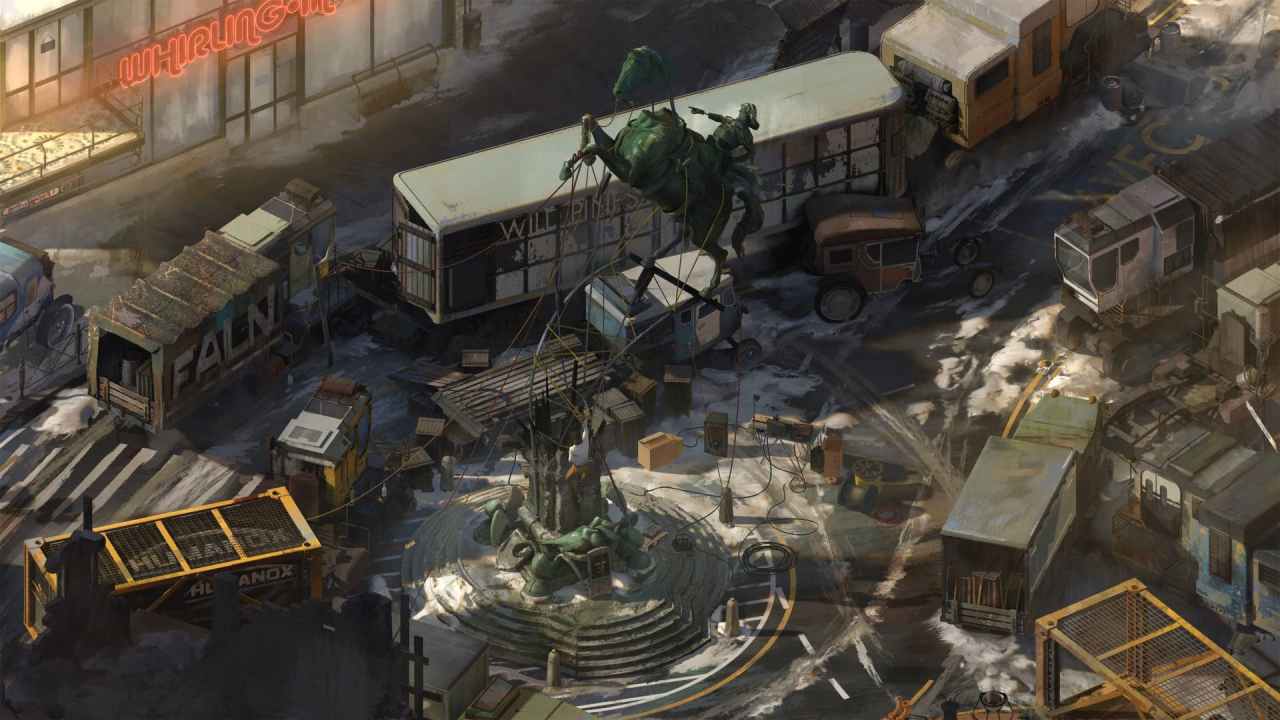
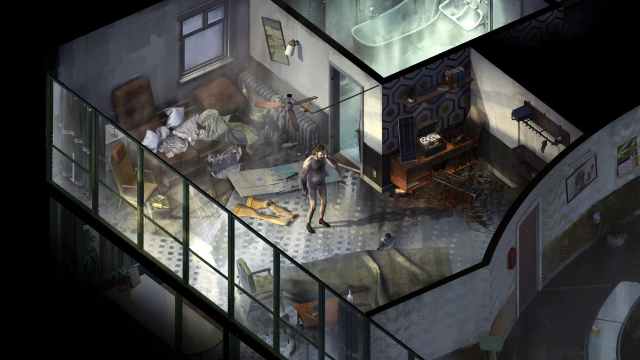
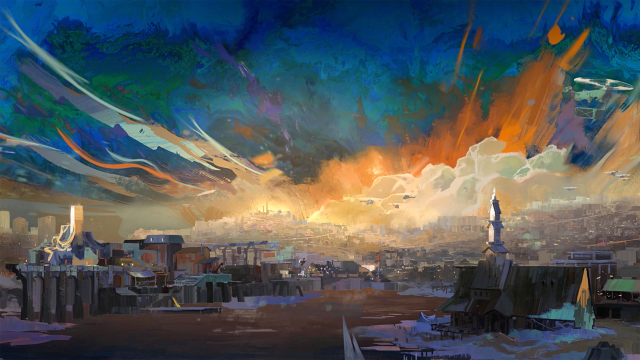
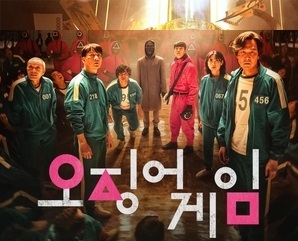
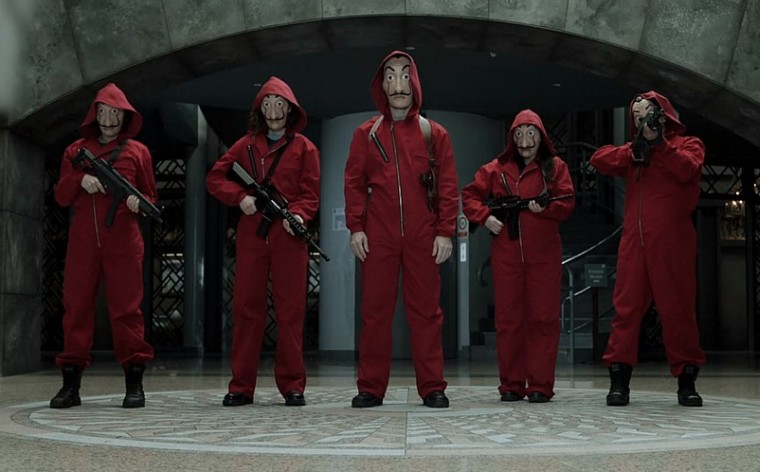
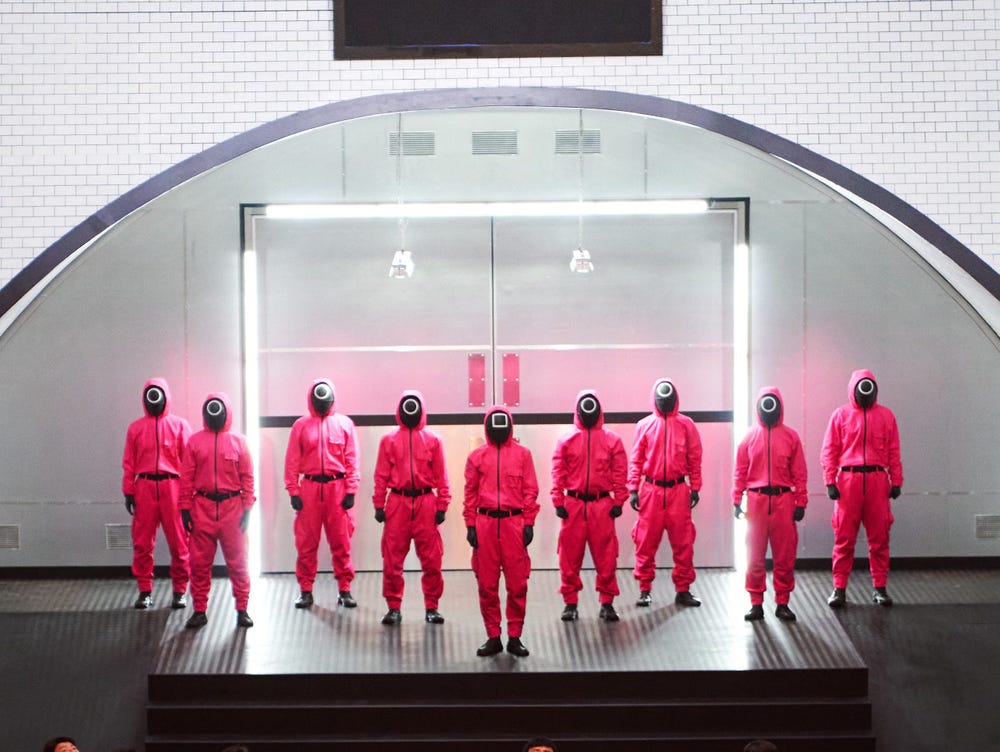

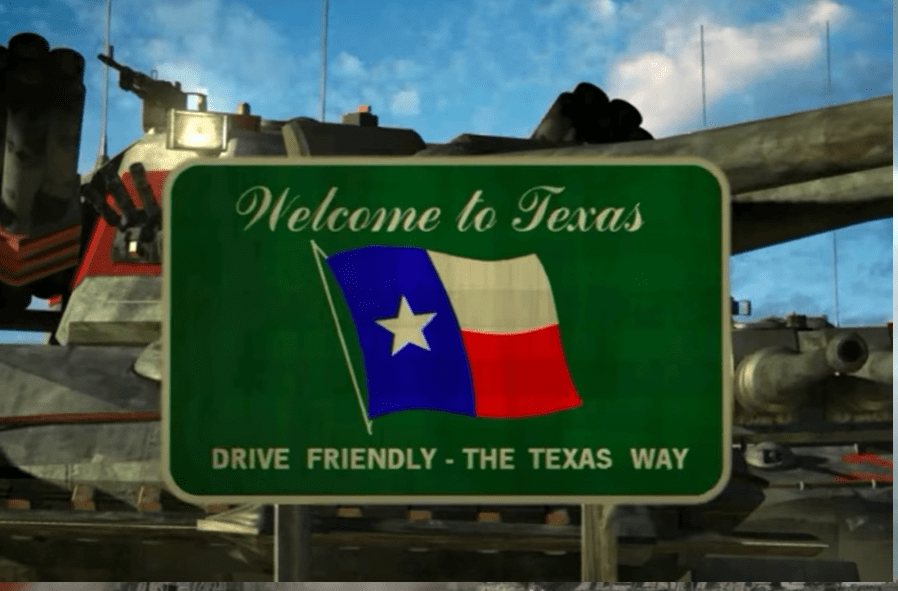
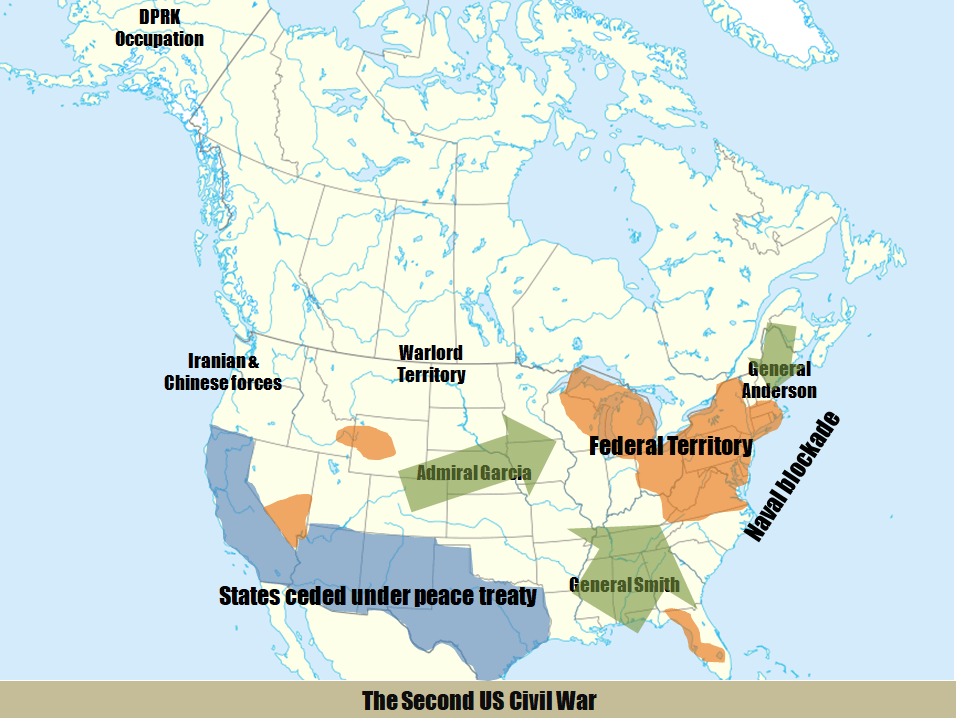
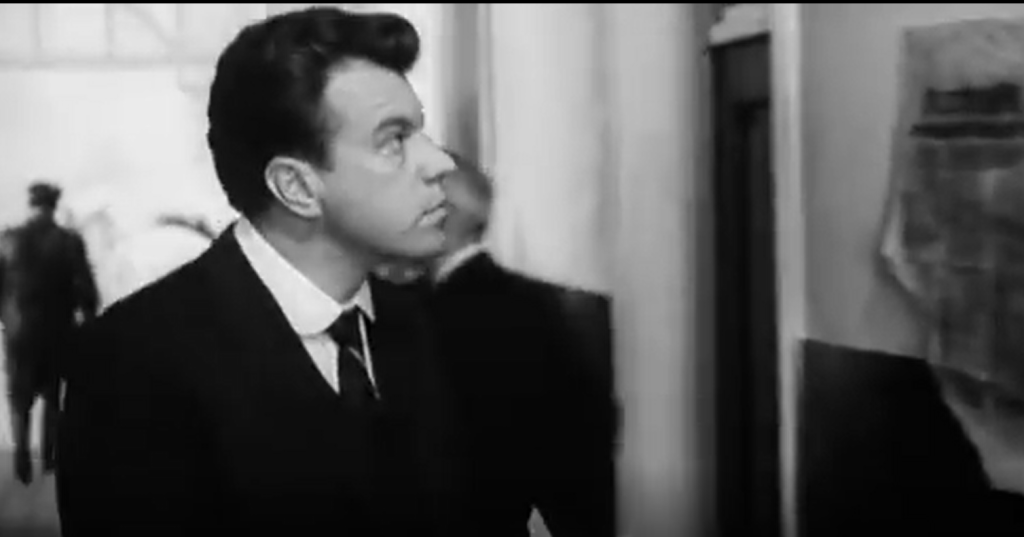
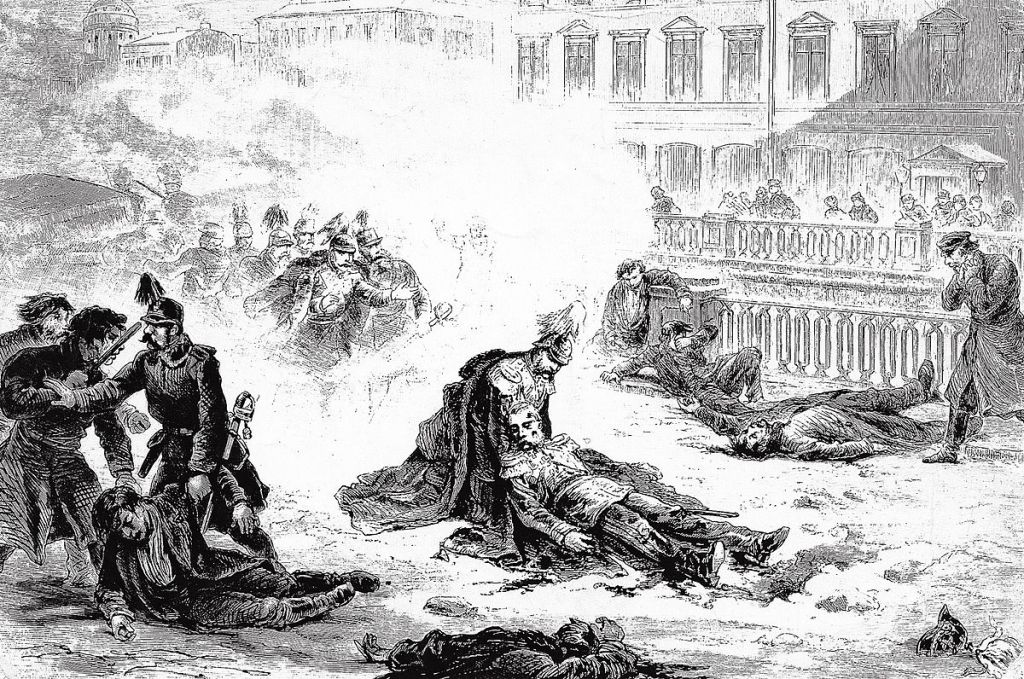

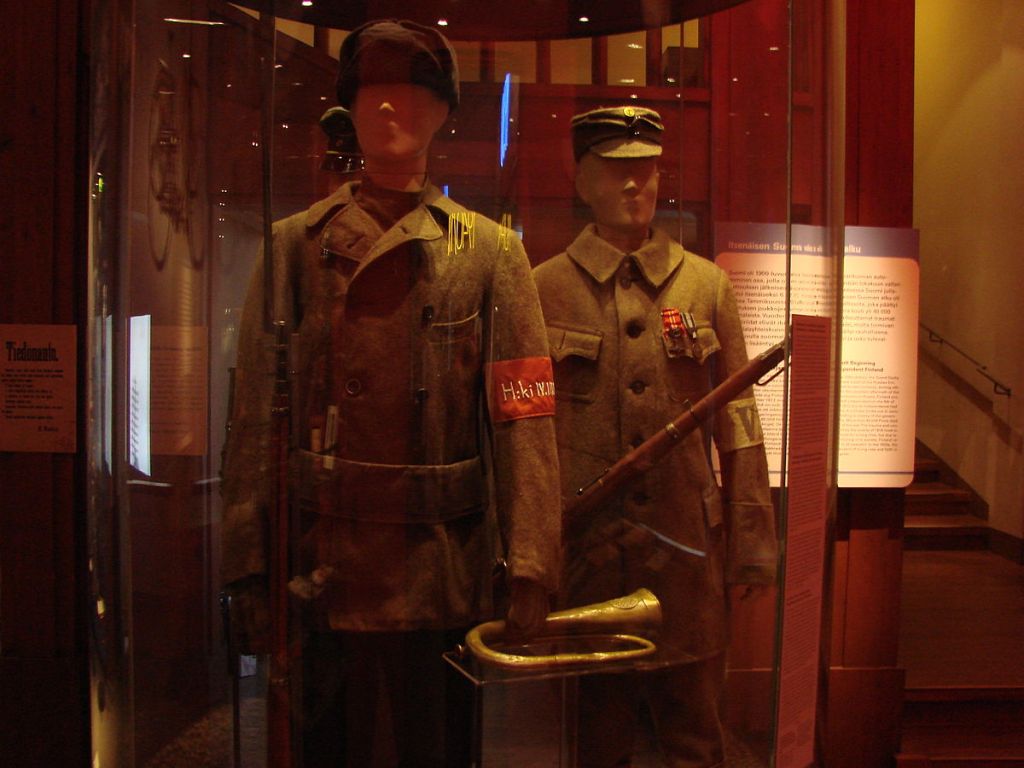
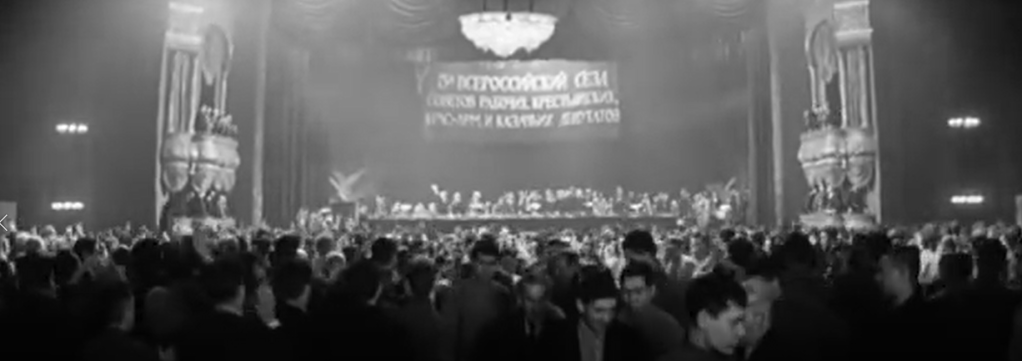
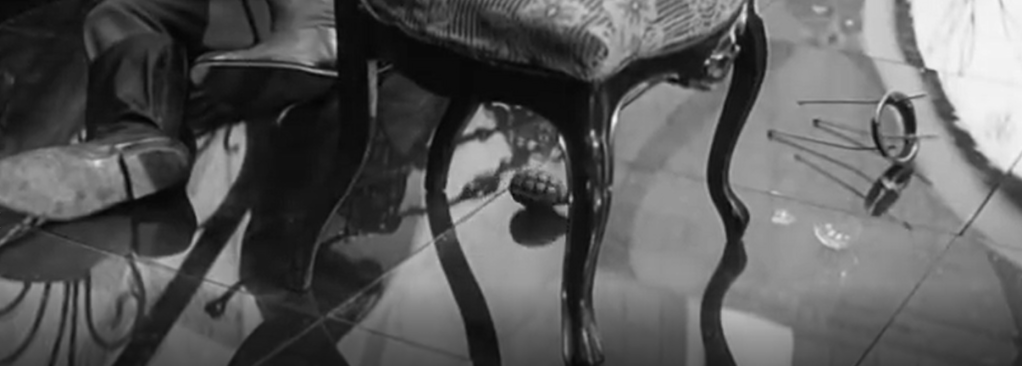
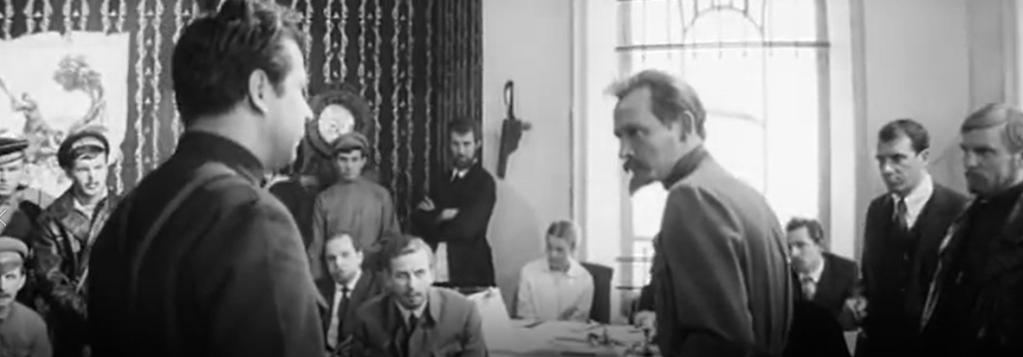
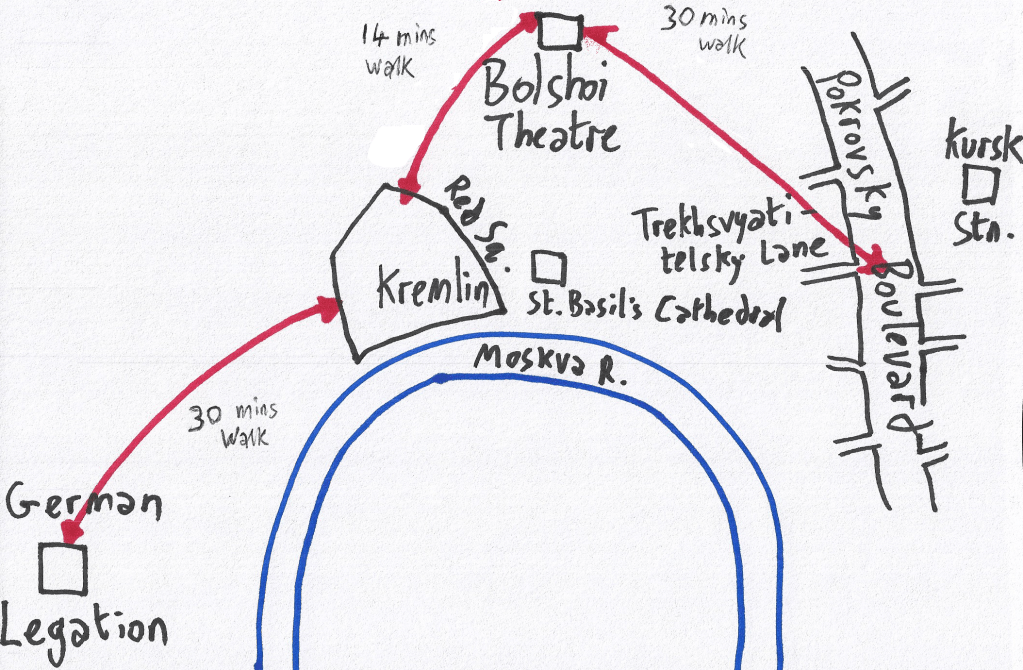
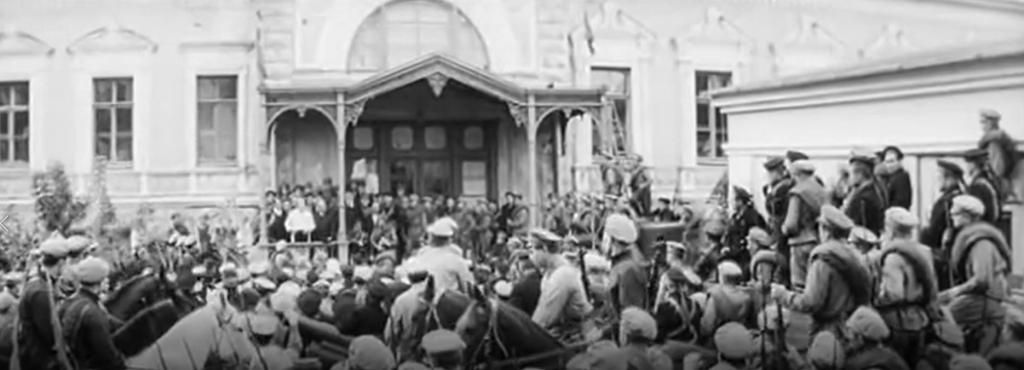
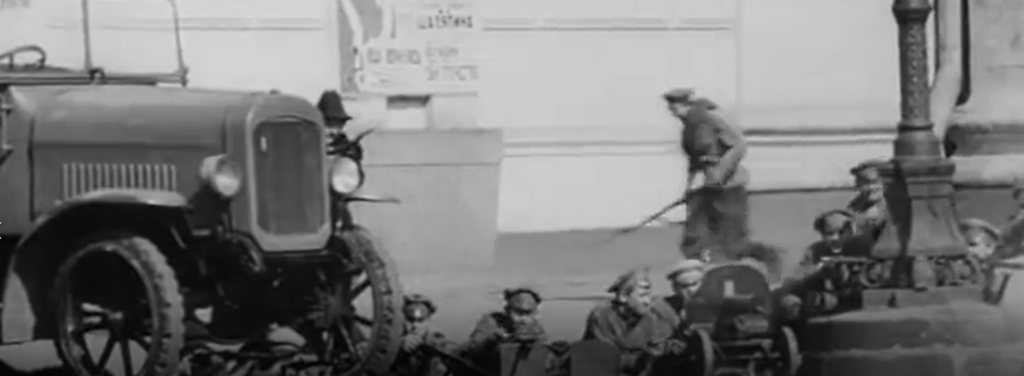
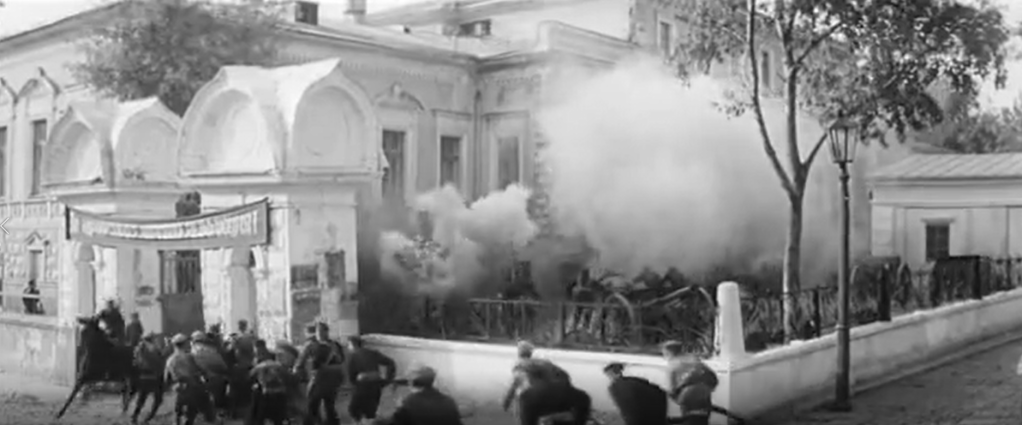
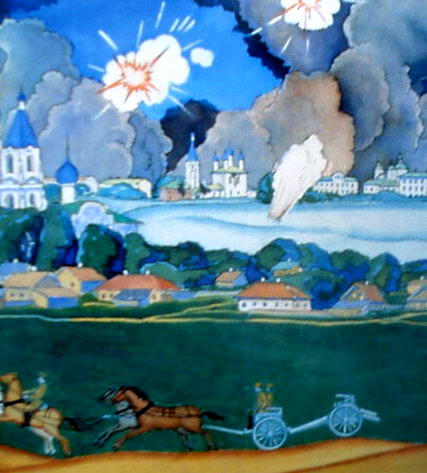

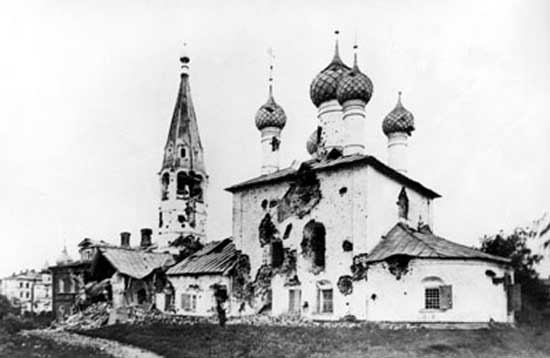


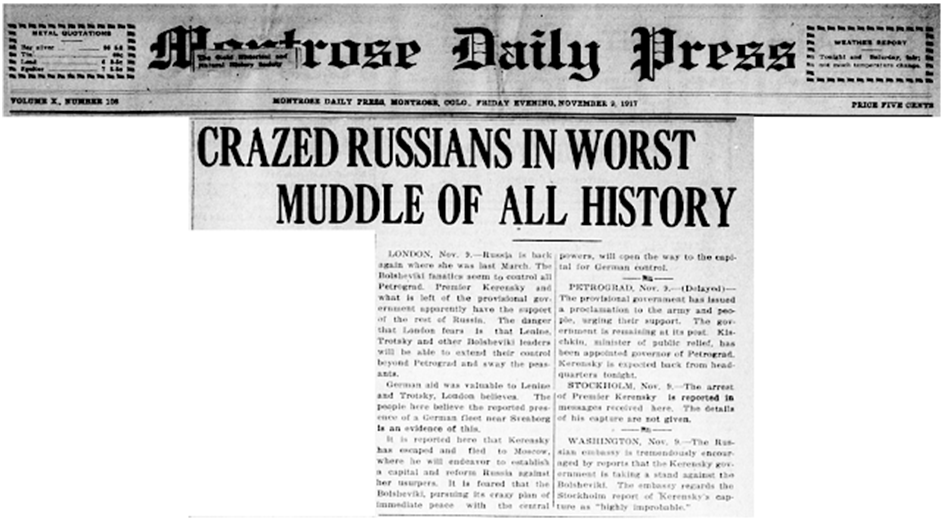
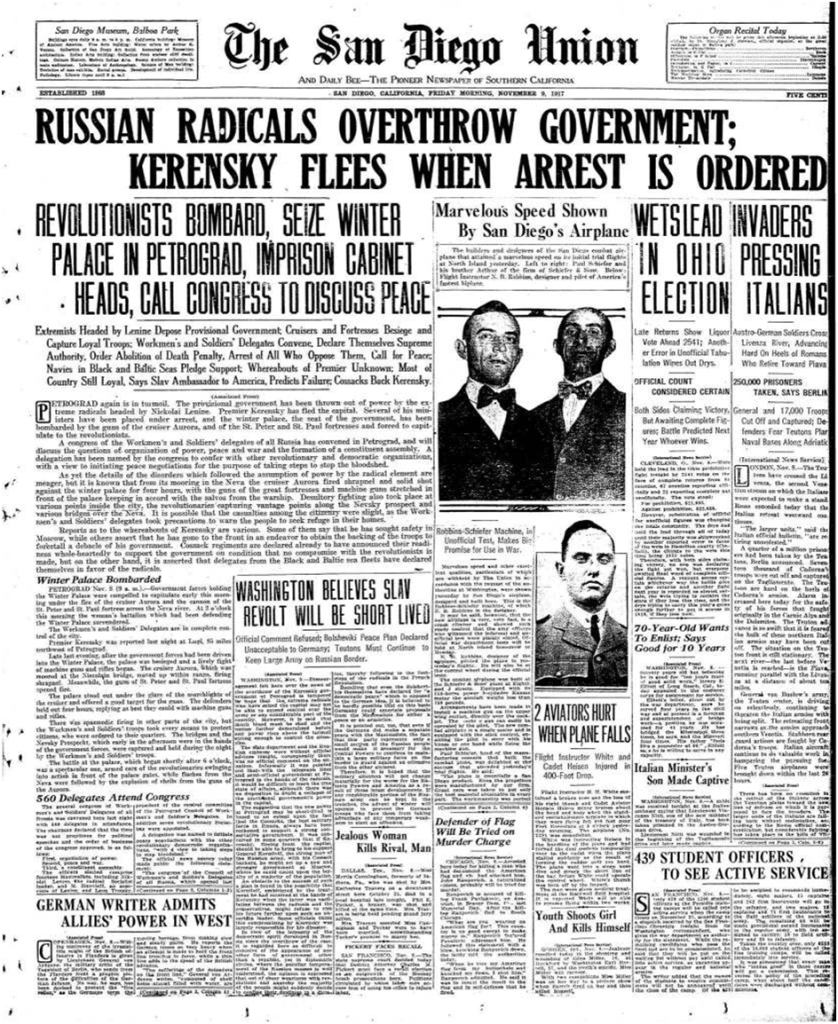
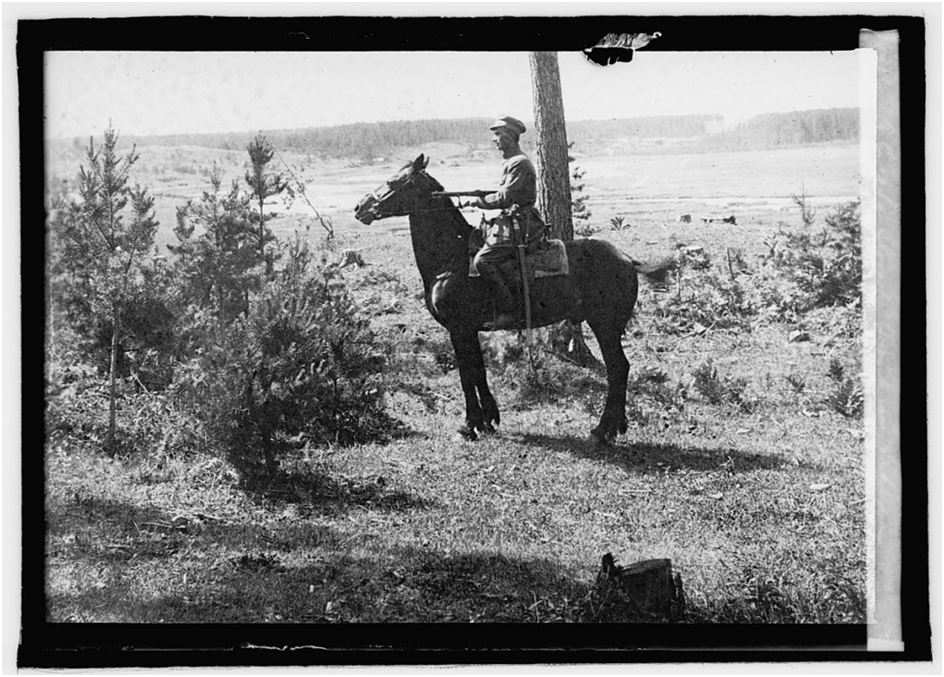
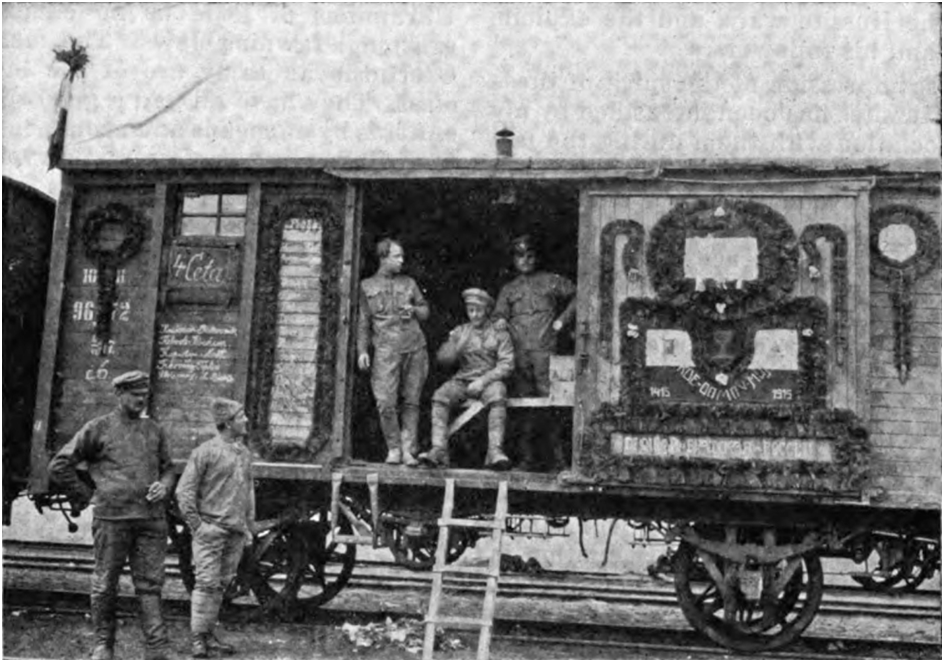

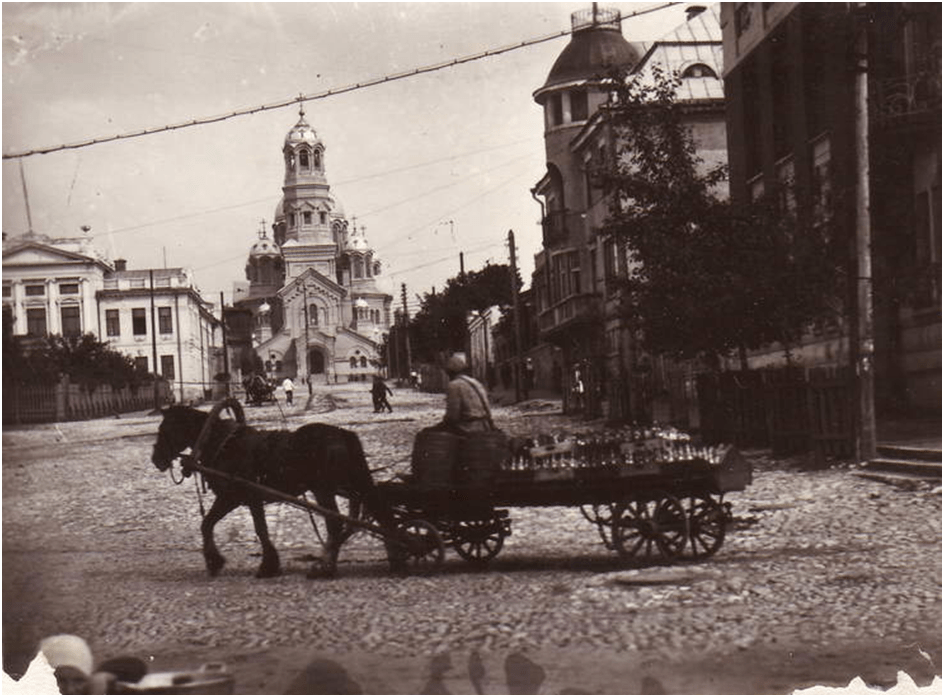
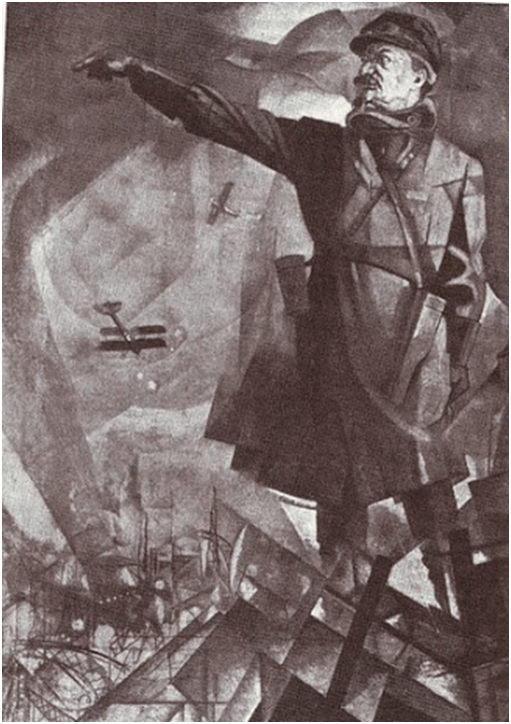
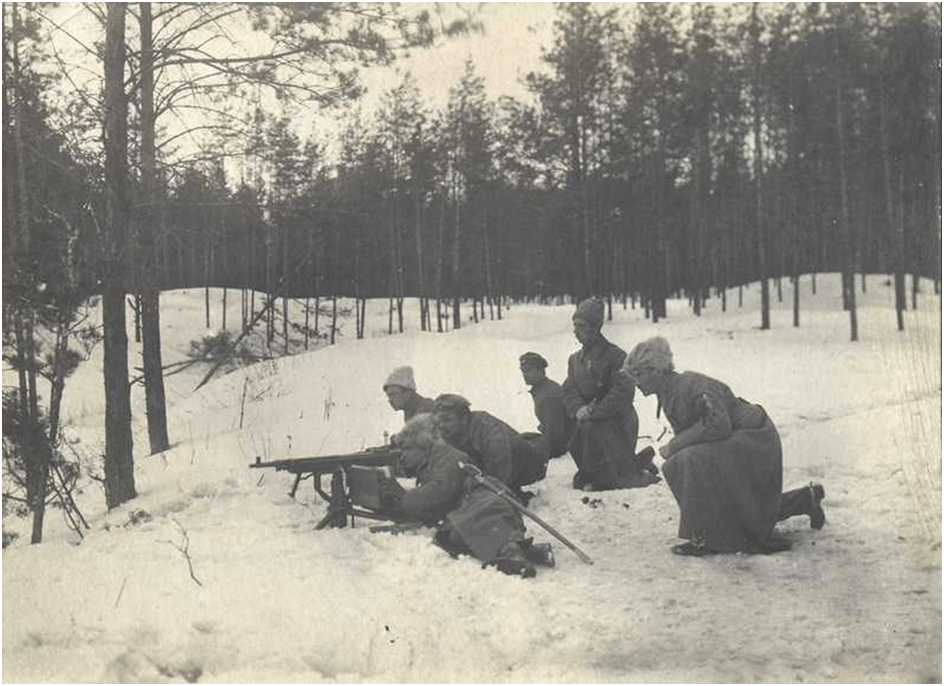

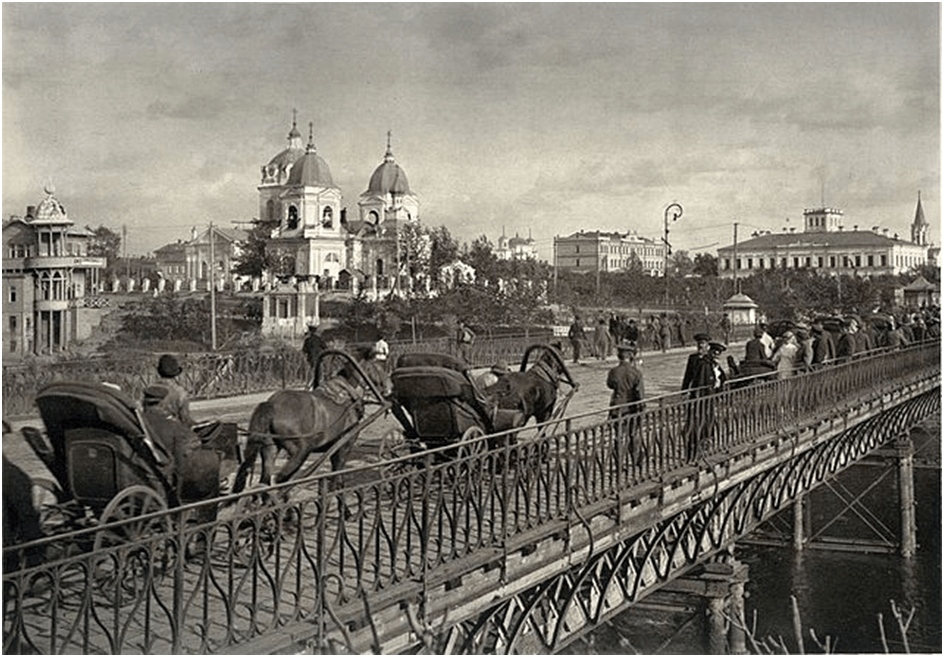
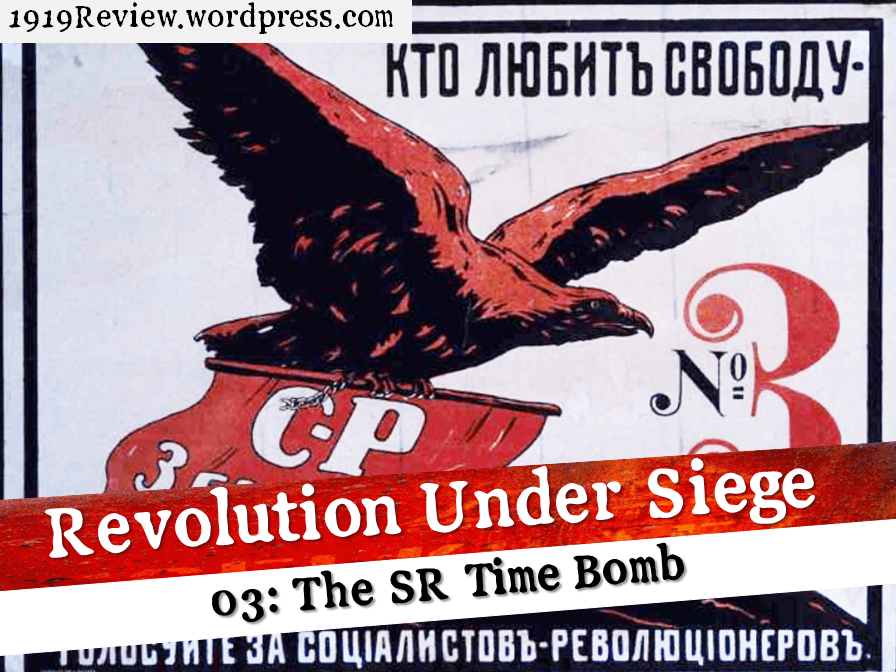


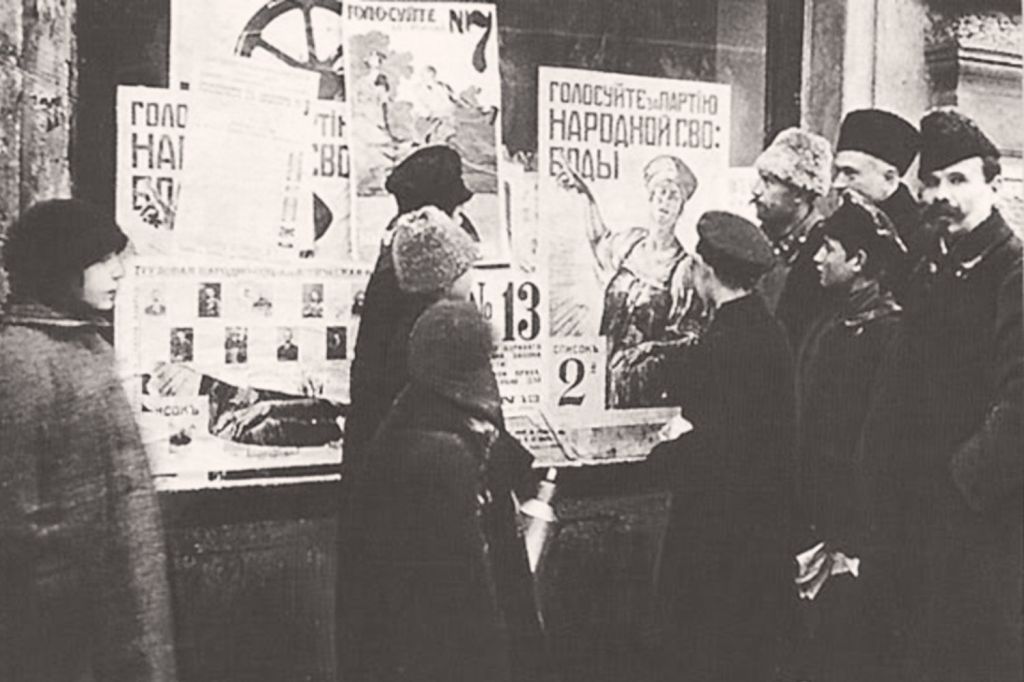
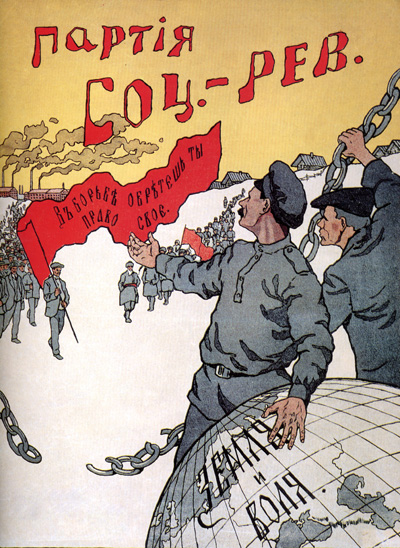


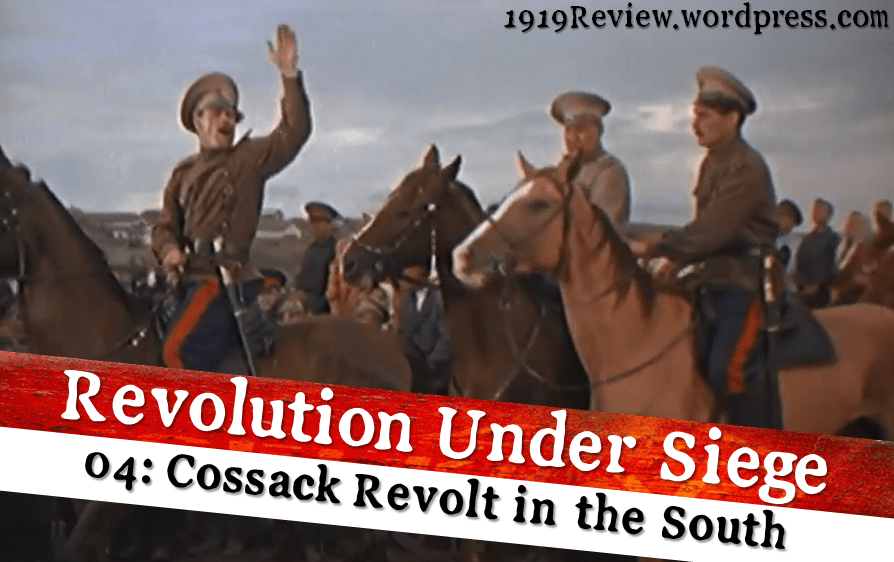
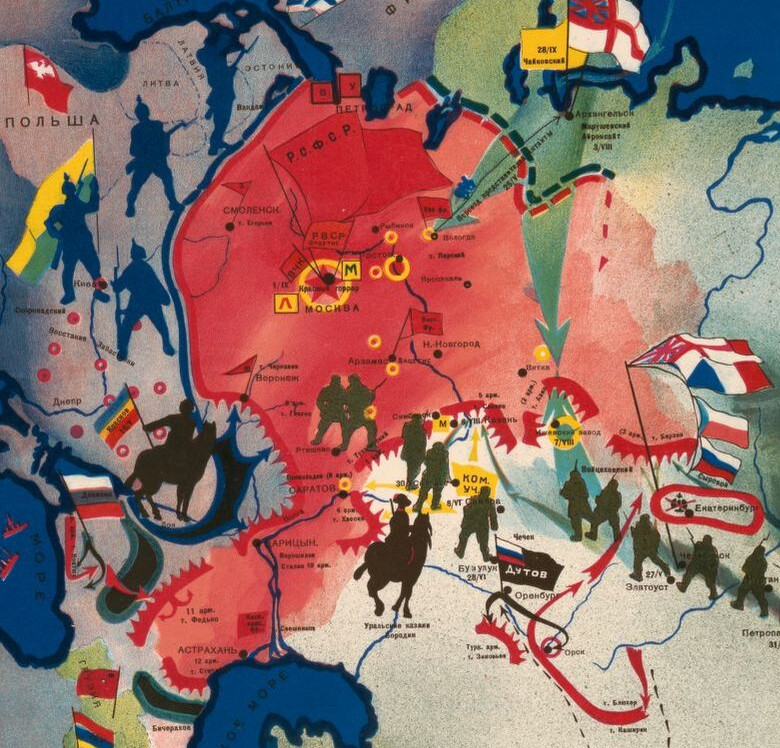


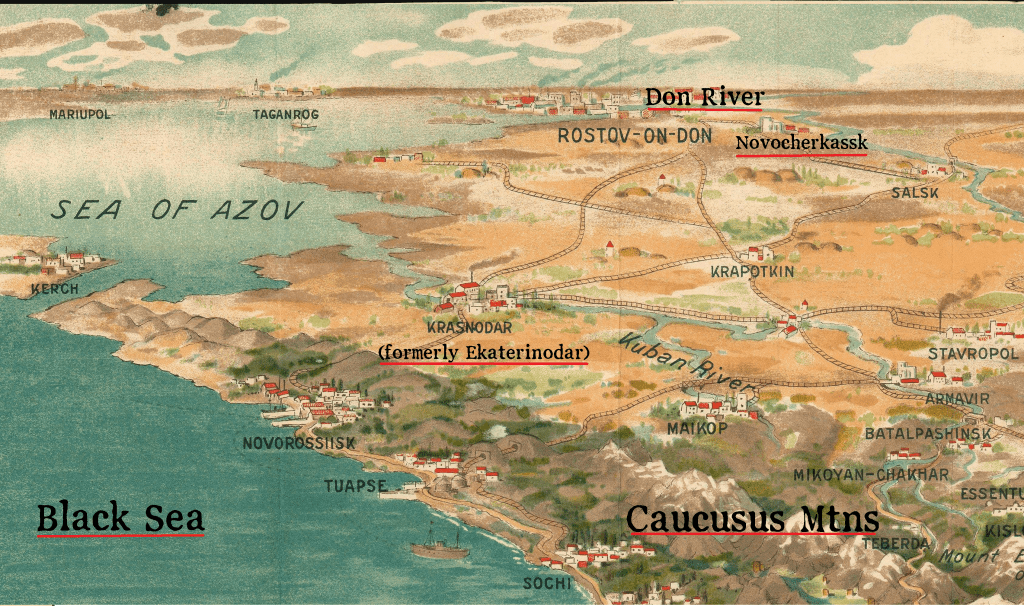
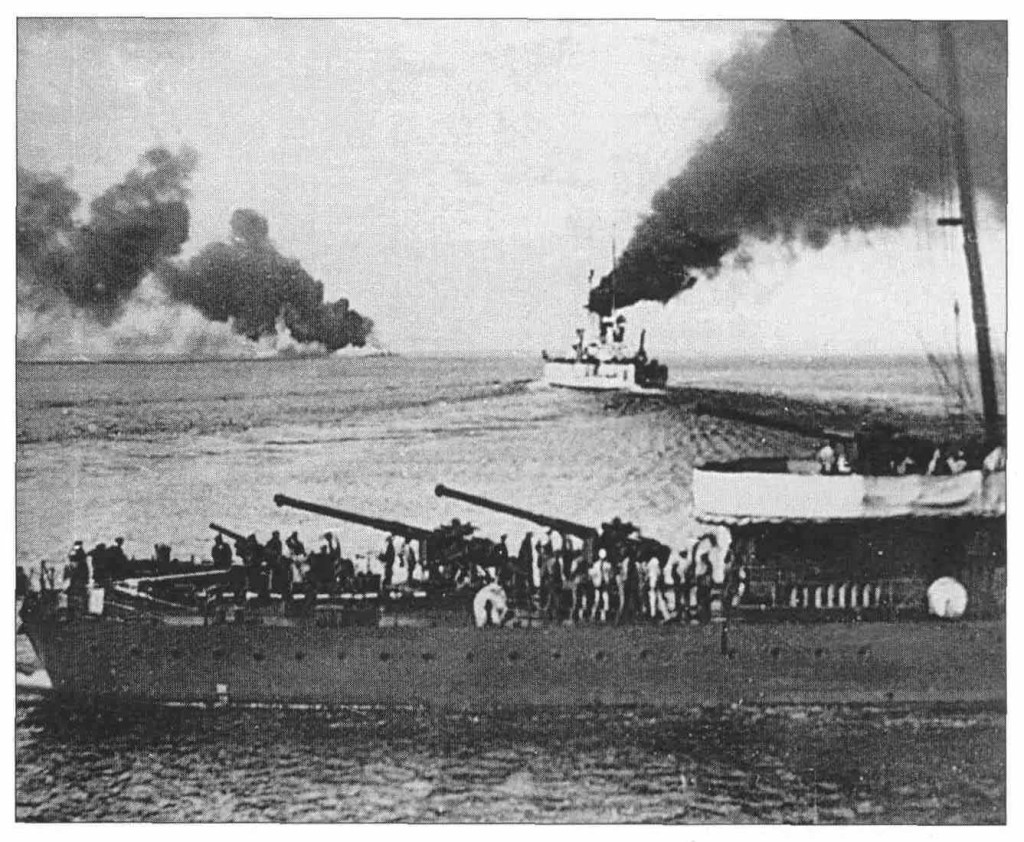
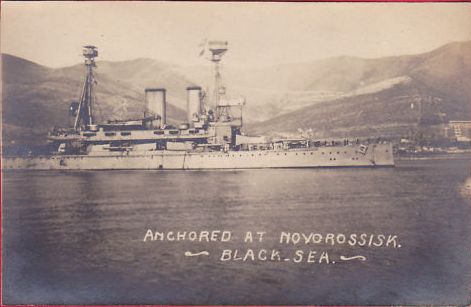
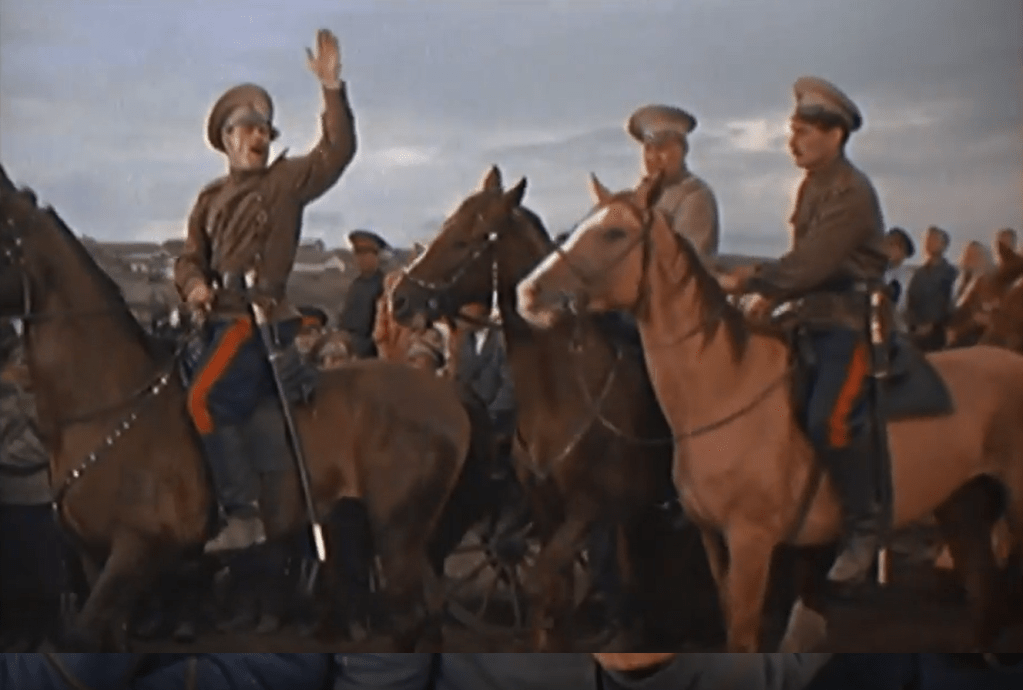
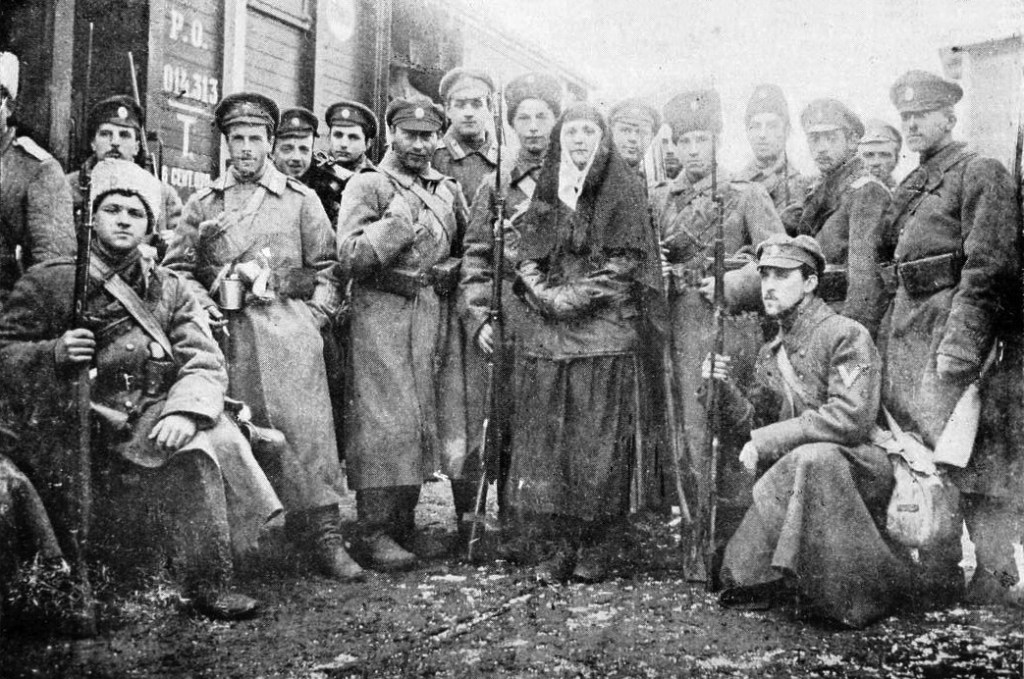
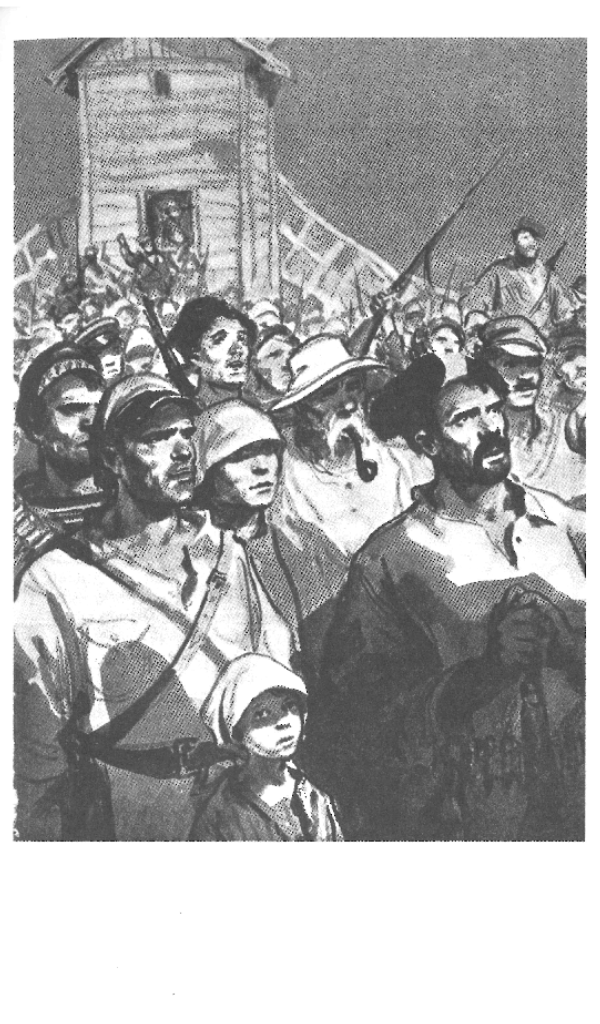

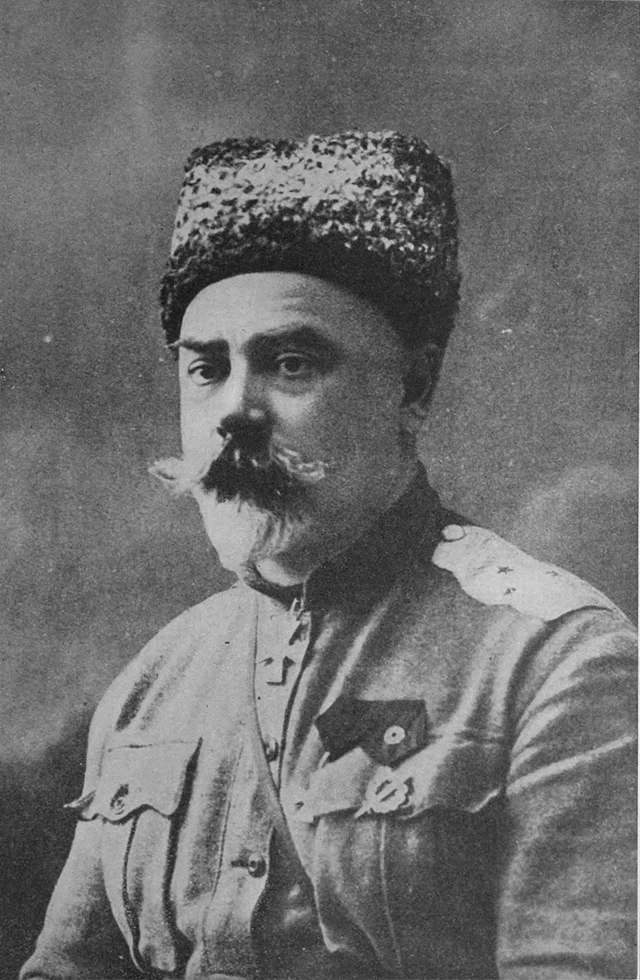
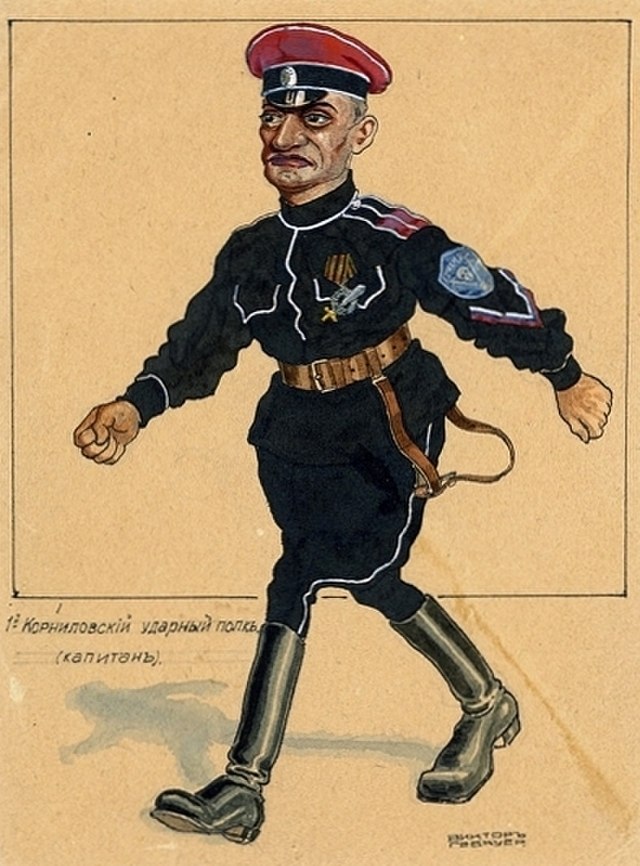
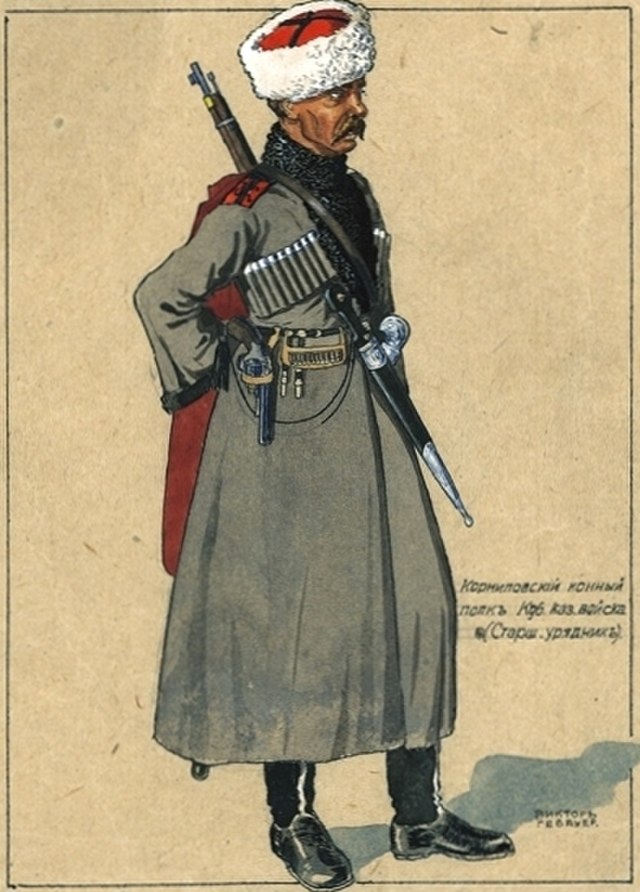
 The 1919 Review