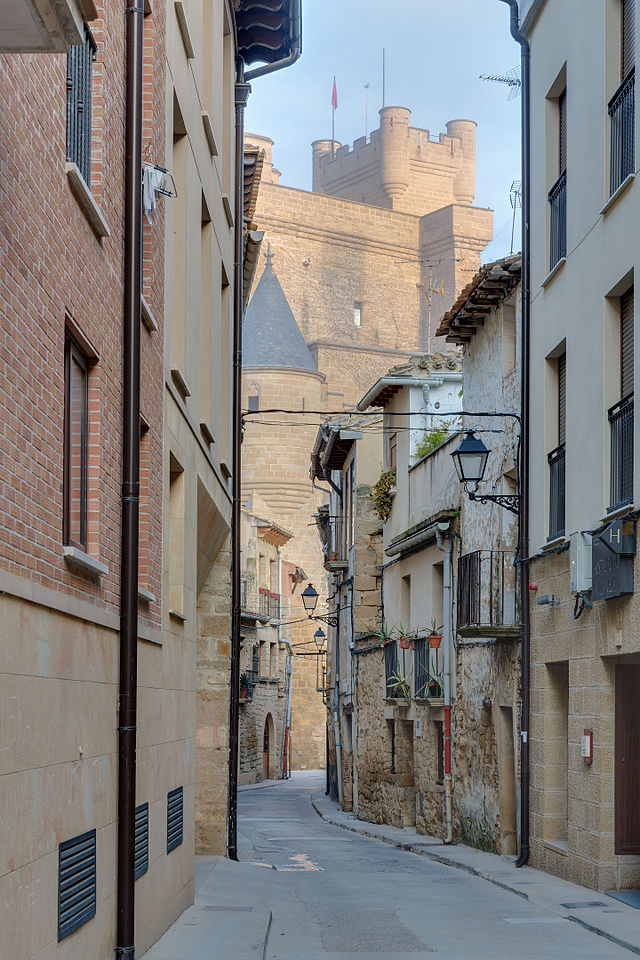
Nine things that inspired Star Wars

This week I’m taking a break from Miseducation Misadventures to let you in on what runs through my head when I watch Star Wars. Re-watching it as an adult, I notice little things that I can trace back to their source – like the scattered mentions of spice mines and spice freighters in the first movie. Any guesses which SF novel that’s a nod to?

Here are nine sources from which Star Wars drew key ideas. If I’ve missed any interesting ones, chime in down in the comments.

1: Reproductive Biology (2,000 million BCE)

The final battle in 1977’s Star Wars involves a swarm of small starfighters approaching and seeking to penetrate the much larger orb of the Death Star. This looks a hell of a lot like a load of sperm trying to fertilise an egg, with zero-gravity space standing in for the liquid medium through which the little swimmers propel themselves. This was probably not deliberate – the imagery probably bubbled up from the filmmakers’ subconscious. It stands out all the more starkly against this pre-adolescent and mostly sexless galaxy.

2: Metropolis (1927)

And here we have a female version of C-3PO, in an experimental silent film from Weimar Germany.

3: Flash Gordon (Comic and movies, 1930s)
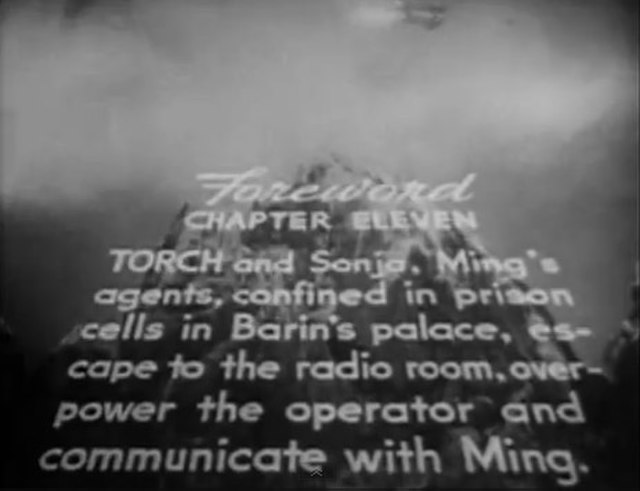
Star Wars took a few cues from Flash Gordon – most obviously the opening text crawl but also the general idea of a series about fun adventures in space.

4: World War Two (1939-1945)

In 1977 when Star Wars came out, World War Two was as recent as the collapse of the Soviet Union, or the first episode of The Simpsons, is to us.

And the movie helps the audience to grasp what is happening in space by using a visual language familiar to them: it has World War Two-era fighter planes in space. The Empire’s star destroyers resemble the warships of the mid-century. The Imperial officers dress like Nazis.

On the other hand, weirdly enough, Star Wars references the Nazi propaganda film Triumph of the Will. The final scene where the rebels have a rally and the human characters all get medals (a weird enough scene in itself) follows part of this notorious film very closely. An odd choice, having the good guys mimic the visuals of a genocidal regime, especially when the bad guys are clearly based on them.

5: Casablanca (1942)

In a colourful jazz bar full of diverse people, in a town full of thieves and refugees, in a desert land where an evil empire is tightening its grip, we meet a cynical smuggler who is secretly an idealist. Will he find it in himself to help the two desperate fugitives who are seeking passage to safety? Of all the cantinas in all the systems in all the galaxy…

6: Foundation by Isaac Asimov (1940s-1950s)
The story and themes of Star Wars and Foundation don’t resemble each other at all. But there are many little things which Asimov seeded in the science fiction genre which pop up in Star Wars:

  • Hyperspace travel
  • Weapons called blasters (much more lethal in Asimov)
  • A galactic empire
  • Space feudalism
  • A city which covers an entire planet (Trantor/Coruscant)
  • The wild outer rim of the galaxy
  • It goes right down to random names: Asimov’s Korellian Republic is echoed in the Corellian shipyards
  • Roguish traders who do the right thing in the end (Foundation has several Han Solos in it, who say things like ‘Never let your sense of morals prevent you from doing what is right.’)

But for Asimov, empires are fundamentally good, the roguish trader is an advertisement for a doctrine of enlightened self-interest, and mysticism is nothing but a charade. All this is at odds with the anti-authoritarianism and sincerity of Star Wars.

7: Akira Kurosawa (1930s-1980s, especially 1950s)

Japan’s most well-known film director had a huge influence on George Lucas and Star Wars. I haven’t seen The Hidden Fortress (1958) but apparently it involves two peasants who escape from a battle (like C-3P0 and R2D2) and meet a princess; there are sword fights, and in the end a bad warlord changes sides. But I’ve seen a few others, like Throne of Blood, Ran and Seven Samurai. Any of these great samurai films show themselves to be ancestors of Star Wars. There are the sword fights and the robes and Darth Vader’s helmet. In a western ear, names like Obi-Wan Kenobi have a Japanese ring to them, and the Jedi resemble an idealised version of the Samurai.

8: Dune (1965)
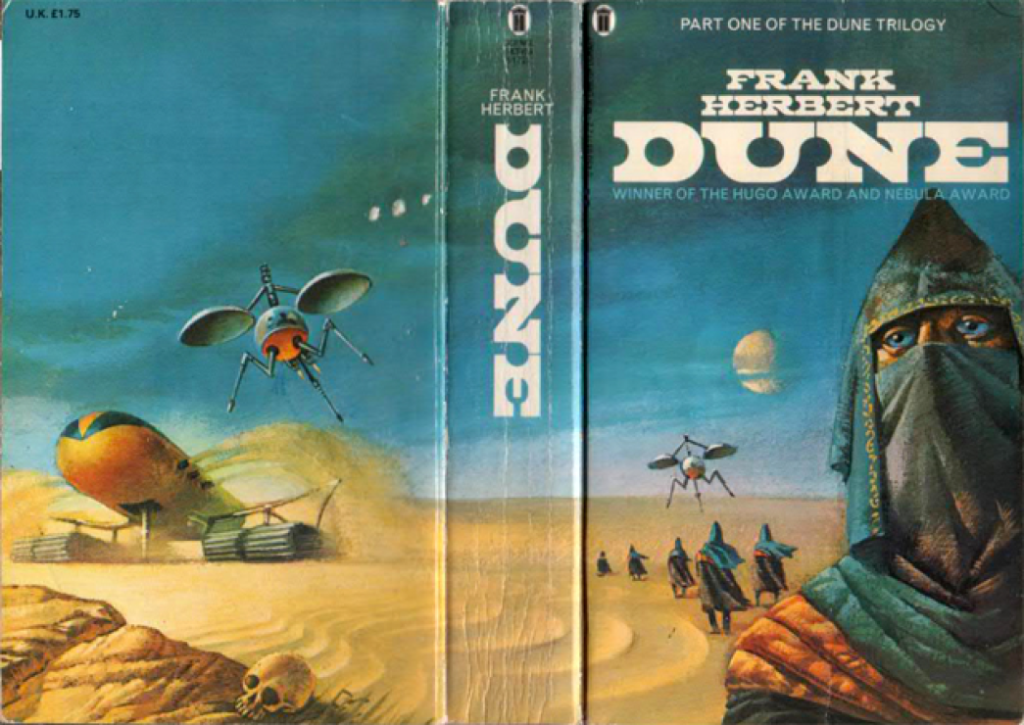
Frank Herbert’s Dune is riding high after Denis Villeneuve’s great film adaptation and I’ve written about it a few times before. Like Foundation, it provided a lot of ideas for Star Wars to pick up.

  • Dune is closer than Foundation to the themes of Star Wars. It is a text that was obviously written at the height of the anti-colonial struggles of the 1960s; it is pretty negative about empire; it is deeply sincere about religion and mysticism (even in charade form!).
  • The Jedi look like samurai, but they owe much to Dune‘s Bene Gesserit, an order of women who cultivate superhuman powers.
  • Both texts feature a harsh desert planet (Arrakis/Tatooine)
  • And giant worms,
  • robed nomad raiders,
  • smugglers,
  • and moisture-harvesting technology.
  • As noted above, scattered references to spice in the first Star Wars movie are another nod to Dune.
  • And once again we have space feudalism.

Foundation and Dune are the best examples I can think of, but they are stand-ins for a whole rich genre of mid-century science fiction without which Star Wars would not have existed.

9: The US War in Vietnam (1965-1973)

A few years ago Star Wars creator George Lucas confirmed in this interview that his story was fundamentally anti-colonial, that his heroic rebels were based in part on the Vietcong and that the evil empire was based on the United States – along with other past empires and freedom fighters throughout history.

Vietnam has featured just as heavily in other radically different readings of Star Wars, which is unsurprising as the war ended just a couple of years before the movie came out. I can’t remember who exactly wrote this, but the idea is that Star Wars was an infantilising nostalgic escape for a US public keen to avoid thinking about their country’s military and moral defeat in Vietnam. White people with American accents got to be the guerrilla heroes – though from the costumes to the names and decor, it is one of the strengths of Star Wars that it has never looked or felt ‘western’ (unless you mean spaghetti western, as there’s more than a hint of ersatz Mexico and Sergio Leone in there).

A last word…

The point of this is not to be like ‘Star Wars is a rip-off’ but to remind everyone that it’s just a movie, a cultural text rooted in its time. Today we have the corporate cynics for whom nostalgia is a currency and the toxic fandom for whom nostalgia and innovation are just different kinds of betrayal. The worst excesses of the fandom, I suspect, are boosted and incentivised by social media, and the back-and-forth whining and apologetics are increasingly astroturfed online by accounts which have harvested awesome volumes of engagement in the past from people bickering about fun movies, and who see the next big controversy as a payday. In all of it, Star Wars is reified, taken out of culture and history, put on a pedestal. One would think it feel from the sky. Actually the movie is a brilliant synthesis, and if Lucas had the precious and pious attitude on display in so much of the online commentary, it never would have been made at all.

Home Page/ Archives

Want to read more like this? Become a subscriber here:

Miseducation Misadventures: A Guide to Messing

You lose them in Second Year, around age 14-15.

At 12 or 13 they enter secondary school, where the older students look like adults to them; where far more of the teachers are men than in the primary school; where things seem at once more serious (the sackful of back-breaking textbooks, the timetable) and wilder (the smells of sweat and aftershave, the mass and velocity of the older kids when they mock-fight, the graffiti, the grossness of the graffiti, and the semi-secret places where smoking and vaping happen) and for a while the seriousness and the wildness hold the first year student in awe.

By the time they get into Second Year, the awe is mostly gone. What was serious is now a dull routine and what used to seem wild is now mostly normal. The kids have grown into this new world, have a sense of the pleasures and miseries it offers, what the rules are and which ones they can break. There has always been messing. Now it spreads, quickens.

Next post I’ll talk about what teachers can do to deal with messing. But for now, I’ll mention one of the least effective ways. I’ve caught myself responding to this messing with the same words my own teachers once said to me: ‘You’d better pay attention, because this will be on your Junior Cert.’

There is no appeal more meaningless to a second-year student. Junior Cert? If the second-year even has a clear idea of what that is, they know it’s nearly two years away. Their body will have changed by then. Their social life. Their brain chemistry. All their fantasies will surely have come true by then, elevating them to a state of happiness so perfect that they will not care about exams; or all their worst fears will have come true by then, and the exams will be the least of their worries. A year for a thirteen-year-old feels like a decade for a thirty-year-old.

(I think Classroom-Based Assessments are good, though I only overlapped with them for a few years. They don’t carry much weight in grades, but they do give kids something closer and more palpable to work towards than an exam.)

Second half of Third Year, maybe, you start to see the kids coming back around to you. A few get serious around exams, or just get more mature, or establish a rapport with at least some of their teachers. Through Transition Year, 5th Year and 6th Year, things tend to get better at an accelerating pace. I never had a sixth year class group that I didn’t enjoy teaching.

The most challenging type of student to have in front of you is a TY or a fifth-year who has only matured in the sense that they have gotten more sly, who has only been socialised into the school community in the sense that they know what they can get away with, who has only developed a relationship with teachers in the sense that they have developed a repertoire, an armoury, a tactical doctrine of doing shitty things and dodging the consequences.

Or they have gained immunity from prosecution (I suspect) due to being on a sports team, or (I was told by another staff member) due to secretly being a narc to management.

What is messing?

Let’s walk through some of the repertoire. Some of this is almost innocent and some of it is vile. I’ve thrown it all together to give you an idea of the range of the crap that comes flying at teachers.

Let’s start with second-year stuff: shouting, hooting, laughing weirdly loud; not working; singing; making sex noises; lying down on a row of chairs then ‘accidentally’ falling off; ignoring instructions; making repeated noises with a bottle, chair or pen; asking seven times ‘can we do a Kahoot?’; repeatedly dropping a book on the ground.

Then there’s what John Steinbeck described in Of Mice and Men as the ‘elaborate pantomime of innocence.’ Not content with doing an annoying thing, if the teacher tells the kid to knock it off the latter looks back with wide eyes – ‘Who? Me?’ – and tries to turn the class into a courtroom drama.

Let’s move on to stuff that some second-years will do, but which I associate more with older messers:

Using a watch to reflect a glare into someone’s eyes; saying the ‘F’ slur three times in one period; interrupting and making annoying noises; arriving 25 minutes late and waxing indignant at being asked why; chatting; messing with a phone; or messing with an empty phone cover to wind the teacher up into thinking there’s a phone.

That’s not all of it, I’m just pausing to breathe.

Giving a kid the finger, calling someone an asshole or a fat c*** (or that Polish word that everyone knows, or if you’re a Spanish Lad, hijo de p***); going to sleep or maybe passing out; throwing books; throwing water bottles; throwing a peach; damaging a computer mouse; saying ‘wank’ quietly, then louder, louder, louder; making eye contact with the teacher and silently miming oral sex; doing a racist imitation of another student; calling another student a ‘stupid foreigner’ twice in one class period; knocking over a table; standing up and shouting in the teacher’s face ‘I’ll break the head of ya’; speculating very loudly that a senior staff member is Jewish because of his facial features.

Then there are the various tag team routines – one kid loudly accusing, another loudly protesting innocence; one kid antagonising, another overreacting; sometimes both are in on it, usually only one is.

And there are the routines that come packaged in two halves, set-up and punchline: that one kid who ruins any fun activity you try to do with the class, then complains that the class is too boring; a kid who never does any work, but complains that the teacher is standing in front of the whiteboard (and has been standing there for all of three seconds); the kid who never pays any attention when the teacher introduces the class, then 20 minutes later demands in the most obnoxious tone, ‘what’s the point of this?’; the kid who takes a ‘toilet break’ and disappears for twenty minutes; next week he demands another ‘toilet break’ and when it is denied he thinks he’s Alexei Navalny; the kid who is constantly chatting, and complains that someone else is chatting, and demands that you punish them.

This is all stuff I’ve seen with my own eyes in TY and fifth-year classes. And some teachers will tell you ‘that’s nothing.’ But if you want to do something fun, you can selectively quote the above list, mentioning only the most trivial stuff, and make out teachers are whingers, etc.

The thing about some of the more trivial stuff is, the teacher doesn’t have to take any stern measures when it’s the odd isolated innocent thing. But there are students who will throw this stuff at you relentlessly. Most kids? Absolutely not. But enough that, I’d say in most classrooms, the atmosphere can be spoiled if the teacher isn’t working hard to counter it.

I have another fun suggestion for you: you can fantasise about the amazing, perfect and macho way you would have ‘put manners on those kids,’ implicitly judging me (and teachers generally) for ‘allowing’ any of this crap to happen in the first place. But what I did, and what worked and what didn’t, is a topic for the next post.  

Why do kids mess?

Why do some students disrupt classes and start rows with teachers?

A good place to start: why did you mess in school? Everyone did. I messed badly in the last year of primary school – not sure what that was all about, in hindsight – probably hormones. In secondary school, I messed in Maths class – not working, drawing pictures, chatting – because I was terrible at the subject. I messed when those around me were messing. I chatted and joked when the kid sitting beside me wanted to chat and joke – I didn’t want to be a dick to teachers, but it would be rude to blank your friend. I mitched a bit towards the end of Third Year, through a lot of TY, and towards the end of Sixth year, because I had a sense that I wasn’t hurting anyone and wouldn’t be caught.

Moving on to what I’ve observed as a teacher. Why do kids mess?

A working-class or poor student sometimes resents the teacher as a representative of a state they instinctively (and correctly) feel is the property of the rich. They might have a fundamental lack of trust in state institutions, and schools in particular, because of their own or their parents’ experiences.

And the school is not just the state. It’s also the church. Of the seven or eight schools I taught in, only two were secular. The rest all had elaborately Catholic names, statues of Mary, crucifixes on the walls, school masses. This wouldn’t be too shocking to Spanish Lads or to Polish or Lithuanian students. But for others, it’s got to be strange and alienating.

[As an aside, I’m pure disgusted with Enoch Burke, a worse messer than the most challenging kids I ever taught. I’m an atheist since age 20, but I went to school masses and paused lessons for prayers over the intercom. I didn’t confront school principals, loosing spittle in their faces as I ranted about the ways the school mass or the picture of Jesus at the back of every classroom troubled my conscience. I can be a secularist while picking my battles, respecting other people’s religion and not making everything all about me. And Burke can nurse his conspiracy theories about ‘gender ideology’ without turning a child’s personal journey and a school community into a circus.]

That was how I understood things at first – that students are alienated from education for very good reasons. There’s plenty of truth in that. But I haven’t observed that non-Catholic students are more prone to messing. Likewise it would be extremely unfair to working-class students to say they are behind more than their share of the messing.

On the contrary, I have encountered kids who picked up from their parents a feeling of superiority to mere civil servants. There are kids who view their teacher as a person of humble origins who has landed a cushy job, and who deserves to be tormented on that account.

‘Imagine being paid less than a binman,’ a kid of sixteen or seventeen once said in my class. He obviously intended me to hear. ‘Starting-out teachers get paid less than a binman.’ I don’t know if that’s true and I’ve never checked because I don’t care. If it’s true, good for the bin collectors. But that remark gives an insight into that kid’s disgusting attitudes, and helps explain why he was one of the most obnoxious students I’ve ever encountered.

Gender is another angle. I won’t comment on the sexism that (no doubt) women experience in teaching, because I want to stick to my own experiences.

I did come up against macho bullshit rooted in ‘traditional gender roles.’ There are boys who appear to believe that if they follow instructions from another male it’s basically a public humiliation. I have absolutely no interest in being the ‘alpha male’ or whatever . But when everything you do is interpreted through a worldview that reduces everything to dominance hierarchies, learning is the last thing on the agenda. 

Sometimes this helps produce kids who are on a hair-trigger. I imagine most of them end up expelled. But often it’s milder, taking the form of a skirmish with the male teacher. Let’s say the result is a draw. Honour is satisfied. The boy, having made it clear he can push back if he wants to, chooses now to co-operate. The teacher, who just wants to get on with the class, forgives even if he doesn’t forget.

Students who rebel against teachers are not all products of toxic masculinity. Sometimes teachers behave in unfair and cruel ways, and the kids are not wrong to push back. Sometimes a kid’s strong sense of justice can explain their behaviour.

I’m not qualified to say much about neuro divergence. But it appears to me that with some kids, their brains scream at them to seek attention, to move and make noise, to seek the dopamine rush triggered by transgression and conflict. Often kids are not diagnosed, or even if they have a diagnosis their teachers are not always told. You often find out about a diagnosis, whether it’s ASD, ADHD or a Learning Difficulty, randomly in staff room chat. 

Kids with a diagnosis do usually get resource hours and SNAs. In the classroom the teacher might have prior experience, but does not always have basic information and usually doesn’t have any training with regards to particular conditions. It goes without saying that the teacher doesn’t get any extra time or resources. No wonder so many kids, even plenty who don’t have any specific condition, fall behind.

Social problems from outside school invade it all the time. Crime, drug abuse, domestic violence. Some students have terrible lives outside school, and they come in and use their teachers as emotional punching bags.

Some students will annoy you one day, and be your best friend the next. Sometimes it’s pure manipulation. Usually it isn’t. This is because human beings are funny, and being a teenager is very difficult.

Kids mess because they are bored or resentful. This can be the teacher’s fault for preparing dull lessons, or not preparing at all. But it’s a vicious cycle sometimes. You have a class whose behaviour is very challenging, so you don’t try to do anything fun or easy-going. You know there are five or six kids who will take advantage and just plunge the whole classroom into chaos. This leads to more boredom, more alienation. But I don’t know what else one can do.

Likewise, kids mess if they feel their teacher is arbitrary and unfair. But when you’re dealing with a very challenging class group, you might come across as arbitrary and unfair without meaning to. The cycle continues.

A teacher feels vulnerable writing about this stuff, leaving themselves open to being judged for not ‘controlling the class,’ whatever that’s supposed to mean. But it’s a massive issue in secondary education.

The system largely creates ‘messing.’ Education has come a long way since the early 20th Century. But even though progressive ideas have been layered on top, the foundation is the same: there is an expectation that the teacher can make twenty-five young people behave in a strictly regimented way. The problem is the ridiculous idea that two dozen fifteen-year-olds can be made to not mess by a single adult who does not possess superpowers and who is – thankfully – not allowed to assault kids anymore. The basic set-up pits kids and teachers against each other right from the start.

So, confronted with behaviour that makes it very difficult to do our jobs, teachers have few good options. Next time we’ll look at what teachers can do under the status quo, and explore how things could be different and better.

Go to Home Page/ Archives

Did you enjoy this post? Please subscribe to get email updates:

Miseducation Misadventures: The Spanish Lads

This is the first instalment in Miseducation Misadventures, a series looking back the madness, craic and nonsense I encountered as a secondary school teacher in Ireland.

This article deals with the thing nobody tells you about in teacher training, the thing that nobody ever sits you down and explains to you: The Spanish Lads.

Maybe there’s an official name for this phenomenon. If so, I’ve never heard it. Because my experience is weighted toward boys schools, in my head this thing is simply called ‘The Spanish Lads.’

Who are The Spanish Lads?

The basic idea is this: sooner rather than later in your teaching career, you will walk into a new classroom to find among your twenty-five students one or two, maybe as many as three, four or more Spanish Lads. Nobody has told you they will be there, and nobody will ever tell you why they are there, or what you are supposed to do with them. They are a mysterious presence in schools; every staff member assumes that someone else knows what the story is with them. But you will notice that other staff members scold these students for talking to one another in Spanish.

How long does a Spanish Lad stay in Ireland? Not for a few weeks or a term but for an entire academic year, observing the strange rituals of the Irish education system like a latter-day Francisco de Cuellar stranded among the Gaels. Somebody somewhere has decided that this is the best way for them to learn English.

Staffroom chatter will soon reveal the other angle: schools that don’t have enough students have an incentive to take in a crowd of Spanish Lads so as to boost enrolment and get more funding. It’s possible that some of the jobs I had wouldn’t have existed if not for the Spanish Lads – so I owe them.

There is no one type of Spanish Lad. They have wildly varying standards of English and levels of homesickness. Some work hard, others are messers. One might be a class clown with cross-cultural and intergenerational appeal; another might burst into tears if you scold him. In short, they are every bit as varied as Irish Lads. I heard a second-hand story about one who ran some kind of online revenge porn racket. I knew of another who was not in a position to run any kind of online racket, because the woman who generously described herself as his host did not let him use her Wifi.

Maybe someone involved with the Hiberno-Iberian Student Placement Committee, or Armada 2000, or the Kinsale Project, or whatever is the official name for The Spanish Lads, will think this article is unfair. I haven’t reached out to them for comment – I haven’t even tried to google them – partly because I don’t know what they are called, but mainly because the point of this article is to show what this thing looks like on the ground for a teacher. My only obligation here is to be truthful with regards to what I encountered myself.

Two Juans

The Irish Lads often ignore the Spanish Lads due to the language barrier. Sometimes the Irish Lads will liven up a few tedious minutes by teasing the Spanish Lads: a class consisting of seven Dylans, five Jacks, three Haydens and seventeen Oisíns will find it hilarious that two of The Spanish Lads are called Juan.

In large parts of Ireland, Juan and one are pronounced almost the same. There was one Juan I knew who mostly dozed through class. An Irish Lad (the kind of Lad who is delighted with Of Mice and Men because he thinks it gives him a loophole to say racist words) used now and then to ask him, ‘Which Juan are you?’

Juan responded not with words but with a look of drowsy contempt which struck me as dignified and noble.

Where Spanish Lads exist in sufficient concentrations, they form a parallel school community across the wide 12-18 age range. When the Irish Lads push, they push back, and teachers get a headache trying to avoid being enlisted as a referee by the two Lad Factions while also making sure the school’s anti-bullying policy and code of behaviour are observed.

Sink or swim

For a while I worked as a resource teacher, giving extra help to some Russian and Georgian lads with their language barrier. It wasn’t nearly enough but it was a hell of a lot better than nothing. I don’t know if The Spanish Lads get this kind of support as a rule, though in another school I was very briefly assigned to help a small group of Spanish Lads with their English.

Leaving aside extra support, teachers are supposed to cater in their lesson plans for kids who don’t have much English. But that does not apply to the Spanish Lads. Teachers often get saddled with extra responsibilities but no extra resources or time. With the Spanish Lads, it’s different. We are not even given any responsibility. We are just supposed to pretend the language barrier isn’t there. If you think this makes things easier, then you’ve never been a teacher. The problem with a ‘sink or swim’ approach is that a certain number of kids just sink. Of those who sink, a few suffer in silence but most chat, bicker and mess, and that gets in the way of you doing your job.

The stupidest situation I ever encountered was with a 5th year English group. There were around 15 in the class, four of them Spanish Lads, (edit: no, there were actually 5) and around four other kids with English as an Additional Language. Bless my younger and more energetic self: we slogged through a novel, a movie and a heap of poetry. You can run a poem through Google Translate and come into class with printouts in five different languages so that the various nationalities can check the vocab, can have some kind of understanding  of what’s going on. But it’s not ideal, and a novel is a lot tougher. In that context, it’s not strange at all that the Spanish Lads’ attention wandered and that they often disrupted the class, driving me up the wall.

And all the pious scolding, warnings, write-ups and detentions I dealt out were based on a false premise: that there was some normal desirable situation from which this or that kid was deviating. In reality, things were a mess from the outset.

For the record, it was a handful of the Irish kids who gave the most grief in that class – the Spanish came a modest second, but they really didn’t help.

I know I would be sincerely happy if I ever somehow ran into any of my former Spanish Lads. The problem is rarely the kids themselves. And I think that 5th year group did benefit from my teaching. But any small benefit came at a stupidly high cost. It was a waste.

Why do we have schools?

The Spanish Lads are just one example of the things that are wrong with the education system – and here’s where I’ll get more general, and expose some of the themes I’ll probably be dealing with again in this series. What’s teaching all about? Why do we do all this?  

  • So that we can get paid.
  • So that those who are not yet old enough to work or to spend money are confined in institutions all day, out of danger and out of trouble.
  • So that parents can go to work.
  • So that industry and the state (and Canada and Australia and Switzerland) have a labour pool made up of people who can read and write and do sums.
  • So that all those responsible, from school management up to the Minister, can say without technically lying that they are meeting the state’s obligations to provide free secondary education to all.

…And if thousands of kids are just sitting there having their time absolutely wasted, it’s the fault of the kids, or the teachers, or the parents, or vaping, or the internet, or whoever banned teachers from assaulting kids.

If I was cynical I’d leave it at that – all those bad incentives and impulses built in, and the threat of authoritarian ‘solutions’ that would just be a burden of brutality and stupidity on top of all the dysfunction that’s already there.

But the less-bleak truth is that the system we have is the outcome of a compromise between all that crap and the good intentions of educators and our unions, of parents and students.

There’s also a powerful animating idea of universality and public service that’s always there underneath it all, even if it can get hidden under layers of rubbish. No teacher would phrase it like this, but in our modest way we bring liberation to young people – give them tools to reach their own understanding of the world, open the way for them to imagine and to achieve great things, provide them with a social environment that’s broader and more exciting than the home but kinder than the adult world. Some teachers get sick of it and quit (like I did) and some fossilize themselves in bitter cynicism. But for most, a sense of humour mediates between the good thing we’re trying to do and the crap conditions we have to do it in.  

Another less-bleak truth: there are probably thousands of former Spanish Lads and Girls walking around Iberia today thinking that beor, shift, shades and fuist are the Queen’s English. I guess I’m proud that I was part of whatever made that happen.

Do you want to read more like this? Subscribe here:

Or browse my full archive:

Go to Home Page/ Archive

Footnote

More than once, politics has come up with The Spanish Lads. Two little second-year students got really mad when I taught about the Conquistadors’ brutality toward the native Americans.

In that 5th Year class where I had four Spanish Lads, one day all the Irish lads were gone, maybe it was to do some project, or maybe for the ploughing festival. The Spanish Lads turned the chat to politics. I learned that I had a Francoist on my hands – thankfully just one. Two others were staunch Republicans and the fourth was a Catalan Nationalist. The brief but heated debate which followed brought the usually taciturn Georgian student out of his shell. He interjected to school the Francoist, telling him how communism meant free food, free electricity, free everything. Two Spanish factions fighting and a tough Georgian communist intervening – it was almost too much for my history-teacher brain.

The Warmth of Other Suns by Isabel Wilkerson

Have you ever heard of the Great Migration? I had heard of it before reading this book; I had a dim idea that it had something to do with black people moving to the northern cities during World War Two. It turns out, it’s much bigger than that. Isabel Wilkerson’s book The Warmth of Other Suns opened my eyes to the scale of this migration and how central it is to black history. In 1910, 10% of black people lived outside the South. The black population of Chicago was only 44,103. By 1970 that 10% had risen to 43%, and that 44,103 had topped 1 million. They were moving northward in their masses for over fifty years. It was not just a massive demographic shift. It was, says Wilkerson, “the first step the nation’s servant class ever took without asking.”

This is a big book, but I got through it pretty quickly. The author focuses on three individual migrants from different decades, states and backgrounds. She writes about them so well and they are such interesting people, that I remember their names six months after I read the book: Ida Mae Brandon Gladney who went to Chicago, Robert Pershing Foster who went to California, and George Swanson Starling who fled death threats in Florida and became a train porter in New York. In between, the author zooms out to an overall narrative, placing their travails in context. 

I thought I knew about the racist Jim Crow laws in the Southern US. But I never realised just how dystopian, sick, mad and brutal it was. Black and white people could not tread on the same steps or hold the same rail entering a train. Black motorists had to give right of way to white motorists. Black schools got second-hand textbooks begged from white schools. Ocoee 1920 and Rosewood 1923 were two of many pogroms I’d never heard of before. The lynching of Claude Neal (1934) was another episode which was almost beyond belief. Sheriff McCall is another name you’d do well to google if you’re looking to be horrified. Between 1889 and 1929 someone was lynched on average every few days. 

“Scott and Violet Arthur arrive with their family at Chicago’s Polk Street Depot on Aug. 30, 1920, two months after their two sons were lynched in Paris, Texas. The picture has become an iconic symbol of the Great Migration. (Chicago History Museum)”

George Starling attracted my interest because of his role as a labour organiser. In a very informal way, he organised black fruit pickers in Florida to demand better wages. It worked fine until word reached him that the bosses were planning to lynch him. Then he had to high-tail it to the north. Robert Pershing Foster gives an insight into the world of the black bourgeoisie and upper middle class – which always existed, throughout the Jim Crow period and after. But I guess it was Ida Mae’s story that got under my skin the most. We see her as a young wife in Mississippi picking cotton, and we see her as an old woman in the Chicago home she moved into back in the white flight era, observing through her upstairs window the comings and goings of the familiar neighbourhood drug dealers and sex workers.

Generally the black migrants benefited from their migration to the north. Stereotypes about the new black communities in the north – that they had big dysfunctional families, that they didn’t work, that they were uneducated – were all rubbish. 

But often the book’s title reads like bitter irony; the sun wasn’t much brighter in the north. Foster’smigration involved driving for days across the desert being turned away from every motel because of his skin colour – in Arizona, which was not a Jim Crow state. Wilkerson paints a picture of how a ghetto neighbourhood was born. I always assumed ‘white flight’ from the inner city to the suburbs was some slow gradual process. It was not. The first black family would move into the neighbourhood, and at once all the whites would descend into a hysterical frenzy. They would be gone within months or even weeks. 

That is, if they didn’t try to drive out the new black families. There were 58 bombings in 4 years in one Chicago neighbourhood as white concerned residents fought a guerrilla war against peaceful black families. Wilkerson gives an account of the absolutely horrifying events in 1951 in Cicero, a suburb of Chicago, when one black family tried to move in. 

I remember my schoolbooks mentioned that Martin Luther King got a cold reception when he tried to organise black people in the northern cities. I always assumed, in a vague way, that he organised some meetings to which nobody showed up. What actually happened: he organised large marches that were beaten off the streets by violent white mobs. Northern mobs.

What I got out of this book was, first, an acquaintance with Ida Mae, George and Dr Foster, three fascinating individuals. Second, an appreciation of what a massive phenomenon the Great Migration was; think of any famous black person, and chances are they or their parents or grandparents were part of this epic story.

Third, what a crazy dystopia the USA was and is. That country has never really reckoned with this past, not really. For most of my life, the standard way for Americans to deal with the past has been to pretend that Martin Luther King agreed 100% with whatever the hell they happen to believe (Only people in the overlap of the Venn diagram of Protestantism and Socialism can actually claim that honour). This cosy consensus has been fracturing since Trayvon Martin, Mike Brown and George Floyd, and since Trump rose to prominence as a political figure in 2015. I don’t know what the next consensus will be or whether it will be closer to the truth or further away, but it will take a long time to emerge and will be the outcome of an epic political and social struggle. The Warmth of Other Suns deals with a historical episode that ended in the 1970s but it’s impossible to read a book like this without it provoking all kinds of reflections about the present and the future.

The Warmth of Other Suns by Isabel Wilkerson, Random House, 2010

Do you want to read more like this? Subscribe here:

Or browse my full archive:

Go to Home Page/ Archive

What I’m Reading: Asian Odyssey

Asian Odyssey by Dmitri Alioshin (Henry Holt and Company, New York, 1940, accessed on hathitrust.babel.org 25 May 2024)

This is a violent, vicious, cursed book. It’s also deeply engrossing and at times it approaches real beauty in the descriptions of nature and exotic ways of life. It purports to be a true story, making it a historical source. It rings true and mostly  corresponds to other sources I’ve read. But it can’t possibly all be true. 

So, yeah, it’s a strange one. 

Let’s try to sum up the story. Dmitri Alioshin is the son of a Russian merchant family in Harbin, China. He is a university student when the Russian Revolution takes place. He joins the White Armies to fight against the Red Army. He arrives at his frontline unit just on time to experience the decisive Red offensive and the collapse of White Siberia. Through wild adventures, some bloody, some farcical, he escapes at last to Mongolia. Here the remnants of the Whites fight on. He joins an armed band in raids against the Chinese and over the border into Soviet territory. His band is forced at gunpoint into the army of the ‘mad baron’ Ungern-Sternberg, and Alioshin bears witness to all kinds of unspeakable horrors in the course of one final campaign. After the defeat of Ungern, he escapes across the Gobi desert and back into China along with a small band of survivors. There is a final round of battles, both against the Reds and against White rivals.

You can get a taste of Alioshin’s book here, in this chapter of Revolution Under Siege where I quote him a lot. A lot of it is there in miniature: lyrical descriptions of nature and scenery; valuable first-hand accounts of war; absolutely ghoulish details like the cup made from the skull of a Red partisan. There is romance in how he describes the wilds of Asia and the people who live in it. He meets more than one picturesque old hermit. Many times he has to flee on foot across harsh and beautiful landscapes. He lives among the nomads of Mongolia, and gives us a powerful sense of what that was like.

Many times, he is within a whisker of death. Several times, he gives a frank account of himself killing someone with his bare hands; other times the reader doesn’t even need to read between the lines to figure out that Alioshin has participated in some unspeakable atrocity, such as forcing hundreds of people into a building and setting it on fire. Regarly  he is a witness to atrocity – to men being burned or frozen, to the sack of a city, to a gang-rape. 

You wonder if he’s making a lot of it up, if he’s credulous, if he’s pushing some agenda. Often he reports an atrocity second-hand, and this is a relief, because we have another degree of separation that allows us to say, ‘That’s probably bullshit. At least, I hope so.’ But sometimes it’s first-hand and there’s little comfort.

What really struck me was how benevolent the Reds come across in comparison to the Whites. He never stops saying that the ‘communists’ are terrible, and on occasion he gives examples of friends who were shot by the Red Army, or tells us that between Red and White neither side ever took any prisoners (It’s possible that this is true for the parts he experienced, but in relation to the whole it’s not accurate). But after the defeat of White Siberia, Alioshin disguises himself as a doctor, somehow becomes a major in the Red Army and then a high official in local civilian government. The Red soldiers he meets are kind, the officials less so. One nurse, an ‘exemplary communist,’ sees through his disguise (p 84), but she shrugs her shoulders and lets him go. The Reds are a soft touch!

How to begin to describe the depravity of the Whites, as recorded in these pages? Ungern is the worst, but he is only the most prominent star in a constellation of Colonels and Generals who are, variously, backstabbing, cowardly, incompetent, bloodthirsty, bigoted, sadistic and callous. Colonel Sipailov has his girlfriend serve drinks to a group of officers, then he takes her into the next room, strangles her to death, drags her body back into the room in a sack and proudly shows it to the officers (250). This Sipailov is only one of several officers who keep trying to ambush, poison or hang the young Alioshin. Why? Paranoia, office politics, casual cruelty. 

Alioshin’s narrative is clear and sober – a contrast to the blood-drenched insanity he is describing. Explicitly, he only allows a hint of regret. But implicitly the older Alioshin seems to be telling us that he realises now what he didn’t realise then: that his cause was evil. Or else he’s just looking for money by refashioning his war stories into a sensational mix of ultra-violence and orientalist romance. 

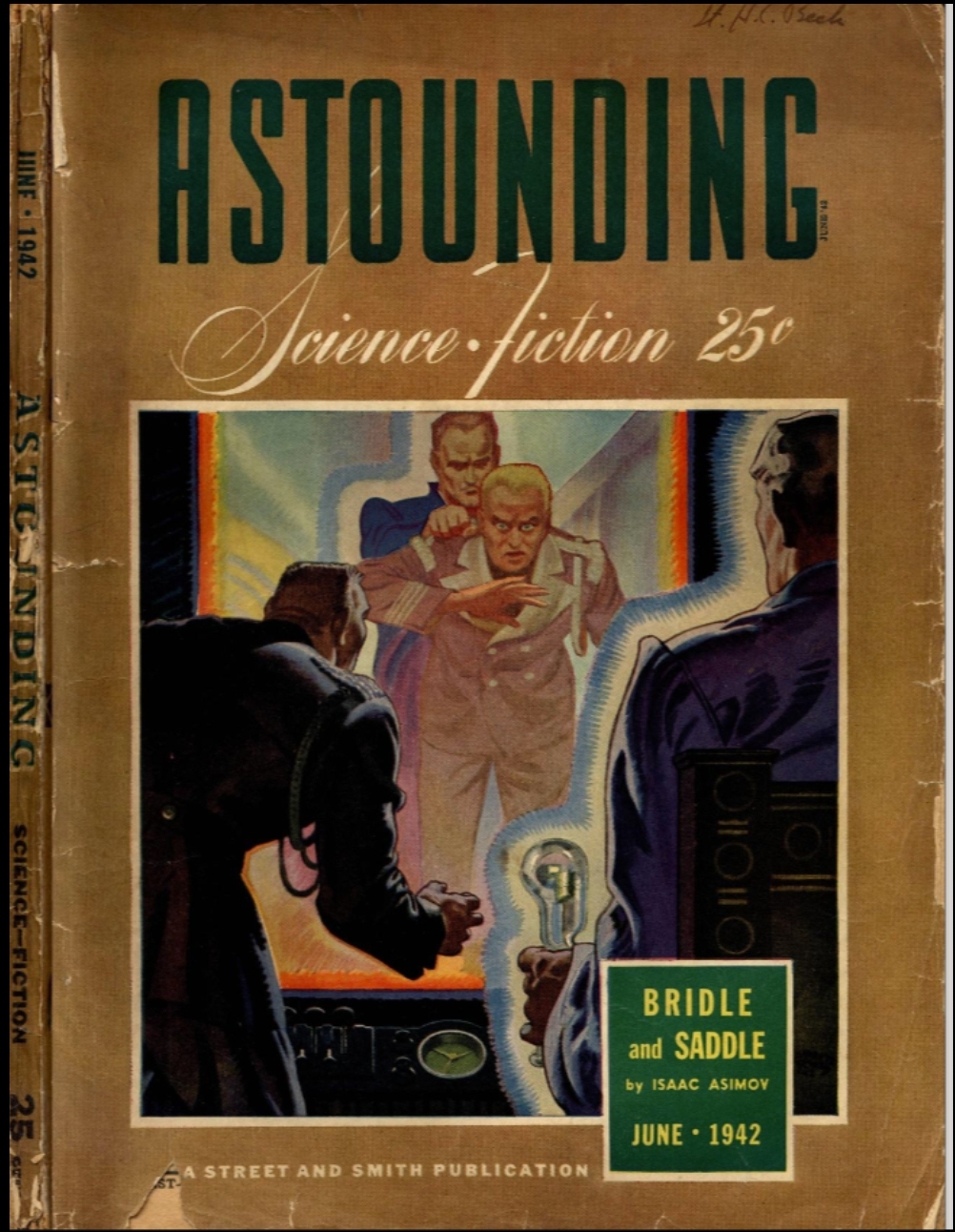
What I’m Reading: Foundation by Isaac Asimov

‘Seldon crises are not solved by individuals but by historic forces. Hari Seldon, when he planned our course of future history, did not count on brilliant heroics but on the broad sweep of economics and sociology. So the solutions to the various crises must be achieved by the forces that become available to us at the time.’ 

– Hober Mallow, ‘The Merchant Princes,’ Foundation by Isaac Asimov

A lot of what’s fresh and brilliant in Isaac Asimov’s Foundation, written as long ago as World War Two, have since become so common in the genre that they almost escape notice when you encounter them in these pages. 

We have travel by hyperspace (‘hyper-space, that unimaginable region that was neither space nor time, matter nor energy, something nor nothing’); weapons called blasters; roguish but ultimately moral traders; cities which cover entire planets; galactic empires with a civilised core and a wild outer rim. We even have a planet called ‘Korellia’ which reappears as the shipbuilding world of Corellia in Star Wars. 

A galaxy without women

The first thing that strikes the reader is that the characters are all male. From a Galactic population numbering – what did he say, a quadrillion? A quintillion? – there are almost no women the author believes are interesting enough for us to meet.  

Here follows a list of female characters in Foundation

  • A telephone operator (!) 
  • A servant who tries on a gizmo
  • The Commdora of Corellia

And, if we really want to be generous:

  • Hober Mallow’s hypothetical mistress (Maybe I’m pushing it now)
  • Housewives are key to Mallow’s scheme to bring down the Korellian Republic (…That’s pushing it.)

The next thing that strikes you is that this book was apparently written as if Isaac Asimov had a very limited special effects budget. The first part contains compelling descriptions of space travel and the city-planet Trantor, but the rest is almost like a stage play: largely a series of conversations in rooms, mostly between seated men. 

Discussing this with friends, I thought of radio dramas, a popular medium in the 1940s when Asimov was writing. He wasn’t writing with an eye to radio adaptation, as far as I know, but maybe he listened to a lot of them and they influenced his style. The 1970s BBC radio play of the Foundation series proves how well it translates to the medium. 

A galaxy without ‘great men’

The lack of a balanced representation of humanity in the cast of characters is pretty awful. But I like the morality and the philosophy of history this story expresses – that it is not ‘great men’ but great impersonal forces that shape history. True greatness lies in predicting and adapting to the currents of history – not holding back the tide, but riding the wave. Real material relations are more important than ideas and words. Don’t be fooled by pomp and regalia; the empire is losing crucial technical skills. Don’t be intimidated by military thugs and their death machines; those machines must be operated by human beings, who can be influenced in clever ways. 

The ‘greatest’ figures in Foundation history are not strutting macho types. Hardin and Mallow alike embrace a kind of humility and acceptance, as well as cunning and unscrupulousness.

Both Hardin and Mallow embark on too-clever-by-half plans that would, in reality, totally demoralise their own people long before they bear fruit. This is a common failing in fiction: the illusion that conflicts have to be solved by clever tricks in order to be narratively satisfying.

In fairness, the climaxes to ‘The Mayors’ and ‘The Merchant Princes’ are very satisfying. Defeat turns to victory in a matter of moments. These eukatastrophes are seamless and well-plotted. 

Cynicism

They use religion to harness the Four Kingdoms to the chariot of the Foundation. But religion is superseded – by the time of Mallow, it is necessary to realise that trade is the new superweapon of Terminus. And trade itself will one day be superseded, become an obstacle: 

‘So, then,’ said Jael. ‘You’re establishing a plutocracy. You’re making us a land of traders and merchant princes. Then what of the future?’

Mallow lifted his gloomy face, and exclaimed fiercely, ‘What business of mine is the future? No doubt Seldon has foreseen it and prepared against it. There will be other crises in the time to come when money power has become as dead a force as religion is now. Let my successors solve those new problems, as I have solved the one of today.’

The flip side of the novel’s cleverness is the smug attitude that comes through. You read this book and feel like you, Isaac Asimov and Salvor Hardin are the three smartest people in the universe, and all these trillions of people are stupid. It celebrates cynicism and manipulation. Hardin controls the press behind the scenes and takes power in a coup. This is to say nothing of the invented religion and how it brainwashes people. This is not moral, of course, but we are supposed to accept that it’s an example of ‘doing what’s right’ in spite of any silly ‘morality.’

A galaxy without violence?

We are told that ‘violence is the last refuge of the incompetent.’ The author’s distaste for violence is rare and refreshing. He’s just not interested in it. The novel is better because of this. But the novel’s philosophy does not renounce violence; it just puts violence in its place, as the enforcer and copper-fastener of things already established by culture, economics and politics. It is not the last refuge of the incompetent; it is a necessary, though subordinate, stage of conquest. 

Consider the following exchange of dialogue: 

Jorane Sutt: You’re a Smyrnian, born in Smyrno, one of the former Four Kingdoms. You’re a Foundation man by education only. By birth, you’re an Outlander and a foreigner. No doubt your grandfather was a baron at the time of the wars with Anacreon and Loris, and no doubt your family estates were taken away when Sef Sermak redistributed the land.

Hober Mallow: No, by Black Space, no! My grandfather was a blood-poor son-of-a-spacer who died heaving coal at starving wages before the Foundation.

This passage tells us a lot: 

  • That the Foundation made war on Anacreon and Loris (two of the Four Kingdoms) some time in between the events of ‘The Mayors’ and ‘The Merchant Princes.’ 
  • That the Foundation has brought about a land revolution in the Four Kingdoms through the dispossession of the nobility. In other words, not just a war but a revolutionary war has taken place between two episodes. To cement in place and enforce the outcome of ‘The Mayors,’ war and revolution were still necessary. 
  • That the resolution of the second Seldon Crisis was not the end of Sermak’s political career (Sermak was the leader of the pro-war party in ‘The Mayors’). In fact, Sermak was heavily involved in the subjugation of the Four Kingdoms, to the extent that the land revolution is attributed to him. The pro-war Actionist Party have their day after all. 
  • People like Hober Mallow come from a background where before the Foundation they were denied any opportunities in life. The coming of the Foundation has been revolutionary, opening new opportunities for them. 

All of this is between the lines. Foundation is short and well-paced, but in places there’s a depth and density to it. These lines remind us that even though the novel leaves violence to one side, the universe in which the novel is set is just as violent as ours. The worst ‘barbarism’ in the novel is that which the Empire carries out on Siwenna – atom-blasting the population in revenge for a rebellion which that population didn’t even support.

This brings us back to the points about how it’s written like a radio play. Of course, it was written for magazines and presumably each instalment had to be kept fairly short. Most of what happens in the novel happens through dialogue, but Asimov puts that dialogue to work. The dialogue is good as drama, but it really shines as worldbuilding. It’s nutritious stuff around which your imagination can sketch in the galaxy outside the four walls of the room where, inevitably, men are talking.

What I’m Reading: Judge Dredd Case Files Volume 03

Judge Dredd: The Complete Case Files Volume 03, progs 116-154 (Rebellion/ 2000AD, 1979-1980, 2008). Written by John Wagner and Pat Mills. Art by Brian Bolland, Dave Gibbons, Mike McMahon, Brendan McCarthy, Ian Gibson, Garry Leach, Ron Smith, John Cooper, Barry Mitchell

My Sláine series remains relatively popular, so clearly a lot of people share my fascination with 2000AD comics. Years ago the whole Judge Dredd back catalogue was re-released in these huge ‘Case File’ tomes. The best I’ve seen to date has been Volume 02 (which I’ve praised here before). That included two great epic storylines, the Cursed Earth saga and Judge Cal. There’s nothing as brilliant or as large-scale here; Volume 03 collects a few one-off stories and short series. Some of these I’d come across before in other volumes years ago, such as the first appearance of Judge Death. Others were new. 

Of the series, my favourite was one where a plague of poisonous spiders threatens a small town in the Cursed Earth, and Dredd has to help a community of mutants to resist. Then the spiders infest part of Mega-City One, so without a moment’s hesitation Dredd has the whole neighbourhood bombed flat. The spiders didn’t get under my skin, but a mutant talking horse named Henry Ford did. When the mutinous, grumbling mount got bitten and I thought he was going to die, I felt pretty sad. He survived, only to witness in horror Dredd’s incineration of a whole sector of the city. 

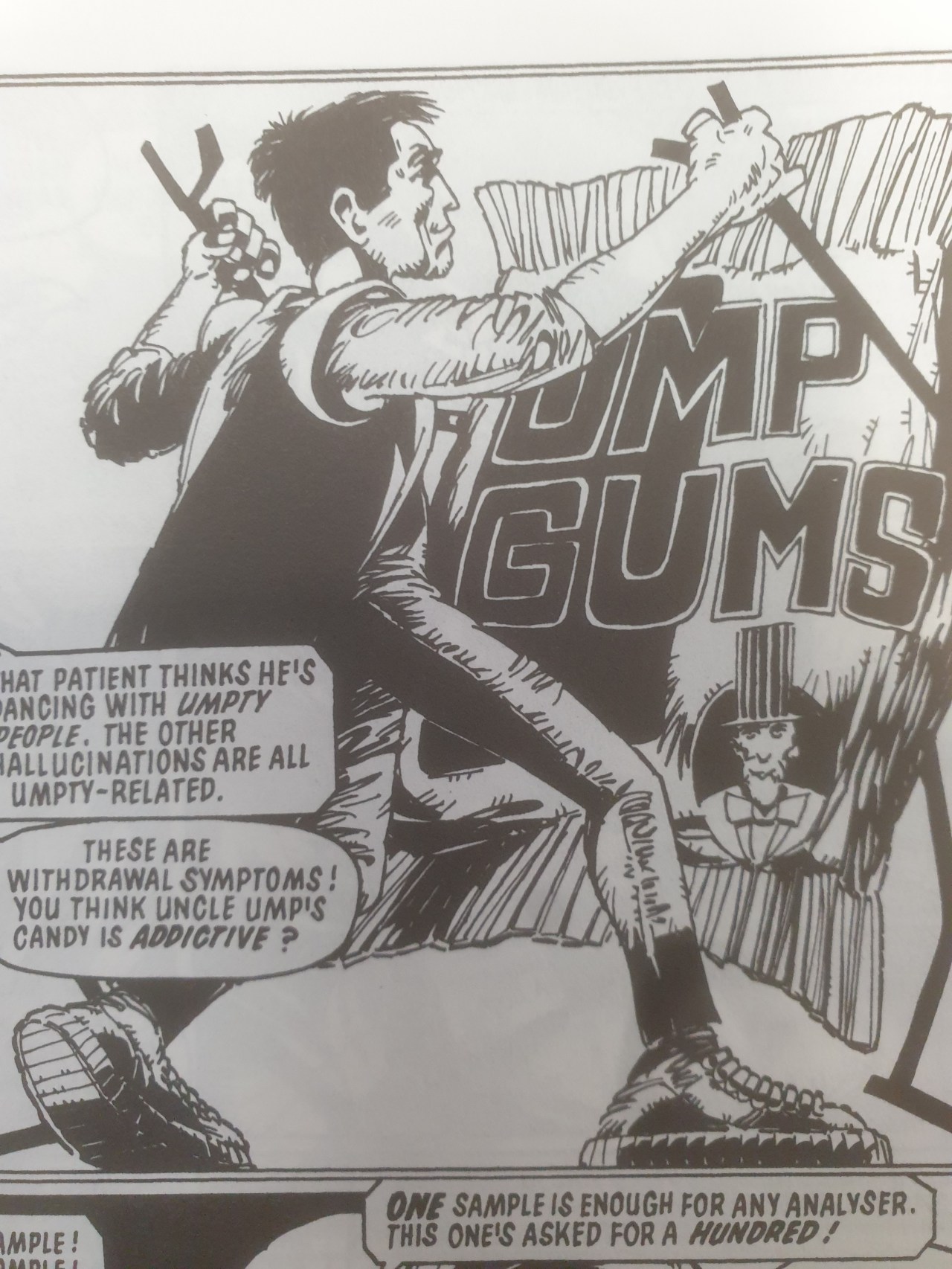
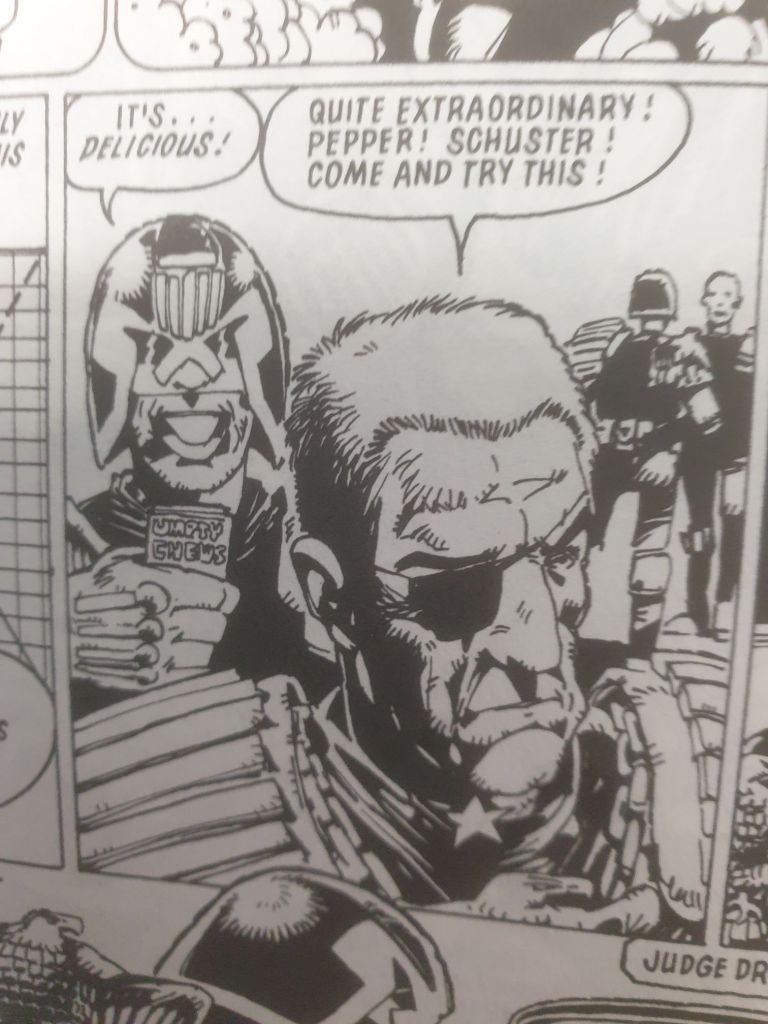
Of the one-offs, far and away the best was the one about Uncle Umpty’s candy. This is so funny and so sad at the same time. It’s very short but it feels like there’s a lot in it. A kind, whimsical and talented old man invents a range of sweets that taste unspeakably wonderful and aren’t addictive or harmful in any way. On principle Dredd does not approve. But on tasting it, Dredd declares ‘It’s delicious!’ and actually smiles. But this little story sums up how absolutely pathological the society and culture of Mega-City One are: people go mad for Uncle Ump’s candy, leading to a breakdown in law and order. The judges take extreme measures against this wonderful old man just to ensure that his candy is gone forever. 

The people of Mega-City One are very, very stupid. They are an unkind caricature of the people of capitalist societies: prone to fads and mindlessly acquisitive. But the ultimate consequence of their frenzied consumption is that they can’t be allowed to have nice things at all. They almost (almost, but not quite) deserve this ultra-punitive law enforcement system. Outside of contrived ticking time-bomb situations, the more conventional (but not necessarily bad) storylines where it’s a choice between the status quo and the annihilation of billions of people, the Judges plainly do more harm than good. Judge Death (‘The crime is life! The sentence is death!’) is only Judge Dredd taken to the logical conclusion of his misanthropy. Sometimes he plays it atraight as a Dirty Harry type. Sometimes he gives a hint of remorse or compassion; sometimes it’s not that, but only his sheer integrity leading to the same outcome. And sometimes, as with Umpty Candy, he is a brilliant and merciless caricature of himself.

Genuine Concerns

Imagine the panic if refugees, or some minority community, had committed a crime wave like the one the far right have unleashed on Ireland over the past year or so.

Imagine if refugees had rioted, burned buses and trams, smashed shops; carried out dozens of arson attacks all over the country; burned homeless encampments and threatened homeless people with blunt weapons; protested outside politicians’ homes, hung them in effigy, issued death threats, harassed and beat up election candidates.

That alleged sex trafficker who’s on ice in Romania says that Ireland is being ‘invaded.’ McGregor says ‘we are at war.’ But these asylum seekers are children, men and women of all ages, and none of them have weapons or transport. They all speak different languages from one another, have different religions, don’t have any common political cause, and are scattered all over the country. They can just about afford nappies, but they can’t afford tanks. They came here to get away from war. Is that an invasion? Maybe ask someone who’s actually experienced an invasion, like – just for example – a refugee.

We keep hearing that, in contrast to the bad protesters who burn things and the alleged MMA sex offenders who want to see blood on our streets, there are decent and good protesters who have ‘genuine concerns.’

I’m a tolerant kind of person, but I’m losing patience with all this. What are these ‘genuine concerns’? Are they really more serious and genuine than the fear many felt when there was a pall of smoke hanging over Dublin?

I suppose some people are concerned because some of the refugees, while running for their lives, did not wait 6-8 weeks to apply for a passport off the government which was trying to kill them. That’s true, as far as it goes.

When you read in the papers about some shit show where protesters have barricaded a road or shouted at terrified children, and there’s an interview with the chairperson of some local group with a name like Concerned Citizens Who Are Definitely Not Racist, mostly they use their airtime just complaining that the government isn’t giving them information. There are endless variations on this theme. But I don’t want to be a referee for their emails with Roderic O’Gorman. Nobody does. Find more interesting things to complain about, or go home.

Sometimes the Concern is Genuine, but the object of that concern is complete bullshit. Yes, asylum seekers are vetted. No, they commit fewer crimes than the rest of us (and it doesn’t follow that me and you should be deported).

The vague passive anti-refugee sentiment is like, ‘The government is putting a roof over their head but not over mine.’ It’s been two decades of hardship with austerity overlapping with the housing crisis, then Covid and the price gouging campaign by grocery chains and energy companies. You can see where some of the rage is coming from.

But there would be no housing shortage at all if we had public housing, rent controls and an eviction ban instead of this feeding frenzy for landlords and investment funds. We could put a roof over everyone’s head, if we were willing to tell housing profiteers to get a real job. Raise that with the leaders of the far right, some of whom are deep in this racket themselves, and you’ll find out pretty quick how little they care about homeless people. From what I can see, most of the far-right leaders and influencers are small business and property owners, not people on the front lines of economic hardship.

I’m aware that it costs money to accommodate refugees. Taxpayers’ money, no less. To put it into perspective, it has trebled over the last year to a figure just south of what we spend on Housing Assistance Payments (ie, on the state subsidizing crazy rents by shovelling money into the bank accounts of landlords). Two things. First, people only complain about the ‘cost to the taxpayer’ of things they were already angry about anyway. Second, like HAP, nearly all of that money goes to people who own large or multiple buildings. The government looks after the big property owners, whatever happens. According to today’s Independent, only 1% of asylum seekers are in state-owned facilities where people can be housed for a fraction of the cost.

These numbers tell us that if we didn’t have any refugees, we could be giving twice as much HAP to landlords, and they could be jacking up the rent even higher to keep up. What a tragic missed opportunity.

A picture taken during the November 2023 riots in Dublin. From Wikimedia Commons, credit to CanalEnthusiast.

Meanwhile I have ‘genuine concerns’ of my own. I’m concerned about racist thugs setting shit on fire and beating people up. I’m concerned about garbage from social media five years ago suddenly appearing on election posters. Peter Casey has that poster where he looks like Father Jack – the slogan is STOP THE MADNESS. I agree, only I think he’s THE MADNESS.

I have genuine concerns about racism. 85,000 Ukrainian refugees were accepted pretty much overnight and without a murmur of protest, and on much better conditions than other nationalities. But the fury over 30,000 international protection applicants has turned Irish politics upside down. I don’t grudge the Ukrainians anything, and I don’t want assholes to protest them – but the shortage of beds is obviously due to the bigger group, not the smaller group. Has this really not occurred to anyone?

I have genuine concerns about the media. Dread washes over me when I walk into a shop, because when I glance at the newspapers I see headlines dripping with hostility.

I have legitimate concerns about the way Fianna Fáil, Fine Gael and increasingly Sinn Féin are giving ground. On December 4th the state just told male asylum seekers, ‘Nope, we’re not housing you anymore;’ now Harris is clearing out those Grapes of Wrath tent camps and milking it for the cameras. Sorry Peter Casey, I think it’s MADNESS to be up in arms about the state being supposedly a soft touch – when it’s done less than the bare minimum to respect the right to asylum.

Fianna Fáil and Fine Gael both report that the main issue on the doors is migration. Sinn Féin report housing is still the main issue, which tracks with recent polling. But regarding housing, says one prominent blueshirt, ‘the conversation on this issue is less heated than it was five years ago.’ Palpable relief! The far right present themselves as anti-establishment warriors, but they have taken the heat off the government for the housing catastrophe. Maybe that Fine Gaeler is talking it up, but the more migration goes up the agenda, the more housing slips down.

Anyway, what’s the far right’s solution on housing? The IFP say ‘House the Irish first.’ So a 1950s Northern Ireland-style segregated housing system, where people arbitrarily deemed ‘not Irish’ go to the back of the queue, regardless of need or how long they’ve been waiting. I suggest a snappier slogan: ‘Apartheid for Ireland.’

The world is getting more violent and the climate is getting more unstable. More people are going to be forced to leave their homes. A lot more. We can make these refugees into (very unconvincing) scapegoats for housing shortages and violence and whatever else. Or we can be serious about it.

Barring massive political change, I don’t believe any authorities from the EU down to our own government are going to be serious or compassionate. But we as individuals can still behave like human beings. If refugees come to your area, Syrian, Ethiopian, Ukrainian, whatever, don’t protest them (no, not even if you feel the government or IPAS messed something up). Do like they did in Borrisokane: go and talk to them. Some have fluent English, and the Translate apps have gotten good. Take those vague phrases like ‘military age males’ and tag them in your own mind with faces and names. You’ll find that they are regular people with entirely mundane needs and desires. But they are in a bad situation and they have come from a terrible one. They haven’t burned any trams (if one of them does, don’t worry, you’ll hear all about it) but they are the ones – far more than the protesters and more than me – who have genuine concerns.

Want to read more of my stuff? The full archive is right here on my home page.

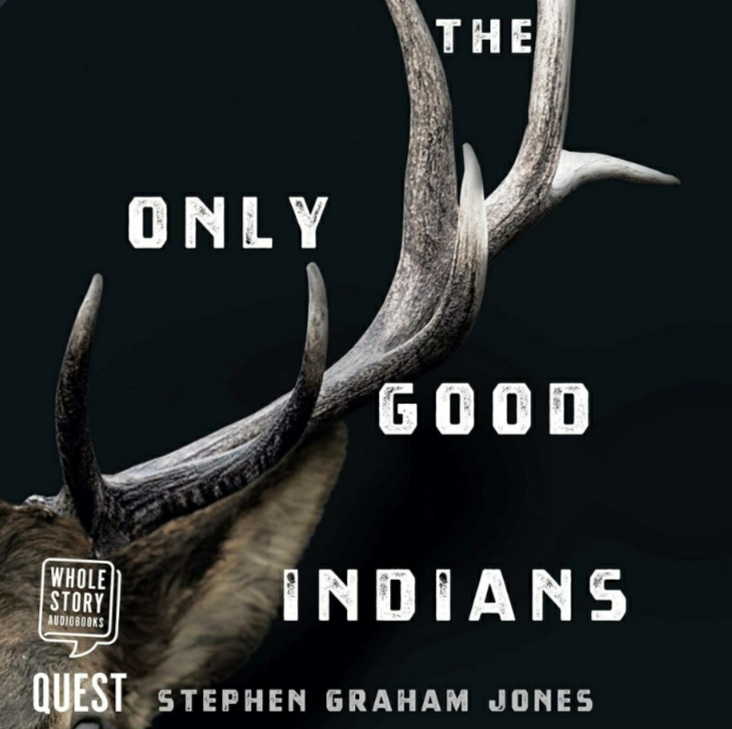
What I’m Reading: The Only Good Indians

The Only Good Indians by Stephen Graham Jones (Saga Press, 2020). Audiobook narrated by Shaun Taylor-Corbett. 

Here are two images of this novel that sum it up best: a sweat lodge made from random old blankets, sleeping bags and jackets so that it looks like, the narrator says, a pile of hobos; and a woman with the head of an elk. 

This is US horror writing in the mould of Stephen King: garage-door social realism; characters whose internal monologues bring them to life as much as their words and actions; incomprehensible passages about sports; monsters and apparitions that feel like an extension of the mundane world and are all the more horrible for that.

But as it goes on The Only Good Indians reveals a folk-tale quality that you don’t find in King. 

It’s set around a Blackfoot reservation in the present day, and the story is steeped in the grim conditions in which the Indians live (that’s the term the author and characters use). Lewis has made it to his mid-30s without dying of diabetes or an overdose or suicide or a car crash, or freezing to death after passing out, and he considers that a small miracle. Don’t tempt fate: the first quarter of the book depicts his complete unravelling, his descent into blood-soaked psychosis. The apparition of the elk-head woman drives him to it. 

Lewis is one of four friends in the crosshairs of this monster. When they were in their early twenties, they committed a transgression which involved blowing a pregnant elk to pieces with rifle fire. Ten years later a dangerous elk spirit has come for revenge – not only to kill them but to destroy everything they love. 

Each one of these Indian characters feels like a traumatised survivor of some terrible war. Each one of them has managed to get through some bad shit and to put their lives together. As death comes to claim them one by one, it feels wasteful and hopeless. The worst part is, it feels true: people who fight their way up out of a bad situation and build new lives for themselves are always prey to some demon from the past catching up with them. 

Twice while reading this novel, once at the one-quarter mark and once at the three-quarter mark, I stopped reading and put it aside, disgusted with it. ‘So it’s like that,’ I thought. ‘Every woman in the story has to die a horrible – and improbable – death.’ The brutality felt capricious and meaningless. We’re supposed to think the elk-head woman was pushing an open door when she turned Lewis into a murderous ghoul, but to me when the killing started it felt too abrupt. It’s difficult to get invested in one character only to switch to some others two-three hours in.

But both times I gave it a week and came back to it, and found myself drawn in again. It’s not really like that. It really is going somewhere, building up to something. Not every woman and man dies. There is a way out.

Denorah, the teenage daughter of one of the four men, is the only ‘calf’ any of them produced. She is a brilliant basketball player, someone who will really make her tribe proud one day. After a long sequence involving the makeshift sweat lodge which builds slowly from tense humour to pure horror, Denorah finds herself in the crosshairs of the elk-head woman. The final struggle falls to her.  

That’s where I am now: in the last half-hour of the audiobook with no idea if the ending is going to come down on the side of the things I liked or the things I didn’t like. While he nearly lost me once or twice, now I’m convinced Jones knows what he’s doing, and I’m keen to see how it all ends. 

[Edit 26 May 2024: the ending brought it all together. Even better than I hoped.]