US/Israel war on Iran: Economic Dien Bien Phu

I wrote a few posts about Iran back in March, just after the war began, but I haven’t returned to the subject since. A draft post titled ‘Groundhog War’ did rattle around in my head but never made it to the screen. Other titles in contention included ‘The Ross and Rachel War.’ But I haven’t actually seen Groundhog Day and I’m not a big fan of Friends.

More importantly, this war is hard to write about because MAGA is flooding the zone with shit in the usual way. One day Trump is saying he has already destroyed practically everything in Iran, the next he threatens that he’s held back so far but he’s about to take the gloves off, and the day after that he says they are about to sign a deal. Whenever he says he’s ‘in full control of the Strait of Hormuz,’ you should swap out ‘Strait of Hormuz’ and swap in ‘my mental faculties.’ But he’s not in control of either – because a few days later he’ll be demanding that the mullahs open the strait, or else. It’s like bad reality TV: you can be carried along by the fake emotion on display in a scene – if you have the memory of a goldfish.

For example, as recently as August 1st there were apparently going to be ‘World War Two-level strikes’ on Iran; by August 7th, a deal on the Straits of Hormuz was close, and by August 11th Trump was claiming that the straits were open, whatever that means. At the time of writing the US and Iran have traded airstrikes again and Trump is threatening to ‘smack Iran to see what happens.’ The media reported on all these statements in their main daily headlines, as if a syllable of it had any real meaning.

For some reason journalists feel the need to report, in front-page headlines, where we are at in the cycle as if it’s the first time we’ve gone through this ritual. I go onto Al Jazeera or The Guardian and it’s TRUMP THREATENS TO “BURY TEHRAN, REGRETTABLY, UNDER A PILE OF HUMAN SKULLS”, then the next time I log in I learn that Iranian officials have denied a claim by Trump that the signing of a peace treaty is “just waiting for a new pen because the pen we had, what are you going to do, it ran out of… there was no more ink, you know the trouble with pens is… Gotta have ink! Gotta have it… so we had to send Steve and Jared out with the White House credit card to buy a new pen, and they’re not back yet…”

But at the six-month mark I feel an urge to follow up on the posts I wrote at the start of this war. So when you’re finished imagining Jared Kushner and Steve Witkoff running around Washington DC with someone else’s credit card, here’s what I think about Iran.

In the rubble of the MoU

The biggest developments recently were the Memorandum of Understanding and then its collapse. The MoU was basically a surrender by the US but it also represented a way out of the strategic mess. It was a sensible cutting of losses. It was not scuppered by Israel like I expected, though they gave it their best shot. I guess it fell apart through the sheer lack of integrity of Trump and the people around him. Having the integrity of an adult or even a teenager or older child means that you keep your commitments and feel shame when you fail to do so. The MAGA leaders either don’t feel shame, or feel such ubiquitous self-loathing that one more faithless act makes no difference. Even when they want to make a deal (I think they genuinely wanted the MoU), there is such a fundamental lack of integrity there that they can’t stick to it.

In the rubble of the MoU, we have governments in the region hurrying to make new deals with one another: the Egypt-Turkey-Pakistan alliance and the talks between Oman and Iran which have resulted in a deal. Also not to be overlooked is the visit of Ghalibaf, the Iranian house speaker, to Iraq where he spoke on the site of the 2020 assassination of General Suleimani. These things all reflect the diminishing of US authority in the region – first because of the inability of its leaders to make a deal and stick to it, but also because its bases and its radar and air defence apparatus have taken a hammering from Iranian missiles and drones.

I think that the US will continue this holding pattern, this tedious news cycle, this shameless display of impotence, this phony reality TV tedium, for the rest of Trump’s term.

(Then if there is an election and if the Dems win – it’s an if, because the Dems can always find a way to lose, even in a situation as favourable as this – they will disappoint everyone by making only glacial progress toward a deal, because they want to keep their options open and, secondarily, not upset the Israeli government.)

Ground War?

The thing I’ve gotten more skeptical about since the start of the war is the prospect of a US ground invasion of Iran. Around April you could notice a series of ominous reports about so many thousand marines here and so many thousand there being shipped into the region. But the thousands would need to ramp up to hundreds of thousands before we’d have to worry about an invasion. Even ‘just’ an occupation of the coasts around the Strait of Hormuz would require such numbers. Take into account also the fact that the US bases which would be used to stage such an invasion have been damaged to a <redacted> extent.

The Iranian top leaders appear, by contrast with their US counterparts, dignified and professional. But they talk about the prospect of US ground invasion with unseemly eagerness. They were at it again in July, when the pattern of US strikes appeared to be clearing the way for coastal landings. But the US just doesn’t have the numbers in the region, and is not making the kind of colossal movements that would be necessary.

What about a smaller incursion? The threatened Kharg Island operation was far too ambitious and dangerous. The idea of landing an army in the mountains to dig up ‘the nuclear dust’ was even sillier. But if an opportunity presents itself for a quick and relatively painless raid that would at least appear to do some damage to Iran, I reckon Trump and co will go for it. Several days of news reports about some little Call of Duty level would help drum up a measure support for the war. And then two years later they could make a movie about it. Better yet. So I’m surprised they haven’t done this already. I think we can expect by year’s end either A) some ‘daring’ but actually very safe raid or B) a failed attempt at same, an embarrassing fiasco. Maybe the fear of B has made the US afraid to try A. Or it could be the simple fear of escalation, which despite Trump’s brash presentation and lack of integrity, does in fact bracket his options.

Regional War

A brief overview of the war so far would be as follows: two major bouts of fighting between the US/Israel and Iran, one around March and a second, smaller one around July. In the process thousands have been killed in Iran and thousands in Lebanon. On the other side the picture of fatalities and casualties is not clear, but several hundred have been killed. Serious ground wars have taken place in Lebanon and more recently in Yemen.

Note the entry of the Houthis in Yemen into the war, with the closure of the Bab-el-Mandab Strait, raising the economic pressure another notch or two. The Houthis gave an impression of reluctance and presented a case for war that had nothing to do with Iran or Israel. The effects so far do not appear to be as significant as I would have expected. Perhaps they will take time to filter through into politics in a way that bears on the central struggle between the US and Iran. Maybe, against the backdrop of all that’s going on, in a region already in a state of high tension, it represents only an incremental change.

One of the main reasons I’m interested in what is happening around Iran is because of the possibility that developments could force Israel onto the back foot and slow down or stop the genocide in Gaza, the ethnic cleansing in the West Bank and the aggression in Lebanon. I say this without harbouring illusions that the obscurantist Iranian government can be relied on as a consistent ally of the masses in Palestine. Anyway, that’s not happening. Israel behaved as it pleased in Lebanon, killing thousands and entrenching a new occupation. The settler rampage in the West Bank is worse than ever before. Daily murder continues in Gaza. The erosion of the US missile defence and radar system in West Asia, and the development of new alliances and deals outside the US orbit, must end up having serious impacts on Israel. But, for now, the aggression is unchecked.

Blockade

The US policy appears to be to hold on and wait for something to change. The US blockade of the Strait of Hormuz might devastate Iran’s economy sufficient to force a new deal unfavourable to Iran. The US naval blockade of the Strait of Hormuz is a simple and effective measure, separate from the ‘Economic D-Day’ measures to extend the sanctions regime, discussed below.

But here too the outlook is not good for the US. Leaving aside the fact that Trump and co would be entirely capable of messing up even up a deal which is entirely favourable to them, the question is whether the US military has the capacity to… Well, let’s break this down:

  1. To maintain a sufficiently damaging blockade
  2. For long enough
  3. Against a large country
  4. With two long sea borders and many land borders
  5. On the far side of the world
  6. In a situation where US authority has diminished.

In any scenario, Iran is suffering a terrible blow to its key export, oil. But the Iranian government signed up for this the moment they closed the Strait, and preparation for this has been an integral part of their strategy. Meanwhile, just as the rest of the world is scrambling to work out ways around Hormuz, so is Iran. If some of the Saudi oil can be sent across Arabia in a new pipeline, Iran too can establish new lifelines for itself that bypass the Strait and US sanctions. What little shipping can get through is another lifeline; this grows in a scenario where the US blockade loses its effectiveness due to some of the problems we have seen – bad morale among naval personnel, technical issues on the aircraft carriers, the massive financial cost. Geography is inescapable. Iran can blockade Hormuz much more easily and cheaply than the US can.
‘Economic D-Day’

I have to be very careful not to sound like I’m saying anything good about Bush, Cheney, Rumsfeld and co who were responsible for the 2003 US invasion and occupation of Iraq. But I will say that their cynicism, dishonesty, recklessness, and contempt for human life stand out more sharply against their slick PR and the undeniable fact that this invasion was a thing of imposing dimensions and ambition. There was seriousness and commitment in their depraved villainy. Bush and friends did their own soldiers and public the honour of making fools out of them; in those quaint days governments had to manufacture consent. The Trump administration does not see any need for consent. The justifications it puts out are shoddy, half-arsed, contradictory things.

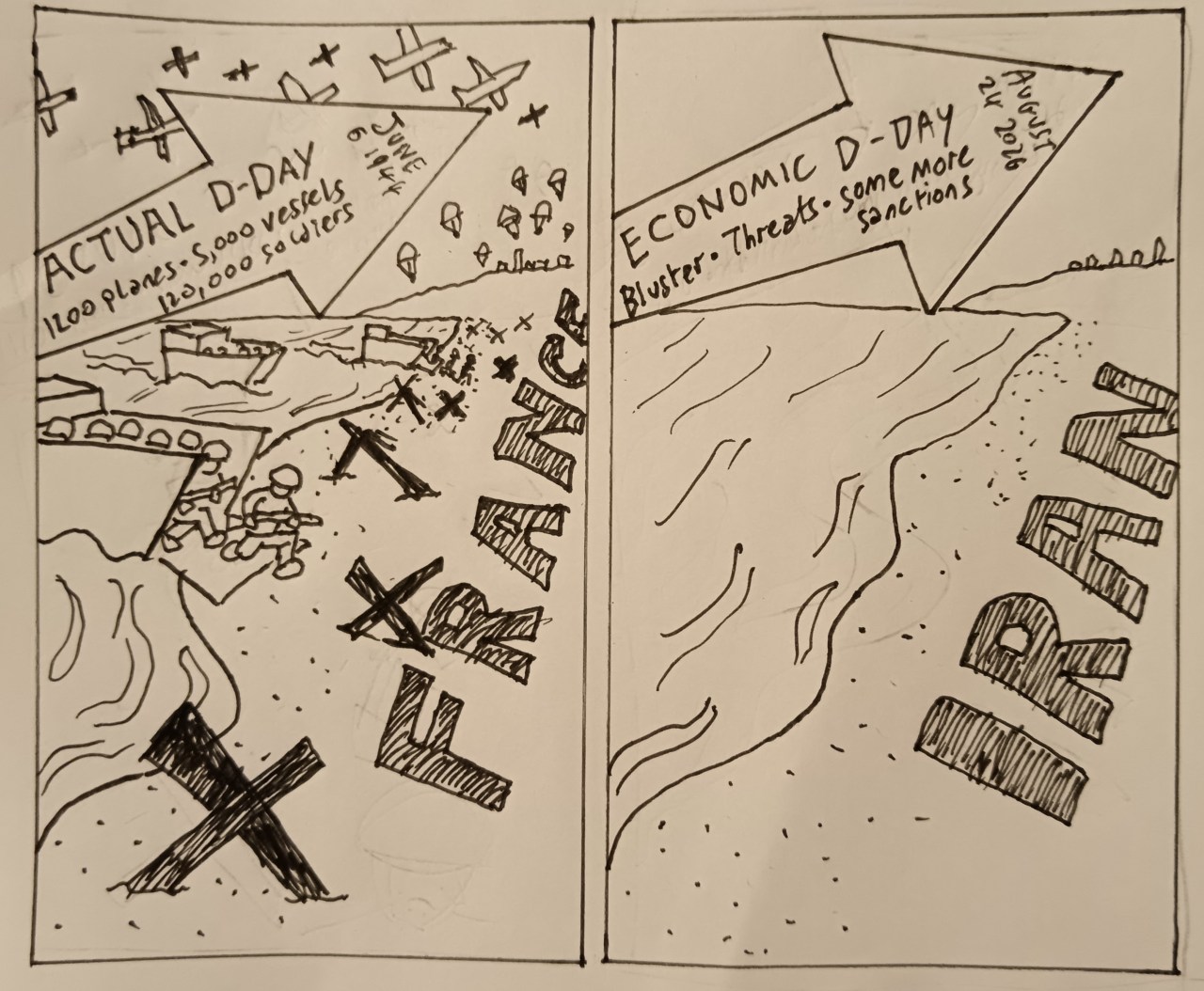
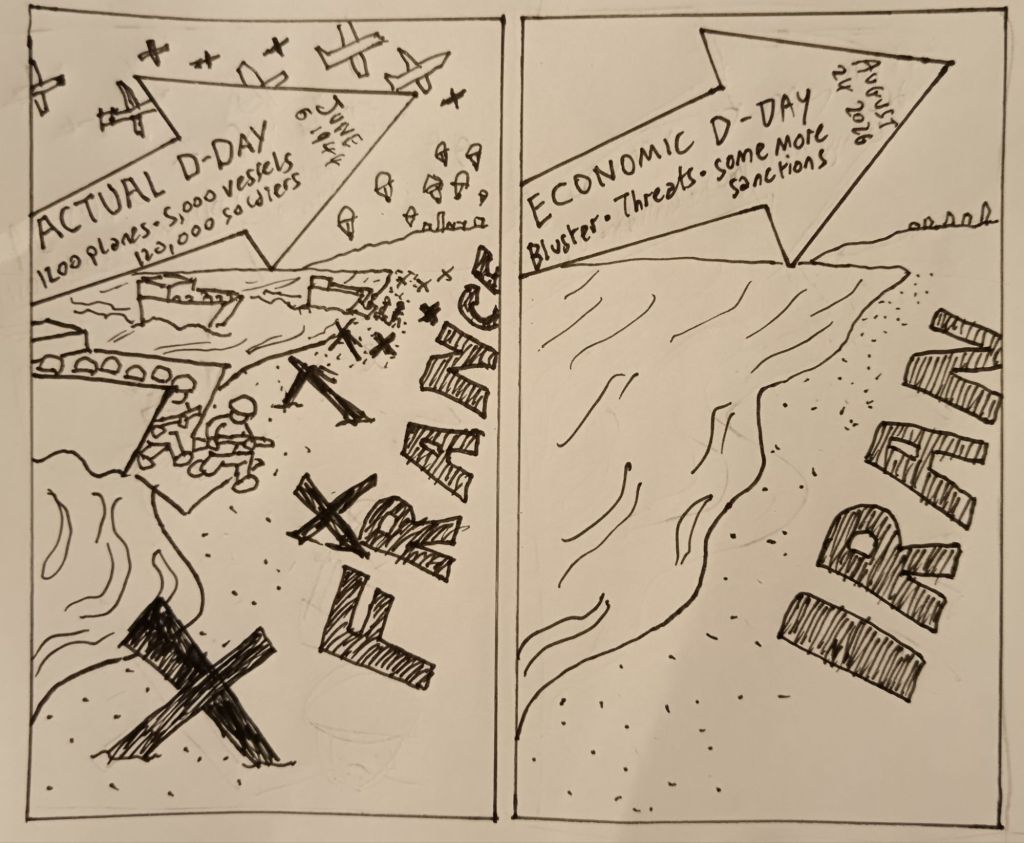
The latest catchphrase is ‘Economic D-Day.’ Will this economic offensive prove to be, as is implied, as consequential as Actual D-Day was in World War Two? In essence the US government are extending a long-standing sanction regime and also threatening to punish countries that trade with Iran. No doubt Iranian people are going to suffer. No doubt the extended sanctions represent a difficulty for the Iranian government and military. But like the blockade of the Bab-el-Mandab Strait on the other side, this is a quantitative and not a qualitative change. Those countries which will probably comply with the sanctions, such as the United Arab Emirates, had already cut trade ties with Iran anyway. Will it bring an end to the war, to the standoff over Hormuz? No chance.

But what all these blockades and sanctions mean for the world is another step towards the decoupling of the global economy from the US economy. Sanctions are enforced more by financial soft power than by military force. This soft power is diminished when it’s used in this way. The benefits of cooperating with the US are less when the US behaves as a fickle, impulsive power, possessed by a fragile need to project strength at all times, at all costs. Who would really expect China to bend the knee in this situation? Obviously they have not, instead deepening the geopolitical rift between them and the US.

The choice each third country has to make, faced with US sanctions on Iran, is not a simple one. They’re not all just immediately going to pick the US side in the dispute. Countries which do not comply with the sanctions would be making a rational choice to align with states that are less powerful but more stable and local. Countries which comply would be wise to try and hedge as much as they can get away with. The UAE (where Iran, prior to this war, procured many products which it otherwise had no access to), have cut off trade with Iran – but… How would we put this politely? Lax financial regulation is one of the UAE’s unique selling points. This is one example of the grey areas which the US can’t erase just by declaring Economic D-Day. In 2026 it makes more sense for a third country to push the boundaries, to test how far the US is really willing to go, rather than to comply and still risk arbitrary punishment.

Here I have to level with you and say that I have no special expertise in financial or military affairs, and am looking at these events with the eyes of a scholar of history and literature. What I can say about ‘Economic D-Day’ is that there is no magical formula where the US can hit Iran’s economy as hard as they need to, without burning bridges that they can’t afford to. What they will end up doing is not hitting hard enough, but still burning plenty bridges.

‘Economic D-Day’ will not change the course of the war, but will accelerate a longer-term shift away from US hegemony and toward a multipolar world order. To call it ‘Economic Dien Bien Phu‘ would be more accurate – sure, an exaggeration in the other direction, but not such a big one. Instead of making a deal along the lines of the MoU, the MAGA administration is holding on to a position that’s ultimately untenable, throwing good money after bad in the hopes that something, somewhere, gives, and the sunk costs can be recouped or at least justified.

Meanwhile, watch Trump flail around. If it’s senility, it’s not just senility. He really doesn’t know what to do when they fight back.
The Machine War (US/Israeli War on Iran, Day 12 – March 11th 2026)

Following on from last week’s post, I want to thrash out from uncertain evidence where things stand in the war as of today. Day 12 is a landmark because twelve days was the length of last year’s June conflict between the same antagonists. The day has come and gone with only the most unconvincing signals from the US president that there might be some dim prospect of a peace deal. But as I said last time, the basic strategic situation is: it’s the Iranian side who get to say when the war ends.

But it may be the end of the beginning. I think we are getting on towards the end of the first phase of the war, a machine war mostly of missiles, bombs and drones. The main questions in this first phase of the war are: what do the Iranians do when they run out of missiles? What do the US and Israelis do when they run out of interceptors? And who runs out first? A missile-interceptor gap in favour of Iran would mean a sudden ramping-up of damage to Israel, Gulf oil infrastructure and US bases. A gap in favour of the US means Iran’s chief offensive weapon is spent.

Where are we now?

Where do things stand right now in relation to this question? Almost nobody who knows anything valuable has any incentive to tell the truth. Here I will sum up the contradictory stuff I’ve read from various more or less non-credible sources.

  • That there are x5 fewer missiles than expected because Iran has lost so many launchers to air strikes.
  • That the US is pulling military hardware out of places like Korea and Ukraine to throw it into the Iran situation.
  • That the rate of Iranian missile fire has slowed a great deal since the start of the war.
  • That in comparison with last year’s 12-day war, fewer Iranian missiles are being launched – but they are causing more damage with the population of Tel Aviv being forced to run in and out of bunkers all the time.
  • That the Iranians are tricking enemy pilots by literally painting warplanes on runways.
  • That Tel Aviv is being hit really hard in the last four days, that the “Iron Dome” is breaking.
  • That US/Israeli planes are swarming the exits to Iranian bunkers, blowing up anything that pokes its head outside.
  • That civilian life in the Gulf has returned a good deal of the way to normal.
  • That Iran has pivoted to blowing up oil facilities in the Gulf.
  • That these attacks on oil facilities are not Iranian at all, but Israeli false flag operations (If the Gulf countries choose to do a deal with Iran in the future, they can all pretend to believe this).
  • That Iran is still holding back its biggest missiles.
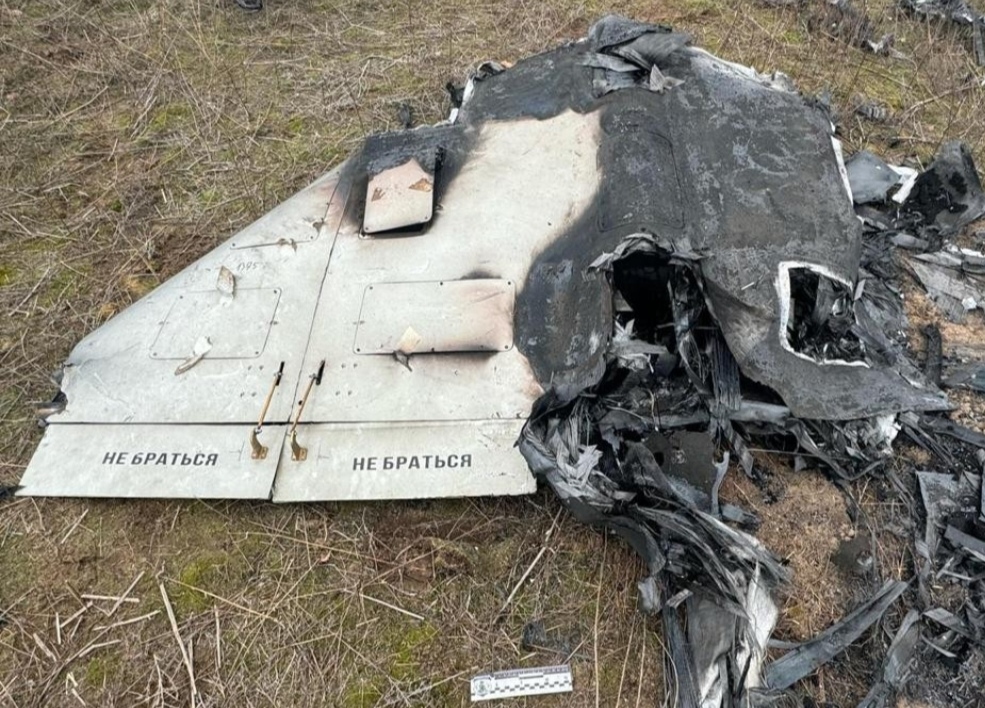
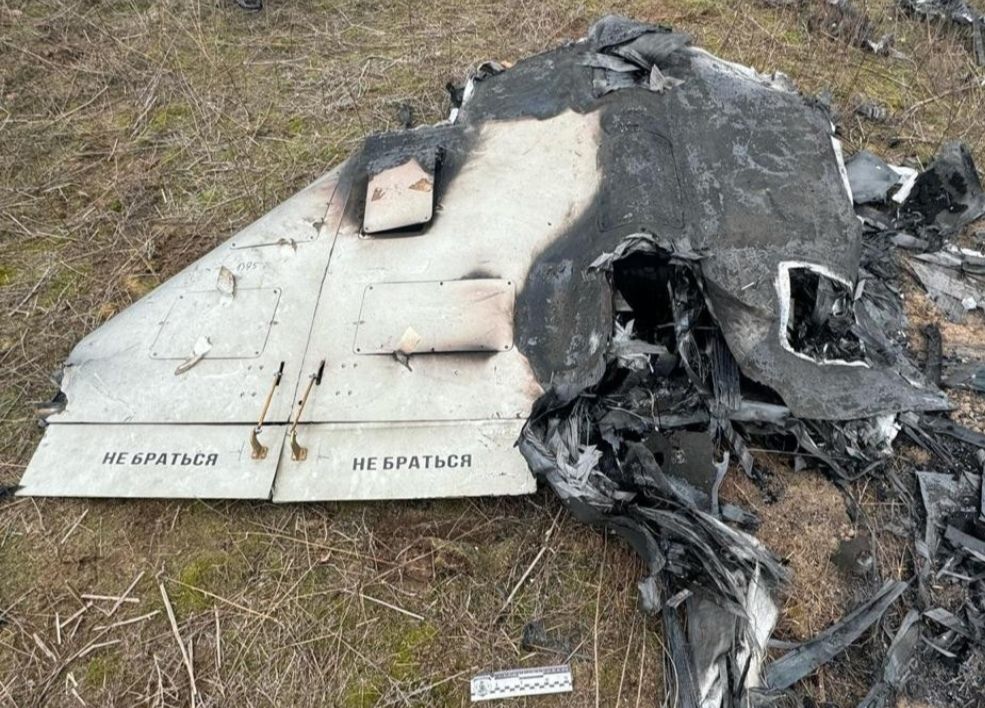
  • That Iran can churn out Shahed drones at several times the rate that they are destroyed, and that these drones can do enough damage to make a big difference in the war.
  • That Iran can fight on at a fraction of the financial cost that the war is imposing on the US.
  • That the US side are not actually worried about running out of interceptors, only about leaving Ukraine exposed by overcommitting to Israel and the Gulf.
  • The US has not lost vessels. But that could be because their navy is hanging back and not committing itself to combat.
  • That the entire Iranian navy and air force have been destroyed, and 80% of air defences destroyed.
  • That 17 US installations in the Middle East have been damaged.
A Shahed drone shot down in Ukraine. Image courtesy of Npu.gov.ua

All of the above cannot be true. But some of it is. We have to use our own judgement. It appears to me that while the balance of fatalities is massively against Iran, the war is proving to be a massive logistical, political and economic challenge for the US.

What do we know for sure?

The outstanding fact of the war is that there has been a slaughter of civilians in Iran and Lebanon. Next in significance is the blockade of the Straits of Hormuz, the mere warning of which has led to economic turmoil around the world. Moving on from warnings, today three ships were hit by Iranian weapons in the straits.

Incentives to de-escalate are not there. An initiative by the Iranian president to mend fences with the Gulf States was blocked by the military, with strikes continuing, for example on a desalination plant in Bahrain the very next day. Yesterday I saw multiple headlines about Trump saying peace was coming very soon, and I just find it both funny and irritating that there are still journalists hanging on every word out of Trump, as if this is a man who weighs his words for even a second before vomiting them up, or stays true to them afterwards.

The US/Israeli bombardment, with its toll in civilian lives, can carry on for, in effect, as long as the US population will continue to pay for it and to tolerate it morally. But Iran will run out of missiles or of launching capacity sooner than it runs out of resolve. From a two-sided air war it will become a one-sided bombing campaign like what the US did in Korea and Vietnam (without unseating a regime). The 12-day duration of last year’s war could indicate that this first phase, this machine war, might be reaching its limits. But assuming the two sides are better-prepared this time, it could go on for another week or two.

At the end of that period, a missile-interceptor gap in Iran’s favour would mean an episode of more serious damage being inflicted on US bases and on Israel. Such a ‘Tet Offensive’ moment, especially so soon after the outbreak of war, could have a huge effect on public opinion and mood. A missile-interceptor gap in favour of the US would, on the other hand, settle the air war into a one-sided conflict until such time as the Iranians can restore capacity – if they can restore capacity at all under such pressure.

Next post I intend to explore what a second phase of this war might look like, assuming that the first is coming to an end. To finish today, a note on the Iranian regime.

Iran: strengths and weaknesses of the regime

I said last week that Trump, Hegseth, Miller et al are fools. The Iranian leadership, on the other hand, are reactionary and ruthless, but they are not fools. Unlike the American and the Israeli leaders, they cannot afford to be fools. The Islamic Republic is deeply imbedded in society through a nearly fifty-year history. Iran’s strategic doctrine of distributed “mosaic” resistance and multiple designated successors for every position is an impressive response to the last quarter-century of a US and Israeli doctrine of blitzkrieg and assassination. In the future, the current war could be written up as an epic of resistance that could supply the clerical regime with a whole new legitimizing narrative that it can spin decades of mileage out of.

For what it’s worth, I don’t support the Islamic Republic regime – and I think any regime that Trump might install (or Biden, Obama, Bush or Lincoln, while we’re at it) would be a lot worse. A new regime emerging in a genuine way, from a popular uprising such as the Women, Life, Freedom movement, or from Iranian labour, would be a different story. To me this is a very simple point. It’s not complicated at all. Some people insist that any criticism of Trump’s idiotic war is a defence of the clerics. On the other hand I’ve noticed a semi-ironic identification with the Iranian regime from people who are simply relieved to see some powerful entity standing up to the US and Israel at long last.

Even taking into account the rounding effects of irony, I think this is unwise. Already the clerical regime is directing its propaganda appeal to the anti-Israel layers of MAGA more so than the progressive anti-war left.

Anyway, I don’t feel any need to wring my hands, accompanying any remarks with a token condemnation of the Iranian government for the sole purpose of covering my arse. That’s not why I’m writing this. But a relevant point, for my purposes, is to look at how the nature of the Islamic Republic might inhibit its ability to fight imperialism. On Drop Site News a week ago I heard an Iranian official using this war as a retrospective justification for the killing of thousands of protesters by the government in January in operations that were extraordinary in scale and ferocity. On the contrary, there must be severe confusion and demoralisation in the armed forces and among the public following the winter bloodshed. This kind of war demands the full mobilisation not only of the armed forces but of all of society.

I’m going to leave that point very general because of weaknesses in my knowledge of Iranian culture and politics. But as a general rule the nature of a regime has profound effects on how it fights a war. We can’t put the clerical authoritarian regime in a box and forget about it for military purposes. It will tell.

Genuine Concerns

Imagine the panic if refugees, or some minority community, had committed a crime wave like the one the far right have unleashed on Ireland over the past year or so.

Imagine if refugees had rioted, burned buses and trams, smashed shops; carried out dozens of arson attacks all over the country; burned homeless encampments and threatened homeless people with blunt weapons; protested outside politicians’ homes, hung them in effigy, issued death threats, harassed and beat up election candidates.

That alleged sex trafficker who’s on ice in Romania says that Ireland is being ‘invaded.’ McGregor says ‘we are at war.’ But these asylum seekers are children, men and women of all ages, and none of them have weapons or transport. They all speak different languages from one another, have different religions, don’t have any common political cause, and are scattered all over the country. They can just about afford nappies, but they can’t afford tanks. They came here to get away from war. Is that an invasion? Maybe ask someone who’s actually experienced an invasion, like – just for example – a refugee.

We keep hearing that, in contrast to the bad protesters who burn things and the alleged MMA sex offenders who want to see blood on our streets, there are decent and good protesters who have ‘genuine concerns.’

I’m a tolerant kind of person, but I’m losing patience with all this. What are these ‘genuine concerns’? Are they really more serious and genuine than the fear many felt when there was a pall of smoke hanging over Dublin?

I suppose some people are concerned because some of the refugees, while running for their lives, did not wait 6-8 weeks to apply for a passport off the government which was trying to kill them. That’s true, as far as it goes.

When you read in the papers about some shit show where protesters have barricaded a road or shouted at terrified children, and there’s an interview with the chairperson of some local group with a name like Concerned Citizens Who Are Definitely Not Racist, mostly they use their airtime just complaining that the government isn’t giving them information. There are endless variations on this theme. But I don’t want to be a referee for their emails with Roderic O’Gorman. Nobody does. Find more interesting things to complain about, or go home.

Sometimes the Concern is Genuine, but the object of that concern is complete bullshit. Yes, asylum seekers are vetted. No, they commit fewer crimes than the rest of us (and it doesn’t follow that me and you should be deported).

The vague passive anti-refugee sentiment is like, ‘The government is putting a roof over their head but not over mine.’ It’s been two decades of hardship with austerity overlapping with the housing crisis, then Covid and the price gouging campaign by grocery chains and energy companies. You can see where some of the rage is coming from.

But there would be no housing shortage at all if we had public housing, rent controls and an eviction ban instead of this feeding frenzy for landlords and investment funds. We could put a roof over everyone’s head, if we were willing to tell housing profiteers to get a real job. Raise that with the leaders of the far right, some of whom are deep in this racket themselves, and you’ll find out pretty quick how little they care about homeless people. From what I can see, most of the far-right leaders and influencers are small business and property owners, not people on the front lines of economic hardship.

I’m aware that it costs money to accommodate refugees. Taxpayers’ money, no less. To put it into perspective, it has trebled over the last year to a figure just south of what we spend on Housing Assistance Payments (ie, on the state subsidizing crazy rents by shovelling money into the bank accounts of landlords). Two things. First, people only complain about the ‘cost to the taxpayer’ of things they were already angry about anyway. Second, like HAP, nearly all of that money goes to people who own large or multiple buildings. The government looks after the big property owners, whatever happens. According to today’s Independent, only 1% of asylum seekers are in state-owned facilities where people can be housed for a fraction of the cost.

These numbers tell us that if we didn’t have any refugees, we could be giving twice as much HAP to landlords, and they could be jacking up the rent even higher to keep up. What a tragic missed opportunity.

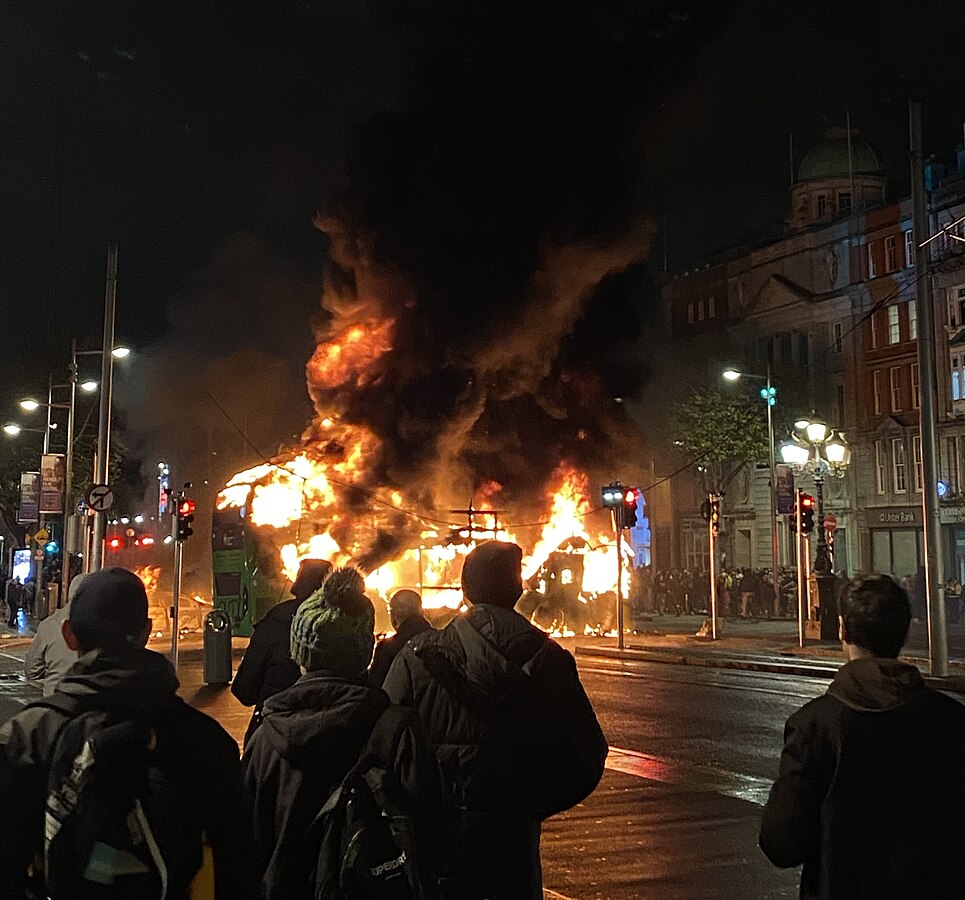
A picture taken during the November 2023 riots in Dublin. From Wikimedia Commons, credit to CanalEnthusiast.

Meanwhile I have ‘genuine concerns’ of my own. I’m concerned about racist thugs setting shit on fire and beating people up. I’m concerned about garbage from social media five years ago suddenly appearing on election posters. Peter Casey has that poster where he looks like Father Jack – the slogan is STOP THE MADNESS. I agree, only I think he’s THE MADNESS.

I have genuine concerns about racism. 85,000 Ukrainian refugees were accepted pretty much overnight and without a murmur of protest, and on much better conditions than other nationalities. But the fury over 30,000 international protection applicants has turned Irish politics upside down. I don’t grudge the Ukrainians anything, and I don’t want assholes to protest them – but the shortage of beds is obviously due to the bigger group, not the smaller group. Has this really not occurred to anyone?

I have genuine concerns about the media. Dread washes over me when I walk into a shop, because when I glance at the newspapers I see headlines dripping with hostility.

I have legitimate concerns about the way Fianna Fáil, Fine Gael and increasingly Sinn Féin are giving ground. On December 4th the state just told male asylum seekers, ‘Nope, we’re not housing you anymore;’ now Harris is clearing out those Grapes of Wrath tent camps and milking it for the cameras. Sorry Peter Casey, I think it’s MADNESS to be up in arms about the state being supposedly a soft touch – when it’s done less than the bare minimum to respect the right to asylum.

Fianna Fáil and Fine Gael both report that the main issue on the doors is migration. Sinn Féin report housing is still the main issue, which tracks with recent polling. But regarding housing, says one prominent blueshirt, ‘the conversation on this issue is less heated than it was five years ago.’ Palpable relief! The far right present themselves as anti-establishment warriors, but they have taken the heat off the government for the housing catastrophe. Maybe that Fine Gaeler is talking it up, but the more migration goes up the agenda, the more housing slips down.

Anyway, what’s the far right’s solution on housing? The IFP say ‘House the Irish first.’ So a 1950s Northern Ireland-style segregated housing system, where people arbitrarily deemed ‘not Irish’ go to the back of the queue, regardless of need or how long they’ve been waiting. I suggest a snappier slogan: ‘Apartheid for Ireland.’

The world is getting more violent and the climate is getting more unstable. More people are going to be forced to leave their homes. A lot more. We can make these refugees into (very unconvincing) scapegoats for housing shortages and violence and whatever else. Or we can be serious about it.

Barring massive political change, I don’t believe any authorities from the EU down to our own government are going to be serious or compassionate. But we as individuals can still behave like human beings. If refugees come to your area, Syrian, Ethiopian, Ukrainian, whatever, don’t protest them (no, not even if you feel the government or IPAS messed something up). Do like they did in Borrisokane: go and talk to them. Some have fluent English, and the Translate apps have gotten good. Take those vague phrases like ‘military age males’ and tag them in your own mind with faces and names. You’ll find that they are regular people with entirely mundane needs and desires. But they are in a bad situation and they have come from a terrible one. They haven’t burned any trams (if one of them does, don’t worry, you’ll hear all about it) but they are the ones – far more than the protesters and more than me – who have genuine concerns.

Want to read more of my stuff? The full archive is right here on my home page.