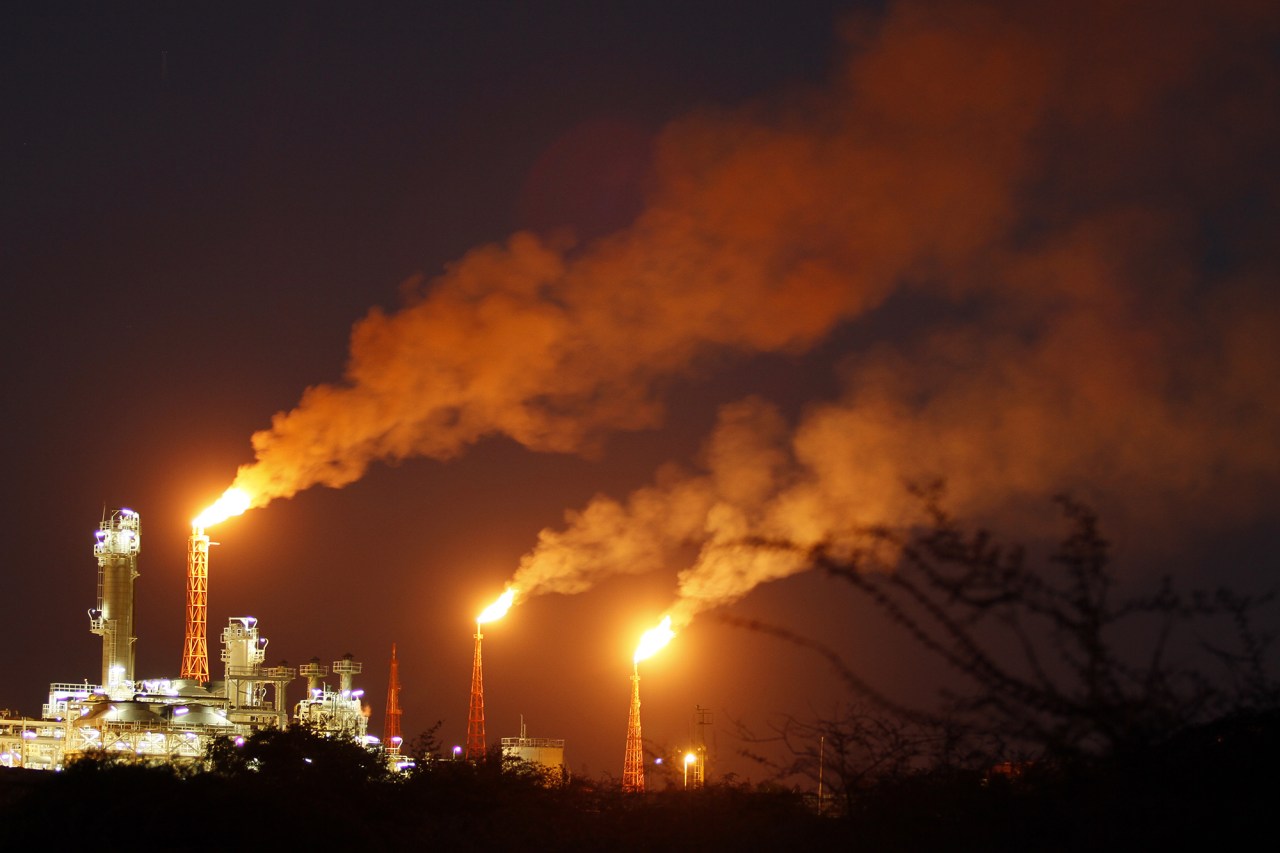
The war of the crazy bastards (US/Israeli War on Iran, Day 39, April 7th 2026)

As I write, the US president is threatening to kill Iranian civilisation, ‘never to be brought back again.’ The craziest thing is not the business of threatening genocide on impulse. It’s the fact that we won’t even remember this in a week. There will be some other flashpoint, some other deadline. I’m laying my cards on the table: Trump is bluffing again, just like two weeks ago when he extended a 48-hour deadline to 5 days and then appeared to forget about it altogether.

Sooner or later, the bluffs will spill over into escalating horrors, because the terrifying logic of this situation means there is an ‘up’ button but no ‘down’ button. And yes, this might be the time it spills over. So if I’m wrong and Trump abides by his deadline in some more-than-token way, it will do more than add a few more pages to the catalogue of sordid and pointless war crimes. It will provoke an escalation that will make the blowback so far seem mild. So I don’t make this prediction lightly. But I am sick of how Trump keeps saying nonsense that he doesn’t follow up on, and we still hang on his every grotesque word.

To get some sense of order out of all this chaos, and as we wait for Trump either to fulfil his threat or forget about it, let’s run through the various facets of this war in turn: what I’ll capitalise as the (1) Machine War, (2) the Oil War, (3) the Regional War and (4) the potential for a Ground War. The latter two I will hold back for a separate post to go up in a few days.
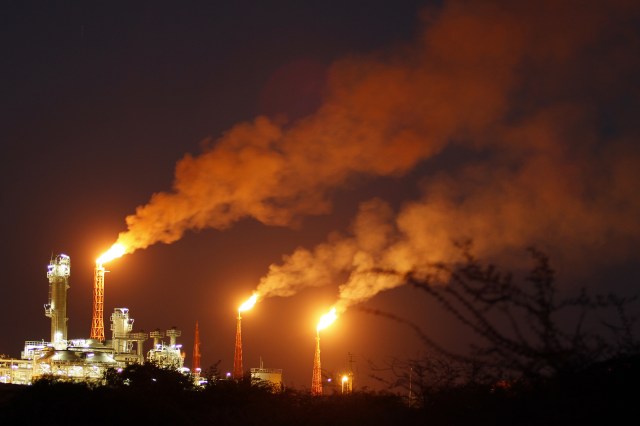
Khosro Heyratnegari. Kharg Island in 2015. From Wikimedia Commons

The Machine War

Fatalities on the US/Israel side have stayed strikingly low through 39 days of war (from what we can gather through the screen of wartime censorship) while, by contrast, the death and destruction in Iran and Lebanon have been appalling. But don’t be fooled by that. The basic idea I laid out back on March 3rd was: the US has walked into a situation which only their adversary, Iran, actually has the power to end. The war is not over while Iran is still hitting US assets with drones and missiles, still saying who passes through the straits. In my post from Day 12 of the war I placed importance on the idea of a ‘missile-interceptor gap;’ weeks later, I’m not sure if this was right: Iran is still bombing away due to its bottleneck of launching capacity while on the other side it’s not clear if their woes are due to “running out of interceptors” as such.

A lot of the questions I posed were answered on March 21st when Iranian strikes hit Arad and Dimona in Israel. Footage showed massive destruction, and 180 injuries were reported in a single evening. We are still seeing near-daily reports of successful strikes on Israel in particular but also on facilities across the Gulf. Is this the missile-interceptor gap, the effect of cluster munitions, or the sooner-or-later outcome of a numbers game where if there are enough missiles no so-called “iron dome” can catch em all?

On March 21st, Israel’s health ministry stated that over 4,292 people in Israel had been injured since the start of the war, a number that has surged since then. As of today, officially 39 people including soldiers have been killed. The disproportion between injuries and fatalities generally strikes me as odd. The idea that no-one lost their lives in Arad or Dimona seems strange to me as the pictures showed buildings really flattened.

Another straw in the wind is a report on US personnel in the Gulf being forced to ‘work remotely.’ This puts an image in my head of Napoleon explaining that his army has to ‘work remotely’ from Moscow. This places the “fatalities are so low” argument in a different light. They are low because the US facilities have been abandoned (and the naval vessels are anchored thousands of miles away). The low fatalities on the US side (taking them at face value) are not in this case a measure of success. There’s nothing new about running away as a means of reducing fatalities.

Hegseth brags about ‘lethality’ as if killing people were an end in itself. (Maybe it is, for him and for his church. And he calls Iran a death cult!) But the really crazy thing about this war is that the US bombardment is many times greater than the Iranian bombardment in ‘lethality’ – but so much less effective. In the future it will be difficult for history teachers to explain this. But the strategic reality is what it is. Speaking very broadly, the Iranians are fighting for survival and are ready to endure suffering. The Americans are ‘like the poor cat i’ the adage’ who want to catch fish without wetting their paws.

Oil War

The conflict over the oil fields is a warning. On March 18 Israel bombed the South Pars oil field, which is shared by Qatar and Iran. The US government were angry at Israel for escalating the war, so angry that they threatened to punish… Iran. Iran escalated in response with more attacks on oil facilities, then the US threatened an astronomical escalation, then extended the deadline, then extended it again, and again… What interested me about this episode was that it pushed the world to the brink of a far greater escalation. And a few weeks later we are again on the brink. It’s a measure of how wild the situation is: the US government has blown up tens of thousands of targets in Iran, and the Iranian government has closed the Strait of Hormuz. You’d think that was extreme, but there’s a lot of room left to escalate. Things can still get a lot worse and it’s easy to see how.

On the other hand it’s very difficult to see how things could get better, how the oil could flow again: even if Trump changes his meds and declares victory, Netanyahu could kick things off again with some unilateral action that would spoil a deal. The US have now essentially established a set of rules where negotiating is just a cover for the next act of aggression, which means that even if Trump and Netanyahu are both visited by seasonal ghosts who scare them into changing their ways, the Iranians will not come to the table for fear that the table will be blown up.

The Oil War is really having an effect. At the start of this war the countries of Western Europe came out very much on the US/Israel side. This was surprising given they had been mad at Trump over Greenland only weeks before. The way the war is dragging on, and the way things have gone with Hormuz especially, has pushed the US-Europe relationship back to where it was over Greenland. The anger from world leaders toward Trump for choosing to create this situation is very obvious. The Gulf countries are in a far more desperate situation. There are hints that Saudi Arabia and the UAE would support a broadened US war. I doubt Qatar and Oman are pushing the same agenda.

The US cannot replace the Iranian government. The US cannot collapse Iran as a state. The US cannot spirit away a huge quantity of highly enriched Uranium. The US cannot disarm Iran. The US cannot make the Strait of Hormuz safe on US terms (see my post from Day 20). You can’t make predictions so early in a conflict that could last years. But right now the US has no way to achieve any of its stated goals.

A pattern we see in many wars – arguably in Ukraine – is that the weaker side, intoxicated by early wins, overplays its hand and misses an opportunity to cut a deal before the tide turns. Trump is threatening to carry out massive-scale war crimes against Iran. But from the Iranian point of view, I would imagine there is little the US and Israel can do that would make the situation significantly more serious than it is, short of a nuclear attack or a ground invasion. I think that right now the Iranian leaders would only be ‘crazy bastards’ if they reopened the ‘fuckin’ straits’ and sat down with the Americans for another game of negotiate/assassinate. Trump’s speeches and posts read like a man who is trying, with mounting desperation, to scare people who are already beyond fear. The threats fail to hide a deep fear of further escalation.

Often over these last ten years it has felt like the entire human race was being forced to live inside the brain of Donald Trump. But reality is asserting itself and it now feels like we are on an interface between Trump’s grey matter and a real world that has ceased to cooperate with him solipsism. The mullahs are more formidable opponents than Joe Biden, Chuck Schumer and Nancy Pelosi. It is even clearer now than it was a month ago: the US-Israel alliance can cause a lot of pain and suffering, but they can’t win this war.

Stay tuned. In a few days I will post a follow-up looking at the various frontlines of this war across the region, and assessing the potential for a ground invasion of Iran.

[Update, 3AM GMT, April 8th. There is a ceasefire. The devil is in the details and in the execution. But there is after all a down button on this thing, and someone has pressed it.]
Strait to hell, boys (US/Israeli War on Iran, Day 20, March 19th 2026)

Since this war started I’ve been paying attention to news reports with a few key questions in my mind. ‘Will the Iranian people rise up in support of the people bombing them?’ was never one of those questions. The first hours of the conflict, when the Iranians fired back forcefully, settled in my mind the question, ‘Will the Iranian government fold?’ They didn’t, and now they won’t. But I’ve been wondering: will Iran reach a point where it can’t launch missiles and drones to significant military effect anymore? The Iranian government would not surrender at that point, so what then? Will the US reach a point where they are not making progress anymore with the bombing, where the costs threaten to pass a tipping point? Would Trump call it off? Or what other means would the US pursue, probably alongside continued bombing? Some of these questions are being answered as we speak as the war transitions to a new phase.

Previous posts in this series: What advantages does Iran have in this war? (US/Israeli War on Iran, Day 4, March 3, 2026) and The Machine War (US/Israeli War on Iran, Day 12 – March 11th 2026)

Battle of Hormuz?

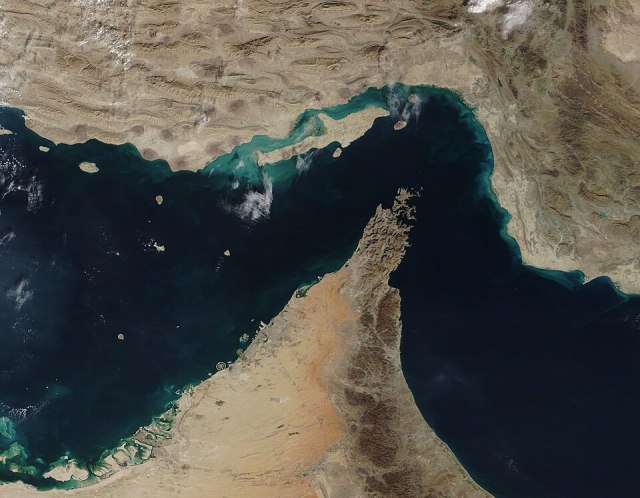
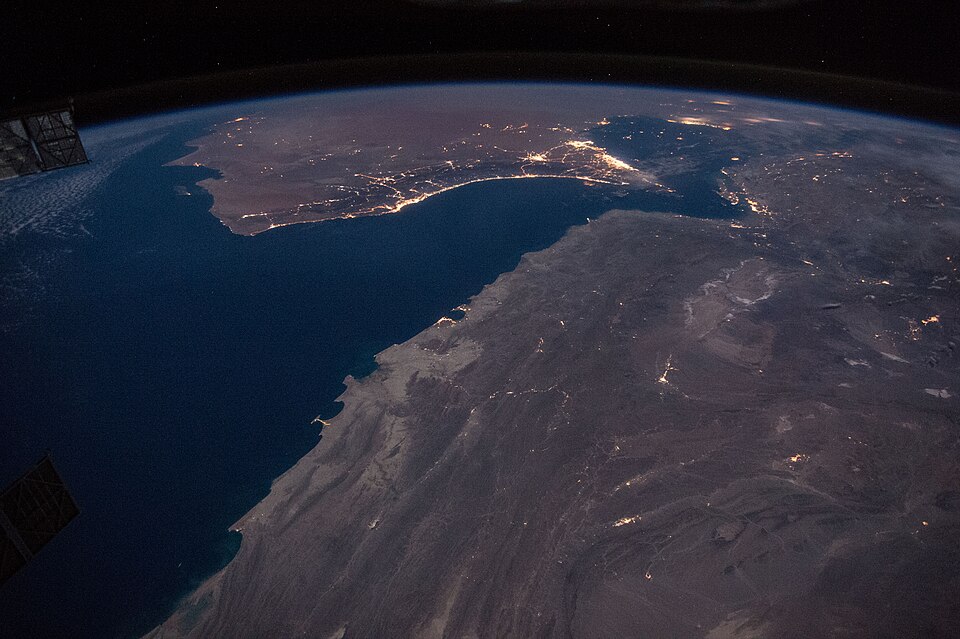
An image of the Strait of Hormuz from Wikimedia Commons, courtesy of NASA. Iranian countryside in the foreground, Arabia across the strait.

As far as this war goes, the Strait of Hormuz is now the primary focus of the world’s attention. I see potential for a pitched battle to develop in the straits of Hormuz. In other words the US may try to force the straits using naval and air power. To what end?  Not only for economic reasons, but for reasons of prestige, power projection etc. Such a battle would be difficult for Iran as they don’t have air superiority. But US vessels would be vulnerable to attacks from the shore and from drones, including naval drones. Could the US force a way through? Most likely yes, but at serious cost. Could it guarantee the safety of civilian shipping for even, say, one week following the end of such a battle? Let alone for years to come? They would have to control the entire shoreline at all times, requiring a massive commitment of resources and personnel. Actually making the strait safe means occupying a decent chunk of Iran. Occupying part of Iran means fighting a ground war.

I wrote the above days ago. Today I read this:

The US operations being contemplated include securing safe passage for oil tankers through the ⁠Strait of Hormuz, a mission that would be accomplished primarily through air and naval forces, the sources said.

But securing the strait could also mean deploying US troops to Iran’s shoreline, said four sources, including two US officials. Reuters granted the sources anonymity to speak about military planning.

Jesus Christ.

A ‘Battle of Hormuz’ scenario would draw the US into a painful trap. In a battle like that, Iran could bring its strength to bear much more so than in the current air war, because it would be a question of military power in coastal waters and on the ground. The war would move from air, the favoured element of the US, to water and then to earth. Specifically Iranian soil, where the Iranians would have a massive advantage in terms of numbers, personnel, local support and knowledge. The US would not be able to defeat an Iranian insurgency, and I have my doubts about them even winning a conventional war in this situation.

If the US does not attempt to force the Strait of Hormuz, and just watches as more and more countries cut deals with Iran to get their shipping through, they will be accepting a defeat on the global stage. They may well sit back and try to wait Iran out. I’m not alone in half-expcting this; on March 13th we had Elliot Abrams, former high-ranking diplomat, weighing in with the opinion that Trump will ‘call off’ the war in ‘probably a week or two.’ That does not strike me as implausible. Or, in the circumstances, unwise.

Attempting to force the straits would be a wild thing to do. But launching this war was a wild thing to do. US leaders, given their volatile public profiles, could well go for crazy plans as a way to salvage wounded pride, but only end up committing more and ultimately losing more. They have already blustered their way into a strategic dilemma.

The other depressing fact to remember, though, is that US military power is so huge that these volatile leaders could make every imaginable blunder and still be cushioned from defeat. One fifth of the world’s oil might just have to move through a warzone for a few decades while Iran is torn apart and its people suffer. Stupider things have happened.

I’m throwing in a second Strait of Hormuz image simply because you can make out Dubai’s Jumeirah palm in this image. Image from Wikimedia Commons, courtesy of NASA.

Missiles and drones

Another key feature of the last few weeks has been that Iranian projectile and drone launches have fallen to a low but consistent plateau.

I want to draw attention to this article by Muhanad Seloom which makes an argument that the US and Israel are winning the present war. He points out how badly the US/Israeli air campaign has damaged Iran’s capacity:

‘Iranian ballistic missile launches have fallen by more than 90 percent from 350 on February 28 to roughly 25 by March 14, according to publicly available data. Drone launches tell the same story: from more than 800 on Day 1 to about 75 on Day 15.’

The weak spot in his argument comes at the end. We can all agree that the bombing campaign has been vast in scale, hitting many thousands of targets in Iran and seriously damaging its military production. But then Seloom asks, ‘What prevents Iran from restarting production? The answer requires a post-conflict framework that does not yet exist in practise.’ I simply don’t see what post-conflict framework, short of military occupation, would prevent the Iranian state from rearming.

The article also acknowledges that communication from the Trump regime has been ‘poor’, a reference to the mishmash of strategic aims that have been declared to the world. I don’t think it’s just communication. The real problem lies in what is being communicated. There was no strategy beyond the assumption that the Iranian government would immediately collapse or surrender. Maybe the Trump administration will move the goalposts and declare victory. But as I’ve said before, the Iranian government is in a position where it can say when the war ends.

The other point is that Iran, even with a diminished capacity, is still launching enough missiles and drones. Just today they hit a power plant in Haifa. The censorship regime prevents us from seeing much. We have to extrapolate from the limited data we can see. The New York Times found 17 damaged US facilities in the region using satellite data. Daily news reports bring us news of mounting horrors in Lebanon and further bombings across Iran, but there are also still regular reports of Iranian missiles striking targets in Israel and across the Gulf.

The US leadership with their sadistic and bombastic speeches are signposting their own untrustworthiness. So I don’t believe their boasts about how much of Iran’s military capabilities they have destroyed. And it seems plausible to me that their air campaign passed a point of diminishing returns a week or two ago. There is a part of the Iranian military capacity which the US cannot hit. Iran is big; there are sites the bombers cannot find or reach. In spite of boasts that they have destroyed all air defences in the country, I would bet there are heavily-defended areas that the Americans are shying away from. Meanwhile a part of what has been destroyed can be restored.

I assumed for a while that Iranian missiles and drones would run out. What’s actually happened is that a massive supply is stuck in a bottleneck of launching capacity. Their machine war has plateaued to a level that is low relative to February 28th. But it’s still going and it’s not going to stop for a long time.

Proxies/Allies

We should consider a scenario where the US, while continuing to bomb Iran, also arms and funds various opposition forces within Iran.

In the first week of the war the question of Kurdish and Baloch insurgents was more to the fore than it is now. With various Iranian Kurdish parties declaring an alliance and with autonomous Kurdish regions now in existence in Iraq and Syria, it’s likely that, at the very least, some Kurdish forces in the northwest of Iran will make some moves. The Balochs in southeast Iran are another national group who might be willing to join the fight. Showing the Iranian leaders’ alarm at such a prospect, they carried out drone strikes in the early days of the war against Kurdish-held outposts.

On March 5th interesting remarks from a Baloch leader were quoted in The Guardian: “I think [everyone] who is against the brutal cleric regime would accept support from the US but it should be a consistent support that resolves the issues of minorities – unlike, for example, when the US gave support for Syrian Kurds and then betrayed Kurds.”

The US lacks moral authority and trust due to its (bipartisan) fickle treatment of proxies in the past. Of course, a tenet of Trumpism seems to be that a great empire doesn’t need trust or moral authority. As a result, these groups within Iran are reluctant to fight in spite of their aspiration for independence. Hard to blame them! Joining the US and Israel wholeheartedly would be very unwise, given Trump could hang them out to dry “probably in a week or two.” There is reluctance on the US side too, because Erdogan does not like the sight of Kurdish people with guns. The same goes for Balochs and Pakistan.

Also, to what end? The purpose of promoting insurgencies would be to distract Iranian ground forces. But unless the US actually tries to occupy the Iranian coast, there is nothing to distract them from. It’s a waste.

The developments toward a regional war, especially in Lebanon where the civilian death toll is now approaching that of Iran, and the continuing ethnic cleansing in the West Bank and genocide in Gaza, deserve more attention than I have been able to give them in this post. So there we have it for Day 20 of the war, as I see it: potential for a pitched battle around the straits, Iranian barrages continuing at the same rate while the far greater US/Israeli bombardment sees diminishing returns, and mixed signals re the development of insurgent movements on the borders of Iran.

Want to read more? Browse my full archive at the Home Page

The Machine War (US/Israeli War on Iran, Day 12 – March 11th 2026)

Following on from last week’s post, I want to thrash out from uncertain evidence where things stand in the war as of today. Day 12 is a landmark because twelve days was the length of last year’s June conflict between the same antagonists. The day has come and gone with only the most unconvincing signals from the US president that there might be some dim prospect of a peace deal. But as I said last time, the basic strategic situation is: it’s the Iranian side who get to say when the war ends.

But it may be the end of the beginning. I think we are getting on towards the end of the first phase of the war, a machine war mostly of missiles, bombs and drones. The main questions in this first phase of the war are: what do the Iranians do when they run out of missiles? What do the US and Israelis do when they run out of interceptors? And who runs out first? A missile-interceptor gap in favour of Iran would mean a sudden ramping-up of damage to Israel, Gulf oil infrastructure and US bases. A gap in favour of the US means Iran’s chief offensive weapon is spent.

Where are we now?

Where do things stand right now in relation to this question? Almost nobody who knows anything valuable has any incentive to tell the truth. Here I will sum up the contradictory stuff I’ve read from various more or less non-credible sources.

  • That there are x5 fewer missiles than expected because Iran has lost so many launchers to air strikes.
  • That the US is pulling military hardware out of places like Korea and Ukraine to throw it into the Iran situation.
  • That the rate of Iranian missile fire has slowed a great deal since the start of the war.
  • That in comparison with last year’s 12-day war, fewer Iranian missiles are being launched – but they are causing more damage with the population of Tel Aviv being forced to run in and out of bunkers all the time.
  • That the Iranians are tricking enemy pilots by literally painting warplanes on runways.
  • That Tel Aviv is being hit really hard in the last four days, that the “Iron Dome” is breaking.
  • That US/Israeli planes are swarming the exits to Iranian bunkers, blowing up anything that pokes its head outside.
  • That civilian life in the Gulf has returned a good deal of the way to normal.
  • That Iran has pivoted to blowing up oil facilities in the Gulf.
  • That these attacks on oil facilities are not Iranian at all, but Israeli false flag operations (If the Gulf countries choose to do a deal with Iran in the future, they can all pretend to believe this).
  • That Iran is still holding back its biggest missiles.
  • That Iran can churn out Shahed drones at several times the rate that they are destroyed, and that these drones can do enough damage to make a big difference in the war.
  • That Iran can fight on at a fraction of the financial cost that the war is imposing on the US.
  • That the US side are not actually worried about running out of interceptors, only about leaving Ukraine exposed by overcommitting to Israel and the Gulf.
  • The US has not lost vessels. But that could be because their navy is hanging back and not committing itself to combat.
  • That the entire Iranian navy and air force have been destroyed, and 80% of air defences destroyed.
  • That 17 US installations in the Middle East have been damaged.
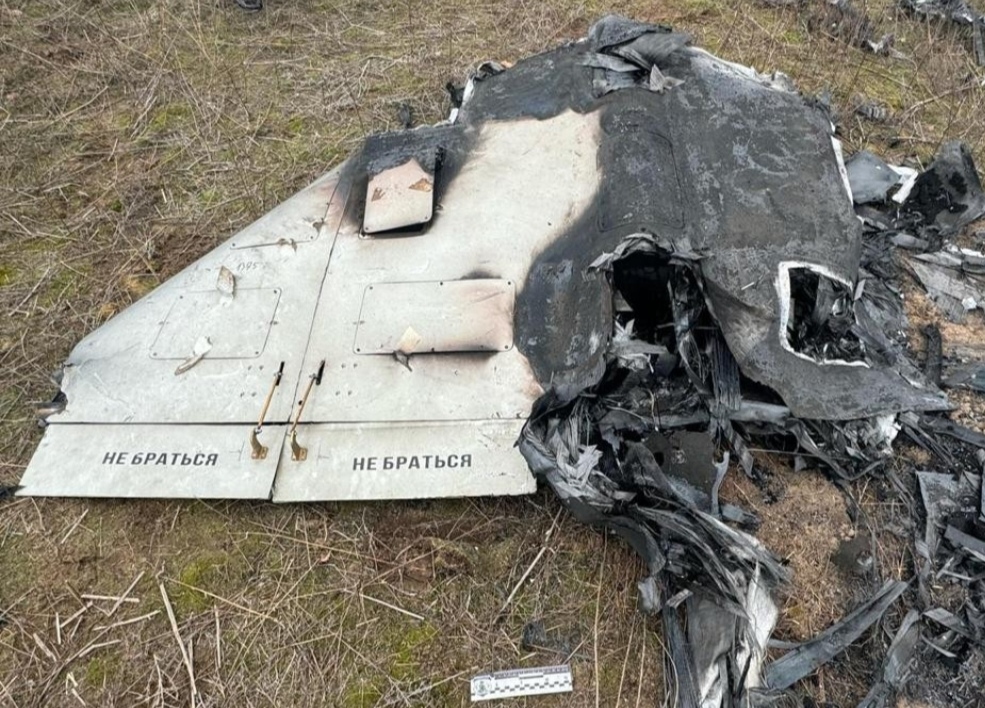
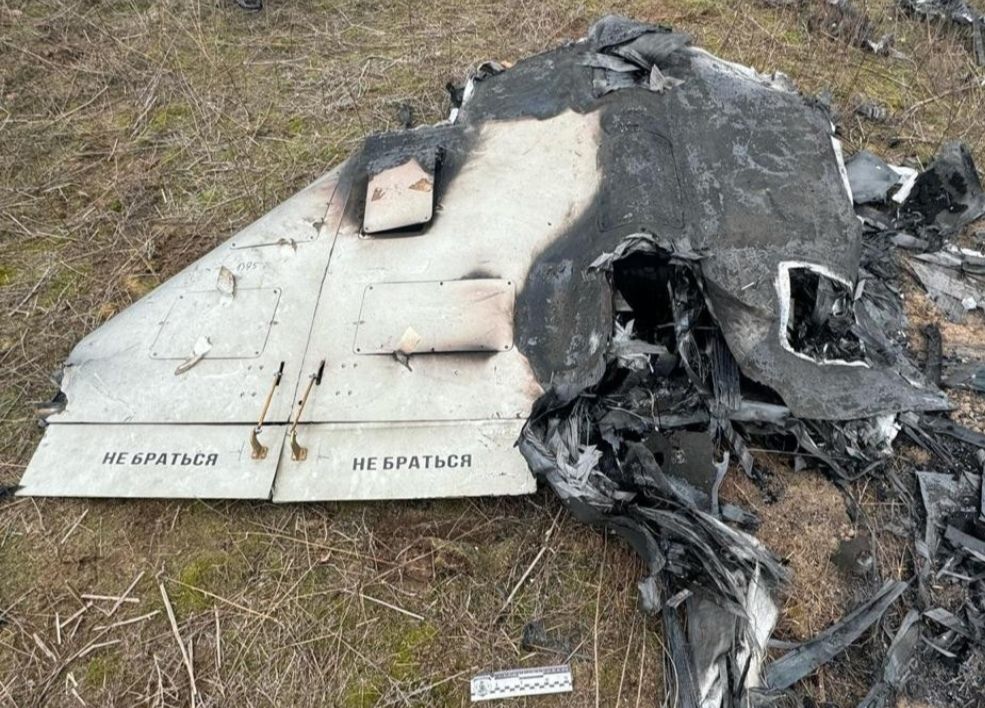
A Shahed drone shot down in Ukraine. Image courtesy of Npu.gov.ua

All of the above cannot be true. But some of it is. We have to use our own judgement. It appears to me that while the balance of fatalities is massively against Iran, the war is proving to be a massive logistical, political and economic challenge for the US.

What do we know for sure?

The outstanding fact of the war is that there has been a slaughter of civilians in Iran and Lebanon. Next in significance is the blockade of the Straits of Hormuz, the mere warning of which has led to economic turmoil around the world. Moving on from warnings, today three ships were hit by Iranian weapons in the straits.

Incentives to de-escalate are not there. An initiative by the Iranian president to mend fences with the Gulf States was blocked by the military, with strikes continuing, for example on a desalination plant in Bahrain the very next day. Yesterday I saw multiple headlines about Trump saying peace was coming very soon, and I just find it both funny and irritating that there are still journalists hanging on every word out of Trump, as if this is a man who weighs his words for even a second before vomiting them up, or stays true to them afterwards.

The US/Israeli bombardment, with its toll in civilian lives, can carry on for, in effect, as long as the US population will continue to pay for it and to tolerate it morally. But Iran will run out of missiles or of launching capacity sooner than it runs out of resolve. From a two-sided air war it will become a one-sided bombing campaign like what the US did in Korea and Vietnam (without unseating a regime). The 12-day duration of last year’s war could indicate that this first phase, this machine war, might be reaching its limits. But assuming the two sides are better-prepared this time, it could go on for another week or two.

At the end of that period, a missile-interceptor gap in Iran’s favour would mean an episode of more serious damage being inflicted on US bases and on Israel. Such a ‘Tet Offensive’ moment, especially so soon after the outbreak of war, could have a huge effect on public opinion and mood. A missile-interceptor gap in favour of the US would, on the other hand, settle the air war into a one-sided conflict until such time as the Iranians can restore capacity – if they can restore capacity at all under such pressure.

Next post I intend to explore what a second phase of this war might look like, assuming that the first is coming to an end. To finish today, a note on the Iranian regime.

Iran: strengths and weaknesses of the regime

I said last week that Trump, Hegseth, Miller et al are fools. The Iranian leadership, on the other hand, are reactionary and ruthless, but they are not fools. Unlike the American and the Israeli leaders, they cannot afford to be fools. The Islamic Republic is deeply imbedded in society through a nearly fifty-year history. Iran’s strategic doctrine of distributed “mosaic” resistance and multiple designated successors for every position is an impressive response to the last quarter-century of a US and Israeli doctrine of blitzkrieg and assassination. In the future, the current war could be written up as an epic of resistance that could supply the clerical regime with a whole new legitimizing narrative that it can spin decades of mileage out of.

For what it’s worth, I don’t support the Islamic Republic regime – and I think any regime that Trump might install (or Biden, Obama, Bush or Lincoln, while we’re at it) would be a lot worse. A new regime emerging in a genuine way, from a popular uprising such as the Women, Life, Freedom movement, or from Iranian labour, would be a different story. To me this is a very simple point. It’s not complicated at all. Some people insist that any criticism of Trump’s idiotic war is a defence of the clerics. On the other hand I’ve noticed a semi-ironic identification with the Iranian regime from people who are simply relieved to see some powerful entity standing up to the US and Israel at long last.

Even taking into account the rounding effects of irony, I think this is unwise. Already the clerical regime is directing its propaganda appeal to the anti-Israel layers of MAGA more so than the progressive anti-war left.

Anyway, I don’t feel any need to wring my hands, accompanying any remarks with a token condemnation of the Iranian government for the sole purpose of covering my arse. That’s not why I’m writing this. But a relevant point, for my purposes, is to look at how the nature of the Islamic Republic might inhibit its ability to fight imperialism. On Drop Site News a week ago I heard an Iranian official using this war as a retrospective justification for the killing of thousands of protesters by the government in January in operations that were extraordinary in scale and ferocity. On the contrary, there must be severe confusion and demoralisation in the armed forces and among the public following the winter bloodshed. This kind of war demands the full mobilisation not only of the armed forces but of all of society.

I’m going to leave that point very general because of weaknesses in my knowledge of Iranian culture and politics. But as a general rule the nature of a regime has profound effects on how it fights a war. We can’t put the clerical authoritarian regime in a box and forget about it for military purposes. It will tell.

The “AI” Bubble (News comment, March 2026)

What explains the scale of the hype around Generative AI? Why the massive construction of infrastructure, the feverish promotion, and the vast amounts of wealth invested? Why are layoffs, the proliferation of child sex abuse material, and environmental destruction all tolerated? What does all this mean, when three-plus years into this bizarre cultural experiment, Open AI and similar companies have not turned a profit, and when the end product is so underwhelming?

They still can’t do hands

The answer is: Steve Jobs. Around 2010 the whole world was told a very persuasive story about Steve Jobs. The story goes that this genius came along and invented the iPod, iPad and smartphone, transformed everyday life and opened up vast new frontiers for investment and profit.

Capitalism needs a new Steve Jobs every ten years or so to keep the show on the road. It’s not just that there’s a million tech entrepreneurs out there who all want to be hailed as geniuses and to get uber-wealthy. It’s not just that the public is primed to expect this story to unfold again and again. That’s all in our heads (which is not to say it doesn’t matter). The biggest part of this is that capital needs a place to go.

All those rich people, all those funds, need to have a new Steve Jobs that they can throw money at. They don’t want to invest in unexciting, low-profit, bread-and-butter things, even if they might actually improve the world and empower their fellow human beings. They want tech things that sound exciting and radical but that don’t challenge capitalism in any way.

The Great Irish Famine according to Generative AI

For a while it was crypto. E-vehicles and space travel, which unlike crypto and AI are actually worthwhile things, have been hyped and inflated in the same way in recent years (the gall and illiteracy of SpaceX when they called a basic orbital rocket “Starship”!). Now it’s AI and they are going much harder. 

Hype to an extent creates its own reality. This thing has enormous momentum. But the rules have changed. It’s not the 2000s or the 2010s. The low-hanging fruit that you can grab, the digital commons that you can enclose, are scant now. People who have bought into the AI hype are not convinced by the product itself (how could anyone be?). They are convinced because they believe they are in a familiar story, a story about genius, enterprise, tech innovation, changing the world, getting rich. So did (do) the crypto people. When the reckoning comes their first reaction will be “That wasn’t in the script.”