The Decline of the Villain (2014)

[Author’s note, May 2023: I wrote this piece nearly ten years ago on my old blog. Looking back, I’m happy with how I put my finger on how some shockingly crappy writing found its way into massive TV shows and movies of the time.

[In paticular I anticipated the well-deserved Sherlock backlash…]

I’ve just watched the first two seasons of the BBC’s very enjoyable modern take on Sherlock Holmes. Moriarty, the villain (Andrew Scott), was admirably written and acted, with his posh Irish accent, his “absolute psycho” character (writer Stephen Moffat) and his insatiable mania.

But there was a problem. This was a problem with the whole conception of the character and the mysteries he sits at the centre of. I first recognised this problem when Moriarty did something that has become compulsory for every 21st-century villain: the Joker in The Dark Knight, Bane in its sequel, Loki in Avengersthe baddie Silva in Skyfall

He deliberately got himself captured so as to engineer a fiendishly complex, far-fetched escape, all for some negligible purpose that was clearly not worth the risk or the trouble.

Then I started to think about this a little more. The 19th-century Professor Moriarty went after Sherlock Holmes because the great detective was threatening to uncover his secret criminal organisation. The 21st-century Moriarty went after Sherlock Holmes for his own amusement.

It’s effective and scary, once in a while, to see a villain who is motivated only by some inner sadistic drive, who is a psychopath, whose powers of planning and organisation are almost supernatural. Now, I’m not a massive watcher of films and TV shows, but I think I can discern a trend towards this kind of villain becoming the rule, not the exception.

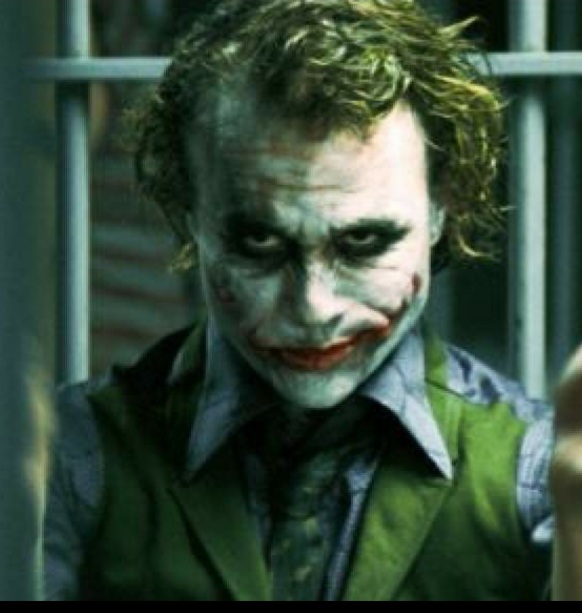
It’s a shame, because Scott, Moffat and Gatiss’ Moriarty is so brilliantly acted and written. But his underlying motivation and nature is becoming a cliché. His prototype, to my mind, is Heath ledger’s equally brilliant performance as the Joker. The only explanation of his desires and motives is that he is like a “dog chasing cars”. He does it all for fun. He’s evil because he’s evil. Holmes and Moriarty have more or less the same conversation as the Joker and Batman: “You complete me.” says the Joker. “Without me, you’re nothing,” says Moriarty.

This is interesting the first time, but boring when it becomes a rule. Rather than being real characters, formed by and a part of the world around them, the villain becomes an essential, cosmic, metaphysical force of evil. Instead of applying a Sherlock-Holmes-like brain to the problem of understanding this villain, we are asked to bow down before a profane mystery that is beyond the grasp of our feeble human minds.

It’s pre-enlightenment stuff. Good versus Evil. Eternal battle between irreducible forces. Fair enough in The Lord of the Rings, which you know is set in a fantasy world. Not fair enough in a “gritty, realistic, modern” reboot of Batman or of James Bond. It fits in even worse in Sherlock Holmes, which is supposed to be all about the application of scientific thought to apparently baffling crimes. “I have been tempted to look into the problems furnished by nature,” says Sherlock Holmes in “The Last Problem”, “Rather than those more superficial ones for which our artificial state of society is responsible.”

And don’t get me started on the crimes themselves. Villains these days have thinly-disguised supernatural powers. The Joker can manufacture huge numbers of bombs secretly, then go on a rampage setting them off in all manner of bizarre places he could not possibly have planted them. He even times his one-liners precisely to the moment before the explosion. He times his bank robberies perfectly to coincide with the line of yellow school buses.

The absurd far-fetchedness of Silva’s plan in Skyfall is perfectly summed up half-way through this video and in this older post. It’s just stupid and impossible. The precision and logistical effort required would strain the most powerful intelligence agencies on the planet, and the rewards are so trifling for this huge effort.

Of course, if the villain’s motivations need not be explained, then why should we think we have a right to understand his logistics? Cosmic forces of evil go hand-in-hand with supernatural powers.

Batman Begins impressed me because there was an internal consistency to it all, everything was explained within the rules of the game, no logistical leaps were made, and everyone’s motivations were made clear. Not bad for a superhero movie. Bane was a much better villain than the Joker as well, but again at the start of the film we were subjected to effectively supernatural powers and a pointless get-captured-and-escape stunt.

When the villain can do anything, there is no awe, surprise or dramatic tension. Internal consistency breaks down, and nothing is beyond possibility. When the villain can do anything, what stops him killing the hero? Screenwriters have solved this problem in a very unsatisfying way: often, the hero is cornered and defeated and the villain could kill them, but chooses not to, just to play some complicated and far-fetched game for their own satisfaction. The characters’ motivations can be twisted any way that suits the writers. A real conflict does not take place. Anything goes.

Is this all down to laziness? Like when Charles Dickens had a character die due to “spontaneous combustion” in Bleak House? I think it’s partly down to laziness. But only partly.

There’s no simple explanation but if you forced me to advance a theory, I’d say that villains with supernatural powers and/or no motivation beyond a desire to do evil reflect the stories we are told in the media.

George W Bush at one point stood up and said of Al-Quaida, “They hate freedom. They love terror.” The dead, bloodied face of Gaddafi was on every front page, as was Bin Laden’s. Remember the capture of Saddam Hussein and his dental exam? It has now become acceptable to be horrifically racist against people from North Korea, just because of the crimes of their government, crimes which some government allied to the US would get away with. Mass shootings in the US are written off as being due to insanity and evil, when actually there’s a lot more going on.

More shockingly, the 2011 riots in the UK were publicly blamed by the Prime Minister himself on “gang culture”. Idealistic explanations are preferred to material ones: young men not rooted firmly in the holy and sacred institution of the traditional family listened to too much hip-hop and got ideas. People who move country to flee violence or to find a job are presented as scroungers, or worse, as an invading army. Tube workers, air traffic controllers and waste collectors apparently go on strike because they’re greedy.

In the media, “enemies” of every kind have become cruder caricatures than the crudest Hollywood villains. It’s no surprise that even accomplished screenwriters have taken the liberty of making their villains cruder still.

We are dealing with a middle-class culture and media that has lost its patience with the demands of science. Sociological explanation is out of fashion. Attempts at linking outrages to the society that produced them are shouted down with utmost impatience as so much naive whingeing and dodging of personal responsibility.

But making these kinds of dumb, individual explanations for terrible events is dodging the responsibility of using your brain. The purpose of the decline of the villain in fiction is to shield writers and viewers from a world that is difficult to understand without asking questions that are considered radical, and to explain the problems of that world by reference to embodiments of absolute evil. It’s unsatisfying as entertainment, unless the satisfaction you’re looking for is nothing more than a confirmation of lazy prejudices, and freedom from the responsibility of using your brain.

[Author’s note, May 2023: One question remains. Has this trend continued? Well, Sherlock got worse, to the point where the shortcomings which earlier seasons had got away with became glaring. I haven’t watched the last two James Bond movies, the last two Batmen (Affleck, Pattinson) or (at a rough estimate) the last 15 Marvel movies. So I can’t make direct comparisons.

[There will always be badly-written villains but in the last 5 years we’ve had damn good ones in Andor, Joaquin Phoenix’s Joker and even a cartoon with an absurd premise like Enter the Spidey-Verse. Overall, I think the worst of this trend has receded into the past. Fingers crossed. The more common problem today is Black Panther syndrome: villains are given 100% sympathetic goals but then shown pursuing those goals with pointlessly evil methods.]

Go to Home Page/Archives
New Podcast Episode… and a big announcement!

Morning folks. I’ve just gone uploaded a fully-voiced and updated version of ‘Czech Revolt in the East’ to podcast platforms and Youtube. Links below.

I’m very excited to announce that my second son is due to be born any day now. Instead of writing new posts, I’m going to be republishing here some of the best and most popular material from my old blog. There is some great material there which I will be excited to bring to a new audience here.

https://youtu.be/W2MExPywL_0

https://podcasts.google.com/feed/aHR0cHM6Ly9hbmNob3IuZm0vcy81NWY0MzZlOC9wb2RjYXN0L3Jzcw/episode/OTcwMTQ1YmMtZjhlMy00ZTE5LTk5NWEtYTFkNmY4NDZlMzdl?ep=14

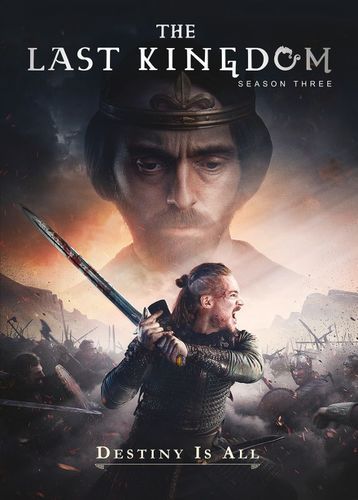
Goodbye Uhtred (Review: The Last Kingdom and Seven Kings Must Die)

The Last Kingdom has come to an end. I watched nearly all of it and enjoyed nearly all of what I watched. But by the third season I was already aware that it was a kind of modular story, constructed from parts that would show up again and again, reused in new configurations:

  • Danes invade Saxon lands
  • The Danish leader, like a James Bond villain’s henchman, has some eccentricity of costume or behaviour
  • Uhtred is tempted to join his Danish friends
  • A Saxon nobleman is scheming for his own benefit and to the detriment of the kingdom
  • The King of Wessex is being unreasonable and listening to bad advice
  • Uhtred expresses anti-clerical views, but there is a specific priest (or even several) whom he admires
  • Uhtred does something of which the Saxons disapprove
  • The King of Wessex banishes Uhtred
  • Uhtred, though an outlaw, resolves to save the Saxons
  • Uhtred convinces the King of Wessex to redeem himself
  • Uhtred, through clever tricks, wins a battle and saves the Saxons

Drop a comment if I missed any.

(Spoilers Below)

But The Last Kingdom was a good show. In between these reusable blocks there was much material that did not fit this repetitive pattern, such as Breda acting as a foil to Uhtred, diverging ever-further from him and from his Saxon friends. With each turn of the wheel her actions grew more extreme until suddenly she was up in Iceland doing throat-singing and human sacrifices.

We could make similar points about several other characters, such as Aethelfaed and Aelswith, real multi-dimensional personalities. The women characters in particular got to operate autonomously from the repeating story blocks and the elements of ‘stock character’ which this imposed on Uhtred, the King, the Scheming Nobleman, the Big Bad Dane, the Good Priest and the Bad Priest. And often the Stock Characters and modular blocks were executed so well it was difficult to be bothered by the repetition.

The Last Kingdom has come to an end with a movie, Seven Kings Must Die, in which most of these blocks of story got one last airing. I can’t deny I felt something stir in me when Uhtred finally saw Valhalla with his dying eyes. For five seasons and a movie he has been torn between Saxon and Danish worlds. He always came down on the Saxon side, but in death he finally gets to drink and boast with long-dead comrades and enemies. But of the faces laughing around the eternal mead-table, I could only definitively put a name to one (Breda, naturally).

I was struck, in Seven Kings, by the drabness of the world of this story. Maybe this is because I was watching The Last Kingdom at movie length, or maybe it’s because I recently saw the samurai epic Ran, which is awash in colour. Uhtred’s Anglo-Saxon England is all greys and browns in a murky filter. Some people on the internet who want to ‘RETVRN’ to back-breaking agricultural toil (of the feudal and not the gulag variety) think there’s a screen conspiracy to make the Middle Ages look bad by suppressing the colours. I don’t buy the conspiracy angle. Creators and audiences feel that bright colours are tacky and cheesy. Indeed, Ran is brilliant but some of the costumes do look synthetic. Organic colours and non-plasticky textures feel more authentic. Whether they are or not, I don’t know, but they are certainly a cheap and easy way to make things feel authentic. Maybe this shortcut to ‘authenticity’ has run its course culturally.

Seven Kings ended with a great battle scene, but some damage was done by the scenes immediately preceding the clash. It was not clear who was where, how many soldiers they had, or where those soldiers came from. A little more care here would have gone a long way.

The worst thing you could say about The Last Kingdom is that it was a bit boring at times, especially in the last two seasons. That’s where I skipped a few episodes. My loss of interest, I think, was due to the repetition. They filmed it all in a replica medieval village in Hungary, and it was obvious that one ‘town square’ location filled in for multiple towns. By about Season Four the viewer is too familiar with these interiors and exteriors – not the comfortable and evocative familiarity of a definite location which we know well, but the tiresome familiarity of the same kinds of places filling in for the same kinds of places. The interchangeableness of locations mirrored the interchangeableness of story elements, and both undercut the best efforts of writers, crew and cast to make each season fresh and exciting.

The first season was definitely the best – the set-up for the whole show is great, and early on the elements of repetition have not yet set in. The other seasons had great high points – the attack on Dunholm, or Uhtred’s first failed attempt to reclaim Bebbanburgh, or the time he and Breda tried to talk to their friend’s ghost. I am interested in this period because it’s not yet the Middle Ages, though you can see the outlines beginning to emerge; everything is DIY, rough and ready, down-to-earth, organic. I felt this story conveyed that sense of the period well.

The script for The Last Kingdom, like the visuals, never shone with brilliance. But it never made me groan or cringe either, and sometimes it moved me. The writing was never less than competent, and sometimes more than. I studied this historical period in college and, watching The Last Kingdom, I noticed very few of the anachronistic howlers one usually finds in these kinds of things.

There was a characteristic moment in Seven Kings: Uhtred makes a speech about how they must forge an English identity from diverse communities, and Finan pipes up ‘I don’t have to say I’m English, do I?’ It was a neat moment: the 21st-century Irish actor might be ad libbing, or the 10th-century character might be speaking from a point of view rooted in his own time. Uhtred has competently (not brilliantly) given the story a sense of theme and purpose; without undermining this, Finan has managed to cut across any danger of grandiosity or chauvinism. Somebody was paying close attention to what was being said, and I appreciated that.

The Darkest Timeline: Oceania, 1945-1984

This is an appendix to my series of posts looking at the plausibility of Orwell’s Oceania and the merits of the novel it features in, 1984. Here is a timeline I worked out for Orwell’s invented world, based on clues and cues in the novel itself.

But first, here are the links to the series:

1984 by George Orwell:

>Part One: Is 1984 plausible?

>Part Two: Is 1984 good?

>Part Three: Conclusion

The Darkest Timeline: Oceania 1945-1984

1945

  • End of Second World War
  • Birth of Winston Smith

c. 1945-1952

  • ‘a long interval of peace in [Winston Smith’s] childhood’
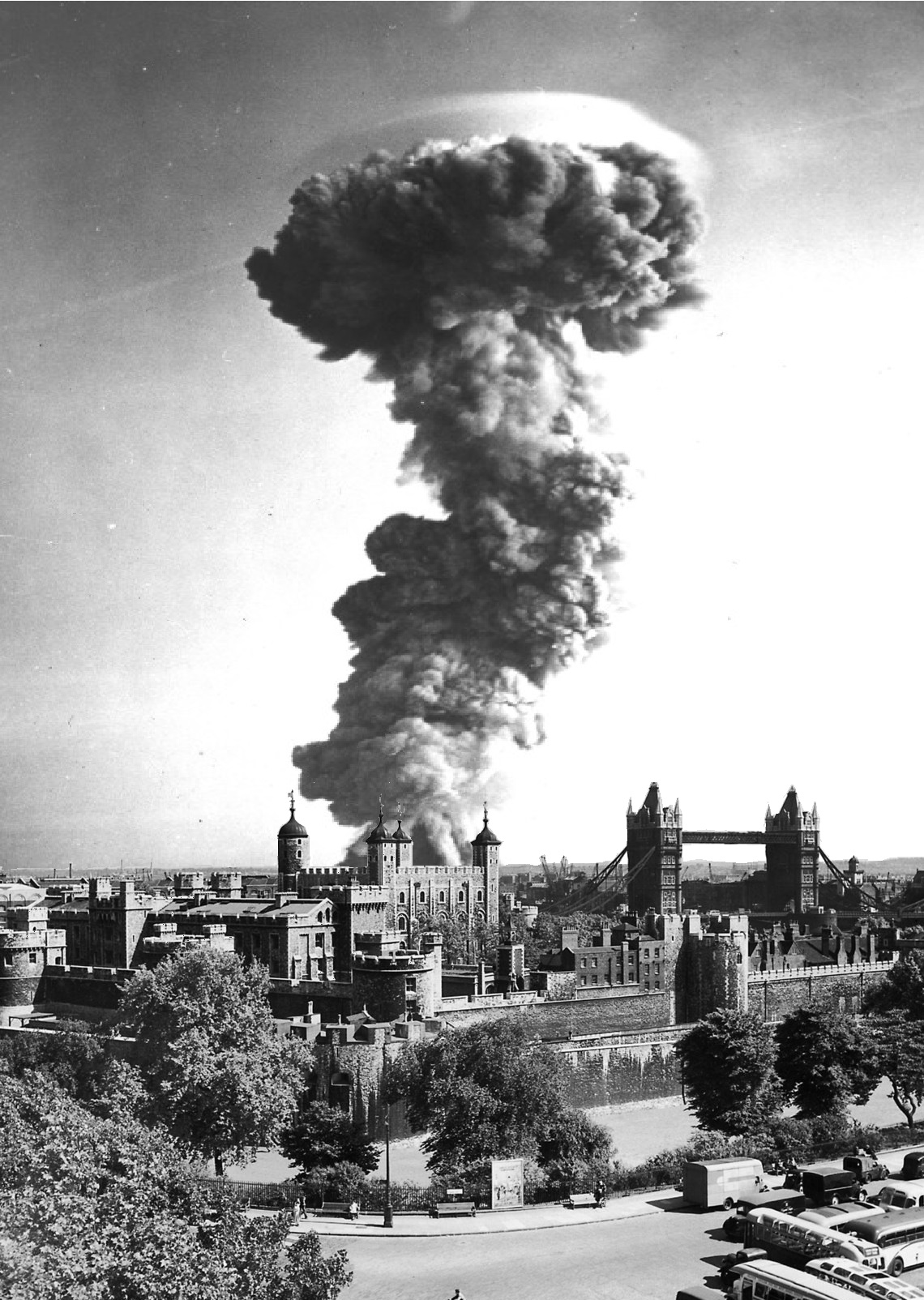
An atomic strike near London, early 1950s

c. 1950-1952

  • Surprise air raid alarm in London; this is likely a surprise attack by Eastasia, probably with atomic bombs
  • From this date, world war is continuous
  • 1950s: Atomic warfare causes huge destruction. Hundreds of cities, mostly in North America, European Russia and Western Europe destroyed (the only named city is Colchester)
  • By ‘the middle of the twentieth century’, Russia absorbs Europe, USA absorbs British Empire.

1950s:

  • In England, an underground struggle by socialist revolutionaries, a revolution and a civil war
  • Street fighting in London for several months
  • ‘one of the first great purges’

1954:

  • Disappearance of Winston’s father

c. 1955-57:

  • A time of air raids and civil conflicts, of political youth gangs wearing shirts of the same colour, proclamations, severe food shortages
  • Political ‘disappearances’ are already commonplace
  • Disappearance of Winston’s mother and sister
  • Winston enters state institutions
  • Birth of Julia in 1957
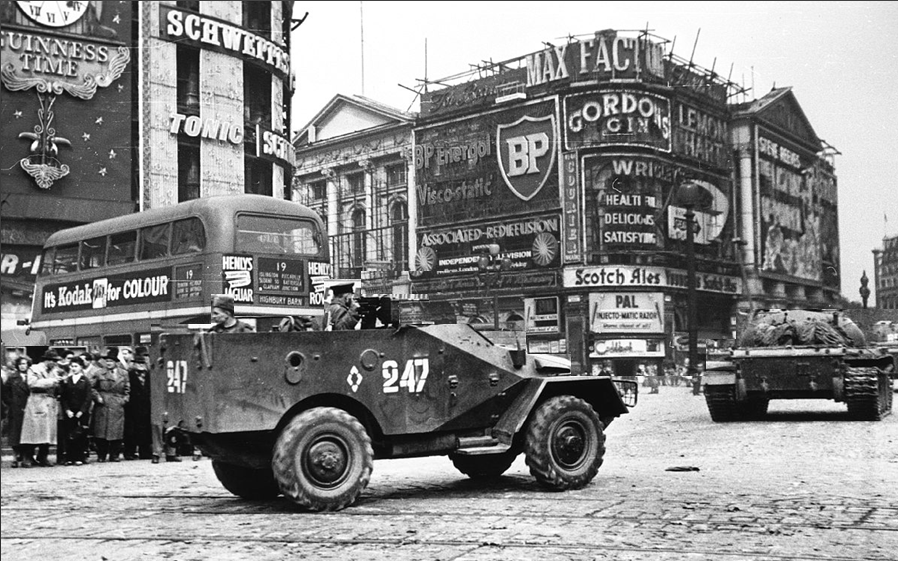
Piccadilly Circus during street fighting in London, 1950s

By 1960:

  • Eastasia has emerged as a unified state from ‘a decade of confused fighting’

Around 1960:

  • Ingsoc becomes a widely-used term

1960s:

  • Big Brother becomes a household name

c. 1962-4

  • Revolutionary leaders Jones, Aaronson and Rutherford are photographed in prominent roles at some important Party function in New York

Around 1965:

  • Goldstein flees
  • ‘in the middle ‘sixties’, ‘the old, discredited leaders of the party’ were ‘purged’ – ‘wiped out once and for all.’

1965:

  • Oceania currently at war with Eurasia
  • Julia’s grandfather disappears
  • Jones, Aaronson, Rutherford disappear

1966 or 7:

  • Jones, Aaronson and Rutherford confess in a show trial and, around a year later, disappear

1970:

  • The older generation of Party leaders is wiped out. Only Big Brother remains

Around 1973:

  • Winston is married to Katharine for 15 months

1977:

  • Winston has a strange dream involving O’Brien
  • O’Brien later says that he has been working on Winston’s case since this date

1980:

  • Oceania is now at war with Eurasia

1981:

  • Winston seeks out a sex worker

1984:

  • Ninth Three-Year Plan under way
  • Oceania conquers large parts of India
  • From Hate Week on, Oceania is now at war with Eastasia
  • Winston and Julia are arrested

At least one year later:

  • Oceania, now at war with Eurasia, first suffers defeat in Africa then wins a significant victory

Go to Home Page/ Archives

1984 by George Orwell:

>Part One: Is 1984 plausible?

>Part Two: Is 1984 good?

>Part Three: Conclusion

1984: Conclusion (Premium)

Become a paying supporter to get access

Access to this article is limited to paying supporters. If you already subscribe by email, thank you. But if you want to become a paying supporter, please hit ‘Subscribe’ below.

Donate less than the price of a coffee, and you can access everything on this blog for one year.

If you don’t feel like donating, most of my posts are still 100% free, so browse away, and thanks for visiting.

1: Is 1984 plausible?

2: Is 1984 good?

Home Page/ Archives

Is 1984 good? (Premium)

This is the second part of my series on Orwell’s 1984. Here is Part One, where I argued that its world was not plausible. Here in Part 2, and in Part 3 which will follow next week, I’ll be addressing some more positive points about the book.

Become a paying supporter to get access

Access to this article is limited to paying supporters. If you already subscribe by email, thank you. But if you want to become a paying supporter, please hit ‘Subscribe’ below.

Donate less than the price of a coffee, and you can access everything on this blog for one year.

If you don’t feel like donating, most of my posts are still 100% free, so browse away, and thanks for visiting.

Is 1984 plausible?

Home Page/ Archives

Is 1984 plausible?

During the first year of the Covid pandemic, a spray-painted slogan appeared on a road sign near Galway in the west of Ireland. Above the words ‘Monivea 23km’ was sprayed ‘G ORWELL 1984.’ Either someone had a grudge against the village of Monivea, or someone was trying to say that we were living in 1984, presumably because of Covid restrictions. If we Google George Orwell’s dystopian classic 1984, we get the same message repeated a thousand times: ‘We are living in 1984.’

From the right, it’s 1984 because they are not allowed to say the ‘N’ word, they got banned from pre-Musk twitter, they had to give up some income in the interest of public health, and because trans people exist. For the left in the 2000s, it was 1984 because of the Patriot Act and because the hypocrisy of the so-called War on Terror seemed to be mirrored in 1984’s permanent warfare. Centre-left Robert Webb, as I’ve pointed out before, appeared to believe that 1984 was a real history book. For him, the correct response to ‘We should improve society somewhat’ was ‘Read some f***ing Orwell.’

I have recently re-read some f***ing Orwell, namely 1984. It’s a good story, if like me you have a high tolerance for relentless misery. But no, 1984 has not happened – anywhere, ever. Not in Galway in 2020, not on pre-Musk Twitter and no, not even in the Soviet Union at the height of the Stalinist terror.

This is the first post in a series about Orwell’s 1984. Future posts will look at why I think it’s a good novel even though it’s implausible, the timeline, and the enigmatic character of Goldstein. All page references are from the 2008 Penguin paperback.

The dreary London of 1984. By Rhetos

Asimov gets it right and gets it wrong

In 1980 the Science Fiction writer Isaac Asimov wrote a caustic dismissal of 1984. He gets a few things wrong, and I suspect he only skimmed the novel on the re-read. Contrary to what he says, there is no way to tell if one is being spied on via telescreen at any given time (4). He claims that Britain is the seat of power in Oceania, but it’s pretty obvious that Britain has been reduced to a province of a US-based empire: it’s been renamed Airstrip One (which is funny satire but ridiculous worldbuilding), its anthem is ‘Oceania, ‘tis for thee,’ and its people use dollars (5, 8).

But Asimov is correct in his overall point that the real world has not developed in a 1984 direction. It has developed in the opposite direction. The coercive powers of states have grown, but it is not in some Stalinist way. It’s all in the service of corporate power and profits. We can be spied on through devices we carry around with us, but this technology is mostly used to sell us crap. In Oceania, there is no more racial division or religion, which is not the situation we face. The militarised cops and fedsbin the US don’t use their weapons to disappear anyone who commits ‘thoughtcrime.’ They use all that hardware to kill black people, to police the borders, or to infiltrate and entrap.

Multi-lithic world

In Oceania, the world has become nightmarishly uniform and monolithic. Anyone who is not ‘orthodox’ is liquidated. Our world is the opposite. What should we call it – multi-lithic? Everyone lives in their own extreme algorithm-curated bubble. Trump supporters and Q Anon types live in a different reality where they won the 2020 election. We now have cranks who run around filming themselves all day as they harass political opponents and tear up library books, all the while claiming that they live in a 1984 dystopia. In reality they would be the first to sign up for Ingsoc – they’d get to have cameras pointed at them all day.

The US political establishment have put the Iraq War in the memory hole, and most of the war’s architects have gone on to wealth and fortune. But it was not necessary for them to destroy or falsify any documents. They just brazened it out.

People are not coerced into morning calisthenics, evenings at the community centre or mass rallies. Such ‘horrors’ seem quaint. Instead people live in a world where the public and social spheres are withering away and all relationships are monetised.

We don’t all gather for ‘Two Minutes’ Hate’ or ‘Hate Week’ against a state-approved enemy. We line up and write vitriolic messages at each other’s thumbnails, usually over trivial stuff. We are not prohibited from debating; we are encouraged to debate endlessly, feeding the algorithm and muddying the waters. But we are prevented, as far as possible, from exercising any real power over events. We can think what we like. But we are not to organise.

All these trends predated the internet, and were certainly discernible by the real-life year 1984.

Oceania vs USSR

But we are not simply talking about whether 1984 resembles the present day. We are asking whether it is plausible. And doesn’t the world of 1984 resemble certain societies from history, such as the Soviet Union?

Actually it doesn’t.

When reading this book as a teenager I took Oceania as a ‘more extreme’ version of the Soviet Union. That seems to be what Orwell intended. But since then I’ve done a bit of reading, and now I can tell you that Oceania is actually something completely different.

It would not be difficult to list superficial similarities between Big Brother and Stalin, Goldstein and Trotsky, Oceania and Soviet Russia. But that’s actually where the problem lies. In the ways Oceania should be like the USSR, it isn’t. In the ways it shouldn’t be like the USSR, it is.

Contempt for ‘proles’

Let’s start with the ‘proles.’ The Party believe that ‘proles and animals are free.’ (53-55) There are separate uniforms and even separate drinks for ‘proles’ (beer) and Outer Party (gin). There is open contempt for the ‘proles.’ In the USSR there was never a rhetorical dehumanisation of working-class and poor people. Exactly the opposite: workers were idealised and put on a pedestal. It was often hypocrisy (as when they crushed a workers’ uprising in Budapest ‘in the name of the working class‘), but that’s beside the point. Such open contempt would have been unimaginable. Trotsky in 1936 was scandalised even to hear that a manager had used the wrong form of address with a worker.

Social engineering

The Soviet Union is associated with (we might say ‘notorious for’) social engineering. Ingsoc has no such ambitions, beyond the ranks of the Party. It basically leaves the ‘proles’ to their own devices. There is no attempt to change their culture, to improve their health and living conditions, no attempt to provide healthcare or education. We are explicitly told there is less social mobility and poorer education than before the Revolution. Ingsoc has left people to rot in buildings that have been standing since Victoria; the USSR built entire cities. Even if we take the Soviet Union at its very worst, this was the opposite of its approach. Access to education was widened a hundredfold and there was free healthcare.

A less benevolent example: in the late ’20s – early ’30s the Stalin regime set about forcibly collectivising all the farms in the country. This led to a terrible famine and a fierce campaign of repression. But such an ambitious project is unimaginable in Oceania, where the state leaves 85% of the population to be Del Boy and Rodney.

Culture

What about culture? Ingsoc destroys books, translates Shakespeare and Milton into horrible Newspeak, destroys words, disdains beauty. The Soviet Union invented new words by the dozen, but it did not destroy old ones. Literary classics were made far more widely available and affordable across the Soviet Union and Stalinist Eastern Europe. Not-for-profit publishing meant there was actually much more emphasis on acquainting the people with what isboften called ‘high culture.’ In Oceania, separate media are produced for ‘proles.’ Michael Parenti points out that it was in fact after the return of capitalism, in the 1990s, that books were destroyed in industrial quantities, and the standard of literacy plummeted.

Science

There is no scientific progress under Ingsoc. Even military research consists of white elephants. In relation to the real Soviet Union, I have two words for you: Sputnik, AK-47. The USSR promoted Marxism, which is a materialistic philosophy. Ingsoc openly rejects ’19th century ideas about the laws of nature’ (277-8) and embraces a totally relativistic ideology – matter only exists in the human mind.

Sex

There is no evidence whatsoever that there has been any advance for women under Ingsoc. Around page 15 we have the unintentionally amusing phrase ‘girl, of about twenty-seven.’ In Part 2 Chapter VIII O’Brien assumes that Winston speaks for Julia. Also, the party hates sex. But for the first 15 years after the revolution, the Soviet Union had the most socially liberal regime in the world when it came to sex and the liberation of women.

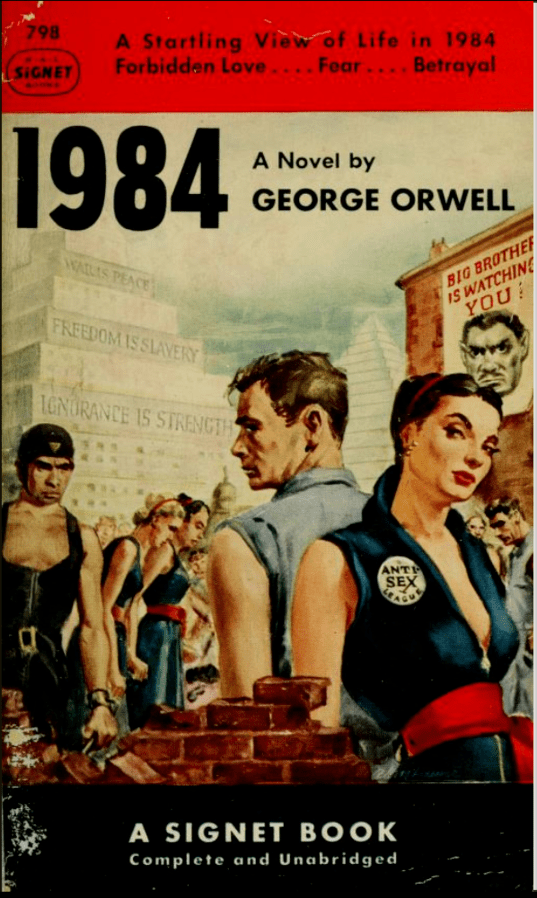
This paperback was obviously marketed in a certain way – spare a thought for the poor divil who bought this book expecting a lot of sex and, 50 pages in, was utterly traumatised

Permanent Warfare

The Soviet Union, like Oceania, was hampered by huge military expenses. But the Russian Revolution was born out of an anti-war movement. The Reds were far keener on peace proposals than the Whites during the Civil War. The Polish-Soviet War lasted less than a year. There were no external conflicts between 1921 and 1938. The consistent foreign policy from the Stalin period on was to seek stability, even to the point of hesitating to support the Spanish Republic and North Korea.

Oceania is not the USSR

All the above shows that Oceania and Stalinist Russia are actually very different places, not just in degree but in kind. Most of the creepy Stalinesque detail about censorship is drawn from Orwell’s own experience doing censorship for the British state during World War Two. Doublethink is a powerful concept, and I value Orwell’s description of it. It’s an example of how this book has contributed a useful political vocabulary. But doublethink is a satire on extreme political partisanship generally. The grisly history of Stalinism gives many compelling examples of doublethink, but you can find examples in a lot of other places too. In other words: what does apply to the USSR often doesn’t apply uniquely to it.

But the ways Oceania is similar to the specifics of Soviet Union are even worse.

Oceania is a massive state encompassing three continents plus swathes of Africa and Asia, including four of the most developed industrial countries on planet Earth: the UK, the US, Canada and Australia. It is not isolated. It is not poor.

And yet: ‘very likely no boots had been produced at all,’ and ‘perhaps half the population of Oceania went barefoot’(44). No boots at all! There are shortages of razor-blades, darning-wool, buttons and shoelaces (52). ‘Prole’ women fight one another for saucepans (73). The people of London live in ‘patched-up nineteenth-century houses.’ O’Brien gives Winston a mysterious drink he has never seen before and says, ‘It is called wine’ (178). According to Goldstein’s book, ‘The fields are cultivated with horse-ploughs.’ Winston works a 60-hour week and sometimes has to pull extra shifts on top of that (Part 2, Chapter III).

OK: the real Soviet Union was characterised by exactly these kinds of shortages and, yes, the fields were cultivated with horse-ploughs. With Stakhanovism and Subbotniks (‘voluntary’ Sunday work), Soviet people in the 1930s worked very long hours.

But Russia had horse-ploughs, long hours and shortages before the Revolution. It was in the decades after the Revolution that the horse was replaced with the tractor and consumer goods were made widely available for the first time. As for work – well, the stereotype of the Soviet worker in the 1980s was not that he was some overworked Stakhanovite, but that you’d see him drinking beer and playing cards next to the roadworks he was supposed to be doing.

The missing links in Orwell’s worldbuilding are clear from the novel’s treatment of two drinks: tea and coffee.

Julia is able to find tea on the black market because Oceania has conquered parts of South Asia. Good! That makes sense. But for some reason coffee and chocolate are always difficult to find, even though all of South and Central America have been core territories of Oceania for 35 years.

Underdevelopment

Unlike the USSR, Oceania is not a semi-feudal economy cut off from the markets and resources of the world. Unlike the USSR, it is not a country going through an industrial revolution in a decade. It has no business being so extravagantly poor. The ugly trappings of the ‘grimy landscape’ (5) of Oceania are out of their proper place. They belong to early-twentieth-century Russia – or, more precisely, to the underdeveloped parts of the world. They are not features of ‘communism’ but of underdeveloped countries, whether communist, capitalist or feudal.

The open brutality of the secret police, and the crudeness of government propaganda – these, too, are borrowed clothes which hang awkwardly on Oceania. They are features, again, not of ‘communism’ but of underdevelopment. They are not a sign of a regime with unshakeable foundations but of a precarious regime.

You might object that Spain, Italy and Germany all went totalitarian. So why not Britain? But Spain, Italy and Germany went fascist, and fascism has completely different origins which it’s not worth getting into here. Oceania very clearly follows the pattern of the USSR, not Spain, Italy or Germany. As Asimov points out, the trappings are all communist, the parallels all Soviet.

‘I do not understand why

Goldstein’s book-within-a-book finally explains this great mystery. Ingsoc spends all the money on war, so as to deliberately keep the people poor, so as to maintain control. But for 90% of readers, this explanation is not necessary. They already know (or think they know) why Oceania is poor: because of communism. And Orwell has done absolutely nothing to clear up the misunderstanding.

This explanation, by the way, is coherent on its own terms, but that doesn’t mean it’s plausible.

Winston writes, ‘I understand how [the system oppresses the people]. I do not understand why.’ Towards the end of the book he gets the following answer: humanity could have superabundance, equality and democracy; but 2% of the population, the Inner Party, have taken control, and are deliberately wasting all the wealth, just so that they can maintain poverty, and with it inequality, and with it their own power (216-217).

This explanation rests on certain important insights about the relationship between scarcity and tyranny, between economic equality and political equality. But it puts the cart before the horse. In the USSR, scarcity created the dictatorship. In Oceania, the dictatorship deliberately creates scarcity.

But how such a dictatorship was able to entrench itself in the first place is not clear. Britain after World War Two was an advanced capitalist country with a high level of education, an abundance of material goods and solid infrastructure (to say nothing of the huge empire). Moreover, this advanced country and empire are part of a federation with, well, the entire Western Hemisphere. Oceania is not poor and it is not isolated. You can’t copy-and-paste Stalin into this setting. He doesn’t belong there any more than does the horse-plough or shoelace rationing.

You might argue (as Orwell does) that all revolutionary leaders secretly want to be sadistic tyrants (275-276). I don’t think that’s true, but even if it was it wouldn’t matter. These crypto-dictators wouldn’t be able to take and hold power after a popular revolution unless the extraordinary conditions prevailing in Russia were somehow duplicated in Britain.

What to expect in the next post

Oceania is not a plausible setting. But there is one reading of the novel which makes it plausible. I’m going to go into that next week, along with some other positive things about 1984. Or i might decide to publish a timeline of Oceania. We’ll see.

But as a short answer to the question posed in this post – no, 1984 is not plausible. Thankfully, it has never happened anywhere, ever.

Go to Home Page/ Archive

New Podcast Episode: The SR Time Bomb

Hi folks,

The re-release of the Revolution Under Siege podcast continues! I have completed another two episodes, not only recorded with my own human voice instead of a robot, but also redrafted and incorporating new material. Episode 03: The SR Time Bomb goes up this week and 04: Cossack Revolt in the South next week.

Google Podcasts, Youtube and Spotify links below!

https://podcasts.google.com/feed/aHR0cHM6Ly9hbmNob3IuZm0vcy81NWY0MzZlOC9wb2RjYXN0L3Jzcw==

Review: The Unspoken Name and The Thousand Eyes, by AK Larkwood

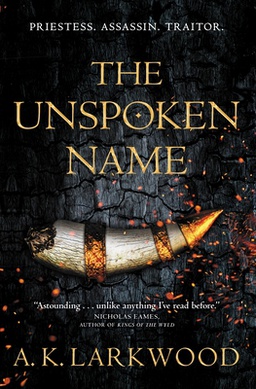
The Unspoken Name by AK Larkwood, Tor, 2020

The Unspoken Name begins with a description of a shrine in the mountains, and of the child sacrifice ritual practised there by a bunch of tusk-faced people. Our main character is Csorwe, who has been singled out as a future offering to the cave-dwelling god known as the Unspoken Name. The wizard Sethennai comes to visit – a charismatic fellow with purple skin and pointy ears – and saves her from her fate. She runs away with him to discover the world beyond the morbid religious order in which she was raised.

Yes, this is the story of that brilliant Le Guin novel The Tombs of Atuan. And like the Earthsea novels, the world conveyed here is clear and vivid. But in The Unspoken Name there are two major differences. First, all of that happens in the first few chapters; it’s only the set-up. Second, this pointy-eared wizard Sethennai is no Ged. Yes, he’s rescued Csorwe from death and hired her as his assistant. But she’s going to spend the rest of the novel figuring out that he is a bad person.

Sethennai is not malicious or sadistic; he doesn’t cackle when he hurts someone. Nor is he a ‘loveable rogue’ or anti-hero. Nor is he a torn, tormented character. He’s not for redeeming. He is simply a powerful, ambitious man who sees no wrong in using people and then discarding them.

This is bad enough for Csorwe, who hero-worships him even as he sends her into terrible danger for his own selfish reasons. His other assistant, Tal, is in love with him. Tal’s narrative voice is a perfectly-judged blend of pain and humour. 

Csorwe meets a young magician, Shuthmili, and the two young women gradually fall in love. Maybe, the reader hopes, this can drive a wedge between Csorwe and Sethennai. But Shuthmili has to break with her own corps/ cult of creepy psychics.

You may have noticed something: I’ve got this far without talking much about setting. Characters and relationships are the rocket fuel of this story. On paper, there’s too much plot. But the way it works out, it never feels heavy or dense. It’s very unlike Earthsea in a lot of ways – but like Earthsea, it feels light even when it really isn’t.  

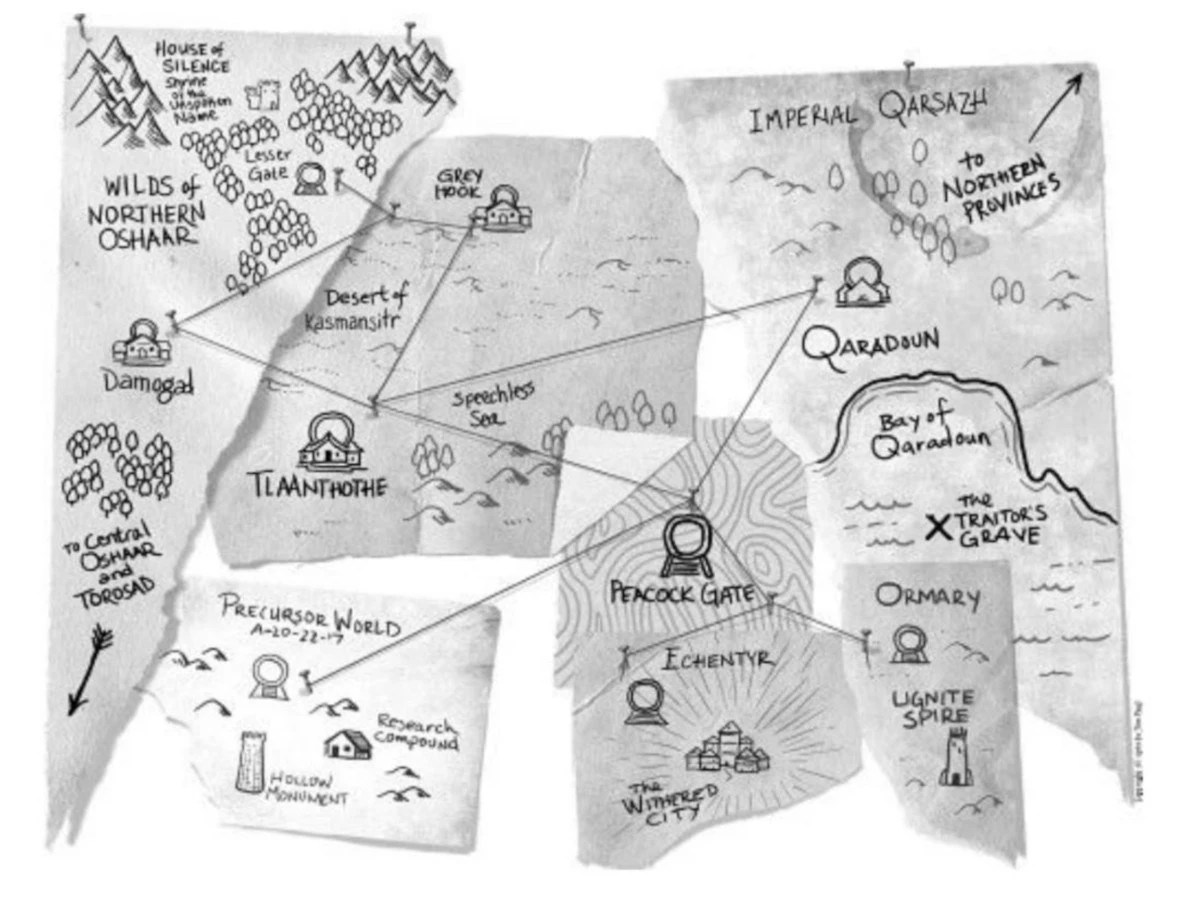
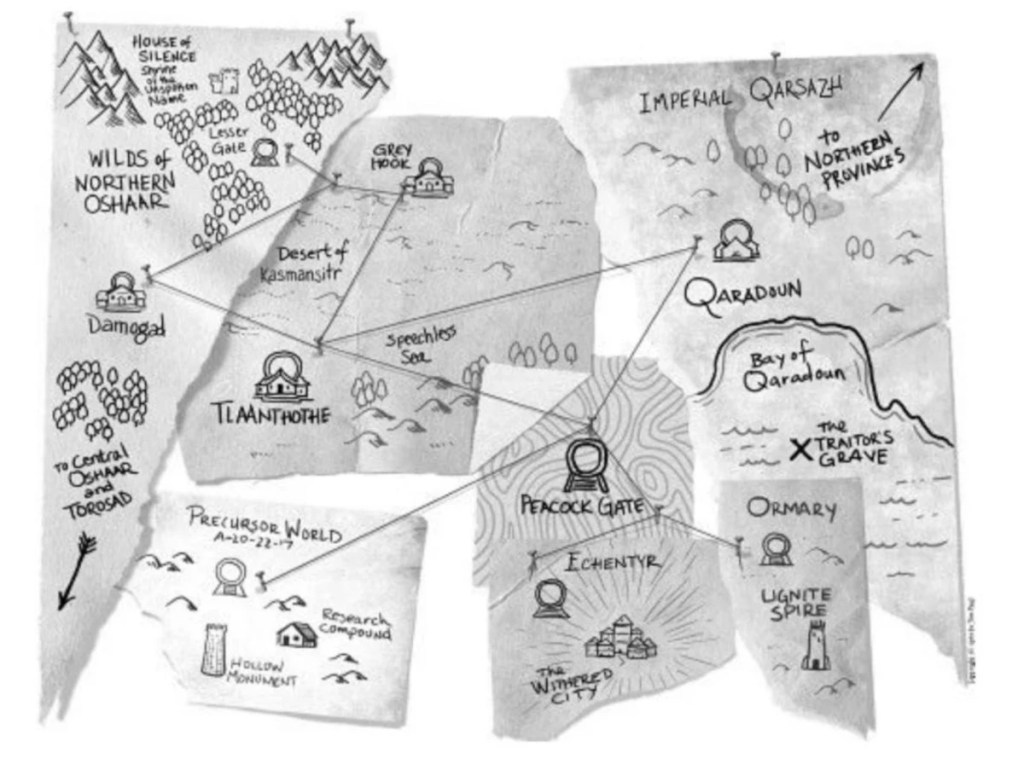
The setting is distinct enough that it’s not easy to slot it in to some corresponding real world era, but it’s kind of early modern. It’s a vast number of worlds, linked through a maze and a system of portals, navigated by flying ships. Oshaar (Csorwe’s home), Tlaantothe (Sethennai’s domain) and Qarsazh (Shuthmili’s home) are all different worlds – maybe planets, maybe universes. But many or most of the worlds are old, decaying, succumbing to entropy, abandoned. So this is a diverse setting, rich in ancient magical ruins for the characters to explore and to have adventures in, with a deep past.

By the end, Csorwe is ready to dismiss the Unspoken Name, the god for whom she was going to be killed. There is a very creepy moment when she at last confronts him, but the way it turns out there is more pity than horror. The story has outgrown him.

Another interesting point: it is very gently suggested that the Oshaaru are orcs, the Tlaantothe people are elves and the Qarsazhi are humans. But they all behave as humans with tusks or pointy ears.

The Thousand Eyes by AK Larkwood, Tor, 2022

To begin with, I thought The Thousand Eyes trod on the edge of being boring. Not so much so that I put it down, but I didn’t have a sense of where it was going. The main characters from the first novel, minus Sethennai, have formed a mercenary gang. They are bantering and exploring ruins.

Then I was irritated when the story took a sudden turn. They revive an ancient god who wants to conquer the world, and this evil god possesses the body of one of our main characters. I was irritated because I don’t care for this ‘possession’ trope.

But before the dust settled on that, the story took another turn. And I was hooked. What Larkwood did with the story was simple and bold: she jumped forward in time twenty years. The ancient god, in the body of the main character we know and like (I won’t say which one), has carved out an empire. We meet older and more cynical versions of our other characters, plus one their optimistic offspring, as they conspire to resist and overthrow the evil empire.

Suddenly, it’s all gone a bit Star Wars, and I mean that as a good thing. It’s a story with momentum, full of cool concepts and images, driven along by strong characters who have a simple and awesome goal: to overthrow an empire.

Tal’s gallows-humour narrative voice gains extra pathos given the bitter years that have passed. Our characters come to realise that to overthrow the evil empire there’s one man they are going to need on their side: Sethennai. Damn! They’ve just got over that guy, and now they have to go back and beg him for help.

The map

This time, the plot is simpler and the story stronger; still, some of the twists and turns towards the end have gone fuzzy in my memory just a few months after I read it.

The Thousand Eyes is more about the fate of cities and religions and nations than was The Unspoken Name. For all that, the political world-building is not entirely to my taste. Political struggles are not moved by socio-economic forces or institutions. The destinies of leaders and empires are decided by a handful of characters, by their command of magic and not their command of the state apparatus; by their relationships with each other, not by their relationship with the means of production. The people, in theory, matter. But even the wealthy and powerful don’t have any real deciding power over the outcome of events.

And given the way the story is put together, it would be unsatisfying if they did; while there is an epic struggle at the heart of it, this remains a story about a small circle of friends and frenemies. The stakes are always first and foremost personal.

I’m really looking forward to the third book and I gladly recommend the first two.

Go to Home Page/ Archive