Bono’s Terrible Poem: An Autopsy

On March 17th Bono wrote a poem about the Ukraine war. Without even proofreading it, he sent it to a top US politician, and she read it out at a public gathering. Then he decided to post it on Twitter,

‘It wasn’t written to be published, but since it’s out, here it is,’ he tweeted. No, he didn’t want it to be out. He just sent it to a luncheon involving top political elites in the most powerful country in the world.

The poem was so bad it was a shock to the senses. But now that a few weeks have passed we should take a closer look. What are the specific features that make it so bad?

It’s on the nose

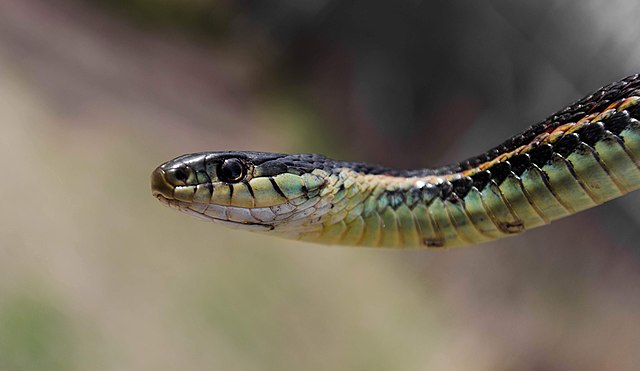
Usually poems weave in symbols and imagery and metaphors. For example, a poem about a vicious invasion might use snake imagery to signify evil. It might weave the metaphor into various vivid images.

Instead of doing that, Bono simply tells us what his poem’s symbol is: ‘For the snake symbolises/ An evil that rises…’

From this we can surmise that if Bono had written ‘The Road Not Taken’ he would have begun, ‘A fork in the road symbolises a major life choice…’

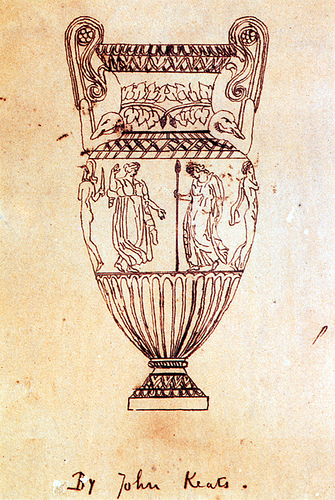
But that’s not quite it. We need more comparisons to really do it justice. If Bono had written ‘Ode on a Grecian Urn’ he would have begun, ‘This Greek vase is a symbol of stuff not getting old.’

Or ‘This Greek vase is like a wife who you’ve married but haven’t had sex with yet.’

It’s a textbook case of Irish narcissism

How are we to read the line ‘Ireland’s sorrow and pain/ Is now the Ukraine’? It seems that he’s saying Ireland had sorrow and pain in the past, and now Ukraine is getting a taste. As if Ukraine was some kind of bucolic hobbit village during the twentieth century – as opposed to a land ravaged by two world wars, famine, terror, the Nazi Holocaust, nuclear disaster and looting by oligarchs.

In this poem, Bono responds to the horror in Ukraine by talking about Ireland. There are grounds for empathy in our shared history of national oppression. But can’t Irish people engage with global events with a bit of taste, without making it all about us?

It’s largely babble

Let’s repeat that phrase; ‘Ireland’s sorrow and pain/ Is now the Ukraine.’ Sometimes in long complex sentences, we mistakenly switch between the singular and the plural. But what excuse does Bono have here, in a phrase eight words long?

Even if he had written ‘Ireland’s sorrow and pain/ ARE now the Ukraine,’ what would that phrase even mean? I struggle to put it into words. Our emotions have been transferred to another country? …have been transformed into another country?

An updated version of the poem reads ‘Ireland’s sorrow and pain/ Is now in Ukraine.’ Did we put our sorrow and pain on a container ship and send it over to the port of Odesa?

‘And they [saints] struggle for us to be free/ From the psycho in this human family.’ Us? But Bono is already free from Putin! Putin doesn’t control any territory in which Bono or his offshore money reside.

‘For the snake symbolises/ an evil that rises/ and hides in your heart/ as it breaks.’ What does this line mean? You, Nancy Pelosi and a bunch of US politicians, have got evil hiding in your heart. I’m not entirely sure that’s what Bono meant to say. And what’s this about hearts breaking?

All these musings are a waste of time, because later we are told that ‘the evil has risen my friends [sic, no comma] / From the darkness that lives in some men.’ All of a sudden, the evil is not something that rises in the hearts of Bono’s heartbroken friends in the US political elite. It is an outside force that threatens us. From context we can guess that it is Putin.

More examples of this incoherence are nailed down here.

It’s banal

When the poem is coherent, it is usually not saying anything worth saying.

What does itactually say about the war in Ukraine? Only that from time to time ‘sorrow and fear’ come along, because of evil. In this poem, evil is a category which includes (presumably amongst other things), paganism in Fifth Century Ireland and the Russian invasion of Ukraine. But evil no longer hides in Nancy Pelosi’s broken heart. The source of the evil is now ‘the darkness that lives in some men.’

How unfortunate that darkness lives in the hearts of some men. If only it had taken up lodgings in some more convenient place. Then this war wouldn’t have happened.

It’s absurd

When the poem is coherent and not banal, it’s absurd.

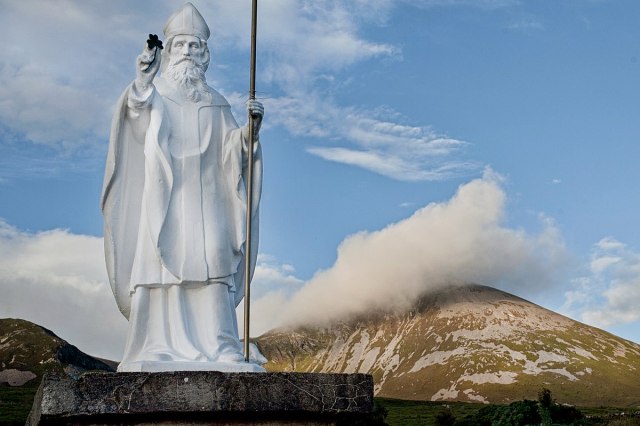
It is entirely possible to write a poem paying tribute to the armed resistance of the Ukrainian people and to the resilience of civilians and aid workers under the bombs. But Bono does not go down that route; instead he singles out the politician who happens to be in charge of Ukraine at this time, Volodymyr Zelenskyy. And not only does Bono praise this politician, and not only does Bono compare him to St Patrick. No, at the end of his poem Bono says that Zelenskyy is Saint Patrick.

Because this is the image that comes to mind whenever I hear the name ‘Volodymyr Zelenskyy.’

So St Patrick was personally brave. And yes, it appears Zelenskyy is also personally brave. But there the similarity ends, because (A) St Patrick was never an actor. And (B) he didn’t have a Neo-Nazi paramilitary group on his payroll.

But even if the comparison fit… So Putin is a snake and Zelenskyy is Saint Patrick. Zelenskyy is banishing Putin. But… why? Why say this?

It’s tasteless

In his tweet Bono explains that every year he sends a funny limerick to US politicians for their St Patrick’s Day luncheon. As you do.

This year, he explains, instead of sending a cheeky little rhyme, he felt compelled to send a serious and heavy limerick. Yes, a heavy limerick. Because this year things are different. There’s a war on. People are dying.

Not like all those other years, when there was no war on and nobody was dying. And if there were any wars happening, the US politicians who chuckled at Bono’s funny Irish limericks certainly had nothing to do with any of those wars.

But even leaving all that aside, maybe you shouldn’t write a limerick about a war. Maybe you shouldn’t try to discuss the nature of evil in a limerick. You see, the limerick genre has certain limits.

But as Bono admits, it’s an ‘irregular’ limerick. You can say that again. Limericks are disciplined, with a tight rhyming scheme and rhythm.

For example, ‘There once was a singer from Dublin/ Whose tax situation was troubling…’ etc.

Limericks have to scan well, or else they sound contrived. And they are short, like five lines.

It’s not a limerick

When I first read Bono’s poem, it scanned so poorly I didn’t even realise it was a limerick. There were words that I didn’t realise were supposed to rhyme with other words. I only learned that it was a limerick because Bono said so. Then I went back and read it in the sing-song jokey rhythm of a limerick. It sounded so much more tasteless and bizarre. In other words, it’s not an irregular limerick, it’s an atrocious limerick.

If Bono had written something like the following, it wouldn’t have been quite as bad:

A snakey old psycho named Putin

Escalated the bombing and shooting

But Zelensky had tactics

Because he is St Patrick

And so for Ukraine I am rooting.

It’s absurd, offensive, tasteless, baffling. But it’s brief, and it’s actually a limerick.

And it says everything Bono takes fifteen lines to say. That’s it. All the essential points are there. But to create the impression that he’s saying something deep and heartfelt, he ties the poem up in knots with vague phrases that mean nothing. He does not succeed in covering up his poem’s essential banality and absurdity, only in adding a layer of incoherence.

Nothing to see here in… Hollywood

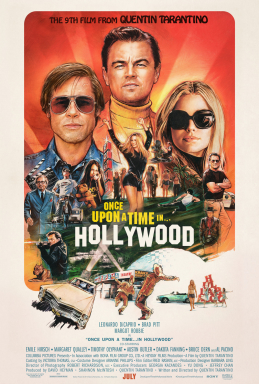
Review: Once Upon a Time in… Hollywood – dir Quentin Tarantino, 2019

Some movies have lines which are repeated and stressed so that they stick in your head for years after. Spiderman has ‘With great power comes great responsibility.’ Once Upon a Time in Hollywood has ‘Fuckin’ hippies.’ The phrase comes up again and again, right up to the moment when the last fuckin’ hippy is burned alive with a flamethrower. If you close your eyes, it’s like you’re watching South Park.

Another tic in this movie is the way the camera and script keep lingering on the titles and tropes of old racist westerns. In a lot of these movies the American Indians were an evil force, menacing the good (white) people of the frontier. Of course, director Quentin Tarantino is against racism and is highlighting this stuff in a mocking way. But he must be smart enough to realise that Once Upon a Time in Hollywood is a movie in exactly the same mould, where good people are threatened by an outside evil. The frontier is Hollywood in the 1960s, and the evil natives are the Manson family.

The film is compelling. We follow the travails of a washed-up actor and his stuntman buddy. At first we tag along with impatience as we want to get to the Manson bits, then we get drawn into the story of these two characters. But it remains in our minds that these guys are on a collision course with the Manson family, and we want to find out what Tarantino has to say about the Tate-LaBianca murders. Here’s a Hollywood movie made by big Hollywood names, directed by a Hollywood iconoclast. Surely these people have access to some folk memory, rumour or inside information. What will be revealed?

Meanwhile we get a warm nostalgic portrait of Hollywood in the 1960s: costumes, music, parties, and neon signs. This is just a wonderful place. Within this world, the worst thing that can happen is not so bad: an actor and a stuntman who kind-of deserve to be washed up are in danger of being washed up.

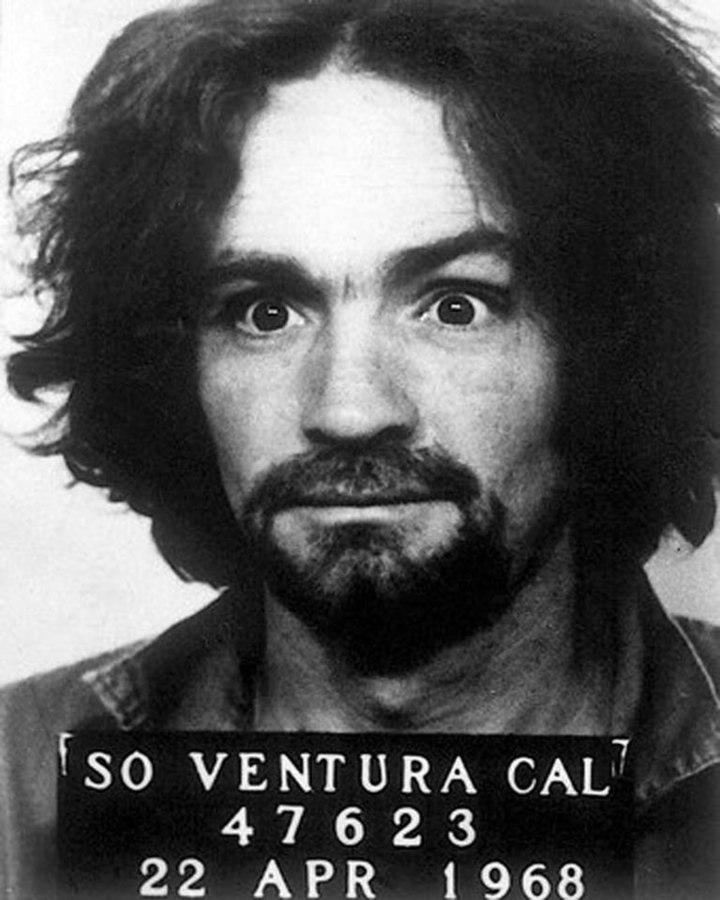
But lurking on the boundary of this world is a malicious presence which we know of as the Manson family but which the main characters simply see as (say it in your Eric Cartman voice) a bunch of fuckin’ hippies.

That’s it. That’s what Once Upon a Time in Hollywood has to say about the Tate-LaBianca murders: that Hollywood in the 1960s was great, until the Manson family came along; and wouldn’t it have been great if someone had been in the right place at the right time to stop the murders? So precisely nothing is revealed.

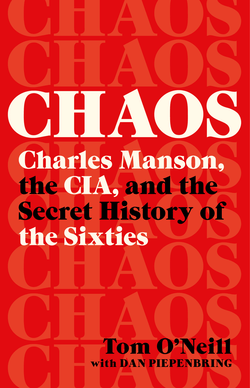
I watched this movie shortly after reading Chaos by Tom O’Brien. This extraordinary book charts a journalist’s attempt to follow up some of the many loose threads of the Tate-LaBianca murders. Bad shit was going on at the Polanski house. Manson knew big Hollywood names (which he gained by pimping teenage girls). The book explores a labyrinth of other strange connections and mysteries, driving at a point which contradicts Tarantino’s movie: that the Manson family were very much a part of the Hollywood ecosystem, and not an outside evil at all.

There is a gesture in this direction in the film. Near the end, one of the Manson family speculates that maybe the experience of growing up watching the violence of Hollywood is what made them violent. But we are expected to see this as pretentious studenty rambling. It is set up for us to dismiss it with self-righteous contempt.

Now, Chaos and Once Upon a Time in Hollywood came out in the same year and Tarantino could not possibly have read the book before making the film. But if you think about the Manson murders for ten minutes it should be clear that all is not as it seems. It’s probably not a coincidence that Manson, the guy who drugged and pimped out minors, showed up at the doorstep of Roman Polanski, the guy who later fled the United States after he drugged and raped a minor. Not only does the film fail to delve into any of the mysteries surrounding the case, it makes no reference to this elephant in the room.

If you’re looking for Hollyweird revelations about the dark underbelly of the movie industry, all Tarantino’s got to say to you is ‘Nothing to see here.’ This is not a film about the Manson murders. It is a western movie about an aging gunslinger and an outlaw who find redemption by defending a settler from the natives; only it happens to be set in1960s Hollywood. If you go in expecting an interesting pastiche along these lines, you will not be disappointed. Pitt and DiCaprio play an amusing pair of fuckups and antiheroes. It’s not necessarily a bad thing that the film mocks the Manson family instead of mythologizing them, for example when Brad Pitt mangles Tex Watson’s one-liner – ‘some devil shit.’ The ultra-violence of the ending could easily be interpreted as righteous fury.

I’ve usually enjoyed Tarantino’s movies but this was more of a mixed bag than usual. The journey was unexpectedly compelling; somehow the film got me to feel sorry for this blustering actor who’s had a successful career and has plenty of money. This journey has texture and verisimilitude. This movie knows Hollywood and cares about it and gets us to care. But the destination, when we finally get there, is disappointing. The ending just left me with screams of agony and the words ‘Fuckin’ hippies’ echoing in my head.

Game of Thrones: an alternate ending

Last week I presented a lukewarm defence of the controversial Game of Thrones Season 8. I argued that the final season was actually OK, and to add further support to my case here is an outline for an alternative final episode. The point here is to illustrate that even as late as the final hour, the show could have been rescued from some of the worst elements of that final season.

*

The second-last episode (‘The Bells’) ended with King’s Landing burned to the ground. The final episode (in my mind) begins fifteen or twenty years later. Middle-aged Danaerys rules from a rebuilt Harrenhall. The Unsullied and the Dothraki form her army, her retainers and some of the major lords of the kingdom – but they are in pimped-out new armour and uniforms. In them we see a new merging of the cultures of Westeros and Essos. The wild nomad riders have become complacent petulant knights. The eunuchs are now just an aging cadre within the Unsullied.

What is the impression we get of Dany’s regime? It is not a new world. The wheel has not been broken. Things look and feel different in the culture. Her regime is more just, stable and functional than the status quo back in Season 1 – but only by a modest margin. The ruins of King’s Landing and the visible presence of the maimed and the bereaved serve as a reminder of the price paid and pose the question of whether it was worth it. But like the Tiananmen Square events in China, the burning of King’s Landing is a taboo subject. Drogon is a fat, lazy creature but still powerful and fierce.

Danaerys has to tax everyone hard to pay for the upkeep of the Unsullied and to deal with the consequences whenever a Dothraki khal decides to go bandit. Her power keeps the nobles in check. All in all, she is no better and no worse a ruler than the usual run. No Triumph of the Will visuals, but no white saviour fantasies either. The exalted myths about her have come down to earth. The wheel is still turning, just with her on top.

A crisis threatens – it doesn’t matter what. Let’s say Lord Bronn of Highgarden has betrayed the kingdom and risen up in revolt (which is absolutely what would happen, probably a lot sooner, if he was given a position of power). Maybe he has even killed Drogon. Dany decides there is only one person who can deal with this challenge, who can lead an army against the rebels: Jon Snow.

Sansa is Queen in the North and middle-aged Jon is serving her regime. The kingdom consists of northerners and wildlings rebuilding and resettling the North after the apocalypse of the wight invasion. Some are talking about going beyond the wall.

Tyrion arrives as an emissary from Danaerys. Jon and Dany have not spoken in years; he departed right after the burning of King’s Landing, and took the Northern forces with him. Tyrion asks Jon to come south. Dany wants Jon to serve as Hand of the King and to lead her armies. There are powerful echoes of Season One, when Ned was summoned south by Robert.

Jon agonises over the decision. He has deep meaningful conversations with Tyrion and with whatever other fan faves the writers decide to give screen time to. Te main characters have still not addressed or mentally processed the horror of the burning of King’s Landing.

We cut away from Jon as he makes his decision – but we don’t know what it will be.

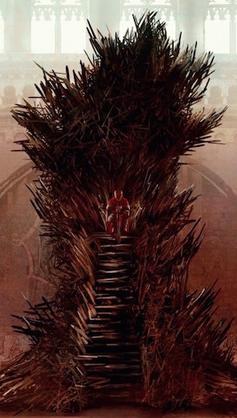
The Iron Throne, as imagined by Marc Simonetti in The World of Ice and Fire (2014)

Cut back to the South, to Harrenhal. Tyrion returns to Dany and tells her that no, Jon will not be coming South. He explains that Jon doesn’t want to get caught up in all this dirty politics and bloody warfare all over again. Dany is angry, and remarks that while Jon has a conscience to wrestle with, she has a kingdom to rule. The last we see of her, she is giving decisive commands to deal with the rebellion. But we get visual hints that behind her stern facade she is just as cut-up as Jon.

Cut back to the North. (As in the real-life version of the final episode) Jon is leading a crowd of people into the wild wastes beyond the wall, and spring is coming.

*

A brief comment on what I like about this ending.

It would be immensely satisfying to see these characters years later, even if their dialogue was only passably well-written. Just as Game of Thrones happened in the shadow of the events of Robert’s Rebellion all those years ago, now we get a glimpse of another era, one overshadowed by the events of Game of Thrones.

Within the framework of this episode, each secondary character can get a little ending of their own, as we see who is serving Sansa and who is serving Dany, and in what capacity, who has turned cynical and who is still trying to seek a better world, etc. For example I think a creepy adn inhuman Bran is serving her as a spymaster.

Martin is very good at showing us characters who have illusions, and then shattering those illusions. Think of the poor Dornish prince in A Dance With Dragons. The key theme of the whole story seems to be disillusionment. Characters set out with the ideologies of this society deeply-ingrained in their heads. These illusions come up against the friction of reality, are sanded down, rubbed raw, eventually break.

This alternative ending hits that theme hard. The myths about Dany are shattered, not by crudely portraying her as a Nazi, but by showing she’s not much better than the rest of them.

It’s still a fundamentally conservative message – if you take Jon’s point of view, stay out of politics, it’s too dirty, and don’t try to change the world; if you take Dany’s, be realistic, settle for incremental improvements, the sacrifices are worth it for the greater good. But at least there are different perspectives. We’re not being beaten over the head with the writers’ irrelevant opinions about 20th Century history.

This is not a perfect ending. A perfect ending would require a much better run-up from Seasons 7 and 8. But it’s a morally grey ending for a morally grey story. It’s an ending that suggests ‘the more things change, the more they stay the same,’ while also leaving space for this cynical conclusion to be refuted. It’s an ending in which Ice and Fire, instead of coming together in a contrived situation where one must destroy the other, are finally and forever parted.

Game of Thrones: the final season was OK, actually

Nearly three years have passed since groans of disappointment met the final season of Game of Thrones. A lot has been said and written about how it was badly-written, incoherent and rushed, about how it let down its characters, about how the story’s themes, once promising, descended into cynical platitudes. In particular I recommend and largely agree with this and this and this.

On the other hand there have been some attempts to say that it deserved a better reception. I’m not fully convinced by any of the defences I’ve happened across. But enough dust has settled now that we can start pushing back with a revisionist history against the consensus. The final season was not actually bad.

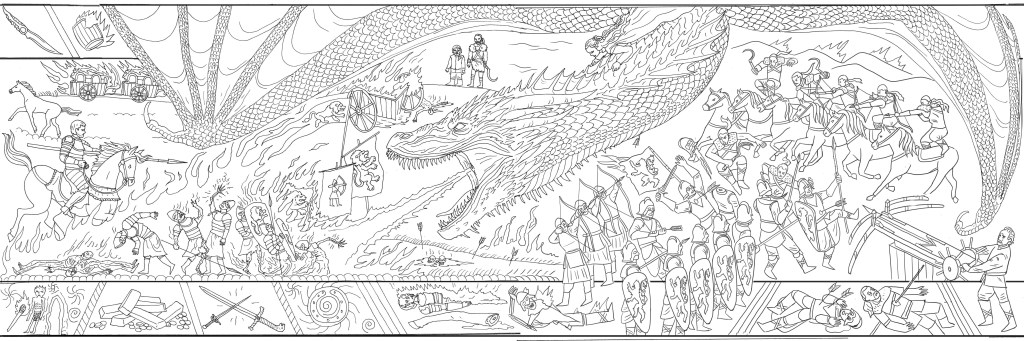
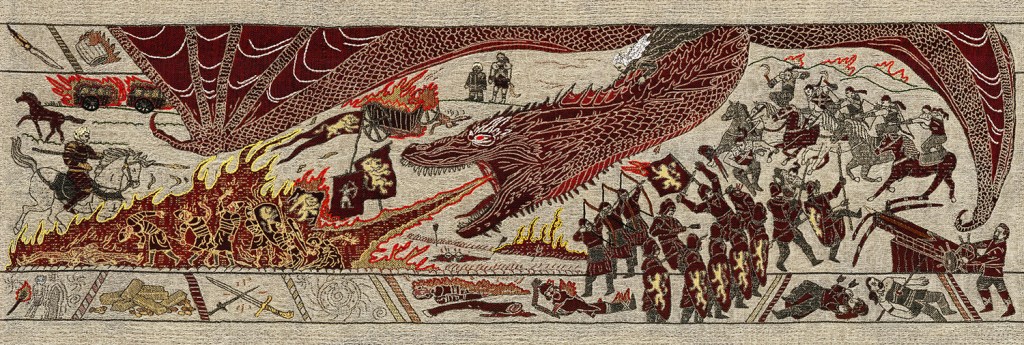
A Bayeux-style tapestry depicting an event from Season 7 of Game of Thrones‘Outline sketch for the official Game of Thrones tapestry produced in Northern Ireland.’

Did you really expect it to be brilliant?

My expectations for Season 8 were low.

Seasons 5 and 6 were solid, but there were obvious problems with the writing. For example, there was Arya doing effectively nothing for twenty episodes; there was Jaime’s half-baked and clumsy sojourn in Dorne. Plot armour and Elder Scrolls Fast Travel sped up the plot but wore down the friction and texture of the world. 

Season 7 was a carnival of the silly and the unsatisfying. Problems evident in sub-plots and isolated moments of 5 and 6 came to dominate the main storyline in 7.

By the way, the first episode of Season 8 (‘Winterfell’) was the worst-written of the whole show. Not a single line landed. Everyone was just milling about awkwardly in the castle. Critics and audiences said it was great at the time. They would flip to hyper-criticism a few episodes later.

Thankfully every other episode in the season had more narrative momentum and better dialogue than this lifeless opener. But the first episode was another warning to temper expectations.

I guess people withheld their impatience at 7, hoping 8 would salvage the situation, then vented their anger on 8 when it didn’t. The hype around GOT was such that people believed the showrunners were playing 12-dimensional chess when in fact they were flying by the seat of their pants. There was a widespread expectation that Season 8 would be a sublime revelation rather than a crash-landing.

And it was a crash-landing – not a crash. All in all, it was better than Season 7. Things were messy but it hit the ground intact and held itself together until it came to a shuddering halt, and that was the best we could have hoped for.

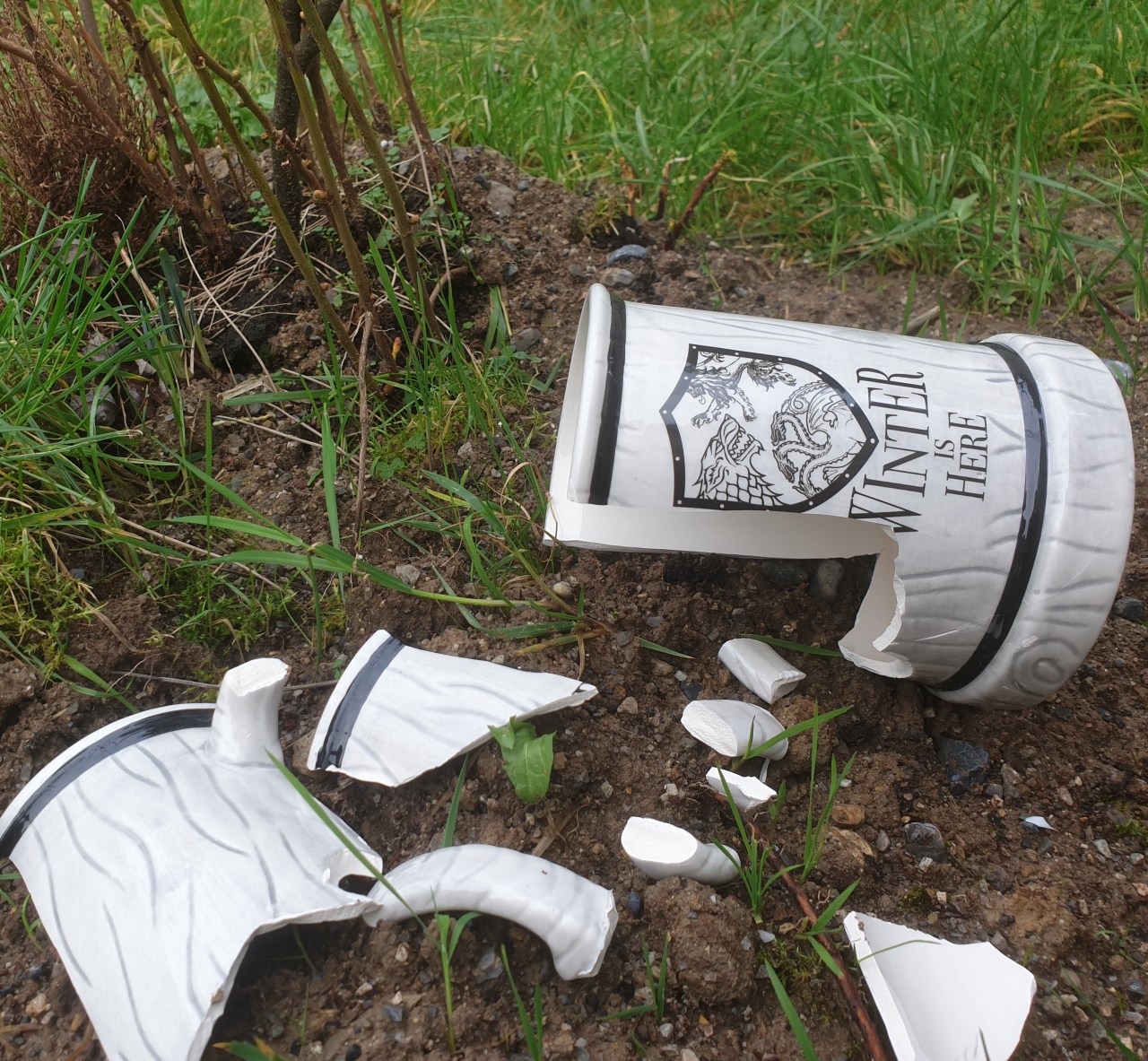
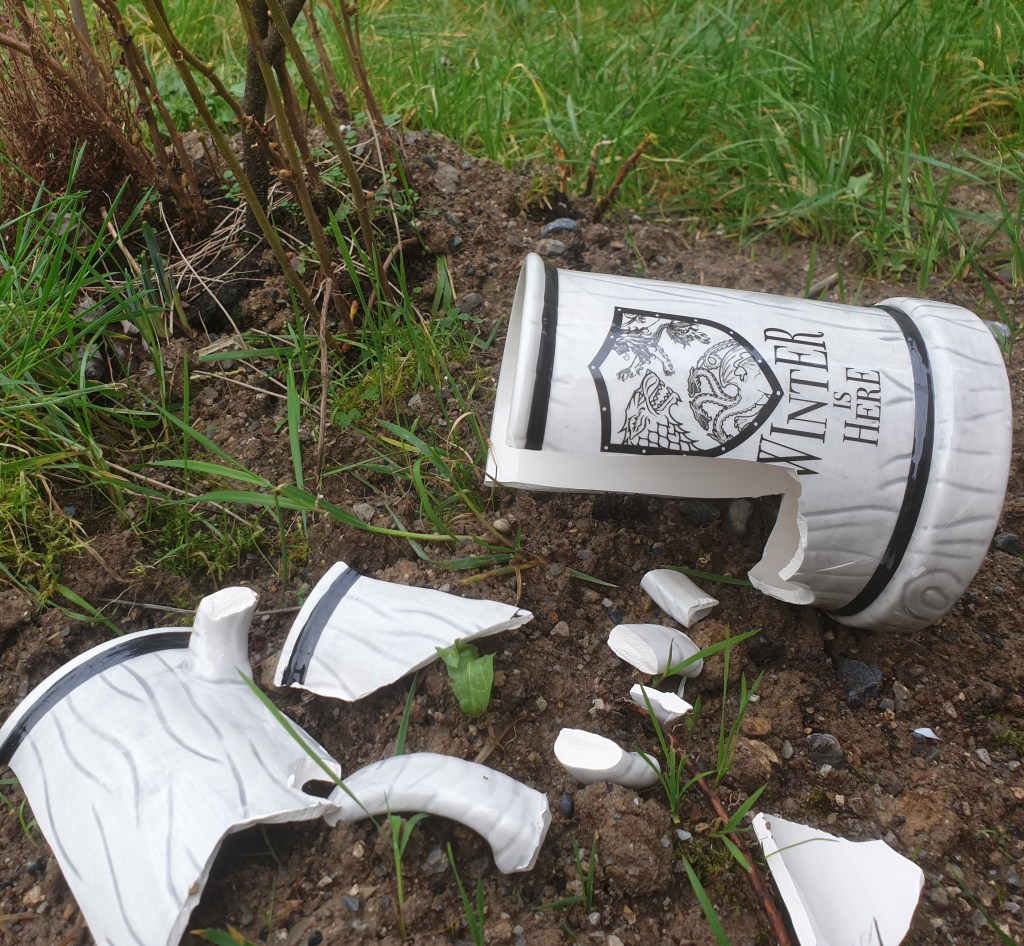
While I was writing this post my one-year-old son just happened to dig out my Game of Thrones tankard from the back of a drawer and accidentally smashed it into tiny pieces. By some miracle, he did not cut himself on the broken edges. Naturally, I took it as a sign from the Lord of Light, and used it to stage a cover image for this post.

Writing isn’t everything

An interesting feature of the Game of Thrones phenomenon is how every viewer became a critic. What emerged around the show was the kind of commentary you’d expect to surround a mass movement or a charismatic leader. Early on, fans debated the story’s conflicts as if they were real; later, they turned from debating the internal politics of the story to debating the merits of the writing itself.

Something held me back from commenting at the time; the clamour surrounding the show was too much. The GOT-commentary industrial complex had grown dangerously vast and all-consuming. I wanted to enjoy it as a TV show, and not feel obliged to have developed opinions and to defend those opinions.

William Goldman’s 1983 book Adventures in the Screen Trade laments the fact that the contribution of writers is underrated in Hollywood. But things have changed; our generation posts hour-long videos on Youtube about character arcs and themes.

But writing is not the only element in film. With GOT we have focused on it to the exclusion of all else.

Season 8 was poorly written. But TV is not prose. What about the other aspects of the production?

The cast carried the whole thing along convincingly, delivering lines that should have felt like golf balls in their mouths. The sound, music, set and costume design were great. Nobody really noticed that silly thing with the coffee cup. The Battle of Winterfell, once you adjusted the brightness on your TV, was awesome to look at and compelling to experience.

The attack on King’s Landing was powerful. There was real visual storytelling here (shame about the verbal storytelling). Arya’s struggle for survival in the burning city was harrowing and original, like a hybrid of The Lord of the Rings with Come and See or Children of Men.

Of course, this was the very episode that was so controversial. But it was so well-done visually, it packed such a punch, that I believed it in spite of my misgivings. I was carried along. And in the moment, so were you, most likely. For a time you felt what the show wanted you to feel: dismay that Dany would do this, rather than dismay that the writers would do this.

The writers without a doubt committed an atrocity far worse than anything Danaerys did to the people of King’s Landing. But the real atrocity was not in that episode. That penultimate episode is open to different interpretations – such as this which makes some very good points.

The real atrocity came in the final episode – when the writing battered us over the head with trite moral lessons, when Dany was ‘put down like Old Yeller,’ when the city was magically rebuilt, right down to the Small Council chamber now staffed with an audience-pandering collection of fan faves.

If George RR Martin is planning to end it in a similar way, I shudder to think what that might look like on the page.

‘I murdered my intimate partner,’ said Jon Snow gravely, ‘as the prophecy foretold.’

Tyrion laid a hand on his shoulder. ‘You had no choice. The whole story bent over backwards to contrive a situation where you had to do it.’

For a moment they were silent as the winds of winter howled outside.

Jon sighed heavily. ‘I still don’t understand. What does it all mean?’

Tyrion began to pace the floor, his hands clasped behind his back. ‘All liberation movements end in totalitarianism. Freeing slaves is a slippery slope. And at the bottom of that slope – genocide. And before you ask, yes,’ he added with a pained smile, gesturing toward the Martin Niemoller and Leni Riefenstahl references scattered about. ‘This story is implying that Dany was, at the end of the day, as bad as Hitler, and by extension that Hitler started out like Dany.’

‘I’m not sure which of those two claims is worse.’ Troubled lines creased Jon Snow’s face. ‘But these references make no sense. Not in our medieval-esque setting. Sam Tarly would say they’re… Uh, anachronisms.’

Tyrion smiled again, this time wryly. ‘So are dragons.’

Jon frowned. The dragons had been easier to swallow than the reactionary platitudes.

The tragedy of it all was that the writing let down the other aspects. But those other aspects deserve to be appreciated. A small army of people worked on them, and their work was not in vain. The production convinced me in key places where the writing failed.

It ended badly. But it ended.

The great virtue of Season 8 – even of that final episode – was that loads of stuff was happening. The Mountain and the Hound batter the crap out of each other, then plunge to fiery deaths! Marvellous! A dragon melted the Iron Throne. Jon is going with the wildlings back to their homeland, and spring is coming.

Everyone talks about how this season would have been so challenging to write. I don’t agree at all. Everything had been set up for seven seasons; all the showrunners had to do was knock down the dominoes in a reasonably competent manner.

Sometimes the writing was more than just competent. The second episode (‘A Knight of the Seven Kingdoms’) was by far the best of Season 8 – as doom approaches, the main characters have a lot of talky but heartfelt scenes. This was great writing.

True, there wasn’t much great writing. But even basic competence went a long way. Big, dramatic stuff was happening, and things were being resolved – this was the rocket-fuel that kept Season 8 moving forward in spite of its big problems. For stretches, it was easy to be carried along – as long as your focus was ‘Am I enjoying this?’ not ‘What will I say about this on the internet?’

The same tapestry, now in colour

Let’s take a moment to reflect on how great and how rare it is to see stuff happening on a TV show. The usual practise with TV is to drag things out, to tease, to defer gratification; to leave things unresolved just in case there’s another season; to forcibly jump-start a broken-down story just to get the punters back on their couches. The general rule is: you keep making the show until it stops making money.

Some critics say that Season 8 was too rushed and that they should have made two, three, four more seasons. I don’t agree. If we’d got more seasons, we’d have got more rushed and unsatisfying seasons.

For most of its run, my main worry with Game of Thrones was not the possibility that it would end badly, but that it would not end at all. I worried that GOT would taper out in a dragon’s tail of dismal seasons, an endless winter of exhausted characters shambling through the long night of lifeless plots.

But that is not what happened. Game of Thrones ended with a bang, when we all still cared enough to criticise it.

When the show is no longer a recent memory it will be rediscovered. The quality of those early seasons was real, but it was far from a perfect, sublime, unproblematic show. In the future, viewers will appreciate the show in a critical and balanced way. They will groan good-naturedly at the ending but they will not feel betrayed.

Next week I’m going to post my alternate ending for GOT – to illustrate that even as late as the final episode, all was not lost.

But that’s kind of an appendix to this post. For now, that’s all. Game of Thrones Season 8 was an enjoyable few hours of TV. It was fine, it was OK, it was grand. The problem is, with Game of Thrones fine, OK and grand couldn’t cut it. Its own hype was its own worst enemy.

Why Jeremy Clarkson hated V for Vendetta

When I first saw V for Vendetta in the cinema aged 15 or 16 I was very impressed, but when I came back to it after reading the original comic the movie seemed cheesy and tacky by comparison.

I watched it again recently. Yes, it’s tacky. The politics of the comic are de-fanged. But it clips along nicely. If the lines aren’t all well-written, the story structure and scenes have momentum. There are enough ponderous and self-important films out there, and a lot more since 2005 when this first came out. Making this film a lot lighter in tone than the comic would not have been my favoured creative choice, but it was a fair creative choice.

In the mid 2000s I used to read Jeremy Clarkson’s film reviews in the Sunday Times. He heartily approved of 300, a fantasy so violently racist it makes Storm Saxon look harmless. He hated The Wind that Shakes the Barley, Ken Loach’s film about the Irish Revolution. He didn’t like V for Vendetta. He sneered at it and predicted that its message would fail to strike a chord with young people. His words were something like, ‘Kids these days just want to fight for their right to party.’

Six years later, the Guy Fawkes mask from this movie became a global symbol of youth protest against dictators and bankers. In other words, Jeremy Clarkson hadn’t a clue.

Along with the brilliant Children of Men, released one year later, V for Vendetta was part of a cultural backlash against the violence, authoritarianism and fear of the so-called War on Terror. Of course being a right-winger Clarkson didn’t like this message.

But re-watching it now, I figured out another reason why the film might have rubbed him up the wrong way.

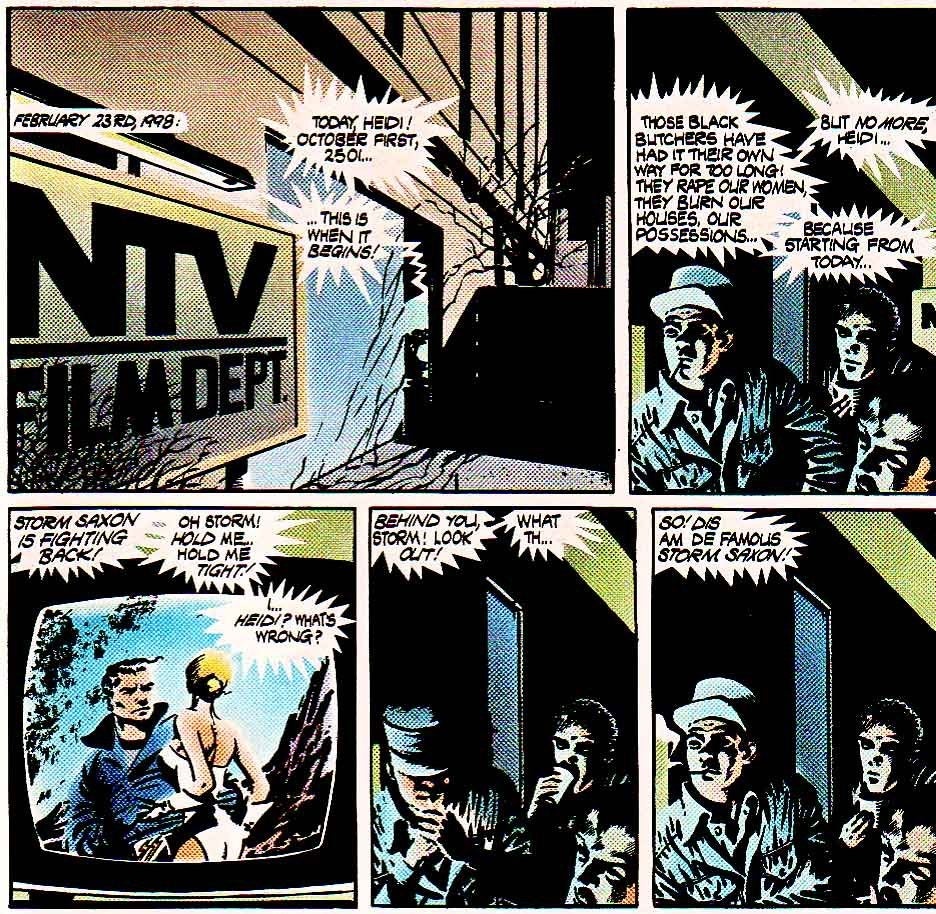
The TV show Storm Saxon, which is popular in the fascist England of V for Vendetta, and which Jeremy Clarkson would probably say was ‘good old-fashioned swashbuckling fun’. From the original comic by Alan Moore and David Lloyd

There is a character in V for Vendetta named Lewis Prothero, ‘the voice of London,’ a blowhard TV commentator and regime mouthpiece (played by Roger Allam, who also portrays the useless MP in The Thick of It). In one scene Prothero rants over the phone demanding the firing of ‘that Paddy’ who works in the studio. ‘He doesn’t know how to light. He makes my nose look like Big Ben.’

On a completely unrelated note, in 2015 Jeremy Clarkson split his producer’s lip open and called him a ‘lazy Irish c***,’ all because the stupid Paddy could not magically produce a steak in the middle of the night for a pissed Clarkson to stuff into his face.

I doubt that was an isolated incident. Clarkson was probably up to similar behaviour around the time he saw V for Vendetta and declared that young people would not like it. On top of the political message, my theory is that he felt personally attacked. Maybe Roger Allam’s portrayal of a ranting anti-Irish gammon had struck a little too close to home.

Squid Game, like capitalism, is equal and voluntary – in theory

Spoilers below.

What makes Squid Game different from Hunger Games and Battle Royale? The fight to the death in Squid Game is not just bigger and bloodier. It is voluntary. Stephen King’s Running Man also features a lethal game whose contestants are volunteers. But King’s novel, and its movie version, and Hunger Games and Battle Royale, are set in future dystopias. Squid Game is set in our world, right now.

The conditions in North Korea are so desperate that Sae-byeok risks death to escape. But when she enters the game she risks death again, this time to escape from the desperate conditions for the poor and working class in South Korea, to escape from capitalism. As someone says in Episode 2, it’s worse out there than it is in here.

The final episode of Squid Game hammers home an anti-capitalist argument that has been running through the whole story. Many have commented on this, including the writer and director Hwang Dong-hyuk. This article goes into some detail. But I want to focus on the voluntary nature of the games and how this plays into the anti-capitalist message.

In-ho’s words in the last episode make this point very clear. He says words to the effect that ‘You chose this,’ ‘You signed up for this,’ ‘Nobody forced you.’ Another villain, the psychopathic Sang-woo, insists on Gi-hun’s personal responsibility for all the killing.

Within formal logic, In-ho’s argument is unanswerable. But Gi-hun recoils against his words and against Sang-woo’s. They are wrong. Gi-hun knows it in his gut, and so do we.

It’s true that the game is voluntary. In-ho himself, undercover among the contestants, casts the deciding vote for them all to leave. But for some reason, we don’t accept their arguments.

‘You chose this,’ ‘You signed up for this,’ ‘Nobody forced you.’ That’s what we hear when we complain about our jobs, our mortgages, our car payments. We even hear a version of this in the cliché that ‘people get the government they deserve’ – ie, the people are responsible when their elected leaders betray them. In the most formal sense, it’s all true.

The game’s overseer keeps insisting on ‘equality’ as the fundamental principle of the whole operation. In theory, capitalism is fair and we’re all equal. In theory, the worker and the boss meet one another ‘in the marketplace’ (wherever that is) on a basis of complete equality. They agree to a contract which is satisfactory to both: I work for you, and you pay me. The law says these two people are completely equal. The law says this contract is voluntary.

But the reality is very different from the theory, and from what the law says. That reality is illustrated in every episode of Squid Game.

When we first see Gi-hun, we are invited to see him as a waster and a messer. Then in mid-series we hear about the auto workers’ strike Gi-hun was involved in ten years ago and about the lethal police violence. This sacking was a catastrophe from which his life has never recovered. He got into debt with failed business ventures (Isn’t that what you’re supposed to do? Isn’t that what they tell us to do? Be an entrepreneur?). His family has broken down. No wonder he’s in the situation he’s in. It could happen to you or me.

Another contestant has decades of experience as a glassmaker. We can assume he’s got a similar story to tell. And we see with our own eyes how Ali was scammed by his boss.

The final episode hammers home the point. A TV or radio playing in the background of a scene reminds us about the crisis in household debt. Early on in the series, we might think, ‘OK, these contestants are people in extreme situations – gambling addicts, refugees, gangsters.’ But the final episode insists: this situation is general.

For all its brutality, Squid Game is written with compassion and humanity. These games are not a public spectacle or a reality TV show. They are secret. The public at large do not enjoy the games. They would be sickened if they knew the games were happening. The audience, lapping up other people’s suffering for entertainment, are the handful of billionaires who bankroll the whole operation – and who got rich making everyone’s lives so desperate and precarious in the first place. The indebted and desperate Gi-hun lives on a different planet from these ‘VIPs.’ To claim they are equal is a vicious lie designed to keep Gi-hun in his place – and, perhaps, to soothe the consciences of the wealthy.

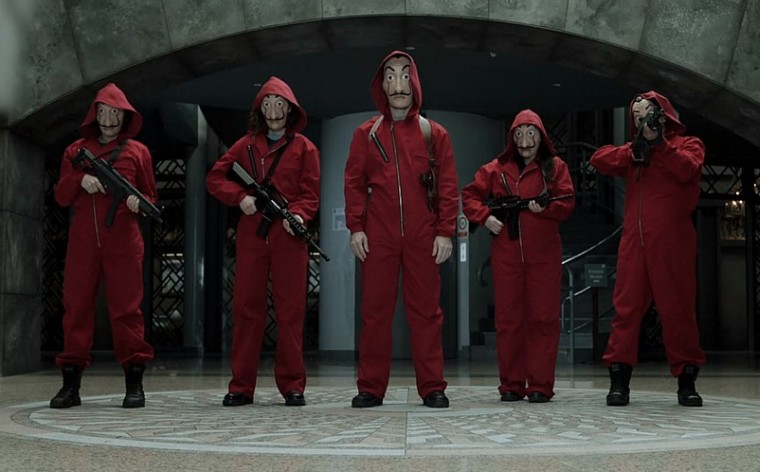
People are drawing parallels with Money Heist, another series on Netflix. Like Squid Game, it has won a colossal audience in spite of the fact that it’s not in English. This Spanish crime series is knee-deep in socialism. A miner from Asturias who calls himself ‘Moscow’ sings ‘Bella Ciao,’ talks about the 15M movement and supports his trans comrade; in a fierce battle in the ruins of the national Bank of Spain, the robbers denounce the forces of the state as fascists and draw inspiration from the Battle of Stalingrad. But what’s more important than any of these Easter eggs is what this guy said: that what makes Money Heist popular is the class rage it channels.

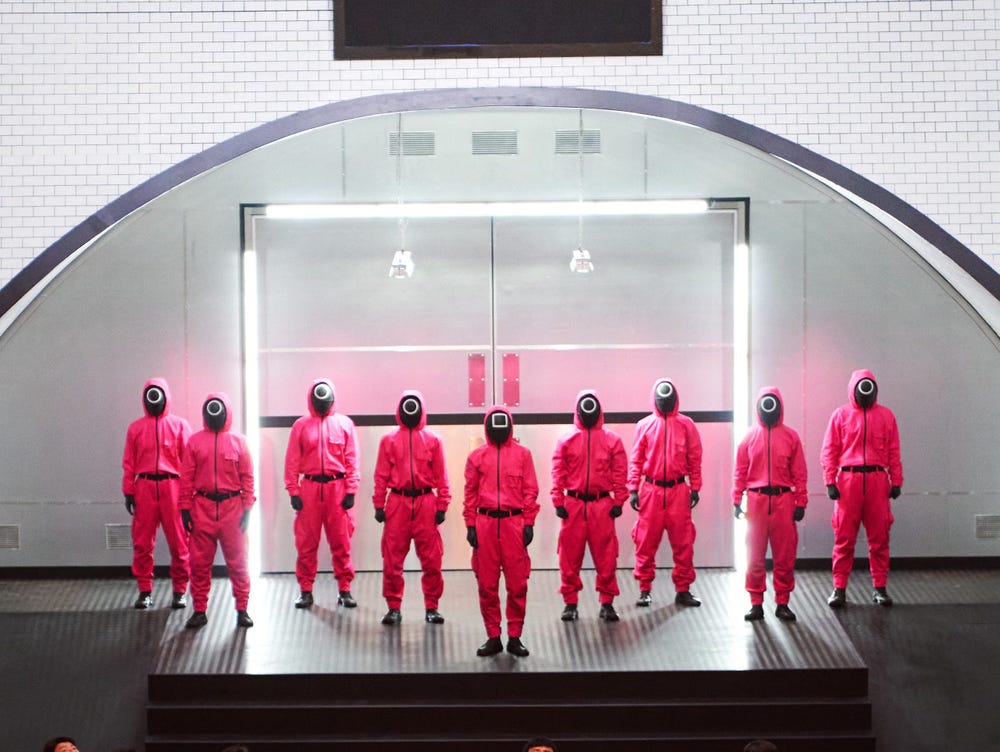
What is it about red jumpsuits and masks? Money Heist (above, image from Dress Like That) and Squid Game (Image from Insider.com).

Money Heist and Squid Game tap into our despair and anger at the brutal and unfair system we live under. Hundreds of people being gunned down in a scene that’s part Red Light, Green Light and part Amritsar Massacre – that’s not a fantasy. That’s what it feels like to live in this society. If a story can tap into such a feeling, language is not a barrier. We live under the same system and even if we speak different languages we can relate to common problems and struggles.

We live in a time of mass protest movements against the wealthy and the state on every continent (Colombia, Sudan, Lebanon, Myanmar, and the list goes on and on). It would be strange if this mood was not reflected in some way in popular culture. But it’s a sign of the times that the entertainment industry – and maybe to an extent audiences – are not ready for a story that is simply about class struggle (with surprising exceptions like Superstore). Politics is a dirty word. It has to be smuggled in, disguised in more wholesome and palatable fare, such as a story about the origin of a mass murderer, about a bank robbery, or about a game show in which four hundred people die horrible deaths. In cynical times, the earnest and compassionate stories we secretly crave can only be packaged in the trappings of cynical and pessimistic genres.

*

Thanks to all my readers. This week I took a break from Battle for Red October, my ongoing series about the Russian Civil War. The series resumes next week. If you like what you read here, leave your address in the box below and get an update whenever I post.

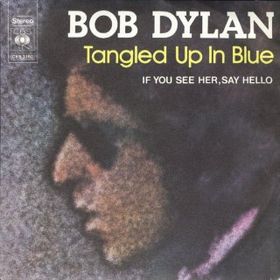
Featured Song: ‘Tangled up in Blue’

Tangled up in Blue (Bob Dylan, Blood on the Tracks, 1975)

The lyrics to this fine song get tangled up in apparent non-sequiturs, making you ask questions, making your imagination work overtime. The whole story is short on details, but we feel like the narrator has told us more than he really has. The lyrics are heavy with suggestion like branches bent under the weight of fruit. Dylan makes us work to extract the meaning, and we are grateful for it.

For example:

But he started in to dealing with slaves/ And something inside of him died/ She had to sell everything she owned and froze up inside/ And by the time the bottom fell out I became withdrawn…

What does that mean? How does one thing lead to the next? Things are skated over in vague terms, as if the narrator is wary of the legal implications, doesn’t want to open a can of worms, or just doesn’t want to think about it all.

It’s not just the usual obscurity and symbolism of Bob Dylan lyrics. It feels as if someone drunk and a little maddened by hardships, charismatic in his way, has sat down beside you on the bus and begun to tell you their history with a red-haired woman you’ve never met. Or maybe you’re overhearing one half of a stranger’s phone conversation – you missed the start, you’ll miss the end and you’re only hearing the answers, not the questions.

I read that Dylan tried, in writing this song, to dispense with any sense of time entirely. That was the first impression I got – that the timeline was all jumbled up, that there might even be multiple narrators, multiple situations connected only by theme. But by my 10th or 20th compulsive listen, it was starting to come together.

The song has a consistent thread. It tells the story of a relationship between the narrator and a woman. They get separated, but they drift back together, get separated again, but maybe they’ll be reunited… Is her nickname Blue? Does she have blue eyes? Or is it a reference to Joni Mitchell?

She was married; he ‘helped her out of a jam, I guess/ But I used a little too much force.’ The narrator probably didn’t kill the husband but he must have beat him up or something. They headed off on a journey together but ‘split up on a dark sad night, both agreeing it was best.’ The narrator is lying; he was devastated by the separation, but he doesn’t tell us that directly, or why they split up.

They meet again in Louisiana years later. She is working at a strip club and reading Italian Renaissance poetry; she lives in a basement with the narrator and another man, the one who ‘started in to dealing with slaves,’ whatever that means.

On rare moments we get detail. The ‘dark sad night’ when they split up is seared into the narrator’s memory and when he tells us about it he is not summing up and skipping over, but quoting her in real time. ‘I heard her say over my shoulder/ ‘We’ll meet again someday on the avenue.’

Then we skip ahead years and thousands of miles, until the narrator and the woman who ‘never escaped his mind’ are by chance reunited. We get verse after verse, describing the reunion almost iin real time.

He’s not an expressive or emotive guy – ‘you look like the silent type;’ ‘I muttered something underneath my breath.’ But we can tell how he’s feeling. He hints and summarises and skims over most of his life but then gets drawn into fine detail when he’s talking about her. The specifics he gives us are not the ones lawyers or cops or journalists might want to know. They are the things that matter to him.

I’ve had my ups and downs with Bob Dylan. He was as immaculately frightful as any surreal, pitiful denizen of Desolation Row when he accosted me in a pool hall impersonating Jack Kerouac and tried to sell me a Chrysler. But I’ve listened to his 2017 Nobel Prize lecture through from start to finish, multiple times. It’s a pleasure.

I think in that speech Dylan threw a sidelight on ‘Tangled up in Blue’ when he talked about Homer’s Odyssey and how he relates to it:

In a lot of ways, some of these same things have happened to you. You too have had drugs dropped into your wine. You too have shared a bed with the wrong woman. You too have been spellbound by magical voices, sweet voices with strange melodies. You too have come so far and have been so far blown back. And you’ve had close calls as well. You have angered people you should not have. And you too have rambled this country all around. And you’ve also felt that ill wind, the one that blows you no good. 

The parallel lies not at all in the specifics – but in how he can find and bring out the epic and the immortal in the mundane, how he elevates his narrator to the status of a hero.

Sláine: Part Three (Premium)

Become a paying supporter to get access

Access to this article is limited to paying supporters. If you already subscribe by email, thank you. But if you want to become a paying supporter, please hit ‘Subscribe’ below.

Donate less than the price of a coffee, and you can access everything on this blog for one year.

If you don’t feel like donating, most of my posts are still 100% free, so browse away, and thanks for visiting.

Home Page/Archives

Sláine: Part Two

This is Part Two of a three-part series on 2000AD’s Sláine. You’ll find Part 1 here.

This part is going to be a live commentary as I re-read Demon Killer. I’ll be typing my responses to things as I see them. The point of this is to show how the writer Pat Mills integrated a huge amount of myth and history into these stories without sacrificing fun, pacing or clarity. Sláine is pure fantasy, even – perhaps especially – when it purports to be dealing with real people like Boudicca or William Wallace. But even as we know it’s fantasy, we know it’s not just pulled out of someone’s arse either; it feels authentic and possesses a certain integrity.

Demon Killer was written by Pat Mills and drawn by Dermot Power, Greg Staples, Glenn Fabry and David Lloyd. All images are from that.

So here goes.

  1. Right from the start we see ‘the triple death’ – Celts carried out ‘triple killings’ on their kings.
  2. As king Sláine is forbidden from fighting – in contrast to other cultures, early Irish kingship institutions placed far less emphasis on violence and more on generosity, kinship and wealth
  3. Geasa – taboos – yes, Irish kings had these taboos placed on them. Great mythical examples to be found in ‘The Burning of Derga’s Hostel’
  4. Reading animals’ entrails to see the future – a Roman practise, as far as I know
  5. Dead bodies getting up and speaking – a recurring motif in ancient Irish myths, though usually it’s a severed head
  6. Sláine is to be killed at the end of his reign – plenty of evidence that this was done in Ireland – eg the bog bodies
  7. The flashback to the battle of Clontarf – needless to say there was no warp-spasming warrior and no demon at that battle
  8. Sláine has four wives – yes, polygamy was legally recognised is the old Irish laws, and was widely practised right up to the 17th Century
  9. The magical cauldron comes from the tales of the Tuatha Dé Danann – see Gods and Fighting Men by Lady Gregory
  10. Gold thrown into sacred rivers and lakes – yes, this was done in ancient Ireland, Britain and Gaul – but it seems to have stopped by 800-600 BCE whereas Boudicca’s rebellion was in 60 or 61 CE (Alice Roberts, The Celts, p 92).
  11. This comic way overstates the ‘sacred gold’ angle – they dumped all kinds of artefacts of all substances in the rivers and lakes
  12. When Sláine rises from the pool and Ukko introduces him – Ukko’s eloquence is very typical of Irish mythology: ‘A bone-splitter, a reddener of swords, a pruner of limbs who delights in red-frothed, glorious carnage… Your lives would be prolonged for getting out of his way.’
  13. Sláine is in nothing but a loincloth, slaughtering guys in armour – this image of the wild reckless Celtic warrior is complicated by the fact that real Celtic warriors hid behind massive shields and specialised in hit-and-run attacks
  14. Explanation for how the rebellion began: for the Romans, gold is tax; for the Celts, it’s sacred – no basis in history, of course, but it’s creative and fun
  15. Boudicca says the Romans aren’t real men because they ‘bathe in warm water… anoint themselves in myrhh… and sleep on soft couches with boys… like their emperor who behaves like a woman… as is proved by the beautification of his person’ – OOF – this is the kind of ‘noble savage’/ ‘Fremen mirage’ stuff Sláine usually avoids. Based on what we know, the Celts were very proud of their appearance, adorning themselves with jewellery and dressing in bright colours. We know that the Gauls of Caesar’s time had make-up and fragrant soaps. Irish mythology is full of men describing each other as beautiful. ‘Personal adornments of bronze were abundant’ even among the prehistoric proto-Celts. (Nora Chadwick, The Celts, p 30.)And the casual 1990s homophobia is wide of the mark too – I’ve never come across evidence that the Celts looked down on gay sex or thought the Romans were somehow weird for doing it. Hmmm – and didn’t we see a gay couple in The Horned God?
  16. It is true that Roman soldiers flogged Boudicca and raped her daughters.
  17. Mona (Anglesey) was the druid stronghold but not ‘island of the witches.’ Women as well as men were druids so that detail is fair enough. The idea of them being naked in the cold of north Wales, the idea of them fighting naked, the idea of them playing with human organs, that’s what we call artistic license. But in the very same year as Boudicca’s rebellion, it is true, Suetonius Paulinus led a legion to Anglesey where he fought an arduous battle against the druids, massacred them and then for superstitious reasons set about uprooting their oak groves. Before battle the Romans were ‘paralysed with fear’ by ‘women dressed like Furies in funereal attire, their hair dishevelled, rushing about amongst the warriors…’ So there – they were dressed. In attire, no less. (The Ancient Paths by Graham Robb, p 250-257)
  18. Elfric is clearly supposed to represent the luxury and licentiousness of the Romans – the old ‘noble savage’ theme again. Enjoying yourself in any way makes you weak, you see. But this goes against the theology explained in The Horned God.
  19. Yes, Colchester was where the retired legionaries lived
  20. ‘Do not heed warriors who need to protect themselves with helmets and breastplates – such men are full of fear!’ – The Celts were brilliant metalworkers and never had any aversion to armour, though there are accounts of people who went into battle naked.
  21. The druids’ magical herbs that cause hallucinations – a recent Blindboy podcast with Manchán Magan went into this, among other things. Very interesting.
  22. Burning people alive in wicker cages – not the first time we’ve seen this in Sláine – which is apparently based on accounts by Caesar (Gallic Wars) and Strabo (Roberts, the Celts, p 182).
  23. Women as well as men appear among the Celtic troops on the battlefield. I think this is a reasonable interpretation of the evidence of grave goods, history and mythology, which suggests women as prestigious leaders on the Continent, in Britain and in Ireland. I’ve read (I can’t remember where) that in early medieval Ireland women took part in fighting, perhaps a survival of the older custom. But earlier at Colchester Boudicca made a speech that seemed entirely addressed to the men in her army, so that’s odd.
  24. ‘You heard the boss!’ – the shield-boss, that is. Brilliant little touch. Classic Sláine.
  25. So this comic, towards the latter half, goes into a bit of a warp-spasm with the killing and the slaughter. This is getting as mad as the ‘Volgan’ occupation of Britain in another Mills classic, Invasion. The craziest part is when Sláine and Boudicca build ‘the bone prison of oeth,’ a prison made of the bones of Roman soldiers. This is based on a story made up by the 18th century Welsh antiquarian Iolo Morganwg. According to Sam Lansman: ‘One of the most evocative of Iolo Morganwg’s forgeries was his description of Caer Oeth ac Anoeth as a dungeon built from the bones of slaughtered Roman legionnaires. This gruesome if impractical prison, the antiquarian claimed, was destroyed and rebuilt several times during the wars between the Romans and the Britons.’ But the 18th-century bluffer didn’t entirely make it up; it’s an interpretation of source material that is all catalogued here on Jones’ Celtic Encyclopedia.
  26. ‘The point is the Caesarian Empire provided a role model for future empires to rob and enslave native peoples… No empire ever gets away with it. … Countries built on blood cost the descendants… the injustice leaves a psychic scar… A sickness in their souls…’ You tell em, Nest. Excellent.
  27. A detail I forgot. The gruesome prison of bones is so morbid it opens a portal for Elfric to return – suggesting that all this fury and slaughter is the ultimate cause of the rebellion’s undoing
  28. All this slaughter is not just a trope of comic books. It’s also, to be fair, a trope of old Celtic legends. Read ‘The Battle of the White Strand’ – incredible numbers die left, right and centre.
  29. ‘The Omphallos – the Navel of Britain!’ – this is another motif that’s explored in Robb’s The Ancient Paths
  30. ‘Your majesty’ – hmmm… I don’t think Britons would have referred to their rather down-to-earth kings and queens by such exalted titles.
  31. The battle is amazing – a mad mixture of the sort-of plausible with pure unabashed fantasy. Tremendous fun. Nothing really to say except that there were plenty of women as well as men among the Britons, who also had loads of trumpets like we see here, which terrified the Romans. I don’t think there’s any evidence the Britons were goaded into battle in the way we see here, but Graham Robb has a theory about how Boudica chose the battle site for scientific-religious-geographical reasons (Robb, The Ancient Paths, p 263)
  32. Yes, the Britons’ retreat was impeded by their wagons; yes, even according to the Roman Tacitus the civilians were not spared. The cruel reprisals afterwards are accurate. ‘Hostile’ tribes had their lands laid waste.
  33. The lament ‘Ochone’ is real, it’s Irish
  34. The interior of the burial mound resembles real-life continental burials like that of the ‘Hochdorf prince’ – right down to the ‘bronze couch’
  35. I don’t know if this claim about a planned conquest of Ireland is based on anything, but that could be my own ignorance. I will say that Suetonius Paulinus’ maps look way too accurate – the Romans didn’t have such technique in cartography. Their maps were terrible.
  36. There is a little epilogue where Sláine returns to Ireland to find that his whole world has vanished with the passing of the years. This is brilliant, based on the myth ‘Oisín and St Patrick’ (In Gods and Fighting Men but also online here). In this story a legendary Celtic warrior argues with a Christian saint. It’s absolutely brilliant. The debate between Sláine and the priest is a faithful and creative interpretation of such ancient stories. There’s real authenticity in this little epilogue.

I expected to find like ten bullet points, not thirty-six!

Good thing I chose Demon Killer rather than The Horned God, or I’d have been here all day. The sum of all these little details is a major part of what makes Sláine work. I think the series has lost this over the years – never entirely, but to a considerable extent. Anyway, we’ll get on to that next week with Sláine: Part 3.

Books:

  • The Celts, Nora Chadwick, Penguin, 1972
  • The Celts: Search for a Civilisation, Alice Roberts, Heron Books, 2015
  • Gods and Fighting Men, Lady Gregory, 1904 (1970, Colin Smythe Ltd)
  • The Ancient Paths, Graham Robb, Picador 2013

Sláine: Part One

Over the first year of Covid I went through the back catalogue of 2000AD’s Sláine, for the most part reading the digital graphic novels on my tablet. At first I dipped in out of curiosity, but found myself enjoying it so much that I read fifteen titles cover to cover.

And I did not think it too many.

This is the first part of a three-part commentary tracing the high points and low points of the comic over the forty years of its existence. I will comment on each title in the series. The high points are magnificent and the lows are pretty shocking. My opinions will not be popular.

Sláine. I’d imagine most British people pronounce it as ‘Slain’ and, you know what, that’s fine. But it’s Slaw-nyah. However you say his name, he’s a character in the British comic 2000AD. He is a warrior with an axe who roams around Celtic Europe, leaping, shouting and chopping up bad guys. Roughly once per graphic novel, when chopping and shouting does not suffice, the raw power of the Earth goddess surges through him in a raging ‘warp-spasm,’ and he transforms into a grotesque and unstoppable beast.

From Demon Killer, written by Pat Mills, art by Glenn Fabry, Greg Staples, Dermot Power

But (at its best) there’s a lot more to it than that. Sláine is not a Viking or a Spartan or a medieval knight; he is a Celtic warrior, and that means he doesn’t fit neatly into the macho mould you might expect. He’s difficult to pin down and he’s got a lot going on. The two sides of Sláine are captured in The Horned God, when in a flash-forward Sláine’s chroniclers debate his legacy:

Ukko: Nah… Readers aren’t interested in all that fancy stuff. What they want is plenty of hacking and slaying.

Mor Runne the Dung Collector: Yurrr… I like hacking and slaying.

Nest: But there’s always been more to Sláine than just some muscle-bound barbarian. It’s an attempt to redefine the hero. To convey the matriarchal origin of myth.

Ukko: Take a tip from an old hack, dear, and stick to Sláine chopping off brainballs!

Mor Runne the Dung Collector: Yurr! I don’t like the comp… comp… complicated bits. I only like it when he’s killing people.

There are plenty of violent battles in Sláine – with Fomorians, Skull-Swords, Trojans and all kinds of demons and monsters. But the battle between a basic barbarian action hero and a deep, obscure Celtic soul is the most interesting of all. Over the next three posts I will examine this struggle. Part 1 will look at the first twenty years or so, Part 2 will take a deep look at one particular graphic novel, and Part 3 will deal with the latter half of Sláine’s career (including the really controversial bits).

1: Warrior’s Dawn

Map of the Land of the young, from Albion British Comics Database

The early stories from the 80s are collected in the graphic novel Warrior’s Dawn.

Sláine is a wandering exile in a mythical Celtic Europe called the Land of the Young – so named because few live to grow old. It’s a place as chaotic and fun as 2000AD’s Mega-City One. Flying ships powered by standing-stones ply the skyways. Dark magic corrupts the fields and forests into sourland, where prehistoric and inter-dimensional monsters roam. A stinking corpse named Slough Feg is the leader of a death-cult which burns captives in tribute to the maggot god. Sláine seeks to return to his own people, the Tribes of the Earth Goddess, a strange but relatively wholesome crowd whom Slough Feg seeks to conquer.

Writer Pat Mills does his homework when it comes to the Celts; many elements of this setting are derived from real history or myth. Not just Cuchulain’s riastradh, or warp-spasm. Whenever Sláine kills some great number of people and boasts that he ‘did not think it too many,’ he is quoting from the stories of the Fianna cycle. Part 2 will give further examples.

Sláine is not a boy scout. He is governed by obscure drives, sometimes dark or shallow, sometimes profound and selfless. His enemies – the Guledig, Slough Feg – are those who despise human pleasure, and the natural and material world which Sláine champions. He succeeds not through domination and destruction, but through submitting to the sublime chaos of the pagan world.

Sláine’s anti-authoritarian tendencies are not founded on ‘noble savage’ tropes or ‘don’t tread on me’ hypocrisy, but in an egalitarian, feminist and ecological spirit. Later in The Horned God we see that among the tribes of the Earth Goddess, marriages last for one year. The land is shared out equally and some set aside for the old and the sick. Kings (Sláine included) are sacrificed after a seven-year term so that they don’t get too big for their boots. Empires are seen as barbaric. Sláine makes no pretense that it is historical, but this depiction of Celtic society has plenty of foundation in the sources.

It is a myth of its own time. The Celts dress like punks (in later numbers more like metalheads). Ukko the dwarfish thief hates the egalitarian ways of the Celts, which he criticises in distinctly Thatcherite terms. Keep in mind that it’s the late ’80s, early ’90s, and the main bad guys, the Fomorians, are ruthless, callous tax collectors; we are duly informed that they live in a place called Tory Island (a real island off the coast of Donegal where, yes, the Fomorians of myth had their base). The hunger strike is portrayed as a venerable and ancient custom – just a few years after the 1981 hunger strikes in Ireland.

A lot of the above comes later, especially in The Horned God. But even in early Sláine, not a single episode goes by without some cool element of Irish, Welsh or Gallic myth figuring into the story somehow or other.

I like Sláine because (again with the qualifier, ‘at its best’) it chimes with what Michael Moorcock wrote about the great novels of Henry Treece. It is able

to capture the sense of raw passion of adult men and women who are not always mystically inclined yet dwell in a world of mysticism… [magic] is as much a part of life as the wild landscapes… as the stones and hills, the forests and the seas, the fortified townships and isolated villages dwarfed by the great grey skies.

Sláine is at its strongest when character and setting have room to breathe. It is at its weakest when it becomes simply a story of a man chopping up a succession of ugly monsters.

His time as king of his people is up, so he must be killed. From Demon Killer, written by Pat Mills, art by Glenn Fabry, Greg Staples, Dermot Power

2 and 3: Time Killer and The King

The stories collected in the second and third graphic novels (Time Killer and The King) see Sláine journey home and become the leader of his people, but for a while the reader is taken away on a bizarre detour. Sláine encounters the Cyth, inter-dimensional aliens who secretly control the destiny of humanity… and there’s a temple, a temple of terror or something… *yawns* … where was I? To cut a very long and jarringly episodic story short, Sláine travels through alternate dimensions, encounters strange aliens and trades his axe for a leyser gun. Yes, leyser. Like ley-lines. Get it?

It probably responded to some editorial and/or commercial need at the time, but I found the detour tiresome, a grind with no connection to the character or the setting I had become invested in.

No doubt some are reading this post to find out what are the best Sláine comics, which to start with, which ones not to bother with, etc. They might ask, ‘Should I just skip Two and Three?’

Ah, I must warn against it. The people on the business end of 2000AD have gerrymandered the graphic novels in a fiendish way. The sci-fi stuff is split fifty-fifty between the second half of Two and the first half of Three. If you pass on Two, you miss, among other great episodes, Sláine’s time-travelling intervention at the Battle of Clontarf. If you pass on Three, you miss out on Sláine’s return to the Tribes of the Earth Goddess, the story of how he becomes king of his tribe and of the first battles with the Fomorian sea demons. So the publishers have us in a bind.

Edit: see here for a very different (perhaps fairer) take on Tomb of Terror:

https://slaineranked.blogspot.com/2024/08/slaine-ranked-part-11-you-wont-find.html?m=1

Classic 1980s black–and-white Sláine. From Time Killer, Written by Pat Mills, art by Massimo Belardinelli, Glenn Fabry, David Pugh, Bryan Talbot

4: The Horned God

This brings us to the pinnacle of the whole saga. The Horned God is the story of how Sláine unites the Tribes of the Earth Goddess to resist Slough Feg. More than that, it is a spiritual journey for Sláine as he submits to the Earth Goddess and becomes her faithful champion. Simon Bisley’s full-colour art is really beautiful.

The Horned God is deliberately slow to start, laying a solid thematic basis. Nothing in this story feels unearned. The story explores the motivations of Slough Feg and his death-cult. There’s a kind-of feminist theme as Sláine triumphs through becoming the Horned God, the champion of the Earth Goddess.

This champion ‘sees the ridiculousness of life. He never takes its pressures too seriously… Whereas the sun god is so serious… is obsessed with authority… with conquering everything… those heroes who follow his path are usually mindless and violent.’

The ingredients are in the right balance: action and spectacle combined with thematic depth and character development. There are stories within the story – such as the return of the Avanc, last survivor of an indigenous people wiped out by one of the Tribes of the Earth Goddess. Some parts are laugh-out-loud funny, but there are moments of real pathos – like when Sláine says goodbye to his son.

The Horned God is amazing.Despite some elements which have not aged well (including the male gaze stuff that I will deal with next week) it rewards reading and re-reading.

5, 6 and 7: Demon Killer, Lord of Misrule and Treasures of Britain

Pat Mills appears to be deft at pleasing his editors while also remaining true to his creations. As noted above, for some reason Sláine became an inter-dimensional battler of aliens for a while in the 80s – but rather than retconning or pretending it never happened, Mills does a graceful job of integrating the silly alien stuff into the story while keeping the focus on the themes and characters we actually care about. This enriches the stories collected in the next few graphic novels. In Demon Killer, Lord of Misrule and Treasures of Britain, Sláine travels through history and myth and time. These stories feature Boudicca, Robin Hood and King Arthur. Along the way he battles with old enemies: the Guledig and the sadistic demon Elfric.

From Demon Killer, written by Pat Mills, art by Glenn Fabry, Greg Staples, Dermot Power

Demon Killer puts the moral ambiguity of Sláine to the fore. Alongside Boudicca, he loots and razes a Roman city, killing masses of innocent people. Mills justifies this in the introduction (justifies it as an artistic choice, I hasten to add) convincingly in my view:

In many comics he would have doubtless made an excuse and left or tried to stop the massacre with some appalling hindsight speech: “No! No! Spare the women and children!” Fortunately, on 2000 AD, we don’t make such unconvincing compromises. The reality is that, as a Celtic warrior, Sláine would have participated because his people were driven to a fury after the Romans ethnically cleansed their land. And I feel this uncomfortable truth is preferable to reassuring but bullshit fiction.

(Pat Mills, from the introduction to Demon Killer)

 It is consistent with Sláine’s character and his motivations. I said he wasn’t a boy scout. He is compelling because he attracts and then alienates our sympathies. But we’ll be taking a closer look at Demon Killer next week.

Lord of Misrule contains a moment very characteristic of Mills’ writing:

From Lord of Misrule, written by Pat Mills, art by Clint Langley, Greg Staples, Jim Murray

I don’t know if this is true or just a myth, and I don’t care. I like these little asides, and how they are well-integrated into the story.

In Treasures of Britain I found the story a bit unfocused. But the artwork is the most beautiful of these three comics, and there are many astute comments on Arthurian legend.

These are fun adventures, beautifully drawn, with thematic depth and character. I heartily recommend them.

That’s it for this week. Subscribe by email to get a notification when Part Two goes up. Next week we’ll look in depth at Sláine: Demon Killer. We’re getting into darker material in Part 3: some of the dodgy shit that has made its way onto the pages of Sláine, and why I hated Book of Invasions. But we’re also going to appreciate the finest artwork of the whole saga and take a look at my recommendations for the top five Sláine comics.

Maybe you enjoy reading about Sláine, and you didn’t think that too many. You should check out this great blog where the author Alex compiles a full list and ranking of all Sláine stories: slaineranked.blogspot.com