Why Andor is Different

Star Wars: Andor (2022), cr Tony Gilroy. Spoilers Below!

I was not fully sold on the first episode of Andor. It’s basically cyberpunk, I thought: cool and tech-savvy lumpen-proletarians ducking and diving, out for their own profit, defying authority. Nothing wrong with that genre but I’ve seen it before.

Recently I watched some of Rebels and became convinced that the whole Star Wars thing works best as 20-minute cartoons aimed at kids. Adults can watch it, sure, I thought, but our big mistake has been to treat it as anything other than a story and world for children and adolescents. It’s very good as that, but it’s nothing more than that.

Well, Andor has reeled me back in, which is another way of saying I was wrong. Here, in no particular order, are a few of the things that convinced me that Andor is different.

Ferrix

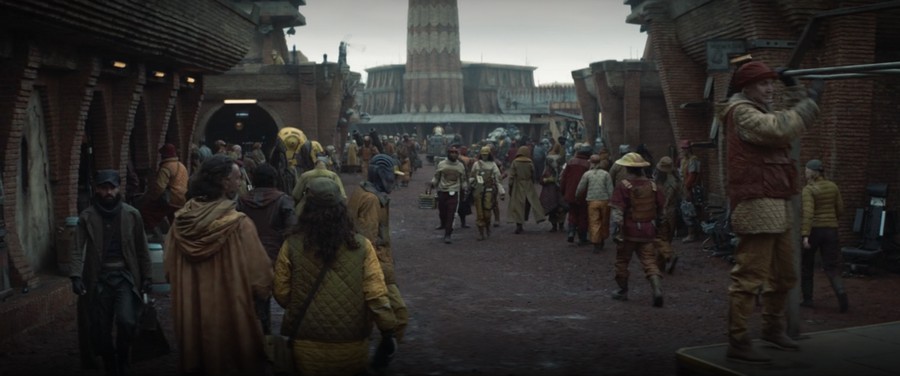
Ferrix is the planet that serves as the primary setting for Andor. It is cold and dusty, with salvage yards and vast cranes and a warren of shops and homes. They have a kind of anvil-angelus, where a guy on top of a tower hammers out ringing peals to the whole town. This feels right for this artisan-industrial place. When the authorities come in uniform, the people bang pots and pans to frustrate any attempt at surprise. There are rats and snitches, but overall it’s a place of plebeian solidarity. But Ferrix really comes into its own in the final episode, when we see how its people do funerals and riots. The funeral tune is haunting. When Bix (Adria Arjona) hears it, she goes to the window of her prison and experiences a moment of spiritual escape. These are her people.

Ferrix. Image from Star Wars HoloNet

No stormtroopers or TIE fighters

The authorities on Ferrix are not stormtroopers but private corporate security. It’s refreshing that for the first few episodes we don’t see a single stormtrooper or TIE fighter. There are no lightsabers or Boba Fett masks, Star Destroyers or X-wings, few cameos from familiar characters. The creators of Andor trust that we don’t need to have nostalgic artefacts pushed into our faces every few scenes.

Revolution

In Andor, for the first time in a Star Wars story, revolution is not about a band of wisecracking misfits doing heists. It’s about the masses – 5,000 slaves breaking out of a high-tech factory-prison, or a working-class community turning a funeral into a mass act of political resistance. Brasso (Joplin Sibtain) embodies this. It’s about manifestos – such as that of Nemik (Alex Lawther) which combines with Cassian’s own experiences to politicise him.

Morals

We see secret underground work, clandestine agents one step ahead of the Empire’s political police. The revolutionaries are not magically exempt from having to do bad things. In fact, their precarious position means that few methods are open to them aside from those methods which eat away at their souls and compromise their principles.

At the same time, there’s no shabby ‘both sides’-ism or ‘grimdark’ tropes. The means pursued by the Empire and the rebels are suited to their ends and circumstances. Pluck and compassion on one side, cackling villainy and martinets on the other – that’s fine for cartoons, but it’s not what we see here.

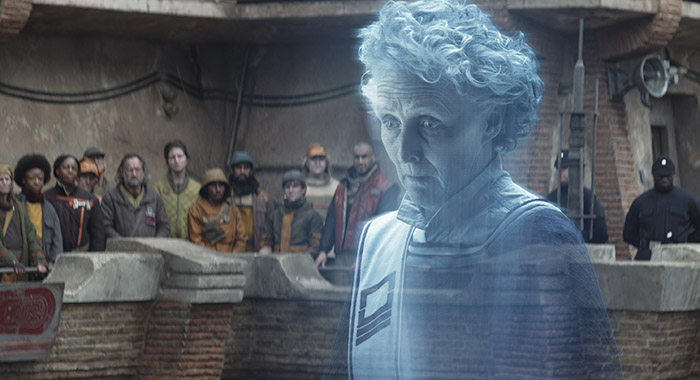
Image and caption courtesy of Rotten Tomatoes: Maarva (Fiona Shaw) in a scene from Lucasfilm’s ANDOR, exclusively on Disney+. ©2022 Lucasfilm Ltd. & TM. All Rights Reserved.

Evil Empire

There’s plenty of other things I could talk about – the compassion and hint of humour with which the script deals with the unsympathetic Syril (Kyle Soller), a corporate security officer on Andor’s trail; the intriguing side-story on Coruscant starring Mon Mothma (Genevieve O’Reilly); the rise to power of Dedra Meero (Denise Gough), the Empire’s answer to J Edgar Hoover.

A cynical part of me didn’t want to write this. What am I doing, providing free publicity for Disney, who certainly don’t need any help from me?! Looked at coldly, what have we got here? The corporate entertainment machine has gotten tired of stimulating the nostalgia centres of our brain and is trying to expand its cultural reach by stimulating the political and intellectual zones for a while instead. And while Andor may contain traces of political sophistication, it’s not exactly a Ken Loach film.

Anyway, if you enjoy it you enjoy it, no need for hand-wringing. But it’s a show that provokes interesting thoughts about the nature of pop culture today.

This is the nature of pop culture under the vast monopolies of late capitalism: the big budgets go to pre-existing worlds and stories.

(A side-note: It’s frankly weird and pathological that so many people refer to stories and imaginary worlds as ‘franchises’ and ‘properties.’ Can we all stop doing that, please?)

Where was I? Yes, pop culture today. For example, the Taxi Driver of the 2010s had to be filtered through comic-book superhero stories in order to get made: that was the Joker movie (I know that’s DC and not Marvel/ Disney but the same point applies).

If popular culture is a galaxy then Disney is the evil empire that is trying to dominate it. Sure. But don’t forget what Nemik said in his manifesto in the final episode. This homogenisation of culture goes against the grain of the natural creativity of humanity. So insurrection is inherent even in the fabric of the empire itself. Hence Andor.

Go to Home Page/ Archive

Half a Review of Half a King

Half a King, by Joe Abercrombie (Harper Voyager, 2014, 2015)

From the first chapter of Half a King by Joe Abercrombie I was struck by how gripping it was. I started taking notes as I read, most of which addressed the question, ‘How does he do it?’ My notes are reproduced below, edited for readability. They point to the features of a certain style of writing that is currently fashionable. This novel is a showcase of the great strengths of this style.

As the title of this post implies, I’m only going to the half-way point of the novel, which is all I’ve read. Spoilers ahoy.

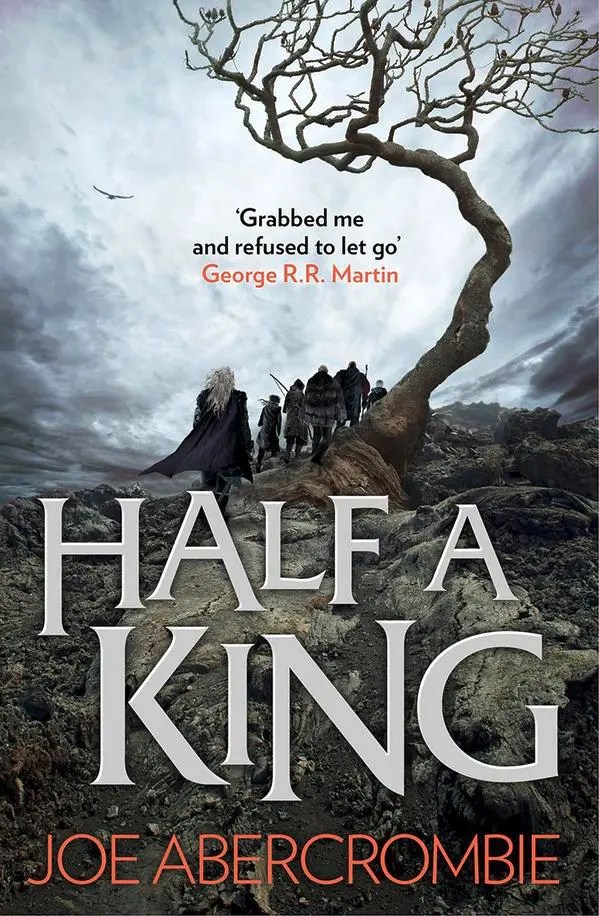
The British and Irish cover. This and all other images from https://joeabercrombie.com/books/half-a-king/

Part 1

  • Each chapter is limited to 1500-2500 words (6-9 pages). Each chapter shifts the scenery and cast. There is only one point of view, that of the main character, Yarvi.
  • The main conflict is apparent in the first line, and made more explicit by the end of the first chapter: this totally unsuitable person is going to have to try and be king.
  • It’s not that fast-paced. What it is is, each chapter has a bearing on the character conflict introduced in chapter 1. In the next chapter Yarvi meets his mother; she is pretty horrible, so this is discouraging for Yarvi’s prospects, but his uncle’s presence is consoling. Next Yarvi meets his betrothed; at first this is intimidating for him but then it turns out she is sound. Next he goes to do a bit of sparring; he gets beaten, but gets his revenge in an unscrupulous way. And so on.
  • The author gets away with having very little exposition because the setting is typical and even clichéd. So far, not one surprising element.
  • I’m enjoying it, I’m reading on. A number of promises, hints and mysteries have been dropped, and I want to see how things turn out. Eg. There’s a mean high king we will (no doubt) meet; an uncle who seems helpful but who (I predict) will betray Yarvi; a raid coming up; a mystery as to how the father was killed.
  • It’s Designated Survivor with Vikings.
  • Yarvi is treated badly by his parents but he has more than one ‘good adult’ in his life, who seem to see him and appreciate him: the minister, and his uncle. Those who despise him and those who value him each in their own way make us care about him.
  • Neat trick where nervous volubility of a character (the betrothed) gives opportunity for a bit of exposition.
  • We have the Maesters (or ‘ministers’) – from George RR Martin; we have a hint of the custom of women being literate instead of men – from Brandon Sanderson.
  • We are surprised to find the battle already over when Yarvi shows up. We were expecting battle scene, but what happens instead is more interesting.
  • The gruesomeness of the raid aftermath, and Yarvi’s disgust with it, is a hint that he as king is going to make a more just social order.
  • A solid twist on page 58. Good stuff. I was not expecting the uncle to betray him so soon.
  • Keimdal defends him, unexpected, and Hurik does not. Also unexpected.
  • The belt buckle and watery inlet were both very seamlessly but strongly set up.
  • ‘He would have liked to weigh his choices, but for that you need more than one.’
  • I can’t believe I said this was a Viking Designated Survivor. It’s a different kind of story entirely. Yarvi will have to resolve his conflict (ie to be a king), but in a very different way from what he expected. He will have to fight his way to the kingship, and presumably he will grow into the role as he claws his way up again from rock bottom. There is nothing original about this basic story, but the delivery so far has been very good, so I’m down.
  • P 65 great character description of Gorm-Il-Gorm, full half page paragraph, justifies its presence.
The French-language cover

Part 2

  • I approach Part 2 with trepidation. Yarvi is going to be enslaved, with all the grimdark misery and monotony that such a plot turn entails.
  • A cliché of fantasy novels: we only ever see a highly commercialised, Antebellum South model of slavery. It is capitalistic and not, for example, clan based. It is ‘simple’ chattel slavery and not a complex gradation of free and unfree. We fetishise the money economy so much that even our barbarian slave traders use hard currency and treat the enslaved people as commodities. In this novel, the slaves are even sold in a ‘shop’. The word is a bad anachronism. In a medievalesque setting a ‘shop’ is a workshop. At least we were spared a slave auction scene (Though I’m sure if Abercrombie had attempted it he would have made it compelling).
  • But the misery and squalor of the ‘shop’ is described economically and in a way that is linked to character. It is not allowed to bog down narrative.
  • P 118: Aha. It’s a post apocalyptic Baltic sea. Leningrad, Rostock, Stockholm, Geatland. Copenhagen. All the islands. I’d better go back and change ‘medieval’ to ‘medievalesque.’
  • My misgivings were unfounded. The author conveys the misery in skin-callousing terms, but in each chapter the focus is on the character and his goals. It’s setting up how things work on this ship, who’s who, and allowing us to guess ahead about how Yarvi will work these conflicts to his advantage. The author is stacking up Jenga blocks and we know the tower is going to fall. We don’t know how, and for now we are invited to guess.
  • In the meantime there are periodic reminders of what Yarvi wants and why – not intrusive or annoying, but natural.
  • In spite of the horror, optimism about human nature is evident on the slave ship. This optimism marks the book out from, say, GRR Martin. Yarvi’s companions, for example. Even Trigg is recognisably human – he cries at an emotional song.
  • P 125 – a printed circuit board assembly used as jewellery
  • Yarvi manages to avert a battle with the ‘savages’, and it’s much more exciting than a battle scene.
  • The escape, when it comes, is very satisfying because it has defied us for so long.
  • Only 2-3 fatal action scenes so far, but it has kept our attention.
  • We are starting to learn more about this world. But only after we have been introduced to Yarvik, to what he wants, his strengths and weaknesses. The rule here is character first, world second. This is what Matt Bird is talking about with his ‘Believe, Care, Invest’ model.
  • Looking back, Part 2 has introduced an entirely new cast of characters. Complete reshuffle. Everyone we know from Part 1 is gone. This is risky but Abercrombie pulls it off.
  • What about the morality of Yarvi’s escape? First, he squealed on another slave to suck up to the captain. Then he let the sea in through the hull of the boat, drowning seventy or eighty slaves who were chained to their oars.
  • On the first point, there are various mitigating factors which are obvious and need not detain us. But the most important point is that he intends to betray the evil captain as soon as possible, and their alliance is very brief.
  • On the second point, how he let the water in to a docked ship: (on top of the obvious points like how he tried to save them only to be thwarted by Nothing) the guards had the keys and the opportunity to let the slaves loose. Yarvi did not. And the most important point is this: he’s not the one who put them in those chains. The evil captain bears all the responsibility and Yarvi bears none.
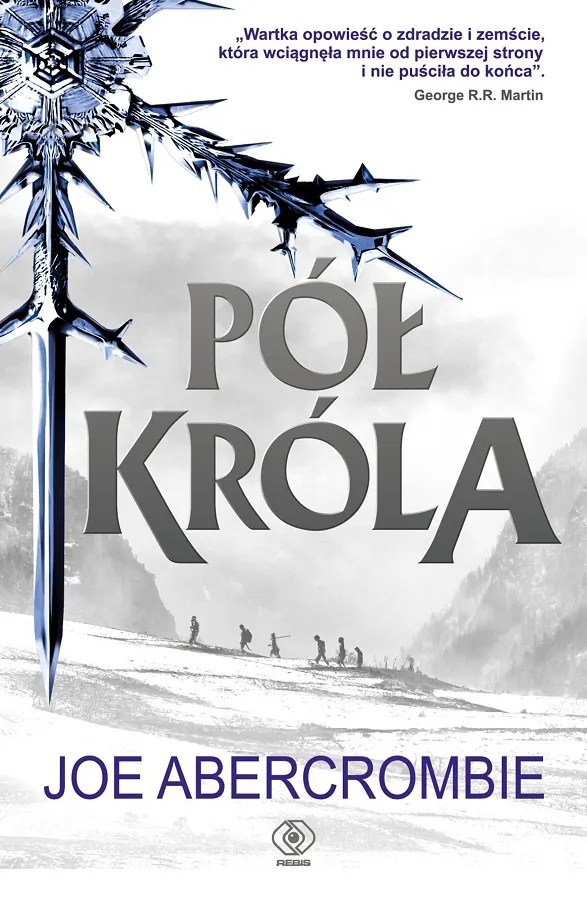
A gruelling trek – from the Polish cover

Part 3

  • We get a gruelling sequence of events as Yarvi and his band of friends set out across an inhospitable wilderness with no supplies. But now that we are off the slave ship, our cast of characters get a chance to expand, to show what they are made of, to make an impression on the reader.
  • Amid all the hardship, we can see a bond being forged between these diverse people. When Jaud carries Sumael. When Yarvi and Ankran make up. When Nothing turns, in the space of just 10 or 15 pages, from a saviour to a would-be murderer of a child, then to pathetic gratefulness when the child’s people help him, and then to swearing a solemn and dramatic oath to Yarvi. All this, without ever appearing to change his mind; his madness has an internal consistency.  
  • When they reach the house, what a relief – and what a line: ‘I told you steel would be the answer.’
  • Repeated physical descriptions reinforce the scarred, outcast status of these characters while also familiarising us with them – Sumael’s notched lip, Ankran’s gap tooth. Also repeated and brief statements reminding us of their backgrounds – the well in the village, the wife, etc.
  • How did we come to know these characters? Why did we give the writer our attention long enough for him to show us various facets of these people?
  • Frequent changes of mood and pace. From a gruelling chapter, to a chapter of relief and recuperation, and on to a chapter of main characters sitting around, letting their hair down, planning, and sharing a dramatic revelation.
  • Change of pace again – the bad guys are catching up. There are always new challenges before the characters can get too comfortable. But at the same time the challenges are not relentless or monotonous. Change and progress are evident. When they endure hardship, they earn something that helps them – for example, they endured the wilderness, and got the supplies that are now proving so useful. We don’t know much about the history, ecology or politics of this setting – but we know that it is a world that is both challenging and rewarding.
The US cover

Page 228 – That’s all for now. The characters are building a raft on the banks of a river while their enemies close in. I wish them luck, and if I have things to say about the second half of this book (I probably will) I will be sure to post them here.

Go to Home Page/ Archive

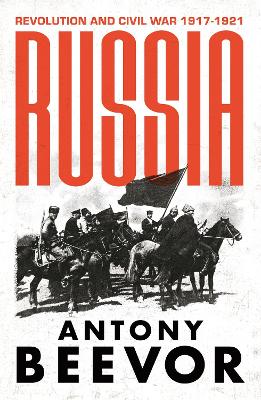
So far, Beevor’s new book is terrible

I learned a lot from Stalingrad and The Battle for Spain, so I was interested to learn that Antony Beevor was tackling the Russian Civil War in his latest book.

But judging from what I’ve read so far, Russia: Revolution and Civil War 1917-1921 is a crude offering. I’ll show what I mean by reference to a single chapter (which is more or less all I’ve read).

When I looked at the contents page, my eye was drawn to a chapter titled ‘The Infanticide of Democracy, November-December 1917.’

If you’re going to put an image of infanticide into my head, you’d better have a good reason. In this case, there is no good reason: during those two months, November and December, the Bolsheviks secured a majority in the Soviets, then received the blessing of a peasant soviet congress. They passed decrees on peace and land. They went into coalition with the Left SRs. They held the Constituent Assembly elections. The street fighting lasted only a few days, and the Whites involved were in general treated with magnanimity. Throughout, the Bolsheviks resisted the pressure to enter coalition with parties whose programme was diametrically opposed to theirs, and relied instead on the active support of millions of people.

All in all, I see this period as one during which, against challenging odds, the new soviet government lived up to its promise. But Beevor doesn’t see it that way.

Peace

He starts out talking about the war. Even though he dubs World War One ‘The Suicide of Europe’, he condemns the Soviets for trying to end the war. For him, the peace efforts were a bad thing because they encouraged rowdy and violent deserters (as if the rotten Tsarist army was not already collapsing due to mass desertion). If the Bolsheviks had broken their peace promise and forced everyone to fight on at gunpoint, no doubt Beevor would condemn that too. And he would be right!

Next in line for condemnation are the deserters themselves – because they ripped the upholstery out of first-class train carriages to wrap around their bare feet. Unmoved by the bare feet of the soldiers, Beevor is moved by the plight of the upholstery.

It must be fun for Beevor to come up with these taboo-busting chapter titles. ‘The Suicide of Europe,’ ‘The Infanticide of Democracy’… What’s next? ‘The Incest of Asia’? ‘The Opioid Addiction of Oligarchy’?

Plotting Civil War

Lenin, Beevor tells us, ‘welcomed destruction for its own sake.’ From there, he argues that Lenin wanted to start a civil war – ‘to achieve tabula rasa through violence,’ that he wanted all the horrendous destruction and inhumanity of 1918-1921 to happen so that he could ‘retain power’ and build communism on a clean slate.

So according to Beevor, Lenin’s plan was to hold power and to build communism in a context where the industries were devastated, where the areas which produced food and raw materials were occupied by enemy armies, where the urban working class – his support base! – were dying in huge numbers, where military spending made it impossible to pursue ambitious social programmes. Needless to say, this was not his plan.

By April, Lenin was happy (an unfortunately very wrong) to declare that the war was over. The idea that he wanted the Civil War at all is just as absurd as his alleged motivation.

But Beevor ‘proves’ his contention by cooking up the most negative and hostile interpretations of carefully-selected utterances by Lenin, then presenting these interpretations as fact.

You can feel Beevor’s fury and disgust every time he mentions Lenin. Whenever we see that name, it is accompanied by a bitterly hostile remark. He must have damaged his keyboard, angrily banging out L – E – N – I – N again and again. And yet to Lenin he keeps returning, as though the revolution revolved around one man.

Food

He ridicules Lenin’s claim that wealthy people were sabotaging food supplies. But this sabotage was taking place. First, there was speculation, or in other words the hoarding of food to drive up prices. Second, there was the strike of government employees, which was creating a humanitarian crisis, the sharpest edge of which was a food shortage. This strike was financed by rich people and big companies, and collapsed when they withdrew their support.

In a context of looming famine, when Lenin calls wealthy people ‘parasites’ and calls for a ‘war to the death’ against them, Beevor says this is ‘tantamount to a call to class genocide.’

The blind spots Beevor reveals are interesting. In this passage he talks about two things: 1) rich people starving poor people to death, and 2) Lenin making an inflammatory speech. If you asked me which of those two things could best be described as ‘class genocide,’ I know which one I’d pick. But for Beevor, it’s the first-class upholstery all over again. He gets upset about dangerous words and not about empty stomachs.

The food supply crisis, naturally, he blames on the Bolsheviks – even though the food crisis had been getting worse since 1915 and the Bolsheviks had been in power for all of five minutes.

Kornilov

The author turns his attention to the right-wing General Kornilov, who broke out of prison and rode across Russia to the Don Country where he met up with thousands of other officers and set up a rebel army to fight the Soviet government. His descriptions of Kornilov in this chapter make him sound like a fearless adventurer whose only fault is that maybe he’s too brave. There were ‘innumerable skirmishes.’ No doubt if it had been Lenin fighting his way across the country Beevor would pause to describe the blood and guts of his ruthlessly slaughtered victims. Instead of this, he compares the whole thing to Xenophon’s Anabasis (That’s The Warriors to you and me).

Lenin is portrayed as plotting to start a civil war. But Beevor never ventures to speculate that maybe Kornilov is plotting to start a civil war. Apparently Kornilov is fighting his way across the country and raising a rebel army for some other purpose.

Beevor’s version of Lenin can only retain power by achieving ‘tabula rasa through violence’ – as opposed to retaining power by democratic means. Meanwhile what was Kornilov doing, and why does it not come in for any scrutiny?

Lenin’s power rested on the active support of many millions of people through the Soviets, which were at this stage still a robust participatory-democratic system. Meanwhile Kornilov’s power rested on the support of several thousand men who gathered by the Don river at the end of 1917. They were united in the conviction that no elections were possible in Russia until the country was ‘purged’ and ‘cleansed’ of the soviets, along with nationalist movements and minorities.

In other words, they wanted to achieve tabula rasa through violence. But, at least in this chapter, it does not occur to Beevor to present them in this way.

Anti-Semitism

The most dishonest part of the chapter comes with Beevor’s remarks on anti-Semitism. He relates two local episodes in which soldiers and sailors attacked Jewish people. These incidents are supposed to prove that the Soviets tolerated or even encouraged anti-Semitism. We read: ‘Soviet authorities tacitly condoned violence against Jews’!

But just a few pages earlier, Beevor writes at length about the foundation of the Cheka. Somehow he fails to mention that one of the main purposes for which the Cheka was founded was to combat anti-Semitic pogroms. The very incidents he describes may have been those which the soviets responded to by setting up the Cheka.

Nor does he mention the outlawing of all racist discrimination, including anti-Semitism, by the new government.

The Cheka

The Cheka during November-December 1917 was a security organisation with only a few dozen full-time staff. But Beevor writes of it as if it were already the feared and controversial instrument of terror that it became over the year 1918. No, scratch that, he writes about it as if it were already the NKVD under Lavrentiy Beria.

For example, he quotes a poem which he says was ‘later’ published in a Cheka anthology. This is a disgusting, psychopathic little poem which celebrates killing. What Beevor doesn’t mention is that this poem was published a lot later, 1921 at the earliest. The entire Civil War took place between the point we’re at in the narrative and the date when the Cheka published this unhinged poem. Four years is an age in times of revolution and civil war. This poem was not written or published in December 1917 and could not possibly have been. The brutality it reflects was a product of the Civil War. Beevor presents it as if it were a cause of that war, part of the ‘infanticide’ of democracy, as if that mindset was there from the start, was in the DNA of the Cheka.

After the Civil War, by the way, the Cheka was radically downsized. Its role, under different names and big organisational changes, as Stalin’s executioner was yet another even later development.

By jumping around in time like this Beevor doesn’t just present a misleading account. He tells a dull story, a smooth and frictionless history of the Russian Revolution. Stalin’s totalitarian state is already there, fully-formed, in November 1917.

The Bolsheviks were initially humane and even magnanimous. Utterances from revolutionary leaders in which they speak in military metaphors can be easily found. But it is just as easy to find them expressing the hope that the Russian Revolution would be a lot less bloody than the French (so far, it had been). Krasnov was paroled after attacking Petrograd. Many Whites who fought in Moscow were let go and allowed to keep their weapons. Lunacharsky was so horrified by the fighting in Moscow he resigned as a minister. Lenin was the victim of an assassination attempt in January 1918, but it was hushed up at the time so as not to provoke reprisals. But 1918 saw Kornilov and his successors, along with foreign powers and the Right SRs, create a terrible military, political and humanitarian crisis in a bid to crush the soviets. This was the context for the development of the Cheka into what it became.

But in the monotonous world in which this chapter takes place, there is no change, no development of characters or institutions. A is always equal to A. The Cheka is always the Cheka. This way of looking at the world may pass muster in a book where, for example, Guderian’s Panzer Corps remains for a long period a dependable, solid and unchanging entity. But it is ill-suited to talking about revolutions and civil wars, in which institutions can pass through a lifetime of changes in a few months.

It’s not just that he gives a misleading, flattened account. It’s that he misses an opportunity to tell a far more interesting story.

The Left SRs

To minimise the significance of the coalition, Beevor treats the Left SRs as a bunch of ineffectual idiots and claims that the Bolsheviks always got their way. In fact, many of the key early leaders of the Red Army and Cheka were Left SRs; all Soviet institutions were shared between the two parties, for long after the coalition broke up in March 1918, and even after the Left SR Uprising of July 1918. But here Beevor treats the Left SRs just as he treats the Cheka: by jumping around in time as if context does not matter.

It’s real Doctor Manhattan territory. It is December 1917, and the Bolsheviks and Left SRs are making a coalition; it is March 1918, and they are breaking up over the Brest Treaty; it is July 1918, and they are shooting at each other in the streets of Moscow.

It gets worse. We are informed that ‘Leading Left SRs also fought for the distribution of land to the peasants, against what they now suspected was the Bolshevik plan of outright nationalisation.’

They ‘fought’, did they? Against whom?

Collectivisation, let alone ‘outright nationalisation,’ of land was not attempted, and it certainly was not an issue in the Bolshevik-Left SR split. Local experiments in state farms, and certain ultra-left policies in Ukraine and the Baltic States, are the only thing that comes close to what Beevor is suggesting. Stalin’s policy of forced complete collectivisation, meanwhile, was ten years away, and was never even contemplated by Lenin.

When Beevor writes that Lenin ‘had shamelessly copied’ Left SR policy on land, he is committing a double absurdity. First, because Lenin’s own position on the land question, consistent over twenty years or so, was broadly the same. Second, because the rules of plagiarism and copyright do not apply to policies. Adopting the policy of another party is a concession to that party.

But that wouldn’t do for Beevor. He cannot show Lenin being agreeable in any way. He insists that Lenin was like an icebreaking ship, that he was a worse autocrat than Nicholas II. Whenever Lenin’s actions contradict the extreme characterisations, Beevor cooks up a sinister motivation, rather than just reassessing his views, or admitting that politics and history are complex. The coalition with the Left SRs? A nasty trick. The Constituent Assembly elections? ‘Lip service.’ Soviet democracy? He claims it was ‘sidelined’ even though Soviet Congresses continued to meet and to decide key questions of policy well into the crisis of summer 1918.

Every narrative trick in the book is on display in this chapter. For example, Beevor describes the Left SRs getting in on the ground floor of the Cheka in a way that would leave an unattentive reader with the impression that they had been excluded. He describes up as down and black as white.

Persia

I’m disappointed. I was actually interested in reading Beevor’s account of the Civil War. I did not expect to agree with all or even most of what he said. But I thought he’d have something to say, and that it would enrich my own ongoing series on the Russian Civil War. Instead we get this monotonous, unbalanced condemnation that we’ve heard so many times before from so many sources: school, TV, and books with gushing quotes in their blurbs. The same old story is invariably described in these gushing blurbs as fresh and challenging.

Two-thirds of the way through, the chapter changes tack. It follows the critic Viktor Shklovsky as he runs off to Persia at around this time. This was horrifying reading, but at least I learned something I hadn’t already known. The Tsarist army was in occupation of a part of Persia, which was a major contributor to the fact that a third of Persia’s population died of famine and disease during the First World War. The Russian soldiers shot civilians for fun, abducted women and sold them in Crimea. Beevor notes that there was a different going rate for women who had already been raped and for those who had not.

Horrified, I read an article going deeper into this. Here – it seems by accident – the title ‘The Infanticide of Democracy’ earns its place. The Persians had a democratic revolution in 1909. Russia and Britain could not tolerate the possibility of an independent Persian Republic. They invaded, supported the reactionaries, and slaughtered thousands.

The horrors of the Tsarist occupation of Persia should give Beevor pause for thought. Was Lenin really ‘a worse autocrat than Nicholas,’ if this is what Nicholas did to Persia? These killers and slave-traffickers were many of the same officers and Cossacks who staffed the White Armies. If the Reds were fighting against such a heavy legacy of oppression, shouldn’t even a consistent liberal historian cut them some slack?

Beevor does not mention (at least in this chapter) that the Soviets renounced any Russian claim on Persian territory, and withdrew what was left of the Russian army. I had to learn that from the article linked above. But if he did mention it, no doubt he would find a way to twist it into something sinister and evil.

Conclusion

A lot of this chapter is taken up with abstract little sermons like the following: ‘This summed up the Bolsheviks’ idealised ruthlessness, elevating their cause above any humane concern such as natural justice or respect for life’ – or upholstery.

I don’t want the reader to think I have it in for Beevor just because I disagree with him. My shelf and my devices are full of titles whose authors I disagree with. Take the following remark by Laura Engelstein from her introduction to Russia in Flames: ‘there were no halcyon days of the Bolshevik Revolution. There was no primal moment of democratic purity that was later betrayed.’ I disagree with this statement, but at least there’s something there with which to disagree. It’s not a strident condemnation, let alone the third or fourth strident condemnation on a single page.

Evan Mawdsley’s book answers all kinds of fascinating questions about the Russian Civil War. It does so in a way that’s biased toward the Allies, but which leaves space for the reader to disagree, which often gives the other side the best lines, etc.

I have no problem, obviously, with polemical or agitational or partisan writing. But Beevor batters us over the head with his opinion and leaves us no space to interpret what he tells us. He writes in a ‘take it or leave it’ manner that does not invite debate. If he’s writing about 1917 and can’t find the evidence he needs to shock you into submitting to his point of view, he’ll go as far as 1921 to get it, then neglect to tell you where it came from.

I don’t know whether it’s complacency – he believes that he has a water-tight case, so he makes it with maximum force – or anxiety – he has serious doubts about what he’s writing, so he leaves no room for the reader to make up their own mind.

To sum up, the first part of the chapter was about a government that was trying to end World War One, share land with the peasants, and give power to workers’ councils. The author could hardly contain his rage and disgust. The end of the chapter was about a Tsarist army mass-murdering Persian people for eight long years. Here the author suddenly dropped the sermonising, the angry tone, the condemnations. Without his stranglehold on the narrative it was easier to read, in spite of the horrors he was describing. But the sudden shift in tone – oh man, it spoke volumes.

I have a sinking feeling that the whole book is going to be like this.

Go to Revolution Under Siege Archive

Go to Home Page/ Archive
How Dune gets away with it

When it was briefly mentioned on The Mindy Project, it was described as (something like) ‘That book that every guy loves for some reason.’ I read Dune at age 15. The years passed and I forgot some of the details of the story, but it held on in some remote sietch in the back of my mind, from which echoed phrases like Gom Jabbar, Muad’Dib, Kwisatz Haderach; mantras like ‘Fear is the mind-killer’ and ‘Who controls the spice controls the universe.’ The recent film captured some of that hypnotic power, and gave me an urge to visit that strange place again.

Re-reading it was a trip. Here are some things that struck me. In each case I was left wondering, ‘How does the novel get away with that?’

There is no scene of space travel in Dune. A chapter on planet Caladan ends; the next chapter begins with the characters literally unpacking their bags on planet Arrakis. The author Frank Herbert tells us that the Guild of Navigators have a monopoly on space travel, but he is not interested in exploring the technical details. He is more interested in the Guild as a political force. Therefore, unlike both of the movie versions, the space travel happens off-screen. It’s a bold move but it works. It brings focus to the story.

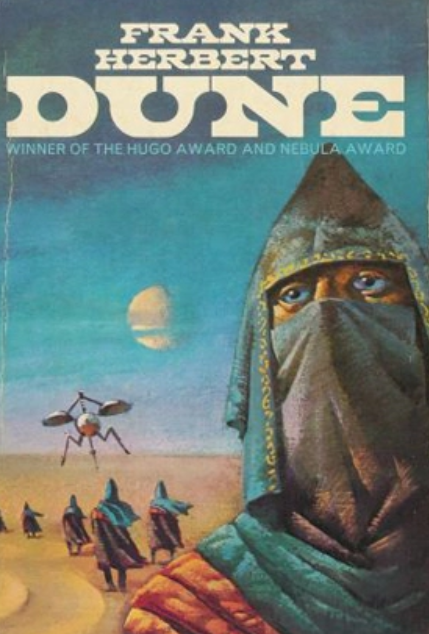
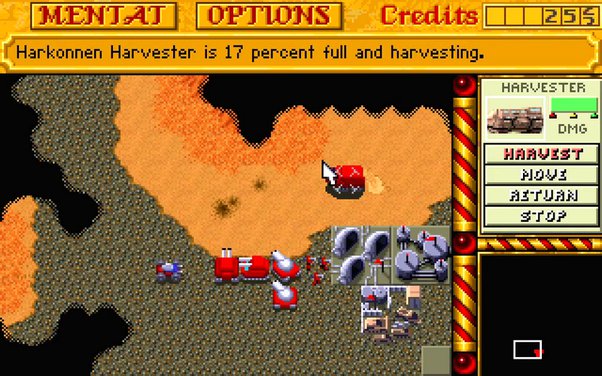
Below, a spice harvester. Above, one of many attempts to portray an ornithopter. From fontsinuse.com, as is the cover image.

Dune’s rich and strange world

In the early pages we are immersed in a kind of Renaissance space feudalism. It’s all nobles having conversations in palaces; it really shouldn’t be so interesting. I don’t think space capitalism, let alone space feudalism, is plausible. There are books I’ve abandoned because there were too many nobles, too many palaces. But somehow Dune gets away with it. It confronts us with a world that runs on its own rules, and doesn’t care what we think of it. Its people are medieval in outlook, and they don’t make any effort to relate to us on our terms. Not only do these people all do drugs, drugs are at the very the centre of their society. They have slaves, they hold entire planets as fiefs and some of them have psychic powers.

In short, Herbert doesn’t try to meet us half-way. We must either dismount from the great sandworm that is this book, and watch it slither away into the distance wondering to what fascinating places it might be going, or else cling to it stubbornly in spite of its efforts to shake us off.

By the way, I was converted to the idea of space feudalism being plausible. Humanity expanded across the stars, but suffered some kind of social and cultural catastrophe as a result. Their machines advanced to the point of being dangerous, so they waged war on the machines in the Butlerian Jihad. Feudalism didn’t bring humanity to the stars; humanity, having reached the stars through some advanced social system, reverted to feudalism, a feudalism modified with the remnants of the technology built up in ancient times.

Foreshadowing

But I wouldn’t have read on for long enough to care about the Butlerian Jihad unless the foreshadowing was laid on thick. The switches between different characters and their points of view, the dense undergrowth of exposition – these are not fashionable in sci-fi/ fantasy writing today. But  anyone who notices these unfashionable features and concludes that they are dealing with a clumsily-written book is mistaken.

When we ‘observe the plans within plans within plans’ we begin to wonder how these plans (within plans within plans) will work out. The story does not go from A to Z, from safety to danger. It goes from Y to Z, from less extreme danger to more extreme danger. We know the Harkonnens are going to attack. The Atreides know it. If they didn’t, the book and its sympathetic characters would be very irritating. We know Yueh is a traitor; if we didn’t, the revelation would be a pretty limp and predictable twist. We are not waiting to see if this Jenga tower will come down. We are waiting to see how.

While we are waiting for the Harkonnens to strike, we get sucked into the Duke’s administrative and political problems in a way that lulls and distracts us.

The writing and worldbuilding are open to criticism in places. I didn’t like how squeaky-clean and wholesome the Atreides were. ‘Good nobles’ vs ‘ bad nobles’ – come on. They’re an unelected ruling class who think they’re better than us. They’re all degrees of bad.

There’s a whole double-bluff intrigue where the Duke is pretending to be suspicious of Jessica. This is a tedious sub-plot, totally far-fetched. It’s just conflict for the sake of conflict. The book would be better without it. The mentat Thufeir Hawat is closely connected with this plot, but all in all I don’t see what he brings to the table. I think the book would pack a heavier punch if this sub-plot was gone and this character stripped back 90% or so.

Phallic sandworms

Paul is 15 but completely devoid of horniness or sexual neuroses; in the banquet scene, an attempt to seduce him falls flat. This is no doubt because of his Bene Gesserit training. But the repressed sexuality is central to the story. It’s more obvious to my grown-up mind that the sandworms are basically big dicks. And to paraphrase the book, who controls the big dicks controls the big dick energy. After Paul learns to harness and steer the big dicks, the climax of the story soon follows. Sorry for saying climax.

How does Frank Herbert get away with this insane sexual imagery? It’s even more obvious than King Solomon’s Mines. But it works because the sandworms work on their own terms. Arrakis without them wouldn’t be the same. Herbert doesn’t give a damn about space travel, but he cares about ecology. He reveals how this ecosystem works, and it is not a lecture we endure but a story mystery that is very satisfying to engage with and to solve.

Dune’s rich and strange hero

Speaking of Paul, even as a young reader I never quite liked him, and I never thought he was a good person. I rooted for him, and was invested in him. But I didn’t like him. He wrestles with his ‘terrible purpose’ and his visions of jihad for most of the story. As we read on, it becomes clear that is the story about the rise of a vast and terrible historical figure. It’s visible from the start, but the shock of the Harkonnen coup shakes something loose in him. As readers we come to respect the Fremen, but Paul is deceiving and manipulating them. Near the end (page 504) Gurney reproaches him when he reveals that he doesn’t really care about those killed in the final battle. He doesn’t care much about his murdered son either. And around the same time he finally embraces his ‘terrible purpose’ of galaxy-wide jihad; in his view there is no other way to cleanse the stagnant social order. The upheaval of the jihad will put a mixing spoon into the galactic gene pool and give it an almighty stir. This is the way he sees the world.

The unsettling presence of Paul’s little sister Alia is significant; he is only a little bit less weird than she is.

I haven’t read the sequels; I have been discouraged by some who have. What’s more, I consider the story complete and self-contained. It’s obvious to me that Paul is on track to become a genocidal god-emperor. There are no narrative questions left to answer.

The book suggests that Herbert does hold some beliefs that are repugnant to me: in the efficacy of eugenics, and in deep, inherent differences between men and women (‘takers’ and ‘givers’). He is cynical about humanity and believes that we will always be in thrall to religions and monarchs. But it seems clear enough that Frank Herbert doesn’t approve of Paul’s ‘terrible purpose’ or of the Bene Gesserit and their biological intrigues.

Atreides of Arabia

The ‘white saviour’ stuff is pretty blatant; Paul joins the Fremen and two years later has risen to be their messiah. This clearly takes inspiration from Lawrence of Arabia, and went on to inform Jon and the Wildlings, Dany and the Dothraki, etc.

With the Fremen, the Muslim coding is not just heavy but overwhelming. I didn’t see any problem with this when I was 15. But there was something more positive that I didn’t see either: that this is a text about the anti-colonial revolutions of the 1950s and 1960s. The Muslim stuff could be read as a tribute (perhaps a clumsy one) to the anti-colonial struggles of the Arabs, the Algerians, the Libyans. In fact the wikipedia page tells me it was also inspired by struggles of Caucasian Muslims against Tsarist Russia (hence, no doubt, the presence of a baddie named Baron Vladimir). The new film version appears to be leaning into this reading.

Conclusion

As an experiment, try to describe Dune in bald terms. It’s about a teenager who vanquishes his enemies and becomes emperor of the galaxy by convincing native people that he’s their god and by harnessing the power of huge phallic monsters.

When you put it like that, it actually sounds embarrassing.

What rescues Dune from being ‘That book that every guy loves for some reason?’ What raises Dune above the level of a basic power fantasy?

First, the world and the hero are so strange. Neither invites you in. You are forced to approach as a stranger. Paul is not the avatar for your fantasies; you end up walking many miles in his stillsuit, but you are never at all comfortable in it.  

Second, it’s primarily a story about ecology and religion, not violence. It’s a story that forces us to pay attention to things we take for granted in life, such as water and faith. The indigenous people, taken for granted above all others, turn out to be the key not just to Arrakis but to the universe. It’s a book that humbles the reader, that confronts the reader with vast superhuman forces.

Last, it forces to reader to consider the cost of power. The more Paul masters these forces, the more alienated we are from him as a character. The Fremen are liberated, so it’s a satisfying ending. The ‘plans within plans within plans’ produce the most terrible blowback – for the Emperor, for the Harkonnens, for the Bene Gesserit. But Paul has reached a place where he is both all-powerful and inhuman. The worst blowback might be for the billions of innocents who will die in his jihad.

Everything feels earned. It feels earned because the desert exacts a terrible price for every blessing it gives, and there are no happy endings in this social order.

Go to Home Page/ Archive

Appendix:

A note on Dune and videogames.

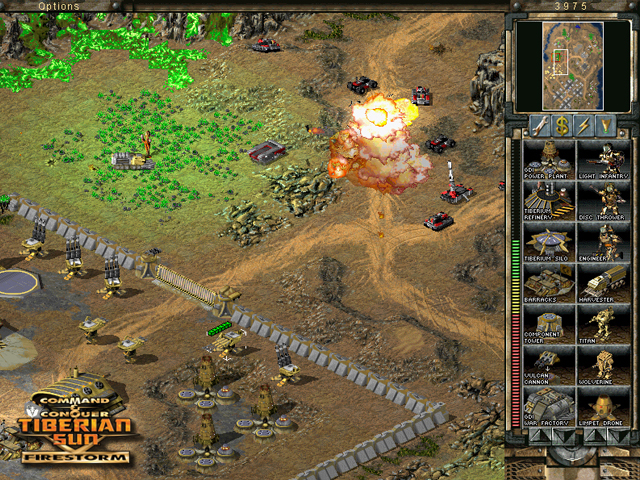
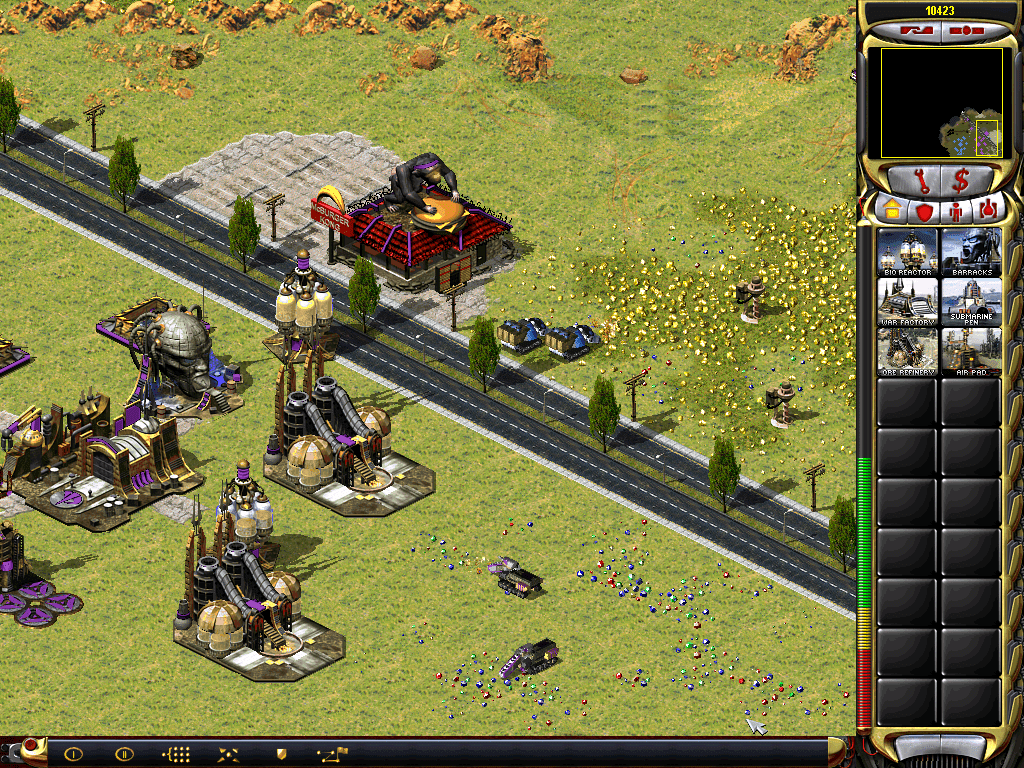
Dune 2 was the first strategy game, and it adapted straight from the novel a model of resource-collection that went on to exert a huge influence. There is a single resource, the spice, which lies on the surface of the ground. It is collected by huge harvesting vehicles. In Command and Conquer, the spice became tiberium, which has its own interesting back-story but is functionally identical, with the big harvesting vehicles and all. In the Red Alert spin-off, the spice appears in an alternate-history Cold War setting as Ore, a single one-stop-shop resource. Armies supply themselves by mining this resource on the battlefield. Helpfully, it is spread in pockets evenly across the surface of the earth from Manhattan to the Siberian taiga. 

So when Frank Herbert wrote about spice-harvesting in the early 1960s, he was creating a model which videogame developers would still be using in the 21st century. It was such a useful model for gaming that the plausibility of the game world of Red Alert was stretched to the limit just to accommodate it.

Review: The Don Flows Home to the Sea by Mikhail Sholokhov (Premium)

‘Cossack versus Red Army . . a war of unparalleled savagery […] A story of incredible brutality, well-larded with sexual adventures […] This book makes compulsive if horrifying reading; it is on a plane of human conduct as bestial as if it had occurred in the Dark Ages.’

From the blurb to The Don Flows Home to the Sea: Part One, 1960 Four Square Books edition

Become a paying supporter to get access

Access to this article is limited to paying supporters. If you already subscribe by email, thank you. But if you want to become a paying supporter, please hit ‘Subscribe’ below.

Donate less than the price of a coffee, and you can access everything on this blog for one year.

If you don’t feel like donating, most of my posts are still 100% free, so browse away, and thanks for visiting.

Go to Revolution Under Siege Archive

Go to Home Page/ Archive
Review: Cuba Libre by Tony Perrotet

Cuba Libre! Fidel, Che and the improbable revolution that changed world history

By Tony Perrotet

This account of the Cuban Revolution is rich in character and narrative, short on analysis. I was gripped all the way through, though near the end I grunted with surprised laughter at the boldness of one particular thing Perrotet left out.

This book sketches the background of Cuban history, introduces us to the dictator Batista and the revolutionary Fidel, then takes us through the Cuban Revolution from the failed attack on the Moncada Barracks to the extraordinary triumph of the rebels.

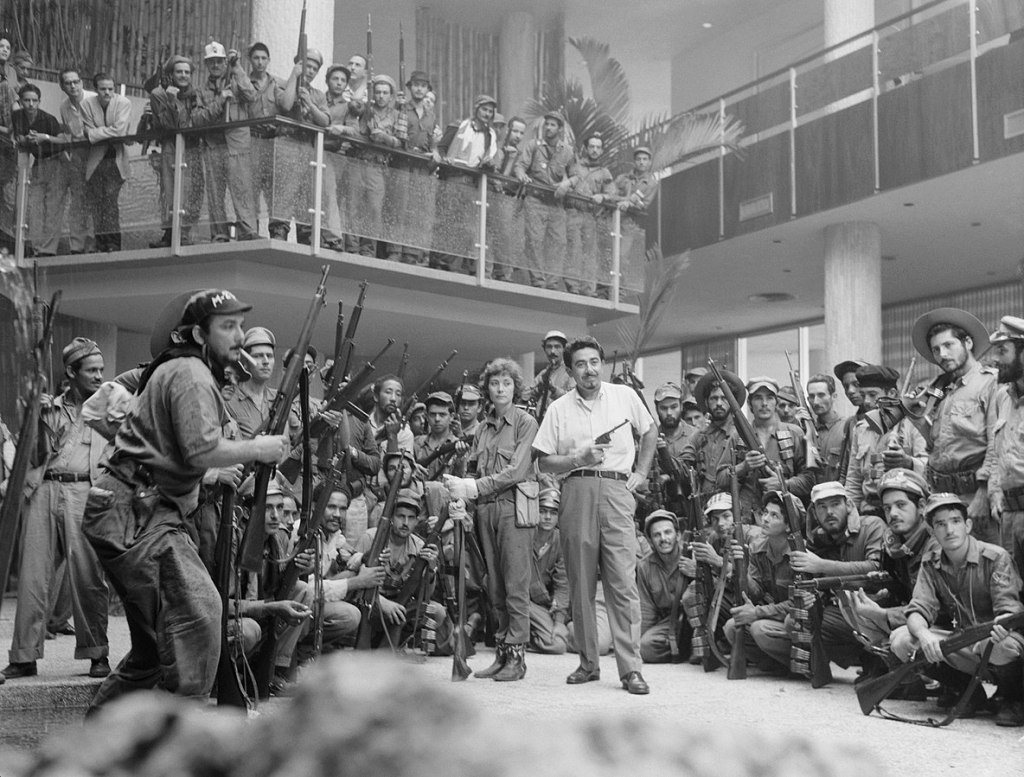
Guerrillas in the lobby of the Havana Hilton, 1959

I have read – and watched, and listened to – a fair amount on the Cuban Revolution, Che and Fidel. But I learned something new on practically every page of Cuba Libre. For example, all I had in my head about Celia Sanchez was her name and the vague understanding that she played some role in the Revolution; Perrotet takes the time to give her a full introduction, then he shows her in action – organising the Granma landing, escaping from cops, supplying the guerrillas, organising the underground.

The Batista regime, in its few years in power on the small island of Cuba, may have killed as many as 20,000 people. This is remarkable and horrifying (though somehow Batista comes across in the book almost as a vulnerable figure). The depravity of the Batista regime really comes across in Cuba Libre in harrowing stories from the prisons and barracks. But so does the courage and cunning of the guerrillas and of the urban underground. In addition, they must have been the most magnanimous revolutionaries in all of history – treating enemy wounded, freeing prisoners, treating their hostages like honoured guests.

Fulgencio Batista in 1957

In spite of the violence and the brutality of the Batista regime, and the harrowing conditions the guerrillas had to endure in the wilderness, Cuba Libre is not a heavy or dense read. It tells its story through anecdotes and characters. The events, locations and people are easy to follow because care is taken to make them vivid and memorable. When the writer mentions a name, the reader never has to scratch their head and ask, ‘Who’s that again?’

Another thing I like about the Cuban Revolution – and it may sound stupid – is this: the guerrilla movement in its early stages was operating with tens and twenties of fighters, at times even twos and threes. I like being able to grasp and visualise the numbers involved in a narrative. Once we are into the thousands, as we usually are with military history, it all becomes very abstract. This favours the intimate way Cuba Libre is written.

But as I said, it’s short on analysis. Towards the end, explaining why the Americans turned against Castro so suddenly, Perrotet writes that land reform angered US companies. I had to laugh, because this was the first mention of land reform in the entire book. It is also the last; he quickly moves on. You would not think it was a central question.

Lively and all as the narrative is, it does not explain why the rural population supported the guerrillas – which, of course, has to do with economics, class and land reform. The central condition of the guerillas’ success – the support of the rural population – simply falls from the sky. There’s nothing wrong with a narrative-driven, character-focused account – but there are ways of talking about economics and class within that kind of writing. The characters on whom Cuba Libre focuses tend to be middle-class professionals. There is no character giving us an insight into the land question.

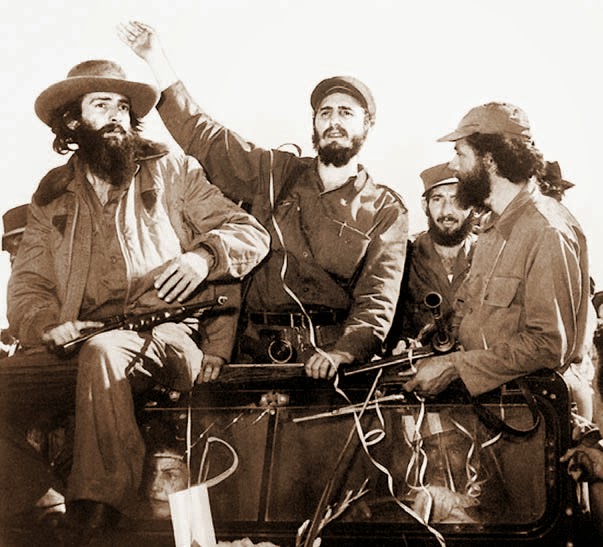
Camilo Cienfuegos and Fidel Castro enter Havana

Overall, Perrotet gives a very sympathetic account of the revolution. While he says Fidel had a tendency toward megalomania, his tone when writing about the guerrilla leader is usually one of mixed exasperation and awe. American public opinion, he says, liked Fidel playing the part of a glamorous revolutionary but didn’t want him to actually carry out any revolutionary measures. Perrotet lays the blame for the falling-out squarely at the feet of the US, while pointing out that thanks to the revolution Cubans have healthcare and education systems to rival anything in the advanced capitalist countries.

Nothing to see here in… Hollywood

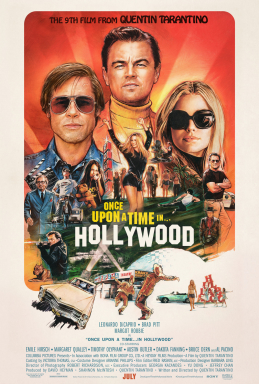
Review: Once Upon a Time in… Hollywood – dir Quentin Tarantino, 2019

Some movies have lines which are repeated and stressed so that they stick in your head for years after. Spiderman has ‘With great power comes great responsibility.’ Once Upon a Time in Hollywood has ‘Fuckin’ hippies.’ The phrase comes up again and again, right up to the moment when the last fuckin’ hippy is burned alive with a flamethrower. If you close your eyes, it’s like you’re watching South Park.

Another tic in this movie is the way the camera and script keep lingering on the titles and tropes of old racist westerns. In a lot of these movies the American Indians were an evil force, menacing the good (white) people of the frontier. Of course, director Quentin Tarantino is against racism and is highlighting this stuff in a mocking way. But he must be smart enough to realise that Once Upon a Time in Hollywood is a movie in exactly the same mould, where good people are threatened by an outside evil. The frontier is Hollywood in the 1960s, and the evil natives are the Manson family.

The film is compelling. We follow the travails of a washed-up actor and his stuntman buddy. At first we tag along with impatience as we want to get to the Manson bits, then we get drawn into the story of these two characters. But it remains in our minds that these guys are on a collision course with the Manson family, and we want to find out what Tarantino has to say about the Tate-LaBianca murders. Here’s a Hollywood movie made by big Hollywood names, directed by a Hollywood iconoclast. Surely these people have access to some folk memory, rumour or inside information. What will be revealed?

Meanwhile we get a warm nostalgic portrait of Hollywood in the 1960s: costumes, music, parties, and neon signs. This is just a wonderful place. Within this world, the worst thing that can happen is not so bad: an actor and a stuntman who kind-of deserve to be washed up are in danger of being washed up.

But lurking on the boundary of this world is a malicious presence which we know of as the Manson family but which the main characters simply see as (say it in your Eric Cartman voice) a bunch of fuckin’ hippies.

That’s it. That’s what Once Upon a Time in Hollywood has to say about the Tate-LaBianca murders: that Hollywood in the 1960s was great, until the Manson family came along; and wouldn’t it have been great if someone had been in the right place at the right time to stop the murders? So precisely nothing is revealed.

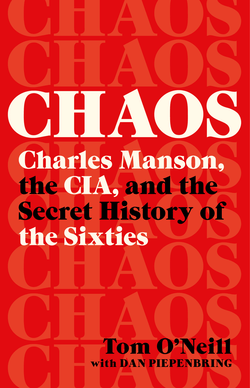
I watched this movie shortly after reading Chaos by Tom O’Brien. This extraordinary book charts a journalist’s attempt to follow up some of the many loose threads of the Tate-LaBianca murders. Bad shit was going on at the Polanski house. Manson knew big Hollywood names (which he gained by pimping teenage girls). The book explores a labyrinth of other strange connections and mysteries, driving at a point which contradicts Tarantino’s movie: that the Manson family were very much a part of the Hollywood ecosystem, and not an outside evil at all.

There is a gesture in this direction in the film. Near the end, one of the Manson family speculates that maybe the experience of growing up watching the violence of Hollywood is what made them violent. But we are expected to see this as pretentious studenty rambling. It is set up for us to dismiss it with self-righteous contempt.

Now, Chaos and Once Upon a Time in Hollywood came out in the same year and Tarantino could not possibly have read the book before making the film. But if you think about the Manson murders for ten minutes it should be clear that all is not as it seems. It’s probably not a coincidence that Manson, the guy who drugged and pimped out minors, showed up at the doorstep of Roman Polanski, the guy who later fled the United States after he drugged and raped a minor. Not only does the film fail to delve into any of the mysteries surrounding the case, it makes no reference to this elephant in the room.

If you’re looking for Hollyweird revelations about the dark underbelly of the movie industry, all Tarantino’s got to say to you is ‘Nothing to see here.’ This is not a film about the Manson murders. It is a western movie about an aging gunslinger and an outlaw who find redemption by defending a settler from the natives; only it happens to be set in1960s Hollywood. If you go in expecting an interesting pastiche along these lines, you will not be disappointed. Pitt and DiCaprio play an amusing pair of fuckups and antiheroes. It’s not necessarily a bad thing that the film mocks the Manson family instead of mythologizing them, for example when Brad Pitt mangles Tex Watson’s one-liner – ‘some devil shit.’ The ultra-violence of the ending could easily be interpreted as righteous fury.

I’ve usually enjoyed Tarantino’s movies but this was more of a mixed bag than usual. The journey was unexpectedly compelling; somehow the film got me to feel sorry for this blustering actor who’s had a successful career and has plenty of money. This journey has texture and verisimilitude. This movie knows Hollywood and cares about it and gets us to care. But the destination, when we finally get there, is disappointing. The ending just left me with screams of agony and the words ‘Fuckin’ hippies’ echoing in my head.

And Quiet Flows the Don by Mikhail Sholokhov (Premium)

English translation (1934) by Stephen Garry. Penguin Classics, 2016

The other day, after several textual misadventures which I will mention in a footnote below, I finished Mikhail Sholokhov’s masterpiece And Quiet Flows the Don. This review will tie in with my series on the Russian Civil War, Revolution Under Siege, as the novel throws some sidelights on the things I wrote about there.

You can read this post – and many others on this website – for just €5.

Get access to this post – and the entire archive of The 1919 Review – for €5 per year.

Why Jeremy Clarkson hated V for Vendetta

When I first saw V for Vendetta in the cinema aged 15 or 16 I was very impressed, but when I came back to it after reading the original comic the movie seemed cheesy and tacky by comparison.

I watched it again recently. Yes, it’s tacky. The politics of the comic are de-fanged. But it clips along nicely. If the lines aren’t all well-written, the story structure and scenes have momentum. There are enough ponderous and self-important films out there, and a lot more since 2005 when this first came out. Making this film a lot lighter in tone than the comic would not have been my favoured creative choice, but it was a fair creative choice.

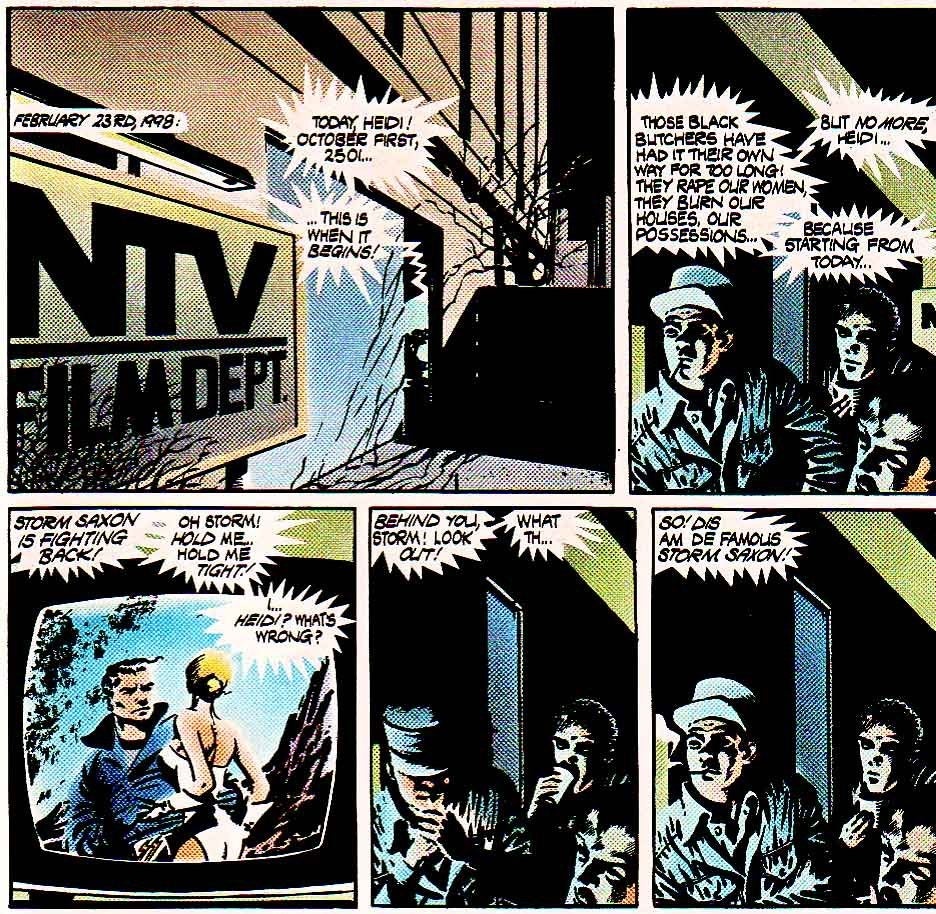
In the mid 2000s I used to read Jeremy Clarkson’s film reviews in the Sunday Times. He heartily approved of 300, a fantasy so violently racist it makes Storm Saxon look harmless. He hated The Wind that Shakes the Barley, Ken Loach’s film about the Irish Revolution. He didn’t like V for Vendetta. He sneered at it and predicted that its message would fail to strike a chord with young people. His words were something like, ‘Kids these days just want to fight for their right to party.’

Six years later, the Guy Fawkes mask from this movie became a global symbol of youth protest against dictators and bankers. In other words, Jeremy Clarkson hadn’t a clue.

Along with the brilliant Children of Men, released one year later, V for Vendetta was part of a cultural backlash against the violence, authoritarianism and fear of the so-called War on Terror. Of course being a right-winger Clarkson didn’t like this message.

But re-watching it now, I figured out another reason why the film might have rubbed him up the wrong way.

The TV show Storm Saxon, which is popular in the fascist England of V for Vendetta, and which Jeremy Clarkson would probably say was ‘good old-fashioned swashbuckling fun’. From the original comic by Alan Moore and David Lloyd

There is a character in V for Vendetta named Lewis Prothero, ‘the voice of London,’ a blowhard TV commentator and regime mouthpiece (played by Roger Allam, who also portrays the useless MP in The Thick of It). In one scene Prothero rants over the phone demanding the firing of ‘that Paddy’ who works in the studio. ‘He doesn’t know how to light. He makes my nose look like Big Ben.’

On a completely unrelated note, in 2015 Jeremy Clarkson split his producer’s lip open and called him a ‘lazy Irish c***,’ all because the stupid Paddy could not magically produce a steak in the middle of the night for a pissed Clarkson to stuff into his face.

I doubt that was an isolated incident. Clarkson was probably up to similar behaviour around the time he saw V for Vendetta and declared that young people would not like it. On top of the political message, my theory is that he felt personally attacked. Maybe Roger Allam’s portrayal of a ranting anti-Irish gammon had struck a little too close to home.

What I’m playing at: Disco Elysium

Disco Elysium is a point-and-click RPG which is at once easy to fall into and unlike anything I’ve played before. I heard about it on Chapo Trap House a few years back and saw it in a sale, so I bought it and now I’m 8 hours into it, according to Steam.

The game starts with the player character in a booze coma, in a dialogue with his Limbic System and his Ancient Reptile Brain – ie with aspects of himself. The player’s first task is to summon up the will to awaken.

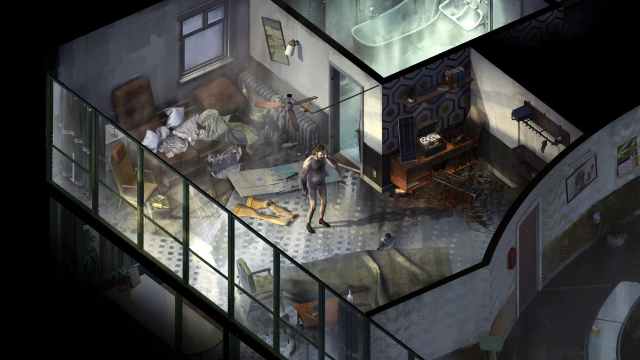
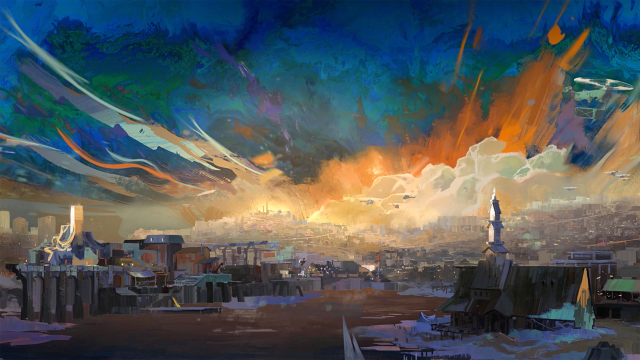
You wake up in a hotel room you don’t remember trashing last night. The world is strange. It’s modern times, but where are we? Haiti? Finland? It emerges that the game is set not only in a fictional country but in a fictional world, brilliantly realised and compelling.

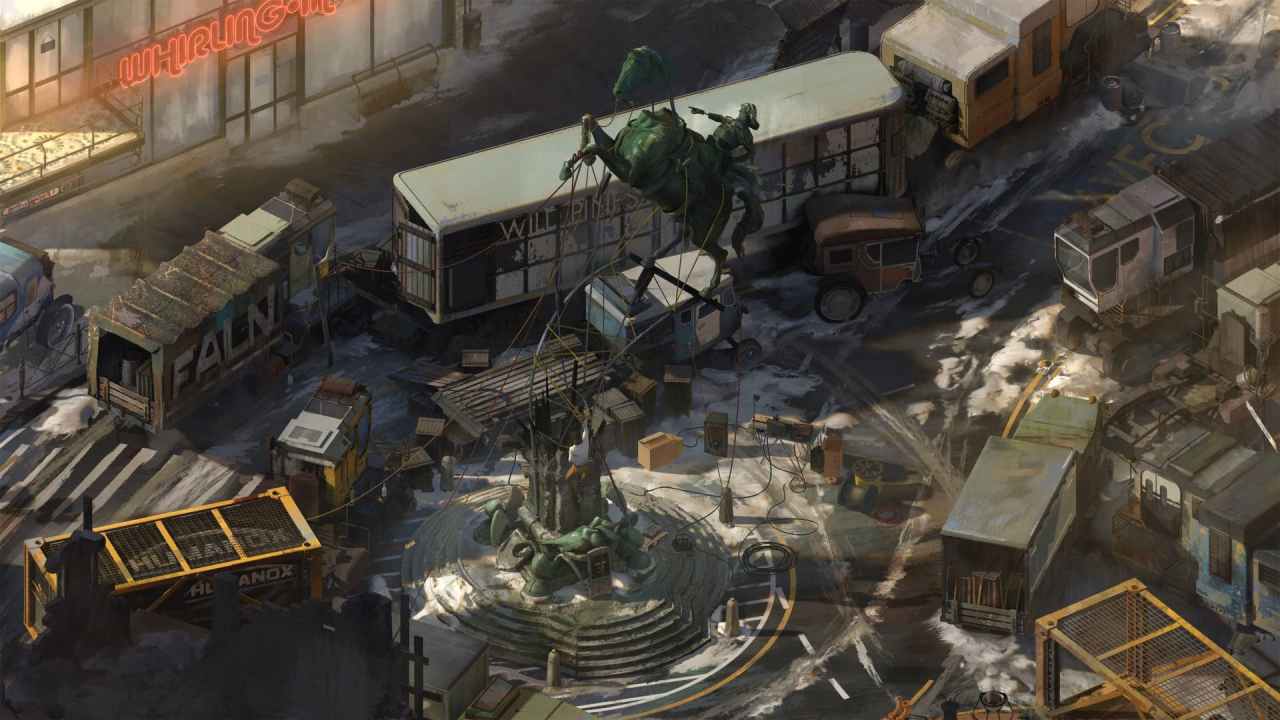
All screenshots are from https://discoelysium.com/

The player character is a bumbling fuck-up with something desperate and sad under the surface, and possibly a ‘vast soul’ under that again. Characters give you pretty normal RPG quests: Solve the murder; convince X person to let you into Y location; etc. But your own internal voices give you strange quests which emanate from inscrutable inner drives: ‘Find some alcohol and drink it,’ or ‘Sing karaoke.’ You spend as much time in dialogue with your gut feelings and intellect as you do with the characters. These internal dialogues have real consequences for your character’s skills, politics, etc. With names like Empathy, Volition, Inland Empire, Shivers and Half-Light, the internal voices interject, inform and misinform, help and sabotage. They provide dialogue options such as bumming a cigarette, asking for money or blurting out something ridiculous.

At times, they describe a breath of wind, a bleak vista or a distant sound. In these moments, you feel what the character feels. I know nothing about the development team but I can tell it includes poets and novelists.

So far the game has been completely non-violent for me, though I’m aware there are combat dynamics. I did punch a door one time. For some reason I am surprised that a game can be non-violent but still so compelling. I found a ghostly voice trapped on an apartment building intercom and the experience was haunting. It made me entertain the theory that my character was in purgatory, or some such thing, a theory I later rejected.

The game is very funny. More often than not, you are the butt of the joke. It’s a bleak world, lived-in and tired. Every other RPG I’ve ever played has a world from which the class struggle has been mysteriously exorcised. But in Disco Elysium, the politics are right there in front of you, and you can delve deep if you wish.

The graphics are beautiful, but not technically advanced by today’s standards. I’ve been thinking along these lines for a while, that more games need to make this trade-off: invest in good writing and clever mechanics, not in making a game so graphically and technically advanced that it will force me to buy a new machine. If we’re going to talk about graphics, let’s talk about more about art and style, less about a mad quest for photorealism and textures and lighting and crashing my laptop. Disco Elysium is a positive example of what I’m talking about.

So eight hours in, I’m still in a starting area called Martinaise and have not found my missing gun, much less solved the murder. It’s not an easy game, but I feel it half-expects me to be as incompetent as I am, and forgives me with a shrug of the shoulders. And I have a lot of time for a game that rewards me for investing skill points in Empathy.