Access to this article is limited to paying supporters. If you already subscribe by email, thank you. But if you want to become a paying supporter, please hit ‘Subscribe’ below.
Give me less than the price of a coffee, and you can access everything on this blog for one year.
It is May 1920, and the Bolshevik sailor Raskolnikov is on the deck of the destroyer Karl Liebkencht, watching as 1,500 Red sailors land on the coast of Iran. Black plumes of shellfire erupt on the shore as the guns of the Red fleet bombard the British Empire’s elite Ghurka soldiers.
It is 1921, and the ‘mad Baron’ Ungern-Sternberg, having seized Mongolia’s capital and received the blessing of its priest-king, is setting out for war against the Soviet regime.
It is 1922, and the last White Guard regime still clings to power in Vladivostok in the Far East. General Horvath has given up all pretenses and pretensions at democracy, and rules over an openly monarchist regime, backed by the Japanese military.
It is 1923, and the last White Army, now abandoned by the Japanese, still clings to existence in remote and barely-habitable reaches of the Pacific coast.
It is 1926, and the Red Army is once again fighting the Basmachi in Central Asia.
The conclusions of the Russian Civil War were even messier and more manifold than its beginnings. As with the question of when it started, it’s helpful to think of two civil wars – a broad period of violence in the Tsarist Empire and its successor states lasting from 1916 to 1926 or from 1917 to 1923, and a narrow and more defined struggle between the Red Army and the White movement initiated by Generals Kornilov and Alexeev.
Revolution Under Siege never set out to be a comprehensive history of the ‘broad’ Russian Civil War, but I’m glad I paused the main story to write four or five posts about Central Asia and the Basmachi. This was a way of paying indirect homage to all the theatres of war which my main narrative has been obliged to neglect, such as North Russia, the partisan war in Siberia, the Caucasus and the Baltic States. To this we must now add the Russian Far East and Mongolia, which were very significant after 1920.
Rather than write another three or four seasons of Revolution Under Siege dealing with a period when the Revolution was, in fact, no longer under siege, I’m going to sum up as much of it as I can in one post. These are all things I’d write whole episodes about, if I had infinite time and if the scope of this project were just a few degrees wider.
North Russia
In the Arctic Circle Red forces battled with British and American troops directly from 1918 through to 1920. This was a small and slow war fought in extremely harsh conditions. Each side proved capable of landing heavy blows on the other, but by 1920 the Reds had the upper hand on the frozen battlefields and the tide of political opinion in the Allied nations was turning decisively against the Russian adventure. The Allies pulled out at last, and the Reds retook Murmansk and Archangel’sk in early 1920.
Coat of arms of the Far Eastern Republic. Not the corn, anchor and tool representing peasants, fishers and workers.
Siberia & the Far East
The Reds led an uprising in Vladivostok in January 1920 – a time when the ground was splitting under the feet of Kolchak’s regime. But this uprising was put down by the Cossacks of Semyonov, assisted by the Japanese military. Its leaders, including the noble-born Bolshevik Sergey Lazo, disappeared to an unknown fate.
A few months later the Reds took Irkutsk and set up the Far Eastern Republic in coalition with Mensheviks and SRs. The Far Eastern Republic had its own Red Army and its own emblem. For the next few years it made slow and steady advances against Semyonov’s Trans-Baikal fiefdom and finally, after the Japanese withdrawal, took Vladivostok from General Horvath in 1922. The last major city in the hands of the Whites was now in Red hands.
Territory of the Far Eastern Republic at its height
Mongolia
The Russian Civil War spilled over organically into Mongolia: White Russians fled there, some to settle peacefully, others to raid over the border.
When Baron Ungern moved his forces from the Trans-Baikal into Mongolia, terror seized the Chinese forces occupying the country. According to the White soldier Dmitri Alioshin, the Chinese set about slaughtering every White Russian they could find. The White Russians, who despised the Chinese with intense racism, responded in kind. The White Russians were mostly skeptical of the unhinged Baron and would have avoided him in the normal course of events, but they were driven into his arms by the actions of the Chinese military.
Ungern and his forces endured the steppe winter of 1920-21, and in February they marched on the Mongolian capital city (known variously as Urga, Ikh Khuree, Ulan Baatar). They seized it from superior numbers of Chinese soldiers and began several days of intense slaughter and looting.
Meanwhile the Reds had made an alliance with Sukhbaatar and Chaibalsan, two more left-wing Mongolian leaders who opposed Ungern. A joint Soviet and Red Mongolian army crossed the border. Ungern hastened to meet it. His luck ran out. After defeats, he fled with small numbers, who turned against him and abandoned him in the wild. A Soviet Mongolia was established, and Ungern was captured, tried and executed in Russia.
The Caucasus and Persia
Victory in South Russia spilled over into a string of major gains in the Caucasus. In Azerbaijan the local communists overthrew the Musavatists, the nationalist forces supported first by Turkey and then by Britain. Neighbouring Armenia also contained many pro-Soviet elements and like Azerbaijan it was soon its own Soviet Republic. So secure were the Caucasus that Baku, which had been in enemy hands mere months before, was chosen as the venue for the September 1920 Congress of the Peoples of the East.
Meanwhile the Whites had withdrawn their Caspian Fleet, consisting of 17 ships along with 50 guns, to the British-occupied port of Enzeli in Persia (Iran). Raskolnikov led a Red striking force on a surprise raid, took and held the town for days, and returned the ships, munitions and materiel to Soviet Azerbaijan and Soviet Russia. In Persia itself, the Russian Revolution produced its shockwaves in the form of popular guerrilla leaders. The Enzeli raid, meanwhile, embarrassed the British so badly the Persian parliament rejected a proposed treaty that would have utterly subordinated the country to London.
The Daghestanis had troubled Denikin’s rear at a key moment. In 1920 some Daghestanis revolted against the Soviet power, though as many remained neutral and as many again were pro-Soviet. The Red Army suffered around 5,000 fatalities in tough battles over mountains, defiles and villages perched over sheer cliffs.
Georgia did not come into the Soviet orbit until 1923. The manner in which this was achieved was extremely controversial. It was the subject of Lenin’s final political struggle before his death. Though in extremely poor health, he waged a campaign against Stalin and his ally Ordzhonikidze. The latter pair were guilty of the premature entry of the Red Army into a Georgia that was not quite ready to accept it, and for the heavy-handed manner in which they dealt with the Georgian communists.
Makhno
Makhno and his Anarchist Black Army had been making open warfare against the Soviet power. But during the campaign against Wrangel the Anarchists agreed to a truce, sent some forces to help deal with Wrangel and, more importantly, stopped raiding in the rear of the Red Army.
Even taking into account how deep the hostility was between the Red Army and the Black, and how shallow their cooperation was, there’s something shocking about the Michael Corleone-like speed and ruthlessness with which the Anarchists were dealt as soon as Wrangel was out of the way. The commander of the Anarchist detachment which had fought in Crimea was summoned to Red Army HQ, but it appears it was a trap. He didn’t make it out alive.
After this, Makhno’s fortunes spiraled. He ended up with a couple of dozen companions fleeing across the Romanian border with the Red Cavalry hot on his heels. A humble life as an exile in Paris awaited him.
Internal Revolts
We have traced the fronts of the Civil War clockwise from Murmansk to the Black Sea. Now we return to the heart of European Russia. In late 1920 and into 1921, Tambov Province saw a rural revolt against Soviet power which far exceeded any peasant unrest during the Civil War. Soviet officials and their families were slaughtered out by furious insurgents, who organized into an army along regular lines.
Early 1921 saw a general strike of workers in Petrograd demanding better rations and fewer restrictions on political rights and economic activity. After the end of the strike, in March, the Kronstadt sailors revolted with a mix of similar demands and more far-reaching demands. Suppressing the Tambov and Kronstadt Revolts required serious military operations.
Smele says ‘it has been estimated that’ 2000 sailors were executed after the suppression of the revolt. If so, the scale of the reprisal was truly shocking. On the other hand Marcus Hesse, drawing on Paul Avrich, paints a different picture:
Of those who didn’t flee, several hundred were sentenced to death, although most were then amnestied. Others were imprisoned in camps intended for prisoners of war — some later ended up in the Solovetsky prison, which opened in June 1923 and later became part of the notorious ‘GULAG’. Several years later they were released under a general amnesty.
Leftists have been arguing about Kronstadt for a hundred years, and rather than wade in here I will just make one observation. Each year of the Civil War began, for the Soviets, with a promise of peace that was soon dashed. Spring would invariably bring with it new White and interventionist offensives. The familiar cycles of revolt and foreign intervention would repeat themselves with what must have become a dreadful and crushing sense of inevitability. The Kronstadt Revolt took place only a few months after the defeat of Wrangel, and precisely on the cusp of the Spring campaigning season. Sure, the Kronstadt sailors were raising democratic demands; the Don Cossacks and Right SRs, too, had raised democratic demands but had ended up spilling their blood for the White militarists. With the benefit of hindsight we know that the war, in European Russia at least, was over. The Communists did not have that benefit. We can hardly understand Kronstadt without an appreciation of the fear they had, a fear based on lessons learned in blood, of another year of war.
These revolts would not have taken place during the struggle against the White Armies, because neither the Tambov peasants nor the Kronstadters wanted to see a return of the landlords. But once Wrangel was defeated, the floodgates were opened for many serious grievances to find expression in armed revolt. The horrific conditions endured by both civilians and military during the Civil War meant there was widespread anger. Much of this was directed at the Soviet power and the Communist Party, as they were the regulators and arbiters in this austere armed camp. From both the factories and the naval base of Kronstadt, the leading elements from 1917 were absent: dead like Markin at Kazan, commanding fleets like Raskolnikov, or serving in the state apparatus.
The Kronstadt Revolt in particular, which took place during the Party Congress, served as a warning to the Soviet government that the Spartan wartime regime had been maintained for far too long, and must be dismantled as a matter of urgency.
So, when did the Civil War end? One answer would be 1922, with the conquest of Vladivostok from the Whites. Another would be 1926, with the defeat of the Basmachi. Antony Beevor ends with sailors being shot after the Kronstadt Revolt – a suitably depressing scene for his narrative purposes. But in these three cases we are losing sight of the big picture.
So I’m going to say November 1920.
The former Russian Empire was at war between Spring 1918 (the revolt of the Czechoslovak Legion and the Cossacks) and Autumn 1920 (the treaty with Poland and the defeat of Wrangel). This was an all-out war with profound geopolitical importance, fought between irreconcilable and defined adversaries, with clear criteria for the victory or defeat of each side.
This war was the most important of a complex of armed struggles which engulfed the collapsing Russian Empire in what we could call a ‘Time of Troubles’ lasting from 1916 to 1926 in Central Asia and from 1917 to 1923 in Russia itself. It is the narrow Civil War rather than the broad ‘Time of Troubles’ which has been the focus of Revolution Under Siege. But the two are of course not neatly separable.
This is Episode 28 of Revolution Under Siege, my series on the Russian Civil War. In this post, we look at the invasion of Ukraine by the ‘Black Baron’ Wrangel.
By the time the Soviets signed a ceasefire with Poland, another serious war had been raging for months in the south of Ukraine: the struggle with the forces of Baron Wrangel.
White Crimea
Wrangel’s Crimea, to which the survivors of Denikin’s army had fled, was a strange place. The only parallel would be Taiwan soon after the Chinese Revolution. Imagine if the top politicians, billionaires and military officers got chased out of the mainland United States and washed up in the hotels and resorts of Hawaii or in Puerto Rico. People today talk about a ‘refugee crisis’ when a few hundred thousand people seek refuge on a continent home to hundreds of millions. Imagine being Crimean – one of fewer than a million – and seeing tens of thousands of Russian counter-revolutionaries and their dependents descending on your little peninsula. To people from that part of the world, Crimea was and is associated with holidays, beaches, cypress trees and nightingales, the mosques and masjids of the Tatar villages.
In 1920 this idyllic holiday destination was a refuge for Don Cossacks still mourning the horses they shot at Novorossisyk; women who had married conservative and strong-willed army officers, only to see them humbled by soldiers’ committees; children cast out of the homes they grew up in; business owners and aristocrats who have nightmares about the sailors and the Cheka; famous ministers under the Tsar; the agents of half-a-dozen foreign powers, selling information; speculators turned refugees turned speculators again; former bloodhounds of the Tsarist secret police who have found a new employer in Wrangel; people who cheered on February but saw October as a kind of apocalypse; people who saw February as an apocalypse; infants of the Civil War who have known crowded billets, refuges and train carriages during headlong typhus-haunted flights; elderly dependents; girlfriends. Between the price of bread and the low pay of a soldier (even of a junior officer) most of these people must have lived in a state of desperation.
The father, husband, or son, the ally, pawn or constituent who stands at the centre of all these figures, whom they all have in common, is the White officer. This character has changed little since we first introduced him back in Episode 2, in spite of ordeals, triumphs, humiliations, allies gained and lost along the way.
Many of the White officers remember the Russo-Japanese War, and most the Great War. Some go back to the very start of the White movement: the Kornilov Affair, imprisonment in Bykhov Monastery, Rostov and the Kuban Ice March; some rode across the seething Ukraine of 1919, drunk and high under wolf talismans.
Some of these individuals crack under the pressure of the war. General Slashchev was fired after the stern Wrangel found him passed out from drugs and alcohol, dressed in a gold-trimmed Turkish robe, surrounded by his collection of birds. [1] But let’s speak of them as a collective. The White officer will fight on to the end, because to accept the egalitarian order promised by communism would be, to his mind, to accept the downfall of civilisation and the obliteration of his personal dignity.
Today’s cover image is a detail from the above, a poster from 1920 whose theme is how the forces of the Revolution in 1917 compare with three years later. Note the slender figure of Wrangel, near bottom right.
Circumstances dictate an offensive
Speaking with journalists, Wrangel outlined a cautious strategy. ‘I don’t make big plans. I think I need to gain time.’ Here in Crimea, he explained, one can live, free of hunger and terror; more will join us, and we will expand gradually at the expense of the Soviet territory [2]. But circumstances dictated a bolder strategy.
First, there was the Polish-Soviet War. The Whites had hardly settled in Crimea when Piłsudski marched into Kyiv. A better opportunity for a breakout would not come along. Immediately they began to make plans for an attack on the mainland.
Second, there was the crowded Crimea and the looming winter. Wrangel’s people would not have enough food to stay alive, let alone provide an instructive contrast to the hungry Soviet territory. The price of food in Crimea rose at least 16-fold between April and October 1920. [3] The Allies might be so kind as to keep them all alive for a while, but now less than ever before could the White officer take foreign aid for granted. Nutrition, never mind strategy, dictated that they must seize the harvests from other parts of Ukraine and Russia.
It was necessary to make a move.
The British government heard of plans for the coming offensive and tried to dissuade Wrangel. They had been through all this before with Denikin and Kolchak. But they could not dissuade Wrangel: in June the ‘Russian Army’ broke out in all directions.
History is being helpful for once: the main frontline of that war is very similar to one of the main frontlines in today’s war in Ukraine, following the course of the Dnipro River. Like Putin’s in 2022, Wrangel’s forces burst out of Crimea in April 1920 and seized the neighbouring chunk of the mainland, an area known as the Northern Tauride. It was the ‘colourful’ units, named after dead White generals like Markov and Kornilov and composed of the most professional, determined and experienced soldiers, which broke out from Crimea to the river Dnipro in just one week. His forces numbered somewhere between 40,000 and 70,000, an imposing number concentrated in such a small area. They advanced westward as far as the Dnipro and east as far as Mariupol (site of a terrible battle in 2022). They also landed forces by sea in the Don and Kuban regions in Russia.
Red soldiers drill in Kharkiv, 1920
The Allies draw back
Now something unprecedented happened: the British really did cut them off. It turned out there was after all a limit to the number of rifles they were willing to pour into the Soviet Union (That limit was somewhere in the millions, but it did exist). British trade unionists had protested and gone on strike under the slogan ‘Hands off Russia,’ and this was a key part of the context in which the sceptical Prime Minister Lloyd George at last won out over the pro-war Churchill.
The French government, on the other hand, gave massive aid to Wrangel. This mostly arrived from Romania in August and September [4]. Other foreign aid included from Poland and from the Menshevik government in Georgia; Whites who had been interned in those countries were sent to further boost Wrangel’s numbers. But the French took the opportunity to wring heavy economic concessions out of Wrangel, and in the French agenda, Wrangel was only a distraction to help the Polish war effort.
But…
Here are two qualifiers: first, this White Army would not have come into existence, and would not have escaped destruction in the Kuban, without Allied aid. So Wrangel’s regime was a legacy of intervention. Second, if Wrangel were to defeat a few Red Armies, were to take over large parts of Ukraine, were to ignite the Kuban and the Don in revolt again, the British and the French would surely get over their scepticism and part with another few million rifles. It would be 1919 all over again: ‘To Moscow!’
But as it stood, the Whites were on their own – or as close to ‘on their own’ as they had ever been. The British had cut them off, and the French were obviously using them toward limited ends.
The Cossacks draw back
The Allied spigot had waned to a trickle. So had the Cossack spigot.
There was still a large Don Cossack contingent in Wrangel’s ‘Russian Army.’ And there was a White guerrilla army, independent of Wrangel, surviving in the remote parts of the Kuban. Wrangel made strenuous efforts to raise the Don and Kuban in revolt again, through landing his forces in those regions by ship. But the population failed to rise. In the Kuban, the beachhead was surrounded by an amphibious counter-strike by the Red Army.
The Cossacks had seen war, revolution and counter-revolution pass over them so many times they were sick of it. This, along with a ‘more conciliatory Bolshevik policy’ and a ‘more effective occupation force’ meant they would not be enlisted in another adventure this time. [5]
The peasants draw back
With his old friends abandoning him, the White officer had to find new ones. He tried to win over the peasants. Wrangel’s government, as it advanced in June, announced a new land law. The estates of the nobility would be given to the peasants, and the nobility compensated. A more direct hearts-and-minds campaign was waged by General Dragomirov. He would roll into a Crimean village and (instead of embarking on a pogrom as he had done in Kyiv) would set up some tables, roast a few lambs, share out barrels of booze, and raise a toast: ‘the day will soon come when we will hear the bells of Moscow.’ [6]
But the land law was more than a day late and more than a rouble short. The Soviets had already shared out the land – without compensation. So there was no popular upsurge for Wrangel on account of this land law.
A Red poster from 1920. ‘Wrangel is coming to us […] What we earned with blood, we will defend with blood.’
Reds on the back foot
Their list of friends was not getting any longer. But the White officers held the Northern Tauride all through the summer and into autumn despite determined counter-attacks. One time a whole Red Cavalry unit was surrounded and ‘practically wiped out.’ Communists and commissars would have been executed on the spot; [7] others would have been propositioned for recruitment. Thousands of horses would have been captured – to the delight of every Don Cossack who found himself back in the saddle.
Things went badly for the Reds here for a long time. The war with Poland was the biggest and most intense campaign of the Civil War, and large parts of Ukraine were still unfriendly. The Anarchists wished to retake Dnipo, which had served for some weeks in 1919 as the centre of their utopian experiment. Beevor describes how they entered the town in the guise of farmers with carts piled high with hay. Once in the city, they revealed machine-guns under the hay and started blasting. They were driven out of the city, but they left ten captive Red soldiers behind, their guts torn out and grain stuffed into the cavities.
Bridgehead
Despite these setbacks and troubles, the Reds managed to make headway even before the end of the Polish-Soviet War.
Like today, the river Dnipro formed the most important front line. Here the Reds forced a few bridgeheads in the face of stiff White resistance; the high right bank commands the low left bank. Most of the bridgeheads were lost again, but at the town of Khakovka they held out. (Today Kakhovka is in Russian hands. Nova Kakhovka, ten kilometres down the river, was where that dam got blown up in June 2023.) Around Khakovka there was an intense, dug-in battle lasting months. Contrary to Beevor’s claim that Wrangel ‘never presented a serious threat to the Red Army’s rear,’ (p 479) this seems to have been one of the most intense battles Red and White ever fought.
The White general Slashchev (soon to be dismissed after the Turkish robe incident) sent repeated cavalry charges against Red trenches and barbed wire. The Whites also sent in twelve British Mark V tanks. They had a dozen aircraft, 60 artillery pieces and 14 armoured cars. These would seem like pathetic numbers today but this represented a concentration of machine force not hitherto seen in the Civil War [8]. Each tank was named, like a ship, after some general of the White cause or of the old empire.
But soon the Whites could feel keenly the effects of the withdrawal of Allied support. At the height of the battle they were down to twenty artillery shells a day. [9] When Poland and the Soviet Union signed a peace treaty in October, the tide turned instantly against the Whites. Their isolation was now as complete as it had ever been. With the war in the west over, there began a vast concentration of forces against Wrangel.
Meanwhile on October 14th the Whites made a great assault on the Khakovka bridgehead. The Reds defended the small town with three lines of trenches and barbed wire. There wasn’t enough time to dig the tank traps, and White scouts spotted where the Reds put their mines, so it looked like the Reds would have no effective counter to the tanks. 6,000 Whites went into the attack against 10,000 dug-in Reds. The Whites were confident in spite of their smaller numbers; they had beaten far worse odds in 1918 and 1919.
But the great White attack ran into a level of Red resistance the Whites had never seen before. The tank ‘Generalissimo Suvorov’ was destroyed by a Red armoured car bearing the name ‘Antichrist.’ Another tank (‘Ataman Ermak’) ended up crashing into a regimental bathhouse, where it kept up fire until a Red cannon blasted six shells into it from a distance of ninety metres. A White horse battery ran into the shock troops of the veterans from Siberia, who showed them an unexpected and terrible weapon: two volleys from flamethrowers, which sent them fleeing in panic, dropping their weapons. [10]
A Red soldier with an artillery piece
The Red Worker
The White officer has changed little, but he has just discovered that his opponent, the Red worker, is almost unrecognisable. When the Red Guards first came down to the Don Country in pursuit of Kornilov at the start of 1918, they patrolled trains and verbally asked the passengers to give up any concealed weapoms – basically operating on the honour system. In that, there was as much nervousness as humanity. In summer 1918 some Red units would abandon the front line en masse to have a nap. The unit from one town would refuse to share its horses with that from the next.
See them now massing for the attack on the Northern Tauride. They are in long overcoats with red trimming and spiked bogatyrka hats which give them a distinctive appearance redolent of the steppe. They have rifles and are well-accustomed to using them. The lads at Khakovka have 200 rounds each. Amphibious landings, bridgeheads, cavalry assaults, digging and holding trenches, knocking out tanks and aircraft, fighting on when outflanked – none are beyond them.
But first, try to make out the familiar figure of the Red Guard of 1917-18 amid 133,000 armed and uniformed fighters, amid the tachanki, armoured cars and armoured trains, their old allies the Latvian Rifles, and the mass of conscripts from the farming population. Budennyi’s Red Cavalry are here. There is even a detachment of long-haired Anarchists with their black banners; in August, the Soviets and Makhno signed up to a temporary alliance against Wrangel.
This description of the aspect of the Red soldiers in the neighbouring Kuban region probably applies to the Reds in Ukraine:
In every battalion now there were as many Communists as used to be found in a whole regiment. The political section of the division grew into a huge institution with dozens of organizers, agitators, and instructors. We published our own newspaper, we had our own printing press. For illiterates or those who could barely read we organized schools in the regiments with a corps of teachers. [11]
Communists make up 8% of this massed force, probably a higher proportion than you would have seen at Kazan, Perm or Petrograd [12]. Many of the Red Guards of the 1917-18 vintage have been promoted or died in battle or from epidemics. Still there is a politicised core of working-class recruits which holds the army together: many would have joined from the great wave of communist, worker and trade unionist volunteers that signed up around the time of Kazan in the summer of 1918; or those called up to resist Kolchak; or the wave recruited to resist the Polish invasion.
This picture of the Red Army in 1920 is significant for our assessment of the whole war and the whole revolution. Smith and others argue that the Soviet power basically lost its support base in the first half of 1918. I don’t subscribe to this view. Laura Engelstein, who is far more critical of the Reds than I am, would also be sceptical. [13] Historians recognise an implicit popular endorsement of the Polish government in the massive upsurge of volunteers during the Red advance on Warsaw. It’s long past time to see the significance of these successive waves that entered the Red Army. Even this late, after the dissolution of a large part of the working class, the defeat of revolutions abroad, and the emergence of a Soviet state which, under pressure of war, showed increasingly its severe aspects, another wave of genuine enthusiasm was conjured in response to Wrangel. Where did they keep coming from?
And that army was increasingly professional and formidable. The White General Dostovalov would later write that the Reds had developed even since Novorossiysk earlier that year. There were now ‘excellent Russian divisions’ alongside the stereotypical image of Latvians and Chinese. ‘The Kakhovka bridgehead was fortified in an exemplary manner’ with well-built trenches, marked firing distances and consideration given to crossfire. ‘The Red Army grew before our eyes and surpassed us in its growth.’ [14]
Breakthrough
The challenge facing this army was an unusual one. Their aim was not to make Wrangel retreat, but to trap and destroy his army. If Wrangel managed to withdraw to Crimea, it would be extremely difficult to follow him. The peninsula was a natural fortress.
After the defence of Khakovka, the Reds attacked from several directions. From Khakovka the Red Cavalry raced southward to try and cut off retreat to Crimea.
The Red commander Frunze was impressed by the Whites: ‘I am amazed at the enormous energy of the enemy’s resistance.’ [15] Wrangel’s men had tried to hold on until they could grab the harvest and bring it back to Crimea. But a large part of the harvest had to be left in the fields. Wrangel saw the writing on the wall for the Northern Tauride, and given the natural fortress behind him he had an incentive to retreat. At the end of October his fighters fell back to Crimea. 20,000 of them had to surrender to the Reds with 100 artillery pieces and 7 armoured trains. Another 20,000 – the hardcore ‘colourful’ units and the Don Cossacks – made it back to Crimea.
The stage was set for the last struggle between Red and White in European Russia. The Reds had an overwhelming superiority in numbers, but the Whites had a great advantage in geography. The Revolution was no longer a besieged fortress. Now the remnants of the besieging forces were making a stand in a fortress of their own.
[13] Engelstein, Laura. Russia in Flames, Oxford University Press, 2017. P 592. Writing of examples of worker protest against the Soviet state she says: ‘The fact that workers resisted the regime acting in their name did not, however, mean that most or all of them wished to overthrow it, that the Bolsheviks had “lost their base.” It was a sign above all that laboring people needed to survive no matter who was in power.’ I have not yet read much of this book but I am interested in delving further into it. I think its author is very much against the Reds but she appears to be more conscientious and basically more serious than, say, Beevor.
The social media algorithms, in their infinite wisdom, have been pushing posts from ‘trad’ groups at me lately. Where I come from, a trad group means fiddles and bodhráns in the corner of a firelit pub. But on the internet, various pages with names like Trad West have hijacked the word as short for something vague called ‘traditionalism.’
One of their slogans is ‘Reject Modernity – Embrace Tradition.’ But these page’s authors don’t seem to have any clear idea of what they mean by ‘modernity’ and ‘tradition.’
Tradition is a moving target. Sometimes it’s ancient Rome, sometimes the Renaissance, sometimes the 18th Century, sometimes the Victorian period, sometimes the mid-20th century. Now and then it is even the 2000s. If you think you are beginning to grasp what they mean by ‘tradition,’ suddenly they drop a phrase like ‘Men used to hunt mammoths,’ and you realise that ‘tradition’ is also supposed to include the Stone Age.
Might it be that ‘tradition’ is the sum of all the positive contributions of previous generations? But that’s without substance. That’s just ‘tradition is stuff I like from the past, but also from now, and not the stuff I don’t like from the past. Or from now.’ It can’t be that shallow and stupid, can it? They must have thought it through a bit better than that.
Modernity is just as hard to pin down. I have gathered that it is a phenomenon which includes, but is not limited to, vaping, pornography and photos of ugly mid-century buildings.
Modernity is Enlightenment ideas. But Tradition is Enlightenment architecture.
Modernity is buildings from the middle of the 20th century. But Tradition is men wearing suits in the middle of the 20th century.
Modernity and tradition, for these people, are not actual definable historical phenomena. They are like the Byzantium imagined by WB Yeats. They are a vibe. They are playdough objects that live entirely in the imagination
Buildings
A lot of the posts are about buildings. My favourite one was a post which compared a Victorian painting of Ancient Rome with a photograph of a run-down tower block in a modern city. Buildings used to look like this, and now they look like this! Do they really believe that every person in the whole Roman Empire lived in a palace or a temple? Ancient Rome had squalid tower blocks – they were called insulae (I learned that when I was 12, ffs).
There’s a lack of self-awareness in the choice of images. The admins assume we agree that certain types of buildings were just objectively beautiful. They assume we, like them, get all sweaty and excited at the sight of a couple of doric columns and a cupola. Because liking a particular type of building means you are a more virtuous and more cultured person.
Anatomy of a post
The same basic post, found by a quick Google Search
Let’s take a moment to look at one particular building-related post. It’s a colour photograph of a large thatched building. The caption claims that this is a ‘literal peasant’s house’ from 1890s Germany. It is contrasted with an image of miserable commuters on a subway. The implication is that German peasants back in traditional times (whenever they were) had it better than modern people.
There are so many things wrong with this, it’s easiest to respond in bullet points.
The 1890s were known as the fin-de-siécle, famously a time when a lot of people were anxious about modernity, worried that civilisation and technological advance were leading to ‘decadence.’ The 1890s were modern.
The Industrial Revolution had long since taken place by the 1890s. In fact, the Second Industrial Revolution had taken place. There were trains, telegraphs, trams, motor cars, power plants… and, obviously, photography.
And Germany was one of the foremost industrial powers in the world. It had a parliament, a colonial empire and cutting-edge technology and industry.
So, taking the caption at face value, this is not a ‘traditional’ house. It is a house from an advanced capitalist country in modern times.
Peasant classes are extremely heterogeneous. It is to be expected, even if this were the Middle Ages or the classical period (not the heart of modern Europe), that a minority of peasants would have large houses.
That house – how do I put this politely? – it doesn’t exactly correspond to the trad taste in architecture.
I guess they see this photograph and think that most peasants for most of medieval history lived in massive houses. Thanks to traditionalism (which is to say, thanks to god, but also the Romans, and also the men who hunted mammoths).
I hate to break it to you, but that house doesn’t have Wifi. It might not even have an indoor toilet. And you don’t know how to do farming. You have lived in a suburb your entire life and work in an office. You would absolutely hate it if you got dropped into the 1890s, or a neolithic mammoth hunt (apparently those two things belong in the same category).
An intelligent trad might make a legitimate reply along the following lines: ‘I would be ill-equipped to live in, say, Ancient Rome. But that is because modernity has ruined me. That’s why I hate modernity and am trying to get away from it.’
I too am alienated from and critical of today’s capitalist civilisation. But any kernel of sympathy I might have for these guys evaporates whenever they utter anything. They want to move backwards, to a miserable and oppressive past where they imagine they would be top dogs.
To finish up, I want to give the reader a flavour of what it’s like to scroll through these pages, as best I can sum it up with the written word.
That Nordic Chad meme guy puts in an appearance in about 90% of all posts. These trad memesmiths don’t realise there are diminishing returns on this. Nordic Chad has become a sock puppet for whatever the trads want to say.
There’s posts about how women should stay at home and not get jobs, and how your wife should come to live on your farm in financial dependence and isolation. If the Nordic Chad meme guy mistreats his isolated and dependent wife, don’t worry – he will pray to God for forgiveness and improve himself by pretending to read Meditations by Marcus Aurelius (You know Marcus Aurelius is traditional and based because his name has a lot of ‘us’es in it).
Next, a picture of Nordic Chad explaining traditionalism over the histrionic objections of a crying soy-face pink-haired opponent (A lot of the memes are just drawings of people flying into a rage at the trads, unable to handle how based they are).
Next, a picture with the caption, ‘Why do buildings look like this now? [picture of some tasteless modern building] when they used to look like this?’ [picture of an equally tasteless Victorian building]
Or worse, that meme above, only instead of a tasteless Victorian building, it’s a not-real painting of a fictional building.
Next, an ad for merch. Naturally there’s a store. Because nothing says traditionalism and stoicism like the words ‘Half price while stocks last! Link in bio.’ Glad they have the merch, just in case the isolated family homestead thing falls through. Which, as a historical phenomenon, it did.
I just ran ‘link in bio’ through Google Translate into Latin to see how it would have sounded if Marcus Aurelius had written it at the end of every chapter of Meditations. If you change ‘bio’ to ‘biography’, it actually sounds good: Vinculum in Vita. The trads can have that one for free, as a motto that accurately sums up their whole deal.
Stalin served as chief political commissar for the Soviets’ South-West Front, commanded by Egorov. During the decisive weeks of the war, the Red Army’s commander-in-chief Kamenev ordered Egorov and Stalin to move their forces north; instead of concentrating on Lviv, they were to help Tukhachevskii take Warsaw. Stalin and Egorov ignored these orders and carried on with the failed attack on Lviv. For this, Stalin was removed from his post and he was never again let anywhere near frontline command. There were commanders during the Civil War who were shot for less.
The appearance of the Red Cavalry somewhere to the south of Warsaw would have prevented the Polish striking force from driving into Tukhachevskii’s left flank. Davies elaborates: ‘The real puzzle is why Stalin ordered the [Red Cavalry] to besiege [Lviv] on 12th August, knowing full well that it was due to be transferred to [Tukhachevskii’s front].’ Perhaps Stalin wanted to foil these plans for regroupment by presenting them with a fait accompli.’ ‘Look- we’re already attacking Lviv. Can’t pull back now! What a shame!’ Trotsky would later allege that Stalin wanted to take Lviv to enhance his own prestige. If Tukhachevskii would soon conquer Warsaw, Stalin thought hedeserved to conquer Lviv. Davies asks, ‘Was it to spite Tukhachevsky, as Trotksy said?’
So far, so damning.
Stalin’s ally, Budennyi
But Lviv and Warsaw are over 300 kilometres apart. It is not certain that anything Stalin or Egorov could have done would have made a difference at Warsaw; on top of the irresponsibility of abandoning the Galician campaign, it is doubtful Budennyi, for all his ability, could have even covered the ground with sufficient speed. It was too late in the game. The key strategic mistakes – crossing the Curzon Line, advancing full-speed on Warsaw – had been made long before, and they had been made by people other than Stalin.
[Davies, 216-218]
But if you read Wollenberg (and you should), you will find an argument, backed up by copious reference to Pilsudski’s and Tukhachevksii’s memoirs, that had Stalin and co acted differently it would have made a huge difference. The Red Cavalry didn’t have to gallop all the way to Warsaw, only advance far enough into Poland so as to threaten Pilsudski’s right flank. Then the hammer-blow of the counter-offensive might have had to stall before breaking the Red Army, or might have not fallen at all.
I think Stalin’s actions did contribute to the defeat. But that is not to say they prevented a certain victory. Had the Red Cavalry gone to the aid of Tukhachevskii, they would have prevented Pilsudski’s counter-offensive but they would not have fixed the extremely challenging strategic situation in which the Red Army found itself in August 1920.
This is Episode 27 of Revolution Under Siege, an account of the Russian Civil War, and the third and final episode dealing with the Polish-Soviet War. Here are the first and second parts.
Become a paying supporter to get access
Access to this article is limited to paying supporters. If you already subscribe by email, thank you. But if you want to become a paying supporter, please hit ‘Subscribe’ below.
Give me less than the price of a coffee, and you can access everything on this blog for one year.
Full-scale war breaks out between the young Polish Republic and the young Soviet Union. This is Episode 25 of Revolution Under Siege, an account of the Russian Civil War. We are approaching the half-way point in the fourth and final series.
The Bloodless Front
Readers will remember the young Red Cossack Vasily Timofeich Kurdyukov, whose father was a White Guard but who himself joined the Reds along with his brothers. Vasily – I hope Isaac Babel, who recorded this story, changed the names, but let’s call him Vasily – was a witness to the murder of one brother by the father. Is this ringing a bell yet? He was there too when, after the defeat of Denikin, he and his brothers tracked down their father in Maikop and killed him in retaliation despite the protests of the ‘Yids’, by which Kurdyukov meant the Soviet officials.[1]
April 1920 found VasilyKurdyukov on the move. Denikin was, along with Timofei Kurdyukov, vanquished. So Vasily, his older brother Semyon, and 16,000 other members of Budennyi’s First Red Cavalry Army had left South Russia, going from Maikop through Hulyaipole. They were making their way across Ukraine to take part in another campaign, covering 1200 kilometres in 30 days. Compared to the epic struggle against counter-revolution that was behind them, nothing too serious or historic appeared to lie ahead. The war was over, bar the fighting in parts of Siberia, the Caucasus and Central Asia. The political regime seemed to be opening up, loosening up. The Allies lifted the blockade in January. The death penalty had been abolished. The leaders in the Kremlin were discussing post-war reconstruction, not the starting of new wars. Back east in the Urals, Third Army had laid down their rifles and turned to chopping down wood as the first Labour Army. 7th Army, after routing Iudenich near Petrograd, began digging peat. ‘Communiques from the bloodless front’ announced the rebuilding of this bridge or that railway line, the numbers of locomotives repaired, etc. And throughout the Red Army, literacy classes were a day-to-day reality, with thousands of mobile libraries in operation. As Kurdyukov rode, he would have been able to read educational letter-boards on the backs of the riders in front of him. [2]
For most Red Cossacks and for the large minority of worker-volunteers in the Red Cavalry, we can assume that peace couldn’t come soon enough. The fields of the Don and Kuban had been tended largely by the women and the old men since 1914. But we can easily imagine that for some Cossacks who had been at war for six years, life in the saddle with a sabre was the only life they had known as adults.
The First Red Cavalry Army was going west to join up with the Red South-Western Front under Egorov. They would then grab a few Ukrainian towns from the Polish Army, so that when the Soviets and Poland finally got around to signing their peace treaty, the line on the map would be a little further west and the Ukrainian Soviet Republic that bit bigger.
So far, the Poles had been having their own way – defeating the Ukrainian Nationalists in Galicia and seizing from them the city of L’viv (which they called Lwów and the Russians called L’vov, and which is today part of Ukraine); and to the north, beyond the Pripet marshes, the Polish forces had been chipping away at the Soviet border for a year, seizing one Belarussian town after another. But now that Denikin and Kolchak were finished, it was time to hit back. In a few weeks or a month – if peace with Poland hadn’t been signed by then – the Red Army would be ready to launch an offensive, to hammer that border into a more agreeable shape.
But on April 24th 75,000 Polish soldiers invaded Soviet Ukraine. 11,000 fighters lately incorporated into the Red Army mutinied, led by their commanders, and went over to the Poles. The Polish government had signed a treaty with Petliura, the leader of the late Rada, and he and two divisions of Ukrainian soldiers were aiding the invasion. To make matters worse, Makhno chose this moment to strike the Reds: on 25 April his guerrillas massacred a regiment of the Ukrainian Labour Army at Marinka on the Donets. They also blew up bridges around the Kyiv area, crippling transport.
The Polish invasion made swift progress. This was no border skirmish. They were well-armed. Motor trucks infiltrated Red lines on small country roads. 150 planes supported them from the air with devastating attacks on armoured trains and on flotillas on the Dnipro river. There were 82,847 Red Army personnel on the whole South-West Front – but only 28,568 of them had weapons, and they were in disarray. Egorov pulled back his troops rapidly. The Poles gained 240 kilometres in two weeks. On May 7th they took Kyiv, and soon they had bridgeheads east of the Dnipro River. Since April 24th they had suffered only 150 fatalities.
Less than one month later, the White Guards who had found refuge in Crimea began an assault on Ukraine’s mainland. Wrangel’s 35,000-strong ‘Russian Army,’ which contained many of the same officers and Cossacks who had been fighting Soviet power since 1917, had rejoined the fray. Two new fronts had opened up, and the prospect of peace had receded to the very distant horizon.
Petliura (left) and Pilsudski on April 9th, not long before the invasion
At War Again
We can imagine the dismay and fear now felt by people in the Soviet Union, from the Kurdyukov brothers in Budennyi’s ranks to their mother back in South Russia. Just when the country was escaping, at long last, from the realm of war, here was another massive foreign intervention. It would set off the dreadfully familiar cycles of confusion, fear, revolt, hunger, disease, red and white terror. The death penalty was soon restored. The railways were militarised.
In the words of John Reed:
The cities would have been provisioned and provided with wood for the winter, the transport situation would have been better than ever before, the harvest would have filled the granaries of Russia to bursting – if only the Poles and Wrangel, backed by the Allies, had not suddenly hurled their armies once more against Russia, necessitating the cessation of all rebuilding of economic life – […] the concentration once again of all the forces of the exhausted country upon the front.
In the words of Trotsky: ‘Ahead of us lie months of hard struggle… before we can cease to weigh the bread-ration on a pharmacist’s scales.'[3]
This time there was also a strong element of patriotic indignation. A repeat of the Polish invasion of 1612 was widely feared. The famous tsarist General Brusilov came out of hiding and volunteered his services as an advisor to the Red Army.
Communists, from the Politburo in the Kremlin down to the volunteer in the trenches, found themselves trying to rein in patriotism whenever it threatened to spill over into the familiar Tsarist channels of imperialistic contempt for the Polish people. Trotsky and Lenin were scrupulous about never speaking of ‘The Poles’ or ‘Poland’ but only ‘The White Poles’ or the ‘Polish landlords.’ ‘Do not fall into chauvinism,’ urged Lenin. One Red Army paper, Voyennoye Dyelo, got into big trouble. Officers were sacked from the editorial board and the paper was suspended over the use of the phrase ‘the innate jesuitry of the Polacks.’
Trotsky affirmed that ‘defeat of the Polish White Guards, who have attacked us will not change in the slightest our attitude concerning the independence of Poland.’
Ukrainian communists, too, made appeals for the defense of Ukraine as a nation. A common charge was that Petliura was the chosen caretaker of the Polish landlords, to mind the Ukrainian estate which they had their eyes on. [4]
The rest of this post will explore the background to the invasion from the perspective of the Polish Republic, then describe the initial Soviet response.
A Soviet poster from this time. The caption says, ‘This is how the Polish lords’ invasion will end up.’
Intermarium
With the defeat of Germany in November 1918, a strong Polish military force emerged. Four of the combatant empires had large Polish units in their armies – not least a 35,000-strong Polish unit that had been raised in France and was now sent back into Poland. Also important was the Polish unit in the Austrian military, which was led by a man named Józef Piłsudski. The strength of the Polish military is probably what led to the emergence of a bourgeois capitalist Poland instead of a proletarian socialist Poland (though we will look next week at how close Poland came to a socialist revolution).
Let’s dwell for a minute on Józef Piłsudski. A Pole from Eastern Lithuania, he grew up under the heavy hand of Tsarist oppression, became a socialist but in his own words he dismounted from ‘the socialist tramcar at the stop called independence.’ He was not a leader of masses but a back-room conspirator and bank robber. [5] Service as an officer in the Polish unit in the Austrian military during World War One promoted him to the front rank of national leaders. In 1920 he was head of state and commander-in-chief of the armed forces. His huge moustache belonged to the flamboyant 19th Century, but his glowering eyebrows and cropped hair gave an impression of urgency and severity.
Józef Piłsudski
Piłsudski had a vision of what he called Międzymorze, ‘Between the Seas,’ also known as the Intermarium. Without understanding Międzymorze we can’t understand the Polish-Soviet War. The idea was that Poland should lead a federation of countries stretching from the Black Sea to the Baltic – which meant taking over, or at least installing pliable governments in, Ukraine and Lithuania. This idea harked back to the Polish-Lithuanian Commonwealth of centuries past.
But in Poland as in Russia and Ukraine, grand plans had to be put on hold, as famine gripped the countryside and there were years of misery and want. Poland was not torn apart by war as Russia and Ukraine were, but the new Polish state battled with Germans, Czechs and, as we have seen, Ukrainians. Unlike in the Soviet Union, vast amounts of American aid alleviated the situation – in 1919-1920 the American Relief Administration fed and cared for 4 million Poles. By the end of 1919 a strong Polish state was in existence with a population of around 20 million and armed forces numbering 750,000. [6]
The time was ripe for Międzymorze. And the territories of the new Polish empire would be wrestled from the small Lithuanian republic and from the war-weary and ragged Soviet regime.
The communists, as imagined in a Polish wartime poster
Toward War
The revolutionary tradition, and most especially those trends around Lenin, had long supported Polish independence, and the Soviet government never made any territorial claim over Poland. An independent capitalist Poland, like Finland, Estonia, Latvia and Lithuania, would be accepted by Moscow.
Of course, the Soviet Union was in favour of world revolution. But this amounted to supporting communist revolutions and parties in other countries. Military intervention, even in the form of support for indigenous movements, was controversial. As the Brest-Litovsk episode showed, the Bolsheviks’ confidence in world revolution could in the right circumstances make them more amenable to signing a peace treaty, not less, because future revolutionary events would render an unfavourable treaty void.
The issue was where to draw the Soviet-Polish border – where, in the ‘300-mile band of polyglot territory between indisputably ethnic Poland and indisputably ethnic Russia,’ [7] would one state end and the other begin? This question had not been on the agenda since the 18th Century, and there was no recognised border. While Soviet Russia was busy fighting against the White Armies in 1919, Poland was settling this question at the point of a bayonet, making steady gains in a small-scale but one-sided war. Galicia was theirs by July 1919.
So the Polish and Soviet armies had been skirmishing for a year before the Polish invasion in 1920. Since the first clashes between Polish and Red troops took place as early as February 1919, the historian Norman Davies accuses other historians of ‘ignoring’ the ‘first year’ of the Polish-Soviet War. [8] It is Davies who here ignores the qualitative difference between the low-level conflict of that ‘first year,’ and the all-out war which began in April 1920 (This is a flaw in his generally great book).
The borderlands between Poland and the Soviet Union can be divided roughly into a northern area around Belarus and Lithuania, and a southern area, Galicia and Ukraine. The Pripet marshes lay in between the northern and southern areas. Polish, Russian and Jewish people lived in both, Belarussian and Lithuanian farmers in the north, Ukrainian farmers in the south.
The possibility of a peace settlement was there. The Soviets had no shortage of competent Polish supporters, some of whom they sent to Poland to try to negotiate peace from late 1918 right up to the eve of the invasion. One typical offer was of territory and plebiscites in exchange for peace. These got off to a bad start when a joint delegation of Soviet diplomats and Red Cross officials visited the Polish Republic soon after its foundation. They were immediately arrested and deported. During their deportation, Polish police dragged them out into the woods and shot them, killing three and leaving one who survived by playing dead. Nonetheless the Soviets kept up their peace efforts through 1919 and into 1920.
Frustration and alarm gripped Soviet diplomats and politicians in early 1920. They were still at the ‘talks about talks’ stage, and the Polish negotiators were stubborn and demanding. They would only agree to meet for peace talks in Barysaw (Borisov), a town recently captured by the Poles. It was not acceptable to the Reds as it was in a zone of active military operations. The Soviets proposed Warsaw, Estonia, Moscow, or Petrograd, all of which the Polish side rejected. Meanwhile Soviet leaders had accepted six out of seven conditions presented by the Poles as a basis for talks, but balked at the seventh – it demanded that they never attack the Ukrainian Nationalist leader Petliura. [9] When Moscow pushed back, Piłsudski broke off talks.
Beevor characterises all this as Piłsudski ‘playing for time.’ The time, from the first Soviet peace mission, was nearly 18 months. Piłsudski ‘s stubbornness is explained by the fact that he did not seek to make peace, but sought a pretext to invade.
‘When diplomatic moves failed,’ writes Robert Jackson, ‘the Reds launched a series of small attacks along their western front; the Poles beat them off and held their positions.’ [10]
The Soviet leaders were not naive, so they understood that a Polish attack was likely. They developed their own plans for a strategic offensive as far as Brest – hence Kurdyukov and 16,000 other riders hurrying over from South Russia. The limit of the Red Army’s ambition was to seize a few more towns before the signing of a peace treaty, and to foil any plans the Poles might have of doing the same.
Unfortunately, some writers highlight a few facts out of context – a troop build-up here, a local offensive there – and paint a picture of a savage communist horde massing to trample and enslave Poland. Piłsudski’s grandiose imperial ambitions, his deliberate wrecking of peace talks, and his very ambitious and large-scale invasion of Ukraine feature only as minor details, if at all. [11]
The Allies
The Soviet leaders were convinced that the Polish invasion was the work of the Allies. It was characterised as ‘The Third Campaign of the Entente’ in an article written by Stalin in Pravda on May 25, 1920. We can say with hindsight that this impression was wrong.
The Allies did not egg on the Poles to attack the Soviet Union. In fact they were shocked and dismayed by the attack. The Allied leaders had learned that the Soviets were not to be trifled with, and they were getting cold feet on the question of intervention. On the more liberal end, Lloyd George thought the Poles had ‘gone rather mad’ and were behaving as ‘a menace to the peace of Europe.’ [12]
The Allies had rejected schemes proposed by Polish leaders which involved the Allies bankrolling a Polish march on Moscow. In addition to their growing wariness toward the Red Army, the Allies still held out hope that the Soviet regime would collapse, and they didn’t want to big up the Poles too much in case it offended a future conservative regime in Russia. Ideally, they wanted Poland to act as a ‘cordon sanitaire’ protecting Germany from the influence of revolutionary Russia – much as Stalin would use it later as a defensive glacis against the west. To that end the Allies began arming Poland in earnest from January 1920: rifles captured from the Austrians, planes and pilots, 5,000 French officers to train them. It was not much compared to the total resources of the Allies. But for a Polish army severely overstretched by its recent conquests, it was a game-changer [13].
In that very important sense, the Soviets were right. The Allies had backed (and still backed) the Reds’ opponents up to this point, and although they did not push Poland into war, in the months and years leading up to the war they backed Poland, armed its soldiers, gave equipment, lent advisors – in short, made the war possible. People on the Soviet side could not have known the ins and outs of Allied policy, and would have been innocent to believe any verbal reassurances along the lines of, Yes, we are bankrolling the army that’s invading you, and we got some other people to invade you a few months ago, but we didn’t actually want this army to invade you right now.
So the Soviets treated it as a seamless continuation of the Civil War. But the fact remains that their strategic understanding of the situation was wrong on a fundamental point. The initiative had come from Piłsudski, not from the Allies.
Moscow: volunteers for the Red Army during the Polish-Soviet War
The Soviets Rally
This was one of several mistaken ideas with which the Soviets were burdened as this war began. But it would take time for these mistakes to have their fatal effects.
The Poles had made their own strategic mistakes in counting on Petliura and the Rada. After a month in Kyiv, things were not going well. Their ally (or ‘caretaker’) Petliura could not rally the Ukrainian people to his cause. It did not help that the price of the alliance was for the Rada to sign away Lviv and West Ukraine to Poland, which demoralised many Ukrainian Nationalists. This was on top of the basic point that Petliura was acting as an ally to the Polish landlords and business owners who had oppressed and exploited Ukrainians.
On May 25th the Reds began their general counter-offensive. At first, the Red Cavalry tried advancing directly on Polish trenches. They rapidly discovered that wild Cossack charges would not work as well as they had against Denikin, and the first few days of the offensive saw little progress. The Poles were experienced at trench warfare, and it was futile to attack them head-on. The Red Cavalry commanders refined their tactics. They would dismount close to the enemy, use artillery, use small striking forces to take strong points; or find gaps in the enemy line, turn enemy flanks, wreak havoc in the rear.
This Budennyi did personally on June 5th. He spent a sleepless night worrying about the following day’s attack, and rose to bad news about one of his divisions being forced to retreat during the night. He personally joined 1st Brigade of 14th Division and led the unit into marshy ground shrouded in early morning mist. They ran into some Polish cavalry, known as uhlans, and gave chase. One uhlan fired at Budennyi and missed. Budennyi caught up to him, knocked him from his horse. The dismounted uhlan fired again, and the bullet whined past Budennyi. The Red Cavalry commander used the flat of his sabre to disarm the uhlan, and brought him in for questioning. This encounter bore fruit: Budennyi learned of an ideal place to cross the Polish trench lines, and even found good places to fire directly down the trenches. The brigade passed through into the Polish rear.
This cavalry infiltration tactic saw widespread success. The area was too large for Great War-style trenches to cover it fully. Zhitomir, far behind Polish lines, was recaptured by the Reds on June 8th. On June 10th the Poles, threatened with being surrounded, evacuated Kyiv. Two or three days later the Reds marched in – this was, Mawdsley points out (p 348) the sixteenth time that the city had changed hands during the Civil War. Fortunately for the residents of the city it was also the last time.
Egorov’s South-West Front had been evacuated quickly enough that they did not suffer major losses during the Polish advance. It showed lessons learned from 1919: let the enemy advance run out of steam, then hit back hard. A Polish veteran summed it up bluntly: ‘We ran all the way to Kiev, and we ran all the way back.’ [14]
As the South-West Front covered the distance between Kyiv and Lviv, the Reds felt the wind at their backs. The insolent invaders were on the run. They might run all the way back to Warsaw. The Polish army appeared to be weak.
Mikhail Kalinin, president of the Soviets, predicted that the defeat of the Polish Army by the Red would deal the first blow to the Polish bourgeoisie, but that the Polish people themselves would deal the second and fatal blow. Likewise Trotsky ‘assumed that Poland would be liberated by her own people… His only recognisable war aim was to survive.'[15]
The Polish defeat, like the Tsar’s, might lead to revolution at home. A fraternal Soviet Poland might help alleviate the horrible suffering in the Soviet Union, might push Germany into revolution, might ignite Europe. The Reds had entered into the conflict with a notion of a struggle over the borderlands. Now they were being tempted by the idea, to use a modern phrase, of regime change.
[3] On the numbers on South-West Front, Makhno, and mutiny of East Galicians, see Davies, p 108. Quote from Reed, ‘Soviet Russia Now.’ Quote from Trotsky, ‘Speech at a meeting in the Murom railway workshops,’ June 21st 1920. In How the Revolution Armed, Volume 3
[4] Davies, p 115, Smele, p 357, Trotsky quote from ‘The Polish Front and Our Tasks’ in How the Revolution Armed, Volume 3
[5] Davies, p 63
[6] Davies, p 93; Smele, p 153-154
[7] Smele, p 153
[8] Davies, p 22
[9] Davies, p 71-73
[10] Jackson, Robert. At War with the Bolsheviks, Tom Stacey, 1972, p 229.p 230
[11] See Beevor, The Russian Civil War, Chapter 36; and Read, The World on Fire, p 110-111. Trotsky in May 1920 said: ‘[T]the most double-dyed demagogues and charlatans of the international yellow press will be quite unable to present to the working masses the irruption of the Polish White Guards into the Ukraine as an attack by the Bolshevik ‘oppressors’ on peaceful Poland’ How wrong he turned out to be. ‘The Polish Front: Talk with a representative of the Soviet press.’ How the Revolution Armed, Volume 3
That was Mark Kermode’s verdict on Jimmy the robot from Rebel Moon. This sums up what Kermode and many others have said about director Zack Snyder’s new space adventure movie: that it’s a rip-off of Star Wars, that it’s staggeringly derivative.
I usually like Kermode but actually Jimmy isn’t much like 3-CP0. He’s a humanoid robot with an English accent – OK. But there have been a lot of human-shaped robots since Fritz Lang’s Metropolis. It’s pretty much the default shape for robots. And English accents are not rare; Mark Kermode has one.
Jimmy is a military robot, designed to kill, not a protocol droid who can speak 6 million languages. C-3P0 is pedantic and cowardly and pessimistic. Jimmy, on the other hand, has an interesting and messy internal life. Unlike C-3P0 he is dignified, and he is played for sympathy, not for laughs. He was programmed to defend a certain princess, and now that she’s dead he can’t fight – until something unexpected suddenly restores his capacity for violence.
This incident has placed him on an interesting trajectory. When we see him in one of the final shots of the movie, having not seen him at all for over an hour, he has undergone a strange transformation – a kind of robotic midlife crisis, resulting in new feral headgear. It’s a striking image.
I didn’t particularly want to like Rebel Moon and I didn’t see myself writing about it here, slightly pedantically defending it from a critical pile-on. Of Snyder’s precious films, 300 impressed me at 16 but in retrospect it was a crazy and fascist movie, drawn from an equally crazy and fascist comic. I haven’t seen a Snyder film since Watchmen. I know that Rebel Moon started out as a rejected pitch for a Star Wars movie. In the trailer, the action looked weightless, the characters dour. I thought it would be Star Wars without any humour or character, and with a reactionary political edge.
But honestly, contrary to what most of the critics are saying, Rebel Moon carves out its own space and is its own thing. I watch everything in 20 or 30 minute stretches these days, between changing nappies, sleeping and going to work, so the length of the movie didn’t bother me as I didn’t watch it in one sitting. But if I didn’t really like it, I wouldn’t have kept coming back.
From the start, Rebel Moon struck me as more like Warhammer 40K or Dune than Star Wars: there’s the solemn choral music and the baroque Gothic style of the bad guys. This tone promise was borne out: the whole movie is edgier than anything Lucas made. It’s not exactly Come and See but it’s more for teenage boys (of all ages and genders) than for the whole family.
The early scenes with the good guys are also very un-Star Wars. They talk about sex, joke about it, and have it barely off-screen, which is something most action-adventure films of our era are terrified to do because they want to pack all age groups into the cinema. That’s refreshing. Also, these pagan farmers appear to be having a really good time even when they aren’t riding each other. For me, all this was unexpected and endearing.
The arrival of the bad guys is really tense. This sequence follows Hitchcock’s ‘bomb under the table’ principle. Yes, thanks critics, it’s obvious they’re bad space fascists and they’re going to do bad things. But we don’t know exactly what they are going to do, or when. Hence the tension.
The imperial soldiers are not faceless stormtroopers. They’re macho bullies and rapists, apart from one decent guy; they have horrible personalities, but the point is that they have personalities. In another 40k nod, their armour spans the gap gracefully between futuristic and baroque.
Contrary to what I expected, the fight scenes actually kick arse. They have real weight and are gritty. The energy weapons have a kick to them.
There are plenty of genre tropes in the first 40 minutes. But there are few specifically Star Wars tropes until Kora and Gunnar (look! I remembered their names 3 weeks later) take in a vista of a town from a clifftop before proceeding into a cantina full of exotic and dangerous-looking figures. From there it turns away from Star Wars again and becomes a ’round up a posse’ story, drawing from Kurosawa himself, not Kurosawa filtered through George Lucas.
There are plenty of moments where the movie is a visual feast. But sometimes the environments look like stage backdrops, and even when they don’t look like it they behave like it. When our heroes meet the Bloodaxes, it might as well be happening on a theatre stage because there is no interaction with the floaty columns that loom in the background. Towards the end, which is not really an end but a lull before the next movie, the characters keep saying wooden portentous things clearly designed to get the ending to feel more ending-y. That’s clumsy. I found most of the slow motion stuff unnecessary and distracting. A slo-mo shot of seeds being sown – what is that for?
The Bloodaxes keep saying the word ‘Revolution,’ without every giving us the slightest notion of what their revolution is about. In this sense too the movie is distinct from Star Wars: it finds a way to be evenmore apolitical. Unfortunately Rebel Moon also goes so far as to hint that the evil empire might be redeemed by a slightly more compassionate absolute monarch, one who can heal little birdies with her bare hands.
Once again, like in Dune and Star Wars, we have space feudalism. The assumption that a lot of dukes and emperors would be able to manage interstellar travel, when our modern capitalists have such trouble even getting off the ground, is a strange one, but again it’s a genre trope and hardly unique to this movie.
The whole thing is basically limited and on the shallow end, but it’s gripping, pacy and well-executed. Take the masked priest characters who lurk in the background ominously for the whole movie, until the final scenes when we at last learn what their function is and see them at work. That’s cool. The script is pretty likeable. When a bunch of nameless good characters are killed in battle toward the end of the movie, we afterwards get a moment of tribute and mourning – something we rarely get in Star Wars, where there’s an unwritten rule that nameless characters are disposable.
It’s a shame this kind of budget isn’t going to a movie adaptation of some piece of space sci-fi by, say, Ian M Banks or Ann Leckie, or some original adventure drawing on their ideas. That’s my main problem here: there are lots of little sci-fi tropes and elements in Rebel Moon, but no big Science Fiction ideas animating the story, no consistent through-line in the worldbuilding.
I thought the Avatar sequel, Dune: Part One and Andor were all brilliant in very diferent ways. Rebel Moon is not on that level – it’s not so original or intelligent. But the critics are wrong. It hits the targets it sets out to hit. And it’s only ‘like Star Wars‘ in the sense that they both belong to the same genre. In the same way Notting Hill is like Meet the Parents in that they are both rom coms. In the way that 300 is like Gladiator. In the way that Watchmen is like an Avengers movie.
Saying that Jimmy is C-3P0 is just pointing out that they both have human shapes and English accents. It’s not demonstrating anything, except ignorance or maybe disregard for the genre. Likewise, pointing out that Rebel Moon is like Star Wars is actually saying nothing more than ‘These two films are action-adventure movies set in space.’
A review of Prequel: An American Fight Against Fascism by Rachel Maddow (Crown, 2023)
You may have heard of Father Coughlin, the pro-Nazi Catholic priest whose radio broadcasts went out to tens of millions of Americans in the 1930s. You may have read in Jacobin that Philip Johnson, one of the most successful architects of the 20th Century United States, spent the pre-World War Two years promoting fascism in the USA and trying to keep the country out of the war. You may have heard of the Silver Shirts, the US equivalent of Mussolini’s Blackshirts and Hitler’s Brownshirts. You may have known that the famous aviator Charles Lindbergh was pro-Hitler and led an organisation called America First.
I’d heard of the above, but most of my understanding of fascism in the pre-war US came from alternative history fiction: The Plot Against America by Philip Roth and K is for Killing by Daniel Easterman.
But Rachel Maddow’s 2023 book Prequel opened my eyes to much crazier stuff. I remember that at one point in Easterman’s novel we encounter a federal employee whose job it is to figure out legal loopholes so that mass internment and concentration camps don’t break US laws. Well, it turns out the Nazis actually sent legal experts over to the US to study how the Jim Crow laws worked, so that they could bring in similar racist laws back in Germany. It’s a reminder that the USA was already a bizarre race-obsessed oppressive dystopia.
I didn’t know that at least 24 elected members of the US Congress abused their free mail privileges to send out millions of copies of pro-Nazi speeches bearing their own signatures but written by Nazi agents. I hadn’t heard of General George Van Horn Moseley. I didn’t know that in California a coalition of fascist and far-right groups planned a mass lynching of famous Jewish people from Hollywood, to be followed by a spree of random gun and gas attacks on Jewish homes. This Helter Skelter-like plan was supposed to trigger a race war. I didn’t know that Coughlin followers in New York organised militias, armed with weapons stolen from the National Guard by sympathetic military officers.
Maddow also tells the stories of various private citizens who campaigned to expose and thwart the Nazis: the LA private investigator Leon Lewis, the assistant Attorney General O. John Rogge (After the war, he tried to reveal to the public the extent of Nazi penetration into the US; he was fired and his report quashed) and a cast of other brave individuals.
But they are merely individuals. An important episode in the fight against fascism in the US in the 1930s was the counter-protest at the America First rally in Madison Square Garden. But Maddow dismisses this protest in one passing sentence. The only mentions of the labour movement, as far as I can recall, are negative. She correctly emphasises that the US Communist Party was by no means the seditious threat it was portrayed as. But the role of communists, socialists and trade unions in opposing fascism is skated over entirely. Pelley and the Silver Shirts were based in Minneapolis – but Maddow does not look at the labour movement and the socialist left in that city, which confronted and organised against the Silver Shirts.
The focus is instead on the judicial system journalists, Hollywood, etc. To be fair, Maddow does not neglect to show how the state, from beat cops to the Attorney General, enabled the fascist agitation.
Maddow’s style is very engaging. She brings a laugh-out-loud quality to some of the farcical scenes from the Dies Committee. She does not write coyly or piously or with any false neutrality. That gives the narrative plenty of energy but it has overheads. I’m not from the United States and I found the self-righteous nationalism a bit weird (And I’m sure there are plenty of people from the US who would find it equally weird). For example, on page 195 we are supposed to be shocked at a politician refusing to show sufficient uncritical jingoism in the context of the First World War. The First.
I know of Maddow only by reputation as a liberal national security hawk who was very into the Trump-Russia stuff. This story, as the title implies, is supposed to be taken as a parallel to more recent events. And the strange constellation of far right thugs we see here do offer many parallels to the MAGA right today.
In spite of my criticisms I read through this book quickly and with great interest. Many parts of it were truly fascinating and horrifying. Not only does it recover a hidden history, it invites us to ponder alternative – and far worse – ways things could have turned out.
It’s New Year’s Eve so I want to thank all my readers. It’s been a fantastic year for the blog and I have big plans for 2024.
Happy holidays/Christmas and new year to my readers. In terms of views and visitors, 2023 was a big jump from the previous two years. Here were the five most popular posts of the year.
Coming in at first place is Mikhail Sholokhov’s epic novel of Cossacks, romance and revolution. Somebody somewhere must have shared this prominently, because even though I wrote it a good year or two ago it keeps coming in as the most popular post, week on week, month on month. One of these readers contacted me; he is the namesake of one of the characters and some of his ancestors were involved in the Russian Revolution.
Sticking with the Russian and Soviet themes, Trotsky takes second place. I originally wrote this post long before I started the 1919 Review so it’s gratifying to see it still gets a lot of attention. Russian state TV made a ridiculous TV drama series about Trotsky to mark the centenary of the Russian Revolution. Here I break down the follies of the first episode.
Cover art from From Sláine: Demon Killer, written by Pat Mills and drawn by Dermot Power, Greg Staples, Glenn Fabry and David Lloyd.
Taking the bronze medal, something a bit less serious and not Soviet-related. At once musclebound and middle-brow, Sláine from 2000AD comics is something rich and strange. Sláine is an axe-wielding adventurer who hails from a fictional past, a setting which draws heavily on Irish and Celtic myth and history. He has gone through many incarnations since his creation in at the dawn of the heavy metal and punk eras. I shared these in 2000AD fan pages on social media, and I get a regular stream of referrals from a Polish comic books forum.
I’m glad this one made the top five, as it’s the one I put the most work into. Here the views are distributed between many posts (25 and counting) so it’s difficult to get a full picture. But the main archive page on its own got enough hits to make the cut. Two individual posts (‘The Pogroms of 1919‘ and ‘Red Cavalry‘) did make the top ten.
It was fascinating to re-read this book having, since my last reading of it, actually studied the history on which it is based. In this four-part series I did a close and critical reading of this grim and fascinating novel, starting with the assertion that no, contrary to the widespread claim, Nineteen Eighty-Four has not happened anywhere, ever.
Thanks to all my readers. Thanks especially to those who have spread the word. Here’s to an even bigger and better 2024.

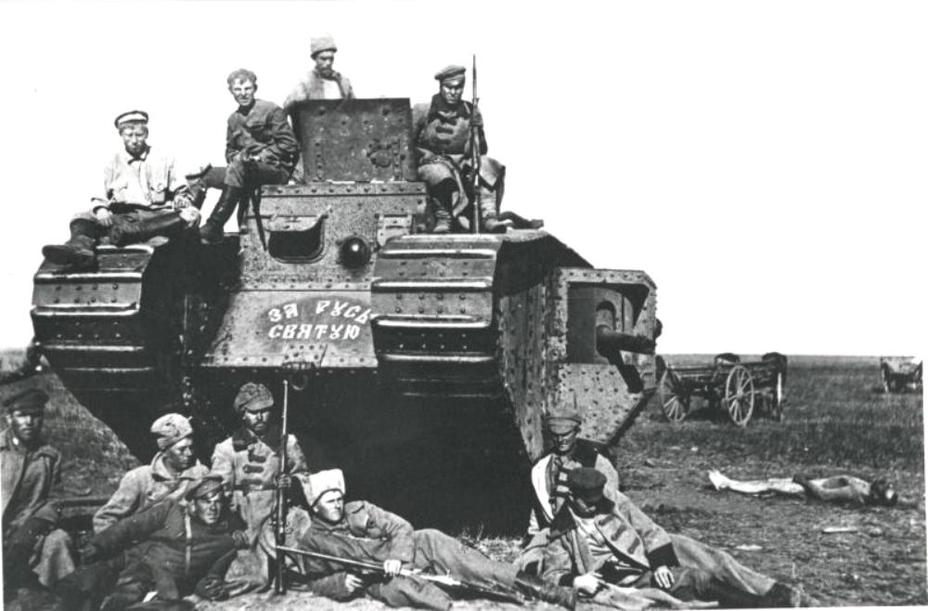
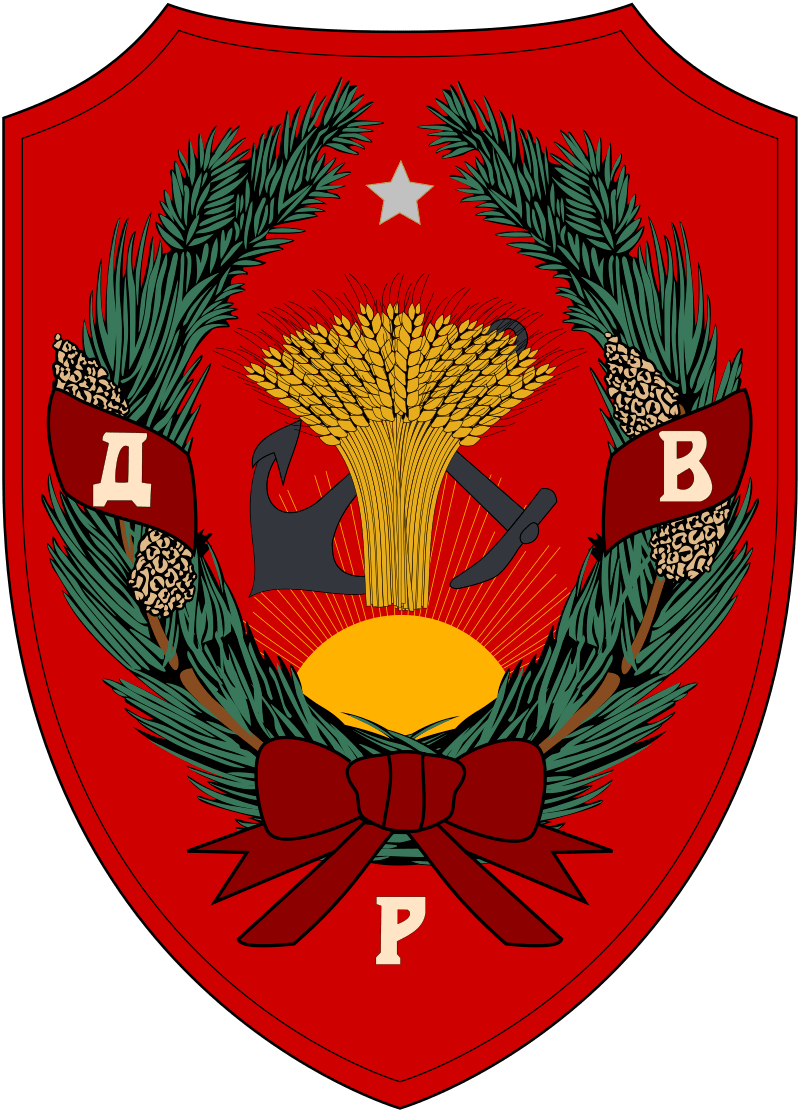
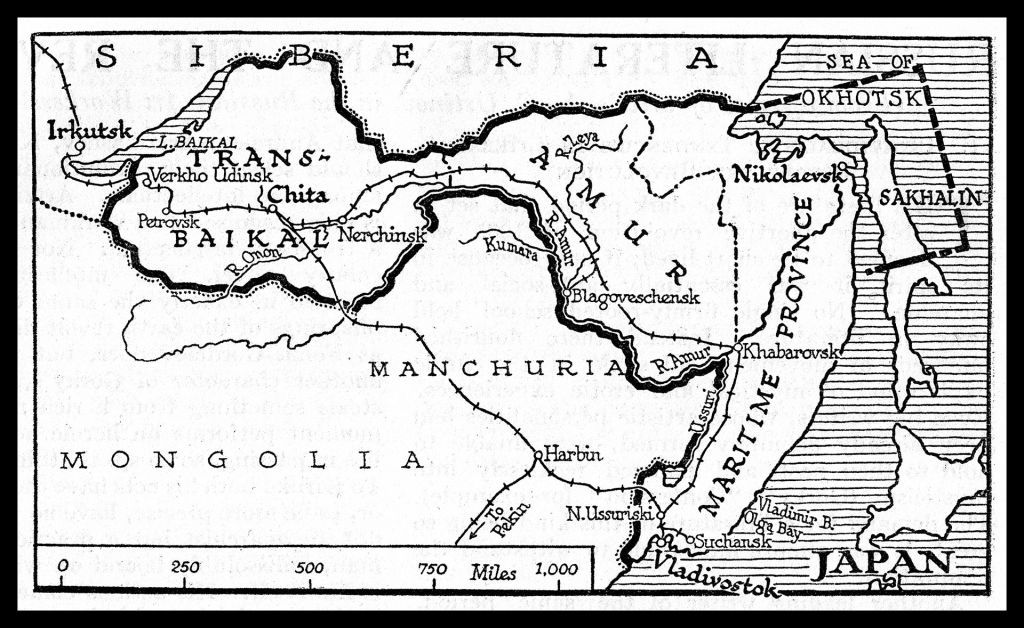
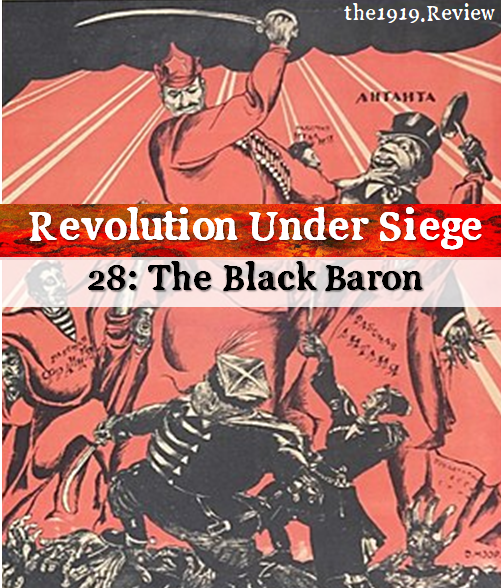

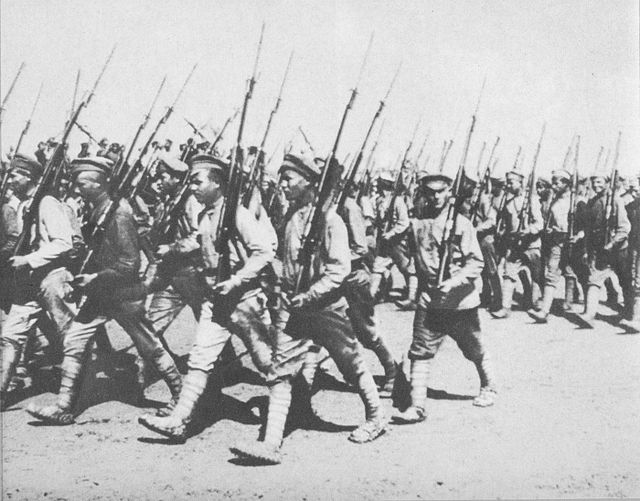
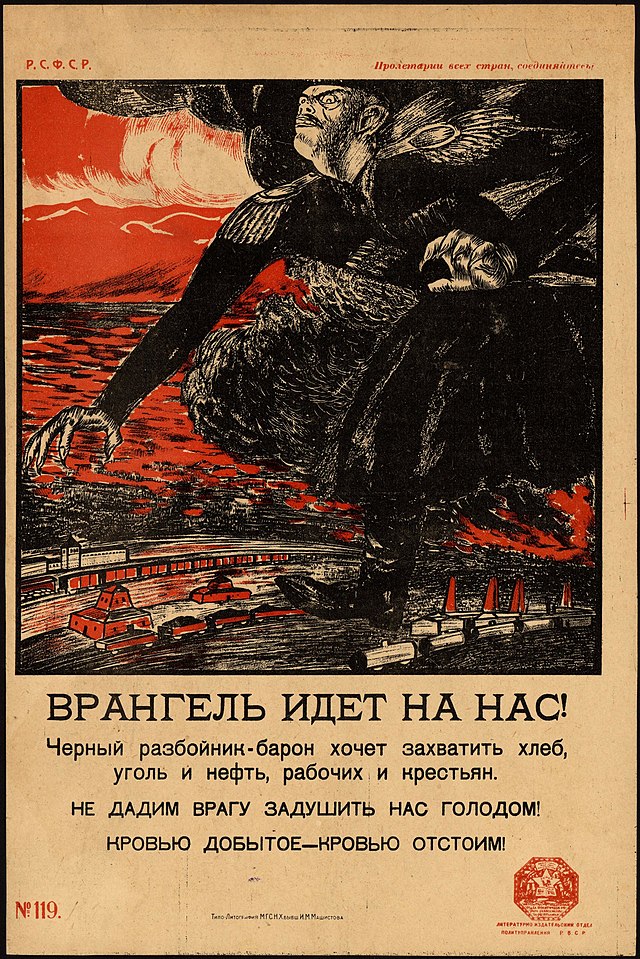
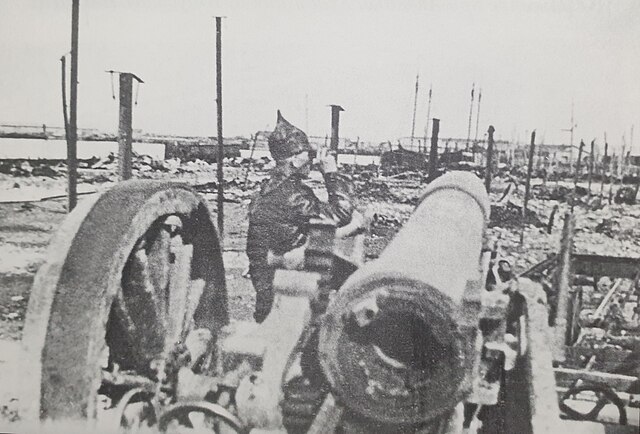
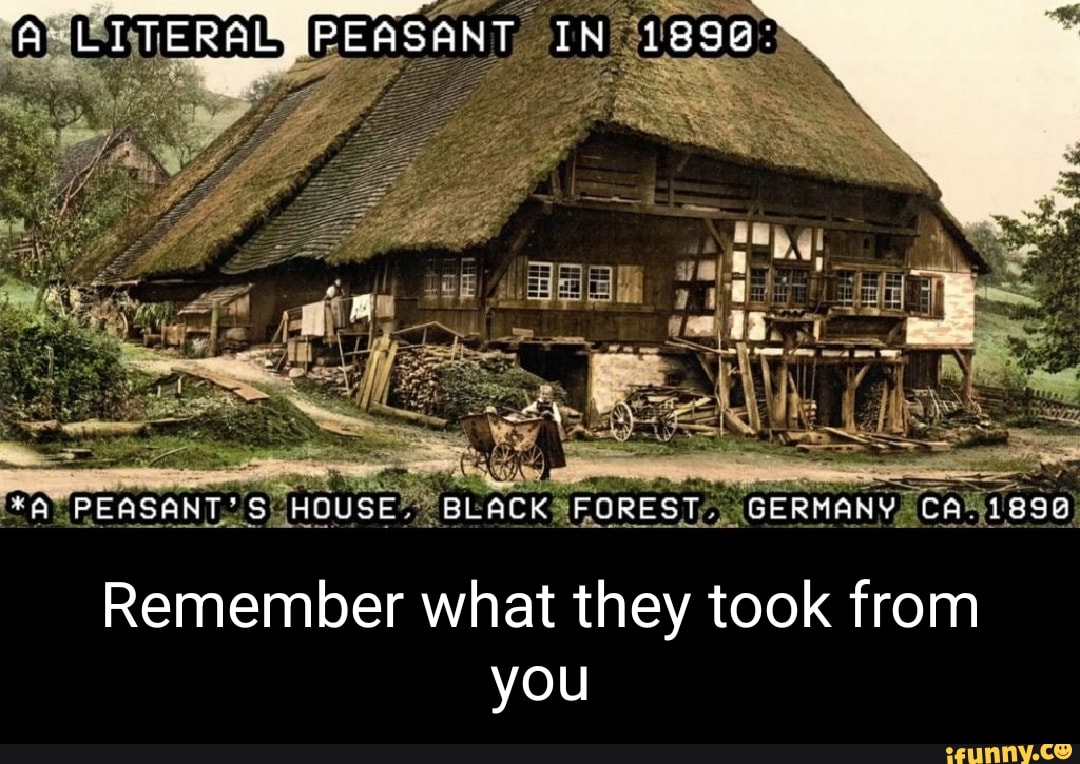

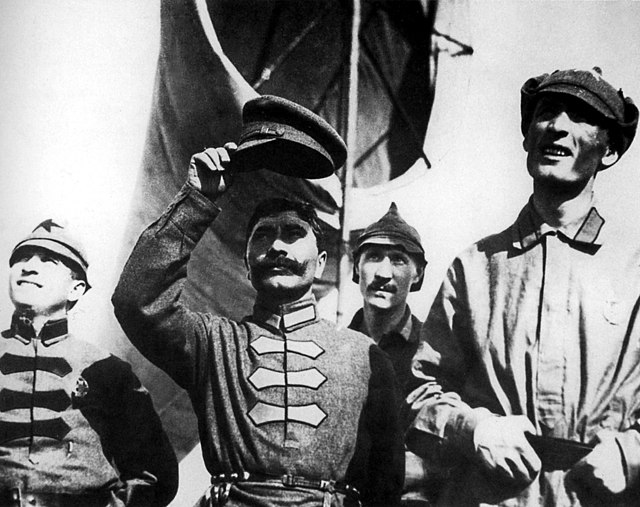
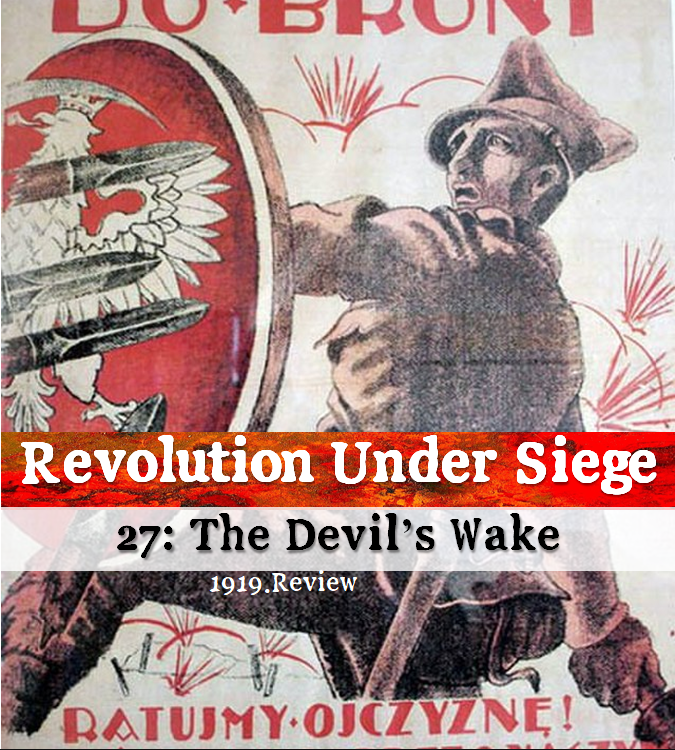

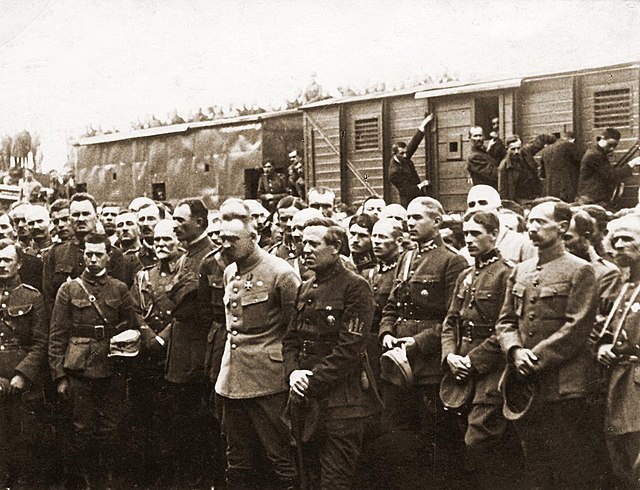
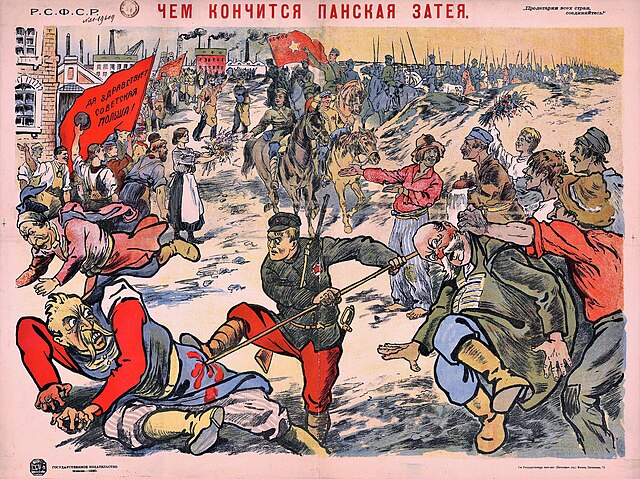
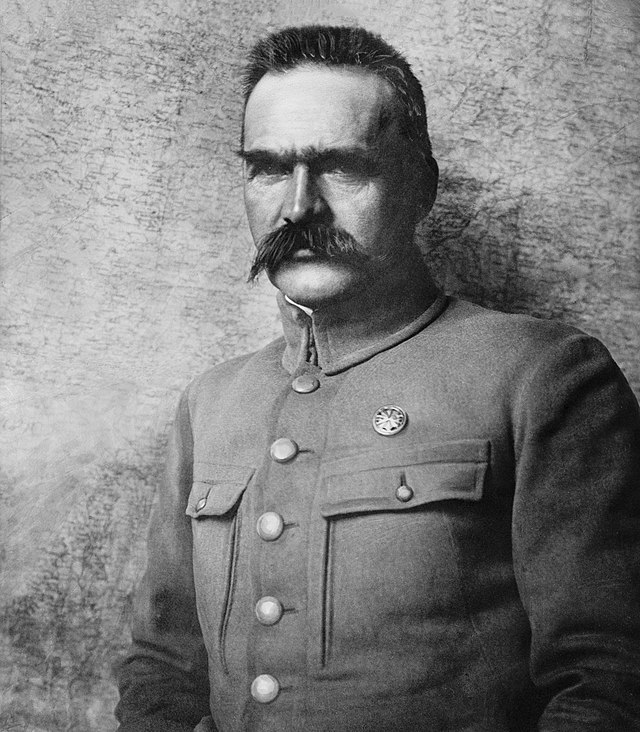

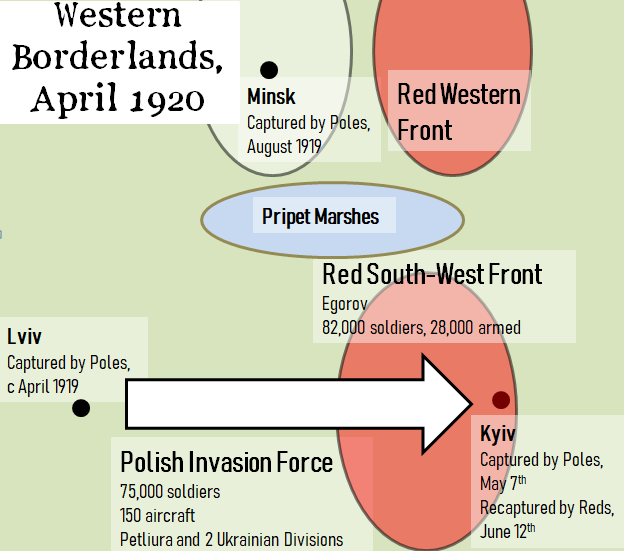
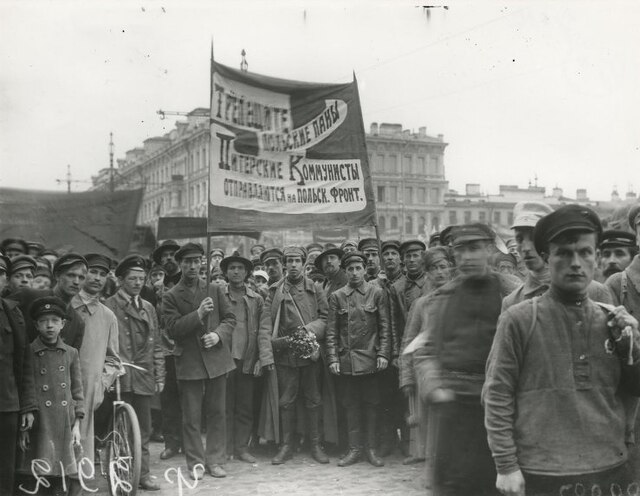
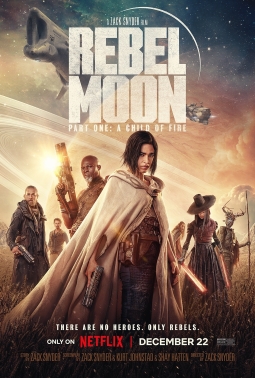
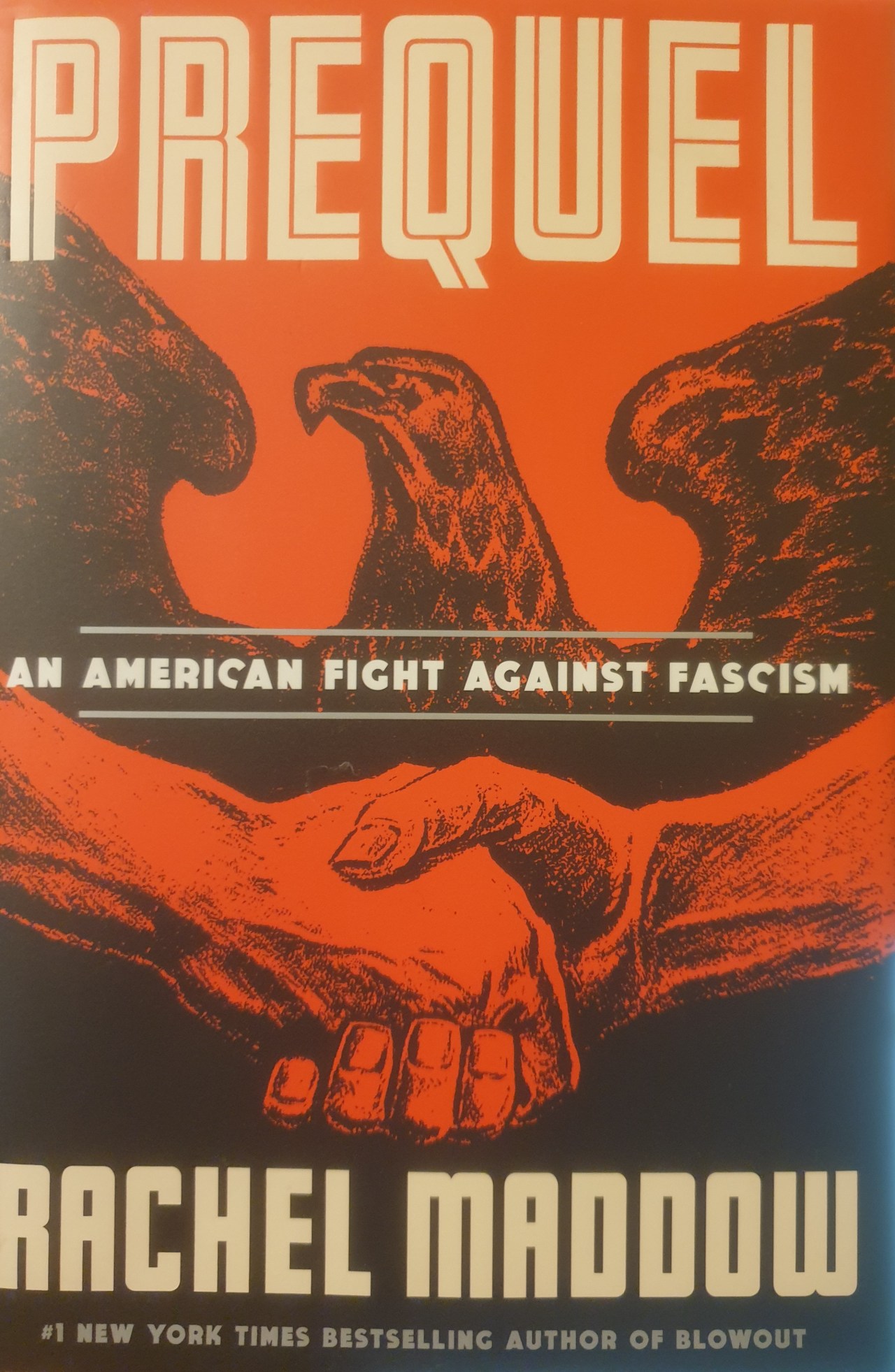
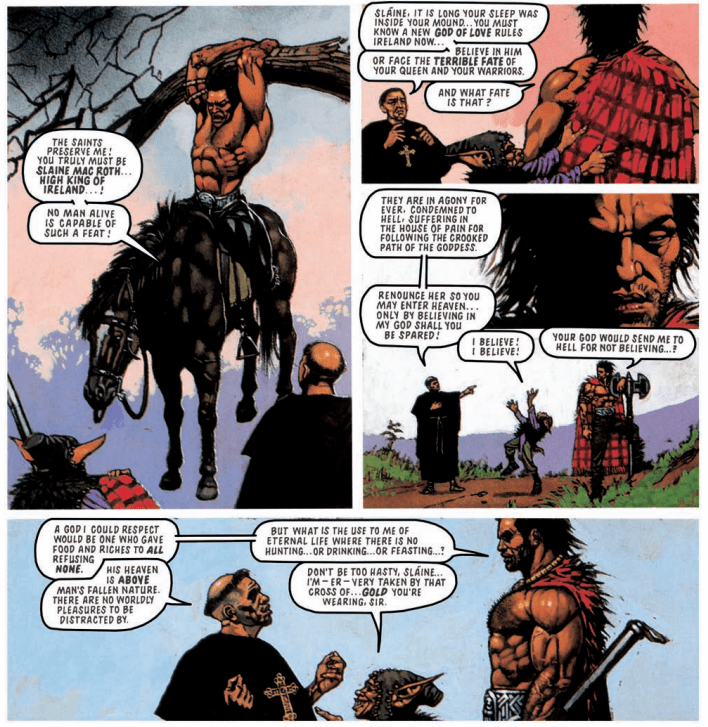
 The 1919 Review