Access to this article is limited to paying supporters. If you already subscribe by email, thank you. But if you want to become a paying supporter, please hit ‘Subscribe’ below.
Donate less than the price of a coffee, and you can access everything on this blog for one year.
If you don’t feel like donating, most of my posts are still 100% free, so browse away, and thanks for visiting.
During the Russian Civil War the Soviet Republic was a besieged fortress. What’s less well-known is that it had an outpost thousands of kilometres away in Central Asia, centred on the city of Toshkent (Tashkent) in modern-day Uzbekistan. The Toshkent Soviet was itself a Red island surrounded by enemies, and its struggle for survival, like the broader Civil War, was a drama rich in ironies and sudden reversals, sometimes horrifying, sometimes inspiring. It is also a historical curiosity: a revolutionary workers’ republic in the heart of Asia, where Muslim farmers and nomads outnumbered the Russians ten to one. It demands attention as a kind of scientific ‘control’ for the Soviet experiment; there was another Soviet Union, separated from the main one for a long time, and unlike the Soviets of Hungary and Bavaria, it survived.
A literal fortress in Kokand, modern-day Uzbekistan
‘For nearly two years,’ wrote the Bolshevik Broido, ‘Turkestan was left to itself. For nearly two years not only no Red Army help came from the centre in Moscow but there were practically no relations at all.’ (Carr, 336) What’s this Turkestan? It was their name at the time for, broadly speaking, the lands we now call Uzbekistan and Tajikistan. A more recent historian writes: ‘The survival of Soviet power in Turkestan is another testament to the popularity of the Soviet revolution and the weakness of other forces.’ (Mawdsley, 328)
Ultimately the Revolution would bring massive changes to Central Asia, which included:
Land redistribution at the expense of the feudal rulers;
The expulsion of vast numbers of racist and violent Russian settlers;
The birth of the states which would become Turkmenistan, Uzbekistan, Tajikistan, the Kyrgyz Republic and Kazakhstan;
The enormous expansion of schools, universities and libraries.
(Dilip Hiro, Inside Central Asia, Overlook Duckworth, 2009, 2011, p 31, 33)
But when you read on about the massive forces ranged against it – from White Guards, Muslim rebellions and British intervention to the racist attitudes of many local Soviet leaders toward the Muslim majority – you will wonder how this revolution survived for a single year.
Class War and Holy War: Revolution Under Siege in Central Asia, 1918-1920 will be a three- or four-part miniseries branching off from my series Revolution Under Siege.
(I’m grateful to this article on an exhibition titled ‘Posters of the Soviet East’ by the Mardjani Foundation for many of the images I have used in this series, including the cover image for this post.)
For example: this poster from the 1920s in Tajik. ‘Peasant: Don’t elect these people. They were your enemies and they remain your enemies.’ I assume they are landlords and clerics.
How people lived
My readers are mostly from English-speaking countries, where ignorance reigns about Central Asia. The only reference point common to most of my readers is a mockumentary starring a guy from London posing as a representative of the Kazakh government, who says outrageous things in a funny accent (‘Very nice, how much?’ – ‘You are retarded?’ etc), his Polish-Yiddish ‘hello’ standing in for Kazakh.
Not to get up on my high horse. All I know about Central Asia is what I read in a handful of books over the last few months. But learning proceeds by successive approximations. I’ll be guilty of mistakes and omissions, but anything is better than nothing. For knowledge – obviously not for laughs – I reckon I can probably improve on Borat.
To visualise these peoole, first let’s exorcise from our minds images of Sacha Baron-Cohen’s jaunt around an unsuspecting Romanian village. The best place to start is by sketching how the people lived in this region around the time of the Revolution.
Imagine a house with a courtyard surrounded by a wall high enough to block you from seeing in from outside. In the house lives a father with a white beard who wears a turban and a long black jacket. Under his patriarchal authority live his sons and their wives and children, each in their own room which opens on the garden and courtyard. None of them can read.
(Dilip Hiro, Inside Central Asia, Overlook Duckworth, 2009, 2016, 20-30)
If they are poor, there is no glass in the windows, and the children and even babies go naked while their only set of clothes is being washed – even in the snows of winter. The ubiquitous item of clothing is the khalat, a loose gown.
The house is part of a community built near an oasis or a river in a landscape of ‘sparsely populated and starkly contrasting reaches of steppe and mountains.’ (Smele 228) They make a living through farming, commerce and handicrafts. The white-bearded old men of the locality are in charge. They answer to beks, landlords who administer justice. The Muslim clerics are another source of authority, divided into two schools: the conservative Qadim and the modernising Jadid. There are 8,000 Islamic schools in the region but only 300 national schools.
The bek might sentence a criminal to hanging, shooting or beating or to the public humiliation of face-blackening. Above the bek there might be a khan or emir, who answers in turn to a white Orthodox Christian in distant St Petersburg, the Tsar of Russia, whose forces conquered the region only within the last two or three generations.
Mountains in the Kyrgyz Republic
These are the settled people: 4 million Uzbeks, who spoke a Turkic language, and their close neighbours, the million Persian-speaking Tajiks. The Fergana Valley lies between the two, an area rich in cotton which, under the Tsar, has been intensively developed and commercialised.
Then there are the nomads. Imagine another house, this one made of felt and furs, which the women of the family can assemble or take down in a few hours. The Kazakhs, whose name means ‘Wanderer,’ are the most numerous, 4.5 million of them divided into three ‘hordes’ between the Caspian Sea and the border of China. The most stubbornly nomadic of the Kazakhs are distinct as the ‘Forty Tribes,’ the million Kyrgyz who live on the eastern plateaux, brave draft-dodgers and rebels. By the Caspian Sea live several Turkmen tribal groups, nomads whose numbers add up to another million. The nomads live by nomadic stock-breeding, along with marginal agriculture and the caravan trade.
(Smith, SE, Russia in Revolution, 57)
These 11 or 12 million scattered Muslims, who mostly identify not with any national project but with the local clan, village or oasis, are held by the centrifugal force of the 78 million Russians of the Empire, 3 million of whom live in Central Asia. (Mawdsley, 31, 38)
Silk roads and iron roads
This region was once the nexus of the world, ‘full of the traditions and monuments of an ancient civilisation’ along the legendary trade routes known as the Silk Roads. (Carr, 334) Around 1000CE it used to be said that the sun doesn’t shine on Bukhara – Bukhara shines on the sun. In 1918 it was still considered the holiest city in Central Asia, difficult of access to non-Muslims. Mary (Merv) was ‘Queen of the World’ until the Mongols sacked it. Samarqand was famous for its beautiful turquoise domes, and as the one-time capital of the vast empire of Timur Bek, known and feared in Europe as Tamerlane. There were also sites associated with a recent history of resistance, such as Geok Tepe, where the Turkmens made their heroic last stand against the Tsar in 1881.
(Teague-Jones, Reginald, The Spy Who Disappeared, Gollancz, 1990, 1991, 55)
During the time of our story all these peoples and cities are lumped together in three vague regions: Kazakhstan, ‘Trans-Caspia’ (modern-day Turkmenistan) and ‘Turkestan’ (Uzbekistan and Tajikistan to us). Got that? Turkestan and Turkmenistan are not the same place. Most of these groups were intermingled throughout the region, rather than having their own exclusive territories. Also, the Russians mistakenly called the Kazakhs ‘Kyrgyz’ and the Kyrgyz ‘Kara-Kyrgyz’… And then there’s the Kalmyks…
But I’ll try to stay on course. Just remember that these different communities and identities are no more and no less complex than, say, those of Europe – just less familiar to the English-speaking reader.
Crossing the deserts and mountains and valleys are two railway lines and some telegraph wires. They are the slender threads by which Imperial Russia sends in settlers and extracts cotton. By 1917 there are many Russians in Central Asia, concentrated in their cities, depending on the metal threads, or else spread out in farming settlements, clashing with the natives over land and water rights. Cotton production has boomed since Tsarist rule began in the 1860s, machine-compressed bales of cotton exported by the thousand over the railways, north-west to Orenburg, or west to the Caspian Sea. But the link to a global capitalist market is a mixed blessing: now and then the market crashes with devastating results for local people: ‘a bumper crop in Louisiana could spell disaster for Fergana.’ (Smele, 18)
The iron roads have transformed Toshkent, an ancient site whose name means ‘city of stones.’ 2,000 Tsarist soldiers crossed the river one night in 1865 and seized the town; since then the Europeans have built a grid-patterned ‘new town,’ wide boulevards lined with silver poplars, turtle-doves on the rooftops. Hundreds of thousands of Russians migrated there to serve as clerks, technicians, skilled and semi-skilled workers, not to mention soldiers. There they enjoy electricity, piped water, trams, phones, cinemas, and a commercial district. It is a city of 500,000 people. Rents are high. Sedentary Uzbeks work the less prestigious jobs in cotton processing. Like in another region associated with cotton, the South of the United States, the front seats on the trams are reserved for white people.
(Hopkirk, Setting the East Ablaze, Oxford Univeristy Press, 1984, 2001, 21. Hiro, 27)
This is a diverse and colourful region. One day at a train station in 1918 in modern-day Turkmenistan, ‘Russian peasants in red shirts, Persians, Cossacks and Red soldiers, Sart traders and Bokhariots, Turkmans in their gigantic papakhas [hats]… pretty young girls and women in the latest Paris summer fashions’ could be observed clamouring at a counter for tea and black bread. (Teague-Jones, 57)
Cotton picking in Kokand, late 19th or early 20th Century
World War One brings first difficulties and then devastation. The price of cotton plummets, those of consumer goods rise. The Tsarist government requisitions horses. Early on, food is more plentiful here than in other parts of the empire. Captives from the armies of Germany and (far more so) Austria are sent here in their thousands – 155,000 by the start of 1917. (Mawdsley, 328) There are eight squalid prisoner-of-war camps in the vicinity of Toshkent alone. Food becomes scarce later in the war, and the captives begin to die in terrible numbers.
In 1916 the government tries to conscript the peoples of Central Asia for combat and forced labour. The Kyrgyz and Kazakh nomads start a guerrilla war in response, backed up by settled Uzbeks protesting in Toshkent and Kokand. The Tsar responds with a fury that will not be matched until the period of forced collectivisation under Stalin. Three years later an eyewitness will record that once-busy villages are still absolutely deserted. At least 88,000 are killed in the crackdown led by General Ivanov-Rinov, and twenty percent of the region’s population flee into China. (Smele, 20-21)
Revolution
So the Muslims of the Russian empire anticipated the Revolution with their failed rising. They were also active participants in the 1917 Revolution – though the most active elements were not those of Central Asia but their distant cousins, the Muslim minorities who lived around the Volga and the Urals. There were great Muslim congresses in 1917, from which emerged three political tendencies:
The Jadids – modernising clerics who called for ‘land to the landless’ and to ‘expropriate the landlords and capitalists.’ These were stronger on the Volga than in Central Asia.
The Qadims – conservative clerics, who called for Islamic law for Turkestan. Their organisation, the Council of Ulema, was the only real political party among the Central Asian Muslims.
The Alash-Orda – these Kazakh and Kyrgyz nomads demanded the return of land from Slavic settlers.
It is interesting that there was no prominent demand for independence or any obvious signs of Pan-Turkism.
(Hiro, 31-3)
When the October Revolution took place, it was obvious even from the distant vantage point of revolutionary Petrograd that there would be profound consequences for Central Asia. After the 650 delegates of the All-Russian Congress of Soviets seized power they immediately ‘resolved to decolonise the non-Russian areas of the Tsarist Empire.’ (Hiro, 33)
A voice from Central Asia, albeit a Russian one, was heard at the congress. The Menshevik-led railway union declared a strike against the new Soviet power, but it was clear that they did not speak for all railway workers. ‘“The whole mass of the railroad workers of our district,” said the delegate from Tashkent, “have expressed themselves in favour of the transfer of power to the soviets.”’ This decision of the Toshkent rail workers in favour of Soviet power was to have historic consequences.
This was the age of the “white man’s burden,” when moderate British politicians spoke approvingly of “maintaining White Supremacy” in India; when a racial equality clause was rejected for inclusion in the Versailles Treaty; when almost all of Africa was under the control of a handful of European empires.
In this context, to declare support for self-determination, up to and including full independence, was a revolutionary act. Lenin, Trotsky and the Bolshevik party as a whole showed a bold and liberatory approach in this respect.
In Finland, a few hours by boat from where the delegates met, the resolution on self-determination was given effect within days. Six months later, however, the Finnish socialists had been killed in their tens of thousands by a triumphant White Finnish army. The episode raised uncomfortable questions about the Soviets’ support for national minority rights and self-determination. The Finland events illustrated the tension between the principle of self-determination and the cruel realpolitik of a world still dominated by imperial and bourgeois forces. Nationality and religion could be employed as flags of convenience for the threatened ruling classes to play divide and rule and to rally a constituency against the demands of the poor and the working class. The equal and opposite danger was that the Revolution would be used as an excuse to re-impose the old centralised, top-down and racist order. These were the rock and the hard place between which the Revolution would have to navigate. In this delicate task the inexperienced revolutionaries at the helm in Toshkent would fail utterly.
National Chauvinism
The Toshkent Soviet had zero Muslims in its highest tiers of authority. In fact, Muslims were openly excluded from such positions in a resolution of the Toshkent Soviet of December 2nd 1917. (Carr, 336)
How much of this is sociology bleeding into nationality? The difference between Russians and Muslims was in a sense just the local version of the difference between workers and peasants. Relations between the cities and the villages were often extremely tense during the Civil War. Was this not just the familiar urban-rural divide, with different trappings?
But the national-religious division in Central Asia was much deeper and more violent. The Russian worker was two, one or zero generations removed from the village, spoke the same language and practised the same religion as his rural cousins. The Russian settler in Central Asia was a stranger whose impositions were backed up by the force of an empire. This informed the ‘pronounced chauvinism of local Bolsheviks.’ (Smele 232) Almost all of these Bolsheviks, by the way, were recent recruits to the party; there were few Social Democrats in Central Asia pre-1917, and they had not split into Bolsheviks and Mensheviks. (Carr, 337) Hence they lacked any grounding in basic party policy on nationalities.
Throw in three years of total war and a year of revolution, and it was all-too-easy for some Russian workers to default to chauvinism and racist violence.
The indisputable example of this is the Kokand massacre. In all the history of terror in the Civil War, there are few parallels with the events in Kokand in February 1918. But before we deal with that event, we’d better explain how the October Revolution took place in Central Asia.
October in Toshkent
China Miéville has a novel called The City & The City in which two states occupy the same physical space, each wilfully ignoring the other, the inhabitants carefully ‘un-seeing’ citizens of the other city. Central Asia in the revolutionary period was a bit like that. Two peoples living parallel lives went through parallel revolutions. Large numbers from the ten-to-one Muslim majority rose up in a guerrilla struggle in 1916, as we have seen. The Russian workers in Central Asia, meanwhile, were thousands of kilometres from Petrograd or Moscow, but those railway lines and telegraph wires were like neural pathways, rapidly transmitting stimuli and responses. There developed a Toshkent Soviet and a Toshkent Red Guard 2,500-strong. Not only did it keep step with the Soviets of European Russia, it seized power for 5-6 days a month before the October Revolution with the support of a Siberian regiment. (Hiro, 34) Here the Social Revolutionaries and not the Bolsheviks held a majority in the Soviet. The uprising was suppressed by Kerensky’s Provisional Government with military force. But this provoked a backlash: forty unions participated in a general strike against the imposition of martial law.
Just seven days after the storming of the Winter Palace in distant Petrograd the Toshkent Soviet took power again. This time Soviet power was here to stay. The new commissars included as many SRs as Bolsheviks. Sometimes it becomes quite obvious that revolutionary politics is sociology with guns: the key force behind the Toshkent Soviet was the working class of the city, especially the railway workers. The president was a Bolshevik, F.I. Kolesov, a railway worker like most of his fellow commissars.
Railway workers featured in a multilingual poster produced in Toshkent in 1920. The caption, I assume, indicates that this is the front cover of ‘Toshkent Railway Hunks Topless Calendar 1920.‘
The Turkestan Bolsheviks were weak. They only held their first conference as late as June 1918, at which a grand total of 40 delegates were present. Nationally, the Bolshevik-Left SR coalition broke up in March 1918; in Toshkent the coalition continued into 1919.
But the parallel revolutions were set to collide.
In September a Muslim congress had taken place in Toshkent, producing a demand for autonomy and Islamic law in Central Asia. (Hiro, 33) On 26 December a mass demonstration of Muslims took place in Toshkent – a crowd of hundreds of thousands filled the streets with people, horses and religious banners. The marchers wore white turbans, colourful silk coats and high leather boots. This demonstration descended into bloodshed after demonstrators attacked the town prison and freed the prisoners. Next they tried to seize the arsenal, the jail and the citadel. The Soviet intervened with machine-guns. (Hopkirk, 23)
By the start of 1918, two rival governments had arisen: the Toshkent Soviet and the Kokand Autonomous Government. Kokand was a mud-walled caravan city, a few stops eastward on the railway. The Kokand government was an alliance of modernising Jadids and conservative Qadims, (Smith, 192), a continuation of the Muslim conference of September, which had gathered 197 delegates from Syr Darya, Bukhara, Samarqand and Fergana. Its programme, according to Carr (336) included the maintenance of private property, religious law and the seclusion of women. ‘It received support from bourgeois Russians hostile to the Bolsheviks’ but in general the national-religious question was paramount.
The Kokand Massacre
Through most of January the two sides tried to negotiate, without success.
The Kokand Citadel was still occupied by revolutionary Russian soldiers. The forces of the Kokand Autonomy made a failed attack on the Citadel in early February, and the soldiers inside appealed to Toshkent for aid. An army set out at once by rail, a haphazardly-gathered force: Russian soldiers and Red Guards, and former POWs from Central Europe, and mixed in with these, mercenary elements out for loot. The army crossed the red-tinted mountains by the 2,000-metre-high Kamchik Pass and descended into the Fergana Valley. This army laid siege to the walled Old City of Kokand. One week later, reinforcements arrived from Orenburg; these forces had just defeated the Cossack Ataman Dutov and his Muslim allies, the Alash-Orda.
After another week the city walls were breached, and the carnage began. For three days the forces of the Toshkent Soviet looted and murdered in the city. Homes, mosques and caravanserais were burned or desecrated. Somewhere between 5,000 and 14,000 civilians were murdered in this rampage, apparently ‘almost 60 per cent of the population.’
(Hiro, 36, Hopkirk, 25, Smith, 192)
A graveyard in Kokand, modern-day Uzbekistan
Along with the roughly concurrent events in Kyiv, the massacre in Kokand was an important early outlier of violence from the Red side. What the Kokand and Kyiv violence had in common was that they were carried out by forces at a remove from the Bolshevik-led government; the Kyiv forces were led by the adventurer Muraviev who later revolted against the Soviets, while the Toshkent forces likewise had a weak Bolshevik presence and had little contact with Moscow. More damningly, both early outliers of terror were carried out in non-Russian areas of the former Tsarist Empire, which points to racist motivations.
The similarities end there; in Kyiv, the Red forces targeted mostly officers and the death toll may have been in the hundreds and not the thousands, while in Kokand, the terror was a sack and massacre worthy of the Crusades. A Danish officer recorded that every one of the participants in the medieval-esque conquest of Kokand came back to Toshkent rich. ‘Elsewhere in the Fergana Valley armed Russian settlers terrorized the natives,’ adds Smith.
That was the end of the Kokand government. But the Soviet project would pay a heavy price for the brutal actions of the Toshkent commissars. The massacre was a key event in triggering the Basmachi rebellion, a guerrilla war which would, as we will see in future posts, torment the region for years to come. 1918 saw 4,000 Muslim kurbashi, ‘fighters,’ begin to wage guerrilla war in the Fergana Valley.
‘Barbaric deeds were performed by both sides’ in the Civil War in Central Asia, writes Hopkirk (4). ‘Some of those carried out in the name of Bolshevism would have dismayed Lenin.’ Alarmed by events in Turkestan, which they probably only had partial knowledge of, Moscow authorities sent P. A. Kobozev to urge a change of course.
The Toshkent Soviet still had other opponents in neighbouring towns. Under the Tsar autonomous kings had ruled in parts of Turkestan, ‘the already enervated and last remnants of the Mongols’ Golden Horde’ (Smele, 232) and these emirs and khans fought hard to hold onto their lands and titles. The Reds took Samarqand, though the troops there soon mutinied; a trainload of Austro-Hungarians put down the mutiny after a brief clash.
Bokhara, Uzbekistan, in 2010
Bokhara proved a tougher nut to crack. President Kolesov showed up outside its gates one day with a large force of soldiers, some artillery, and an ultimatum. He sent a delegation into the city demanding the Emir’s surrender. The Reds were counting on supporters inside the walls, left-wing Muslims associated with the ‘Young Bokhara’ movement. The Emir played the Reds, strung them along, then struck hard. He had the rail lines cut behind them, had their delegation all ambushed and all but two killed, had many of their allies in the city seized and murdered. A massacre of Russians ensued; hundreds were killed. The Reds fired a few shells, then ran out of ammunition. They high-tailed it back to Toshkent. In another scene reminiscent of China Miéville, they had to cover a part of the distance by tearing up railway tracks behind them and laying them down ahead. They signed a treaty with Bokhara on March 25th.
In short: the Reds took Samarqand, but Bokhara stayed independent under its old feudal ruler.
Hell breaks loose
I should emphasise here that most of my information, unavoidably, comes from British and other Western European observers and writers, though Dilip Hiro is more balanced.
Kobozev, the agent sent from Moscow, soon saw his work bearing fruit. In April 1918 the Turkestan Autonomous Soviet Republic was established at a Regional Conference whose proceedings, in an encouraging sign, were held both in Russian and in Uzbek. The ban on Muslims in high government posts was removed (Carr, 338) and ten liberal or radical Muslims were included in the government. (Smith, 192) There were numerous Muslim supporters of the Soviet even from day one, and even prominent Muslim Bolsheviks. (Smele 228) A Kazakh named Turar Ryskulov joined the party in September 1917 and held high positions. There was also the prominent Volga Tatar Bolshevik leader, Sultan Galiev, who led an autonomous Muslim Communist Party. Many people from the Central Asian nationalities had joined the Red Army voluntarily by the end of 1918. (Hiro, 39)
These encouraging developments were rapidly cut across. From May all hell broke loose across the Soviet Union. Central Asia was no exception. The rise of the Czechs, Cossacks and White Guards cut off Toshkent from Moscow. World War One was still raging: a Turkish army advanced on Baku, threatening another key link. There was a Cossack host threatening from the north, a Menshevik-Turkmen government to the west, and British intervention from Persia to the south. A more detailed account of this will follow in the next post.
It is interesting that the bloodshed in Kokand has been neglected by historians and writers, including those whose narratives emphasize revolutionary violence. These events don’t fit the usual moulds of Red Terror, either the excesses of mobs of sailors, or the executions carried out by the Cheka and Revolutionary Tribunals. It resembles more the White-Guard pogroms – a case of racist and brutalised rank-and-file being let loose by the commanders on a defenceless population. It’s not difficult, either, to see in it a continuation of the history of revolt and repression in Tsarist Central Asia since the 1860s.
I have come across no contemporary mention of the Kokand massacre by either White or Red sources. Correspondence from Lenin to President Kolesov amounts to hurried telegrams from the chaotic summer of 1918, guardedly promising help that I assume never materialised. Scholars who have more access or time than me might be able to shine a light here.
Perhaps once Moscow had re-established a stable link with Toshkent and the scale of the settler-colonial violence became clear, heads would have rolled. But by the time that link was made, many of those responsible were already dead and buried. As for how they wound up dead, and how the Toshkent Soviet survived the killing of its key leaders – that, too, will have to wait for the next post.
The cover image, by the way, is from 1927 so it’s not strictly contemporary. The caption, in Russian and Uzbek, reads ‘Don’t let them destroy what was built over ten years.’
[This article/book review from 2014 is another reprint from the old blog. I like how I straight-up vandalised the book and posted images of it. The article has dated well, anticipating the student climate strikes of 2019.Thankfully, “overpopulation” ideas along the lines of those which I criticise here were not prominent in that movement.If we fail to move toward an eco-socialist transformation of society, however, it is inevitable that such ideas, and worse, will emerge.]
With over 400,000 people hitting the streets of New York and marching for climate justice, with resistance to the Keystone XL pipeline, with Naomi Klein’s book This Changes Everything hitting the shelves, with this blogger finally getting a free Sunday morning away from the assembly line, it’s a good time me to write an article that I’ve wanted to write for some time, a furious review of a terrible book. It’s also the first long-ish article I’ve written in a long time, so put on the kettle, sit back and relax.
The book is 10 Billion by Stephen Emmott (Penguin 2013). It is basically a long essay that manages to take up a whole book by having a strange format that leaves a lot of blank space on each page. It also makes what Emmott is saying seem more vehement, clear and serious. Like this:
Another benefit of this strange format revealed itself to me as I read.
Though if you care to read it, the above page might seem innocent and informative, the book as a whole is absolutely infuriating. Emmott, a computational scientist who knows a lot about the climate and the economy, leads a lab at Cambridge, etc, has huge and astonishing blind spots. As I read on and on I found I couldn’t stand it; I couldn’t leave his stupid statements unanswered anymore, and I started reading it with a pen in my hand, scribbling furiously in the wide, empty spaces of the book. Like this:
First, the good points of the book. It contains a large amount of information that makes it abundantly clear how unsustainable human society is right now. Emmott doesn’t just talk about climate change or greenhouse gases, though he does deal with these in some detail. He talks about the unsustainability of land use, food production and water supplies, of a world economy in which hundreds of millions of shipping containers travel around the world zig-zagging between cheap labour and rich consumers, polluting the earth, the skies and the seas. It also contains powerful pictures, like this:
It looks like hell in some old painting, but it’s actually a burning tyre yard like the one in The Simpsons.
The negative aspect of the book, the one that makes it toxic, offensive and anti-human, is suggested by the title. Stephen Emmott believes that there are far too many people in the world. Far too many people, who consume too much land, energy, food and water. He sees absolutely no solution to the problems the Earth faces. The only advice he gives, on the last pages of the book (we are down to one or two sentences per page by now) is as follows: teach your children how to use firearms.
He has made it clear what he means by this: when society collapses and food riots erupt, your children will need to protect themselves from the seething, violent mass of humanity.
He makes it clear that in the book he is only addressing “rich people (like us)”. That is an actual quote. We get to page 185 of a 200-page book before Emmott lets us in on the fact that when he’s been talking about “us” and “we” for the entire book, he’s been talking not about the human race but about “the people who live in the north and west of the globe”. The rest, in his eyes, either don’t read, or don’t count.
A welfare line in the USA: “Rich people” who live in “the north and west of the globe” who need to “radically” cut their consumption.
An infuriating blind spot: his assumption that everyone in Europe and North America (not to mention Australia and New Zealand) is a “rich person” (like Stephen Emmott). The homeless, the unemployed, the working poor, the low and middle-income workers, in short, the majority of people in “the north and west of the globe” are walking evidence that Emmott in some very important ways doesn’t have a clue what he’s talking about.
Blaming Humanity
He blames the sustainability crisis clearly and squarely on humanity itself: “our cleverness, our inventiveness and our activities are now the drivers of every global problem we face.” In actual fact, the problems he outlines throughout the book are very obviously problems created by private ownership of wealth, by corporations, by neo-liberal governments, not by humanity itself. He doesn’t mention such facts as the following: since the industrial revolution, just 90 companies have been responsible for two-thirds of human-made global warming emissions.
But far more criminally, he points out many facts that are just as interesting, that are just as much a condemnation of the capitalist system and of private corporations; and having pointed these facts out, he then draws the conclusion that humanity is to blame, that our “cleverness” and “ingenuity” are responsible.
Water Use
Let’s start with a small example from page 74. “It takes something like four litres of water to produce a one-litre plastic bottle of water. Last year, in the UK alone, we bought, drank and threw away nine billion plastic water bottles. That is 36 billion litres of water, used completely unnecessarily.”
How to save these 36 billion litres of water? First you have to grasp the absurdity of private companies selling us bottles of water in the first place. Next think about how we replaced plastic shopping bags with big, sturdy, re-usable shopping bags. Everyone should have a re-usable canteen of water, like the filter-headed Bobble bottles you can buy, which you can replenish at a clean public fountain on every street, or a free tap in every shop or bar or restaurant. [They have something like this in Paris now – ML, 2023]
Never once in the book does Emmott consider the possibility of stepping on the toes of corporations, of getting in the way of private profits. Emmott contemplates the collapse of society, he imagines billions of people rioting as they starve to death. He imagines teaching his son how to kill others in order to stay alive. But never once does he even begin to contemplate socialising resources or nationalising industries to cut out waste and re-orientate to sustainable goals.
Let’s move on to a bigger example.
Greenhouse Gases
Emmott is rightly worried about the use of fossil fuels, which as we know contribute to global warming. He laments that Exxon Mobil has just signed a deal with the Russian government worth $500 million for oil and gas exploration in the Kara Sea. He says the British government has issued 197 licenses to drill for oil and gas in the North Sea. He quotes then UK energy minister John Hayes as saying that “The government is taking the right action to offer certainty and confidence to investors.”
Exxon Mobil and Putin sign a deal to wreck the environment for private profits; a British minister defends a similar move in the North Sea by saying that private corporations need to have “certainty” and “confidence” about their future profits. Corporations and ministers, driven by the private profit motive and the subservience of governments to the rich, all ignoring the scientific certainty that greenhouse gases will wreck the planet, all for a short-term increase in the wealth of a tiny number of people who are already far too rich. Has there ever been a clearer illustration of how capitalism is responsible for the destruction of the environment?
Emmott doesn’t think so. The connection never even seems to occur to him. He never once uses the word “capitalism” in the whole book. The fault, he makes clear many times, lies with us stupid, stupid humans.
3.5 billion under capitalism or 20 billion under socialism
Another massive problem is Emmott’s hang-up about the number of humans who live in the world. He has this really basic, stupid, doltish conception of things that crudely says that (1) more humans equals more consumption, and (2) more consumption equals more destruction.
But it’s obvious that this isn’t true. A community of a hundred people who are well-organised, cooperative and efficient will consume less than a community of fifty that is segregated into different economic units, that is inefficient, that duplicates labour and that does not re-use or recycle. The progress of human history has been in a large part the story of collective and social production methods overcoming petty, wasteful individual economic units.
I scribbled a note on page 117 that wasn’t intended to sound as alarming as it does: “The number of humans is secondary. How these humans are organised and relate to one another is primary. Even if we killed half the human race and enforced a draconian one-child policy, the destruction of the environment would continue if those 3.5 billion people were organised in a capitalist mode of production.”
And of course, on the other side of the same equation, even if there were 20 billion people on the planet, if they were organised in a reasonably harmonious, collective, efficient manner, with a maximum of democracy and a minimum of large-scale private wealth, these 20 billions could live in peace and relative prosperity.
(In such a society, of course, it would be unlikely that the population would reach 20 billion. Greater opportunities for economic advancement would lead to lower birth-rates.)
Emmott devotes some pages to casting about for a technological fix to these crises. He doesn’t entertain the possibility, not for one minute, that the problem is social and economic, and therefore that the solution must be social and economic.
Revolution
The food riots of 2010-2011 he simply describes as “violence and unrest”, more signs of the end times. The fact that this “violence and unrest” led to massive political revolutions is not of interest to Emmott. Our unsustainable economy is already pushing people onto the streets, sparking revolutions and uprisings. Those who took part in the march in New York were largely people from communities effected by climate change and pollution. Tunisian Revolution, 2010-2011. Sparked largely by high food prices.These billions of people, these multitudes of humanity, who Emmott sees as the problem, are in fact the solution. Faced with these massive ecological and economic problems, people are not just going to knuckle under and starve. They’re going to seek for an alternative, a democratic, ecological socialist society. Unless Emmott’s children shoot them first.
Tragedy of the commons?
Emmott claims that the destruction of the environment is a “tragedy of the commons”. Paraphrasing The Economist, he says that climate change “is a textbook case of the commons-despoiling tragedy.”
What he means by this is that the environment is like a field owned in common between a bunch of farmers. All of the farmers profit from the field but none wants to fork out money and time to maintain it, each hoping someone else does it. So the field degrades over time and in the end there’s no more field and no more profit.
Does this comparison work? Are the world’s resources owned in common by all the people of the world? No. They are owned primarily by private companies, or sometimes by state-owned companies that operate exactly like private companies. They are motivated in the final analysis by the profit motive, and all destruction of the environment, all damage to the sustainability of human life, is an externality that doesn’t show up on the balance sheet.
Garret Hardin’s theory of the tragedy of the commons is a criticism of the profit motive, and an argument that “rational” self-interest works against the interests of the collective good. The climate crisis is the tragedy of private ownership, the tragedy of the profit motive. It is applicable to the climate crisis in this sense. But not entirely. I see the tragedy, but where are the commons? We are not all farmers exploiting a field on an equal basis. Most of the human race are workers without large-scale property, who have no control over resources or means of production. How can we despoil what we don’t have access to?
Claiming that we’re all “despoiling the commons” places the blame on the species. But our incredibly creative and brilliant species is more than capable of reorganising society to overcome these problems. The will is there and the technology is there. But the means of making this a reality are held in the hands of private individuals, and directed toward private profit.
Capitalism has had twenty-five years to implement the Kyoto protocols, to make some kind of a dent in carbon emissions. But the only dents capitalism has made in carbon emissions have come about accidentally, because of massive economic crises and collapses.
At the same time, the Stalinist countries, the USSR, Eastern Europe etc, had a terrible record in terms of the environment. Maybe this is one of the ways Emmott and those like him justify the fact that they do not even begin to contemplate socialism, or any kind of system change, as a way of guaranteeing sustainability. But this argument doesn’t stand up; the economy in these countries was not managed democratically by the working class, but by a small isolated layer of privileged bureaucrats.
But in the early years after the Russian Revolution, and during other events such as the Spanish Civil War, power has been wielded by elected councils of workers. Industries were run and cities managed in the most democratic – and robustly effective – systems ever devised. This raises the idea of a future in which the economy is run not by profit-hungry capitalists or distant bureaucrats but by the people themselves. Answering not to shareholders but to the people, there would be no “externalities” for these delegates. Discussing problems reasonably and sanely, not each trying to wrestle against everyone else for private profit, issues of sustainability and the environment will become technical, not political, problems.
How do you re-orientate the whole of the economy toward sustainability and eco-friendly production without creating mass unemployment and economic chaos? Under capitalism, we’ve had 25 years since the Kyoto protocols, and the most capitalism has allowed are carbon-trading schemes that became just another financial con-trick. Under socialism, re-training workers and re-equipping workplaces would be just ABC stuff.Talk of “too many people” and the “tragedy of the commons” is nonsense. Humanity is not in control of the resources of the world. A tiny percentage of humanity is, the capitalist class, those who own and manage large amounts of wealth. When they exploit and damage people in order to maximise profits, there’s a clear comparison to be made with the way they exploit and damage the environment. This means that humanity and the environment are not enemies. They are natural allies against the 1%, against an obsolete and destructive system.
[This is another good article from the old blog, though it was originally a college essay. To learn more, check out the more recent podcast on DK by No Dogs In Space.
[This is dedicated to the memory of DK’s drummer DH Peligro, who passed away a few months ago, in October 2022]
In 1978 Dead Kennedys released their first single, California Über Alles, in which they mocked the liberal, marijuana-smoking governor of California, Jerry Brown. They imagined the “zen fascist” Brown sending out his “suede denim secret police” to have un-cool people killed with organic poison gas. In 1981 the band rewrote the song into a comment on “Emperor Ronald Reagan/ Born again with fascist cravings.” This new version was called “We’ve Got a Bigger Problem Now.”[1] This was the first recognition of a struggle against Reaganism, here broadly defined as cultural traditionalism, militarism and free-market economics, which increasingly came to define DK. Overall DK’s story both illustrates and contradicts Robert Collins’ assertion that culture moved to the left in the Reagan years as politics moved to the right.[2] Certainly DK’s left-wing politics were hardened by the advances of the right, but equally DK’s body of work is a comment and a documentary source on a move to the right both politically and culturally, a conservative surge that eventually claimed the band’s life.
Some of my DK albums, the CD format marking them as artefacts of the era of Bush rather than Reagan (In the ’80s I wasn’t born yet, much less listening to punk music)
In examining DK as it relates to US Culture in the “age of Reagan” we have to keep in mind that the more immediate context for the band members themselves was the San Francisco and Bay Area punk scene in the late ‘70s and ‘80s. We should also remember that “hardly anybody was listening to it [punk rock] in the ‘80s. For everybody who was digging Black Flag there were another 10,000 people who were more interested in The Eagles or Saturday Night Fever.”[3] However, DK reached perhaps the widest audience of all their peers, such that members of other bands grew angry at seeing jocks and “suburban morons” coming to their gigs to see DK.[4] They were also one of the most consistently politically-engaged punk bands of that period, providing a constant commentary on US culture and politics. Against the backdrop of the age of Reagan, their work became more than escapism or entertainment or a career; the 1980s turned it into a struggle.
The first and most important aspect of this struggle are DK’s lyrics, most of which were written by singer Jello Biafra. In this respect DK’s first album, 1980’s Fresh Fruit for Rotting Vegetables, was very different from later releases. Featuring songs written in the late ‘70s and 1980, the lyrics reflect a sense of decay, or the “rot” of the album title. Most of the lyrics (mostly by Biafra but also by guitarists 6025 and East Bay Ray) are not explicitly political, but crude, violent and shocking. The infamous “I Kill Children” is perhaps not as disturbing as the scene of funfair sabotage depicted in “Funland at the Beach”. Other song lyrics are more flippant than shocking but are still simply about violence and delinquency rather than explicit protest.[5]
Fresh Fruit for Rotting Vegetables, a record of Carter-era ‘malaise’
“Eighty percent of the songs were like getting inside some sort of crazed psychopath’s head and trying to figure out what made them think that way,” says Klaus Fluoride, DK’s bass player.[6] A search through the rest of DK’s albums for similar songs yields very little. After Fresh Fruit DK’s lyrics became over time a more overt commentary on politics and culture.
Overall while Fresh Fruit does have some songs which are unambiguous political statements, most convey a sense of the years of the Carter Presidency which are usually associated with the term “malaise”. This was a period defined by economic crisis, the aftermath of defeat in Vietnam, unresolved issues of race and class, the Watergate scandal and the impotence of liberal America.[7] More locally, San Francisco had just witnessed the Moscone-Milk killings, the White Night Riots (in which “all the punks were out, rioting and burning cop cars”) and the mass suicide at Jonestown, whose victims had until recently been based in San Francisco.[8] The lyrics on Fresh Fruit, written between 1978 and 1980, reflect an ill-defined but violent discontentment.
The admission in 1981, following Reagan’s inauguration at the start of that year, that “We’ve Got a Bigger Problem Now,” may mark a shift in the band’s focus lyrically. Reaganism on the offensive has become “a bigger problem” than hypocritical liberalism. 1981’s In God We Trust, Inc was dominated by songs with definite social and political messages, including the band’s two great anti-religious anthems, “Moral Majority” and “Religious Vomit”. 1982’s Plastic Surgery Disasters was stuffed from start to finish with political and cultural statements that it was impossible to mistake. Frankenchrist (1985)and Bedtime for Democracy (1986) continued on the same path with overtly political songs.
Details of artwork by Winston Smith from the booklet in my CD of Plastic Surgery Disasters and In God We Trust, Inc. The albums rock but they were worth it for the artwork alone
In their last two albums, while still making plenty of criticisms, DK were beginning to ask searching and sincere questions. DK were, to use the words of one critic examining the punk genre, moving on from their “historical task of negation” toward finding out what positive message they could give and how; but losing confidence in the face of the rise of the right.[9]Frankenchrist’s “Stars and Stripes of Corruption” has the character of an all-encompassing manifesto for Jello Biafra, expounded with an earnestness and sincerity that is a long way from his early lyrics about killing children or lynching landlords. “A Growing Boy Needs his Lunch” subverts this fragile optimism: “Stick your neck out and trust/ And it’ll get chopped away.”[10]Bedtime for Democracy, recorded after the band had decided to break up, includes no less than three songs which build on a dissatisfaction with many elements of the punk scene first flagged in “Nazi Punks Fuck Off” in 1981. “Where do ya draw the line?” meanwhile expresses a wider political weariness and uncertainty:
Between the inchoate gleeful violence of their early days and the hints at a loss of certainty in 1985-6 lies the main body of DK’s lyrics, which are almost entirely satirical. Many songs from all of DK’s albums are directly political, dealing with war, unemployment, US policies in Latin America, government surveillance and pollution. Forming a bigger portion of their songs, however, are those which are more cultural than directly political. DK are perhaps best remembered for songs such as “Holiday in Cambodia” and “MTV Get Off The Air” which are critiques of the prevailing culture in the US rather than attacks on any specific action, policy, individual or distinct group. These two labels, “cultural” and “political”, are not ideal but they are useful when applied in a broad sense. The difference between the two is illustrated by “Rambozo the Clown” and “When Ya Get Drafted”. “Rambozo” is an attack on hawkish action movies. This song is of course political but it its main concern is everyday culture. “When ya get drafted” on the other hand makes direct criticisms of various aspects of war itself. This is anti-war, and “Rambozo” is anti-militarism. Side one of Plastic Surgery Disasters is broadly cultural while side two is broadly political. The split between these two kinds of songs in DK’s discography works out at roughly three “cultural” songs for every two “political” songs. The main, but not overwhelming, bulk of DK’s lyrics are therefore a sustained critique of US culture in the Reagan years.
To return to Collins’ assertion that in the Reagan years politics moved to the right while culture moved to the left, it seems that DK’s politics and culture remained firmly on the left, but that their songs, taken as a whole or one by one, constitute a record and a critique of a massive rightward shift in both politics and culture. Their abandonment of shock lyrics and their turn toward a real urgency and stridency in lyrics follows naturally from their recognition that “We’ve Got a Bigger Problem Now” in 1981. The greater number of agitational songs from 1981 onwards would seem to reflect a growing number of obvious targets for DK’s criticism compared to the more general anxieties which are expressed in a song like “Funland at the Beach.” The greater focus on cultural aspects of conservatism gives us a dark insight from a highly critical point of view into everyday life and culture in the Reagan era.
In an interview in which he was otherwise highly critical of Biafra, East Bay Ray defended Biafra’s habit of delivering short speeches on social and political matters between and during songs at gigs.[12] An example is a speech given during a rendition of “California Über Alles” in 1986 in which he claimed that Reagan had manipulated the 1983 Beirut barracks bombing in order to encourage jingoism.[13] A recording of a full set from 1980, however, includes no such speeches; Biafra engages in a little rapport with the audience, but these are not performances.[14] Biafra’s later move toward peppering a gig with auxiliary harangues could partly reflect a growing on-stage confidence and experience. However, it would more so seem to agree with our interpretation of DK’s lyrics: that as time went on, as Reagan came to power and the right grew more confident, Biafra and DK were fired up with a sense of urgency in addressing political and cultural questions. Not content with addressing such questions in practically every song, politics were bursting through the seams between songs. If there was a cultural war in the 1980s, as Pat Buchanan claimed in 1992,[15] then Biafra was an irrepressibly enthusiastic participant. Not everyone in the scene liked this: “And here came Jello, ‘Wha wha wha, you shouldn’t be doing that, you should be more political’”. Others, however, maintained that “Dead Kennedys was actually opening people’s eyes”.[16]
The scene of which DK were a part was initially a reaction to and a criticism of the “hideous interlude of corporate rock” in the 1970s. Klaus remembers that what got him into punk was in fact The Eagles: “Nothing in the mainstream that was calling itself rock’n’roll was really rock’n’roll. It was easy listening music at that point.”The scene was itself a critique of US musical culture. Politically, “In Berkeley and the Bay Area, Reagan was seriously the devil,” (Oran Cornfield, p 246) so DK were not unique in their politics either. In other respects, however, they did not fit in so comfortably.
Klaus and Ray alike had played in very different bands before DK; Ray in a band called Cruisin’ that played “all this ‘50s shit” (Dennis Kernohan, p 66) while Klaus played in “bands that were basically white guys playing R&B” (Klaus Fluoride, p 65). Both were inspired by the energy of bands like The Weirdos in the Bay Area to turn towards punk. Biafra claims Klaus and Ray therefore had “a lot of ‘70s bar-band damage to hack through… solos and fills in every possible place” (Biafra, 66). The result of this was, in the opinion of one of their peers, that “Their music was New Wave, surfy, kind of accessible. It wasn’t hard and mean and angry, even though Jello was doing his best to hold up his end. It was the other guys in the band that wrote […] Very wimpy music.” (Dave Chavez, 81). Other contemporaries who were “there” remember them as representing either the more nerdy edge of the punk scene or the more mainstream, jock, preppie edge (Frank Portman, 87; John marr, Murray Bowles, p 82). One musician thought Jello’s voice was irritating, and claimed “a million” others would agree (Penelope Houston, p 80).
These divisions played a part in DK’s eventual break-up and in later legal controversies over “a backlog of petty grievances” (James Sullivan, p 95). This musical diversity, however, was a huge factor in their success. Ray says there was a strong “cross fertilisation” in the scene generally in the early days, as the main venue, the Mabuhay Gardens, would be booked out with all kinds of different bands every night, from which punk eventually emerged and became dominant.[17] Biafra remembers that at the time the attitude was: “Every band must sound different from every other band, or none of us are gonna be interested.” He remembers competing with other songwriters to come up with the next song that would be as different as possible from the last. Biafra is widely remembered as a “record junkie” and “a crazy collector and he probably has the broadest taste in music of any of us.” (Ruth Schwarz, p 55). Ray believes that DK’s success – which was apparent from their first gigs – was down to the energy and inspiration of the Mabuhay scene plus his and Klaus’ “trained ability” (p 66). While this definitely sells Biafra short, both were clearly essential factors.
Ray’s 1950s rock’n’roll, surfy sound was in fact central to DK. The solo on “Let’s Lynch the Landlord”, a song that reflects this influence very strongly, sounds as sarcastic as is possible for a guitar. The strange musical patchwork brought to the songs by Klaus and Ray, as well as by Biafra’s broad tastes, was consciously or unconsciously a vital part of DK’s critique of US culture. Like Winston Smith’s collages, discussed below, the band would, says Klaus, “take certain things from different things, and just sort of jumble them together.” What we hear in many DK songs is a dissected and reassembled soundscape, old elements placed in new relations, an audio parody of music sounding deliberately disjointed.
“Kill the Poor”, “Chemical Warfare”, “Terminal Preppie”, “Jock-O-Rama”, “Forest Fire”, and “MTV – Get Off the Air” are the most obvious examples of this sarcastic imitation of US culture but elements are visible throughout DK’s work. Their only definitely hardcore punk EP was In God We Trust, Inc. The later criticism of Biafra and Ray for one another must be interpreted with caution as Biafra and the three other band members faced each other in court in 2000 and the two camps have been very hostile since then.[18] We should also understand that the criticism of others on the scene represented somewhat widespread but by no means dominant opinions. They do represent the fact that while DK were and could only have been a product of the Bay Area scene, they did not belong exclusively to it. DK’s unique musical sound was a combination of factors introduced by each of the band members. The use of music was an element of DK’s critique of US culture that was at least as important as the lyrics.
Artist Winston Smith was so attracted by punk aesthetics as a means of artistic expression that he began by designing flyers and posters for fictional bands playing at imaginary venues. Soon he was designing album covers and inserts for real, including the famous DK logo. His artwork is such a crucial part of each of DK’s albums and of their commentary on culture and politics that we should examine it on an equal footing. We should also note that Biafra collaborated in the creation of these images and that they were in no way created in a vacuum removed from the band.
Collage by Winston Smith from Fresh Fruit for Rotting Vegetables. Includes a photograph of Klaus Fluoride
Fresh Fruit included a two-sided poster made up of clippings from advertisements, comics, newspaper and magazine headlines, photographs and text, along with films such as The Exorcist, Taxi Driver and M. The images range from famous ones such as a photograph from the Vietnam War to bizarre and apparently pointless ones. They also range from the crude – Reagan’s face with a Hitler moustache and the word “sex” drawn all over it in marker – to the subtle. The newspaper clippings concern the disturbing and the marginal: one describes the police in Orange County hunting for “a small man with a large beard who likes to hide in the median of the Riverside Freeway and heave flat stones through automobile windshields” and who has stabbed a pursuing policeman. Another concerns a Vietnam War veteran who has poisoned a swimming pool using components of Agent Orange, affecting over a hundred people.[19]
Overall the impression given is of the “Rotting Vegetables” of American society. Innocent headlines and images removed from any context and presented in strange new combinations give a vaguely-defined but very strong impression of a society that is going insane. Later album art follows similar techniques. Plastic Surgery Disasters includes an entire booklet of collages similar in nature to that of Fresh Fruit though making heavier use of innocent old-fashioned advertising in order to expose what one song describes as “The dark shattered underbelly of the American dream.”[20]
Further Winston Smith art from Fresh Fruit, including a photo of East Bay Ray
Bedtime For Democracy abandons collages and photos for drawings and cartoons. The cover picture is a crowded, epic image of the statue of liberty overrun by yuppies, businessmen, Nazis, riot policemen and beer-swilling idiots. As such the message is far more direct. It is also deeply pessimistic: mushroom clouds blossom, waste pours into the sea, cops beat up protesters, “Top Goon” and “Rocky Balbigot” are playing at the cinema and immigrants, veterans and African-Americans are falling to their doom through a safety net with gaping holes. A companion picture, printed on the back of the CD edition, shows the Statue of Liberty on a vengeful rampage, complete with laser eyes and a fire-breathing mouth.[21] However, this redeeming revolutionary image has no basis in reality while every detail on the main picture is a deliberately-crafted comment on an aspect of the contemporary US. There is nothing vague, confused or elusive in this as there was in the collages, and no room for interpretation. As DK moved toward more definite statements in their lyrics, Smith followed with his artwork; as DK grew more pessimistic, urgent and strident, so did Smith. The artwork followed a similar trajectory to the lyrics in an ever more sharply-defined struggle against Reaganism.
Detail from Bedtime for Democracy cover art, Winston Smith
The most famous piece of DK-related artwork, however, had nothing to do with Winston Smith. This was HR Giger’s Work 219, Landscape XX, also known as “Penis Landscape.” In 1986 Biafra’s home was raided by police and he was charged with distributing harmful matter to minors. If DK had spent the last five years in a cultural war against Reaganism, Biafra’s obscenity trial represented Reaganism hitting back hard, pushing DK into a defensive battle. For over a year the Parents’ Music Resource Centre (PMRC), headed by four wives of prominent national politicians, had been criticizing DK along with others including Black Sabbath, Judas Priest, Mötley Crüe and Madonna, linking their music to teen pregnancy and other social problems (Suzanne Stefanac, p 90). Michael Guarino of the District Attorney’s office later ashamedly recalled, “I remember looking at that piece of art and thinking… We’ve got a great case.” Elsewhere he admitted, “the whole thing was a comedy of errors. About midway through the trial we realized that the lyrics of the album were in many ways socially responsible, very anti-drug, and pro-individual. We were a couple of young prima donna prosecutors.”[22] Biafra alleged that the prosecuting team had chosen DK “out of a pile” of bands to prosecute, and that they chose DK because they were an independent band who would be broken by legal fees and fines. (p 90) This was an offensive by cultural traditionalists against DK specifically, and against wider aspects of popular culture, which was entirely characteristic of the culture of the “age of Reagan.”
DK, with the support of important elements of the Bay Area scene, fought a very effective defensive battle. Gaining nationwide coverage, they raised a “No More Censorship Defense Fund” from a vast number of grassroots donors to meet costs predicted to come to $50,000. Musician and anti-censorship campaigner Frank Zappa met with Biafra and advised him always to present himself as the victim and Biafra followed this advice very well.[23] He defended the poster on the basis that it was a portrayal of “the me generation, the yuppie majority… Here we all are, screwing each other, in more ways than one.” Guarino’s comments and the 7-5 jury verdict in favour of acquittal in August 1987 prove Biafra’s assertion that the prosecution “won’t admit it but they learned something from it too.”[24]
This attack from conservative traditionalists nonetheless finished off DK. The trial and the preparation for the trial effectively took months out of the life of the band and despite the case being dropped Wherehouse and other major retailers now refused to sell DK albums. Ray stated that he wanted to end DK and the band performed their final gig with Biafra before recording one final album, Bedtime for Democracy, before going public with the break-up in November 1986. Others from the scene claim that the four were never “tight” as a group, but the strain of the trial was definitely a major factor. Jello said during the trial, with DK already disbanded, that for him “it may take years to pick up the pieces.”[25] DK had been defined over five years by its struggle against Reaganism and in 1986 it met its death at the hands of its arch-enemy.
DK’s lyrics were always closely pegged to the zeitgeist and were so intensely political by scene standards that they both enraged and enlightened audiences. DK’s eclectic and parodic use of music created a form of satire and cultural commentary that was just as powerful. Winston Smith’s excellent subversive artwork did visually what the music did for the ears. To experience all three at once is not only an intense artistic experience; it gives historians a dark and artistically brilliant “ground-level” view of US politics and culture in the “age of Reagan.” In itself DK’s work is a cultural artefact but it is also in many ways a comment on and a storehouse of culture itself, both in the way it directly satirized it words but also in the way it acoustically and visually dissected, collected, reassembled and presented culture in distorted, revealing new forms.
Jason Toynbee, review of Greil Marcus, In the Fascist Bathroom: Writings on Punk 1977-1992, in Popular Music, Vol 15, No 3, Australia/ New Zealand Issue, October 1994, pp 365-366
Records:
Dead Kennedys, Bedtime For Democracy, Decay Music, 1986 (Manifesto Records)
Dead Kennedys, Frankenchrist, Decay Music, 1985 (Manifesto Records)
Dead Kennedys, Fresh Fruit for Rotting Vegetables, Cherry Red Records, 1980
Dead Kennedys, Plastic Surgery Disasters/ In God We Trust, Inc, Decay Music, 1981 (Manifesto, 2001)
Dead Kennedys, Live at the Deaf Club, Decay Music, 2004
Dead Kennedys, Mutiny on the Bay, Decay Music 2001
Books:
Eds. Jack Boulware & Silke Tudor, Gimme Something Better: The Profound, Progressive and Occasionally Pointless History of Bay Area Punk from Dead Kennedys to Green Day, Penguin 2009
Robert M Collins, Transforming America: Culture and Politics in the Reagan Years, Columbia University Press, 2007
Jacobs and Zelizer, Conservatives in Power: The Reagan Years, 1981-1989, Bedford/St Martin’s, 2011
[1] Dead Kennedys, Plastic Surgery Disasters/ In God We Trust, Inc (CD, Manifesto, 2001), 1981, track 21; Dead Kennedys, Fresh Fruit for Rotting Vegetables, Cherry Red Records, 1980, track 8
[2] Robert M Collins, Transforming America: Culture and Politics in the Reagan Years, Columbia University Press, 2007, p 5. Collins leaves it unclear what he means by a “cultural” move to the left – for instance he seems to imply that a wider spread of left-wing attitudes has led to there being more single mothers. This display of a remarkable ability to miss the point is not something I want to focus too hard on in this piece, but Collins’ initial statement is useful rhetorically.
[4] Eds. Jack Boulware & Silke Tudor, Gimme Something Better: The Profound, Progressive and Occasionally Pointless History of Bay Area Punk from Dead Kennedys to Green Day, Penguin 2009, p 82
[5] “Let’s Lynch the Landlord” and “Stealing People’s Mail” are examples. Fresh Fruit, tracks 4, 9, 10, 11, 12
[9] Jason Toynbee, review of Greil Marcus, In the Fascist Bathroom: Writings on Punk 1977-1992, in Popular Music, Vol 15, No 3, Australia/ New Zealand Issue, October 1994, pp 365-366
[13]Mutiny on the Bay, Decay Music 2001, track 6. This harangue anticipated Bedtime for Democracy’s “Potshot Heard Around the World”. It also receives an unconscious echo in Anthony Swofford’s memoir of the Gulf War, Jarhead, in which he describes the Beirut barracks bombing as the event that made him want to join the US Marine Corps: Swofford, Jarhead, Scribner, 2003
[14]Live at the Deaf Club, Decay Music, 2004, tracks 7, 15
[16] James Angus Black, Sergie Loobkoff, quoted in Brauware & Silke, pp 81, 86. Further quotations from contributors to Brauware & Silke will take the form eg. “James Angus Black, p 81”
[This was originally filed under the title December 20th: ‘Let me feckin’ clarify: no!’ The quote was from a placard I saw and photographed on the day. When you are involved in a movement, the date of the next big protest takes on a temporary but great significance. Hence the date sufficed here for a title. The movement against Water Charges in Ireland in 2014-2016 was an extremely important fightback against austerity.
[This piece of partisan journalism was vindicated by subsequent events. Though this was the last of the big Dublin protests, those who thought up clever ways to dismiss it at the time were wrong. Pro-establishment figures insisted that concessions by the government had split off a mythical ‘middle Ireland’ from the movement. But the charge was boycotted en masse through 2015, forcing its abolition in early 2016. The more critical points I make here about the leadership of Right2Water also anticipate how the movement first became inactive then ebbed away after the victory, without transferring the energy it had harnessed into a left political challenge.]
Merrion Square West, behind the Dáil, was filled with people. The closer you got to the stage, the thicker the bodies were pressed. To get around the corner to the other side of the square meant squeezing through a very slow human traffic jam. After trying, mainly to get a look at what kind of crowd was on Merrion Square South, I changed lanes and turned back. In front of me was a sea of people and a rich array of flags and placards.
A guy later described to me how he stood in front of the stage and rang his friend, who was down near Trinity. Neither one, from where they stood, could see any end of the crowds. Many people stuck down on Nassau Street couldn’t even get to Merrion Square.
The Guards and the media said that there were 30,000 people out on December 10th. We need to bury that myth quickly and securely. To be sure, 30,000 is a huge number of protestors. The student protest in 2010 was 30-40,000, and the one in 2011 was 20,000. Both were gigantic, awe-inspiring turnouts.
But there is absolutely no way that December 10th saw any fewer than 50,000, and to hear that there were 100,000 out would not surprise me at all. In other words December 10th was at the same point on the Richter Scale of protest as the historic October 11th and November 1st days that shook the government into making big concessions, cutting the water tax and delaying the bills.
The size of the demo is an extremely important question. The government’s U-turn was supposed to have satisfied everyone and ended the upheaval. December 10th proves that that has not happened. People realise that if we start paying, then the bills will sooner or later be hiked up and privatisation will be only a matter of time.
So what were the Guards and the media at, saying there were only 30,000 there? It’s obvious: trying to spread the impression that the government’s u-turn has worked and that the protest movement has been whittled down. “The middle ground lost interest after our colossal u-turn,” as one Labour member put it.
Another coping mechanism for the establishment is to claim that the crowd on December 10th, big and all as it was, doesn’t really “count” because apparently it was mostly composed of Sinn Féin supporters and socialists. “There is a lot of Sinn Féin and hard left branding,” one Fine Gael member pretended to observe.
I say pretended because I saw the demo with my own eyes and I know that’s nonsense. The “______ Says No” contingents were more numerous than Sinn Féin, the Socialist Party or People Before Profit. Most placards were home-made and improvised with clever (or weird) individual messages. The photos I took completely bear this out. But the Irish Times tells us that “[The] View from the stage was dominated by SF flags, socialist groups and unions.” Unless there was a huge concentration of such flags just in front of the stage, this is fiction.
In any case, what are they saying? That Sinn Féin and the left can summon tens of thousands onto the streets at will whenever they want to have a “counterfeit” protest? Were these tens of thousands of people present at the last demonstrations (which the journalist Fiach Kelly has forgotten the dates of) or were those demonstrations composed only of “real”, “ordinary”, “reasonable” people? Surely if SF, the Socialist Party and PBP can now count their active members and close supporters in the tens of thousands, then that deserves to be a headline all on its own?
This “supporters” myth, the legend of the counterfeit protest, is beneath contempt in terms of self-delusion. Maybe Fiach Kelly wants to believe it himself or maybe he spent more time behind Garda lines with coalition hacks than he did looking at the protest he was supposed to be reporting on.
It was an awesome turnout, the mood was brilliant and the people marching were not all Shinners and lefties who sprang out of the ground. But the mood on the ground was not really matched from the stage.
Place yourself in the scene. We all gather at 1pm, all fired up and anxious to hear some politics; at the highest pitch of enthusiasm Brendan Ogle, who is MCing, tells us a band is going to play. The band is OK, but we’re not here for a concert. And you can see people start to move in the first twenty seconds after the first note is played. In the crowd of tens of thousands, hundreds are moving away from the stage. Lines of people are trickling away. And you think: why the hell did they put on a band? Why do they always do this?
A bit of music and poetry and spoken-word art can be good on a protest. But there was far too much of it, and sometimes it didn’t even seem to be political. Every time the music or the poetry started up, lines of people trickling back down to Nassau Street would appear amid the crowd. People went down to O’Connell Bridge to block traffic or to Kildare Street to have an aul push-and-shove with the cops.
Speakers had come all the way from Detroit and from Greece to speak. By the time they got up there, 4 or 5pm, only 30% of the crowd was left, at the very most. This was still a sizeable crowd, but it was a sad remnant of the surging throng that had been there earlier. What a sickening waste. Next time, Right2Water need to front-load the politics and keep the poetry and songs for later on, or maybe for a short interlude in the middle of the speeches.
The second point of criticism: when are Right2Water, Brendan Ogle and People Before Profit going to cop on and start talking about non-payment? Is the alliance with Sinn Féin more important than the key tactic that can bring down the water charges? Non-payment should be front-and-centre. We need to maximise the numbers who don’t pay. That is the key struggle right now.
[Author’s note, May 2023: I wrote this piece nearly ten years ago on my old blog. Looking back, I’m happy with how I put my finger on how some shockingly crappy writing found its way into massive TV shows and movies of the time.
[In paticular I anticipated thewell-deserved Sherlock backlash…]
I’ve just watched the first two seasons of the BBC’s very enjoyable modern take on Sherlock Holmes. Moriarty, the villain (Andrew Scott), was admirably written and acted, with his posh Irish accent, his “absolute psycho” character (writer Stephen Moffat) and his insatiable mania.
But there was a problem. This was a problem with the whole conception of the character and the mysteries he sits at the centre of. I first recognised this problem when Moriarty did something that has become compulsory for every 21st-century villain: the Joker in The Dark Knight, Bane in its sequel, Loki in Avengers, the baddie Silva in Skyfall…
He deliberately got himself captured so as to engineer a fiendishly complex, far-fetched escape, all for some negligible purpose that was clearly not worth the risk or the trouble.
Then I started to think about this a little more. The 19th-century Professor Moriarty went after Sherlock Holmes because the great detective was threatening to uncover his secret criminal organisation. The 21st-century Moriarty went after Sherlock Holmes for his own amusement.
It’s effective and scary, once in a while, to see a villain who is motivated only by some inner sadistic drive, who is a psychopath, whose powers of planning and organisation are almost supernatural. Now, I’m not a massive watcher of films and TV shows, but I think I can discern a trend towards this kind of villain becoming the rule, not the exception.
It’s a shame, because Scott, Moffat and Gatiss’ Moriarty is so brilliantly acted and written. But his underlying motivation and nature is becoming a cliché. His prototype, to my mind, is Heath ledger’s equally brilliant performance as the Joker. The only explanation of his desires and motives is that he is like a “dog chasing cars”. He does it all for fun. He’s evil because he’s evil. Holmes and Moriarty have more or less the same conversation as the Joker and Batman: “You complete me.” says the Joker. “Without me, you’re nothing,” says Moriarty.
This is interesting the first time, but boring when it becomes a rule. Rather than being real characters, formed by and a part of the world around them, the villain becomes an essential, cosmic, metaphysical force of evil. Instead of applying a Sherlock-Holmes-like brain to the problem of understanding this villain, we are asked to bow down before a profane mystery that is beyond the grasp of our feeble human minds.
It’s pre-enlightenment stuff. Good versus Evil. Eternal battle between irreducible forces. Fair enough in The Lord of the Rings, which you know is set in a fantasy world. Not fair enough in a “gritty, realistic, modern” reboot of Batman or of James Bond. It fits in even worse in Sherlock Holmes, which is supposed to be all about the application of scientific thought to apparently baffling crimes. “I have been tempted to look into the problems furnished by nature,” says Sherlock Holmes in “The Last Problem”, “Rather than those more superficial ones for which our artificial state of society is responsible.”
And don’t get me started on the crimes themselves. Villains these days have thinly-disguised supernatural powers. The Joker can manufacture huge numbers of bombs secretly, then go on a rampage setting them off in all manner of bizarre places he could not possibly have planted them. He even times his one-liners precisely to the moment before the explosion. He times his bank robberies perfectly to coincide with the line of yellow school buses.
The absurd far-fetchedness of Silva’s plan in Skyfall is perfectly summed up half-way through this video and in this older post. It’s just stupid and impossible. The precision and logistical effort required would strain the most powerful intelligence agencies on the planet, and the rewards are so trifling for this huge effort.
Of course, if the villain’s motivations need not be explained, then why should we think we have a right to understand his logistics? Cosmic forces of evil go hand-in-hand with supernatural powers.
Batman Begins impressed me because there was an internal consistency to it all, everything was explained within the rules of the game, no logistical leaps were made, and everyone’s motivations were made clear. Not bad for a superhero movie. Bane was a much better villain than the Joker as well, but again at the start of the film we were subjected to effectively supernatural powers and a pointless get-captured-and-escape stunt.
When the villain can do anything, there is no awe, surprise or dramatic tension. Internal consistency breaks down, and nothing is beyond possibility. When the villain can do anything, what stops him killing the hero? Screenwriters have solved this problem in a very unsatisfying way: often, the hero is cornered and defeated and the villain could kill them, but chooses not to, just to play some complicated and far-fetched game for their own satisfaction. The characters’ motivations can be twisted any way that suits the writers. A real conflict does not take place. Anything goes.
Is this all down to laziness? Like when Charles Dickens had a character die due to “spontaneous combustion” in Bleak House? I think it’s partly down to laziness. But only partly.
There’s no simple explanation but if you forced me to advance a theory, I’d say that villains with supernatural powers and/or no motivation beyond a desire to do evil reflect the stories we are told in the media.
George W Bush at one point stood up and said of Al-Quaida, “They hate freedom. They love terror.” The dead, bloodied face of Gaddafi was on every front page, as was Bin Laden’s. Remember the capture of Saddam Hussein and his dental exam? It has now become acceptable to be horrifically racist against people from North Korea, just because of the crimes of their government, crimes which some government allied to the US would get away with. Mass shootings in the US are written off as being due to insanity and evil, when actually there’s a lot more going on.
More shockingly, the 2011 riots in the UK were publicly blamed by the Prime Minister himself on “gang culture”. Idealistic explanations are preferred to material ones: young men not rooted firmly in the holy and sacred institution of the traditional family listened to too much hip-hop and got ideas. People who move country to flee violence or to find a job are presented as scroungers, or worse, as an invading army. Tube workers, air traffic controllers and waste collectors apparently go on strike because they’re greedy.
In the media, “enemies” of every kind have become cruder caricatures than the crudest Hollywood villains. It’s no surprise that even accomplished screenwriters have taken the liberty of making their villains cruder still.
We are dealing with a middle-class culture and media that has lost its patience with the demands of science. Sociological explanation is out of fashion. Attempts at linking outrages to the society that produced them are shouted down with utmost impatience as so much naive whingeing and dodging of personal responsibility.
But making these kinds of dumb, individual explanations for terrible events is dodging the responsibility of using your brain. The purpose of the decline of the villain in fiction is to shield writers and viewers from a world that is difficult to understand without asking questions that are considered radical, and to explain the problems of that world by reference to embodiments of absolute evil. It’s unsatisfying as entertainment, unless the satisfaction you’re looking for is nothing more than a confirmation of lazy prejudices, and freedom from the responsibility of using your brain.
[Author’s note, May 2023: One question remains. Has this trend continued? Well, Sherlock got worse, to the point where the shortcomings which earlier seasons had got away with became glaring. I haven’t watched the last two James Bond movies, the last two Batmen (Affleck, Pattinson) or (at a rough estimate) the last 15 Marvel movies. So I can’tmake direct comparisons.
[There will always be badly-written villains but in the last 5 years we’ve had damn good ones in Andor, Joaquin Phoenix’s Joker and even a cartoon with an absurd premise like Enter the Spidey-Verse. Overall, I think the worst of this trend has receded into the past. Fingers crossed. The more common problem today is Black Panther syndrome: villains are given 100% sympathetic goals but then shown pursuing those goals with pointlessly evil methods.]
Morning folks. I’ve just gone uploaded a fully-voiced and updated version of ‘Czech Revolt in the East’ to podcast platforms and Youtube. Links below.
I’m very excited to announce that my second son is due to be born any day now. Instead of writing new posts, I’m going to be republishing here some of the best and most popular material from my old blog. There is some great material there which I will be excited to bring to a new audience here.
This is an appendix to my series of posts looking at the plausibility of Orwell’s Oceania and the merits of the novel it features in, 1984. Here is a timeline I worked out for Orwell’s invented world, based on clues and cues in the novel itself.
‘a long interval of peace in [Winston Smith’s] childhood’
An atomic strike near London, early 1950s
c. 1950-1952
Surprise air raid alarm in London; this is likely a surprise attack by Eastasia, probably with atomic bombs
From this date, world war is continuous
1950s: Atomic warfare causes huge destruction. Hundreds of cities, mostly in North America, European Russia and Western Europe destroyed (the only named city is Colchester)
By ‘the middle of the twentieth century’, Russia absorbs Europe, USA absorbs British Empire.
1950s:
In England, an underground struggle by socialist revolutionaries, a revolution and a civil war
Street fighting in London for several months
‘one of the first great purges’
1954:
Disappearance of Winston’s father
c. 1955-57:
A time of air raids and civil conflicts, of political youth gangs wearing shirts of the same colour, proclamations, severe food shortages
Political ‘disappearances’ are already commonplace
Disappearance of Winston’s mother and sister
Winston enters state institutions
Birth of Julia in 1957
Piccadilly Circus during street fighting in London, 1950s
By 1960:
Eastasia has emerged as a unified state from ‘a decade of confused fighting’
Around 1960:
Ingsoc becomes a widely-used term
1960s:
Big Brother becomes a household name
c. 1962-4
Revolutionary leaders Jones, Aaronson and Rutherford are photographed in prominent roles at some important Party function in New York
Around 1965:
Goldstein flees
‘in the middle ‘sixties’, ‘the old, discredited leaders of the party’ were ‘purged’ – ‘wiped out once and for all.’
1965:
Oceania currently at war with Eurasia
Julia’s grandfather disappears
Jones, Aaronson, Rutherford disappear
1966 or 7:
Jones, Aaronson and Rutherford confess in a show trial and, around a year later, disappear
1970:
The older generation of Party leaders is wiped out. Only Big Brother remains
Around 1973:
Winston is married to Katharine for 15 months
1977:
Winston has a strange dream involving O’Brien
O’Brien later says that he has been working on Winston’s case since this date
1980:
Oceania is now at war with Eurasia
1981:
Winston seeks out a sex worker
1984:
Ninth Three-Year Plan under way
Oceania conquers large parts of India
From Hate Week on, Oceania is now at war with Eastasia
Winston and Julia are arrested
At least one year later:
Oceania, now at war with Eurasia, first suffers defeat in Africa then wins a significant victory
Access to this article is limited to paying supporters. If you already subscribe by email, thank you. But if you want to become a paying supporter, please hit ‘Subscribe’ below.
Donate less than the price of a coffee, and you can access everything on this blog for one year.
If you don’t feel like donating, most of my posts are still 100% free, so browse away, and thanks for visiting.
During the first year of the Covid pandemic, a spray-painted slogan appeared on a road sign near Galway in the west of Ireland. Above the words ‘Monivea 23km’ was sprayed ‘G ORWELL 1984.’ Either someone had a grudge against the village of Monivea, or someone was trying to say that we were living in 1984, presumably because of Covid restrictions. If we Google George Orwell’s dystopian classic 1984, we get the same message repeated a thousand times: ‘We are living in 1984.’
I have recently re-read some f***ing Orwell, namely 1984. It’s a good story, if like me you have a high tolerance for relentless misery. But no, 1984 has not happened – anywhere, ever. Not in Galway in 2020, not on pre-Musk Twitter and no, not even in the Soviet Union at the height of the Stalinist terror.
This is the first post in a series about Orwell’s 1984. Future posts will look at why I think it’s a good novel even though it’s implausible, the timeline, and the enigmatic character of Goldstein. All page references are from the 2008 Penguin paperback.
In 1980 the Science Fiction writer Isaac Asimov wrote a caustic dismissal of 1984. He gets a few things wrong, and I suspect he only skimmed the novel on the re-read. Contrary to what he says, there is no way to tell if one is being spied on via telescreen at any given time (4). He claims that Britain is the seat of power in Oceania, but it’s pretty obvious that Britain has been reduced to a province of a US-based empire: it’s been renamed Airstrip One (which is funny satire but ridiculous worldbuilding), its anthem is ‘Oceania, ‘tis for thee,’ and its people use dollars (5, 8).
But Asimov is correct in his overall point that the real world has not developed in a 1984 direction. It has developed in the opposite direction. The coercive powers of states have grown, but it is not in some Stalinist way. It’s all in the service of corporate power and profits. We can be spied on through devices we carry around with us, but this technology is mostly used to sell us crap. In Oceania, there is no more racial division or religion, which is not the situation we face. The militarised cops and fedsbin the US don’t use their weapons to disappear anyone who commits ‘thoughtcrime.’ They use all that hardware to kill black people, to police the borders, or to infiltrate and entrap.
Multi-lithic world
In Oceania, the world has become nightmarishly uniform and monolithic. Anyone who is not ‘orthodox’ is liquidated. Our world is the opposite. What should we call it – multi-lithic? Everyone lives in their own extreme algorithm-curated bubble. Trump supporters and Q Anon types live in a different reality where they won the 2020 election. We now have cranks who run around filming themselves all day as they harass political opponents and tear up library books, all the while claiming that they live in a 1984 dystopia. In reality they would be the first to sign up for Ingsoc – they’d get to have cameras pointed at them all day.
People are not coerced into morning calisthenics, evenings at the community centre or mass rallies. Such ‘horrors’ seem quaint. Instead people live in a world where the public and social spheres are withering away and all relationships are monetised.
We don’t all gather for ‘Two Minutes’ Hate’ or ‘Hate Week’ against a state-approved enemy. We line up and write vitriolic messages at each other’s thumbnails, usually over trivial stuff. We are not prohibited from debating; we are encouraged to debate endlessly, feeding the algorithm and muddying the waters. But we are prevented, as far as possible, from exercising any real power over events. We can think what we like. But we are not to organise.
All these trends predated the internet, and were certainly discernible by the real-life year 1984.
But we are not simply talking about whether 1984 resembles the present day. We are asking whether it is plausible. And doesn’t the world of 1984 resemble certain societies from history, such as the Soviet Union?
Actually it doesn’t.
When reading this book as a teenager I took Oceania as a ‘more extreme’ version of the Soviet Union. That seems to be what Orwell intended. But since then I’ve done a bit of reading, and now I can tell you that Oceania is actually something completely different.
It would not be difficult to list superficial similarities between Big Brother and Stalin, Goldstein and Trotsky, Oceania and Soviet Russia. But that’s actually where the problem lies. In the ways Oceania should be like the USSR, it isn’t. In the ways it shouldn’t be like the USSR, it is.
Contempt for ‘proles’
Let’s start with the ‘proles.’ The Party believe that ‘proles and animals are free.’ (53-55) There are separate uniforms and even separate drinks for ‘proles’ (beer) and Outer Party (gin). There is open contempt for the ‘proles.’ In the USSR there was never a rhetorical dehumanisation of working-class and poor people. Exactly the opposite: workers were idealised and put on a pedestal. It was often hypocrisy (as when they crushed a workers’ uprising in Budapest ‘in the name of the working class‘), but that’s beside the point. Such open contempt would have been unimaginable. Trotsky in 1936 was scandalised even to hear that a manager had used the wrong form of address with a worker.
Social engineering
The Soviet Union is associated with (we might say ‘notorious for’) social engineering. Ingsoc has no such ambitions, beyond the ranks of the Party. It basically leaves the ‘proles’ to their own devices. There is no attempt to change their culture, to improve their health and living conditions, no attempt to provide healthcare or education. We are explicitly told there is less social mobility and poorer education than before the Revolution. Ingsoc has left people to rot in buildings that have been standing since Victoria; the USSR built entire cities. Even if we take the Soviet Union at its very worst, this was the opposite of its approach. Access to education was widened a hundredfold and there was free healthcare.
A less benevolent example: in the late ’20s – early ’30s the Stalin regime set about forcibly collectivising all the farms in the country. This led to a terrible famine and a fierce campaign of repression. But such an ambitious project is unimaginable in Oceania, where the state leaves 85% of the population to be Del Boy and Rodney.
Culture
What about culture? Ingsoc destroys books, translates Shakespeare and Milton into horrible Newspeak, destroys words, disdains beauty. The Soviet Union invented new words by the dozen, but it did not destroy old ones. Literary classics were made far more widely available and affordable across the Soviet Union and Stalinist Eastern Europe. Not-for-profit publishing meant there was actually much more emphasis on acquainting the people with what isboften called ‘high culture.’ In Oceania, separate media are produced for ‘proles.’ Michael Parenti points out that it was in fact after the return of capitalism, in the 1990s, that books were destroyed in industrial quantities, and the standard of literacy plummeted.
Science
There is no scientific progress under Ingsoc. Even military research consists of white elephants. In relation to the real Soviet Union, I have two words for you: Sputnik, AK-47. The USSR promoted Marxism, which is a materialistic philosophy. Ingsoc openly rejects ’19th century ideas about the laws of nature’ (277-8) and embraces a totally relativistic ideology – matter only exists in the human mind.
Sex
There is no evidence whatsoever that there has been any advance for women under Ingsoc. Around page 15 we have the unintentionally amusing phrase ‘girl, of about twenty-seven.’ In Part 2 Chapter VIII O’Brien assumes that Winston speaks for Julia. Also, the party hates sex. But for the first 15 years after the revolution, the Soviet Union had the most socially liberal regime in the world when it came to sex and the liberation of women.
This paperback was obviously marketed in a certain way – spare a thought for the poor divil who bought this book expecting a lot of sex and, 50 pages in, was utterly traumatised
Permanent Warfare
The Soviet Union, like Oceania, was hampered by huge military expenses. But the Russian Revolution was born out of an anti-war movement. The Reds were far keener on peace proposals than the Whites during the Civil War. The Polish-Soviet War lasted less than a year. There were no external conflicts between 1921 and 1938. The consistent foreign policy from the Stalin period on was to seek stability, even to the point of hesitating to support the Spanish Republic and North Korea.
Oceania is not the USSR
All the above shows that Oceania and Stalinist Russia are actually very different places, not just in degree but in kind. Most of the creepy Stalinesque detail about censorship is drawn from Orwell’s own experience doing censorship for the British state during World War Two. Doublethink is a powerful concept, and I value Orwell’s description of it. It’s an example of how this book has contributed a useful political vocabulary. But doublethink is a satire on extreme political partisanship generally. The grisly history of Stalinism gives many compelling examples of doublethink, but you can find examples in a lot of other places too. In other words: what does apply to the USSR often doesn’t apply uniquely to it.
But the ways Oceania is similar to the specifics of Soviet Union are even worse.
Oceania is a massive state encompassing three continents plus swathes of Africa and Asia, including four of the most developed industrial countries on planet Earth: the UK, the US, Canada and Australia. It is not isolated. It is not poor.
And yet: ‘very likely no boots had been produced at all,’ and ‘perhaps half the population of Oceania went barefoot’(44). No boots at all! There are shortages of razor-blades, darning-wool, buttons and shoelaces (52). ‘Prole’ women fight one another for saucepans (73). The people of London live in ‘patched-up nineteenth-century houses.’ O’Brien gives Winston a mysterious drink he has never seen before and says, ‘It is called wine’ (178). According to Goldstein’s book, ‘The fields are cultivated with horse-ploughs.’ Winston works a 60-hour week and sometimes has to pull extra shifts on top of that (Part 2, Chapter III).
OK: the real Soviet Union was characterised by exactly these kinds of shortages and, yes, the fields were cultivated with horse-ploughs. With Stakhanovism and Subbotniks (‘voluntary’ Sunday work), Soviet people in the 1930s worked very long hours.
But Russia had horse-ploughs, long hours and shortages before the Revolution. It was in the decades after the Revolution that the horse was replaced with the tractor and consumer goods were made widely available for the first time. As for work – well, the stereotype of the Soviet worker in the 1980s was not that he was some overworked Stakhanovite, but that you’d see him drinking beer and playing cards next to the roadworks he was supposed to be doing.
The missing links in Orwell’s worldbuilding are clear from the novel’s treatment of two drinks: tea and coffee.
Julia is able to find tea on the black market because Oceania has conquered parts of South Asia. Good! That makes sense. But for some reason coffee and chocolate are always difficult to find, even though all of South and Central America have been core territories of Oceania for 35 years.
Underdevelopment
Unlike the USSR, Oceania is not a semi-feudal economy cut off from the markets and resources of the world. Unlike the USSR, it is not a country going through an industrial revolution in a decade. It has no business being so extravagantly poor. The ugly trappings of the ‘grimy landscape’ (5) of Oceania are out of their proper place. They belong to early-twentieth-century Russia – or, more precisely, to the underdeveloped parts of the world. They are not features of ‘communism’ but of underdeveloped countries, whether communist, capitalist or feudal.
The open brutality of the secret police, and the crudeness of government propaganda – these, too, are borrowed clothes which hang awkwardly on Oceania. They are features, again, not of ‘communism’ but of underdevelopment. They are not a sign of a regime with unshakeable foundations but of a precarious regime.
You might object that Spain, Italy and Germany all went totalitarian. So why not Britain? But Spain, Italy and Germany went fascist, and fascism has completely different origins which it’s not worth getting into here. Oceania very clearly follows the pattern of the USSR, not Spain, Italy or Germany. As Asimov points out, the trappings are all communist, the parallels all Soviet.
‘I do not understand why‘
Goldstein’s book-within-a-book finally explains this great mystery. Ingsoc spends all the money on war, so as to deliberately keep the people poor, so as to maintain control. But for 90% of readers, this explanation is not necessary. They already know (or think they know) why Oceania is poor: because of communism. And Orwell has done absolutely nothing to clear up the misunderstanding.
This explanation, by the way, is coherent on its own terms, but that doesn’t mean it’s plausible.
Winston writes, ‘I understand how [the system oppresses the people]. I do not understand why.’ Towards the end of the book he gets the following answer: humanity could have superabundance, equality and democracy; but 2% of the population, the Inner Party, have taken control, and are deliberately wasting all the wealth, just so that they can maintain poverty, and with it inequality, and with it their own power (216-217).
This explanation rests on certain important insights about the relationship between scarcity and tyranny, between economic equality and political equality. But it puts the cart before the horse. In the USSR, scarcity created the dictatorship. In Oceania, the dictatorship deliberately creates scarcity.
But how such a dictatorship was able to entrench itself in the first place is not clear. Britain after World War Two was an advanced capitalist country with a high level of education, an abundance of material goods and solid infrastructure (to say nothing of the huge empire). Moreover, this advanced country and empire are part of a federation with, well, the entire Western Hemisphere. Oceania is not poor and it is not isolated. You can’t copy-and-paste Stalin into this setting. He doesn’t belong there any more than does the horse-plough or shoelace rationing.
You might argue (as Orwell does) that all revolutionary leaders secretly want to be sadistic tyrants (275-276). I don’t think that’s true, but even if it was it wouldn’t matter. These crypto-dictators wouldn’t be able to take and hold power after a popular revolution unless the extraordinary conditions prevailing in Russia were somehow duplicated in Britain.
What to expect in the next post
Oceania is not a plausible setting. But there is one reading of the novel which makes it plausible. I’m going to go into that next week, along with some other positive things about 1984. Or i might decide to publish a timeline of Oceania. We’ll see.
But as a short answer to the question posed in this post – no, 1984 is not plausible. Thankfully, it has never happened anywhere, ever.

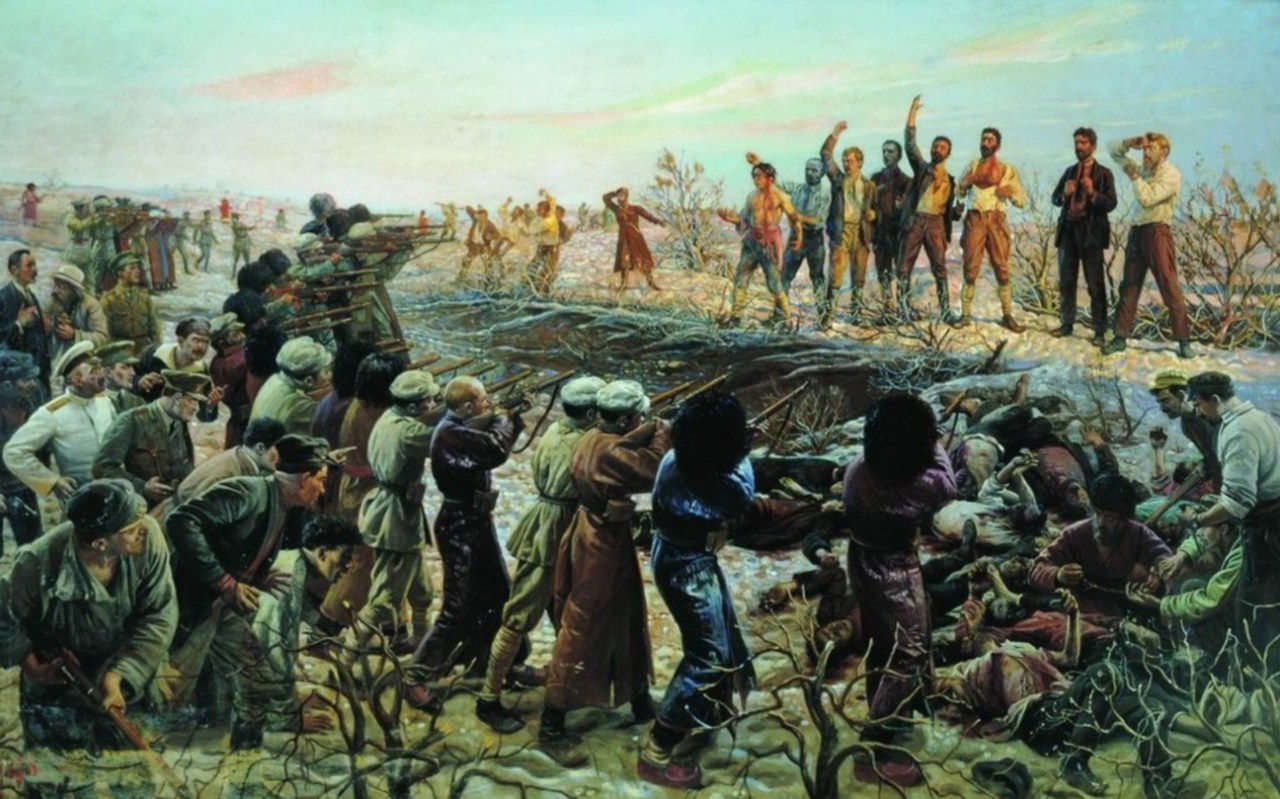


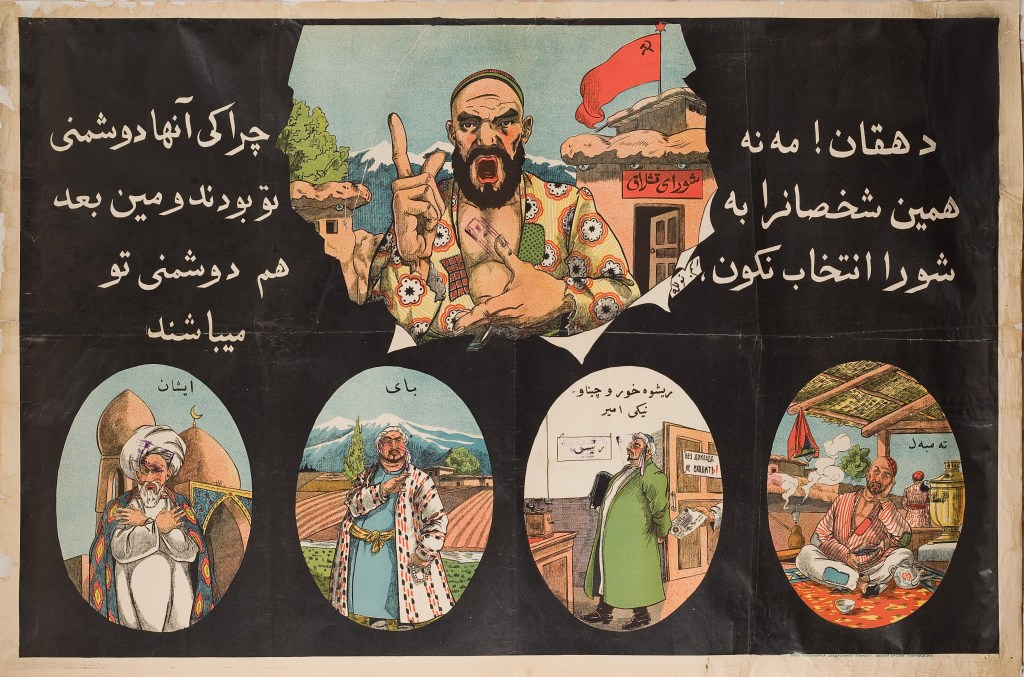

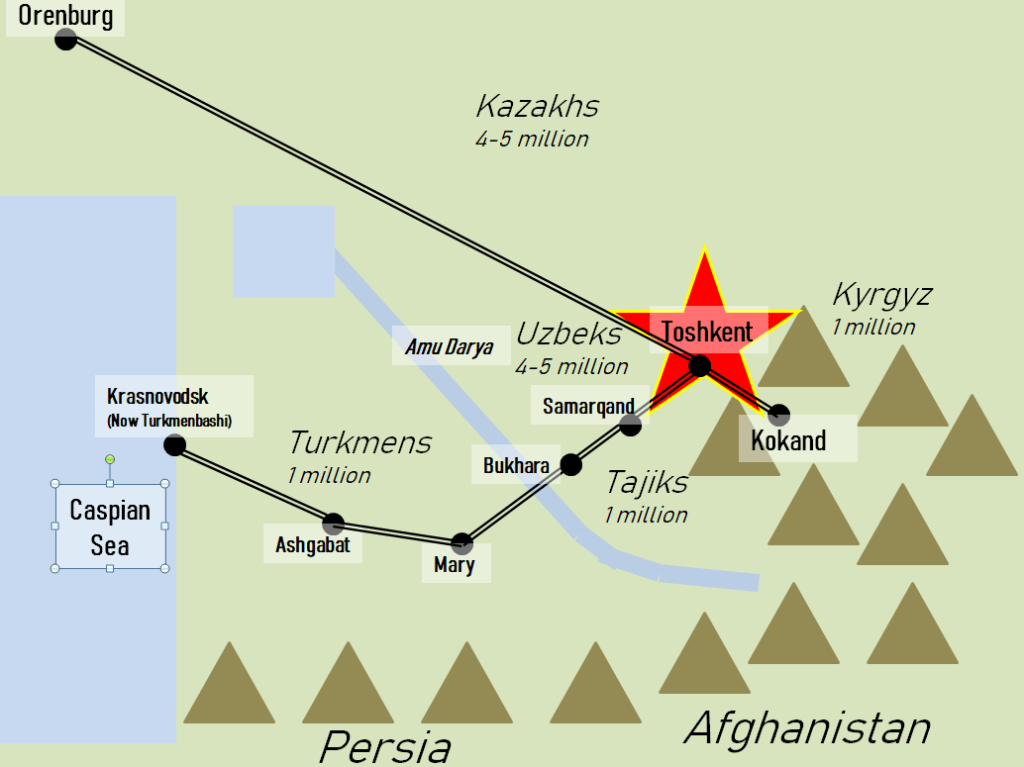

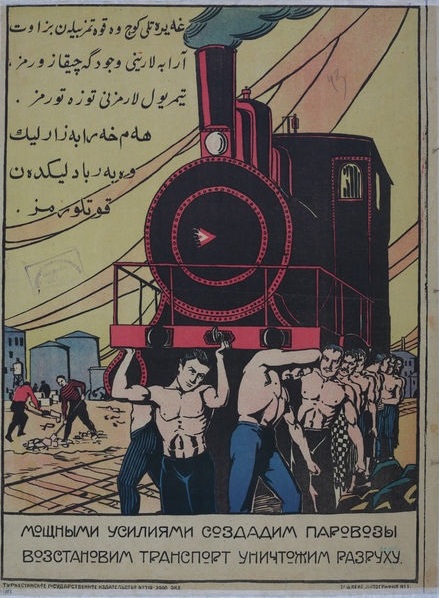
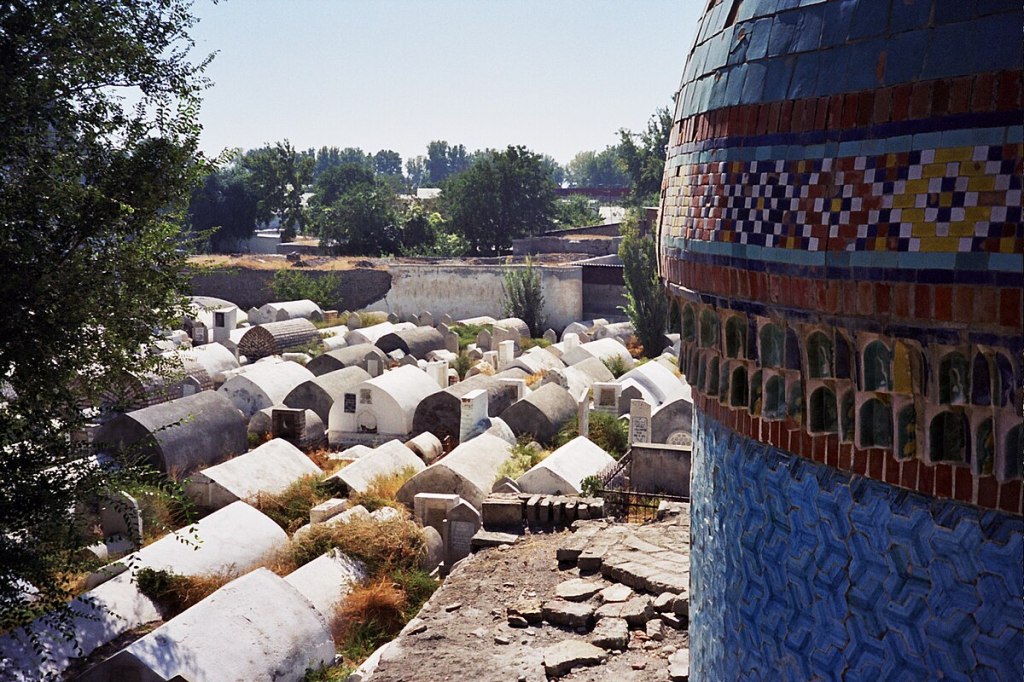
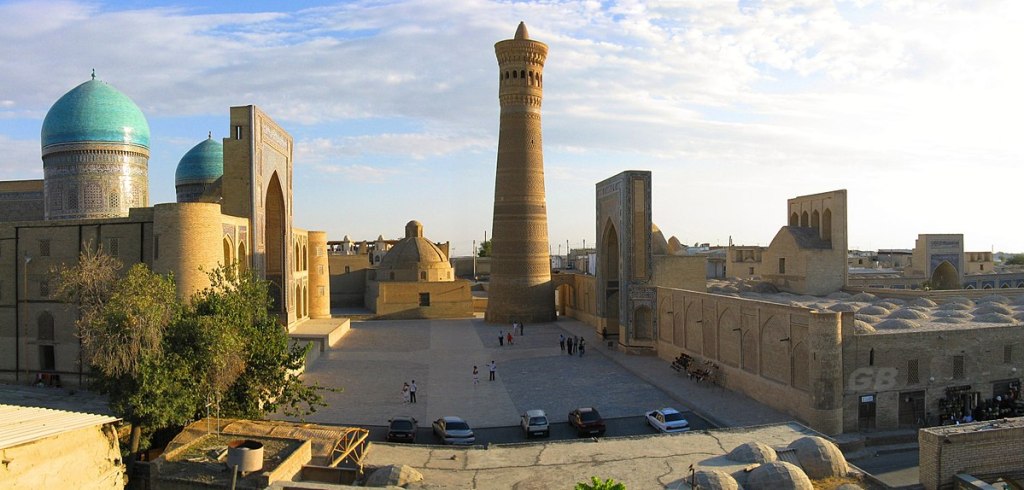
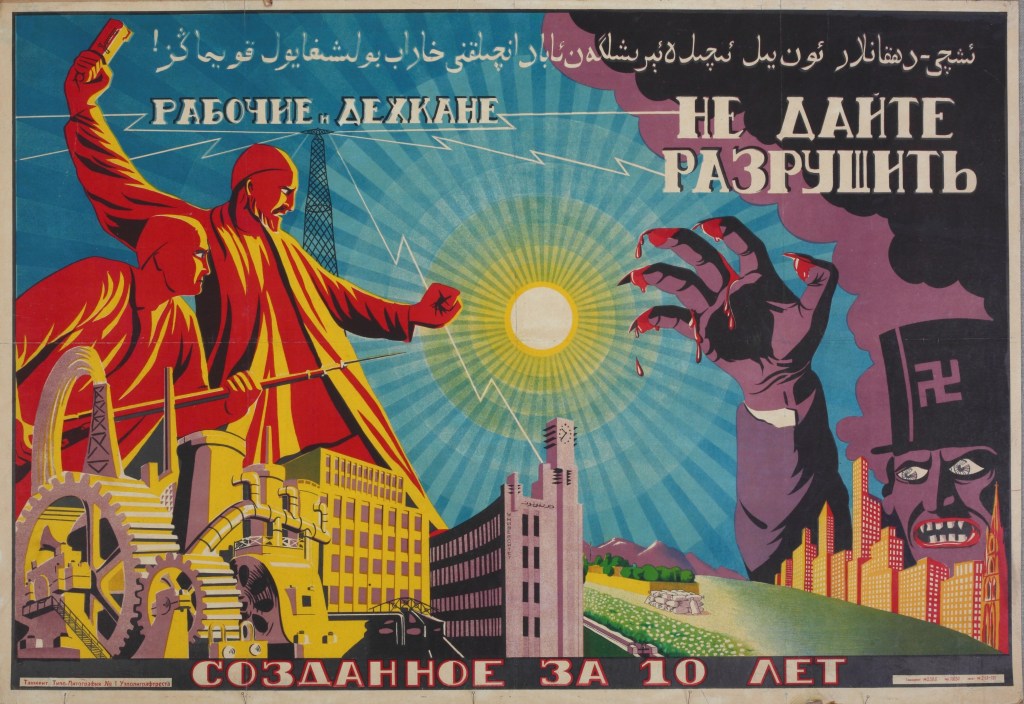
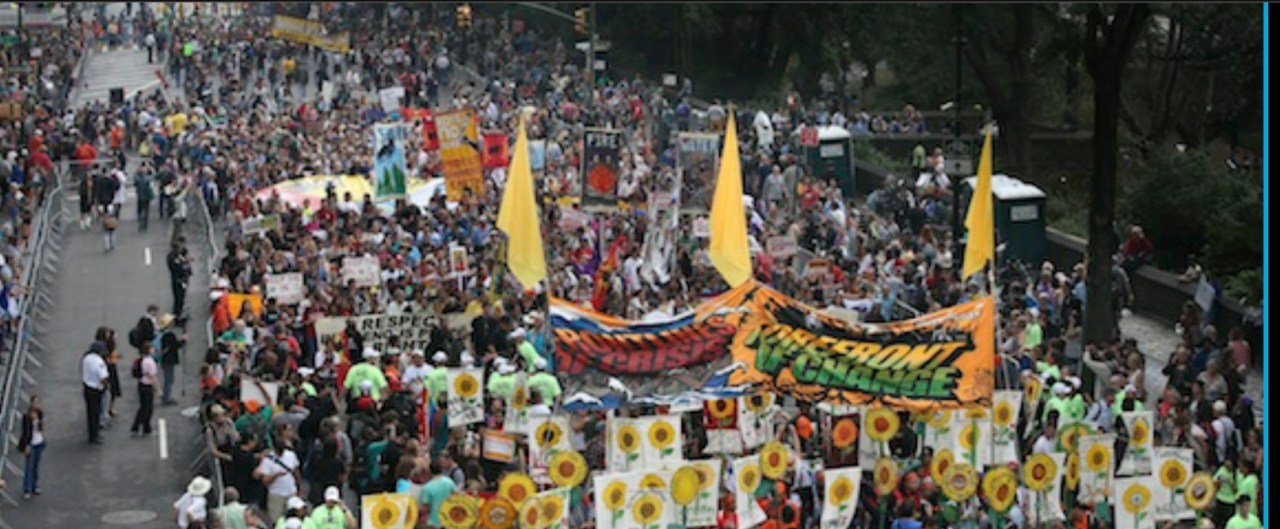





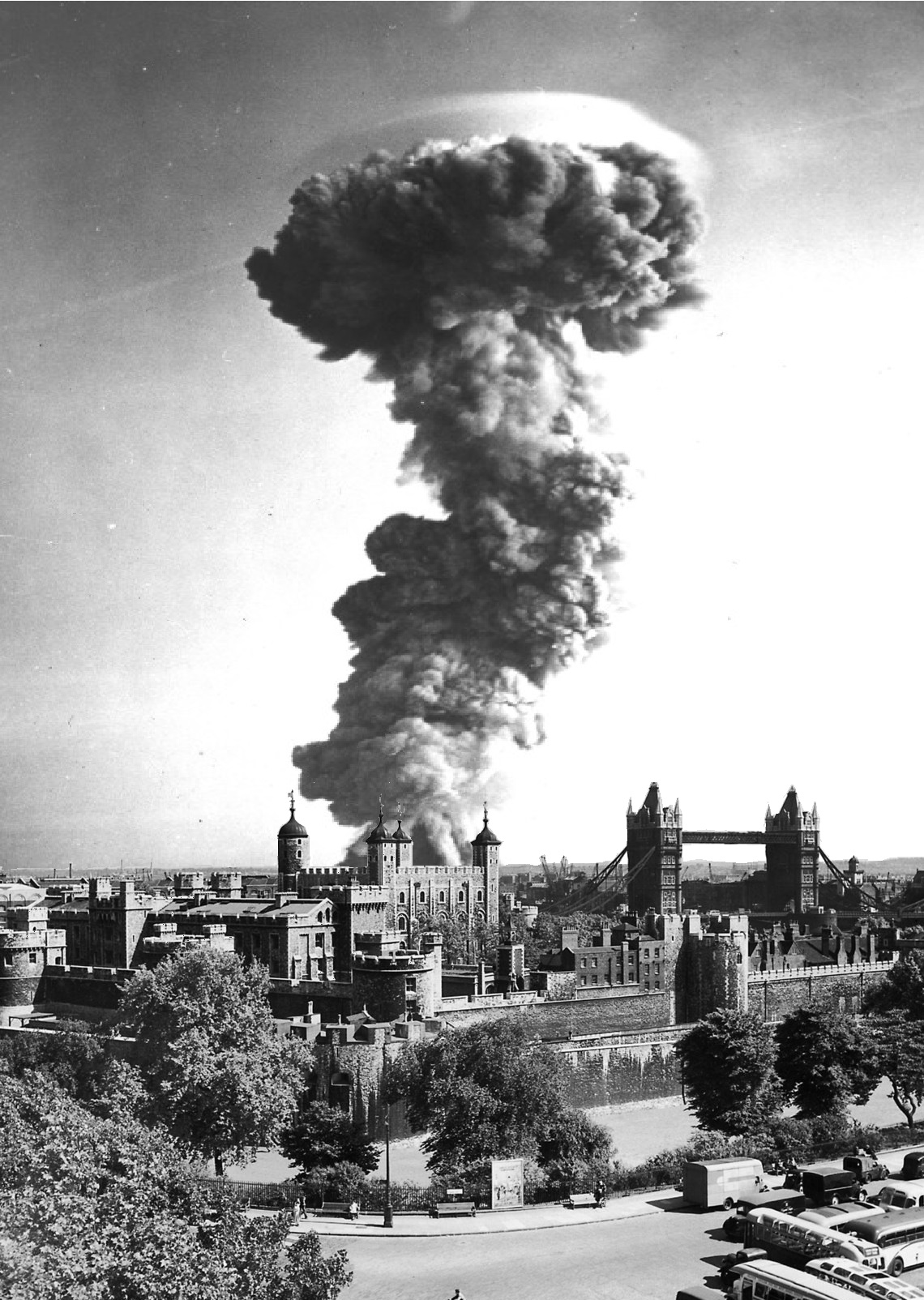

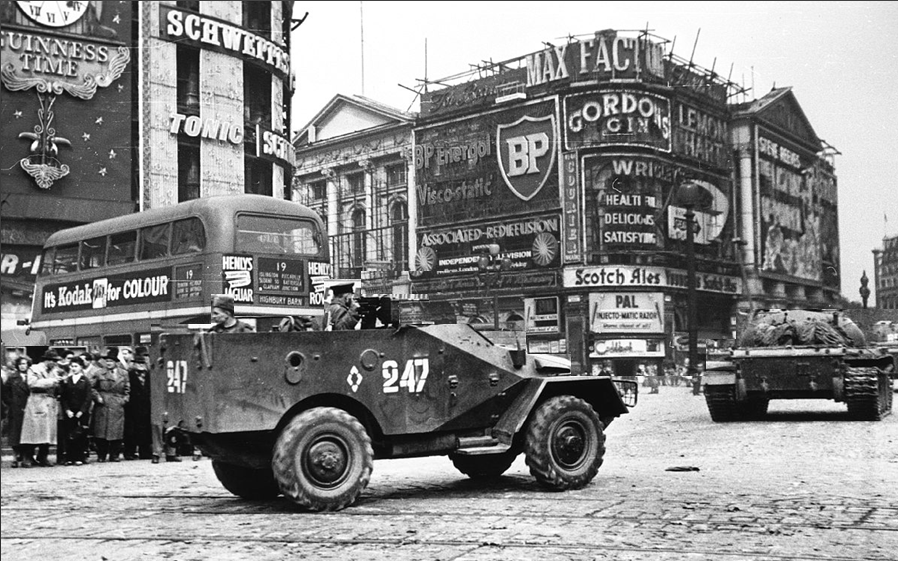

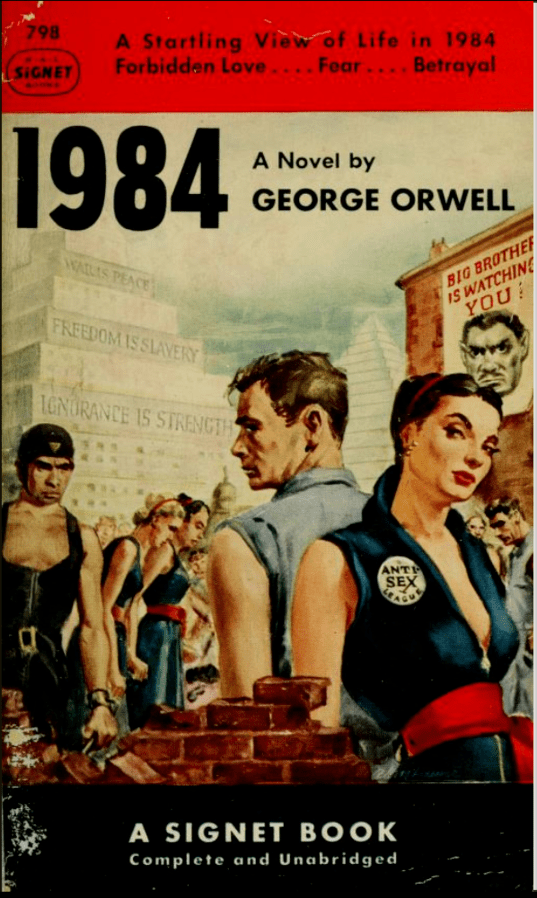
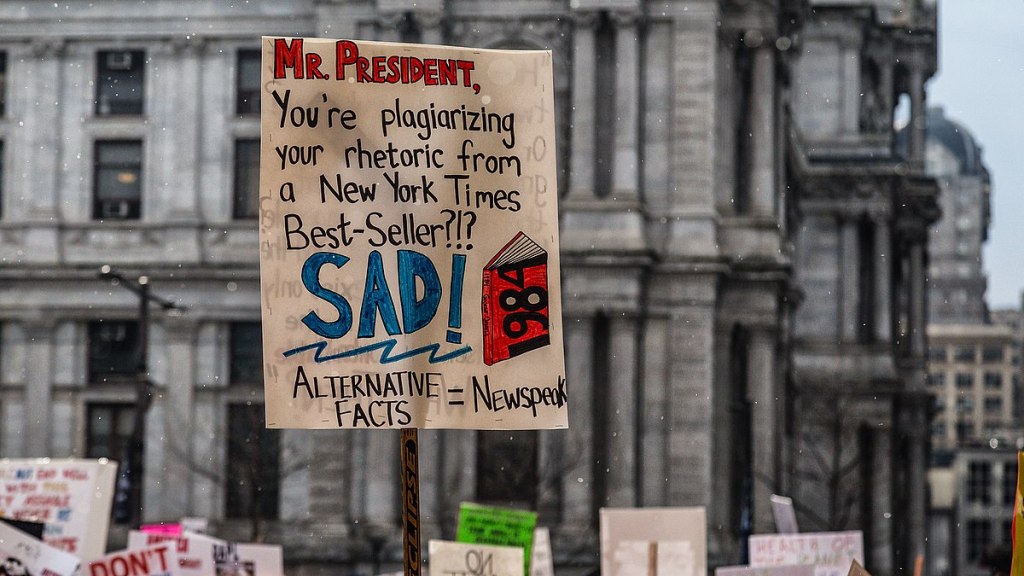
 The 1919 Review
.jpg)
