Miseducation Misadventures: Ambush

I sat down in the staffroom towards the end of a January day. It was quiet in there, a free period, and I probably had a pile of A4 hardback copies to read through, or a worksheet to finish off and print 25 copies of.

The principal stuck his head in the door and addressed me in a soft polite voice. ‘Can you come into the office for a second?’

I went to the principal’s office, wondering what it was all about, and sat on one of the sombre antique-looking armchairs. I hadn’t been in the place since before the old principal retired last year.

The new principal and deputy were younger men who went about their new jobs with a hurried, impatient air that suggested they thought the old principal had been too easygoing. I felt the new principal liked me. But from the deputy I’d always got a vibe that he didn’t quite understand the point of me. I can imagine him thinking: A male teacher who doesn’t do rugby or GAA? Why does he even get out of bed in the morning? 

I can’t remember if Roberto was already there or if he was summoned in after me, or if he arrived in the custody of the deputy. Roberto, not his real name, was a fifth-year Spanish Lad (Actually Catalan, but anyway, a member of that school’s numerous and anomalous Iberian tribe).

The deputy spoke to Roberto in an angry, impatient way. ‘Mr ______ here says that you wouldn’t take your jacket off. Do you have anything to say for yourself?’

I was more confused now. A couple of days before Roberto had refused to take his jacket off in class. That was such a trivial thing I’m not sure why I even wrote him up on VSware for it. It was January in Ireland and this kid was from the Mediterranean.

Winter in Ireland. ‘Why do you have your jacket on?’

Roberto said that it was true and he was sorry, but he was not sure why he was being singled out.

He turned to me. ‘Come on, sir. You know I don’t mess as bad as the other guys.’

I hope my voice didn’t come out as wheedling as I remember. ‘It’s true that we have problems in that class. And you’re not the worst. But if I ask you to do something, you need to do it and not argue with me.’

But he was right. The jacket thing was unusual. Roberto was one of the few kids in that English class who weren’t a constant headache to me. I was putting up stuff on VSWare every other day about that crowd. But Roberto was dozy and withdrawn – I mean withdrawn from the work, but also from the messing. In the context of that absolute urinal of a class, I’d take that trade-off.  

But in making the classic ‘Why are you singling me out?’ defence, Roberto had walked right into the trap.

The principal and deputy laid into him: ‘This is not acceptable.’ ‘What other people are or aren’t doing has nothing to do with it.’ ‘You need to take responsibility for your own actions.’

These are the things us educators always say. But this wasn’t a schoolmarmish telling-off. The tone was harsh, aggressive. In the army they’d call it a bollocking. Roberto withdrew into himself.

‘You can be sent back to Spain. Do you understand? If you don’t start behaving yourself, we’re going to send you back.’

Roberto listened to these ugly threats, looking sullen and upset, saying only ‘Yes… Yes…’ whenever it was demanded of him.

After Roberto was dismissed, the principal and deputy turned to me. ‘You shouldn’t have agreed with him. The way you said there were problems in the class. You can’t accept any of that.’

And I realised: this ambush was not for Roberto. It was for me.

I was too surprised to really argue. ‘OK, but it’s true, there are serious problems in that class. And Roberto is far from the worst…’

They shook their heads. ‘You can’t just accept a certain level of disruptive behaviour. You can’t let them get away with breaking the rules. You shouldn’t have let things get so bad with that class.’

I can’t remember which of them said what, and I’m only pulling together our words from memory as best I can a few years later; I think the principal did most of the talking. They weren’t quite as aggressive in tone as they were with the kid, but it was just as obvious that this wasn’t a discussion. So I pretended to accept what they were saying, just so I could get out of that room quickly and get back to work.

***

After school I had to cycle out to the suburbs on an errand. I pumped those pedals hard on that bike ride, ranting in my head about what I should have said.

I had barely seen the principal or deputy since September. They had not spoken to me about this challenging class or, as far as I know, spoken to any of the kids for whom I’d written long rap sheets. They hadn’t said a word to me about it right up until this weird encounter in the office.

In fact, they hadn’t wanted to know about it. A couple of months before, I’d brought four kids from that class straight up to that same office after some particularly bad incident. But the principal had dismissed us impatiently and hurried off somewhere. I remembered, too, that a couple of times the deputy had burst into my classroom. Paying no heed to me, he had laid into the students like an unusually rude drill sergeant – for wearing jackets in class.

Always with the jackets!

The kids could shout ‘f****t’ and ‘foreigner’, throw stuff around the room, interrupt me – but god help anyone who still had his jacket on at 9:05 on a winter morning.

Maybe it was ‘broken window theory’ or something. But I call it chickenshit.

That wasn’t the word I used to their faces. But I did challenge them (In the mild way I have when I’m not safely behind a keyboard). The next day I approached the deputy and principal together and asked to speak to them.

The three of us sat in that office again. ‘I had a big problem with our discussion yesterday.’ I gave chapter and verse on the ways I’d been following policy and teaching the curriculum in spite of challenges. ‘I don’t accept this idea that I haven’t been doing my job.’

The principal responded in a kind tone that I shouldn’t be trying to deal with these problems all by myself. He spoke with a confiding lean toward me, and the deputy backed him up with sympathetic nods. The principal said I should work alongside my colleagues more and communicate more to try to tackle these problems.

He’d shifted the goalposts. But I said that was fair enough and that maybe I hadn’t communicated enough and that this was something I had to work on. I stood up and most likely said some complete platitude, and we all thanked each other and got back to work.

***

And we never spoke of it again. Which contradicts the bit about communicating, right? But it was consistent with the real message I had received: that from now on I should deal with this crap by being tough and mean and zero-tolerance. They had blamed me for the students’ behaviour, so I knew it was not just pointless but dangerous to ask them for any help.

Roberto wasn’t packed off back to Iberia. Nothing else changed either. From then til summer I dragged that class kicking and screaming through a respectable quantity of great literature. The year head continued being helpful, but I had very little to do with management or they with me. We remained polite, and the principal did offer me a job supervising on exams in June.

As for their advice to get all mean and tough, I didn’t make the slightest effort to act on it. Partly because it’s not in me – and I wouldn’t accept the idea that teachers need to have that in them. Partly because I knew that even if it was in me, it wouldn’t salvage that class.

And partly because I knew that their advice was rubbish. ‘Communicate more with us’ – yes, us, the people who ignored you and then blindsided you. ‘Take a zero-tolerance approach with those kids’ – even though we’ll never, ever back you up (unless it’s a question of jackets).

My only real regret is that I didn’t tell Roberto that I thought it was bullshit, the way they treated him.

To this day I don’t really understand what the principal and deputy were trying to do that day in the office. But I understand that their advice was just an attempt to put all the responsibility back on the young and precarious teacher. Like the Spanish Lad, the bindle-stiff sub teacher is not going to be here next September.

A couple of years later in another school I encountered a principal and deputy who were helpful, sympathetic, kind, open and patient. It was all the more impressive because this school faced bigger problems. I was only there for 6 weeks or so, but that was when it really sank in, what a load of crap that previous principal and deputy had tried to put over.

I’m not writing this to be bitter, but to show the importance of good management in tackling messing, and what bad management looks like. Whoever needs to hear this: your boss may seem busy, important, experienced and confident. But don’t judge by appearances. Judge them on whether or not they are actually helping you to do your job. Sometimes you need to accept that you can’t do it on your own, and if management offer you bullshit instead of help then failure is not your fault.  
Home Page/Archives

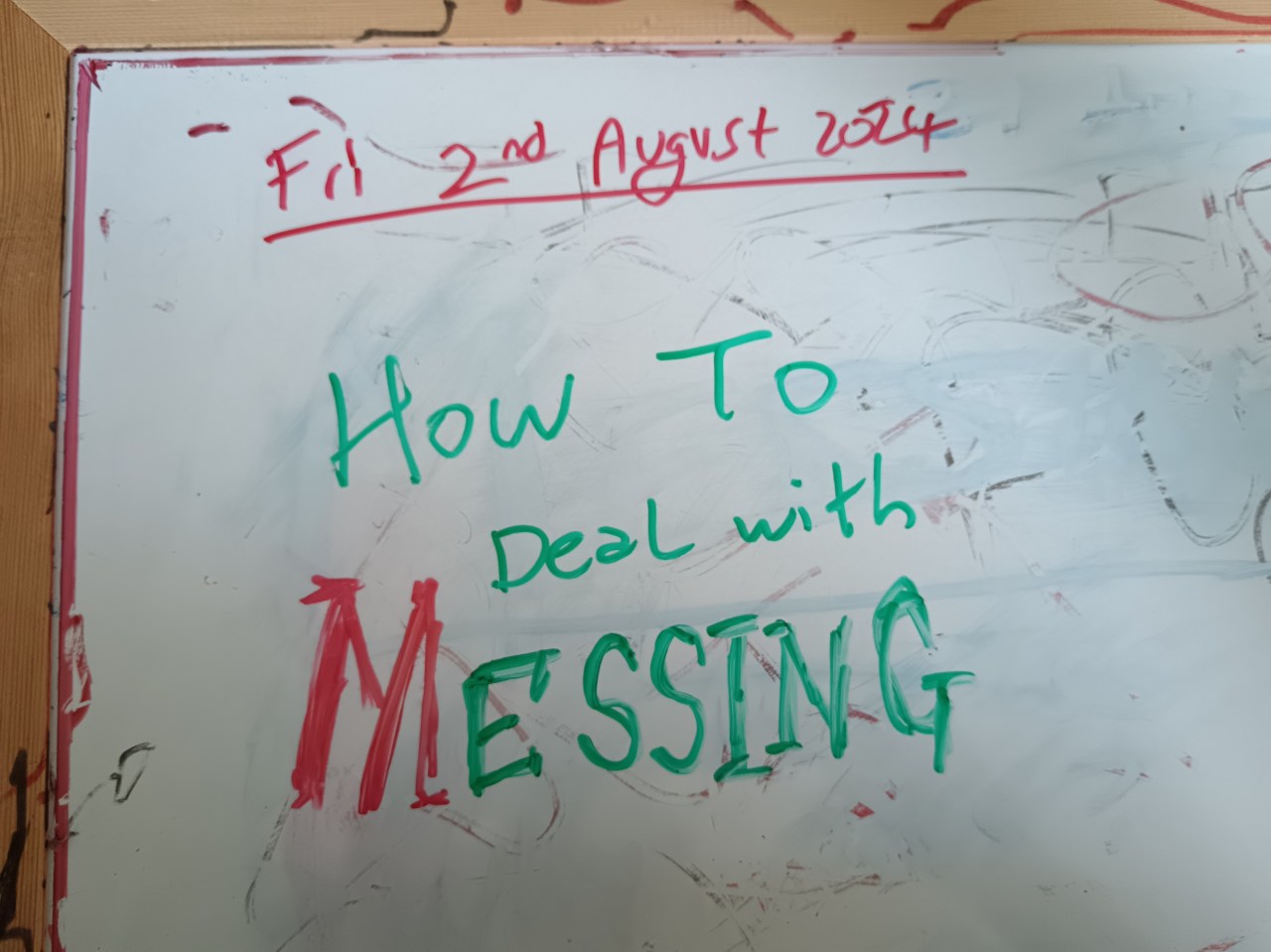
Miseducation Misadventures: How to deal with messing (Premium)

Become a paying supporter to get access

Access to this article is limited to paying supporters. If you already subscribe by email, thank you. But if you want to become a paying supporter, please hit ‘Subscribe’ below.

Donate less than the price of a coffee, and you can access everything on this blog for one year.

If you don’t feel like donating, most of my posts are still 100% free, so browse away, and thanks for visiting.

Home Page/ Archives

Miseducation Misadventures: The Spanish Lads

This is the first instalment in Miseducation Misadventures, a series looking back the madness, craic and nonsense I encountered as a secondary school teacher in Ireland.

This article deals with the thing nobody tells you about in teacher training, the thing that nobody ever sits you down and explains to you: The Spanish Lads.

Maybe there’s an official name for this phenomenon. If so, I’ve never heard it. Because my experience is weighted toward boys schools, in my head this thing is simply called ‘The Spanish Lads.’

Who are The Spanish Lads?

The basic idea is this: sooner rather than later in your teaching career, you will walk into a new classroom to find among your twenty-five students one or two, maybe as many as three, four or more Spanish Lads. Nobody has told you they will be there, and nobody will ever tell you why they are there, or what you are supposed to do with them. They are a mysterious presence in schools; every staff member assumes that someone else knows what the story is with them. But you will notice that other staff members scold these students for talking to one another in Spanish.

How long does a Spanish Lad stay in Ireland? Not for a few weeks or a term but for an entire academic year, observing the strange rituals of the Irish education system like a latter-day Francisco de Cuellar stranded among the Gaels. Somebody somewhere has decided that this is the best way for them to learn English.

Staffroom chatter will soon reveal the other angle: schools that don’t have enough students have an incentive to take in a crowd of Spanish Lads so as to boost enrolment and get more funding. It’s possible that some of the jobs I had wouldn’t have existed if not for the Spanish Lads – so I owe them.

There is no one type of Spanish Lad. They have wildly varying standards of English and levels of homesickness. Some work hard, others are messers. One might be a class clown with cross-cultural and intergenerational appeal; another might burst into tears if you scold him. In short, they are every bit as varied as Irish Lads. I heard a second-hand story about one who ran some kind of online revenge porn racket. I knew of another who was not in a position to run any kind of online racket, because the woman who generously described herself as his host did not let him use her Wifi.

Maybe someone involved with the Hiberno-Iberian Student Placement Committee, or Armada 2000, or the Kinsale Project, or whatever is the official name for The Spanish Lads, will think this article is unfair. I haven’t reached out to them for comment – I haven’t even tried to google them – partly because I don’t know what they are called, but mainly because the point of this article is to show what this thing looks like on the ground for a teacher. My only obligation here is to be truthful with regards to what I encountered myself.

Two Juans

The Irish Lads often ignore the Spanish Lads due to the language barrier. Sometimes the Irish Lads will liven up a few tedious minutes by teasing the Spanish Lads: a class consisting of seven Dylans, five Jacks, three Haydens and seventeen Oisíns will find it hilarious that two of The Spanish Lads are called Juan.

In large parts of Ireland, Juan and one are pronounced almost the same. There was one Juan I knew who mostly dozed through class. An Irish Lad (the kind of Lad who is delighted with Of Mice and Men because he thinks it gives him a loophole to say racist words) used now and then to ask him, ‘Which Juan are you?’

Juan responded not with words but with a look of drowsy contempt which struck me as dignified and noble.

Where Spanish Lads exist in sufficient concentrations, they form a parallel school community across the wide 12-18 age range. When the Irish Lads push, they push back, and teachers get a headache trying to avoid being enlisted as a referee by the two Lad Factions while also making sure the school’s anti-bullying policy and code of behaviour are observed.

Sink or swim

For a while I worked as a resource teacher, giving extra help to some Russian and Georgian lads with their language barrier. It wasn’t nearly enough but it was a hell of a lot better than nothing. I don’t know if The Spanish Lads get this kind of support as a rule, though in another school I was very briefly assigned to help a small group of Spanish Lads with their English.

Leaving aside extra support, teachers are supposed to cater in their lesson plans for kids who don’t have much English. But that does not apply to the Spanish Lads. Teachers often get saddled with extra responsibilities but no extra resources or time. With the Spanish Lads, it’s different. We are not even given any responsibility. We are just supposed to pretend the language barrier isn’t there. If you think this makes things easier, then you’ve never been a teacher. The problem with a ‘sink or swim’ approach is that a certain number of kids just sink. Of those who sink, a few suffer in silence but most chat, bicker and mess, and that gets in the way of you doing your job.

The stupidest situation I ever encountered was with a 5th year English group. There were around 15 in the class, four of them Spanish Lads, (edit: no, there were actually 5) and around four other kids with English as an Additional Language. Bless my younger and more energetic self: we slogged through a novel, a movie and a heap of poetry. You can run a poem through Google Translate and come into class with printouts in five different languages so that the various nationalities can check the vocab, can have some kind of understanding  of what’s going on. But it’s not ideal, and a novel is a lot tougher. In that context, it’s not strange at all that the Spanish Lads’ attention wandered and that they often disrupted the class, driving me up the wall.

And all the pious scolding, warnings, write-ups and detentions I dealt out were based on a false premise: that there was some normal desirable situation from which this or that kid was deviating. In reality, things were a mess from the outset.

For the record, it was a handful of the Irish kids who gave the most grief in that class – the Spanish came a modest second, but they really didn’t help.

I know I would be sincerely happy if I ever somehow ran into any of my former Spanish Lads. The problem is rarely the kids themselves. And I think that 5th year group did benefit from my teaching. But any small benefit came at a stupidly high cost. It was a waste.

Why do we have schools?

The Spanish Lads are just one example of the things that are wrong with the education system – and here’s where I’ll get more general, and expose some of the themes I’ll probably be dealing with again in this series. What’s teaching all about? Why do we do all this?  

  • So that we can get paid.
  • So that those who are not yet old enough to work or to spend money are confined in institutions all day, out of danger and out of trouble.
  • So that parents can go to work.
  • So that industry and the state (and Canada and Australia and Switzerland) have a labour pool made up of people who can read and write and do sums.
  • So that all those responsible, from school management up to the Minister, can say without technically lying that they are meeting the state’s obligations to provide free secondary education to all.

…And if thousands of kids are just sitting there having their time absolutely wasted, it’s the fault of the kids, or the teachers, or the parents, or vaping, or the internet, or whoever banned teachers from assaulting kids.

If I was cynical I’d leave it at that – all those bad incentives and impulses built in, and the threat of authoritarian ‘solutions’ that would just be a burden of brutality and stupidity on top of all the dysfunction that’s already there.

But the less-bleak truth is that the system we have is the outcome of a compromise between all that crap and the good intentions of educators and our unions, of parents and students.

There’s also a powerful animating idea of universality and public service that’s always there underneath it all, even if it can get hidden under layers of rubbish. No teacher would phrase it like this, but in our modest way we bring liberation to young people – give them tools to reach their own understanding of the world, open the way for them to imagine and to achieve great things, provide them with a social environment that’s broader and more exciting than the home but kinder than the adult world. Some teachers get sick of it and quit (like I did) and some fossilize themselves in bitter cynicism. But for most, a sense of humour mediates between the good thing we’re trying to do and the crap conditions we have to do it in.  

Another less-bleak truth: there are probably thousands of former Spanish Lads and Girls walking around Iberia today thinking that beor, shift, shades and fuist are the Queen’s English. I guess I’m proud that I was part of whatever made that happen.

Do you want to read more like this? Subscribe here:

Or browse my full archive:

Go to Home Page/ Archive

Footnote

More than once, politics has come up with The Spanish Lads. Two little second-year students got really mad when I taught about the Conquistadors’ brutality toward the native Americans.

In that 5th Year class where I had four Spanish Lads, one day all the Irish lads were gone, maybe it was to do some project, or maybe for the ploughing festival. The Spanish Lads turned the chat to politics. I learned that I had a Francoist on my hands – thankfully just one. Two others were staunch Republicans and the fourth was a Catalan Nationalist. The brief but heated debate which followed brought the usually taciturn Georgian student out of his shell. He interjected to school the Francoist, telling him how communism meant free food, free electricity, free everything. Two Spanish factions fighting and a tough Georgian communist intervening – it was almost too much for my history-teacher brain.

Genuine Concerns

Imagine the panic if refugees, or some minority community, had committed a crime wave like the one the far right have unleashed on Ireland over the past year or so.

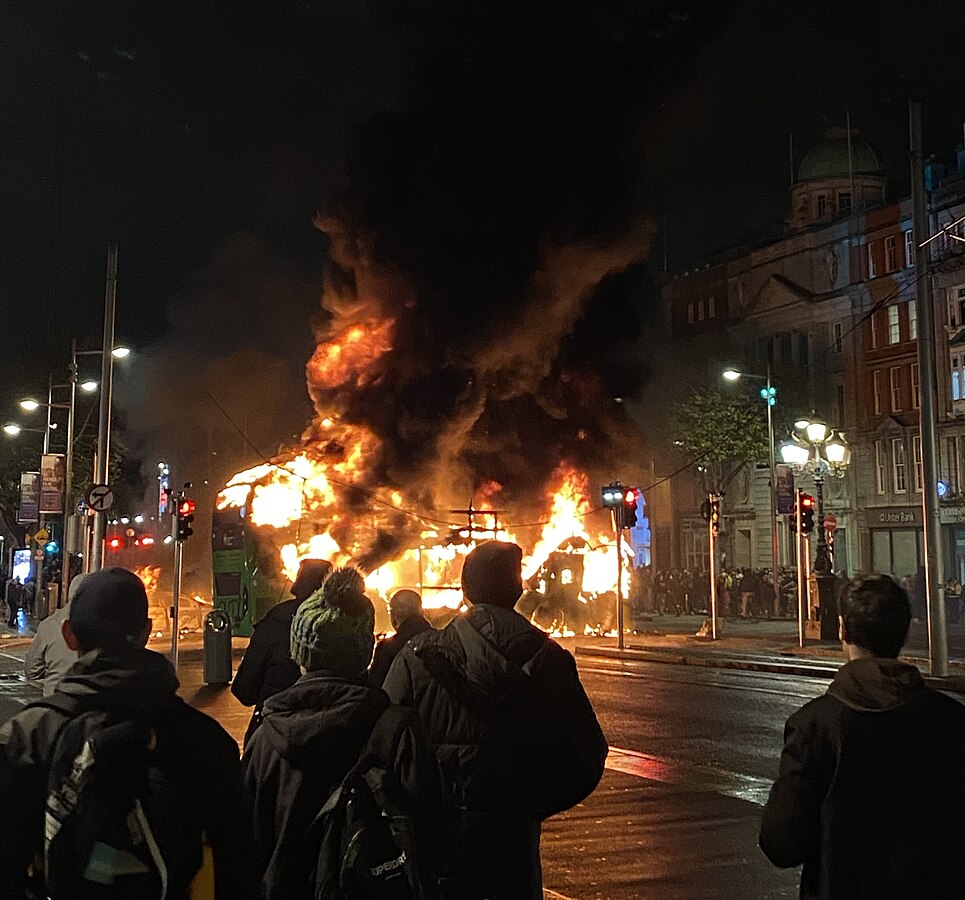
Imagine if refugees had rioted, burned buses and trams, smashed shops; carried out dozens of arson attacks all over the country; burned homeless encampments and threatened homeless people with blunt weapons; protested outside politicians’ homes, hung them in effigy, issued death threats, harassed and beat up election candidates.

That alleged sex trafficker who’s on ice in Romania says that Ireland is being ‘invaded.’ McGregor says ‘we are at war.’ But these asylum seekers are children, men and women of all ages, and none of them have weapons or transport. They all speak different languages from one another, have different religions, don’t have any common political cause, and are scattered all over the country. They can just about afford nappies, but they can’t afford tanks. They came here to get away from war. Is that an invasion? Maybe ask someone who’s actually experienced an invasion, like – just for example – a refugee.

We keep hearing that, in contrast to the bad protesters who burn things and the alleged MMA sex offenders who want to see blood on our streets, there are decent and good protesters who have ‘genuine concerns.’

I’m a tolerant kind of person, but I’m losing patience with all this. What are these ‘genuine concerns’? Are they really more serious and genuine than the fear many felt when there was a pall of smoke hanging over Dublin?

I suppose some people are concerned because some of the refugees, while running for their lives, did not wait 6-8 weeks to apply for a passport off the government which was trying to kill them. That’s true, as far as it goes.

When you read in the papers about some shit show where protesters have barricaded a road or shouted at terrified children, and there’s an interview with the chairperson of some local group with a name like Concerned Citizens Who Are Definitely Not Racist, mostly they use their airtime just complaining that the government isn’t giving them information. There are endless variations on this theme. But I don’t want to be a referee for their emails with Roderic O’Gorman. Nobody does. Find more interesting things to complain about, or go home.

Sometimes the Concern is Genuine, but the object of that concern is complete bullshit. Yes, asylum seekers are vetted. No, they commit fewer crimes than the rest of us (and it doesn’t follow that me and you should be deported).

The vague passive anti-refugee sentiment is like, ‘The government is putting a roof over their head but not over mine.’ It’s been two decades of hardship with austerity overlapping with the housing crisis, then Covid and the price gouging campaign by grocery chains and energy companies. You can see where some of the rage is coming from.

But there would be no housing shortage at all if we had public housing, rent controls and an eviction ban instead of this feeding frenzy for landlords and investment funds. We could put a roof over everyone’s head, if we were willing to tell housing profiteers to get a real job. Raise that with the leaders of the far right, some of whom are deep in this racket themselves, and you’ll find out pretty quick how little they care about homeless people. From what I can see, most of the far-right leaders and influencers are small business and property owners, not people on the front lines of economic hardship.

I’m aware that it costs money to accommodate refugees. Taxpayers’ money, no less. To put it into perspective, it has trebled over the last year to a figure just south of what we spend on Housing Assistance Payments (ie, on the state subsidizing crazy rents by shovelling money into the bank accounts of landlords). Two things. First, people only complain about the ‘cost to the taxpayer’ of things they were already angry about anyway. Second, like HAP, nearly all of that money goes to people who own large or multiple buildings. The government looks after the big property owners, whatever happens. According to today’s Independent, only 1% of asylum seekers are in state-owned facilities where people can be housed for a fraction of the cost.

These numbers tell us that if we didn’t have any refugees, we could be giving twice as much HAP to landlords, and they could be jacking up the rent even higher to keep up. What a tragic missed opportunity.

A picture taken during the November 2023 riots in Dublin. From Wikimedia Commons, credit to CanalEnthusiast.

Meanwhile I have ‘genuine concerns’ of my own. I’m concerned about racist thugs setting shit on fire and beating people up. I’m concerned about garbage from social media five years ago suddenly appearing on election posters. Peter Casey has that poster where he looks like Father Jack – the slogan is STOP THE MADNESS. I agree, only I think he’s THE MADNESS.

I have genuine concerns about racism. 85,000 Ukrainian refugees were accepted pretty much overnight and without a murmur of protest, and on much better conditions than other nationalities. But the fury over 30,000 international protection applicants has turned Irish politics upside down. I don’t grudge the Ukrainians anything, and I don’t want assholes to protest them – but the shortage of beds is obviously due to the bigger group, not the smaller group. Has this really not occurred to anyone?

I have genuine concerns about the media. Dread washes over me when I walk into a shop, because when I glance at the newspapers I see headlines dripping with hostility.

I have legitimate concerns about the way Fianna Fáil, Fine Gael and increasingly Sinn Féin are giving ground. On December 4th the state just told male asylum seekers, ‘Nope, we’re not housing you anymore;’ now Harris is clearing out those Grapes of Wrath tent camps and milking it for the cameras. Sorry Peter Casey, I think it’s MADNESS to be up in arms about the state being supposedly a soft touch – when it’s done less than the bare minimum to respect the right to asylum.

Fianna Fáil and Fine Gael both report that the main issue on the doors is migration. Sinn Féin report housing is still the main issue, which tracks with recent polling. But regarding housing, says one prominent blueshirt, ‘the conversation on this issue is less heated than it was five years ago.’ Palpable relief! The far right present themselves as anti-establishment warriors, but they have taken the heat off the government for the housing catastrophe. Maybe that Fine Gaeler is talking it up, but the more migration goes up the agenda, the more housing slips down.

Anyway, what’s the far right’s solution on housing? The IFP say ‘House the Irish first.’ So a 1950s Northern Ireland-style segregated housing system, where people arbitrarily deemed ‘not Irish’ go to the back of the queue, regardless of need or how long they’ve been waiting. I suggest a snappier slogan: ‘Apartheid for Ireland.’

The world is getting more violent and the climate is getting more unstable. More people are going to be forced to leave their homes. A lot more. We can make these refugees into (very unconvincing) scapegoats for housing shortages and violence and whatever else. Or we can be serious about it.

Barring massive political change, I don’t believe any authorities from the EU down to our own government are going to be serious or compassionate. But we as individuals can still behave like human beings. If refugees come to your area, Syrian, Ethiopian, Ukrainian, whatever, don’t protest them (no, not even if you feel the government or IPAS messed something up). Do like they did in Borrisokane: go and talk to them. Some have fluent English, and the Translate apps have gotten good. Take those vague phrases like ‘military age males’ and tag them in your own mind with faces and names. You’ll find that they are regular people with entirely mundane needs and desires. But they are in a bad situation and they have come from a terrible one. They haven’t burned any trams (if one of them does, don’t worry, you’ll hear all about it) but they are the ones – far more than the protesters and more than me – who have genuine concerns.

Want to read more of my stuff? The full archive is right here on my home page.

School Resources: Strongbow

Building on last month’s resources on the Middle Ages, here are linked notes and presentation: Strongbow: A Story from Ireland in the Middle Ages.

The history of Strongbow and the Norman conquest of Ireland is a great case study for Junior Cycle students to get to grips with life and politics in Medieval Europe. It’s also a crucial episode in Irish history.

Celtic Communism? Pt 3: The Un-Free (Premium)

Un-free – premium – see what I did there?

I’ll get my coat…

We started this series by looking at what James Connolly had to say about early Irish history and asking, ‘Was Gaelic Irish society in any meaningful sense socialist? Or was this just one of those unfortunate examples of Connolly giving ground to romantic nationalism?’

In parts 1 and 2 we looked mostly at customs around kingship in the years 800-1200 CE, drawing out examples of the democratic and egalitarian features of Gaelic Ireland. As one of my readers summed it up:

Become a paying supporter to get access

Access to this article is limited to paying supporters. If you already subscribe by email, thank you. But if you want to become a paying supporter, please hit ‘Subscribe’ below.

Donate less than the price of a coffee, and you can access everything on this blog for one year.

If you don’t feel like donating, most of my posts are still 100% free, so browse away, and thanks for visiting.

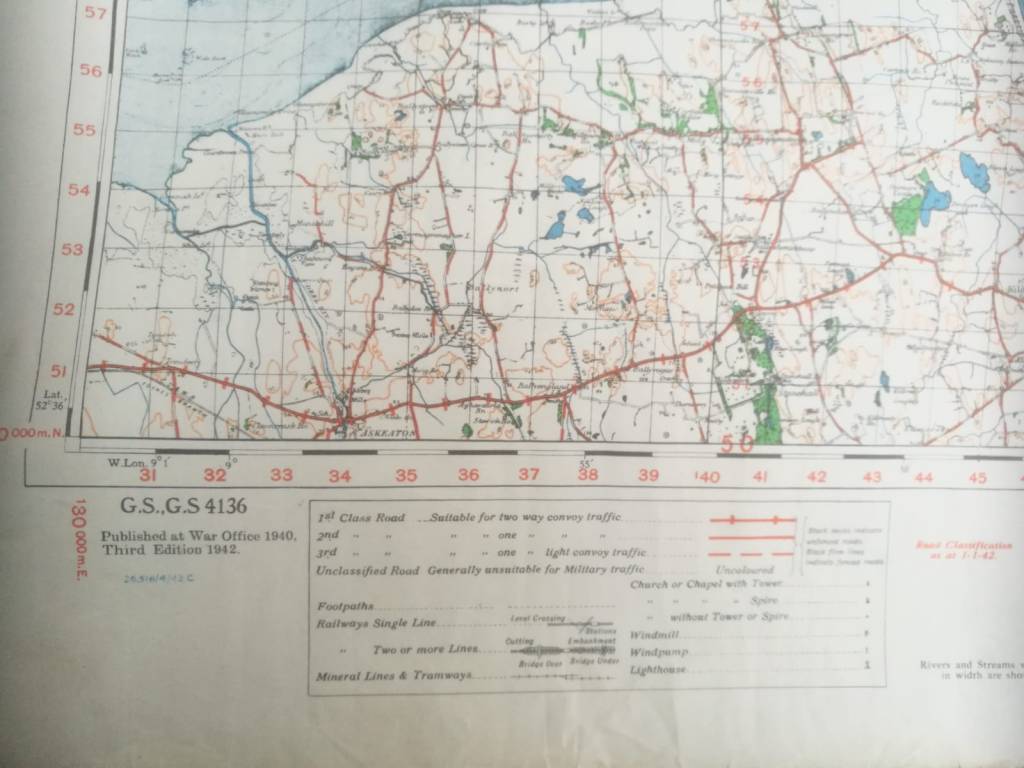
1940 – Maps for an invasion of Ireland

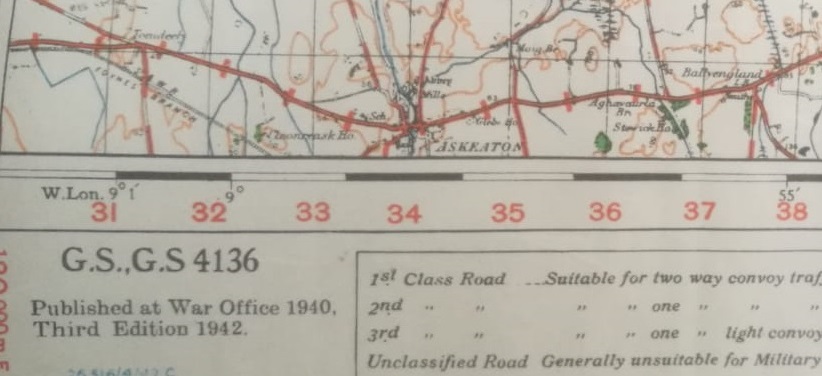
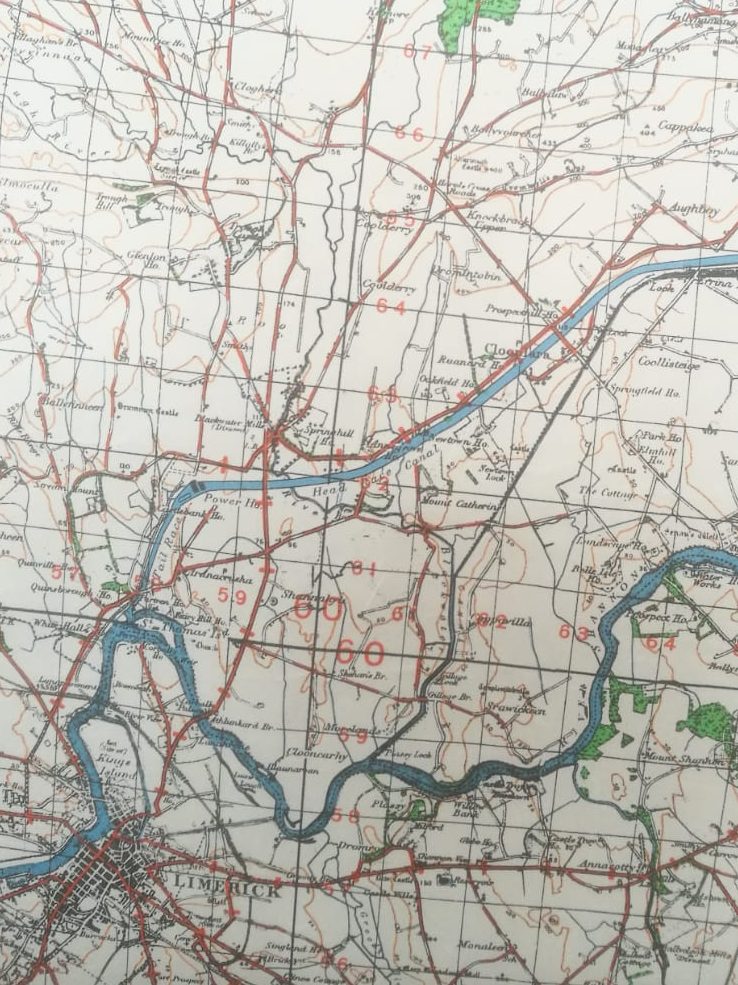
During World War Two the British War Office produced a series of incredibly detailed maps of Ireland. These were to serve British forces in the event that they were to invade the former colony that had sent them packing twenty years earlier.

The British army donated these maps to the Irish defence forces long after the war. But most were destroyed in a fire in Kildare Barracks, some time in the early 2000s.

These maps cover the entire island and show every field and city block. The Irish army themselves did not possess such detailed maps. Such are the perks of being able to dispose of the revenues of a world-spanning empire. See the military details noted in the second image, below.

Of course, Britain had been in control of all Ireland until 1921. They would have possessed maps that were twenty years out of date. But the first image above includes the Shannon hydroelectric dam, which was built years after independence.

How, then, were these maps drawn up? My guess is, on the basis of old British army maps, updated with details supplied by spies on the ground or aerial photography.

In a few weeks I’ll be in a position to upload some better-quality images, so keep an eye out.