Notes on the Medieval World (1) How Rome Fell

“…throughout all the difficult days of the dissolution of Antiquity, we can trace the hard, selfish interest of a comparatively small group of families, their wealth and interest founded on land.”

-JM Wallace-Hadrill, The Barbarian West: The Early Middle Ages AD 400-1000. Harper Torchbooks, 1962

The book quoted above fell into my possession a little while ago. Knowing full-well that it was short, very broad, and decades out of date, I still read it with interest.

Men supposedly think about  Rome every day. As for me, I’ve read some Robert Graves and played a lot of Total War (never as the Romans), but I’m not especially interested in togas and scutums and senators. But the stuff a little later, the great churn where the senators and castrums are turning into dukes and castles (but aren’t in any particular hurry) are more interesting to me. I like the times when years have three digits and there are a lot of things they haven’t invented yet, like chivalry, or Switzerland, or monks who had to keep it in their pants.

Today people put Rome and the Middle Ages up on a pedestal. But focus your eyes on where one is dissolving into the other, and it all looks more accidental and contingent, and you start learning things, often things you don’t know what to do with, facts you don’t know where in your brain to file.

I read indiscriminately about late antiquity and the early Middle Ages, and every so often I’m going to be posting about what I’ve learned. I might criticise what I wrote here in a future post when I read something else; or someone in the comments may have something to say. No worries. So here are some interesting things I found out from Mr Wallace-Hadrill and his book The Barbarian West.
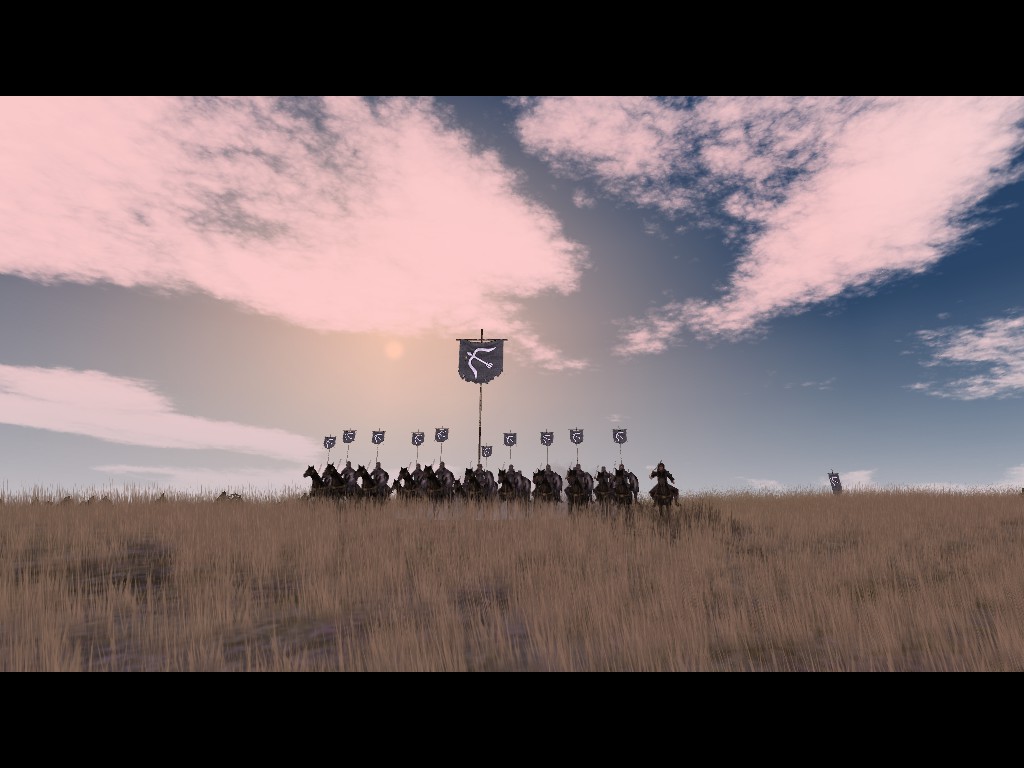
Huns riding over the horizon. The featured image is a screenshot I took on Rome: Total War – Barbarian Invasion (2005), probably the first cultural text about this period that I stumbled upon.

Did ‘barbarians’ actually sack Rome? (p 25-27)

I’ve seen the paintings. I’ve played the videogames. I grew up with a vague sense that there was a day when a horde of savages broke into Rome and burned a lot of nice buildings and murdered a lot of cultivated people, after which there was no more Western Roman Empire and Rome itself was finished as an imperial city.

Wallace-Hadrill says that the Goths took Rome in 410 CE, but did not actually sack it. They wanted food and land, and had no incentive to sack the city. It was back in Roman hands soon after. In 456 there was a serious sack of Rome – not by a nomadic horde, but by the powerful kingdom the Vandal invaders had established in North Africa. It was a sack, but it wasn’t the end of the Western Empire. That didn’t come until 476 and the overthrow of the last Western Emperor by one of his own Hunnic generals, Odoacer.

So the image of ‘barbarians’ sacking Rome doesn’t really convey how it all went down. Both Roman and invader by and large preserved Roman laws and institutions and even language – Latin itself had split into the dialects that would become French, Spanish and Italian before the fall of the Western Empire.

The later Magyar invaders, it is argued, did more damage in Western Europe than the Huns, while the twenty-year attempt by the Eastern Roman Empire to reconquer Italy brought about more destruction than the Huns, the Goths and the Lombards.

The Roman Empire did not fall because of ‘decadence’ (p 10-13)

Why did Rome fall in the first place? On the internet and occasionally in print, I’ve seen people blame it on too much partying, too much sex, too many feasts, orgies, etc. Too much dole. Too much immigration. ‘Weak men create bad times’ etc, etc. If the commentator even notices the gap of centuries between supposed cause (vague ‘decadence’) and effect (fall of Rome), he is not remotely embarrassed by it.
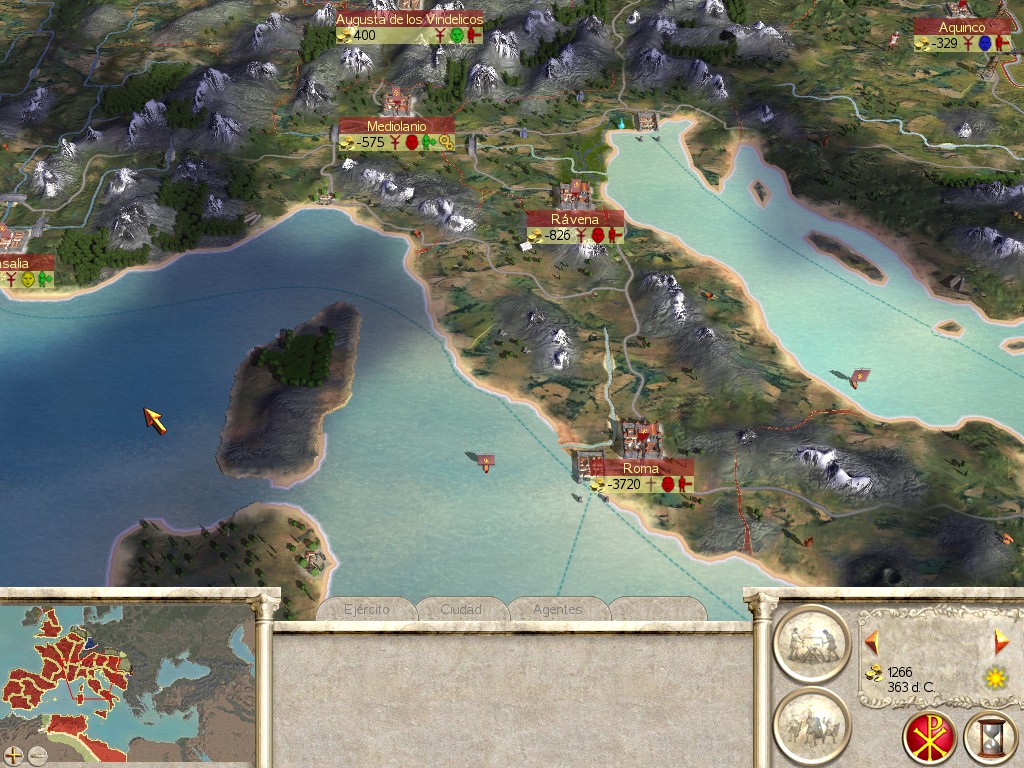
Ugh. Look at it. So decadent. Again from Rome: Total War

Wallace-Hadrill sums up the 4th-century crisis of the Roman Empire in a few paragraphs. In that century, land was falling out of cultivation in all provinces, a sure warning of the collapse to come. Why?

The most striking point is that the people themselves were driven to revolt by intolerable conditions. We have slave revolts and disaffected farmers turning to “mass brigandage.” Later in the 5th century we have a Roman leader, Aetius, actually allying with the Huns to crush a massive popular uprising in Gaul (Aetius at other times allied with Goths against Huns and with Huns against Goths).

Farms had fallen behind because the whole system rested on enslavement, which held back new inventions and kept agriculture primitive. So from its backward agricultural economic base, the Empire couldn’t pay for its legions or for the palaces and luxuries of its ruling class. The vast external border was too expensive to defend properly. The expense was not just in money, because war casualties and conscription drained the labour force.

All in all, we get a picture of a system that has been pushed far past the limits of its own rules. Its drive to conquer others has led to overstretch and its reliance on enslaved people has led to stagnation. It’s not that the Roman ruling class ‘abandoned their virtues’ or that ‘good times created soft men.’ The problem was that the Roman landlords stayed true to their supposed ‘virtues,’ ie, to a system built on enslavement and conquest, even when it had ceased to deliver the goods on its own terms.

Western Christianity started out as African Christianity (p 14-15)

At first, Christianity didn’t take off in the Western Roman Empire. The aristocrats remained pagan; it was artisans and bourgeois in cities like Milan and Carthage who turned to Christianity. In the East, it was closely associated with the Emperor and with the state. What eventually spread in the West was a version of Christianity that took shape in the Roman provinces of North Africa, a more strict interpretation that defended spiritual power against secular power, ie church from state.

The early Catholic church is full of surprises (p 48-52)

Early Christianity is a bit surprising. The first monastic community at Monte Cassino in the 6th Century was disciplined, but not ascetic. They all had wives and children. Rather than a place of quiet contemplation, it was a kind of bunker in a country torn by wars and plagues. As I said, this period is interesting to me because there are little surprises that I’m not sure what to do with.

In the seventh century we have Pope Gregory the Great. This pontifex maximus was last seen in the pages of The 1919 Review cruising the slave markets and cracking feeble puns about how good-looking the enslaved people were.

Here he appears in a different light. Presiding over a period of chaos, war and plagues, Gregory brings in a system of expensive and effective poor relief. “The soil is common to all men,” declared Pope Gregory. “When we give the necessities of life to the poor, we restore to them what was already theirs – we should think of it more as an act of justice than compassion.”

Couldn’t have put it better myself. I’m nearly tempted to let him off the hook for the ‘Not Angles, but Angels’ thing.
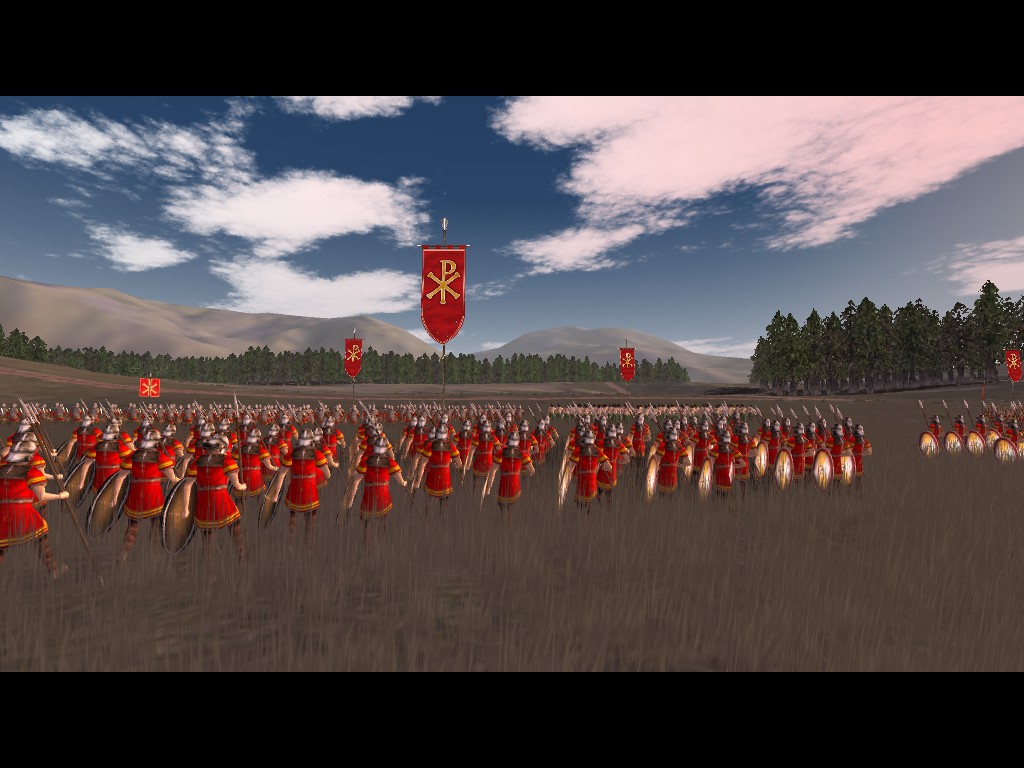
Romans, again from Rome: Total War

Illiterate Kings

Charlemagne unified France and you could argue he founded Germany. He was a lawmaker and a patron of arts and religion. He converted the Saxons to Christianity at the point of a sword. A formidable character. But here’s a humanising and poignant detail about him from page 109. Wallace-Hadrill quotes a chronicler named Einhard as he goes on about how great Charlemagne was, how generous he was to the priests and to the arts, the churches he built, the treasures he bestowed. Einhard also says that Charlemagne kept tablets and parchment under his pillows so that when he got a free couple of minutes “he could practise tracing his letters. But he took up writing too late and the results were not very good.” He was a king from a line of kings – but in this age, he never got an opportunity to learn to write. He wanted to – but he was too old when he finally got the chance, and he only got to practise in odd spare moments. Even his flattering chronicler Einhard, looking at the messy lines and errors in Charlemagne’s uncertain script, has to purse his lips and shake his head sadly.
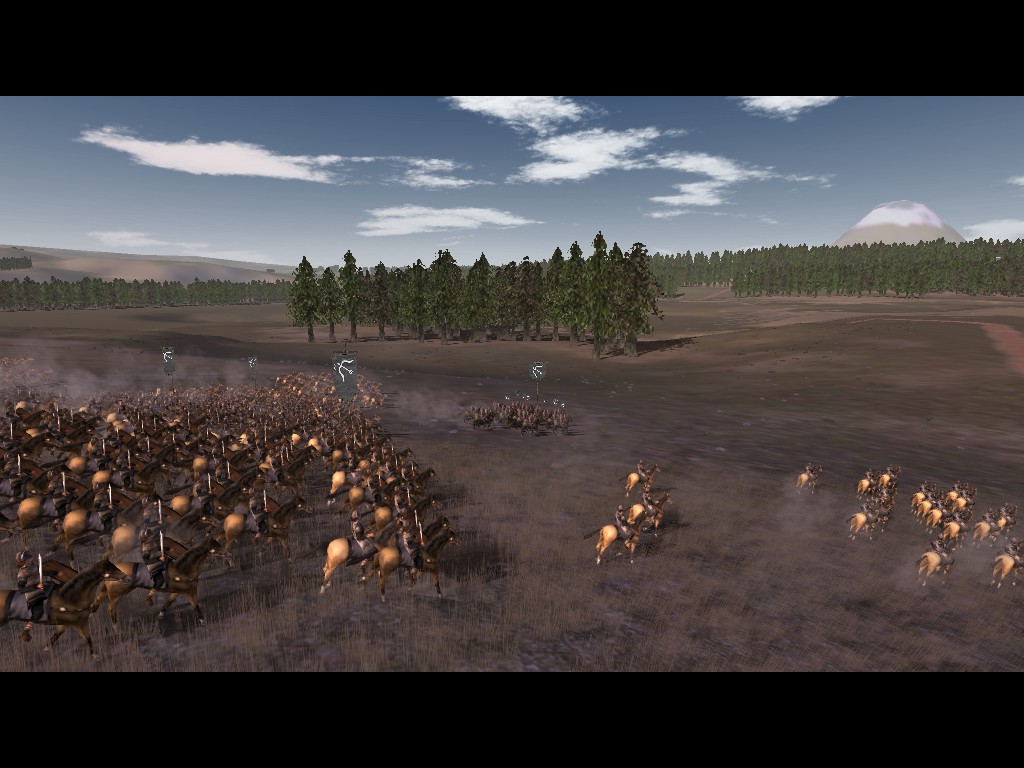
More Huns on the move. From Rome: TW

To finish, I want to note that books like this don’t come out anymore. And that’s for better and for worse. For better, because the author can be a callous prick sometimes. The later Merovingians died young of illnesses, so they were, he says, ‘physical degenerates.’ Sorry, what? But also for worse. This book is pocket-sized, accessible, unpretentious, erudite, focused. No hype, no bloat. An expert is informing the scholar or the layperson, and Harper are taking in $1.25 into the bargain.

So, Notes on the Medieval World isn’t really a series, more a theme I’ll be coming back to between long gaps, whenever I happen to finish a relevant book. Most likely the next one will be Passages from Antiquity to Feudalism by Perry Anderson. Stay tuned to see what videogame screenshots I manage to shoehorn in.
Home Page/ Archives

Games that warped my young mind: Age of Empires 2

Click here for my previous entry in ‘Games that warped my young mind,’ discussing Red Alert 2.

Around the start of this millennium, the adults were worried about how Grand Theft Auto would turn my generation into serial killers. The ultra-violence of GTA was probably too outrageous and obvious to have much effect. Meanwhile, far less controversial games were warping the way we thought about the world. Today I’m going to take a critical look at a classic that is still widely-played today: Age of Empires 2. AoE2 is a strategy game from 1999 that purports to be set in the Middle Ages. But it gives a totally wrong impression of how the Middle Ages worked.

What’s my angle here? Do I think Age of Empires and Command and Conquer should have been banned? No, the world would be a less fun place without them. But all the ink spilled condemning GTA would have been better spent making an informed, sympathetic criticism of a game like AoE2. People who liked and enjoyed the game, but also had read a few books about the actual Middle Ages, should have had a platform to tell us what it got wrong.

Strengths

First, the strengths of AoE2. You don’t need me to tell you it’s a satisfying and addictive game. Take that as read. As for how it depicts the Middle Ages, there are good points. The campaigns strike a balance between compelling narrative, satisfying challenges and historical fidelity. The William Wallace campaign is a perfectly-ramped-up tutorial with a good story, and to this day ‘Falkirk’ and ‘Stirling’ are taking up space in my memory banks. Also, there are paragraphs of proper historical information on offer, if you care to pause the game and do some reading.

The gameplay itself has its strengths. It conveys one important lesson about history: before you can put armies in the field, you need to have a lot of people working hard producing stuff. And unlike in C&C where there’s one all-purpose resource (ore or tiberium), AoE and AOE2 demand that you build a relatively complex and diverse economy. Twenty minutes into a game, you have built a busy little town: your villagers are mining, farming, hunting and gathering, slaughtering sheep, cutting down trees; little boats are bringing in nets full of fish to your docks; little carts and trade cogs are moving between settlements. It’s diverse and interdependent, and as you play, human activity gradually consumes the forests and the wildlife, and the grass is turned into neat rows of crops. It’s not just satisfying to play and nice to look at; this basic rhythm of gameplay is authentic.

Genocide

So here are my criticisms of AoE2 from a historical perspective. I’m not going to talk about how the Elite Long Swordsman has the wrong type of sword or the Frankish blacksmith model is inaccurate. I am going to talk about its overall concept of society and warfare in the Middle Ages, and how it gave a whole generation fundamentally the wrong idea.

AoE2 still depends on the C&C formula in its basic structure: build a base, build an army, destroy the enemy. That’s OK in a game where you play as a military commander and your task is to destroy a military base. But in the AoE variant, you are not destroying a military base. You are destroying a whole society. You have to exterminate the ‘enemy.’ You have to level his city and his infrastructure. Not take it over – demolish it.

I won’t labour this point as it was expressed well in this post from acoup.blog. But while the grown-ups were worried about us jacking a car and doing hit and runs, we were meanwhile playing a supposedly more wholesome and educational game, in which we were required to do genocide. And 100% anachronistic and unnecessary genocide, at that. The fact that so many who grew up playing AoE have stood by while their countries killed vast numbers of people with bombs and guns has broader roots than one videogame, of course. But games like this are part of the tapestry. 

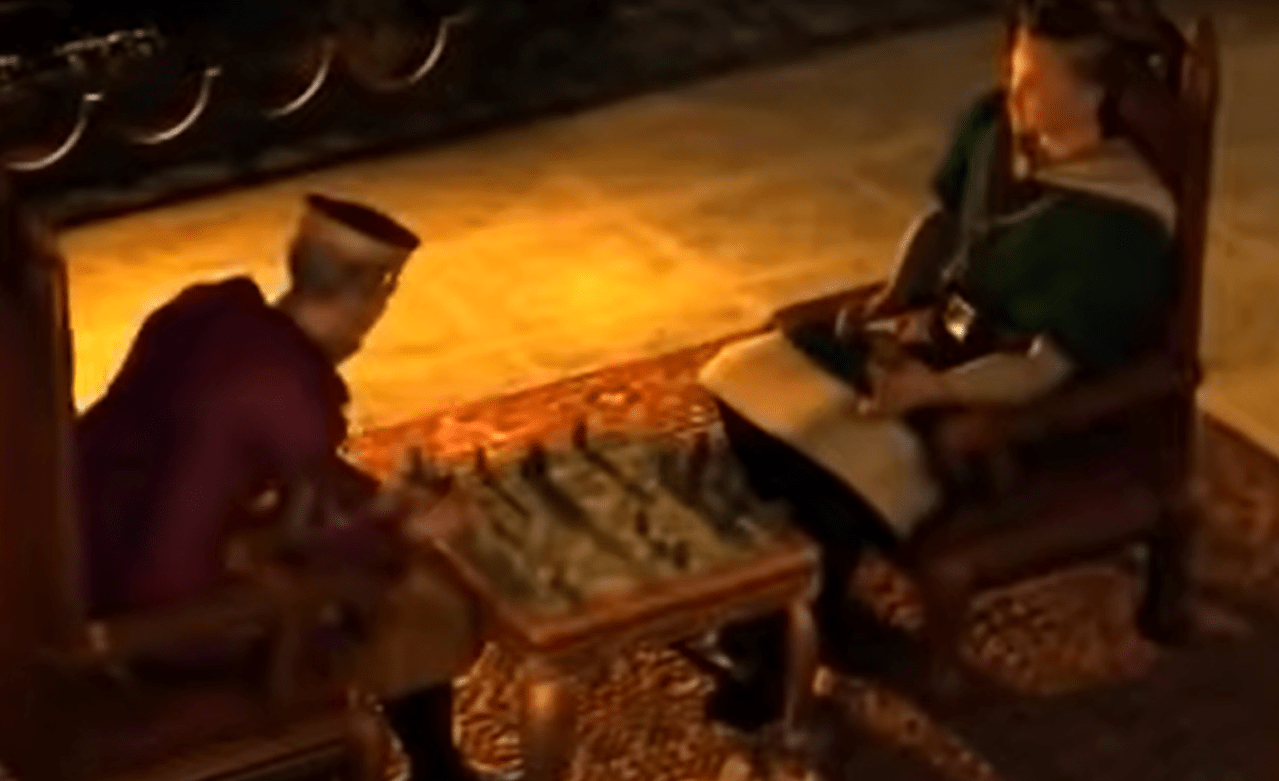
The intro video is clever. The game of chess is a nod to the fact that we are playing a game. Blunting the edge of many of the criticisms I will make here, the video suggests that like chess, the game you are about to play is only supposed to be an approximation of real life.

Society

Let’s return to that pretty medieval town you have built. How many farms have you got? Five, six, seven? And how many other buildings have you got – a monastery, a barracks, a castle, a market, a blacksmith, a stable, an archery range, a town centre…? You’ve got at least as many other building types as you have farms. You might easily have twice as many.

Throughout most of human history, and certainly in the Middle Ages in Europe, the overwhelming mass of the population worked in agriculture. In AoE2, the heavy toil which defined the lives of 95% of the population is represented by five villagers hoeing little plots of land. The farms, little patches on the margins of the base, are like gardening allotments on the edge of a housing estate.

Why does this matter? Because a lot of guys are walking around out there with the vague idea that if they had lived back in the middle ages they would have been knights. White people are actually the worst offenders with the ‘We used to be kings’ meme. In reality, most of us don’t have to go back as far as the Middle Ages to discover that our direct ancestors were super-exploited peasants with no freedom. It took the labour of a whole village to arm and mount a single knight. Again, AoE2 is only one artefact of the culture that produces these wrong ideas, but it is under-examined.

Sometimes you can see how shallowly the C&C formula is buried. Your attractive medieval settlement can stand in for a military camp, a city or an entire civilisation, depending on the scenario. But it is what it is: a base. Likewise the game treats the player as a commander in a modern military, with life-and-death control over the entire faction.

As soon as you read any real medieval history, it becomes clear how absurd this is. Medieval history is mostly about the church revolting against the king and/or the secular nobles, the nobles revolting against the king or feuding with one another, the peasants revolting against the nobility, and the town people revolting against all of the above. AoE2 is about players (human or AI) who have absolute control over an entire society, waging war on another equally monolithic society.

A real medieval polity was not united but feudal. A king had to negotiate through layers of autonomous lords and knights to get anything done. Its settlement pattern was very much dispersed, not nucleated like the AoE/C&C base. A ‘knight’ was not just a cavalry fighter who was good against archers and weak against pikes. For your medieval ancestor, the knight was the equivalent of your mayor, your boss in work, a military officer, and a made guy in the mafia.

There is a ‘Feudal Age’ in AoE2. But the game does not simulate feudalism – it simulates a caricature of a totalitarian communist state.

For those who haven’t played it, this is what actual gameplay looks like.

Ages

Speaking of ‘ages’ – in AoE2, the player progresses through four: the Dark Age, the Feudal Age, the Castle Age and the Imperial Age. Each age unlocks new buildings, units, technologies, etc. But these ages do not correspond to anything in real life. In the first AoE they roughly did. But not here. The game covers the period from around 500CE to around 1500CE. The ‘Dark Age’ does not correspond even roughly to 500-750, nor the ‘Feudal Age’ to 750-1000, etc. There is too little in the early ages by way of buildings, tech and unit types, then all of a sudden too much in the later ages. No, the Catholic church was not ‘unlocked’ a hundred or two hundred years after the First Crusade. Stuff from the ‘Castle Age’ was 100% around throughout this whole millennium.

All in all, the game does a particularly poor job of depicting the early Middle Ages. A battle in the ‘Dark Age’ is limited to guys with clubs hitting each other. But there was a bit more than that going on during the age of Al-Andalus, the Merovingians and the Tang Dynasty.

In the real middle ages, The Catholic Church pretty much had a monopoly on literacy, education, social services and bureaucracy across most of Europe for most of a millennium. In AoE2, the clergy don’t show up until the third ‘age’ of four.

The Marxist idea of a mode of production offers a better template for social development than the idea of a linear progression of ‘ages.’ (Here, I went off on a tangent proposing how this could actually work in a game, but to spare the reader I have moved it to an appendix which I will post next week.)

All I’ll say now is, instead of different ages, I wish we could see different social orders. Returning to the Marxist criterion: sure, the mercantilist and feudal social orders have a greater productivity of labour than the nomadic society or the trans-egalitarian clan society. But depending on the situation, the former were still capable of losing wars to the latter.

Factions

In a way, there’s a refreshing universality in AoE2, an ethos of common humanity. Beneath the different models, every faction is essentially the same (barring a special unit which is often only unlocked late in the game – the Vikings only get Berserkers after, historically, the Norse and Danes had long since settled down and ceased to Vike). It is really laudable, too, that AoE2 even before the recent DLCs had a more diverse roster of factions and cultures than most of the Total War series. This balance and symmetry is also good for playability.

It’s certainly less problematic than the approach of Rise of Nations (2004), which presented a roster of ‘Nations’ such as the British, the Japanese and the Bantu, each of which had the same essential features from the Stone Age right through to the Information Age (‘The Russians have the power of the motherland, giving them plus 3 attrition damage…’) Though I should mention that I’ve spent many enjoyable hours on Rise of Nations, including recently.

The Middle Ages saw clashes not just of class or religion or people, but of different types of society, as we can see when the Anglo-Normans confronted the Irish (check out my series Celtic Communism), or when the Norse and the Danes came to Britain.

Warfare

This brings us to the nature of warfare in the Middle Ages. Here AoE2 not only does a bad job of being historically accurate – it’s an area which I’ve always found weak in terms of gameplay.

Consider the historical battles which occur in the campaigns – the aforementioned Falkirk and Stirling, or the Battle of Hastings in the expansion pack. In real life, these were distinct battles that happened in specific places. In AoE2, they are about building a base, gradually wearing down the enemy bases, then finally destroying them. Actual battles rarely happen in AoE2. Every war is a war of attrition.

Here’s something I noticed at the moment I decided to abandon the hitherto-promising Bari campaign in one of the recent DLCs: AoE2 is supposed to be set in the Middle Ages, but actually what it simulates is closer to 20th Century warfare. In some scenarios you have limited forces and have to use them cleverly; that’s both better fun and more accurate. But in most scenarios, and in the vanilla game, your task is to churn out soldiers and rush them to the front, where each wave will gain a little ground before its complete destruction. Tactics are rudimentary.

That is why a scenario like Vinlandsaga works so well: AoE2 is better at simulating a drawn-out process of development, exploration, conquest and settlement than at simulating an individual battle. But even in Vinlandsaga, you somehow find yourself besieging and demolishing stone castles in the early Middle Ages in Greenland.

The violent part of the game is actually not much fun. Since tactics barely matter and there are no set-piece field battles, winning a war is reduced to producing soldiers in greater diversity and quantity than the enemy. You spend a fortune on them only to watch them, usually, die for minimal gains. It’s not very satisfying.

Conclusion

Like a lot of people, there are large chunks of human history that first entered my ken through the medium of videogames. This stuff is really influential on how millions of people think about the past. So there needs to be a culture of friendly historical critiques. I’ll still play a historically inaccurate but fun game over one that’s more accurate but less fun – I’ve spent a lot more time playing Creative Assembly games than Paradox games. Fair enough if developers generally allow gameplay to trump authenticity. But let’s be aware of the choices they have made.

Instead of such a culture of friendly criticism, I think strategy videogames have functioned as a transmission belt for a mechanistic and essentialist understanding of societies, nations and conflict. For example, I once came across a Youtube video which justified the genocide of indigenous peoples in the Americas with reference to their ‘spawn points’ and ‘tech tree’ – evidently a conscious shorthand, but un-ironic. The idea of societies composed of antagonistic classes is quite incomprehensible to people brought up to assume that each given faction or nation was a monolithic and totalitarian entity.

I’ve read more than one recent novel with a pre-modern setting in which the characters use terms like ‘subconscious’ (coined by Freud in the 1890s, right?) ‘genocide’, (coined in 1947) and ‘the military.’ It’s that last one that concerns us here. AoE2 is part of a culture that reifies the state, that tells us that the standing army and the modern nation have always existed. But the real Middle Ages were much stranger and much more interesting.

Games that warped my young mind: Red Alert 2

Home Page/ Archives

Appendix: Ages and Ages