Following on from last week’s post, I want to thrash out from uncertain evidence where things stand in the war as of today. Day 12 is a landmark because twelve days was the length of last year’s June conflict between the same antagonists. The day has come and gone with only the most unconvincing signals from the US president that there might be some dim prospect of a peace deal. But as I said last time, the basic strategic situation is: it’s the Iranian side who get to say when the war ends.
But it may be the end of the beginning. I think we are getting on towards the end of the first phase of the war, a machine war mostly of missiles, bombs and drones. The main questions in this first phase of the war are: what do the Iranians do when they run out of missiles? What do the US and Israelis do when they run out of interceptors? And who runs out first? A missile-interceptor gap in favour of Iran would mean a sudden ramping-up of damage to Israel, Gulf oil infrastructure and US bases. A gap in favour of the US means Iran’s chief offensive weapon is spent.
Where are we now?
Where do things stand right now in relation to this question? Almost nobody who knows anything valuable has any incentive to tell the truth. Here I will sum up the contradictory stuff I’ve read from various more or less non-credible sources.
That there are x5 fewer missiles than expected because Iran has lost so many launchers to air strikes.
That the US is pulling military hardware out of places like Korea and Ukraine to throw it into the Iran situation.
That the rate of Iranian missile fire has slowed a great deal since the start of the war.
That in comparison with last year’s 12-day war, fewer Iranian missiles are being launched – but they are causing more damage with the population of Tel Aviv being forced to run in and out of bunkers all the time.
That the Iranians are tricking enemy pilots by literally painting warplanes on runways.
That Tel Aviv is being hit really hard in the last four days, that the “Iron Dome” is breaking.
That US/Israeli planes are swarming the exits to Iranian bunkers, blowing up anything that pokes its head outside.
That civilian life in the Gulf has returned a good deal of the way to normal.
That Iran has pivoted to blowing up oil facilities in the Gulf.
That these attacks on oil facilities are not Iranian at all, but Israeli false flag operations (If the Gulf countries choose to do a deal with Iran in the future, they can all pretend to believe this).
That Iran is still holding back its biggest missiles.
That Iran can churn out Shahed drones at several times the rate that they are destroyed, and that these drones can do enough damage to make a big difference in the war.
That Iran can fight on at a fraction of the financial cost that the war is imposing on the US.
That the US side are not actually worried about running out of interceptors, only about leaving Ukraine exposed by overcommitting to Israel and the Gulf.
The US has not lost vessels. But that could be because their navy is hanging back and not committing itself to combat.
That the entire Iranian navy and air force have been destroyed, and 80% of air defences destroyed.
That 17 US installations in the Middle East have been damaged.
A Shahed drone shot down in Ukraine. Image courtesy of Npu.gov.ua
All of the above cannot be true. But some of it is. We have to use our own judgement. It appears to me that while the balance of fatalities is massively against Iran, the war is proving to be a massive logistical, political and economic challenge for the US.
What do we know for sure?
The outstanding fact of the war is that there has been a slaughter of civilians in Iran and Lebanon. Next in significance is the blockade of the Straits of Hormuz, the mere warning of which has led to economic turmoil around the world. Moving on from warnings, today three ships were hit by Iranian weapons in the straits.
Incentives to de-escalate are not there. An initiative by the Iranian president to mend fences with the Gulf States was blocked by the military, with strikes continuing, for example on a desalination plant in Bahrain the very next day. Yesterday I saw multiple headlines about Trump saying peace was coming very soon, and I just find it both funny and irritating that there are still journalists hanging on every word out of Trump, as if this is a man who weighs his words for even a second before vomiting them up, or stays true to them afterwards.
The US/Israeli bombardment, with its toll in civilian lives, can carry on for, in effect, as long as the US population will continue to pay for it and to tolerate it morally. But Iran will run out of missiles or of launching capacity sooner than it runs out of resolve. From a two-sided air war it will become a one-sided bombing campaign like what the US did in Korea and Vietnam (without unseating a regime). The 12-day duration of last year’s war could indicate that this first phase, this machine war, might be reaching its limits. But assuming the two sides are better-prepared this time, it could go on for another week or two.
At the end of that period, a missile-interceptor gap in Iran’s favour would mean an episode of more serious damage being inflicted on US bases and on Israel. Such a ‘Tet Offensive’ moment, especially so soon after the outbreak of war, could have a huge effect on public opinion and mood. A missile-interceptor gap in favour of the US would, on the other hand, settle the air war into a one-sided conflict until such time as the Iranians can restore capacity – if they can restore capacity at all under such pressure.
Next post I intend to explore what a second phase of this war might look like, assuming that the first is coming to an end. To finish today, a note on the Iranian regime.
Iran: strengths and weaknesses of the regime
I said last week that Trump, Hegseth, Miller et al are fools. The Iranian leadership, on the other hand, are reactionary and ruthless, but they are not fools. Unlike the American and the Israeli leaders, they cannot afford to be fools. The Islamic Republic is deeply imbedded in society through a nearly fifty-year history. Iran’s strategic doctrine of distributed “mosaic” resistance and multiple designated successors for every position is an impressive response to the last quarter-century of a US and Israeli doctrine of blitzkrieg and assassination. In the future, the current war could be written up as an epic of resistance that could supply the clerical regime with a whole new legitimizing narrative that it can spin decades of mileage out of.
For what it’s worth, I don’t support the Islamic Republic regime – and I think any regime that Trump might install (or Biden, Obama, Bush or Lincoln, while we’re at it) would be a lot worse. A new regime emerging in a genuine way, from a popular uprising such as the Women, Life, Freedom movement, or from Iranian labour, would be a different story. To me this is a very simple point. It’s not complicated at all. Some people insist that any criticism of Trump’s idiotic war is a defence of the clerics. On the other hand I’ve noticed a semi-ironic identification with the Iranian regime from people who are simply relieved to see some powerful entity standing up to the US and Israel at long last.
Even taking into account the rounding effects of irony, I think this is unwise. Already the clerical regime is directing its propaganda appeal to the anti-Israel layers of MAGA more so than the progressive anti-war left.
Anyway, I don’t feel any need to wring my hands, accompanying any remarks with a token condemnation of the Iranian government for the sole purpose of covering my arse. That’s not why I’m writing this. But a relevant point, for my purposes, is to look at how the nature of the Islamic Republic might inhibit its ability to fight imperialism. On Drop Site News a week ago I heard an Iranian official using this war as a retrospective justification for the killing of thousands of protesters by the government in January in operations that were extraordinary in scale and ferocity. On the contrary, there must be severe confusion and demoralisation in the armed forces and among the public following the winter bloodshed. This kind of war demands the full mobilisation not only of the armed forces but of all of society.
I’m going to leave that point very general because of weaknesses in my knowledge of Iranian culture and politics. But as a general rule the nature of a regime has profound effects on how it fights a war. We can’t put the clerical authoritarian regime in a box and forget about it for military purposes. It will tell.
The Lacuna is a 2009 novel by Barbara Kingsolver about a young Mexican-American man, Harrison Shepherd, growing up in the early 20th Century. During his fictional life, spent back and forth between Mexico and the USA, he encounters real events and people, such as when he sees the Bonus Marchers beaten and gassed off the streets of Washington DC in 1932, makes friends with Diego Rivera and Frieda Kahlo in Mexico City, and back in the US finds himself in the firing line of the McCarthy Red Scare.
It’s a great novel that deserves all the praise and prizes that it got. In this brief post I want to zoom in on one interesting feature: its depiction of the Russian revolutionary Leon Trotsky. Trotsky, who lived in exile in Mexico city from 1937 until his murder in 1940, occupies a prominent place in the story. His depiction is something I’m going to praise but also criticize.
Kingsolver, who cut her teeth writing about miners’ strikes, treats the workers’ leader Trotsky with great sympathy. He appears to Harrison as a short, strong man with the dignified appearance of an older peasant, who is passionate about animals, nature and literature as well as politics. He employs Harrison as a secretary and, when he stumbles upon the young man moonlighting as a writer, gives him precious encouragement. An exile from Stalin’s Soviet Union, Trotsky is more melancholy than angry. Harrison is a witness to Trotsky’s murder and is haunted by the experience.
As an example of how she depicts Trotsky, in his affair with Frieda Kahlo (they did the dirt on their respective partners, Natalia Sedova and Diego Rivera), Kahlo comes out looking a lot worse than him. Harrison is Kahlo’s friend and confidante, and he judges her more harshly, probably because he knows her better; Trotsky is up on a pedestal and largely escapes judgement.
Trotsky, Natalia Sedova arriving in Mexico, escorted by Kahlo
Kingsolver is interested in Trotsky but far more interested in Kahlo. We see Kahlo’s sharp edges, we are invited to judge her at times. But I guess this is because the author decided to make her a central character, to spend more time and energy on her. Trotsky gets comparatively less attention from the author, so we get a simpler picture of him. This is all fair enough. But this leads the novel into some avoidable missteps.
Self-portrait by Frida Kahlo
Funerals
It’s not impossible that Trotsky would have employed Harrison as a secretary. Harrison is a veteran of the Bonus March, a supporter of ‘the dictatorship of the proletariat,’ (understood by him to mean democratic workers’ power) and a member of the leftist artsy milieu in Mexico City. Harrison is also young, and Trotsky was more politically tolerant toward younger comrades. But Harrison is, for all this, not very knowledgeable about or active in politics. I think Trotsky would have sooner entrusted such a key role to members of his own organisation, the Fourth International.
The 1932 ‘Bonus March.’ Jobless veterans camped out in Washington DC were subjected to a violent military crackdown.
So it’s a very strange moment when Harrison asks how Stalin and not Trotsky ended up in charge of the Soviet Union. This should be something which Harrison already knows about and has developed opinions about, if he’s living and working in a trusted position in Trotsky’s household.
It’s a problematic moment in a bigger way, too. The real Trotsky wrote entire books about Stalin’s rise to power, so we know what he would have said. The explanation he gives in The Lacuna is wide of the mark. Trotsky, earnest and visibly pained by the memory, tells Harrison that he missed Lenin’s funeral because of a devious prank by Stalin. And so Stalin took centre stage at the funeral, and so, in this version of events, he became the sole possible successor to Lenin. I remember being told this by my school history teacher as an aside, as a touch of pop-history anecdote material, but I haven’t come across it anywhere since. Maybe it’s true as far as it goes, but it doesn’t answer the question.
And it’s definitely not the first answer Trotsky would give. In real life, Harrison would want to put the kettle on and pull up a comfortable chair before he asks Trotsky how Stalin ended up in power. Trotsky would not have spoken of personal intrigues; he was far more partial to grand socio-economic analysis and theoretical debates. If you open up his key book on the subject, The Revolution Betrayed, you can see this in the title of the first chapter; it’s not ‘Stalin: Devious Bastard’ but ‘The Principle Indices of Industrial Growth’.
A mural by Diego Rivera depicting Tenochtitlan. Harrison’s stories are set in the same era as this painting
Yeoman farmers
In another strange scene, Trotsky laments the latest news from Russia: now Stalin is going after the ‘Yeoman farmers.’ But Stalin had started in on the ‘Yeoman farmers’ (kulaks) in earnest from 1929, and this conversation is happening around ten years later! In the early 1930s forced collectivisation and the ‘liquidation of the kulaks’ led to famine and terror on a huge scale. It was one of the most traumatic episodes in Soviet history and Trotsky wrote about it at the time. It wouldn’t have been news to him by the time he was in Mexico. In any case by then there were no kulaks left.
Trotsky in The Lacuna seems to regard these ‘Yeoman farmers’ as a key constituency whom nobody should mess with. This wasn’t the case. While Trotsky condemned Stalin’s onslaught on the peasantry and national minorities, he would still have used the derogatory term ‘kulaks’ rather than ‘Yeoman farmers.’ He saw the kulaks as a problem (though he advocated gradual and peaceful solutions) and earlier (in the mid-1920s) he condemned his opponents, including Stalin, for enacting policies that enriched and empowered this social layer.
‘pedantic and exacting’
In 1938 Trotsky’s son and close comrade Leon Sedov died in Paris, likely poisoned by Soviet agents during a routine surgery. In a powerful obituary, Trotsky expressed regret over his own often difficult personality:
I also displayed toward him the pedantic and exacting attitude which I had acquired in practical questions. Because of these traits, which are perhaps useful and even indispensable for work on a large scale but quite insufferable in personal relationships people closest to me often had a very hard time.
A more rounded novelistic portrayal of Trotsky would show us this ‘pedantic and exacting’ side, which was not a figment of Trotsky’s imagination – and perhaps his own occasional pang of regret over it. As his secretary, transcribing his extensive writings, Harrison would not only experience on occasion this ‘very hard time’ but would read practically every word Trotsky wrote. Someone as raw and open as Harrison would (rightly or wrongly is of no concern here) see some of Trotsky’s writings as ultra-principled or hair-splitting. This would especially be the case in the late 1930s; the extermination of all his allies and supporters back in the Soviet Union left Trotsky isolated, debating with the few survivors over questions which had no easy answers.
Trotsky with Ramón Mercader moments before the assassination. From The Assassination of Trotsky (1972, dir. Joseph Losey)
It’s believable and accurate that Harrison would encounter Trotsky and see a kind, curious, haunted man. But since he lived with him for a few years, he would see that like many great leaders and writers, Trotsky had his more negative personal traits. A more nuanced Trotsky, like the multi-faceted Kahlo we come to know in The Lacuna, would be all the more sympathetic for our having seen various sides of him.
The point that this book has been hammering home is that hunter-gatherers were not ‘innocent’ or just roaming bands. Not only did foragers of the Stone Age have complex social structures and build great monuments, they were politically self-conscious and sophisticated.
Building on this, Chapter 5, ‘Many Seasons Ago,’ describes two very different cultures which lived along the Pacific coast of North America, drawing a series of fascinating comparisons and contrasts between the two. But the arguments and conclusions, this time, I found far less convincing than in previous chapters.
The argument is in essence: look at how radically different these two societies were, even though they had the same mode of production. So, isn’t the idea of a mode of production a bit useless?
The two North American ‘culture regions’ Graeber & Wengrow outline are the Californian Region and the North-West Coast Region. These were not pre-agricultural societies, the authors argue, but anti-agricultural – ie, they knew about farming but chose not to practise it.
Reconstruction of a Californian Yurok plank house
Within this, as the most striking examples of the two regional cultures, they zoom in particularly on the Yurok (California) and the Kwakiutl (North-West).
Let’s try to sum up what Graeber and Wengrow put forward here.
They say that idea of a ‘culture region’ is not perfect but makes more sense than ranking and sorting societies based on ‘mode of production.’ In other words, let’s group different societies based on what games, foods, clothing and values they share, not on whether they are foragers, farmers or industrial workers.
They say that societies (or at least these societies) are ‘ultimately’ shaped by political and cultural dynamics, by human agency, and not by ecology or economics. Concretely, the Kwakiutl ate salmon and the Yurok ate nuts and acorns, but that had nothing to do with their respective social structures.
Societies define themselves against their neighbours – ‘dynamically interconnected [and] reciprocally constituted’ (Marshall Sahlins.) People traveled a lot in the Stone Age and were aware of neighbours’ customs and tech. What they consciously chose not to borrow is what defines each group: we are the people who don’t go in for slavery, who prefer a spartan aesthetic, etc.
A Kwakiutl woman
So what do I think of all that?
I come to this without much prior knowledge, but it seems to me that the Yurok and Kwakiutl are bad examples for what the authors are trying to argue. Their means of subsistence could be crudely grouped together as ‘forager’ but were radically different. Culture and politics are weird and wonderful, so I’d agree that you can’t say that X climatic-economic input produces Y political-cultural result; if I say that the Kwakiutl eat fish, therefore they make colourful masks and enslave people, clearly there’s a missing link in the argument. But even though we can’t trace the causal relationship, I intuit strongly that there is one. It’s no coincidence that the people who lived on a diet of fatty, oily creatures made a virtue of amassing fat in their possession and in their own bodies. The people who hunted fish also hunted people. The people who ate dry, hard, austere nuts preferred not to hunt people, and themselves valued austere simplicity, hard work and physical thinness.
Between input X (the means of subsistence) and its many, practically untraceable outputs there is plenty of room for randomness and invention, and for the unique historical experiences of a given community, to interfere. It’s delightfully complicated.
Graeber and Wengrow’s thesis is appealing because it assigns the lion’s share of explanatory power to the political initiative of the people themselves. And it’s probably true that western Eurocentric writers are too keen to talk about their own history as a matter of political decisions, leadership, values and principles, while jumping to the most smug, glib, reductive, deterministic explanation they can think of when it comes to someone else’s history.
An idealistic, voluntarist philosophy lends itself well to judging certain communities for conditions forced upon them. But if we make our own choices, we make them from the set of choices available to us. Some people have more and better choices than others. This obvious enough to the authors that at one point they attempt to say, in essence, ‘No, not like that.’ Also, the limits of a given mode of production intrude when the authors acknowledge in passing that the population sizes in these communities were tiny. Neither fish nor nuts could support as large a population as settled agriculture. It’s fair to talk about ‘advance’ or ‘progress’ in relation to productivity of labour.
So they haven’t convinced me that there is a serious ‘problem with modes of production.’ But in the course of their argument they talk about a whole lot of great and interesting stuff. Once again, the journey is such a pleasure that you don’t mind if you never reached the promised destination.
I love it when a news site makes their headline ten words longer than it needs to be, just to shoehorn in some way to frame the story in a politically agreeable way. Take this headline from the front page of the Guardian’s website:
Israel ‘will do whatever it takes to avoid 7 October-style attack’ as it launches Lebanon ground raids
Sunday September 30th
The Israeli leaders are stating their intention of invading Lebanon with sweeping war aims. But we are supposed to go along with the fiction that it’s just ‘ground raids,’ like it would be totally irresponsible to say any more than that for now. That armoured brigade and airborne division massing on the border might turn around and go home any minute now.
To really plumb the depths of that headline, imagine if the Guardian had framed the October 7th 2023 attacks as
Gaza ‘will do whatever it takes to avoid Cast Lead-style attack‘ as it launches Israel ground raids
Israel must be portrayed as the victim. That’s why even in a headline, which is supposed to be brief and to the point, the purely hypothetical attack is mentioned before the actual real attack.
So moving on two days and reading the headlines from October 2nd 2024, we can easily imagine western politicians and journalists sighing with relief and leaning back in their chairs.
US THREATENS ‘SEVERE’ RESPONSE AS IRAN ATTACKS ISRAEL
Daily Express, front page, 2 October 2024
We are back on safe territory. The Iranian government is doing a mostly symbolic and nearly ineffectual thing that it did before a few months ago. Now Israel can once again be portrayed as the victim without any need for suspicious convoluted headlines.
But what is ‘severe’ in this context? What could be more severe than what the US has been helping the Israeli state to do for the last year? 40,000 dead, at least. Millions forcibly displaced and the ‘safe zones’ bombed. Millions starved. Journalists and doctors and aid workers killed in their hundreds. Ambulances bombed and shelled. Every hospital and university in the Gaza strip, destroyed. Tens of thousands imprisoned without trial, many beaten, tortured and sexually assaulted. And this hellfire has been raging for a year now with no end in sight.
IRAN MISSILE ATTACK ON ISRAEL SPARKS FEARS OF NEW WAR
Independent (UK), front page, 2 October 2024
‘Fears of new war’ are prominent in my mind too right now. But you know, the pager attacks, the assassination of Nasrallah, the bombing and the invasion were the main cues there, just for me personally. Didn’t Israel bomb Yemen just the other day? How many people did they kill – was it more or less than the one poor soul who was killed by the Iranian missiles?
ISRAEL VOWS TO RETALIATE AFTER IRAN LAUNCHES MISSILE ATTACK
The Guardian, front page, 2 October 2024
It’s jarring to see these papers rewriting history in front of our eyes. Maybe they want Wikipedia in ten years time to say that Iran started the war by launching that missile attack.
Even after the slaughter in Gaza and onslaught on the West Bank over the last year, it is still somehow possible for me to be surprised and horrified at the actions of the Israeli government. After all it has done and is still doing in Gaza and the West Bank, the Israeli state is taking the show on the road. They want an all-out regional war. Until the pager attacks, I didn’t see it. Now I see it more clearly every day. They are hell-bent on raising the stakes.
Maybe they want to grab whatever land they can and kill whoever they want to kill while the going is good. Maybe they want to drag the US in even more than they already are. I don’t know. Usually I can assess the motivations behind why states do what they do. But this is just wild. The stated war aim (ending all capacity for Hezbollah to launch rockets into northern Israel) is not achievable. But it is a blank cheque for the IDF to go in and cause as much havoc as Netanyahu wants, for as long as Netanyahu wants.
By the way, I’m not going to take up 100 of these 1000 words issuing the mandatory disclaimers. You can assume I don’t support the state which killed Jina Amini and which executed hundreds for protesting her death. Let’s move on, without wasting any more of your time and mine, and look at another headline.
US would not support Israeli attack on Iran’s nuclear sites, says Biden
Well, that’s a relief. Because Iran doesn’t even have nuclear weapons. You know which country does? Israel. 88 of them. Even in the headlines about who they are not bombing yet, the unspoken assumption is that the country without nukes represents a greater nuclear threat than the one with them.
Evacuation
In these headlines there is not a hint of the horror of the war that is now starting in Lebanon, not a suggestion of the responsibility of the Israeli government. We hear of Israel evacuating villages. Phrases like ‘evacuation orders’ and ‘evacuation notices’ make it all seem formal and inevitable, as if they are helping people escape from a chemical spill or a flood. Telling people that if they don’t abandon their homes you will probably kill them is not an ‘evacuation.’ What these journalists are doing is like giving credit to a hurricane for the efforts of disaster relief workers.
And of course, Israel could have stopped waging a one-sided war on civilians in Gaza, and thereby stopped the Hezbollah rockets, any day out of the last 360+. That offer has been on the table the whole time.
Proxies
These articles go out of their way to remind us that Iran-backed Hezbollah, which is backed by Iran, is an Iran-controlled Iranian proxy in the region. They would do better to manage expectations about the coming war. Hezbollah is indeed backed by Iran, but it is also a massive political and military force with a lot of popular support in Lebanon. It’s difficult to see Israel winning. But just as the invasion is a ‘ground raid,’ Hezbollah is spoken of as if it’s just some guerrilla camp or terror network.
The right to defend itself
All my life we’ve been hearing that Israel has a right to defend itself, or even ‘herself.’ This was an infuriating and stupid line even before 2023, when somehow the balance of fatalities in the Israel-Palestine ‘conflict’ was always at least 10:1; when any visitor to the West Bank could see that an apartheid system is in force there; when, every four or five years, the IDF would ‘mow the lawn’ by killing a few thousand Gazans.
But the last year has been a horrible revelation. Somehow, things have gotten so much worse. And now Netanyahu wants to bring all this to Lebanon.
And Keir Starmer and Kemala Harris are standing up in front of the world and saying with straight faces that Israel has a right to defend itself. They’re still saying it, like nothing has happened, like that phrase has any meaning at all in this context.
Sometimes I wonder what atrocity Israel has to commit before the Americans feel obliged to stop giving them bombs. What would it take? But at moments like these I only wonder, what would it take before people like Starmer and Harris retire that self-defence line and think of some new hypocritical and stupid formula.
Imagine the panic if refugees, or some minority community, had committed a crime wave like the one the far right have unleashed on Ireland over the past year or so.
Imagine if refugees had rioted, burned buses and trams, smashed shops; carried out dozens of arson attacks all over the country; burned homeless encampments and threatened homeless people with blunt weapons; protested outside politicians’ homes, hung them in effigy, issued death threats, harassed and beat up election candidates.
That alleged sex trafficker who’s on ice in Romania says that Ireland is being ‘invaded.’ McGregor says ‘we are at war.’ But these asylum seekers are children, men and women of all ages, and none of them have weapons or transport. They all speak different languages from one another, have different religions, don’t have any common political cause, and are scattered all over the country. They can just about afford nappies, but they can’t afford tanks. They came here to get away from war. Is that an invasion? Maybe ask someone who’s actually experienced an invasion, like – just for example – a refugee.
We keep hearing that, in contrast to the bad protesters who burn things and the alleged MMA sex offenders who want to see blood on our streets, there are decent and good protesters who have ‘genuine concerns.’
I’m a tolerant kind of person, but I’m losing patience with all this. What are these ‘genuine concerns’? Are they really more serious and genuine than the fear many felt when there was a pall of smoke hanging over Dublin?
I suppose some people are concerned because some of the refugees, while running for their lives, did not wait 6-8 weeks to apply for a passport off the government which was trying to kill them. That’s true, as far as it goes.
When you read in the papers about some shit show where protesters have barricaded a road or shouted at terrified children, and there’s an interview with the chairperson of some local group with a name like Concerned Citizens Who Are Definitely Not Racist, mostly they use their airtime just complaining that the government isn’t giving them information. There are endless variations on this theme. But I don’t want to be a referee for their emails with Roderic O’Gorman. Nobody does. Find more interesting things to complain about, or go home.
Sometimes the Concern is Genuine, but the object of that concern is complete bullshit. Yes, asylum seekers are vetted. No, they commit fewer crimes than the rest of us (and it doesn’t follow that me and you should be deported).
The vague passive anti-refugee sentiment is like, ‘The government is putting a roof over their head but not over mine.’ It’s been two decades of hardship with austerity overlapping with the housing crisis, then Covid and the price gouging campaign by grocery chains and energy companies. You can see where some of the rage is coming from.
But there would be no housing shortage at all if we had public housing, rent controls and an eviction ban instead of this feeding frenzy for landlords and investment funds. We could put a roof over everyone’s head, if we were willing to tell housing profiteers to get a real job. Raise that with the leaders of the far right, some of whom are deep in this racket themselves, and you’ll find out pretty quick how little they care about homeless people. From what I can see, most of the far-right leaders and influencers are small business and property owners, not people on the front lines of economic hardship.
I’m aware that it costs money to accommodate refugees. Taxpayers’ money, no less. To put it into perspective, it has trebled over the last year to a figure just south of what we spend on Housing Assistance Payments (ie, on the state subsidizing crazy rents by shovelling money into the bank accounts of landlords). Two things. First, people only complain about the ‘cost to the taxpayer’ of things they were already angry about anyway. Second, like HAP, nearly all of that money goes to people who own large or multiple buildings. The government looks after the big property owners, whatever happens. According to today’s Independent, only 1% of asylum seekers are in state-owned facilities where people can be housed for a fraction of the cost.
These numbers tell us that if we didn’t have any refugees, we could be giving twice as much HAP to landlords, and they could be jacking up the rent even higher to keep up. What a tragic missed opportunity.
A picture taken during the November 2023 riots in Dublin. From Wikimedia Commons, credit to CanalEnthusiast.
Meanwhile I have ‘genuine concerns’ of my own. I’m concerned about racist thugs setting shit on fire and beating people up. I’m concerned about garbage from social media five years ago suddenly appearing on election posters. Peter Casey has that poster where he looks like Father Jack – the slogan is STOP THE MADNESS. I agree, only I think he’s THE MADNESS.
I have genuine concerns about racism. 85,000 Ukrainian refugees were accepted pretty much overnight and without a murmur of protest, and on much better conditions than other nationalities. But the fury over 30,000 international protection applicants has turned Irish politics upside down. I don’t grudge the Ukrainians anything, and I don’t want assholes to protest them – but the shortage of beds is obviously due to the bigger group, not the smaller group. Has this really not occurred to anyone?
I have genuine concerns about the media. Dread washes over me when I walk into a shop, because when I glance at the newspapers I see headlines dripping with hostility.
I have legitimate concerns about the way Fianna Fáil, Fine Gael and increasingly Sinn Féin are giving ground. On December 4th the state just told male asylum seekers, ‘Nope, we’re not housing you anymore;’ now Harris is clearing out those Grapes of Wrath tent camps and milking it for the cameras. Sorry Peter Casey, I think it’s MADNESS to be up in arms about the state being supposedly a soft touch – when it’s done less than the bare minimum to respect the right to asylum.
Fianna Fáil and Fine Gael both report that the main issue on the doors is migration. Sinn Féin report housing is still the main issue, which tracks with recent polling. But regarding housing, says one prominent blueshirt, ‘the conversation on this issue is less heated than it was five years ago.’ Palpable relief! The far right present themselves as anti-establishment warriors, but they have taken the heat off the government for the housing catastrophe. Maybe that Fine Gaeler is talking it up, but the more migration goes up the agenda, the more housing slips down.
Anyway, what’s the far right’s solution on housing? The IFP say ‘House the Irish first.’ So a 1950s Northern Ireland-style segregated housing system, where people arbitrarily deemed ‘not Irish’ go to the back of the queue, regardless of need or how long they’ve been waiting. I suggest a snappier slogan: ‘Apartheid for Ireland.’
The world is getting more violent and the climate is getting more unstable. More people are going to be forced to leave their homes. A lot more. We can make these refugees into (very unconvincing) scapegoats for housing shortages and violence and whatever else. Or we can be serious about it.
Barring massive political change, I don’t believe any authorities from the EU down to our own government are going to be serious or compassionate. But we as individuals can still behave like human beings. If refugees come to your area, Syrian, Ethiopian, Ukrainian, whatever, don’t protest them (no, not even if you feel the government or IPAS messed something up). Do like they did in Borrisokane: go and talk to them. Some have fluent English, and the Translate apps have gotten good. Take those vague phrases like ‘military age males’ and tag them in your own mind with faces and names. You’ll find that they are regular people with entirely mundane needs and desires. But they are in a bad situation and they have come from a terrible one. They haven’t burned any trams (if one of them does, don’t worry, you’ll hear all about it) but they are the ones – far more than the protesters and more than me – who have genuine concerns.
It is May 1920, and the Bolshevik sailor Raskolnikov is on the deck of the destroyer Karl Liebkencht, watching as 1,500 Red sailors land on the coast of Iran. Black plumes of shellfire erupt on the shore as the guns of the Red fleet bombard the British Empire’s elite Ghurka soldiers.
It is 1921, and the ‘mad Baron’ Ungern-Sternberg, having seized Mongolia’s capital and received the blessing of its priest-king, is setting out for war against the Soviet regime.
It is 1922, and the last White Guard regime still clings to power in Vladivostok in the Far East. General Horvath has given up all pretenses and pretensions at democracy, and rules over an openly monarchist regime, backed by the Japanese military.
It is 1923, and the last White Army, now abandoned by the Japanese, still clings to existence in remote and barely-habitable reaches of the Pacific coast.
It is 1926, and the Red Army is once again fighting the Basmachi in Central Asia.
The conclusions of the Russian Civil War were even messier and more manifold than its beginnings. As with the question of when it started, it’s helpful to think of two civil wars – a broad period of violence in the Tsarist Empire and its successor states lasting from 1916 to 1926 or from 1917 to 1923, and a narrow and more defined struggle between the Red Army and the White movement initiated by Generals Kornilov and Alexeev.
Revolution Under Siege never set out to be a comprehensive history of the ‘broad’ Russian Civil War, but I’m glad I paused the main story to write four or five posts about Central Asia and the Basmachi. This was a way of paying indirect homage to all the theatres of war which my main narrative has been obliged to neglect, such as North Russia, the partisan war in Siberia, the Caucasus and the Baltic States. To this we must now add the Russian Far East and Mongolia, which were very significant after 1920.
Rather than write another three or four seasons of Revolution Under Siege dealing with a period when the Revolution was, in fact, no longer under siege, I’m going to sum up as much of it as I can in one post. These are all things I’d write whole episodes about, if I had infinite time and if the scope of this project were just a few degrees wider.
North Russia
In the Arctic Circle Red forces battled with British and American troops directly from 1918 through to 1920. This was a small and slow war fought in extremely harsh conditions. Each side proved capable of landing heavy blows on the other, but by 1920 the Reds had the upper hand on the frozen battlefields and the tide of political opinion in the Allied nations was turning decisively against the Russian adventure. The Allies pulled out at last, and the Reds retook Murmansk and Archangel’sk in early 1920.
Coat of arms of the Far Eastern Republic. Not the corn, anchor and tool representing peasants, fishers and workers.
Siberia & the Far East
The Reds led an uprising in Vladivostok in January 1920 – a time when the ground was splitting under the feet of Kolchak’s regime. But this uprising was put down by the Cossacks of Semyonov, assisted by the Japanese military. Its leaders, including the noble-born Bolshevik Sergey Lazo, disappeared to an unknown fate.
A few months later the Reds took Irkutsk and set up the Far Eastern Republic in coalition with Mensheviks and SRs. The Far Eastern Republic had its own Red Army and its own emblem. For the next few years it made slow and steady advances against Semyonov’s Trans-Baikal fiefdom and finally, after the Japanese withdrawal, took Vladivostok from General Horvath in 1922. The last major city in the hands of the Whites was now in Red hands.
Territory of the Far Eastern Republic at its height
Mongolia
The Russian Civil War spilled over organically into Mongolia: White Russians fled there, some to settle peacefully, others to raid over the border.
When Baron Ungern moved his forces from the Trans-Baikal into Mongolia, terror seized the Chinese forces occupying the country. According to the White soldier Dmitri Alioshin, the Chinese set about slaughtering every White Russian they could find. The White Russians, who despised the Chinese with intense racism, responded in kind. The White Russians were mostly skeptical of the unhinged Baron and would have avoided him in the normal course of events, but they were driven into his arms by the actions of the Chinese military.
Ungern and his forces endured the steppe winter of 1920-21, and in February they marched on the Mongolian capital city (known variously as Urga, Ikh Khuree, Ulan Baatar). They seized it from superior numbers of Chinese soldiers and began several days of intense slaughter and looting.
Meanwhile the Reds had made an alliance with Sukhbaatar and Chaibalsan, two more left-wing Mongolian leaders who opposed Ungern. A joint Soviet and Red Mongolian army crossed the border. Ungern hastened to meet it. His luck ran out. After defeats, he fled with small numbers, who turned against him and abandoned him in the wild. A Soviet Mongolia was established, and Ungern was captured, tried and executed in Russia.
The Caucasus and Persia
Victory in South Russia spilled over into a string of major gains in the Caucasus. In Azerbaijan the local communists overthrew the Musavatists, the nationalist forces supported first by Turkey and then by Britain. Neighbouring Armenia also contained many pro-Soviet elements and like Azerbaijan it was soon its own Soviet Republic. So secure were the Caucasus that Baku, which had been in enemy hands mere months before, was chosen as the venue for the September 1920 Congress of the Peoples of the East.
Meanwhile the Whites had withdrawn their Caspian Fleet, consisting of 17 ships along with 50 guns, to the British-occupied port of Enzeli in Persia (Iran). Raskolnikov led a Red striking force on a surprise raid, took and held the town for days, and returned the ships, munitions and materiel to Soviet Azerbaijan and Soviet Russia. In Persia itself, the Russian Revolution produced its shockwaves in the form of popular guerrilla leaders. The Enzeli raid, meanwhile, embarrassed the British so badly the Persian parliament rejected a proposed treaty that would have utterly subordinated the country to London.
The Daghestanis had troubled Denikin’s rear at a key moment. In 1920 some Daghestanis revolted against the Soviet power, though as many remained neutral and as many again were pro-Soviet. The Red Army suffered around 5,000 fatalities in tough battles over mountains, defiles and villages perched over sheer cliffs.
Georgia did not come into the Soviet orbit until 1923. The manner in which this was achieved was extremely controversial. It was the subject of Lenin’s final political struggle before his death. Though in extremely poor health, he waged a campaign against Stalin and his ally Ordzhonikidze. The latter pair were guilty of the premature entry of the Red Army into a Georgia that was not quite ready to accept it, and for the heavy-handed manner in which they dealt with the Georgian communists.
Makhno
Makhno and his Anarchist Black Army had been making open warfare against the Soviet power. But during the campaign against Wrangel the Anarchists agreed to a truce, sent some forces to help deal with Wrangel and, more importantly, stopped raiding in the rear of the Red Army.
Even taking into account how deep the hostility was between the Red Army and the Black, and how shallow their cooperation was, there’s something shocking about the Michael Corleone-like speed and ruthlessness with which the Anarchists were dealt as soon as Wrangel was out of the way. The commander of the Anarchist detachment which had fought in Crimea was summoned to Red Army HQ, but it appears it was a trap. He didn’t make it out alive.
After this, Makhno’s fortunes spiraled. He ended up with a couple of dozen companions fleeing across the Romanian border with the Red Cavalry hot on his heels. A humble life as an exile in Paris awaited him.
Internal Revolts
We have traced the fronts of the Civil War clockwise from Murmansk to the Black Sea. Now we return to the heart of European Russia. In late 1920 and into 1921, Tambov Province saw a rural revolt against Soviet power which far exceeded any peasant unrest during the Civil War. Soviet officials and their families were slaughtered out by furious insurgents, who organized into an army along regular lines.
Early 1921 saw a general strike of workers in Petrograd demanding better rations and fewer restrictions on political rights and economic activity. After the end of the strike, in March, the Kronstadt sailors revolted with a mix of similar demands and more far-reaching demands. Suppressing the Tambov and Kronstadt Revolts required serious military operations.
Smele says ‘it has been estimated that’ 2000 sailors were executed after the suppression of the revolt. If so, the scale of the reprisal was truly shocking. On the other hand Marcus Hesse, drawing on Paul Avrich, paints a different picture:
Of those who didn’t flee, several hundred were sentenced to death, although most were then amnestied. Others were imprisoned in camps intended for prisoners of war — some later ended up in the Solovetsky prison, which opened in June 1923 and later became part of the notorious ‘GULAG’. Several years later they were released under a general amnesty.
Leftists have been arguing about Kronstadt for a hundred years, and rather than wade in here I will just make one observation. Each year of the Civil War began, for the Soviets, with a promise of peace that was soon dashed. Spring would invariably bring with it new White and interventionist offensives. The familiar cycles of revolt and foreign intervention would repeat themselves with what must have become a dreadful and crushing sense of inevitability. The Kronstadt Revolt took place only a few months after the defeat of Wrangel, and precisely on the cusp of the Spring campaigning season. Sure, the Kronstadt sailors were raising democratic demands; the Don Cossacks and Right SRs, too, had raised democratic demands but had ended up spilling their blood for the White militarists. With the benefit of hindsight we know that the war, in European Russia at least, was over. The Communists did not have that benefit. We can hardly understand Kronstadt without an appreciation of the fear they had, a fear based on lessons learned in blood, of another year of war.
These revolts would not have taken place during the struggle against the White Armies, because neither the Tambov peasants nor the Kronstadters wanted to see a return of the landlords. But once Wrangel was defeated, the floodgates were opened for many serious grievances to find expression in armed revolt. The horrific conditions endured by both civilians and military during the Civil War meant there was widespread anger. Much of this was directed at the Soviet power and the Communist Party, as they were the regulators and arbiters in this austere armed camp. From both the factories and the naval base of Kronstadt, the leading elements from 1917 were absent: dead like Markin at Kazan, commanding fleets like Raskolnikov, or serving in the state apparatus.
The Kronstadt Revolt in particular, which took place during the Party Congress, served as a warning to the Soviet government that the Spartan wartime regime had been maintained for far too long, and must be dismantled as a matter of urgency.
So, when did the Civil War end? One answer would be 1922, with the conquest of Vladivostok from the Whites. Another would be 1926, with the defeat of the Basmachi. Antony Beevor ends with sailors being shot after the Kronstadt Revolt – a suitably depressing scene for his narrative purposes. But in these three cases we are losing sight of the big picture.
So I’m going to say November 1920.
The former Russian Empire was at war between Spring 1918 (the revolt of the Czechoslovak Legion and the Cossacks) and Autumn 1920 (the treaty with Poland and the defeat of Wrangel). This was an all-out war with profound geopolitical importance, fought between irreconcilable and defined adversaries, with clear criteria for the victory or defeat of each side.
This war was the most important of a complex of armed struggles which engulfed the collapsing Russian Empire in what we could call a ‘Time of Troubles’ lasting from 1916 to 1926 in Central Asia and from 1917 to 1923 in Russia itself. It is the narrow Civil War rather than the broad ‘Time of Troubles’ which has been the focus of Revolution Under Siege. But the two are of course not neatly separable.
Full-scale war breaks out between the young Polish Republic and the young Soviet Union. This is Episode 25 of Revolution Under Siege, an account of the Russian Civil War. We are approaching the half-way point in the fourth and final series.
The Bloodless Front
Readers will remember the young Red Cossack Vasily Timofeich Kurdyukov, whose father was a White Guard but who himself joined the Reds along with his brothers. Vasily – I hope Isaac Babel, who recorded this story, changed the names, but let’s call him Vasily – was a witness to the murder of one brother by the father. Is this ringing a bell yet? He was there too when, after the defeat of Denikin, he and his brothers tracked down their father in Maikop and killed him in retaliation despite the protests of the ‘Yids’, by which Kurdyukov meant the Soviet officials.[1]
April 1920 found VasilyKurdyukov on the move. Denikin was, along with Timofei Kurdyukov, vanquished. So Vasily, his older brother Semyon, and 16,000 other members of Budennyi’s First Red Cavalry Army had left South Russia, going from Maikop through Hulyaipole. They were making their way across Ukraine to take part in another campaign, covering 1200 kilometres in 30 days. Compared to the epic struggle against counter-revolution that was behind them, nothing too serious or historic appeared to lie ahead. The war was over, bar the fighting in parts of Siberia, the Caucasus and Central Asia. The political regime seemed to be opening up, loosening up. The Allies lifted the blockade in January. The death penalty had been abolished. The leaders in the Kremlin were discussing post-war reconstruction, not the starting of new wars. Back east in the Urals, Third Army had laid down their rifles and turned to chopping down wood as the first Labour Army. 7th Army, after routing Iudenich near Petrograd, began digging peat. ‘Communiques from the bloodless front’ announced the rebuilding of this bridge or that railway line, the numbers of locomotives repaired, etc. And throughout the Red Army, literacy classes were a day-to-day reality, with thousands of mobile libraries in operation. As Kurdyukov rode, he would have been able to read educational letter-boards on the backs of the riders in front of him. [2]
For most Red Cossacks and for the large minority of worker-volunteers in the Red Cavalry, we can assume that peace couldn’t come soon enough. The fields of the Don and Kuban had been tended largely by the women and the old men since 1914. But we can easily imagine that for some Cossacks who had been at war for six years, life in the saddle with a sabre was the only life they had known as adults.
The First Red Cavalry Army was going west to join up with the Red South-Western Front under Egorov. They would then grab a few Ukrainian towns from the Polish Army, so that when the Soviets and Poland finally got around to signing their peace treaty, the line on the map would be a little further west and the Ukrainian Soviet Republic that bit bigger.
So far, the Poles had been having their own way – defeating the Ukrainian Nationalists in Galicia and seizing from them the city of L’viv (which they called Lwów and the Russians called L’vov, and which is today part of Ukraine); and to the north, beyond the Pripet marshes, the Polish forces had been chipping away at the Soviet border for a year, seizing one Belarussian town after another. But now that Denikin and Kolchak were finished, it was time to hit back. In a few weeks or a month – if peace with Poland hadn’t been signed by then – the Red Army would be ready to launch an offensive, to hammer that border into a more agreeable shape.
But on April 24th 75,000 Polish soldiers invaded Soviet Ukraine. 11,000 fighters lately incorporated into the Red Army mutinied, led by their commanders, and went over to the Poles. The Polish government had signed a treaty with Petliura, the leader of the late Rada, and he and two divisions of Ukrainian soldiers were aiding the invasion. To make matters worse, Makhno chose this moment to strike the Reds: on 25 April his guerrillas massacred a regiment of the Ukrainian Labour Army at Marinka on the Donets. They also blew up bridges around the Kyiv area, crippling transport.
The Polish invasion made swift progress. This was no border skirmish. They were well-armed. Motor trucks infiltrated Red lines on small country roads. 150 planes supported them from the air with devastating attacks on armoured trains and on flotillas on the Dnipro river. There were 82,847 Red Army personnel on the whole South-West Front – but only 28,568 of them had weapons, and they were in disarray. Egorov pulled back his troops rapidly. The Poles gained 240 kilometres in two weeks. On May 7th they took Kyiv, and soon they had bridgeheads east of the Dnipro River. Since April 24th they had suffered only 150 fatalities.
Less than one month later, the White Guards who had found refuge in Crimea began an assault on Ukraine’s mainland. Wrangel’s 35,000-strong ‘Russian Army,’ which contained many of the same officers and Cossacks who had been fighting Soviet power since 1917, had rejoined the fray. Two new fronts had opened up, and the prospect of peace had receded to the very distant horizon.
Petliura (left) and Pilsudski on April 9th, not long before the invasion
At War Again
We can imagine the dismay and fear now felt by people in the Soviet Union, from the Kurdyukov brothers in Budennyi’s ranks to their mother back in South Russia. Just when the country was escaping, at long last, from the realm of war, here was another massive foreign intervention. It would set off the dreadfully familiar cycles of confusion, fear, revolt, hunger, disease, red and white terror. The death penalty was soon restored. The railways were militarised.
In the words of John Reed:
The cities would have been provisioned and provided with wood for the winter, the transport situation would have been better than ever before, the harvest would have filled the granaries of Russia to bursting – if only the Poles and Wrangel, backed by the Allies, had not suddenly hurled their armies once more against Russia, necessitating the cessation of all rebuilding of economic life – […] the concentration once again of all the forces of the exhausted country upon the front.
In the words of Trotsky: ‘Ahead of us lie months of hard struggle… before we can cease to weigh the bread-ration on a pharmacist’s scales.'[3]
This time there was also a strong element of patriotic indignation. A repeat of the Polish invasion of 1612 was widely feared. The famous tsarist General Brusilov came out of hiding and volunteered his services as an advisor to the Red Army.
Communists, from the Politburo in the Kremlin down to the volunteer in the trenches, found themselves trying to rein in patriotism whenever it threatened to spill over into the familiar Tsarist channels of imperialistic contempt for the Polish people. Trotsky and Lenin were scrupulous about never speaking of ‘The Poles’ or ‘Poland’ but only ‘The White Poles’ or the ‘Polish landlords.’ ‘Do not fall into chauvinism,’ urged Lenin. One Red Army paper, Voyennoye Dyelo, got into big trouble. Officers were sacked from the editorial board and the paper was suspended over the use of the phrase ‘the innate jesuitry of the Polacks.’
Trotsky affirmed that ‘defeat of the Polish White Guards, who have attacked us will not change in the slightest our attitude concerning the independence of Poland.’
Ukrainian communists, too, made appeals for the defense of Ukraine as a nation. A common charge was that Petliura was the chosen caretaker of the Polish landlords, to mind the Ukrainian estate which they had their eyes on. [4]
The rest of this post will explore the background to the invasion from the perspective of the Polish Republic, then describe the initial Soviet response.
A Soviet poster from this time. The caption says, ‘This is how the Polish lords’ invasion will end up.’
Intermarium
With the defeat of Germany in November 1918, a strong Polish military force emerged. Four of the combatant empires had large Polish units in their armies – not least a 35,000-strong Polish unit that had been raised in France and was now sent back into Poland. Also important was the Polish unit in the Austrian military, which was led by a man named Józef Piłsudski. The strength of the Polish military is probably what led to the emergence of a bourgeois capitalist Poland instead of a proletarian socialist Poland (though we will look next week at how close Poland came to a socialist revolution).
Let’s dwell for a minute on Józef Piłsudski. A Pole from Eastern Lithuania, he grew up under the heavy hand of Tsarist oppression, became a socialist but in his own words he dismounted from ‘the socialist tramcar at the stop called independence.’ He was not a leader of masses but a back-room conspirator and bank robber. [5] Service as an officer in the Polish unit in the Austrian military during World War One promoted him to the front rank of national leaders. In 1920 he was head of state and commander-in-chief of the armed forces. His huge moustache belonged to the flamboyant 19th Century, but his glowering eyebrows and cropped hair gave an impression of urgency and severity.
Józef Piłsudski
Piłsudski had a vision of what he called Międzymorze, ‘Between the Seas,’ also known as the Intermarium. Without understanding Międzymorze we can’t understand the Polish-Soviet War. The idea was that Poland should lead a federation of countries stretching from the Black Sea to the Baltic – which meant taking over, or at least installing pliable governments in, Ukraine and Lithuania. This idea harked back to the Polish-Lithuanian Commonwealth of centuries past.
But in Poland as in Russia and Ukraine, grand plans had to be put on hold, as famine gripped the countryside and there were years of misery and want. Poland was not torn apart by war as Russia and Ukraine were, but the new Polish state battled with Germans, Czechs and, as we have seen, Ukrainians. Unlike in the Soviet Union, vast amounts of American aid alleviated the situation – in 1919-1920 the American Relief Administration fed and cared for 4 million Poles. By the end of 1919 a strong Polish state was in existence with a population of around 20 million and armed forces numbering 750,000. [6]
The time was ripe for Międzymorze. And the territories of the new Polish empire would be wrestled from the small Lithuanian republic and from the war-weary and ragged Soviet regime.
The communists, as imagined in a Polish wartime poster
Toward War
The revolutionary tradition, and most especially those trends around Lenin, had long supported Polish independence, and the Soviet government never made any territorial claim over Poland. An independent capitalist Poland, like Finland, Estonia, Latvia and Lithuania, would be accepted by Moscow.
Of course, the Soviet Union was in favour of world revolution. But this amounted to supporting communist revolutions and parties in other countries. Military intervention, even in the form of support for indigenous movements, was controversial. As the Brest-Litovsk episode showed, the Bolsheviks’ confidence in world revolution could in the right circumstances make them more amenable to signing a peace treaty, not less, because future revolutionary events would render an unfavourable treaty void.
The issue was where to draw the Soviet-Polish border – where, in the ‘300-mile band of polyglot territory between indisputably ethnic Poland and indisputably ethnic Russia,’ [7] would one state end and the other begin? This question had not been on the agenda since the 18th Century, and there was no recognised border. While Soviet Russia was busy fighting against the White Armies in 1919, Poland was settling this question at the point of a bayonet, making steady gains in a small-scale but one-sided war. Galicia was theirs by July 1919.
So the Polish and Soviet armies had been skirmishing for a year before the Polish invasion in 1920. Since the first clashes between Polish and Red troops took place as early as February 1919, the historian Norman Davies accuses other historians of ‘ignoring’ the ‘first year’ of the Polish-Soviet War. [8] It is Davies who here ignores the qualitative difference between the low-level conflict of that ‘first year,’ and the all-out war which began in April 1920 (This is a flaw in his generally great book).
The borderlands between Poland and the Soviet Union can be divided roughly into a northern area around Belarus and Lithuania, and a southern area, Galicia and Ukraine. The Pripet marshes lay in between the northern and southern areas. Polish, Russian and Jewish people lived in both, Belarussian and Lithuanian farmers in the north, Ukrainian farmers in the south.
The possibility of a peace settlement was there. The Soviets had no shortage of competent Polish supporters, some of whom they sent to Poland to try to negotiate peace from late 1918 right up to the eve of the invasion. One typical offer was of territory and plebiscites in exchange for peace. These got off to a bad start when a joint delegation of Soviet diplomats and Red Cross officials visited the Polish Republic soon after its foundation. They were immediately arrested and deported. During their deportation, Polish police dragged them out into the woods and shot them, killing three and leaving one who survived by playing dead. Nonetheless the Soviets kept up their peace efforts through 1919 and into 1920.
Frustration and alarm gripped Soviet diplomats and politicians in early 1920. They were still at the ‘talks about talks’ stage, and the Polish negotiators were stubborn and demanding. They would only agree to meet for peace talks in Barysaw (Borisov), a town recently captured by the Poles. It was not acceptable to the Reds as it was in a zone of active military operations. The Soviets proposed Warsaw, Estonia, Moscow, or Petrograd, all of which the Polish side rejected. Meanwhile Soviet leaders had accepted six out of seven conditions presented by the Poles as a basis for talks, but balked at the seventh – it demanded that they never attack the Ukrainian Nationalist leader Petliura. [9] When Moscow pushed back, Piłsudski broke off talks.
Beevor characterises all this as Piłsudski ‘playing for time.’ The time, from the first Soviet peace mission, was nearly 18 months. Piłsudski ‘s stubbornness is explained by the fact that he did not seek to make peace, but sought a pretext to invade.
‘When diplomatic moves failed,’ writes Robert Jackson, ‘the Reds launched a series of small attacks along their western front; the Poles beat them off and held their positions.’ [10]
The Soviet leaders were not naive, so they understood that a Polish attack was likely. They developed their own plans for a strategic offensive as far as Brest – hence Kurdyukov and 16,000 other riders hurrying over from South Russia. The limit of the Red Army’s ambition was to seize a few more towns before the signing of a peace treaty, and to foil any plans the Poles might have of doing the same.
Unfortunately, some writers highlight a few facts out of context – a troop build-up here, a local offensive there – and paint a picture of a savage communist horde massing to trample and enslave Poland. Piłsudski’s grandiose imperial ambitions, his deliberate wrecking of peace talks, and his very ambitious and large-scale invasion of Ukraine feature only as minor details, if at all. [11]
The Allies
The Soviet leaders were convinced that the Polish invasion was the work of the Allies. It was characterised as ‘The Third Campaign of the Entente’ in an article written by Stalin in Pravda on May 25, 1920. We can say with hindsight that this impression was wrong.
The Allies did not egg on the Poles to attack the Soviet Union. In fact they were shocked and dismayed by the attack. The Allied leaders had learned that the Soviets were not to be trifled with, and they were getting cold feet on the question of intervention. On the more liberal end, Lloyd George thought the Poles had ‘gone rather mad’ and were behaving as ‘a menace to the peace of Europe.’ [12]
The Allies had rejected schemes proposed by Polish leaders which involved the Allies bankrolling a Polish march on Moscow. In addition to their growing wariness toward the Red Army, the Allies still held out hope that the Soviet regime would collapse, and they didn’t want to big up the Poles too much in case it offended a future conservative regime in Russia. Ideally, they wanted Poland to act as a ‘cordon sanitaire’ protecting Germany from the influence of revolutionary Russia – much as Stalin would use it later as a defensive glacis against the west. To that end the Allies began arming Poland in earnest from January 1920: rifles captured from the Austrians, planes and pilots, 5,000 French officers to train them. It was not much compared to the total resources of the Allies. But for a Polish army severely overstretched by its recent conquests, it was a game-changer [13].
In that very important sense, the Soviets were right. The Allies had backed (and still backed) the Reds’ opponents up to this point, and although they did not push Poland into war, in the months and years leading up to the war they backed Poland, armed its soldiers, gave equipment, lent advisors – in short, made the war possible. People on the Soviet side could not have known the ins and outs of Allied policy, and would have been innocent to believe any verbal reassurances along the lines of, Yes, we are bankrolling the army that’s invading you, and we got some other people to invade you a few months ago, but we didn’t actually want this army to invade you right now.
So the Soviets treated it as a seamless continuation of the Civil War. But the fact remains that their strategic understanding of the situation was wrong on a fundamental point. The initiative had come from Piłsudski, not from the Allies.
Moscow: volunteers for the Red Army during the Polish-Soviet War
The Soviets Rally
This was one of several mistaken ideas with which the Soviets were burdened as this war began. But it would take time for these mistakes to have their fatal effects.
The Poles had made their own strategic mistakes in counting on Petliura and the Rada. After a month in Kyiv, things were not going well. Their ally (or ‘caretaker’) Petliura could not rally the Ukrainian people to his cause. It did not help that the price of the alliance was for the Rada to sign away Lviv and West Ukraine to Poland, which demoralised many Ukrainian Nationalists. This was on top of the basic point that Petliura was acting as an ally to the Polish landlords and business owners who had oppressed and exploited Ukrainians.
On May 25th the Reds began their general counter-offensive. At first, the Red Cavalry tried advancing directly on Polish trenches. They rapidly discovered that wild Cossack charges would not work as well as they had against Denikin, and the first few days of the offensive saw little progress. The Poles were experienced at trench warfare, and it was futile to attack them head-on. The Red Cavalry commanders refined their tactics. They would dismount close to the enemy, use artillery, use small striking forces to take strong points; or find gaps in the enemy line, turn enemy flanks, wreak havoc in the rear.
This Budennyi did personally on June 5th. He spent a sleepless night worrying about the following day’s attack, and rose to bad news about one of his divisions being forced to retreat during the night. He personally joined 1st Brigade of 14th Division and led the unit into marshy ground shrouded in early morning mist. They ran into some Polish cavalry, known as uhlans, and gave chase. One uhlan fired at Budennyi and missed. Budennyi caught up to him, knocked him from his horse. The dismounted uhlan fired again, and the bullet whined past Budennyi. The Red Cavalry commander used the flat of his sabre to disarm the uhlan, and brought him in for questioning. This encounter bore fruit: Budennyi learned of an ideal place to cross the Polish trench lines, and even found good places to fire directly down the trenches. The brigade passed through into the Polish rear.
This cavalry infiltration tactic saw widespread success. The area was too large for Great War-style trenches to cover it fully. Zhitomir, far behind Polish lines, was recaptured by the Reds on June 8th. On June 10th the Poles, threatened with being surrounded, evacuated Kyiv. Two or three days later the Reds marched in – this was, Mawdsley points out (p 348) the sixteenth time that the city had changed hands during the Civil War. Fortunately for the residents of the city it was also the last time.
Egorov’s South-West Front had been evacuated quickly enough that they did not suffer major losses during the Polish advance. It showed lessons learned from 1919: let the enemy advance run out of steam, then hit back hard. A Polish veteran summed it up bluntly: ‘We ran all the way to Kiev, and we ran all the way back.’ [14]
As the South-West Front covered the distance between Kyiv and Lviv, the Reds felt the wind at their backs. The insolent invaders were on the run. They might run all the way back to Warsaw. The Polish army appeared to be weak.
Mikhail Kalinin, president of the Soviets, predicted that the defeat of the Polish Army by the Red would deal the first blow to the Polish bourgeoisie, but that the Polish people themselves would deal the second and fatal blow. Likewise Trotsky ‘assumed that Poland would be liberated by her own people… His only recognisable war aim was to survive.'[15]
The Polish defeat, like the Tsar’s, might lead to revolution at home. A fraternal Soviet Poland might help alleviate the horrible suffering in the Soviet Union, might push Germany into revolution, might ignite Europe. The Reds had entered into the conflict with a notion of a struggle over the borderlands. Now they were being tempted by the idea, to use a modern phrase, of regime change.
[3] On the numbers on South-West Front, Makhno, and mutiny of East Galicians, see Davies, p 108. Quote from Reed, ‘Soviet Russia Now.’ Quote from Trotsky, ‘Speech at a meeting in the Murom railway workshops,’ June 21st 1920. In How the Revolution Armed, Volume 3
[4] Davies, p 115, Smele, p 357, Trotsky quote from ‘The Polish Front and Our Tasks’ in How the Revolution Armed, Volume 3
[5] Davies, p 63
[6] Davies, p 93; Smele, p 153-154
[7] Smele, p 153
[8] Davies, p 22
[9] Davies, p 71-73
[10] Jackson, Robert. At War with the Bolsheviks, Tom Stacey, 1972, p 229.p 230
[11] See Beevor, The Russian Civil War, Chapter 36; and Read, The World on Fire, p 110-111. Trotsky in May 1920 said: ‘[T]the most double-dyed demagogues and charlatans of the international yellow press will be quite unable to present to the working masses the irruption of the Polish White Guards into the Ukraine as an attack by the Bolshevik ‘oppressors’ on peaceful Poland’ How wrong he turned out to be. ‘The Polish Front: Talk with a representative of the Soviet press.’ How the Revolution Armed, Volume 3
This post tells how the White Guards fled South Russia in a state of complete chaos, but survived and established a new base in Crimea. This is Series 4, part 3 of Revolution Under Siege, an account of the Russian Civil War.
A Red soldier named Eduard Dune was captured during Denikin’s advance on Moscow. Among other terrible ordeals in captivity, he succumbed to typhus. Thirst and headaches gave way to two long comas; the second time, he woke up in the war-scarred city of Tsaritsyn, far away from where he’d passed out, and was soon loaded on a train bound for Novorossiysk. There he slowly recovered in an infirmary near the Black Sea port city, and as his faculties returned, he got active in underground work.
There were partisans in the hills near town, and he stole medical supplies from the infirmary and passed them to these ‘Green’ guerrillas. This close to the port of Novorossiysk, the supplies sent by the British government were piled up.
There was so much in storage that food supplies were lying under the open sky, and still the English continued to send more in ship after ship. Now that the White Army had their backs to the sea, the English had begun to supply all that had been promised when the army had stood near Moscow. The prisoners’ infirmary now enjoyed bed linens and other English hospital linen. In our storeroom lay trunks packed with English food products, including cocoa and dried vegetables. There was more than our cook could cope with.
There was a sand spit within sight of the infirmary where the Whites regularly took people for executions. The patients kept watch on this spot, collected intel and helped escapees. Dune and his fellow captive invalids stole papers from comatose typhus-inflicted Whites and supplied them to Red and Green agents in the city. They had a workshop on hospital grounds where they turned out false documents.
Novorossisyk had already been the site of things so strange and terrible they are difficult to visualise; way back in the fourth episode of this series, we followed the Bolshevik sailor Raskolnikov on his mission to scuttle the Black Sea Fleet. Very soon after that, the port fell to the Whites. Now, less than two years later, it was to witness one of the most surreal and pitiful scenes of the war.
Russian Civil War pictorial map number 7, ‘Liquidation of Iudenich and Denikin.’ The White Guards (coloured green) are pursued southward. Trace the Red arrows across the Don River, over the Kuban steppe, and down the Black Sea coast. Note also in the map two things we’re not going to deal with in much detail here: the final victory in North Russia and the rise of Soviet power around Baku, Azerbaijan.
Rostov
Meanwhile the war was raging on, the Whites falling back, the Reds surging southward: in January Tsaritsyn (later Stalingrad, now Volgograd) saw its last battle of the Civil War when it fell to the Reds. But when the Whites reached their old base area of the Don and Kuban Countries, they rallied. The river Don, as if it was in sympathy, froze to let the Whites retreat across it, then thawed before the Reds could. Alongside this military recovery, the White civilian government, such as it was, promised reforms and tried to juice up some popular support. The Red Army hit the moat of the Don in disarray from its long advance, overstretched and agitated with internal disputes.
The Whites recaptured Rostov-on-Don on February 20th. But the Reds were by this time over the worst of their confusion, and it was the Whites’ turn to have some internal disputes. Denikin had made concessions to the Kuban Cossacks – not enough to stop them deserting, but enough to enrage the White officers. ‘What are we?’ they demanded. ‘Cannon fodder for the defence of the hated separatists?’
The First Red Cavalry Army (which by this time boasted 16,000 riders, 238 machine-guns, nineteen artillery pieces and eight armoured trains) crossed the Don and threatened the rear of Rostov; there was nothing for it but to abandon the town and fall back to Ekaterinodar (the city outside which a shell had killed the Whites’ chief inspirer Kornilov two years earlier) and then, after a short hopeless struggle, on to Novorossiysk.[1]
One of many grim chapters in Beevor’s recent book deals with the entry of the Reds into Ekaterinodar. He describes the summary murder of men falsely identified as officers, Kalmyks being massacred for no apparent reason, and dead White Guards being mounted on a locomotive as trophies. Beevor appears to be repeating contemporary rumours which his source’s author heard second-hand, which is consistent with some of my criticisms of the book. [2] But even allowing for exaggeration and rumour-mongering, such excesses probably did form a part of the picture of the Red Army’s advance in some areas.
1st Red Cavalry Army
The cover image is a detail from this 1921 Soviet poster. Of the text, all I can tell you is that the heading means a frontline soldier. Thankfully the images are self-explanatory.
Novorossisk
The resumption of Red advance translated into rumours heard by Dune in the Novorossiysk infirmary: ‘The Whites had won victories with the aid of their cavalry, but ever since Trotsky had said, “Proletarians, to horse!” we too fielded a cavalry, and ours beat the Cossacks all hollow. The Red cavalry had captured all the English tanks.’
This was confirmed by what Dune could see with his own eyes; White Guard Russia was visibly shrinking and contracting around him. First, discipline grew lax, and he could get out into the city on errands. Once there he saw the streets fill up with a strange juxtaposition of affluence and squalor: cartloads of expensive household goods, and huge numbers of typhus-stricken refugees. White officers began taking entire battalions to join the Greens. Back at the infirmary, White Army supplies were stolen wholesale now instead of retail.
Moving away and up the chain of command from the humble soldier Dune, the British General Bridges was disgusted: ‘the whole affair was a degrading spectacle of unnecessary panic and disorder, and I urged the government by cable to dissociate themselves from the White Russians who had no prospects and little fight left in them.’ But Winston Churchill, Secretary of State for War and Air, overruled him. So the British remained and took responsibility for the evacuation of White officers and their wives and children. [3]
Suddenly the British project of pumping in great quantities of supplies and war materiel had to go into reverse: now the British were evacuating White officers and their families, and anyone else who could be crammed on board. At the quays, crowds pressed against the British Army cordon and the ships heaved with people. A tank drove slowly over a row of thirteen British aeroplanes, turning them to matchwood so that the Reds couldn’t use them. Then, of course, the tank itself was abandoned. Other engines of war littered the sea floor where they had been dumped. Tearful Cossacks shot their horses.
The other White naval evacuations were disasters, but Novorossiysk was the worst. [4] It was so bad, Denikin resolved to resign as soon as it was all over. The misery, destruction and desperation were extraordinary:
…the waterfront was black with people, begging to be allowed on board the ships… Conditions were appalling. The refugees were still starving and the sick and the dead lay where they had collapsed. Masses of them even tried to rush the evacuation office and British troops had to disperse them at bayonet point. Women were offering jewels, everything they possessed – even themselves – for the chance of a passage. But they hadn’t the ghost of a chance. The rule was only the White troops, their dependants and the families of men who had worked with the British were allowed on board. [5]
Above: the chaos at Novorossiysk.
The 2nd Royal Scots Fusiliers acted as a rear guard, supported by a naval bombardment (one of the ships firing was the Waldeck-Rousseau, which had mutinied the year before). On March 27th the Red Army arrived, lobbing shells after the fleeing ships. By then, 34,000 had been evacuated (A disproportionate number were Volunteers, which suggests the Don Cossacks got shafted).
The Reds found on the quays an indescribable landscape of dead horses and destroyed equipment – but also heaps of intact supplies, such as one million pairs of socks. General Bridges had not been permitted to abandon the Whites, but he had left food and clothing to try to alleviate the suffering of ordinary people in war-torn South Russia. The Reds captured 22,000 White Guards in the town, and 60,000 later surrendered further down the coast at Sochi.
Other Whites fled into the Kuban steppe, where they waged a guerrilla war. As for the Green armies, at the moment of victory they suffered a split between the pro-Communist elements and the various other forces who were in the mix, and soon dissolved. [6]
London
Meanwhile in London, time of death was called on the White cause. Field Marshal Henry Wilson wrote in his diary: ‘so ends in practical disaster another of Winston’s attempts. Antwerp, Dardannelles, Denikin. His judgement is always at fault.’
Several days later he wrote: ‘cabinet at 6pm. We decided, Curzon leading, finally to tell Denikin to wind up affairs and come to terms with the Soviet government. Great joy. Winston fortunately absent.’ [7]
It was neither the first nor the last time the British had decided to withdraw from the Russian Civil War. They were sick of being on the sidelines of the bloody mess, acting as referee and sponsor, and occasionally stepping onto the pitch to play midfield, only to be frustrated again and again by the unexpected strength of the opposition and the shocking failures of their own side. In spite of all this, British intervention continued while the Whites made another throw of the dice. The fact that some tens of thousands of White Guards had escaped in one piece, plus an accident of geography and miitary fortune, gave the Whites an opportunity.
During the chaotic White retreat across Ukraine, one White officer had fought his way through Makhno’s anarchists to reach Crimea. There he held the Perekop Isthmus, the narrow strip of land connecting Crimea to the mainland. This officer, who had entered Ukraine as one of Shkuro’s notorious ‘White Wolves,’ bore the evocative name Slashchev.
Because of Slashchev’s feat the Whites held onto Crimea, an area 27,000 square kilometres in size, or one-third the size of Ireland. The Reds had no fleet on the Black Sea and the Allies had, so Crimea was a natural fortress as well as a base area of manageable size and with a population of over a million. That’s where the British fleet obligingly left those 35,000 evacuated White Guards. We have the strange picture of masses of hardened veterans disembarking at seaside resort towns.
Crimea
The first item on the agenda was leadership. At a Council of War in April, power passed from Denikin to his rival and critic, the ‘Black Baron’ Wrangel. The military chieftains objected on principle to electing Wrangel. To be clear, they did not object to Wrangel himself, only to the idea of electing a leader. So they insisted Denikin appoint him. After the galling experience of handing power to his rival, Denikin had nothing left to do but depart for Constantinople on a British destroyer, never to return. [8]
Above: photographs and a poster depicting Wrangel
Wrangel was not a graduate of Bykhov prison-monastery or a survivor of the Kuban Ice March, not at all one of the original Kornilov club. But with his height and striking features, he looked the part more than any other major White leader; Soviet cartoons and posters got great mileage out of him.
But there was still a line of continuity going all the way back to those origins as ‘the saga of the Volunteer Army continued in the Crimea.’ The elite ‘colourful units’ that were named after Markov, Alexeev, Kornilov and the others still existed as I Corps. [9] Like his predecessors, Wrangel called himself ‘Ruler’ and his army the ‘Russian Army.’
One of the themes that keeps popping up in this series is the role of the individual in history. Wrangel is a striking case study, because under him a new and distinct White Guard regime emerged in Crimea. Whereas Denikin’s regime was overstretched, ragged and undisciplined, Wrangel’s was every bit as lean and severe as he was.
In contrast to the previous White regimes, there was a functioning government and strict discipline. Reds who deserted were given a fair hearing. Looters were shot. Wrangel’s government would even pass a law redistributing landlords’ holdings to peasants – yes, the Whites were finally ready to cut their losses on that one, and the irony is that Wrangel, unlike Denikin, was actually of the land-owning nobility. His regime also made overtures to Tatars and Ukrainians, and cooperated with the Poles.
(L) Wrangel inspecting White pilots, and (R) his functioning government
Was this all down to Wrangel’s personality?
Perhaps not so much. Actually, the Baron had been a champion of the conservatives within the White movement against the more ‘liberal’ Denikin. Wrangel spoke of the need ‘to make leftist policies with rightist hands’ and pronounced a policy of ‘With the Devil, but for Russia and against the Bolsheviks.’ [10] Every living White Guard, one assumes, had learned extremely harsh lessons in 1919. Popular opinion and practical common sense would have favoured this new approach.
Above, images of Wrangel from the Soviet point of view. ‘Three grenadiers’ labelled Iudenich, Denikin and Wrangel; Wrangel as Khan of the Crimea; and ‘The Tsarist gendarme, Baron Wrangel’
What made this approach possible was the fact that an overwhelming mass of White Guards were now concentrated in a stable, small, self-contained base area. Just as one example of how Crimea insulated the Whites from the chaos that had messed things up before, the Cossacks could no longer do the old loot-and-desert routine. They didn’t have horses anymore, let alone horses that could swim across the Black Sea. The character of the new regime had more to do with the new base than with any other factor. But it is one of those interesting moments when so many things, right down to the physical appearance of the leader, produce the same impression: this was a White army, but leaner and smarter, confronting Moscow with a new type of challenge.
[1] Mawdsley, pp 302-309. Special thanks are due to Mawdsley, on whose book I relied heavily for this post. Dune, 180-198
[2] Beevor, pp 431-2
[3] Kinvig, p 311
[4] Smele,p 140
[5] Kinvig, p 309
[6] Smele, p 140. Dune, p 211. On the Greens, see the notes from Diane Koenker and SE Smith in Dune’s memoirs, p 187
[7] Kinvig, p 312
[8] Mawdsley, p 309
[9] Mawdsley, p 364
[10] Ibid, p 363
The new texture behind the ‘Revolution Under Siege’ text is from the Wikimedia Commons image ‘Rust and dirt’ by Roger McLassus. Not that anyone is eagle-eyed enough to notice, but it is important to credit people

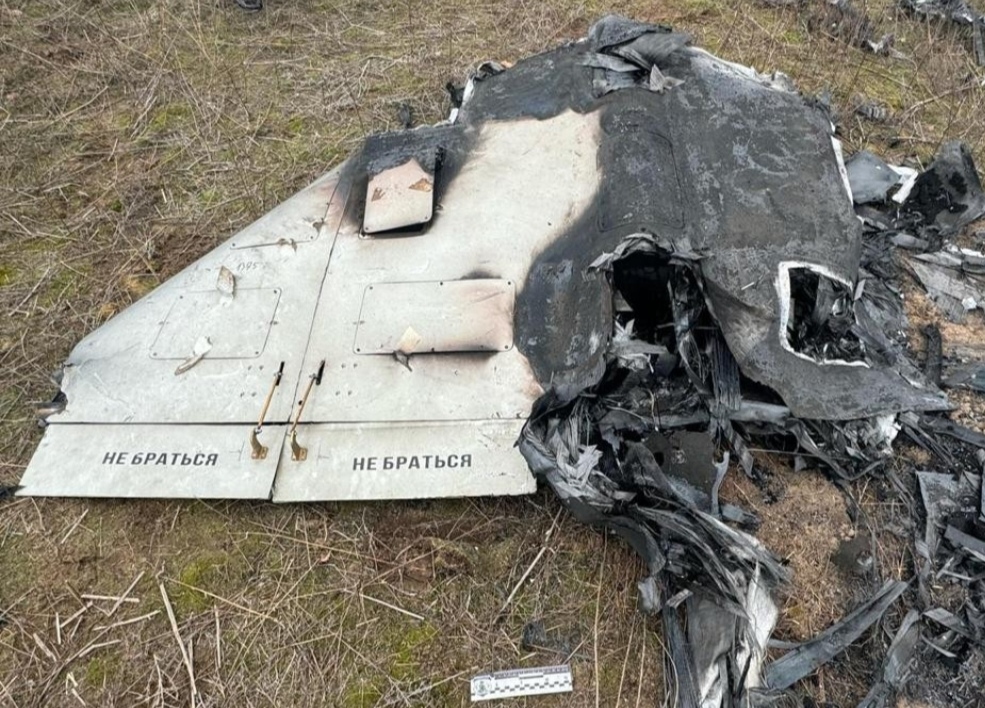
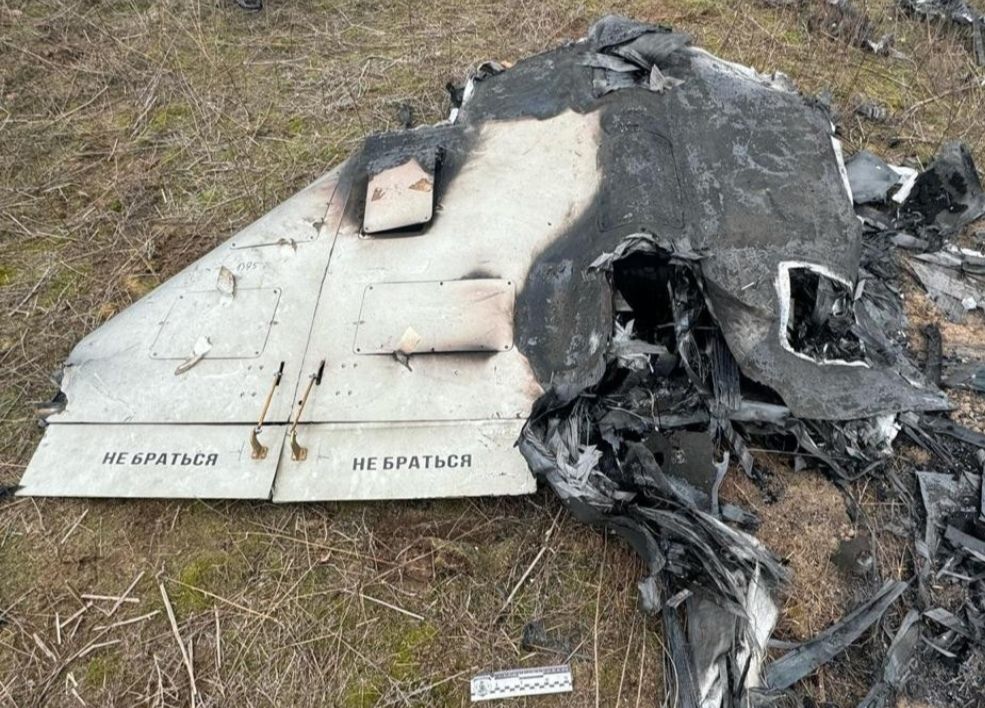
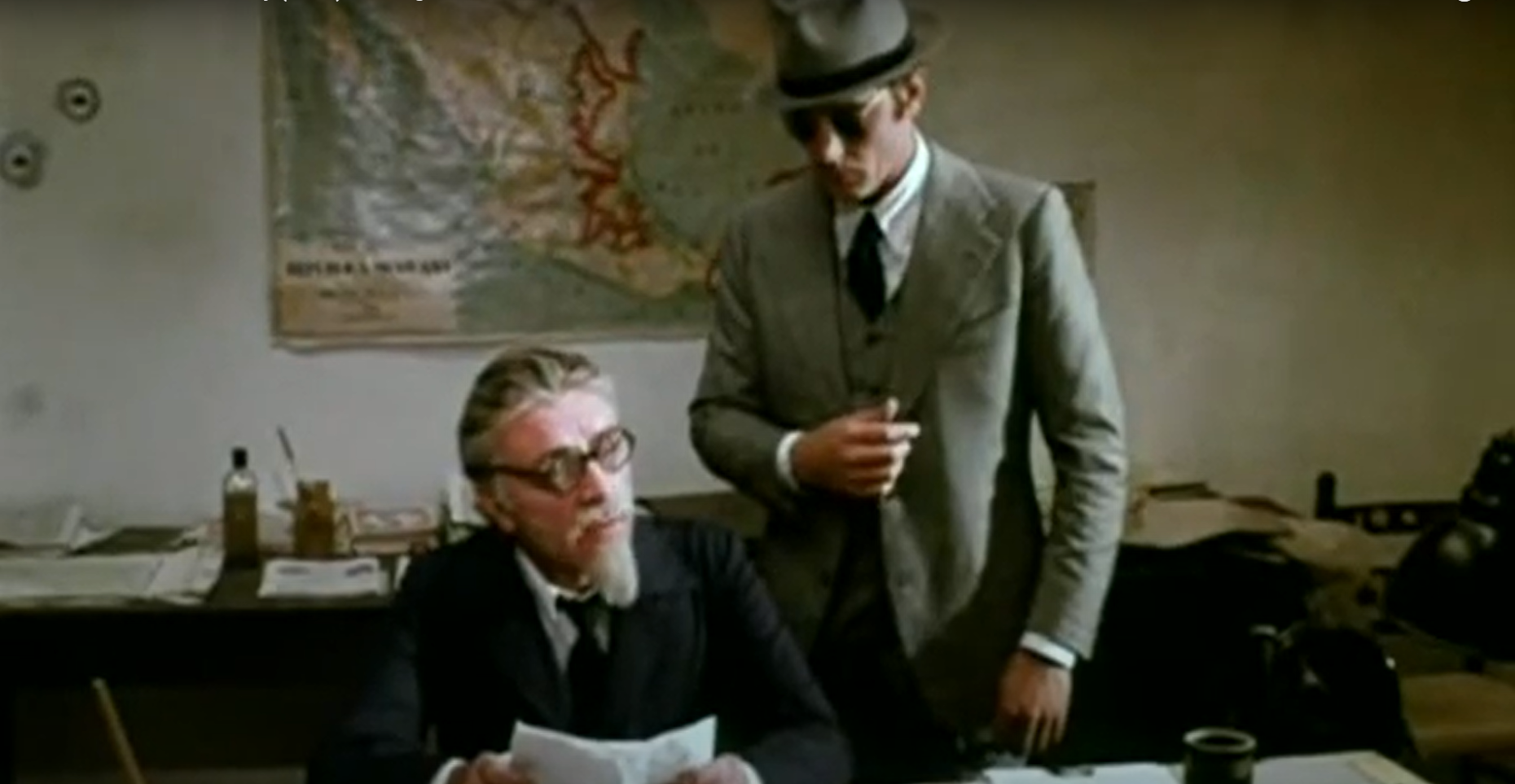
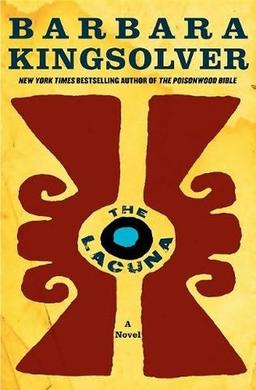
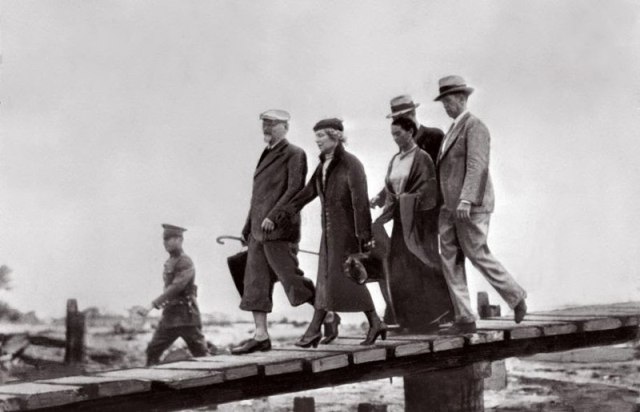
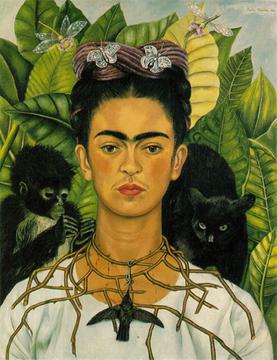
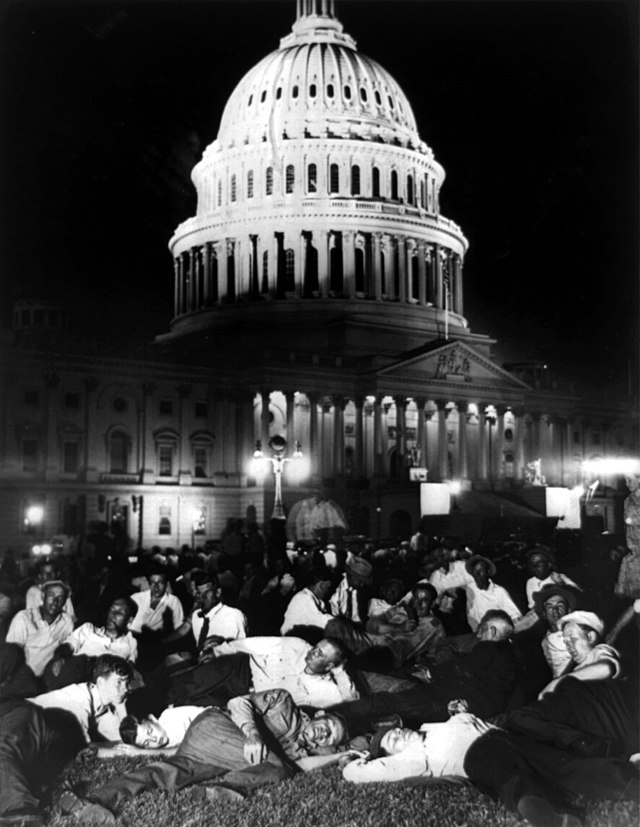
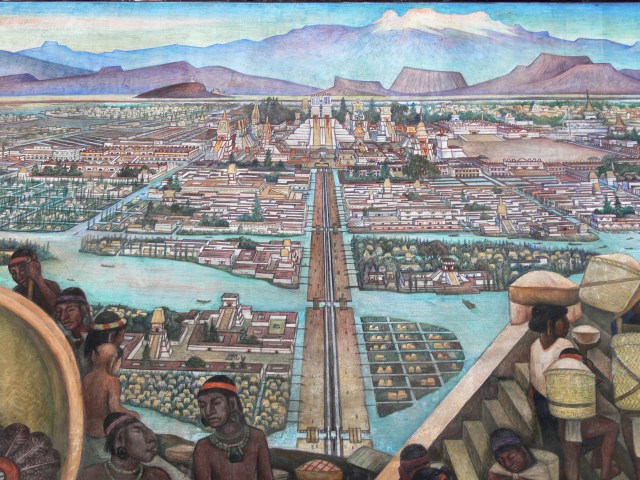

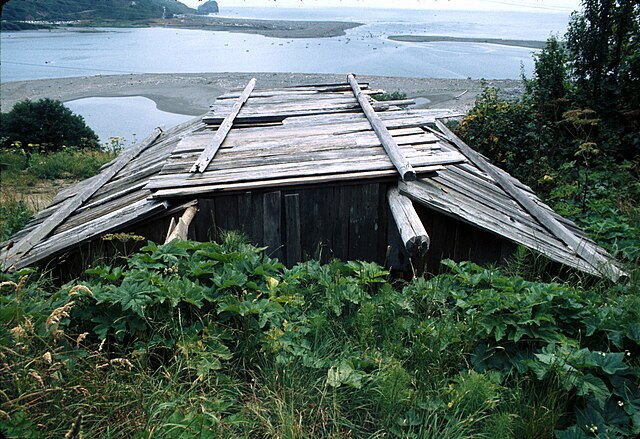
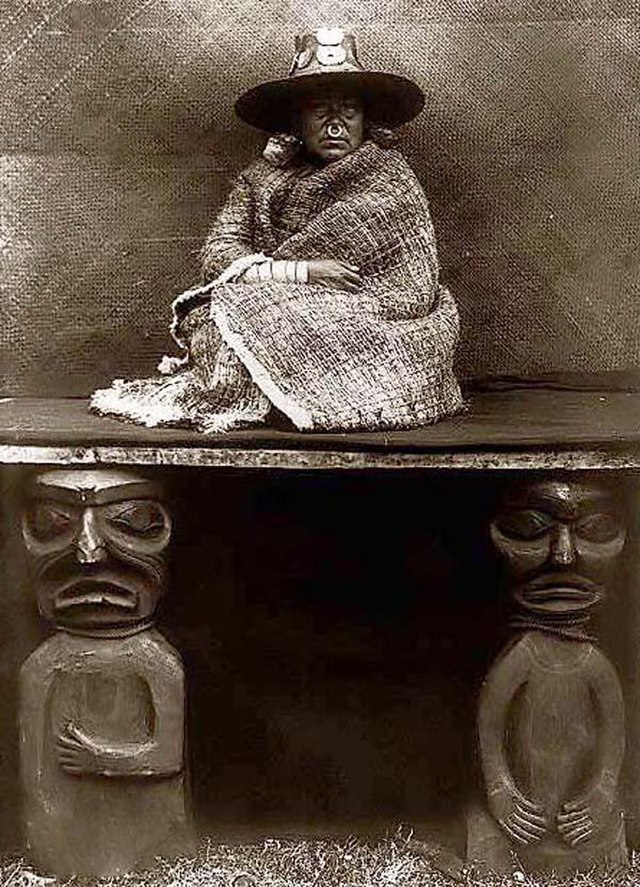
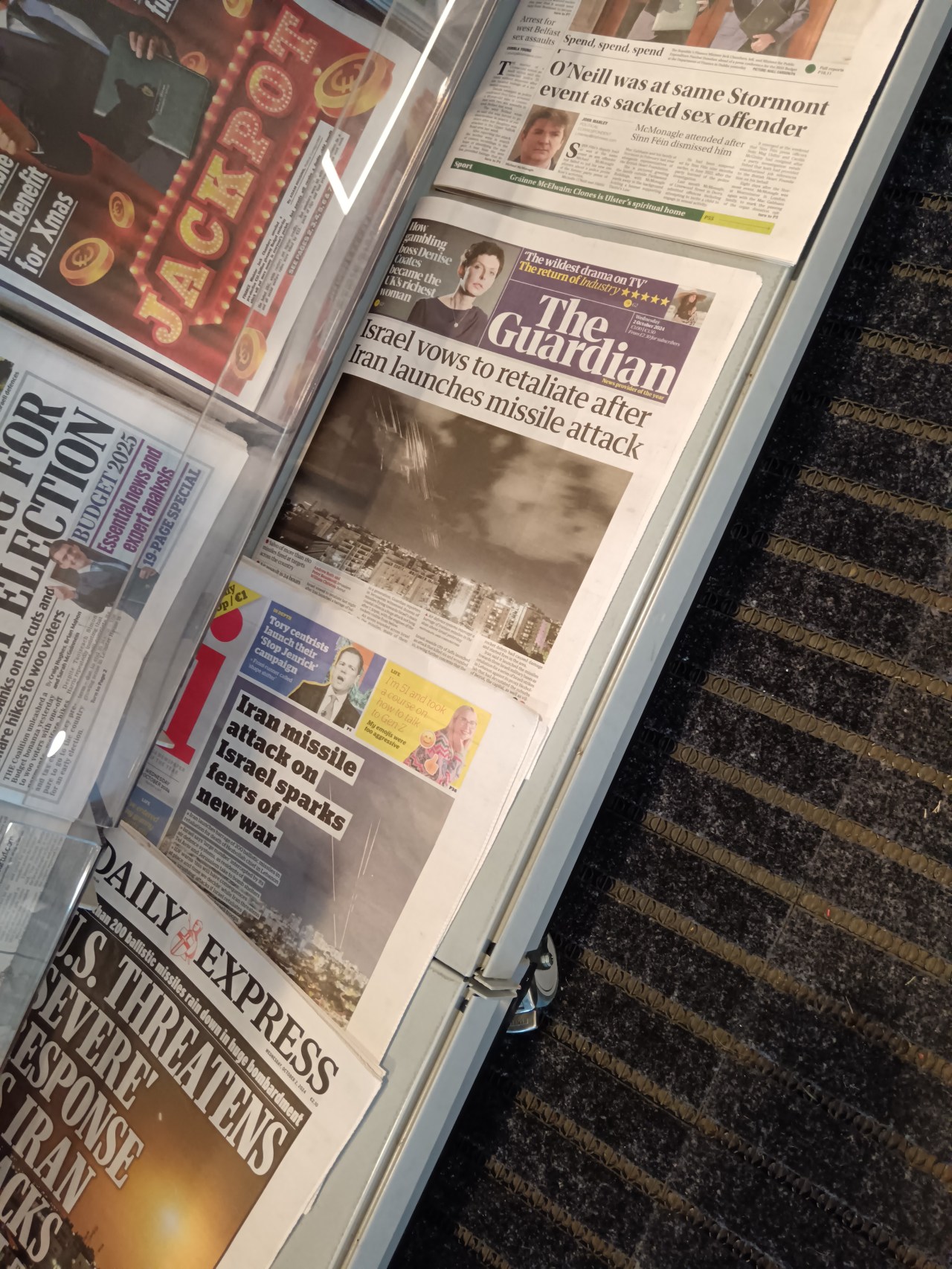
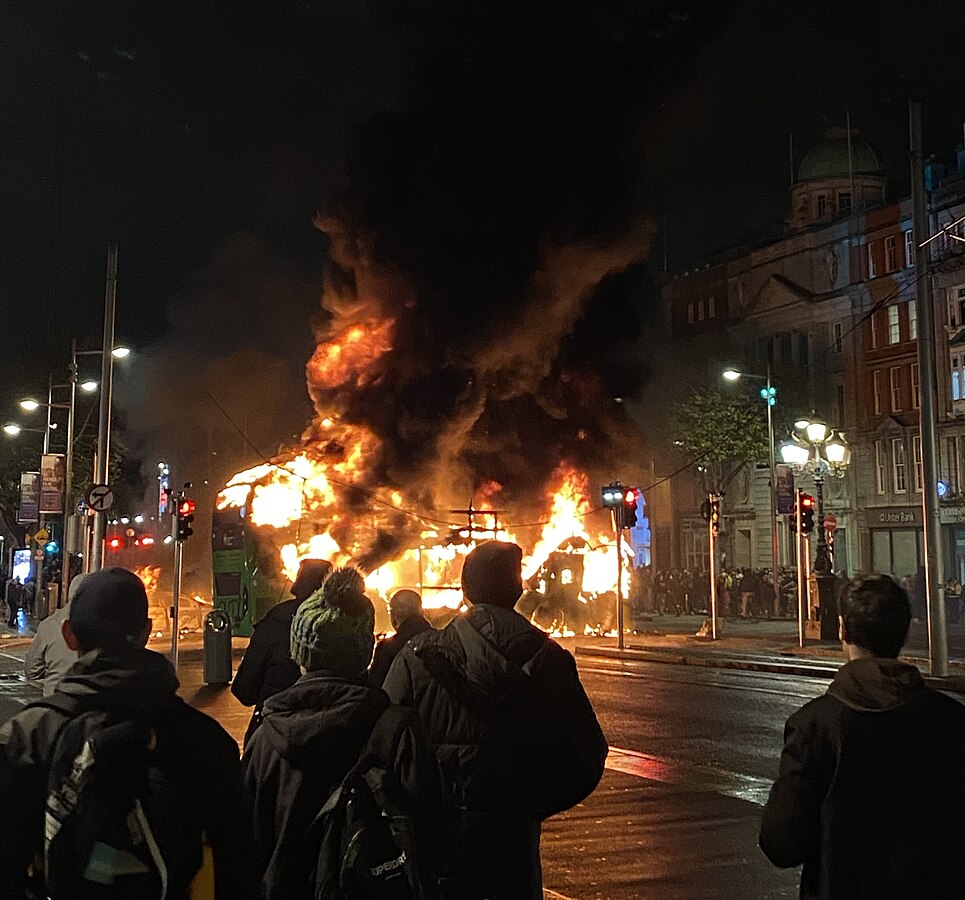
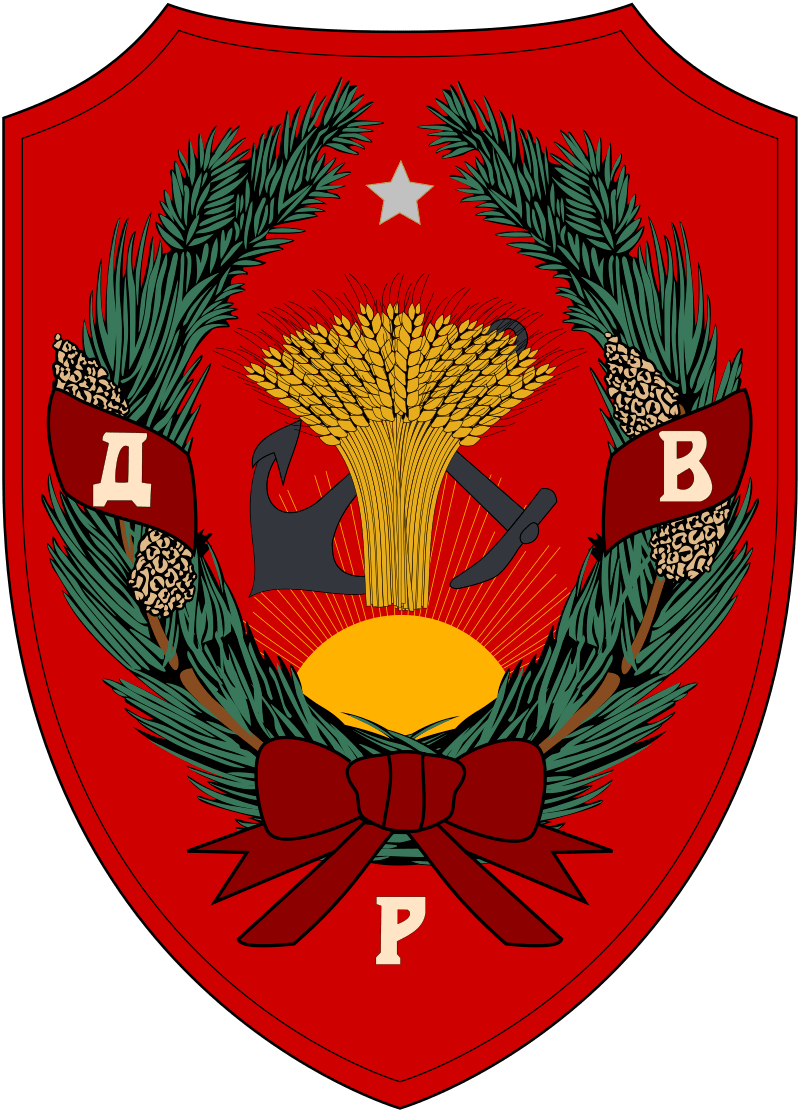
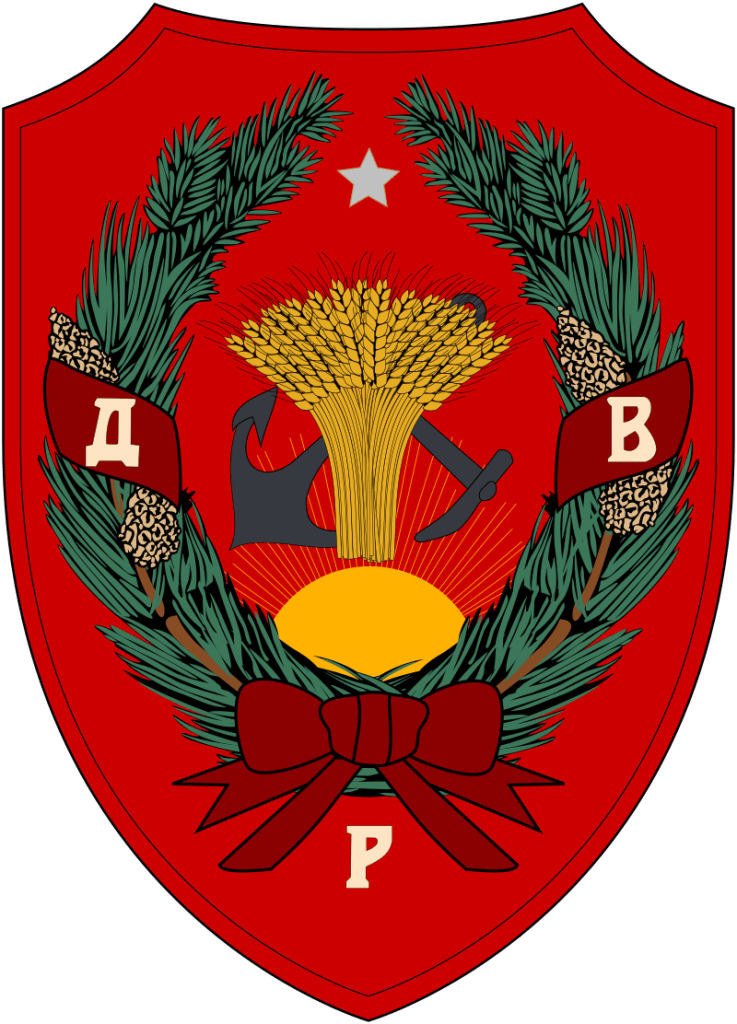
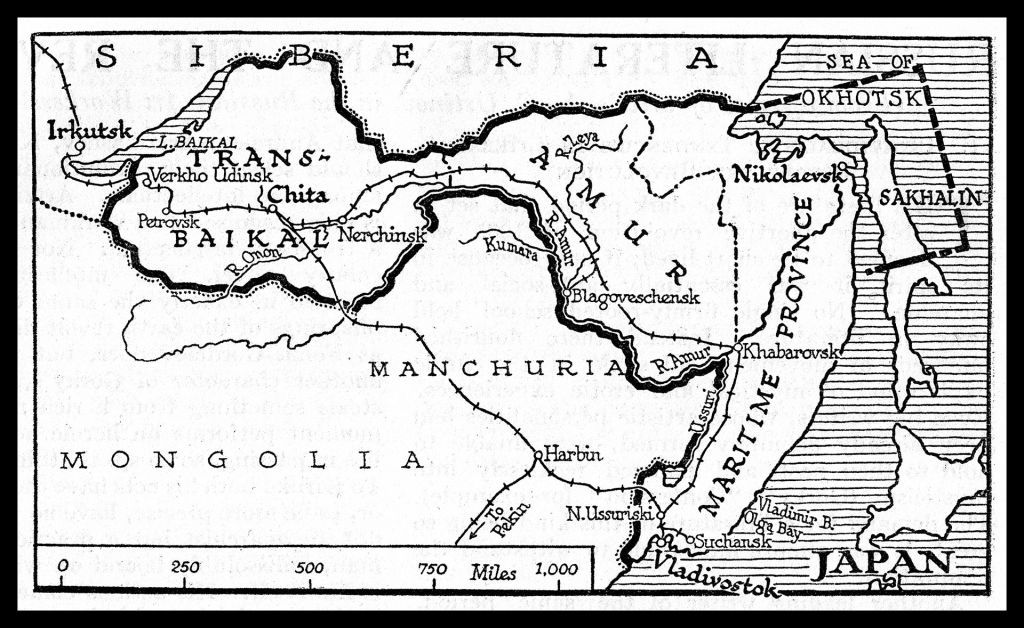

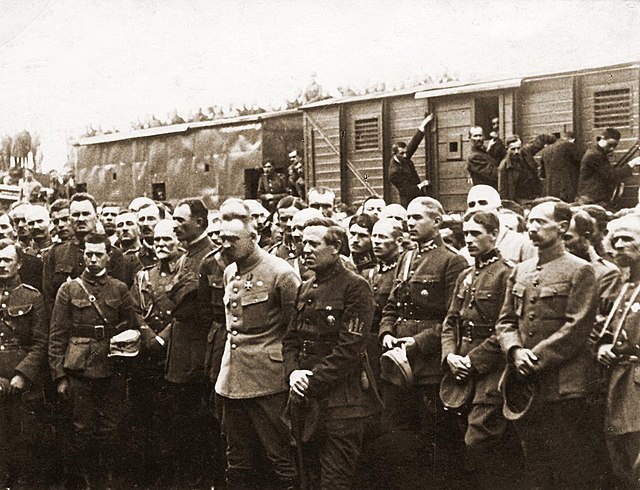
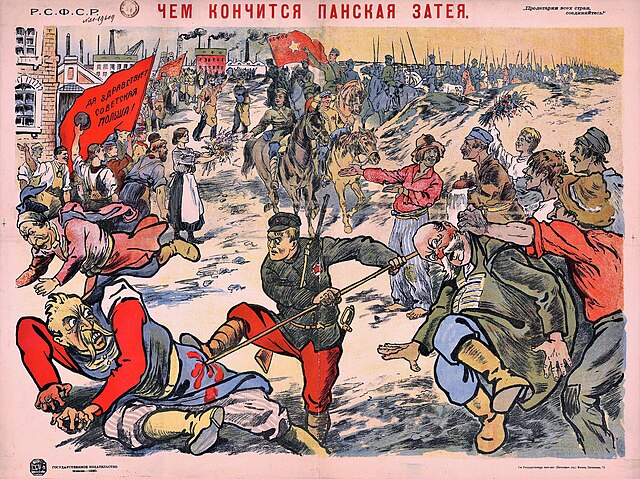
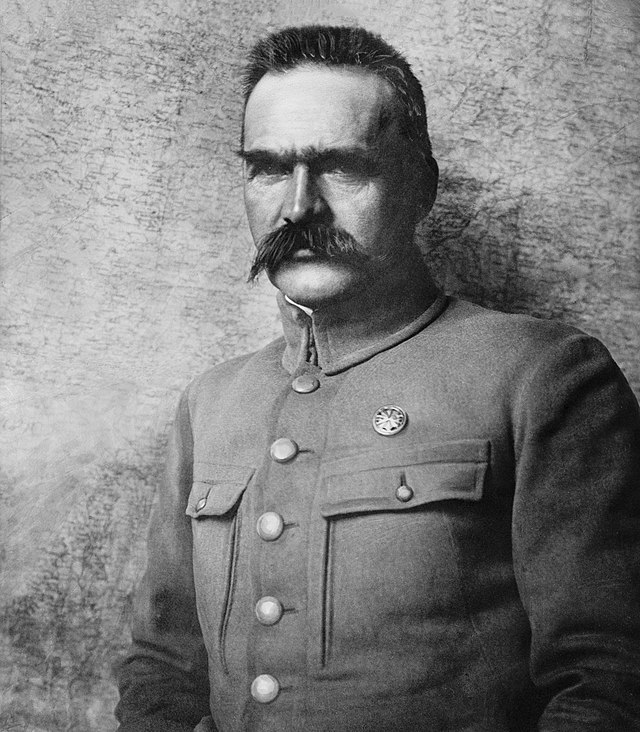

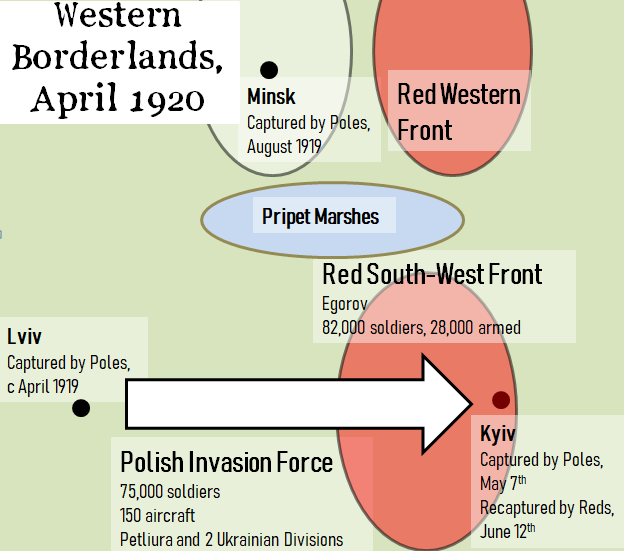
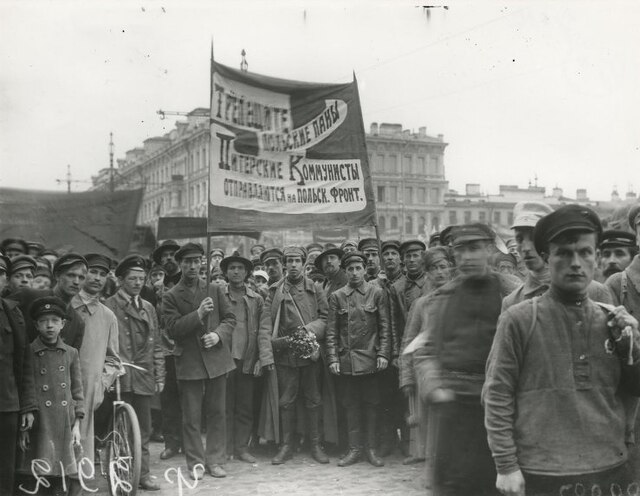
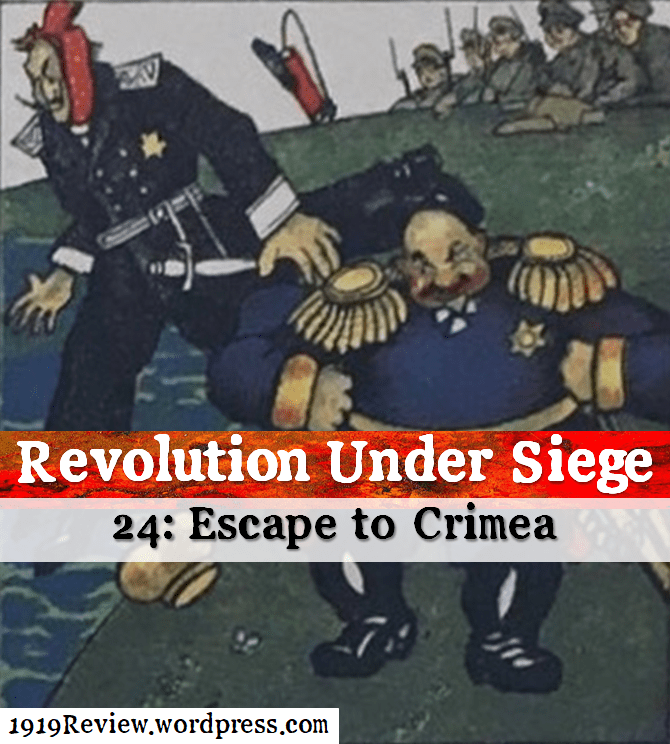
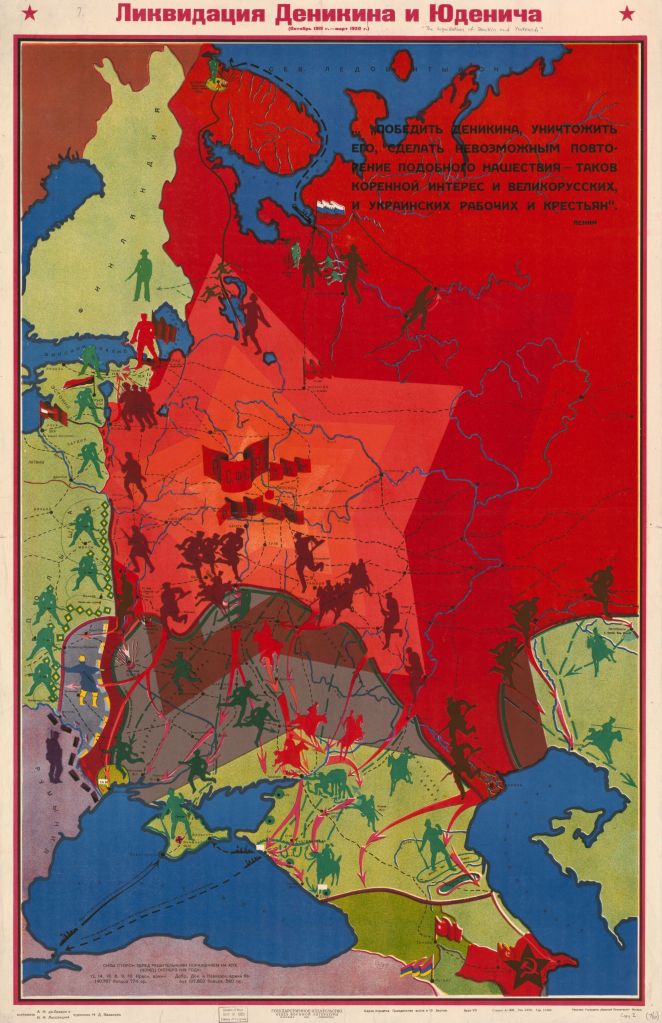

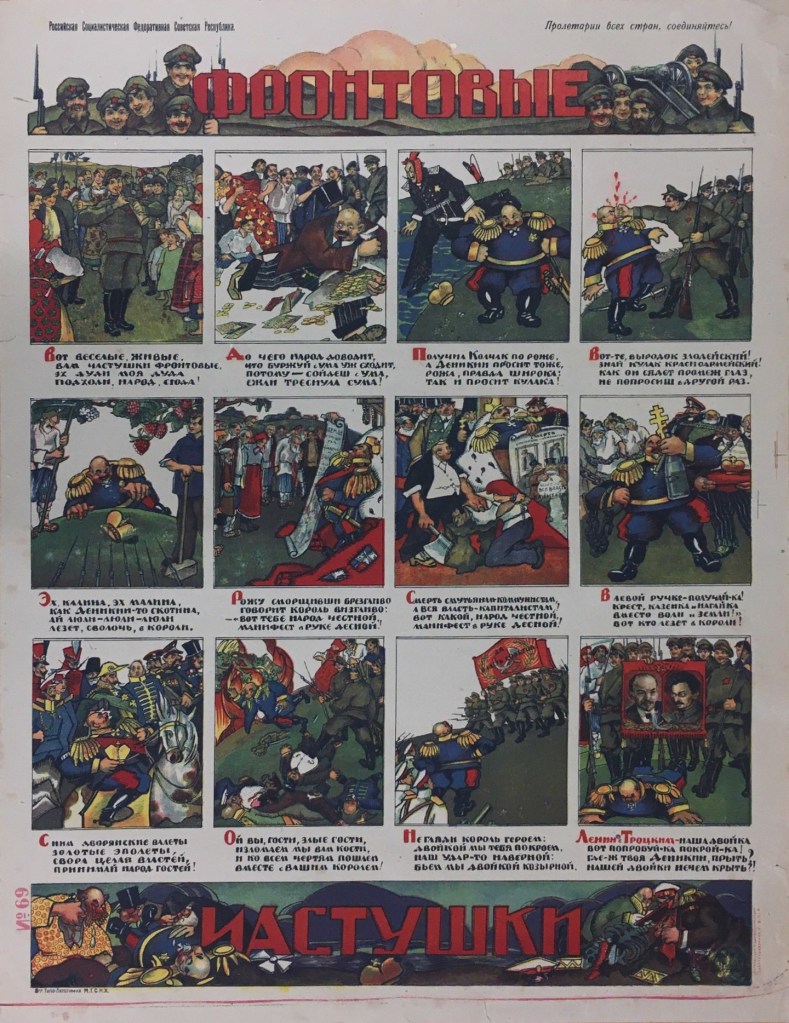
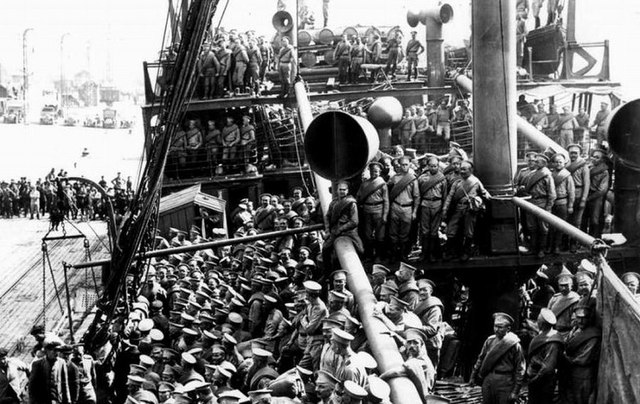
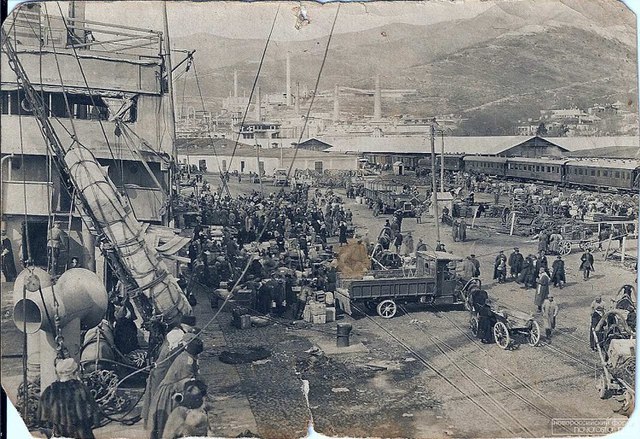
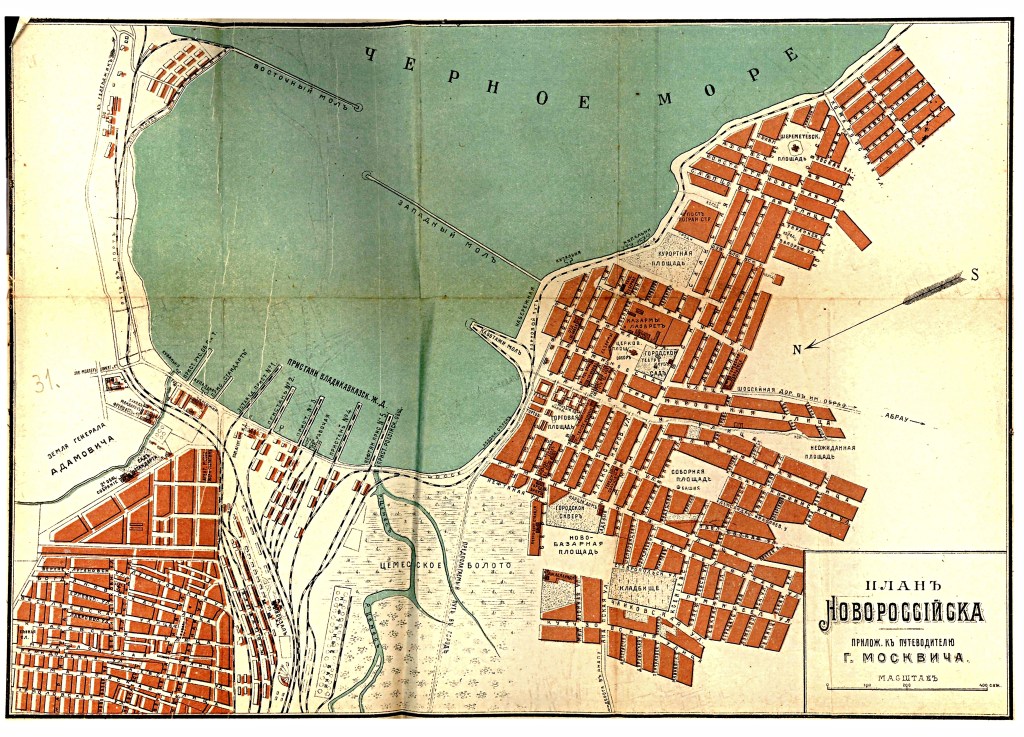

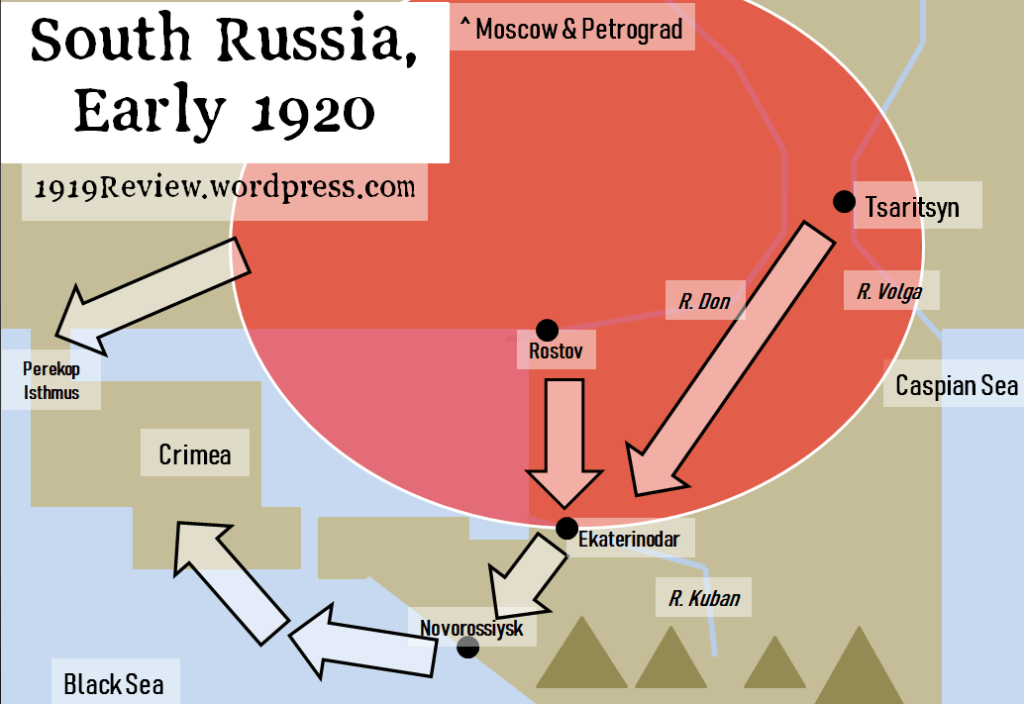
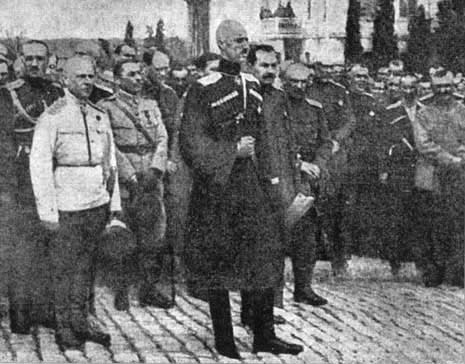


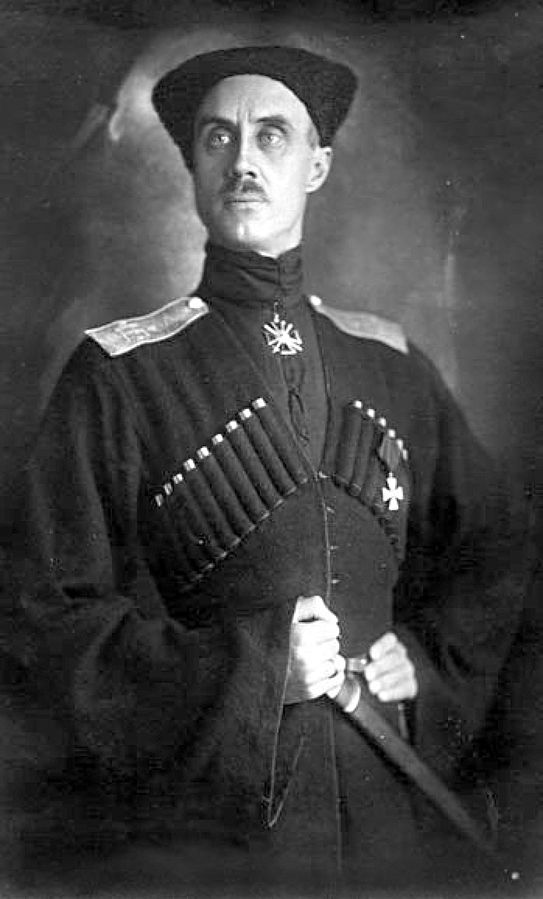


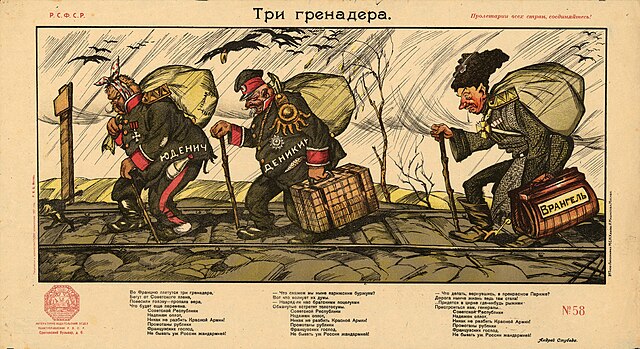
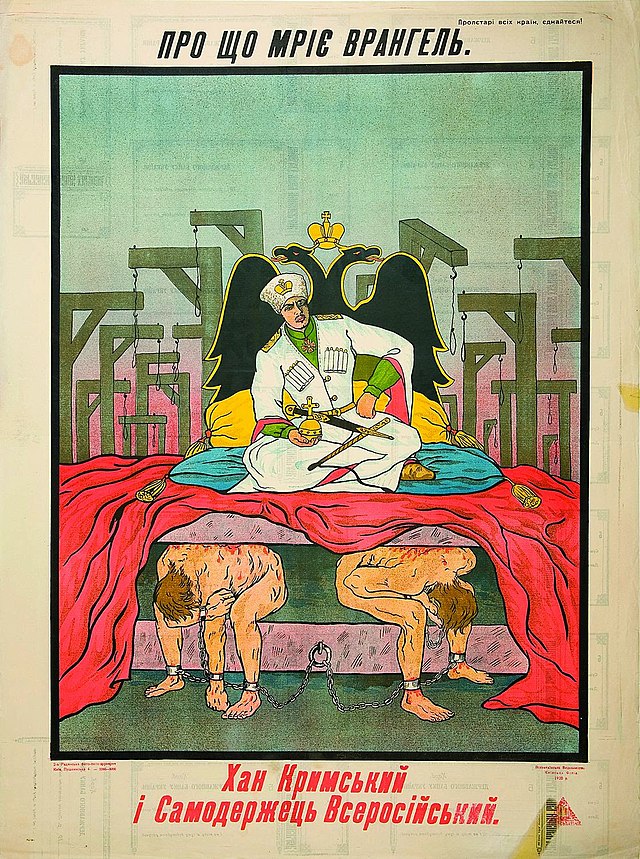
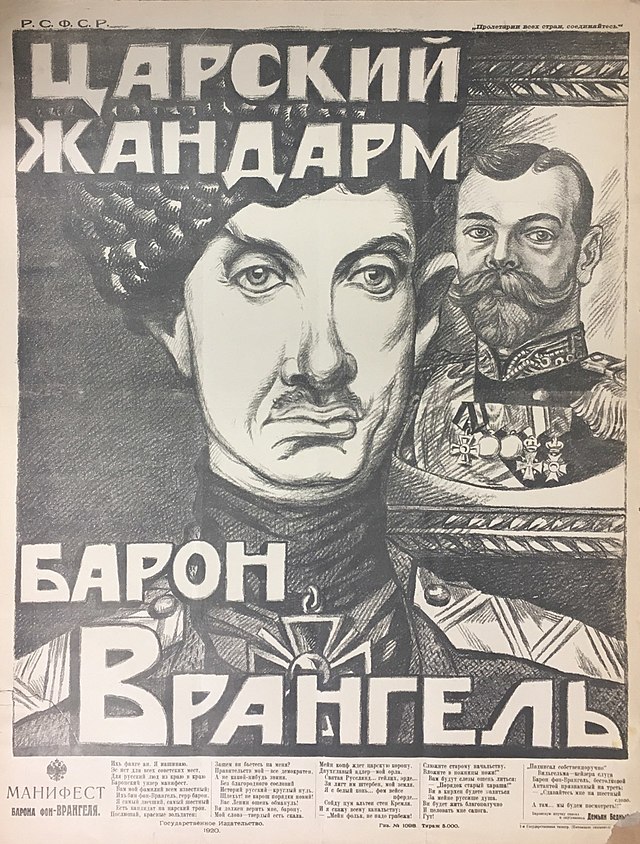
 The 1919 Review