Following on from last week’s post, I want to thrash out from uncertain evidence where things stand in the war as of today. Day 12 is a landmark because twelve days was the length of last year’s June conflict between the same antagonists. The day has come and gone with only the most unconvincing signals from the US president that there might be some dim prospect of a peace deal. But as I said last time, the basic strategic situation is: it’s the Iranian side who get to say when the war ends.
But it may be the end of the beginning. I think we are getting on towards the end of the first phase of the war, a machine war mostly of missiles, bombs and drones. The main questions in this first phase of the war are: what do the Iranians do when they run out of missiles? What do the US and Israelis do when they run out of interceptors? And who runs out first? A missile-interceptor gap in favour of Iran would mean a sudden ramping-up of damage to Israel, Gulf oil infrastructure and US bases. A gap in favour of the US means Iran’s chief offensive weapon is spent.
Where are we now?
Where do things stand right now in relation to this question? Almost nobody who knows anything valuable has any incentive to tell the truth. Here I will sum up the contradictory stuff I’ve read from various more or less non-credible sources.
- That there are x5 fewer missiles than expected because Iran has lost so many launchers to air strikes.
- That the US is pulling military hardware out of places like Korea and Ukraine to throw it into the Iran situation.
- That the rate of Iranian missile fire has slowed a great deal since the start of the war.
- That in comparison with last year’s 12-day war, fewer Iranian missiles are being launched – but they are causing more damage with the population of Tel Aviv being forced to run in and out of bunkers all the time.
- That the Iranians are tricking enemy pilots by literally painting warplanes on runways.
- That Tel Aviv is being hit really hard in the last four days, that the “Iron Dome” is breaking.
- That US/Israeli planes are swarming the exits to Iranian bunkers, blowing up anything that pokes its head outside.
- That civilian life in the Gulf has returned a good deal of the way to normal.
- That Iran has pivoted to blowing up oil facilities in the Gulf.
- That these attacks on oil facilities are not Iranian at all, but Israeli false flag operations (If the Gulf countries choose to do a deal with Iran in the future, they can all pretend to believe this).
- That Iran is still holding back its biggest missiles.
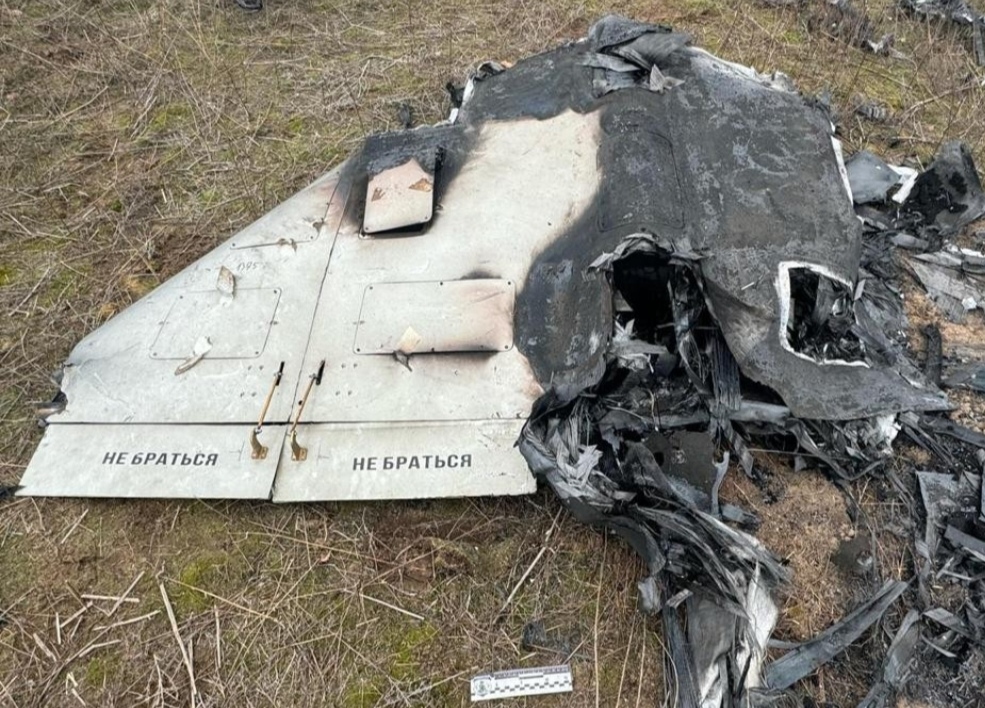
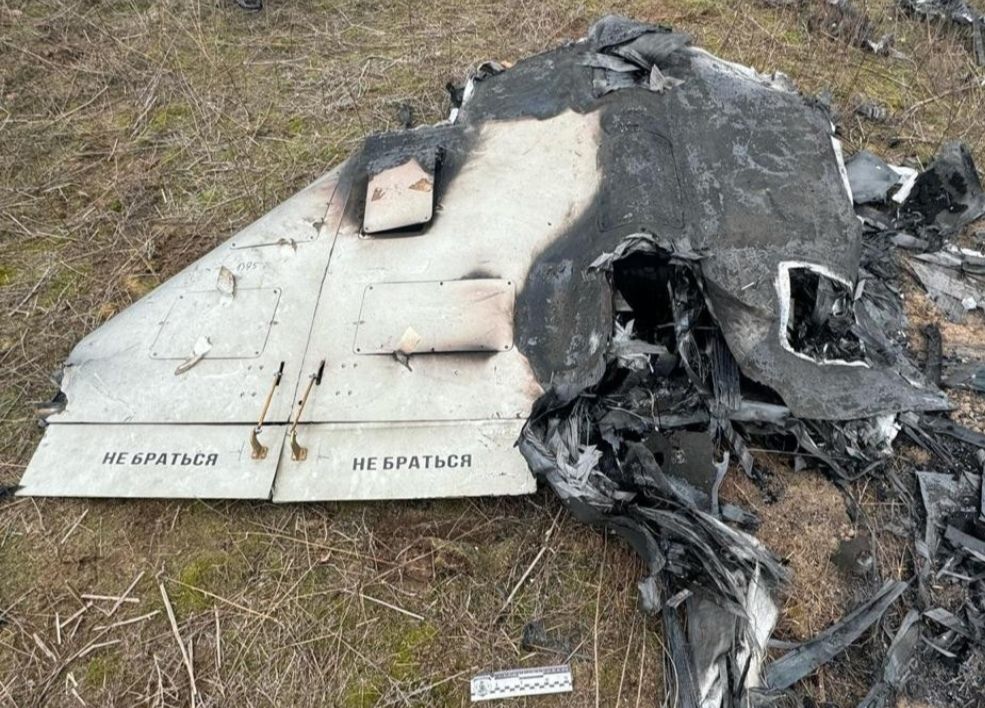
- That Iran can churn out Shahed drones at several times the rate that they are destroyed, and that these drones can do enough damage to make a big difference in the war.
- That Iran can fight on at a fraction of the financial cost that the war is imposing on the US.
- That the US side are not actually worried about running out of interceptors, only about leaving Ukraine exposed by overcommitting to Israel and the Gulf.
- The US has not lost vessels. But that could be because their navy is hanging back and not committing itself to combat.
- That the entire Iranian navy and air force have been destroyed, and 80% of air defences destroyed.
- That 17 US installations in the Middle East have been damaged.
All of the above cannot be true. But some of it is. We have to use our own judgement. It appears to me that while the balance of fatalities is massively against Iran, the war is proving to be a massive logistical, political and economic challenge for the US.
What do we know for sure?
The outstanding fact of the war is that there has been a slaughter of civilians in Iran and Lebanon. Next in significance is the blockade of the Straits of Hormuz, the mere warning of which has led to economic turmoil around the world. Moving on from warnings, today three ships were hit by Iranian weapons in the straits.
Incentives to de-escalate are not there. An initiative by the Iranian president to mend fences with the Gulf States was blocked by the military, with strikes continuing, for example on a desalination plant in Bahrain the very next day. Yesterday I saw multiple headlines about Trump saying peace was coming very soon, and I just find it both funny and irritating that there are still journalists hanging on every word out of Trump, as if this is a man who weighs his words for even a second before vomiting them up, or stays true to them afterwards.
The US/Israeli bombardment, with its toll in civilian lives, can carry on for, in effect, as long as the US population will continue to pay for it and to tolerate it morally. But Iran will run out of missiles or of launching capacity sooner than it runs out of resolve. From a two-sided air war it will become a one-sided bombing campaign like what the US did in Korea and Vietnam (without unseating a regime). The 12-day duration of last year’s war could indicate that this first phase, this machine war, might be reaching its limits. But assuming the two sides are better-prepared this time, it could go on for another week or two.
At the end of that period, a missile-interceptor gap in Iran’s favour would mean an episode of more serious damage being inflicted on US bases and on Israel. Such a ‘Tet Offensive’ moment, especially so soon after the outbreak of war, could have a huge effect on public opinion and mood. A missile-interceptor gap in favour of the US would, on the other hand, settle the air war into a one-sided conflict until such time as the Iranians can restore capacity – if they can restore capacity at all under such pressure.
Next post I intend to explore what a second phase of this war might look like, assuming that the first is coming to an end. To finish today, a note on the Iranian regime.
Iran: strengths and weaknesses of the regime
I said last week that Trump, Hegseth, Miller et al are fools. The Iranian leadership, on the other hand, are reactionary and ruthless, but they are not fools. Unlike the American and the Israeli leaders, they cannot afford to be fools. The Islamic Republic is deeply imbedded in society through a nearly fifty-year history. Iran’s strategic doctrine of distributed “mosaic” resistance and multiple designated successors for every position is an impressive response to the last quarter-century of a US and Israeli doctrine of blitzkrieg and assassination. In the future, the current war could be written up as an epic of resistance that could supply the clerical regime with a whole new legitimizing narrative that it can spin decades of mileage out of.
For what it’s worth, I don’t support the Islamic Republic regime – and I think any regime that Trump might install (or Biden, Obama, Bush or Lincoln, while we’re at it) would be a lot worse. A new regime emerging in a genuine way, from a popular uprising such as the Women, Life, Freedom movement, or from Iranian labour, would be a different story. To me this is a very simple point. It’s not complicated at all. Some people insist that any criticism of Trump’s idiotic war is a defence of the clerics. On the other hand I’ve noticed a semi-ironic identification with the Iranian regime from people who are simply relieved to see some powerful entity standing up to the US and Israel at long last.
Even taking into account the rounding effects of irony, I think this is unwise. Already the clerical regime is directing its propaganda appeal to the anti-Israel layers of MAGA more so than the progressive anti-war left.
Anyway, I don’t feel any need to wring my hands, accompanying any remarks with a token condemnation of the Iranian government for the sole purpose of covering my arse. That’s not why I’m writing this. But a relevant point, for my purposes, is to look at how the nature of the Islamic Republic might inhibit its ability to fight imperialism. On Drop Site News a week ago I heard an Iranian official using this war as a retrospective justification for the killing of thousands of protesters by the government in January in operations that were extraordinary in scale and ferocity. On the contrary, there must be severe confusion and demoralisation in the armed forces and among the public following the winter bloodshed. This kind of war demands the full mobilisation not only of the armed forces but of all of society.
I’m going to leave that point very general because of weaknesses in my knowledge of Iranian culture and politics. But as a general rule the nature of a regime has profound effects on how it fights a war. We can’t put the clerical authoritarian regime in a box and forget about it for military purposes. It will tell.
 The 1919 Review