After I finished Demon Copperhead I read a couple of reviews and had a strange moment. Just for an instant, I felt surprised that this reviewer in the Guardian also knew Demon. I had approached the novel as an Award-Winning Book That People Should Read; then I started it and I was in Demon’s world, and prestigious literary awards were the last thing on my mind. When I finished it – or maybe emerged from it – a part of me was surprised to remember that it was a book after all.
Demon’s voice
The feature of the book which best explains this is there right from the start: the narrative voice.
The narrator and main character is Damon Fields, who has a nickname, like everyone on his home turf of Lee County, Virginia. He is dubbed Demon Copperhead – the echoes of David Copperfield by Charles Dickens are there if you want them, but you can enjoy this book all on its own. The book follows Demon from birth through his first two decades in this world. His community is shambling through a half-life of mass unemployment; his young single mother struggles with addiction; the opioid epidemic hits like a war when he is around 10 to 15 years old.
The great strength of this book is the gloss of humour that comes with having Demon as a narrator. When I say that it’s easy to read despite the heavy themes, maybe readers will think that means the book takes a flippant or mocking approach. But it’s compassionate and humane all the way through. When I say that Demon interrogates head-on the issue of how the media portray ‘hillbillies’ and ‘rednecks,’ you might think the narrative is weighed down with lectures. It has didactic parts, but they don’t weigh down the story at all. They drive it on. Real people lecture, and lectures can be compelling.
I don’t have personal experience of the setting or of most of the heavy themes in this book. I assume Kingsolver must know the locale and its people – it rings true. But it’s about a kid growing up at the same time as I was. From the tone of the narrative voice to the pop culture references, and even the particular flavour of juvenile humour, Barbara Kingsolver got Demon right. He seems like some kid I might have known growing up.
The literal voice of Charlie Thurston was strong in the audiobook. Again, I just can’t comment on the accuracy of the accent, but the performance was more than good enough. If I ever hear that voice on another book, or on TV, my first reaction will be, ‘Hey, that’s Demon.’
The lush landscape of Lee County, Virginia
Characters
Demon usually has at least a medium-sized list of things going on in his life, pulling him this way and that. He also has a satisfyingly large cast of characters coming and going. They are all well-developed so that I never had moments of ‘Who’s he again?’ You know you are dealing with good writing when you find yourself a little excited to see two characters together for the first time. ‘Huh,’ I said to myself, ‘so young Maggot and Swapout are doing break-ins together,’ or ‘Well, wouldn’t you know it, U-Haul and McCobb are in on the same pyramid scheme.’ On the other hand you feel genuinely relieved and pleased to see, for example, Tommy Waddles doing well in life.
In its world, ‘doing well’ is relative. When the adolescent Demon is sent to work at a dump beside a meth lab, it’s a great improvement in his fortunes because the owner of the adjacent garage lets him eat free hot dogs whenever he likes. Relief washes over you. Come to think of it, relief is the main feeling I associate with this book.
This book has great villains. It’s fair to say that U-Haul’s characterization lacks subtlety – he’s just a grotesque person. The McCobbs are a terrible foster family, in all kinds of fascinating ways, but they are not monsters. In a different and even worse foster home, Demon runs into an older boy known as Fast Forward. Fast Forward gets the younger boys to line up like soldiers for inspection each night. He shakes them down for money and snacks. He makes them take the fall for his mistakes. But he also gives them flattering nicknames, an identity, a sense of purpose and dignity in this hellhole. This is the source of his power, and that power makes him scary.
Then we have a moderate-sized pantheon of adults who just let Demon down. There’s those who, to paraphrase Demon, can’t see any more in young men like him than what can be wrung out of them by the end of the week on the battlefield, the farm field or the football field. Then there’s those who, out of misguided ‘tough love’ or in the heat of an argument, cut off support to young people just when they need them most of all. Then there’s the one who let Demon into his home, but also let in the monstrous U-Haul.
Then there are the social workers – the one who stays in the job but just doesn’t care, and the one who cares in her naïve way but quits the job as soon as she can. Demon understands why one doesn’t care, and the other quits – they get paid very poorly. Their work is a life-or-death question for him, but it is simply not valued by the state.
On the summit we have a cast of characters who are just solid gold, such as Angus/Agnes, a couple of teachers, June Peggott, and in his more limited sphere, Mr Dick.
Addiction
Kingsolver gets past the bullshit of judging addicts for their ‘personal choices’ to show why people fall into drug abuse. ‘This was done to you,’ June Peggott insists.
There is a moment early-ish in Demon Copperhead when Fast Forward throws a ‘pharm party’ for Demon and the other foster boys. They sit around on the floor eating hash brownies and taking pills. This should be an ominous moment – Demon’s first introduction to something that will later cause him a lot of suffering. But it isn’t. In this filthy and cheerless house, the boys are regarded as farm labour and nothing more. They are insulted and sometimes beaten, and not provided with clothes or proper meals. When it enters the story, the ‘pharm party’ does not present itself as something immediately dangerous. It’s a respite. The story tells us to face it: there’s nothing better on offer from their fosterer or from the Department of Social Services. Drug abuse is not the worst thing happening in this house. It doesn’t even rank in the top ten worst things.
But of course it is the beginning of something very bad. Later, when Demon is a teenager and is doing better, an injury puts him out of action and a doctor puts him on oxycontin. By now the opioid epidemic is raging. He descends into addiction – not all at once, and not putting everything else on hold. Life goes on around the addiction, but we see how it creeps in. His first experience with drugs was intimately bound up with his relationship with Fast Forward, and as he grows up relationships continue to be central to addiction. When Demon describes an incident of falling off the wagon as an act of love, and when he tells us that addiction is not for the lazy, we see what he means. We are dismayed to see him ruining his life, but his actions make sense in the situation he’s in. Sometimes his actions are even perversely admirable.
Devil’s Bathtub, in Scott County, Virginia
Dickensian
Several times, Demon descends into the depths of hell – in his lone quest to find his dad’s family; his forays to Atlanta and Richmond; and his fateful hike to the place known as Devil’s Bathtub.
But hell isn’t where Demon ends up. Plenty of other elements are in the mix: Demon’s artistic talents, plus a budding consciousness about the history of his area – the Whisky Wars, the Battle of Blair Mountain, the tension between urban and rural. As the story goes on, Demon learns how much the odds were stacked against him before he was even born. In a previous generation, his people organised in unions and took on the mining companies. Today they are cannon fodder for the drug companies. ‘This was done to you.’ These things come together organically in the final part of the novel.
Where does Charles Dickens come into it? No Dickens narrator ever talked like Demon, and I don’t think Dickens ever wrote much about sex or drugs. But like those narrators, Demon is incisive and funny, and he talks about the neglect and abuse of children, and tells stories of the lumpen adventures of orphans. He builds a world of scarcity and callousness so that the acts of generosity and friendship can stand out bright and clear. Also bright and clear is the impression that, in most essentials, nothing has changed in the intervening miles and years between David Copperfield and Demon Copperhead. The author’s decision to write the latter as a tribute to the former is not a gimmick; it carries real meaning. Capitalism means constant disorienting change but the underlying callousness stays the same, and we can recognise it in the 19th Century and in the 21st.
The questions Paul Lynch addresses in this novel are, first, ‘What if something like the Syrian Civil War happened in Ireland?’ and second, ‘What would that war mean for Eilish Stack, a mother of four living in the suburbs of Dublin?’
He is more interested in the second question than the first. But both are answered in long, consciously-crafted sentences, in uncompromising, unbroken columns of prose. Late in the story Eilish is running out her front door to search for her son when, in mid-sentence, ‘soundlessly she is raised from her feet and borne through the air rearwards with her arms held out in some counter-time of light and darkness holding pieces of cement in her mouth.’ (p 239) In other words, she was caught in the shockwave of an air strike. I like Lynch’s prose. You have to pay attention to get the full meaning from it, and it’s worth the effort.
The book opens with a scene in which two Gardaí who ‘seem to carry the feeling of the night’ knock on her door looking for her husband. He is a trade unionist, and the Gardaí are a from a new Gestapo-type unit who serve an authoritarian government. The trajectory from there to civil war and ruin is gripping, graceful and bleak.
Where are we? In Dublin, in the near future or in an alternate present. Personally, I would have liked page upon page of exposition about who this new governing party are, how they came to power, what their programme is, what their international relations are like, and so forth. I would have liked it, but that doesn’t mean it would have been a good idea. It’s not really the focus of the book. By transposing contemporary wars to a familiar setting, this book made me empathize with the victims of war. A focus on politics might have run a risk of diminishing that. An equivalent of Goldstein’s book-within-a-book from 1984would have definitely diminished it. It has been compared to 1984, but this is an easier book to like than Orwell’s, and easier to read in spite of the depth of its prose. It’s not so didactic, and it gives a more varied, optimistic and genuine panorama of the human race. But the two are not really the same type of book – Prophet Song is a description, an impression, not an attempt at anatomy or analysis.
Lynch provides enough by way of sketches to give the reader a fair idea of the political background. There is a party or coalition called the National Alliance. Their supporters wear distinctive pins on their collars, hang the tricolour from their windows, and sing the national anthem even at weddings. They make ‘hieratic gestures’ as they speak ‘the cant of the party, about an age of change and reformation, an evolution of the national spirit, of dominion leading to expansion.’ (p 71) They have been in power for two years when, one September and in response to a crisis or supposed crisis whose nature the reader is not told, they introduce an emergency powers bill.
That winter (and here the novel opens), the National Alliance government begins arresting trade unionists. The Teachers’ Union of Ireland (TUI) are in the crosshairs and Eilish’s husband is a senior official. The union leads a protest march which is suppressed violently. In the manner of the Argentine junta, those who are arrested before and during the protest disappear, and the families receive no hint of whether they are alive or dead.
Each atrocity is given its due time and space to be felt and to have knock-on effects through the ins and outs of family life and, usually in the background, national life. We never go numb. Things escalate when Eilish’s son disappears too, though of his own volition. A shocking moment: her elderly father rings up to say that one of her boys was over at his house recently. The tall one. We are one with Eilish in her frustration. Is the confused elder mixing up yesterday’s memories with those of last year? Or was her son alive and at his grandad’s house a couple of days ago?
As I was reading Prophet Song, the Israeli state was dropping thousands of bombs on Gaza. ‘There is light now where there used to be none, the buildings folded into rubble, the solitary walls and chimney flues, the staircase that climbs to a sudden drop.’ (p 233) Not Gaza, South Dublin. To call the book prophetic, of course, would be to miss the point. It could be Gaza five years ago, or ten or fifteen ; it could be Damascus, Mosul, Aleppo, Fallujah, Khartoum, Kherson, Kharkiv.
Damage from Russian shelling in Kharkiv, 2022
I’m not sure the Irish Defence Forces have enough artillery or air power to cause such destruction; the National Alliance must have received substantial aid from abroad. Foreign military aid is usually a major factor in civil wars, though it is not mentioned here. There is mention of Canada, Australia, Britain and Europe, none of whose governments appear to be friendly with Ireland’s. But there is no mention of the United States. Maybe Ireland has been sucked into fascism in the wake of America, and Washington is sending fighter planes and artillery to Dublin.
By the way, it’s unsettling how easy it is to think of such scenarios. Ten or twenty years ago a lot of people would have been saying that a story like this was implausible but that’s not even a part of the conversation around Prophet Song.
The fact that this could be Gaza underlines how the novel, while rooted in a specific place, manages to be universal. Hence the sketched-in historical and political background. The advantage is that it invites empathy. We might some day hear the song of the prophets of the god of war in our own backyard. The disadvantage is that wars actually do have specific causes, which we need to understand. People are often tempted to attribute it all to ‘human nature’ or eternal elemental forces or whatever – which cuts across empathy.
Eilish is in fight or flight mode from the start of the novel. The run-on sentences and three-page-long paragraphs convey a sense of short breath and a hammering pulse. She is under severe pressures and barely keeping her family together. All the same, her indifference to the political situation is something I find frustrating – frustrating in the way I might find a real person frustrating. But her language adds to the impression of a narrow-minded narrator. Addicts are ‘junkies’ and people ‘from the flats’ have a ‘feral’ appearance.
[Minor spoilers in the paragraph that follows]
At one point she scolds the rebel soldiers for arresting someone who’s out after curfew. ‘My eldest son left home to fight against the regime with you lot and here I stand now on the street being threatened, we wanted the regime out but not to be replaced with more of the same.’ (p 221) Okay – that’s a rare moment of outspoken bravery there from Eilish. But if she will not consent to the rebels enforcing a curfew in a warzone, then she’s just not serious about wanting them to win. As for her son, she fought tooth and nail to try to stop him joining the rebels, so what claim has she got over them?
I think the author was trying to highlight certain uncomfortable truths about war and revolution. In Syria, many of the rebel factions turned out to be worse than the government. In any war, neither side has a monopoly on inhumane behaviour. So I understand his choices here, but I think Eilish comes across more poorly than he intended in this moment.
On the other hand, the believability of her character is not diminished by these flaws. Maybe it says something good about the rebels that Eilish feels free to defy and criticize them in a way she has never done to agents of the state.
[Spoilers over]
The characters all feel real, from the family at the heart of the story to minor incidental characters, like the clown who saves Bailey’s life or the creepy official towards the end of the book. It’s the kind of story that keeps defying expectations, even though overall you know where it’s going. For example, if I tell you that a people smuggler shows up half-way through the story, you will have a certain image in your head. But you will probably not recognize the character as such when she appears, because this novel does not deal in stock figures.
While the family waits for news of the disappeared husband and father, blows keep raining down on them. Usually, they hold up admirably. Sometimes they pay back persecution with defiance. But sometimes you can detect something breaking beyond repair, as when Eilish thinks about the baby in her arms. Like Gabor Maté, who was an infant in the Budapest Ghetto in World War Two, he will grow up to be a damaged person. But ‘out of terror comes pity and out of pity comes love and out of love the world can be redeemed again.’ (p 304)
My criticisms are secondary, and of a kind that are only possible with a bold, compelling and well-crafted novel. While I’m questioning a few of the choices, I’m not lamenting them. Prophet Song invites this kind of interrogation and stands up well under it.
It ends at a familiar place, familiar and dreadful to those who watched the news in 2015 and 2016. In hindsight that is where it was always going to end.
At the beginning and the end, Lynch makes it clear that the force against which Eilish is contending is not a particular party or programme, but a general ‘darkness’ which was there from the start, already containing all the horrors to come. In the final fifty pages or so, that horror reaches a climax. The reader realises how the story has filled us with dread. Because here it is, what we were dreading all along – but it’s not what we expected. It’s worse.
But ‘it is vanity to think the world will end in your lifetime’ – there is some consolation in that ‘the end of the world is always a local event.’
This is a lesson I created to teach kids aged 10-14 a thing or two about Post-Roman and Anglo-Saxon Britain, about feudalism/ manorialism, and about figuring out the blurry dividing line between history and myth.
I listen to Chapo Trap House and Hell on Earth, and those lads often coin a phrase – Maga Chud, Hot Couch Guy, Lanyard, etc. One of the little phrases they have pioneered on there, especially with reference to the podcast Blowback, is the idea that guys or weird little guys are a big part of what makes history interesting. They mean, basically, a character. A guy is some outrageous, fascinating, usually horrible individual, almost always a literal guy: Macarthur; Charlie Wilson in Afghanistan; Von Manstein and Gustavus Adolphus in the Thirty Years’ War. I think the ‘Great Man’ Theory of History is bullshit but I believe in the explanatory power of biography, particularly of the not-so-great man. An individual character can be a strong nail on which to hang a narrative.
My writing has progressed from an obsession with the Celts and the Gaels to an even deeper obsession with the Russian Civil War. That has involved wading through a sea of colourful characters. That’s no surprise: an empire collapsed, and with all institutions turned to dust, the force of personality briefly became a real material force. Any half-way charismatic character could ‘shark up a band of lawless resolutes’ and just have a go at conquering Russia.
I’m going to try and narrow it down to the five most interesting guys I’ve come across. But we can’t go with the obvious big names – Lenin, Trotsky, Kolchak or Denikin. For all their differences and their interesting features, these characters are straightforward. ‘Guys’ are hard to define but they have to defy expectations, or even to defy the laws of political gravity. It’s also difficult to rank them. Below, number 1 is definitely number 1 but the other four are joint second. Here goes.
Top: Grigoriev and his movement, as depicted in a Red poster; bottom, Red army routing Grigoriev
Grigoriev was the pure distillation of the contemporary warlord. He fought for, or at least flirted with, literally every side that was active on his front of the war. Let’s go through the list. From the Tsarist Army he went to the Ukrainian Nationalist Rada (check); he helped overthrow them on behalf of the German-backed Hetman Skoropadsky (check); then he rejoined the Rada and helped overthrow Skoropadsky. Then he linked up with the Ukrainian Left SRs (check); next he brought his partisan horde into the Red Army and captured Odessa for them (check). In May 1919 he set up shop on his own when he launched a massive revolt against the Soviet power which covered about a third of Ukraine and which was accompanied by vicious anti-Jewish pogroms. After his revolt was put down he tried to make an alliance with Makhno and the Anarchists (check). They discovered that he had made a secret alliance with the Whites (check), so they killed him and brought his followers into their army.
Grigoriev is an easy pick for this list. He was notably rude and charmless, and he was pissed as a newt when he took Odessa. Frequently to be found RHUI – Riding a Horse Under the Influence – but he led from the front and for this he was admired by his men. In his drunken, fearless, martial, bigoted figure he embodied the chaos of his land in 1919. If the Reds had followed through on their plan to send him and his army to help the Hungarian Soviet, he probably would have ended up joining the Slovakians or something.
4: Larissa Reissner
Larissa Reissner was one of thousands of women who volunteered to fight in the Red Army, not to mention those who fought in, and even led, Red partisan forces.
After fighting in and writing about that battle, she went on to spy behind the Japanese lines in Siberia, disguised as a peasant woman. She was captured, because her disguise was utterly unconvincing, but she escaped. Along with her husband Raskolnikov (aka Ilyin, another contender for ‘guy’ status), she went to Kabul and negotiated a diplomatic agreement with the King of Afghanistan.
She knew many famous writers and artists, from Mandelstam to Akhmatova. Most Bolsheviks’ personal lives appear to have consisted of drinking tea and country hikes, but Reissner’s was far more interesting and colourful. Of how many people can we say that they conversed about poetry with Anna Akhmatova, and also spent a month in the squalor and danger of the frontlines at Kazan?
Larissa Reissner died young of typhus in 1926.
3: Prince Pavel Rafalovich Bermondt-Avalov
This was a complex war, with foreign powers (Germany, Britain, Japan…) layered on top of national and ethnic movements (Estonians, Bashkirs, Armenians…), themselves layered on top of class factions (workers, peasants, intelligentsia, capitalists, landlords…). On top of that, people switched sides a lot (General X was a pro-German monarchist who was in favour of independence for Y nationality, now he’s a pro-Allied SR; tomorrow he will be a Red military specialist, but preparing a mutiny on behalf of the Green partisans…) For every political orientation, for every trajectory through this mess, there was an individual character, a guy.
Bermondt-Avalov is the best example. ‘Bermondtian’ came to mean a pro-German, anti-Baltic Nationalities anti-communist. He built up a White Army by recruiting Russian soldiers from German prison camps. As you might have guessed, he was a protégé of the German government, and became one of their instruments in trying to build up a Baltic German Empire in 1919 (Yes, after the war the Allies gave the Germans a chance to conquer the Baltic, just to have a go at the Soviets). For a time Bermondt-Avalov and co had to play nice with the British and the British-backed Latvian and Estonian Nationalists. But his German-backed Whites were very distinct from the Allied-backed Whites. While the latter marched on Petrograd, he decided it would be a great time to march on Riga – ie, to declare war on the British-backed Latvian government. The Latvian and Estonian Nationalists defeated him, but his war undermined the White attack on Petrograd.
I chose Bermondt-Avalov not because I know a whole lot about his personality, temperament, etc, but because he raised an army to fight the Reds and ended up fighting other anti-communists. He may have been more interested in establishing Baltic German power than in fighting communism, but the two were not necessarily mutually exclusive. The way things turned out, German-oriented Whites were a historical curiosity. But if the Allies had not intervened, or if the Germans had come out of World War One stronger, then the Bermondt-Avalovs would have represented something different.
He fled to Germany, served the Nazis, for some reason was deported to Yugoslavia in 1941, and went to the United States where he died in the 1970s.
2: Jukums Vacietis
Vacietis, AKA Vatsetis, is another guy who stood in the thick of the raging national and class cross-currents.
He was a son of farm labourers who rose through the ranks of the Latvian Rifles, an all-Latvian unit of the Tsar’s army. Unlike most of the soldiers of the Tsar they had strong and bitter reasons to resist Germany right to the end: if Germany conquered Latvia, then the arrogant Baltic German barons would oppress them and push them around even more than before. So even while revolutionary consciousness spread among the Latvians, their discipline and spirit did not diminish.
He got in hot water in 1919 – partly for losing a debate over strategy, and partly because he fantasized out loud in front of his comrades about maybe someday being the next Napoleon. He was replaced with the less temperamental Sergei Kamenev (another non-party military officer who gets too little credit). He became a professor at the Red Army military academy after capital charges against him were proved false. But like most of his contemporaries in the Red Army, he did not survive the Stalinist terror of the late 1930s.
1: Baron Roman Von Ungern-Sternberg
What can one say about the ‘Mad Baron’? Where do you start?
Ungern was one of those Baltic Germans that the Latvians were so worried about. If he’s anything to go by, they were right.
He was a Buddhist of some kind, also influenced by Theosophy, but Lutheran in origin, Orthodox insofar as he served Tsarism. He believed in magic and occult secrets. Other White Guards looked to Europe to save them from Revolution, but Ungern saw Europe as the epicentre of the revolutionary earthquake. I am obliged to give him grudging points for consistency and rigour in that he rejected the whole Enlightenment and modernity along with the October Revolution.
His remedy for the revolutionary storm in the West? In the words of one of his disciples: ‘Here in these historic plains [Mongolia and adjacent parts of China and Russia] we will organize an army as powerful as that of Genghis Khan. Then we will move, as that great man did, and smash the whole of Europe. The world must die so that a new and better world may come forth, reincarnated on a higher plane’ (Alioshin, Dmitri. Asian Odyssey, H Holt and Company, New York, 1940, p 15).
Unlike most other White warlords, he did not get drunk, have orgies, or amass a fortune. He gave his own money to support his soldiers. He liked animals, or at least hated humans; if someone served bad food to the horses, he would lock them up and force them to eat it for days. He hated the Chinese, but idolized the Mongolians with an extreme romanticism.
It is sometimes said that he believed himself to be the reincarnation of Ghengis Khan. That’s probably not true. But the Mongolian theocracy declared that he was the reincarnation of another important figure from Mongolian history. They were grateful to him because he drove out the Chinese occupying forces from Mongolia – in the process carrying out an unbelievable sack and slaughter in the Mongolian capital city. So far, things were going well for his dreams of world conquest. But Mongolian communists, backed by the Soviets, soon defeated him, and he was tried and executed on Soviet soil.
There are too many other big characters to name or describe, and I will probably want to revise this list on further reading and reflection.
Honourable mentions to Shkuro, Mai-Maevskii, Frunze, Tukhachevsky… and at least twenty others.
This post is to keep you, my much-appreciated readers, up to date with my plans for Revolution Under Siege, my ongoing series on the Russian Civil War.
First, thanks to everyone who’s read it (or listened to it), shared it, posted or said good things about it.
I was proud that this year I got out of a Eurocentric mould and wrote about the war in Central Asia. Series Four will follow late this year and in the early part of next year, and it will focus on the seismic events of 1920. In the first quarter the war starts groaning and grinding to a halt, and we see the exhausted peoples of the Soviet Union at last turn toward the long-postponed tasks of reconstruction. But in spring the war somehow lurches forward again with the invasion of Ukraine by Poland and the revival of the White Guards in Crimea. It grinds on full-force nearly to the end of the year. The endurance of the population is stretched past breaking point. At the same time, with the main White Armies broken, the war spins out in all directions, sometimes in skirmishes, sometimes in massive campaigns, from Siberia to Persia.
The opening episode will pick up where my series on 1919 left off, with the headlong retreat of the Whites – and with a particular focus on the murderous anti-Semitic pogroms which they committed as they cleared out.
I’ve rewritten and updated the Introduction and the first two episodes of Series 1, Red Guards and White Guards. Partly it’s a redraft but there’s a lot of new material there, most from an excellent source which I’ve at last got around to reading in the last few weeks, Notes of a Red Guard by Eduard M. Dune, edited by Koenker and Smith. Here is an eyewitness who can tell us about the incredible outpouring of creativity and energy in a worker-controlled factory in 1917, about what it was like to fight in Moscow during the October Revolution, and about how the Red Guards defeated the Cossacks and the Whites in South Russia in early 1918. And that’s just the first few chapters.
Today I started to look at a memoir from the other side, Asian Odyssey by Dmitri Alioshin. So far it’s proving to be pretty useful as well. I’m hoping it can give me an insight into the collapse of the Whites in Siberia, and the reconstitution of a part of the remnant into the absolute horror show that was the regime of the ‘mad baron’ Ungern-Sternberg. So far, I’ve learned that if you were a White Russian officer in Siberia in 1918-19 and fancied having your very own Colt 45, you just had to send out Ivan, your orderly, to pickpocket one from an American soldier.
That’s what the 1919 Review is all about – practical, up-to-date life advice.
When I was ten, eleven, twelve years old, a lot of adults were worried that games like Grand Theft Auto 3 would warp our young minds and turn us violent. But for me, while GTA was fun, the violence was so obviously out-there, so outrageous, I didn’t have any trouble distinguishing between it and reality.
GTA was set on normal city streets. The props were cars and pedestrians and buildings. But you were stealing a car, running people over and shooting down police helicopters. The familiar and normal environment acted as a foil to the crazy violence. You could walk home from your friend’s house after playing GTA and you knew that this was the real world in front of you, and that it didn’t operate by the same rules. There’s a car; but you can’t run up to it, press Triangle to break in and hotwire it, and accelerate.
What about a game with a more exotic setting? What about a game set in an alternate-history version of the Cold War? You’re young. You haven’t covered this in school, or read any books about it. Command and Conquer: Red Alert 2 is your first encounter with the Soviet Union. You know it’s a videogame, it’s at least to some extent fantasy, but you have no real-life counterpart to measure it up against.
Looking back after having read a lot and written a bit, I have a new perspective on Red Alert 2 (like a few months back when I revisited Orwell, except that in my age group, Red Alert probably had more influence than 1984). If we’re going to talk about warping minds, forget GTA. Here is a game that planted deep in my brain a funhouse-mirror perspective on history and geopolitics. Red Alert 2 is just extraordinary.
On the face of it, this might seem to be a finicky post where I nit-pick a fun game and lecture everyone about history. But really I have a secret agenda here. I’m writing this so that I have an excuse to talk length about a game from the early ‘000s about which I am incurably nostalgic to this day.
Sidebar: For those who don’t know, Command & Conquer: Red Alert 2 was a strategy game released in 2000 by Westwood Studios. The story, implausible at literally every turn, revolves around the Cold War, time travel and alternate histories. And it starts with the classic alternate history: in 1996’s Red Alert, Einstein invents time travel and goes back to the 1920s to kill Hitler. But he returns to a present where Stalin is conquering Europe in Hitler’s place (yes, an implicit endorsement of Hitler. And no, they never address this). In 2000’s Red Alert 2, the Soviets have another go at world conquest, launching a sudden surprise attack on the US. In Red Alert 3, the once-again defeated Soviets make their own time machine, but by defeating America they inadvertently end up creating a timeline where Japan is challenging them for world domination. In terms of tone, Red Alert tries to keep a straight face, and Red Alert 3 fully takes the piss. 2 is in the middle, ie, tongue-in-cheek.
Red Alert 2 is a good game, for its time. It’s easy to pick up and play, but there is a certain versatility and depth in the range of units. The fact that the environments are just slightly interactive – put guys in buildings, blow up bridges – goes a long way. The colours are bright, the unit models visually distinct and full of character. The fast food restaurant is called ‘McBurger Kong.’ The campaigns hold up well for variety, challenge and playability. The score, composed by Frank Klepacki, is part industrial, part funk, part Red Army Choir, all brilliant.
But the real strength of this game is its attitude. Unlike its predecessor Tiberian Sun, which is on paper a very similar game, Red Alert 2 doesn’t take itself seriously. To everything bad I’m going to say about it here, Red Alert 2 can mostly get away with shrugging its shoulders, grinning and claiming that it was only joking.
The sexism in the live-action cut-scenes – all that creepy pandering to 13-year-old boys – was obvious to me even at the time, and I don’t think there’s much to dissect. It’s right there.
Instead, let’s talk about Iraqi desolators, Libyan demolition trucks and Cuban terrorists.
The Allies. Reagan, Thatcher and… De Gaulle?
There goes the neighbourhood!
In the game’s skirmish mode, the player can choose from a list of countries. One of the playable countries in the Soviet bloc is Iraq. Sure – Iraq is communist. Why not. The Iraqi soldiers are identical to the Soviet soldiers, right down to the cartoon Slavic accent. The only difference is that each country gets a special unit; in the case of Iraq, you get the Desolator. This charming little fellow shoots a green beam of radiation at people, zapping them instantly into writhing emerald goo. He also has a special move, where he contaminates a massive area around him, turning it green and killing everyone on it.
Years later I would learn that it was the United States which used depleted uranium munitions in Iraq (before and after this game was released) leading to cancers and birth defects. A few years after this game was made, the US would invade Iraq based on the lie that the country had chemical and nuclear weapons. When the Desolator shouts his cheeky catchphrase before turning the land around him a lethal green, it’s a little cultural artefact of this big lie, a lie which in real life covered a whole country in that green shroud and caused incalculable suffering for the Iraqi people. In real life, the US unleashed desolation on Iraq. In this game, it’s the other way around.
Allied jet pack troopers, Soviet nuclear missile
Vamos, Muchachos!
The various countries in the Soviet Bloc have one thing in common: they are all countries that were at odds with the United States in the late 1990s. So we’ve got Libya and Cuba in there as well. The Libyans have a Demolition Truck – ‘One way trip!’ – which blows itself up in a small nuclear explosion; the Cubans have a little guy called a Terrorist – ‘Vamos, muchachos!’ – who blows himself up along with anyone near him.
But it was Cuba that was targeted by terrorists funded and encouraged by the United States, not the other way around. Cuban suicide bombing is not and has never been a thing.
The Libya thing, in hindsight, just makes me sad, especially with the most recent disaster. Unlike with Iraq, I don’t even have anything slightly clever to say. Libya was once the country with the highest standard of living in all of Africa. Then came the US-backed overthrow of Gaddafi in 2011. They dragged him out of a ditch and killed him in a most brutal manner, and the remarks made for the occasion by then-Secretary of State Hilary Clinton (‘we came, we saw, he died’) make the bombastically cruel Soviet leaders in this videogame seem like sensitive souls by comparison. Since then Libya has been transformed into a conflict-ridden country. The EU gives them tons of money to lock up refugees in desperate conditions, just to appease the racists back home.
The Desolator and the Terrorist have one important thing in common: they are tiny cultural artefacts of imperial projection. What do I mean by projection? I’ll put it this way: if Westwood had decided to include Vietnam as a playable country, they would have been depicted burning down American homesteads with napalm, or withering the forests with Agent Orange. In the pop culture of the imperialist aggressor, its own historic crimes are pinned on its victims.
9/11
Adam Curtis’ documentary HyperNormalisation (01:39:35-01:43:00) includes a remarkable montage of scenes from movies that look exactly like footage from 9/11 – only these movies were all made before 9/11. Someone tell Adam Curtis about Red Alert 2. Released just a year before 9/11, the game’s advertising featured the twin towers prominently, meanced by, among other things, aeroplanes. The first mission in the Soviet campaign involves destroying the Pentagon, and a couple of missions later you are in New York, where you can occupy or destroy the World Trade Centre. The zeitgeist which Curtis identifies in HyperNormalisation is perfectly captured in Red Alert 2.
‘Oooooh… dream baby dream… dream baby dream…’
Coalition of the Willing V Axis of Evil
The USSR’s three playable allies are Iraq, Cuba and Libya, while the USA’s equivalent are Korea, Britain, Germany and France (see the map below from Wikimedia Commons). With the exception of Korea (reunified offscreen), this world war sees Africa, the Middle East and Latin America take on Europe and North America. It’s the former colonies against the colonisers (a massive piece of historical context which was missing from my 11-year-old head). It’s a fantasy where what really happened is reversed, ie, the masses of Africa, Asia and Latin America commit atrocities in the USA, a contrived scenario to justify the colonisers getting to slaughter the peoples of the colonies all over again.
Simply reversing the projection, of course, wouldn’t accurately reflect the Cold War. Why not include the Afghan Mujahideen among the ‘Allies’? What would their special unit be? Where is Nelson Mandela in the pro-USSR coalition?
Your command is my wish
This imperial projection is most obvious with an unforgettable character named Yuri (The Soviets are a surprisingly informal bunch. Top brass are simply addressed as Yuri, Vladimir and Natasha – no surnames, no patronymics). Yuri employs psychic powers and elaborate machines to control people’s minds. This is a developed part of the world and story, with mind-controlled communist giant squids terrorising the high seas and a US president taken over by a psychic beacon. Yuri’s acolytes are developed into a colourful and horrifying faction in their own right in the expansion, Yuri’s Revenge, which takes the irony up a few notches and gets the Allies and Soviets to join forces and have a joint moon landing.
Ten thousand volts, coming up!
Tesla, now the name of a company which is a bastion of US capitalism, features in Red Alert 2 as an alternative energy source favoured by the Soviets. We see the Soviets weaponise Tesla energy through ‘Tesla Coils’ and ‘Tesla Troopers’ who electrocute people and even turn the Eiffel Tower into a kind of pylon.
All this hits you differently after you’ve read about MKUltra, or The Shock Doctrine by Naomi Klein. Mind control experiments were actually the preserve of the United States. The fact that US prisoners in Korea were subjected to lectures aimed at recruiting them to the communist cause was interpreted by a hysterical US media and political class as ‘mind control.’ But the interest of US state forces such as the CIA was piqued; they experimented with electric shock therapy and LSD. These experiments failed to produce mind control, but left people dead or severely brain damaged.
In this game, the Soviets have nukes; the Americans do not. The Soviet nuclear reactor is a nod to the Chernobyl disaster – here we’re dealing with something from actual history, so okay. The Soviets had nuclear weapons, and tested them in very harmful and irresponsible ways. But the Allies did those things too, and also killed a quarter of a million innocent people in Hiroshima and Nagasaki. More projection.
Sometimes the cold war stereotyping is so obvious and crass it goes beyond offensive, and sometimes it flies under the radar because it’s larded in a protective wrapping of irony. Other times it is just bigoted, plain and simple. For example, there is another colourful unit type called Crazy Ivan, who cackles maniacally as he plants bombs on things. You don’t have to be a raving tankie to see the problem with this.
Jusht give me a plan
But it’s satire, right? Surely they make just as much fun of the Americans? No, not at all. General Carville has a bit of a hillbilly affect (‘his forces are rompin’ through the country like an angry bull at a Texas rodeo’). The Spy talks like a caricature of Sean Connery. But that’s as far as it goes.
The contrast is clear even if you never watch the cutscenes. The Soviets use nuclear and chemical weapons, electric shocks, cartoon dynamite, human cloning and mind control – evil, in other words. Meanwhile the Allies use high technology: weather control, time travel, jetpacks, and tanks that can disguise themselves as trees. The Soviets have things that are excessive, ugly and brutal, while the Allies have things that are ingenious, streamlined and attractive. In short: the Soviets have giant squids and the Allies have dolphins.
General Carville. The Americans, for the most part, have surnames
Mind forg’d manacles
Maybe this is the only blog on the internet where you’ll find references to Milton and Blake employed to analyse Westwood Studios and Red Alert 2. But here goes: in a note in The Marriage of Heaven and Hell (1793), William Blake made a famous observation about John Milton’s biblical epic Paradise Lost (1667): “The reason Milton wrote in fetters when he wrote of Angels and God, and at liberty when of Devils and Hell, is because he was a true poet and of the Devils’ party without knowing it.” The Soviets in Red Alert 2 (2000) are clearly “the Devils’ party.” But they are so much more interesting and fun than the Allies. The developers and the players are of their party without knowing it.
Part of this is that the audience in Western Europe and North America has some sympathy for the ‘devil.’ As the losers of the Cold War and as a vanished social system, they hold some fascination; it’s obvious even to an 11 year old who knows no history that they are being caricatured and demonised, which excites some grudging sympathy; meanwhile, they are yesterday’s enemy, not threatening today.
The other part is projection. Yes, we’re back to projection. The audience in Western Europe and North America identifies with the ‘evil’ side because it knows, deep down, that neither side in the Cold War had a monopoly on evil. All the napalm and all the massacres, the coups and torture sites, the mountains bombed into valleys and the cities wiped off the map, the psychotic warlords and fascist dictators with American weapons in their hands – these things rarely feature in popular culture. But they are the means by which capitalism won the Cold War. Our governments and corporations inflicted unspeakable horrors on Africa, Asia and Latin America in the recent past. In Red Alert 2, we assign all that evil to the other side of the Cold War. And the West European or North American player delights in the extravagant, cartoon evil of the Soviets because, subconsciously, he sees in them the state and social system with which he identifies.
But the most remarkable thing about Red Alert 2 is not how it looked back at the Cold War, but how it looked forward, with what I can only describe as prescient hypocrisy, to the so-called ‘War on Terror.’ It was part of a chorus of pop culture texts fantasizing about an attack on Manhattan just before it happened; and it singled out Iraq and Libya, whom the US would soon target for ‘regime change,’ doing far more damage to those countries than the imaginary Soviet assault does on the United States.
So, do videogames warp young minds?
When you learn something new, you fit it in with what you already knew. And for my generation ‘what we already knew’ about the Cold War consisted of stuff like James Bond and Red Alert 2: crude pop culture propaganda.
But is it even propaganda at this point?
As opposed to an intentional propaganda message, Red Alert 2 is a text in which there are assumptions baked in which transmit propaganda messages. But the game’s pure silliness defuses the propaganda, ridicules what it is transmitting, takes most of the sting out of it. If this game really did warp my mind, it was not that difficult to un-warp it again. In its anticommunism and Russophobia it was no worse than a lot of the books on the market, and a lot of the messaging in schools, at the time or today. This underlines another point about warped minds: it takes a whole culture, not just a single text, to change the way a person sees the world. In contrast to the broader culture, Red Alert 2 has this redeeming feature: that it is well aware of its own silliness.
[This is another essay I wrote around 2014, migrated over from my old blog…]
In 1965 Bob Dylan played a new song of his to Phil Ochs (according to different accounts, it was either “Sooner or later” or “Can you please crawl out your window”). The two were travelling in a taxi when Ochs gave his opinion of the song: “It’s OK, but it’s not going to be a hit.” Dylan told the driver to stop and said, “Get out, Ochs. You’re not a folk singer. You’re just a journalist.”[1] Relations between the two were not usually hostile, but the incident was a manifestation of inherent tensions and conflicts within the folk revival and the radical movements of the 1960s.
These two very different men, at one stage described as the King (Dylan) and President (Ochs) of the topical protest song,[2] reflected and were affected by different aspects of the culture and politics of the 1960s. With a focus on Dylan and Ochs we will firstly explore the different aspects of the folk revival of the early 1960s, in particular the conflict between image and reality. Then we will look at how Dylan, like many activists and artists in the 1960s, substituted radical form for radical content. Finally, we will describe how Ochs reacted to the political defeats of the left in the late 1960s. In this the differences and to some extent the conflicts between the different aspects of the movement that they represented were clear.
Different aspects of 1960s culture and politics were immediately audible in the early music and lyrics of the two musicians. Ochs was journalistic, satirical, overflowing with facts and information while Dylan conveyed images and feelings. Ochs reacted to the Cuban Missile Crisis with a mocking exposure of US politics:
…some Republicans was a-goin’ insane
(And they still are).
They said our plan was just too mild, Spare the rod and spoil the child,
Let’s sink Cuba into the sea,
And give ’em back democracy,
Under the water!
“Talkin’ Cuban Crisis”, I Ain’t Marching Anymore, Elektra (1964)
Ochs’ first album – Ochs the journalist
This was a folk song in the tradition of Guthrie’s “Talking Sailor” and “Talkin’ Dust Bowl Blues”, musically simple and lyrically conversational or journalistic. While Dylan too wrote some “Talkin’” songs, he reacted to the Cuban Missile Crisis with a song that stood in a different part of the folk tradition:
I saw a newborn baby with wild wolves all around it I saw a highway of diamonds with nobody on it I saw a black branch with blood that kept drippin’
[…]
“A Hard Rain’s A-Gonna Fall”, The Freewheelin’ Bob Dylan, Columbia (1962)
This was a metaphorical prophecy, standing closer to eerie old ballads like “Nottamun Town” and shading into later 1960s psychedilia rather than to Ochs’ style of sassy, ironic, witty satire. A similar pattern is repeated with the Vietnam War. Even in later songs that were more metaphorical and image-based, Ochs remained specific and clear in his critiques:
Blow them from the forest and burn them from your sight
Tie their hands behind their back and question through the night
But when the firing squad is ready they’ll be spitting where they stand
At the white boots marching in a yellow land
“White Boots Marching in a Yellow Land”, Tape From California, A&M, (1968)
Dylan never directly referenced the Vietnam War, let alone any specific aspect of it, in his songs:
How many times must the cannon balls fly
Before they are forever banned?
“Blowin’ In the Wind”, The Freewheelin’ Bob Dylan, Columbia (1963)
The King of the Philistines his soldiers to save
Puts jawbones on their tombstones and flatters their graves
Puts the pied pipers in prison and fattens the slaves
And sends them out to the jungle.
“Tombstone Blues”, Highway 61 Revisited, Columbia (1965)
By the time he released “Tombstone Blues”, of course, Dylan had somewhat moved away from traditional folk patterns and was more and more concerned with word-painting metaphorical landscapes as a means of satire along with increasing rock elements. However, a tendency away from the specific and towards the general was inherent in the folk revival from the start, and particularly in the tendencies represented by Bob Dylan as opposed to Phil Ochs.
Ochs the activist
“Masters of War”, for instance, in Ochs’ hands might have been a thorough and witty exposure of the military-industrial complex; in Dylan’s hands it was a simple but extremely heartfelt and bitter condemnation of war profiteers – “I hope that you die” is a line that was so intense that Joan Baez, when covering the song, would not sing it.[3] But Dylan, when he sang it, seemed to mean it. While Greil Marcus sees “Masters of War” as too simplistic to do Dylan’s talents justice,[4] the song is in fact characteristic of Dylan in that it substitutes emotion and strong, simple images for argument.
By comparison, Ochs represented those who were more concerned with information and argument. Compare Guthrie’s “The biggest thing that man has ever done” with Ochs’ “I Ain’t Marching Anymore”: in both the singer takes on an immortal persona and describes a journey through history. Guthrie is the spirit of the working-man who “fought a million battles and I never lost a-one” and will now “kick [Hitler] in the panzers and put ’im on the run.”[5] Ochs is the American soldier who has fought in every American war but after every experience of cruelty, injustice and dishonesty, “I knew that I was learning/ That I ain’t marching anymore”. Each song has a wealth of historical detail backing up a clear political statement.
“I Ain’t Marching Anymore” was Ochs’ most successful song, remembered as “the anthem” of the anti-war movement. Ochs playing it in public was enough to provoke a spate of draft-card burnings.[6] Its lyrics were incorrectly reported by FBI agents. As a witness at the trial of the Chicago Eight, Ochs was forced to recite the lyrics word-for-word to the judge and jury.[7] This song was no crude attempt to transplant the spirit of the 1930s or 1940s into the 1960s; it was an extremely successful song that inspired young protestors and alarmed their opponents.
While Ochs was heavily influenced by Guthrie’s form and content, Dylan was far more interested in Guthrie’s image. After listening to Guthrie’s “Ballad of Tom Joad” repeatedly and obsessively and reading his autobiography Bound for Glory, Dylan left Minneapolis in December 1960, hitch-hiking east to find Guthrie. He dressed and spoke like Guthrie, invented various hobo back-stories for himself, and imitated Guthrie on his early album covers.[8]
The attraction of Guthrie was the attraction of folk generally for middle-class young people like Dylan and Ochs. Cantwell explores this vital aspect of the folk revival, which he sees as “a form of social theatre” in which middle-class young people idolized and imitated the proletarian, rural and demotic folk singer. Hero-worship of rebel figures like Brando and Dean earlier in life gave way to an embrace of figures like Guthrie and Leadbelly, hobo rebels who were unlearned but had bitter life experience.[9] In hair and clothes 1960s radicals sought “to break with how successful people presented themselves in ‘straight’ society”[10]. Robes and flowers came later; the folk period was characterised by second-hand clothes associated with manual labour.
Dylan’s advice in “Subterranean Homesick Blues”, “don’t follow leaders”,[11] might have been very popular but he never sang anything like “don’t follow icons.” Ochs too understood the power of the icon in the contemporary US when in 1970 he joked (or perhaps seriously suggested) that “if there’s any hope for a revolution in America, it lies in getting Elvis Presley to become Che Guevara.”[12]
Hope for America: Elvis meets Che Guevara
Many 1960s activists believed that radical politics must be matched by radical means of representation. Students for a Democratic Society preferred “a kind of emotional and moral plain-speaking” to political theory,[13] and the folk revival which spoke lyrically in a proletarian voice and musically with great simplicity and a minimum of instruments. Though highly-educated, Yippies like Rubin and Hoffman thought they could only communicate their message through strong images and rhetoric. They revelled in state repression and police brutality, spoke in a “hip patois” punctuated with the inarticulate words “you know”, and made poetic statements such as “We demand the politics of ecstasy!” instead of concrete demands and arguments.[14] In embracing the image, therefore, Dylan was, in the context of the 1960s, making a kind of political statement, and was in tune with many political activists of the day.
Lasch believes that this emphasis on the image “imprisoned the left in a politics of theatre, of style without substance […] which it should have been the purpose of the left to unmask.” Farber argues that the Yippies’ emphasis on “facile slogans instead of careful explanation” meant that they “gave most Americans little chance to understand them.”[15] Ochs, though helping to found the Yippies, considered the idea of a “freak counterculture” to be “disastrous.” What was needed was “an organic connection to the working class.”[16] Radicalism in form and radicalism in content were two connected but at times antagonistic phenomena in the 1960s.
Even when Dylan was writing “protest” songs, their message was never clear. The line “How many roads must a man walk down/ Before you can call him a man?”[17] is a reference to the civil rights marches, but taken out of context it could just as easily be a reflection on maturity and coming of age, with metaphorical roads representing human experience. Dylan’s 1964 song “My Back Pages” seemed outright to disown many of his former beliefs, though he is characteristically unspecific here about what beliefs he is rejecting. He suggests that in even trying to define and express explicit politics “I would become my enemy/ In the instant that I preach.”[18] Dylan was not just embracing new forms of expression; he was identifying explicit and concrete means of representation and argument as inherently corrupt.
Other lyrical subject matter included non-political romantic songs and evocations of a “subterranean” freak lifestyle. The most striking feature of Dylan’s mid-1960s material, however, was his increasing number of songs in the second person which were harsh, bitter personal judgements:
[…] you know as well as me You’d rather see me paralyzed Why don’t you just come out once And scream it
“Positively 4th Street” (1965) Single, Columbia
Now you don’t talk so loud
Now you don’t seem so proud
About having to be scrounging your next meal
“Like a Rolling Stone” (1965) Single, Columbia
Well you walk into the room
Like a camel and then you frown
You put your eyes in your pocket and your nose on the ground
There oughta be a law against you comin’ around
You should be made to wear earphones
“Ballad of a Thin Man” (1964), Highway 61 Revisited, Columbia
Practically everyone Dylan knew from 4th Street in Greenwich Village and 4th Street in Minneapolis suspected that “Positively 4th Street” might be about them.[23] They need not have worried because these songs were primarily about Dylan himself. Ochs remembers how Dylan used to engage in verbal battles on nights out: it was “very clever, witty, barbed and very stimulating, too. But you really had to be on your toes. You’d walk into a threshing machine if you were just a regular guy, naive and open, you’d be ripped to pieces.”[24] Dylan was presenting himself as a kind of witch-hunter of phonies and bourgeois intruders who were, like the Thin Man, more comfortable discussing “lepers and crooks” with “great lawyers” and “professors” than they were mixing in Dylan’s culturally non-conformist milieu.[25]
It’s worth pointing out that in singing these songs Dylan had no qualms that he might tell any “lies that life is black and white” or become his own worst enemy “in the instant” that he preaches. Dylan’s judgemental songs are performances of his own streetwise image as well as portraits of uncool features for listeners to avoid unless they too wanted to be “ripped apart” by Dylan.
Music producer Paul Rothchild claimed that Ochs’ commitment to political causes was a cynical ploy along the same lines as this image-obsessed politics.[26] However, by all other accounts it is clear that Ochs’ commitment was genuine. He was the only musician who gave his word that he would come to the Chicago 1968 protests no matter what.[27] He would frequently turn down commercial gigs in favour of playing for free at political benefit gigs.[28] Abbie Hoffman remembers that “Phil never turned down anybody no matter what size the [political] group.”[29]
Ochs was, like the narrator of “The Biggest Thing the World had Ever Done” or “I Ain’t Marching Anymore”, a witness to more than his share of history. He was at the Newport folk festivals, the Berkeley Free Speech Movement and the first anti-war teach-in; he helped organise the Chicago ’68 protests; the “War is Over” rallies and “An Evening with Salvador Allende” were his brainchild; he visited Robert Kennedy in the White House and brought tears to his eyes singing “Crucifixion”; he was active in Mississippi when the bodies of three murdered civil rights activists were found. A great deal of Ochs’ person and career were deeply invested in the radical politics of his day.
At the Newport Folk Festival of 1966 Dylan performed songs with a backing rock band and an electric guitar, provoking outrage from many sections of the crowd.[30] During a tour of England he was called “Judas” by an audience member.[31] This was another manifestation of the inherent tensions and conflicts within radical politics and culture in the period. In the eyes of many on the folk scene, the modest, “authentic” and political folk genre was losing the prominent voice of Dylan to the corporate, egotistical, corrupted, apolitical world of rock.[32] Ochs believed that those who booed were engaging in “a most vulgar display of unthinking mob censorship. Meanwhile, life went on around them.”[33] Despite their differences in terms of content and form, Ochs in this period never abused Dylan, calling Highway 61 Revisited “the most important and revolutionary album ever made.”[34]
A large part of Ochs’ defence of Dylan must have been his own growing desire to try new musical styles. This resulted in his 1967 album Pleasures of the Harbor which was more poetic than political, incorporating orchestral arrangements rather than a simple guitar. The album received negative reviews but Ochs’ desire to find a new niche reflected changes that were taking place in the music business. Rothchild explains that though Ochs had been at home in “the pre-Beatle, pure folk era”, his producers were not convinced that he “was going to crack the pop world. He had the wrong image, the wrong voice” and his lyrics were not “relationship introspective.” The music business was no longer interested in folk, especially political folk with lyrics “of the intellect” rather than sex.[35] This shift was like a forewarning of even more significant changes afoot in politics.
Phil Ochs, not sure where to go
Former SDS leader Tom Hayden believes that there were, speaking very generally, two main halves to the 1960s from a radical point of view. The first half was characterised by innocence and optimism, with a basic belief in the possibility of the redemption of the American dream.[36] The second “half” represented reality reasserting itself; a “clarification of where we really stood.”[37] This basic schema helps us to understand the waning of the civil rights movement and the rise of the Black Panthers; the collapse of SDS and the activity of “urban guerrillas”; overall, the change from optimism to either resignation or a more determined and dangerous form of struggle.
For Dylan the Kennedy assassination, race riots and the Vietnam War “transformed his attitude from one of wanting a moral reform and the cleansing of his society to one of despairing that this society was reformable at all” as early as 1964.[38] There was obviously no “clean break” at which the civil rights movement ended and the Black Panthers began, and Malcolm X had already raised similar ideas years before his death in 1965. Despite these ambiguities and others, we can say with confidence that the key events which contributed most to the demoralisation of activists occurred in 1968.
1968 in the US saw the assassination of Martin Luther King and the most widespread ghetto riots yet; the murder of Robert Kennedy; the repression of the Columbia University occupation; the Chicago Democratic National Convention protests; the strong vote for the ultra-conservative Wallace; and finally the victory of Republicans Nixon and Agnew in November.[39] Ochs was so closely integrated with the radical movements that to understand the significance of this year we need only look at the cover of his 1969 album “Rehearsals for Retirement”. It shows a gravestone which reads:
The album documented the changes that had taken place in that year in poetic, metaphorical terms:
I spied a fair young maiden and a flame was in her eyes
And on her face lay the steel blue skies […]
I’ll go back to the city where I can be alone
And tell my friends she lies in stone
In Lincoln Park the dark was turning
“William Butler Yeats Visits Lincoln Park and Escapes Unscathed” (1969) Rehearsals for Retirement, A&M
This expressed Ochs’ belief about Chicago that “something very extraordinary died there, which was America.”[41] Here idealized as a woman, the news Ochs brings back to Los Angeles is that illusions in a liberal, democratic USA are dead. Other songs illustrated this more violently:
And they’ll coach you in the classroom that it cannot happen here
But it has happened here […]
It’s the dawn of another age […]
We were born in a revolution and we died in a wasted war It’s gone that way before
“Another Age” (1969), Rehearsals for Retirement, A&M
Ochs expressed what this meant to him personally with the words “My life is now a death to me.”[42]
Ochs suffered from a long period of reduced output of songs and wild bouts of drinking and violent behaviour. The sudden, near-fatal attack on Ochs on a beach in Tanzania in 1973 caused his further deterioration. It is tempting to emphasize his father’s mental health problems and draw parallels with Ochs’ behaviour. However, we cannot separate Ochs’ mental health from the history and politics in which he had invested so much of himself, any more than we can separate his father’s mental health from his experiences in the Second World War.[43] The attack in Dar-Es-Salaam was simply a personal version of the kind of horrific and apparently meaningless event that had come to characterise the political world Ochs inhabited.
Victor Jara, Ochs’ friend and inspiration
It is an indication of his personal deterioration that he did not learn of the September 11 1973 coup in Chile until December. Ochs had visited Chile and made friends with fellow folk singer Victor Jara, who was tortured and killed along with thousands of others after the counter-revolutionary military coup. Ochs later confessed, “When that happened I said ‘All right, that’s the end of Phil Ochs.’”[44] Despite this he set about immediately and tirelessly organising a huge benefit gig, “An Evening with Salvador Allende”, which he managed to secure Dylan’s presence at by reciting to him the late Allende’s inauguration speech in full, from memory.[45]
He swung between intense periods of political activity, self-destructive idle depression and absurd business ventures until in 1975 he began to claim that Phil Ochs had been murdered by “John Butler Train”. For an individual who had always set so much store in icons and whose ambition it was to become one, and for a representative of a genre defined as “social theatre” and a movement that had invested so heavily in icons, images and theatrics, it is significant that the nadir of Ochs’ decline was his long, violent performance as John Train. A brief recovery preceded his suicide in April 1976.
The last sixteen years of Ochs’ 36-year life could be read as a history of the rise and fall of the radical movements of the “long 1960s.” As if to dramatise the death of the movement, Ochs as “Train” was a violent, cynical, misogynistic wreck. His drunken conspiracy-theory rants were like a dark, twisted parody of Ochs’ witty on-stage patter.[46] The “Train” stood for the boxcar-riding hoboes the young activists had once idolized[47] and so Train’s character seemed to be a dramatisation also of the fact that the working class, in whose image the folk revivalists had tried to construct themselves, had by and large not been won over by the radicals of the 1960s.[48] Ochs’ deterioration and suicide were a reflection of history and politics at least as much as they were personal.
A Melody Maker journalist was perceptive in describing Dylan and Ochs as the King and President, respectively, of the “topical song.”[49] If Dylan was a leader his style of leadership was ceremonial and symbolic like that of a modern monarch. From the start he neglected direct, specific protest lyrics in favour of radicalism in form and image. His travelling-hobo clothing and voice conveyed a radical message in and of themselves but this soon gave way to a rock-star image as his music turned increasingly toward experimentation, and his lyrics toward personal problems, definitions of coolness and fatalistic metaphorical depictions of the world around him. He rarely advised his listeners to take any action or condemned anything specific – instead he created in himself an ultra-cool radical image and icon capable of knowing and expressing intuitively what the world was like and who was cool and who was not. Accordingly the changes of the late 1960s did not detract from him significantly since he was invested in a politically uncommitted self-image rather than in politics itself.
Monarchs generally rule for life while Presidents only enjoy a limited term. In the US they are executive and military leaders. It is a fitting image for Ochs, who in his lyrics generally made it clear and specific what he stood for and what he opposed. His commitment to active politics was enthusiastic and generous. Ochs had been at home in Hayden’s optimistic and active “half” of the 1960s. With the onset of pessimism, retreat and demoralisation, especially after 1968, he characterised himself and the movement as powerful, but out of their element: “A whale is on the beach/ It’s dying.”[50]
Ochs, in his “Train” persona, believed that Dylan “in a cowardly fashion hid behind images – after his third album”. Dylan’s albums between 1967 and 1974 were widely perceived as weak[51] and “Train” imagined accosting Dylan with the words, “Listen, asshole, I can kill you as soon as look at you. You were Shakespeare at twenty-five, and now you’re dog shit.” This cannot be sincere because Ochs, along with most critics, was hugely impressed by 1975’s Blood on the Tracks.[52] Meanwhile Ochs’ defence of Dylan after Newport 1966 suggests that this resentment was not rooted in envy of Dylan’s success or talents. It seems instead that this was another manifestation of the inherent conflicts in the culture and politics of the 1960s. Ochs’ resentment stemmed from the fact that Dylan had at an early stage abandoned the political struggle to which Ochs had sacrificed his career, his sanity and most of his adult life. Rather than seeking social change Dylan, like the hippie movement, sought personal redemption; like the folk revival, he constructed an icon; like the Yippies and SDS he preferred intuition to analysis and images to politics.
Bibliography
Books
Boucher, David and Browning, Gary (eds), The Political Art of Bob Dylan, Imprint Academic, 2009
Cantwell, Robert, When We Were Good: The Folk Revival, Harvard University Press 1996
Eliot, Marc, Phil Ochs: Death of a Rebel, Omnibus, 1990 (1978)
Farber, David, The Age of Great Dreams: America in the 1960s, Hill & Wang, 1994
Farber, David, Chicago ’68, University of Chicago Press, 1988
Gill, Andy, The Stories Behind the Songs, 1962-1969, Carlton Books, 2011 (1998)
Isserman, Maurice and Kazin, Michael, America Divided: The Civil War of the 1960s, New York, Oxford University Press, 2008
Marcus, Greil, Bob Dylan by Greil Marcus, Writings 1968-2010, Faber & Faber, 2010
Albums
Bob Dylan:
Bob Dylan, Columbia, 1962
The Freewheelin’ Bob Dylan, Columbia, 1963
The Times They are a-Changin’, Columbia, 1964
Another Side of Bob Dylan, Columbia, 1964
Bringing it All Back Home, Columbia, 1965
Highway 61 Revisited, Columbia, 1965
Blonde on Blonde, Columbia, 1966
John Wesley Harding, Columbia, 1967
Nashville Skyline, Columbia, 1969
Blood on the Tracks, Columbia, 1975
The Basement Tapes¸ Columbia, 1975
Phil Ochs:
All the News That’s Fit to Sing, Elektra, 1963
I Ain’t Marching Anymore, Elektra, 1964
Pleasures of the Harbor¸ A&M, 1967
Tape From California, A&M, 1968
Rehearsals for Retirement, A&M, 1969
Greatest Hits, A&M, 1970
Film
Bowser, Kenneth, Phil Ochs: There But For Fortune, First Run Features, PBS American Masters, 2012
[1] Andy Gill, The Stories Behind the Songs 1962-1969, Carlton Books (1998, 2011), 128
[2] Marc Eliot, Phil Ochs: Death of a Rebel (1978), Omnibus (1990), 109
[3] Greil Marcus, Bob Dylan by Greil Marcus: Writings 1968-1010, Faber & Faber (2010), 410-12
[5] Woody Guthrie, “The Biggest Thing That Man Has Ever Done”, The Columbia River Collection Smithsonian Folkways, (1941, 1988); Phil Ochs, “I Ain’t Marching Anymore”, I Ain’t Marching Anymore, Elektra (1965)
[6] Kenneth Bowser (writer and director), Phil Ochs: There But For Fortune, First Run Features (2012); 00:20:18, 00:46:30
[14] David Farber, Chicago ’68, University of Chicago Press (1988), 7, 20-23
[15] Christopher Lasch, The Culture of Narcissism: American Life in an Age of Diminishing Expectations, Abacus (1979), 81-82; Farber, Chicago, 225, 244-5
[47] Eliot, 262. The following comes from the liner notes of a planned album written in 1975: “John stands for Kennedy, Butler stands for Yeats, Train stands for hobos at the missed silver gates.”
In the 32nd Century, a crew of misfits blasts off from an obscure corner of our solar system on a quest to the heart of an exploding star.
Delany’s prose does justice to the awesome premise. Here is the moment of take-off: ‘And the moon fell into Neptune; Neptune fell into the sun. And the sun began to fall. Night exploded before them.’ (p 41)
Much later in the quest, the crew arrive at a sun known as the Dim, Dead Sister. It is described as follows: ‘the explorer who decided to name the outermost of the Dim, Dead Sister’s planets Elysium had indulged a poor joke. With all the planoforming devices available, it was still a frozen cinder ellipsing at trans-Plutonian distances from Her ghost-light, barren and uninhabited.’ (p 181)
It is no spoiler to throw in these two lines from the climax of the novel. A ship ‘received the shuttle boat like a cannon shot in reverse.’ (p 225) A while later, I won’t say what page, ‘the star went nova. The inevitable is that unexpected.’
Humanity has spread out across many stars and worlds, forming three distinct polities. A key contradiction of capitalism has been overcome by means of a technological innovation that makes labour fulfilling rather than alienating. But at the heart of the plot is a battle between corporations for an extremely rare fuel, Illyrion – so yeah, there are plenty of contradictions left in capitalism.
From the cover of the 1st edition
By attempting to harvest a massive quantity of Illyrion from the heart of a star as it goes nova (that is, explodes catastrophically!), ship’s captain Lorq Van Ray is not only risking his life and his senses, and not only attempting to settle a feud with some powerful enemies – he is also blasting wide open the economics and politics of interstellar humanity.
For the most part the novel follows through on its promise. Along the way, there’s a lot of food for thought, particularly in the discussions between two crew members, Katin and Mouse.
This is a novel set in a new interplanetary society, where people feel rootless – like the 20th Century with its urbanization. Someone complains (p 46) that ‘We live in an age when economic, political and technological change have shattered all cultural tradition.’ This is a platitude, but it’s deliberate; Delany is well aware that people in every age have said similar things. In this age as in others, people who say such things are mostly wrong, and the novel is quietly demonstrating this to us throughout.
This is a story about a sudden, revolutionary change, and that is offset by Delany’s focus on a deep human culture thousands of years old. The story blasts off, but the setting has a certain weight and grounding. Mouse, the artist, represents a cultural continuity. Before his mission across the stars, we get page after page about his adventures on Earth – an Earth that is not so different from our own.
This is also where the tarot cards come in. Katin, the educated man, thinks that to be ‘skeptical about the Tarot’ is ‘a very romantic notion’, linked to ‘petrified ideas a thousand years out of date.’ (p 123) The people of this world believe in the scientific efficacy of tarot.
The flashback which explains Lorq Van Ray’s motivations is very strong. The climax of the story is exciting and really pays off. I love the syrinx, a musical instrument belonging to Mouse, an object which earns its keep in different and unexpected ways for the entire novel.
But Nova suffers from a slow middle – one of the most obvious cases I’ve seen in a while. Out of 240 pages, it meanders from about page 120 to page 200. There seems to be little purpose to the characters’ itinerary and activities. Katin’s lectures are interesting but not always relevant. My attention sagged when Delany began to dwell on the Tarot cards and picked up again when the bad guys suddenly showed up to crash the good guys’ hiding place.
I have a few other complaints. Sometimes the descriptions aren’t clear enough to do justice to an action scene – there was a fight involving nets and gas on a flight of steps which I just couldn’t visualize. On page 202 we are told, ‘a hand slapped Lorq’s sternum, slapped it again, again. The hand was inside.’ What does this phrase mean? Whose hand? It was inside his sternum? How?
Lorq, Katin and Mouse are good characters, and their rapport facilitates a lot of exposition, most of it neat. Katin seems confident and Mouse seems taciturn, shy. But Katin over-thinks and, beneath it all, he’s anxious. At one point Mouse has to reassure him, ‘Hey […] It’s all right. I like you. I was just busy, is all.’ (p 177) It’s rare for Mouse to speak, so it’s telling that when he chooses to speak his words are kind. But while the other members of the crew have their interesting quirks, they never really live up to their potential.
The slow middle didn’t put me off, and had enough interesting ideas, conversations and images to keep me reading. But it lacked that rocket fuel which powered the beginning and end. The premise, the beginning and the end are more than strong enough to compensate. In hindsight, too, there are motifs and undergirding ideas running through the structure of the story – the idea of sensory overload, and linked to it the image of a person walking into fire like a bug drawn to a light – that lend the story power and coherence.
Some history notes here for educators, along with questions and exercises. ‘How the Nazis took power’ consists of 3 worksheets explaining how the notorious genocidal dictator and his party seized power. It is aimed at students aged 16-18. It is text-heavy, to be used along with the accompanying slides which include visuals and more exercises. There is also a brief explainer on anti-Semitism.

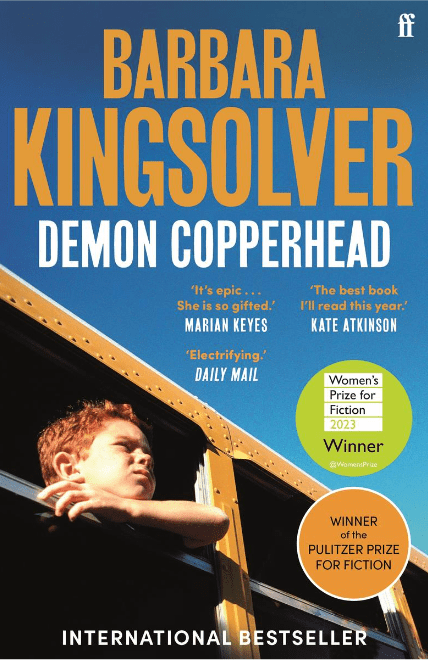
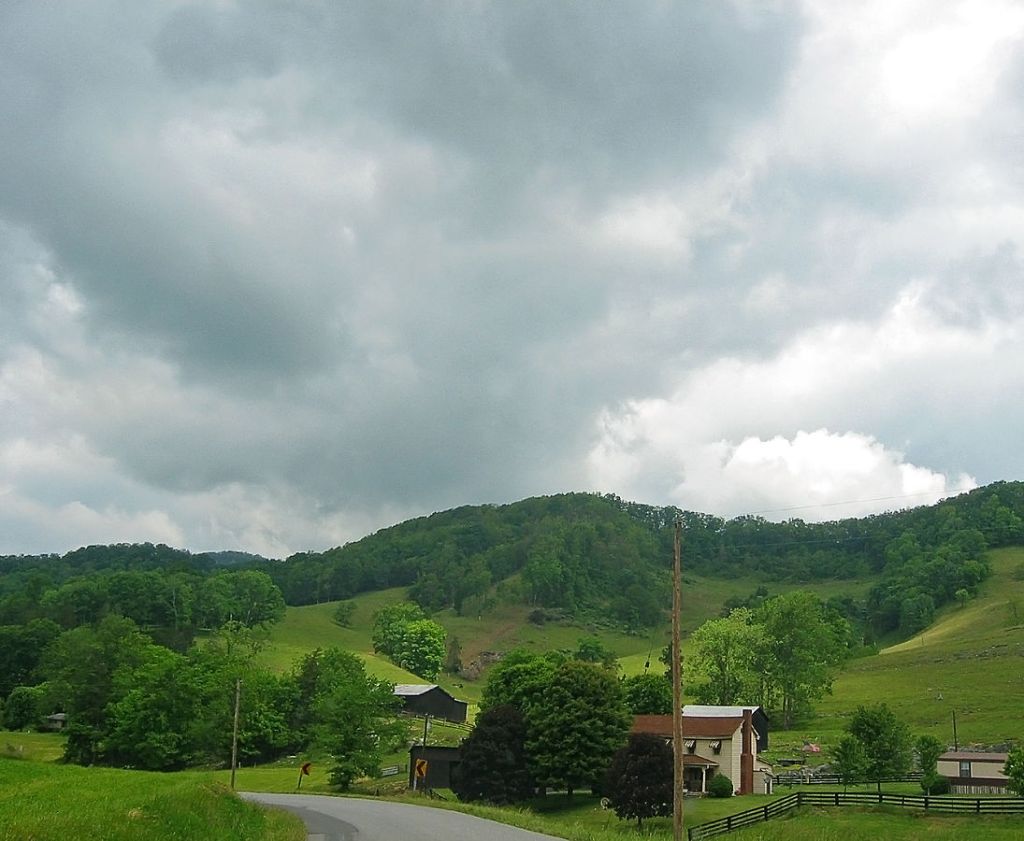



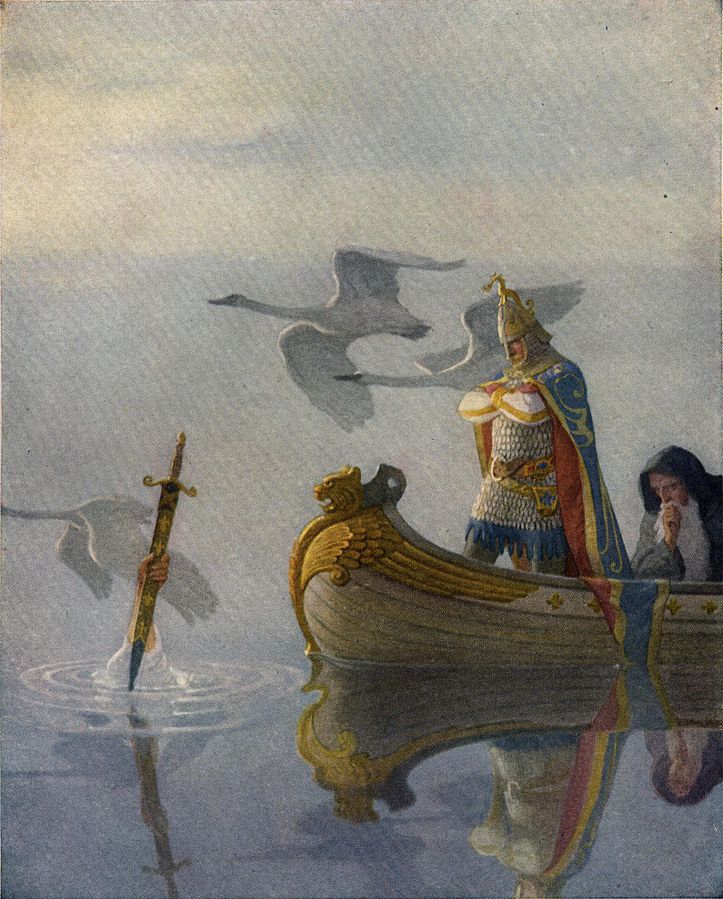
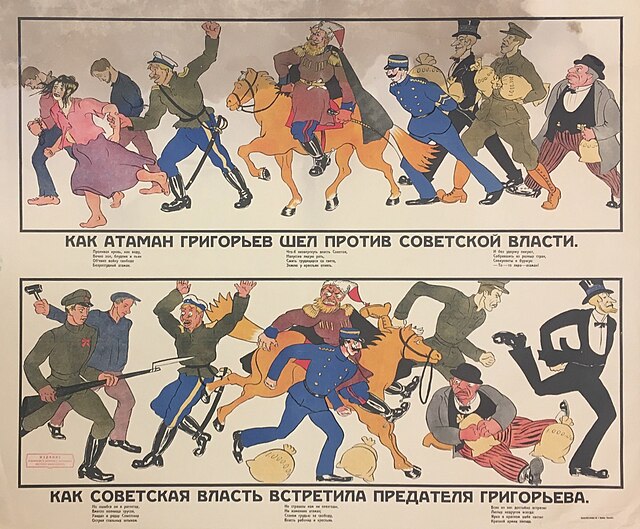
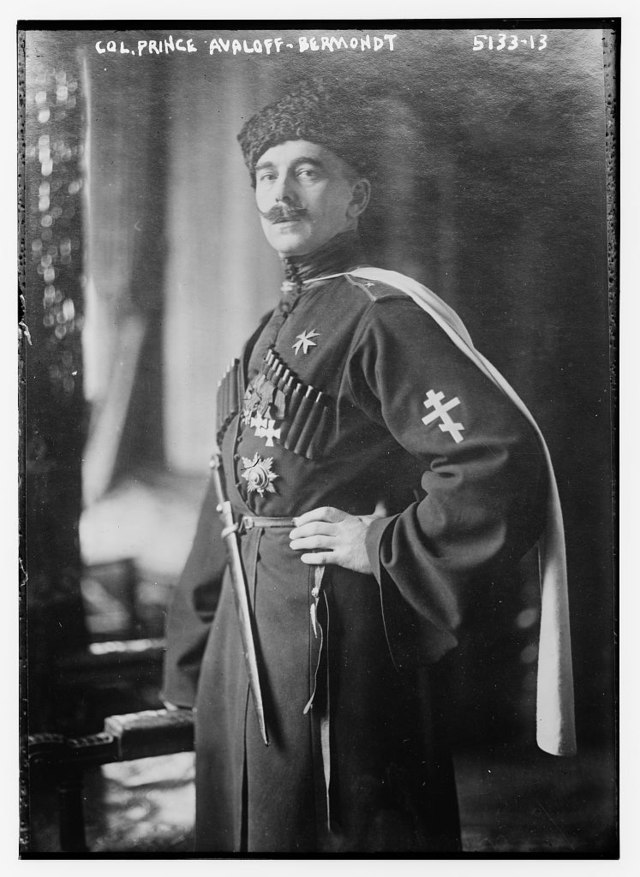

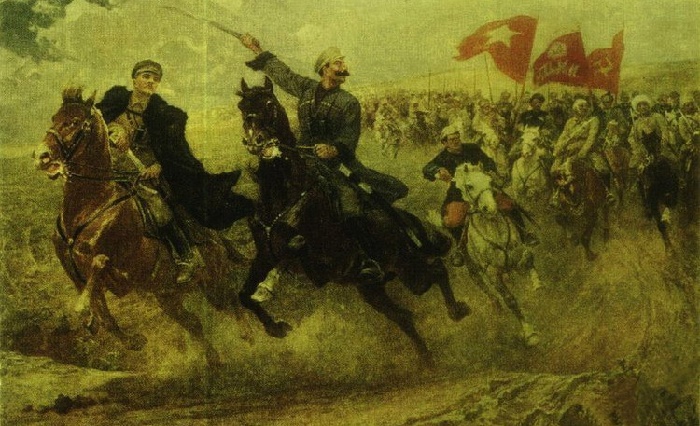


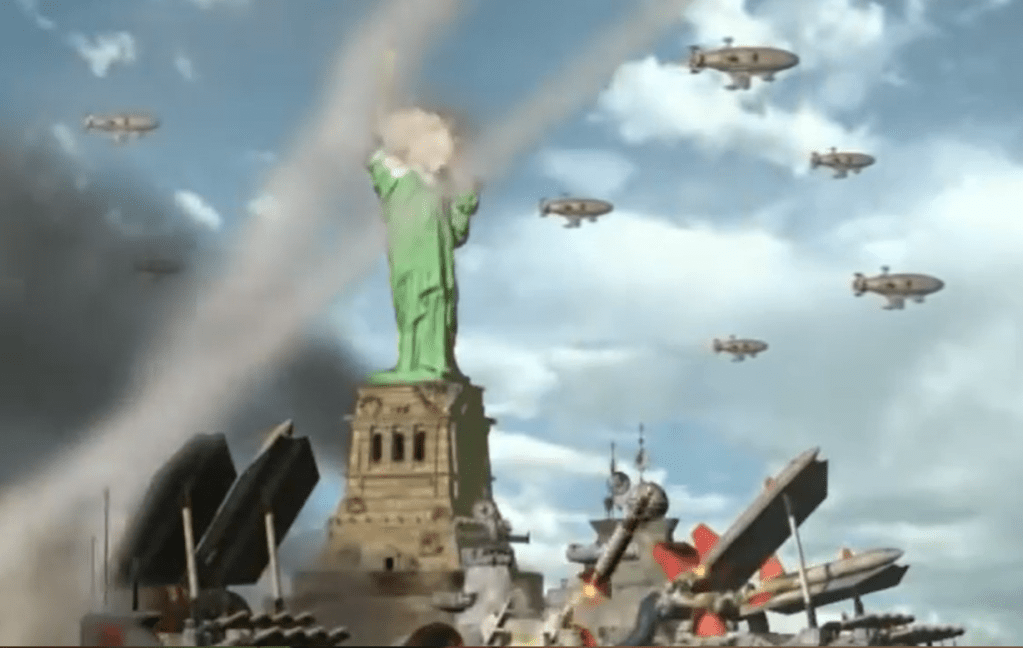
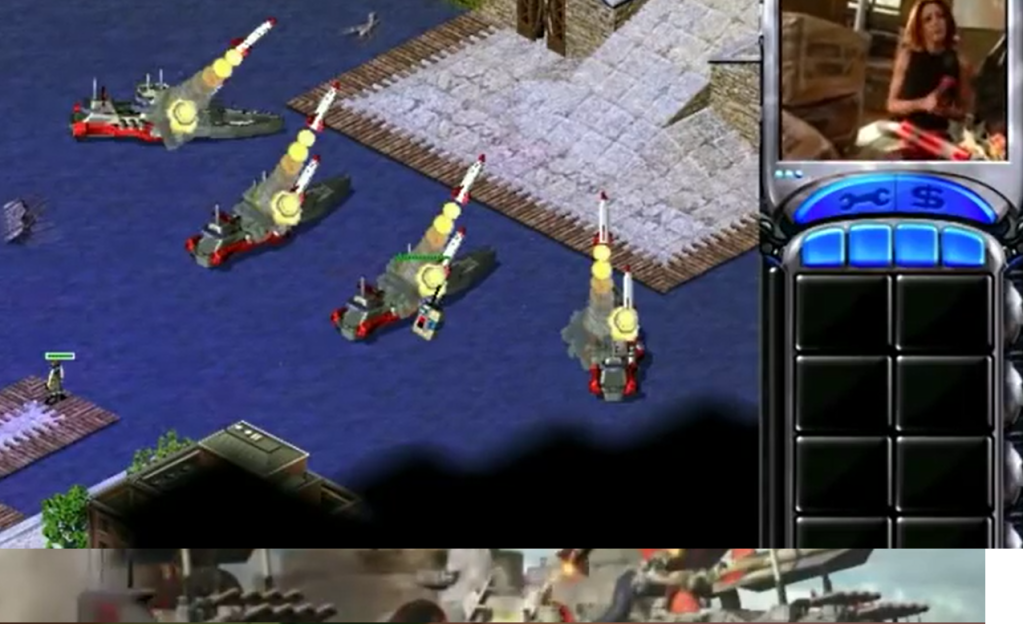
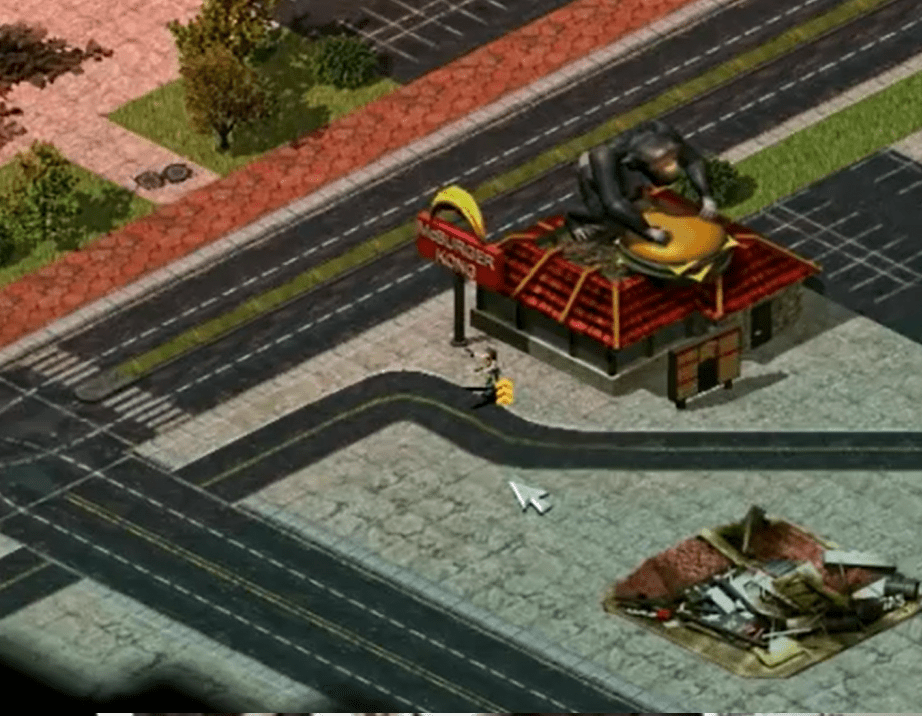


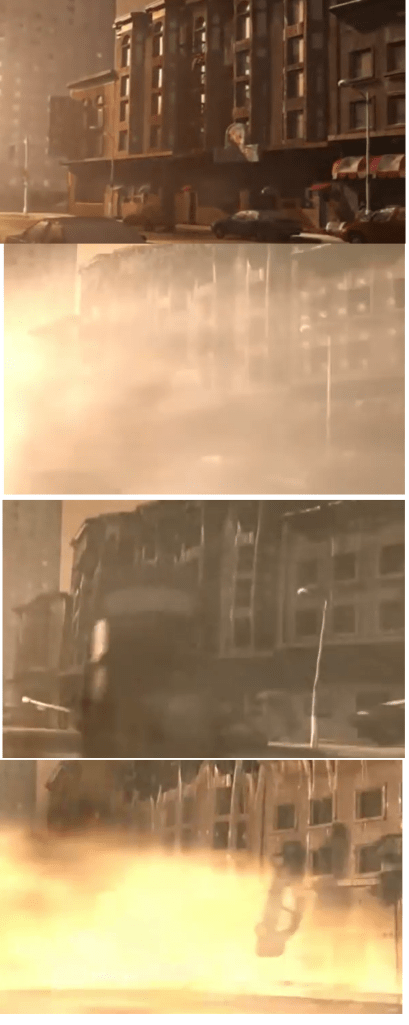
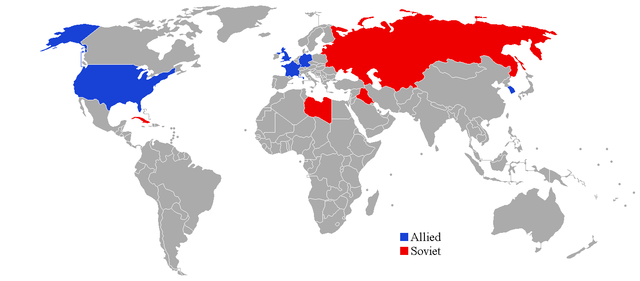
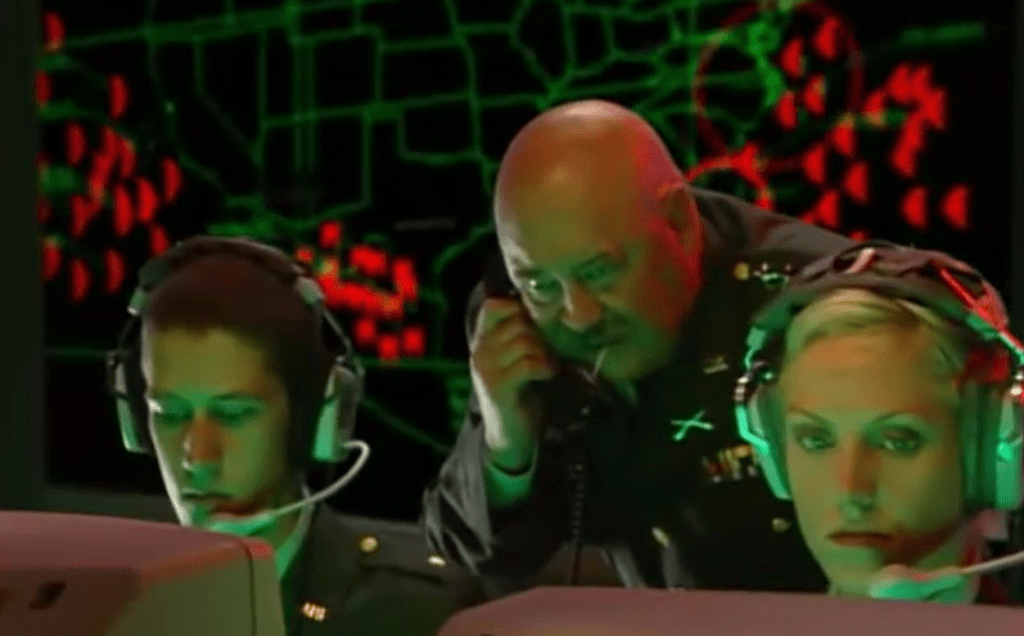
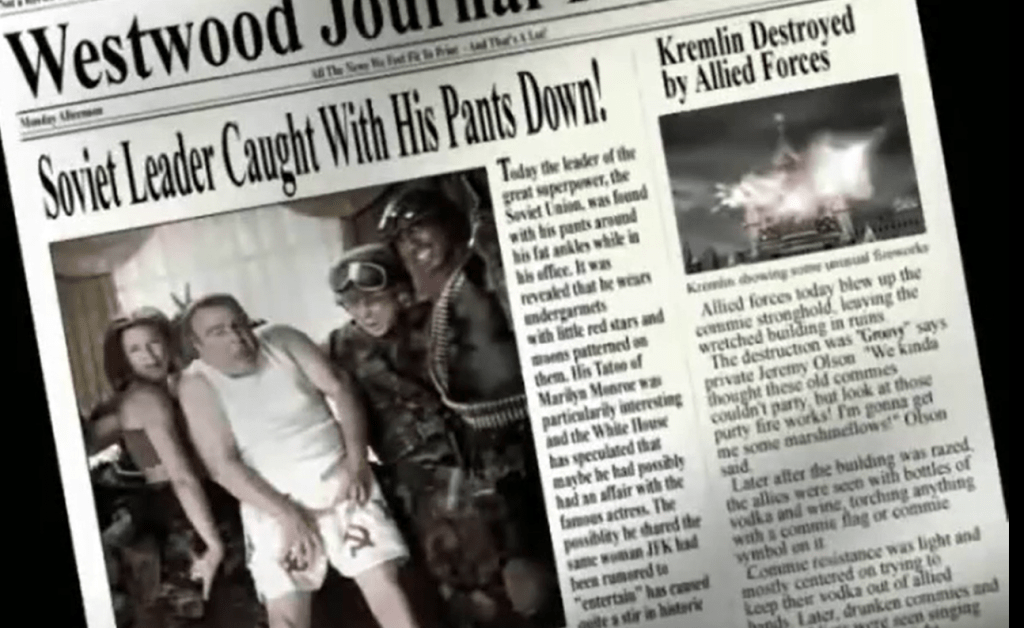
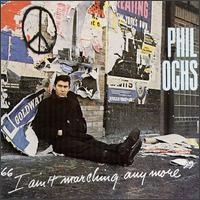

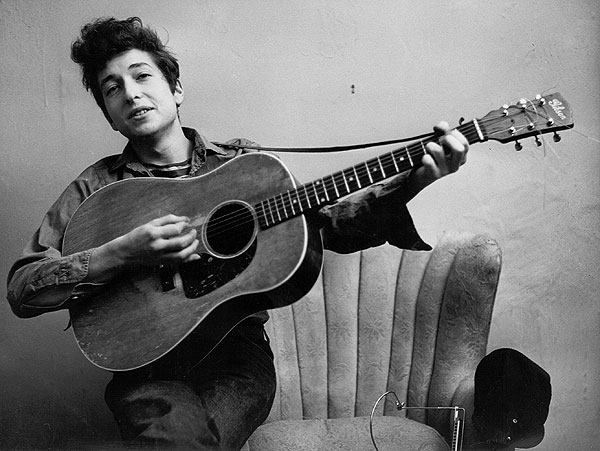
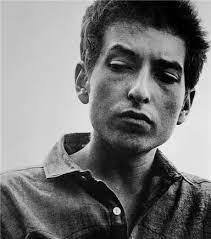

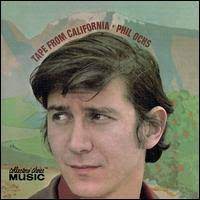
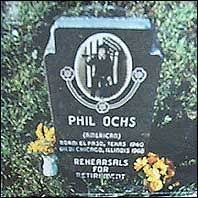
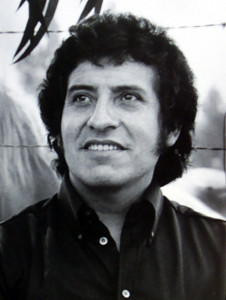
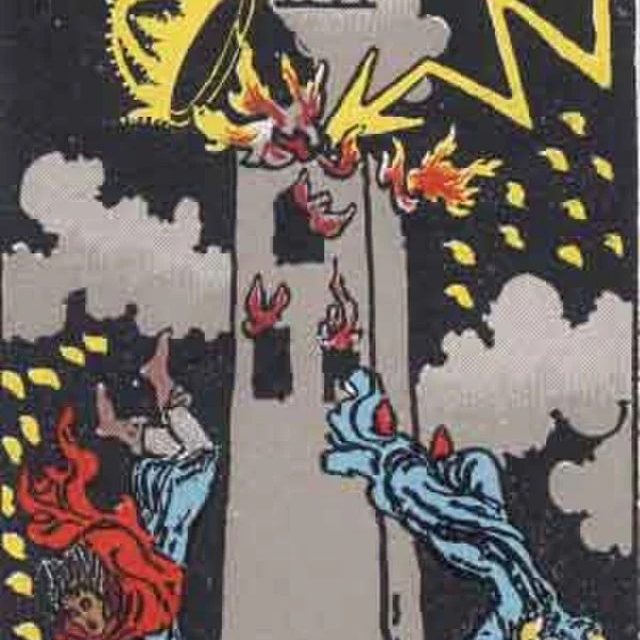
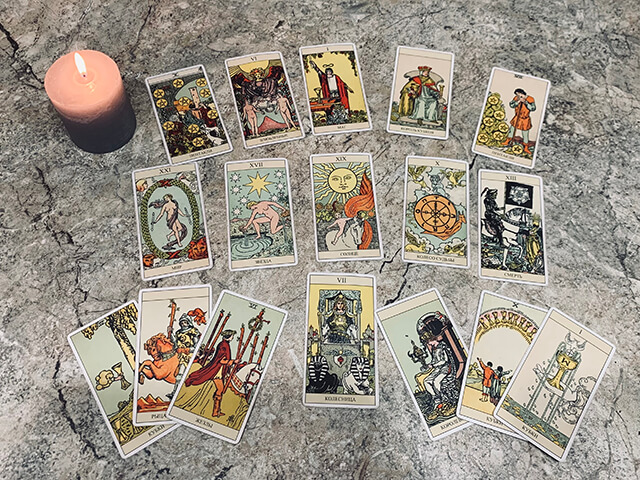

 The 1919 Review


